

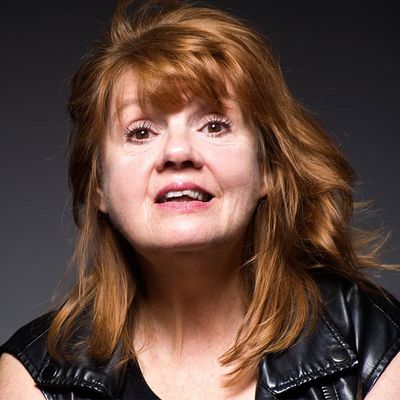
The character of Megan got cut from The Black Suits and along with her went her big number: "Joey is a Punk Rocker." Here, it makes a dramatic return nw, as sung by the incomparable Annie Golden, a woman who truly embodies the ragtagness and youthful energy of rock and roll music... Read More
From the show: ALBUM PODCAST with Joe Iconis and Jennifer Ashley Tepper
Guests
About
The character of Megan got cut from The Black Suits and along with her went her big number: "Joey is a Punk Rocker." Here, it makes a dramatic return nw, as sung by the incomparable Annie Golden, a woman who truly embodies the ragtagness and youthful energy of rock and roll music. Joe wrote this song during his Senior year of NYU Undergrad, a time when he was less hard on himself in regards to perfect rhyme.
http://BPN.fm/Album to get the music.
Transcript
This transcript was automatically generated and might contain errors.
[0:01] Joe Iconis: I've got a little problem that's really got me low.
[0:13] Jennifer Ashley Tepper: Hi, I'm Jennifer Ashley Tepper.
[0:15] Joe Iconis: And I am Joe Punk Rocker Iconis.
[0:19] Jennifer Ashley Tepper: And you are listening to the ALBUM PODCAST. Today we're going to be talking about Joey is a Punk Rocker, a cut song from Black Suits sung here by the legendary Annie Golden. One of the oldest songs by Joe Iconis for this album. You'll get to hear quite a deep dive into the history of just how early Joe started imagining this number.
[0:35] Joe Iconis: Yeah. And the episode might even end with me doing a little bit of a cover song. So check it out.
[0:49] Jennifer Ashley Tepper: I have to start by saying right before we recorded these episodes today, I was just listening to this song over and over and having like a personal mosh pit in my living room. So thank you for the gift of this song, which I never, you know, failed to enjoy singing along to in my bedroom in my apartment.
[1:21] Joe Iconis: Thank you. I when I wrote it before I ever even knew you existed, I think I knew somewhere in my brain that one day you'd be mosh pitting by yourself in your bedroom to this song.
[1:34] Jennifer Ashley Tepper: I think people who know me might be like, she doesn't know what a mosh pit is, but I do. And if you saw me listening to this song, you guys would know. This song is amazing, Joe. Thank you for the gift of this Annie Golden rendition of this cut Black Suits song.
[1:48] Joe Iconis: Yeah. Yeah. This song, this song is one of the oldest on the album for sure. So the genesis of Joey's a Punk Rocker is I had the idea to write the Black Suits when I was a senior in undergrad at NYU. And the idea was not fully formed. But when I was—and I forget if I've told this story on the podcast yet, but even if I have, I'll tell it again—I was musical directing a production of The Wiz at my old high school. My brother was a senior and he was directing this production of The Wiz. And so he asked me to musical direct. And so I was, you know, for literally four years out of high school. And so I didn't know the majority of the kids in the band, with the exception of Brent Stratathan, who's the drummer on the album.
But I felt like both I felt older than all of the kids in the band and the kids in the show. But I wasn't that far away from their age. You know, I was only four years at the time. It felt huge. But, you know, now it certainly doesn't feel very huge. But at the time I was so taken with sort of watching young people in a rehearsal situation and how when you're in rehearsals for a show, you're building this family. You're with everyone constantly and it's all you think about and it's all you talk about. And you're, you know, all working towards the same goal, you know, every single day. And then the show happens and you do two performances of it and then it all breaks apart. And, you know, if you're in high school, you're still seeing people, but it's just not the same.
It's not the same as when you're all together in rehearsals for the show. And so it seemed really similar to me to have the kids in the pit band who were in actual rock bands, how their relationship with their garage bands were where it's like that, you know, they were sort of talking about, you know, they're, you know, preparing for shows or whatever. But then in high school, at least when you're in a garage band, like then someone goes off to college or someone's family moves and it's just all over, you know, and it's like—and those two things struck me as being very similar. And I was like, oh, I should write a musical about this. Like, this should be a show that I write. And so those ideas were sort of swimming in my head.
And the first songs that I wrote towards those ideas were it was in the spring of 2003. I wrote this song called Rock and Roll Band, which is the opening number of the Black Suits. And I wrote Joey is a Punk Rocker. And I premiered both of those songs at my senior recital at NYU, which was on May 2nd, 2003. And so that was the first time that either of those songs were ever heard by anyone. And yeah. And so Joey's Punk Rocker, I sort of—the song kind of—the song and the character of Megan kind of came fully formed. Right. So it was like I knew I was like, oh, yeah, it is the band. You know, the band's lead singer has this sister who hates the band so much. And she's a character, one of two kind of like outside characters who are not in the band.
And so I wrote Joey's Punk Rocker, but also kind of wrote it to exist unto itself, you know. And yeah. And it immediately—it immediately was received in a way that felt like, oh, this is different from how people receive my other songs. You know, and I think that it was when I listened to Joey's Punk Rocker, I feel like, oh, yeah, I was—that's where I was like really sort of cracking the kind of style and the vibe that would then sort of become something that defined my writing. You know, like the sort of humor mixed with the sentiment and the way the music played with it all. Like it kind of—I can hear my own sort of writer, writing style, you know, sort of congealing when I listen to Joey's Punk Rocker. And yeah. And so that was kind of how that song was born.
[6:14] Joe Iconis: And when I wrote it, I was thinking a lot about Frank Mills from Hair, you know, and I've always loved Frank Mills. And Joey's Punk Rocker is like a lot more of like a sort of traditional musical theater song than Frank Mills is, you know. Frank Mills doesn't have a lot of rhymes and it kind of feels like a letter set to music. And but the like the absolute—like the sentiment of Frank Mills and the like the sort of purity of it was something that really informed the writing of Joey's Punk Rocker. And I think what I always loved about Frank Mills is like, you know, in Hair, which is this like the show that, yeah, it's about peace and love. But it's like, you know, it's like Hair is like pretty gritty and there's lots of like sort of edgy things in Hair.
But that song, Frank Mills, is allowed to be this moment of just total, complete—you know, it's like it's romance. You know, it's like that's what it is. And it's this like romantic idea of someone. And it's—and it's also kind of like, you know, it's sad because we know that it's not going to happen. And it's like Frank Mills is more of an idea than he is an actual guy. And so that's what I was—I think I was trying to capture in Joey's Punk Rocker.
[7:28] Jennifer Ashley Tepper: So many things that are so interesting about that. The role in the Black Suits that originally sung this, the sister character that you mentioned, was originated by Sarah Glenn Denning. And the first time Black Suits was staged, obviously, the great Annie Golden, who performs this track on the album, was also in the cast, but didn't sing this song. When did the idea—and it sounds like maybe it was in your head all along, given the Frank Mills connection—but when did the idea of Annie singing it occur to you? And how has that evolved since, you know, you started writing the show so long ago, Annie became involved very early, and here she is regaling us with her rendition.
[8:03] Joe Iconis: Yeah, well, you know, I—so how it came about was so Joey's Punk Rocker. You know, I should say that Sarah Glenn Denning originated the role brilliantly. She was great. Pre-Glenn Denning, we had done, you know, many readings of the Black Suits. And so a hilarious—a hilarious list of very credentialed, very famous actresses played the role of Megan and sung that song. Like Annaleigh Ashford did it. Alison Pill did it. Mamie Gummer did it. Like lots of lots of, you know, sparkly actresses of a certain time did that part. And so when it came time to choose someone to do it in concert, I definitely had, you know, so many people who I could have gone to the first time I did the song in concert, who I loved.
So many actresses were great. Chandra Lashore. It's like so many people. But the only person I wanted to hear sing it was Annie Golden. And the Frank Mills connection, for sure, was something. But there's just—there's just something about Annie that she has like she has a youthfulness to her, her voice and her entire being that it just can't be copied. There's just something about it that it's like there's—you know, I've already talked about this, but like Harrison Chad has it. There's just—it's youth. That's what it is. It's like she embodies youth and she embodies, you know, hope and all of these things in such an effortless way. And then on top of that, she is—you know, she has this amazing rock voice.
And so I immediately before I ever even heard her singing it, I was like, oh, I just know that she'll be able to like do like this sort of, you know, she'll be able to dial into the sweetness of this song and then also give it a rock and roll edge in a way that I think if, you know, other people try to do that, it sounds forced on either. You know, it sounds like, oh, here's this person who can sort of do the sweet, folky stuff, but then is really pushing the rock stuff. Or here's this person who can like, you know, scream it from the rafters, but can't really do that like folky stuff. Annie is just so adept at all of that. And then also her literal speaking voice is so—is so charismatic and is so personality filled that it just felt like it would be a great match.
And it was. And so she did it for the first time at the first ever rock and roll jamboree show at the Beachmen, which is November 27th, 2007. And yeah, and she's done it a million times since and it only gets better. And, you know, the first time she did it, I did have—for me, it was like a no brainer. Like, I love—I love casting actors, especially in a concert setting. I love casting them because of something elemental about them.
[11:09] Joe Iconis: That connects with the material, as opposed to being like, oh, this song was written for a 16-year-old girl, so we should get a 16-year-old girl to sing it. I've always been really excited about, you know, not casting based on gender or race or whatever, and like, finding like, the thing about the human being who's going to perform a song that makes them connected to the song. And so the first time Annie did it, or the first time I asked her, I was like, there's no part of this that's like, oh, isn't it funny that this woman who is obviously not 16 is singing a song for a 16-year-old? And she, you know, to her credit was like, oh, yeah, no, no, no, no, no, I don't care about that. And I don't think that's gonna be a problem.
And it never is. And like, and she, you know, she still does it. And there's no part of it that's like, oh, how funny that is, because it's not. And that's also a testament to her, and how amazing she is, and how she just so embodies the spirit of young people who want to like, you know, run through the streets and scream and be in love and make music. And it's just her, you know, and so I'm so happy that her insane performance is now captured on, on, on record forever.
[12:25] Jennifer Ashley Tepper: Yeah, it works. It works on so many levels. And it's just very rock and roll. I, I like, one of my favorite moments of your big Lincoln Center concert that we did right before the world ended in February 2020. I don't remember the exact date. So props to you on that 2007 date you pulled out. But was Annie singing this song and just everyone in the audience going crazy and me being able to mosh with other people also moshing. But no, she always just is incredible at this song in person. And the album, in the best possible way sounds live, like Annie just has such a skill of, and you know, also on the Broadway Bounty Hunter cast recordings, she, she is perfect. And she also just really makes it sound like you're in the room with her. It's like a skill I can barely describe.
[13:11] Joe Iconis: Oh, yeah, yeah. And you can't, you can't fake it. It, you know, it's like, there are so many, there are so many people today in musical theater and in other, you know, mediums who are, you know, hailed as great singers or whatever. And it's like, really, you know, they're okay. But the computers do a lot of work for them. Annie Golden is just a great singer. And so and you that's, it feels live, because it's like, she's actually doing that, you know, she's not getting any help, she doesn't need any support. She can stand in front of a microphone. And when she opens her mouth, it is, it's stunning. And it sounds like a human being singing. And, and that that feels like it's like, well, yeah, duh, of course it does.
But it's that's not always the case. And she's just amazing. And she is such a solid person in a studio like that. That's one of my favorite things. And I've now gotten to record, you know, quite a bit of material with Annie in the studio in the last couple years between Bounty Hunter and album. And to see her in a studio, it makes it's like, oh, yeah, she's like a real rock and roll singer. You know, it's like she's been, she knows her way around the studio in a way that's like, you know, and even like huge people, sometimes like they'll get into studio and it's, it's really scary. There's a lot of pressure. And it's like you in a little booth and a microphone. And I've seen really amazing singers and actors just crumble.
And every single time I've ever been with Annie in a studio, it's the most like, it's just like the easiest thing. She gets in there. And she just she nails it. Every single time she knows exactly what she needs. She knows exactly how to negotiate the mic and the room and all of it. And it's just like every time is like better than the last. It's amazing.
[15:05] Jennifer Ashley Tepper: Do you think that you are the only musical theater writer in history to rhyme Megan with Pagan?
[15:12] Joe Iconis: It's actually Megan. I said it badly. But no, that's not my real question. When this song was cut, like, did you envision that it would have such a life in your concerts? Because how did that happen with feeling like, okay, well, this character and the show evolved so that the song is no longer in it. Do you want to talk about that?
[15:26] Joe Iconis: Yeah, yeah. I mean, it's funny. I'm like, I, you know, I will hang on to something that I truly believe belongs in a show. But when I make the decision to get rid of something, I'm, I'm like, brutal about it. And so as much as it was like a bummer to think about, like, what is the Black Suits without Joey is a punk rocker, I knew that the right move was to get it out of there. And so I was kind of like, I mean, I hope the song lives on. But if it doesn't, I'm doing the right thing. You know, and I and I, and I kind of suspected that it would because even at the time that I cut it, it already sort of had a bit of a life, you know, sort of Joey's a punk rocker and Blue Hair were like the two songs that people tended to know me from pre like, Broadway, Here I Come, like, you know, before about Here I Come, it was, those were the two songs that people sang of mine.
And so it felt like it already kind of was out in the world a little bit. So it wasn't like, it didn't feel like, oh, my gosh, I'm burying this, you know, this, this baby, and no one's ever gonna see it. But so yeah, so I felt like, kind of, kind of okay about it. But I love that you said the thing about Megan Pagan, though, because that's something too, where it's like, you know, sort of early on in my writing, I had not quite yet realized that like, my, my growing up on Long Island has informed the way I hear certain vowels and certain words pronounced. And so I'm such a stickler for rhymes. And even then Joey's punk rocker is like, kind of sloppy rhyme wise, but it's totally fine.
[17:01] Jennifer Ashley Tepper: You wrote it when you were 10.
[17:02] Joe Iconis: I know, I was very, I was very young. Yeah, yeah, yeah, I was, I was kinder to myself slash lazier than with rhymes. But no, but it is a correct rhyme. I know. Megan is how you say Megan, which I said how I say it. But yeah, no, but I just didn't know. I was like, Oh, yeah, like, this is that's the that's how you say that, that name. Megan, Megan.
[17:24] Jennifer Ashley Tepper: Our collaborator Bailey Ford is listening to this. She knows well, because you say Bailey belly because that's just the Long Island way.
[17:31] Joe Iconis: Bailey. Yeah. Yeah, I know. But I mean, the thing that the thing that, you know, sort of saves us for black suits is that it takes place on Long Island. So correct.
[17:42] Joe Iconis: It also I remember when we were talking about, you know, this album was in the works, and we were chatting about it. And a lot of people were like, Oh, cool, you're doing a big album, it's going to be like cut songs from your shows. That's awesome. Because people just I think when you're recording a non musical theater album, you're a musical theater writer, they're like, Oh, cool. And this is actually one of only two songs out of 44 on the album that is technically a cut song from a musical the other being play the princess from blood song. Yeah, you know, a lot of a lot of my cut songs from shows, they just kind of they just kind of go away. You know, I think it's because it's because I've either cut them, because I hate them.
And I think they're just bad. And I don't have any interest in revisiting. Or they're, you know, they're so specifically tied to the shows that they are from, that it to do them in another context just doesn't work. You know, and so that's why I'm someone who like I never recycle a song, because I can't, you know, I can't take a cut song from, from, you know, be more chill and put it in Bounty Hunter. It's like the, you know, the songs are so tied to the characters and the plot and the sonic world of the shows that they're from, that they're not you can't repurpose them, you know, let me know that this podcast has now inspired me to try to convince you to have Annie golden sing level up the original two player game in a concert. So we'll see how far I get.
[19:10] Joe Iconis: Good luck to me.
[19:10] Jennifer Ashley Tepper: Good luck to you. Yeah, I'll see you in the spring. Awesome. Anything else about Joey is a punk rocker?
[19:17] Joe Iconis: Yeah, you know what I want to talk about, which I don't think I've ever actually talked about the title of it. So so Joey's a punk rocker is titled as such, because there's a there's a remote song called Judy is a punk and a remote song called Sheena Sheena is a punk rocker. And so the so Joey was a punk rocker is sort of referencing those two tunes, even though in the song. She never actually says Joey is a punk rocker.
[19:38] Jennifer Ashley Tepper: Yeah. And I mean, as long as we're talking about that, obviously, you know, your name is Joe, no one calls you Joey, really, maybe people you grew up with. Did you pick that name for a reason for the song?
[20:00] Joe Iconis: The honest answer is I picked it because it was my name and it was going to be performed at my recital. But the the answer I gave at the time was that it was because of Joey Ramone. But if I'm being totally honest, I wanted that moment where the the girl singing that who was her name was Kristen. Oh, God, what's her last name? Oh, no. Wait, I gotta look it up. Well, you look it up. I'll just say this is a classic musical theater history moment being like, in 2003, Joe Iconis said this was the answer in 2007. This and today, this is the real answer from Joe Iconis. So yeah, I feel like I'm far enough away from it now. But yeah, it was but I mean, also, like, definitely Joey Ramone is part of it.
But I just loved the idea of, you know, her saying my name, and people going, ha. You know, because I was I was really slutty back then. I wanted that acceptance. I hadn't gotten it a lot. I hadn't gotten a lot of applause at that point in my life. I think she left. She left performing, which is why I haven't spoken to her in a bit.
[21:22] Joe Iconis: Joey is a punk rocker. Joey is a punk rocker. Joey is a punk rocker. Joey is a punk rocker.
[21:32] Joe Iconis: Now. Hey, thanks so much for listening or watching my podcast. Do me a favor and go to wherever you just listen to or watch this thing and subscribe or like or give us a great rating or review and then head to bpn.fm slash album to find out even more information about this podcast. More ways to watch more ways to listen and check out my album. Thanks so much for hanging out.
[21:54] Joe Iconis: Album podcast is executive produced by Liz Armstrong, produced by Dori Berenstain, Alan Seals, Kim Garris, and the rest of the team at the Broadway Podcast Network. Be sure to visit bpn.fm slash album for both audio and video versions of this podcast and to listen to album.
© Broadway Podcast Network, All Rights Reserved