

Tonya Pinkins had a very complicated journey with the musical Jelly's Last Jam. From the very beginning she felt she was up against a cast that was not happy that she was replacing the original Anita in the show, she was away from home with her nine month old baby and in rehearsal she found herself holding back... Read More
From the show: And the Award Goes To... Hosted by Ilana Levine
Guests
About
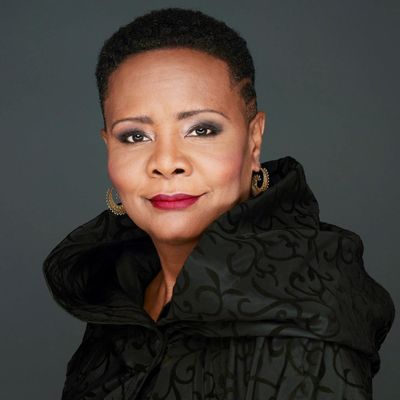
Tonya Pinkins had a very complicated journey with the musical Jelly's Last Jam. From the very beginning she felt she was up against a cast that was not happy that she was replacing the original Anita in the show, she was away from home with her nine month old baby and in rehearsal she found herself holding back. But at night she would dream of what the role could be. She wanted to bring the power and vulnerability she remembered so well about her grandmother to the role but it wasn't until the final run thru that she was able to bring all her ideas and show the cast and creative team what she could really do. Tonya shares that she was almost fired multiple times- even when she was in rehearsal for the Broadway production- but somehow she persevered and she won a Tony Award for her portrayal of this raw, powerful and vulnerable woman.
Welcome Tony Award winner Tonya Pinkins to the podcast.
Hosted by Ilana Levine, Produced by Alan Seales, part of the Broadway Podcast Network.
Transcript
This transcript was automatically generated and might contain errors.
[0:00] Tonya Pinkins: This is Tonya Pinkins, and you're listening to... And the Award Goes To...
[0:23] Ilana Levine: Have you ever dreamed of winning a Tony Award? Did you ever practice your Tony acceptance speech in the bathroom mirror? Did you grow up watching the Tony Awards every year? Do you have a collection of Tony Award shows on VHS tape that you refuse to throw out? Well then this is the podcast for you. Every week I interview your favorite Tony Award winners, and together we go down memory lane as my guests share intimate and never before shared details about their Tony experience. By the end of every episode you're going to feel like you just won a Tony. Welcome to And The Tony Goes To... I'm your host Ilana Levine. Welcome today's Tony winner, Tonya Pinkins. And the Tony Award goes to...
[1:11] Tonya Pinkins: Tonya Pinkins, Jelly's Last Jam.
[1:23] Tonya Pinkins: Wow. God, I don't know what to say. I want to thank first of all my husband Ron Brower and my grandmother Bessie who take care of me and my children and make it possible for me to have this wonderful opportunity. Next I want to thank George Wolfe for his genius and his brilliance and for being such a soulmate for me and creating this wonderful play. I have to thank Susan Birkenhead for her brilliant lyrics and for being for unwavering faith in me. And The Extraordinary Company, there should be an award for best ensemble because it's an extraordinary company. I have to thank Jean London for dressing me up for this fantasy evening. And my mom, my dad, my family, my friends.
[1:59] Ilana Levine: Hi, Tonya Pinkins. Welcome to the podcast.
[2:06] Tonya Pinkins: Hi, Ilana. How are you?
[2:08] Ilana Levine: I'm very well. Has it been a minute since you've heard that speech?
[2:13] Tonya Pinkins: A really long time. A really long time. The only thing I remember about it is, damn, I didn't thank the producers Margo Lion and Pam Koslow-Hines. I sent flowers the next day.
[2:26] Ilana Levine: Well, it's such a heady moment. I am sure they could have not been more thankful for the flowers and thrilled that you won. That is what I think they felt. Do you remember any details about the night that you, that are coming up or what it was to hear your name called?
[2:41] Tonya Pinkins: That was my first Tony nomination. And the New York Times had said on Friday that I wasn't going to win. So there was no pressure at all. And I remember all of the Tony nominees from Jelly, we all had this funny little thing with George where we did this practice thing of like, how do you take it when they say, and the award goes to somebody else? And how you had to keep the smile on your face and you had to keep applauding, but you had to take it just at the lower spine. Just let a little tilt happen at the lower spine. That's the only place you could allow yourself to feel anything as you kept smiling for somebody else to win.
[3:28] Ilana Levine: Oh my God. Right. So I apologize. Your other nominations happened after the receival, but then that didn't happen. You didn't have to act happy for somebody else.
[3:41] Tonya Pinkins: Not until later. That came later.
[3:45] Ilana Levine: So when you heard your name, so what I think you're alluding to is that often the Friday before the Tonys, the Times puts out a list of who they think will win and they did not say you. So once again, they were wrong. Not the first time. So when you did hear your name, what happened to you?
[4:05] Tonya Pinkins: I think I missed it. I missed it. I wasn't expecting it to be me. So there was just a momentary glitch and I think my husband at the time nudged me and I was like, oh, they called mine. It was this, yeah, it was not expected at all.
[4:28] Ilana Levine: Well, you look stunningly beautiful that evening. Jean London, rest his soul. I'm so happy it wasn't wasted. I'm so happy you won just so that everyone could see the beautiful look that Jean created for you. That old Hollywood glamour.
[4:41] Tonya Pinkins: Yes, yes. That's exactly what it is and it was and it was elegant and beautiful and you were beaming and you got to thank people that you loved at that moment. So I want to talk about the show that brought you to this moment, that brought you to that speech, that brings you to this podcast today, all these years later and sort of how Jelly's Last Jam first came into your life.
[5:11] Tonya Pinkins: I was doing Caucasian Chalk Circle at the Public Theater. George C. Wolfe had just taken over as the head of the Public Theater and he was directing it. Charlayne Woodard was the star and I had replaced someone who had to leave. Back then it was really quite common for people to ask you to come and demo things, like come to their house and sing a song for them. George asked me if I would go over to Susan Birkenhead's house one afternoon and read a scene and sing a song and I did and that was that. Didn't know anything more, didn't know where it was from, if it was something new, that was it. And then I think they may have asked me to come do that one more time and the show at the Public closed and I got asked if I wanted to go to LA to do this show, Jelly's Last Jam, that was going to be at the Mark Taper Forum that fall.
[6:15] Ilana Levine: Had you heard of Jelly Roll Morton? Did you know about his legacy or his story?
[6:20] Tonya Pinkins: Not at all, nothing at all. So when you got there, in LA it wasn't Gregory Hines in the role, if I recollect. It was Oba Babatunde.
[6:28] Tonya Pinkins: Okay, you go to LA and you start working on this thing and your role of Anita, these are all roles that everyone is creating, how did you start to work on this and how did George and this creative team work with you?
[6:46] Tonya Pinkins: Oh gosh, it's just not going to be the kind of story you're looking for. I got to, I had to look it up because I had to know. So Angels in America came after Jelly, it was his first show.
[7:12] Ilana Levine: On Broadway?
[7:12] Tonya Pinkins: I think so. Okay. Yep, yep, yep, yep, yep. Because his Tony for Angels came later. I read the script on the plane, that was the first time I had a chance to read the script. I had a nine-month-old that I was nursing and I read this script and it was like, this was a woman. I had always only played ingenues and the role excited me but it intimidated me. I hadn't ever played anyone with that kind of depth and I didn't know that I had it in me. So I was very scared. I could remember women in my life, my grandmothers who were like that and had that kind of gravitas but I had never done that and so I wasn't sure how. And when I got to LA and got to the rehearsal, I had incorrectly assumed that we were all going to be working on this new play together, only to discover that everyone else had been working on this play for a couple of years.
And I was the new person in the room and the actress who had previously played Anita, Patty Holly, the brilliant Patty Holly, was now in the chorus as one of the honeys. So if I wasn't intimidated by having to play someone wonderfully powerful and full of wisdom and gravitas, I now was walking into a room where everyone's like, who is this bee who has come in here and taken the role from our beloved Patty Holly? Yep, that's not a great way to enter.
[9:00] Ilana Levine: Yeah, that was how it started out for me.
[9:04] Ilana Levine: So how do you navigate that?
[9:04] Tonya Pinkins: Well, it was really awkward and uncomfortable and I was there alone and I left my older child back in New York and my husband was in New York and I had a little baby and it was very, very uncomfortable. And I remember that I kind of was just frozen. I just would, you know, sit at the table with my head down and I could feel and sense everybody rolling their eyes and snickering, but I was too afraid to do anything. I just kind of went through the motions. And when I would get home at night, I would work it out, like dream of all the things I wanted to do. But when I was at rehearsal, I just was kind of not doing much. And most of them had been working on it for a while, so they had performances already.
[10:03] Tonya Pinkins: This is awful. This is awful. I want to quit and I got you.
[10:10] Tonya Pinkins: So I told myself, you know, George had said that we were going to have a run through of the whole show, I think maybe in the second week of rehearsal. And I had said to myself, you know, every day I would want to try when they got to my scene. I only had like three scenes in the whole play. I would want to try something that I would be like, if I try it and he tells me it's bad, I won't be able to try everything else. But maybe if I can just get to the run through where I can do everything I've been working on at home all in a stretch, then I'll at least have shown him everything I have in mind because, you know, maybe the first moment won't be right, but, you know, the whole thing might work.
But if he criticizes me for the first moment, I might not have the confidence to do all the rest of the moments that I've thought of after that. And so I just was going through the motions for about 12 days of rehearsals with everybody just rolling their eyes and, you know, like, you know, slicking their, sucking their lips, like, what did they bring her here for? And the night before the run through, Mary Bond Davis was having her nightclub act on Sunset Boulevard. And I was driving there to see her and George came. And George and my cars both arrived at the...
[12:25] Tonya Pinkins: I did some things nobody had ever done. I like shocked the hell out of everybody in the room, definitely out of Oba Baba Tunde and it was like all hell broke loose because they had discounted me and yeah, I wasn't somebody to discount.
[12:44] Ilana Levine: That must have been an incredible feeling to do everything you wanted to do.
[12:50] Tonya Pinkins: It was an incredible feeling inside but it wasn't that way for everybody else. They were pretty pissed. Because? Where have you been for two weeks? I think there's definitely the where have you been for two weeks. There's also the sense of like, I think people get very committed to their gossip and their stories and so everybody had all these stories about this terrible person and clearly that wasn't going to be the case from that. Then there was really this people are very committed to keeping their stories intact. It wasn't really a pleasant experience for the rest of the time because people were not, I mean, George certainly was happy that I was good but nobody else was. It was like they preferred their story about me to the reality of it.
[13:46] Ilana Levine: Right, and you had to embody this deeply, well you used the word gravitas, right? To play someone who leads with confidence and sexuality and self-knowledge and to not have an onstage or backstage family embracing you as you try to power up for that is devastating.
[14:14] Tonya Pinkins: Nah, it wasn't devastating. It was painful and devastating it was not because what I discovered was that the ideas that I had dreamed up, the clarity in my body that I had actually done that was far more meaningful to me than anything anybody around me could do. The clarity of spirit, of actually capturing something that I didn't know that I was felt more valuable to me than the you know people who can like you one minute and not like you the letter, think you're not talented or you know being underestimated. I never underestimate anybody ever. So no, yeah it was sad and it was painful because people weren't very nice but I was like but the work I figured out how to do the work and that's important. I gotta figure out how to do the work.
[15:16] Ilana Levine: And can I ask you because I've worked with small children at the time. You're alone in LA obviously with someone taking care of your baby when you're at the office as it were. How do you, when you say you kind of had all these dreams or ideas that you came up with about how you wanted Anita to live on stage. Can you talk a little bit about what that process is or was for you? What you drew on, how you understood the work?
[15:52] Tonya Pinkins: Well you know my grandmother was a really beautiful lady and she loved beautiful clothes and she you know my grandfather I would say he was under her thumb you know. He did what she told him to do. I remember when I went and lived with her. When I look back on it my grandmother was like 40 years old but I slept in bed with my grandmother and she sent him to another room. And so you know as a child I didn't think much of it. I'm like she was like 40 years old. She sent my grandmother, my grandfather to another bed so I could sleep in bed with her. And I just knew that I wanted to embody that kind of confidence and power with a man. You know that wasn't really the culture of the day but this was a woman who men were not, she didn't answer to them.
She was the boss and they answered to her. And so I had to, I had to find that kind of power and energy and she was comfortable with her sexuality. She could throw it around and tease you with it and pull it back and say oh no no no. You can look but you don't get to touch. Oh no no no. So it involved a lot of vulnerability and risk and it was you know something that I wasn't able to try in a room full of strangers. I could only try that out in my in my bedroom. And truly I think if you know if I had done one little thing and someone had said something like um you know you're pushing I would have just clammed up and that would have been the end of it.
[17:40] Ilana Levine: Right right. I get it. Well the word vulnerable is is key. It's such a vulnerable feeling to put yourself out there in that way. Tell me about um so it was Susan Birkenhead and Luther Henderson and George Seawolf who who originally was it George's idea to write a show about?
[17:56] Tonya Pinkins: I think that um I think Pam Koslow Hines was interested in this as a show for her husband Gregory and um you know George is very specific about what he um you know wants to take on and I think this idea of this Black man who was a Creole who didn't consider himself Black possibly uh George could relate to it. He's also fair-skinned from the South. You know grew up in a time where Blacks could only sit in the balcony and he used to tell us stories about his grandmother taking him to the movie theater and taking him right down front you know where Blacks weren't allowed but his grandmother would do it anyway. And so I think he could could relate to that and and was interested in exploring uh this and then the fact that he decided to tell the story of a piano player through a tap dancer you know he's just genius.
[19:00] Ilana Levine: So even though Gregory Hines did not do it in LA the original concept was born out of this idea that eventually Gregory Hines would do this role?
[19:07] Tonya Pinkins: Yes it was developed for Gregory and I don't think he was available at the other time.
[19:14] Ilana Levine: Right was it well received when you guys did it in LA?
[19:20] Tonya Pinkins: I would say it was mixed. Uh-huh mm-hmm and then you get to New York and also not just Gregory Hines but you know Savion Glover is young Gregory Hines.
[19:28] Ilana Levine: Yes. So for anyone whose first exposure to tap dance was in that show aside from the story being told that was amazing and and I remember you know them sort of improv improvising sometimes and just that was a whole other show within the show.
[19:50] Tonya Pinkins: All of their solos were improvised. Incredible incredible so then you get to New York you you are going forward with the show you get to be home in your own home.
[20:02] Ilana Levine: Uh no that's not the story.
[20:02] Tonya Pinkins: Oh okay tell me that story.
[20:12] Tonya Pinkins: That didn't happen no no no no um so at the end as I said it was mixed and it was kind of mixed in LA in that like reviews that liked the show didn't make any mention of me. Reviews that were like the show's okay loved me so that of course doesn't go over with the company either.
[20:23] Ilana Levine: Right.
[20:29] Tonya Pinkins: And then when they got to New York and Gregory was taking over a role that was created his wife was a producer for him he actually had someone he wanted for the part so I wasn't even that wasn't I was not asked to do the show in New York.
[20:42] Ilana Levine: Okay well somehow it happens because we began this episode with a tone of speech. So can you tell us a little bit about how that happened?
[20:50] Tonya Pinkins: Well I'm back in New York and uh you know you you in New York you're running into people all the time and everybody tells everybody oh I just auditioned for this and oh I just auditioned for this so the first I even heard about it going to Broadway was hearing about somebody else going in and auditioning for the part that I had just done and I hadn't even been offered an audition. Love it I love this business it makes me so happy keep going.
[21:17] Tonya Pinkins: So um that went on for many many weeks and I was just getting more and more hurt and upset but it was like well you know I disappointed everybody so I guess that's what it is but I was hurt and I had a chip on my shoulder and then finally one day my manager at the time was a quite a pit bull too he left me he was an agent at that time a message saying uh they said they could squeeze you in at the end of next week that's how he left the message and I was like squeeze me in how dare they you know I'm just forget that I created this part squeeze me in yeah and I remember I talked to my friend Charlene Woodard who I had met um on Caucasian and she had gone in and auditioned for it and I was just like I'm not going in for that I they know what I can and cannot do and Charlene Woodard who has pivotably been a person I've gone to at three major moments in my life with shows Jelly, The Wild Party and also uh Caroline I was talking to her and she said Tanya Pinkins that is your part now you cannot let them going around saying that you wouldn't even come in and audition now you have to go into that audition and you have to go in there and take your part I was like oh begrudgingly okay Charlene I will so I I went to that audition and was eventually offered the part yeah but that's really hard that's really hard on the day that you did it how did you um did you go.
[24:13] Tonya Pinkins: And yet somehow it was undeniable. She was right. This is your part. But nobody really thought that. I remember that the publicist at the time, they weren't doing any press with me because when I hired my publicist, God rest his soul, Len Fink, you know, he was a publicist. And the word was, you know, she's like the eighth league, who's interested in her? And Len Fink and I, best publicist I ever had, taught me really how publicity works if you're not just relying on the fact that you got a friend who you can call and they'll place a story for you. What Len and I did, we'd get together and we'd sit down and we'd look at what were the hot news stories and we'd figure out what angle I related to those stories.
And so Len would write the story and we'd find pictures and we would put together these packages. We'd be sitting on the floor making these manila envelopes and my kids would be there and we'd be sending them out. And we were sending them out for months, months and months and nothing was happening. Nobody was interested. Of course, I was in, you know, press that the show did once the show started. But even once I got the job, it wasn't going to start rehearsal for quite some time. So we were pushing press for something that didn't exist yet. And then once I got the, I think the Drama Desk is the first nomination that ever comes out at the very beginning of May. And that was the first time I'd ever been nominated for anything in my life.
And once that nomination came out, suddenly all the press that we had sent out for the past six months started hitting. I was in People Magazine six weeks in a row from stuff that we had sent out months ago. And it really taught me that when something big happens, it's too late to get the press. Right, right, right. But you were ready. They already had the material. They had the art. They had the stories. So all, you know, you would have thought I was really famous all of a sudden, but no, it was that they weren't interested in me. And now someone else was saying I was important and they were ready to jump on that.
[26:23] Ilana Levine: Yeah. Did you, did you have any joy working with Gregory Hines?
[26:43] Tonya Pinkins: On stage with Gregory Hines was one of the most joyous experiences of my life. He was a master. Improvisation just so in the moment, so present. Every night was brand new, fresh, thrilling, amazing. And he had this ability to always make whoever was in front of him feel like they were the only person that existed in the world. Many a time I would see him speaking to someone who had walked up to him and were a fan and, you know, his assistant or manager or someone, and he would not, he would just leave that person there until he finished the exchange with the person that was in front of him.
[27:30] Ilana Levine: Wow. That's nice. Sounds like he was a mensch, a real mensch as they say. Well, the energy around your performance, the community was blown away by what you did and, and the awards and the nominations support that. I remember you in that show as a beacon of light and power and beauty. And it is astonishing to hear that it was such a bumpy creative experience in those ways.
[28:12] Tonya Pinkins: I'm going to tell you my personal philosophy about life. I think I, you know, the place that I've seen it demonstrated most is the Hinduism that's practiced in Bali and the Balinese believe there are mountain gods and there are sea demons and that you owe offerings to each of them every day, that life is meant to be in balance and that you got to have equal parts of everything. And over the course of my life, I've come to know that the truth is that there are no opposites. We experience it that way, but hot, cold, light, dark are part of a continuous, a continuum of something that our, the machine that is our body, our senses can't experience it as one through that way, but we can spiritually experience it.
So I really, as a discipline and a practice, I bless the bumpy. I love the bumpy because I feel like life's got to be in balance. You know, there's going to be some bumpy and there's going to be some good and the equilibrium of those things is what makes for a good life is keeping it in balance.
[29:40] Ilana Levine: Hmm. Yeah. Well, I want to ask you, two questions that I know you're going to know the answer to. Um, so this will not be bumpy. Uh, who did you bring to the Tonys?
[29:55] Tonya Pinkins: Um, my former husband went with me to the Tonys.
[30:00] Ilana Levine: And did you have any other guests like up in the rafters or was he the only ticket that you handed out that night?
[30:05] Tonya Pinkins: Well, first of all, um, tickets to the Tonys are very expensive and, um, I didn't buy any tickets. My, my producers bought me, um, the two tickets to the actual award ceremony. They did not buy me tickets to the, uh, after party.
[30:28] Ilana Levine: And so what did you do after the ceremony? Huh? What happened? What did you do after the ceremony?
[30:33] Tonya Pinkins: After the awards? Um, my manager, my agent then at the time, he said, well, we're just going to crash. And so, um, you know, as soon as you, when you go off and you go to a room and you do a lot of press and, uh, he was like, we're just crashing it. And so he just took me over there. I did not have a ticket. And he said, she just won one. And I just walked in the room.
[30:54] Ilana Levine: Exactly. Um, you said before, you know, we talked a little bit at the beginning about what you were wearing, but can you talk a little bit? So, so who made your dress was Jean?
[31:08] Tonya Pinkins: So Jean London was an old, old Devo who, um, when the studios would be getting rid of, you know, costumes from movies, he would just take all that stuff up. So he had all these gowns from studio movies, and that was a gown from something. And I was like, you know, a size two back then. And Jean said, you start with the body and the undergarment. What is the shape that you want the body to have for the gown? And then you, um, build the undergarment to match that shape. And so he had these women who would sit there and they would be sewing your underwear on you to get the waist, the length you wanted to be to put the chicken cutlets in to get the lift. I mean, they, okay. It was like that. You were yes. That Navy blue satin off the shoulder. Chris Crenshaw did my hair. It was the first time in my life I learned that you could borrow diamonds from, what is it? Harry Winston. I had on a million dollars worth of diamonds that I borrowed from Harry Winston.
[32:32] Ilana Levine: Oh my goodness. It was just like a, you know, a fairytale dream come true.
[32:37] Tonya Pinkins: Wow. Wow. And then you have to go and give it right back. And some people keep them till the next day. I was there at the end of the night turning it in because they stay open 24 hours with a guard so you can return those diamonds. You're like, I do not want anything happening to these.
[32:47] Ilana Levine: Exactly. And where do you keep your Tony?
[32:54] Tonya Pinkins: Interestingly, when I had it, I had given it to my mother who lost it. And so my Tony currently is a new Tony that I got about maybe five years ago. And it is sitting on a little mantle in the middle of a wall surrounded by, you know, a lot of other things, memorabilia.
[33:15] Ilana Levine: Tonya Pinkins, I am having you on this podcast today, not just to share you with all the people who love you, but to say thank you from me to you for all of the art that I have been changed by and inspired by over the years, because I have gotten to see you perform and your voice, your generosity of spirit, the way you teach all of us is just something that I am forever grateful for. And I just cannot thank you enough for coming on the show today and giving this time. It means the world to me. And I thank you from the bottom of my heart.
[33:51] Tonya Pinkins: Oh, Ilana, those are very, very kind words. And it was my pleasure to spend a little time with you and tell you a little bit of my story. So thank you and bless you and stay safe, wear a mask. They save lives and continued continued blessings. Thank you.
[34:12] Ilana Levine: And The Tony Goes To is produced by Alan Seals for the Broadway Podcast Network. The music and lyrics for the theme song were written by Georgia Femusa. Theme song orchestration by Alexander Sage Oyen. Episodes are edited by Derek Gunther. Thank you to Parody Bill for the graphics and please don't forget to go to the iTunes show page and rate and review the show. Thanks for listening. Excerpt from the Tony Awards used with permission of Tony Awards Productions.
© Broadway Podcast Network, All Rights Reserved