

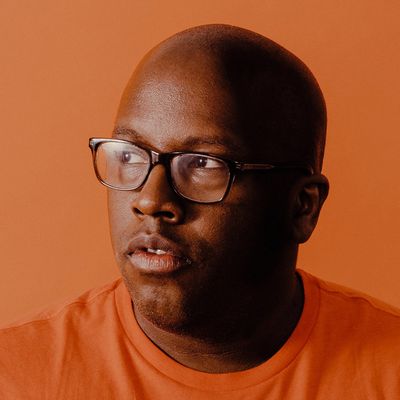
Welcome to Backstage Pass Season 2! We’re premiering our second season with a special double release that features our conversation with Tony and Pulitzer Prize Winner Michael R. Jackson (A Strange Loop) and Anna K. Jacobs (POP!) about their musical Teeth... Read More
From the show: Backstage Pass
Guests

Featured Shows
About
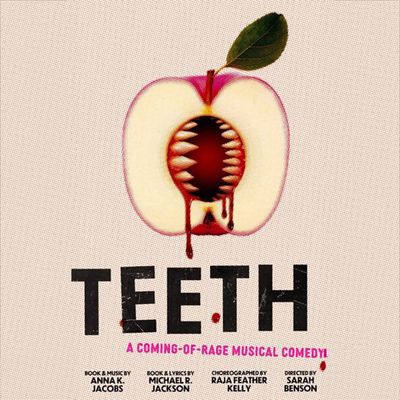
Welcome to Backstage Pass Season 2! We’re premiering our second season with a special double release that features our conversation with Tony and Pulitzer Prize Winner Michael R. Jackson (A Strange Loop) and Anna K. Jacobs (POP!) about their musical Teeth. Check out Episode 2 for the second part of our conversation.
"Teeth" is a musical that follows Dawn O'Keefe, a charismatic leader of a Christian youth group called the Promise Keeper Girls, who grapples with her own sexual desires while suppressing them due to her strict religious upbringing; when violated, she discovers a shocking secret power where her body physically fights back against sexual assault, essentially giving her "teeth" against her attackers; the show explores themes of religious oppression, female sexuality, and bodily autonomy, based on the cult film of the same name, with music by Anna K. Jacobs and lyrics by Michael R. Jackson.
This episode features the songs “Precious Gift” performed by Alyse Alan Louis and the Promise Keeper Girls, “Modest is Hottest” performed by Jason Gotay and Alyse Alan Louis, and “Shame in My Body” performed by Alyse Alan Louis.
Connect with Teeth:
Website: https://teeththemusical.com/
Connect with Michael R. Jackson:
Instagram: @thelivingmichaeljackson
Website: https://www.thelivingmichaeljackson.com/
Connect with Anna K. Jacobs:
Instagram: @theannakjacobs
Website: https://www.annakjacobs.com/
Connect with New York Theatre Barn:
- Support us: newyorktheatrebarn.givingfuel.com/nytb-yea2024
- Twitter: @nytheatrebarn
- Instagram: @newyorktheatrebarn
- Facebook.com/nytheatrebarn
- nytheatrebarn.org
- Pauls’s personal instagram: @paulsmacs
- Teresa’s personal instagram: @terijoyeaux
Transcript
This transcript was automatically generated and might contain errors.
[0:22] Teresa Attridge: Ever wonder what it takes to make a new musical sing? Our mission is to give you an inclusive look behind the scenes. We are interviewing the creatives who are changing musical theater one 11 o'clock number at a time. This is your backstage pass.
[1:10] Teresa Attridge: Hello, everyone. Welcome to season two. I am just smiling ear to ear. One could say you could see all of my teeth because we have the team from Teeth here today. Anna K. Jacobs and Michael R. Jackson.
[1:20] Michael R. Jackson: Woo!
[1:24] Anna K. Jacobs: Woo woo!
[1:25] Michael R. Jackson: Thank you for having us.
[1:27] Anna K. Jacobs: We're so excited you're here, trust us. Pals, do you want to give our little book report on our very fabulous guest today for those who have had their head in the sand and don't know who we're talking about?
[1:35] Pauls Macs: Yeah, if you don't know who these folks are, I'm sorry. Maybe you should do your research. I'm grateful. Now you get to know. So Michael, we're gonna start with you. Michael is an American playwright, composer, and lyricist, best known for his musical A Strange Loop, which won the 2020 Pulitzer Prize for Drama and the 2022 Tony Award for Best Musical. In 2017, Michael received a Jonathan Larson grant from the American Theater Wing and was one of 11 winners of the 2017 Lincoln Center Emerging Artist Award. He was also a Sundance Theater Institute composer fellow and a 2016-2017 Dramatist Guild Fellow. Jackson was named one of the black male writers of our time. In 2019, he received a Whiting Award for Drama and a Helen Merrill Award for Playwriting.
In 2020, Jackson was awarded the Pulitzer Prize for Drama for A Strange Loop, becoming the first black musical theater writer to win the award. He was also the winner of the Lambda Literary Award for Drama and a Fred Ebb Award for aspiring musical theater songwriters. Michael received two Drama Desk Awards, two OB Awards, and two Outer Critic Circle Award honors in June 2020 and honored the 50th anniversary of the first LGBTQ Pride Parade. Queer T named him among the 50 heroes leading the nation toward equality, acceptance, and dignity for all people. In 2022, Jackson was featured in the book 50 Key Figures in Queer U.S. Theater with a profile written by theater scholar Aviva Helena Neff. In March 2021, Jackson was awarded the Wyndham Campbell Literature Prize for Drama. At the 75th Tony Awards, Jackson's musical A Strange Loop was nominated for 11 awards, winning Best Musical and Best Book of a Musical. Welcome, Michael.
[3:04] Michael R. Jackson: Thanks for having me.
[3:06] Teresa Attridge: And the other thing I'll say is, Michael, I actually remember the first time I heard your music. It was in the year 2012. I was at a concert in Seattle and I heard a song called Secretly Hoping about a female identifying person who's in love with a man who has a boyfriend already. And so it's been so exciting to see your career flourish and A Strange Loop happen and all the fantastic things you've accomplished.
[3:27] Michael R. Jackson: Thank you. That means a lot. I love that song. Listen, actors, it's going in your book. 32 bars, 16 bar. It's happening. It's a great comedy song. Anna, we're gonna do you next. Anna K. Jacobs is a Jonathan Larson and Billy Burke Ziegfeld Award-winning composer, lyricist, and bookwriter. In collaboration with Michael R. Jackson, the Pulitzer Prize-winning creator of A Strange Loop, she wrote the music and co-wrote the book for the Drama Desk Award and Lucille Lortel nominated Teeth, which premiered earlier this year at Playwrights Horizons, is now running at Off-Broadway's New World Stages through January 5th. Anna's new stage adaptation of Moana for Disney Cruise Line also recently debuted at the Walt Disney Theater on board the Disney Treasure.
Anna's other musicals include Pop, a pop art whodunit musical about the 1968 shooting of Andy Warhol, which premiered at Yale Repertory Theater in 2009, Anytown, which was commissioned by George Street Playhouse in response to the devastating impact that OxyContin, heroin, and fentanyl have had on communities throughout New Jersey, and Harmony Kansas, a musical about a gay men's a cappella group in rural Western Kansas, which premiered at Diversity Theater in 2012 and received nominations from the San Diego Critic Circle for both Outstanding New Musical and Outstanding New Score. Currently, Anna is developing the new musical, A House Without Windows, a collaboration with playwright Anna Ziegler about the life and disappearance of child prodigy author Barbara Newhall Fallett. Originally from Sydney, Australia, she has called Brooklyn home since 2006.
[4:45] Teresa Attridge: So I think something that is so wonderful is when you have the two right people at the right time for a piece. And I feel like, especially with everything going on right now, this musical, it feels really, really deeply resonant with where we are. But let's head back. How many years has it been now? You started in 2009, was it when you first approached each other?
[5:05] Anna K. Jacobs: That's what Wikipedia says.
[5:06] Teresa Attridge: So now is your time to fact check, right? So I would love to hear more about who approached who, how you started working together, how you heard about one another.
[5:14] Michael R. Jackson: So I saw the film Teeth on DVD in 2009. I thought that it would be an interesting piece to adapt. I approached Anna, who had gone to NYU's grad musical theatre writing program, though not in the same year as me. I was sort of had an instinct that my music was not the right music for this story. And also I thought it was important that I work with a female collaborator. So I approached Anna, who it's work I greatly admired to see if the film struck any chord with her or she thought there was anything interesting in it. We watched it together and things sort of took off from there.
[5:49] Anna K. Jacobs: I love that. Then Anna, how did you feel sort of being approached, being like, hey, do you want to watch this horror movie about a woman having teeth in her vagina with me and see if we can make it a musical? Was that like an automatic yes, or was it a like, I respect you and your vision, I'll kind of see what's going on?
[6:05] Anna K. Jacobs: Before Michael had brought Teeth to me, we had already been talking about wanting to write together. And I was also a big fan of Michael's work. The way that I had come into contact with it initially was he had come back to our program as an alumni and was collaborating with some of the composers in my cycle, and I would sing their work for them, and I was immediately smitten with how bold and original and honest and funny his writing was. So we knew we wanted to write together, and honestly, I'm somebody who works with a lot of different collaborators, but the one thing that all my projects have in common is that I generally start with a collaborator as opposed to a concept. Once I know who I want to write with, then the right concept presents itself.
And in this case, when Michael brought the film to me and I watched it, I didn't know how it would translate to a stage musical, but I could see what it might be like as a piece that Michael would be working on, and I got excited about getting in on that. And the more time that I spent with the material, the more excited I got about the enormous journey that that movie took from starting in a place that was more realistic to ending in a place that was very, very heightened and mythological and very much steeped in horror, and I could see a real reason for why music needed to be a primary way to tell that story. And I also loved the fact that at the center of the story was a young woman exploring her relationship with her body, and that was something I had not seen in the stage musical before.
[7:55] Michael R. Jackson: Absolutely. I love and I mean, really, shout out to you, Michael, for being inspired by a piece, but also saying to yourself, like, I want to make sure I have a collaborator who is tied innately to some of these experiences to make sure we're telling as honest a story as possible. That really speaks to the idea of like how art is intersectional and collaborative, and that the people we bring into spaces can only make things better if we're making sure that we're all taking a look at it from a particular, you know, place. And in this case, it is a young woman talking about sexuality, her body, shame, chastity. The religious thread throughout this entire story to me was really interesting because I feel like we talk about sort of like shame and sexuality a lot, specifically for young women. But to explore that in the horror genre and the musical genre simultaneously is really, really fascinating.
[8:42] Anna K. Jacobs: So when you have this idea of body horror, I mean, who better to tell it than a teenage girl?
[8:47] Michael R. Jackson: Yeah, for sure. Can you talk to us? You've decided to work together to collaborate on this wild horror movie Teeth. When you decide to do that, what is the process like? And I think you said something on an interview I read that like the first thing was deciding where the song should go.
[9:01] Anna K. Jacobs: So I think sort of to piggyback off what Teresa was asking before, what is really interesting about this project is that Michael and I come from two really different perspectives on it. And I think what's successful about the piece is that there's a real marriage of our two differing perspectives and also like own life experiences that we're bringing to the piece. Mine was obviously like having an experience as a woman, and also a woman who I think occupied a lot of different male dominated spaces over the years, including writing these music for musicals. And Michael can speak to his more, but it was very much the sort of the religious themes inside of the show. I don't know, Michael, if you want to talk to that.
[9:41] Michael R. Jackson: I grew up in a Baptist church. I was very, you know, had a very religious background, both sort of as a churchgoer, but also involved in the church and church activities. And so a lot of the themes that were in the film that were about Dawn, our protagonist, sort of dealing with the collision of religious belief and sexual feelings was something that I was very in touch with. And sort of the thing I've been saying to people is that while I am not actually a teenage girl with teeth in her vagina, teenage evangelical with teeth in her vagina, spiritually I am.
[10:18] Anna K. Jacobs: I see that.
[10:19] Michael R. Jackson: Because I just understand that push and pull so well and the confusion that comes out of it. And so that was what I brought to the story. The first thing that Michael and I did was just talk about the movie a lot and how we would want to treat the movie and what kind of music we imagine for the score. I think that something that's really interesting about songwriting, particularly the type of songwriting that we do, where one person is sort of primarily doing the music and the other is primarily doing the lyric, is that people don't recognize that lyrics are music, they're a musical element. So we dove into that together, and one thing that we have very much in common is a shared love of Tori Amos.
It shows I think from the get, we were like, we don't yet know how we're gonna get there, but we know that we want the journey of the score to be one that winds up in that sort of musical world. So we did a lot of like building playlists and chatting about the themes in the show and what our personal connections were to them or how we imagined them being theatricalized. And I, you know, I had this idea of the Promise Keeper Girl ensemble and wanting to use them like a Greek chorus. That was something that I was very excited about. And once we had this sort of like stew of ideas, well, initially we had to take these ideas to Mitchell Liechtenstein, who is the writer-director of the film that we were adapting and sort of pitched them to him.
And he was incredible because at the time, you know, we were two 20-year-old folks who nobody really knew. We were just very passionate about his film. He really took a chance on us. He's an independent filmmaker, he understood independent artists, and he made an arrangement with us that was very generous and has continued to be very generous over the years.
[12:01] Teresa Attridge: You mentioned earlier the Promise Keeper Girls, and so I think we should start with Precious Gift. Can you set up that song?
[12:07] Michael R. Jackson: So we start the show with a sort of abstract moment of Don and Brad sort of approaching each other in this sort of mythic kind of kabuki theater moment that then turns into we're in a church in a sanctuary with mostly young women and a couple of young men and the character of the pastor preaching about something that has happened in the community that has sort of rocked the community, which is that a young woman named Amy Sue Pearson has found herself with child, which means that she has broken her vow of chastity into marriage, which is what the group, the Promise Keeper Girls, which she is a member is all about.
[12:43] Michael R. Jackson: And the pastor is sort of trying to get everybody to remind themselves, particularly the young women, about how important it is that they protect their precious gift, which is sort of a recurring theme or song moment that they have with each other that helps them keep coming back to their pledge of chastity.
[13:01] ♪ Musical number: "Precious Gift" — performed by Alyse Alan Louis and the Promise Keeper Girls ♪
[16:11] Anna K. Jacobs: Oh man, I went to an all-girls Catholic school, and that just really threw me back. Or that guitar at the beginning. Oh, I was just like right into the piece. I know there's an overture, but that just brought me right in. It establishes not only the world we're in, but the rules of that world, which is great because not only have we set up where we are, we've set up the stakes of where we are. And we've done so in a way that it's fun, it's raucous, it's cool, but it's a lot of information that's also thrown in there for us.
[16:36] Michael R. Jackson: I always love when a number is able to get it all done. That's writing, baby. I do this on the podcast, I read lyrics. A precious gift that's only for a husband, a precious gift that comes wrapped in a bow. A precious gift with no returns or exchanges. I lost it when I heard that. A precious gift with just one chance to bestow. And then a precious gift, my shiny little diamond. A precious gift is not like sushi a la carte. We were rolling in the audience when we heard those. Ah, it's just such a beautiful marriage of your two artistic voices.
[17:02] Anna K. Jacobs: Thank you. So we did that pitch, we got the right, and then we got to work on sort of making an outline, and that entailed many, many, many diner hangs with index cards and sort of like coming up with a first pass at a structure for the show. And once we did that, we were jumping in and writing songs, and something that was really helpful to us was right around the time that we started writing the show in earnest, which was 2011, I think. We were contacted by Ars Nova, by Kent Nicholson and Jason Egan, who was starting a new writer's group there for musical theater writers.
[17:39] Michael R. Jackson: And the idea of this program that was called Uncharted was that the first year you would focus on writing songs, and your first year would culminate in a concert of songs, and you would write some book around the songs, but the emphasis was less on the libretto and more on coming up with the meat and potato songs. And then the second year, you developed that into you know a full script, and you got a 29-hour reading with actors, and that really lit a fire under our asses.
[18:09] Anna K. Jacobs: By the end of those two years, we had developed a full script and a full score. I think some of the earliest songs that we wrote were the theme song Teeth, which I think that was the first song we wrote, but we wrote it as a duet for Brad and Dawn. So it was a very, very different kind of iteration from the one that's in the show now. The Dr. Godfrey song from Girls Like You, because we knew that that was a really iconic scene from the movie that needed to be somewhat lifted and not fooled around with too much. Modest is Hottest was really, really early, born again, though it was not really a song for Ryan so much as a song for a character who no longer exists in the show called Kim, who was Dawn's mother, who's now passed away by the time the story starts, and actually possessed a lot of the qualities that ultimately our pastor character came to possess.
[19:01] Michael R. Jackson: We had one outing of Kim when we did our 29-hour reading at Ars Nova and Orfe played her. It was incredible. I'm obsessed with Ars.
[19:10] Anna K. Jacobs: That's fantastic. And then we had to cut the character.
[19:14] Michael R. Jackson: Oh no. We have a lot of happy memories of that experience. And I'm Your Guy was another early, early song. I think the first person who ever sang that one was Alex Brightman.
[19:24] Anna K. Jacobs: Oh my god. Incredible. So let's go to Modest is Hottest. Can you set that up, please?
[20:31] Michael R. Jackson: Modest is Hottest is a moment not that long after Precious Gift where Dawn is talking to the Promise Keeper girls initially about it's a continuation of what Pastor was talking about earlier, and Toby, Dawn's boyfriend, interrupts, and Dawn sends the Promise Keeper girls on a break, and he asks him how everything went sort of on the other side of the town with the boys in dealing with the fallout from Amy Sue and getting pregnant by her boyfriend Brock, who was on the basketball team with Toby, the Eden High Crossbearers, and he tells her that it was sort of a disaster, but that talking to Brock and the other guys about what had happened, reminding him about how perfect Dawn was, and that even the way he dresses sort of epitomizes the purity movement that they both are part of should be. And that sort of tips us into the song moment.
[20:31] Anna K. Jacobs: Yeah, it's gonna just add that whereas Precious Gift is sort of our stab at writing a Christian pop number, Modest is Hottest is sort of us taking a stab at a kind of boy band number.
[20:36] Michael R. Jackson: Alright. Here is Modest is Hottest, performed by Jason Gotay and Alyse Alan Louis.
[20:37] ♪ Musical number: "Modest is Hottest" — performed by Jason Gotay and Alyse Alan Louis ♪
[24:09] Anna K. Jacobs: I love any song that makes me jam, but also makes me furious because that character pisses me off so much. I think that without giving too many spoilers away, you know, for a movie that's been out for 17 years and a musical that's currently playing. I think all of the promise and then the betrayal, like the inevitable betrayal of Toby, and sort of that initial, like shocking moment for Dawn, the realization of the dentata being a part of her. The song, it's a fantasy, right? It's this idea of, yeah, this is this idea of what's going on in this. And later when she says that she felt set up and that therefore it's her fault for not seeing it, you know, it does tie into the biblical story and imagery of we always blame Eve and we never blame the devil. It's a woman's fault that man fell, but it's a woman's fault that she fell.
[24:58] Michael R. Jackson: And sort of that dichotomy, which I think is so present in Dawn and the innate unfairness of that when we talk about sexuality for specifically young girls, but I think in general, is this idea of it is your responsibility whether it's your fault or not? Therefore, it is your fault, no matter what. You know, we kept plugging away at this show at Elise Alan Louis, who plays Dawn in the production, absolutely stages, absolutely incredible, has been with the show since 2011. That she hasn't done every single development step, but she has done the vast majority of them. So her DNA is also very much in the show and has influenced the way that we have developed that character over time. I would actually love to hear more about that.
When you've had a project you've been working on long enough that there are people who stay on and become such an innate part of the family and the team. What is it like to have an actor influence a character? Sort of what are those conversations like? Is it stuff that just pops up in the room, or is it something that you sit and you talk about? What sort of, and I'm sure it's different for everybody, but for you specifically, how did that go?
[26:02] Anna K. Jacobs: I actually just listened to an interview with Elise. She was on the Drama Podcast with Connor and Dylan, Friends of the Pod. She was talking about how grateful she was that you trusted her with this role and have continued to let her develop it. But I trust that was a mutual relationship.
[26:15] Michael R. Jackson: Yeah, I mean, Elise is just an incredibly generous and an incredibly intelligent, smart, and artistic person and performer. Watching her work is kind of incredible because she just is always trying to figure out not just what it is, but how to do it and how she wants the moment to land and then sort of collaborating with those ideas that might not even be what we were first thinking about, but that brings some other dimension that's even more exciting. How collaborative she is is one of her greatest gifts, in addition to her incredible bag of tricks that she has. She has such a deep well of ways of doing her job as an actor and singer, and it's amazing. The other thing I think about Elise, something that was really tricky for me and Michael through the entire development of this piece was the tone.
Yeah, what a wild tone for this film. I mean, I remember watching it in college, and I just like didn't get it. Looking back, I think we were really ambitious because there aren't a lot of other shows that I think exemplified the sort of tone that we were reaching for, which was I guess dark comedy, but like dark comedy where totally earnest and totally absurdist elements could live side by side without it going into a place of like winky tongue-in-cheek. Like we wanted people to genuinely invest in the characters and for the stakes of the characters to feel 100% real and pressing, even though we were placing them in these totally ridiculous situations and the worlds that we were building were extremely heightened.
You know, we were looking towards Sweeney Todd a lot. Little Shop, yeah, Little Shop of Horrors, but there wasn't a ton that exemplified what we wanted to do. But what was very helpful and created, I think, a guide for us was Elise and the way that Elise worked with the material we were making, the way that she took her character seriously and she played her character straight, but was also able to get maximum humor out of the material as a result of doing it that way, as opposed to doing it in a winky way. And so the more that we worked with Elise, I think the more that we understood how to strike the balance of tone that we were going for.
[28:31] Anna K. Jacobs: I think that shows a lot in the music as well, specifically "Modest is Hottest" or "Shame in My Body," because those songs, the earnestness of them, they're so deeply committed to those pieces. But then you have lyrics that are genuinely very funny. "Shame in My Body" in particular. Remember, the first time I heard it was actually I saw a clip of it on TikTok. I stopped everything I was. I think I was like eating something, and I fully pushed my plate away and like huddled over my phone. It catches you with those first couple lines. You laugh, but like this is a very sort of pivotal deep moment for her. And I think the way she performed it was just so beautiful. I think it's so fantastic because "A Strange Loop," I hope this is okay to say I can edit it out, but "A Strange Loop" just feels so personal to Michael in so many ways.
But the fact that this piece feels so collaborative, your collaboration with each other is truly gorgeous. And it shows the versatility in the artistic process. And then to bring Elise in, it feels like "Teeth" is more like a tapestry. You can hear people's voices as you're listening to it. It's just very exciting.
[29:33] Michael R. Jackson: I mean, the other crucial part of that tapestry was our director Sarah Benson and our choreographer Raja Feather Kelly. Because of the length of time that Michael had been developing the show behind music stands, the question of what would this be like on stage was truly a real question for us. I remember our initial conversation with Sarah, and I was like, when they have sex, is it abs like is it are they dancing? Like, is it abstract? Like, how does that work? I remember her being like, oh no, they're just gonna do it. In a pool. Or on that bed. She just had these really strong impulses about we're just gonna do the thing because that's how the horror is going to land. And she also had this sense that the show really needed to live as an event.
She knew who our audience was before we had our audience. Raja did this incredible work of making every musical number almost feel like, I don't know, like a stadium rock show performance. Every number felt like it popped out of the fabric of the piece and had its own individual flavor. And I think our lighting designers also really contributed to that. To use the word tapestry, there was obviously the developmental process leading up to production, but then there was so much that we discovered once we were in production as well because of our collaborators. Or for example, when all those penises drop from the ceiling of Hollywood's day, just sorry.
[30:54] Michael R. Jackson: One of the main things about "Teeth" that I love is the fact that even if something happens, this opportunity to take your power back, even in the most extreme manner. Anyone who's ever been in that situation, there is a part of you that's like, yeah, I really wish I had that opportunity because I would have taken my power back. And so this story as a power story, it's the kind of show you wish you saw when you were younger. "Teeth" is something that if I had seen it at like 14, 15, I would have been like, oh yeah, I get it. This is it. This is what I want to be able to see is the act of it being empowering and not just shameful. Now we're going to go to "Shame in My Body" because it really connects well to what Teresa was just talking about. So please set that up.
[31:35] Anna K. Jacobs: After Dawn leaves, Toby goes away. He says he wants to talk to her later about something he wants to unpack beyond their initial conversation about Brock and Amy Sue and his sort of adoration for purity. And Dawn sends the Promise Keeper Girls home to look at their inventory, their own personal inventories and things they're gonna work on in the sort of follow-up from Amy Sue. And then Dawn has to think about what he's gonna work on. And the thing that she has to work on is her desire for Toby. That she's been trying to really sort of mask and hide, but that every time she sees him, she feels it even more and more. And so there's this conflict of desire and shame in her, and her sort of feeling the shame, but also feeling the desire trying to overwhelm her, and that conflict sort of playing itself out literally in her body.
[32:24] Michael R. Jackson: Yeah, I will say that this was one of the very last songs to come together in the show, and was still changing between the playwrights' production and the New World Stages production. And I'm so glad we kept at it because I feel like of all the songs in our show, this might be the one that we've gotten the most emails about from people who've seen the show. It resonates.
[33:03] Anna K. Jacobs: The heat of temptation. Cause he's so freaking hot, and I wish I did not feel desire booing. But when desire burns, that's when shame reinterns, and I seek its painful salvation. I need the sting of shame in my body. I need it to will be again. I need the sting of shame in my body to cleanse me without and within. I need the sting of shame in my body to keep and protect me from sin. Desire can't win as long as I keep wallowing. It creeps like a vice with its touch cold as ice. Shame is paralyzing. It chops like an ass, touch desire in attracts. It's an awesome guitar. And now I've come on lord, shifting overboard and gotten swept away in her curve. Now I'm drowning in the shame in my body. And I must conflict submerge by drowning in the shame in my body.
Whenever I come near the verge of carnal cause a woman's holding straight ahead, decide to sign. We're meant to quote side to side and hungry lips at home alone. I must reappoint Science Everton. I need the sting of shame in my body. Desire is such agony. I need the sting of shame in my body. Its venom spread so perfectly. I need the sting of shame in my body. The shame Father God put in me to set me free from Toby's and still in my nose. Free from wishing he'd rip off my coast and lick me from my hand down to my tongue. Free from the desiring that flows all through my body.
[36:42] Anna K. Jacobs: I remember seeing a clip of this online. It stopped me in my tracks. There was just something about it. That is such a hard feeling to capture. And I feel like you two did it really masterfully.
[36:57] Teresa Attridge: Thanks for joining us on New York Theatre Barn's Backstage Pass, hosted by Teresa Attridge and Pauls Macs. Join us next time for part two of our conversation with Michael R. Jackson and Anna K. Jacobs about the musical "Teeth." Get your front stage fast. Get to Fun Stage Fest.
© Broadway Podcast Network, All Rights Reserved