

Kalyn West gets real and vulnerable about her Colombian Heritage and what it has meant to navigate the world as a Colombian-American in the Entertainment and Performing Arts Industry... Read More
From the show: Backstage Talk
Guests
Featured Shows
About
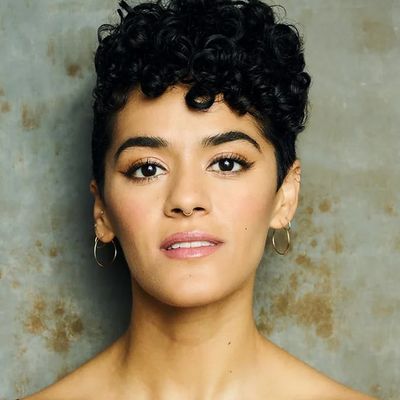
Kalyn West gets real and vulnerable about her Colombian Heritage and what it has meant to navigate the world as a Colombian-American in the Entertainment and Performing Arts Industry. ✨
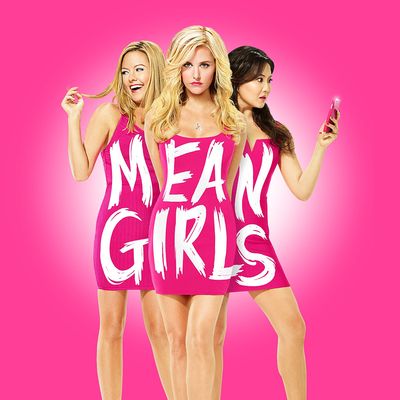
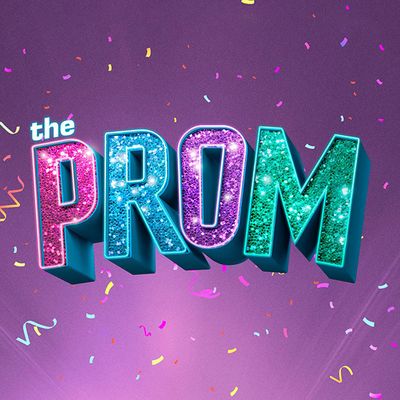
In this episode, Broadway performer Kalyn West, whose Broadway credits include The Prom and the recent The Gardens of Anuncia at Lincoln Center, has a passionate and raw conversation about what it means to be mixed-racial and how she's connecting to her Heritage from a place of love and self-improvement work. 💙
Please visit her Instagram to see what she's been working on!
If you want to know more about our host, please visit his website! Feel free to reach out with feedback or if you want to be part of Backstage Talk!
Follow us on Social Media:
Transcript
This transcript was automatically generated and might contain errors.
[0:00] Martín Acuña: Hi everyone, I am Martín Acuña and you are listening to Backstage Talk.
[0:10] Martín Acuña: Hello everyone, welcome back to another episode of Backstage Talk. I think y'all will be annoyed with me saying that I'm fangirling, but honestly, for this season, I do fangirl a lot with all of my guests. And right now I am because I have the amazing, the beautiful Kalyn West with me.
[0:33] Kalyn West: You're so sweet, thank you.
[0:34] Martín Acuña: Kalyn was born and raised in Salt Lake City, Utah, alongside two younger sisters and a powerhouse mother. And they earned double bachelor degrees in musical theater and anthropology from Weber State University. And after graduating in 2013, Kalyn has been jumping around, we can say the world, but specifically the States, living in New York City, in L.A., doing gigs here and there, touring the country. But ultimately, they have learned that home is where the heart is. And with that intro, ladies, gents, gays, and theys, Kalyn West.
[1:22] Kalyn West: You're so sweet. That was the sweetest intro. Thank you so much. I'm super happy to be here. I'm really happy that we were able to connect. And yeah.
[1:32] Martín Acuña: Shout out to our dear mutual friend, Alyssa, Dr. Drama, who connected us. I am mind blown with your work, Kalyn, and with your talent. But your bio, what else do we need to know about you?
[1:49] Kalyn West: Oh, man. Things to know about me. It's so funny, because after the course of COVID, the priorities, the list of priorities of what identifies me has really changed. I mean, I'm an artist through and through, have been since I was little. I started off dancing and singing when I was really young, got into acting when I was in junior high and high school. And I feel like my training was really random, kind of all over the place. But I fell in love with musical theater, you know, ran off to New York as fast as I could to make that happen, and made my Broadway debut in 2018. And I've had a lot of incredible dreams come true, which I hope that my younger self, I hope that they can look into the future and see me and think like, Oh my God, it actually happened.
Like I got to make my Broadway debut, make my principal Broadway debut in The Prom. I have performed at the Tony's, I've performed on TV shows and the Macy's Thanksgiving Day Parade, like that's all crazy stuff. It's crazy. And it's like, that's all the, you know, New York and Broadway is all the Olympics of the theater industry. And what we do have this craft, you know, so that's all like a very separate entity, but slash and all the work that I've done regionally being a part of like original shows, you know, whether it's working in California or working in like the Adirondacks, like I've been able to touch a lot of really beautiful pieces and tell a lot of different stories. And I think that my voice and my perspective as a storyteller over my career has really shifted a lot. And that's, and that's really exciting. So yeah, I don't know. That was a lot.
[3:36] Martín Acuña: What I need to say is your younger self would be so damn proud. Trust me on that. I know that.
[3:46] Kalyn West: Yeah, I think she would. I think that I truly think that if I could go back and show my younger self, like, Hey, guess what? This all happened. And then I'm surprised you're actually queer and you knew it and you didn't and look at your amazing partner and look at your amazing life. Like I think that their brain would be like, completely blown. So I, yeah, it's, it's, it feels fun to kind of like ruminate on that and, and look back on that. So yeah, lots to be proud of.
[4:15] Martín Acuña: I love that. I love that. I want to go back to your beginnings. Why did you choose musical theater and start this humongous ginormous road Broadway?
[4:28] Kalyn West: I mean, I always, you know, my mom always told me when I was younger that I was singing before I could talk and that I was dancing before I could walk. I think that the arts is just like a very, it's how I express myself. It's how I explore things that I'm feeling. It's how I connect with people. It's how I understand the world in, in a huge way. And it was the first Avenue that really led me into myself. It was the first time, like when I first started getting on a stage and performing and then starting to like play lead roles, you know, when I was in high school it was the first time that I'd really felt confidence in that way. And I felt very self-assured and I felt like I could see myself.
I was starting to see myself for the first time, you know, and, and then I was, I'm good at it. Like I'm, I'm very good at what I do. And so I, and so it just kind of was like a no, a no brainer for me. And like all of my aptitude tests were like arts, arts, or like English. I used to be an English major. Actually, I was going to double major in musical theater and English for a long time when I was in college. And then I found anthropology, which is the study of peoples and cultures, which is exactly what actors do on a daily basis, just from like an entire, a different lens. And so I changed my major like last minute and did an anthropology degree. But yeah, I don't know. I've always, I've always wanted to do it.
It just was, it was just like a duh. I couldn't, there was nothing else that I wanted to do. And so, and, and I was very fortunate that my family was very supportive. Like my mom was always very supportive and I, I had people behind me and I didn't, I very rarely had people who told me like, no, that's not going to happen. The odds are against you, blah, blah, blah, blah. Or even if they did, I didn't hear them. Cause my motto internally was always like, why not me? Like it happens for so many other people. If I'm giving it my all and just getting in the ring, like who's to say that it couldn't also go my way, you know? So, yeah, I love that. I love that. Let's double click a little bit into your Broadway debut, The Prom, touring America with The Prom. Yeah. Tell us about that.
[6:54] Kalyn West: It was beautiful. I, I remember booking it and I got the call while I was, I was living in Astoria and this was back in 2017. I, I truly didn't think that I was going to get it. Uh, and I, but I got the call and I, I booked the, the lab. There was like a, a four week industry lab that we, that happened in the spring before Broadway rehearsal started in September. Um, so I booked that and Broadway at the same time. And I remember I got off the phone with my agent. I was like, I need to take a second. And I was just like sobbing. And I have a picture of myself that I actually posted on my Instagram. That's like really far back where I have like silver nail polish and I'm like sobbing. And I'm like, it's such a sweet moment that it's like, okay, the moment my dreams come true.
And it was the most amazing thing that I've ever done. It was also one of the hardest things I've ever done. Uh, and so worth it. It was such a beautiful experience and that show is always going to have a really special place in my heart. Um, the, when I first did it, I was, uh, I played Shelby in the ensemble and then I understudied Alyssa for the entire process. And then after Tony's I took over as the second Emma understudy. So did that. We closed, um, very, uh, shortly like the fall before COVID hit, actually. It's so crazy to think that those dates were so close together. And then, yeah, tour came around and they offered me Alyssa and I, I, I didn't realize how much I related to Alyssa at the time.
And then I remember starting to really, I mean, I dug into her before, but I like was paying attention the second time around and I was like, Oh, we're very similar. Uh, I can tell the story. So that was special. It was really special to be able to, you know, walk in her shoes for a year and, and quite frankly, to get, to tell a teenage queer story, the queer story that I never got to tell. I had no idea. I grew up in Salt Lake City, Utah, where my identity, you know, which is ever evolving, but my identity as like bisexual, pansexual, you know, demisexual, any of those things like I, or non-binary, like I never had those terms. I never knew. I never, I never knew that a person like me could exist.
And so I never got to have that. I never got to walk in those shoes. And so it was very cathartic for me to be able to go back and, and have that journey every single night and stand up for myself in her, it through her story and affirm that, no, this is who I am, you know, and then to have and have the joy and have the support. Like that was really special. So it was, it was special for me and it was really special to be able to give that to all the young people that came to see our show on tour. It was a really great experience.
[9:48] Martín Acuña: How beautiful. And yeah, that, that, I mean, it must have been mind blowing and just a beautiful, beautiful experience to not only relate to this character, to be an inspiration for so many queer kids out there and in this type of art form. I just love it. I want to dive into your heritage and how
[10:16] Kalyn West: Sure. It's interesting. I'll be so transparent with you. It's funny, and I'm sure a lot of people can relate to this feeling. I get so nervous when this question comes up because I'm Colombian-American, and I'm the first generation born here. So my mom immigrated from Colombia, Bogota, when she was young, and she got her citizenship status when I think I was maybe four or five years old when she got her citizenship. And there's a lot to this story for a lot of family personal reasons. There's a lot of history and a lot of trauma and a lot of pain. And so I have never been, I don't have relationships with that family. So for all intents and purposes, my Latina identity has very much been present because this is how I walk through the world on a daily basis.
But I've also felt significantly detached from it. And it hasn't been a part of my journey. And to be really honest, throughout the course of my career, I have very rarely played roles that I really felt held all of me. I have been in this business semi-professionally, professionally since 2010, something like that. And I only just, for the very first time in my whole career, worked on a show that was about Colombian-Americans. And it wasn't even, it was a residency with, do you know John Rua? Okay. So fantastic. One of the most inspiring, hardworking artists that I've had the pleasure of knowing and working with. But he's developing a piece and I got to go do a residency with him. And that's the very first Colombian story that I have ever been able to tell, that I've ever encountered.
He's the only other Colombian-American in the industry that I know. And so it's hard to answer that question because my career has been colored, not by me getting to bring my identities into the room, but having to fill other identities. Whether it's just the ethnically ambiguous character, some person of color, people in casting consider me a wild card. They don't quite know where to put me. And I get, unfortunately, I get misread as black a lot. And that's not how I identify. And so it's been kind of hard. And especially within musical theater, the percentage of representation amongst Latinx communities on the stage, whether it's in shows or roles or actual people in the industry, performers in the industry, writers in the industry, in tech, there's so few.
There's so few of us. And so I have not seen my heritage, my culture, my identities as integrated into my profession as I would like to see them. And I'm starting to feel more and more now that it's falling on my generation's shoulders that, okay, I can't, if I want to see it, I might have to write it because I don't see anybody else apart from John Rua, but that's the only one. That's the only one that I've seen in my entire career. So yeah, to long-winded, I give long answers. I really just like go off on a roll and like word vomit. So please, I apologize if I'm not making any sense.
[14:36] Martín Acuña: No, you are. You are. And it's beautiful. And I want to thank you for your candor and your transparency with this, because that is why you are here today. Because what I've learned with the last year's Latinx in Musical Theater special and this year's special, we are a plethora of, plethora, plethora, my accent coming through. It's beautiful. I love it. We are like this huge rainbow of colors that, yes, we many times can be mistaken for our heritage or our culture. But I mean, that is why you're here. Because, and in this season also, I recently interviewed Saak Bravo, which is this blonde, blue-eyed, beautiful human. And he had a really, really similar answer as you. Because it's the opposite in the color spectrum. And he told me, like, I'm not cast as Latin, but I'm, I am, I'm a Boricua. I'm from Puerto Rico.
[15:53] Kalyn West: Yeah, yeah.
[15:54] Martín Acuña: Yeah. That usually happens.
[15:57] Kalyn West: Yeah. Like, yes, it's, it's such a hard conversation. And it's very, it's very nuanced. There's, there's many layers to it. And there's many, there are many truths that hold water at the exact same time. And I think that that's, people get really scared to have those conversations because we're so addicted to an all or nothing answer. We want, we want a solution that works for everybody. And the fact is, is that it's just not possible. You know?
[16:34] Martín Acuña: Man, I really relate to that. I mean, I mean, in, in my, in my other direction, it's funny because both of my sisters, I haven't talked to them recently about this, but both of my sisters, at least like if you're an objective third party looking in on my family, they present white. So they both have lighter skin than I, they both have less curly hair. My hair, you can't even tell that it's super curly right now because I chopped it all off. But I used to have like, like lots of curls. But just because of how they, they, they're no less Colombian than I am. We all came from the same mother, the same father, you know, like our blood is the same, but their experience walking through the world is different than mine.
And then, and then how do I reconcile feeling like, you know, I, I am perceived as Latinx, but then I come into spaces and they automatically are like, Oh, so you speak Spanish? Can you do like, and then I'm, then I'm expected to be like the token Spanish person. When that's not my, that's not my identity. That's not how I was raised. And that's not, that's not who I am. And it's such a difficult thing when you're kind of in between, because I feel like I'm not, I'm not like Colombian enough, not Brown enough, not Latinx enough, but I'm not white enough. And so you're kind of stuck in this like ambiguous in between place. And you're never really being seen for who you are because there's no space for nuanced characters that are you like, I exist.
I'm a half Colombian human in this world who was raised in Salt Lake, very much identifies with my Latinx, you know, heritage, but I don't speak Spanish. And I like, but I exist, you know, and so I just, I get tired of feeling like I have to only highlight one or a few small pieces of myself instead of being able to arrive in a space or role with all of myself. You know what I mean?
[18:55] Kalyn West: Yeah, absolutely. So I understand that frustration.
[18:57] Martín Acuña: Yeah. And thank you so much for a candor. I personally love that you've reconciled with your Latinx side and you're every single day trying to improve or connect more or dive deeper into your heritage. It's a very powerful thing to do. I have also personally done that. And it's a mind-blowing transformation that it takes a lot of time and it takes a lot of, I don't know if it's shadow work, self-improvement work, like whatever you want to call it.
[19:32] Kalyn West: I love that you just said that because that keeps coming up in our sphere of life right now. Shadow, like, yes, that's exactly what it is. And I'll be honest, I still have so much further to go because those shadows are heavy. They're heavy. And they are, they're scary. And so I still have a lot of work to do in that avenue, you know? But that's real. That's very real. We all do. In the end, we all do. And it's very much needed that we constantly improve ourselves.
[20:05] Martín Acuña: Yes, yes, yeah. In this huge transformation journey that you've been through, what do you think is the best thing about being a Latin American artist? I have never been asked that question. Let that tell you something. I've never been asked that question. I, let me think for a moment of what my answer would be. The best thing
[20:32] Kalyn West: I mean, I think the best things, I think the best parts of it are yet to come for me. I, whenever I peek behind the veil into, more into my culture and more into my history, which I haven't done because up until this point, as I've mentioned, my family, there's a lot of, there's a lot of ugly history. There's a lot of pain. There's a lot of generational trauma. And so many of those doors have remained closed because out of respect for my mom, or just out of like a sort of unspoken taboo of like, no, we don't talk about those things. We don't ask about those things. And I've only recently slowly started to open those doors. But whenever I do, I encounter these unspoken things, these emotions that I truly like, can't put words to, like, that speak to something that I've known my whole life, but I've never been able to convey to others or even to be able to like, I've never been able to put them into words.
I, and that's beautiful. There's something about, there's something about what is locked in my blood and in my spirit. I just got chills. That will set me free. That is so human and spiritual. And there's just something in there that is going to, I feel like it's going to save me from the like, my entrenchment in, you know, white supremacist, capitalistic, patriarchal society. There's something there that's going to save me and that's going to help me save others and help me heal and help me connect and give me purpose for all the things, you know, in all the avenues of my life, you know, where I have skills and things that I want to do. So yeah, I think the best parts about it, I haven't even found them yet.
I haven't even dug them up, but I can feel them. I can feel them and they're like whispers. It's like, it's like ancestors that kind of lean on my shoulders sometimes and push me. Like whenever I write poetry, I'm a poet as well. When I'm really paying attention to, it's something, I don't know, it comes from somewhere else, but I can like feel them like, like pressing onto my shoulders and like pushing my fingers into the page. And I want to find more of that in all the aspects of my art.
[23:37] Martín Acuña: Drop the mic. That has been one of the most beautiful answers ever. Thank you. Thank you.
[23:48] Martín Acuña: Yes. Thank you so much for sharing that. Do you have any Latin inspiration, any character, any figure?
[23:56] Kalyn West: You know, I, man, I'm going to give you a really positive, no, I don't. But because I am inspired by the people around me, the modern people that are around me, like the people who are doing the work right now, like, you know, John Rua, who is like one of the only Colombian American artists I've had the pleasure of working with who I can talk to who, who understands like where I'm coming from specifically, like I'm inspired by all of my Latinx friends who are in the business hustling and succeeding. I'm so, I'm so inspired by all of my, all of my queer peers who are in the business, you know, succeeding and creating and, and, and, and being a part of this movement that is, and can only make our industry better.
I feel my whole life, I've never been one to be like looking back for inspirations. I always look forward for inspirations. Although as I'm saying that right now, I'm chaotic. I love it. Hi, baby. I will say that, and this is actually perfect timing. One person whom I find incredibly inspiring is Graciela Daniel. And I, maybe that's what it is. It's hard for me to be inspired by a person unless I've like worked with them. And I know their humanness. I'm inspired by people's humanness, not by the credits that they have or, or anything like that. That's what it is. I'm inspired by, by, by humanness and by people's compassion and how they communicate and how their minds work. And so she's also one of the, she's like one of the first, you know, Latinx artists that I've ever worked with.
She, I'm, so the announcement just came out on Broadway World that I'm going to be going to New York in the fall and doing the Gardens of Anuncia at Lincoln Center, working with her and Michael John LaChiusa and a bunch of like super awesome people. We did the show about two years ago in San Diego at the Old Globe. And it was one of my first times stepping into, it was one of the only times that I have gotten to step into an original Latinx piece, like from the ground up. I, you know, other than something like In the Heights, which I was not a part of the original cast, but I got to do that show. And she's one of the first Latinx inspirations I think that I've had in my life, truly. And that was as recent as two years ago, because she, that woman is a spunky little ball of fire.
And I think one of the things that inspires me the most is, is that she's, I think she's like 85 now, something like that. But when you speak to her, and when you work with her, her inner child, it's just like, she's right there. She's right there. And it's the most beautiful thing to bear witness to.
[26:57] Martín Acuña: Oh, love it. Yeah. My last question for you. What are your top five favorite musical theater shows?
[27:03] Kalyn West: Ha, that's a good question. My top five, I mean, In the Heights, obviously, I love that show. The one show I saw recently that just like swept Tony's, Kimberly Akimbo, have you seen it?
[27:22] Martín Acuña: Yes.
[27:23] Kalyn West: It's so good. I loved it. Um, let's see. Oh, okay, this is gonna out. So the very first show, very first piece of musical theater that I ever fell in love with. I didn't even know what musical theater was. I was in junior high. And I used to go to the library across the street from my school, when we had VHSs, and I would rent them and bring them home. And I fell in love with Cats. I was mystified by the dance, and like, probably the sensuality. And like, I also loved Cats. And I so that was like one of my first musicals that I loved ever before I knew what musical theater was, and I fell in love with it. Uh, yeah. So that one, I really loved. I mean, Hadestown is beautiful. Wicked was like one of my frickin, like, I could have died happy intermission when I saw it.
It's like, and it's such a queer affirming story. It's such a, an underdog outsider story that I relate to so much. One of my favorite shows ever was once just I remember the staging of that was so poetic and beautiful. And the way they, like, I just I get the company of that show was really glorious. There's so many and I can't think of any more titles right now. My brain. I'm sure there's more. I'm sure there's plenty more. Oh, Hunchback of Notre Dame has one of my favorite scores of all time. Oh my god, whenever I think about that, the choir. I did that. I did that show in Pennsylvania at the Fulton Opera House. And we had 120 person choir that was separated into two pieces. So at least 80 people, 60 people were on stage every single night, we had a full fucking 60 person choir every night.
And I have goosebumps right now when I think about it, like, it was it was amazing. It was such a wild theatrical experience to be a part of much less like, man being in the space and watching it and just having that sound the epicness of it fill the theater like nothing like it.
[29:46] Martín Acuña: I love that note. I want to say thank you for your candor, your transparency, your honesty, your everything, your hype. Thank you for being here for being part of this Ladinson Musical Theater special. I cannot wait to see more of your success. Kaylin, thank you so much.
[30:01] Kalyn West: Thank you so much. I really appreciate that. And thank you for having me. It's really, you know, it's these these things really matter. And so I'm very grateful to have a place where I can, you know, talk about the stuff that we've talked about today. And just like you're making you're making space for me. So many people one little like episode at a time. It's beautiful. Thank you for doing what you do. You're always welcome here. Thank you.
[30:30] Martín Acuña: Thanks, everyone for listening to this new episode of Backstage Talk. Remember to follow us on Facebook and Instagram at Backstage Talk Podcast.
© Broadway Podcast Network, All Rights Reserved