

Tommy Antonio, a wonderful and incredible musician, composer for Musical Theatre and other theatrical projects is here today! 🤩 He shares with us his creative process and how has it been working on an original project with "Rebel" and the musical adaptation of a Roald Dahl Title... Read More
From the show: Backstage Talk
Featured Shows
About
Tommy Antonio, a wonderful and incredible musician, composer for Musical Theatre and other theatrical projects is here today! 🤩
He shares with us his creative process and how has it been working on an original project with "Rebel" and the musical adaptation of a Roald Dahl Title. 🎵
Join this deep conversation about creativity, composition, and musical theatre! 🎧
Also, don't forget to check out Tommy's work on Instagram and his website!
Let me know what you think about us leaving a review on Apple Podcasts! 👌🏻 Big shout-out and thanks to Juan Hernández and Andrea Martínez for our wonderful intro and outro music!
Transcript
This transcript was automatically generated and might contain errors.
[0:00] Martín Acuña: Hi, everyone. I am Martín Acuña, and you're listening to Backstage Talk.
[0:18] Martín Acuña: Hello, everyone. Welcome back. Today's guest is from all across the pond. I have here with me Tommy Antonio. He is a Scottish songwriter, composer, and multi-instrumentalist based between Edinburgh and London. He studied jazz performance at the Guildhall School of Music and Drama in London, where he developed a playful flair for composition and songwriting. Tommy, thank you so much for coming over. It is an honor and a pleasure.
[0:48] Tommy Antonio: Such a pleasure for me. Thanks for having me aboard.
[0:51] Martín Acuña: So, tell us a little bit about your journey as an artist, as a composer, an instrumentalist, and a songwriter.
[1:07] Tommy Antonio: Wow. So, lots to talk about. Well, I'll admit that I'm quite late to the game of musical theatre. As a teenager, I was a jazz musician. I was all jazz. No words, no singing. I was obsessed. I was on my contrabasso up in Scotland. But as soon as I got to music college, I discovered songwriting and fell in love. And it was, again, not musical theatre quite yet. It was songwriters like Bob Dylan and Joni Mitchell and these American sort of folk songwriters. Leonard Cohen, who completely enchanted me. Although I was pretty interested in cabaret, which I saw at school and performed in, and Bugsy Malone, and then the Pajama Game, which was on at my college. I was enjoying them, but it would take another ten years before I thought, hey, let's try this.
And, yeah, only when I was, yeah, just past my 30th birthday did I enroll in a course, this amazing thing, and I recommend it to anybody who's into musicals in London. It feels like writing them. It's called Book Music and Lyrics, and it's basically like, I call it like musical therapy, because you get into a room with another 12 people who just love the form, and then some writers who are much more experienced, and directors and dramaturgs, and you get assigned scenes from plays, or perhaps asked to create a story of your own, and every week you bring a song timidly to the, you know, to the feet of these people, and you show it, you play it, and then you get a critique from the whole circle on how it's good, perhaps, or how it really needs some work, and, my God, you learn fast, because there's 12 other, 12 opinions, and 12 people to try and please, but then you also get a sense of this wonderful collaborative nature of musical theatre, where people are, people are just so keen to be involved in your story, to make it sing, and to ask questions about why, why, why, why, why, why this character, why this story, why this, why this moment, why this song is key, so that was really informative, and I was lucky enough to meet my writing partner, Jenny, Jenny Wharton, who is a playwright, but is also, was also keen on writing songs, and I'd never written a play, and she'd never written a song, and so we met, and I was, I was the, you know, songwriter, and she, and she, so she's taught me about drama, and I've taught her, hopefully, a little about, about songwriting, although I think, I think she's probably taught me a lot more than I've taught her, she's incredible, and we started writing together, and pitched an idea to the Roald Dahl estate, this is Roald Dahl's grandson, who runs this, this sort of Roald Dahl empire, and it was a story, a very small story, like a, one that's not very well known, Esiotrot, which is tortoise, spelled backwards, and it's, it's a charming story, and we wrote the songs, and they loved it, but they were like, I don't think we can find an audience for this book, because no one knows what it is, so then they, so, so we were like, okay, disappointed, but then they turned around, and they said, hey, do the twits instead, and I'm like, oh my God, I, I grew up with that story, I read it as a child, it was on my shelf, my, my brothers and sisters love it, my mum read it, my nephews and nieces are reading it, I blew my mind, so that's how that emerged, and it was just a lot of luck, and, and a bit of, yeah, a bit of application there, and I suppose over Covid, I'll just, I'll just keep on talking, I think, you know, this, this, this new life as a, as a sort of songwriter has emerged during the pandemic, in a way that's quite unexpected, and I, I was performing, I was doing gigs with, I was doing concerts with, with bands, and running choirs, and touring round, round, round the world, and in the pandemic, just that, and I suddenly found myself with sort of opportunity to write, and, and, and the love of it as well, so life has changed a lot, my life as an instrumentalist is sort of slowed down, and my life as a songwriter has, has, has gotten, gotten some, gotten a boost, I'd say, so it's musical theatre primarily, and, and also some pop music, which I love, love to, so some things on Spotify, which are not, not for musicals, but just, you know, to go on the radio, and so yeah, that's where I am at the moment.
[6:52] Martín Acuña: I love it. Talk to us a little bit about Rebel, this musical in which you've worked in the book, in the lyrics, and the music.
[7:02] Tommy Antonio: Yeah, well, you've alighted on something, you've alighted on something problematic with the title, because, of course, Rebel can be, can be called rebel, like an order, rebel, man, or rebel, like she's a rebel. I'm not sure which one it is, so, you know, maybe it could be either. Well, during, you know, as I got into musical theatre, I was like, I tell you what, I was a little bit frustrated, because there's a lot of, I think musicals are incredible, but they're very expensive, and as a songwriter, they're expensive, so, and it feels like there's maybe a bit of restriction around, you know, what stories are, what stories are not allowed, but the stories that are going to get traction easily, and I was asking people, you know, hey, let me join in with your story, let me join in with your project as a songwriter, and finding that I wanted to be in the driver's seat, I wanted to be able to say, I like this story for these reasons, and I want to create it, and I think it can work here, and so I started writing the book as well, and that's, it's been a massive learning curve.
Again, my, my, my compatriot Jenny Wharton has been acting as a dramaturg on, on, on Rebel, teaching me even more about, about the drama, and it's been, it's been incredible to be able to formulate a story from, it's, it's from, I mean, it's a true story that's, that's there, but of course, we don't know the conversations that occurred, and I think this is the magic of trying to, trying to reach into history and pull out, pull out some captivating sort of characters, is to, is to imagine what might have been said, but, but also through the eyes of modern, the modern day. So, the language I'm using is very modern, the, the music is reflective of, of, of the Scottish, Scottish traditional music.
There's a bit of, there's quite a lot of swearing as well, because I think, I mean, my experience in Scotland was that there was a lot of that, and I grew up in a family where we swore a lot, and I, I quite enjoy it as a, as a sort of mode of expression. So, yeah, the language is, the language is taking shape, and it's also fun to try and characterize the sort of environment where I grew up as a child, which was on the west coast of Scotland, which, which is near the Atlantic, and so a bit closer to Columbia than, than where I am now. And, and there we, I lived in a village, and there were these characters who I remember as a, you know, as a six-year-old, as being so, so kind of, well, I remember them as caricatures now.
There was, you know, the, the bin man, who, who you could never understand a word of, and the guy in the shop who was from Yorkshire, and sort of was so big. I mean, I was only six, so I guess he just looked enormous to me. These characters, and I, I used to know them in the, the, the fishermen who would fire golf balls at us, or...
[10:49] Tommy Antonio: When we went to swim, I remember this feeling of being quite held in a community and going to these, what we call a ceili. A ceili is like a Scottish country dance on the weekend, and knowing everyone there and feeling that strong sense of community. And I kind of want to recreate that and kind of go home and also get back in touch with Scotland, because I've lived in London now for 15 years and I want to know it again. So writing Revel and getting commissioned by Pitlochry Festival Theatre and Capital Theatres is an opportunity for me to spend time there, to learn the language again, to learn the history that I didn't even know. And also celebrate this woman, Anne McIntosh's life. She is largely an unsung hero of a very important chapter in Scotland's history.
And I think, honestly, I think she deserves to have her name in the songs and to have her story told. And it's not, I haven't felt that before, I'm really looking forward to showing people what she did or my take on what she did.
[12:19] Tommy Antonio: And that sounds fun. Listeners, you can go into Tommy's website and you will find two songs from this development project, and they are amazing. I really enjoyed listening to them. Tommy, no, thank you. How has this whole development process been for you? Because you've juggled between lyrics, music and book. Gosh, well, it's, I'm definitely a lyrics first songwriter. And actually, I don't really write, I'm not really writing at the piano either. I'm writing in a chair upstairs. The music as well. So the process of writing the book, music and lyrics meant that I actually haven't, I'm in my studio right now, I'm talking to you in my studio. I haven't really been here for months, because I've been upstairs writing, writing lyrics and melodies, which is my happy place.
So I think I've done more of what I've enjoyed. But now, you know, it's time to orchestrate. So it's back to the computer and the scores. And I think in terms of being a storyteller, I feel like I've developed quite a lot and learned a lot about how hard it is. And I think I probably underestimated that. You know, I've been writing songs for about 15 years. And so that comes very naturally. It's definitely where my strength lies. So the process of writing dialogue and digging into character and really trying to be the authority in this world of, you know, I'm the only one who knows what these characters want and what they do, what they love, what they're after. And so it's, you know, it's a process of, I think it's a process of writing the character, but also letting the character write you.
The character is, these characters seem like they're telling me what they should be. And perhaps that's just a sort of a way of talking about the subconscious process. But, you know, I've gradually been finding that, you know, I identify with some, and I think there are others who I'm quite scared of. And so the battle between, for example, Anne McIntosh, this feisty, forceful, and incredibly courageous character, very passionate and very, I think, very fiery. She's mirrored in quite a similar way between the, you know, Hamilton and, oh, who's the guy who killed Hamilton?
[15:21] Tommy Antonio: Aaron Burr. Yeah, sort of Hamilton and Aaron Burr are very different people. And they, you know, they're constantly sort of at odds. And Anne McIntosh, I mean, historically, and her husband were at odds with each other as well. She married him. He was older, an older, richer man. And she married him. And when it came to battle, when it came to the rebellion, he joined the side of the English, and she joined the side of the Scottish. They joined different sides in a war, and they're a married couple. I just thought, oh, my gosh, I mean, an incredible thing for her to do. And she raised an army to fight against him. I just thought, wow, so many, there's so much fire in this incredible woman. But actually, I honestly, I see more of myself in him, in Angus, her husband. And that's emerged more and more as I've written it, which has been very interesting to be a part of.
[16:41] Martín Acuña: That's amazing. And it sounds like a really fun process. I love that as a writer, one gets to a point in which literally, yes, you have like, whole creative control of things. But characters are leading the way on the story. And I think that that's an important part in the writing process, because you may have thought about something for a character, and suddenly, it turns around, and the character says, that doesn't work for me, this works best. And I think it's a very important part of the writing process.
[17:26] Tommy Antonio: I think further to that, it's not just writing characters, I think it's writing music and writing, certainly writing music, there's a sense in which the song will lead you somewhere, and you've just kind of got to get out of the way. I think certainly with melodies, they usually know where they want to go. And yeah, I think allowing them to fly off where they want is a useful skill, not always possible if you're feeling a bit controlling. But yeah, it's essential.
[18:11] Martín Acuña: What, in your experience, writing songs, and now diving into writing book, what does it take to write musical theatre?
[18:23] Tommy Antonio: Well, you know, as I've already described, I'm not too far down the line. So take my advice, with my insight, with a pinch of salt, I'm not sure I have loads. But I know what it's like to write outside of the theatre, and inside, because I've been a composer and songwriter outside of it for longer than I've been in. And I think what I noticed immediately is that, you know, there are, I think when you start, when I started writing for, you know, for theatrical kind of situations, for scenes, for characters, I realised that music, and this was quite hard to appreciate, music is, music is a very, I'm not going to call it, I'm not going to call it a secondary thing, but character and drama are so primary that, you know, they are the sort of the driving force of the entire thing, that a beautiful melody isn't enough.
It has to be a beautiful melody that describes what's happening between the, you know, for the person who's singing. And this harmony, although it's rather nice, rather, you know, you quite like playing it at the piano, maybe you quite like hearing it, maybe it's quite similar to that Beatles song you heard, if it doesn't describe what's happening on stage right now, then it's not doing its job. And I thought, wow, this is so different to writing pop music, for example, where you can write anything you want, it doesn't have to describe a dramatic situation, it doesn't have to let you know that there's fear, that there's, you know, that this person is scared, or these two are in love. So this has been the biggest learning curve, is to always be, always be in service of the drama, to become a dramatist with music.
I think my, probably my default, and what I'm having to sort of unlearn, is to just write melodies that I enjoy, that I love the sound of, sort of like the, I mean, I think Alan Menken is a very, is a great dramatist. He also writes very beautiful melodies. I think he manages to marry the two. But I saw South Pacific a week ago at Chichester Festival Theatre, which is this wonderful progressive theatre in England, and there's a song in there which sort of asks, it has two people, two men talking about whether you learn, it's quite, you know, it's quite a tough subject, whether you learn, whether you're born a racist, or you learn it. It's such a sort of hot sort of
[21:38] Martín Acuña: Welcome back to Backstage Talk! Today, we have an incredible musician and composer, Tommy Antonio, joining us. Tommy, it's great to have you here!
[22:08] Tommy Antonio: Thank you, Martín! I'm really excited to be here and share my journey with everyone.
[22:38] Martín Acuña: Let's dive right in. Can you tell us about your creative process? How do you approach composing for musical theatre?
[23:08] Tommy Antonio: Absolutely! My creative process often starts with a concept or a story that resonates with me. I like to immerse myself in the characters and their emotions. From there, I usually begin with a melody or a chord progression that captures the essence of the piece. It's all about finding that spark that connects the music to the narrative.
[23:38] Martín Acuña: That sounds fascinating! Do you have any specific techniques or tools that you use during your composition process?
[24:08] Tommy Antonio: Yes, I often use a piano to experiment with different melodies and harmonies. I also like to record my ideas on my phone or computer so I can revisit them later. Sometimes, I collaborate with lyricists, and that collaboration can really shape the direction of the music.
[24:38] Martín Acuña: Collaboration is key in musical theatre. Speaking of which, you've been working on an original project called "Rebel." Can you share a bit about that?
[25:08] Tommy Antonio: "Rebel" is a project that I'm really passionate about. It's a contemporary musical that explores themes of identity and self-acceptance. The story follows a young person navigating their journey in a world that often tries to box them in. I'm excited about the music we've created for it; it really reflects the emotions and struggles of the characters.
[25:38] Martín Acuña: That sounds powerful! And I understand you're also working on a musical adaptation of a Roald Dahl title. Which one is it?
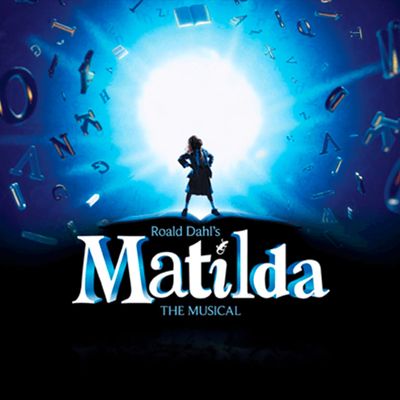
[26:08] Tommy Antonio: Yes! I'm adapting "Matilda." It's such a beloved story, and the themes of empowerment and resilience really resonate with me. The music for this adaptation is a blend of whimsical and heartfelt moments, capturing the spirit of the original story while adding my own twist.
[26:38] Martín Acuña: "Matilda" is a classic! I'm sure your interpretation will bring something fresh to it. How do you balance staying true to the original while also infusing your own style?
[27:08] Tommy Antonio: That's a great question! I think it's important to honor the source material while also allowing room for innovation. I focus on the core messages of the story and then think about how I can enhance those through music. It's a delicate balance, but one that I really enjoy exploring.
[27:38] Martín Acuña: It sounds like you have a clear vision for your projects. What advice would you give to aspiring composers in the musical theatre world?
[28:08] Tommy Antonio: My advice would be to stay true to your voice and never stop creating. It's easy to get discouraged, but every piece you write is a step towards finding your unique sound. Collaborate with others, seek feedback, and keep pushing your boundaries. The more you create, the more you'll grow.
[28:38] Martín Acuña: Wise words, Tommy! Thank you for sharing your insights with us today. It's been a pleasure having you on the show.
[29:08] Tommy Antonio: Thank you, Martín! I've really enjoyed our conversation.
[29:18] Martín Acuña: And to our listeners, be sure to check out Tommy's work on Instagram and his website. Don't forget to leave us a review on Apple Podcasts!
[29:28] Tommy Antonio: Yes, please do! Your feedback means a lot to us.
[29:38] Martín Acuña: A big shout-out to Juan Hernández and Andrea Martínez for our wonderful intro and outro music. Until next time, keep supporting the arts!
[29:48] Tommy Antonio: Bye, everyone!
[29:58] Martín Acuña: Bye!
© Broadway Podcast Network, All Rights Reserved