

Davon Williams is ready to keep rocking this industry! 🔥 😃As an international performer, you might have seen him in different commercials or TV/film projects, or on the stage. 🤩 Davon reunited 500 union members to craft the recently passed Black Theatre Matters Bill, and he is here to chat about his craft!.. Read More
From the show: Backstage Talk
Featured Shows
About
Davon Williams is ready to keep rocking this industry! 🔥
😃As an international performer, you might have seen him in different commercials or TV/film projects, or on the stage. 🤩 Davon reunited 500 union members to craft the recently passed Black Theatre Matters Bill, and he is here to chat about his craft!
His advice is pure gold, I can tell you that! Also, he has a show coming up on the 19th of December, so if you are in New York, be sure to check it out and go see him perform! 🌟
Check out Davon's work on his website and find information about the show here.
Transcript
This transcript was automatically generated and might contain errors.
[0:00] Martín Acuña: Hi everyone. I am Martín Acuña and you are listening to Backstage Talk.
[0:18] Martín Acuña: Hello everyone. Welcome back to another episode of Backstage Talk. Today's guest is a truly special one. He is an international performer, delegate for the Actors' Equity Association, and a TED Talk alum. Davon Williams is committed to using his talents to bring about substantive social change. As a performing artist, he has appeared in several national and international commercials, worked on TV film projects as a member of SAG-AFTRA, and has become an award-winning actor performing on stages all over America and Asia. He has served as a ghostwriter for numerous politicians, the Occupy Hong Kong leaders, and activists for the Freddie Gray uprising. He launched the receipts with Davon Williams, which in less than a year uncovered union electioneering, was the first to publicly break the news regarding jurisdictional fights between SAG-AFTRA and Actors' Equity, alleged embellishment, and united over 500 union members to craft the recently passed landmark legislation, the Black Theater Matters Bill. Davon, it is an honor to have you over. Welcome to Backstage Talk.
[1:36] Davon Williams: Hey, I'm gonna pretend that I'm in Colombia with you, so I'm technically pretending I'm on vacation, and I have to say that was a strong intro. Thank you. I feel very accomplished after that, so I, one, thank you for that moment. I feel a lot more awake now. I love you. I am good navigating, working a lot, doing a lot of stuff at the same time, but good, fortunately. What about you?
[1:58] Martín Acuña: I'm happy. I'm feeling very energetic after an intro, and I know, I know this is a podcast, so if people can't see the video, right now I'm looking at Davon over a screen, and I just see this blue streak of hair, so I've just been like, I wonder, should I dye my hair? I wonder how difficult that was. It's literally like taking the entire attention, all right? So every now and then, I think I'm gonna try and come back to the hair. You're gonna be like, let's talk about, let's talk about diversity, and I'm like, yeah, kind of like your hair. That's the goal for today, just so you know.
[2:36] Davon Williams: I love it, I love it, and truly it's not that difficult to dye your hair. You gotta be careful not to burn it with the dyeing, but it's good.
[2:56] Davon Williams: All right, for someone who makes a lot of mistakes, that's me. I'm positive about, I'll have a burn story. Okay, so what made you choose the thespian path in life? What was your aha moment?
[3:10] Davon Williams: Okay, come on, thespian. Okay, it's not every day you hear that word. Ooh, thespian. What made me want to be a thespian? I'm gonna, let's bring that word back. Ooh, okay, thespian. So what made me want is, when I was six years old, my grandma put me on Hooked on Phonics, was not working. She put, Hooked on Phonics was essentially to help you read. It was a really popular program in the 90s that everybody was talking about. The commercials were lit, the jingles were awesome. It was great, and it was a whole little box with just all this phonics stuff in it. Did not work. And I went to an AME Christian school, and it was a great school. They were rooted in the arts, Black history, things of the like, but I just wasn't catching on until a teaching artist showed up.
And that teaching artist, who was working, happened to be in Baltimore, came to do a little special something something with us, when he wasn't teaching us funga, alafia, ashe, ashe, which is so funny looking back at how like a lot of my work is international now, and seeing how the roots also of that came out of that space. They also just taught us a new way to look at reading, and it took off. It took off so much that that's all I could think about. When I went to school, I wanted to be a part of the industry, but I wanted to be part of it in an educational sense. Because of that moment, it was a spiritual, like theater is spiritual for me. It's something that could bring about so much change, and I think it's so underutilized, and I think often introduced to how many claps can I get, or how much money can I make? And it's like, no, there's something so much bigger that encompasses all of that. So I've been chasing that, that idea of really revolutionizing what theater and entertainment in general can do.
[5:03] Martín Acuña: I love it. I love it. That's amazing. And you've done things all over the world. So tell me a little bit about your journey in musical theater, in film, in TV, in theater in general, because you've done things all over the place.
[5:17] Davon Williams: It was so funny, because when I came out of school, it was definitely like, okay, here are my curriculums. I want to sell these. And then I'd be like, okay, I'm going to do an audition every now and then. So I did this audition while I was still in school at a theater called the Walnut Street Theater. It's one of the oldest theaters in America. I go there. I do the audition. And again, it was just for giggles. It was Streetcar Named Desire. I'm there. I'm thinking like, they're not going to hire me. Everybody in it's white. And the guy, Malcolm, I think he just passed recently. Oh, thoughts and prayers. But Malcolm is like, oh, I think that's something we can do with you. And I was like, huh?
And he was British. I don't know if that accent's coming through right now. He was like, I think there's something we can do with you. And I was like, okay, whatever. So I go back to school. I get a phone call probably three hours or four hours later being like, hey, so we would like to cast you at the Walnut Street Theater. And I was like, wait, that's acting? That's the real world? Oh, my God. So when I had done that show, I was like, well, I want to do another show. And I started understudying. I was able to work up a relationship with a lot of the theaters in Philadelphia. So I ended up doing Titus Andronicus, Shakespeare, Twelfth Night. So a lot of new productions. Philadelphia is known for their productions in experimental theater.
So there were a lot of times I was reciting Shakespeare. I was doing Tennessee Williams. And sometimes I was in a box doing Vogue or just it made no sense. But that's Philadelphia Theater for you. So then I'm like, well, what happens if I go to L.A.? I go to L.A., three national commercials, an independent film, a bunch of stuff that then leads me to international work with the, what is it, the TED Talk, Hong Kong Disneyland, where that's a funny story. Because when I was invited to audition for that, I thought, oh, my goodness, I'm finally going to get to be Simba. I'm in like my 20s. I'm in my 20s. This is happening. I'm fit. My boobs are sitting high. I am doing great. And they asked me to audition for Scar.
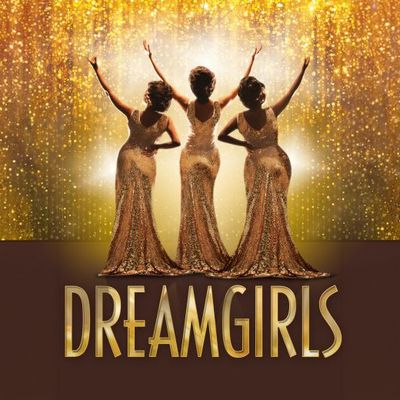
And I'm thinking, oh, my God, I didn't moisturize. I'm not moisturizing. Like my skin must have been dry. They must have thought I was 40. And then I later found out that they were casting lower and younger. So it made me feel a little bit better. But I still sighed. I was like, what are you trying to say, Disney? I was doing a lot of voiceovers for Disney at the time. I ended up launching a band, which worked internationally. Again, just picking up, just picking up how this went. And then when I got back to LA, it got better. I did my first production of Dreamgirls, which was the international tour. And at this point, I'm like, okay, I got the international thing down. So I'm ready. We're going to Japan.
Oh, we're going to Japan. I got this. And then right before we were about to do the international part of the tour, I got taken off to do Grey Gardens with the Rachel York of Broadway and the Betty Buckley. And then had the audacity to become friends with them. It's like, what is happening? So then I ended up going back to Asia to do some more stuff. And then when I came back, my agent was like, look, let's do New York. What's the worst that could happen? And I'm like, you know what? New York is crowded. I don't like it. It's like, it's just aggressive. Everyone wants to fight all the time. I like LA. And he's like, just do it for a year. I think you can break Broadway. What's the worst that could happen?
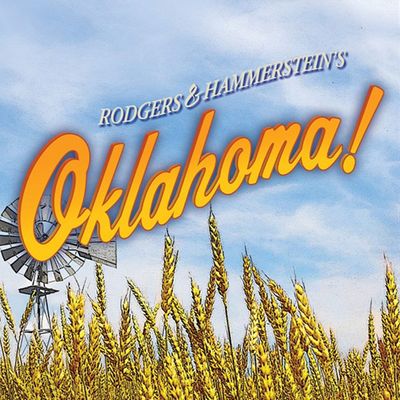
I get here. I booked the lead of Oklahoma. I am one of three Curlies who have ever been, who's black to ever be Curly. That's huge. And then a pandemic happens. So what's the worst that could happen? A pandemic. And now I'm still in New York. But that's, it's been, it's just been an incredible ride. It's been a giving ride. And sometimes I forget about it because it never feels like work. It just feels like, oh, I'm going to play with people for three weeks and then show people what we came up with, which that's what it should be. We're artists, we're creating. But sometimes I sit back and I forget like, oh yeah, I've had a pretty active career. And I love it.
[9:36] Martín Acuña: You've jumped from one place to another, from one thing to another. And what a privilege to be a living artist. Right now, we're still through the pandemic. And it's just like crazy to have had that journey. And I love it. All of it. I want to ask you now, how do you approach a character when it is theater, when it's film, when it's TV, when it's a straight play, when it's a musical, what's your favorite way to approach a new character?
[10:09] Davon Williams: What every director soon learns about me is that I might look cool. I might, I might be within like the golden ratio. So the chin is giving you something, but I'm giving you Steve Urkel. That's Family Matters nerd.
[10:28] Davon Williams: I'm giving you a dorkable nerd from beginning to end. I will give you a whole speech on a comma. I will give you a whole monologue on a stage direction and what I think about it and things of the like because I'm very big on the details. So for me, approaching a character is always about approaching the research, research, research, research, research. And sometimes, probably 80% of that, you're not going to use. But something in that is going to help you understand that context. I remember doing Oklahoma. I was like, oh, we're going to do a Black version. We're going to do all this. I start doing the research around Oklahoma. And what I learned is, there's an entire history that has been covered up and it's regarding Black cowboys.
Black cowboys have been erased. They have been forgotten. And their history is scattered all over the place. And what I loved about this is that not only was I able to play with new friends who I'm still talking to, but I was able to pull all that together and represent that forgotten history. And it was in that. And I remember everyone coming in and being like, it's so nuanced. It doesn't feel wrong. It's just, it's so nuanced. I didn't know Oklahoma could be this alive. And I was like, that's the power of detail. And that's always been the fun for me. How specific can we get with every single moment, comma, misspelling of a word, things of the like. I love it. I love it.
[12:08] Martín Acuña: So you went to Asia for a long time and you were working with Hong Kong Disneyland. What was the best part of working at the Festival of the Lion King? Besides that story you just told us about auditioning for Simba being cast for Scar.
[12:21] Davon Williams: Yes. And investing in lotion. Yes. I would say one of my favorite things is figuring out what I can get away with. I'm joking, but I'm not. As in like, during the show, what's fun about Disney is that Disney's very much like, look, this is the hour. These are the hours. This is what we need you to do. This is the character. Stay within that realm. But when you're doing a musical for Disney, you get a little space to work. So I was like, well, I'm going to use this space and I'm going to blow it up. So I loved playing with age, the idea of like, oh, Scar starts here. He ends here. I love playing with the idea. I remember the word that they used was maniacal. And I was like, what does maniacal mean?
And I remember just playing and Scar gets a stick and you get to work with these fire knives. I was like, I want to learn what that is. If these people are next to me, at some point, Scar would pick up these things. So these skillsets that I was trying to bring into the character became real life. I'm now the only Black fire knife in the world. I spin fire. I spit fire. I do these things because I wanted to invest in the culture of this show. And it's not every day you get people from South Africa, Samoa, England, Hong Kong, Philippines. That is a masterclass in culture. And I know I came back better for that. I can throw lines, I can plug into different cultures. And that to me was the best part.
It was funny. You go there for a show and you come back with a whole new experience and revelation to who you are as a person. I love it. It sounds truly inspiring for young people and I just love it.
[14:07] Martín Acuña: So you also performed with a Dreamgirls tour and Porgy and Bess. What is your favorite memory from those shows?
[14:17] Davon Williams: Oh, okay. This is great. So Porgy and Bess, I got to work. It was Porgy and Bess. Again, the research was really important. I learned so much about the history of the show, but this show was done through the lens of jazz. Skidida bop bop boop. And I'm sitting here like, I don't know anything. I'm musical. This throat does not do that. So when I got there, again, a wonderful cast of talented people, Carol Foreman, Don Lewis, Philip Brandon, Elijah Rock, just wonderful, talented jazz musicians, Constance, Ashley, I can name these names all day, every day. I loved every single one of them. I think about them often because I learned jazz from that show. I learned full-on jazz, jazz that I'm bringing to the concert that we're going to talk about later, along with Don Lewis, who again, it's always weird.
When I was a child in my grandparent's home, I would turn on the TV and I would watch this random show called A Different World. And it was so important to me because it was like, oh, look, people that look like me on TV. And then to work with one of the star, dark, like a dark-skinned, beautiful Black woman, who is kind and awesome and willing to share her talents. And then for her to show up the way she did for me in that show. And not only did I learn about jazz, but I learned about business. I learned that me just watching A Different World, I was humming the theme song all the time. Don wrote that song. Don wrote that song and still gets residuals. I learned about residuals through music, working with Don.
And then to turn around and Don be like, oh, you had a concert? Oh, you've made it to New York? Well, I'm going to pause what I'm doing and I'm going to come help you out with your concert. When she does that, I am always astounded when someone who doesn’t, someone who's already paid their dues, someone who's done everything will come and be like, oh, I'm here. Let's do this. Let's show up.
[16:25] Davon Williams: And then when it comes to Dreamgirls, what blew my mind about that show was that I still think about Lise LaFontaine. She did Dreamgirls on the West End. She's now doing, oh God, Moulin Rouge. And I will, it is just a lesson in what it means to be human. Lise, even then, was one of the kindest people. We were both understudies. She was Dina, I was Curtis, and we worked together a lot. And I would just sit there. And it was funny because again, in Dreamgirls, the way the show is set up, there's so many people and it's so easy for someone to be overlooked in that cast because it's all about effing. And I remember sometimes looking and looking around and being like, do they realize the pull of talent that they have right now?
Like how, like, yes, Moya's incredible. Yes, Jasmine's incredible. These people are incredible. But do you realize the next generation of Broadway is here? The next generation of theater and entertainment is sitting. And I remember just getting anxiety sometimes because I'm like, oh my God, like, I know I'm sitting next to somebody that's going to win a Tony. I know I'm around greatness and no one's catching, like, the vocals I'm hearing right now, just in the backstage area that people aren't hearing, it's unreal. So for me, it's really taught me that, like, there's greatness around us at all times. And sometimes you just got to take it and don't worry about what you see up on TV and stuff like that.
All of that has been worked on. That was a cycle that took years. But right now we get to enjoy and always enjoy the present moment because we're not going to, I'm never going to be around them again. We're all off doing great things. But in that moment, the greats were all in the same cast being underpaid.
[18:12] Martín Acuña: Yeah. Oh, I love it. I love it. I want to go back a little bit into your research process for a character. How do you start? Where do you start that research?
[18:27] Davon Williams: For me, it always starts on the breath. I think the breath is very indicative. For example, if someone's labored, you get a, you get that. When someone's hopeful, it's that quick breath, that quick breath. So I always love, like, what's the breath? What's the life? Because it's indicative of how you sing. I remember there was a line in Oklahoma of Curly singing like a bullfrog. And I would listen to these performances and be like, they are singing like full opera singers. They are singing like pop singers. He sings like a bullfrog. And the language is, when I take you out tonight, when I take you out tonight with me, honey, here's the way it's gonna be. You will sit behind a team of snow white horses.
To get that, you have to be wide. You have to be that bullfrog. And that is a very important thing because it also, it's indicative of the character himself. I'm loud. I'm big. Why is that happening? Nine times out of ten, when someone's big, it's because internally they feel small. So now what are those vulnerable moments? And what I loved about those discoveries, including, like, what it means to be a Black cowboy and things like that, is that, again, the answers just come to you. The path reveals itself and it's not forced. This is why I'm so serious. And sometimes, again, it starts on the breath, but sometimes the breath leads to the hand. I remember in Dreamgirls, we had a character, there's this moment where, like, they're doing high fashion.
And I only had, like, two lines, and I got huge laughs off these lines because I was able to find the breath in the hand, that idea of, like, oh, yes, and just hold it and go. And it's such a subtle truth. And I didn't have to play for laughs. Same thing happened in Grey Gardens. And it's, sometimes the research is just what's happening in your surroundings. Here you have this character, I was playing this guy named Brooks, a real life person. And I remember this was the loudest, biggest laugh of the show, in which Brooks comes out, he's, like, cleaning stuff up. And of course, Grey Gardens is all about, like, little Edie in this whole documentary of Grey Gardens. What is it like every day to come to work, sweep up some stuff?
You come to work one day and there's a huge camera in your face. And you're like, what? Why is it? Who died? What is going on? So every time that would come, I would literally have this moment of, like, walking on and then talking mid-sentence, looking at the camera, just be like, what? What is this? And it was in that honest moment.
[21:56] Davon Williams: I just want to make sure you get credit for that and know that that question, I might have brushed it off at first, but it inspired a lot of the second act. And I thank you for the detail. And I was like, it's fine. It's cool. And in my head, I was like, I hope I wasn't irritating. I know he was going with familiar questions at once, but it was also good to know, like, no, it wasn't irritating. It was just like, what a weird, what? Okay. Someone's clearly doing their homework. I love it. I love it. All of it. So in a couple of weeks, you are going to have a show in New York called Davon and the Spectacle, right?
[22:31] Martín Acuña: Yes. Tell me everything about this show.
[22:35] Davon Williams: All right. Well, now that I'm in the safety of America, I can say the origin of Davon and the Spectacle. So when I was overseas, when I went the second time, someone was like, you should start a band. I was like, okay, I don't know how to do that. And they were like, no, no, no, we'll do all the work for you. But because you work for Disney, who pays incredibly well, you don't need the money. So have you ever thought about, instead of just ghostwriting for the iHongKong movement, have you thought about also helping us fund it? And I was like, oh, this sounds scary. I'm scared. And they're like, no, no, you're just singing. And then you're just donating the money. I was like, okay, cool. So I did that.
And it took off. I'm singing in Thailand, Taiwan, Philippines, like Davon and the Spectacle. And the reason I called it a spectacle is because I'm still an actor through and through. I'm still a performer. I'm still a storyteller. So I was singing, but I would do these stories that were just about experiences in my life and things I've gone through that got me to this. And then I would also do spectacles like spit fire and do things. So it was Davon and the Spectacle of that moment. So when I came back to America, I was like, oh my God, we did so much good with that. I can do that again here. So then I was like, well, we'll do Davon and the Spectacle again. And the spectacle this time is everything I went through during the pandemic.
Just like you, I started a show. The show took off. The Receipts with Davon Williams, where we started uncovering all types of stuff and helped pretty much being a good part of this community. There's a lot of change that has come from that show. From there, Joy became a delegate for the Actors' Equity Association, and that was stressful and all hell broke loose. But we passed the Black Theatre Matters bill, which was huge. It's huge. And it still doesn't get the attention it deserves. But what I mean by that is I would like a lot of the attention to even be taken off of me. I think a lot of people should really get into the language that was presented. The fact that over 500 people took meetings with me to talk about it.
I want to talk about the things that have come up most recently in my life and just what my relationship with New York is. New York is expensive. I want to talk about it. I want to talk about I need a sugar mama. I need anyone that has sugar. Take me to the sugar factory because it's hard. This is hard. I've saved a lot of money. I think I did really well in my career. And New York is like, that's cute. Give me all your money. Another relationship with New York is when I first came for an audition and meeting someone who sadly took their life. And the way that impacted me, and I didn't realize it until way later, coming to New York as a middle school student and seeing Brian Stokes Mitchell and his wife and this guy named Stephen Bogardus give a performance that woke me up to what theater could be all over again.
And then coming here, fast forward, and having Stephen Bogardus on my show and having Alison Tucker call me on the phone and talk for hours, hours. We probably clocked on average eight hours because she can talk and I can talk. And then just to see that it just doesn't feel real. So I have a very complex relationship with New York. And I also want to share that with the people who are coming on. All the people who are guest starring in this all played a part in my development. And I think something has happened to me that if anyone hears this, it will probably save them five years off their career. It will probably inspire them to be greater. And I think, oh, I can't just sit on this. Everyone needs to know what I learned with my relationship with New York. I love it. I love it. So this will take place December 19th. In theory, yes. No, I'm joking. Absolutely. I love it. And who else are you going to feature on the show?
[26:33] Davon Williams: All right. So I was blessed to take part in the March on Broadway. It was a big protest that took place over the pandemic, the great pause. And the founders, Courtney Daniels and Natalie Randall, I was like, look, we are dear friends at this point. And you all mean so much to me. And I would love to just share this moment that we had on the stage. And they said yes. I went to Don, like I said earlier, Don Lewis. And I was like, Don, you taught me jazz and I'm doing a jazz number. It only makes sense. And she said, a hop, skip and a hurry. Eden Espinoso, who I think is going to be on a flight, said, I will figure out how to phone in. And I'll even break news for you now. We had Ellery Ward, which is so special because Ellery and I, I knew of Ellery's existence because she did a CD of all Sondheim covers, Stephen Sondheim, rest in peace.
And I listened to that faithfully and Ellery knew me from the receipts. So we both were in a book called When the Lights are Bright Again. Yes. And then the guy named Andrew was like, hey, we would love for you to sing. I come to rehearsal and that's Ellery. And I'm looking at Ellery and Ellery's looking at me. And we're like, what? Is this real life? Are we? What? So like we're geeking out over that. We're trying to play it cool. Like we're trying to like play. And at the same time, I'm upset because like I had just gotten a ruptured eardrum. I'm struggling to sing. And I'm like, oh my God, don't don't let me don't let me look a fool in front of Ellery. But it worked out. Everything was good.
And afterwards, we just like we need to find time to just like fellowship. So I came to her. I was like, hey, do you want to be a part of the show? Because like indirectly, you were also part of like you were part of like some of the stuff I realized and you inspired me. And she was like, absolutely. I'll bring my guitar and I want to do a song. I was like, yes. And I'll even break it here. The surprise guest we have is Laura Benanti. Laura Benanti will be coming in. She will be speaking and she will be dropping a little bomb on us. But it's again, all of this is being done in service of the Black hair and makeup crisis that we're looking to solve. Like again, Devon and the Spectacle was created to bring about change through entertainment.
Not so much to be like, look at me. I'm great. So what's great is all of us are creating a new model that I'm hoping next year you're interviewing five other people doing the same thing. Hey, I'm getting my band together. I'm going to Don't Tell Mama's in Times Square and we're about to raise some money and solve an issue that is incredibly fixable. I love it. So this is December 19th at 9:30 p.m. EST, Eastern Standard Time. I love it. You can do the math on that. Yeah. At Don't Tell Mama on Times Square, that is on 46th Street. I am super excited for this show. I cannot wait to see videos, to see pictures all over social media. And thank you so much for coming today. I have one last surprise question for you, and it is, which are your top five favorite musical theater shows?
[29:49] Davon Williams: Oh, my goodness. A surprise question. How will I ever answer it? Sweeney Todd, Into the Woods, Wicked, Dreamgirls. And would you like me to keep going? Do you want the fifth?
[29:59] Martín Acuña: Yeah, of course. I like it. I love it. You're the first person that it was a no-brainer. You have them on top of your mind.
[30:05] Davon Williams: Yeah. Yeah. I told you, like, when it comes to questions, I'm really quick. I'm really quick when it comes to questions. Now, when it comes to math, you got me. I'm not even going to. But when it comes to questions, what comes up comes out, and thank God I haven't said anything offensive.
[30:27] Martín Acuña: No, I love it. Davon, thank you so much. If someone wants to reach out to work with you to know more about you, where can people get a hold of you?
[30:32] Davon Williams: I would say at Daywilling. That's D-A-Y-W-I-L-L-I-N-G. So Daywilling, like two day, willing and able. So Daywilling. I love it. I love it. So thank you so much for being here. It's been an honor, a pleasure, and I truly cannot wait to see where you go next.
[30:56] Davon Williams: That is so sweet. Thank you, Martín.
[31:01] Martín Acuña: Thanks, everyone, for listening to this new episode of Backstage Talk. Remember to follow us on Facebook and Instagram at Backstage Talk Podcast.
© Broadway Podcast Network, All Rights Reserved