

Ry Armstrong, an actor that took the producer and activist way came to talk about his journey in Musical Theatre. 🤩 His endeavors in the industry have taught him a lot of things, and as he explains, right now you can create any type of content you want for all the different social media platforms available... Read More
From the show: Backstage Talk
Featured Shows
About
Ry Armstrong, an actor that took the producer and activist way came to talk about his journey in Musical Theatre. 🤩
His endeavors in the industry have taught him a lot of things, and as he explains, right now you can create any type of content you want for all the different social media platforms available. 🎬
Catch this episode and listen to what his experience has been with his production company Ryco Theatricals and his adventures as an environmental activist! 🍃
If you want to contact Ry, find him on his website.
Transcript
This transcript was automatically generated and might contain errors.
[0:00] Martín Acuña: Hi, everyone. I am Martín Acuña, and you are listening to Backstage Talk.
[0:18] Martín Acuña: Hello, everyone. Welcome back to another episode of Backstage Talk. Today I have with me Ry Armstrong. They are an American genderqueer actor born and raised in the Pacific Northwest. Shortly after finishing an undergraduate degree in theater arts, they moved from the Emerald City to the Big Apple and quickly started working as an actor in off-Broadway productions and regional productions across the country. They also love writing and producing new works to be experienced both on screen and the stage, and they got involved in environmental activism shortly after finishing a degree in international relations, which took them to create impactful art to combat climate change. So, Ry, thank you so much. I am so happy for you to be here. Welcome to Backstage Talk.
[1:11] Ry Armstrong: Thank you, Martín. Thanks for having me. So, tell me a little bit about you and what made you choose the thespian path in life?
[1:19] Ry Armstrong: That's a good question. I always enjoyed storytelling. I grew up really in music, like singing in a boy choir, but in the end of high school I really fell in love with this idea of theater and whatever that is. Because of the collaborative nature of it and because I'm an empath, I'm just an emotional person, so I loved it. I changed my entire trajectory for college from political science to theater arts, so if you want a lucrative career, I don't recommend it, but it's been a great path for me. I've been very lucky to have been working in New York as a working actor for the past five years. And have so many now creative projects on the horizon that I wouldn't have chosen any other path now that I'm this far into it, but it's not for the faint of heart.
Yeah, I think I just landed upon it and I didn't really... I could have gone into many other things, but I know a lot of people ask, like, oh, I went into theater because I couldn't do anything else, and I just think that's a cop-out answer. I actively chose theater because it is what I want to do, not because I'm incapable of doing other things, but because I actively choose to live the life of an artist, because that's who I am. I love it. I love it. So what was your aha moment in which you decided to change routes instead of political science and go into theater?
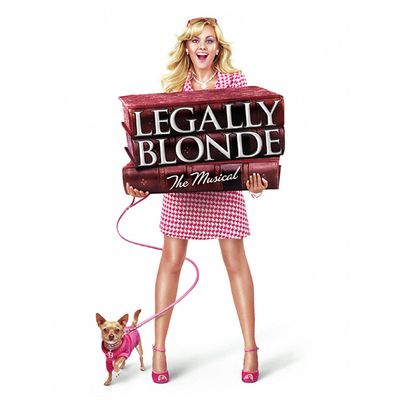
[3:12] Ry Armstrong: I was in a production of Legally Blonde in high school, and it was actually my first full musical. Like, I had done a lot of drama camps as a kid and music camps, but I was just playing the role of Emmett, and again, it was a high school production, so it wasn't anything crazy, but there was... I just knew. I knew in that moment. I was like, this is what I'm doing, and I quickly started prepping and working for college auditions, went across the country, did the Unifieds thing, got into a bunch of different schools, couldn't afford those schools, didn't get enough scholarship, and then ended up going in-state for my BFA in Washington, which was a blessing and a curse. And then from there, I was stuck in it.
[4:10] Ry Armstrong: I love it. I love it. So let's double-click on that musical theater journey you started in Legally Blonde in high school, and what else have you done regarding musical theater?
[4:22] Ry Armstrong: Oh, been in a bunch of readings of new works, which I actually think is the most exciting thing, because that's where new things will be created and where you could originate a role. I did a national tour of this musical called Teacher from the Black Lagoon, written in part by Nell Benjamin and Larry O'Keefe, who wrote Bat Boy and Legally Blonde, so I got to work with them on the developmental process of whatever that was, and it's just very fun, and we went across the country, did 111 shows from Michigan to Florida to Maine to Kansas City to Texas. So yeah, that was right after I moved to New York. I moved to New York on August 30th of 2016, and then that was January of 2017, so within four months of living in New York, that was my first big gig with a steady paycheck for six months.
So that was cool, and then from there, I went right into the off-Broadway production of Keep the Cat, who had the same company, and was a swing on that production, and I actually swung on, and so that was my first experience getting a phone call Sunday morning telling me, hey, you're going to be in the show today in three hours, hope you're ready, and I was like, okay, never had a single rehearsal, but I did it, so that was fun. From there, I did How the Westons Won, which is a new musical, very Indian in the Cupboard meets Next to Normal, and I played cello as an actor-musician in that one. Then I went off to do a little holiday production in the Pacific Northwest, which is another new musical, so I've done a lot of new works, which is kind of funny, and then the pandemic hit, and so, you know, there we were. Theater was just no longer a thing for a while, still kind of is figuring it out, so I transitioned to TV film and was on HBO show for eight months.
[6:31] Martín Acuña: That's great. So tell me, what is the best part of these new works and these new shows that you've been working on besides originating roles?
[6:37] Ry Armstrong: Everyone has a different creative process, so I learn a lot about what to do and what not to do and how collaboration takes place. There's no manual to it. There's no A plus B equals C. It's A times D divided by Q equals J, so it's like you never know what's going to happen, and I love that aspect of it because I'm not a very nine-to-five desk everyday person, and you go on a journey with so many different kinds of people, people of different colors, creeds, gender identities, sexualities, so it's very fun for me to learn also about other people in that artistic collaboration. That's probably my favorite part of creating art. I love it. I love it. And in these shows that you mentioned, what has been your favorite memory from them or your favorite moment?
[7:46] Ry Armstrong: God, that's a hard question. I think there was a moment where, because I also produce, and I had a moment recently with a big commercial producer, and I was in her office, and I was just looking out over Central Park, and I was like, this is what the last five years has brought me to, like this moment right now, and I was on, I was involved as an assistant and associate on that new musical that ended up not going anywhere until now she's taking it on and started from scratch again, so we kind of spoke about what that musical was and is, and then we spoke about my projects and what I'm working on as a producer, and I was just like, wow, this is, five years in New York leads to 45 minutes of a conversation, and it's just kind of wild.
That was, that's probably the most recent, that's not for many of those shows, but that's the most recent thing I can think about, just have this like, wow, this is out of body experience in a conversation. Hadn't had that for a very long time.
[9:04] Martín Acuña: That is amazing, and it's the moment in which you can recognize that five years worth of work are finally getting into fruition, so that is great. Let's switch gears a little bit, and let's talk about your craft as a performer. What do you think is the biggest challenge a musical theater major or an actor can face right now?
[9:25] Ry Armstrong: I think right now it's just lack of access to being in person with people. I think, I mean, before, back in the day, you could, you know, be, so I think it would be the fact that when I was here, you could show up to an open call and get seen in person and wait all day to be seen. I did it, but, and you could be in front of like, big heavy hitters in the industry. Now it's like, you have to self-tape, and if your tape gets seen, maybe, and you're in quarantine, so it's really hard, I think, to break in right now, unless you want to go into TV film, but then you have thousands of people also doing that. Not to mention the gatekeeping and the craziness behind having an agent or a manager, so I would say the hardest thing is to be seen right now, but you can create your own content on TikTok. You can do so many things, even though it is super saturated. The market itself, in terms of video content, is oversaturated, but you can create whatever you want to create.
[10:35] Ry Armstrong: You have two companies. One is Reichel Theatricals. The other one is Indie Chameleon. Let's talk a little bit about Reichel Theatricals and the projects you're working on.
[11:03] Ry Armstrong: Yeah. So, Reichel is my theatrical baby. I started her in 2013, eight years ago, when I went off to create a charity album for Broadway Charities Equity Fights AIDS. That album, you can stream or buy through Broadway Records. Check it out. And all proceeds go to charity. I don't make any money from it. So it's great. No, it's a very good thing. But I think currently, we're working on a bunch of different stuff. It's on our website at reichel.org. But we had a great queer film festival over the summer. We had submissions from over 25 different countries. And we had over 1800 people tune into the festival for its first digital year. So that's pretty great. Yeah, and we didn't lose money. So that's nice.
We, over the pandemic, we produced seven different podcasts. Podcasts are hard. So I congratulate you on doing what you do. But so we did that. And then we're still continuing with one possibly in production called the Broadway Book Club, which where we read new plays, but we really want to do it in person here in New York and then stream it live. So that's the new phase for that. Other than that, I have three musicals and two plays in development. And then a possible feature film I might be involved in in Southern California. So yeah, everything's kind of happening. It's kind of crazy. But I'm doing a reading of a new musical called Trails by Jeff Thompson and Jordan Mann, directed by Lauren Letaro in December. That's for industry only. But if you email me, you want to come to it and you're in New York, let me know. And then in early January, I'll be in Austin, Texas filming a play. So that's pretty cool.
[13:12] Martín Acuña: You have a lot going on. And besides that, during the pandemic, you inside RICO Theatricals, you started something that was the Broadway world record. And I sent my submission. I remember recording that. So tell us all the details about the Broadway world record.
[13:35] Ry Armstrong: It is hard to break a world record. I will say that. I mean, I'm not giving up until we do it, even if it takes me years. But it's hard to keep up momentum. So what we're trying to do is break the world record for the largest online video album of people singing the same song. Not dancing, not tick tocking, but singing. So it's hard to get people to send in singing videos. We're still about halfway to the five thousand that we need to get to. We really had a lot of growth about six months ago. And then we lost a lot of steam and I don't have any more funding to throw at it for marketing and things. So we're just trying to get organic views and publicity about it. So if you have any celebrity friends, let us know that sing and we'll get them to do it.
But yeah, we're going to keep pushing it throughout this next year in 2022. And hopefully we can get it to break. But yeah, we'll keep trying. The whole idea was to help Broadway get out of the pandemic, which it slowly is now making its emerging its way out. But there's so many people in need. And so all the revenue from the recording of the song and everything goes to the Actors Fund to help support the pandemic relief. And Guinness World Records has been a great partner in this, but they obviously can't help us until we break the record. So we're going to get there. I believe in it.
[15:03] Martín Acuña: Yes. Yes. So for everyone listening, you know, go to Raiku Theatricals, look for the Broadway World Record and send your submission to break the world record for Broadway. OK, one of the things that highlighted from your profile was your environmental activism and that in relation to Broadway and the performing arts industry. So what made you start being an activist for climate change?
[15:35] Ry Armstrong: Oh, I don't think we have much of a choice. I think everyone needs to be an environmental activist. We have been left with a very. I don't want to swear on your podcast, but f'ed up situation and the fact that the world and the government has known about this since the late 80s, and it's just continued to spew carbon dioxide and methane emissions into the world's atmosphere. It's upsetting, and there's not much any one individual can really do unless you're Greta Thunberg. But yeah, it's going to be. It's hard. I mean, I try to do my best. I was vegan vegetarian for 11 months and then I got very ill and I needed protein. So I had to physically stop. But I think anyone can do their best. It's great, but we really just need political will to force corporations to stop just spewing stuff into the air and to our water supply.
And that's not going to happen overnight, but needs to. So, yeah, I got my master's in D.C. in international relations because I still wanted to pursue political science in a way where I felt like I had a great balance between musical theater and understanding the world. And I like understanding the world. Maybe one day I'll host my own travel channel TLC show about the impacts of climate change around the world. That would be a dream. But yeah, it's always been my biggest thing I fight for. I'm involved with Extinction Rebellion here in New York, and I've been to many actions and protests with them and on behalf of them and their action working group. So, yeah, I just really think that it's necessary for everyone to be involved in that conversation and that conversations systemically hit so many other conversations like racial inequality and gender inequality. So as a society, it's forcing us to really deal with so many things. And the clock is ticking, so we don't have much time.
[17:49] Martín Acuña: Absolutely, absolutely. OK, what would be a piece of advice you would give to a younger version of yourself? Tough questions today. I would say focus on what you want. I've done a lot of things, and you're supposed to in your 20s, you're supposed to explore many different aspects of things you may or may not want to do. But focus is something I don't struggle with because I do a lot of different things. But then when you're spread too thin, you can't actually get anything done. So it's okay to say no. That's actually what I'm trying to get to. It's okay to say no to things. No to yourself and to other people. No, I won't be doing this because it won't fulfill what I want or what I'm doing. No, I won't be trying to get on this Ponzi scheme and get stuck in a scam because my friends are selling things.
Or I won't be becoming a nutritionist because maybe that's an avenue I want to explore. No, it's actually not. I did it. It's not fun. So try things out in your 20s, other people. But if I had to go back and tell myself something, I would say just stay focused on what you actually want. Don't get distracted by other things.
[19:08] Ry Armstrong: That's amazing. Last question before we wrap up. What are your top five favorite musical theater shows?
[19:15] Ry Armstrong: I would say Ragtime is my favorite musical. I love that show. Beyond that, Next to Normal, Color Purple, I Love You Because, and I don't know if this is an order of priority, but I'm just naming five. I Love You Because, and John and Jen, love that musical. If you don't know those last two, really check them out. They're like small cast musicals, but they're really, really great.
[19:44] Martín Acuña: Awesome. Rye, thank you so much. I have loved this conversation. If someone wants to contact you, to check you out, work with you, where can people find you?
[19:57] Ry Armstrong: Yeah, my website, ryearmstrong.co, C-O, no, not com, there's no M on it. Someone else took that. So ryearmstrong.co, my website has everything about me, all my socials, and all my socials are at Rye on the Rise, R-Y-E-S-E. So you can find me anywhere you need to. I'm pretty responsive if you want to reach out, because I love to collaborate with people. But yeah, that's how to get to me.
[20:28] Martín Acuña: Awesome. I love it. Thank you so much for coming over. I have loved every single second of this conversation, and I cannot wait to see where you and your projects go.
[20:41] Ry Armstrong: Likewise. Thanks for having me, Martin.
[20:43] Martín Acuña: Thanks, everyone, for listening to this new episode of Backstage Talk. Remember to follow us on Facebook and Instagram at Backstage Talk Podcast.
© Broadway Podcast Network, All Rights Reserved