

Some musicals have all the luck...and them some do not. Minsky's is one that does not. It would take thirty plus years for this cult classic to make its way from the big screen to the big stage and in between it would have three different lyricists, two different directors, two choreographers, but it would always have the same composer: Charles Strouse... Read More
From the show: Broadway Bound: The Musicals That Never Came to Broadway
Guests
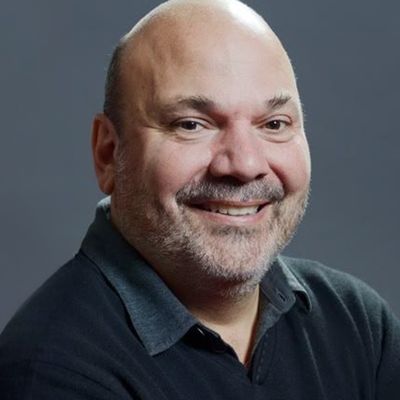
About
Some musicals have all the luck...and them some do not. Minsky's is one that does not.
It would take thirty plus years for this cult classic to make its way from the big screen to the big stage and in between it would have three different lyricists, two different directors, two choreographers, but it would always have the same composer: Charles Strouse. Why was he so determined to get this movie to Broadway?
Well, what happened was....We are going to let two time Tony Award winning director Casey Nicholaw give you an insider's look at what should've been the next Drowsy Chaperone: Minsky's!
BROADWAY BOUND PLAYERS
Matthew Fairlee as Morton Minsky
Cole Winston as Bob Boyett
Brian Michael Henry as Charles Strouse
Caleb Funk as Kevin McCollum
Michael McDonald as The New York Times Critic
Matt Koplik as The Variety Critic
If you like what we are doing DONATE HERE
Fair use is a legal doctrine that promotes freedom of expression by permitting the unlicensed use of copyright-protected works in certain circumstances. Section 107 of the Copyright Act of 1976 provides the statutory framework for determining whether something is a fair use and identifies certain types of uses—such as criticism, comment, news reporting, teaching, scholarship, and research—as examples of activities that qualify as fair use.
Transcript
This transcript was automatically generated and might contain errors.
[0:00] Robert W. Schneider: A montage. A series of vignettes. Each one has the desk drawer of Charles Strouse being opened and shut, with the script to Minsky's being taken out of the drawer, then thrown back into it. Through the montage, we progress in time from 1960 to 2009. The 2009 drawer stays open and empty, then after a beat or two, the script of Minsky's is thrown back in and the drawer is slammed. On Minsky's. Forever.
[0:38] Robert W. Schneider: Hey friends, Rob Schneider here and welcome to Broadway Bound, the musicals that never got to Broadway. It is the podcast. In 2009, I was up for, up for, friends did not get, I was up for the Mike Ockrent Fellowship through the Directors Union, STC, which would have had me be an observer on a Broadway Bound production. That production that I was up for, ironically, was Minsky's. Nothing makes me regret not getting that more than now because I would have had a front row seat to see why this show never came to Broadway.
[1:11] Robert W. Schneider: My gut is telling me that had this show just come out a few years earlier, it would have not only gone to Broadway, but that it would also have been there for quite some time. See, friends, if you had just picked me for that fellowship, Minsky's could have still been running. Can you imagine, please, the arrogance, the utmost arrogance. Thank you. That was my Christine Baranski impression. I hope you enjoyed it. Actually, hold on. This is actually a better Christine Baranski impression. Hold on one second. This is her in every episode of The Good Wife. Good work, Calinda. It's either Christine Baranski or Stewie from Family Guy, and at this point, I don't really even know if there's a difference, but a woman gets paid a million dollars an episode to go, good work, Calinda.
[1:51] Robert W. Schneider: Minsky's, not Christine Baranski, Minsky's, is based on the 1968 film The Night They Raided Minsky's, which in turn is based on Roland Barber's 1960 book of the same name. But what exactly is Minsky's? If you know Gypsy or Pal Joey, then you might have heard the name go by, but for everyone else, Minsky's was the biggest burlesque house in America. That's a fancy word for stripping.
[2:17] Robert W. Schneider: More to Minsky's theater. The National Winter Garden on Houston Street was raided for the first time in 1917 when Mae Dix, that was her name, and I don't know why there's not a drag queen right now with the name Mae Dix, Mae Dix absentmindedly began removing her costume before she reached the wings. When the crowd cheered, Dix returned to the stage and continued removing her clothing to wild and thunderous applause. Remember folks, there was no pornography at this time that people could access easily, so Mae Dix was doing a lot of people a lot of favors.
[3:00] Robert W. Schneider: Then the higher ups at Minsky's ordered that the accident of her undressing before she got to the wings be repeated every night. This began an endless cycle. To keep their license, the Minsky's had to keep their shows clean, but to draw customers, they had to be risqué. Whenever they went too far, however, they were raided. By 1925, it was permissible for girls in legitimate shows to appear topless as long as they were stationary in a, quote, living tableau. So as long as they were frozen and you could stare at them, it was fine, but as soon as they moved, suddenly the police had to be involved. I don't know what was going on. There was a depression happening very close to this time. I think people are not thinking correctly.
[3:27] Robert W. Schneider: In his book, Minsky's Burlesque, Morton Minsky wrote, "As for April 20th, 1925, the day that the raid on which the book was based took place, it was hardly epical in the history of burlesque, but it did turn out to be a prelude to much greater troubles." The raid story was fun. No big crisis. So now to the book, a reading. The story that Barbara came up with was that in 1925, Rachel Shiptendovel, that was her name, Rachel Shiptendovel, an innocent Amish girl arrives in New York, hoping to make it as a dancer, a dancer of Bible stories. She will dance Bible stories for you, which sounds just as exciting as two people that I used to do community theater with. And they used to do Bible quilting classes. There was no dancing. The pastor would read a Bible story and then they would quilt that story. And at the end, you had a beautiful gospel blanket. And ironically, I know their grandson who lost their virginity on said gospel blanket.
[4:36] Robert W. Schneider: So anyway, going back to Rachel Shiptendovel, she auditions, she auditions, I should say, at Minsky's burlesque, but Billy Minsky and the show's jaded straight man, Raymond Payne, concoct a plan to use Rachel to foil moral crusader, Vance Fowler, who is intent on shutting down the theater. Anyone Tenderloin fans out there? It's the same plot. Minsky publicizes Rachel as the notorious Mademoiselle Fifi, performing the dance that drove a million Frenchmen wild, hoping that it will prompt a raid by Fowler and the police. And then when they raid the place, realizing that she does these biblical dances and it's going to humiliate Fowler. That's sort of the plot here.
[5:16] Robert W. Schneider: Now, during the run up to her midnight performance, Raymond and his partner Chick, they show Rachel the ropes of burlesque and they both fall in love for her in the process, because how could you not? Meanwhile, Rachel's stern father, who even objects to her biblical dancing, he arrives in search of his daughter. He tries to drag her off stage, but she resists. And while resisting, her dress gets torn. The sold-out crowd spurs her on, take it off, take it off, take it off, and Rachel begins to enjoy her power over the audience, and she starts herself to strip. Now, this has musical written all over it. Once again, the music is indigenous to the actual storytelling itself. It's got broad musical comedy in it, and it's got madcap adventure. What more could you want?
[5:57] Robert W. Schneider: In 1961, a year after the book comes out, there's a producer named Leonard Key, and he won the stage rights for the book, actually beating out Debbie Reynolds, who wanted to make it a vehicle for herself. And the amount that he paid for the stage rights for this book were the most paid for any book at this particular time. Now, Leonard Key had two years to get this off the ground, and in those two years he looked at Johnny Mercer maybe doing the score, Henry Mancini doing the score, but nothing really materialized. So the stage rights lapsed, but the film rights were still available in 1965, and they were bought by two gentlemen named Norman Lear and Bud Yorkin. If you are fans of 70s television like I am, you will recognize the name Norman Lear and Bud Yorkin, of course. Norman Lear and Bud Yorkin were responsible for such things as All in the Family and Maud and Good Times and The Jeffersons and Sanford and Son, and the list goes on and on and on.
[6:50] Robert W. Schneider: But prior to them being involved so heavily in the world of television, they were wanting to get themselves involved in the world of movies. So now Norman Lear got up-and-coming director William Friedkin to direct it, if you're a fan of The Exorcist, William Friedkin. And the stars were going to be Jason Robards as Raymond Payne, Elliot Gould as Billy Minsky, Norman Wisdom as Chick Williams, Britt Eklund as Rachel, Denholm Elliott as Vance, and a wide array of character actors like Forrest Tucker, Jack Burns, Burt Lahr, Judith Lowry, and Rudy Valli as the narrator. Friends, if you don't know who Judith Lowry is, I would encourage you right now to stop this recording and look her up. She played this old woman in just about every single Norman Lear sitcom that ever existed, and she was always incredibly foul-mouthed and angry. It is the best thing ever. If you want YouTube, Judith Lowry and Maud. She's on a couple of amazing episodes of it. Yes, this is what I do with my time.
[8:22] Robert W. Schneider: Anyway, not only did Norman Lear get these individuals, he also got the writing team behind Bye Bye Birdie, Charles Strouse and Lee Adams, and got them to write the score for the movie.
[8:29] Robert W. Schneider: She headed for New York to begin her career in show business. She danced stories from the Bible to Offenbach's Baccarat. It was there that she met this truly terrible guy who instantly decided to make her a star. Tonight at the midnight show, you're dancing. And so, thanks to this truly terrible guy and her righteously uptight father, this real religious girl accidentally invented the striptease. The Night They Raided Minsky's was the first musical shot entirely on location in New York City, and our budget for this exceeded over three million dollars. When the cut was screened for David Picker, an executive vice president of United Artists who was producing the film, he called it, quote, the worst first cut I've ever seen. That's a pretty big thing right there.
[9:18] Robert W. Schneider: So, editor Ralph Rosenblum remade the movie in the cutting room, and it opened in December of 1968. The film did better than anybody had expected at the box office, grossing $198,000 in its first 23 days from only two theaters in the city. Time magazine called the film a valedictory Valentine to old-time burlesque. In legend, the girls were glamorous, and every baggy-pants buffoon was a second W.C. Fields. In truth, the institution was as coarse as its audiences. Minsky mixes both fact and fancy in a surprisingly successful musical. Minsky's was 58 days in the shooting and 10 months in the editing and shows it. Marred by grainy film and fleshed out with documentary and pseudo-newsreel footage of the 1920s, the film spends too much time on pickles, push carts, and passerbys.
But it compensates with a fond, nostalgic score, a bumping, grinding chorus line, and a series of close-ups of the late Burt Lahr, who plays a retired burlesque comedian. Like Lahr, the film offers an engaging blend of mockery and melancholy.
[10:23] Robert W. Schneider: Unfortunately, Burt Lahr actually died while they were making this film. Friedkin has gone on to say that he actually has no memory of either one making the film or two even watching the film. He was so lost at sea, and he kept hoping that Norman Lear would fire him. Luckily, Friedkin went off to create some pretty brilliant cinematic works after this, so people sort of forget about The Night They Raided Minsky's. In 1972, Lear and York, and now TV's biggest big shots with All in the Family and Sanford and Son, looked at turning it into a TV series called Slowly I Turned, but that was replaced by other projects like Maud and The Jeffersons. So I'm so sorry for you, Minsky's, but we got And Then There's Maud!
[11:06] Robert W. Schneider: Now, off to the musical. I would be hard-pressed to find another composer who is more identified with Broadway-bound musicals than the great Charles Strauss. Charles Strauss had his biggest hits with Bertie and Annie, and after Annie debuted in 1977, he had a really long string of unsuccessful musicals. Charlie and Algernon, Bring Back Bertie, Dance a Little Closer, which they used to call Close a Little Faster, Rags, Nightingale, Mayor, a musical about Ed Koch, Nick and Nora, Annie Warbucks, Palm Beach, Marty, Real Men, Bojangles Studio. So even though his talent was strong, his luck, unfortunately, was not. Hopefully, there would be a show that would bring him back to the success that Charles Strauss so rightfully deserved.
[11:43] Robert W. Schneider: Now, this is where time is going to get a little wonky. In 1993, it was announced that Bud Yorkin and Charles Strauss would bring a musical version of the show to the American Jewish Theatre, but it did not come to fruition for whatever reason. In fact, it was replaced by a musical called Toti, about the great comedian Toti Fields. But in Strauss's autobiography, he said that all of these events, turning it into a stage musical, happened in 1994, but I think he actually meant a few years earlier, based on the newspaper articles that I've read. So we will assume that that's what he meant, that this was happening actually in 91, 92, not 94.
[12:22] Robert W. Schneider: Anyway, Richard Maltby Jr., the wonderful lyricist who had done Nick and Nora with Charles Strauss, was asked to write the lyrics to a stage version of Minsky's with Christopher Durang writing the book, and Richard turned around and asked Charles if he wanted to jump on board.
[12:38] Casey Nicholaw: Sadly felt that he couldn't do the humor needed for this particular type of show, and he left the project. So Charles went back to his partner, Lee Adams, but Lee was not interested and they had not worked together for quite some time. And I'm sure there's a wonderful story behind that, I've heard. There was a director involved, and that director was the great Mike Ockrent. Mike Ockrent and his wife, Susan Stroman. Mike had directed Crazy for You and Me and My Girl, two really, really big hits. And Stroman, better known as Stro, had choreographed Crazy for You. And they were the ones who were leading the charge on this particular musical version. So when Charles asked Lee and Lee turned him down, Charles went over to Mike Ockrent and said, you know, I don't have Lee Adams.
Do you have any ideas? Mike Ockrent said, actually, it's good that you didn't get Lee because I already asked someone else and they've signed on. And that person is Susan Birkenhead. Susan Birkenhead is the unsung hero of musical theater, whose lyrics I think are very, very impeccable. Working, Jelly Slash Jam, Triumph of Love, The Upcoming Betty Boop, and the list goes on and on and on. She would be a great partner for Strauss. And when Durang dropped out, Birkenhead actually was the one who secured a new book writer for Minsky's, a gentleman by the name of Evan Hunter, who was a crime novelist and screenwriter of Alfred Hitchcock's The Birds. Not necessarily my first idea for a book writer of a musical comedy, but neither was Arthur Lawrence.
So there we go. In October of 1997, Playbill checked in with Susan Birkenhead and she said, quote, Regarding Minsky's, all we do is laugh. We had a reading three weeks ago and we should have a workshop by the end of summer. I'm having the best time with these guys. It's so completely different from these other worlds. It's a funny, funny book. And they asked her what her favorite song at the time was. And she said this song entitled It could have been worse. The girl I went and fell for pretends we never met. What once was almost cooking is as cold as it can get. The show is still in shambles. We open right away. I should jump out a window. But like Bob used to say, It could have been worse.
Hey, it could have been worse. You could have wound up in the back of a hearse or under a car that gets into reverse. So help me. It could have been worse. Let's have another drink. The mademoiselle I pine for pretends I don't exist. I'll wager I'm not even at the bottom of her list. The minute I begin to speak, she runs the other way. I should turn on the gas. But you know what I say? It could have been worse. It could have been worse. You could have accosted a nun or a nurse or witnessed the Pope doing something perverse. So help me. It could have been worse. Oh, the girl I fell for is a gangster's chick. So no matter how you feel it, don't mean dick. I am at the bottom and there's no way out.
Stand up, boys, and shout. Giggles is only 17. You got it. She just turned 17. Now I've got you, Billy Minsky. Now I got you, Billy Minsky. It couldn't be worse. Ha! It couldn't be worse. Unless you stole Al Capone's grandmother's purse and choked on some strange Neapolitan curse. It couldn't, it couldn't be worse. Could not be worse. It could have been worse. It couldn't be worse. It could have been worse. It's over, Capone. Call for the hearse. It couldn't be worse. It couldn't be worse. So help me. It could have been worse. Am I being heard? So help me. It could have been worse. Work, my boy. Hope you've got a good lawyer. Because, Billy, my boy, hey, it could have been worse. Finally, in 1999, it was announced that Minsky's would be coming to Broadway in March of 2000 with a tryout at the Amundsen Theatre in Los Angeles in the winter of 1999.
Strauss and Birkenhead were on score, Hunter was on book, Ockrent would be directing, and Susan Stroman would be choreographing. Timothy and Terry Childs, along with Ju Jamson, would be producing. Then, unfortunately, Mike Ockrent got sick. Touchingly, Charles Strauss and Susan Birkenhead would go to his hospital room and play the score for him and his wife, Susan Stroman, to cheer them up. And only a few weeks later, after being admitted to the hospital, sadly, Mike Ockrent was gone. And in 2005, Hunter also passed away as well, leaving Minsky's to sit on the shelf with a complete book and score waiting to be utilized. Now, the same year that Hunter died, which was 2005, 2005 was going to end up being a pretty big year for Minsky's because it was also the year The Drowsy Chaperone was playing in Los Angeles.
The Drowsy Chaperone was an anomaly during the aughts. It was an original musical with new writers and one of the funniest books ever written by Bob Martin. The show, for those of you who don't know, deals with a very sweet musical theatre fan who introduces the audience to his favorite musical from the 1920s called The Drowsy Chaperone. It's pretty much a knockoff of champagne musicals like Nono Nanette and Lady Be Good. Making their Broadway directing debut was a Broadway gypsy turned up-and-comer named Casey Nicholaw. He had just finished choreographing Span a Lot, a man whose heart seemed to beat to the rhythm of a Broadway gone by. In fact, Susan Birkin had turned to her husband during Drowsy Chaperone and said, this is what Minsky should have been.
Because Casey Nicholaw created a romantic, hysterical love letter to the theatre with incredible designers like Ken Billington on lights, Greg Barnes on costumes, Nicholaw helped navigate Beth Leavel to her Tony win as the Drowsy Chaperone herself, he understood a world gone by, just like the world of Minsky's. So Susan had an idea. Here is Casey Nicholaw discussing how he got introduced to the project known as Minsky's. I was actually, I went to a reading for a different show, which was a version of Heaven Can Wait that Susan Birkenhead was writing lyrics to. And she said, I want you to look at this, this other show called Minsky's. And I took a read and I honestly just fell in love with it.
And I knew that, you know, Mike Ockrent and Susan Stroman were attached to it before that. You know, and then sadly he passed away and, you know, it had been kicking around for years and I just fell in love with the material. Nicholaw then secured producers Bob Boyette and Kevin McCollum, as well as Bob Martin to do the book. And then the Amundsen announced their 2008-2009 season, which included two new musicals bound for Broadway, Nine to Five and Minsky's. What a way for Charles to celebrate his 80th. Here is Casey discussing the similarities between the Minsky stage version and the movie Minsky's and what it was like working with these writers. Well, I got, I brought Bob on board because we'd done Drowsy, you know, and it was great.
It was great. You know, it went through, it went through a lot of, a lot of changes and shuffling around of songs and things that didn't work anymore. And, I mean, we went through so many iterations of that show, you know, trying to get it right, you know, and so we just kept, we just kept at it, you know, and I think we took some steps backward. We took some steps forward. It really didn't represent the, you know, it really wasn't faithful to the movie at all, in tone and everything else. It was really conceived as a big burlesque musical with a lot of sketches in it. And yeah, that's what it was most, that's what it mostly was. And some of the funniest things, I mean, I laughed out loud when I read that script.
So Bob Martin has his work cut out for him because I think out of all of the musicals that we're looking at in this particular season, the night they rated Minsky's to me is the hardest to turn from a movie into a musical, even though it's filled with these musical elements to it. So Bob Martin has his work cut out for him and he makes some very smart decisions right up front. First one is he moves the plot from the 1920s to the 1930s, sort of when America is still in the throes of the Great Depression, but is beginning to find a way out of it, which is actually kind of smart because if you remember from 2008-2009, America was going through a financial crisis at the time, so this was going to do a very, very nice parallel between the current world and the world of Minsky's. In the version that Martin creates, it really doesn't look that much like the movie except for the basic idea of there's a guy named Billy Minsky and there's a woman who's going to strip and there's going to be trouble for it.
Pretty much that's the only thing that has any sort of commonality or similarity between the movie and the musical. In Bob Martin's version, Billy Minsky is struggling to keep his failing theater alive while at the same time trying to keep crusader Ralph Randolph, I'm sorry, Randolph Sumner off of his rear end. You don't know why I said rear end, I could have said butt, but I think rear end sounds kind of a little nicer because it's the 1930s. He kept him off of his fanny is what he did. So Billy Minsky is having some trouble, so he goes to his therapist's office, his psychoanalyst, and unbeknownst to him, right next door in another therapist's office is the beautiful Mary, who is also unhappy.
Now, they do a little bit of a meet cute that involves, you could not do this today by the way, friends, in 2024 when we're doing this, this would not be happening. There's a blind man and the blind man is having trouble trying to get into the building where the therapist's office are. So Billy and Mary do a little meet cute trying to help this guy and of course he's blind and he can't see where he's going and he goes on the revolving door over and over again. Basically what this really is though is a burlesque sketch. So what Bob Martin is doing very brilliantly is he's taking selected scenes and giving them sort of a burlesque sketch framework to it. So if you see Minsky's, if you ever get a chance to see like a bootleg of it or, you know, I hope to God it comes back at some point in some incarnation, you'll notice that a lot of the burlesque sketches and humor is being used in the book scenes as well.
Billy asks Mary for her name and she says that her name is Mary. Sumner, surprise, surprise, Randolph is her father. So he finds out Mary is Randolph's daughter and he comes up with a plan. Could he win over both Mary and her dad? Maybe. So Billy poses as a political activist with a different name, of course, and he makes his sad sack of a bouncer named Boris pose as Billy Minsky. Then once he's done this, Billy feels torn, torn between of his love of Mary and his love of the theater. And his theater is filled with some very colorful characters besides the very sad Boris. There's Beulah, an untalented Corrine who is in the chorus line because of her mob connections. Maisie, the wisecracking dance captain, the sad accountant Jason, and baggy pants comic Scratch.
But Minsky's has an idea. He is going to tell Sumner that they have cleaned the show. Come see it. And then he's going to snap a photo of him at Minsky's and sink his political career. This is very act two of Le Cajon Folle. He does this and Mary finds out what's going on and she sees how Billy's trying to humiliate her father. And so Mary leaves Billy. What will Billy do? Curtain on act one. Act two picks up with Mary and her dad in drag, trying to infiltrate the burlesque house to get their revenge. But once they get there, Mary becomes
[25:16] Robert W. Schneider: We met him with the burlesque house, and then the question is, what will she do? The big thing Martin did was to infuse the offstage book scenes with the conventions of onstage shtick. Their separate shrink visits become, quote, the psychiatrist's sketch, complete with Viennese accents, slamming doors, and slapstick. Except for the title and the idea of the theater being closed down due to morality, the show bore little resemblance to the movie, and that is a good thing, I feel. Remember how we have to ask ourselves, what does adding music to a movie give it? This time, it's going to give it a story. Here's Casey Nicholaw, though, talking a little bit about the amount of readings and workshops that they did on Minsky's.
[25:58] Casey Nicholaw: We started doing, we almost did too many readings. Like, we felt it sort of take steps back, and that's when we were like, you know, it took a step forward, and then it suddenly was not as good when we started trying to make it work. And I think that because we did so many readings so close to each other, we sort of lost perspective. As a group, everyone sort of lost perspective. And everyone, and we, not everyone was on the same page about how to approach it. You know, like, maybe people weren't, you know, caring for characters as much. So let's, let's kill him, and then people will love him. I mean, I mean, as much as that, as much as let's make someone older than this character, let's, we were just grasping at straws after, after a little bit.
[26:40] Robert W. Schneider: I do have to agree with Mr. Nicholaw here. I feel like one of the worst things that's happening to musical theater is the abundance of readings and workshops that do not help the writers in any way, shape, or form whatsoever. You need to get these stories in front of an audience to see how people that are not in the business, people that are not your friends are reacting to these pieces, because the audience never lies. I think shows have been read to death. I think shows have been workshopped to death. And sometimes where I think you'll hear a little bit later on in Minsky's is that you start to end up fixing things that didn't even need to be fixed to begin with. This is my two cents. I'm going to get off my soapbox right now. I also asked Casey how he builds a number and what these sketches were like.
[27:24] Casey Nicholaw: Well, I think you have, it always starts with story. What story are we telling? How's it building? How are we moving forward? And then what's going to be entertaining? You know what I mean? And really it's about having, at that point it was Glenn Kelly was a dance arranger who I've worked with on so many shows. And him sort of, I say, I feel like I need a dance break like this. And I feel like I need time here. And then he would do it and I would just sort of close my eyes and picture what I thought would be fun. And in the same way that the sketches had gimmicks to them, the numbers had gimmicks as well. So everything felt like it was its own sort of tentpole or sketch. They're written within an inch of their life.
You know what I mean? Because it's all about pace and it's all about repetition for a lot of them. And that's what makes some sketches and what makes them funny is the repetition. So those, it's funny, those have to be choreographed, but they also have to just be done. You know what I mean? Not try to embellish them too much because it gets in the way. You just have to keep them going quickly. And you have to make sure that each time you repeat something, it is done sort of the same way as the time before. So it feels like, you know, it's the sort of setup of like doing something three or four times exactly the same way. And then something else happens different that's ridiculous. I just kept thinking about, oh my gosh, we had George Wendt.
We had Rachel Dratch. We had Paul Vogt. We had Kevin Cahoon. We had John Cariani. We had Beth Leavel and Chris Fitzgerald, who was Minsky, who was awesome. You know, all of these really funny actors. Jerry Vickie, oh yes. We had everybody. Getting the best song of the evening and anthem to the theater was the Tony Award winning, now Tony Award winning, Beth Leavel as Maisie. Here is her song that if the show had come to NYC would have been the You Miss Showcase song for at least two years. Instead they got Do the Work from Prince of Broadway. Anyway, this is Beth Leavel singing Home from Minsky's.
[29:24] ♪ Musical number: "Home" — performed by Beth Leavel ♪
[33:06] Robert W. Schneider: As Billy Minsky, our Elliot Gould part, the role went to the original Bach from Wicked, Christopher Fitzgerald, who oozed charisma and a 1930s charm. As Chick Williams? Well, that role was cut. Thank you, Bob. Kristen Chenoweth was actually asked to play Mary Sumner, but she decided to do a revival of Promises, Promises instead. So the role went to Hairspray alum Catherine Leonard. Almost main playwright John Cariani was Jason, Kevin Cahoon was Buster, Jerry Vicki was the Baggy Pants comic, and two television stars were making their Broadway debuts in a Broadway-bound musical. Cheers as George went, Norm was the conservative Father Randolph, and Debbie Downer herself, Rachel Dratch, as the oh-so-untalented Beulah. Here are Rachel and John discussing their time in Minsky's and singing their great 11 o'clock number, which needs to be seen to be believed. Take it away, Rachel and John.
[34:08] Rachel Dratch: Yes, expectations were high for all of us.
[34:14] John Cariani: Yes, maybe a little higher, though, right?
[34:18] Rachel Dratch: So, as they were just saying, Minsky...
[34:23] John Cariani: That's a good excuse, isn't it?
[34:27] Rachel Dratch: I could have looked on the plane, but I didn't.
[34:31] John Cariani: Stand closer to me.
[34:35] Rachel Dratch: So Minsky's...
[34:39] John Cariani: So John played Jason, the put-upon accountant, and Chris Fitzgerald was the star. I mean, this thing was going places.
[34:47] Rachel Dratch: Kevin Cahoon was in it.
[34:52] John Cariani: Yeah.
[34:54] Rachel Dratch: So anyway, the little plot line was that the guy who was leasing the theater, the guy who owned the theater, forced Minsky to put me, Beulah, in the show. And it was just me and all these chorus girls everywhere, and I had no comic timing and no singing voice, as you're about to discover. So that was sort of the plot.
[35:21] Rachel Dratch: Oh, and I just have to say this. So I have this new podcast coming out. It's coming out this week, and it's called Woo Woo with Rachel Dratch. It's stories of, like, eerie things that happen to my friends. But anyways, the reason I'm saying that is, A, to get a plug out of this evening. And secondly, because the very first episode is Broadway's Kevin Cahoon, who tells a ghost story. But we talk a lot about Minsky's in the podcast, because that's how we met, too.
[35:48] John Cariani: By the way, one more thing. And this is in the podcast. But during that time, I happened to go to the psychic. I don't go to psychics that often, but this was one time I did. And I went to a psychic, and she told me that Minsky's was not going to make it to Broadway. I swear. And it was during the run of the show. We were at the Amundsen for two months. The costumes were amazing. Greg Barnes, showgirl costumes. Anyway, she told me it wasn't going to go to Broadway. And we didn't believe it. But she was right.
[36:21] Rachel Dratch: So we meet in the second act. He's bringing us back to the show. I'm the accountant who doesn't like being with show business people. At all. And she doesn't like being in the skits and sketches. I'm not a theater person. And so we hang out. We smoke cigarettes. We smoked some cigarettes outside. By the garbage cans, I remember that. And it's all about how we hate theater. But there is a big dance break in this.
[36:48] John Cariani: Yes.
[36:50] Rachel Dratch: I'm serious. The dance break really brought the house down. We'll see if that happens tonight. I don't know.
[37:00] John Cariani: And here we take you to Minsky's.
[37:02] ♪ Musical number: "I Want a Life" — performed by Rachel Dratch and John Cariani ♪
[37:55] ♪ Musical number: "I Want a Life" — performed by Bob Boyett ♪
[39:35] Bob Boyett: Previews started at the Amundsen Theatre on January 21, 2009, and then opening on February 6 and closing March 1. Then heading to Broadway by Tony Time. This is producer Bob Boyette. Part of a producer's job, I think, is to support artists you believe in. Both Bob Martin and Casey were interested in tackling this. Charles Strouse is a hero of mine, and I've always felt that Susan Birkenhead of Jelly's Last Jam is one of the great lyricists of our time. So the idea that we had artists who wanted to reinvent a show that had stumbled all those years back was exciting. Of all the musicals I've worked on, this version of Minsky's has been fairly quick. And it's really from scratch. The bones of the story.
What happened to this show is that because we wanted to be very authentic about the time and what a burlesque house was, we spent a lot of time creating what I think are great production numbers. Charles Strouse also observed, I think we're on a similar track. It seems like the right time and the right kind of place for this kind of music and this kind of theater to light up America. We use a banjo, a soprano saxophone, a solo violin, and a tuba. I kept the size, shape, and sound of King Oliver so it would feel like music actually written during that time period. Right now, Broadway shows tend to be more toward rock music. So this is a bit of a risk to step back into history. 2009 was an interesting year because for me it's the line of demarcation when the comfort era ended and the inclusion era started in musical theater.
The comfort era was from 2001 to 2009 when musicals were trying to provide comfort and nostalgia to a country that was suffering. The 2000 election, 9-11, the Iraq war, Katrina, and the financial crisis all were forcing audiences to seek out predictable entertainment like jukebox musicals, revivals, and movies being turned into musicals like Minsky's. But even in the late 2000s there was an itch for things to change, the hope of a new presidential term and America hitting the reset button. Musicals might be ready to challenge us again, and slowly darker musicals began to pique interest. Spring Awakening, In the Heights, Passing Strange, Next to Normal, Fila, all were pushing the boundaries and ironically, the shows in 2009 that would have been hits four years earlier were not doing so well.
Only one jukebox musical, and that one luckily was successful, that was Rock of Ages. Movies that turned into musicals, things like 9 to 5, flop. Revivals like Bye Bye Birdie, flop. 9 to 5 was a classic, the night they rated Minsky's wasn't even on DVD yet. But could Minsky's be the show that offered old-fashioned joy still? This is producer Kevin McCullum. This is a big, tap-dancing musical that doesn't apologize for itself. Like 42nd Street or Crazy for You, says McCullum, an ever-besuited producer whose unsettled energy feels closer to the nerve's edge than Nicolau's purposeful intensity. I think audiences are thirsty for that. The era of the meta-musical is leaving us. We all get the joke of a musical making fun of musicals.
We don't need to have the actors winking at us, saying, aren't musicals dorky? In order for us to enjoy it. And how could Minsky's help the Amundsen Theatre, who was now looking to be not just a place for Charlton Heston to do detective story, but a legitimate place for Broadway-bound musicals to be a home? In fact, new artistic director Michael Ritchie didn't even read a script or a score before committing to Minsky's. This is Casey discussing the audience. The audiences were laughing so hard at everything. So hard. And then, you know, I had some friends come and they'd be like, oh, we didn't like it very much. I was like, wait, what? Like, it was, it was actually, it was actually surprising to me.
I'm like, what kind of asshole comes to see a show, has dinner with you afterward, and then tells you how much they hate it? You know what I mean? That's when you lie. And then maybe later you say what you think. You know what I mean? Not when you're in the middle of everything like that. You know, Minsky's was before I'd even done Mormon. You know what I mean? So I'm a lot more experienced now than I was then. You know, and everyone learns from everything they do. You know, I feel like I'm really good at being an audience member sometimes, and then being a scientist other times I watch. You know, and so I never even know which mood I'm going to be in until it sort of starts. And the critics weighed in.
Ironically, well, not even ironically, just strangely, the New York Times flew somebody out all the way to Los Angeles to review the Broadway-bound production of Minsky's. And this is the review from the New York Times. If the battered but unbroken stimulus package Washington finally serves up does not turn the trick, perhaps the answer to the country's economic woes could be something a lot simpler. Bring back burlesque! In the nostalgia-steeped new musical Minsky's, which had its world premiere here Sunday night at the Amundsen Theater, dancing in your scanties while the world trembles is presented as a noble service that might help keep a wounded country on its feet, or better yet, rolling in the aisles.
Fans of traditional musicals will surely warm to the two big numbers led by Miss Lievel's Maisie. She leads a high-energy dance number, You Gotta Get Up When You're Down, which reminds us that people need something to make their troubles disappear. Something, of course, might just be a colorful, ingratiating show like the one we're watching. You always told me when all your troubles weighed time, what you need is some fun. People get weary when life's a war that's never won, until music starts playing, and there is joy in the room again. Boy, does it bloom again! And nothing is cheery as making everybody smile. And for again, for a while, that's what a Minsky show does. A good time if ever there was.
Joy in the middle of pain and misery, a tune on a fiddle to chase you around. Good times may be tough, but remember, you gotta get up when you're down. Everyone wants to escape now, put on their happiest hat. Our country's in terrible shambles now, who wants to sing about that? People need something to make their troubles disappear. Their hair have a beard. Each time another man fails, we go and polish our nails. The troubling depression's deepening, so patch me up, y'all, I'm leaving the town. And for again, for a while, remember, you gotta get up when you're down. We're gonna call the old gotch the birdie scam. All right, ladies and girls, in very wholesome outfits, small town girl next door, let's step out.
You gotta write a real patriotic song, one of your two-note marches. All right, water boys and girls, that's the enemy right out there in high collars and sensible shoes. Let's cross the line, all right. And that line runs right down the middle of Washington, all the way to the river. Nobody calls this a Minsky show, nobody does. We're just waiting to do something to make their troubles disappear. Which is why we're still here. We are the soul and the pride, right on the Lower East Side. So in the middle of pain and misery, I should know a little to chase your pride. So what if the past is won't let us? We can't let his power outshed us. We gotta get up when we're down. Those are appealing sentiments to theater lovers, but like much else in Minsky's, they've become fated with frequent use by now.
They're practically pieties. For all the vulgar joking and flashing of sequined behinds, you leave Maisie not with the tingly sensation of having seen something exciting and maybe a little sinful, but with the feeling you've attended a comforting church service.
[50:32] Robert W. Schneider: And this is the review from Variety.
[51:02] Robert W. Schneider: Marvelous Jerry Veechey single-handedly conveys burlesque's raised-eyebrow, take-no-prisoners air, yet even he can't salvage a pie-throwing sketch with George Wendt that starts unfunny and dies a slow death, a drop-cloth daintily preset to catch the meringue. At the opening, Veechey missed an almost-hit level, prompting the biggest laugh of the night. Minsky's could use more such messiness. Old pro-Strauss comes up with a host of period-influenced tunes, pleasingly bridging the gap between the 1930s and present-day tastes, while Birkenhead's supple lyrics reinforce the burlesque milieu, especially in the risqué, pun-filled Red Hot Lobsters.
[51:42] ♪ Musical number: "Red Hot Lobsters" — performed by the cast of Minsky's ♪
[53:37] Robert W. Schneider: And the rest was a bit mixed. The LA Times said, though far from terrible, Minsky's isn't quite the electric crowd-pleaser they're intending. Intermittently delightful, the musical is just as intermittently bumbling. And Talkin' Broadway said, this is what a Broadway musical looks like. The big production numbers, the sweet love story, and the sheer entertainment of it all. Sure, Minsky's doesn't break any new ground, but it covers the old ground impeccably. And in the spring of 2009, the producers said they would look at making some changes, then bring it in the fall of 2009. Here's discussion with Casey about their post-Amundsen plans.
[54:21] Casey Nicholaw: You know, the thing I'm proud of is we kept working on it, you know, because we did it, we did it at the Amundsen, and we were surprised that it didn't get good audience response, even though the audience response in the theater was amazing. You know, it was surprising. But then, you know, we did, we did another reading. And we then after that, we did another reading. And then after that, we did another one, and we kept making it better each time, and, you know, had different casts and stuff like that. So we kept working toward it and like it was going to happen, but it just never did.
[54:57] Robert W. Schneider: What do you think was getting sharper as these readings went on? What do you think was a little unfocused in LA?
[55:04] Casey Nicholaw: I think characters were sharper. Yeah, I think it was more about characters and, you know, and the numbers sort of making the most sense. Then maybe you would go to the West End first in late 2010, or early 2011, or... and Minsky's just never came in. I asked Casey if it could be done today.
[55:29] Casey Nicholaw: You know, I think there's something to that show still that could work. And I think that if we leaned into the sketches and the sketches, we could figure out a way to have just sketches go together and tell the story, I think it could be really cool. Now that's fascinating. And see how the characters could grow and learn and, you know, have arcs, but only told in sketches. It would be a tall order, but I think there's a way that could work. But who knows? You know, who knows? And also, who knows if people care about Burlesque anymore either, or know what Burlesque is? I don't know.
[56:04] Casey Nicholaw: Like I said before, Minsky's is one of those musicals that, had it come out in 1999 with Mike Ockrent and Susan Stroman, it probably would have been a massive, successful hit. Because if you remember at that time, in the early, in the late 90s, early 2000s, Broadway was desperate to have a musical. If you remember, the best musical winners two years in a row were dance pieces, Fosse and Contact. And there really was no good old-fashioned American musical comedy, because you remember producers had not even yet emerged, which was supposed to be Mike Ockrent and Susan Stroman's other project at this particular time. Then had it come out just as Drowsy Chaperone was emerging, it probably also would have received wonderful, wonderful praise.
[56:47] Casey Nicholaw: Probably one of the things that was going against Minsky's by the time that it emerged in 2009 is, like we had said before, at this point audiences were looking for something a little bit deeper and a little bit more psychological. This is why I think things like Next to Normal, In the Heights, Fela, all of them succeeded quite well. Also, one of my biggest pet peeves in musical theater is this idea of a meta-musical. The idea that if you do have a musical, you have to wink at the audience to let them know that you are in a musical and none of this should be taken seriously. Minsky's didn't overtly do that, but it was a musical that did celebrate the backstage life. I think that at this point this idea of celebrating show business or acknowledging the fact that you are part of show business or that there's an audience watching, I think it pretty much hit its expiration date at this particular point.
[57:46] Casey Nicholaw: Like I said, if it had opened in 2004, 2005, 1999, 2000, I think we probably would have had a much, much more different discussion about what Minsky's was and what it could offer. And then what of the other individuals that were involved with Minsky's? Well, Christopher Fitzgerald. He ended up stealing our hearts as Ogie in Waitress. Beth Leavel, who was mentioned more than Miss Leonard in the reviews of Minsky's, tore the roof off the theater again with the anthem, The Ladies Improving, in The Prom. She's our anthem queen. John Cariani is still the most produced playwright in high school because of Almost Maine. Rachel Dratch still has a wonderful career on film and television and received a Tony Award nomination for her brilliant performance in the play POTUS. Bob Martin worked with Casey Nicholaw again on The Prom, and Elf Susan Birkenhead is about to come back with Boop.
[58:35] Casey Nicholaw: I was then drafted to direct and choreograph a show called The Book of Mormon, and then Elf, and then Aladdin, and then Something Rotten, and then Mean Girls, and then The Prom, and then Some Like It Hot. So he's doing pretty well for himself. Here were his final thoughts on Minsky's.
[58:54] Casey Nicholaw: I think the cast was so spectacular and so funny and such adept comedians. And it really, that was really a joy to work on. There were so many laughs in the show, you know, and I feel like, you know, who knows if we could sort of tell the story differently and make it better or not. But, you know what I mean? It just, it was really great. And also my hats off to just everyone that worked on that production because everyone worked so hard on trying to get it right. And, you know, sometimes there's just things that are math that you don't understand, you know, that just for some reason something doesn't work. But, you know, it was a joy to work on. You know, I think we all started feeling, oh, crunch time, and this isn't working, this isn't working, and then it's too late to do anything about it.
[59:43] Robert W. Schneider: And Charles Strauss. Charles, as of this recording, thank God, is still with us. His last original musical on Broadway was in 1991, which is way too long for us not to have a new Charles Strauss score in New York. Wouldn't it be great to have one of Charles' many scores not yet heard on Broadway be introduced to a world desperate for a good old-fashioned musical comedy number like this one from Minsky's, which to me is the best anthem for this particular show.
[1:00:15] Casey Nicholaw: Every number needs a button, one that says the end. You know what I mean? You keep going, you got nothing. I mean zero, friend. Every number needs a button in a mile there. I say, let them know you're through. That'll do. Like a window that needs shutting. Every number needs a button for it lays an egg. Give me a towel. Every number needs a button, one you just can't miss. Any plain old fancy button, even one like this. Thank you. Gotta tell them, pure and simple, where it really stops. You need a closer, just like I do. Sorry, honey, meet my wife. Like a stripper sick of strutting. Every number needs a button for the dancing flops. Hey, how about the patriotic button, huh? All right, all right.
Let's do the tapas button. Wait, wait, wait, wait, wait, wait. The religious button. Amen. Well, how about the country button? Yeah. And, of course, the ultimate button. Every number needs a button, needs a final take. One more time. Even if you are a glutton, give the folks a break. Thank you. Every number needs a button, so they know to love it. You gotta tell them when you're done. You're done. Like a carton, can't be scrunched. Like a lego, needs a button. Every number needs a button or it turns to...
[1:02:43] Casey Nicholaw: Billy, what are you doing here?
[1:02:44] Mary: Billy, I thought you were...
[1:02:46] Billy Minsky: You louse! I never want to see you again.
[1:02:53] Casey Nicholaw: Now that's what I call a button.
© Broadway Podcast Network, All Rights Reserved