

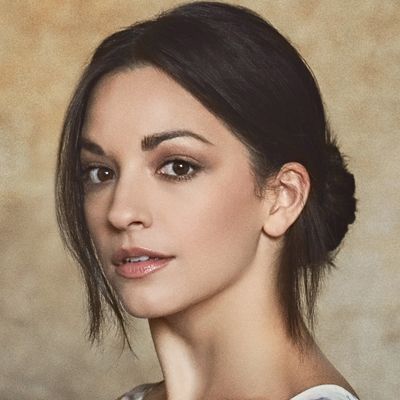
Best known for her amazing Broadway debut as Gloria Estefan in ON YOUR FEET, Ana Villafañe currently stars as the legendary Roxie Hart, one half of the killer diller team in the hit revival of CHICAGO... Read More
From the show: Broadway Gives Back
Guests
Featured Shows
About
Best known for her amazing Broadway debut as Gloria Estefan in ON YOUR FEET, Ana Villafañe currently stars as the legendary Roxie Hart, one half of the killer diller team in the hit revival of CHICAGO. She also lends her voice and her talents to a number of important causes, including supporting individuals with arthritis and homeless children. Join Ana as she discusses overcoming juvenile arthritis and what it means to give back.
Learn more about about the worthy causes discussed in this episodes and how you can donate and/or help:
Connect with Ana:
- Instagram: @anavillafaneofficial
- Chicago The Musical
- Photo: Emilio Hernandez
Connect with The Broadway Gives Back Podcast:
- Facebook: @broadwaygivesbackpodcast
- Instagram: @broadwaygivesbackpodcast
- Twitter: @broadwaygives
Hosted & Executive Produced by Jan Svendsen and co-produced & edited by Jim Lochner.
A proud member of the Broadway Podcast Network.
Special thanks to Dori Berinstein, Alan Seales, and Kimberlee Garris from BPN; Julian Hills from The Bulldog Agency; and Eric Becker from Broderick Street Music.
Transcript
This transcript was automatically generated and might contain errors.
[0:05] Jan Svendsen: Welcome to the Broadway Gives Back Podcast.
[0:07] Jan Svendsen: I'm your host, Jan Svendsen.
[0:10] Jan Svendsen: This podcast spotlights Broadway actors, shows, and organizations in their pursuit of social impact and philanthropy.
[0:17] Jan Svendsen: Join us as some of the brightest lights on Broadway share their stories about their favorite charities and how they got involved and the people on the causes who benefited from these philanthropic efforts.
[0:33] Jan Svendsen: Best known for her amazing Broadway debut as Gloria Estefan in On Your Feet, Ana Villafañe currently stars as the legendary Roxie Hart, one half of the killer diller team in the hit revival of Chicago.
[0:47] Jan Svendsen: She also lends her voice and her talents to a number of important causes, including supporting individuals with arthritis and homeless children.
[0:55] Jan Svendsen: I'm thrilled to have her here today to talk about philanthropy and social impact and all the work she does. Ana, welcome to the Broadway Gives Back Podcast.
[1:03] Ana Villafañe: Thank you. Thank you for having me.
[1:06] Jan Svendsen: Well, I think it's very fitting for us to do this podcast together about philanthropy because we actually met the first time, and I'm not sure you remember, but it was actually doing something philanthropic.
[1:17] Jan Svendsen: Um it was at a rehearsal for the Viva Broadway Benefit concert, which was Gloria Estefan and Miami Sound Machine, and the cast of On Your Feet. I was producing the concert, and you were just about to open On Your Feet.
[1:30] Jan Svendsen: And I think that was the first time you ever performed on stage with Gloria. Is that true?
[1:35] Ana Villafañe: It was also the first time I ever performed on a Broadway stage.
[1:38] Ana Villafañe: And the irony of all ironies, that is also when I met Bianca Marroquin because she introduced.
[1:46] Ana Villafañe: And so it's very full circle to then now stand on stage with her and to be, you know, co-starring in a show. It's incredible.
[1:55] Ana Villafañe: Um and Bianca is going to be also a guest on a podcast that we're going to be dropping at the same time as yours. So it'll be great to have people listen to both of your conversations.
[2:03] Jan Svendsen: I love it. Um before we get into the conversation about philanthropy and all the social impact work that you do, and just to get things rolling, I wondered if you could answer a few personal-ish rapid fire questions, be kind of like speed dating.
[2:17] Jan Svendsen: I'll fire off a question and you answer it with the first thing that comes to your mind, okay?
[2:22] Ana Villafañe: Great, I'm ready.
[2:23] Jan Svendsen: All right. Favorite Broadway show.
[2:26] Ana Villafañe: Rent.
[2:28] Jan Svendsen: What animal would you be?
[2:30] Ana Villafañe: Oh, a freshwater sea otter.
[2:34] Jan Svendsen: That's good. Um, if you could go invisible, where would you go? And what would you like? What where would you want to be if you were invisible?
[2:44] Ana Villafañe: Who would you want to if I was invisible and no one could find me? I'd stay home, I would take naps, I would I would watch Netflix for days. There's currently so much I want to watch, but I can't just disappear and I have to be places.
[2:58] Jan Svendsen: Um can you describe yourself in three words?
[3:01] Ana Villafañe: Uh curious, um passionate and mischievous, probably.
[3:09] Jan Svendsen: What do you most give a damn about in this world?
[3:14] Ana Villafañe: I would say, man, I wish I could ungive a damn about things, to be honest with you. I'm very much an empath, so anything I hear about, I give a damn about, um, which has been especially tough, I would say, over the last two and a half years or two years.
[3:31] Ana Villafañe: But um, but um yeah, I give it, I kind of give too much of a damn about everything.
[3:36] Jan Svendsen: I can relate.
[3:37] Jan Svendsen: I cry at the news every night.
[3:39] Ana Villafañe: I know exactly. I have to like watch the British baking show to like cleanse my brain and system of headlines.
[3:46] Jan Svendsen: Yeah, Ted Lasso has done that for me.
[3:48] Ana Villafañe: Oh, there you go. Exactly. We all have our our fix to go to sleep, you know?
[3:52] Jan Svendsen: Exactly. Um, what dream do you have that you've yet to achieve?
[3:58] Ana Villafañe: I would say big picture. I really want to help empower um specifically children with chronic conditions. That's my overarching goal.
[4:12] Jan Svendsen: It's a good one. What's your biggest mistake that you've ever made?
[4:16] Ana Villafañe: Oof. Uh, my biggest mistake that I ever made, doubting myself.
[4:21] Jan Svendsen: And what are you most proud of?
[4:24] Ana Villafañe: Going to sleep happy at night. I like live a life that I'm like I I'm very, very fortunate fortunate to feel like fulfilled at the end of the day.
[4:36] Jan Svendsen: And what are you most grateful for today?
[4:39] Ana Villafañe: My family.
[4:41] Jan Svendsen: So let's start actually, let's start a long time ago. When you were seven years old, when you were seven years old, you were diagnosed with juvenile arthritis.
[4:49] Jan Svendsen: And I just wondered if you would mind sharing that story and how that diagnosis and um subsequent, you know, lifestyle um impacted your life and impacted your philosophy about giving back to others.
[5:02] Ana Villafañe: Um, so I was a very active kid and I'm the second of four children in my family. So it was uh, you know, constant striving for attention, but I never really had an issue there.
[5:16] Ana Villafañe: Um, but I was also like very much a tomboy, always like climbing a tree or getting into some sort of trouble or getting lost at the mall or whatever.
[5:27] Ana Villafañe: Um and then I got really, really sick during the Olympics of 1996. I was born in Atlanta, Georgia, so my whole family, we were over there for the Olympics.
[5:39] Ana Villafañe: And all very exciting until I got this fever of unknown origin that ended up landing me in the hospital. And after months of being hospitalized, they finally found out that I had rheumatoid arthritis, which as a seven-year-old, to hear the words juvenile rheumatoid arthritis, it was like, you know, a tongue twister and it meant nothing.
[6:03] Ana Villafañe: But everything my entire life changed, like to the point where I can't really remember much before that. Um but it became a very strange childhood because I was constantly I had attention for all the wrong reasons after that.
[6:23] Ana Villafañe: And I was known as the sick kid at school or in our community, like, you know, and everybody treated me different.
[6:34] Ana Villafañe: So I I really hated pity, um, still to this day, but I really it it became a very big turn off. Just I could sense how people would shift and how they treated me, whether it was adults or kids.
[6:47] Ana Villafañe: Um, and I was in and out of a wheelchair a lot um during my childhood, and that was tough. I was like homeschooled for certain times, and then would go to school, and like kids didn't know if they could sit with me at lunch because were they gonna catch something?
[7:03] Ana Villafañe: Because all they would hear was were all these big words and saying, Oh, Ana Villafañe is sick, Ana Villafañe's sick, or let's pray for her, or whatever it might be.
[7:11] Ana Villafañe: And all out of no malicious intent, I would say, but kids are kids, and so I was very much othered, and I felt like a complete alien during school because we didn't have a good grip or firm control over my condition.
[7:32] Ana Villafañe: So my parents, you know, were doing their best and basically putting themselves through like low-key nursing school in order to take care of me at home. Um, but also trying to manage not having my siblings resent me or trying to make them feel equally important.
[7:49] Ana Villafañe: Um it was it was tough. It was very, very tough. And every family, you know, has like the dynamics and the things that they go through.
[7:58] Ana Villafañe: Um, but it took me a long time to kind of I guess forgive myself is is the term, but for being the stressor of my family.
[8:08] Ana Villafañe: Um, so like mental health-wise, it took a pretty big toll on me, and I had like really intense PTSD at nine and had to be re-hospitalized for that.
[8:17] Ana Villafañe: So it was just kind of this like ongoing saga, which now I'm of course a lot more at peace with because I've learned to like love myself and to accept myself and how to take care of myself.
[8:27] Ana Villafañe: But the beginning there was rough, and I attribute a lot of my I guess um personal growth or like handling of it actually to the camps that I would go to during the summer for kids with disabilities, where all of a sudden I wasn't the weird one at the lunch table.
[8:48] Ana Villafañe: We were all getting medication, we all had injections, we all had, you know, knew way too much about the medical field at eight years old and could talk about it like adults, but you know, but still wanted to be kids and play and you know, construction paper and glitter and all that stuff.
[9:04] Ana Villafañe: So it was um it was it was a very uh traumatic experience, if I'm real about it, but but it also led me to the things that I love most and also kind of helped me become the person that I am today.
[9:21] Ana Villafañe: So because of not being able to go outside or go to PE or participate in sports or anything like that, I turned to the arts and I turned to painting and I turned to music and started singing, which eventually led to acting and which I mean led to a career.
[9:36] Ana Villafañe: So I kind of it's interesting, you have to take the the good with the bad, right? But that's um that's the short version of the story.
[9:44] Jan Svendsen: Yeah, you know, it's funny you use the word disabled. I always want to say differently abled, you know.
[9:49] Ana Villafañe: Right. And it's and it's so it's interesting that you even bring that up because I had to come to weirdly terms with even that word, which on the scale, I mean, when I was younger, it was a lot less in control, so I didn't have as much um mobility and I wasn't sure that I was going to be able to walk every day of every week.
[10:12] Ana Villafañe: But now it's very interesting because it it all kind of can look differently. People can be carrying conditions or disabilities or differently different abilities um that that you don't even see.
[10:28] Ana Villafañe: So it's just a very interesting level of awareness to grow up knowing that and feeling that and coming to terms with that within your own body and being able to accept yourself as not the victim or the villain of your own story because when your body is the thing attacking you, it's hard to look in the mirror and be like, all right, you're I like you. Self.
[10:52] Jan Svendsen: So how did you those struggles? How did you overcome them? Especially being a performer.
[10:57] Ana Villafañe: I would say a lot of trial and error. Uh it's still it's still very much a daily thing. It's just a factor of my life.
[11:06] Ana Villafañe: Um, but I think performing helped me overcome in many ways because you know, you look at Broadway dancers, for example, and they're taking care of their bodies and looking after themselves, and there's a different, there's a discipline that comes along with being a ballerina.
[11:06] Ana Villafañe: There's a discipline that comes along with being a singer. Um, and so I had to, I was forced into discipline at a really early age, not due to anything glamorous or fun, but it ended up kind of being a godsend because I've I've never not taken care of myself.
[11:43] Ana Villafañe: So then when it came to being a performer and really calling myself a performer and starting to work professionally, I already understood what that meant in terms of the upkeep and in terms of again the discipline and the self-care.
[11:57] Jan Svendsen: That's really interesting. I never thought of it that way, but that's so true.
[12:00] Jan Svendsen: Um I was also thinking about you know what you just said about the arthritis, the camp. Um so was that through the Arthritis Foundation?
[12:08] Ana Villafañe: Yes. So the camp that I would go to was called Camp Funrise in Miami, Florida.
[12:14] Ana Villafañe: Um, and it was free through the Arthritis Foundation, and it was a sleepaway camp that was just my favorite week of the year, always.
[12:25] Ana Villafañe: Um, I started going, I believe, when I was nine, um, and then I just kept going until I was a counselor. Well, first I was like a junior counselor, and then I was a real counselor and all the things.
[12:36] Ana Villafañe: Um, but it was the best. I I mean, just to feel, you know, I think of like the Dear Evan Hansen lyrics of like you will be found, right?
[12:44] Ana Villafañe: And to feel some sort of belonging uh as a kid in that particular circumstance, which childhood is, you know, wild anyway. It's hard to feel like you belong anyway.
[12:57] Ana Villafañe: Um, and you're doing so much self-discovery, and you're learning about the world and about your place in it and about the place you want in it.
[13:04] Ana Villafañe: Um so for me, those camps were a hundred percent where I was able to like refuel myself and kind of like make friendships based on a bond that kind of transcends anything else.
[13:20] Jan Svendsen: Well, you probably don't have to explain yourself to anybody to understand inherently, right?
[13:25] Ana Villafañe: Exactly. And I always felt a little bit of guilt, even with like not being able to explain to my mom, not being able to like translate or or communicate what I was feeling to the people that I loved most because they were doing their best, but they couldn't get it.
[13:40] Ana Villafañe: Um, so so it was a place where I was meeting not just other kids but also adults who who understood from the inside.
[13:48] Jan Svendsen: I did a little research, the Arthritis Foundation. Um, they have this idea, this concept of champion of yes.
[13:55] Ana Villafañe: Yes.
[13:56] Jan Svendsen: And I don't really I wondered if you could explain what it would explain what it means. But to me, when I was just sort of looking at it, it reminded me a little bit of the improv philosophy of like saying yes and right.
[14:06] Ana Villafañe: Yes and correct. Well, because every day is kind of improv. I could wake up and not feel 100%.
[14:12] Ana Villafañe: And you and you, there's a a level of perseverance and of I mean survival really, but but it's more than that.
[14:19] Ana Villafañe: It's like a like a will, a a will to overcome when you have this type of condition, right? And when you have anything, which we can all probably relate to.
[14:33] Ana Villafañe: It just so happens that ours is physical. And over 300,000 kids in this country alone have juvenile arthritis.
[14:42] Ana Villafañe: Um and it's one of the most underserved populations because it's considered such an old person's disease. So the whole concept of being a champion of yes, I really love it because it allows for the empowerment of that kid. Um and I say kid loosely because like I still feel like a kid and I'm 32. Um, but especially with you know growing into your body, yourself, again, your place in the world, I think it's important to um to harness that power of yes and of being kind of uh being able to adjust to whatever life throws at you, and even if it's coming from within yourself, like learning to not be mad at yourself for that. Um so there's a lot of yes involved.
[15:33] Jan Svendsen: I think that's interesting. I know you also um aside from the uh the Arthritis Foundation, you also have participated in Covenant House's um Night of Covenant House Stars to benefit um just celebrating the resilience of these young people who are experiencing homelessness. And I wondered um, how did you get involved with that cause?
[15:53] Ana Villafañe: So Jeff Calhoun uh reached out to me years ago, and I remember we met up at a Starbucks and just started talking about Covenant House, and they have a lot of houses in Latin America.
[16:07] Jan Svendsen: Really?
[16:08] Ana Villafañe: Yeah, they and they're called Casa Alianza, which is you know the same thing translated. And so Frank Wildhorn actually wrote me an original song to sing as like the anthem for their covenant houses in Latin America, which exists in Mexico and Guatemala. My dad is from El Salvador and came here when he was 16 years old. So like I have a very big um I mean I I really I'm Central American, so like it really was uh hitting close to home for me. And then on top of that, and this blew my mind, and it's been quite the story actually. But my Cuban grandparents, when they moved to this country, they fostered a girl from Casa Alianza from Guatemala who had a facial tumor, and she lived in my like in their house with my mom.
And um, unfortunately she did pass away many years later, but I grew up seeing pictures of Rosita and hearing about this girl that um that my grandparents took in for a long time, uh and then cut to doing the song for Casa Alianza and for Covenant House once I started working with them, and it's um and it was a very, you know, I got chills all over my body because it's in what realm, like back in the what, 70s when that happened, my family never would have thought that I would have then would been uh working with the organization. But it's very again, I I'm very big on the empowerment of young people. And a lot of these young people who find themselves without a home have a lot of other, whether it's like physical or mental health situations, I think a lot of it does go hand in hand.
And I'm hoping that that within my lifetime there will be some some reforms on just the access for people to be healthy and to be okay and to be able to stand on their own two feet. Because for me, I grew up thankfully, um, with access to my medication and with insurance. But I remember when I turned 26, as a person with a chronic condition, I remember turning 26 and crying because I realized that that I was going to have to be responsible for my injections are thousands of dollars and I need that to move. So like I'm aware of the privilege of being able to have my medication, and not everybody has that same privilege. So um, so yeah, so I think it it weirdly goes very hand in hand to me.
[18:46] Jan Svendsen: It does, you know. I was gonna ask you, you know, before we start talking, like, how did you learn to become philanthropic? But it sounds like it was just this very organic thing. And the idea of empowering youth, whether it be through, you know, youth that are that have health issues or or mental health issues or homelessness, um, you know, it's all very thematic. It all fits very well with sort of your bio and your history.
[19:09] Ana Villafañe: Well, I'll say I'm a product of it, you know, because that that camp saved my life and my like heart as a kid because it was a heartbreaking, it was kind of a heartbreaking existence for me. I hated school. I only felt good on stage when I wasn't at camp. And so it so I'm a product of these programs and of the uh the empathy of others and of people who looked at me and gave me the tools to now do the same thing, hopefully, for for other kids or young people.
[19:43] Jan Svendsen: So for you, it really is like giving back, like almost absolutely like quite literally.
[19:48] Ana Villafañe: Absolutely. You know, it's interesting because a lot of people, there's the word philanthropy or social impact or charity or cause, social responsibility, being of service, giving back. There's so many different ways of you know to call this sort of this concept. And um, you know, for you, you quite literally are giving back.
[20:07] Ana Villafañe: I very much use the word purpose in those moments because I don't even I don't even know how to explain it. Like even charity, like I don't think I'm like doing something charitable. I think I'm I am extending what has been given to me. You know what I mean? And so it's very much like it keeps me going, and I think about that all the time. And when I get DMs the other day, a girl with um uh cerebral palsy came to the show and sent uh an Instagram story and and whatever. And so I spoke to the house manager. I was like, listen, tonight if there are any seats because she got a standing room ticket, is if there are any seats that we can accommodate this girl, and she totally could have stood. I I know that because I'm stubborn too.
I would have stood too. But because I could ask, and just if you know, if there was a seat available, and Thea, our house manager made sure that she was able to sit with a full view and the whole thing. And and so again, it's just like if I've if I somehow got to this to this position and um and weren't looking out for the next, I guess, I don't know, the next generation or the next the next people who need it, then I I would almost feel like what a waste for me to be here.
[21:22] Jan Svendsen: What advice would you give your fans, our listeners, um, about um being of service or creating a better world?
[21:30] Ana Villafañe: I would say that that it it starts with whatever lights your fire, you know. I don't think that that there's a paint by numbers approach. I don't think there's anything, you know, that you should feel like you're supposed to be doing, but if it's calling you and if it's something that you inherently care about, then just follow that. It's like any like any path of curiosity, right? Like I'll get I I'll go on Google and start Googling things and go down this rabbit hole and all of a sudden I'm an expert on XYZ that I really didn't need to know at 3 a.m. on a Tuesday. But but that's it's it's just following your instincts and and seeing where that lands. I think it's it's such a beautiful way to exist, you know, and I think um the advice would just be to trust that instinct.
[22:17] Jan Svendsen: Your parents and your siblings, did they get involved in your charitable work?
[22:21] Ana Villafañe: Oh yeah. I mean, they they kind of had no choice. But it was interesting because once I started singing when I was really young, the Arthritis Foundation started asking me to sing at events and stuff, and so they would take my family, and so every, you know, walk, every race, every like fundraiser, um, my my family has been incredibly supportive. And now I'm like getting emotional because it's it's I know how lucky I am with that. And um, and it took a while, and like there was you know, there were a lot of growing pains because like having siblings that couldn't understand what I was feeling or what I was going through was tough, um, because they had to learn and navigate just as much as I did, and it's very much a family thing, and you know, I one of that's one of the things that I want to tackle in my life is try to create programs and spaces where because it's not just the child, no child exists in a vacuum.
So the parents, the siblings, the teachers, teachers didn't know like I there was a moment when I was in fourth grade that I was a liability because I kept falling in school and um and having my PTSD episodes and stuff, and my mother was hired by my middle school, or no, by my I was in fourth grade by my elementary school as a hall monitor, quote unquote, um, so that I could stay in school. My the principal of my elementary school did not have to do that, but she did, and so I had a lot of people in my corner, and and if more kids in you know, similar situations could have that feeling of like some sort of safety net, and just people in your corner who are looking out for you and want you to succeed, um, and want you to be empowered and want you to think that you can achieve things, whether it's based on a physical disability or a mental or homelessness, what would that world look like? I'm very interested in that, or and in creating it.
[24:30] Jan Svendsen: Um, Nick Wyman was on my podcast last week, and um, he has a son who has um some pretty severe um physical disabilities, and I actually have a daughter who um is actually close to your age with um some very chronic severe disabilities as well, different abilities, but um and uh and we talked a little bit about what the concept, what you just said, and so just you sharing your personal stuff. I'm gonna share a little personal stuff too, but you know, it does have impact the whole family, and it impacted my other two children as well. And so finding a support system for um for the whole family is I think really important, um, both from uh uh you know, helping your child who has the issues, but also helping your children who don't. And we what you were saying before, were you the victim or were you the villain, you know? And I think um I think that's you know, just dealing with all of that psychologically is really important for everybody, right?
[25:25] Ana Villafañe: For sure.
[25:26] Jan Svendsen: Oh, my fair my therapists have a field day. I'm always like, just when you thought you were at the end of something, there's more. And there's more. Um so I did I did read a little tidbit, and it's interesting because this is a perfect segue in our conversation. So um let's talk about On Your Feet. You sang Gloria Estefan's song "Reach" at the Arthritis Foundation's camp when you were nine. Is that true?
[25:53] Ana Villafañe: Yes. So I'm your life had so much foreshadowing in it. It's so crazy. I know whoever's writing this really deserves some sort of award because I would okay, so backtrack even more. Where I first got sick, where I first got the fever for my onset was at the 1996 Olympics for which "Reach" was the anthem. Then fast forward to me being nine years old and singing at camp and the the people at the Arthritis Foundation being like, wait, we can have this girl sing at our events, and and that would be a good fundraiser. Um, and so I I became their little like poster child, slash I would go, one of my best friends from camp would speak. He has spinal arthropathy, and he would be the speaker because he was great at like the like, you know, he he's very like eloquent.
He was always like 40, but in the body of a 10-year-old. Um, and and we were tag team. He was the speaker, and I would then come out and sing like you know, an inspirational song. But the first time it ever happened was at the Disney Contemporary Resort in Orlando, Florida. They took my entire family, and I sang "Reach" by Gloria Estefan. They said I could choose whatever song I wanted, and that was the song I chose. And my sister did a dance in the back because I was so nervous. Um, so I had her on stage with me. She was always like the ballerina. She was like the non-clumsy one. Um, and that is the truth. That is what happened. Um, and then cut to getting the role of Gloria, and I actually tweeted um, some days are meant to be remembered, the day I got the job.
And Gloria replied and followed me that night and said, um, that's right, baby, with like a bunch of emojis. And like I like just stared at the computer because I was like, oh my god, Gloria Estefan is my friend. What is happening? And and that was that. So every show when they would sing "Reach," I would sing, yeah.
[27:58] Jan Svendsen: Um, well, Gloria is, she's also my friend, and she's been on this podcast. Um she and Amelia, they're amazing.
[28:04] Ana Villafañe: And Emily.
[28:05] Jan Svendsen: Yeah, they are. Uh I I keep thinking about your performance in On Your Feet, and it was so amazing. And you really did this amazing. You didn't imitate Gloria, you became Gloria.
[28:18] Ana Villafañe: Do you know what I mean?
[28:19] Jan Svendsen: Oh, I do. And so uh it was so powerful and so beautiful too. And knowing her, I thought, oh, what's this gonna feel like? But yeah, no, I just um I was I was in it 100%.
[28:33] Ana Villafañe: And oh well, thank you. Well, that's why I was so um, I guess hard on myself with the details because you you're right, it couldn't have been an imitation, it couldn't be, you know, an Elvis impersonator in Vegas, it had to be from a way deeper place. So luckily she was very generous with um her time and her insight into getting there. Like, I mean, she didn't have to show me the videos of like the births of her children. I'm in there, like, so it was uh it was amazing, but I knew that you know everyone had a point of reference. So people would come into the theater, and if I was just doing my own thing and Beyoncéing and not honoring this incredible woman, then I would have failed, I think.
[29:18] Ana Villafañe: And Gloria's also she's not one that you would ever want to have. She's never considered herself a victim, even with her accident. She never wanted pity or anything like that. And you played that so well because you played that from a place of strength, which is exactly what Gloria was like, right? Actually, to your point, when I got when I when I booked On Your Feet, the one thing that I was like, oh no, was my arthritis because I thought to myself, how am I gonna tell these people that I have this condition that is possibly gonna, you know, interrupt or get in the way or whatever? So she right before rehearsals began, her and Emilio invited me to dinner in Miami. I was living in LA at the time, so I flew to Miami, went to dinner at one of their restaurants on the beach, and you know, we're sitting there, I was like, I'm gonna have one glass of wine, can you be super professional?
Um, three bottles in, Gloria is like, I just want, you know, especially like with these topics, I just really don't want you to play the victim. And I was like, shit, this might be the perfect moment to say why I would never play the victim. So I had a moment of courage, and I was like, well, actually, because she was really, really giving me a lot of backstory about the accident, about how she felt. And so I'm sitting and she was trying to describe to me what it feels like to be in a wheelchair and not sure if you can move and all this. And so I was like, so I listened, and then I was like, well, let me share with you why I can promise. If there's one thing I can promise, like I might, I might not be able to sing, I might not be able to dance, I might not be able to act in however many weeks, and you guys might be like, we're gonna get somebody else.
But the one thing I can assure you is that I will not play the victim because blah, blah, blah, blah, blah. And I told her about my arthritis. And she just stopped. And you know her, so you understand. Like, she like stopped and grabbed her wine glass and goes, so I can actually trust you. And I lost it because in that moment I thought she was gonna say, so we're gonna get an alternate, we're gonna have a standby, we're gonna, you know, maybe figure out how to have like a contingency plan. And instead, she trusted me. And instead, she validated all of my experiences in that one moment in a way that um that all that has stayed with me forever, and that was you know, probably like this week of 2014, like it was early October of 2014, right before coming in and starting rehearsals um in New York.
So that's so it's interesting that you say that because it is it is very much true. I remember so that when I was referring earlier in the podcast to the rehearsal where I met you. Um I don't I don't know if you remember this part, but um I had the New York Times with me, and this is back when New York Times. Oh my gosh, and I none of you and the entire cast had seen that full-page spread of remember this moment. I have it on video. I'm gonna send it to you because I took pic I took video with my phone, and Emily was there, and Emilio and the cast and Gloria, and you and Gloria were just freaking out and hugging each other crying, and it was so amazing. Oh my gosh, I remember this moment so perfectly. Wow, but yeah, that was so special. And and you could it was palpable. I could feel the bond between you and Gloria that day.
[33:07] Ana Villafañe: Oh, yeah. She's I mean, to this day, like it's I still sometimes look back and think about the fact that all of that is real. In fact, right back here, though those are insoles from sneakers that are signed by the closing cast of On Your Feet, um, and Gloria and Emilio. So it's like, yeah, it's very it's still very surreal to me. And I did it, I was there.
[33:31] Jan Svendsen: You did it, girl, and you were there. Uh, and now, like, here's a segue. Now you're in Chicago, and you're Roxy Hart. So, how does this feel? I mean, I was um, you know, I went to some of the reopenings last week on Broadway, and it was so magical. And being at the Tony Awards and being at the um the CBS show, just that whole idea of coming back after 18 months of the shutdown. How does it feel for you?
[33:58] Ana Villafañe: Um, it's a lot, it's it's it's overwhelming in a good way. I feel like, you know, audiences are so hungry, which is just delicious to perform for, but there's definitely an emotional hangover um afterwards, and and just the you know, the idea of being six feet apart, the idea of you know, a year of of hammering this concept of social distancing and social distancing and like the difference between then the human connection when you're in a theater and just the the alchemy in the air um from this communion with an audience is a lot. Um, so it's been interesting to navigate that. Our bodies hold on to that, obviously, emotionally um as well, but it's it's really kind of thrilling. Like, I think about it sometimes when I'm tired or when I'm on my way to the theater, and I'm like, how am I about to do four shows?
Four shows in 48 hours. Um, because we have five show weekends. Um, but then I'm like, how could I not after being away from it for so long? And I wasn't, you know, if I'm honest, I was working in TV during the shutdown, so I was not um affected at the same in the same way that those who had to leave their shows were. Um, but again, going back to the fact that I'm an empath, I can understand that and I can feel it in the room. When we got back on that stage, I had never been at the Ambassador Theater. I've never seen Chicago, but the responsibility of reopening Broadway, and especially in this iconic role, which has been played by these like mega legends, um was or is rather a challenge but a responsibility that I welcome because it's something that I personally have never taken it for granted.
But like, especially after the shutdown, we cannot take for granted the fact that that we're allowed to be in those spaces, that we're allowed to be telling stories again and sweating and freaking out and getting from physical therapy to acupuncture to the show to rehearsal to press to whatever, you know, like that that um the runaround of it all, it is a it is Olympic performing. Broadway is Olympic performing, but there's definitely a sense of of gratitude that is undeniable from everybody right now. Um, and so that kind of helps fuel for the next one and the next one and the next one. I stopped drinking coffee after On Your Feet because that was a mistake. Um, but I'm headly considering going back because it's uh it's an intense lifestyle, but you know, sometimes you need to be taken away from something in order to appreciate it even more.
And for me, it wasn't just the shutdown. It was I haven't been on a Broadway stage since 2017 when On Your Feet closed. Um, and that was obviously completely different because it I had done it for three years, and it was an original, you know, I was originating the role, and it was an original musical and all this stuff, but um never did I imagine having the chance with Broadway reopening to be one of the people at the forefront of that. And I and I I take it really seriously, and I like I mean, that's history, like this has never happened, so it's um it's something very humbling and very like it it definitely helps me show up and show up and show up.
[37:38] Jan Svendsen: So I want to talk to you a little bit about your Latina side. Um, and I'm particularly interested in this. I worked at the Broadway League back when we developed Viva Broadway, so it's very near and dear to my heart, um, even though I'm not a Latina, uh, but I care a lot. And the idea was to bridge this gap between Broadway and the Latin communities. And um, first thing is you're gonna be doing a performance all in Spanish.
[38:03] Ana Villafañe: Um, it's not all in Spanish. Uh yes, we are going to have um basically like kind of like bookends of the show in Spanish. Uh, and there was a big conversation that I had with Barry Weissler, and who I think it makes at least for me, it it's it really shows who they are and how they've been listening in terms of representation on Broadway and whatnot to have this moment and to celebrate like that, and to make an a specific night um I guess geared toward inviting the Latin community or Latinx community or Latina community or whatever they want you, whatever people want it to be called to the theater because I didn't personally grow up with access to the theater. I didn't grow up like, oh, let's just catch a Broadway show and go to New York and whatever.
Like that was not the reality. And I know that for some people it doesn't seem accessible. And yes, tickets to Broadway shows are expensive. And you know, when when the priority is putting food on the table and getting to school and whatever, and like the ins and outs of everyday life, you're not like thinking to yourself, let's go spend two and a half hours in a theater watching people play pretend. But there's so much that can be healed and learned and just minds open and it's culturally so important to have the arts be part of everyday life. Um, so I love the fact that the purpose of Viva Broadway is to create like bridge that gap and to say to the Latin community that there is a place for you here and that you do belong in this incredibly high-end art form.
It really is. I mean, if you think about it, it it's the top of like it's the best. It's the best thing, it's the best in the world. Like even the West End, like that is still not Broadway. Um, so it's really important, I think, to make people feel welcome and invited. And for me, ever since I moved to New York, I'm I'm proud to say that I've been a part of that because any girl or guy or whatever, any any they, them, like anybody could relate to maybe seeing my trajectory and saying, Oh, there is a place for me. And even not as a performer, whether you want to be a stage hand or a producer or a writer, like there is space for theater or for everybody in the theater.
[40:45] Ana Villafañe: So now you're making me think back to the Tonies, which were just a week ago. And it's also Hispanic Heritage Month right now. And I'm thinking about Matthew Lopez's speech when he won the Tony for The Inheritance. And um, I believe the stats for equity, actors equity members right now, the only three percent are of Latino, Latinx, Latina, whatever descent. Yeah. And the statistics for writers and other artists are even less than that. Right.
[41:15] Jan Svendsen: Right.
[41:16] Ana Villafañe: So I think you're right. It's so important to see that representation. If it were up to you, how would you help create a more inclusive environment?
[41:26] Ana Villafañe: I think just treating everybody with the same level of dignity. So, for example, when I look at press machines, uh, the headline is not, oh, look at this Latin person doing this thing, or look at this black person doing this thing, or look at this um queer person doing this thing, or this trans person doing this thing. It's look at this great talent doing this great thing. The same way that we talk about uh white people. You know what I mean? Like the headline is not, oh my god, a woman did something today. No, this incredible individual achieved whatever it is that they achieved. Um, and that's kind of where I would like to see things go, because otherwise, if the people in power are still going to always be the people in power, then we will always be the ones just checking off boxes for them.
And so I am very interested in normalizing our accomplishments as just great accomplishments. Lynn is not Lynn because he's Puerto Rican. Lynn is Lynn because he's a genius. So let's stop calling it what it's not. You know what I mean? And so I think that's where I would like to see the shift and to see the normalization of everybody's greatness being able to be marketed and pushed in the same way.
[42:45] Jan Svendsen: That's a perfect place to end this podcast. That was so inspirational. So ladies.
[42:54] Ana Villafañe: Thank you. I love this.
[42:56] Jan Svendsen: Thank you so much.
[42:57] Ana Villafañe: Thanks.
[42:58] Jan Svendsen: Thanks for listening to this episode of the Broadway Gives Back Podcast. Broadway Gives Back is part of the Broadway Podcast Network. Special thanks to my producing partner, writer, editor, and friend Jim Lochner. And thank you to everyone at BPN, including Dori Berinstein, Alan Seales, and Kimberlee Garris. If you like what you hear, don't forget to subscribe and rate this podcast wherever you stream your podcasts. You can also follow Broadway Gives Back on Facebook and Instagram at Broadway Gives Back Podcast and on Twitter at Broadway Gives. To learn more, visit BPN. Thanks so much.
© Broadway Podcast Network, All Rights Reserved