

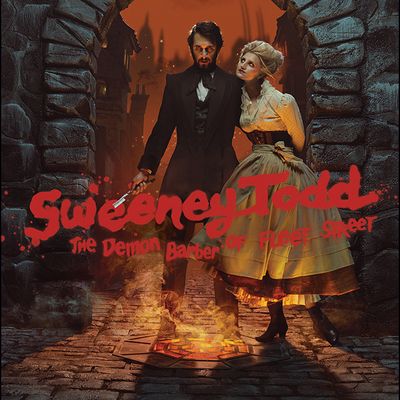
Tony Award winner Annaleigh Ashford joins us for a warm and wonderful conversation about her training, career and process in becoming Mrs. Lovett opposite Josh Groban in Sweeney Todd... Read More
From the show: Broadway Teachers Podcast
Guests

Featured Shows
About
Tony Award winner Annaleigh Ashford joins us for a warm and wonderful conversation about her training, career and process in becoming Mrs. Lovett opposite Josh Groban in Sweeney Todd.
Transcript
This transcript was automatically generated and might contain errors.
[0:16] Gordon Greenberg: Hi, welcome to the Broadway Teachers Podcast.
[0:19] Pam Parasot: Um I'm Pam Parasot.
[0:21] Gordon Greenberg: Hey, and I'm Gordon Greenberg. And we are so happy to be back for another season of Up Close Interviews with some of our favorite artists working on Broadway today.
[0:32] Pam Parasot: Um who are we talking to today, Gordon?
[0:35] Gordon Greenberg: Today's interview was with Annaleigh Ashford, the great, delightful, joyous, hugely talented Annaleigh, who I have known and loved for many years. She was amazing in that Chippendales TV show.
[0:49] Pam Parasot: I love it.
[0:49] Gordon Greenberg: Totally. And as Mrs. Lovett, most recently on Broadway, she found so much humor and heart in the role that had never really, I think, been mined in quite the way she did. It was extraordinary, and now I'm sure she's going on to another phenomenal project. So we were really lucky to spend an hour with her.
[1:10] Pam Parasot: Absolutely. And I think taking on a role like that that was so iconic and associated with another actress must have been a daunting task, but she rose to the occasion and beyond.
[1:21] Gordon Greenberg: She was so spectacular, and the teachers loved talking to her.
[1:24] Pam Parasot: She rose well beyond the occasion. She rose outside of that theater, straight up to the heavyside lair, and she continues to rise. Her star's ascended. And I'll say this about her. Um, she is a great friend. She has reached out to me on more than one occasion, like asking for favors for her friends, like who she wants to help get jobs in show business or get um one of them wanted to be an assistant director. And um it's the kind of thing where um that sort of generosity is very telling about a person. Um and so I think it's all part of a beautiful package, and I'm so glad that um she's a part of our podcast.
[2:11] Gordon Greenberg: Excellent. Let's take a listen. The following was recorded live at the Broadway Teachers Workshop, an annual program that brings theater teachers together with the Broadway community for behind the scenes classes, workshops, intimate discussions, and Broadway shows in New York City and online. Learn more at www.broadwayteachinggroup.com.
[2:43] Annaleigh Ashford: Hi guys. Clearly, our next guest needs no introduction at all. Well, Annaleigh, I think you know that this group here is comprised largely of theater educators from all over the world. And so I thought we could start. I wanted to ask you if there was a teacher in your life, either early on or later in your career that meant something to you or sort of really helped you make a life in the theater.
[3:07] Annaleigh Ashford: Yeah, you know, um my mom's actually an elementary school gym teacher. She's an educator, and she just retired a couple years ago, and now she's a full-time sub. Uh, which at the time I remember when she told us she was retiring, we were like, What? Why are you retiring? You're gonna what are you gonna because she's one of those people that she has such a calling on her heart to be an educator and um and I think it's so special that she's now in these spaces that you all know we need as a sub. You know, it's it's such um an important role that I don't think is talked about enough. And you guys know better than anybody. So now she's uh she's a pro-sub, which is super cool, and that's what she needed to do.
That was kind of like God's second calling on her life. Um, I have had so many special teachers. I think every teacher that walks into your life teaches you something unique that you take along for your journey, whether it be in the arts or not. But uh obviously you guys know when an arts teacher comes into your life, um, there's a special bond and connection because you have a similar love. You know, you're in love with the same thing. Um, my voice teacher is a little girl. Her name was Miss Kit Andre. I called her Miss Kit, K-I-T-A-N-D-R-E-E with an accent. She wasn't French, but she wanted to be. And um I do a whole like 10-minute monologue in my club act about her because she was so special and so unique.
And she would she would wear like loose site platform shoes, black dance pants, and in the 90s, those big um t-shirts that were in style. She went and bought every Disney villain from the Disney store, and she would wear Disney villain t-shirts. And then she had white, um platinum white, like pixie cut, and she would wear rhinestone headband every day. And I never saw her without false eyelashes on. Um, and I remember she she gave me, she couldn't play the piano, so we warmed up to tapes, tapes, friends. You all know what I'm talking about. Um, and we had like a big deck of karaoke tapes, and that's how I learned songs. But the thing that was so special and unique about her was that she cared so much about the storytelling of the song.
So I sang songs that were extremely inappropriate for a child, like Maybe This Time from Cabaret, and uh Everything's Coming Up Roses. But when I sang Everything's Coming Up Roses, I knew what happened the moment before. I knew why I was singing it. I knew what I wanted in the song, my action, my objective. Um, I knew my relationship to the person I was singing. Um, she also was like really, really insistent that I had good mic technique, which is which was so specific to the mics of that era. I remember it being like tipping it up. I had like all sorts of I could like, you know, anyways. Um so she was extremely special to me. She made such a profound impact on my life. And it was also um I was very aware that she was an artist herself.
And so I always anytime I come in contact with a teacher, I'm always um just really aware of how we have a shared artistry, and that um there's such a respect that I come to you as a teacher. Um, you know, my my voice teacher just had a birthday, and I wanted to make sure I got her something really special. I see her every week. She's become such a part of our life. Um, and so could teachers continue to feel you and love you. I'm just going on and on. All right. One more, I have one more thing to share with you. Um I did a play with James Earl Jones almost 10 years ago, um, called You Can't Take It With You. It's a I'm sure many of you know the play. Tony Award-winning actress. Um, but I remember he is the forever student.
So he was constantly working on the play, and that's something I try to carry on. I there's always 10% of the show that I let myself play in within that I that was still lives within the framework of what I created with the director, but allows me to find and grow and learn. And I that's something that was so special that he did, and he um he always felt like he wanted to work on Othello more. He had done Othello like 40 years before that. And he became really close to my husband, who was also in the play, and they would come in on Thursdays and work Othello, scenes from Othello. My husband would read Iago and he would read Othello. And so I just share that with you to share with your students because it's just a lifelong art form and you never stop learning. Um so that's kind of magic.
[7:37] Gordon Greenberg: Great. And did you do shows in high school? Were you active in theater in high school?
[7:40] Annaleigh Ashford: Yeah, I grew up in Denver, Colorado, which had a really lovely theater scene. And then in the 90s, it was super thriving theater scene. So there was a handful of equity dinner theaters that I got to work at, and then also some really wonderful non-equity houses. And I was in the candidacy program at the time, so I was able to flip-flop back and forth between the two, but I always kept the musical spring musical slot open in my year so that I could do the musical. And I remember I was in the ensemble the first couple of years, and then um I graduated high school a year early, which is weird, and you can't probably do anymore, but I did online courses, which nobody knew what they were at the time. It was like a brand new thing.
[8:17] Pam Parasot: Were you like just a brainiac or very ambitious or both?
[8:22] Annaleigh Ashford: Ambitious and I and I talked my uh I was, you know, I was very persuasive with the guidance counselor into accepting these classes. I don't know.
[8:30] Pam Parasot: Why did you want to graduate within New York?
[8:31] Annaleigh Ashford: I wanted to get to New York. I just wanted to come to New York so much, and I wanted I knew I wanted to come to college here. Um so I graduated a year early, and uh I remember um the second the first year I was in the outside, the second year we did uh Sound of Music and I got to play the Baroness. I was like living dreams for my my hair, and I always would do everybody's hair. Uh and then the last year we did Anything Goes, and I taught the whole like there was probably like 150 kids in it. I taught them all how to do a time step on lunch. People would come in. It was kind of like a sweet thing. And that was a time where I was happy that the, you know, if you have a kid who's so so interested and they have something special they can teach other people.
That's a that's kind of a special opportunity that you have. You know, a time step is something that you you have for life. You'll never forget how to do a time step. So I encourage you if you have a show where there's a tap number, get one kid to teach everybody how to do a time step at lunch. And like, you know, it also makes the show very thrilling.
[9:30] Gordon Greenberg: So you did move to Manhattan and went to school here. You went to Marymount?
[9:33] Annaleigh Ashford: Yeah, I went to Marymount Manhattan College. It was the only college I got into, so it's the one I went to.
[9:38] Pam Parasot: Did you all do it? Was it like uh did you have to audition to get in?
[9:41] Annaleigh Ashford: Yes, and what was that process like for you?
[9:44] Annaleigh Ashford: Um, I didn't know what I was doing. Now there's all these programs and things that you can pay for people to help you know what song you're supposed to sing and what monologue you're supposed to pick. My husband went to Yale, and there's quite a few Yale Juilliard NYU grads who actually teach in a lot of these programs. I'm sure you guys know about them, but they didn't have that back then. There was no resources, and there's so much uh there's so many resources on the internet now, too. We didn't have that also. It was like I remember like our computer lab was like a brand new thing. Um so I sang, I'm sure I know the wrong material, and I had kind of the wrong monologue. But thank God the the people who were running the auditions for Marymount, they you know saw something in me, thank God. So I got to go to Marymount Manhattan College and I had a great experience there. Um, and used online courses too again to graduate early.
[10:37] Pam Parasot: So you graduated early from that too.
[10:39] Annaleigh Ashford: Oh my gosh, that's amazing.
[10:40] Annaleigh Ashford: Yes, uh, yes.
[10:41] Pam Parasot: You were a woman on it with a mission.
[10:43] Annaleigh Ashford: Well, my adrenals are not happy with my my adrenal glands, they're very stressed. That's a weird doctor joke.
[10:53] Pam Parasot: So when you got out of were you at all tempted when you were at Marymount to like be auditioning and stuff when you were in school?
[11:00] Annaleigh Ashford: Yes, I had my equity card. I got it right before I left for college. I like made a deal with the country dinner the country dinner playhouse. Anybody in the room know the country dinner playhouse? Anybody? Anybody? It was a great dinner theater in the 70s, 80s, and 90s. And uh they basically I got my card and um I would go to EPAs and chorus calls, even though you weren't supposed to. I would go at the crack of dawn and sit in these lines, and I did not get one call back those whole three years, except for an at an open dance call. Jerry Mitchell ran an open dance call for Hairspray, and he called me back. He was the only person, and he's actually the person who gave me my Broadway debut, and he directed Kinky Boots, and he's been such an important creative and force in my life and a good friend. So that's always kind of magical.
[11:46] Pam Parasot: That is magical.
[11:47] Annaleigh Ashford: You were a driven young woman.
[11:49] Annaleigh Ashford: Yeah, I really liked doing this.
[11:52] Pam Parasot: That's good.
[11:53] Annaleigh Ashford: That's good. So your first broadbus, or I guess first big tour that you got, you were associated with Wicked.
[11:59] Annaleigh Ashford: Yeah, I um I, you know, I had a really hard time in EPAs and course calls because again, I was doing the wrong material. So I I remember we did a showcase at the end of my senior year, and I didn't get any agent calls or any manager calls, but there Larry Fuller, who is a choreography choreographer, he actually choreographed the original Sweeney Todd. He's a very famous choreographer. He was remounting a production of Evita, and he came and he was like two, he called me in to audition for Evita. And was the first time I had material to audition with? Was the first time I had a couple scenes from the show and songs to sing from the show, and I almost got the job. And then that casting director started bringing me in.
Um and it it was like when I had material, it was like the whole world changed. I just clearly didn't have the right book. I didn't have the right odds thing, you know, things to sing in my book. Um, but if I could come in and play a character, which is also I think been a theme in my career. If I can play a character, then it's a lot easier for me to play to you. But if I'm playing a version of myself, what is that? Um, and so later on when I started, this is actually something kind of fun to share with your students. When they are singing audition material for college and audition books, they should pick a character to be. You know, they should be playing the character in that song. It's a lot easier to play an objective to get what you want.
You know, all the foundations of our acting are there if you use that character. Um, and so I ended up getting a uh production of what became Next to Normal. I played the daughter. Um, and then that's how I got my agent and my manager. And I I was an under, I got, I remember I was auditioning for everything, and I was working at the Kiel's counter at Bloomingdale's and Fiorello's as a hostess and the craft studio helping kids pay. I mean, it was like I had like five jobs. And I at the Kiel's counter at Bloomingdales, I got the call that I got the job, and every all of the people at the perfume counters around us and the makeup counters, like I got it. I went, I got it. And they all screamed and cheered for me. It was like such a magical moment.
[14:06] Pam Parasot: Oh my gosh, that's sweet.
[14:07] Annaleigh Ashford: Yeah.
[14:07] Pam Parasot: So you you ended up coming to Broadway with Wicked, right? Did you played Glinda for a time?
[14:10] Annaleigh Ashford: Yeah, I got to um I I actually did Legally Blonde right after the tour.
[14:17] Pam Parasot: Yeah.
[14:18] Annaleigh Ashford: Her sweet husband Kevin Paraso. Um and then while I was doing Legally Blonde, uh they had a Glinda take a leave of absence on Broadway, and then I got to go play it on Broadway, which was super fun.
[14:27] Pam Parasot: So Legally Blonde was here at Broadway.
[14:30] Annaleigh Ashford: Oh my goodness gracious.
[14:31] Pam Parasot: Oh my god, you got to get to that in a minute. But uh but talking about Wicked, I was thinking about how you've played so many roles that you know uh have been associated with really prominent actresses who put their stamp on it.
[14:46] Annaleigh Ashford: Yes.
[14:46] Pam Parasot: And I just wondered how um how did that impact your approaching a role? And did you find that daunting?
[14:55] Annaleigh Ashford: Yeah, it's a great question. So in the case of Wicked, you know, you're replacing. So I always say when you replace somebody, it's like putting on a pair of shoes that were made for somebody else's feet, and it just takes time. It takes a couple months for them to really fit to your feet. When it comes to roles like Mrs. Lovett, so indelibly created by Angela Lansbury and then revived by the great Patti LuPone, those are two names that I like, I'm blushing now at just thinking about it. So I don't think about that very often. I try not to. And the same I felt the same way when I played Dot in Sunday in the Park with George. You know, Bernadette Peters is also one of the greatest forces in the American theater.
So those are quite outrageous roles. When I approached the material, that is all there. I went to the library and I watched Patti. I had seen that performance, which is brilliant, and that production is so different. And then I also watched the original with Angela, but this is like a month before I start working on the material. I did the same thing with Sunday in the Park with George. I watched the PBS production about a month before I started seeing it. So it's there, but then I let it go. It's the same way that I work on Shakespeare. There's been so many brilliant people who've worked on all these roles over the hundreds of years. So if you have access to a few great people, watch them, learn from them, the storytelling, and then put them at the back.
And then there's always a couple little nods that I do to those past performances, just baby nods that I just say thank you to them for, but I just go to the material like I would Shakespeare. Like, who is this person? What does she want? How is she gonna get it? And what's the relationship to the people around her? I mean, the basic fundamentals of acting. I always read, like I always, you know, when I'm about to work on a big project, I read Respect for Acting from Uta Hagen one more time. You know, like which is also magical for this show because we're playing the Lunt-Fontanne, which the Lunts were Uta Hagen's mentors. So that's kind of sweet. That's always kind of a magic thing to me.
[17:19] Pam Parasot: You have taken those roles and so made them your own in a way that you we don't when I saw Sweeney, you don't even think of the other. I mean, it's really you've been so successful in that, and it's interesting to hear that you did watch it, and then you just let it go in a way. It's beautiful, really beautiful work.
[17:38] Annaleigh Ashford: Thank you. That's so kind of you. It's so similar to Shakespeare. And that's another thing is teachers, Shakespeare can feel so scary to kids, you know. And I always say, like, especially when I'm talking to kids, I'm like, for every musical that you come in to see, make sure you see a play. So there should be a one for one. It's good for the theater community, but it's really good for your kids because they get so obsessed with musicals, which I get it, I love them too. But like it's really important that they know that there's a whole other world of acting, and acting is the most important of all the three of singing, acting, and dancing, because if you can sing and you can dance, but you can't tell a story through those two, then we don't care, you know.
And then the other thing, Shakespeare is so complementary to musical theater. It's storytelling through poetry, which is what we're doing when we're singing songs. So I encourage everybody as educators to start trying to implement Shakespeare. And also that Mark Rylance's Twelfth Night is like a great example to show your kids of like it's a very classic production, but the way they use the language, you understand everything that's happening.
[18:46] Pam Parasot: So you've now played two really iconic heroines in Stephen Sondheim musicals with Dot and Mrs. Lovett, of course. How much, if at all, was he involved in those productions and what has working on his material meant to you?
[19:02] Annaleigh Ashford: Well, you know, as a theater artist who is in the musical theater, the goal is always on time, you know, it's sort of the best. And I always think about that amazing documentary they did about the recording of the Company cast album, and when sweet Elaine Stritch is like, but I never get material like this. I never get material that's good. I've gotta make it right. You know, she's like doing that whole thing. And that's what you feel like when you're working on it. You're like, I have to do the very best I can because this is the very best material. So it's an overwhelming honor and blessing, but I say overwhelming because it is overwhelming. He was very, very present. Him and James Lapine were there for every step of the rehearsal process during Sunday in the Park when we did it at City Center, and then also when we transferred to Broadway.
Even to the point where he changed some orchestrations during the sits probe. Made a note longer than I sing in one section, changed a cello part. You know, it was amazing to watch somebody like that. It reminds you that the painting isn't finished in this art form, it's always growing and evolving. I think it's one of the gifts of my lifetime, getting to spend that creative moment with him, and also to have James Lapine with him, you know, the two of them together, they were like, you know, our fathers that sat at the back of the house. And also he was very emotional about his pieces. And I know that he was like this at the latter part of his life, because I spent that time with him, but I also just from other people who knew him throughout his life, which I thought was just so heartwarming and wonderful.
And he also gave the most incredible notes. Patti LuPone said in an interview last year, they said, What do you miss most about Steve? And she said, His notes. He was really supportive of this production of Sweeney. He signed off on it and said, Yeah, let's do it. He was so thrilled to have this full orchestra because it hadn't been done on Broadway with an orchestra this big since the original. And he passed the Friday before we did the workshop for it. So I had all these questions about the piece that I wanted to ask him, and I almost emailed him, and then I went, Oh, I'll just wait until I see him in person. But right before we opened, I miss him so much, you know. And it's not like I spent that much time with him, but the time I did was so precious to me, and it was so important to me as an artist, and he was a great teacher.
More than, you know, he was one of our finest of all time as a writer and creator, but he was also one of our greatest teachers. You know, there's those great videos you can watch of him teaching his songs to people, and they're so special, and it was always about making sure the audience sort of understood the story, and all of his notes for me were about clarity of lyrics so that people knew what I was saying and telling story and fighting emotion, not letting it take you over. So I looked back at my notes that he gave me for Sunday, and they're just as relevant for Sweeney. So yeah, but I always say when you're doing a Sondheim piece, he loved puzzles. So we do a puzzle in my dressing room every show.
We have one that's taking us like three weeks right now. It's taking us so long, jigsaw puzzle. Yeah, we do jigsaw puzzles, but he loved all sorts of puzzles. So I would say, like every show, every song is its own puzzle when you work on Sondheim.
[22:39] Pam Parasot: Tell me how this production of Sweeney Todd came together and how long have you been a part of it working on it?
[22:45] Annaleigh Ashford: Yeah, they, um, Josh Groban has always wanted to do it, and so he reached out to Jeffrey Seller, who is the producer of Hamilton also and many other great, great theater pieces, and reached out and said, I want to do Sweeney. And so they reached out to Tommy Kail, who also directed Hamilton and lots of other amazing shows. They went to Steve and Sondheim gave his blessing, and then they reached out to me. And I got to join the party. And then we did a reading a year ago, Thanksgiving. So this coming Thanksgiving, it'll be two years ago.
[23:21] Pam Parasot: Were you someone who knew every line beforehand, or did you have to immerse yourself in it?
[23:25] Annaleigh Ashford: When you know what's wild, it's not a show that I knew like the back of my hand, but I have said in like a hundred interviews when they go, What parts do you want to play in your career? I was like, Well, someday I have to play Mrs. Lovett. So there's like many, many recordings of me saying, I want to play Mrs. Lovett. So I guess I manifested it.
[23:46] Pam Parasot: So do you believe in that?
[23:47] Annaleigh Ashford: Yeah, totally. Thank God. But yeah, it's one of the greatest roles ever written. It's so Shakespearean in scope. And the scenes are very, they remind me of Ibsen, Chekhov, and Shakespeare. My husband again went to Yale, and that's his world. He's a straight actor, man. You know. We need to change the way we say that too. That is also where he is on the Kinsey scale, but anyways, um, but he doesn't sing is basically that's what we should say. The actors who don't sing. Um, so anyways, but when we would run lines, he'd be like, This is like Chekhov and Ibsen. Some of these scenes, you have a page to jump from here to there. And it's also melodrama, which is a really hard balance. It's really broad. So you have to keep it grounded, but it's wild. There's slapstick and it's zany, and it always was that way. It was always that on the page. That Steve would always say, like, it's a melodrama, it's a comedy. He'd always say that. So I really took it to heart.
[24:57] Pam Parasot: Well, I have to say, and you guys, of course, are gonna see this tonight. I can't wait for you to see the performance. But what I love so much about seeing it was the physicalization you brought to the role, which is different maybe than folks who have done it in the past. And I'm curious if you came into the production with that in mind. Is that something that developed in the rehearsal room? How did you come up with that?
[25:19] Annaleigh Ashford: Yeah, I came into this rehearsal room really like terrified and a completely blank slate. I just had no idea what I was gonna do. I didn't know what I wanted. Well, I did know what I wanted as the character, but I had no preconceived kind of notions about what I was gonna do physically. Like sometimes I work and I walk into things and I go, I think this is a there's a physicality about this that needs to be XYZ. This I just didn't know where she was gonna take me. So, like you do with everything, I went to what's on the page, and there's a few key things that I really leaned into. She says right at the beginning, I always had a fondness for you. I did when he's singing my friends, which means I always kind of liked you.
At the end of the play, she says, I love you. Oh, she says, 'I love you' to him twice in a really big way, and she always did. So there were keys to me there, and she's to me, she's trying to get him to love her, and she's trying to get safety and protection. Women in that era only got protection and safety through a man. So she needed a man, and a man walks into her shop at the very beginning of the play when she needs protection most. So she has safety with him even though it's through a very complicated and dark way. You know, Angela Lansbury, I listened to a lot of interviews about with that Angela Lansbury did. She'd always say like her morality to us is compromised, but to her it lives within the framework of her world.
So it's always, you know, when you're playing a bad guy, you can't know you're a bad guy. And so I really don't think I'm a bad guy at all, and I'm really in love with this man, and I need him to take care of me. I need him to, and I love him. It's a love story for me.
[27:13] Pam Parasot: Which is maybe not the way that people...
[27:13] Annaleigh Ashford: I don't know. I didn't realize that too totally comes across. It's all on the page too, you know.
[27:22] Pam Parasot: I have to say that seeing it, seeing you on stage in this role, the physical stuff is huge. Obviously, the vocal demands of the part are huge. What do you do? What's your regimen? How do you maintain a healthy self for the...
[27:22] Annaleigh Ashford: I didn't think it was gonna be as physically challenging as it was, but I of course just, all these weird things came out of me in the rehearsal room, and then they stayed, you know, like, and they help tell story. Again, it's a melodrama, so it works. The zany physicality, physical comedy when I'm called on for it, it's like one of my favorite things in the world to do, but it has to be grounded and it has to be clear. And it's also a dance with the audience. It's different every day in those spots. But I go to acupuncture and an osteopath, and also PT throughout the week. I have certain exercises I do. They change as the run goes on. My shoes are all of a sudden like, oh, I haven't worn heels every day for longer than six months in a really long time.
You know, in TV and film, somebody just takes your shoes away from you right when half the time too I'll go, can you see my feet? And they'll go, no, we can't see you, but I just don't wear them. You know, we do that a lot in TV and film. Everybody's so conscious of taking care of your feet in TV and film. It's glorious. They also feed you all the time. Theater, you're on your own. But yeah, I don't eat certain things. I have a six-year-old, almost seven-year-old, and he comes in and kisses me goodbye every morning when he goes to school because our show is really long, so I don't get home until late, and so I don't take him to school. So that's hard. There's all sorts of the hard parts of being a mom and a wife that, you know, when you've been having this conversation with me like three months ago, I'd probably be crying because it was so intense those first three months.
And the spring season's hard. We had Janine Tesori was here last week, and she talked a lot about, you know, being a mom and having like a very young child and starting work on she was doing something with Nick Hytner somewhere and just saying what an absolute challenge it is in the theater. It's so hard. I think it's hard in any part of our industry, but in TV and film, you get Saturday and Sunday off. And in this world, you work all Saturday and Sunday, and also your life revolves around your voice and your body, you know.
[29:50] Annaleigh Ashford: So you get up every morning and it's like a constant check-in all day long for what you have to do at eight o'clock, like all day. You know, um, like I'm thinking about it as I'm talking to you guys, you know how I'm placing how I'm talking because of how my sinuses feel today. And it's been so humid for two weeks, and all of our sinuses feel crazy, and the air conditioning has been really messed up at the theater last week, but now it's working, so now it's dry now. The theater feels dry. And I should we turn on my humidifier? But the plants were getting moldy, you know, it's just a constant. It's just like it's never ending, you know. It's a real, it's it's um, it's such a blessing and a gift on our life.
But holy moly, is it a challenge for us as a family? Yes, I think, you know. Um, you just mentioned uh TV and film, and I'd be remiss if I didn't first of all bring up that recently nominated for an Emmy. Thank you very much for welcome to the Chippendale. Very good. Um but you are one of those rare people who have been able to toggle back and forth between stage and TV and film work. Um has it been a real conscious uh uh decision on your part? Has it just been luck that the right things have fallen in your lap? And how do you feel about all the different media? You know, there was a time when theater actors were just told they were supposed to be theater actors and we didn't get to do TV and film.
And actually, I think Hamilton actually has kind of helped bridge that divide. Um, but I was lucky enough to break into a TV film land before that started started happening. And thank God for the casting director Bernie Telsey, who cast he cast Sweeney, he cast Legally Blonde, he cast like a million things. I've been he's been kind of a fairy godmother to me. And um he thankfully kept bringing me in for TV and film. It's sometimes we have to remind it's wild to me. I just somebody I won't name what I did with them and who they are, but they're a very, very famous showrunner, and I worked with them recently, and they came and saw Sweeney, and they were like, I don't understand how you can do such a broad performance and then also do TV like the thing you did with us.
Like I think if she had seen me do Sweeney Todd, she would not have felt comfortable hiring me for the thing that I did for her on TV. Which happens, and it's so it's so outrageous. And then at the same time, I've gotten some great TV gigs from people who saw me do crazy physical comedy. Um, but it our business is very fickle, and so people remember me for what they saw me in last, which I take as a high compliment. And also Udahagen talks about this in her book. She had somebody come to her at the stage show and say, like, I I wanted to meet you because you're you're so different in every role. So there's been occasionally times where um I remember I was up for a big CBS sitcom, which I ended up getting to do a big CBS sitcom, which is great, but this is years ago.
And I had just done like you can't take it with you or kinky boots, so that's broad comedy, but the people casting had seen me in Masters of Sex, which is a is a is a cable drama. And they were like, We don't know if she does comedy, so we need to come in another time, and she's gonna need to test. And we were like, What? Do you know? And so I remember they were like, we don't know if she can do a sitcom. That's what they said. And we were like, What? I come from theater. That's literally a sitcom. Like sitcoms are like the same thing. Like it does, it's it like you it's so crazy that still bonkers to me that they were like, we don't know if she's gonna know how to do a sitcom. They were like, We I come from theater.
So um, anyways, I would like to say I'm so blessed and lucky for every opportunity I've had. And then um, I I'm really grateful for the TV and film that I've that I've gotten to do, and I'm really grateful to something like the piece of Hamilton for kind of cracking open people on the other coast's brains to the fact that like we exist and also we can do lots of things. That's been historically a hard thing for people in the theater to crack in. So I'm really grateful. I do want to open up for questions, but I have one last one since they're saying this tonight. Do you have a favorite moment in the show? It they all it changes all the time. I would I I won't tell you a moment, but I will because I want you to find your own.
And also it's like different for me all the time. But I think that what's unique about this production is I think it comes from a place of love. Um you know what's the show mean? I I've always thought it's a it's a cautionary tale about revenge and what can happen if you let revenge take hold and how it's dark, and you should try to lean into the light. And sometimes you just think Sweeney, oh, you know, it's dark, and but I actually think there's a lot of light in this piece, and specifically, especially um sweet Gaiton Maserato, who plays Toby, is so wonderful. Our whole company is so beautiful, but I think the relationship that I have with him in this piece is so unique to Toby and Lovett's. I just think we found a really like Mrs. Lovett never had a child.
Um she was married to a man who was well, I made this up. She was married to a man, she's married to a man who was older than her by a lot that she was forced to marry, who owned the shop. Her parents made her again, I made this up. Um but I think she's so kindred with Toby, and she's very motherly with him. You know, I take I tell jokes. There's some bits about how I'm, you know, my motherly stuff, but I think with him, she really is. So, anyways, just that little nugget. Any questions for Miss Annaleigh?
[35:22] Audience Member: Yes, in the front.
[35:24] Annaleigh Ashford: What if you all love? Um, okay, now I'm playing one, so that's good. Um, but I really want to play Martha in Who's Afraid of Virginia Woolf? And I'd love to play um, I would love to do Amanda in The Glass Menagerie. And then I'm this has been so hard on us as a family. So my husband's like, You're retiring from musicals for like 20 years until our second kid's in college, and we want to have another baby. Um, so someday I want to play Dolly in Hello Dolly. I'd love to do the next revival of that. And I think I want like one more. I'd love to do, I'd love to do a little night music too. I'd love to play Desiree.
[36:04] Audience Member: Someone over here.
[36:11] Annaleigh Ashford: Yes, up there.
[36:13] Audience Member: Like, I work the characters teach me.
[36:13] Annaleigh Ashford: Like every character teaches me something different. Um, I think like I remember at the end of Sunday in the Park with George. Uh we have some pockets of our family that we don't know about. My grandma was adopted. And weirdly, during the run, we found a picture of our adoptive or our birth uh great-grandma, it would be my birth great grandma. Um, and so like from that show, it was a special kind of way for me and my mom to go. We need to reach back into our past and look into our family. Like, there's that's beautiful. One of my favorite songs is Children and Art. You know, there's only two worthwhile things to leave behind when you depart this world, children and art, which you guys are teachers, so you're doing both.
Um there's all this beautiful language about reaching back into your family tree. So that's a great example of like something really special that I took away from a show. This one, I'm gonna take away murder. No, I'm just kidding. No, I I can't at the end of this, I wonder what it will be. I wonder what it what I will take away. But I it's always at the end, it's always like two weeks later that I go, Oh, this is this is a but each character takes over a place in your heart that you didn't know you had. She's always they're always just like an extension of you, you know.
[37:34] Audience Member: Yes, up here.
[37:36] Annaleigh Ashford: So you talked about filling these big shoes of all of these actresses, like who originated and everyone copies it.
[37:45] Audience Member: So I see it a lot.
[37:47] Annaleigh Ashford: Yeah, a lot. What's that experience?
[37:53] Annaleigh Ashford: Well, it's so wild. Um, one of our really good friends is teaching uh he's a junior high uh theater teacher, and so like he sends constantly sends me videos of Lawrence. I'm like, oh my gosh, it's so wild to me. Um it's it's such it's so flattering, and then it's also just takes me back to kind of what I keep saying over and over again. All of that was on the page, you know, and the that physical comedy came out of what was on the page too. It's like that moment that you realize that you're falling for somebody. I always used to say, like, the butterflies in your stomach, and I feel like I may poop my pants moment, you know. We all know it, you know what that feeling is. Um, so again, it just always comes back to what's on the page.
That's always your roadmap, that's always your guide. Um, yeah, and I can't wait to see what funny weird girl gets to play Lauren in the revival in like 15 years, you know. Like, I hope she wears a green sweater. But I hope she finds basically it's always like it's always in a it's always a thread of your soul. So she'll find something magic that I could have never thought of because it's her soul, not mine, you know.
[39:04] Audience Member: Good point.
[39:05] Annaleigh Ashford: Other questions? Anyone else here?
[39:07] Audience Member: Yes.
[39:08] Annaleigh Ashford: I saw something about uh your allergy.
[39:13] Audience Member: No, the eyes it's on.
[39:15] Annaleigh Ashford: Yes. Um I have a bunch of students that have a lot of allergy and everything.
[39:22] Audience Member: How is that in professional settings?
[39:27] Annaleigh Ashford: And like that's a great question. Still having to warm or not horrible. Yeah, we um this allergy season specifically was really, really challenging. Um, and also these theaters are really old, so they're moldy and they're challenging on your immune system every day. And then eight shows a week is hard on you. You know, I'm sure you guys too, like I always remember like some kid would get sick when it was time for the show, you know. Um, and also we have to navigate singing around things every day, um, and singing around phlegm and oh, it's a constant chemistry project with your mucus. So I would say, especially if you have kids who are having like seasonal allergies, really encourage them to go to an ENT and go to an allergist and get that stuff taken care of, especially if this is something that they want to do professionally.
The better, the more information you have, the younger you are, the better. So I'd say that's one thing. And then my stuff is I have seasonal allergies that I didn't have when I was younger, so that's so obnoxious. So I'm navigating that. And then I have celiac disease, so I'm gluten-free for real, for real. Um, and I have to constantly be the one who's on it. The same way that when I go to a restaurant. So I check my props every single day. I touch them, I feel them. I made sure all the flour that that we use is gluten-free. And then the pies are gluten-free. Um, even though I don't eat them, I touch them. So they had to be gluten-free. Um, and then Josh needed the filling in the pie to be really slippery because he used to sing a lot right after that, and we don't get and he doesn't have like time to go off stage and take a drink of water.
He has to like eat the pie and then sing my friends, this glorious famous song. So that's egg filling. But um, yeah, there has been a it's been a constant uh thing I've had to navigate in my career, and I have to be the one that's on it. So I would encourage, you know, just let your students know that they are their advocate for that, and they have to take care of themselves. And I really like I don't think, especially when they're in high school, junior high, like you know, your kid has allergies, you're like, You just have allergies, but they can get shots and they can get stuff and take you know, figure it out now, so then it's not such a um it also doesn't get in the way, you know, of your um confidence or your uh you know, it's not just about the show, it's about the daily of it, you know what I mean? Um, but yeah, that's a great question.
[42:04] Audience Member: All the four.
[42:07] Annaleigh Ashford: Wow.
[42:12] Audience Member: Gluten free.
[42:17] Annaleigh Ashford: Isn't it amazing? I know I'm always like, I'm so blessed that I don't have a nut allergy because that's a whole other thing. But my little boy has oh my gosh. Yeah, it's a whole thing. My little boy has celiac disease also. Um, and I'm the one who was like, I you know, and they were like, I don't know. I was like, I'm telling you, I have mom gut, you know. And he did. And my gut is but anyways, yeah, it's um it's a real thing. So yeah, I'm glad you guys are, but it's um it is amazingly more prevalent, which I could go on and on about autoimmune diseases, but anyways.
[42:49] Audience Member: Yes, right. Did you have a question, sir?
[42:54] Annaleigh Ashford: They're gluten-free.
[42:59] Annaleigh Ashford: Before I let you go, um, because I know after you see the show tonight, you'll be like, I need more Annaleigh Ashford. Um, tell us a little bit about the Welcome to the Chippendales, which you can now see on Hulu.
[43:09] Annaleigh Ashford: Oh yeah, yeah. Um, yeah, we it's a it's a super fun, crazy, wild uh show about the real stories of the Chippendales dancers, which my mom's like a true crime person, so she knew everything. She was like, Oh yeah, you didn't know. But there's like murder and crazy things happen, but it's um it's a real fun watch, and it's uh it's like super fun to be transported back in time to that era, and also, you know, dancing boys. I'm always happy when the boys have to take off their clothes instead. I always used to say that when we do press for I'd be like, Well, um, but yeah, it was I'm so grateful I got to do it, and we were still in COVID times, and uh just it feels like a hundred years ago, but it wasn't it was like this time last year when we've when we wrapped on it. But it's a great, it's it's a super fun show, it's a fun watch.
[43:59] Pam Parasot: Well, we have got to let this woman go rest before her show tonight. Please join me in thanking the amazing Annaleigh Ashford.
[44:05] Annaleigh Ashford: Thank you for being teachers!
[44:07] Annaleigh Ashford: Thank you, guys. Have a good one.
[44:13] Annaleigh Ashford: You've been listening to the Broadway Teachers Podcast, recorded live at the Broadway Teachers Workshop, an annual program that brings theater teachers together with the Broadway community for behind the scenes classes, workshops, intimate discussions, and Broadway shows in New York City and online.
[44:29] Annaleigh Ashford: Learn more at www.broadwayteachinggroup.com.
© Broadway Podcast Network, All Rights Reserved