

Mari McGinlay / @marimoomcg. After studying acting at the Guildford School of Acting and training at the Dance School of Scotland, Mari McGinlay had laid a strong foundation to move forward in the theatre industry... Read More
From the show: Built For The Stage Podcast
Featured Shows
About
Mari McGinlay / @marimoomcg
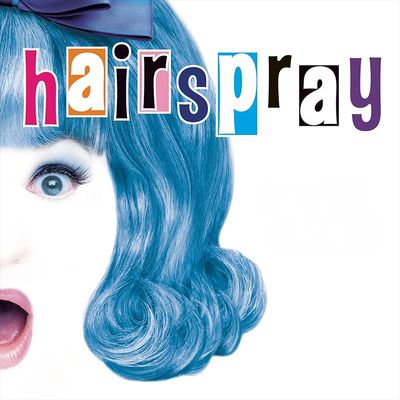
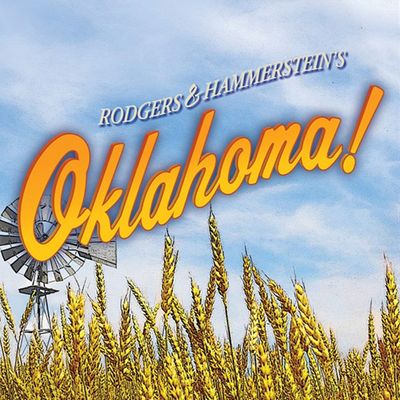
After studying acting at the Guildford School of Acting and training at the Dance School of Scotland, Mari McGinlay had laid a strong foundation to move forward in the theatre industry. She joins us on our podcast to share parts of that journey, as she then went on to work on the production of Oklahoma! at Royal Albert Hall, playing the role of Cinderella multiple times in Rodgers and Hammerstein's Cinderella and now joining the returning cast Hairspray the Musical on the West End as Penny Pingleton!
www.builtforthestage.com - Schedule your one week trial today!
Transcript
This transcript was automatically generated and might contain errors.
[0:01] Mari McGinlay: I think it is genuinely just not caring what people think and also deciding that the choice that you want to make, as in the acting choice or the singing choice, is your choice alone. And you're never ever going to know whether they loved it or whether they hated it. Especially in auditions, in rehearsals, you will, because they'll tell you that was terrible. Don't do it again. But in auditions, they aren't gonna know. So I think if you have an idea for something, the thing that they're judging you on, I think, more than your ability as a singer or an actor, is your choices. And I think if you make interesting choices, whether they be huge or tiny, just trust that that is the choice that you want to make and not because you're worried that it's the choice that they want to see.
[1:02] Joe Rosko: Hey, what's going on? Welcome to Built for the Stage Podcast. This is Joe Rosko, founder of Built for the Stage, Broadway's number one fitness platform. If you want to try a free trial, go to the website BuiltForTheStage.com, and we'll be on our way with seven days where you can interact with your own Broadway fitness coach on an interactive app online. If you like the podcast, please rate, subscribe, and leave a comment. And special thanks to our producing team, the Broadway Podcast Network. All right, we're gonna jump into our episode today with our special guest over in the UK. She's gonna be making her West End debut playing Penny Pingleton in Hairspray. Welcome, Mari McGinlay.
[1:46] Mari McGinlay: Hi, Joe.
[1:47] Joe Rosko: You nailed it.
[1:49] Mari McGinlay: Hello, how are you doing?
[1:51] Joe Rosko: Doing so well. Thanks for being on the show.
[1:53] Mari McGinlay: Um, can't wait to thanks for having me.
[1:55] Joe Rosko: Yeah, I can't wait for our listeners to get to know you a bit. Um so, first off, uh rehearsals just started on Monday, correct?
[2:04] Mari McGinlay: Yeah, yes, for me, yes.
[2:07] Joe Rosko: Yeah. What's that been like to get back in person? Are you in person or doing this via Zoom?
[2:13] Mari McGinlay: Yeah, in person, in person.
[2:16] Joe Rosko: Okay, so uh after the pandemic fiasco and all that we've been through, what's it been like to be in a room full of your peers?
[2:23] Mari McGinlay: It's uh well, so far it's only been me and uh the musical directors and supervisors and stuff, which has been wonderful and equally terrifying at the same time. I think everyone's sort of gone in feeling the same way, like we're excited, but everything just feels a little bit foreign and odd. And I was speaking to someone recently, and uh they were saying how I was saying how I feel like I've tried to keep up the last year of you know, keeping my fitness up and vocal fitness up and feeling ready, but there's but he had said there's just no place like the stage to be able to keep yourself up because I went into rehearsals and I came out like my mind was all over the place, and I felt like I couldn't sing anymore, and everything was horrendous, and I was like, I don't understand because I feel like I've been trying to keep it up, and he's like, it's just nothing is like when you're actually doing it and being in it. Um, but it was still exciting and wonderful, and it's only gonna get better, and we're only gonna get better, and I hope I'm only gonna get better, but it's good as the long answer.
[3:28] Joe Rosko: Well, it was exciting.
[3:31] Mari McGinlay: No, I trust that you will for sure.
[3:33] Joe Rosko: Um, just just in the couple of days, like each time you go back. Do you I'm asking this question for our performers here in the States to put them at ease a little bit. Hopefully, you help us with that.
[3:45] Mari McGinlay: Yes each as each day goes by, are you saying, okay, okay, I can see how like there's it's gonna be okay.
[3:52] Joe Rosko: It's gonna be Yeah, for sure.
[3:54] Mari McGinlay: And it is totally like riding a bike, isn't it? And it's also like building your confidence back. I think more so than anything. It's not that we've necessarily lost our spark or skill or whatever, it's just that we've lost the confidence and the ability that we can do it because we haven't done it for so long. So it just took me, even today having a singing lesson just before this, everything felt a little bit easier and a little bit easier each time. So I think it is all time is a healer in lots of senses, and I think the more we do it, the more it will feel natural to us again.
[4:29] Joe Rosko: So yeah, well, that's what I'm telling myself as well. Not to get too worried about it.
[4:34] Mari McGinlay: Exactly.
[4:35] Joe Rosko: Where are you originally from, Mari?
[4:37] Mari McGinlay: I'm from uh a very small town called Falkirk, which probably nobody has heard of. Um it's right in between so the big cities in Scotland, uh which is Edinburgh and Glasgow, and Falkirk is right sort of in the middle. Uh not much happens in Falkirk, but it's nice. It's a nice little town.
[4:56] Joe Rosko: Sure, sure. Is there any I'm just trying to educate myself and and our listeners here in the states. Uh is local theatre or regional theatre something that you had to your access, or is it pretty much, hey, if you want to do this, you gotta move to London and that's all there is to it?
[5:17] Mari McGinlay: There is in the big cities like Edinburgh and Glasgow, there is regional theatre. Um like we have the National Theatre of Scotland, which is also similar to the National Theatre in in London. But I think there is still this element that if you want to do it full time and have enough work that is being bred, you kind of have to be, you don't have to live in London, but that's where, especially for musical theatre and theatre, that's definitely like the hub where everything is at. We had little amateur theatre groups and stuff in Falkirk, um, but not anything that you would like it can help you develop, but it wouldn't, it wasn't like it was paid, like it wasn't paid, it was just we were all 14 and playing around with musical theatre for the first time.
Um but yeah, the in the big cities in Scotland, I hate to think that that people don't think there is anything happening in Scotland because there's definitely a bit of a stigma between theatre only happening in London and there's a bit of a snobbery about it. But there definitely is things happening regionally in the UK for sure.
[6:23] Joe Rosko: Yeah, that's been a big thing here where we've been trying to remind everyone that uh yes, the Return of Broadway is amazing, but we also have all these regional theatres across the country that uh need and are coming back as well.
[6:38] Mari McGinlay: Yeah, for sure. And people need to support them as well, because in fact they're the ones that need the support more than the big guns. Do you know what I mean?
[6:47] Joe Rosko: Yeah.
[6:48] Mari McGinlay: Yeah, of course. Without without them, really, there wouldn't be a Broadway or a West End or any of that.
[6:54] Joe Rosko: When did you when did you make your decision? When did you make your decision per se? Or when did you start to uh really get serious about wanting to become a performer?
[7:05] Mari McGinlay: I grew up in a very sort of strict religious background, and uh church was just a big thing. So uh we sang a lot in church and did lots of church plays and I think it just always felt natural to me and I always used to get up and get told to do a song on Sunday and that would be my sort of performing thing and then as I did it I was like oh this is good and then my auntie one day um I think I was just performing to her randomly in the middle of our conservatory and my mum I think still to this day hates her for saying this but she just said you know you think you should audition for like uh an amateur theatre group and my brain caught on to it and I just did not let it go until my mum let me do it um because I think my mum they're very old fashioned in the sense that anything too creative is going to be too difficult especially as a as a Christian or whatever because they were very super religious.
But uh and that was it yeah I just latched on to the idea and I auditioned for little drama groups and things around the area and um and that was that and then I did it throughout high school we didn't have a huge like musical theatre programme I think in America well definitely over in Scotland and over in the UK we have this ideal that American high schools are much more high school musical than we are over here. And then I auditioned for a uh high school sort of performing arts thing called the Dance School of Scotland which is a wonderful place and it's government funded so they only take good good people you know it's not like a money place that takes in anyone and everyone and I just yeah, there, and they just sort of train you and and practice you and train you up to audition for full-blown drama schools.
So so I had it going in me from when I was younger, but it wasn't until that age of like 16, 17 where my mum and dad finally laid off and they were just like, right, fine, we'll let you do it, we'll let you let you do it. And I just went ahead and auditioned for Dance School of Scotland, and then it all just sort of went off from there. It's a long story.
[9:16] Joe Rosko: So your persistence to continue, how because I think this is a a running through line or a theme with a lot of people out there as far as you know uh going back and forth with parents, or maybe your upbringing, or like, are you really going to pursue a a career in in performance?
[9:37] Mari McGinlay: Yeah.
[9:37] Joe Rosko: How how can you can we zoom in a little bit more on that? Or like what gave did you just not have a choice? Was it so ingrained in you that like mentally you it wasn't a matter of like if it was just like I'm doing this?
[9:51] Mari McGinlay: Yeah, I think I honestly do think it was that. I think I'm very, very stubborn and I didn't realize it. And my mum used to talk about how stubborn I was, but I just um once I decided, I think I was a bit obsessive when I was younger, or once I had decided something, I had to do it. And so once I decided I was I could do it. And then I think I do remember that there was a a turning point where I got old enough and in high school and I was getting asked to sing at every high school concert that they could that they could do. Like if they needed someone to quickly perform at this lecture tonight, they'd be like, Oh Mari, can you can you come down and sing that nice song that you sung? Um, and I think as I developed my own skill and my love for it, um, there was no other option.
And I always felt people say, Oh, performing is a really hard career to to pick, and it is, but um I always felt really grateful and privileged that I knew what I wanted to do. Do you know what I mean? Like I I never had any, there was lots of people around me going, oh, should I go to university or should I stay and do a job or you know, whatever. And I always felt so kind of kind of smug in a sense that I just knew what I wanted to do and I was gonna do it. Um so uh maybe it was young, young cockiness or something that made me just and I think also when you start to realize that that you're good at it too. I was like, I feel like I've got to honor being good at it. Not that not that that's that's cocky, but just when people are saying, Oh, you you you when you sing you move me, or when you do this, you you you make me feel something.
I was like, oh okay, so I must have I must have something if I'm making people believe it. Um much to my mum and dad's it made me sound like my mum and dad were really awful people, they're not they're not at all. I think they just saw that it was gonna be really, really hard and compromising as a as a as a Christian or something, yeah.
[12:03] Joe Rosko: Well, let's skip ahead now to you booking your West End debut in Hairspray. How was the rehearsal process for that? Did it take place during the pandemic or how was that for you?
[12:17] Mari McGinlay: The rehearsal process—sorry, the audition process. I'm sorry if I said that.
[12:23] Joe Rosko: That's all right.
[12:24] Mari McGinlay: It was two thirds, it was my first one was August 2019. So almost two years ago I booked this job. Wow. Yeah, that's mad.
[12:39] Joe Rosko: That is insane.
[12:40] Mari McGinlay: And I remember at the time that they were worried about me being a bit old anyway, because I know that one of the girls I was up against towards the finals was actually seventeen years old and I am twenty-six. So it was nearly like a ten-year age gap. So I'm like, that's funny now, because I was twenty-four when I auditioned for it, and I'm gonna be twenty-six now when we do it. So if you were worried about me being old in the first place, then hopefully I haven't aged too much in a year and a half to two years. But it was good. I sung my own song and I just went in and I thought this is such a role that I felt was kind of one of the ones that I felt like I could smash and once I had decided that I was like, I'm just gonna go in and be brave and do something wacky.
And I think I sung I sung "Natural Woman," Carol King, and I just did the most weirdly sexually derived version of "Natural Woman" I think there's ever been done. I remember just lifting my arms at one point and I just enjoyed it because I'd had a lot of auditions up to that point where I felt a lot of pressure. And I just went in and decided to be as wacky and as nuts as possible. And I think for Penny Pingleton that kind of worked, and they must have just liked the stupid choices I was making and then it was just a couple of rounds after that of doing some of the material. And that was it. It was pretty pain-free in general, which is nice.
[14:16] Joe Rosko: And how did you get yourself to free up when you were saying, like in the past, I was a bit more reserved or in my head, and you said now that you just kind of let it go. How did you for our listeners out there that might have that same complication? How did you just let it go finally?
[14:36] Mari McGinlay: I think it is genuinely just not caring what people think, and also deciding that the choice that you want to make, as in the acting choice or the singing choice, is your choice alone, and you're never ever gonna know whether they loved it or whether they hated it, especially in auditions in rehearsals, you will, because they'll tell you that was terrible, don't do it again. But in auditions, they aren't gonna know. So I think if you have an idea for something, the thing that they're judging you on, I think, more than your ability as a singer or an actor, is your choices. And I think if you make interesting choices, whether they be huge or tiny, just trust that that is the choice that you want to make, and not because you're worried that it's the choice that they want to see, if that makes any sense at all.
I think my best auditions I've done are ones where I've not worried so, oh, you know, are they gonna like that? If I run in, I remember I in the recall, obviously Penny in the script chews chewing gum all the time, and I thought, should I just bring in a piece of chewing gum or should I do it? I should up maybe I shouldn't. No, because that looks cocky, right? If I bring in chewing gum and I just thought, oh, screw it, I'll just I'll do it. And I just pulled out a piece of chewing gum and did it in my mouth, and I was like, well, even if they didn't like it, I had a great time. So I think you've just got to trust your own instincts.
[16:04] Joe Rosko: Have you played a lot of comedic roles in the past? Because I think it's very funny with our interview right now. It is our first time meeting one another, but there is this bit of groundedness and calmness to you, where like it's just I think it would be funny to see you play Penny Pingleton after having met you because right now you're not striking me as Penny Pingleton, which is probably a huge pat on the back and applause to you because you really are able to become someone that maybe you are perceived as or maybe you're just fooling me. Maybe you are this big goofy person.
[16:45] Mari McGinlay: I think I am. I don't know. I always do play the nut job character, I really do. I don't know what it is. I don't know if it is that thing that I've managed to find quite early on to just let myself be crazy. I am actually quite quirky and crazy. I think I just try and be very professional and I want to come across really grounded. But I yeah, no, I do. I do always play. The last character I played was in a play called Night of the Living Dead, which is based on the film, but it was like a comedy version of it. And I played Barbara and she just literally ran into doors and fell over and squeaked. And I think these squeaky, quirky characters, I tend to always get. Yeah, maybe it is just something about me.
But I mean, I'm glad that I don't always come across like that because for a while when I graduated, I felt like I was I wanted a root, and I loved playing the character roles, but I do also really love dramatic roles, and I was worried that I wasn't gonna take be taken seriously because I do always sort of play the quirky roles. But people always did say to me, oh, you look too young and your soul is too old. So I was like, when am I gonna match this? So maybe that's what you're sort of vibing off of me, is that I am I think I'm grounded, but maybe that's what makes me good at playing these weird roles because I have an objective on them from an outside perspective, maybe.
[18:23] Joe Rosko: Yeah, absolutely. I think that if we go back to your audition and the chewing gum choice or just the choices of letting go, I think it's groundedness that could help you have the ability to be free. Because if you weren't grounded, then you don't have that core piece of you that allows you to truly tap into just letting go. I don't know if that makes sense, but—
[18:53] Mari McGinlay: No, it does. It makes total sense.
[18:54] Joe Rosko: It makes total sense. I think the more you understand something the better, yeah. So you get to work with Michael Ball on this production.
[19:04] Mari McGinlay: Yes, what a little backstory. I'm a bit older than you are, but maybe like around 10 years. But I remember growing up listening to Michael Ball sing Marius in Les Mis over and over and over and over again. So that's who Michael Ball has always been to me. I know that over there he's done quite a bit of other things and done some TV work as well. What are you looking forward to? Have you ever met Michael?
[19:37] Mari McGinlay: I met him like so briefly at this sort of half meet and greet that we had on the first day, but it was so brief. But he's like a legend over here. He's like a theater, a TV, a household personality. He's everything. And that's cool to see for an original sort of theater person as well, because I don't think so much in the UK, the bridge between theater and TV is so easy. But he's on everything. He hosts our BBC radio musicals on a Sunday. He's on the one show, which is a TV sort of interview show that he does. And I've just heard a lot of my friends have just finished doing Les Mis with him where he was Javert. So yeah, so he's playing Javert, well, not now, but he was just, and they just think he's a dream and it's wonderful. And so I'm looking forward to it. Yeah, I've heard he's a character and a wonderful person to work with, so it's gonna be great.
[20:36] Joe Rosko: Cool. Has the artistic team addressed the cast at all, just about like you're doing Hairspray and you're doing it in a time that, I mean, I don't think it's never been a time where it's prevalent to our society, but I think now more than ever it's an important message. And your role especially breaks down those barriers with your romantic opposite lead. Has there been any talks about the messaging or what if there's any other goals than just putting up an amazing production of Hairspray?
[21:24] Mari McGinlay: I think because we're not fully into rehearsals yet and we haven't really addressed any of the scenes or anything to get to that sort of juicy stuff, we've not had formal conversations about it yet. But I think in general, all of us cast are very well aware of how well-timed the production is coming and how much of a joyful way to bring serious conversations to light. And I think that's what Hairspray does. And I don't think that's sort of lost on any of us. But I'm sure all of those things will be fully chatted about and addressed and hopefully done in the right way. Because I mean I remember reading the script this week, and I was like, there are some sort of lines that are very accurate of the era, but not so much for today.
But it addresses them even in the show, it addresses how you know with the race issues and all sorts. So I just hope that we will do it right. I'm sure we will. We're all very excited to do it at this very point in time, and I think it's important at this very point in time as well.
[22:39] Joe Rosko: Yeah, absolutely. Well, we wish you the best, and we hope you break a bunch of legs over there in the UK as you put on Hairspray. Thank you so much for being on the episode with us, and for everyone that's listening, just check out the description of this episode and you can find Mari's Instagram handle and other places that you can get to know her more. Thanks so much for being on the episode.
[22:50] Mari McGinlay: Thank you so much for having me, and it's lovely to speak to everyone across the pond as well to connect.
[23:13] Joe Rosko: Yes, yes. All right, everyone, that was Mari McGinlay, and you are listening to Built For The Stage Podcast. Thanks so much. If you like the podcast, rate, subscribe, and leave a comment. This is Joe Rosko. See you later.
© Broadway Podcast Network, All Rights Reserved