

Joaquin Pedro Valdes / @joaquin.pedro.valdes is a Filipino actor living in the United Kingdom. He started his career at a very young age in the Philippines and has extensively worked in the TV, Concert, Film and Theatre industries in Manila... Read More
From the show: Built For The Stage Podcast
Featured Shows

About
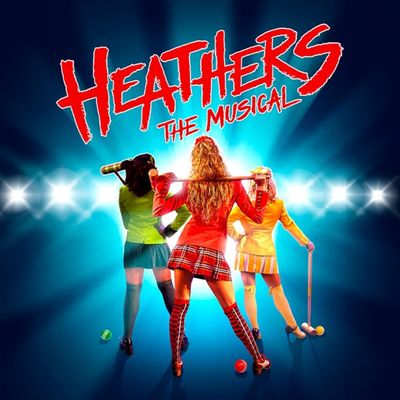
Joaquin Pedro Valdes / @joaquin.pedro.valdes is a Filipino actor living in the United Kingdom. He started his career at a very young age in the Philippines and has extensively worked in the TV, Concert, Film and Theatre industries in Manila. Some of his work includes Manila premiere productions of INTO THE WOODS, SPRING AWAKENING, KINKY BOOTS, MATILDA, VANYA, SONIA, MASHA & SPIKE, and John Logan's RED. Since moving to the UK, Joaquin has done UK tours of MISS SAIGON and THE KING & I. More recently, he has been seen in FANNY & STELLA - THE SHOCKING TRUE STORY (London), VANARA THE MUSICAL (Hackney Empire), and HEATHERS THE MUSICAL (West End). Currently, he is wrapping up a major UK and International Tour of DISNEY's THE LION KING covering SIMBA.
https://builtforthestage.com/ - fill out the form and ask about our next fitness challenge!
Transcript
This transcript was automatically generated and might contain errors.
[0:15] Joe Rosko: Hey, what's going on? Welcome to Built for the Stage Podcast. This is Joe Rosko, founder and host of Built for the Stage, Broadway's number one fitness platform with actors in over 20 Broadway shows and other stages across the globe. We are your one-stop shop for all things fitness and theater. So if you have the goal of marrying your career in theater with a pursuit to train like the athlete that you are in fitness, we're the place. I'm your guy. Been doing this a long time, 17 years, getting old over here. But as a former actor, athlete, uh trainer, I've taken pride in knowing the ways that an actor should be training uh leading up to a show, within a show, after a show, etc. So go to BuiltfortheStage.com if you're interested, and we can do a seven-day free trial together on an interactive fitness app.
All right, enough of that. Let's bring on our special guest today. Uh they're currently in Manchester right now. They made their West End debut in Heathers. They're currently touring with The Lion King. I just saw this amazing promo for The Lion King on uh Instagram. I'll have to talk to our guest about it. Just I didn't nearly cry. I was crying. I just I was crying for sure. But got connected with our guest um on Instagram, like we all do uh nowadays, and they've had a uh plethora of a career so far, just seemingly in you know, here, there and everywhere. So can't wait for you to get to know our guests. Please welcome to the podcast, Joaquin Pedro Valdes.
[1:59] Joaquin Pedro Valdes: Hey, what's up? How are you doing, Joe?
[2:04] Joe Rosko: Thanks so much for joining us. Uh, you're in Manchester, and you just told me before we hit record that they have the reputation of being nicer than those in London. Is this true?
[2:15] Joaquin Pedro Valdes: You know, Manchester is really, really, really interesting and personal to me because about four years ago I flew first into Manchester and not in London. And um, that was a big deal for me because it was the first city I was gonna be performing in outside of the Philippines. Flying out, I've been a theater actor in the Philippines for probably 20 years, 20 odd years, um, getting old here. Um, but then I had an opportunity to join the cast of the UK touring cast of MISS SAIGON. And instead of flying us to London, they flew us to Manchester. And me being from the Philippines, I'm like, it's just New United States is all about New York and Broadway, and the UK is all about London. So I'm thinking I don't know any other cities from these two big theater cities.
And when I landed in Manchester, everybody seemed so nice, and you know, it was a gorgeous city, like red brick buildings, um, industrial revolution kind of you know architecture. Um it was a mining city, um Peaky Blinders shoots here. So it had that vibe, and it was really, really interesting, really historic and buildings I've I've and structures I've never seen before. And just people were just so nice, calling you love, uh Babe, uh you're love, you know, everybody had a distinct accent, very English um and I and locals were telling me that people in the north are much nicer than they are in London because London's a big city and they don't like got no time to be kind to people because they need to go to places and meet people so yeah um but I do love London as well I I I spent a lot of time in London um during the pandemic so home for me is London um but work um I end my contract uh with The Lion King here in Manchester which is a full circle of life moment for me because I started out my career in the UK in Manchester.
[4:22] Joe Rosko: Yeah yeah did you uh I think I saw on your Instagram you had like um two different um photos in front of a mark in front of the marquee what was the other show uh was it MISS SAIGON?
[4:22] Joaquin Pedro Valdes: Yeah yeah that was that was really cool to to see that you know I guess I look at those photos and I'm like oh so much has happened in such a short span of time it feels so long ago but then it's really just four years and um not discounting the two years of the pandemic which I was very fortunate enough to be working through as well in the UK. So it's just mind-boggling how so many things have changed um and um changed within me like how how much I've grown as a person as an actor as well uh but more importantly as a human throughout these four years, and yeah, life happens and it's incredible and and I'm so grateful.
[5:20] Joe Rosko: Yeah. All right, we'll get more into that in a little. But when I was introing, uh, you cover Simba in the tour. I don't think I mentioned that for everyone listening, but yeah, when I was talking about the promo that I saw on Instagram, you saw it, yes?
[5:34] Joaquin Pedro Valdes: I just saw it right before meeting you.
[5:36] Joe Rosko: Me too. And I was I was in tears as well. How they worked that in.
[5:44] Joaquin Pedro Valdes: And then I didn't I didn't get it until the very end, which I'm glad I didn't because it was so much more impactful when they did the simultaneous yeah, and then I yeah, that same thing. I was like, oh my god, that's her grown up taking her daughter. I didn't, I just thought it was following two mother-daughter stories at different time periods. But but at the end, and then that beautiful tagline at the end, the show of a lifetime, yeah, because they're celebrating 25 years on Broadway, and it just makes so much sense because The Lion King is so special to so many people. People have their first theater experience, the first transformative theater experience in The Lion King. People will never forget the first time they saw that sunrise or the elephant coming through the aisle, and they're just transformed by it.
People want to go into theater because they saw The Lion King when they're a kid, and I I love it. It's such a well after seeing that ad, I'm like, that's it's you know, true life is hard, and it was just real talk being an actor. Um, through life, it gets to you, you know, and sometimes and sometimes you forget um how how grateful you should be about the things that come on, you know, that the opportunities that come your way, and you take things for granted. And seeing that ad just put things in perspective for me. I'm like, wow, I get to do this, I get to be part of this magic, and it's amazing.
[7:09] Joe Rosko: Yeah, at least one or two people in that audience every night is experiencing probably that moment that they highlighted in that promo. So that's really cool. Uh let's jump into you saying how tour life is difficult. I love that you just opened up and said that. Thank you so much. Because tour life is difficult, life is difficult, a career in theater is difficult, a pursuit in fitness is difficult. So let's relate it all to tour life.
[7:35] Joaquin Pedro Valdes: Um, yeah, it's it's hard to live out of a bag, right? It's hard hard to be on a bus or a plane. Before we jump in, I just want to say that I've kind of low key been following your account. Like I because I I'm a stagey kid, I love Broadway stuff, I love the West End. And um I remember like people I followed on Broadway were following your program or were you know, and I love it built for the stage, definitely, because back in the Philippines, I was so into fitness. Um I was I was a CrossFit trainer for a spell for a wink, and um I'd love to get back into that when I can. Um I've got into bodybuilding, I joined like a bodybuilding contest, I was Mr. Gold's gym in the Philippines for a year. Like I've gone through all of that, um, good and bad, you know, like all of the misconceptions about fitness and looking good and whatever.
[8:30] Joaquin Pedro Valdes: Yeah, and um, and it wasn't until I booked MISS SAIGON and I needed to fly to MISS SAIGON, wherein around two or three weeks prior to my flight, which was a career change of a lifetime. This was a dream for me. I've never been all I wanted to do was musical theater all my life, and finally I got the chance to do it on the big stage on the world stage, and two to three weeks prior to me flying out, I messed up my back in the gym. I tweaked my back. Um, I think I it was a disc bulge, and I had the worst spell of sciatica. And it was me, you know, it was it was really a humbling experience. It really changed my perspective on fitness as well. And all I could see was my dream getting, you know, further and further away, because I don't want to go into the contract of a lifetime for me unfit, not being able to dance, to move, to lift and you know, and do the things that actors do.
And people don't realize that being an actor is an athlete's job. You need to be absolutely fit, um, top to bottom, mentally fit, physically fit, emotionally fit. And I was so worried, and I and I I did it. I mean, I got I got an epidural shot, I went to the doctor, they they put anesthesia on me. I did another show not thinking that because they made my back so numb, and I wasn't working on actually strengthening my back, that I was doing more damage to it. So when the anesthesia or the drugs kind of faded away, I was in a worse state. And I remember waking up one morning and not being able to stand up straight and not walk until I found um like an alternative, like chiropractor who who said the worst thing you could have done was get that shot.
Let's let's let's get you proper, let's get you strong and proper. And through just like proper massages, through aligning my back, and just me being very aware that my my body is a unit that's connected to every single aspect of it, central on the spine and being just careful and and forgiving of my own body, it changed my perspective. So when I flew out, I felt great, um much more mature about treating my body and how how to handle it. And from then on, when I started MISS SAIGON on the tour, my gym regimen kind of changed. Um and my approach to fitness was no longer just the aesthetics and the strength aspect and the whole macho aspect of it, which we needed to be more functional, yeah, nimbler and you know more um ready for any physical um challenge that that life might bring.
[11:28] Joe Rosko: Yes. I'm I'm I'm faffing on. I'm I'm sorry if I'm not gonna be.
[11:31] Joaquin Pedro Valdes: No, you're no faffing on. I like to call it the Swiss Army knife. So the Swiss Army knife has many different tools that you can pull out.
[11:39] Joe Rosko: Yeah.
[11:40] Joaquin Pedro Valdes: If you're just the big blade, which maybe you could say like bodybuilding, then like you're pretty one-stop shop as far as like you don't have you're a yeah, just a one-note Johnny, I'll say. But if you have the full tool belt, then you really uh can be used on the stage in so many different ways um than just being someone with muscles, you know.
[12:03] Joaquin Pedro Valdes: Yeah, and it's also it's also interesting because we I mean we're actors, and obviously there's a a whole chunk of fitness goes into the investment of looking good, yeah. And even my understanding of looking good changed because I can't look like a flippin' Marvel superhero 365 days a year. There are there's there's there are roles that need for me to look like that, but then generally the demand is not to look like you have veiny, straight like six-pack abs every single day of the year, because that's not sustainable.
[12:41] Joaquin Pedro Valdes: Yeah, um, but what I do want to look like is strong, healthy, nimble, and usable and functional. Yeah, and I think like even on stage, there's a presence that comes with a body that's probably not looking like Henry Cavill and Superman, but someone who can carry their own weight and probably another, you know what I mean? And there's a presence, there's a security that comes in just how you stand, how you are, you know, how you cock your shoulders back, how your chest puts up, even it helps in even in singing when when you know that you're you can carry your own weight. I don't know if that makes sense.
[13:22] Joaquin Pedro Valdes: Yeah, 100%. For us, we always are harping on and preaching on that you have to be uh willing, able, and durable. First, you have to be willing, you have to be able to uh either put in the work that you're being asked to do, or you just have to be uh able and capable to already do it, and then lastly, you have to be durable to do it eight times a week, or however many times you're gonna be doing the show.
[13:47] Joaquin Pedro Valdes: And we train people of all heights, shapes, sizes, everything. And as long as you can do the thing, whatever the thing is you're required to do, then you're crushing, you're crushing it. Um yeah, okay. So tour life, you you were talking, I'm interested in this. You're talking before that you were on uh StreamYard for a bit doing interviews, and you were talking about how you didn't have formal training and you're wanting to pick the brains of others. Tell us about that experience, tell us about maybe what you learned, and also tell us about like oh, this maybe imposter syndrome that I had wasn't as validated as I thought it was.
[14:28] Joaquin Pedro Valdes: Absolutely. Um, I come from the Philippines where we absolutely love theater, we love musical theater. I grew up in that industry. Um, I started professionally at when I was around 10 years old and just never left. But the thing is, we don't have that big an industry or a sustainable audience for it, so that we do it eight shows a week for a year, you know. So a big title, and a lot of the titles that I've done, I was lucky enough to have done in the Philippines. Our runs don't last longer than one or two months, and we only do five shows a week because the theater going public in the Philippines or in Manila in particular will only go on the weekends because it's it's it's a very like work, it's it's a luxury to go to the theater, and we don't have theaters the way Broadway set up or the West End setup, where it's like it's one in every corner, or this is a theater district.
We have very like landmark um locations where in one or two or three big productions are happening at the time, um, if we're lucky, so we don't have that kind of industry, and because we don't have that kind of industry, we don't have um the resources to train for that industry.
[15:43] Joaquin Pedro Valdes: Um, so to train as an actor to train to become an actor is really no, not in anybody's consciousness in the Philippines. Um, it's it's a hobby, it's a it's uh you know it's a privilege to be an actor, and it all is, it really is. Um, but the talent is immense um where I come in the Philippines. The talent is endless, and it's a shame that there's not enough training. So when some of us are very fortunate to have access to perform um in theater on the world stage in the international scene, where we're up against thousands and millions of other people who actually spent so much money to train um three, four years in drama school and musical theater school, knowing all the technicals, knowing how to tap, knowing basics of jazz, and you know, knowing all of these different wonderful acting techniques, getting, you know, industry standard vocal technique uh from coaches who are amazing. We don't have that.
[16:43] Joaquin Pedro Valdes: And I go into my first job in the international scene. Um, granted, because I I'm I'm Asian and they may need some Asian characters in the show. Um I I have this baggage with me that I need to work three, four times as hard because I don't have the training that these guys have, you know. I really had the immigrant mindset, um, which is good because I'm I'm a hard worker, but also a little bad because I had this lie that I was hearing constantly that I wasn't good enough. And um, and I I'm hungry. I mean I'm I'm I'm I'm extremely hungry and I'm extremely honest with myself, saying, okay, I don't know this, let me learn it. You know, so I went to my colleagues, I told them, you know, who's the best vocal coach in London? Let me sign up with them. Where can I take acting classes? Let me sign up with them.
[17:37] Joaquin Pedro Valdes: And in my journey, especially through the pandemic, I was meeting so many incredible actors who I looked up to. And I started this podcast called, well, not a podcast, but like a little YouTube show called Pick Your Brains. And I would just pick their brains on audition technique, on do they get insecure as well? And on what it is like to be an actor in the world stage and what turns them on as an artist, what turns them off, and you know what they go through. And in my talks with them, I realized that a lot of the insecurities I was worried about were just imagined. And these colleagues of mine from the UK were the ones. It was one guy that actually said co-actor of mine, MISS SAIGON that told me, you know what? You might not have the drama training that we did for three or four years, but you have X amount of years of life experience that got you from where you started out in the Philippines to here.
[18:43] Joaquin Pedro Valdes: We can't learn that in drama school. And you're gonna go into an audition room with all of that experience and all that maturity. And that's something we can't buy. And when he told that to me, it was just like a soothing balm, like making me really embrace who I am and my story, and just gave me that encouragement and that confidence to come into an audition room knowing that I have my version of store of songs to sing and my version of stories to tell. Yeah. And yeah, it really helped me change my perspective.
[19:21] Joe Rosko: Yeah, I mean, as an actor, your job on stage is to display life in some form. And the more life you live, the more you can draw from those experiences to make them as real as possible. So that's uh wise words from your your colleague there. Uh my question about the Philippines: if if the talent is there, if you if you all have a fan base of musical theater, what is the restricting factor of why there aren't more uh schooling or training there?
[19:55] Joaquin Pedro Valdes: I think it's it's um it's just to recognize that it can be a viable industry, a business industry, and um the market unfortunately is still very small because access to theater or there's this notion that theater is for privileged or a certain class, and truth of the matter is um the Philippines is really divided in terms of class. We have a lot of people uh below poverty line that are struggling, and entertainment for the masses is is mainly tele and film, yeah. And but I think theater is so versatile, and it's it's it's been in the country for as long as we got our independence um a couple of centuries ago. So I think it's just a matter of like finding or getting support from the public sector and the private sector to really see theater as a viable institution that can grow its audience, and once it starts to grow its audience, then people can realize that they can have careers in it and they can start training yeah for it.
[21:04] Joaquin Pedro Valdes: Um you like working do you like starting interrupt do you like working with the youth? I feel like I've seen a couple of things on your social um work.
[21:13] Joaquin Pedro Valdes: I love it. Um I there's some there's something because I started if I fell in love with theater because someone actually saw me as a kid and helped me develop my talents and skills and I I just it's just something natural to me to kind of pass it forward and um to train and to just give that magic and that sparkle again uh of theater and until now I'm still that I'm still that 10 year old kid that's playing in the room you know there's always that and I I and I pray that I never lose that kind of joy when approaching this craft and there are many things as you grow up that will try and diminish that joy um but it's that joy I think that's fundamental to why we do what we do.
[22:01] Joaquin Pedro Valdes: And I think that goes for any passion not just in acting but then it when you find that deep profound desire to do that and you hold on to that it's a core value. That's why when I teach kids I remember myself and why I fell in love with with the craft in the first place. And I love that.
[22:20] Joe Rosko: Yeah. Okay so I read uh an uh interview that you were a part of and now you're just kind of hinting on it right now that you you didn't necessarily like choose to start theater that it kind of chose you or I might be paraphrasing this incorrectly but how did you fall into this and then how did you keep falling into it meaning like never leave um my mom and my dad loves musical theater.
[22:46] Joaquin Pedro Valdes: Um, I for as long as I can remember, we would have either the sound of music on TV every Christmas. They would have like we had like some these old channels that would play the, you know. We had um, we would I would watch on Betamax. I'm not sure if people still know what Betamax is. Um, we had Fiddler on the Roof, The King and I, uh Sound of Music, Oliver Twist, all of these classic films, and I absolutely loved it. Like I really, really loved it. I would watch it regularly. And then finally, when I was not too, yeah, when I was of age, but not too old, still very young, probably in my eight-year-old, nine-year-old self. My my mom would take me to watch productions of Camelot, of Les Misérables, um, that were big, really professional and really high quality uh productions, but an all Filipino cast of these big titles.
[23:47] Joaquin Pedro Valdes: So that's how that I mean that's the industry in the Philippines where we get a certain license to produce all of these uh West End or Broadway titles in English, but it's an all-Filipino cast. That's why I wasn't really aware of my skin color until I came to the UK because all of the roles I was playing were English speaking, English singing roles. Right. Um and it was never race based because we couldn't afford we didn't have different races in the Philippines. You know, we didn't have a lot of white people or a lot of black people, and so we we just played all the roles um at a high quality, like a high standard. The first Annie that I knew of was Lea Salonga.
[24:36] Joaquin Pedro Valdes: Yeah, she played Annie. The first Eliza Doolittle that I knew of was Lea Salonga. She played Eliza Doolittle in My Fair Lady in the Philippines. So to my consciousness, it's where you know, we can play all these roles until I got to the UK because of MISS SAIGON. And I'm thinking, oh, I want to do a other other shows. And I realized, oh wow, I'm not white. I realize I'm not, you know. But what's nice is I don't, I'm not sure, but I um I think I I think it's this the time, the time now, and all these um talk of diversity and representation, it's really exciting because so far I've been in audition rooms wherein I'm either the only Asian, or it doesn't matter if I'm Asian.
[25:25] Joaquin Pedro Valdes: And I think that's that's amazing. Of course, so cool. That's that's so cool. Like um, my first job out of the pandemic was a fringe show. It was the first show in London ever after lockdown one when they started to allow performances in pubs. Um, we were at the historic Eagle pub at Vauxhall, and we were performing a musical called Fanny and Stella in the style of music hall, and it was just six of us, and I was with five other incredible West End actors, and there was me, and I was playing American, and the producers and directors of all the people who were looking for jobs, chose me, auditioned me, and and and picked me, and I was like, that's incredible.
[26:09] Joaquin Pedro Valdes: And not because I was Asian, yeah, and not because of my skin color, it was just you know, and I thought I thought that's amazing. I thought I thought it's what a time to be an actor now in the world stage. It's exciting.
[26:21] Joe Rosko: Yeah, it's I hope it's just the beginning. Um, you know, it's been a slow evolution, but I feel like the momentum is definitely growing in a much quicker pace, and hopefully it continues continues that way as well.
[26:36] Joaquin Pedro Valdes: Yeah, beautiful. Recently they cast they announced the cast to Wicked on the West End.
[26:42] Joe Rosko: I haven't I haven't seen.
[26:43] Joaquin Pedro Valdes: And it's a gorgeous. I mean, you have a black Glinda and a black Elphaba. And it's it's incredible, and a black fire as well. So I'm like, oh, that's incredible. Like we're there already. Like we're getting we're getting that momentum, and I think it's exciting times.
[27:00] Joe Rosko: Yeah, okay, so with uh we kind of we've never hit the tour topic of the ups and downs of tour. What let's do it from so from the from the uh beginning when we were initially talking about how tour life can be difficult. Um yeah, I want to go with being grounded on tour is difficult, having a routine, feeling as though you're not always just sporadically living from one city to the next.
[27:37] Joaquin Pedro Valdes: It's really difficult. I'm very blessed because I get to tour with my partner. So my wife, who is not an actress, she's a lawyer, she gets to tour with me because she can work from home. That's my grounding, and that's my stability. Would I prefer more permanence? Absolutely, because I love my fitness, I love getting to cook and meal prep, waking up at a certain time, going to the gym, doing things at a certain time. It just sets my mind, my body, and my soul on the right direction. It's hard when you're on tour because I'm constantly looking for a place to live in. Secondly, does it have a kitchen? Does it have all the basics that I can cook my meals in? Two is worse than yours gym because that's an essential.
Like it's not even like a luxury, it's an essential because I need to stay match fit for the show. If I want to be able to do eight shows a week, I need to stay fit. I need to make sure that my body is ready for it. And all that, like how far are we from the theater? You know, and all these things. Because if I don't set those basics down, what might happen, and it has happened to me before, is I'm just gonna either, you know, drink all the time and just try and forget how problematic my tour digs are and whatever. And once you go into that spiral, you go into this very unhealthy routine. So it's always about trying to establish habits already from the very beginning, at the start of any venue.
And it's difficult, especially if you're touring for a year. It's good to have people that you are close to that are like-minded. And that would take you away from the job and talk about other things. It's good to have friends to stay connected with just when it starts to get heavy. What happens with tour life is the people that you work with are no longer just the people that you work with. They become family. And like with any family, there are little squabbles. Like, like I mean, you know, you love them to bits, but then also you're seeing them every single day. Yeah, 24-7. Yeah, yeah. And it's tough. It's tough. So I think you, I think time to yourself is important. Time to nurture your body and your mind is so important. To meditate, to get some peace and quiet, and to find certain habits that are healthy and sustainable.
[30:21] Joe Rosko: I love what you said about your inner circle and making sure that the people that are with you are like-minded. I think that's something that I love cliché statements, you know, and you always, I love them because they're true. That they're said over and over again because they're true. You are the five people that you are around the most, or whatever that saying is, and it's like you can't run away from that. Like I see in myself sometimes I'm starting to change in ways, and I'm thinking, why am I doing that? And then I'm thinking about someone that I've been spending a lot of time with, and I'm like, oh, they actually have those qualities about them, and yeah, and that's where I'm picking that up. So that was extremely, I'm grateful you brought that up. What's fitness like for your mental health? Like you worked out today, do you just feel, yeah, how do you feel during and after? And what is it for, what does it do for you?
[31:38] Joaquin Pedro Valdes: Well, I before I would punish myself and I'd be very unforgiving because, you know, I was coached by this bodybuilder, and I've gone through all that, I've gone through the competitive nature of CrossFit as well. Which, you know, and I have an addictive personality in the sense that when I get into something, I really zone in. So if when I was doing CrossFit, I was like, I was that CrossFit douchebag, you know, I was talking about it, you know, 24-7, like CrossFit is the only way. When I got into paleo and eating paleo, I was like, yeah, no, you know, meat only, nothing else, no carbs, whatever. And then I got into bodybuilding, I was really into that as well. And I found that it's not sustainable, and I wanted to find a fitness philosophy or mentality, I guess, that was a little bit more holistic that affected not just my body, but my mind and my heart and my spirit and how I am to other people because I don't want to be, you know, like holier than thou or super self-righteous when it comes to fitness because everybody's journey is different.
So I started working myself, and I'm still discovering things. I suffer from, I suffered and I and I've recovered fully now from an ACL injury back in 2009, from playing ultimate frisbee, and that happened right before a musical, that before SPRING AWAKENING back in Manila, and I needed to rehab quickly, and I always felt that, oh, I have weak knees, but then fast forward to my life now, I'm realizing things like the Athletic Truth Group and knees over toes and like newer ideas of just like really getting people to jump higher than they did when they were in their 20s. And I'm like, this is mind-blowing. And it's more, it's all natural, it's all doable, it's all scalable, and I love that. And now I'm reading into cold showers and cold water therapy, and I do that at the start of my day.
You know, every time I wake up into the shower, and then for five seconds, I'm gonna just go as cold as I can, steady my breathing, and I found that my recovery is so much faster. I have less DOMS after a heavy workout day. I'm finding things that this show in particular, like Simba has a lot of jumps. It's loads of jumps. And jumping was probably something I was very insecure about and very, very, you know, hesitant to do because of my ACL injury over the years, and because of my new method of really trying to make my body more nimble and usable and functional, like that little Swiss knife analogy that you have. I'm getting compliments from my dance captain and my resident director saying your jumps are amazing, they're higher than ever.
I'm like, that's cool, and that also helps because I've leaned out, I've fixed my diet, so I'm faffing again, but basically my approach to fitness is now holistic, and it, you know, when I don't feel good, it's probably because I'm not rested, I'm not drinking enough water, I'm not working out smart, you know. And yeah, all of that now is affecting my entire being as an actor and as a person.
[35:16] Joe Rosko: All right. Joaquin, we're gonna go on to the BFTS hot seat here. We're gonna play a little fun game. I think you're gonna be awesome at it. So, yeah. All right. First question. BFTS hot seat. You walk into a room and the TV's on, and there's a movie playing that you've seen a hundred times over and over again. But no matter how many times you see this movie, you have to stop and watch it again. What is this movie?
[35:44] Joaquin Pedro Valdes: Um, probably The NeverEnding Story.
[35:48] Joe Rosko: The NeverEnding. Oh, I don't know this one.
[35:50] Joaquin Pedro Valdes: Okay.
[35:51] Joe Rosko: NeverEnding Story. You don't know this one? Who's in it?
[35:55] Joaquin Pedro Valdes: I don't know the actors, but it's an older movie?
[36:00] Joe Rosko: It's an old movie, it's a classic.
[36:02] Joaquin Pedro Valdes: Oh, it's a fantasy movie. I don't know why. That's the first thing that came up to mind because basically it's, yeah, you know this. Like I think you've seen it. There's a dragon that looks like a dog, a white dog.
[36:07] Joe Rosko: Oh, yeah.
[36:19] Joaquin Pedro Valdes: Yeah, Falkor. Yeah, that's The NeverEnding Story. And Fantasia is about to get destroyed, and this guy's reading this book, and it's happening in real life. I don't know. I guess that's me.
[36:29] Joe Rosko: That's great. No, that's, I'll have to pull it up this week and watch it again. All right. You're commuting to the theater. We get to see your playlist. What's one or two songs that you're always gonna be listening to to just set your day off to be, you know, good vibes?
[36:50] Joaquin Pedro Valdes: One or two, oh my gosh. Probably anything from PJ Morton.
[36:56] Joe Rosko: Okay.
[36:56] Joaquin Pedro Valdes: Or anything from Steven Hy.
[36:58] Joe Rosko: That's a while, that's different then. Yeah, all right, I got, I have some homework to do after these answers. I have some homework to do. All right, so you are reincarnated on this earth, you come back as an animal. Which animal are you gonna be and why?
[36:56] Joaquin Pedro Valdes: I'm gonna be a lion.
[36:56] Joe Rosko: Okay, there you go.
[36:56] Joaquin Pedro Valdes: I'm gonna be a lion. I just, I love, when I was during the lockdown in London, there was a stray cat that kept coming to our flat and eventually owned us. We didn't own it, it started coming, slept over just, and I loved just the feline nature of cats, like just the whole characteristic of cats. And I realized that lions, especially when preparing for this role, are just bigger cats. They love to play, they're so affectionate, and they're so precise with who they want to show their affection to, and I love it.
[36:56] Joe Rosko: All right, there's a time era, there's a decade that you can choose to live in. What time and place, let's do place as well, what time and place are you gonna live in?
[36:56] Joaquin Pedro Valdes: Oh my gosh, Prohibition era in New York City.
[36:56] Joe Rosko: Okay.
[36:56] Joaquin Pedro Valdes: Those movies are always the best. You know, I can only live, I can only live off movies. I obviously have no idea what it was really like, I wasn't alive, but that vibe, that's always so cool. I don't, yeah, and it's, I mean, it's Guys and Dolls as well. It's like swing, it's jazz. I mean, there's so much, you know, so much swag into it, and I love that era.
[38:39] Joe Rosko: Right, right. Okay. If you weren't an actor, what's something that you're interested in life that you think you might do career-wise?
[38:49] Joaquin Pedro Valdes: Three things. I think I'd be a fitness trainer.
[38:52] Joe Rosko: Okay.
[38:54] Joaquin Pedro Valdes: Or a barber.
[38:57] Joe Rosko: Or a chef.
[38:59] Joaquin Pedro Valdes: I don't have skills as a barber. I just love the whole like sartorial barber culture. I love it. I wish I knew how to cut hair, and maybe it's something I can train to do. And I love cooking.
[39:13] Joe Rosko: All right. What's a couple of your favorite dishes cooking-wise?
[39:17] Joaquin Pedro Valdes: I'm Filipino through and through, so adobo, chicken adobo. Everybody will say that their adobo's best, but my adobo is really good.
[39:26] Joe Rosko: Cool. I have a Filipino buddy that is in Atlanta, and he recently started up a restaurant. I'll have to share his page with you so you can check it out.
[39:35] Joaquin Pedro Valdes: Yes, please.
[39:36] Joe Rosko: Yeah, that'd be great. All right, so that concludes the BFTS hot seat. No big deal, right? You crushed that. I have some movies and music to look up now after that, so I'll be sure to check it out. Joaquin, thanks so much for your time today. Appreciate it.
[39:54] Joaquin Pedro Valdes: Thank you for having me.
[39:55] Joe Rosko: A lot of inspiration, just a lot of laughs. So I appreciate you spending some time with our listeners as well. Everyone that's listening or watching, you can check out Joaquin's Instagram, Joaquin.pedro.valdes. So it'll be in the description of this episode. Nice and easy for you to click on. So make sure you give him a follow. And yeah, become a part of the fandom of Joaquin. Joaquin, thanks so much for being on the show.
[40:22] Joaquin Pedro Valdes: Thank you, Joe. My pleasure.
[40:24] Joe Rosko: Later. All right, that was a fun one. Really nice guy. Um, yeah, hopefully I'll have to connect when I get back over there into the UK area. That was Joaquin, everyone. Make sure you give them a follow again, Joaquin.pedro.valdes. I'm Joe Rosko with Built for the Stage. If you haven't tried that free trial yet, go to BuiltForTheStage.com. Until next time, actors or athletes, train like one. Later.
© Broadway Podcast Network, All Rights Reserved