

Patricia Kelly / @genekellylegacy is a film historian and the widow and official biographer of Gene Kelly. She has worked as a writer at a film production company, as a contributing scholar for the authoritative Northwestern/Newberry Writings of Herman Melville, and as a freelance journalist... Read More
From the show: Built For The Stage Podcast
Featured Shows
About
Patricia Kelly / @genekellylegacy is a film historian and the widow and official biographer of Gene Kelly. She has worked as a writer at a film production company, as a contributing scholar for the authoritative Northwestern/Newberry Writings of Herman Melville, and as a freelance journalist. She and Kelly met at the Smithsonian in 1985, when he was the host/narrator for a television special for which she was a writer. Soon after, he invited her to California to write his memoirs, a job for which she recorded his words nearly every day for over ten years. They were together until his death in 1996. Currently, she serves as Trustee of The Gene Kelly Image Trust, the entity Kelly established during his lifetime to govern the use of his name, voice, likeness, signature, and persona. She is also President and Creative Director of The Gene Kelly Legacy, Inc. a corporation established to celebrate Kelly’s artistry and to perpetuate his legacy worldwide. She lives in Los Angeles where she is completing the book about her late husband. As part of this work, she is preserving and cataloguing The Gene Kelly Archives—an extensive collections of letters, manuscripts, photographs, scripts, interviews, essays, poems, holograph notes, and memorabilia that will eventually be the basis of additional publications and, ultimately, the core of an innovative, virtual Gene Kelly “Experience.”
www.builtforthestage.com - Schedule your one week trial today!
Transcript
This transcript was automatically generated and might contain errors.
[0:00] Patricia Kelly: This was the first time in this movie Thousand's Cheer. But he didn't even have a song and he didn't have a partner. And so he just decided to dance to a song that he knew, Let Me Call You Sweetheart. And he picked up a mop and decided to use a mop as his prop. And obviously he used everything in the room then as part of that. But I it's one of my favorite numbers because I think it's so imaginative and so well done and so athletic. I mean, it's I when I when I screen that in the shows, I can hear there's an audible gasp in the audience when he does the kip up from the just he's flat and then he just is upright.
[0:59] Joe Rosko: Hey, what's going on? It's me, Roscoe, founder and host of Built for the Stage Podcast, Broadway's number one fitness platform. If you'd like to try a free trial, go to the website BuiltForThestage.com and we'll get on our way with seven days of workouts and consultations and conversations with a personal coach. Once again, thanks to the producing family that we have here at the Broadway Podcast Network. They're always so helpful, so supportive, and so full of other amazing podcasts. The number is growing, it seems daily. So if you're interested in other Broadway-based podcasts, you can go to BPN. All right, today's an exciting episode. We're going to be kicking off a new mini-series called The Sport of Dance. And this guest that we have on the show today, uh, could not be any more appropriate of a guest. I'm super excited about this. So I'm just going to get right to it in welcoming Patricia Kelly to the podcast. Welcome, Patricia.
[2:09] Patricia Kelly: Well, thank you for having me. I'm delighted to join you today.
[2:14] Joe Rosko: Oh, it's my pleasure. So for everyone listening, Patricia is the widow of the late Gene Kelly. He's actually a childhood hero of mine. And someone as a former athlete and performer had such a huge impact on my life. And we're going to get into uh Gene's life and his career a bit. And Patricia has actually spent really since she's met Gene or met Gene in the past laying out his historic and prolific life. And we're going to kind of unwind and unravel uh their relationship and just his legacy that he left behind. And that word is something very important to Patricia, especially as it ties into her daily work. Patricia, when I was uh growing up, my sophomore year of high school, I was able to do a production of Brigadune.
And uh growing up, I I knew of singing in the rain, but I I didn't really know who Gene Kelly was. Um, my family, they weren't into the arts um a great deal, but I started theater in seventh grade, and finally in uh my sophomore year of high school, when I uh booked the role, I'll say I was cast in the role of Tommy. My choir teacher at the time said, Okay, well, you need to watch uh Brigadino with Gene Kelly. And that's when I was like, wow, look at this guy just like owning the screen. Um, and then I later went on to read uh the book, A Life of Dance and Dreams, the DVD uh Anatomy of a Dancer, just like really fell in love with Gene Kelly. Um, and I see in your story uh that you were a journalist and that you were in the midst of working on a documentary for the Smithsonian Museum, and it was hosted by Gene, and that's how you two met. Can you tell us a little bit about that?
[4:20] Patricia Kelly: Well, the grand irony is that uh I'm one of the few people in the world who did not know who Gene Kelly was when I met him. I was a very nerdy Herman Melville scholar. My specialty was American literature, and particularly the author of Moby Dick. And so uh I I didn't go to the movies a lot, and I certainly wasn't into musical theater. And so I spent a week with Gene uh working on this script about the Smithsonian, not having any idea that he was this incredibly famous man. And so we literally bonded over words. It was over my pet study in graduate school was etymology, word origins, and poetry, and those just happened to be Gene studies as well. So we, by the middle of the week, I mean, he spoke French, he spoke Italian, he spoke Yiddish, he read Latin.
He very often read a book a day. He was an economics major. He was really the true Renaissance man. And by the middle of the week, I was absolutely enchanted with him. I he was also drop dead gorgeous and just this magnificent mind and facility with his mind and wonderful way of speaking, and obviously a very uh classy, classic man. And so, but it wasn't until uh the end after the end of the shooting that he had given me his phone number and I gave him mine, and he drove away in a limousine, and somebody said, you know, that guy's really famous. You ought to go down to the video store and ask for Gene Kelly, and I did. And about 48 movies later, I I kind of wondered what turnip truck I had fallen off of to not know about this huge part of the 20th century.
But I always, in retrospect, I think it was the way to get to know him because I never I didn't have any preconceived notions, and so he came to me as a blank slate, and then when he asked me to come out to California and then ask me to stay on and write his memoir with him, uh, I really started not knowing anything about the man or about his career. And I think that was the way to do it, because even the the book that you mentioned and the documentary are two things that he I don't even recognize that man in either of those things. That's not the man I knew, it's not the man I interviewed, uh, they're not factually accurate. And so I think that there's so much misinformation out there about him.
And uh, and uh or people just don't know very much. They just see him up on screen, and they don't realize that he wanted to be remembered for being behind the camera. He really didn't care about performing, he wanted to be remembered for being a director and choreographer and for changing the look of dance on film and creating a particularly American style of dance. And just the other day on Facebook, somebody wrote, and they said, I had no idea he directed Hello Dolly, and they don't recognize that he directed Sing in the Rain and On the Town, and that he directed the ballet in American in Paris. And that's what I try to kind of push out there because those were the things that were really pivotal. Those are things that changed the whole history of film, and that was that's what he what he wanted wanted people to know about him.
[8:02] Joe Rosko: So I had another position. I came across uh connecting with you from your Instagram, GENE KELLY LEGACY, and you do uh an amazing job on a daily basis just giving little tidbits of of his history. Um, and then I got into seeing that you have a show that you were you were touring, I guess, Gene Kelly the LEGACY. Could you tell us a little bit about that?
[8:28] Patricia Kelly: Well, the I created a one woman show back in 2012. Gene would have been 100 years old that year, and the Academy of Motion Pictures always does a kind of tribute to the legends. Uh, and there were wonderful evenings, but often it was kind of they would look to whoever was still alive who was could still speak about that person. And since I knew Gene was so particular about how he wanted to be remembered, and often in a way that people don't even think of him, I went to the academy and asked if I could create the evening, and remarkably, and to their credit, they let me do that. And so that was the first night, and it just kind of took off like wildfire, then went to Lincoln Center in New York, and it's been touring for the last eight years.
And then I also created a live symphonic cinema tribute to him with 70 musicians on stage with me and a conductor. And each of these, I mean, I kind of describe them as they're not really a show, isn't quite the right word. Um, I in a way, the one woman show is more of a conversation. It's more this kind of tone to try to take people into Gene and to really to understand his heart and his mind and the way that he worked and the way his creativity worked, and also the kind of man he was, the kind of uh really decent man of great integrity. And so I always describe that particular evening as a that you're kind of getting in a little boat with me, and you don't know quite where where you're going, but you go, and by the end of it, um you you have a much better understanding of who he was and what drove him and what inspired him, what touched him, and people come out of it and they'll say, I you know, I loved him before, but I love him even more now, because they they really have no idea of the many, many dimensions to him.
And I think it's kind of a loss because there was so much to him that, and I think especially that young people can learn from him and these dimensions. So I think it's really important to expose them so that they have a better understanding.
[10:52] Joe Rosko: Yeah. Do you think that with some of the greats in the arts that this is a common loss per se, where the representation of a of a person's career past is is skewed a bit? And how have you found besides your show, like other ways of just clarifying the message?
[11:17] Patricia Kelly: Well, I think um that's an interesting question in the sense of other people. I mean, I can't I can speak most accurately about Gene, obviously, because I'm intimately involved with that story. I think I think legends are these people that are larger than life, uh, our sense of them is often skewed, and and there are many of them that I I met with Gene, and you see them up on the screen, and you think one thing, and then you meet them and you think something completely different. So the thing about Gene is he seems different to me in a sense because I don't think a lot of these people had more dimensions than you're really aware of. I mean, I don't think I've never really seen anybody who has the breadth of knowledge, the breadth of experience, the breadth of uh subjects that Gene had.
I I think I think a lot of people, I mean I really haven't. I haven't, I have never encountered that kind of mind, and I've never encountered somebody. I mean, Gene, people would say, Oh, Mr. Kelly, Mr. Kelly, what should I study? Meaning, what form of dance should I study? And Gene said everything. And he meant everything. He didn't mean Spanish dance, jazz, tap, modern. He meant history, literature, politics, economics, uh, poetry, literature, and certainly every form of dance, and also every form of movement.
[12:54] Patricia Kelly: I mean, he was a trained gymnast, a trained acrobat. And so I think Gene is unusual in that because a lot of the people actually they were kind of when you met them, were sort of less than what you had hoped that they would be. Gene is much more. Well, to your point, the art of dance is really telling a story. So I guess the more you know and the more well-read or well-versed you are, the more depth you can bring to your storytelling, or in this case, your dance. When and you've linked two important things, which is what how Gene's dance differed from his predecessors was precisely what you're saying is that Gene wanted to use the dance to propel the story. And before that in Hollywood, you would look at dance numbers, and they're generally inserted into the movie.
So they'll have a dance team often, and then they stop and perform on a polished floor and perform on a stage, and then they stop and then the story resumes. So you can literally cut that number out of the movie, and it doesn't alter the story. And so I think that that's it's using the movement in a different way. It basically steps in for words for Gene. And that you just didn't see beforehand. You see it more now, but not at not before Gene. Yeah, I wanted to point out the number, Let Me Call You Sweetheart, as well, with the mop and all the props that he uses from your conversations with Gene and your knowledge of that number in particular. You Wonderful You with the creaky board and the newspaper, just his way of using props and his surroundings to kind of really tie the story all together. Are there any favorites of yours from numbers like that that he shared with you as far as the creation of them?
[15:46] Patricia Kelly: Well, those are two of my favorites and happen to be in my shows. The mop dance is notable because that was the first time that Gene ever got to choreograph and stage a number for MGM. So that was, and the funny thing is that they didn't even, MGM really didn't even know what to do with Gene. They didn't get it, they didn't understand what he was trying to do. And it was very frustrating for him because he couldn't really get an opportunity to choreograph. But this wasn't this was the first time in this movie Thousand's Cheer. But he didn't even have a song and he didn't have a partner. And so he just decided to dance to a song that he knew, Let Me Call You Sweetheart, and he picked up a mop and decided to use a mop as his prop.
And obviously he used everything in the room then as part of that. But I it's one of my favorite numbers because I think it's so imaginative and so well done and so athletic. I mean, it's I when I when I screen that in the shows, I can hear there's an audible gasp in the audience when he does the kip-up from the just he's flat and then he just is upright. And you hear men and women in the audience just gasping because that's a that's a fairly tricky move. And he just does everything. It appears so effortless, and yet this was very rehearsed. And Gene choreographed everything in his mind. It was all in his head, and he would sit down and write it out, much more like a writer than I think people always imagine he sort of gets up on stage and wiggles around, and that's how he came up with his ideas.
It wasn't like that at all. It was a very cerebral process, and he had a little screen that ran in his head, and he could see the numbers as they played out, and then he would go the next day and either put them on another dancer or on himself, as the case of that. And the newspaper dance was it originally the idea of the torn newspaper came from a good friend of his, a choreographer named Nick Castle, who invited Gene over to his house. And he's he just had this had come up with this sound of tearing a newspaper, and Gene said, Oh, that's great. And he encouraged Nick to use it in his own numbers. And Nick said, no, no, no, it's for you. And then Gene realized he needed another sound to counter that.
And it took him a while, kicking things and knocking around, and finally came across the squeaky board, and you have this wonderful balance. But that, I mean, that's again this ex again. The audience gasped because it's just it's such a rigorous number and yet so charming. I mean, it's whimsical, and Gene, when I forced him to watch it with me, he said, I you know, I didn't really realize it when I created it, but I can see now that my childhood hero Buster Keaton was a big influence on that. So it's that kind of, I mean, I sit there on a stool during my show, and I know what's coming, so I know what's going to happen in that number. And I just wait, and then the audience just laughs and giggles at the point where you know, he's playing with the board and everything.
And I think it's one of the what's what I think is so great about it is that that's 1950 when that that came out, and yet it still is current, it's still contemporary, it's still what everybody's going to. All the choreographers and all the dancers are all most of them can't do it themselves. I mean, frankly, most of the dancers can't recreate that number. I've never seen anybody do it completely. I just saw a woman do it the other day in a version of it that was really charming. But it's tough. I mean, these are really hard things to master. Speaking of hard things to master, what made Gene Kelly attempt to dance on roller skates? What's the backstory of that number?
[20:08] Patricia Kelly: Well, and that's what he did in the movie It's Always Fair Weather. And but that was the roots of that. It was actually something that he and his younger brother did in amateur nights around Pittsburgh and the Ohio line in high school in college to Gene used it as a way to try to put himself through college, and they would go off and they were both really good. Gene was a very good gymnast and a very good acrobat, and they would do kip-ups and all kinds of much more aggressive than what is actually in that film. Gene said that was kind of a pared-down version given that he was considerably older at that point, but they would tap dance on roller skates and often won first prize in these amateur nights, and so Jean incorporated that in It's Always Fair Weather, and again, that's that's one of my favorites because it's it's performed to Andre Previn's Can It Be I Like Myself, and it's it's so charming.
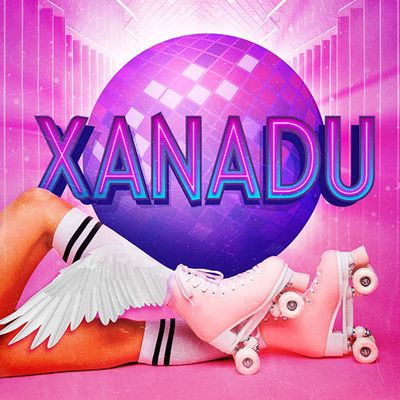
And it, you know, he's kind of he's he's sort of he's he shrugs and and he's thinking, you know, if this woman is in love with me, you know, can it can it be that I I like myself? And you just have to love him when he does it. And then he roller skated again. I mean, he didn't do that type of that type of tap dancing, but he did roller skate again in Xanadu. So in 1980, he was he did all of the skating himself in that. So he was a very, very good, not only roller skater, but he was an excellent ice skater. He was a very dynamic hockey player, and in fact, wanted to play hockey professionally as a young boy. His dad used to ice down the spray the backyard and it would freeze, and Gene would scoot around on that, and then they would play to the death essentially out on the ponds, but there was no professional team in Pittsburgh, and so he otherwise had there been a team, very likely Gene would have gone on and been a hockey player or a baseball player, which was his other choice.
So all of those things, that type of movement, any kind of movement came very easily to him. He said he could he ran like the wind. He had a not only a stamina, but he had a grace to everything that he did. He it was it terrific muscular legs and arms from the gymnastics, but also this beauty and grace in his movement.
[23:03] Joe Rosko: Yeah, something I loved knowing about him when I was growing up is I'm from Youngstown, Ohio, which is just yeah, just about an hour from Pittsburgh. Growing up as a one of my sports was baseball as well. And eventually getting to know the TV special that we discussed before the interview in 1958, dancing a man's game, where Gene related a lot of different sports to the movements of dance. And you know, you hear the title dancing a man's game. You know, in 2020, we'd like to say it's everyone's game, but I think the point, and you can obviously correct me if I'm wrong, but I think the point in that at that time is just opening people's eyes to the relevance, the difficulty, the parallel nature of sports and dance. Can you help it just touch a little bit more about that, in my opinion, amazing TV special he did with other pro athletes?
[24:07] Patricia Kelly: Well, I think at that point, it was really because the stigma of a male dancer was so strong. And sadly, I mean, yes, I would love to say that dancing today is everyone's game. Certainly that's the goal. And yet we're still talking about this, and the stigma is still there. And in fact, I had wrote a few pieces about that last year and did several interviews about it because it just astonishes me that here, 60 years later, it's still a part of a conversation. I mean, I think Gene had really hoped that by showing that the dance moves are exactly, as you said, parallel to a football throw or a tennis swing or a baseball movement that they're all interconnected, that we could finally begin to let down, get away from this stigma that that somehow it's odd for a boy to want to be a ballet dancer, or odd for a boy to want to dance.
And I think it's broken down somewhat now because you do have quite a few very strong male figures, but I think it still is something that a lot of parents still think it's something that they don't want their children to go into. And so we just keep working on it and kind of trying to knock that down. But I mean, even something Jean in that sequence in that in that omnibus special, I'm sure you remember, just showing the connection between fencing and classical ballet.
[25:54] Patricia Kelly: And Gene trained as a fencer. He trained with a Belgian fencing master in order to perform in The Three Musketeers so he could do his own stunts. And the thing is, the footwork, as he demonstrated with the Olympic fencing team, is the same as the movement of the feet in classical ballet. And it actually started, men began as dancers, and men, women didn't come into dance until very late in the picture. And men, all of the movement was a kind of protective kind of movement for battle. The balletic movement is by you move by your side with fencing, you're turned to the side so that you have less of your body exposed. So he went through all of the history of all of this, and I think had really hoped that that would put that subject to rest.
And I think he'd be very sorry that it still is something that we need to even consider at this point. But he was so sophisticated in understanding, he felt that in order to be a dancer, you needed to not only study all forms of dance, but you needed to understand the history of dance. And so he went, and when he was young in the 30s, most of the history of dance was not even in English, it was in French. And so he went to the University of Chicago library and read all of the treatises, the histories of dance and choreography in French to better understand the art form. So he was just this immense brain of and like a sponge, he just soaked up anything, not only information, but any kind of movement.
So he was always watching contemporary dance, so he would study the street dancers in New York and hip hop and body popping and all of these different things. He was constantly absorbing all the new trends, new music and things. So it was, I mean, he was a cool guy. I mean, he was, he was not this stuffy old guy. He was really cool, and in fact, I just posted yesterday a picture of his Converse tennis shoes because he wore the Chuck Taylors and he used those for tennis. He used them for volleyball and everything else. So he was kind of cool even with his clothes.
[28:26] Patricia Kelly: Yeah, everyone listening. Um, once again, that's at GENE KELLY LEGACY. We'll put that in the description of this episode. Um, I also am subscribed, uh, my email to GeneKelly.com that you are working on currently. Is there anything that we can look forward to from you as far as new projects to come as far as the GENE KELLY LEGACY?
[28:50] Patricia Kelly: Well, it's a lot, actually. Um, since I'm not able to tour with the two shows now, I decided that I would get back to work on the book that Gene actually brought me to California to write many moons ago. And it's a great time to be able to do it. I mean, sorry for the circumstances, but I otherwise never had this kind of focused time to concentrate. And I think it's people have always asked me that, you know, why has it taken so long to write the book about Gene? And it really, it's not like I'm writing about Ernest Hemingway or Scott Fitzgerald or something. It's the person I lived with, and so it was an unusual situation, and it comes with quite an emotional punch to it to listen to his voice again, to read his words, to revisit the notes that I made and recordings I made of him every day for over a decade.
It's, you know, it's a plus and a minus. The great positive thing is I have these materials. The negative side is that it's, you know, it takes your breath away sometimes to see them. And so, um, but I'm focused on that, and then all of the shows were all postponed and canceled and will be moved forward. So it looks like, uh, fingers crossed, we'll be able to roll out again with the shows come, uh, yeah, you know, a year from now, we should be back in theaters, uh, if it's safe to gather. And so I hope people will sign up because then they'll know about all of those things.
[30:32] Patricia Kelly: And then I inherited all of Gene's archives, so the things, the photographs, the manuscripts, the letters, the kind of unusual things that were part of his life. And my idea is that those will all become available kind of in a virtual collection so that people all around the world will be able to have access to him in perpetuity, because as much as I would love to hang around forever, I don't think that will happen. So I have to make a provision so that people, you know, if you're in Australia, you would be able to access it if you're in New York, if you're in Hawaii or someplace, so that it isn't just limited to one spot, but that's going to take more time and effort and finances to pull that off.
But that's kind of down the line, and but it'll be my book, and then a series of books of the beautiful photographs of Gene, many of them done by friends of his who were great professional photographers, and then the shows and then this virtual collection. So it's pretty much full-time work from now on. But, uh, and then also the thing with Facebook and Instagram and LinkedIn and all of these things, as you know, I do try to respond to everything personally. So I, people often I think are surprised that I'm actually the one posting things and commenting. And I don't know, I hope I can continue to do that. It takes a huge amount of time now each day, but I love it. Um, I love the connection with people, and I find I've learned so much from people, and I've learned, um, I when I first got onto social media, I thought I was a little nervous about it because I was worried that it would be kind of silly that people would just post kind of silly things, and it's not been that way at all.
I I'm incredibly proud of the things that people write. And in fact, I'm constantly doing screenshots and saying, I hope you don't mind if I use this sometime, because I think what people bring to it is their own perception and how they're touched by something. And since I came to him in such a different way, I didn't have that experience. But a lot of these people grew up with him, as you know, or touched the way you were. And I love the fact that they're sharing these incredible stories about their own lives.
[33:16] Patricia Kelly: So I feel like I just was reading some notes that with an interview I did with Gene about his work on the Broadway stage, which he preferred to performing in movies because he felt it was so important that connection with the audience. And I've forgotten that he, I had recorded that. I didn't remember that comment from him. And I found that in doing my own shows. A lot of people will come out and they'll say, How can you do this? I mean, it's so emotional. How do you do this? And I said, Well, actually, you're helping me to deal with the absence of him because it isn't just that I'm up there talking, it's two ways. I mean, it takes two of us to make this work. And I was really, I would, it was really interesting to find that comment that Gene said essentially the same thing.
It's the audience is as important as he is up on that stage. And I think if I were giving any advice, which I don't tend to do to people, young people, and particularly people on stage, that's an important thing to keep in mind that it goes both ways. So it's a nice thing to be able to connect with people.
[34:38] Joe Rosko: Yeah, it's there's nothing like a live experience. Um, his debut was Pal Joey. No, no, no, no. He was in Leave It to Me. Um, he was one, he was just a little, he was, uh, uh, kind of a one of four male dancers who were they were all on the side of Mary Martin, and that was Mary Martin singing My Heart Belongs to Daddy, and Mary Martin became an overnight sensation, and Gene is just kind of the little guy next to her, along with three other guys. And a real turning point for him on the Broadway stage was The Time of Your Life, which, um, with a Bill Saroyan play, and Gene was supposed to play Harry the Hofer. He was supposed to be a non-dancer, but just kind of doing some little movement on stage.
And he said it was where he really first began to understand this concept that the movement tells the story. And that for him, and it was after that that he then starred in Pal Joey. And a lot of people call that the pivotal Broadway show. Gene thought The Time of Your Life was more pivotal for him personally, but obviously, um, starring in Pal Joey then just that he was a huge sensation on, uh, really overnight, just be incredibly famous, and a lot of people saw him in that, and a lot of people wanted him to come out to Hollywood. So he actually turned down Hollywood for several years because he didn't think he was ready to come out here. Um, I think a lot of people wouldn't do that if they got an offer to come to Hollywood, they would jump at that chance. But Gene said, no, no, I need to I need to study more out here, so fabulous.
[36:36] Joe Rosko: Well, Patricia, that's gonna wrap up our interview for today. Thank you so much for your time. Um, everyone that's listening once again. Um, please give her a profile on Instagram a follow. Um, that's GENE KELLY LEGACY. Um, go to the website, GeneKelly.com, fill out your email and get up to date on anything new that's coming up, the book or future performances. Thanks so much, Patricia.
[37:01] Patricia Kelly: Oh, thank you for having me. It's been a real delight and I'll look forward to seeing you in person one day.
[37:08] Joe Rosko: Yeah, I just wanted to say, you know, as a kid growing up in a driveway, maybe pretending to be Michael Jordan shooting baskets, that's who Gene Kelly was to me on the stage growing up. You know, he was still to this day as a performer, he is the person I would try to emulate myself after. So yeah, I the people that you're describing that you screenshot I'm I'm one of those people for sure.
[37:38] Patricia Kelly: Well, he would appreciate that and I certainly do. So take good care and thank you for reaching out. I appreciate your help and his legacy will I think will last, but it is nice to just keep introducing him to younger audiences and keep it rolling forward because I think anybody who sees him, they're pretty knocked out by it. So thank you and take good care.
[38:03] Joe Rosko: Absolutely. Okay, that was Patricia Kelly. This is Built for the Stage Podcast. I'm Joe Rosko. We're part of the Broadway Podcast Network. You can check them out at bpn.fm. If you want that free trial, go to the website BuiltForTheStage.com. Thanks again. Later.
© Broadway Podcast Network, All Rights Reserved