

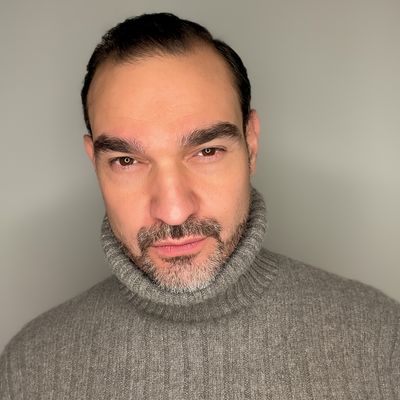
On the inaugural episode of this limited series, host Eric Ulloa asks: "Why activism? And more so, why the theatre community?" His first guest, Javier Muñoz (“Hamilton", "In the Heights"), helps answer why theatre people are so uniquely skilled to help create a “blue wave” election in November... Read More
From the show: Do You Hear the People Sing?
Guests
Featured Shows
About
On the inaugural episode of this limited series, host Eric Ulloa asks: "Why activism? And more so, why the theatre community?" His first guest, Javier Muñoz (“Hamilton", "In the Heights"), helps answer why theatre people are so uniquely skilled to help create a “blue wave” election in November. Tune in to discover or re-ignite the activist within you and get inspired to take action in the 2020 election!
Instagram: theulloa
Twitter: theulloa2
Transcript
This transcript was automatically generated and might contain errors.
[0:00] Eric Ulloa: We're gonna start this off with an acting exercise.
[0:03] Eric Ulloa: Hey, look, you signed up for a theater podcast.
[0:05] Eric Ulloa: You knew what you were getting involved in.
[0:07] Eric Ulloa: All right.
[0:08] Eric Ulloa: Now close your eyes.
[0:10] Eric Ulloa: Close your eyes.
[0:12] Eric Ulloa: And remember how you felt when you heard this.
[0:16] Eric Ulloa: Right now, a historic moment.
[0:18] Eric Ulloa: We can now project the winner of the presidential race, CNN projects.
[0:22] Eric Ulloa: Donald Trump wins the presidency.
[0:24] Eric Ulloa: Now keep those eyes closed.
[0:27] Eric Ulloa: And remember how you felt when you heard these cries at the border.
[0:44] Eric Ulloa: Okay.
[0:45] Eric Ulloa: I know it's painful.
[0:46] Eric Ulloa: I know it's painful, but keep those eyes closed.
[0:49] Eric Ulloa: Now remember how you felt when you heard this.
[0:54] Eric Ulloa: Dr. Bacher, should Americans be prepared for the likelihood that there will be a hundred thousand Americans who die from this virus.
[1:04] Eric Ulloa: The answer is yes.
[1:05] Eric Ulloa: We need as sobering a number as that is, we should be prepared for it.
[1:10] Eric Ulloa: 65,853,514 people voted for Hillary Clinton in the 2016 election.
[1:19] Eric Ulloa: 62,984,828 people voted for Donald Trump in the 2016 election.
[1:27] Eric Ulloa: More than 5 million voters voted for a third-party candidate in the 2016 election.
[1:33] Eric Ulloa: And just around 100 million people just didn't vote.
[1:39] Eric Ulloa: Elections have consequences, and we are in the very dumpster fire shit show of it all right now.
[1:45] Eric Ulloa: Now open your eyes.
[1:47] Eric Ulloa: Open your eyes and quickly go find the closest mirror or reflective surface near you.
[1:54] Eric Ulloa: Alright, got it.
[1:55] Eric Ulloa: Now look into it.
[1:57] Eric Ulloa: You see that person?
[2:00] Eric Ulloa: That person is going to help change all of this.
[2:03] Eric Ulloa: A few months back, I had a thought.
[2:05] Eric Ulloa: Well, more than a thought.
[2:07] Eric Ulloa: The beginnings of a plan.
[2:15] Eric Ulloa: What if the theater community and theater people alike came together and used what they inherently have within them?
[2:21] Eric Ulloa: That activist voice.
[2:23] Eric Ulloa: And what if we use that voice and those powers to keep the House, take the Senate, and win back the presidency this fall?
[2:30] Eric Ulloa: And what if I put together a limited series where every other week we give you an action plan and an artist slash activist to inspire you to go out and get to work?
[2:40] Eric Ulloa: Well, let's do it.
[2:42] Eric Ulloa: I'm Eric Ulloa, and this is Do You Hear the People Sing, a theater person's guide to saving democracy.
[2:49] Eric Ulloa: Oh, and if you're here to reelect Donald Trump, you're in the wrong fucking place.
[2:59] Eric Ulloa: So I imagine you're wondering, who am I?
[3:01] Eric Ulloa: Well, my name is Eric Ulloa, and I am a loudmouth 38-year-old gay Latino playwright actor.
[3:07] Eric Ulloa: Now, activism didn't start in me from birth.
[3:10] Eric Ulloa: Not at all, even.
[3:12] Eric Ulloa: Not in my teenage years, not even in my early college years.
[3:15] Eric Ulloa: In fact, I'm gonna start this off with an admission that I have never publicly said aloud.
[3:21] Eric Ulloa: Hand to God, you are the first people to hear this.
[3:24] Eric Ulloa: In the year 2000, I turned 18 and finally had the right to vote.
[3:29] Eric Ulloa: I did not vote in that election.
[3:32] Eric Ulloa: In fact, it gets worse than that.
[3:36] Eric Ulloa: My vote was in Florida in the 2000 election.
[3:41] Eric Ulloa: And I did not vote.
[3:44] Eric Ulloa: But you live, you learn, you grow.
[3:47] Eric Ulloa: So how did activism actually start into my life?
[3:50] Eric Ulloa: Well, in 2007, I remember sitting back and watching some of the early debates.
[3:54] Eric Ulloa: And I saw a candidate for president that for the first time actually spoke to me.
[4:00] Eric Ulloa: His name was Barack Obama.
[4:03] Eric Ulloa: This man had something in him that just went to the very core of me, to the core of the ideals of kindness, that we could do better than we were doing throughout the Bush years.
[4:13] Eric Ulloa: And I jumped to the ground and put everything I had in me into that campaign.
[4:19] Eric Ulloa: Phone banking, writing letters, posting things, anything I could to make sure that Barack Obama was the next president of the United States.
[4:28] Eric Ulloa: And sure enough, that happened.
[4:30] Eric Ulloa: So activism starts to rumble in me.
[4:32] Eric Ulloa: I start to feel positive about it.
[4:34] Eric Ulloa: Cut to, marriage equality in New York.
[4:36] Eric Ulloa: I began to work with a group called Broadway Impact.
[4:39] Eric Ulloa: And listen, in full admission, I thought one of the guys that worked for it was really cute, and I kind of had a crush.
[4:44] Eric Ulloa: But hey, you know what?
[4:45] Eric Ulloa: That crush got me in the door.
[4:47] Eric Ulloa: And I sat there and we started, maybe five or six of us, writing letters, making some phone calls.
[4:53] Eric Ulloa: You didn't think much change was coming from that.
[4:55] Eric Ulloa: And then suddenly, the next thing you know, we're marching on the streets.
[5:00] Eric Ulloa: There are massive rallies in Times Square.
[5:03] Eric Ulloa: And then cut to the Gershwin Theater, the Defying Inequality concert, thousands of people, celebrities from all over coming in to fight for marriage equality in New York.
[5:15] Eric Ulloa: And guess what?
[5:16] Eric Ulloa: A few months later, marriage equality passed in New York.
[5:20] Eric Ulloa: Once again, the stirrings of activism rumbling in me.
[5:23] Eric Ulloa: Now, twice, twice, I'm seeing the work paying off.
[5:27] Eric Ulloa: Then there was a moment that lit the match and started the true fire of activism in me.
[5:34] Eric Ulloa: That morning I turned on the news and found out that 20 small children and six adults were killed in Newtown, Connecticut at the Sandy Hook Elementary School.
[5:44] Eric Ulloa: And something about what happened there, like everywhere in the country, knocked the wind out of me.
[5:52] Eric Ulloa: But what really kept the fire going was watching how our country moved on so quickly.
[5:59] Eric Ulloa: Legislation which you thought would pass.
[6:01] Eric Ulloa: My God, children were dead, little babies were dead.
[6:06] Eric Ulloa: It didn't pass.
[6:07] Eric Ulloa: The Republican Senate voted it down.
[6:11] Eric Ulloa: And this furthered that fire.
[6:13] Eric Ulloa: This fire now became an inferno.
[6:15] Eric Ulloa: And I found myself typing on Facebook, so angry, typing in an echo chamber to all my friends that thought exactly the way I did.
[6:22] Eric Ulloa: And so I was doing nothing.
[6:25] Eric Ulloa: And so I devised a plan with a few friends that we would sit and create questions and head out to Newtown.
[6:32] Eric Ulloa: This was about the six-month mark, and we would go and listen to people and use the inherent traits that we have as actors to maybe create some kind of change, be some kind of relief to these people.
[6:46] Eric Ulloa: And I went out there and I listened.
[6:49] Eric Ulloa: And I met a person.
[6:51] Eric Ulloa: Then I met three people.
[6:52] Eric Ulloa: Then that became six, twelve.
[6:54] Eric Ulloa: One week became three weeks.
[6:56] Eric Ulloa: By the time I had left there, I had 65 interviews with people from all walks of life.
[7:02] Eric Ulloa: These interviews eventually became a play called 26 Pebbles.
[7:05] Eric Ulloa: That play took a turn that I never expected and went into the high schools and colleges all over this country, all over the world, in fact.
[7:15] Eric Ulloa: And that play, I watched it light a fire under teenagers and young adults to make change in their world.
[7:25] Eric Ulloa: That they had the tools as artists with their voice to create change.
[7:30] Eric Ulloa: And that right there is when I knew that nothing would ever be the same.
[7:35] Eric Ulloa: That an artist has the set of tools to create massive change if we actually just put our minds to it.
[7:44] Eric Ulloa: So, with all of that that I learned within myself, I sat and I thought, wait a minute, our community is built for this.
[7:51] Eric Ulloa: We are so built with these inherent traits within us.
[7:54] Eric Ulloa: We are taught to listen instinctively.
[7:57] Eric Ulloa: We are taught to talk and express ourselves instinctively.
[8:01] Eric Ulloa: And we have something in us that most people have a harder time tapping into that we are taught to tap into every day for what we do, and that's compassion.
[8:11] Eric Ulloa: We are compassionate people that see the world around us and we go on stage and our capacities and we portray that world out.
[8:20] Eric Ulloa: So that's why I think we are built for this.
[8:23] Eric Ulloa: Don't believe me, but please don't take it from me.
[8:26] Eric Ulloa: Take it from the very lady who inspired me with these wise words, Nina Simone.
[8:31] Eric Ulloa: An artist's duty, as far as I'm concerned, is to reflect the times.
[8:38] Eric Ulloa: Painters, sculptors, poets, musicians.
[8:43] Eric Ulloa: I it's what I'm concerned, it's their choice.
[8:47] Eric Ulloa: But I choose to reflect the times and the situations in which I find myself.
[8:53] Eric Ulloa: That to me is my duty.
[8:56] Eric Ulloa: And at this crucial time in our lives, when everything is so desperate, when every day is a matter of survival, I don't think you can help but be involved.
[9:05] Eric Ulloa: Young people, black and white know this.
[9:07] Eric Ulloa: That's why they're so involved in politics.
[9:10] Eric Ulloa: We will shape and mold this country, or it will not be molded and shaped at all anymore.
[9:15] Eric Ulloa: So I don't think you have a choice.
[9:17] Eric Ulloa: How can you be an artist and not reflect the times?
[9:20] Eric Ulloa: Still not fully convinced?
[9:22] Eric Ulloa: All right.
[9:23] Eric Ulloa: I have some thoughts for you.
[9:25] Eric Ulloa: What is the very first thing that goes when something goes wrong in this country?
[9:31] Eric Ulloa: The arts, our very livelihoods.
[9:34] Eric Ulloa: In 2007, the recession that happened due to poor leadership affected us directly.
[9:41] Eric Ulloa: The moment the stock market crashed and everyone started fleeing, the first thing they let go of was theater subscriptions and any expenditures like that.
[9:51] Eric Ulloa: Theaters all over the country started shutting their doors overnight because of lack of sales, lack of subscriptions, and we had less work.
[10:01] Eric Ulloa: Right now, what we're living in, what we're currently in, as you're listening to this, is because of politics, because of what is happening.
[10:11] Eric Ulloa: We are sitting without work because of failed leadership.
[10:14] Eric Ulloa: So activism and the arts and politics are all together in one giant stew that we all live in.
[10:23] Eric Ulloa: Now, with all this comes a set of fears.
[10:26] Eric Ulloa: I get it.
[10:27] Eric Ulloa: Activism is scary as shit.
[10:29] Eric Ulloa: I totally get it.
[10:31] Eric Ulloa: So I went around and I asked the theater community, what are your fears?
[10:34] Eric Ulloa: What scares you about activism?
[10:35] Eric Ulloa: What are things that you worry about when you think about diving in?
[10:39] Eric Ulloa: And here are some of the things I heard.
[10:41] Eric Ulloa: Activism terrifies me.
[10:43] Eric Ulloa: I'm a middle-aged white male that looks like those kneeling on necks.
[10:48] Eric Ulloa: I'm also a loudmouth that has a tendency to take over conversations.
[10:53] Eric Ulloa: Between that and my lack of desire to instigate conflict, I am afraid of activism.
[11:01] Eric Ulloa: Activism doesn't scare me.
[11:03] Eric Ulloa: Marching, calling, writing, voting, listening, learning, having those tough conversations.
[11:09] Eric Ulloa: But what does scare me a bit, and what I've been looking at in myself are the more performative aspects of activism the posting, the Instagramming, and wanting to get clear about the intentions behind it.
[11:22] Eric Ulloa: Does activism scare me?
[11:24] Eric Ulloa: Yes and no.
[11:26] Eric Ulloa: As performers, we force ourselves to confront uncomfortable scenarios all the time.
[11:31] Eric Ulloa: So this is just one more.
[11:33] Eric Ulloa: As a smaller person, the group unity and larger function of it is amazing and also makes me nervous.
[11:41] Eric Ulloa: My own personal safety is more so at risk should something happen.
[11:45] Eric Ulloa: I'm easily trampled and knocked down.
[11:48] Eric Ulloa: That doesn't always come into play.
[11:50] Eric Ulloa: However, it is something I'm constantly aware of when making choices of where to be or who to be with.
[11:57] Eric Ulloa: All of those are perfectly legitimate, and that's exactly why we're here.
[12:02] Eric Ulloa: So let me show you what the weeks ahead are going to look like.
[12:04] Eric Ulloa: We're going to go through all of this.
[12:05] Eric Ulloa: We're going to teach you about protesting.
[12:07] Eric Ulloa: We're going to teach you about fundraising, voter registration, canvassing.
[12:10] Eric Ulloa: We're going to get you set up with all the tools so that you can get out there and feel confident and find that activist within yourself to get out there and make the most effective change so that November goes exactly as we plan.
[12:23] Eric Ulloa: And once again, we take back the Senate, the presidency, and we keep the house and we make the change that we want in this country.
[12:32] Eric Ulloa: On top of that, every week you're gonna get an inspirational member of our community who's also an activist that will send you out the door feeling amazing, knowing that, hey, they've done it, they've been there, and they're gonna tell you all about it and how you should go out there and approach all this so that you feel safe, secure, comfortable, considerate, a hug from us to you on the way out.
[12:54] Eric Ulloa: We're also gonna have a section called, Well, should happen, where we go back and let you know what's happened the two weeks prior.
[13:02] Eric Ulloa: Because you know what?
[13:02] Eric Ulloa: It's an election season and things change by the hour.
[13:07] Eric Ulloa: We're also gonna remind you of some registration dates.
[13:10] Eric Ulloa: In fact, we're gonna go over some right now.
[13:12] Eric Ulloa: Voter registration, New York State.
[13:14] Eric Ulloa: We'll go to New York State because that's my home state right now.
[13:16] Eric Ulloa: New York State.
[13:18] Eric Ulloa: New York State, your voter registration has to be postmarked by October 9th, received by October 14th.
[13:25] Eric Ulloa: If you are gonna vote absentee this year, the last day to have your postmark request for an absentee ballot is October 27th.
[13:33] Eric Ulloa: To apply in person for an absentee ballot, November 2nd.
[13:36] Eric Ulloa: Now, your last day to postmark your absentee ballot and send it in, November 2nd.
[13:41] Eric Ulloa: Your last day to drop it off, November 3rd, election day.
[13:45] Eric Ulloa: And we're gonna tell you that every single week so you don't forget to make sure you are registered, you are ready, because we are in the middle of a crazy time and anything can happen.
[13:54] Eric Ulloa: So earlier I spoke about how the activist was born inside of me.
[13:57] Eric Ulloa: And now I want to turn to somebody who had the activist born in them at a much younger age, my friend, Javier Muñoz.
[14:12] Eric Ulloa: There was one name at the top of my list when I was thinking about perfect voices for this podcast.
[14:16] Eric Ulloa: And today I'm thrilled to have him as my inaugural guest.
[14:19] Eric Ulloa: A human who speaks to the very essence of one who not only talks a talk, but walks the walk.
[14:24] Eric Ulloa: He has used his theatrical celebrity and social media presence to initiate a number of platforms.
[14:29] Eric Ulloa: Most recently launching the Broadway Relief Project, which united Broadway seamstresses, actors, and other members of the community to help the New York City government meet the need for 10 million surgical gowns during this ongoing pandemic.
[14:42] Eric Ulloa: He's received honors from the Human Rights Campaign, was featured on the cover of Out Magazine as 2016's breakout of the year, and even has his very own day here in New York City on June 21st. I'm thrilled to welcome my inspiring friend, the man who forever gave my parents bragging rights about having hung out with Hamilton backstage. Actor activist Javier Muñoz. Welcome, Javi.
[15:06] Javier Muñoz: Hello.
[15:07] Eric Ulloa: That was like the most incredible introduction ever. Thank you so much.
[15:12] Javier Muñoz: Hey man, you're doing incredible things. Uh, you know, I had to just, you know, and that's only a little bit of it too. Like, you know, I tried to fit it all in, I would have been like three pages. Um I'm thrilled to have you here. How are you? I haven't seen you since the pandemic.
[15:29] Javier Muñoz: I'm good. I'm good, thank you. I mean, as good as anyone can be in these kind of conditions.
[15:35] Eric Ulloa: I mean I've doubled in size, but other than that, I'm good.
[15:39] Javier Muñoz: How are you doing?
[15:40] Eric Ulloa: I think we're all in the same boat there. I think we all have that moment when we're gonna go back into reality and realize we have to hit the gym immediately.
[15:48] Javier Muñoz: Yes.
[15:50] Eric Ulloa: Uh I'm good, man. All's well. Uh I'm just excited for this. You know, I thought, you know, when we were putting together the podcast, like inaugural guests, and your name popped right into my mind. And then I also thought to myself, now, can the world handle a Puerto Rican and a Cuban talking politics?
[16:05] Javier Muñoz: We're gonna find out.
[16:07] Eric Ulloa: We're gonna find out. Um, so you know, speaking of pandemic, tell me about Broadway Relief Project, because I just think this is incredible. Like, as I was on my couch eating my feelings, watching episode six of Tiger King, like you had started a giant thing.
[16:23] Javier Muñoz: Yeah, yeah, I did. Um episode six of Tiger King. Um I've not watched, I've not indulged, by the way. Uh yeah, so you know what? Um we all got the rug pulled out of us, right? We have an administration that was making this seem like it was not something to worry about and concern ourselves about. We yet we were watching um numbers grow globally, and we were watching incredible things happening overseas. We were seeing this virus approach our shores, and we had this administration ignoring it basically. I mean, there's video footage to hell and back that proves this. This is not me speculating. And I was one of those people who was listening to this administration and yet paying more attention to what was happening around the world.
And by the time we got to lockdown, where suddenly it was like, bam, and your life is over. My show closed, cleared up my dressing room, and I was home. And it was like, well, is this two weeks? Is this a month? What is this? And about day six, I was, you know, like everybody else, just taking in the news, taking in the governor, taking in the mayor, taking in our news daily and freaking out, trying to understand well, what what's happening, and how do we how do we really adjust to this? Because I'm following the rules, I'm staying home, I'm washing my hands, I'm doing all the things. But this is crazy. Like I can't just sit here. And you know, the governor probably for two days straight was talking about the need for PPEs.
And I'm just not someone who can sit on my ass. I just can't. I can't ignore the thing that's in front of me and not ask myself, what can I do? What can I say? How can I be proactive? How can I participate? And I'm looking at this need for PPEs, and I'm saying to myself, I mean, is it possible that our Broadway seamstresses and seamsters and wardrobe departments couldn't be hired and utilized in some way? I mean, I've we've all, all our theater artists, we've done our regional productions, we've done Broadway productions, we've been all over the place and seen magic happen in these wardrobe departments. Oh, yeah. And literally, it just felt like this has to be something. You know, through my activism, I'm very fortunate, and I'm very grateful to have the ears and the attention and the friendship and the camaraderie of many incredible people.
So I tapped some folks at the BCE FA and I pitched this idea, and I just said, I know your bandwidth is probably completely overwhelmed, but could you point me in the right direction? Who can I talk to about this? And um Tom pointed me in the direction, Tom Bayola pointed me into in the direction of uh Broadway Green Alliance and Molly Raverman and Molly and I got in touch with each other, and it took like five minutes before we were on board with the same idea. And what that proved to me was okay, I'm not the only one thinking about this. I'm not the only one who's thinking, wait, we can do something.
[19:35] Eric Ulloa: Yeah.
[19:35] Javier Muñoz: And so that literally, that was a conversation she and I had on a Thursday. By Friday, Valerie at BC FA had connected me with Bruce Barish, who runs Windsor Cleaners, owns and operates Windsor Cleaners. It's a family business. They even have a Tony Award, an honorary Tony.
[19:54] Eric Ulloa: Really?
[19:54] Javier Muñoz: Yeah, they do. Their services to the Broadway community. They're the people who dry clean our costumes.
[20:02] Eric Ulloa: Oh wow.
[20:02] Javier Muñoz: Yeah, exactly. And at the time, uh dry cleaners were an essential business, which meant the missing piece. Molly and I were doing all this work, finding material donations, finding volunteers, doing all this, and we were like, but how do we make this happen? Physically, Bruce Barish's vans were an essential business. They could be on the road transferring materials to and from places, finished products to and from places. So now what we needed, and Bruce was amazing, let me tell you. Bruce was like, Bruce was on board like day one. He was ready to go. That man is an amazing, amazing human being, like beyond activist. It's in his blood. He's ready to help at all times. Um, so we basically just needed the attention of the city at that point.
And you know, thank God for Twitter. Because I and I literally screamed on my couch when I saw you reach out, and then the governor's like, hey Javi, send it this way. I freaked out too. It was crazy. I was like, you're the new New York's talking to you on Twitter and being like, Yeah, we need you. It was pretty amazing. It was really amazing. And I mean I took I took him and speaker Corey Johnson up for uh uh up for for what they were offering. And I and I and I just basically DM'd, got some information, and then here's the really wonderful part. Here's the power of our journalists and journalism in general. Um a fantastic reporter and journalist, Hunter, uh he works for Yahoo News. He got wind of my story and what I was trying to do and wanted to write about it, right?
He wanted to be like, I can let me help you. Let me help you, and then let me write a piece about it because this is uplifting. This is hopeful. And I said, Well, yes, and how can like please and we know each other from Hamilton, we know like that's that's the Broadway thing, right? You meet tons of people in all sorts of different um aspects of industries and and and political positions and such, right? And he was able to connect me with some colleagues of his who would you know this is all one big thing. The entire city was one unit. So every sort of aspect and facet of New York City was working together. Right? There was no one like trying to do something separate of the other. One entity.
And so I got he put he was able to help me get in touch with the EDC, and the ED through the EDC is how I got in touch with the Brooklyn Borough president. That's how I got in touch with folks at the governor's office, and that's how we really got this going. That was the attention and the open door that we needed. This is like a day later. I'm now on the phone at like 9 or 10 p.m. with a representative from the EDC. And they want to get the facts, they just want to get the all the details of what we've got so that they can go back and discuss how they can utilize us. Cut to Saturday, and we've got it. We've got the attention of the EDC. I've had like two conversations with them. I've looped Molly in and Bruce in.
And now we the problem was that we were this Amoeba, right? We were like in the Bronx in Brooklyn, Queens, and New Manhattan. And so we needed a roof, and that's where Open Jar Studios comes in. Jeff Whitting was already on his own path with the Manhattan Borough President to do exactly this. He was doing it in a different way, but he was he was his mission was the same. And when we got wind of that, we gave everything over to Jeff and said, let this be under the roof of Open Jar Studios. So it became the three of us who are really operating this. Think of this as the biggest musical you've ever seen. A hundred stage managers, a cast of 200, and a crew of 50. You know what I mean? Think of like the biggest production.
And everyone that, you know, was on board was on board for the best attentions and the best reasons. And it happened. I mean, it really happened. And I'll never forget the moment that the Brooklyn Borough president gave us, publicly gave us the green light. And then we were up and running. And you know, kudos to Jeff to running this on a daily basis. Kudos to Molly for handling so much backstage work. And really my service was making all the connections. That's the power and the magic of activism, right? There's no one answer, and there's no one way, and there's no one person. It takes everybody. It's a team effort. Everyone works together and has a special skill that they can bring to the effort.
They have a special thing and a voice and a presence and an ability that they're able to bring to the effort. So it takes everyone. There's never one person who gets the glory, right? It is all of us. You guys heard there was a necessity. You answered the call quicker than anybody else I saw, and you literally gave the Broadway community. We are people that want to do. This is why I'm starting this podcast the idea that like we inherently we want to do stuff. We're like when something happens, we're like, hey guys, we're fixers, we're born to be fixers, we've all been through tech. If you've been through a tech, you know how to fix shit. There's also something greater though, right? And it's it's it's we are those, we are all those things, but what we are also is we are we are an industry that is rooted in humanity.
That's what we do, that's who we are. So of course we answer the call because what we do on a daily basis is rooted in humanity. When did the initial rumblings of activism start to like stir in you? And then, and then, furthermore, what was then that moment where like that match sparked and like the flame just burned, and you went, that's it.
[26:10] Javier Muñoz: I grew up in the Linden Projects of East New York Brooklyn. Um violent neighborhood, one of the highest crime rate in the 80s, and um in New York City. So, like 10 minutes away was this more affluent neighborhood, and I was able to go to school there. So I was at home witnessing what we now can can name police brutality, what we can now name, you know, very, very openly, and I'm so grateful for it, all these forms of systemic racism growing up and having that ingrained in me. Going to school in a mostly white neighborhood, and being too brown for that neighborhood and that school, being labeled this outside entity because I was bust into the neighborhood to go to school in. Um, so I was too white for my neighborhood, I was too brown for where I was going to school. And it took time, but as a kid, as I was getting older, I was understanding this more and more, and it just was something that was ingrained in me as unfair.
[27:36] Eric Ulloa: Yeah.
[27:37] Javier Muñoz: And that was the label I could give it, unfair at the time. Cut to high school, and I'm coming out, and I'm discovering theater, and I'm I'm I'm seeing the power of diversity, and um several experiences in high school. You know, one I just recently shared about being gay bashed at 15, and and and just having having these experiences that I couldn't quantify yet, but I was just beginning to learn were undeserved, were unfair, there was an imbalance things just weren't the way TV showed it right things weren't the way movies showed it things weren't even the way some of these books showed them and so so this awareness and this awakening in high school then it was college that um Giuliani was our mayor that piece of shit and in the middle of my first year um Giuliani decides to raise the tuition for city university schools my first protest was against these tuition hikes that Giuliani was implementing in city university now of course you look at the at the at the structure of that the whole point you raise tuition past a point where certain demographic in in our city primarily minorities and and single mothers right um and single parents in general can no longer afford a city university level education they get pushed down to community college education level what are their job opportunities after they complete that exactly they're not going to be able to afford to come back so this isn't this isn't the city needs money this is strategic right so this was the protest and that was the first time I was like wait I have a voice I have a voice and from the and that was at the age of 17 17 18 and that's when I started that's when I started my activism that's when I started to join the clubs and and read more and and dive into into plays and and works that were politically based and charged and you know research things like like like Boal, right and and and and understand that there was there was a deep connection between activism and art.
[30:03] Javier Muñoz: I'm really interested in shaping this new generation. You know, I work with a lot of high school and college kids, you know, via my play and things like that. And what I sensed in them is something that was not in my generation. Um, I hate that I'm called a millennial because I'm a graduate in 2000, but yes, I am a millennial. Um, in my generation, I feel like in many ways dropped the ball. We got very complacent, and we sat back and we didn't do enough, and I'm glad people are now stepping forward more. But this next generation, man, they are amazing. And I'm talking to these kids from like 15 to like 18, 19, 20, and they want to jump in and fight and get into it, and that's when you started.
So, like, here, you know, going into, I think people are very scared with the balance of being an actor or a writer or somebody in theater in the theater world, and also using that activist voice. Like that scares the shit out of them. Like, will they get blacklisted? Will they get, you know, so what do you say to people to you know to assuage those fears? People that are ready to jump forward and step into the activism while maintaining a successful career in theater.
[31:09] Javier Muñoz: I agree with everything that you've just said. And here's what's up. So in real transparency, there's every risk you just mentioned is completely 100% true. Yeah. I have been blacklisted. I am someone that people close the door to because of my activism. I am someone that people don't want in the room because of my voice and my activism. Because I am not afraid to stand up for myself. Now, we are at a very incredible point right now where our industry is listening in an incredibly profound way. Situations I found myself in throughout my entire career, where that door closed, where that director will no longer work with me, that writer, that producer won't hire me, that choreographer won't have anything to do with me. The amount of emails I've received from those people who are now suddenly aware that they've made mistakes, that's tremendous.
[32:16] Eric Ulloa: Wait, really? So they're emailing you now and saying, like, hey, I realize I fucked up years ago.
[32:21] Javier Muñoz: These people are waking up. Oh, I love that. Let's call it that. Yeah. Well, again, fucked up show ever. Right? Let's just say that they're waking up and they're owning. There's ownership. Now that's I'm not saying that it's solved and it's done. We are far from done. But there's an awareness. And when a dialogue as open as what's happening now can start, those risks of what you might be sacrificing by speaking up and acting out in protest and being heard are less. Here's what I mean, selfishly for me, I'm joyous at this moment. No, anyway. This moment in time for me, and I really am speaking very selfishly, makes every single sacrifice I made worth it. Every single time I was the only Latin person in the room, and I spoke out against something in the script, and I spoke out of it against a lyric, and I made my point heard, and I was blacklisted for it, worth it.
Every time someone tried to question my authenticity as a Latin human being, and I spoke back, worth it. Every producer who won't hire me for it, every writer director, everything, everything, worth it. Worth it because right now that door is open. And it takes gener it took generations of people before me, through me, and it'll take it way past after me to keep this going. We have to keep cracking that door open. We have to keep knocking that wall down. And sometimes you have a sledgehammer, and sometimes you have a spoon. But you keep going. Because someone after you is going to pick it up and keep going.
[34:23] Javier Muñoz: I'm listening to interviews that are happening right now of my younger peers in this industry in their 20s and 30s. And I'm listening to them use language and discourse that has been used for generations, that I used. There's always risk whether it's whether it's the risk of being arrested in the protest whether it's the risk of yes turning turning off a certain you know person in this industry because of your particular perspective sure it's always gonna happen but I'm really I'm I'm I'm overwhelmed to to be able to be able to witness this younger generation and say be proud that they're they're taking the baton and completely running forward completely running forward with this you touched on something that I'm actually I want to I want to jump into because you're so active on it and I think you have such a distinct voice and when I was asking people before I put together this podcast some of their fears of activism so many answers you know had to do with social media they were very um you know how do I not seem performative on social media how do I handle the blowback on social media I'm gonna get how do I you know I think all of us during this Black Lives Matter thing and everything the more we posted I started noticing my numbers start to drop drastically and I went wait you're you're leaving following me because I'm standing up for humans not being killed like yes what the fuck yes um what do you you know what how would you navigate someone through the world of social media based on your reactions and what you've been through because I know you've been through it on Twitter with you know people and they're in the way they've acted towards you what would you offer to them as far as the best path forward and how to deal with the blowback that's a big question.
[35:00] Javier Muñoz: Clearly you know when I first started my activism we didn't have the internet. We weren't, we weren't uh, or whatever internet we whatever we had on on our computers certainly wasn't what we have now. Um so our work was in person, our work was face to face, and so for me, the time that I grew up in with my activism meant I couldn't hide behind a screen. Fake name and a fake profile thing. I had to get in the face of the politician or as close to them as I could get. I had to get in the face of the cops at a protest. I had to get in the face of my opposition. I had to face people. Now that created a courage in me that no onslaught on any social media platform will diminish. No ridiculous statement from someone who can't even argue and informed an educated point will intimidate me.
So I push back and I push back hard. Now that is me. That is not everyone else's temperament, and that's not everyone else's threshold. I have a high threshold for it. The things that happened to me as a result, what pushed my threshold was being doxxed and having the harassment reach my doorstep. That's when it when I had to involve police investigation, that's when it was like, now you've pushed me to a point that I've my threshold is broken. But I didn't stop, right? I didn't stop. I'm still here, I'm still on Twitter, I'm still doing it. I didn't back down, and to me, that's what matters. Shit happens, but how do you keep going?
[38:45] Javier Muñoz: So here's what I have to offer to as advice to folks. And I said this in that Instagram post. Do a deep search. You have to ask yourself, what makes you angry? What touches on your righteous anger? Examine it, ask yourself why, and be honest with your why. Be honest with why you're angry at whatever it is that reaches your heart and lights that fire in you. Make sure you understand yourself. Then ask yourself what is it that you want to change? What is it that you want to affect? Be specific. Then take time to inform yourself, educate yourself, and arm yourself with knowledge. It is not enough to just have emotion. It is not enough to just feel. You have to educate yourself, have knowledge, arm yourself with language and words.
Then take that and ask yourself the real question. What is my threshold for risk? And you don't have to risk everything, right? I am the person who's gonna run down the street and light myself on fire to make a point. But that's not everything, that doesn't have to be what it is. That's not everybody. And that's that goes back to my point: ask yourself, what is your threshold for risk and accept it. Don't feel bad if your threshold isn't comp doesn't compare to someone else's. It's yours. So work within your capacity. And because your voice is needed at that capacity. And this is the point. It takes everyone working on every level to affect real change. And but understand and make room for the variety of energies that exist in activism.
Right? Make room for the fact that while you're working at a high risk level, someone else is not, but they're still active, they're still doing something, make room for that. And if you are working at a level that only you can handle, you feel bombarded by the or overwhelmed by the energy of someone who's you know, like me, lighting themselves on fire, just make room for that. Because it takes all of it, it takes all of it to create the change that we seek. And make peace with that. Because at the end of the day, if you've at least tried, if you've at least done something, that's that's success, that's triumphant, right? And then you find your voice through that process, you find where you stand, you find your platform, you find how you say things.
I was talking to a friend of mine. She has she had this idea for for an effort, she wanted to initiate something, and and get and and she she said something to me. She goes, but you know, people have done this before. And so I I feel like I'm repeating it. And I said, stop it. You've never done this before. This is gonna be now in your voice. So that makes it new. Because it makes it yours authentically. 100%. Right? So that's what it's about. It's it's it's just keep asking yourself the questions. Do find your voice and your capacity. So the fight never stops. There will always be someone fighting. So have faith.
[42:40] Eric Ulloa: Well, that's our show. Thanks for listening, and don't forget we're here every other week. So go out, get to work, and we can't wait to have you back. Also, please consider making a donation to Fairfight at www.fairfight.com. We know when they can't win fairly, they always try to cheat. And Stacey Abrams and Fairfight are working hard to ensure that doesn't happen. Do You Hear the People Sing is the production of the fabulous invalid LLC and a proud member of the Broadway Podcast Network? Our theme music is by Brett Rybeck. Our photography is by Michael Kushner, and our graphic design is by Abiva Sakala Shahar.
© Broadway Podcast Network, All Rights Reserved