

What is the one thing campaigns are always in desperate need of? Money. Donald Trump and his campaign have a massive war chest of $1.8 billion dollars to spread whatever lies they need in order to re-elect him and continue on with their unpopular and dangerous domestic agenda... Read More
From the show: Do You Hear the People Sing?
Guests
About
What is the one thing campaigns are always in desperate need of? Money.
Donald Trump and his campaign have a massive war chest of $1.8 billion dollars to spread whatever lies they need in order to re-elect him and continue on with their unpopular and dangerous domestic agenda. Today, we're putting that artist/activist voice to use in raising all the money we can for not only Joe Biden's campaign, but all Democratic down ballot races this Fall.
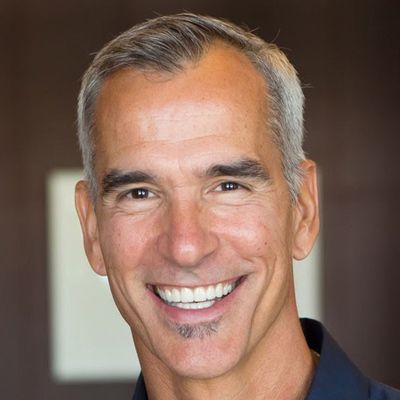
Today’s guests, Broadway Cares/Equity Fights AIDS Executive Director Tom Viola, and Director/Choreographer/Activist Jerry Mitchell are on hand to inspire you out the door to collect every penny you can.
Please visit https://broadwaycares.org/ for more information on this incredible organization.
Transcript
This transcript was automatically generated and might contain errors.
[0:00] Eric Oyoa: Joe Biden's's poll numbers have hit extraordinary highs. Now, let's not get cocky about that. Let's just break down what that can mean. According to Bernie Sanders, Biden's platform, if elected, will be the most progressive platform since FDR. Joe Biden's is now competitive in states we never thought possible. Arizona, Georgia, and yes, even Texas. That means the excitement around his presidential race can mean voters in these states voting down ballot blue, changing the political landscape. We can flip the legislatures of these states and ensure that Democratic representatives can redistrict the Republican gerrymandered areas, ensuring fair voting once again. Voting that reflects the country we live in and that could ensure democratic majorities for a generation.
But all that takes money. Lots and lots of money. So today, we're putting that theater person slash activist voice to raising money. Lots and lots and lots of money. Because the toddler in the Oval Office has a massive war chest of cash, and as his own niece just told us, four more years of Donald Trump would be the end of the American experiment. A few months back, I had a thought. Well, more than a thought, the beginnings of a plan. And what if we use that voice and those powers to keep the House, take the Senate, and win back the presidency this fall? And what if I put together a limited series where every other week we give you an action plan and an artist slash activist to inspire you to go out and get to work?
Well, let's do it. I'm Eric Oyoa, and this is Do You Hear the People Sing, a Theater Person's Guide to Saving Democracy. Oh, and if you're here to re-elect Donald Trump, you're in the wrong fucking place. Now, they say it's best to admit your weaknesses, so let me start off there. Hi, my name is Eric Oyoa, and I am not great at fundraising. I have done it before, I continue to do it, and I will do it again, but it is not the part of activism that I excel within. I honestly, I really I suck at fundraising. You can ask the staff at the Roundabout Theater Company. I think I lasted a good, oh, three hours in subscription sales and renewals. It's just something I don't do well. And look, activism, as you're gonna find out today, is all about finding your lane within it.
So you know, I'm not great at fundraising, but I'm great at other lanes within it. You don't have to go down every road to be a successful activist. Even just picking one is better than none. So we find our lanes. That being said, fundraising is perhaps the most important form of activism when it comes to electing the leaders you want to see in power. And honestly, many of you may think you're not perfect for it, but actually, you really are. Look, think about it. On social media, we all push for our shows, our projects, and come every May through June. Many of us raise loads of money for events like Broadway Bears. Well, what if the postings were about raising money for leaders who support the arts and will actually try and end this pandemic so we can get back to our shows?
What if we create projects that can be fundraising events for the candidates we want to see in power? What if we what the hell? Bear it for Biden, which I'm pretty sure is not gonna be a slogan used by their campaign, but you get my point. This power is already in so many of you. So today, I'm gonna give you some basics on why it's so necessary. I'm gonna set you up on how to get started, and then I'm gonna leave it to the experts because I have two incredible guests that are going to inspire you to raise every penny you can get your hands on. Now, because I don't want to keep you on here today for hours and hours, today I'm gonna strictly focus on the Biden campaign. But that doesn't mean that you shouldn't be working for Senate races and house races and your local elections.
It's all hands on deck time. I mean, don't spread yourself too thin, but find races that appeal to you aside from the presidency. We do need your help in all arenas. Now, I can tell you in two quick sentences why it's so important to be raising money for the Biden campaign. You ready? Here we go. Donald Trump is a pathological liar with a campaign of pathological liars and a Republican Party who will hold their noses for one more term if it means they can continue to push their agenda on the American people. The Trump campaign has amassed 1.8 billion dollars to ensure that he's reelected. Does that scare the shit out of you? Because it should. So, first things first. If you're in a place where you can afford to donate money to the Biden campaign and other down ballot races, do it.
Your money is needed. Your money is important to keep our platforms and the actual truth and the conversations ahead. In fact, if you can set up a monthly donation with these campaigns, please, please, please click that button and fill out that info. Now, I understand many of us in this industry, we have no jobs right now. And we are in the midst of true survival instincts. So donating is sadly not an option. But we are artists and artists get creative. Let's start out with the easiest. A simple email you can blast out. Dear friends and family, it is a necessity to elect Joe Biden's as the next president because, and here's where you go personal and specific. Stick to the issues that are important to you and that you know will tug at the heartstrings of those receiving the email.
Keep it short. I say this as a writer who loves to go the opposite direction. Keep it short. No one likes long emails, and most people stop reading after the first paragraph. A short, specific, and impassioned ask for a donation towards a campaign of the candidate you are advocating for. And now, most important, put the link to the campaign's donation page right square in that email. I'm gonna repeat this. Put the link to the campaign's donation page right square in that email. If it's the Biden campaign, you can send them right to the donation page at jobiden.com backslash donate dash embedded backslash. Make it easy for them. Don't make them search the site. And finally, end with a sincere thank you.
And boom, you did it. But let's push further for those of us who want to show off a little. Now, what do you excel at? Ask yourself, what am I really, really, really good at? Are you a dancer? All right. Choreograph one new piece a week and post it on social media sites with a link and ask for money towards your candidate. Call it dancing for democracy. You know? Are you an actor or director? Find a play that inspires you, a piece that speaks towards a future that you want this country to be or issues that are important to you. Get some friends together that are trying to help in the election as well, and record a Zoom reading of that play. Start and end the reading with a pitch for your candidate and website info.
Pop it up on a YouTube page, share that link on your social media sites, and there you go. Are you a singer? Record yourself doing a new song a week that speaks to your soul and the change you seek. Pop it up on your social media with info and a link to your campaign, and boom, belting for Biden or whatever you want to call it. Now you get the point. They can be short TikToks, they can be full readings. The point is use what's inside of you to raise money. We know we can do it. We all have so many talents and such diversified talents. And due to the pandemic, we are currently sitting on them. Let's use these talents to elect a president in a Congress that will, oh, I don't know, not scrap a pandemic response team so that they can give their wealthy buddies a massive tax break.
You know, something like that. Now hopefully this all gets your brains churning and those creative juices flowing. Now, let's get to the experts. Now, when it comes to raising insane amounts of money, my first guest is the king of it within the theater community. Broadway Cares/Equity Fights AIDS has raised over 300 million dollars since its inception in 1988. Not only has he been there since the start, he's been the executive director of the organization since 1996. A fierce and passionate activist with one of the biggest hearts out there. Just ask anyone. Please welcome the legend, Tom Viola.
[8:35] Tom Viola: Hey Eric, how are you?
[8:36] Eric Oyoa: Good, how are you, my friend?
[8:38] Tom Viola: Um I'm very well. I'm up here uh, you know, outside of Hudson, New York, uh working remotely from my house up here.
[8:46] Eric Oyoa: I love that sounds amazing. I love Hudson, New York. So I yeah. Um, so I I brought you on the podcast today because I gotta be honest, Tom. This episode is all about uh fundraising. And I, you know, I told the listeners that I've done it, I will continue to do it, but it is so not in my wheelhouse. It is such such a weakness for me. And you know, it is hard, and I'm admitting it out there. So I want to bring people in that are the experts in this that know this world very well. And so I want to start off with this first question for you. Uh, finish the sentence for me. Fundraising fundraising is incredibly fulfilling because uh there are very specific and goalable, if that's a word, uh, results. I mean, I mean, you you it's it's a cross between actually setting a goal and trying to reach that goal. And I would say, for me, being flexible enough to know that sometimes what you think you're at going after is not exactly what you're gonna get, but what you need.
[9:49] Eric Oyoa: Uh explain that further.
[9:51] Tom Viola: So, so meaning the goal you set. I I mean, I mean, I mean, here's the thing I have to say first. Um, I there are many directors of development, um, and folks who are really, really professional first class ACE fundraisers who know much more than I do. Um, I did not study this. Um, you know, I did not uh take the business degree to sort of learn how to do this by the books. Um, like many of us who began to do this work, uh certainly in the mid to late 80s, I was just sort of thrown into the deep end of the pool, more or less by wanting to respond to a need that I saw unfolding and uh all around me, uh a crisis that was going on all around me. At the time, um, I was working at Actors Equity as Colleen Dewhurst's assistant.
She was the president of the union at the time, since about 1987. Um, and was what equity called their special projects coordinator, and this was right at the time that Equity Fights AIDS was created as a committee of Actors Equity. And Colleen just really wanted this to take root in the community. She saw the incredible need. This was about the same time that the Actors Fund created the HIV AIDS initiative. So she just more or less said to me, here's the ball, run with it. And by her support, folks realized it was a good thing to happen and became involved. Now, again, I'm probably so off whatever you asked me.
[11:45] Eric Oyoa: No, no, you're honest.
[11:47] Tom Viola: Everything that everything that we do now that people would recognize that raises you know millions of dollars each year when theater is active, um, are things that started very small. Um, they are scrappy, scrappy, tiny events, you know, seven people dancing on a bar at Splash that became 250 dancers dancing at Broadway Bears last year and raising two million dollars. Um, you know, a flea market that was a couple um tables put outside a stage door of a chorus line at the Schubert Theater that became a Broadway flea market across Schubert Alley and up and down West 44th and 45th Street, you know, that raised $800,000 last year. So all of the I I've been fortunate enough to sort of plant, be part of planting a seed and nurturing growth as opposed to jumping in to an organization with very with million dollar goals that I then have to sort of construct a way to reach.
[12:45] Tom Viola: That makes sense. No, absolutely. This is actually what you said is perfect because, you know, what we're trying to do is show that activism and taking these steps are very approachable, like you said, scrappy, that, you know, I learned on the job, as many as we all did. I mean, the organization basically are thousands of folks who sort of came together and figured out what we could do at different levels and at different times. I've been fortunate enough to be involved in some cases corralling that, if that makes sense, energizing that, directing that a little bit. But it's a very, very unique story, the Broadway Cares Equity Fights AIDS story that I don't know as a fundraising organization is completely duplicable in other arenas.
I mean, the reason why it works for us in the Broadway community, again, when we're up and active and hopeful, which we hopefully will be again soon, is because we work on a campus. We literally work from 41st Street to whatever it is, 51st Street and from 8th Avenue to 6th Avenue and we bang into each other all the time. People go to very specific jobs in very specific buildings about 38 of them, you know, eight times a week. It's why Broadway Cares Equity Fights AIDS took root and flourished in the theater community as opposed to something similar happening in the movie industry or the television industry or the music industry. Now there are versions of what they do that is extraordinary and very specific to them. But our success as a community in these grassroots fundraising events and efforts is because we literally all work together on this, again I keep using the word on a campus.
[15:08] Eric Oyoa: The theme of this episode is about fundraising and how we can raise as much money as possible for not only the Joe Biden's campaign but also all the down ticket races.
[15:22] Tom Viola: Yep, maybe even more importantly exactly because we know the war chest that Donald Trump has. Now I know you've seen it all in many ways. So now in your tenure with Broadway and your tenure with Broadway Cares, what are some of the most creative ways that people have raised money for the organization? More so, which ones of these could our listeners use in raising money for Biden's campaign or other down ballot races as well?
[15:48] Tom Viola: Yeah, yeah, I mean that that's a tough question because what we discovered, I think Broadway Cares' strength is we let many, many folks bring many, many ideas and gifts, if you will, and I don't mean monetary gifts, I mean their personal gifts to the table. I mean, in terms of raising money for Biden or for these down ballot campaigns, I mean, I'm sure that right now a lot of what folks would do is some sort of performance, live performance piece, which of course we can't do right now. We can't all get together in a room and even, you know, whether we're in a club or at a dance hall, dance studio and do that sort of thing. So, how what can you bring online to create both the conversation and a way to encourage people to hit the donate button on the link that goes directly to the Biden campaign or to someone specific campaign?
[16:42] Tom Viola: We're saying that the idea of, you know, people in our community, you know, latching onto their talents, whatever their strength is, they want to create a dance piece, they want to, you know, and put it on Zoom and they want to do a concert if they're, you know, instrumentalists that they could do these, you know, via these online sites and raise money that way, perhaps. Yes, I mean, I mean, all this, you know, these live stream fundraisers are much more, they're more difficult to do than they look when you're watching them because you really do need to make sure that you have the infrastructure to create the opportunity for folks to make a donation. And you need to make sure that in the live stream you are reminding folks to make a donation, whether that's with the crawl at the bottom of the screen, whether that's with talking to them deliberately, you know, directly.
You need to make sure that you remind people to do that because otherwise it's not that they forget, but they will get so caught up in what you're offering them visually that they'll get to the end of it and go, oh, I never did that, and then it's gone. Whatever that is, whatever conversation or performance you're creating, you want to make sure that you're very clear up front that I am trying to raise money for blank or whatever it is, and what you want to communicate to people, and it's and I think it's what we have done, I would like to think successfully, is how that donation, whether it's $20 or $20,000, makes a difference.
[18:13] Tom Viola: Um, and that there is no hierarchy to your involvement, it's strictly your being willing to commit to being a part of this solution. And in this case, part of the solution is raising funds for political campaign. What what what the difference, what it means, what what difference it will make because people are moved and if I would say so, how that difference will affect in this case the listener, yeah, because people are motivated to participate and to and to make donations out of their own self-interest. You really want to connect to the bigger picture, but also connect directly to them. This is how this is going to affect your life.
[18:57] Tom Viola: But you know, here's the thing, Eric, too, before about fundraising and doing any of this stuff, because fundraising is also, I've learned over the years, a psychological leap, if you will. It's hard to ask people for money. It's hard to ask folks, even to possibly do something that allows you to raise money, and you really have to go into it figuring that the worst they can say to you is no, or not this time, and let that roll off your back. As a therapist said to me years ago, and I think it is the key to a lot of things, go where it's warm. And what that means is hang with the folks who love you.
[19:43] Eric Oyoa: Yeah.
[19:43] Tom Viola: Hang in, you know, be part of a community that empowers and embraces you. So that as a unit, you can then address the folks who might not. And again, when you ask somebody for, you know, anything, the worst they can tell you is no, and you can then move on.
[20:03] Eric Oyoa: Um, I love that.
[20:05] Tom Viola: That helps me. I mean, I when I tell you that truly, when I think about fundraising and calling somebody up and asking them for money or putting something out there, it is legit, like the nightmare. So the idea of that helps so much, the idea of just saying what's like anything else in life. I mean, we're in theater, we're used to no's. We know no's very well. So I think knowing that, yeah, what's the worst it could be is a no, that solves a lot of the issue. But the thing you have to remember too is as a fundraiser, whatever level you're doing it, to fulfill the equation, you have to really make sure that the folks who are saying yes to you and whatever that might be, understand your gratitude, feel your appreciation.
[20:49] Tom Viola: Um, I see it all the time. Folks forget or think they have said thank you. Um, and you really that is like that's the period on the sentence that connects the circle. And that's why I said this before, and it's a little, it's not off color, but I mean, you know, fundraising is a little bit like dating. Pretty much you can get anybody to do anything once.
[21:14] Tom Viola: Um, but the idea of someone coming back to you and saying, let's do that again, you know, let's let's have lunch again, you know, is going to be dependent on how you left them feeling about your about their gift, their, you know, what they what they shared with you, whether that's their time or their dollars. You really have to make sure people understand your appreciation.
[21:44] Eric Oyoa: No, I think that's wonderful because I think you're right. We do naturally, I think we naturally think that the thank you is implied, whether it be my tone, or because you know, in the fast pace of life, we just forget that.
[21:54] Tom Viola: That's a great reminder too. You know, a simple thank you at the end is you're right, the period.
[22:00] Tom Viola: Well, you know, my angular has a great saying that I that I love that I think about a lot. People will not remember what you say, they people will not remember what you do. What they will remember is how you made them feel.
[22:13] Eric Oyoa: I literally have that on my fridge, son.
[22:15] Tom Viola: Yeah, and that is the key to any kind of community effort, and in this case, fundraising. Thank you so much for everything you do, and thank you for coming on today and helping our audiences with a little bit on fundraising to get them to go out there and raise some big money for these campaigns.
[22:31] Tom Viola: Yeah, there's a lot to do, and there's a lot to be done, and no effort, no donation is too small. Please don't, please don't not be engaged because you don't think your part is big enough.
[22:51] Tom Viola: Scientists at the National Centers for Disease Control in Atlanta today released the results of a study which shows that the lifestyle of some male homosexuals has triggered an epidemic of a rare form of cancer. There's perhaps no greater tragedy to ever hit the Broadway community than the AIDS epidemic. Our magical stretch from 41st to 54th Street became a place of deep sadness and confusion as an unknown virus ripped lives forever from our community in unfathomable numbers. Dreams were cut much too short, genius was left unrealized, and stories were never allowed to finish. A young Broadway dancer in grief over the loss of close friends, his mentor Michael Bennett, and so many others decided that he had no choice but to do something. He would find that activist voice within him and fight back, becoming a light in the darkness.
[23:40] Tom Viola: From its humble beginnings of raising $8,000 from he and six of his friends dancing on a bar to the $2 million they raised last year alone, Broadway Bears exploded and has become not only one of Broadway's biggest nights in town, but a yearly reminder of how deep the heart of the theater community is.
[24:41] Eric Oyoa: The musical, which was opening Thursday night, we knew this shit was real.
[24:44] Tom Viola: And sure enough, we got here on Saturday morning and we've been here ever since. So it's I think it's like 130 days we've been here. I always dreamed of having an entire summer at the beach. And guess what? That dream's coming true, but not in the way I ever wanted it to.
[25:01] Eric Oyoa: I want to dive into this. Now I personally I can't fathom the height of the AIDS epidemic. You know, I consider myself extremely well formed on this. I have, you know, seen the movies, the show, I've read books on it. I know the facts. But I, Eric Oyoa, cannot mentally put myself in that nightmare because to me it feels insurmountable.
[25:23] Jerry Mitchell: I don't know that I survive it, let alone mentally survive it, honestly.
[25:30] Eric Oyoa: And yet, here you are.
[25:31] Jerry Mitchell: Sorry. Does anybody, does anybody ever plan to survive a plague? I mean, it's such a crazy, crazy thing. How could you put yourself in it completely unless you actually were in it? I mean, it's yeah, it's it's when I think back, it's it's really hard. But anyway, go on, go on.
[25:51] Eric Oyoa: No, but but but I mean that that's that's the thing is that in this moment where, you know, for so many of us that were not around during that generation that that were, you know, were babies then, we I think can't fathom it. But yet in the midst of all of this, you decide to step forward and you're gonna create something called Broadway Bears to fight back and save lives. Now, can you take me back to the beginning? I want to know where were you mentally at the point where you made the decision to fight back? And how did you go about it? Because you know, due to the juggernaut it's become, people often forget the very tiny beginnings of Broadway Bears.
[26:30] Jerry Mitchell: Yeah. Well, well, I am I think it if you really, if I really have to be honest, it's like I was raised by some incredible teachers, parents and grandparents, who taught me to participate in the community. They taught me to be someone in participation as opposed to be someone sitting on the sidelines. So I'm going back to the Jerry Lewis muscular dystrophy. I was the kid who walked around the neighborhood every year with the fishbowl, asking neighbors for donations so I could go to the mall and drop my money into the big fish tank in Kalamazoo. And, you know, was doing my part for the Jerry Lewis. That was because my parents and grandparents encouraged it.
[27:20] Oh wow. So just start there as a kid, right? And then and then multiply that by, you know, being in the theater and being outgoing and being in who I was. And so I get to college, and um I am a young gay man in an environment for the very first time where I'm actually meeting other people who are gay like myself. And I knew no gay people in Papa Michigan when I was growing up as a kid. Um I knew I had no gay role models. Uh so I get to college and I meet other gay men and women, and I fall in love with a junior. I'm a freshman, and we have two amazing years together. Uh, I end up coming to New York to be in a Broadway show and leave school early. And all of my friends that I've made in the two years of this most important part of yourself when you're away from home for the very first time and you're really developing yourself for the very first time on your own. All of those friendships were so special.
[28:28] And I was in a conservatory program at Webster University, Webster College, and there were a lot of gay people on campus. So I get to um I get to New York, and in my one of my best friends, Brian Worley, uh was a year ahead of me. So he came to New York one year later and is auditioning an incredibly talented guy and and dear dear friend, and he gets sick. And maybe maybe three years later, he's dead. He's passed away from AIDS.
[29:01] Oh wow. And watching his process, this is before AZT. This is this is way early, early stages when there was nothing. He had a port, he had all of he had everything. Nothing happened, nothing worked. Then I'm it's the mid 80s, and I'm working with Michael Bennett. This is a long answer. It's the mid 80s, and I'm working with Michael Bennett, and Michael Bennett dies at AIDS. Um, I by the time 1990 came around, I'd been in New York for 10 years. And I always do this at Broadway Bears. I have I have someone stand up, and then I ask nine other people to stand up. And then I say, see this guy. This is his, these are his nine best friends. And then I asked eight of them to sit back down, and there's only one person left standing. And I say, that's what happened to me. I have one real friend from college left in my life. All the others have died to AIDS.
[30:00] And I needed to do something. And we were uh raising money for the Easter bonnet competition and trying to come up with ways to make money. And Jason Opsall and Troy Johnson and John Ganon and Jack Doyle, my dressing roommates on the Will Rogers Follies. Uh it was Jason who said, Why don't you go dance on the bar at Splash in that Indian of the Dawn costume and raise some money for Broadway Cares for our Easter bonnet? Now, if you didn't see what Will Rogers, you didn't know anything, basically I was in a G string with a front flap in front, dressed as an Indian of the Dawn, and the back was completely bare. My ass was hanging out with bells on the sides. I had a headdress on and some uh some things around my ankles and wrists. Thank you, Will A Kim, the most amazing costume to design ever.
[30:50] And I was in the best shape of my life. And I was getting a lot of attention at that stage door, a lot of attention. Um, and I just thought, this is it. I'm gonna put on a show. And I called six other guys who were in shows who I knew had incredible bodies, and we put on a strip show, and I choreographed the opening number, and we each did a solo strip. There was a line around the block. Um, Brian and um Harry, the owners of Splash asked us if we'd do a second show. We could make twice as much money. We charged $10 to get in. And I said, sure. And so we did a second show and we rotated after each show. Rotated is basically go-go dance for dollars on the bar. And I went home with a pillowcase full of wet dollar bills. I had no idea how it was there. I took it at Broadway Care's the next day.
[31:39] At this time, Broadway Cares and Equity Fights AIDS were two separate organizations. They had not, uh, they had not combined yet. And I they called me and said, You had $8,000 in that pillowcase. And I went, holy shit. And I said, I can do this better. I'll add girls. So I added girls. And six months later is I did the second Broadway Bears, and we made $37,000. I said, I can do this better. I'll add, or maybe we made $17,000. I said, I can do this better, I'll do a theme. And six months later, we did the third Broadway Bears, and we made about $37,000. And I realized it was going to be a year of work to put on this one event. It was growing unbelievably. By the third Broadway Bears, I had called every single dancer to participate in Broadway Bears. By the third or fourth Broadway Bears, people were calling me. They wanted to be in. They heard about it. They wanted to participate.
[32:30] And for the first 13 Broadway Bears, I basically conceived, directed, and choreographed the entire thing. And I had a team of choreographers working with me. Sergio Trajill, who was an assistant in dancing for me, Jody Mocha, Dennis Jones. Then it then it was, then it was Nick Kinkel and Leah Barack last year, and she's doing it this year as the director. So it um basically you said, what did I when did it happen? It happened in that first that first event. And the reason it happened was I wanted to be a choreographer. And there was there wasn't an outlet for me as a choreographer in the AIDS crisis. Shows weren't happening because the people who were producing and and creating those shows were dying. And producers were not willing to sink money into an unknown. So there were no new creatives coming up at that time. And I created an event that allowed the industry to see that I actually could do the work.
[33:38] And, you know, Jack O'Brien and Terrence McNally, who we lost to COVID really early in this in this uh epidemic, uh, they were the ones who saw Broadway Bears and hired me to hired me to do the Full Monty, which was my second Broadway show, and really my calling card because of the Michael Jordan ball Jordan's ball number. But that that show and that experience was because of Broadway Bears. They saw Broadway Bears and they said, well, nobody knows how to take clothes off better than Jerry Mitchell. Let's hire him. And that's how I got the Full Monty. So by creating this event for the community, this is hindsight. I did not know this at the time, but by creating this event for the community and giving back, it gave me a career. It gave me a career because it allowed me to do what I love to do. And for that, I will be forever grateful.
[34:34] Jerry Mitchell: And um, and I will never ever not be here for AIDS and for the net the necessity, the need uh to take care of everyone who's who's been dealt a shitty hand from the AIDS epidemic. If 60 year old Jerry today could go back to 25 year old Jerry then, what would he tell himself about his growth as an activist and as someone who speaks out? What what are the lessons he's learned?
[35:02] Jerry Mitchell: Well, I I never I never look you you call me an activist, and maybe I am, but it's not something that I did consciously. I I think I think activism is simply the act of being being present and being involved, right? Uh uh I w I saw I heard Obama say something in some interview yesterday about um, you know, oh I'm gonna tweet, I'm gonna tweet, I'm gonna show them, I'm gonna tweet something. Okay, now I'm gonna go back to watching my show on TV. Yeah, he and he said, that's not that's not activism. You're not you're not acting. You gotta get involved. You gotta get off the couch, you gotta get in the street, you gotta march, you gotta make a difference, you gotta raise money, you gotta change lives. You gotta you've gotta you've gotta get out there and do the work, right?
[35:51] Eric Oyoa: Yeah.
[35:51] Jerry Mitchell: And and it can't just be a tweet. Although I love to tweet about you know who because it drives me fucking crazy.
[35:58] Eric Oyoa: We're all on the same page on that one.
[36:00] Jerry Mitchell: Yeah. I mean, uh, so um yeah, you've got to get out and do the work. You have to get involved. You have to lead by example. That's activism. Activism is getting out there and getting involved.
[36:14] Eric Oyoa: Yeah. I mean, and and and you know, it's it's funny you that you say you don't think of yourself as an activist. When I was creating the lineup of people I wanted on the show, you were instantly on my list because uh when I think of your history and what you've done, it is it is the prime example of activism. You saw a need that something had a necessity that had to be done and a response, and in whatever way you could, you met the challenge, and now that challenge has been met. You know, Jerry, every year, you know, last year, two million dollars changes a lot of lives. There's there's no question that the fundraising of of of Broadway bears and the money that it has raised, the event has raised for Broadway cares, is a phenomenal thing.
[36:57] Jerry Mitchell: But again, this goes back to my father in a lot of ways because my dad, okay, so I was raised Catholic, Catholic Church, Knights of Columbus. My grandfather was a Knights of Columbus, my dad was a Knights of Columbus. I think my brother, my oldest brother is, I'm not a Knights of Columbus. But you know, the church and this and the Catholic school were having hard times financially. So my dad, who, to be quite honest with you, he's not with me with us anymore, God bless him. But and he's he's the greatest, greatest man in the world. But he was a gambler. My dad was a gambler, loved to gamble. So what did my dad do? He said, Oh, I know how to raise a lot of money. We'll have bingo. My dad created a bingo thing for the Knights of Columbus, or they he and Stan, they put together a bingo thing, and I think they raised millions, millions of dollars for the Knights of Columbus and the Catholic school and the church when the church didn't have a pot to piss in. My dad raised millions in a town where a million dollars is like 50 million in New York City.
[37:59] So, you know, again, I was watching him, his incentives, like he'd go get a bunch of turkeys and he'd give turkeys out, and he'd he'd give he'd give out, you know, presents on the uh during the different bingo things, and it would get the the place would be packed with people, packed with people, and they would make so much money.
[38:20] Jerry Mitchell: And um, and I watched that happen. I watched that happen. So, you know, that was raising the money. I was in 19 in the mid-80s, um, I was uh one of my dear dear friends, Leaf Green, uh, was in uh was in a uh he was in The Young Americans with me, and he became the one of the producers for the AIDS walk-a-thon in New York City. And so being his friend, I went and worked in that office. That was the first thing I did. I worked in that office on the very first broad uh AIDS walk in New York to the till about the 10th. And I sealed envelopes and sent and did calls and everything and signed people up, worked the desk, did the whole thing. My cat is is a green. Um I did all of that, and um, and uh, and then I worked, and then I did some things at GMHC, and I went to a couple act up meetings, but I never felt like I was allowed to do what I had to do, right?
What I needed to do, what I wanted to do. And so I had to create something on my own. And I was getting invited to these dinners where it was $500, $750. I was a chorus boy in a Broadway show. I didn't have $500 to spend on a dinner. I couldn't afford that. So I needed to, I needed to find a way to um to do something where people like me could feel like they were giving back. And that was creating the show where it cost $10. The first Broadway Bears cost $10 to get in the door. Wow. You know, the uh that is uh I think that's the most important thing. And I I've I've been actually meaning to stress this more. I'm glad we're talking about it. The idea that there is no there is no one lane in these things.
Like you mentioned at the time, people had this and that, and you weren't finding your lane, and then you create but so you created your own lane. You created your own lane based on what you knew, and you know, who knew that that lane existed, but now it does, and now not only does it exist, but it is a humongous asset to the world, you know. You know, the Broadway Bears event pulls the community together in a way that you don't see in just one show. You know, people get to dance with other dancers in different shows. They get to it, it just it's it's a completely different sort of event, fundraising event, because you're not just performing with somebody in your show, like the Easter Bonnet or the Gypsy of the Year.
You're actually intermingling with the community and meeting new people and experiencing new new ideas. I was listening to the um uh Black Theater United podcast the other day, and uh I was listening to her um uh oh, the lawyer Eiffel was speaking about knowing your power. What is your power? What power do you have to make a change? Get in touch with that power. That's the way you that's your way in. That's your way to make change. We each have a power, but but we don't have all the power. We have to know what our power is in the moment of uh the need for action. Well, how can my power affect the action? And that's what you know, you have to fit figure that out. Now, now, Jerry, uh uh speaking of knowing your power, you know, the the theater community is in the midst of a deep discussion about race and how to actually make this industry fair and just for all.
Now, as someone who obviously you're you know naturally liberal minded, you have an activist mind, you are a helper. You want to have, you know, you carry a lot of power industry. How are you finding yourself within this discussion and what your place can be in that necessary change?
[42:05] Jerry Mitchell: Well, how about the discussion I have in my head every single day? Why, why don't I have why don't I have more people of color in my in my personal circle? And I've been reaching out to my friends who are people of color and saying, I need to know more people who want to do what I want to do, because they are not in my immediate circle. They just aren't. And so I'm making an effort to find them. And it's surprising, like when I find somebody that I didn't even know, you know, I I was the privilege that I had was being a white male. Uh but you know, I was I was able to, as a dancer, watch the choreographers and the directors that I was fortunate enough to work with. And almost every single one of those directors and choreographers, male, female, no matter what color they were, allowed me to work with them as an assistant.
And I assisted female choreographers, I assisted male choreographers, I assisted white choreographers, I assisted black choreographers. Uh, Michael Peters and George Faison to mention too, or or worked with them. I danced with George, I assisted Michael Peters. But George was incredible to me. And our relationship, I I had more fun with George Faison, I think, than maybe I've had with any choreographer in my life. He he was just um, he was everything I wanted to be. The first Broadway show I ever saw was The Whiz. I was infatuated with George Faison. And uh and Michael Peters, I was associate to him uh through my uh uh relationship with Michael Bennett. I worked with Michael Peters on the Liberty Weekend, which was this huge thing, and then the Coca-Cola show.
And and I was watching him and learning from it. I mean, I danced for him and worked with him on a Canada Dry commercial and other commercials with Geraldi. And so I got a chance to work with a lot of great, great uh choreographers, and that's how I learned to become a choreographer. Of course, Michael Bennett and Bob Avian being the two biggest influences along with Jerome Robbins in my life as a choreographer and director. And so, you know, I am now working with a lot of young people who want to be choreographers and directors. And I I love having them around. And I'm trying to find as many of them as I can for projects that are coming up. And that's what I'm doing. That's what I'm doing. That's what I'm doing.
But but you know, Billy said it in a in an interview that he did, Billy Porter. The tipping, if you've ever read that book, The Tipping Point, which is a fabulous book. This is it. We're we're at a tipping point. We are at a tipping point where things have to change. They must change. It won't be the same when we go back. It can't be the same. And I believe, I believe things are gonna change. And so I'm gonna be, I'm gonna be part of that. I want to be a part of that.
[45:13] Jerry Mitchell: Yeah, I I mean, uh to me, it's it's I find such a deep, deep excitement about this because to me, you know, these kind of these moments are revelatory. We we we can stand back and say we were in that moment and we were actively a part of the change happening and actively questioning ourselves and and and having difficult conversations like you said earlier in your own head every day, you know, about this. And I think that's it it's so important. And you know, with with that mindset, that's how we do create the change in the in our community and how it's not just performative things and we're actually making deep deep change that's going to be structural change too yeah and and you know the the listening and and the listening and hearing our our uh our co-workers and co-designers and co-directors and co-everything has really been has been fortunate because I have had a lot of great uh relationships with people of color in shows and and Broadway bears and everything but there's room for a lot more there's room for a lot more and that's the thing that's that has to be everybody has to be willing to make that room that's what I have to do so last question to uh and that's so it's high in very well to coin your phrase full out finish this sentence for me this is a time for full out activism because it's time it's time for equality and on every level on every level in every space in every room in every environment it's time for equality full out equality it's time for equality in America and anyone who doesn't believe in equality for every single person of color every single person of sexual identity every single person then they don't belong in America.
[47:10] Jerry Mitchell: You belong somewhere else because America has always been about all of us not some of us. Yeah. No, we we I we you know we started off the country with we the people. I mean, granted, we we had some issues in the beginning. Uh but our story, I know our country's story is that we all we always do try to find our better angels and fix the issues that we have and continue to push forward. And I I really I do I sincerely believe this moment, like you said, is something is going to change. We are we are at a tipping point for sure.
[47:40] Eric Oyoa: Uh Jerry, I I love you. I can't thank you enough for being on here. Um, thank you so much. Um I know you've inspired a ton of people today with this.
[47:49] Jerry Mitchell: Oh, my pleasure, my pleasure. Thank you for having me.
[48:00] Eric Oyoa: All right, as promised every week. Voter registration and absentee ballot deadlines for New York State. New York State, here we go. Your voter registration deadline has to be postmarked by October 9th, received by October 14th. Your last day to have a postmark request for an absentee ballot is October 27th. The last day to get that request in person is November 2nd. Now, the last day to postmark your absentee ballot and send it in is November 2nd. Your last day to drop it off in person, November 3rd, election day. For this week's Well Shit Happened. In the time since our last episode, we lost a giant among men in this country. A civil rights hero, a powerful congressman, and a reminder of our better angels.
Congressman John Lewis. It is not even a tiny exaggeration when I say that Congressman Lewis was not only a personal hero, but his phrase good trouble beats at the very core of my activist heart. He is legitimately one of the reasons why I do the things I do. So please do yourself a favor and allow yourself to be inspired by this man, the legacy he left us. Rest well, sir, and please, I want to close out this episode with the rallying call we should all hold deep within us. I said to you tonight that you must never give up. You must never give in. You must keep the faith and keep your eyes on the prize. Carry the message. Stand up. Speak up. Speak out. And find a way to get in the way. As Dr. King said on one occasion, we must learn to live together as brothers and sisters. We will perish as fools. If we can get it right, maybe it will serve as a model for the rest of humanity. With care, we will overcome. Thank you very much.
[50:05] Eric Oyoa: Well, that's our show. Thanks for listening, and don't forget, we're here every other week. So go get to work, and we can't wait to have you back. And please consider making a donation to Fairfight at www.fairfight.com. We know when they can't win fairly, they always try to cheat. And Stacey Abrams and Fairfight are working hard to ensure that doesn't happen. Do you hear the people sing is a production of the fabulous invalid LLC and the Broadway Podcast Network. Our theme music is by Brett Ryback. Our photography is by Michael Kushner, and our graphic design is by Aviva Sakhalau Shahar.
© Broadway Podcast Network, All Rights Reserved