

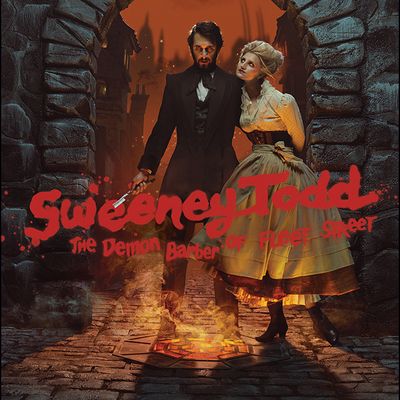
On a beautiful spring day, the boys chatted with the most angelic demon barber - Thom Sesma! We talk about how we connected, his big break (and almost big break) on Broadway, as well as the importance of representation in the theatre community... Read More
From the show: Equity One: Broadway's Happy Hour
Featured Shows
About
On a beautiful spring day, the boys chatted with the most angelic demon barber - Thom Sesma! We talk about how we connected, his big break (and almost big break) on Broadway, as well as the importance of representation in the theatre community. A special edition of Merch Madness as always. Subscribe and rate on iTunes!
www.cafepress.com/equityone
Instagram: https://www.instagram.com/equityonepodcast/
Twitter: https://twitter.com/equityone_
Email: equityonepodcast@gmail.com
Transcript
This transcript was automatically generated and might contain errors.
[0:20] Elliott Mattox: This is Equity One, Broadway's Happy Hour. Pour yourself a drink. Enjoy us as we chat about life, theater, and everything in between. I'm Elliott Mattox.
[0:31] Caleb Dicke: And I'm Caleb Dicke. Join us for your Equity One. Cheers!
[0:40] Elliott Mattox: Hi, welcome to this week's episode of Equity One. Thank you for having me. We have our special guest. Thom Sesma is here.
[0:46] Thom Sesma: Yes.
[0:50] Elliott Mattox: On his um is the now you have a show tonight?
[0:52] Thom Sesma: Yes.
[0:53] Elliott Mattox: Okay, at Barrow Street Theater in their amazing revival of Sweeney Todd.
[0:59] Thom Sesma: So so good.
[1:01] Elliott Mattox: Thank you. You guys just celebrated uh landmark.
[1:03] Thom Sesma: Yeah.
[1:04] Elliott Mattox: 500 shows, right?
[1:05] Thom Sesma: Yeah, uh Sunday, last Sunday evening. Um April 29th.
[1:10] Thom Sesma: 500 shows. And in June, I don't remember what date it will be. Um, we will become the longest running New York production of Sweeney Todd ever.
[1:20] Elliott Mattox: Wow. Really?
[1:21] Thom Sesma: Yeah. Now mind you, more people saw Sweeney Todd in one performance than the original production when it was at the Gershwin.
[1:29] Elliott Mattox: But we're we're running longer.
[1:32] Thom Sesma: That is amazing. That is that's actually kind of shocking.
[1:35] Elliott Mattox: Yeah.
[1:36] Thom Sesma: That uh prior runs of Sweeney Todd haven't lasted as long. But you know, the the the first production lasted, I think it was over a year. Um 500 and something performances. But it um you know, it had a hard time selling tickets.
[1:54] Elliott Mattox: Oh, sure.
[1:54] Thom Sesma: It was pretty good. It didn't get great reviews. And um and it I think it lost its entire investment.
[2:01] Elliott Mattox: Wow.
[2:02] Thom Sesma: Jeez, yeah. Even though it ran that long. But it does have that recording of it though, doesn't it? Isn't there a oh yeah, I mean it is definitely like um it's definitely documented.
[2:12] Elliott Mattox: Yeah.
[2:12] Thom Sesma: Um but yeah, and it's so in it's really interesting to um to think about. We were actually talking with um John Cariani recently about kind of like what even these shows that like don't even win best musical or aren't even received well, you know, go on to become the the American classic.
[2:33] Caleb Dicke: Exactly, you know, long after their their initial like first experience.
[2:39] Thom Sesma: Right. Well it's particularly true with with uh Sondheim's work when you look at the the kind of mixed reviews the canon of his work has gotten. I wonder how you know if if those critics are still living, how uh people that panned uh company and little night music for being too cold or or um Sweeney Todd for being too grotesque, you know, what what are they saying now?
[3:03] Caleb Dicke: Exactly.
[3:04] Thom Sesma: Wherever they are in whatever hell they're yeah, they got no place here.
[3:10] Caleb Dicke: Exactly.
[3:12] Thom Sesma: They are not welcome in the equity.
[3:12] Elliott Mattox: No, they are not. Well, we are sitting here in my apartment on this beautiful, beautiful summer day. Seems like summer supposedly here to stay.
[3:23] Caleb Dicke: This was the most brutal winter ever.
[3:26] Elliott Mattox: You know, it was just it was just endless. Endless endless. And it would there were a lot of like seeming lights at the end of the tunnel, and then we would get snow.
[3:36] Caleb Dicke: Mm-hmm.
[3:36] Elliott Mattox: Right. So I'm still expecting snow.
[3:38] Caleb Dicke: Yeah.
[3:39] Elliott Mattox: Before June 1st.
[3:40] Caleb Dicke: Of course.
[3:41] Elliott Mattox: But uh three days ago, people were wearing scarves and gloves.
[3:44] Caleb Dicke: Yes.
[3:44] Elliott Mattox: Because it was cold.
[3:46] Caleb Dicke: Yeah.
[3:46] Elliott Mattox: So hopefully this uh this nice 80 degree weather and some beautiful sunshine sticks around. But I might put in my air conditioner in this weekend, maybe.
[3:54] Caleb Dicke: I'm putting mine in this weekend.
[3:56] Elliott Mattox: Yeah. And you said you're getting your ceiling fan.
[3:58] Caleb Dicke: I am. I'm getting a ceiling fan installed tomorrow, and I'm really excited.
[4:02] Elliott Mattox: Oh my god, I turned all my ceiling fans on yesterday. My wife came home after I I forgot to turn them off when I went to the theater last night and she came home from her show. And uh I came home and she had this very friendly look on her face, which meant I knew I was in trouble.
[4:19] Thom Sesma: Did you know all the ceiling fans were on high?
[4:24] Elliott Mattox: They weren't on high, they were in medium. But that really wasn't the point.
[4:34] Caleb Dicke: I am so I am so excited because my apartment gets very hot in the winter, and I always have to have my windows open in winter, so hopefully the ceiling fan will help a little bit.
[4:45] Thom Sesma: It must be these 'cause you live in the same area as me.
[4:48] Elliott Mattox: I live a block away from here.
[4:50] Caleb Dicke: Yes.
[4:51] Thom Sesma: And uh these buildings can I think they just old heat works very well.
[4:56] Elliott Mattox: Yeah.
[4:57] Thom Sesma: Yeah. It it always surprises me how much how much heat a building retains. Uh in the in the summer, particularly.
[5:06] Elliott Mattox: Oh my god.
[5:06] Thom Sesma: You know, I I I'm I'm hearing uh sort of mythic stories about how warm it gets backstage at the Barrow Street Theater.
[5:15] Elliott Mattox: Oh no.
[5:16] Thom Sesma: And I'm terrified. I'm just absolutely terrified. I and uh I'm sure like 'cause is there a kitchen back there as well?
[5:23] Elliott Mattox: I'm sure that doesn't help.
[5:25] Thom Sesma: No, no, there is no kitchen.
[5:26] Elliott Mattox: Okay, yeah, here's where's the food come from?
[5:28] Thom Sesma: The the the pies are uh are uh created off site.
[5:31] Elliott Mattox: Okay.
[5:31] Thom Sesma: I don't know where Bill's um Bill's uh bakery is. Bill Yosis, the uh baker who has come up with these amazing pies um at the Barrow Street Theater, used to be the pastry chef for the Obama White House.
[5:47] Elliott Mattox: Wow.
[5:48] Thom Sesma: As a matter of fact, his cookbook is currently nominated for the James Beard Award for Best Cookbook of Last Year.
[5:53] Elliott Mattox: Oh amazing.
[5:54] Thom Sesma: Um and they're pretty incredible, but they're uh they're brought in um about an hour before the uh before the theater opens. And uh they brought in these really nice, convenient little warning cases. But they're basically fresh out of the oven from the time that's amazing loaded onto the van. Um and they're served by the most amazing I have to I have to uh give some kudos to the uh front of house staff um at the Barrow Street Theater. They're just amazing, kind, generous people.
[6:28] Elliott Mattox: Um so excited to work there. As a matter of fact, when I um um when I saw the show um in July, um I was asked to audition for it, and I I asked if I could see it, and uh and they said no, so I had to buy a ticket.
[6:42] Thom Sesma: I don't even know why I brought that up.
[6:44] Caleb Dicke: You never know.
[6:45] Thom Sesma: You never know. One of the things one of the things that I was so taken with from the moment I walked into the lobby at the Barrow Street was how efficient, how friendly, how welcoming uh the front of house staff is. Um, you know, and and like most people uh who who are working like that in the theater, you know, a lot of them are actors, or a lot of them come from artistic backgrounds. And I think they have a sense that they know what the audience wants.
[7:11] Elliott Mattox: Yeah.
[7:11] Thom Sesma: They know so they anticipate how to take care of them. Um but you also have to remember that there are a certain number of limitations that the audience experiences. Like you cannot get up and go to the bathroom and then come back in in the middle of act one.
[7:26] Caleb Dicke: Yeah.
[7:27] Thom Sesma: Um for any number of reasons. Number one, you're gonna miss something really, really awesome. And number two, um, it's a little scary, it's a little dangerous because people are moving all around that room.
[7:36] Elliott Mattox: Yeah, all around the room.
[7:37] Thom Sesma: And some of us are moving around with sharp objects in our hands. Uh-huh. Running around on top of tables. So in addition to being very good at their at their job, they're very um very polite, they're very kind. Um, and so I just wanted to give them a shout out.
[7:54] Caleb Dicke: Oh yeah, and they're definitely I mean that that's definitely a big part of the whole experience of your particular particular uh production of Sweeney, because, you know, everyone around is a part of the action. I mean, from the front of house staff to I mean the the show starts even, you know, we're the actors come out into the lobby to tell us that act two is beginning.
[8:19] Thom Sesma: Right.
[8:20] Caleb Dicke: You know what I mean?
[8:20] Thom Sesma: So there's no space unused in the in the I actually have a really interesting story about that because the original production at Harrington's uh mash and pie and mash shop in Tooting. Um and for those of you who don't know uh where Tooting is, it's a it's a district um in London that's kind of like the East Village was in the 1980s.
[8:44] Thom Sesma: Um when they say site specific, they're not talking about the pie shop. They're talking about the neighborhood.
[8:50] Elliott Mattox: Okay, amazing.
[8:51] Thom Sesma: It's you don't want to walk down the street alone now, right? So um uh the Harringtons fit, I believe only thirty-five people, thirty-five seats. And it was it was a pie shop. Um and it is again. There's no box office, there's no lobby.
[9:07] Caleb Dicke: Yeah.
[9:07] Thom Sesma: There's a pub across the street, and that's where patrons would buy their tickets, and that's where they would hang out during intermission.
[9:14] Elliott Mattox: Cool.
[9:15] Thom Sesma: So in our production, when Toby goes out to the lobby to big to bring people back in to the theater, at Harrington's, Toby would cross the street in the rain.
[9:27] Elliott Mattox: I too would begin.
[9:28] Thom Sesma: Right. In the pub across the street, and everyone would traips back across the street and go into Harrington's for the second act.
[9:35] Caleb Dicke: Oh, that's that's really cool.
[9:36] Thom Sesma: Yeah. Is the pub open to like public too?
[9:39] Elliott Mattox: So there's just like random people have.
[9:41] Thom Sesma: Yeah, what about a crowded room? Good way to second act a show.
[9:45] Caleb Dicke: Yeah, yeah, totally.
[9:46] Thom Sesma: Just maybe. But I think it was pretty hard because they were selling out.
[9:51] Elliott Mattox: Right.
[9:51] Thom Sesma: They sold out for a long, long time. Then it moved and then the show moved to the West End and they they uh they found a restaurant space between two West End theaters, uh and they recreated Harrington's um, which I think at that time had th twice as many seats, sixty-five or seventy. And then when the American producers brought it here, they turned the Barrow Street Theater, which is such a fantastic off-Broadway theater, into the pie shop.
[10:17] Thom Sesma: And it's kinda cool because I did a play there years ago. I think it was in the nineties. Um and when I walked into start rehearsal at Barra Street, um, I sat in the theater.
[10:32] Elliott Mattox: I sat in a pie shop.
[10:34] Thom Sesma: Yeah. You know, I said, Oh, this is kinda cool. I'm gonna be doing a play in a pie shop. And it wasn't until I needed to go to the restroom downstairs that I was taking the stairs backstage down the stairs that I realized I had worked in this theater before.
[10:48] Elliott Mattox: Oh, crazy.
[10:48] Thom Sesma: It's a lot different. So it's it's a little surreal. Uh or it was a little surreal. Yeah. Um, but it's it's really wonderful. I I'm so thrilled to be a part of that production. I'm so excited and so proud of it. It's really um, you know, it's it's stretched me as an actor, it's given me so much as a person, and uh I am working with the best people in the world.
[11:12] Caleb Dicke: Oh yeah.
[11:13] Thom Sesma: The cast is amazing.
[11:15] Caleb Dicke: Yeah.
[11:15] Thom Sesma: Yeah. It's uh it's really, really fantastic. And the first time I had seen it actually was was your um dress rehearsal.
[11:22] Elliott Mattox: Your dress rehearsal.
[11:24] Thom Sesma: I know. It was so I looked out. I looked out. There was a little bit of uh audience interaction uh in a particular seat. Um that that I'd say 99% of the time it happens uh with the person in that particular seat. Occasionally it doesn't. Um and I looked out there and oh my god, it was Elliot.
[11:43] Elliott Mattox: It was me.
[11:44] Thom Sesma: It was someone else.
[11:45] Caleb Dicke: Yeah.
[11:45] Thom Sesma: But that was it's a it's an amazing, amazing cast, and really exciting too to like see something, especially off Broadway transferred from like you know, something that um something like that to have such like a long life after you know its original cast, you know, like you saying it's gonna become the longest running Sweeney Todd in history.
[12:07] Thom Sesma: Right, right. Well, I I'm not sure in history, but certainly in the world.
[12:10] Elliott Mattox: In New York.
[12:10] Thom Sesma: In New York. Yeah, in New York theatrical history. Um yeah, and I have to say also that it's a very, very different show. And I'm not just talking about scale, but just in terms of the vibe itself, it's a very different show from the original production. It's about it's about many different things. Uh a lot of that has to do with the fact that now we're in um oh my god, what year is it? 2018 exactly. The original show was 1978, and you know, Times is hard has a completely different resonance now than what back then.
[12:42] Thom Sesma: Um it's because of the scale of the show, I think it has a different emotional weight also. Um that has more to do with the proximity of the audience to the action. Um I mean, you're watching a show that it's that's about grief and rage and revenge and love. And you're seeing it in a completely different perspective because someone is three feet away from you.
[13:15] Caleb Dicke: Yeah.
[13:15] Thom Sesma: You know, um, it's uh it's very exciting to do that way from the actor's point of view as well. Not that we're not that I think any actor is self-consciously trying to communicate an idea to an audience member, but just because um I I guess an analogy would be the walls seem closer in.
[13:37] Thom Sesma: And that you're more in touch to some degree with feelings that have to become more true for you in order for you to express them.
[13:47] Caleb Dicke: Yeah.
[13:48] Thom Sesma: Well, I think and I think Sweeney's an interesting kind of like morality tale right now.
[13:55] Thom Sesma: You know, we all because and you know, at the very end, it's like, you know, every every man is Sweeney, right? We all have these like revenge feelings. Sometimes we act on them in different degrees, different scales, obviously, but you know, and I think that in a time when people like do have a lot of like anger, right? And very like specific directed anger, that it's an interesting thing to have someone that has been walking among you for a second to point at you and say uh Sweeney's beside you. You know what I mean? It's it's uh it it's a different kind of uh it's an exciting way to look at that in this in this uh time, I think it's a lot of different things. Yeah, it's exciting, it's a little bit disturbing. Uh I talk about this a lot with people, or I have talked, I've been engaged in conversations where this has come up a lot, where um maybe for the first time in human history, uh at least in in modern history, revenge is looked at as a virtue.
[14:54] Yeah.
[14:54] Thom Sesma: Almost as opposed to a deep, deep flaw of character. And um so in a way it makes Sweeney more of a cautionary tale than it ever was before.
[15:08] Yeah.
[15:10] Thom Sesma: I'm glad about that. I'm glad that that if that's a moral lesson of this production, or if that's a moral lesson of the show, um, I'm really grateful to be a part of it to be able to, you know, in my own crazy way impart that message.
[15:23] Yeah.
[15:24] Caleb Dicke: So as a kid, did you like ever dream of playing Sweeney? Like, where did you start? Like did you ever as a like young Tom, did you ever think that you'd be playing Sweeney?
[15:33] Thom Sesma: I was never young, Caleb.
[15:35] Never?
[15:36] Thom Sesma: I don't believe it for a second.
[15:40] No, um, you know, I saw the original production. I saw the National Tour with George Hearn and Angela Lansbury, and that was the that was the version that was taped that was recorded for uh I said taped. I'm so old. That was the version that was recorded that we can all see on YouTube and everything like that. Um I saw it at the Dorothy Chandler Pavilion and I remember being blown away. Um and it was only I think it had only been the year before that I felt called to become an actor.
[16:14] That that um that I felt the calling because nobody was calling me.
[16:20] I was I felt the calling inside.
[16:23] Caleb Dicke: What age was that? What age was that?
[16:24] Thom Sesma: I was when you were uh feeling that this is what you needed to do.
[16:29] Twenty two, twenty-three maybe?
[16:32] Mm-hmm.
[16:33] Thom Sesma: So I was older than a lot of people. I was older than a lot of uh people who became my peers later on.
[16:39] Um which is another interesting story. Um I didn't I never thought in terms of there are great roles that I would like to play, at least back then, because um I thought those things were were laid out and reserved for very, very I didn't know what I thought.
[17:00] I thought that maybe I could be in the chorus of a show. Maybe I could be a spear carrier in a in a classical play.
[17:07] And maybe that would be enough.
[17:09] Thom Sesma: And in a weird way, that's when I started working in the business, that's really all I wanted to be. I wanted to be a worker among workers. But, you know, I was I was a little uh I I was naive. I was very, very naive, uh to uh for many, many years at the beginning of my career.
[17:27] I didn't really know what I wanted. Did I think that I could play Sweeney Todd? I don't know that it ever occurred to me.
[17:34] Um and I I and I still don't quite understand how the opportunities arose where someone said, uh, let's bring Thom Sesma in for this audition.
[17:45] Uh I'm glad they did. I did the show 199, I think.
[17:54] And I was I had just gotten back from the road. I was I was playing the engineer in Miss Saigon for two years, and I was pretty cocky and wild and and full of myself.
[18:05] And uh and I think I was pretty good too.
[18:11] Thom Sesma: As one probably would be after playing the engineer at least, you know, it's funny because um, you know, I I had worked with Richard Maltby uh several times, a couple times before then, and and we'd sort of become friends, and he came to a run-through uh of Miss Saigon just before we went on the road, and he pulled me aside and he said, I just want you to know this is gonna change you.
[18:31] Uh doing this role is gonna I want to warn you in a very friendly way. This is gonna change you as a person as a and as an actor.
[18:39] Um he said, I don't know if that's good or bad, but you need to be aware of it.
[18:44] Um and it did.
[18:46] Thom Sesma: Uh it changed me in lots of good ways. It changed me in lots of really, really bad ways. And I think that continued when I did Sweeney too.
[18:54] Um, I was I I was pretty um unselfconscious in my wildness and in my impression of myself back then.
[19:05] Um I think the work was good, but I think it was about something other than really digging to the core of a character like Sweeney.
[19:15] Because maybe I didn't know enough about life. Maybe I didn't know enough about myself. Maybe I didn't know enough about loss and genuine uh grief and the need for revenge.
[19:28] Um like most actors, I knew what envy was.
[19:31] Sure.
[19:32] Thom Sesma: But um looking back at it in in and trying to be dispassionate about it, I think it was probably a pretty acty performance.
[19:41] Uh-huh.
[19:41] Caleb Dicke: Acty.
[19:42] Thom Sesma: And I hope it's different now. I hope I hope it's more honest. I hope it's I hope it's uh, you know, uh uh how many years is that?
[19:50] I'm so bad.
[19:51] Twenty years later. Something like that.
[19:53] Yeah.
[19:53] Thom Sesma: It feels truer.
[19:56] It's always hard for us to gauge around the.
[19:58] Yeah, yeah, yeah.
[19:58] Caleb Dicke: If the I think the minute you try to start gauging it too, you're just not full of it.
[20:02] Thom Sesma: Better better than I think about it.
[20:04] But one thing I do know is that Sweeney Todd is like the Lear of musical theater for men, you know.
[20:09] That when you're young enough to do it, when you have the stamina to do it, you simply don't have the emotional or spiritual gravitas in your makeup.
[20:17] And when you do, you just don't want to work that hard.
[20:23] When you do, you're tired.
[20:25] I don't want to let somebody else run jump on that table tonight.
[20:30] Well Mrs. Lovett, can't we get a meat grinder that we plug in?
[20:34] Something put on a put on a DVD.
[20:37] Three times.
[20:38] Three times.
[20:38] Thom Sesma: Set it for three times.
[20:42] Um so you said you you kind of felt the calling into theater when you were a little bit older. Were you were you interested in theater when you were younger?
[20:50] Yeah, yeah.
[20:51] Thom Sesma: I did plays all the time in high school. As a matter of fact, you will appreciate this. I think you know this story about how I met Wayne.
[20:57] Oh.
[20:58] Caleb Dicke: I don't know.
[20:59] Thom Sesma: Well, our listeners might not.
[21:01] Wayne Bryan.
[21:02] Caleb Dicke: A former guest on the podcast.
[21:03] Thom Sesma: Former guest on the podcast.
[21:05] Uh the executive artistic producer, whatever his brilliant title is at Music Theater of Wichita.
[21:11] Thom Sesma: Demonstrably changed my life twice.
[21:13] Really?
[21:14] Thom Sesma: He uh yeah, he he um I was a junior in high school. I did plays in high school, I did musicals in high school.
[21:22] I had to work through the music department because the uh the drama, the the the head of the drama department just for whatever reason didn't like me, probably because I was like hyperactive and you know didn't I I couldn't focus on anything.
[21:36] Um but the head of the music department um Father Nick Friend um and the music department is the the department that put on the musicals um asked me if I would do something in my junior, then my senior year, and senior year we were doing a production of You're a Good Man Charlie Brown.
[21:56] Yes.
[21:57] Thom Sesma: And this old Sweeney back then was cast in the role of Snoopy.
[22:02] Okay.
[22:02] Caleb Dicke: Perfect.
[22:03] Thom Sesma: Go figure. Well, there was a naval officer who lived in San Diego, who was stationed in San Diego, uh, who was also a cabaret star.
[22:15] Yes.
[22:16] Thom Sesma: His name was Wayne Bryan. He actually went by Wayne B. Smith back then.
[22:21] Oh.
[22:22] Thom Sesma: Hot take exclusive. And um, and Father Nick was uh a big fan of his.
[22:31] Thom Sesma: And I think Wayne talked about it on the podcast that he was on, that the finale of his cabaret act was Supper Time from You're a Good Man Charlie Brown, which always brought the house down.
[22:43] It was brilliant.
[22:44] Thom Sesma: So um Nick couldn't get he was directing You're a Good Man Charlie Brown, and he just couldn't get it right.
[22:52] It was just too precious.
[22:53] It was just too, it was too much like children's theater.
[22:55] He couldn't, he couldn't make it real.
[22:58] Um, and so he asked um Wayne if he'd be interested in just watching a couple rehearsals and maybe giving us some coaching.
[23:06] Yeah.
[23:06] Thom Sesma: Um and Wayne, as Wayne does, showed up, watched it, you know, he he brought a kind of love into the room that none of us ever knew existed before.
[23:20] And Nick stepped aside, and next thing I knew Wayne is directing the show, and he's directing me as as uh as uh Snoopy.
[23:33] And I I remember that production very, very fondly.
[23:36] Um jump cut to years later.
[23:40] Thom Sesma: I moved to New York, I think I had been there for like six months, maybe maybe a year. Last time I saw Wayne was probably when that production of You're a Good Man Charlie Brown closed.
[23:55] I'm walking up Eighth Avenue, um I walk past the apartment building 888, 8th Avenue, about half a block up, and I hear Tom, Thom Sesma.
[24:07] And I turn around, and Wayne B. Smith is shouting at me.
[24:13] And uh we have a reunion.
[24:15] I literally haven't seen him for must have been eight, nine years.
[24:19] Wow.
[24:20] Thom Sesma: Yeah. Remembered who I was, remembered my name, remembered everything we did.
[24:24] Um, and um we stayed in touch.
[24:29] Thom Sesma: A few years later, he became artistic director of um Music Theater Wichita.
[24:34] I think he'd been there for like three or four years, and he asked me to go out and do Paint Your Wagon.
[24:40] This is in the 90s, and I did it in the following year.
[24:43] He asked me to go out and do something else.
[24:46] So the first time he changed my life was during You're a Good Man Charlie Brown.
[24:51] Because he made me realize that what we do is is very, very special.
[24:51] That what we do is not, as actors, as performers, is not just fun.
[25:06] It's not just exciting.
[25:07] It's not just about uh it's about telling a story.
[25:12] It's about expressing your own love for, and more importantly, expressing your own love for what you do through the story.
[25:23] So the audience just isn't watching a story being well told or poorly told.
[25:30] The audience is watching.
[25:31] Thom Sesma: This is a this is very, very sophisticated uh concept too, because it's also something that was developed by this great French theatrical theorist named Jean Barry, who calls it the game.
[25:43] When a performance is good, the audience isn't just watching a character.
[25:49] And they're not just watching a performer.
[25:53] They're watching a performer express himself solely through character, but they're aware that what they're actually watching is the love the performer has, not just for the character and the play, but for this moment in time through his work or her work.
[26:13] That's what Wayne taught me.
[26:16] I never in a million years dreamed that I could become an actor at that point, but I knew that I had learned something new about what we do, and that essential thing hasn't changed.
[26:28] It's inexplicable, you can't control it.
[26:30] It's something that happens to you when you work.
[26:34] Caleb Dicke: Because you guys have uh a dance background, I think you're probably more in touch with that than any than anyone else who does it.
[26:41] Um because if you don't love to dance, and if you don't if you aren't showing people how much you love to dance, why are you doing it?
[26:50] Right.
[26:51] Thom Sesma: Totally.
[26:52] Right.
[26:52] Caleb Dicke: And I think it's a little harder for actors to get behind that because they're I don't I don't know what it is.
[26:58] Thom Sesma: So yeah, I think with like with dance, I mean you have to like you're more aware of like you're using literally all of yourself, like your entire body along with what you are bringing forward to express something.
[27:10] Whereas I think sometimes with acting, it gets into the headspace of like, well, I'm becoming we we think of like becoming a character, right?
[27:18] Thom Sesma: To tell a story, but we're we're always doing that right with ourselves, with our experiences, with our passion and love for it.
[27:26] There's something you check at the door when you start to dance, right?
[27:29] Thom Sesma: Yeah, and I think that I think that I can't speak for every actor. I can only speak for most of them in this chair.
[27:35] And I think that for for a long time it was very, very it was difficult for me, uh, particularly in those early wild days, that uh to to check myself at the door and and to allow the work to work through me rather than my ego.
[27:50] Thom Sesma: Um so that's something that Wayne taught me. But I never in a million years dreamed that I could be an actor. I thought, you know, uh becoming a professional performer of any kind was something that was reserved for very, very special people. It is. But I didn't consider myself one of those special people. I just wasn't brought up in that mindset. Um so flash forward not to that time when Wayne stopped me in the street, but to a time when I had just finished doing The Lion King out in Las Vegas, I came back to New York. And um I hadn't spoken to Wayne in many, many years, uh, because I had just lost touch after I started doing um Nisagana. And Wayne called me up out of the blue and he asked me if I want to come out and play the king in the Kingon.
And I was struggling with a lot of unhappiness in my own life up to that point. Um Yeah, I don't mind sharing with your listeners on the phone. You know, it's like there was substance abuse and you know, blah, blah, blah, and and and and um, I felt like I was just getting my feet back on the ground uh emotionally and spiritually and professionally, and um it's sort of ironic that the person who taught me about love in performance in the theater suddenly appears back in my life. You're s you know, and without realizing it, essentially says, I think you're starting all over again. Why don't you start over with me? And I go out, do the king and I, you were fabulous as the king and I. Uh as that dog.
I was covered in black, you wouldn't be you. And uh uh we met, which is which which I absolutely love. Uh and that was the second time it changed my life. And um I owe so much to Wayne. He came to see Sweeney Todd a few weeks ago and we saw each other afterwards, uh, and we both just burst into tears, and I think we did for that reason, because um as Wayne is with so many people in this business, we are connected as family. And um an essential fundamental part of each one of us is connected with him. So uh I like to think that there's a little bit of uh of Wayne Bryan and what I'm doing every night as Sweeney Todd. We all kind of carry all that with us at any given point in time, but it's those it's those moments like that are really special, like those like cyclical moments where like Wayne taught you something when you were very young, and then when you needed that again, it just popped into the universe. That's just kind of the way all that timing works, I think.
[30:37] Caleb Dicke: Yeah. And I think that's very evident to us as artistic sensitive people. We can kind of like see the romanticism. And I think, yeah, and I think what's wonderful about those things that repeat that that sort of goes cyclically in your life is that I think they repeat because when they happen at earlier points in your life, maybe you're not ready to learn those lessons. Maybe you're not ready to recognize or embrace what you have to learn or what you have to do or changes that you um that you're destined to make. It's um I mean that's one of the things I love about this business so much. There's so many second chances. And for the most part, most of the people in this business will give you second chances. You can you can burn as many bridges as you want, but you know what? Most of the time they'll come back to you and they'll say, if you're right for something uh or if they have an innate feeling about you.
[31:32] Thom Sesma: Yeah. They'll give you another chance. It's a very convenient. I'm not saying misbehave. Better if you don't. But uh it's a it it's a very um human business, as inhumane as it can be sometimes.
[31:46] Caleb Dicke: Yeah. Well, you see, you know, I think that's the crazy thing about this business. You see what you want to see. I mean, uh the uh just look at social media yesterday when all those nominations came out and how just how thrilled and happy, you know, for everybody else, everyone was, and there was this segment of the population that was still kind of kind of like bitter and nasty and talked about snubs and or or people who didn't get nominated and who who suddenly found themselves in a position where they couldn't go to work because they weren't nominated, you know. It's like you you see what you want to see.
[32:15] Thom Sesma: Yeah. Um it's um it's hard. There's no general rule. I think that I I think that what's most important for those of us who are on the outside is just to be compassionate and understanding. Everybody's on their own on their own path. Everybody's fighting their own battles. And uh if we can't embrace that um as actors, as performers, if we can't recognize that, then maybe we don't have any business telling stories. You know, because those are the stories. They don't, you know. Look at any musical, look at any any great play or any great musical. They're not about well-adjusted people.
[32:55] Caleb Dicke: Yeah, no, no. There's nothing that someone said, I was in an acting class once they're like, if people were timid or nice, nothing would ever happen in a show.
[33:05] Thom Sesma: That's right. Yeah, I think that's just annoying, isn't it? Isn't that funny when you think to you you go back to you think about your some of your favorite, some of the favorite characters that you've seen in musicals? Like, I love Lori and Curly in Oklahoma. I just think they're the most awesome characters ever. They're really messed up. Boy, poor Lori. Yeah, like Lori's parents, she doesn't have any, so like that's like a Yeah. But she's she they sent her away. Um probably because she was so you know, she's trying so hard to get it right. She's trying so hard to get it right, but she will not ask for help. Yeah, you know. Yeah. Yeah, I'll go to the picnic with Judd. Yeah, that seems like a really good idea. Stupid. But you know, how many of us have made those same decisions in our lives? So that's the great thing about it.
[33:52] Thom Sesma: Yeah. Talk about your uh your your you first moved to New York. What are the what's like the beginning of that journey like for you?
[34:01] Thom Sesma: Wow. Beginning of the journey was I I think it was easier for me because of when I moved to New York. I think it was easier to move. It certainly was easier to move to New York in the early 80s than it is now. Um it it uh um from the moment I stepped onto a Manhattan sidewalk. I knew I wanted to be here. I knew I wanted to be a New Yorker, and that's the thing that I try to tell every young person who's moving to the city, particularly to be in this business. Do you want to be an actor who lives in New York, or do you want to be a New Yorker who's an actor? Big difference. I wanted to be a New Yorker who is an actor.
[34:51] Caleb Dicke: Yeah.
[34:51] Thom Sesma: Because being a New Yorker meant that I was going to embrace all the things that make life really difficult here. Those things included in the 80s, garbage strikes, newspaper strikes, you know. Um, you know, it was that cliche. You know, it wasn't a far cry from the New York of Saturday Night Fever, which just come out a few years before. Um it it was it was a tough city. In a weird way, it isn't as tough as it is now. Because now cleaned it up. It's cleaned. It's patently unaffordable now. It's ridiculous.
[35:26] Caleb Dicke: Yeah.
[35:26] Thom Sesma: It's scary, but oh my god. Um 42nd Street. 42nd Street in the 80s was in the early 80s was crazy. Yeah. It was all electronic shops and porn stores and abandoned theaters. And uh I remember buying uh, I remember I needed was it for an audition or was it just for myself? I don't remember what. I needed some sort of electronic device from uh a recording device from a store on 42nd Street. It was uh it was a spring day, it was warm like this, um, but it was late in the day. And um sunset rush hour was not a safe time to be in a neighborhood like that. And I remember buying it and waiting in the store, looking out the front door until I saw a cab drive by and let somebody off near the front of that building, and then running into that cab with this big package under my arm.
I was probably being paranoid, I was probably being naive, nothing was gonna happen. You know, no one's gonna gonna grab something from me, at least that was my hope I lived, I lived in an apartment on West 43rd between 8th and 9th, which at that time was one of the most dangerous streets in America.
[36:56] Caleb Dicke: Wow.
[36:57] Thom Sesma: Um when I moved to New York, I got into uh I think I was the I was here for six months and I was cast to my first Broadway show, which was the I was the first replacement in the original production of La Casha Fall. So interestingly enough, I get to work with George Hearn, who I saw as Todd in 1979 in uh in uh Los Angeles. And um the show was a long one. It got around 11, it got out around 10 30, 10 45. All curtain times were at 8 o'clock back then. Uh and sometimes I would go out for a drink, sometimes I would just come straight home, whatever, after 10 o'clock. It was safer to walk down the middle of West 43rd than it was to walk on the sidewalks.
[37:42] Caleb Dicke: Wow.
[37:42] Thom Sesma: Wow. So that's what it was like. That's what my neighborhood was like. That's what it's it and and it was okay. I was living a dream, you know. I I grew up in San Diego, but I was essentially a small town boy. Um when I was a a kid, like a uh a grade school student in San Diego, um, it was it was still a cowtown. Um it exploded in the 70s um when I was a teenager. But I think that in in my consciousness, I was still this kid from the small I might I might as well have been from um from a farming town in the middle of in the in the Midwest somewhere. Um I had New York in my eyes. I had I had uh bright lights, you know. All the time. You know what's nice? I still do. I love it here. I love being a New Yorker. It's the best. Especially in days like these, it's like, ugh, walking down the street.
[38:44] Caleb Dicke: Yeah, it's great, yeah.
[38:45] Thom Sesma: Like the first spring day in New York is like the best.
[38:49] Caleb Dicke: It really, really is, isn't it?
[38:50] Thom Sesma: Yeah. It's like the inner like everything's like excited and happy and like it's a good, it's an exciting time. You know, I'm going to trash and starts smelling it.
[38:59] Caleb Dicke: Yeah, exactly.
[39:00] Thom Sesma: Exactly. I'm one of those crazy old New Yorker guys, too. You know, tradition is very important to me. And I said I will not wear linen before the 31st of May.
[39:10] Caleb Dicke: Oh.
[39:11] Thom Sesma: Or my white box or sandals or shorts. I think I I'm gonna change that this year.
[39:17] Caleb Dicke: Oh, okay.
[39:17] Thom Sesma: There's just too nice outside.
[39:19] Caleb Dicke: I know.
[39:19] Thom Sesma: Today was the first day I put off the shorts. Caleb walked into my apartment and I was like, uh-oh, the shorts are out. Because it gets to be 80 something today. Like, yeah.
[39:27] Caleb Dicke: It's incredible.
[39:28] Thom Sesma: And you know what? It's probably gonna snow before the end of May.
[39:31] Caleb Dicke: So I might as well.
[39:32] Thom Sesma: Yeah, you might as well. Okay, so you so you booked Lakage how how soon after moving to the city?
[39:41] Thom Sesma: You said six months. Uh I moved to the city in August of 83. I started performances in Lacage. I think it was February of '84.
[39:53] Caleb Dicke: That is very fast.
[39:54] Thom Sesma: I was very, very, very lucky.
[39:56] Caleb Dicke: That's amazing.
[39:57] Thom Sesma: Yeah. Now very fortunate. I'll cut this off if this is wrong, but we were like refreshing your IBDB, and it said something about like Chaplin, 1983, cancelled out of town.
[40:14] Thom Sesma: Cancelled with a with a Western Union telegram to my apartment on 57th and 10th.
[40:23] Caleb Dicke: Okay, so we have to talk about that. Because Caleb and I are big fans of what is now kind of known as Chaplin, the musical that made it to Broadway and in uh mid to the right concept and everything. Tell us about the 1983 cancelled chaplain.
[40:42] Thom Sesma: What was it was directed by Michael Smuen, who had won the Tony Award for directing and choreographing sophisticated ladies, and whose I think last Broadway credit was Shogun the Musical, or maybe winning the Tony Award for anything goes. Um Lincoln Center one?
[41:03] Caleb Dicke: The Lincoln Center one, yeah.
[41:04] Thom Sesma: Um, for choreographing. Uh starred Anthony Newley.
[41:09] Caleb Dicke: Oh my god, amazing.
[41:10] Thom Sesma: Written and uh uh composed by Newley. Um it was a magnificent mess. It had all the problems that biographical musicals have. It was it was done at the Dorothy Chandler Pavilion in Oh my god, where I saw Sweeney Todd.
[41:31] Thom Sesma: Um in Los Angeles. It had a cast of I think 37 including that included the swings.
[41:44] Thom Sesma: It was so problematic for so many different reasons, um, that it lost its entire investment out there.
[41:54] Caleb Dicke: Wow.
[41:55] Thom Sesma: And it was saved, in quotes, uh, by a television producer, a very famous media uh legend named David Suskind.
[42:04] Elliott Mattox: Okay.
[42:05] Thom Sesma: Who wrote an agreement with, I believe it was James Niederlander, the lead producer, uh, on this, on a cocktail napkin at a restaurant in the music center.
[42:20] Thom Sesma: We all packed up our stuff. The trucks went to New York, everything was in storage. It was supposed to happen months later. Um I was planning on moving to New York anyway. It just happened to be that I was gonna be moving to New York with a Broadway show in my pocket.
[42:36] Caleb Dicke: Yeah.
[42:37] Thom Sesma: They said uh, you know, we we got uh um we got phone calls and letters saying that uh uh you know they were planning on starting rehearsals at such and such a place uh at such and such a date, and then uh I moved into a two-bedroom apartment on, like I said, 57th and 10th with two, three, four of the people and uh three cats.
[43:05] Caleb Dicke: Oof.
[43:06] Thom Sesma: And um two weeks before we were supposed to start rehearsal, we got Western Union telegrams saying that rehearsals had been indefinitely postponed.
[43:17] Caleb Dicke: Oh no.
[43:18] Thom Sesma: Um that somehow they couldn't come to an agreement uh they couldn't come to terms on the basis of what was written on the cocktail napkin. Um like my career is on this cocktail napkin. You know, I I thought about that, but again, it was a question of I didn't come here to do Chaplin.
[43:40] Caleb Dicke: Yeah, sure.
[43:41] Thom Sesma: I came here to move here. This was the vehicle by which I had moved, you know. Uh uh I forget how much later it was, it might have been eight weeks, twelve weeks later. There was a front page article in the Times with Tony Newley's picture.
[44:00] Caleb Dicke: And Tony was just so great.
[44:01] Thom Sesma: I was gonna say that is probably an incredible performance.
[44:06] Thom Sesma: It was okay. It was good. I mean, it was fantastic. It was Newley. You know, if you read Newley, it's fantastic.
[44:12] Caleb Dicke: Yes.
[44:12] Thom Sesma: But there was a picture of Newley as Chaplin, and it was about the cocktail napkin, the article on the front page of the Times, and about the fact that this was scheduled to be the opening night of Chaplin. The day that article appeared, and this is why it's not opening. And um drama. And you might be able to find that online. You might be able to find that article uh online. But it was uh it was it became sort of a uh an industry joke about uh you know writing an agreement on a cocktail napkin.
[44:45] Thom Sesma: Um I I understand it turned out that David Suskind just didn't have that kind of money anyway. And in those days, interestingly enough, there were a number of people who saw the show in LA who wanted to invest in the show for let's say a ballpark figure, $200,000. In those days, producers weren't interested in talking to people who would just show up and say I have two hundred thousand dollars. They wanted to talk to people who said I own a million dollars to put into your show.
[45:12] Caleb Dicke: Yeah.
[45:13] Thom Sesma: Nowadays you've got you know, people like Kim Davenport who would say if you have a hundred dollars, you can invest in the world.
[45:18] Caleb Dicke: Yeah, the producer title is like is you know, 30, 40 people long sometimes.
[45:23] Thom Sesma: Right, it's a different thing. I think in many ways it's a better thing.
[45:26] Caleb Dicke: Oh, yeah.
[45:26] Thom Sesma: Um, it was a sad situation for all of us. Um I think I believed at some point I would get a telegram saying we're starting a person. I think I believed for like three years.
[45:38] Caleb Dicke: Okay.
[45:39] Thom Sesma: We're gonna go back to it. As far as the show itself went, it had all the problems that biographical musicals have. It didn't really have a point of view. Um it had a good starting point and a good ending point, and that was about um Chaplin reconciling with his childhood self.
[45:54] Caleb Dicke: Um which is sort of what the the show came to be.
[45:57] Thom Sesma: Like a little bit, yeah. I think most basic biographies of Chaplin are basically about that. Uh you know, he had a Dickensian childhood. And um and it was about what was it, what was the most wonderful thing about it? It was about this orange. This orange that was a Christmas present that he didn't get when he was a little boy. And he gets it at the end of the show. And and it was a lovely, it was a lovely concept.
[46:21] Thom Sesma: But you know, there was uh uh Newley was a uh uh for the for the previous twenty years, maybe fifteen years, he'd strictly been a nightclub performer uh and a sometime movie actor. Um, and uh I I I think that in many ways he tried to blend the two with the show. So there were moments when it was a nightclub act, particularly the 11 o'clock number, which which he sang as he's as Chaplin's being for all intents and purposes exiled from America, uh, which he sings to a torch song which he sings to The Statue of Liberty.
[46:59] Caleb Dicke: So it was it was half nightclub act, half show.
[47:03] Thom Sesma: It never knew what it wanted to be at any particular point. There was a concept where one actress was playing all of Chaplin's not only wives, but mistresses, a concept that was never fully fleshed out.
[47:14] Caleb Dicke: Um there's a lot of them.
[47:16] Thom Sesma: Yeah, yeah, at the same time. And because at that time uh the little tramp was uh owned by the little tramp image was owned by IBM, we couldn't use any anything alluding to the little tramp.
[47:31] Caleb Dicke: Oh well wow, that's a that's a major part of that's a big problem.
[47:34] Thom Sesma: Yeah, so we had the focus. So so but interesting it was a great challenge because you didn't have to focus on his performance.
[47:41] Caleb Dicke: Sure.
[47:42] Thom Sesma: You focused on the man. You focused on what was essentially a really, really interesting life. Kind of like Here Lies Love not talking about her shoes.
[47:49] Caleb Dicke: Right.
[47:50] Thom Sesma: Right, but but but I think that in a way uh Tony wasn't the writer to get into that. Um and um we were never able to overcome those shortcomings. He was a generous man. He he loved everybody, he loved being on stage. Um I think all of us knew the show was in trouble, but all of us loved showing up to work every day. He he continued to try to rework it over the years. They did it down at Theater Into the Stars in Houston.
[48:20] Caleb Dicke: Interesting.
[48:21] Thom Sesma: I know. But it never went anywhere. And uh and in the end, um years later Tony uh became ill and he ultimately succumbed to cancer. Um he was a great guy. Great guy. Have you seen you've seen the movie of Dr. Doolittle, right?
[48:33] Caleb Dicke: Yeah.
[48:34] Thom Sesma: You know, his performance in that, it's his uh his performance as an actor is is really quite wonderful. But that one song, After Today, is so incredible.
[48:46] Caleb Dicke: I introduced a young uh He's amazing, right?
[48:48] Thom Sesma: Yeah, uh the uh the I worked with this young uh actor recently, uh Zeke Edmonds, who's just starting out, and I said, Have you ever heard that song? I found the video on uh YouTube and it's Newley in the movie. And as the song approached its climax, Zeke and I were going like Zeke and I were Zeke was asking, I should say, is he gonna go for that last note? That note way up there at the very end. And he does, and you don't know where it comes from. He's really spelled his voice is is uh is one of those like bizarre kind of like beautiful just kind of one of a kind voices.
[49:23] Thom Sesma: Completely untrained by the way but the uh it's so amazing his voice has always been a big uh inspiration. I will give a little word of advice to any uh any actors out there working on uh East End dialects from London uh particularly in musicals if you want to learn how to sing within a cockney accent listen to Newley.
[49:31] Caleb Dicke: There you go imitate Newley because that's you'll pick it up because that's what he's doing.
[49:48] Thom Sesma: If you're doing my for lady Eliza's well that one's completely made alright well one last question before we move to to some silly stuff um uh it's really important right now that we have um all kinds of representation in in the arts and uh you're you're living that right now as you know an Asian American man starring in Sweeney Todd um can you talk about uh the importance of that or your and your thoughts on it?
[49:48] Thom Sesma: Yeah you know I uh first of all it's an amazing amazing year I I uh in in so many different ways I I had the great very humbling blessing of being nominated for Lucia Lortello's and but it's not just me it's my my castmate Stephen Eng. Um the you know, I I think the entire cast of K-pop got nominated um you know the entire cast of uh of um what, the African Mean Girls play, I forget the title of it.
[50:56] Caleb Dicke: Oh uh the a school uh school girl schoolgirls.
[51:00] Thom Sesma: School girls, yeah. You know, it it's like it's such an incredibly diverse year, uh or a year for diversity uh on stage. Um and not just play you know, and it's not just about playing roles that are specific to our own uh cultural backgrounds. It's about being present on stage. It's about saying, Look, we are here, we're not going away. We're not gonna do anything. And that's that's something that's very, very important. I've I've been fighting this battle, uh and others of my age have been fighting this battle for decades.
[51:31] Thom Sesma: Um and it's it's uh at times I uh uh w we felt a lot more isolated. At times it was harder because people's consciousness, uh and I'm talking about the people who are doing the hiring or the creating, um just weren't geared in that way. And so I think in many ways, uh it's a huge victory for us to be so visible this year. The battle's not over. I'm not comfortable saying that uh that there won't be any more struggles or any more controversies surrounding diversity on stage. Uh but for right now, it's nice to sit back, take a breather, and be able to say, not just to the industry, but the landscape at large, that we are here.
[52:22] Caleb Dicke: Mm-hmm and we're here to stay.
[52:24] Thom Sesma: And we're not here because of any favors you're doing us.
[52:28] Caleb Dicke: Yeah.
[52:28] Thom Sesma: We're here because we deserve to be. And for some of these things, particularly I look uh, you know, K-pop is just a most perfect example.
[52:37] Caleb Dicke: Yeah.
[52:37] Thom Sesma: Um uh if if you're not gonna tell stories that we can work in, then we're gonna create our own stories. And they're gonna be good.
[52:46] Caleb Dicke: Yeah and you're gonna want to tell these stories.
[52:49] Thom Sesma: Yeah. So uh of course I'm very proud but I'm really really humbled by the whole thing.
[52:55] Caleb Dicke: Yeah.
[52:55] Thom Sesma: Um the the people that are up there and look at Ashley Park. This is an Ashley for her yeah yeah MTW alum I know and and well deserved I mean she was we we were just talking about this earlier actually how you know how phenomenal she was in King and I and um how how you know she's getting so much recognition for performance in K-pop and she's so great in Mean Girls and it's just like a it's an exciting um it's an exciting time to also see like you know to see actors getting recognition for their hard work yeah for you know telling all telling like different stories too you know right well that's a that's another thing I mean you know I haven't seen Mean Girls but I understand she's just fantastic you know in my own career I have to say that a good half of it has been playing not ethnic specific roles.
[53:44] Thom Sesma: I've been very very fortunate um you know Thomas Andrews and Titanic Leo Tolstoy in Discord uh Solicitor 2 in the A Christmas Gale Carter last year.
[53:55] Caleb Dicke: Yeah Carl Hannity yeah you know I mean you know Wayne has always been a champion of diversity in casting yeah um he's he's had more foresight than than most people uh who've been who've been uh producing shows for as long as he's been um but I've also been really lucky insofar as I've gravitated I've been able to gravitate towards theaters that had artistic directors who have shown that kind of vision.
[54:20] Thom Sesma: And I think that that's the thing you have to speak to sometimes when you're talking about diversity in casting. You have to accept the fact that most people who create shows, produce shows, direct shows, sometimes write them, um, have to go that go those extra few steps in their consciousness in order to say, hey, wouldn't it be cool if we had an Asian American Juliet in Romeo and Juliet? Wouldn't wouldn't that be awesome? Why is that an extra two or three steps? Because justifiably, they have to deal with so much stuff already. But the real visionaries will make the effort to do that.
[55:03] Caleb Dicke: Yeah.
[55:04] Thom Sesma: Um there are a lot of people who just simply out of laziness, sometimes out of tradition, um, sometimes out of their own inherent belief that the theater should be a certain way will not exercise any diversity at all. They're always gonna be there.
[55:30] Thom Sesma: Uh, you can vote, if you will, with your pocketbook and simply not see a show.
[55:37] Caleb Dicke: Yeah.
[55:38] Thom Sesma: Um, I think that that's the best way to get things to change. But for the most part, you just gotta continue to move forward. You've got to unite, you've gotta, you've gotta um we have to make our arguments known. And we have to make our presence known. Like I said, this is a really great time for us to sit back and bask in this recognition. But I hope we as a community of Asian American performers and as individuals will use this uh and not let the momentum flag in any way at all. But boy, what a year, huh?
[56:10] Caleb Dicke: Yeah, great.
[56:13] Thom Sesma: Alright. Now for some stupid stuff. Now, I have to admit, because I saw the dress rehearsal of Sweeney Todd, I was unable to purchase the merchandise that was specifically for your production.
[56:30] Caleb Dicke: So there are very lovely shirts there.
[56:35] Thom Sesma: There are. I did like them. There's a not while I'm around shirt, there's a look plain logo shirt. Um so I did a little finagling. So this is the Thom Sesma edition of Merch Madness.
[56:56] Caleb Dicke: With an asterisk of its kind of Oh my goodness.
[56:58] Thom Sesma: Okay. Oh my goodness. So this is not the production that you were in, but I have a shirt from the oh god, what year was this?
[57:08] Caleb Dicke: Two I want to say like 2005.
[57:09] Thom Sesma: And who directed that production?
[57:11] Caleb Dicke: John Doyle.
[57:11] Thom Sesma: That's right. And who who directed the show that I was nominated for?
[57:15] Caleb Dicke: John Doyle.
[57:16] Thom Sesma: There you go. So I did I win the game?
[57:20] Caleb Dicke: Yeah, sure.
[57:21] Thom Sesma: Well, you can't have the shirt. Um, this is a uh this is a shirt from the uh the revival of Sweeney Todd that John Doyle directed with Michael Cerverus and um Patty Home.
[57:32] Caleb Dicke: Trivia Taria time.
[57:34] Thom Sesma: Michael Cerverus played Sweeney Todd.
[57:36] Caleb Dicke: I'm playing Sweeney Todd.
[57:41] Caleb Dicke: Uh-huh.
[57:42] Thom Sesma: As a matter of fact, I wore his shoes on the tour.
[57:44] Caleb Dicke: Oh, really?
[57:45] Thom Sesma: Now Thom Sesma, when are you gonna do Fun Home?
[57:48] Thom Sesma: When somebody asks.
[57:49] Caleb Dicke: Producers.
[57:51] Thom Sesma: Remember that thing about diversity in casting?
[57:54] Caleb Dicke: Producers.
[57:55] Thom Sesma: Alright. So this is uh um it's a black shirt, it is quite faded because I've had the shirt a while and I've worn it a lot. Uh it has the the razor blade silver logo uh with blood splattered all over it and Sweeney's tortured eyes looking back at him in the blade.
[58:14] Caleb Dicke: This is just the logo for the show.
[58:16] Thom Sesma: Um love the shirt, had a long time, worn it a lot. This is a classic. I've had this since high school.
[58:23] Caleb Dicke: Um yeah.
[58:25] Thom Sesma: It's a good one.
[58:26] Caleb Dicke: And I like the the blue wood behind the silver.
[58:29] Thom Sesma: That's sick design, yeah.
[58:31] Caleb Dicke: It's very eerie colors.
[58:33] Thom Sesma: The second shirt I have is from Dun dun dun dun dun dun dun dun.
[58:39] Caleb Dicke: The most recent revival, well, I guess the only revival, I guess, of uh Miss Saigon.
[58:45] Thom Sesma: Just start in the national tour of.
[58:48] Caleb Dicke: Wait, that's from the revival?
[58:50] Thom Sesma: Yes.
[58:50] Caleb Dicke: That's the original logo.
[58:52] Thom Sesma: It's the same logo that they're gonna be.
[58:53] Caleb Dicke: Well, they used the same logo, but this shirt was purchased at the revival.
[58:59] Thom Sesma: Did they have the same this same shirt?
[59:02] Caleb Dicke: I don't remember it ever being a white t-shirt.
[59:07] Thom Sesma: Yeah.
[59:07] Caleb Dicke: So this is a this is a white t-shirt, uh, with the the like brushed logo, the iconic like image of the helicopter with hey white people, look, that looks like Asian writing.
[59:21] Thom Sesma: But it's a helicopter.
[59:24] Caleb Dicke: And then you have like, you know, uh a tortured face in the back of the helicopter.
[59:29] Thom Sesma: It's like a double thing.
[59:30] Caleb Dicke: And then you have the Miss Saigon logo on the sleeve.
[59:34] Thom Sesma: Right.
[59:35] Caleb Dicke: With a little rising sun or the setting sun or the moon or whatever.
[59:39] Thom Sesma: Whatever it is.
[59:40] Caleb Dicke: It's for the dot of the eye.
[59:41] Thom Sesma: Uh-huh. Um, this is uh this is a good shirt.
[59:45] Caleb Dicke: It's white.
[59:45] Thom Sesma: I don't wear a lot of just like plain white shirts, but I did like the fact that it was just kind of the iconic image.
[59:53] Caleb Dicke: I actually love that logo.
[59:54] Thom Sesma: I love it too.
[59:55] Caleb Dicke: Yeah.
[59:55] Thom Sesma: I love that whole show. There's a whole um documentary about like um imagery of the 80s like paparettas and like that of like my Miz and this I was just like pfft.
[1:00:09] Caleb Dicke: Yeah I gotta tell you nobody does nobody nobody did it better than Cameron in the 80s.
[1:00:15] Thom Sesma: Oh yeah the branding that he did is like is so iconic I mean here it is you know and and I'll wear the shirt and everyone knows what it everyone knows what it is.
[1:00:26] Caleb Dicke: It's funny and and and you guys out there in in podcast land and and both of you guys go back and look at some of the uh some of the theater art the poster art for shows in the 40s and 50s the 30s 40s 50s um some of the stuff like like uh the original poster for The Music Man literally looks like somebody just like in in their spare time on a Saturday sketched out this drawing and said okay we'll use this yeah or the original Guys and Dolls I love the original Oklahoma where they're all kind of like at the the basket so they're all kind of like dancing it's all they're all caricatures yeah at least at least an argument could be made for the Oklahoma thing that it looks like uh American craft art.
[1:01:13] Thom Sesma: Sure yeah right that works a little bit, but oh my god, it's it's really um it's amazing how sophisticated uh poster art is now yeah and I think a lot of that has to do with Cameron.
[1:01:24] Caleb Dicke: Yeah.
[1:01:25] Thom Sesma: Oh absolutely, that's what that's what um I think that's what kind of started like that whole the whole thing of you have to have the like the iconic image.
[1:01:32] Caleb Dicke: Yeah.
[1:01:33] Thom Sesma: And you know, that's we wouldn't have the whispering witches now.
[1:01:38] Caleb Dicke: Right.
[1:01:39] Thom Sesma: Became this like iconic thing that you see it and you know exactly what it is.
[1:01:42] Caleb Dicke: Right.
[1:01:43] Thom Sesma: And it's really important right now, you know, it's important to sell a show.
[1:01:47] Caleb Dicke: I mean, it's a business after all.
[1:01:48] Thom Sesma: And he is the businessman.
[1:01:52] Caleb Dicke: These are great shirts, but I do have to say the winner of this week's Merch Madness is my Sweeney Todd shirt.
[1:01:57] Thom Sesma: Yeah.
[1:01:59] Caleb Dicke: I just like loved wearing this.
[1:02:01] Thom Sesma: I thought it was like so cool and edgy in high school because I had it.
[1:02:05] Caleb Dicke: And um I've had a long time, and of course, I love me some Sweeney.
[1:02:10] Thom Sesma: It is the winner of this week's Merch Madness.
[1:02:16] Caleb Dicke: Goss I'm running.
[1:02:18] Thom Sesma: You can come back uh to Barrow Street and get an official current.
[1:02:23] Caleb Dicke: I know, losing recent breathing.
[1:02:27] Thom Sesma: Yeah, I know.
[1:02:29] Caleb Dicke: I know.
[1:02:30] Thom Sesma: At least I've seen you in it.
[1:02:32] Caleb Dicke: We just talked about that.
[1:02:33] Thom Sesma: I'm coming soon.
[1:02:35] Caleb Dicke: Yeah, I had to do today ticks and tweet about it so no one looks at the tweet and then like post on Facebook because you can't.
[1:02:42] Thom Sesma: Yeah, yeah.
[1:02:43] Caleb Dicke: Alright.
[1:02:44] Thom Sesma: Do you have a puppy, right?
[1:02:45] Caleb Dicke: A little dog.
[1:02:46] Thom Sesma: Yes, Willie the Westy.
[1:02:47] Caleb Dicke: Oh, okay.
[1:02:48] Thom Sesma: So does it really know any tricks?
[1:02:50] Caleb Dicke: Willie knows a few tricks, yes.
[1:02:52] Thom Sesma: Give Sophia.
[1:02:53] Caleb Dicke: Uh if you point your finger at her like you've got a gun and you say stick them up, he will stick them up.
[1:02:59] Thom Sesma: That's it.
[1:03:00] Caleb Dicke: It's kind of awesome.
[1:03:02] Thom Sesma: That's it's his money trick.
[1:03:04] Caleb Dicke: Um he rolls over, but only in one direction.
[1:03:10] Thom Sesma: Though I believe he can roll over in the other direction.
[1:03:13] Caleb Dicke: He just chooses him too.
[1:03:15] Thom Sesma: Yeah.
[1:03:16] Caleb Dicke: And he'll go down.
[1:03:19] Thom Sesma: He'll hungry down.
[1:03:22] Caleb Dicke: Right.
[1:03:22] Thom Sesma: But most of the time you don't need him to do tricks because he looks like a trick.
[1:03:22] Caleb Dicke: He looks like a toy.
[1:03:30] Thom Sesma: Okay, um, what's your pre-show ritual?
[1:03:33] Caleb Dicke: I show up about 90 minutes before the show begins. I I have my own uh warmup that's sort of rooted in in character.
[1:03:41] Thom Sesma: Uh it's it's so funny. Warming up for Sweeney is a little bit redundant because Sondheim was such a genius, and I don't know if he did this by design or if this was just the genius flowing out of him naturally. The whole thing is constructed like for a person to do this eight times a week.
[1:04:04] Caleb Dicke: It begins with a warm-up.
[1:04:06] Thom Sesma: It's called a barber and his wife, which is all the way down here. It moves up gradually, it peaks at Epiphany, it settles into Little Priest, which is just like a release.
[1:04:22] Caleb Dicke: Yeah.
[1:04:23] Thom Sesma: The hardest thing to sing in the show is Joanna 2, um, which just has to be sustained on a middle level. It can't be overacted or over articulated.
[1:04:34] Caleb Dicke: Uh and then it moves back down.
[1:04:39] Thom Sesma: And you have a cool down at the end of the show with the reprise of Barber and his wife.
[1:04:45] Caleb Dicke: Yeah.
[1:04:46] Thom Sesma: Um that's the vocal warm-up. There's also because I'm old, a physical warm-up that I have to do.
[1:04:53] Caleb Dicke: Um, which is just your basic stretching, you know, actor stretching thing.
[1:04:58] Thom Sesma: Yeah. And um again, it's it's rooted in what the character does.
[1:05:03] Caleb Dicke: Uh or what the character could do.
[1:05:05] Thom Sesma: And uh that's my oh, that and uh my incessant cups of tea, which begin when I get to the theater, and steaming with my pure mist.
[1:05:21] Caleb Dicke: Sponsored.
[1:05:23] Thom Sesma: Okay. I need a c I need a clock. Can you give me my clock?
[1:05:27] Caleb Dicke: Um uh yes.
[1:05:28] Thom Sesma: I got one.
[1:05:29] Caleb Dicke: Okay.
[1:05:30] Thom Sesma: So put ten seconds up.
[1:05:35] Caleb Dicke: Ten seconds.
[1:05:35] Thom Sesma: That's no time at all.
[1:05:37] Caleb Dicke: I know it likes to make it really fast.
[1:05:38] Thom Sesma: Okay, ready?
[1:05:39] Caleb Dicke: Ready.
[1:05:40] Thom Sesma: Name as many pies in ten seconds.
[1:05:41] Caleb Dicke: Go.
[1:05:42] Thom Sesma: Uh blueberry, jumbleberry, key lime, uh, shaker lemon, apple, uh apple walnut, peach, uh balsamic strawberry.
[1:05:53] Caleb Dicke: You put on for ten minutes.
[1:05:55] Thom Sesma: Oh no, yeah.
[1:05:56] Caleb Dicke: And I I respond to it.
[1:05:57] Thom Sesma: But anyway.
[1:05:58] Caleb Dicke: Balsamic strawberry yum.
[1:05:59] Thom Sesma: What is jumbleberry?
[1:06:01] Caleb Dicke: Jumbleberry is a combination of like five different berries.
[1:06:04] Thom Sesma: And that's that's that's what the recipe is called.
[1:06:07] Caleb Dicke: Uh it's raspberry, blackberry, strawberry, blueberry, if you can get it gooseberry.
[1:06:17] Thom Sesma: And there's one more.
[1:06:19] Caleb Dicke: Blackberry, raspberry, strawberry, blueberry, gooseberry.
[1:06:23] Thom Sesma: No, that's five, right?
[1:06:24] Caleb Dicke: That is five.
[1:06:25] Thom Sesma: Delicious.
[1:06:26] Caleb Dicke: Yeah.
[1:06:27] Thom Sesma: Alright.
[1:06:27] Caleb Dicke: Um, your summer must-reads.
[1:06:29] Thom Sesma: What books are you reading this summer?
[1:06:30] Caleb Dicke: I'm reading a book called The New Spaniards.
[1:06:33] Thom Sesma: Penny and I went to Spain. We walked the Commune de Santiago in the fall of 2016.
[1:06:37] Caleb Dicke: And uh we fell in love with Spain.
[1:06:40] Thom Sesma: And uh so I'm reading this wonderful, uh sort of a you might call it a contemporary history, which is an oxymoron of of uh of Spain.
[1:06:48] Caleb Dicke: So I'm reading that right now.
[1:06:51] Thom Sesma: Um uh there's a book called A Simple Life.
[1:06:57] Caleb Dicke: I don't remember the author, but that's on my reading list.
[1:07:01] Thom Sesma: Um I have a neighbor who is an award-winning translator named Susan Brunofsky, and she translates uh German books or has translated some German books.
[1:07:13] Caleb Dicke: I have two of those books on my reading list, and an autobiography of Oscar Romero.
[1:07:19] Thom Sesma: Or not an autobiography, but a biography of Oscar Romero.
[1:07:23] Caleb Dicke: You had a you had a full summer of reading.
[1:07:25] Thom Sesma: Yeah, I want to tell you.
[1:07:27] Caleb Dicke: Uh Billy Harrigan Ty has read, who plays, um, Anthony, has read since the time we started, and we're going into we're in our tenth week now of performances.
[1:07:39] Thom Sesma: I think he's read eight books.
[1:07:43] Caleb Dicke: Wow.
[1:07:44] Thom Sesma: So I just do not read like that.
[1:07:47] Caleb Dicke: I'm a quick reader, but I can't read a book a week like I could.
[1:07:51] Thom Sesma: I used to be able to read um even when I was doing um doing supporting roles in plays.
[1:07:56] Caleb Dicke: I used to be able to read at the theater.
[1:07:57] Thom Sesma: Yeah.
[1:07:58] Caleb Dicke: And I can't anymore.
[1:07:59] Thom Sesma: Now that I'm older, I just I don't know if it's just because I'm older and I just can't focus on as many readings as I or if I'm just terrified of getting out of the play.
[1:08:08] Caleb Dicke: Oh yeah.
[1:08:09] Thom Sesma: Have you guys missed Q's, Entrances, things like that?
[1:08:12] Caleb Dicke: Once before.
[1:08:14] Thom Sesma: One time.
[1:08:14] Caleb Dicke: What tell us about it?
[1:08:17] Thom Sesma: Oh no.
[1:08:18] Caleb Dicke: This is a hard one.
[1:08:19] Thom Sesma: No, I was doing Guys and Dolls.
[1:08:21] Caleb Dicke: Uh-huh.
[1:08:22] Thom Sesma: And um uh the uh I was playing Benny, so the person I was playing nicely with um was uh very worried that they had lost their um their phone.
[1:08:34] Caleb Dicke: So I was helping them look for their phone.
[1:08:36] Thom Sesma: We had to have a we were supposed to have a moment where we pop on and tell Nathan to come on or whatever, and uh we we did not do that because we were looking for at what point did you realize I can't remember if it had it was it was like about to happen.
[1:08:54] Caleb Dicke: I heard I'm thinking and I tried to run and they just moved on.
[1:08:58] Thom Sesma: Oh gosh.
[1:08:58] Caleb Dicke: Yeah.
[1:08:59] Thom Sesma: Luckily it wasn't like a full disaster.
[1:09:01] Caleb Dicke: It wasn't like I didn't have to deliver a plot point, you know, I just had to tell them to hurry up.
[1:09:06] Thom Sesma: I can't think of anything like devastating, like really missing a cue.
[1:09:09] Caleb Dicke: That was bad.
[1:09:10] Thom Sesma: I didn't really like that.
[1:09:11] Caleb Dicke: No, I'm coming to like directly to mind except wait, this one goes back to high school, which is silly.
[1:09:17] Thom Sesma: That counts.
[1:09:17] Caleb Dicke: I know.
[1:09:18] Thom Sesma: Because the humiliation maybe like an almost miss.
[1:09:23] Thom Sesma: But um, I just got my driver, like my temporary license, maybe. And I was running late to rehearsal. My dad dropped me off because he was like, You're kind of nervous because you just got your license, I'll still drop you to rehearsal. And I made the entrance right because we were rehearsing some dance. And so I like literally like ran from the truck through the door and like right on stage. Yeah. So it was like perfect timing. So not miss, but perfect timing. I've had two experiences that I can recall. Um one was because I was doing Victor Victoria and I had a costume change, and it was a quick change, and I remember running up to my dresser who was waiting for me backstage, and she was saying, No, not yet, and I was saying, Yes, yes, it's now, it's now, it's now.
Um, and so I just started stripping off all my clothes, and I was there in my tidy whiteys, you know, waiting to get into my in the into this other costume. And then all of a sudden someone's calling me saying, Tom, you're supposed to be on stage right now. It was the short little scene that preceded the quick change. And so then there was some confusion about is the play gonna progress? Are we gonna wait for Tom to get back into his uh should he just make the change? You know, stage management was confused. I really don't remember what the disaster, how it ended up, but that was one. And the other was when I was on tour with Titanic. Uh I was watching a scene happen on stage, and it was between Ismay and the captain and somebody else.
I was just in the wings watching it, thinking, This is really good. Bill Perry was the captain, Bill Humans was Ismay. And the next thing I know, Bill is standing at the edge of the stage, and he's staring at me. And he's going, and I hear stage management say, Tom, you're supposed to be on stage right now. Because I was supposed to enter that scene. But I was completely locked into the fact that wow, these guys are so good. I gotta see this play. You know, yeah. Those were my two memories. It does happen. It does happen, but it never happens again.
[1:11:30] Caleb Dicke: All right, um, so you were in Lakage, but you didn't do drag, right? But do you have any drag tips?
[1:11:33] Thom Sesma: I have one scene where I was in drag in the bird number, in what was called the bird number, the title song. Do I have any drag tips? Uh oh gosh, I should. I should, but I don't. Oh my god, it was it was so 80s. It was so good. It was so drag made. More makeup like you know, one thing I do remember is that we weren't trying to we weren't trying to look like women, we were trying to look like drag queens. I guess. Boy, that was good. That was a really, really terrific production to be a part of. Oh yeah. It was a great introduction to to being on Broadway. I do have a whole bunch of pictures of me. I also understudied The Maid. You know, I understand Sheckhill. Yeah. Um back then in the in the in that original production.
I think they still hadn't, they they still hadn't figured out how to make that role work. I don't think anyone really figured it out until Robin De Hasus did it. Yeah. Uh because he's a genius. Yes. Uh so when I went on as the maid, I was like a geisha. Okay. You know. Which still didn't work, but it was, it was at least the makeup tips were were awesome, but they were very, very specific to being Asian. So no drag tips. Maybe kabuki tips.
[1:12:49] Caleb Dicke: Okay, so did you ever have a New York survival job?
[1:12:53] Thom Sesma: Yes. Um, I was a bartender for I would say four months. Um in the late 80s. And then in 2007, 2008, I was um, you know, it's going through a difficult time in my life, and I wasn't sure if I wanted to do this anymore. I was working, but I wasn't having a good time. I wasn't, I didn't like the things that I was auditioning for. I was I was going through a passage where I wasn't uh I was it was finally catching up to me that I wasn't a young leading man anymore. Everyone else had known this for 20 years. But um and I didn't but I didn't know what I was. Yeah. And so uh I took a hiatus from the business and I got a job uh as the oldest, uh a temporary part-time job as the oldest fax copy boy on Wall Street.
I worked for an organization, uh a not-for-profit corporation called Trinity Finance, um multi-billion dollar uh real estate um corporation. And uh within a couple of days of being there, it was 2008, 2009, uh a couple days of being there, they offered me a full-time permanent position as the personal executive assistant to the CFO. Why? I don't know. But it happens to stage managers and and people who uh a lot of actors who take part-time uh management jobs or administrative jobs, because we show up to work in our costume tie and our nice pants, and we perform our job because we know what we're supposed to do. So we're you know, we're not like professionals, we don't hate this. And we're grateful for the money that we're making.
Yeah. And I found out that I had all of these skills that were simply based on things that we'd learn as actors, which are people-pleasing skills. Yeah, yeah. You know, anticipating problems, you know. This job uh entailed things like um setting up meetings, setting up um, physically setting up a conference, which meant finding out if Miss Mr. X and Ms. X or Ms. Y um like their coffee black or with milk and sugar and having it there when they get there. Yeah. Why did this occur to me? Because I saw it in some movie once. Sure. Why did it never occur to anyone else up to that point who would work for them? Because they didn't see the same movie, I guess. And so I would do things like that, and all of a sudden they were saying, Oh my god, Tom has raised the standard for professionalism.
I didn't raise any standard, I just saw this movie, and I thought, This is what you do. Yeah. And so um I got this job offer, and I realized if I said yes to this, it was gonna change everything for me. That really meant that this hiatus was actually gonna be a good idea. And so I said, Can I have 48 hours to think about it? And they said yes. The next day, the crash hit. Wow. The company instituted an immediate hiring freeze. And they said they would hold that position, and when this freeze was lifted, it would still be available to me if I wanted it, but would I stay on as a uh full-time temporary employee, which meant I got this very, very nice hourly wage, which was the equivalent of having a salary.
I just didn't have benefits. And so I stayed there for once and months and months and months and months. And the thing that brought me back to it was I continued to go to auditions on my lunch hour every now and then, if they were things that I really wanted to do. And so I went to what was going to be my very last audition ever. Wow. And that was for the Lion King, the Las Vegas production Lion King, Disney's Lion King. Um, I auditioned for it. I thought I had a great audition. I went to a callback, I thought I had a great callback. Didn't hear anything until months later. And I called up and they said, uh, we want you to do scar. Mm-hmm. And so just when I thought I was out, they pulled me out.
[1:17:09] Caleb Dicke: Alright, uh, where do you where's your barber at?
[1:17:13] Thom Sesma: That's a great question. Yeah, my very correct my great great question. My barber is uh in the barbershop next to McDonald's between on Broadway between 100 and McDonald's on third and 100. Yeah, I mean McDonald's on one of the Juanitos barber shop. That's in a pinch. Yeah. My regular barber, um, I believe is retiring. And he was down at Mayfair barber shop uh on the 39th and 8th. They're all um Russian Jewish immigrants. Yeah. And he's just been doing it a long time. Mayfair just lost their lease, he moved to another place, and he's thinking of not doing it anymore. Wow. So Juanitos may be my default. Um, any summer away summer getaway trips?
[1:18:04] Caleb Dicke: Um, if the timing works out for me and Penny, we're gonna go back to Spain and we're gonna walk another Camino.
[1:18:10] Thom Sesma: Oh wow. Yeah. Um, but that timing would have to work out because that's a seven-week commitment. So um, but we'll see.
[1:18:19] Caleb Dicke: Yeah. Lastly, um, I can't believe this is my job moment. Anytime in your career?
[1:18:25] Thom Sesma: Almost every night. Almost every night at Barrow Street. Uh I have been blessed with such great fortune in the last year because uh in the last I'm gonna cry. Uh like the last three years. Two years. Um I have looked forward to going to work every day because I'm finally at a point in my life and my career where Remember I said earlier all I wanted to be was a worker among workers? I finally figured out that that's all that really matters to me. That it's not about being the star. It's not about, you know, yeah, I get to play Sweeney, but it's not about being the center of attention. It's about channeling the story through. That's my obligation. It makes it harder sometimes, but it but it makes it more of a joy to do.
But somehow, for some crazy reason, uh I could say that everything I've done in the last two years has been part of one play, one production that has in in which I've taken part and have been surrounded by the greatest people in the world. I can't believe this is what I get to do for a living. I can't believe that uh may uh maybe I was supposed to go through all of these hard personal times. Not maybe, but yes, I was supposed to go to all these hard personal times in order to get to this point. Because at any point earlier, prior to this, because of those those uh those cavalries that that I was on, um I could have said no, enough. Yeah. And uh and I didn't. It's what I tell everybody, it's what I tell young people all the time. Perseverance. Just don't give up. Yeah. Just don't give up. And realize that you're just one part of a greater thing. Uh and that's it. Like this, I'm just one part of this.
[1:20:26] Caleb Dicke: Well, we are so glad that you were a part of this. Thank you so much for being on the show today.
[1:20:31] Thom Sesma: Thank you. I am so flattered. I love you both, and it's so nice to to see you and catch up with you.
[1:20:37] Caleb Dicke: Yes, yes.
[1:20:38] Thom Sesma: Yes.
[1:20:39] Caleb Dicke: Well, people can, of course, um, if if you're if you're lucky enough to snag a ticket, you can go see Tom in Sweeney Todd at the Barrel Street Theater. Tom, if people want to follow your adventures, where can they find you on social media?
[1:20:52] Thom Sesma: They can find me on Instagram. Uh, I'm at Thom Sesma. And they can find me on Twitter. And I believe I'm T H Sessma N Y C on Twitter. And please, please do follow me.
[1:21:05] Caleb Dicke: Yes.
[1:21:06] Thom Sesma: I'm very I I have to say that I'm getting a lot of compliments on my own. I do compliments. I have no idea. You know, I'm just doing trying to do it.
[1:21:13] Caleb Dicke: You've got the eye for us.
[1:21:14] Thom Sesma: I'm just doing what the kids do. But it's fun. It's fun.
[1:21:19] Elliott Mattox: You can find our show on Instagram and Facebook at Equity One Podcasts. It's awesome! I love listening to it. And you can follow us on Twitter too at Equity1 underscore. And uh please take a moment uh to subscribe on iTunes. If you are subscribed, uh leave us a nice rating and review. It helps other people find the podcast. Uh, it gives us a little boost. And uh that's it. Caleb, where can people find you?
[1:21:45] Caleb Dicke: Uh you can find me at Kev of Dicky. And I'm here all summer, y'all. Let's have some fun.
[1:21:48] Elliott Mattox: You can find me at ElliotMatdox on everything. And until next time, guys, cheers.
[1:21:54] Caleb Dicke: Cheers.
[1:21:55] Thom Sesma: What is that?
[1:21:57] Caleb Dicke: It's Fop.
[1:21:59] Thom Sesma: Fatest in the shop.
[1:22:00] Caleb Dicke: And we have some shackbirds, but peppered with actual shackbird on top.
[1:22:06] Thom Sesma: And that just be gone.
[1:22:07] Caleb Dicke: He's a politician.
[1:22:09] Thom Sesma: So oily it's up with my toily have one.
[1:22:13] Caleb Dicke: Put it on a button.
[1:22:14] Thom Sesma: Well, you never know if it's going to run.
[1:22:18] Caleb Dicke: Try the flyer, find it dryer.
[1:22:22] Thom Sesma: No, the clergy is really too coarse and too many.
[1:22:28] Caleb Dicke: Yes, and always arrives overdone.
[1:22:32] Thom Sesma: I'll come again when you have Judge on the menu.
[1:22:39] Caleb Dicke: Have charity towards the world, my pet.
[1:22:43] Thom Sesma: Yes, yes, I know my love. We'll take the customers that we can get.
[1:22:52] Caleb Dicke: We'll not discriminate great from small.
[1:22:56] Thom Sesma: No, we'll serve anyone, meaning anyone, and to anyone, and oh
© Broadway Podcast Network, All Rights Reserved