

Tim returns to regular podcasting with news of the return of From Here To Eternity, his musical written with Stuart Brayson. Featured: a couple of songs from the show’s West End cast album and a sample of early Brayson. And could/should the show be called The Boys Of 41?.. Read More
From the show: Get Onto My Cloud: The Tim Rice Podcast
Featured Shows
About
Tim returns to regular podcasting with news of the return of From Here To Eternity, his musical written with Stuart Brayson. Featured: a couple of songs from the show’s West End cast album and a sample of early Brayson. And could/should the show be called The Boys Of 41?
Transcript
This transcript was automatically generated and might contain errors.
[0:00] Tim Rice: Hello, this is Tim Rice, and welcome to episode 51 of Get On to My Cloud.
[0:17] Tim Rice: If this is the first of my podcasts you've ever listened to, you are tuned in, if that's the right expression, to the first episode of my second series, which I hope would eventually match the 50 episode length of my first series.
[0:31] Tim Rice: All 50 are still available online somewhere.
[0:35] Tim Rice: I thought I'd kick off the second batch of Get On to My Clouds by recounting what I've been up to very recently, i.e., in the week before this recording, which is taking place on the 13th of December, 2021.
[0:48] Tim Rice: I'm often asked what I'm working on these days, or indeed whether I'm working at all.
[0:53] Tim Rice: This is a query which is only asked of someone well into his eighth decade if they're in my line of business, i.e., a writer, the original WFH working from home job.
[1:04] Tim Rice: The likes of airline pilots, lifeboatmen, long-distance lorry drivers, judges, and all-in wrestlers, those with proper jobs are assumed to have retired sensibly when they stagger past 70, and to be resting with the fruits of their labours.
[1:21] Tim Rice: Writers know.
[1:24] Tim Rice: Most people who ask me what I'm up to clearly assume, often tactlessly, that I've given up the creative struggle altogether.
[1:31] Tim Rice: But I've never been the kind of writer who feels he has to have a new show out there every other year or so.
[1:37] Tim Rice: If an idea truly grabs me, even now, I'll go for it.
[1:41] Tim Rice: But I'd rather do nothing than wade half-heartedly into a project that I don't have complete faith in.
[1:48] Tim Rice: This hasn't stopped me getting involved with one or two projects that have turned out to be less than glorious, but there's always been a reason why I wanted to get involved in the first place.
[1:58] Tim Rice: Anyway, the time a writer is working hardest is not when he or she pops up on television or in the media plugging his or her latest effort.
[2:08] Tim Rice: They've done the difficult bit by then.
[2:10] Tim Rice: The difficult bit is the actual creation of the book, of the play, of the movie or musical.
[2:16] Tim Rice: Lonely and feeling unloved, every writer has to give his or her all in his or her lonely room, resisting every outside temptation, such as 80-part TV series, or the urge to sharpen all their pencils, or arrange old CDs in alphabetical order.
[2:35] Tim Rice: Even walking the dog has to be sacrificed at times for art's sake.
[2:41] Tim Rice: Everything in my world certainly quietened down a lot since the arrival of COVID-19.
[2:46] Tim Rice: However, I've not been totally idle, despite my natural inclination to be so.
[2:51] Tim Rice: I've written a few songs, worked on some of my less successful past shows, which may resurface in a spanking new version once the world is sorted back to normal, and written so many forwards for friends' books that I'm rivaling Stephen Fry in this department.
[3:06] Tim Rice: Stephen has gallantly, gorgeously, and I'm sure genuinely supported so many books that were one to splash on its cover Forward Not by Stephen Fry, it would attract more attention.
[3:18] Tim Rice: I'm heading for that category.
[3:21] Tim Rice: Besides all my forwards, look out for them, I've been attempting to organize a complete archive of my lyrics, programmes, posters, and recordings.
[3:30] Tim Rice: Both recordings that actually escaped into the public domain, and those, like the many chess outtakes I played in Get on My Cloud, episodes 19, 22, 26, 29, 34, and 39.
[3:43] Tim Rice: Then, of course, I've written and recorded half a hundred podcasts.
[3:49] Tim Rice: But will the world get sort of back to normal?
[3:52] Tim Rice: COVID still appears to be ruling the roost with panic stations as a result of a new variant entitled Omicron, which I assume will be superseded before long by variants Pi, Rho, Sigma, and Tau, as we continue to do all we can not to live with the virus, which we're going to have to live with probably forever.
[4:12] Tim Rice: The theater world, I'm glad to say, is making brave attempts to return to some semblance of normality.
[4:18] Tim Rice: Well done, Andrew, in particular.
[4:20] Tim Rice: And as the West End and Broadway reopen for business, and just as important, hundreds of regional theaters and maybe thousands of school dramatic societies also reopen for business and for education and social closeness.
[4:34] Tim Rice: I've been delighted to find that two of my shows, which have not yet made their mark in the UK, are in the frame for fresh London presentations.
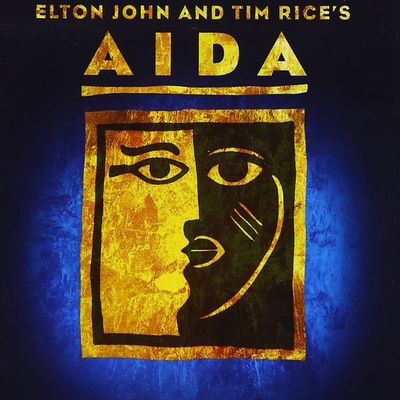
[4:43] Tim Rice: From Here to Eternity with music by Stuart Brayson, and Aida with music by Elton John.
[4:50] Tim Rice: Here's one of my favorites from Eternity, a cover version of "Fight the Fight" by Michael Ball.
[5:05] ♪ Musical number: "Fight the Fight" — performed by Michael Ball ♪
[7:06] Tim Rice: Ball's version of Private Pruitt's signature tune in From Here to Eternity, music by Stuart Brayson. Michael included it in his act for a while, and I must say it was a dynamic performance which hit home, even though the song would have been unknown to most of the audience during the pandemic.
[8:52] Tim Rice: The last time I went abroad anywhere, Scotland is not yet abroad, I hope, was to Moscow in early 2020 to meet the creative team behind the proposed Russian production.
[9:03] Tim Rice: They were a very impressive lot, but when COVID appeared just three or four weeks later, I never expected the show to open in the foreseeable.
[9:11] Tim Rice: However, despite COVID, it did in October.
[9:15] Tim Rice: Furthermore, at the time of this podcast, December 2021, over a year later, it's still running at the MDM Theatre Moscow.
[9:26] Tim Rice: Chess was banned in the USSR during Soviet times, but now, strongly supported by Russian celebrities, notably former Russian chess champion Anatoly Karpov, it seems to be going great guns.
[9:38] Tim Rice: Clips are viewable on YouTube, and it looks like one of the best chess productions yet, which I hope I'll be able to see before too long.
[9:47] Tim Rice: As no other nation seemed to have anything theatrical at all running during the darkest days of the pandemic, Chess was improbably the most popular musical in the world for a few months.
[9:58] Tim Rice: Despite a maximum permitted 50% of capacity in the MDM theatre, it's so far been seen in Moscow by over a quarter of a million people.
[10:09] Tim Rice: Anyway, back in London, there is news about Eternity and Aida.
[10:13] Tim Rice: Aida latest in due course.
[10:16] Tim Rice: Last week, Brett Smock, the director of two successful out-of-town productions of From Here to Eternity in the US, way out of town, came to London to plan a new production for the UK.
[10:29] Tim Rice: London, probably, but not West End immediately.
[10:34] Tim Rice: The extraordinarily energetic Katie Lipsum will produce, the script has been tightened, the look will be radically different from the original 2013 West End show, and we have a fine small theatre in mind, which we visited and feel could be a perfect venue for the new show.
[10:50] Tim Rice: Stuart's music, its impact and variety, never questioned, will be very much as before, but probably will feature a couple of new songs, which he and I still have to write, gulp. It's earliest days, but we hope to open in October 2022. In Get Onto My Cloud 18, I recounted the story of the show, which is based on the magnificent 1951 novel by James Jones, set in Hawaii in late 1941. On December the 7th, the Japanese launched an undeclared attack on Honolulu's Pearl Harbor, which brought America speedily into the war, World War II. Two love stories, not to mention the lives of hundreds of soldiers stationed in the Pacific, were instantly and irrevocably affected, as was the whole course of the war.
Many years ago, Stuart Brayson, then around 20 and a complete stranger to me, stopped me in a London street and pressed a cassette, which shows you how long ago it was, into my hands. I'm often sent tapes or CDs from aspiring singers and writers, but it's all but impossible to give a fair listen to more than a tiny selection. However, something about Stuart made me want to listen to his demos, and when I did, I was mightily impressed. I've since got to know many of his songs, but I still think one of the songs on that original tape was up there with his very best, even including Eternity's Score. It's called One Night, and I thought it would be nice to let you hear it and see why.
[12:23] ♪ Musical number: "One Night" — performed by Stuart Brayson ♪
[12:23] Tim Rice: I was delighted to help out when he came to me quite a few years later with his idea for a musical based on From Here to Eternity.
[12:32] ♪ Musical number ♪
[13:50] Tim Rice: It's always over so fast.
[14:01] ♪ Musical number ♪
[15:19] Tim Rice: That was One Night, the first song written by Stuart Brayson that I ever heard. I've heard quite a few more since. The original London production of From Here to Eternity, directed with great panache by Tamara Harvey, played for six months at the Shaftesbury Theatre and by and large received good reviews, but we proved unable to put in enough support to survive any longer. Investors, many of my friends, possibly ex-friends now, lost their shirts. But who knows what the future holds? Shows have turned around after a very slow start before now, Chicago, Blood Brothers. It's been fascinating going through every scene of From Here to Eternity for the first time in two years and remembering what we like and deciding what we feel needs alteration.
The style, size, and shape of the show will be very much along the lines of the versions that played in Auburn, New York, and Ogunquit, Maine, which had smaller forces but greater impact and involvement for the audience. The attack on Pearl Harbor will, however, still be a terrifying, breathtaking climax to the soldier's story, while the lover's story is resolved less explosively, but just as dramatically. We had a lot of discussion last week about the very title of the show. One of the final songs is entitled The Boys of Forty-One, sung in the aftermath of the Japanese attack. One of the quirks of the Shaftesbury Theatre Show was that the second act always proved more successful than the first, when the reverse, in my experience, is more often true.
It's usually easier to set up a problematic situation in the first act of a drama than it is to resolve it in the second. But the bombing of Pearl Harbor, if it did nothing else in our show, certainly resolved the situation. My inclination right now is to stay with the title From Here to Eternity, but there's certainly a case for The Boys of 41, which immediately tells those who know nothing whatsoever about the James Jones masterpiece who the heroes of our show will be. Anyway, to close this podcast, here's The Boys of Forty-One, taken from the original West End cast recording, featuring Darius Campbell, and eventually the entire company, singing a tribute to the many young men who died on December the 7th, 1941.
[17:44] ♪ Musical number: "The Boys of Forty-One" — performed by Darius Campbell and the cast ♪
[21:14] Tim Rice: That was episode 51 of Get Onto My Cloud, written and introduced by me, Tim Rice, and produced by the evergreen Peter Hobbs.
© Broadway Podcast Network, All Rights Reserved