

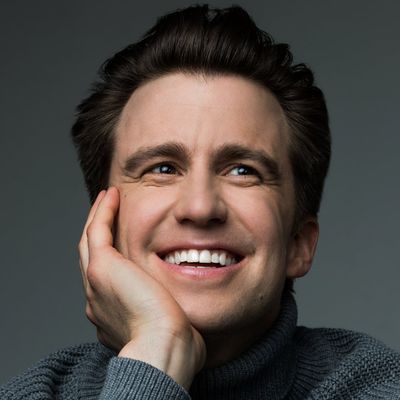
Joe is off vacationing this week, and Dan has settled into his new home in beautiful Colorado, and he's bringing you back to one of our favorites - our interview with Gavin Creel. Gavin has won a Tony Award, and an Olivier, but what we know him as the most-played singer on our car radios... Read More
From the show: Guys Who Like Musicals
Guests
Featured Shows


About
Joe is off vacationing this week, and Dan has settled into his new home in beautiful Colorado, and he's bringing you back to one of our favorites - our interview with Gavin Creel. Gavin has won a Tony Award, and an Olivier, but what we know him as the most-played singer on our car radios. Gavin has a brilliant perspective on the business, knowing you're enough, telling the story first, and being KIND. He is the King of Kindness (NICE WAITRESS Reference) more at guyswholikemusicals.com
Transcript
This transcript was automatically generated and might contain errors.
[1:53] Dan Tracy: Hello, Guys Who Like Musicals listeners. This is Dan here. I just wanted to take a second to dedicate this episode to our friend and colleague Nick Cordero, who died on Sunday night from COVID-19 at age 41. Nick was a hero of ours. He originated the role of Earl in the Broadway production of Waitress. And he left an indelible mark on that building. And although I didn't get to share the stage with him, I was always made aware of the wonderful man, father, and actor that Nick was. He leaves behind his wife Amanda and his son Elvis. And if you have it in your hearts, and if you have the means at this time, they have a GoFundMe page in Nick's honor. They've raised to this moment over a million dollars.
And I'm sure that you can imagine some of the hospital bills that will have racked up from Nick's complications with COVID-19. And if you have the ability to do so, we at Guys Who Like Musicals would be very grateful if you could give them some love during this time. Thank you so much for listening. And let's get into the episode.
[1:53] Dan Tracy: So an actor is saying his lines, and then out of nowhere, he just starts singing.
[1:53] Dan Tracy: Don't cry for me. Welcome to Guys Who Like Musicals. My name is Dan Tracy, and I am your host this week, taking the mic right from Joe. He is on a vacation in Michigan with his lovely wife and his family. We wish him the best. And this week, we are going to continue our year-long wrap-up and listen to some gems from Gavin Creel. This was by far one of my favorite episodes to record. Gavin is one of the nicer and more professional people I've ever had the privilege of working with. And for Joe and I both, Gavin was the person that first played nonstop in our cars on our way to school. The first person that we tried to imitate to try and be like in the business. And sitting there with him last November or whatever it was, and talking to him on our show that we started on a whim was such a blessing.
[3:11] Dan Tracy: But there's a really interesting part in here towards the end where he talks about the kind of the magic of what theater is all about and why he's fallen in love with it so much. And that just really, really affected me given where we're all at right now with live theater. This is a great episode. You know, I've said it in the episode, but I'll say it here just for context. You would not believe the kind of person that this man is. Not only is he Tony and Olivier winning talent, who's been in numerous Broadway productions, but he also is the kind of person that can make anybody feel accepted, seen, heard, loved, and we're lucky to know him. So enjoy this episode, and we're excited to bring you a new format very soon. Thanks for sticking with us through all of the craziness. We love you very much.
[4:21] Dan Tracy: That's one of my greatest memories. I said something to you, Joe, about singing that I've that was the first time I've ever said it, and I've said it again and again since that we discovered together. I think about it every day. About the glass, the glass, the glass wall. Yeah, pushing us. And Joe, Joe was singing beautifully, but he was we I think I think I used Brian Darcy James as an example or something, or maybe Norbert or somebody two heroes of mine, ours, I think.
[4:45] Gavin Creel: Right, right. Totally.
[4:46] Dan Tracy: But just I now I have to grapple with it. I think you're doing that thing, Gavin, that Joe and you discovered and found together, where you're like singing, you're pressing your entire face and body up against a piece of glass, trying to sing, and Brian Darcy James is on the other side of the glass. And I'm like, back up and let yourself sing like Joe Carroll, sing like Gavin Creel, Dan Tracy. Like let yours let your own voice come through. Stop trying to smash your because that glass isn't gonna break. And you're just then then I'm just adding tension. And when my vibrato sounds like shit, or my support is crap, or I'm pushing, especially being in eight shows a week or being on a Broadway stage. I'm constantly doing that. And I think back up. If Joe is here, he would say, Hey, get your face off that glass.
[5:34] Gavin Creel: Such a cool thing. He thinks about you, man.
[5:35] Dan Tracy: I do, I do. This is awesome. This is awesome. This is the first time I ever did. We found that together.
[5:41] Gavin Creel: We did.
[5:42] Dan Tracy: And I was like, yeah, it's like this, right?
[5:44] Gavin Creel: And you go, Yeah, yeah.
[5:45] Dan Tracy: Yeah. And I was so, and and not to kiss your ass, but I'm on your podcast. But I'm so proud to have been there and been in that room and then watched you your success. I mean, Broadway Show after Broadway Show and creating and getting your playing a little.
[6:01] Gavin Creel: Yeah, on Broadway stage. Like pretty cool.
[6:04] Dan Tracy: Well, I mean, that moment, you're incredibly sweet, man. And that what I talk about that too with my students all the time. And it was it was this moment. And I think about it nightly because you're in a different place on a on stage every night. You sometimes you're a little tired, you're a little groggy, you're a little whatever. And if you try to push, if you try to sing at a 10, if you try to like, you know, turn it up to 11 every time, it it doesn't sound good, that just sounds loud. And my friend Jeff Packard jokes about how he I didn't, he says, I don't I didn't want to be the best singer on the stage, I just wanted to be the loudest, which I think is a great iconic, but but I you have to you have to have that feeling of like, you know, the this glass wall, you're you your hands are up against it a little bit back and you're singing, you know, to Brian.
You have to, I think the shortcut was we have to know our limitations today. And that's why eight shows a week. I'm sure you you've experienced this, haven't you, Dan? Like like knowing I don't actually I have sixty percent. I'm gonna give the I always say I they're getting a hundred percent of sixty percent today.
[7:09] Gavin Creel: Right.
[7:10] Dan Tracy: That's what they're getting.
[7:10] Gavin Creel: Right.
[7:11] Dan Tracy: My favorite Sasha Allen, who I did hair with, she would if anybody saw her in here, you might find this funny because you'd be like, Yeah, I get it. But Sasha would come downstairs, mane of hair, hot, hot body. She's one of the greatest vocalists, I think, in the world. And she would come down and she'd be like, she'd tap her throat, she's like, ooh, we'll see. And then and then she'd look at me and I go, I go, Oh, me too, Sasha. I I'm I'm I don't know how I'm gonna give them an A show. And she goes, honey, why give a B when a C will? That was her like mantra. And and her C that's again, right? If you're trying Oh, you're gonna Jeff Packard, yeah. You're gonna just sound loud, yeah, and not good.
There's gonna be no color, there's gonna be no like, you know, right, yeah, absolutely. Or expression and I just I feel this brings a point that I want to ask about and talk about. I'm disenchanted with musical theater at the moment for a few reasons. Number one reason is because I love it. And when somebody like when you're when the thing you love the most isn't behaving well, or or or is it you feel as being is abandoned you or whatever. And and this is all sounds so self-righteous, so forgive me, but like I am I'm really tired of people just screaming on stage. I'm tired of the the money note, people applauding when somebody screams and holds a note two thirds of the way through the song, and I'm like, you haven't told me anything about yourself. You haven't you don't there's no point of view, there's no story, there's no character, there's no, it's just being fierce.
[8:48] Gavin Creel: Yeah.
[8:48] Dan Tracy: And I feel like I'm grandpa saying that.
[8:50] Gavin Creel: No, I don't I think that's I think you're you like we spent so much time, and young students still spend so much time thinking about like how to sing the highest and do the most. Sometimes for some people it's like riffing, right? Or whatever.
[9:07] Dan Tracy: Yeah.
[9:07] Gavin Creel: But there is so much to be said for just like tone and story.
[9:14] Dan Tracy: Yeah.
[9:12] Gavin Creel: Cause like, do you remember going to so much there? Do you ever remember going to a show and being like, I remember being truly moved by how high that note was?
[9:21] Dan Tracy: You know?
[9:22] Gavin Creel: No.
[9:23] Dan Tracy: I I remember thinking when I saw Adina go up on that thing for the first time. And I would look down and my hands were like, I'm like Yeah, yeah. I was trying.
[9:31] Gavin Creel: Right, right.
[9:32] Dan Tracy: Yeah, I I was I was that but that was a uh I think a combination of Joe Delude, makeup designer.
[9:39] Gavin Creel: Right, right.
[9:40] Dan Tracy: A combination of uh is it not Susan Hilford? It's Susan Hilford who did the cost the costume.
[9:45] Gavin Creel: Like it, yeah.
[9:46] Dan Tracy: Mark Platt producing it and Joe Montello and and Lisa and everybody staging that moment, like Joe coming up with the idea, or I'm assuming it was Joe, like the dress becomes the whole stage and they're all down and she's up, and and then of course at the top of the cake, Adina.
[10:00] Gavin Creel: Right, right, who is a dangerous singer, yes, and and that's exciting to me.
[10:05] Dan Tracy: Right. But I remember seeing Rent, I saw the original company Rent four months after it opened on Broadway. And I remember going, I don't know how any of these people are gonna have a career after this, except for that girl right there. She knows how to sing. I was wrong because all of them went on to do incredible things, but I was just so worried, right? Because that was sort of the don't you think that was like the contemporary advent of loud?
[10:26] Gavin Creel: Yeah.
[10:27] Dan Tracy: You know, but also I think that you know, like we talked to Alex Brightman a couple of weeks ago, and like the guy do that. So sometimes you have the facility to just push the edge, but then he did hemorrhage multiple like on on uh on school of rock. And yeah, just pushed it to the edge, and then it broke, and then but it's like that. So he he's like, no, that's what you're gonna get. Like you're gonna get 150%. And then when I break, I break, and then we'll we'll put the pieces back together, which is one it's almost like the the athletes mentality, or like the the football players' mentality as opposed to like the baseball players' mentality. It's like you're gonna play 12 games as opposed to play 180 games. Like you can't get through 180 games going, you know what I mean?
[11:08] Gavin Creel: I don't know. That's just kind of a crap analogy.
[11:26] Dan Tracy: And also I want to hear something in the theater that makes me go, uh, oh yeah, right. You know, or oh I yes, I've heard that word, those words, you matter to, but I right I've never really thought of it like that. And no, it's not gonna resonate with every single person, but but half of you gonna love it, half you're gonna hate it. And like it's fun to talk about it and to make it, you know, to to actually disagree with somebody and be like, no, this is I I strongly disagree with your take on this song, and I think it's brilliant, and you might think it's simple and whatever, but like simple and plain, but not much to ask from somebody.
[12:03] Gavin Creel: What?
[12:04] Dan Tracy: Oh yeah, call back. Um that's why I saw Oklahoma. Because I heard from people they hated it.
[12:12] Gavin Creel: Yep.
[12:12] Dan Tracy: And then I heard from people they loved it. I was like, that's the theater I want to see.
[12:16] Gavin Creel: Me too.
[12:16] Dan Tracy: Yes, I want to. I don't want to leave indifferent.
[12:18] Gavin Creel: No.
[12:19] Dan Tracy: And and and I I also, you know, another thing I'm tired of is people's and my opinion. I'm like, shut up.
[12:26] Gavin Creel: Yeah.
[12:28] Dan Tracy: Like, like, have an opinion, talk about it amongst your friends, but like, I you don't need to make a sorry, I'm gonna sound old, but you don't need to make a statement on everything in the world on your social media account and say, well, this is how I feel. We did when we didn't have social media before this moment, where do we do those? At dinner parties, right? In classrooms, conversation, right? When we could read body language and watch somebody wince and go and and then temper our conversation a little so that we didn't hurt their feelings.
[12:58] Gavin Creel: Where I'm at, I'm on my phone or I'm in Instagram or I'm on my computer, and I can't read your body language and go, oh, you're not with me. Let me qualify what I'm saying, let me make sure I I'm just challenged by our need to make statements about how we feel about certain things. That said, I know I've done it, and I'm trying to do it less. Trying to just go my friends and I'll say, It's not for me. And let's leave it at that. Let's leave it there. It's not for me. But who is it for? Right. You loved it, awesome. It wasn't for me. Do you want to know why? Yeah. Cool. I don't have to tell you because I don't want to piss on your parade. You know? In the same way that you matter to me doesn't land for some people.
You know, we're obsessed with this idea that like there is right and there is wrong. Right. And this is now permeating all aspects of our culture, right? But like there's gray to everything. Yeah. And like we used to be comfortable living in gray and having like the kind of decency and the respect for each other to like communicate in the gray. And now it's like, I'm right and you're wrong. If you're not on my team, you're on their team, and I don't want anything to do with it. Us against them mentality all the time. And that is true of like the way we talk about shows, where it's like, oh, that show's trash. I that's bad. I know. You know? And it's like, no, it's not bad. It's just you didn't connect to it.
But it's not for you. You make films. You're a director, you're a writer. Do you write songs as well? No. I know you do. Poorly. Who cares? So do I. No, you don't. No, well, that's very nice. I love writing, and I think I'm actually getting better and better at it. But you are really good. I'm gonna tell you this. I think there's a compassion that you get. I know there's a compassion that I got once you've tried to create something. Hell yeah. And once you have really tried to go down that, I think it's evil if you don't adopt that compassion. Totally. I think that's where people become embittered and then they get mad is why is that person succeeding? And I'm not, I'm trying to make something too.
My musical's better than theirs. That's one direction. But I think the other direction is, oh my god, I've been sitting at this computer editing this short film for hours or whatever, and I go see a short film that's won Sundance Awards, and I didn't think it was that good. I'm not gonna trash it because I know how much time and effort and work it takes. There's enough food at the table for everybody. Yeah. If you're given the opportunity, and if opportunities are available to you, that's where my white privilege comes in. Right. And my socioeconomic privilege. Totally. If there aren't opportunities, there isn't enough. There's no food. There's enough food. Right. And so now you're just starting to think about like ways to kind of give some privilege back or create opportunities for things and things to happen for people that don't have that potentially.
Yeah. Make sure that people have access. Yeah, making sure people have to do it. Opportunities, I really think, and I know we're all agree we all agree in this, arts education is everything. Right. I think it's gonna be like a 30 year process to get the we're I don't know that we're gonna be here to enjoy the spoils of like re we're we're gonna be retired and off in Maui drinking your Mai Tais. Like But like I think it's five year olds and six year olds and not born yet, yeah, creating arts education opportunities and talking to their parents to say, I know you have no money, you're living in a terrible apartment in New York City somewhere, and you don't think that this is a viable option because you want to get your kids that you're having out, maybe, or you don't think it's an opportunity.
Trust me, giving them opportunities, giving them schools, public schools that have great music or theater or I don't know, coding and film and all that stuff, departments that there is a there's there's more. I was just reading this article in New York Times. There's so many streaming devices now, and it's only gonna be more content out there, and we need stories. We want people to tell, we don't need the same stories over and over again. Yeah. Yeah. This is what this is one of my biggest like lifelong goals is trying to re there needs to be a reconstruction of the way in which content is made and distributed first. And where is that gonna come from? Well, it's gonna come from having more voices to tell stories.
Well, how do we get those voices to tell the stories? Like, you know, it's like it's going all the way back, and like in many arguments, it's about like public education being better and arts education being better, so that the government is like helping to provide those things, but like I don't think that that's the solution. The solution has to be people who aren't trying to get rich off of education, right? Oh, deep, Dan, this is getting deep. These organizations that are out here like providing students with educational opportunities in the arts for money. Yeah, that isn't necessarily gonna be good for the society because what we really need, we need to find the people who didn't have the opportunity to go to Juilliard and Yale.
Yeah. And try and find out how we can give those people a voice. And I do believe work begets work. And I think the best advice I can give to young people who are like, when I get to the city is say yes to everything. Yeah. I don't care if you think it's gonna be good or not. Like I did a show that not very many people saw called The Flood, which I thought had really good music and stuff. I sang Highway Miles for my Michigan for my college audition. I still give it to students, and I still send that demo that you made to people. Yeah, absolutely. Absolutely. I've heard literally have heard that millions of times. Yeah. Such a good song. And Pete Mills is a fantastic writer, I think. So smart.
I would never have known him because he hasn't had like a big Broadway hit yet, but I know who he is and I trust his writing. And I'm interested when Pete Mills says I'm doing something and I'll go see it if I can. But um, I was sitting at my friend's house on 9th Avenue and 52nd. He had this busted weird little one bedroom. It looked like a sauna inside, everything was wood. And I'm sitting at the kit, I'm you're on the couch like you guys are, and he was sitting in this chair, and I look at and there's a piece of paper on the thing, and it says NYU. And I said, Oh, what's this? He goes, Oh, read that if you want. You should do that if you want. And it was just a form letter. I don't know how he got it, but if you're interested to put your name in the graduate musical theater writing hamper, they always need people to come and sing their songs.
It's not about you, it's about them. Right. I was like, Well, I'm not doing anything. I'm back in the city from fame. Yeah. Okay. Yeah. So I called Marie Costanza at NYU, graduate musical theater writing. I don't know. She's probably still there. And they said, Yeah, come down on this day. We're doing, and there's just a file of people coming in singing a song. Great, thank you, great, thank you, great, thank you. And I was like, okay, that's done. And then I get a call a little bit later, and they say, Oh, yeah, there's a there's a musical, Pete Mills. It's called The Flood. And I'm like, the what? Okay, the Flood, okay. So I go in, I sing for Pete Mills and Carl Rikel, who had not yet started the Prospect Theater Company, which is almost 20 years old now.
And it was just them and Marie Costanza at a carpeted tiny room in an electric keyboard. And I sang, Great, can you read these sides? Okay, great. Bye, thanks. And then I get a call that I got it. And it's a workshop. It's 20 people in the room after we did two weeks of rehearsal. They were just there. It was a tiny room. We did it, Stans left, and they and then we leave, and then all the people stay and work with Pete. It's all about Pete and the writing to develop the piece. Done. That's it. And then I find out that he got selected for the Ascap night, which is Stephen Schwartz hosts the Ascap night once a month. And he has a fellow composer from the industry that sits next to him and critiques the writing.
I'm like, they want us to do it. And would you sing Highway Miles and we're gonna have the cast there and we'll do some of the songs? And we were like, oh my God, how cool, Steven Schwartz, Stephen Schwartz. Yeah, right. He wrote Pippin, you know. Free wicked, right? Yeah, exactly. Right. Wicked didn't exist. Right. And then he goes, Have I told you this story? No. So then, so then we go and it's a room full of people, and it's in the upper west side in the ASCAP building. And I'm like, and there's like cookies and crude, and I'm like, oh, it's serious. There's food, and it's in the evening on like a Tuesday or something. And they're on a raised platform behind him are two seats. And then Steven Schwartz walks in and sits down.
I'm like, fuck. This is a big thing, you know, it's a big fucking deal for us. And I'm nervous, and we're up, and this is not about us. And then his guest composer comes in. And guess who it was? Steven Sondheim. Fucking Steven Sondheim. It was Steven Sondheim. And I'm like, what is happening? It was unbelievable. And then we're like, okay, okay, okay, okay, okay, okay. We sing, we do our thing. There's comments to Pete from these two men. We go eat some stale cookies and we leave. And then I get a call a week later from Duva Flack saying, We have an offer for you. And I was like, an offer? Do I have to audition? No. It's just a straight offer for a new workshop of a musical called Wicked. Steven Schwartz thinks you would be great for the role of Bach.
I'm like, Steven Schwartz knows who I am. Oh my God. And he's like, he loved you in the thing, and he wants to offer you this role. And they want to offer you, they're doing a reading of this new musical called Wicked. And I did two readings of Wicked and met Adina and Kristen. And Kristen used to have these lines. Do you see that unusually tall munchkin over there? And the whole joke is that I was like a bean pole, and I'm like, hi, I'm a munchkin. You know. And the show, and then I met Mark Platt. Mark Platt ran Hollywood for years and Universal Studio. And I thought, where is my life? What is my life? And this is so cool. And I got flown out to LA to do the LA reading on a sound stage, and Barry Diller is sitting in the front row.
Wow. And all these people are there, and I'm staying at this beautiful hotel, and I had a rental car, and I thought it was fancy. I was RAV 4. You're like 24. That stuff is cool. You're like 24? I'm 22. Four. I was 24. I was 24. Yeah. And then I come back and I knew, and then I auditioned. I auditioned for Thoroughly Modern Millie in there somewhere. And I did five auditions, and the last one was a reading with Sutton at the audition, and I ended up getting the job. And then I knew I was going to be doing Millie, so there was no chance I was going to be able to do Wicked. But I had met all these people and I met Joe. I met Joe Mintello. Right. And Lisa Leguillo, and who's the resident director.
And all of that is to say the longest story ever. I said it was gonna be short. Boop, sorry. No, was because I said yes to a piece of paper on a coffee table in a sauna apartment. Do you know what I mean? I love it. It goes all the way back to that. And if you trace anything, there is no like traject there's no in like aha moment. There are very few aha moments. It's really easy to say, you were discovered in Millie. I said, No, I was discovered in that apartment with that piece of paper. That's genius. I hope heaven is I get to say hi to all the people I love, and then they escort me to the Al Hirschfeld and everyone's there. Cause it was it was the greatest theatrical experience of my life.
I've had and I've had awesome experiences. Like awesome. But that one I have not, I have not, I don't know that I ever will watch that. Why do you think that is? Sure. And the show. Same way that Cornelius Hackle winning the Tony, all that stuff. It was just me and the part lined up perfectly. Right. It wasn't it wasn't about me being better than anybody else or I played I played Kodai the season before. I did the I worked as hard as I knew how to. I played a supporting part in a musical that both were up for the Tony Awards the same year, 1964. And Jack Cassidy beat Charles Nelson Riley for the Tony, and Jack Cassidy played Kodai and Charles Nelson Riley because Cornelius. And then the next year, I did, and and I didn't get nominated for anything in that.
It was the Hamiltonians and everything. So people can say, oh, you didn't know because of that. I said, no. It just wasn't my, it wasn't the right matchup of part in person. I loved it. I did the best work I knew how. I always thought there was someone else that could have done it way better than me, but it was like, okay, moving on. And then the next year I worked as hard as I knew how and was nervous the whole time of like, fuck, I just want all this awards bullshit to be out over with because I'm probably not gonna get any of the recognition again because I don't consider myself like a flashy performer. I'm not, I don't, I don't do, I don't think that I do anything that's like, wow.
[25:52] Gavin Creel: It's like I'm kind of just see myself as I don't know. I can't see, I can't be objective about myself. I don't, I don't know. We could be objective about hair. Yeah, I don't tell you how don't do it, don't do it. But like when I was in hair, for example, I was with Casey, Will, Will Swenson, Casey Levy, and we were like the three musketeers. Triumvirate. Yeah. And I feel I fell somewhere in between Casey and Casey would come in, you should have been there, you know, like and do the thing about, and then she would sing hot easy to be hard. And there was such stillness and simplicity. It's not flashy. She's not a flashy, I mean, her voice is one of the greatest voices ever. Right. But to me, what her power is her quiet, fierce stillness.
And there's more, we need more of that on Broadway, I think. Will's power is explosive energy. And he's like a bonfire of energy and wild and dangerous and creative and sexy and passionate. And I s and I I sort of fall somewhere in between, I think. And anyway, hair broke the fourth wall in every way. It forced me to crawl into the audience literally and figuratively. It forced me to drop all of my insecurities as an actor and as a person I came out of the closet professionally to a publication, which everybody I loved knew I was gay. But until you do it, I'm learning. Until you do it professionally, it's not official news and it's nonsense that there's even such a thing. Changes now, there was no social media then.
It was only years ago, but it were more than that. But it was a completely different time. Yeah. Different time. We were fighting for marriage equality, and it wasn't until seven, eight, six years later that we got it. And I thought it was gonna be 30 years from that time. So, but there was it was just something we marched on Washington. We sent buses of people, we started Broadway Impact, which is mobilizing the theater community for marriage equality that Rory O'Malley and Jenny Canellos and I did, and I'm it we we helped organize it, but it was the entire theater community that came together for that. It just it was art imitating life. It all lined up.
[28:23] Gavin Creel: My friend of mine was writing musical. I was doing workshops with Flash Dance the Musical. My buddy Robbie, who was I wrote my first two records with a fucking genius songwriter. And I knew Flash Dance was a maybe a tricky project because I did fame, and I know sometimes people act with vitriol towards certain movies. And but I was loving being in the room with my friend who was gonna create something for the first time. And they kept including me in the workshops, and I was talking like a creator. I would speak up in ways that I was like, I don't understand why this is happening. And I what if we did, and Robbie would ask me, we would sort of he wrote all the songs, but we were co-working together, and I was like, Oh, this is what it is to be creative and part of the creative process.
I want to do this, which later leads to me writing my own piece. But um, but then they came back and they said they're just gonna offer you the part. And I was like, How does Scott Rudin want you for the part? I was like, how does Scott Rudin know who I am? And it was Casey Nicolaff. Yeah. They they were like, we can't find the right person for this. It's a big deal because we don't know. They didn't know if Book of Mormon was gonna work outside of New York City because it was so controversial. But so and they didn't want it to be because they were they wanted, I don't know. What I was told was that they wanted to be able to know it wasn't just because the casting they'd trust they could trust the people and the parts, and he said, Who can we trust?
And Casey said my name. He said, That's who we need to get for the part. And then they gave me an offer that I couldn't refuse. And I Rob, I told Robbie and he understood, and it was the hardest job I've ever done in my life. Wow. That part is it is so relentless and intense. It's all stage a ton. You're the talking, you're you're yelling in your high pitched, and they want it to, yeah, you know, yeah, sound young. I was 36, playing a 19 year old, and I did the tour, I was hired for the tour for a year, and then while I was about two months into the tour, they said we want to know if you would come and originate the role in London. And I'd done Mary Poppins and hair at that point, and I went, Yeah, I think I would do that.
Yeah, because then it would get me a chance to originate what I could, I could feel a little piece of what Andrew felt. Yeah. With people who were, and and it was truly magical. That said, three and a half years I did it, and and it was it put like 10 years on my life. Totally. My voice, my stress, my I don't remember having this much stress around stress around singing, and I have PTSD now. Wow. And it's like calm down, you're fine, you can do this. And my getting older, my voice is changing, and I'm thinking, oh, there goes, there goes my career. Oh no. And it's like you're allowed to evolve as a singer, you're allowed to find new colors. You don't have to sing the high E or high B flat or the high A even anymore. Right. But you do have to tell the story, and you do have to keep it simple and trust that you are enough. It's all the stuff I tell students when I'm teaching. Totally.
[31:16] Dan Tracy: You've achieved so much, and it's it's a good reminder to Joe and I to hear that along the way there have been these peaks and valleys where you were achieving a lot and still felt like there was so much that was missing, which is just a good reminder for anyone in this business.
[31:33] Gavin Creel: Yeah. But what do you want your legacy to be? Uh less grandiose, maybe just like I love that. Where are you trying to go? Good question. It's a good question for all of us to think about like. And it's something I'm 44 next year. And it turned it's something I'm gonna die. Do you know what I mean? Like it's something I think about. I I go, I I I my parents are still living and they're healthy and they, but I I I God willing, they will not put me in the ground. And I think about it all the time. I will not be afraid of it. And I think about legacy, what is and it now that I'm in my 40s, I think I think it's okay for me to start thinking about what is that. So I thank you, Dan, for this question.
And now I shall ponder. Um the the quick answer I think that came into my head that if I had more time I might change, but is I now want to create. I want to make. And I also want to make spaces. I want to find the job that pays me well and gives me health insurance where I can do the thing that is my superpower, better than my voice, better than my acting, better than I w I think my superpower is making people feel possible. I think when people are with me, like like they leave and they go, I want to do that. That's something that I love doing more than anything in the world. Like, what's going on with you guys? Like, that's why it's why I wanted to be here. I'm like, they're so cool. They started a podcast.
A, I love talking about myself. And B, how fucking um advantageous and and and curious and tenacious to do this and to trust creating content, saying something. Connection is all we have. So you're connecting with people who it could be really easy for you to go, no one's listening. I made two rec three, I've made three records now that I don't know, 16 people want. And I go, I appreciate it. You're so kind. But I'm proud of what I'm writing. And I can look back. We're gonna do a I can't wait. Maybe you guys will come singing with me. We're gonna do a 15th anniversary concert of Good Time News. My first record. Yeah. And we're gonna do a sick band, we're gonna great house. And I'm gonna go. Anybody out there who's a fan, come and maybe you like we'll come up and I'll put you guys on and like sing with me on a couple tunes or something.
It would be so fun. But I just want such a good idea. I just want to like, let's revisit what we made when I was 27 years old and wanted to rule down to your shoulder. So I still, when you type your name into Google, that picture still pops up with the hair. I was and that was all about me not wanting to be a musical person. I didn't want people to cast me as decide. So I kept doing things to my appearance and bleaching my hair or growing it out or shaving it off. Because I just am I'm allergic to people deciding who I am for me. And I'm back there again now. I'm trying to reclaim that and go, I don't want to do things I don't want to do. That's a luxury I think I have now that I'm in my 40s. You don't have it in your 20s. I think in your 20s just work. So my legacy would be I want to find the job where I can make people feel possible. I don't love that so much.
[34:46] Dan Tracy: I mean, you just, you know, I would be remiss not to say this. You do that to every single person. Every person out there. Thank you. And I stand by everyone listening to this, that not only are you one of the most talented people in the business, but you have one of the brightest and most important persons in any building. And like what you do to a building is magic. The four weeks that you and Sarah, Sarah was the same title. Magic. I mean, from start to finish. And that was as totally unexpected. Thank you, by the way. I really appreciate that. Yeah. But it's true. That time in waitress, the fact that I get to go and do it again, my only sadness is that I won't be going back to that building with those people.
My new happiness will be she and I will get to hopefully go and have a really beautiful time and meet a pile of people that I didn't know. Exactly. You know, I didn't really get to know you until then. I knew I knew of you. Right. But but that's the beauty of what we get to do. That's the privilege of being in the theater. Because unlike film and TV, and I've only filmed one pilot in my life, and it was stressful the whole time. But because it's live, because you can't manufacture it in a in post and you can't fix things, you can go through a process and work really hard and then give it. And it's not yours. It's not yours anyway. Yeah. And then you hope that people receive it. And we get the I wish every human being in the world at the end of every day of work got 1,500 people that stood up and applauded for them.
Because it is, it is part of the reason why I want to keep doing it. Yeah. Knowing I have made enough a difference and how quiet lives of quiet desperation throw or whatever I think it is. I think. But how many people live lives of quiet desperation? Like how many people out there hearts are heavy because no one's saying to them, You matter, and thank you, and I see you. And we get that. And and even if we're like, ugh, I'm so tired and my voice is busted, whatever. We bow and they go, I see you. Oh God, do I see you? And out the stage door, I saw you in Waitress. I saw you go on as Dr. Palmetter Dan. And I saw you as Hans, Hans and Frozen and Once and Bands Day. All of it. We get that. And we can't forget what a privilege that is.
And that's why when I go out, I try to make that. You I know you do it too. Look at eye contact and go, I see, I see you too. Once we're not students anymore, so we're peers and we're we're on the same plane. When I see, you have to know when I look to you, when I see you acting honorably and being kind in the business, uh my ego gets bigger because I'm like, I'm just I'm gonna school with those dudes. Yes. Right. You know what I mean? With but like those are people who represent a piece of me out in the world. It's the the inverse is also true. When I see people that I I love and I see them acting poorly, it causes me to want to snip that I don't want possession of that anymore. Right. So when I see you act well and sing well, but be well, just know you're inflating my ego. Because you're part of me, you know what I mean? So I appreciate it. I'm I'm great, I'm grateful to have been here and I hope there's some stuff in there in terms of excuse. There's plenty.
[38:19] Dan Tracy: Thank you for listening to Guys Who Like Musicals. We are produced by Dan Tracy and Joe Carroll, your hosts. You can find us on Instagram at Guys Who Like Musicals or on Twitter at musical guys. For more information about us or our show, please visit our new website at Guys who like musicals.com. You can find our merch store, our Patreon page, and more. Thanks for listening.
© Broadway Podcast Network, All Rights Reserved