

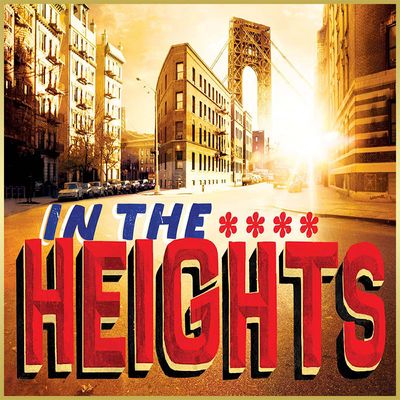
In this episode, Richie and Jeff dive into a discussion on the latest summer blockbuster film IN THE HEIGHTS, based on the Broadway Musical of the same name... Read More
From the show: Half Hour with Jeff & Richie (Post-Show Broadway Discussions and Interviews)
Featured Shows
About
In this episode, Richie and Jeff dive into a discussion on the latest summer blockbuster film IN THE HEIGHTS, based on the Broadway Musical of the same name. Richie and Jeff discuss how the film relates to the original stage production, how this piece transformed for the modern day, and how this film sets the scene for the future of mega movie musicals.
Support the showIf you liked this episode, don't forget to subscribe to this podcast and leave us a review.
Share your thoughts with us on this episode below:
On Instagram: @halfhourpodcast
On TikTok: @halfhourpodcast
On our website: www.twoworldsentertainmentllc.com
Transcript
This transcript was automatically generated and might contain errors.
[0:07] Richie Grasso: Hello and welcome to Half Hour, an entertainment podcast through Two Worlds Entertainment.
[0:11] Jeff Malone: And I'm Jeff Malone, Executive Director. Welcome to our Spotlight weekly episode here where we're spotlighting a very specific piece this week, and we're going to spend our whole episode today talking about In the Heights, which is the latest film that just came out last week.
[0:29] Richie Grasso: So today's Friday, June 18th, where to hopefully most of you got a chance to see it at this point. It is in movie theaters, and it's also streaming on HBO Max as well. So multiple locations for you to see it.
[0:40] Jeff Malone: We got to see it over the weekend in IMAX, which was really, really special and amazing. And we're diving in today, talking all about In the Heights. So a little bit of a background on this film and this musical and things like that before we kind of go into the discussion.
[1:10] Richie Grasso: The film was directed by John M. Chu. The screenplay was also by Chiara as well. And the film has a wonderful bunch of stars. We'll kind of get into the cast a little bit of that. It was produced by Lynn Manuel Miranda and Chiara Allegria Hughes as well. Scott Sanders, Anthony Bregman, and Mara Jacobs. There was cinematography was by Alice Brooks, edited by Myron Kirstein. And music was by Lynn Manuel Miranda, Alex Lackamore, Bill Sherman, distributed by Warner Brothers Pictures.
[1:46] Jeff Malone: So lots going on here in this. Where do we want to start off? Just on a general overview of what we thought. Now, I saw the original Broadway production back in 2008, 2009 when it first came out. Um, won a bunch of Tony Awards. For those of you who don't know, it was Lynn Manuel Miranda's really big break into mainstream theater and um a really, really amazing piece of theater for Broadway at the time. It was really groundbreaking. It really um set the bar for his theater for a different way, and it was it was wonderful. The style of music, the culture that was being represented on stage was wonderful. Um, and actually, it's a long time coming. I always thought this movie could have come out.
It was supposed to, you know, doing some research. It was supposed to come out in 2011, and then it got moved to 2015. I just kept getting bumped back through different changes of creative teams. And as that was happening, Lynn was also realizing he was getting older, probably can't play Usnavi anymore. Um, so he did not play Usnavi in the film. Um, he was in the film though. He played the Piragua cart salesman, which was hilarious and awesome and fun to see him in that role. Great seeing him there.
[2:51] Richie Grasso: Yeah. And um, so where do we go? What did you think? What are your overall thoughts on the film as a whole? I think we should just go initial thoughts first, and then we'll dive into some more of the plot.
[3:01] Jeff Malone: Yeah. I actually did not see this when it was on Broadway. That was my like little college gap years where I didn't see anything for four years. But um, yeah, my first initial thoughts I did see a community theater production of this. So I have seen it on the stage. I just I didn't see it on Broadway. But uh my initial thoughts on this film was it was spectacular. You know, it was really great to one be back in the theater seeing something. I we saw Cruella a couple of weeks ago, and now this, and we got to see it in IMAX, which was even more amazing, just having that full stage effect, seeing everything, hearing the sound. Uh, we watched some clips on HBO Max of it, and it's just not the same.
So if you're debating whether to see it on HBO Max or go to the theater and see it, I highly recommend going to the theater and see it. But I just really loved seeing the culture that was of Washington Heights up on the stage, uh up on this screen, seeing this on the music, and just learning. I love seeing a dreamer type show where everyone who's like there is trying to go for something, and I think that really represents is represented in this film.
[4:12] Richie Grasso: So yeah, for sure. And uh just a warning before we continue further with the podcast that this conversation is going to feature spoilers.
[4:18] Jeff Malone: Oh, yeah.
[4:19] Richie Grasso: So make sure you see or listen to this piece before listening onward, because we might say some things that you may not want to know if that happened in the film. So you have been warned.
[4:25] Jeff Malone: Oh, yeah, we haven't we haven't done this in a while. I just realized we're gonna have some spoilers.
[4:29] Richie Grasso: There will be spoilers.
[4:32] Jeff Malone: Yeah. Um, I think what this film did, well, I thought it was spectacular. I thought it was brilliant and beautiful. I thought there were moments of pure joy, there were moments of true tragedy and sadness and everything in between. Um, I think that when I saw it on stage, it's a unit set. The set stayed the whole time. There were a few different locales, the ensemble, I mean, the dancing was spectacular. And then to see it on film where you're in these people's apartments and you're in the streets and you're in the shops and you're living through them through the camera lens, I think it really lent to what was happening. I think the moments throughout the film of the cinematography where there was added special effects or added writing in their hands, they were holding something and they were drawing, or they were walking on the side of the building, or they're popping up names and things as people were speaking.
Like, I think that that magic of film worked completely well for this, because this was a musical, and I think we have to remember that it was a musical. So seeing townspeople happy is because it's a musical, like, yes, we don't have choreographed synchronized swimmers in town pools in regular films. I get it. It's a musical. So let me just start by reminding everyone that musical theater is a suspension of disbelief sometimes. It's a suspension of reality. It can certainly go to reality. And this certainly does go to reality. But then we need the comic relief sometimes. We need the breath of fresh air. We need the sense of we're watching a musical film. If you go back to musical film genre history, there's Singing in the Rain, there's magic in film all the time.
[6:09] Richie Grasso: Of course.
[6:10] Jeff Malone: So dancing on ceilings and doing all that, I found that this was such an homage to that. It was such a tribute to the Singing in the Rain, the big movie musicals, the special effects in big movie musicals, while still keeping its rooted sense of reality and its rooted sense of realism and what real people are going through. But let's add that flair of musical theater joy. And I think that there was for me an extremely healthy balance between those two.
[6:37] Richie Grasso: Yeah, we were talking a little bit about this right after the film, and we didn't get too much into detail because we wanted to talk about it on the podcast. But like for me, there's a different technique being used right now in film, I think that it's not the same that it was back like maybe 50 years ago or however many years ago, like when certain things like Mary Poppins was coming out or Singing in the Rain, where they didn't have this computer animated effect yet. So for sometimes it looks a little too fake for me. Where I know, like back then when we were looking at films and you see something, and it's like, yes, it's fake, but it still looked real, whether you're using like green screens or you know, the animations just added in a different way because it just looked more fake.
Now they're trying to make it look too real. And I maybe I'm missing the fake part of these animated things that they're doing. So, like when you are seeing these like different like rulers coming up on the screen or a diamond or like the ribbons coming out. I like the escapism part of it where you're like, oh wow, you're in their head right now, but sometimes it's a little too literal for me. I'm like, oh okay.
[7:44] Jeff Malone: I think that's what is I think that was I think it was a nice dose of it. I didn't get the vibe that it was overdone.
[7:52] Richie Grasso: And I didn't definitely wasn't overdone.
[7:53] Jeff Malone: Yeah, and I didn't get the vibe that it wasn't enough. I thought it was scattered throughout the piece nicely, and reminding that this is a show about people who are dreaming of things, dreaming of career, dreaming of travel, dreaming of life. And so the dreams are expressed outwardly facing to the audience, not just in their minds, but creatively expressed in the film. And it was filmically done. And then there were also like staged choreographed numbers in streets. There were staged choreographed numbers in clubs, and it was structured really well too. It's and I I and to me, it's like we've always had townspeople dancing in streets.
[8:28] Richie Grasso: Oh, yeah.
[8:28] Jeff Malone: You go all the way back to musical theater of Music Man, and there's always when people say, well, townspeople just come out in the street and start singing, okay. Well, it's always been like that in this art form. For some reason, it's really easy for writers to say, let's just use the townspeople as the ensemble. They're gonna just come out into the street and sing and dance. And it makes complete sense for this because the community was in the streets of In the Heights. The community sense of playing games and shopping and walking and playing the kids playing and elderly sitting outside, and that is part of that's what makes the musical work. I think the choreography, I think, is totally expected though.
[9:03] Richie Grasso: That I don't think anyone's gonna have a problem with.
[9:05] Jeff Malone: Yeah, it's expected in a musical, and it makes sense. I was talking more about the just animation that was added. Because I don't even think it was really CGI. It wasn't like they were really taking someone and making them look different, it was just the animation that was added, which is definitely an homage to some of these older films where they did add animation to it.
[9:24] Richie Grasso: Oh, yeah, or animation was right, exactly. Because when you look at those things, it's it's really animated.
[9:28] Jeff Malone: Yeah, it's not really it's not real ribbons, it's animated ribbons, or it's animated symbols of like the diamonds or the rulers or anything like that. I'm like, oh it's cool. It is definitely an homage. Did it make sense in this setting? I don't know if it completely did, but it works.
[9:45] Richie Grasso: I think it works.
[9:46] Jeff Malone: It totally works. Um, I think John Chu is a fantastic director. I think he took this ensemble of people. You know, I also thought it was great talking about the ensemble that there were some names, but it wasn't star-studded cast. It wasn't like when we saw Cats and every single person had to be like a star in their field, and that didn't even really work for that show, really, by the end of the day.
[10:06] Jeff Malone: For some stars it did, but this was like let's just use, you know, Lynn is kind of the star in and of itself, but a lot of new people on the scene here, and it didn't bother me at all.
[10:16] Richie Grasso: We didn't need, you know, I was reading something that said um it was reported that the project was canceled in March of 2011 because Universal, who had the rights to it at the time, they were looking for a bankable Latino star, quote unquote, like Shakira or J Lo instead of unknown actors.
[10:30] Jeff Malone: They really wanted to put some of these names in.
[10:32] Richie Grasso: To me, it didn't, we didn't need the names. The film speaks for itself. Let new blood onto the stage. Let let new names out there. And I thought that the talent across the board, there was not one person where I was like, oh, they were weak. I thought everyone was really strong.
[10:45] Jeff Malone: See, that's my thing with musical. Sometimes people don't let the musical live for itself. They think, oh, we need star to do this. You know, it's already getting uh talked about for the upcoming Wicked. Like, what stars are gonna play the leads? It doesn't need stars.
[11:01] Richie Grasso: Right. The name speaks for itself. If it was a star show on Broadway, people will know that already. And and you're using like John Chu and Lynn Manuel Miranda. Some of these names are already big names that people can or buzz names that people get people into saying, oh yeah, that there I like that. And you can have like some people that are starting out, obviously.
[11:17] Jeff Malone: Like a prime example is take a movie like Chicago where you know you had Catherine Zeta Jones and Renee Zellweger, like were they the biggest stars before being in that movie? I don't really know. Maybe they were in a way, but not as big as they are now. But then you learn their talents and what they're good at. Like Renee Zellweger, hello, became a star after that movie. A real star.
[11:38] Richie Grasso: Yeah. But don't need to talk about other musicals right now. Let's talk about this. So let's go through the cast, right? Like yes, I thought Anthony Ramos as Usnavi was wonderful. I was captivated by him the whole time. I loved the beach illusion throughout. I remember sitting in the movie theater and saying, this is weird. Like this is not like when it started, and he's talking to the kids on a beach. I'm like, what? Like I remember the ending of the musical, and I'm like, this is not how this show ends. He doesn't actually go there and have kids and like a and have a shop set up on the beach, and I'm like, and I'm confused. And but that film illusion made complete sense of the theme of the piece.
[12:15] Jeff Malone: So by the end, it was the illusion of the shop and what's in the inner city. What's interesting on that too is some of the changes that are noticeable from the stage production and the film production is that the musical was not narrated by Usnavi.
[12:28] Richie Grasso: Right. That was added. He at times he speaks to the audience throughout the play and says, this is my life, but he doesn't the whole entire time tell a story to kids and like breaks through the narrator.
[12:38] Jeff Malone: Yes, it doesn't really do that. Obviously, the musical starts with him the same way, but this is actually interesting. Seeing like it gives it that film experience of here's the narrator telling his story to the next generation, which is super cool.
[12:52] Richie Grasso: Yeah, yeah. Um, I think some of the like Nina, who is played by Leslie Grace and Vanessa, the Abuela, they were so so powerful. Some names that I have never heard before. Um, before this Olga Merediz was Abuela, she was the original Abuela in the original Broadway cast, and actually stayed with it the whole run. Played Abuela the whole entire time until the show closed.
[13:18] Jeff Malone: So perfect that she was committed to that, yeah. And then being able to give her the film role again just made complete sense because she just originated this warm, beautiful person. And to uh I mean, talking about her for a second, that the song she has that was one of the biggest changes too. When she's in between the subways, and you see the people dressed from like the 40s and the 50s and the 60s, like kind of like in the different time periods, and then she's about to die, and it's like, do I go towards the light or do I stay back? That whole thing was just film musical theater film masterpiece.
[13:47] Richie Grasso: The way they were able to do that, it was so different on stage, and it was just showed the power of her death and the power of her presence in this country, and and she was such a strong character throughout. It's almost like I felt her presence in the last third of the film when she wasn't in it. You almost feel her presence throughout the lotto ticket, but also just her spirit is like with them always, and she was like the Abuela to everyone in that town, and it was nice to see it was really nice.
[14:16] Jeff Malone: They kind of really um hone in on her character a lot throughout the film in the beginning, just saying like how she is like that model person.
[14:23] Richie Grasso: Yeah, and who becomes that model person after. Isn't he taking over that role on the street? Like, is that what that's kind of representing by him telling the story and like, hey, be the dreamer that you are, dream of a better life, right? Like, and she's that representation of that in the beginning. So it's cool to watch, and he lives with her.
[14:43] Jeff Malone: Right, right. And that that was just a film moment beauty watching her do her solo number um throughout the subway and watching her journey coming to America, yeah, and just going throughout on her way, and then it gets to that moment. It's like you don't want to ruin it on this podcast, but like it gets to that moment, and I'm like, what's gonna happen? I was on the edge of my seat, and I'm like, oh my god, oh my god. And then it's just like white light, and I'm like, and that didn't happen on the—
[15:10] Richie Grasso: No. From what I remember, I think she just passes, and then they I don't think they show her passing or anything like that. Um, and she passes the night of the blackout. I'm pretty sure I'd have to go back and double check, it's been a long time since I've seen it. Um that I found really interesting to watch because they also talk about how Usnavi knows that she won the lotto ticket a lot earlier in the stage production, right? He doesn't find out at the end.
[15:39] Jeff Malone: I think once again, I'm just thinking based on the film. I don't remember exactly from the Broadway, but there were significant changes, some of them being some of these for sure. There was also the change of Nina's mother being absent. Um, and how in the Broadway show she had a mother and a father, and in the film, it was just her father. It worked for me in both ways. I did feel a slight absence of the maternal figure for her, but I let once again it kind of always went back to Abuela being the mother figure for these people, the grandmother figure.
[16:06] Richie Grasso: Also, Daphne Rubin-Vega as Daniela plays this mother figure kind of to these girls too. She's the older shop owner, she's not as old as Abuela, but she certainly has this maternal, like she takes care of her girls, she takes care of the girls in the street, and not just emotionally, and with Vanessa and the scient co-signing, but also like, let me do your nails, let me do your hair, let me make you feel good, let me make you feel pretty. And and and I'm you're here for you. Mama will provide kind of a moment there.
[16:32] Jeff Malone: And she was wonderful, Daphne Rubin-Vega. I thought she killed it in her scenes and songs. I was really blown away by her presence. I haven't seen, I mean, she's original Mimi, original Rent. Um, we haven't seen her in anything in a while. And like she came out and just really stole the show. I thought she was really, really great.
[16:48] Richie Grasso: One thing I was reading about the whole Nina family dynamic was that they removed the mother to show the bigger um dynamic between the father and Nina.
[17:00] Jeff Malone: Sure.
[17:01] Richie Grasso: Because in the stage production, they say that they fight a lot. Yeah. And the mother being there, it she kind of plays that like middle ground, but removing her really shows it between the two of them.
[17:04] Jeff Malone: The two of them.
[17:13] Richie Grasso: So it gives them that stronger, stronger dynamic. And I think that actually works, not knowing too familiar how it was on the stage, but I'm like, oh, this makes sense because they needed to have those moments in the film to show why she was so passionate about not wanting her father's money.
[17:27] Jeff Malone: Right.
[17:28] Richie Grasso: Um, etc. So that was cool.
[17:31] Jeff Malone: Yeah, no, I thought that was really great. I thought um having um Gregory Diaz IV as Sonny, I thought was really great. He it was different. Sonny was definitely very different. We brought in the dreamers um immigration thing to um to Sonny's character. There, Sonny was really comedic relief in the show, and and he still was in the film, but I I think there was a rooted sense of young youthfulness and like your you know there the I loved the age spectrum across this whole piece.
[18:00] Richie Grasso: I've never really seen a piece where we went from someone as young as like 16 or 18 to someone in their 60s or 70s, and everyone in between. And like everyone was like from a different, there was like a few people in their teens, a few people in their 20s, a few people in their 30s, a few people in their 40s, a few. It was like this, like that's what a town is. That's what a community is is people all working together and listening to elders, but also elders listening to youth.
[18:22] Jeff Malone: And I think that's important. A lot of times we're told in society, listen to your elders, respect your elders. And there was, of course, respect for the elders in this, but there was also a sense of like elders learning from youth.
[18:33] Richie Grasso: Yeah, and everyone has a story, and everyone's story is different. And I think that there was a lot of respect. I saw so much respect for Abuela had for her the youth and the younger people in the town who are working hard, who are enjoying their life. Um the age spectrum was a big thing to me, yeah.
[18:50] Jeff Malone: Right, and all of them show how they eventually learn and listen from each other, yeah, which was great.
[18:55] Richie Grasso: Yeah, and that definitely the um Sonny storyline about the whole dreamers, it definitely takes it from like 2008 to current. Um, because that was not in the 2008 stage production. So bringing this current really was important for them. Um, and I think it it really also worked.
[19:14] Jeff Malone: Yeah, I mean, there were certainly moments where, like, um you had like and the and the and the show was the show was modern and fresh in 2008, but a lot has even changed from 2008 to 2021. There was like male manicurists in the salon. There was Valentina's role queen or trans or drag, however, she was represented in the film, um, getting her hair and her nails and her makeup done in the salon. Like that was not present in the 2008.
[19:42] Richie Grasso: And just the little things like that. But then here's like that salon scene is great. Like, but then like the the turning wig heads in the shelf, like that's Mary Poppins magic there. And so there was like those magical elements where, but it was just scattered enough where I didn't feel like I was watching a kid's movie. It was like a moment, it was enough for like the adult musical theater Disney fan. And so, but and then and then and it just what I think a good film does, it takes you on a roller coaster. We get really serious, and then we get really happy, and then we get really serious and we get really happy.
[20:11] Jeff Malone: And some shows really stay in one of those two worlds the majority of the time. This took you on the journey. And so, yes, they really freshen things up like that. The representation of body imagery in the show. There were people dancing in these numbers that didn't have Broadway bodies.
[20:25] Richie Grasso: Right. There were some amazingly fit dancers, don't get me wrong, but there was also really tall people who maybe stood out amongst the crowd, or much shorter people who stood out, or there were heavy set people who were dancing wonderfully, and then there were fit people, and there was all different types of men and women and everything in between, and ever it was just a great representation of a town of people. They didn't all look the same. When you go to Broadway, sometimes a lot of times you'll see in terms of body type, you'll see a lot of like fit people dancing. Great, like that's awesome. But like it's great to see once in a while some body positivity imagery in the street. You didn't have to fit a mold to be in this film.
[21:01] Jeff Malone: Right. So one thing I would love to talk about it a little bit more too, is also like the vocals and some of the passion that was happening when Nina was doing her solo in the beginning. What what's the name?
[21:17] Richie Grasso: Breathe. Oh man. Yeah. So so powerful. And the use of the little girl throughout and how she would come and go. It wasn't a lot of times with flashbacks and musicals or movies, is like, I'm gonna start singing the song, and then we cut to the flashback, and the whole song is flashback while we hear the audio of the person singing, and then it ends and it comes back. This was like in and out.
[21:41] Jeff Malone: Well, it wasn't even really in and out. It was you were watching her them watch their flashback. Yeah, it's something I really have not seen many do before, which is a director bravo. Like director's last bravo because you see Nina on one side of the street, and then you see her watching herself walk down the other side of the street, and I'm like, oh, this is brilliant.
[22:02] Richie Grasso: Yeah, and I could feel you radiating off of me, your emotion. Yeah, I was like crying then, I was crying at the abuela's death. I was crying at like a mess at the end when I realized there wasn't a beach. I know that would have been clearer for some people than others, but I was like, oh my god, this is really happening. So and and and I loved the family unit having the child with Usnavi at the end and the way it kind of ended like that. Um, and bringing Vanessa into it. Vanessa's character was really strong throughout the whole piece. I really felt like this was someone really I mean, she was really strong as an actor and as well as a singer. She was performing, she was the storyline just was great.
[22:40] Jeff Malone: Even her solo number, like we talked about earlier, they had ribbons of fabric from the buildings overflowing, like they were trying to engulf her in like, hey, you're never gonna get here. And then it finally like it's all starting to happen for her. And watching her like storyline just evolve throughout the whole show, it's like and I really liked watching her and Usnavi's relationship happen. I know that you know they decide at the end to make them a family unit and have a child, and it just was great, you know, and that her fashion line is taking off, and her fashion line is sold in Usnavi's little corner deli.
[23:17] Richie Grasso: Yeah, yeah, right. No, I love that. I really it's great. And uh another scene I would love to talk about is Nina and Benny's like ballet on the side of the I love that it was gorgeous. It was true romantic golden age film. Yes, it was it was just Hollywood, it was just dancing on the side of the building, falling in love. That's totally golden age Hollywood. I mean, and not even musical theater, it's just Hollywood.
[23:42] Jeff Malone: It was also like such an ode to like West Side Story, yeah. They're you know, they're dancing the ballet, and it doesn't really make sense because it's ballet, but like them, they're dancing and they're doing this more interpretive style dance on the side with a little ballet into it. It just it was beautiful watching, yeah.
[23:58] Richie Grasso: It was stunning. One thing I would call on on it, I loved that it was more of a dream sequence, but then like if I was taken out of it when the kid noticed that. Oh, yeah, yeah, yeah. And the side I was like, I didn't want anyone to notice them, I just wanted it to be their moment, yeah, yeah, yeah. But hey, there's that was my one little call. What's your favorite production number? Your favorite song, I should say, or it could be a production number or just a favorite song in the whole show.
[24:24] Jeff Malone: I just love the like campy, like you know, gossipy women dressing no Madiga. It's like I love it.
[24:32] Richie Grasso: Yeah, that's a great idea. It was cute. I like you said the campiness of the wigs and the animation, the friendliness, and just like gossiping. I love it. It's it's yeah, it's up there for me. I would say, I mean, there's so many. Also the carnival scene.
[24:50] Jeff Malone: Oh, Carnival, yeah, yeah. Yep, yep, yep. I really like that too. I loved 96,000 because I believe that was the Tony Award performance. That was a big number. I think it's close to the end of Act One. I think. Um, it's hard to tell when the film is not in chunked into acts, right? But in 96,000, it was so like, hey, we're gonna close, it's hot, let's go to the pool. And to just make like it could have been another street dance scene, but we already had a few of those. So it was a great opportunity for the director to be like, there's this big town pool, everyone's there. And then you kept seeing like Vanessa and then everyone's like, what would I do with the money? What would I do with the money?
[25:24] Richie Grasso: And it's like, I think what's so brilliant about that is like let's all dance and do this big production hour of fun, but let's keep having those side moments. It's kind of like it's kind of like we get to really see like, oh my god, some of them would blow the money, some of them would just like leave and never come back. Some of them have dreams to pay things off, some of them want to help other people, and they all it's like it made it, it's a kind of a rooted moment. It's like, oh, you know what? Like, I would if you have you ever had that conversation with someone when you ask like, what would you do if you won the lottery? Like everyone has something different to say, it's like a real moment.
Like some people are like, 'I would go away, or I would buy a house, or I would like go start a business.' But it's like everyone has different things. So I thought I think that's my favorite. One of my favorite moments in the show. It's just this big spectral number, but everyone's got these individualized moments throughout it, too.
[26:07] Jeff Malone: Yeah, and I think one less thing we probably could finish on is like I think Lynn's writing is hmm quite brilliant. I think he's one of the first of our time now to really pay an ode to golden age musical theater, but bringing it current.
[26:28] Richie Grasso: Right. And I think that's what's the point of the art form, in my opinion, is you have to learn from the past, live in the present, and create the future. And that's how I kind of look at it. There is such an homage to not only Golden Age Hollywood film, but to the Rogers and Hammersteins and the Steven Sondheims and the Jonathan Larson. Even though Larson's works were so modern, that's still 30 years ago. So almost. So it's like, how did you learn from those people who came before you and create, and how will the next person learn from Lynn?
[26:55] Jeff Malone: Right. And I think that's what's so important about the art forms. And I think one thing that he really does, and like to touch on each little thing, like he brings hip hop and street dancing to the stage. But he also ties it in with ballet and classical music, ballads, ballads, right? Ballads and giving those 11 o'clock numbers. Now, yes, does his music have a like a very similar, you know, through line through his shows? Yeah, the you could be listening to this and you're like, oh my god, I hear Hamilton, but so does every other composer out there, right? A lot of times they use their same chord structures, their same flow of a song to because it works for them and they know how a song, you know, a lot of times we're a Candor and Ebb show sounds exactly like that. Well, sometimes a lot of times Andrew Lloyd Webber ballads sound very similar, like things like that. So if it works, it works, yeah.
[27:51] Richie Grasso: And I think this is a great way to see like some people that don't know In the Heights are like, oh, it just sounds just like Hamilton. Well, no, Hamilton sounds like In the Heights, yeah, right, exactly, because we just came first, right? So but I think that's something that's really great, and I love that he pays respect to it, yeah, and he keeps it current because he's very versed in musical theater, and he's bringing it today, but he also wants musical theater to continue to go on. And it's not just, you know, like a sim like a you know movie to stage production that just you know has a pop score and it's just okay, whatever. This is like it was a no, this is great. And these are gonna live on and become the new classics.
[28:29] Jeff Malone: Yeah, yeah, they really are. For sure, for sure. So I mean, I think I think this was really, really great to talk about this and to kind of just reflect on this. I think it's a great, great piece. It got has received a lot of acclaim from critics, and I hope that people continue to see it. And everyone, yeah, everyone really should go and see it and you know, support it. It definitely is going to need it.
[28:46] Richie Grasso: Yeah, yeah, for sure. When the theaters are coming back, this is the time to go and see something that has a lot of talent. So there is our chime time. And I hope we all you we hope you all enjoyed this spotlight conversation. You know, we have a few more musicals coming up this year. We have Tick Tick Boom coming out later in the year. We have Dear Evan Hansen film coming out later in the year, and then we're ending the year with the West Side Story, Steven Spielberg film. So other spotlights coming. And everyone's talking about Jamie. So we have other this is um year of movie musicals. The art form of Broadway is hopefully coming back in the fall, it looks like, as well as movie musicals are returning. So get out there and support the art form. It's wonderful.
[29:25] Jeff Malone: Um and we thank you all for listening today. We hope you enjoyed. Please subscribe to our podcast here on Spotify or Apple Music and leave us a review if you love what you heard today. We also want you to join in our conversation and engage with us. So head over to our Instagram at Two Worlds End. That's at T W O W O O R L D S E N T and comment on the latest post about this podcast episode, because we'd love to hear from you.
[29:47] Richie Grasso: Yes, please. So thank you all so much for chiming in today. Go see In the Heights, whether it's on HBO Max or in the movie theater or in the movie theater on IMAX. I always that's what I strongly recommend. It was wonderful. Um and we hope to see you next week, next time for more theater discussion and music discussion.
[30:02] Jeff Malone: All right. So until then, getting ready to sign off. I'm Richie.
[30:05] Richie Grasso: And I'm Jeff.
[30:06] Jeff Malone: Signing off for now. Bye-bye.
© Broadway Podcast Network, All Rights Reserved