

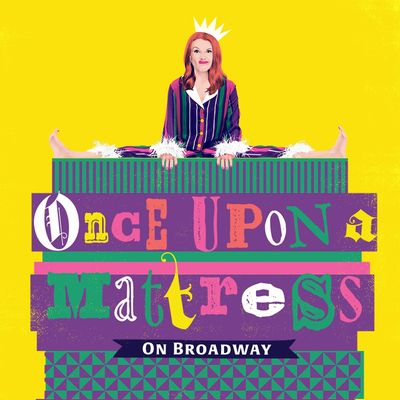
Welcome to "Half Hour with Jeff & Richie," where we dive into the world of theater and share our insights on the latest productions we see. In this episode, we dissect the captivating performance of "Once Upon a Mattress" that we recently experienced at New York City Center Encores!.. Read More
From the show: Half Hour with Jeff & Richie (Post-Show Broadway Discussions and Interviews)
Featured Shows
About
Welcome to "Half Hour with Jeff & Richie," where we dive into the world of theater and share our insights on the latest productions we see. In this episode, we dissect the captivating performance of "Once Upon a Mattress" that we recently experienced at New York City Center Encores! We explore the intricacies of the plot and concept, celebrate the remarkable talent of leading actress Sutton Foster, and ponder the enduring relevance of Golden Age theatre in modern times. Whether you're unable to catch the show in person or seeking a deeper understanding after attending, join us for a lively discussion. Don't miss the chance to see this incredible show, running until Feb 4th - get your tickets here.
If you liked this episode, don't forget to subscribe to this podcast and leave us a review.
Share your thoughts with us on this episode below:
On Instagram: @halfhourpodcast
On TikTok: @halfhourpodcast
On our website: www.twoworldsentertainmentllc.com
Transcript
This transcript was automatically generated and might contain errors.
[0:00] Jeff Malone: Hello, everyone, and welcome to Half Hour with Jeff and Richie.
[0:03] Richie Grasso: I'm Richie.
[0:04] Jeff Malone: And I'm Jeff. In today's episode, we will be diving into New York City Center Encore's production of ONCE UPON a Mattress. If you're looking to learn more about our take on the show or want to take a deeper dive into the production, you're in the right place. Throughout our conversation, we'll be discussing key aspects of the show, sharing our insights, and giving you a closer look at what makes ONCE UPON a Mattress a must-see production. And just a heads up, there will be spoilers ahead. So if you're ready to take the deeper dive, or if you won't have the chance to see the show but still want to know more, then stick around and enjoy this episode.
[0:44] Jeff Malone: Welcome to today's show, everyone. As we mentioned earlier, today we're going to be exploring New York City Center Encore Once Upon a Mattress, which is January 2024. And with that, I just want to give a little bit of quick one, two, three on the show. Um, for those of you who don't know, this is a well, I'll explain a little bit. New York City Center Encores takes old shows and basically brings them to an off-Broadway style concert style space for a limited run, and they do older shows throughout the year. So Once Upon a Mattress is a musical that debuted in 1959, marking the Broadway debut of composer Mary Rogers and actress Carol Burnett, who played the spirited princess Winifred The Will Begone.
Over six decades later, Broadway star Sutton Foster returns to the City Center stage in a revival of this musical, led by Encores' artistic director Lear de Besanay and featuring a new concert adaptation by Amy Sherman Paladino. The production celebrates the infectious energy and joy of the original. ONCE UPON a Mattress follows the story of Princess Winifred, who brings her free spirit to a repressed kingdom and triumphs with willpower, honesty, and support from her friends. The musical features catchy melodies like Shy and In a Little While, offering an a priorious update of Hans Christian Anderson's The Princess and the Bee. And there you have it.
[2:00] Richie Grasso: Right.
[2:00] Jeff Malone: Yeah. So let's get into our thoughts on plot, concept, and genre. Richie, how do you feel ONCE UPON a Mattress compares to other musicals of its time in terms of plot and concept?
[2:13] Richie Grasso: Well, this is one of the first musicals, if you look through golden age musical theater history that was somewhat child-oriented or could be family-friendly. Of course, you had things like The Sound of Music and Annie, but those were more like the late 60s and into the 70s. This was the late 50s. Um, yeah, you had, you know, Music Man, late 50s, West Side Story, other shows that were big spectacle shows, but this was taking a fairy tale and making it and not Disney, right? And not any commercial organization. So I kind of look at this and I say, one of the original family-friendly musical theater comedies out there, which is why I think it's done so much in communities and in high schools, and everyone kind of you say ONCE UPON a Mattress, and everyone kind of knows someone's cousin's sister's brother who did it somewhere somewhere, you know.
Um, but it's got that golden age comedy to it, and there was tons of golden age comedy of the time, but there is something about this that seems timeless that every few years we see it, and to see it again with Sutton Foster, I will just start by saying that I was blown away by the City Center production um in so many ways. And I was my heart was so full and warm of looking at this upcoming Broadway season, not to compare this to the other Broadway shows, but not seeing a big golden age musical in the works for this season. We had Music Man two years ago, we had Camelot. We do have Cabaret coming, which is, I guess you could consider that golden age, but it's dark and not quite. It's different, it's a little different.
The Whiz is not quite golden age. So you know, Tommy's really not golden age. So and so to see this was like, oh, I was so excited for this, and I've never seen a professional live stage production of ONCE UPON a Mattress before. So basically to answer your question, I feel like it does it, it doesn't really compare to a lot of things of its time. I think it was cutting edge for its time. I think it's still kind of new and fun and and and got this energy to it that's infectious of comedy. I just love it.
[4:14] Jeff Malone: Well, it's interesting. And a fun fact, I have never seen a production of ONCE UPON a Mattress ever.
[4:21] Richie Grasso: Wow.
[4:22] Jeff Malone: Is that it's kind of odd, right? Because like even my elementary school or like when I was in high school, I did not do it. So and everyone's always like, Yeah, well, like everyone does ONCE UPON a Mattress at least like once in their life. And I was like, not me. You want to know why? Because it's in it's ensemble-based. There's a lot of bit roles for a lot of different people. Um, you if you have an actor who just wants to maybe not sing, then that's the king, right? You know, like there's so many different ways to play different characters, a female and male draw. Do you feel like this show has really like influenced theater in a different way after it came out? Like, what do you feel like it might have influenced?
[5:00] Richie Grasso: It might have influenced the Bye Bye Birdie Annie kind of 60s and 70s vibe of like splashy kid friendly Sound of Music, kind of. I think it kind of definitely because this was the late 50s, right? So, like I said earlier, like West Side Story, not extremely family friendly. Um, Music Man was that was the late 50s too, but uh, I think it could have definitely inspired things. Also, just for those of you who don't know, Mary Rogers, who wrote this is the daughter of Richard Rogers, who is famously wrote, you know, most of what Golden Age musical theater is as we know it, Richard Rogers, and then Mary Rogers writes this, and Mary Rogers' son, Adam Gettle, writes Light in the Piazza, is writing Days of Wine Roses right now for the Browse Stage. So a family legacy of musical theater writers in the in its third generation is pretty inspiring, you know. It's pretty cool.
[5:51] Jeff Malone: Yeah. And but since you have such a big background in music, Jeff, and you love music so much. I just wanted to get your feelings a little bit on some of this score, music and lyrics in particular. Do you feel like the score works compared to other golden age scores? It adds to the character development. What do you think of the score?
[6:07] Jeff Malone: I feel like I half love the score and I half don't.
[6:10] Richie Grasso: Okay.
[6:16] Jeff Malone: And I love seeing that full orchestra up on that stage and hearing the score. It's great. Sometimes the lyrics converge on being a little corny, and you have to kind of set yourself aside from that by saying, like, oh, okay, is this a kid's show or is it an adult show? Because there is a lot of like adult humor in this show as well that could go over a kid's head, which is fine. Um, but yeah, I mean, I think when you have a golden age musical, you have like, you know, four or five really big standout songs that everyone knows, and then there's a lot of filler, and I feel like that's with most of the golden age shows, but the score alone is beautiful to me. Like listening to that. And it's interesting because Mary Rogers didn't have a ton of hits besides this.
I know she wrote some of the things, but this was like her big thing. And I think of Shy stands out, that's a kind of a classic. A lot of people audition with that song, a lot of people sing that song as a belter moment. Um, it's just very impressive for her to have written this. And uh, I how do you feel like her score reflects the broader trends in musical composition though during the late 50s? Like I've mentioned some music. You know, there are some campy hokey Music Man moments in this for sure.
[7:31] Richie Grasso: There was some, I think it works.
[7:33] Jeff Malone: Yeah, right, right. And you know, that's why I think it works, and that's why I think it makes this show a classic.
[7:38] Richie Grasso: Yeah, for sure.
[7:39] Jeff Malone: And why so many people do it because it's like it kind of takes from what was already working during that time and moves it along, you know, and then we start moving into the different genres. And this show is cool because it balances like lighthearted comedy, but it also has like the underlining social commentary here. How do you feel like this show really takes those themes and kind of brings them to each different era?
[8:04] Richie Grasso: Well, I feel like Amy Sherman Paladino's reveal writing of some of this for the concert version, felt like it trimmed it up a little bit, it tightened it up, it got rid of some filler, there was some modernism brought in there. I think Lady Larkin's character was changed quite a bit. Usually, I know in the 90s revival, which had Sarah Jessica Parker, actually, as and and and Jane Krakowski played Lady Larkin. And usually Lady Larkin's just like, well, I'm pregnant and I need to get married. And I thought Nikki Renee Daniels brought this like um energy that was like strong female. I need to figure out my life. There was a little bit of strength there. I thought, I think there's a lot of strong female characters in this piece.
The queen, as much as she is evil and not great, is strong and rules the kingdom over the king, who is literally speechless. That is cutting edge for its time. If you think of when Disney was releasing Cinderella and Snow White in some of those films of the 30s, 40s, and 50s, what was happening in those films was the woman had to be rescued by man. And then this comes along, and it's like a woman's ruling the kingdom. A woman comes to be the strong princess of the town. Lady Larkin is a lady in waiting. And the women of this piece seem to be really strong. I think that set the stage for strong female roles moving through. You know, Gypsy was a big strong female show of the 50s, and you know, there's definitely others, but this was had that edge to it, I think for sure.
[9:37] Jeff Malone: I agree.
[9:39] Richie Grasso: I do agree because I feel like, especially with modernizing some of the themes here, it's like it's nice to see. And I like that they kind of pulled in like current modern things. Like I think I even saw a suitcase at one point that was like modern in here, like she was getting ready to leave on the stage. And I'm like, I think to me, that's adding to the camp part of it.
[10:00] Jeff Malone: Yeah, and like just bringing that in there. And it's fun, which kind of leads me like into our next section of this around direction. We'll be right back.
[10:14] Richie Grasso: Welcome back. And how do you feel? Especially this is your what, your second City Center Encores production now. So, how do you feel like the concert style works? And how do you feel like the director can either bring these Golden Age shows to the next level, or do they fall flat? This City Center Encores production is so fresh. And what this is is a complete fresh take on this old story. So the direction of it was concert style, orchestra on stage, not huge production numbers with choreography. There was some choreography, but it was a fresh way of telling the story, and it was cast well, it was designed well. Lear de Besina actually stepped out on stage and spoke to us. We were at the opening night of this and said, "We rehearsed this in 10 days and had a couple tech rehearsals and put it together," and it shows the professionalism.
And I will say the direction of this was simple, it was clean, it wasn't overcluttered, it wasn't trying to reinvent itself. When I, if you listen back to my Pal Joey episode, and I talked about how that was trying to reinvent that whole show, change, change, change, and then it fell flat, it was messy. I didn't feel like this with ONCE UPON a Mattress at all.
[11:29] Jeff Malone: Tell it to people, telling the story.
[11:32] Richie Grasso: Yes, adding some, of course, get a book doctor to go in and kind of clean it up a little bit. It's been 50, 60 years, so of course. But I thought it was clean. I like clean staging. I like when lines are delivered clear and the message is there, and I'm not confused. And then what do I always say here? Trust your audience. I think the audience was totally trusted. You, Jeff, who didn't know this plot at all, was able to probably basically follow this whole plot for the most part in terms of what's going on.
[12:00] Jeff Malone: Oh, what did you say?
[12:01] Richie Grasso: Yeah, he's well, I know the story. I've just never seen a production of ONCE UPON a Mattress. That's my only thing. Like I know the story of the princess and the pea, so it's fine. I think kind of like to touch on what you're talking about, though, it's like I think there's such a craving right now for these Golden Age shows because it's something that's really lacking in what we're getting in the Broadway season. So when we see something like this, and I know as soon as this was announced, and as soon as Sutton Foster was announced in the casting, you were like freaking out because you were like, "Oh my god, like I need to see ONCE UPON a Mattress," and like, "Oh, and it's Sutton Foster." And then the cast continued on and on, like with Michael Urie playing Prince Dauntless and Nikki Renee Daniels playing Lady Larkin and Jay Harrison G playing The Jester and Cheyenne Jackson playing Sir Harry and Harriet Harris playing Queen Aggravain.
[12:57] Richie Grasso: Aggravain.
[12:58] Jeff Malone: Aggravain.
[13:01] Richie Grasso: But like it just went on and on from like each person down. And you were like, "Yes, I want to see that person and yes and yes and yes." And because of that, I think, like what's cool with these concert style productions is like it doesn't need to be over the top and just give the people what they want.
[13:20] Jeff Malone: Well, let's talk some about these character performances too, for sure. Is there any out of all those people you named?
[13:25] Richie Grasso: I could sit here and say this whole cast was strong. Everyone in I don't think there was one person that I was like, "Oh, that was miscast," or "That person was a lot weaker." Every single person up there was so wonderful. I have not heard Nikki Renee Daniels sing like that. And I've seen her in things before, and I'm like, "Oh, okay, where are you not playing the Golden Age roles? You have the voice of an angel." Cheyenne, hilarious. Michael Urie, that man is gonna just keep doing comedy, like all, and Harriet Harris is carrying the show.
[13:59] Jeff Malone: She really is.
[14:00] Richie Grasso: Like, she's in this whole show, and she's so good at what she does. I am like blown. Every time I see Harriet Harris's name in a show, I'm like, "Oh, that show is set now because Harriet's in it and she's gonna carry it." And obviously, the role is a villain role in this ONCE UPON a Mattress, but she when she has a long monologue at the desk, I'm like, "Did anybody know how difficult this is?" That she's doing, like she was great. I just, I just kudos to her. I mean, she was great, they were all great.
[14:27] Jeff Malone: Yeah, I would say, like, this cast is really making this whole show. They're all so great, and they all bring such different expertise and performing to the role. And you had mentioned something to me after that Lady Larkin is usually played more like a little silly girl-ish rather than being more like, what would you say?
[14:53] Richie Grasso: Rooted in her cause, things like that.
[14:55] Jeff Malone: Yeah, and I feel like what they added to this character was that, and I was fine with it. Like, I don't feel like every single character needed to be like a mockery of someone. Like, yeah, the comic, the comedy is great because I still think she brought an element of comedy to the role.
[15:13] Richie Grasso: She did. I will say she sang it really like, but the comedy that I feel like she brought was this like, "Okay, I'm just gonna roll my eyes at the man for being so, you know, basic man," and that was a different type of comedy. It's not the silly girl comedy, yes, and that was nice to see something a little different like that. I thought the Jester was wonderful, the soft shoe dance number at the end is a wonderful 11 o'clock number moment.
[15:42] Jeff Malone: Yeah, I do feel like it in some of the book structure of this act two is prolonging this very like act one kind of moves, and then act two is like, "Okay, are we gonna get to the mattress moment when she's gonna sleep?" Because we're like, we have the boy flower, girl flower song, you know, and we have the sap dance, saw the soft shoes, all that. But in terms of talking about character, let's just take a moment to talk about the character in the room here, Sutton Foster, Princess Winifred, you know.
[16:11] Richie Grasso: And this woman is going on to play Mrs. Lovett in Sweeney Todd in like three weeks, like, and she was just Sutton. She was just Mary in Peru in The Music Man, and we saw her as Charity in Sweet Charity a few years back. This woman, I will every single time I see Sutton Foster's name on a show, and I could probably say this for the rest of my life or her life, I could say, "Okay, it's gonna be great." Like, like it's gonna, I don't know. Everything around her could be alarms going off and fires, and then the whole show would still be a saving grace, and that's no disservice to the show because this whole show was still very good.
[16:53] Jeff Malone: Yeah, because I'm gonna say something about that.
[16:55] Richie Grasso: Yeah, watching the show, because she doesn't really come on for what, the first 20 minutes maybe even 30 minutes. She comes back. And I'm like, "This song is so strong." And then I remembered probably whenever 25 minutes in, "Oh wait, Sutton Foster hasn't even come on the stage yet." And I'm like, "This show is already so good." And I'm just like, "This is gonna go through the roof as soon as she comes on the stage."
[17:19] Jeff Malone: But it did happen. When we saw Sutton Foster do Charity, I said, "Oh, she's channeling Gwen. She knows what she came from with Gwen Verdon, and she's gonna make it her own, but she's gonna channel Gwen." We're gonna go see Sweeney Todd, and I'm probably gonna say the same thing, which is kind of what I said about Annaleigh Ashford, which you channeled Angela Lansbury, but you still made it your own. When I'm watching this iconic Carol Burnett role, which everyone knows in ONCE UPON a Mattress, Carol Burnett's big Broadway thing was this role. And then we know Carol Burnett for all the years. She had her ear moments, she had her faces, she had her silly, silly moments. Sutton does that, but then also doesn't do that and brings this physical comedy of splits and jumps and hair and silly goofy faces, but vocal. She's changing her vocal inflection at times to sing the songs in a slightly different way.
[18:10] Richie Grasso: Listen, we all love Sutton Foster belting out the early modern military. Don't get me wrong. We can will always get that belt. Did we get full belt from Sutton the whole show? No, we got it in shots. And then the rest of the show, her other songs were like more like musical theater speak sing. She made it her own. She knows what she had to come from for Carol Burnett. She knows people were going to compare her to Carol Burnett, and she still made it her own. And this woman is just taking these iconic roles. Even I even said this about The Music Man. She did not do Marian the way it's normally done by Barbara Cook and Shirley Jones and all the people that came before her. Yet she made it her own.
If there's anything that this woman is doing a thousand percent correct in this industry, is taking a role that has already been played by very famous people, some of them Tony Award winners, and then makes it her own, but doesn't make it her own to the point where, like, "Oh, this character is different now. Ew." It's just so different. It's like, yes, you found the heart of this character.
[19:06] Richie Grasso: Well, she makes it so effortless.
[19:08] Jeff Malone: Effortless.
[19:09] Richie Grasso: And I'm watching her, and I'm like, "You are the joy, your charm, your energy, your smile, you are pleasantry, you are grit, you are everything. I am so relaxed when I see her on stage because I'm like, this woman is giving my soul." And I don't say that, Jeff, about many people, you know this. I really don't sit here and talk about many people like I do about her. She's really one of those performers that I feel like she can't really do much wrong. And even though, like, if you want to like not like her, you still end up liking her because she just has that likability. And it's great.
[19:46] Jeff Malone: It really is great.
[19:47] Richie Grasso: And as soon as she got on that stage, and you know, she's in this wig by J. Jared Janis that you know, you're like, "Whoa, okay," and like so wacky and kooky, and you're just like, "Okay, come on, we're going there." The raccoon out of the hair was hilarious because the snake was funny, the leeches was funny, and then the raccoon. I'm like, "She got a whole stealth panel of raccoon in her hair." And it just like, it's just brilliant. And I could talk about her all day, but I just think there's nothing that woman could do wrong. I think she's so good at what she does. And it just added to so many things, especially like the design perspective here. We had a set by David Zinn, costume design by Andrea Hood.
[20:26] Jeff Malone: And how did you feel like this captured the whole "ONCE UPON a Mattress" theme?
[20:35] Richie Grasso: We'll be right back.
[20:39] Jeff Malone: Let's jump back into things. What is totally clear here, and what I appreciate immensely, designers of the world, was clearly the set lighting and costume designer sat together and worked together on this because I'm so passionate about this. Because when I saw the set was all black and white, I was like, Yep, this is exactly what we need because now all these costumes are gonna pop. And the green of Lady Larkin and the blue of her Princess Winnifred and the red of Harriet Harris, and I think it's Perry Winkle.
[21:15] Richie Grasso: Oh, Perry.
[21:16] Jeff Malone: I think she said Perry.
[21:17] Richie Grasso: I think she said Perry.
[21:18] Jeff Malone: You're right. For Huckle Huckleberry.
[21:20] Richie Grasso: Huckleberry.
[21:21] Jeff Malone: Yes, yes. Because she's a Huckleberry Pie.
[21:23] Richie Grasso: Correct. But the gestures, Jay Harrison's costume with those hanging loops were gorgeous. And I'm like, oh my gosh, this has Tony nominations written all over it, especially if they bring this to Broadway, which I hope they do, and expand the set and expand the costumes and give them more. Because I'm like, oh, the costumes are popping. The set is black and white, but not plain black and white, like eye popping black and white to let the characters pop. It was like a storybook unfolded, but it wasn't clunky, because sometimes that can be clunky, and it was instead seamless and beautiful and still campy and charming and fairy tale-esque. And oh, oh, oh, it was so well designed. It was so well designed. And the colors totally popped. And the costume design was, yeah, I agree. Beautiful.
[22:08] Richie Grasso: Totally. It really adds to that. And something that we did talk about, because like let's go into our own experiences here. But I did want to kind of say like this is interesting that we're getting like really great productions from City Center and also Kennedy Center with these concert style shows that are transferring to Broadway. And my only critique on this is like, how do we get the show to expand bigger to the stage from what it is? Because I'm gonna say something. We've seen a few of these productions now, and obviously we know like Chicago, the legend show that has been playing for all of these years after it was an encore show, I believe.
[22:50] Jeff Malone: Correct, correct.
[22:51] Richie Grasso: And that just like works, but it's not probably what's expected for every show that transfers from Encores. Like, this is great. The cast is amazing, but like I'm gonna want full set. And costumes are great, but I'm gonna want more. I'm gonna want more choreo. I'm gonna, you know, and like bring that and give that because you're gonna if you're we're gonna be paying like Broadway dollars to see the show, then I think you need to elevate this. This is like the base. This is like the preview of what it could be.
[23:24] Jeff Malone: Well, two things I'll say. One is money. Yeah, it's always gonna be about money. Number two, if every City Center Encore show transferred to Broadway, we would lose the charm of City Center Encores. So I don't think every show should transfer. I don't even think out of the three or four that they do a year that even one should. I think Into the Woods was a different thing because Steven Sondheim had just died. This was a stellar cast. We hadn't seen the emotion of Into the Woods was needed, I think, for the time. You know, Oliver was last year, they thought that was gonna transfer. I haven't heard anything about Oliver. Now this, you know, I don't know. But Parade transferred, and now Spamalot from Kennedy Center transferred, and we're just seeing some of this happening.
And I don't like, I'm gonna put this more on the producer side of thing. Like, let's producers like be inspired by this, but like take it to the next level. Because this is great, but it's gonna need to level up for the Broadway stage.
[24:21] Richie Grasso: Interestingly enough, I don't think that it, I'm gonna say something. Lighting, costumes, full orchestrations that all seems to transfer pretty well. If you're talking about like the Spamalot when the stage was cut in half and we or Chicago and the stage is cut in half, and we're trying to limit I'm talking about the one unit set that we just watched the whole time. Yeah, it's like a little bit like okay. People complain about that. So this is setting this show up to say, hey, think about it if you're gonna transfer it. Because right now with this cast working their behinds off for this, yeah, it has every right to transfer. And there was just choreo moments. We there were some choreo moments where it totally could expand some of the choreo, the Spanish panic moment, the uh I'm a uh with an F and an R and an E and a D, and you know that whole song.
There's on the the soft shoe number, you know, they made some of the work, but and I did I have another big thing that I want to bring up here because this is something I started talking to you at intermission. There is something about a golden age theater show that just rings joy to people. And I'm looking around this performance and I'm like, I feel like there's so much joy. It's a great night out, people are happy, and it made me think a little bit about this, and it's like, where is that in new works happening? And why do we feel like we're not able to do it anymore? Well, why do I guess why are all the new things that are written? Like rock musical, dark or dark.
[25:56] Jeff Malone: Well, I mean, Kimberly Akimbo in a way is not quite dark, but it's also it's very but it's not a 27-piece orchestra or an age style musical. I'm talking about like where is like campaign management. I think people like golden age musicals, which is why I think we still see them revived. And you know, you see Cabaret come back and Fiddler on the Roof come back all the time and Gypsy come back every 10-15 years. These shows that people like. Yeah, I think you know, I don't I don't want to discredit the new works that are happening. I'm just more curious as to why does someone not want to write something that's golden age style? Like what would you say, like Wicked is maybe like the last like big big musical that's probably in the style of Golden Age?
Maybe a lot of shows lately have been small piece bands, dark stories. And listen, I always believe in this industry the pendulum swings back the other way. I think you have dark times, and then you have light times, and you have big spectacle times, then you have the Spring Awakening times, and then you have you know, you have a little bit of everything. It just and and I and there's always room for things, you know. But I will kind of wrap this. I mean, listen, my heart's always in golden age musical theater. I will love everything, and especially when the right people are cast and the right design teams are put together and and freshen up a book a little bit and put it out there totally.
[27:15] Richie Grasso: Um but um David Gordon of Theater Mania has a quote, and he says, the show is just a great, and this is a quote from his review of this City Center Encore "ONCE UPON a Mattress" and Foster. He says, quote, the show is just a great night out, and one that will delight people of all ages. "ONCE UPON a Mattress" never goes out of style. And quote. And you can't say about many shows that they never go. It's a bold statement. And he's he's right. You can keep I think when I'm 80 years old, my great grandkids could be doing this show, and I would still think it's fine. You right, you know what I'm saying?
[27:51] Jeff Malone: So well, that's I think that's the beauty though of what I'm talking about with Golden Age. It's not so like period or like, well, it is period, but it's a cartoon or like a fairy tales. So fairy tales kind of live on forever. And when you have something like this, yeah, anyone can go see this. Everyone's gonna leave cheery, you know, whether you like Golden Age or not, I always tell you I'm not the biggest Golden Age fan, but there's something about it that's enjoyable. It really is.
[28:23] Richie Grasso: Well, and I'm gonna say a big big thing, and this is gonna segue to the last thing I wanted to say here because I know we're else out of time. When golden age musicals are done at Kennedy Center, at City Center Encores, at Lincoln Center, nine out of ten times they are large 20 to 30 piece orchestras. Maybe, maybe not 20 sometimes, maybe 17 or 18 pieces. When they are large orchestrations that were intended to be performed by the full orchestration, I bet you, Jeff, subconsciously, that's why you're enjoying it so much because you're hearing a full lavish orchestra. Yeah, because this is where you look at an orchestra and you say it's part of the show, it's not an afterthought. And that's why I wanted to say speaking of this, this Encores orchestra is brilliant, by the way.
Every instrument you can imagine is up there. And a very special shout-out to Amber Duchateau, who's the associate music director on this. She's a friend of mine, she's extremely talented. She worked really hard on this, and I just wanted to do a shout-out to her because I know that it's a wonderful work she's done on this, and I and I can't congratulate that whole music team. I feel like I'm hearing the score, and I I sitting for five minutes and watching an overture played. I know people come, oh, get on with the show. Who wants to say people to act during the overture? No one was talking last night during that overture. We were watching this orchestra play it and it was beautiful. Because it's not saturated anymore. That's missing. So it was it was wonderful to be seen and heard up there for sure.
[29:51] Jeff Malone: Well, that does wrap up our discussion for this episode. We hope you enjoyed our deep dive into "ONCE UPON a Mattress" at New York City Center Encores. The show is playing until February 4th in Midtown Manhattan. And we will share the link in our description with ticket information if you're interested in checking this out.
[30:05] Richie Grasso: Yes. And don't forget, we do want to hear from you. So continue the conversation with us on Instagram and TikTok at Half Hour Podcast and let us know your thoughts on "ONCE UPON a Mattress." And if you enjoyed our show, please leave us a review. Your feedback helps us bring more theater to you. Remember, you can listen to our past episodes and stay tuned for upcoming ones. We have lots of theater coming up for y'all, so make sure you check it out. We usually release two episodes a week. So you got lots to listen to. So until next time, I'm Jeff.
[30:31] Jeff Malone: And I'm Richie saying ta-ta for now.
[30:34] Richie Grasso: Bye.
© Broadway Podcast Network, All Rights Reserved