

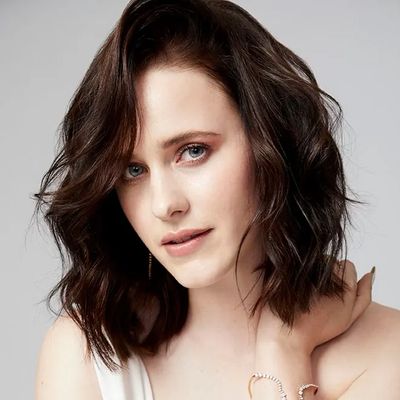
Host Devario D. Simmons welcomes award-winning actor Rachel Brosnahan, Costume Designer Donna Zakowska and Eric Winterling, Founder & Creative Director of Eric Winterling Inc, as they discuss the costumes for Amazon’s The Marvelous Mrs. Maisel... Read More
From the show: Into Costume
Guests
About
Host Devario D. Simmons welcomes award-winning actor Rachel Brosnahan, Costume Designer Donna Zakowska and Eric Winterling, Founder & Creative Director of Eric Winterling Inc, as they discuss the costumes for Amazon’s The Marvelous Mrs. Maisel.
Learn more about the Costume Industry Coalition at www.costumeindustrycoalition.com
Transcript
This transcript was automatically generated and might contain errors.
[0:02] Devario D. Simmons: Hello and welcome to Into Costume, a podcast in support of the Costume Industry Coalition.
[0:09] Devario D. Simmons: Each episode, I chat with costume industry insiders about the intricate process of creating iconic looks for stage or screen.
[0:17] Devario D. Simmons: My name is Devario D. Simmons, and I am a costume designer, educator, and host. Thank you for joining us today.
[0:30] Devario D. Simmons: This week on Into Costume, we have star of The Marvelous Mrs. Maisel, Rachel Brosnahan, costume designer Donna Zakowska, and costume maker Eric Winterling.
[0:40] Devario D. Simmons: All right, so The Marvelous Mrs. Maisel is set in the 1950s. And, uh, Donna, you're the costume designer, Donna Zakowska. Tell us how you even started this process.
[0:52] Donna Zakowska: You know, I think it's one of those things, uh, you know, I met the Palladinos, and, uh, there was this very instant sort of chemistry, and I love the project because, uh, you know, I'm a New Yorker, and I was very interested in this part of history in New York, you know, where art and politics were like vital and alive. Um, and so I, you know, pretty much made a practically instant commitment to them. Uh, they asked me instantly, you know, we want you to do this. And that's how it all sort of started, you know, and then the collaboration began with Rachel and Eric, who I work with on many, many projects and known for many years. Uh, and that's sort of pretty much how it started, very spontaneously, and just, you know, about good chemistry, a lot of good chemistry and an interest in the topic.
[1:41] Devario D. Simmons: Rachel, were you already cast when Donna came on, or did you come in after Donna started her process?
[1:48] Rachel Brosnahan: I'm actually not sure. Donna, do you know that?
[1:51] Donna Zakowska: I do.
[1:52] Donna Zakowska: You were?
[1:53] Donna Zakowska: Because the one thing I remember about Amy is she said, "Well, I have this woman, and I am so lucky to have her. And she is going to be a major star, and we have found her exactly at the right moment." I, at that moment, I didn't know who you were, but she, I, you know, remember that enthusiasm. So I think you had been within like a week or two or whatever you had been sort of cast.
[2:15] Rachel Brosnahan: It felt like it all happened really fast. And I feel like, yeah, we were cast, we were doing chemistry reads, and then very suddenly we were in hours and hours of costume fittings, and I just remember so clearly like looking around the room at Donna's fabric swatches and sketches and a thousand pairs of shoes, and, uh, and that's continued ever since.
[2:40] Donna Zakowska: The shoes are hard, yeah.
[2:42] Devario D. Simmons: Yeah. Rachel, how would you describe Midge's style?
[2:46] Rachel Brosnahan: Oh, vibrant, colorful, energetic, uh, singular.
[2:52] Devario D. Simmons: Great. Donna, same question to you.
[2:55] Donna Zakowska: Uh, well, you know, I think it's sort of very animated. I would describe the style as animated. It's animated with color, it's animated with energy, it's animated in the period. Uh, you know, it's a sort of a style that really, again, as a result of, you know, these, um, fittings we have, uh, Eric and I, like we just both invest this tremendous amount of energy in these clothes. And I think somehow then you have a physical thing, and there it is, you know, and I think it's, and then with Rachel, it's all about our energy sort of coming together and creating this in a way. I mean, I've seen it every season. Big fan. I think you all have done beautiful, beautiful work.
[3:37] Devario D. Simmons: Um, Eric, about how long were you brought into the process?
[3:40] Eric Winterling: Maybe Donna's actually better to ask that question too. So I'll throw it to her and then we'll go back to you, Eric.
[3:46] Donna Zakowska: From the very beginning, basically. You know, it was, uh, Eric created the first iconic dresses, the nightgown with the coat, the pink coat, which was a big event, like what's the pink, what's the fabric, let's dye it, let's do this. So those iconic moments, Eric was sort of there from the beginning, you know, and then of course it just bloomed and gloomed into all this stuff.
[4:08] Eric Winterling: And for you, is it just kind of like a revolving door of like always making things?
[4:12] Eric Winterling: I mean, that's my life. So, uh, I'm always making things, and, uh, uh, today it's Mrs. Maisel, and, uh, tomorrow it's something else. Uh, it is funny. I, you never, when you start out on a project, you don't really know how long it's going to last or what it's going to bring to you. You know, when we did the pilot, I, you know, I was like, okay, well, this is what we're doing this week, you know. And then it wasn't until, uh, Donna said that, you know, they're picking this up and it's turning into a series that I, that it became, uh, something more special, you know. It was really terrific.
[4:50] Donna Zakowska: And the great torture of Eric's life.
[4:54] Eric Winterling: Sorry, Eric.
[4:56] Eric Winterling: You know, this is not torture for me. I, I, I don't know. It's, uh, I always equate it to, uh, an opera singer, the word "testatora," where the role sits in the perfect place in their voice. And I feel like, uh, this, uh, making clothes for you, it just sits in exactly the right spot for me. I, I don't know what it is. It's, uh, I feel very fortunate to be part of this project.
[5:21] Rachel Brosnahan: Me too. I have to say that the shorthand watching as an actor who has absolutely zero skill in costume or design or tailoring or all of the pieces that go into this process. Watching the partnership between Donna and Eric has been one of the most special parts of this process over four seasons. They have this incredible shorthand. And I just, you know, get to stand there like a doll and get dressed up while the two of them, you know, banter about different shaped collars and patterns and, you know, whether something's cut on the bias and how it can be tailored. Uh, it's been a really kind of magical process to watch these clothes come to life because of Eric and his team and Donna's design, that collaboration has been really special to watch.
[6:12] Devario D. Simmons: Donna, as we talk about the beautiful costumes, I mean, there are very few times when you get to design this many stunning things. How do you negotiate using actual period things with recreating period things?
[6:25] Donna Zakowska: Well, you know, I spent a long time looking at research. I mean, if you came to the studio, we have boards and boards and books and books and books. And I think it's about finding essential elements that, uh, somehow sort of capture the, um, sort of essence of what that change is going to be. I mean, the tricky thing about it is that we never really have a lot of time, and sometimes it's a little bit like a flood of, um, you know, requests and things that I have to design. And I might sometimes only even have a day or a day and a half. And I have to go into this particular zen mindset to get there. Do you know? And then I have to be sure to get it to Eric in time because he has to actually build the costume.
But, um, I think when you get to a certain point where you've done a lot, a lot of research, it becomes second nature. You're constantly, it's like your mind is a catalog that you're constantly going back to. Uh, even with the color, you're constantly going back, oh, orange work there, but this is that moment. And you know, you, it's constantly moving through your brain, and it's relentless and it never ends until the end of the season. But, uh, yeah, it's a bit of a trip, yeah, definitely.
[7:37] Eric Winterling: Donna and I are not, uh, strangers to 9 a.m. Sunday morning phone calls, uh, where I just, uh, you know, I have my studio upstate where I do a lot of the patterning, uh, so I can go in on Monday morning so we can start cutting. And, uh, I'll just FaceTime Donna at 9 a.m. on Sunday and just start, uh, just, you know, do you like it more like this, or does it go like this? Do how do you think that this all plays out? And, uh, she always, she always tells me to trust my instincts.
[8:08] Donna Zakowska: Just true.
[8:09] Donna Zakowska: Yeah, I think that's the most important thing. The other part of that equation is, you know, when Rachel is a part of the process, is that, you know, we always sort of know that's Midge Maisel. There's an incredible instinct that goes through, you know, that, oh yes, that collar, that sleeve. We just sort of know it's right, and when it's not right, we are instantly like, oh, that's not going to work. So, I mean, I think we've all developed this tremendous shorthand, actually, about, uh, like, um, this sort of Midge, the world of Midge. I mean, it's completely taken over our brains, actually.
[8:46] Rachel Brosnahan: How did the clothing change, Mrs. Maisel, for you after you got into the costume with the full wig, with the gloves and the purse and the hat and the shoes and the hosiery?
[8:57] Rachel Brosnahan: Yeah. And the underwear. I mean, we see everything. Underwear is a big part of it.
[9:02] Rachel Brosnahan: And the earrings.
[9:03] Rachel Brosnahan: And the earrings. We see everything. I mean, she doesn't exist without any of those things. And I don't think I knew who Midge Maisel was until I looked in the mirror for the first time with the costume, the costume on with all the unders on. You know, it changes the way you stand and the way you move and with hair and makeup. That's really the first moment, I think, for any actor where you see the character come to life in front of you. It informs so much about how you talk and move, and that informs how you think on your feet as a character. Costumes are a huge, huge part of this character in particular. Clothes are her armor. It's how she presents herself to the world. And it's been such an important collaboration, this one with Donna and Eric.
[10:13] Rachel Brosnahan: I think I've told this story before, Donna, but the one that comes to mind is the my one of my favorite costumes of all time, the Daisy pattern dress and hat, and the reverse pattern hat that Midge wears in a scene where she's confronting, uh, Benjamin, her ex for the first time in a really long time. And Donna mentioned that she loved the pattern because it felt a little clown-like, you know, the colors were a little bit clown-like, and Midge is sort of caught in a moment where she's, she's sort of expressed and feels a little bit like a clown. And it was made to feel like a clown. And I learned so much about that scene through the discussion about that costume.
[10:55] Eric Winterling: Did you make all of Mrs. Maisel's costumes?
[10:58] Eric Winterling: I think so. I mean, there's a couple vintage pieces here and there, but, um, sometimes I watch the episodes when, you know, it's a rainy Sunday and, uh, I'm like, oh, I don't even remember making that and I, I think you pretty much have except for some vintage pieces, yeah.
[11:18] Rachel Brosnahan: Yeah, I mean, what's great is that there's a story and Donna tells the story with the clothes.
[11:24] Donna Zakowska: Sure.
[11:24] Donna Zakowska: Well, I think it's also, I was going to say this doesn't happen that often that somehow you create an iconic person or look or character. I mean, there are many series or many costumes or many, but every now and then, you know, like if you think of Marlo Thomas and That Girl or a few things, you have this moment where everything coalesces where you have a script that is particular to itself and then you end up, you know, uh, with an actress who elevates it and then, uh, look somehow here this had the factors that were able to create iconic and, um, I, I mean, at least I think so it seems to have been that way for the world.
[12:09] Donna Zakowska: And so that was the rarity of what this is. This isn't just about costuming, you know, a period piece. It was about engaging in an iconic moment. It hit, you know, the world in a certain way and, and, uh, that, you know, women and other people related to that so true.
[12:26] Devario D. Simmons: You know, as I watch, I also am, as a costume designer myself, I appreciate when someone also wears those costumes very well. And I'm just gonna say, Rachel, you wear those clothes in the most beautiful way.
[12:39] Devario D. Simmons: Um, I think it's such a great compliment, just like how you move in them and how they sit on your body. It's just very great to see you like move about the streets of New York into some of the most beautiful gowns on television.
[12:56] Devario D. Simmons: The Costume Industry Coalition was launched to advocate for the survival of New York City's custom costume industry. Collectively, CIC members employ hundreds of artisans and costuming experts. Their costumes are seen on stages and screens worldwide. To learn more about CIC and how you can get involved or make a tax-deductible donation, please visit www.costumeindustrycoalition.com.
[13:22] Devario D. Simmons: In these trying times, many are not in the position to give, but you can always help by spreading the word.
[13:39] Donna Zakowska: Can we can you give us a little rundown of this red dress? It's the kind of like reconciliation dress with Joel. Yeah, I, you know, again, it was the beginning of the whole series. And um I actually remember reading the script, and you know, I really um, you know, had this feeling of, well, he's coming back, but she has to be like I kept thinking of the Scarlet Letter, and I kept thinking of you know, the strength of the red and the fact that she was going to not be submissive in any way, that she was going to be defiant. And so I remember talking to Amy and saying, I think we have to make this dress. It would be great if it was red. And then it was in the script. Do you know what I mean? So, which sometimes often happens. So it was a sort of important moment in terms of Midge's character and beginning to really see for us how strong she is.
[14:29] Eric Winterling: How did you feel in such a powerful color for that scene? Oh, the color was amazing. But that's no surprise. I mean, Donna's use of color to tell story has been really inspiring and unlike anything I've ever experienced. This particular red being as bright and vibrant as it is, sort of not only told the story that Donna just did, but made Midge impossible to miss. And I think it just helps, you know, looking in the mirror and seeing that bright color, you know, that that dress is also used for a particularly fiery stand-up set at the end of that episode, if memory serves. And uh, and I think even just looking in the mirror and seeing that color helps fuel that fire. It was a beautiful dress.
I was also at that point getting used to still because it was so early in the season. I think it was episode two, right? It was it was right away. I think it's three, yeah, yeah. Yeah, right away, very early on when we came back to shoot the season after shooting the pilot. So I was also still getting used to uh corsetage and tiny belts, and just remember being uh it being an adjustment, but I look back very fondly on that dress.
[15:47] Eric Winterling: So, you made this famous red dress. Um, and now people can buy the pattern. Can you tell us a little bit about that process of what what that process is like of patterning this dress and scaling it for the various sizes? Well, I spoke to Donna to get her permission to do something like this, and we settled on the red dress. We thought that would be a good project. And uh it was an effort because you know, we have, you know, Donna has every dress. We have every pattern that we've ever made for Rachel. And so we had to find it first, and then we we sort of just made it again in muslin. And then we uh, you know, looking at old pictures, I mean, it was it was very funny because it's it wasn't slick like we are now.
And so it was very important that it have a wide range of sizes, and that you know, I show models that are diverse. So I had this wonderful pattern grader. Uh I shipped the pattern once we figured it out and cleaned it up, and uh then we sent it off, and she was able to do a size zero to 34 grade, which is pretty great. That's a range. Yeah, and it it's and what's nice is that that style uh works from very small to to larger. And so we did a couple other uh sort of in different fabrics, you know, to just sort of try to sell it better. So we added some beading here and there. But really, the red one is really the best, you know. Uh that nice clean open neckline. It's gorgeous.
[17:17] Donna Zakowska: Eric, what is the turnaround time for like a dress? Oh dear. I well, as the season progresses, it it gets faster and faster. I mean, it becomes a crazy uh thing. At the beginning at of the the season, uh we usually have plenty of time, or you know, uh like this past season uh with the pandemic, we had uh mock-ups, and then uh Rachel had a project, and that we had like two or three months to put the first couple uh episodes together and I think by the last episode I think we made it in what three weeks I I it was crazy the last episodes were crazy yeah completely yeah yeah and so uh we have a rhythm we have a way of working what's important is when we can have a fitting that we have everything there and it's all basted together and you know it's all about changes and then we go into the shooting schedule what's up first, what's up second and uh you know what has to be on the wardrobe truck and we're we're in the groove with all of that. It's all about conversation. We're all in the conversation about when everything has to be ready.
[18:26] Rachel Brosnahan: Absolutely Eric is a bee that turn he's being modest that turnaround is pretty pretty uh epic. Yeah it really is it really is and and Rachel I know you talked about the Daisy outfit. Were you able to keep any of the Mrs. Maisel costumes for your own collection? I've got my eye on a few that that being one of them for sure I I believe I will get to walk away with a couple and I will treasure them. Yeah not yet but they're all very much at the studio hanging up color coded you know you walk in and it's a bit of a rainbow room. And eventually yes you will have to get some of those there's no question about it. Yeah I'm learning how to TikTok oh okay I feel like a dinosaur saying that, but I'm I'm learning how to TikTok. And I did go through the costume studio this year and take a couple of really great videos of what it looks like because I think it would be really fun for other people besides us to get to experience the magic of the costume shop.
[19:31] Donna Zakowska: And I remember you're doing that. Yeah. Yeah. I actually didn't know, Donna, that all the dresses from all the seasons were hung there until you guys showed me this year. It's a lot of clothes. Well, now it's becoming like monumental. But there's something about it, you know, like just having them all there, having all the colors there, and then being able to pull one out and say, Remember that collar and remember that sleeve. That was a great sleeve, you know. It's a little bit like a library. That's the way I sort of think of it, you know.
[20:01] Eric Winterling: Exactly. Donna, how did you choose um Eric Winterling Incorporated? Uh well, I actually we worked together years ago on one of the first films. I did a small film with John Tutoro called Illuminata, which was about a 19th century theatrical company and uh Susan Suranda was in it and Chris Walken, and that was the first project, and that was quite a while ago. I don't even really remember the date. So it really was it one there's one that was just a little bit ahead of that. I think it was at the 92nd Street Y. Oh my god. My shop was in the back. Uh it was right. I remember meeting you for the first time. It was in about 1990. It would have been and uh so yeah, we've been working together for 30 years.
And uh Wow. And we really had no money that project we had like we had zero money for that project. It's good to work on projects where you don't have a lot of money, and then sometimes you have money. Because if you don't do that, you don't really learn how to be resourceful as a person. And also it's the only way to keep theater going. It's one thing to be in streaming and there is a bit more money, but there's theater and they're all small, you know, off-Broadway theater, and all these people don't really have very much money. So I think when you have those experiences, it makes you very resourceful. And I feel that's the, you know, anyone can with a lot of money, you know, manage to do some pretty spectacular things. So I think it's sort of important to do it all. I mean, it's always been my philosophy, actually.
[21:37] Donna Zakowska: Then I ha I have to ask you, um, when when when they go to Paris, how was that being able to just like explore all of those shapes there? Um, it was pretty great. I mean, I loved I, you know, I went to the Beaux-Arts in Paris actually to school in between things. So Paris is like my second home in a way, my second city. Uh, so it was like a sort of a dream come true for me, actually. And um, I got to work with some people who I had worked with years ago uh when I did a film there, actually. So, you know, Paris is so exhilarating, no matter how hard the work is, and and being able to go to the flea market, and you know, we managed to actually source a lot of buttons and things that now we have and have been using in the other seasons. So it was it was one of the delight moments of uh doing it. It's nice to do those sort of spectacular journeys in the middle of the whole thing.
[22:34] Rachel Brosnahan: And Eric, um, when Bazil starts to do more stand-up, what do you like about the transitions of those costumes? Because she really liked the moments when she's on tour are just bad. How does it feel to like walk down the stairs at the hotel lobby in one of the most beautiful gowns? I mean, it's been dreamy. Getting to literally take this show on the road has been some of the most memorable and fun parts of working on the show. But one of the cool things, costume-wise, that we've discussed with regards to the performance dresses is how they've evolved. I know that Donna and Amy had a number of discussions. You know, we created this iconic black dress performance look. But over time, you know, how does that take on different personalities based on where Midge is performing and how she's evolving?
And, you know, uh, for example, in Miami, I think that was the first time, unless correct me if I'm wrong, Donna, that more color was introduced in subtle ways to Midge's performance dresses. You know, there's a really beautiful dress with these feathers on the bottom, pink feathers, right? Um, on the bottom of it. And so we've started to play with silhouettes. I'm also continually impressed from from up close and afar by how many different black dress silhouettes these two have been able to create. Uh, but I feel like we keep reinventing ourselves, keep reinventing the black dress. I must say the Marvelous Mrs. Maisel is a special treat because personally it's beautiful to look at. It's fun to watch, but it's also great to see all of the local work from New York at play.
[24:17] Donna Zakowska: Yes. Well, like incredibly important. I mean, I was very conscious from the beginning, especially during the pandemic period. Like very happy that I was able to, you know, build so much. And in fact, I really even like did as much as I humanly could because I really wanted to give work to New York shops. I mean, it is inconceivable that you know these costume shops could suddenly disappear, but yet it can happen. This is we're in a very fragile place now. Things that we thought obviously would never happen can happen. And so uh I felt as a New Yorker and someone who has worked here my whole career, I really wanted to help in any way I could to sort of keep all of these people going and to keep the shops going.
Even if it meant maybe I designed one more dress than I really had to here and there. You know, I just felt it was very important. And I think that um, you know, Amazon was very supportive about that. So I think, you know, it was it was a big deal. I really felt the pressure, and I really felt the responsibility. I mean, these are our craftspeople. These are the people who have created all these beautiful clothes and and theater and everything. And uh, it's part of New York. I mean, without it, it's not New York. So it was it was it's a big deal. It's a really big deal for me.
[25:50] Rachel Brosnahan: Well, I love the show, and I can't wait to see what's coming next. All right, thank you all for being with me today.
[25:57] Devario D. Simmons: Thank you, D'Arrio.
[25:58] Rachel Brosnahan: So much, Davario.
[25:59] Eric Winterling: Yes, thank you.
[25:59] Devario D. Simmons: This has been Into Costume. Thanks to the Broadway Podcast Network for their support. If you have any feedback on today's episode, find us on our Twitter handle at Into Costume. We'd love to hear from you. If you'd like to learn more about the Costume Industry Coalition, please visit their website at costumeindustrycoalition.com. Remember to subscribe and rate on whatever platform you're using. And join us again next time for more stories to get you into costume. Thanks for listening.
© Broadway Podcast Network, All Rights Reserved