

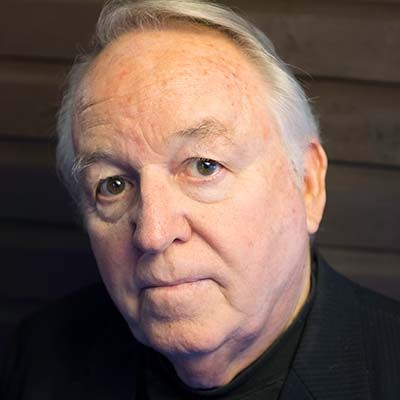
In this Artist Exploration, Dakin and Charlie discuss Dakin’s journey from the Roman Catholic Seminary to Broadway, his TV and Film career, Dramaturgy and his Shakespeare philosophy. Dakin reminds us to not treat Shakespeare as literature, it is meant to be performed and viewed!.. Read More
From the show: Mapping The College Audition: An MTCA Podcast
Guests
Featured Shows

About
In this Artist Exploration, Dakin and Charlie discuss Dakin’s journey from the Roman Catholic Seminary to Broadway, his TV and Film career, Dramaturgy and his Shakespeare philosophy. Dakin reminds us to not treat Shakespeare as literature, it is meant to be performed and viewed! Dakin even treats us to a mini lesson on text analysis!
Charlie and Dakin also play a Shakespearean Title Game, taking inspiration from Dakin’s career.
If you would like to hear from from Dakin be sure to check him out in the following places:
- Broadway Podcast Network’s TWITS a new audio steampunk distraction
- Sheltering with Shakespeare
If you have any questions about the college audition process, feel free to reach out at mailbag@mappingthecollegeaudition.com. If you’re interested in working with MTCA for help with your individualized preparation for your College Audition journey, please check us out at mtcollegeauditions.com, or on Instagram or Facebook.
About MTCA:
Musical Theater College Auditions (MTCA) is the leader in coaching acting and musical theater students through the college audition process and beyond with superlative results. MTCA has assembled a roster of expert artist-educators who can guide students artistically, organizationally, strategically, and psychologically through the competitive college audition process. MTCA provides the tools, resources, and expertise along with a vast and strong support system. They train the unique individual, empowering the artist to bring their true, authentic self to their work. MTCA believes that by helping students reveal their potential it allows each school to connect with those who are truly right for their programs, which in turn guides each student toward their best college fit.
About Charlie Murphy:
Charlie is a proud graduate of Carnegie Mellon University’s BFA program. As an Actor he has performed with theaters such as: NY Public Theatre’s “Shakespeare in the Park”, The Pearl Theatre Company, Hudson Valley Shakespeare Festival, Chautauqua Theatre Company, Kinetic Theatre Company, and the Shakespeare Theatre of DC.
With MTCA [Musical Theater College Auditions -- mtca.nyc], he has been helping prospective theatre students through the college process for over 15 years. As a Teacher and Director, he is able to do a few of his favorite things in life: help students to find their authentic selves as artists, and then help them find their best fit for their collegiate journey. Through this podcast, he hopes to continue that work as well as help demystify this intricate process.
This episode was produced by Meghan Cordier and Charlie Murphy. Episode theme music is created by Will Reynolds.
Transcript
This transcript was automatically generated and might contain errors.
[0:10] Charlie Murphy: Hello, hello, and welcome to Mapping the College Audition, a podcast where we explore the landscape of the college theater world and try to demystify this daunting audition process.
[0:21] Charlie Murphy: I'm your host, Charlie Murphy, director of MTCA. That's Musical Theater College Auditions. And today we have a Bardelicious show lined up for you.
[0:30] Charlie Murphy: Dakin Matthews is a really amazing actor, teacher, dramaturge, et al. Who I did Shakespeare in the Park with a number of years back. And I was lucky enough then to get to take a few Shakespeare classes from him.
[0:44] Charlie Murphy: He is one of the country's preeminent Shakespeare for the stage scholars and my personal favorite. So for my former students out there, if you want to meet your favorite teacher's favorite Shakespeare teacher, here he is. You're gonna get to hear a little bit from him today.
[0:58] Charlie Murphy: He also has like such a fascinating career slash life journey with some amazing late-in-life Broadway credits and a great film and TV career. Uh today on the pod, Megan and I chat with him about his journey from seminary to Broadway slash the screen.
[1:15] Charlie Murphy: Um he calls himself sort of an accidental actor. He auditioned for his first Shakespeare show on a dare. Uh, we talk about his early career, which was full of teaching and rehearsing and performing all kind of at once. We talk about his journey. He was in the acting company when it sort of spun off from Juilliard's first class.
[1:32] Charlie Murphy: Um, we talk about how in the world he ended up dancing with Sara Bareilles on Broadway when he doesn't dance, and he tells all actors, even if you're not a musical theater person, you should learn to sing and dance. You never know when you'll need it.
[1:44] Charlie Murphy: Um, we talk about his TV and film career. We talk about his dramaturgy career. Um, we talk about building a theater company and his sort of goals for a theater ensemble and what he believes that should be. And then in the second half, we do a deep dive into Shakespeare, including his Shakespeare philosophy.
[2:00] Charlie Murphy: He gives you some like mini lessons of text analysis. Um, we talk a little bit about English teachers and how they could approach Shakespeare differently, potentially. And then we wrap up with a fun Shakespearean title game with Dakin's career, where we try to turn in some of his exciting credits into Shakespearean titles.
[2:19] Charlie Murphy: But before we dive too deep into that, Megan, tell me about what's a hippie happening. What's Hippody happening?
[2:27] Megan: Well, I just wanted to say I liked watching this interview as well because it felt like I was in Chilton at within the Gilmore Girls world. Uh, you'll have to tune into the YouTube series, uh, listeners because there was a full array of books to match his knowledge, and it was just really fun to listen to.
[2:47] Megan: We also have to note that in order to make his laptop at a slightly higher, he was trying to prop up his laptop at one point. He just reached behind him and pulled out the chunkiest. I think it was a Riverside, it was like a chunkiest edition of all Shakespeare plays, slid it under his computer, and then boom.
[3:02] Megan: So I made the joke, which I think I have to make again because it's just too funny, that it made the whole interview a little bit more elevated text. It was like a little bit more heightened text, you know? He was just spitting metaphors from the start of the interview.
[3:14] Charlie Murphy: So true, so true. Well, let's dive into it and see what we can learn.
[3:24] Charlie Murphy: Well, it is a true honor to be joined on the pod today by Dakin Matthews. Uh Dakin initially uh aspired to be a Roman Catholic priest, where he studied at Gregorian University in Rome.
[3:38] Charlie Murphy: Uh, he then got a partial doctorate in English um from NYU. We'll give him partial credit. We do that here. My dissertation director died, and my theater career exploded, and I never finished the dissertation.
[3:50] Dakin Matthews: They called it an ABD.
[3:52] Charlie Murphy: Right, and you just got the A and the B.
[3:54] Dakin Matthews: Yeah, yeah. Um, and then he taught at Juilliard, he taught at American Conservatory Theater, Cal Arts, uh, The Old Globe. Um, and at 50 years old, which we'll talk a lot about on the pod, he retired from teaching to focus on his acting and writing career.
[4:09] Charlie Murphy: Uh Dakin has now been on Broadway in shows like Waitress, To Kill a Mockingbird, The Iceman Cometh, The Audience, Rocky, The Best Man, A Man for All Seasons, and Henry IV, where he won a special Drama Desk Award for his adaptation of Henry IV and also made his Broadway debut 19 years ago at 62 years of age.
[4:28] Charlie Murphy: We did the math right before the pod. Um, he's also been in Shakespeare in the Park in New York City with yours truly. Um, he's been in films like True Grit, uh Lincoln, over 250 television credits, which we'll talk about, including most recently Gilmore Girls, The Big Bang Theory, Madam Secretary, The West Wing, which I have to ask him about because The West Wing is my favorite show.
[4:51] Charlie Murphy: Um, he also co-founded and was the first artistic director of Antaeus Company and was the artistic director of the California Actors Theater and the California Shakespeare Festival. A late start in life and yet such a bio. Dakin, how are you? It's a pleasure to have you on.
[5:05] Dakin Matthews: I'm fine, thank you.
[5:07] Charlie Murphy: Why don't we dive a little? We talk a lot about forging different paths on this show, you know, sort of the different paths that people create depending on where they go to school and all these different things. You took the incredibly normal path of aspiring to be a priest and now a Broadway actor. Connect some of those thoughts. So take us through the partial dissertation and take us through a little bit of how you ended up where you are today.
[5:29] Dakin Matthews: Um, a lot of people may not know is that seminary education for the priesthood is a very classically oriented education. You have a very, I started back when people, when young men might enter it as early as the first year of high school. So I began my education in the seminary situation at the age of 12.
[5:54] Dakin Matthews: And uh, you have a, it's very much like a typical high school, except it's all boys, and you have a very sort of college prep-oriented education, and the college education after that, which follows after that, is also very typical of a college. It's with a degree in philosophy. And after eight years of that, you then move into studying theology, which I did for three years before I decided that this wasn't the life that I wanted to pursue.
[6:26] Dakin Matthews: So when I came back to the United States, I assumed that I would end up being a teacher. That was my assumption. That was my career path. So I went up to the local university in the Bay Area and asked them to tell me what I should do, basically, after 11 years of being told what to do. What one tends to be not too proactive in one's own life.
[6:52] Dakin Matthews: So they looked at my transcripts and said, "Well, you have an awful lot of credits here in English," which is pretty typical of seminary training. You have a lot of study of English literature and oral interpretation and stuff like that. So I decided to get a master's in English at the Cal State, it was then called Cal State Hayward in the San Francisco Bay Area.
[7:18] Dakin Matthews: And that I figured would be the rest of my life as a university professor. And uh I got my MA there in about a year and a half. And they asked me to stay on as a faculty member, first of all as a teaching assistant, and then as an assistant professor. And I thought, well, that's great. I mean, my career path is very smooth.
[7:43] Dakin Matthews: But around the same time, um I was teaching high school, I think, while I was going to graduate school, and a colleague of mine said to me, "Um, I see the local Shakespeare Festival is auditioning for the play Henry IV Part One." And I had told this guy who was the, I was teaching, I think I was teaching religion and algebra at the time, and he was teaching English, and we had become good friends, and he said, "Well, you said that you played Henry IV Part One when you were in the seminary."
[8:20] Dakin Matthews: We had a very good drama program, completely extracurricular when we were in the seminary, and in my last year, or my next to last year, I had played Falstaff in an adaptation of Henry IV Part One in Rome. And uh he said, "Why don't you audition for it?" I said, "Oh no, I don't. I'm just dumb," and he sort of said, "Are you afraid?" He challenged me, and I thought, well, I don't know. No, why not? Maybe it might be fun. On a dare, sure. You know, do some summer theater. I always had loved doing it.
[8:51] Dakin Matthews: So I went, I had no idea how to audition. It was the weirdest experience in my life. I had never auditioned for anything in my life, I don't think. I thought it was like a sort of a formal business interview of some sort. So I dressed up in a blue suit and tie and oddly enough brown shoes. I don't know why I wore brown shoes. And I carried my big Kent Rockwell Shakespeare with me, this gigantic, you know, we all have one of those.
[9:20] Dakin Matthews: And I show up and it's an outdoors, it's like a hundred degrees. It's an outdoor amphitheater, and I'm walking around in a blue surge suit and a blue tie, brown shoes, big Kent Rockwell book, and I'm reading Falstaff on this outdoor stage. It was the weirdest experience. Oddly Falstaffian, though. In some ways, they must have gone, "This is right." And they offered me the role.
[9:43] Dakin Matthews: Yeah, I guess. So I thought, okay, well, now this will be cool. I began to specialize in Shakespeare in my graduate studies. Uh we had a very strong Renaissance department at the time. And I thought this'll be cool. I'll learn more about the plays in the summertime, and then I'll teach them in the school year. And I could do that for a few years. That'd be kind of fun.
[10:06] Dakin Matthews: So the next year I went back to that Shakespeare Festival. I was by now 26, I think, or 25 or 26. I played Shylock and a couple of other roles. And um the year after that I got an offer. This was kind of a semi-pro company, you know, like a lot of Shakespeare festivals were. Very fortunate growing up in the Bay Area because there was a lot of theater in the Bay Area, and you could work a lot.
[10:16] Dakin Matthews: I got an offer to join a professional Shakespeare festival the following year. I thought, well, someone's actually gonna pay me to do this. This sounds pretty good. And so I call myself sort of an accidental actor. I had never had any intention of being a professional actor. Uh my two career choices were clerical and then university.
[10:56] Dakin Matthews: But what happened was after about five years of working in Shakespeare festivals at a professional level, I began to get offers to work in the academic year. Professional theater in the academic year. I kind of didn't want to give it up because they were kind of nice things to do. And I was learning so much about theater, as again, I didn't never study theater to any great extent. And I was learning so much about theater from, you know, very talented and very good people.
[11:28] Dakin Matthews: So I went to my, and uh this is kind of an apocryphal story, but I'll tell it as if it happened really. I kind of went to the chairman of the department and I said, "I'm beginning to get offers to work during this school year in good professional theaters. I feel like it's helping my teaching." And uh he said, "Well, you know, the department has always accepted your professional acting as professional experience. So it's like your version of publishing," which I thought that was very generous of them.
[11:59] Dakin Matthews: And uh I said, "How about, as you know, most university professors teach either Monday, Wednesday, Friday, or Tuesday, Thursday. That's kind of the typical thing. I said, 'How about if I teach five days a week and take all the eight o'clock classes?'" 8 a.m. So you're teaching in the morning and then work.
[12:17] Dakin Matthews: 8 a.m. Which meant a fair amount of freshman English, but you know, not the great courses, but good courses, some of them. Uh and he sort of basically the, you know, well, that would be fine with me. I'm sure your colleagues would love it.
[12:31] Dakin Matthews: Yeah, exactly. So basically for about 15 more years, I would teach from eight to twelve, get in my car, drive to rehearsal from one to five, and then perform from seven to ten. And then come home. And that happened. That sort of went on and off for about 10 or 12 years.
[12:56] Charlie Murphy: And you're just not sleeping this entire time.
[12:57] Dakin Matthews: There's just no sleeping.
[12:58] Charlie Murphy: Yeah, yeah, yeah.
[13:00] Dakin Matthews: Uh my little Volkswagen got a lot of miles on it.
[13:03] Dakin Matthews: A lot of mic. I would perform in any theater in the Bay Area all around the Bay, you know, from Marin County all the way down to Santa Clara County. And at this point, is the academic study also really focusing on Shakespeare? Or are you still sort of all English, or is it narrowed in?
[13:19] Dakin Matthews: Um very much, very much on Shakespeare and uh and theatrical literature, but also with a secondary on rhetoric and grammar.
[13:27] Dakin Matthews: Secondary, sort of a sec sort of linguistics sort of secondary thing. Which having learned a little bit, I've taken one of Dakin's classes and learning some rhetoric from the master himself. We'll get into a bit later in the pod. Very exciting.
[13:39] Dakin Matthews: So that went on uh with a little break in the middle when I met my future wife, and she got invited to join Group One at Juilliard as uh one of the first students of the Juilliard drama department.
[13:52] Dakin Matthews: So I took a leave of absence from Cal State and went back and begged Houseman for a job, and he gave me a little job and went to and that's when I went to NYU at night and worked at Juilliard in the daytime.
[14:04] Charlie Murphy: Yes.
[14:04] Dakin Matthews: Not working very hard at night, obviously, because we never finished.
[14:07] Charlie Murphy: Clearly.
[14:08] Dakin Matthews: No, doing no theater, basically. And uh and after three years, then we came back to California. And my university offered me my job back, so that was great.
[14:17] Charlie Murphy: Was there ever any kind of formal study of the playing of Shakespeare?
[14:20] Dakin Matthews: I mean, because you're not just an academic knowledgeable of Shakespeare, you're so good at the playing.
[14:24] Dakin Matthews: No, no, I learned the old fashioned way.
[14:26] Dakin Matthews: And I'm beginning to think about that a lot now, which is you work as a young person with experienced actors, and you watch how they do it, you know, and you imitate them, you know.
[14:41] Dakin Matthews: Uh no, I did not have any formal study.
[14:44] Dakin Matthews: I've taught a lot more acting than I've ever studied, as a matter of fact, which is sort of odd.
[14:49] Dakin Matthews: But I also had the other background, which is really studying Shakespeare's text, and I had a very um theatrical approach to that, which is studying Shakespeare's text as instructions for the actor, basically.
[15:05] Dakin Matthews: So that was very helpful.
[15:07] Dakin Matthews: And after a while I began to get it, you know, and started teaching it that way a little bit.
[15:14] Dakin Matthews: And tell me a little, I know I've heard part of this story, but so from Juilliard then the founding of the acting company and how that works in terms of I know you had a specific.
[15:22] Dakin Matthews: Yeah, that was interesting.
[15:23] Dakin Matthews: When I was at Juilliard, I was teaching part-time in the they had an academic program at Juilliard, and I taught the novel and poetry in there, and then the other half of my assignment, I was working in administration in the drama department and teaching a few classes, theater history, a little speech, and oral interp, you know, things like that, directing a few small projects.
[15:44] Dakin Matthews: And at the beginning of my third year there, my wife's fourth year there, or right at the end of their third year, they did this repertory of plays that was really very impressive.
[15:59] Dakin Matthews: They had good directors, they had good designers, and Hausman decided that he wanted to keep this famous class, group one together and form a young company, a young classical repertory touring company, which he would call the acting company.
[16:17] Dakin Matthews: And um Juilliard at that time practiced what they call cuts.
[16:21] Dakin Matthews: That is to say, they would take in 36 people in their first class, and by the end of the second year, it would be down maybe to 18.
[16:29] Dakin Matthews: You know, people would be disinvited, like Robin Williams was disinvited, or almost all the great Juilliard actors actually never finished except for that group one.
[16:40] Dakin Matthews: So um anyway, at the end of the third year, he called me into the office and he said, uh, well, they're hiring a new director for the academic program, and he happens to teach the classes that you teach, so you're gonna be out of a job in the academic program.
[16:56] Dakin Matthews: But we want you to stay on in the drama department.
[17:00] Dakin Matthews: And here's the deal.
[17:01] Dakin Matthews: Um continue to do your administrative work in the drama department, which is mostly setting up schedules and organizing classes and stuff like that.
[17:10] Dakin Matthews: Teach a little bit in the drama department, but I'm gonna form a company at the end of their fourth year, and we're one character man short.
[17:19] Dakin Matthews: So for your year, train and act with group one.
[17:24] Dakin Matthews: So I was the ringer, basically.
[17:26] Dakin Matthews: So I was a faculty member who was joining the class unofficially and training to go into forming this acting company.
[17:36] Dakin Matthews: I had done a couple of quick substitutes.
[17:40] Dakin Matthews: John had met me at one of the Shakespeare festivals that I did many years before.
[17:44] Dakin Matthews: So he knew I was an actor and at one point in my second year or my third year I guess there one of the students it was during the Cambodia bombing and all the protests and all that and a number of students quit and one of them quit in the middle of a production of Three Sisters.
[18:02] Dakin Matthews: He was playing the Doctor Chbuchkin and they wanted to continue the classroom production so they asked me to step in and play that role.
[18:11] Dakin Matthews: So he had I had acted already and some that was by the way Stephen McKinley Anderson who's a good friend of mine.
[18:17] Dakin Matthews: And so his decision to leave Juilliard was the door that opened for me.
[18:23] Dakin Matthews: But also like what a group to be a ringer in.
[18:25] Dakin Matthews: I'm just thinking of it's like stepping on the court with LeBron James and Michael Jordan or whatever.
[18:29] Dakin Matthews: To be like, yeah you're our ringer.
[18:30] Dakin Matthews: Yeah, yeah well of course David Styers and I had had long history together before because we'd started out together in theater in many ways and he was one of the what they call the advanced group that came into Juilliard at the end of the second year.
[18:41] Dakin Matthews: So I knew some of them and we were sort of the I was the oldest member my wife and I were the two oldest members of the acting company we were still both in our 20s at the time.
[18:51] Dakin Matthews: So we John said is that interest you I said yes of course it interests me and we I did the rep um with the acting company there the Juilliard acting company their final year then they did a season in Saratoga Springs then they opened in Manhattan itself the following fall but Ann and I had decided to go back to California so we said, can we just do that opening season and then we're gonna head back to California.
[19:20] Dakin Matthews: And he said, Fine, let's just get the first season open.
[19:23] Dakin Matthews: So that's my story with the acting company.
[19:24] Dakin Matthews: It's so cool.
[19:25] Charlie Murphy: I mean, I want to talk a little bit more as we go in terms of some of the different hyphens you've worn.
[19:29] Charlie Murphy: Um, but first, just as an actor, now especially looking from the outside, you just have an amazing, amazing breadth and diversity in your career from all the different plays, now into Broadway musicals and lots of TV and film.
[19:42] Charlie Murphy: Like it's just like again, for an accidental actor, we're seeing a real breadth of career.
[19:46] Charlie Murphy: I'd love to start off with the musicals because many of our people are musical theater performers.
[19:51] Charlie Murphy: How does that happen?
[19:52] Dakin Matthews: Well, I will say this I'm not I don't play any instruments.
[19:56] Dakin Matthews: God help me, I don't dance, except I was dancing on dancing and singing on Broadway with Sarah Bareilles in my arms.
[20:02] Dakin Matthews: It's like excuse me, what how did I get this?
[20:08] Dakin Matthews: But of course, I did sing in choir for 11 years, so I'm not musically illiterate.
[20:13] Dakin Matthews: Part of the seminary.
[20:13] Dakin Matthews: This is part of that training.
[20:15] Dakin Matthews: Yes, I mean, if anybody wrote a musical with a Gregorian chant, I'd be right up there on top.
[20:20] Charlie Murphy: Megan is actually writing a musical with a Guerrero and chant, so we'll we'll look at it.
[20:23] Dakin Matthews: Oh gosh.
[20:25] Dakin Matthews: But um, I guess we did we actually did some this incredibly you have to understand, in an all male school, you still do musicals.
[20:36] Dakin Matthews: Uh-huh.
[20:37] Dakin Matthews: But you you either do them in drag, although drag was eliminated while I was there was a very long tradition of doing drag musicals in seminaries.
[20:46] Dakin Matthews: What can I as there was in the days?
[20:49] Dakin Matthews: Yeah.
[20:49] Dakin Matthews: Yeah, there and in English, you know, public schools, you know, then I there was no big deal.
[20:54] Dakin Matthews: So in fact, we always did a Gilbert and Sullivan in our third year of high school, and that was my first drag role.
[21:03] Dakin Matthews: I played Ruth, the nurse in that, and we had a great choir teacher who was also a wonderful director, and so he but I I didn't have a lot of experience.
[21:16] Dakin Matthews: We did bastardized versions of My Fair Lady called My Gentleman, you know, with King and I with two men playing the lead.
[21:26] Dakin Matthews: I mean, it was just the Oklahoma.
[21:29] Dakin Matthews: You kind of I look back and I think, how did they write these scripts?
[21:34] Dakin Matthews: What did they and how much varied homoeroticism is there in all of this?
[21:39] Dakin Matthews: You know, you kind of go, wow.
[21:41] Dakin Matthews: But we were so innocent and so naive when we got to sing all those songs.
[21:44] Dakin Matthews: I had some musical experience when I was in seminary.
[21:49] Dakin Matthews: At least somewhat prepped you for the Broadway stages must have on some level.
[21:52] Dakin Matthews: Yeah, uh I well in my theatrical career, I would say I probably trying to think if I did any.
[21:59] Dakin Matthews: I did a one uh a play with music called Spoke Song.
[22:03] Dakin Matthews: I don't know if you ever heard of that.
[22:04] Dakin Matthews: It's a wonderful Irish play about bicycle makers during the Troubles, and it has a lot of songs in it.
[22:09] Dakin Matthews: I sang that.
[22:10] Dakin Matthews: And I sang a couple of songs at Juilliard in the production of The Hostage, you know.
[22:16] Dakin Matthews: So I had done some singing on stage, but I guess my introduction was my agent, but this was about 20 years ago, more than 20 years ago, maybe.
[22:26] Dakin Matthews: My agent called and said, Would you be interested in auditioning for a musical workshop in New York?
[22:33] Dakin Matthews: And I said, I why uh who's asking?
[22:39] Dakin Matthews: Uh, you know, I didn't know anybody about it, but I think there was it was I think maybe it may have been Jack Vertil, who had oh, I knew from the Mark Taper Forum, who just retired as the president of Jujempson.
[22:51] Dakin Matthews: And he knew me as an actor, and he thought, Well, Matthews my bad guy.
[22:55] Dakin Matthews: So I said, Well, how do I do it?
[22:56] Dakin Matthews: He said, Well, you have to put a song on tape.
[22:58] Dakin Matthews: I said, Well, I how do I do that?
[22:59] Dakin Matthews: He says, Well, here's the name of a woman who will teach you how to do a song on tape.
[23:03] Dakin Matthews: And then send it back to New York.
[23:05] Dakin Matthews: I thought, well, why not?
[23:06] Dakin Matthews: You know, I'm nothing else happening.
[23:08] Dakin Matthews: So I did this, and then I got a call saying we'd like to fly you out to New York to audition for us.
[23:13] Dakin Matthews: And I thought, boy, that must there is a theater somewhere with a lot of money because I am not used to having, you know, that.
[23:20] Dakin Matthews: So I flew out and I auditioned for them, and they said, Yes, we'd like you to come and do the workshop.
[23:24] Dakin Matthews: And it was a workshop of a musical that that never made it to Broadway, based on the Jack Kinney novel, Time and Again.
[23:33] Dakin Matthews: Famous the great time travel novel.
[23:37] Dakin Matthews: And I walk into this room with all these singers, and I'm not one.
[23:42] Dakin Matthews: And Laura Bonante, who is currently at that moment making her Broadway debut in I think the music or sound of music, I think, is playing the lead.
[23:51] Dakin Matthews: And Brian Darcy James is playing the second lead.
[23:54] Dakin Matthews: It's just and I have two solos and a couple of trios, and it's just I'm so overmatched.
[24:03] Dakin Matthews: And it's a far cry from My Gentleman.
[24:06] Dakin Matthews: And it was a game, it was a great feeling to be the least experienced, least secure member of the cast.
[24:14] Dakin Matthews: It felt like I was being 12 years old again.
[24:16] Dakin Matthews: And I had a great experience doing this.
[24:19] Dakin Matthews: And I thought, well, this is not impossible.
[24:22] Dakin Matthews: This is kind of an interesting world.
[24:24] Charlie Murphy: It's so cool.
[24:24] Charlie Murphy: And then I never did another one until my agent called and said, They're doing a workshop of a musical of Rocky.
[24:30] Dakin Matthews: And I said, That is the stupidest idea I've ever heard in my entire life.
[24:34] Dakin Matthews: I'm in.
[24:34] Dakin Matthews: Which is basically everybody's reaction when they first heard it.
[24:38] Dakin Matthews: Yes.
[24:38] Dakin Matthews: And they said, But there's no songs, you don't have to sing.
[24:41] Dakin Matthews: You just play the role of Mickey.
[24:42] Dakin Matthews: They don't have to sing anything.
[24:44] Dakin Matthews: I said, I was between I was coming off one job and going on to I said, Yeah, that'd be fun.
[24:49] Dakin Matthews: Why not?
[24:49] Dakin Matthews: That'd be fun.
[24:50] Dakin Matthews: And then there's like a week, a couple of days later they come and say, by the way, do you sing?
[24:55] Dakin Matthews: Just in case you're going to be able to do it.
[24:55] Dakin Matthews: Maybe one song.
[24:56] Dakin Matthews: We'll see.
[24:58] Dakin Matthews: And Lynn Aaron's and Flaherty wrote a song for me.
[25:02] Dakin Matthews: Then they wrote another song for me.
[25:04] Dakin Matthews: And suddenly I was a musical comedy actor.
[25:07] Dakin Matthews: Unbelievable.
[25:07] Charlie Murphy: And then, you know, I got the offer to do a waitress workshop, and Sarah Bareilles had written a song for my character and I couldn't sing it, so she wrote another one for me that was in my range.
[25:18] Dakin Matthews: It's unbelievable.
[25:19] Charlie Murphy: That's like a kid at a candy store.
[25:21] Charlie Murphy: I'm just having so much fun.
[25:22] Dakin Matthews: The journey from those seminary shows to getting to be dancing in Sarah Bareilles' arms is quite a journey.
[25:28] Dakin Matthews: It's quite a journey.
[25:28] Charlie Murphy: Yeah, yeah.
[25:29] Charlie Murphy: And you know, I think with our students sometimes where they feel the weight of like, what if I get a degree in BFA acting as opposed to BFA musical theater?
[25:36] Charlie Murphy: Does that mean I'll never be able to do a musical when it's like, well, obviously not.
[25:40] Dakin Matthews: No, actually, you you it's always I wish I were uh uh uh more skilled at, you know, I wish I played an instrument, I wish I knew how to dance, I wish I was really actually a better singer than I am, and I really encourage nowadays, I think even more and more.
[25:59] Dakin Matthews: Even the straight actors have got to learn how to sing and dance because uh musical theater is where the steady employment is.
[26:06] Dakin Matthews: It's clearly certainly where the most money is.
[26:08] Dakin Matthews: I mean, in terms of if you're looking at it.
[26:10] Dakin Matthews: And the multi-talented ensemble people in Broadway put me to put me to shame.
[26:17] Dakin Matthews: I mean, they're just that was the biggest thrill that I had was meeting all these incredibly talented young actors in the ensemble who could do everything and were so healthy into their body's health and their mental health and their professionalism it was like that's yeah that's that's great.
[26:39] Dakin Matthews: That was a great experience for me.
[26:41] Charlie Murphy: So I really recommend uh even more so than I used to be for for straight actors it would be really good to develop your musical skills.
[26:49] Charlie Murphy: So true.
[26:50] Charlie Murphy: What about this TV and film career?
[26:52] Charlie Murphy: Because now you have this thriving and enormous TV and film career.
[26:55] Charlie Murphy: I can kind of understand like an academic pursuit of Shakespeare could lead you into the playing of Shakespeare but it's another jump to I think to now be able to work in Gilmore Girls with us.
[27:05] Dakin Matthews: Was there any adjustment you felt like you made consciously any any study you took to sort of you do you do have to make a certain amount of I remember I had one director who kept telling me after each take okay Dakin you're not on stage take it down a little bit he was a he just died he was a wonderful wonderful director but that's what my original intent in in starting to move into theater and film I was I was still I was still teaching at the university and I was getting offers to start doing some TV and film because I had gone down to LA for the Olympic arts festival in 1984.
[27:43] Dakin Matthews: I don't know if you're too old too young to remember that in 1984 besides the Olympics coming to LA they they built an entire arts festival around that and invited international companies and there were some local companies also producing the arts festival and I got an invite to go down and create the role of Dr. Watson in uh Charles Merowitz's Sherlock's Last Case.
[28:09] Dakin Matthews: So I made uh I I kind of I had been down to LA the year before the year before that doing another play, and I had come down with ACT doing Uncle Vanya, but now I kind of moved, I I got a small apartment in a really awful area of Hollywood and decided to sort of do a little bit of commuting while I was doing this.
[28:30] Dakin Matthews: So there were two or three years towards the end of my teaching career when I was commuting back and forth between Hollywood and LA, either on Air Cal, before they used to go through, you know, check so I could run out of run right to the gate and get in the shoes on and everything.
[28:48] Dakin Matthews: But anyway, long story short, my intention of going to Hollywood to get some credits was I had been working in theater for 20 years now in the Bay Area. And I was working in major theaters. I work at Berkeley Rep, I'd work in ACT primarily, I guess. And what was happening is the roles I was now wanted to play and had now trained to play, the leads, because I was mostly a supporting actor, were going to actors who had left the theater, gone and got some cue in television and film, and now we're coming back to the regional theaters to star in the shows where I was going to continue to be a supporting actor. So I thought, you know, I got to go down and get me some cue. And that was actually my primary intention is to get a little more, get enough TV and film credits so that then major theaters would hire me in leads, basically.
I was in my 40s at this particular time. And that was my original intention. I never intended to be a full-time TV and film actor. But now you're talking about musicals is where the money is. The TV and film is where the money is, right? I mean, am I not wrong? And I had four kids, you know, and I had potential college tuitions to do and all that sort of stuff. And I was, you know, everything I was a salaried guy. Everything I worked for every dollar that I had. So I thought I also need to increase my income so that I can make sure my kids can get to college, pay their tuitions, that sort of thing. So I did this for about five or six years, this sort of dual thing. I remember I was teaching a grammar class, and my students kept acting asked, and I had to miss a class, and when I came back, they said, Did you miss class so you could act with Barbara Streisand?
And I said, Yes, in fact, I did. That's okay. It's okay. It's cool. That would be considered an excused absence. I used to have to spend the first 15 minutes of every new course explaining, yes, yes, I do. Yes, I know Barbara's I do. Two cool. So after that, I figured, you know something? I'm gonna retire at 50. We had early retirement at that particular point. There was a lot of turnover in faculty. They wanted faculty to turn over and make room for new teachers. So I retired at 50 from teaching. I'm a professor emeritus now. And we moved permanently to LA. So cool. And I had a really good 10, 10, 12 years in LA.
[31:32] Charlie Murphy: It seems like some of this happened naturally, but we often talk about these multi-hyphenates or multi-passionate artists who do a lot of different things. And it seems like you've been so successful in almost full careers with these different hyphens, as a full career as an actor, a full career as a teacher. We'll talk about the dramaturgy and what you were able to do with Shakespeare and that. You were an artistic director. Was that like a conscious choice to jump from hyphen to hyphen, or were you just totally following it?
[31:55] Dakin Matthews: While I was pursuing, while I was doing acting in some of the professional theaters in the Bay Area, I did make a conscious choice to learn more about theater administration and to move in through literary manager and then assistant associate artistic director and artistic director because I felt that was also a career path that was open to me, maybe after my acting career was over or simultaneously with my acting career. I also felt very strongly that actors would make, contrary to popular opinion, that actors would make good artistic directors. You know, I was running against popular opinion at that particular point, but I thought it would be good. Why not? We should do because I had a very strong feeling about what makes a good theater company, and that is a permanent ensemble.
I felt very strongly about that. And so whenever I had a theater that I ran, I tried to have a permanent ensemble of actors who had a season-long contract. So that was it. You know, I was just, I was just, you know, I thought about going down to Hollywood when I was in my 30s when I still looked like I was fifty. But I remember one of the first times I went down to Hollywood to audition for something, and I was sitting in the room thinking, okay, I'm gonna, oh, I know what they want. They want something like I'll use a fictional name, like Joe Snow. They want Joe Snow for this role, so I'll just do Joe Snow and you know, I'll imitate his stuff. And I look across the room, and there's Joe Snow auditioning for this part.
So I'm not gonna bug it back. I was 30 looking like I was 50. And at that point, I would be down there a 30-year-old. Oh, just against the actual 15-year-old, 50-year-old that they really wanted. So I didn't pursue Hollywood until I looked I got to be the age I looked. So but I was just very, very fortunate. It's an interesting, I know I went down with lots of theater credits. I mean, by the time I finally went down to Hollywood to try to find an agent and to get to become a permanent Hollywood actor, I sent my resume of 20 years experience to 10 agents. And I asked my friends who had gone to Hollywood already. A number of colleagues of mine had preceded me to Hollywood from the regional theaters in the Bay Area. I said, Who are the agents that would respond to a theatrical resume? I sent out 10 of these with cover letters. Only one agent contacted me back, and I've been with that agency the entire time.
[34:31] Charlie Murphy: Way to go agency. Way to go. Respect the theater actors. And it does seem like within your bio, at least the things that I've seen, you are also playing some fun theatrical roles on television, right? It seems like some of these characters have a little bit of fun.
[34:45] Dakin Matthews: Yes, one of the things that you train for in regional and repertory theater is dialect work. So I think there are agents who I think there at the time there were a number of agents who thought I was either from the South or was actually British. Well, let's get that. Only considered me for British roles or Texas roles or something like that.
[35:10] Charlie Murphy: And tell me a little bit, I'd love to talk a little bit about dramaturgy. I know you do a kind of narrow version of it, but especially for our listeners who kind of don't know what it is or how you got into it. I'd love to hear a little bit more about that.
[35:21] Dakin Matthews: Well, dramaturgy, there's two definitions of a dramaturg or a dramaturge. I like to say dramaturge, I don't know why. A dramaturg is a German word, and that comes from the position, a full-time position held in a German theater. He is what we now call the literary manager of that theater. And his job is basically to help an artistic director pick a season and see it through to the end, which means he has to have a good knowledge of the canon and a good knowledge of what's going on in playwriting at that moment, so he can find new plays. And he knows how plays can have conversations with one another. So that's a position called a dramaturg. A dramaturge for me is someone who is attached to a single production and has expertise either in the script or the era or the playwright or something like that.
His job is whatever the director wants him to do. In many cases, a lot of dramaturges assemble background material if they're doing a period play, so that the actors have places they can go to if they want to research the era or the character or the history of that particular time. My particular expertise is in Shakespearean text. And I'm very fortunate to work with directors like Jack O'Brien primarily, who is my primary mentor, but also Dan Sullivan and John Rando and a couple of others who actually, because I'm an actor, allow me to sit in the room during rehearsals and talk to the actors as well. Most directors don't like that. Most directors get the information from the dramaturge and pass it on to the actors themselves, or allow the dramaturge to give handouts to the actors.
But you know, they don't like one-on-one conversations because the director himself or herself wants to control what the focus of the production is. But I was very fortunate to work with very generous directors who allowed me an equal voice, not an equal voice, but a significant voice in the what we call the tablework period of rehearsal, the first week and a half. And I was able to, you know, explicate text and now a dramaturge is also someone who understands the construction of a script, not just the meaning of the text, the words in the text, which is one thing that I do, but also the function of each scene and how they contribute to the whole. So a dramaturge should understand the organic and almost physical nature of the script and its effect on an audience.
Why is this scene here? What is it doing? Well, it's doing this in terms of theme, but it's also giving the audience a chance to take another, take a rest and then come back to the main plot. So a dramaturge understands not just the meaning of the words in the text, but the purpose of the structure of the text.
[38:33] Charlie Murphy: And would you say within your capacity as a dramaturge, you also seem like have done some adaptations of Shakespeare too? Was that all a combo work for you?
[38:45] Dakin Matthews: Often Shakespeare plays, if they're three and a half hours. Yes, yeah. Sometimes the director will ask me to do the first cutting of a play. I did that for a very successful version that Dan Sullivan and I worked on of Cymbeline at the Old Globe. I did the first cutting on that. He said, Hey, can you give me a cutting that get it down to eight characters or eight or nine characters, and I did. And then he said, Well, no, but I want this scene back in, and I need those lines. And then we worked together and did it. And I think he used it again when he did it in the park a couple of years ago. So yes, I do that as a dramaturge. An actor will ask me to do a cut, or I remember one actor said, I want you to do a cutting of King Lear that emphasizes the political stuff.
Uh-huh. Okay, you know, that's the thing. So you figure out how can I cut it to the director's needs without eviscerating it. Yes. A beautiful bridge between the playwright and the channel. Can you not cut? Yeah. What stuff can how can you conflate it? It also happens, I can I only have 12 actors. Can you give me a script that I can do with 12 actors? Okay, that's something I can do too. And sort of necessarily making directorial choices if you're saying, well, we're eliminating this character, or this one has to play this, which is a choice if this woman plays this man's part, and then we go, okay. Or sometimes you get a request from a director to give you a possible doubling chart. Yeah, which can be if you give tell me six actors, a lot of doubling.
The importance of that is anybody can sort of do that, but if you know the text well, then you can do it without hurting the text. You know, you can give the director what they want, but you can maintain what Shakespeare needs to work, you know.
[40:35] Charlie Murphy: You also, I know have some academic literature on Shakespeare, along with we're gonna talk a little bit on the second half when we get into Shakespeare. We're talking about your sheltering with Shakespeare's theories a bit. But you also wrote a couple books on this. What inspired you to be an author?
[40:50] Dakin Matthews: Well, when I began to teach Shakespeare for actors, there was no text, there are not many texts for that available. And those that were available I didn't like. With some rare exceptions. There are some good ones. And I literally read any book that says Shakespeare for actors or how to act Shakespeare. I definitely read that. Behind me you can see my library. Yes. And like two of those rows are filled with books that claim to be how to teach actors to do Shakespeare. And by and large, they're all awful. Yes. I mean, they just, that's a horrible thing to say. They're not awful, they're just limited. They're limited. And I have a very strong opinion about how Shakespeare text works. So I began writing this text, which I call Shakespeare's Spoken Here, for American actors and how to do it.
And it's in its eighth edition. I publish it privately because no one would publish it for me. It's in its like eighth edition now, and every two or three years I learn something more, and then I have to rewrite and add a new chapter. So it's now like 400 pages long, but you can only get it by asking me for subscribing to this podcast. We will say or when I teach any time I teach a Shakespeare class, I let them know that there is a book available. They used to sell them at Drama Bookshop, actually, for a while, and that was nice. That was nice. And then I've written a couple of other books that I haven't published yet that I self-published. My, you know, I'm not a mainstream guy. My theory about Shakespeare text is so actor-oriented and so non-formal that I have to be there to help you understand what I'm trying to teach basically. We're now butting up so close to our second half of the podcast that we have to just jump in.
[42:56] Charlie Murphy: So we're gonna take a quick break, and then on the back end, we're gonna dive specifically into some of those Dakin Matthews theories on Shakespeare. And I'm excited to dive into. So quick break, we'll pay some ads, and then we'll be back.
[43:10] Charlie Murphy: All right, we are back with Dakin Matthews. And I'm gonna make before I make Dakin play a silly game and we dive deep into some Shakespeare talk. I'm gonna make him endure a large compliment. Um, which is why I kind of really wanted to have you on the pod Dakin, is that I really feel like I personally appreciate your approach to Shakespeare, which we're gonna talk about, and it's really inspired my teaching as well. Um, and I think, and this I'll sort of give you my perspective from the outside, having seen it, that you so ably blend the idea of text that is accessible with an incredible amount of craft. And I find that so much Shakespeare that I see, or especially that I see taught, is either kind of polarized into almost like self-indulgent levels of craft that make it you know more obtuse and like that turns Shakespeare into kind of a fine art, or sort of a no rules, Shakespeare.
There's just have fun with it and just make it as casual as you want, which I personally prefer to the former. I prefer that to the more overly crafted, but I feel like it also like gives it a ceiling where it's only going to get to so good because the actor doesn't even fully understand what they're saying often when they're just sort of interpreting it their own way. Um so I'd love to talk a little bit about what that specific approach to Shakespeare is and maybe how some of our students who are listening can make some steps toward that path. If you feel that's a fair uh characterization.
[44:28] Dakin Matthews: Yeah, yeah, yeah, yeah, yeah. No, no, no. I mean, uh I because of my study of Shakespeare's text, I understand the craft. I mean, he's a craftsman. Yes. He actually works at a level of artistry which is very conscious, and you know, as he over the course of his career, he began to suppress some of his show-offy instincts and just focus on character development. But the craft was always there. And the and and the what we call prosody, that is the the all the entire quiver of skills that you need to create and and and read aloud poetry. I'm very, very aware of that. But here are my here are my two sort of primary principles. First of all, because it's still actually modern, it's early modern English, but it is still it's not medieval, it's not Chaucer, it is still understandable, but there's enough difficulty arising both from changes in the language and from specifically the poetic technique that Shakespeare uses that an audience is likely only to get 70% of what you say, basically.
First time, first time they come to it. Without, I mean, that's better than most modern songs. For sure. If you don't, if you don't have the the lyrics in front of you, you get maybe five percent. Blah blah baby. I heard some of that. Yeah, so if an actor only understands 70% of what he's saying, the audience is now down to 49%. That's quick math. Seven times seven, and that's failing grade. So an actor's responsibility is to understand a hundred and even more than a hundred percent of what he's saying. There will be things the audience will not get even at that. But they will recognize that it is truly human speech, that something is being said that is meaningful. It's not just gibberish. So that's the actor's responsibility is to understand with specificity everything, everything he is saying.
Even stuff that he knows that by understanding it, the audience won't get it. They won't get that specific, but they will know that he is saying something specific. I call that the kids at the cocktail party syndrome. The kids at a cocktail party don't understand what they're saying, but they know they're saying something and they want it.
[47:06] Dakin Matthews: That's my second is that the actor is the primary interpreter of Shakespeare. The actor is the person he wrote the script for. So people say that people say, well, what's the raw material of a playwright? What is his raw? Like the sculptor has stone or clay, and you know, what's the raw material? And the raw material for me of a Shakespeare play is the psyche of the actor and the body of the actor. The actor is the raw material. And Shakespeare provides an instructional manual in the form of a text and says to the actor, now, what kind of person would say those words in that context. So the task is not just to be able to speak the words precisely or clearly or loudly enough, is to provide the motivation and the character that would produce that exact string of words at that exact moment.
So that's what the raw material of Shakespeare is. It is it is the body, the voice, but also the psyche of the actor who is performing the role. You say, I want, as Shakespeare says, if you have to speak like a human being, and he says, I need people to speak like human beings when they're on stage, then you gotta think and feel like a human being. So it's the feelings and the thoughts, the understanding of the actor that is required. So therefore, the actor not only understands what he is saying, but why he is saying it. And that's where the deeper level of dramaturgy comes in. If you don't know what you're saying, then you're gonna provide the wrong why. Once you know what you're saying, then the then the job is now find the right why.
But if you don't understand what you're saying, you're never gonna have the right why. So absolute understanding of the text makes clear what you're like an opera singer getting the getting the score. Oh, these are my marks. This is what I have to hit. Okay, now I have to produce whatever's going on there so I can hit that one. The technique still has to be there, but now the motivation has to has to fill that space. So that's those are my sort of two theories. And therefore, a purely formal approach to Shakespeare, which says, well, stop at the end of this line, always hit the I am, never take a pause in the middle of Shakespeare, never, those are all worthless because Shakespeare didn't believe it.
Neither did any other poets of the Renaissance or the other dramatists. Basically, what they're saying is, I'm giving you a script which tells you, which you have to understand, and then you understand the technique I use.
[50:03] Dakin Matthews: For example, here's one. A line from Macbeth. So we don't, let's just throw all superstition to the wind. When Macbeth realizes that it's not going to be quite so easy to be king anymore, and that in some odd way, Duncan is now much happier now that he's dead than Macbeth is alive, he says Duncan is in his grave. After life's fitful fever, he sleeps well. Okay, that's an interesting lie. After life's fitful fever, he sleeps well. Now we know what it means. It means, okay, Duncan is dead, so he doesn't have the problems of being alive. But now let's look at the technique of the line. First of all, the imagery. Sleep is now a metaphor for death. Okay, that's it. That's an old one. But fever is now a metaphor for life.
And in a sense, the fever breaks and you can sleep. So life is a fever, and then death is a sleep. Okay, so that's the metaphorical level. Okay, now I understand it. Okay. Then at the technical level, Shakespeare imitates the sound of the fever in the first part of the line and the feeling of sleep in the second part of the line. After life's fitful fever, he sleeps well. So the actually imitates the feeling of a fever with all the Fs and V's at the beginning of the line, and the quick sort of after life's fitful fever, and then slows it down and elongates the vowels, he sleeps well and uses L's in there. So all the Fs and Vs imitate the fever that you know the sputteringness of the fever when you're shivering, and then the E li yeah feeling of the sleep.
So there's three things going on. The meaning of it, the metaphorical means by which the meaning is achieved, and then the pure technique by which the line tells you how to speak it, and the actor should be aware of all three.
[52:15] Charlie Murphy: Do you find because I've I love uh everything you're saying, and I I think if you as kind of a great teacher of teachers, or maybe especially helpful to actors who already have some base level of training, some preconceived notions that you get to go, well, let's talk a second about those rules. Is that a role you see yourself in as well?
[52:35] Dakin Matthews: Yes, I well, there's a couple of things. Uh I love working with less experienced actors because you have more aha moments. You know what I mean? They suddenly go, Oh, I I didn't know that was possible. I I find that uh like the the wonderful series Playing Shakespeare that John Barton did, he's working with brilliant actors. So you're not watching them move from not understanding to understanding. And even brilliant actors, I mean Judy Dench is one of the most brilliant in the world, she can make anything sound great. So she can violate all the rules of Shakespearean speaking, and you still go, oh, that's great, that's the way you do it. I mean, Olivier was the same way. He violated every rule of Shakespeare, in some cases rule, but he's a brilliant actor.
So for me, working with brilliant actors and helping them get that last two percent is is very rewarding if they ever do it. But most of the time, a brilliant actor won't go after that two percent because they they know what they know what they can do, and they you know, they have their own way of doing it. But if you work with a beginning actor or a mid-career actor, and they're struggling to find out how to speak Shakespeare, and you can show them the past, that's extremely rewarding. I certainly have found that with 16 and 17 year olds often being the first person who's how helping them approach it from a dramatic perspective. The light bulbs are crazy. I mean, oh my god, and it's this, and oh, it's uh it's like like I didn't do anything, I just put one in the right direction.
It's like here's the other one. You say to them, what did the what did the other characters just say to you? Oh, why? Why do I need to know that? Because you're responding to what they said. Yeah, it's a dialogue. This is not, you're not reciting poetry, you're listening to what somebody said, and then, oh, well, you're out here in the desert. How can it be a desert when you're the whole world to me? I mean, that little scene from Midsummer Night's Dream. The only way that the character, the second character can respond is if she heard what the first character said. So that listening and talking, you know, that could tossing the ball back and forth. When when students discover that about Shakespeare, that it's just human dialogue, you know, like everybody else.
Or that there is a subtext that people are thinking thoughts that they don't always accurately express when they're giving a monologue or a soliloquy, you know. When you discover that that the best way to do Shakespeare is not focus on the technique, but focus on the on the motivation and on the human speech that's involved.
[55:11] Charlie Murphy: I do find for some of our maybe post-college actors who've studied a little bit of Shakespeare, as they dive deeper and as they order your book, um, they may find a little bit of like of unlearning of things they have learned. I mean, I know you wrote a whole book on emphatic pronouns in Shakespeare when they were all told, no, no, not pronounitis. Don't emphasize all the pronouns.
[55:27] Dakin Matthews: Oh, I know, I know. I did write a whole book when we were doing is when we were doing All's Well, as a matter of fact. And I I certainly had I'd heard that before of oh, don't hit every pronoun. And then I went, Oh my god, of course. Yes, it is I, of course. That why would I say well that was I that was because uh we were in the dramaturgy session one time, and I think Barry was said, Oh no, you can't say that because that would mean you had to stress the pronoun. And I said, What's wrong with that? I don't understand what's wrong with that. And he says, Well, you didn't because you don't stress pronouns in Shakespeare. And I said, Oh, I bet I could find 60 stressed pronouns just in All's Well alone.
Or in Measure, I figured with the Measure All's Well. I think it was Measure for Measure. And so I sat down and I actually counted every single pronoun in Measure for Measure and estimated how many of them were in fact stressed or stressable. And it was not 66, it was 666. The beast in the apocalypse. It was like massive numbers of them. That's the curse. That's why you do not stress them, is because you bring the beast upon you.
[56:32] Charlie Murphy: Yeah, I guess so. No, but it's that was a big light bulb for me of like, of course, you know, but of it's still you still understand why people would give you that as a rule if a very young actor is like, I don't know what these other words mean, so I'll hit all the I's and all the U's sort of nonsensically.
[56:45] Dakin Matthews: Yeah, yeah. But no, you hit the ones that need to be stressed, that's all.
[56:47] Charlie Murphy: Totally. Um, I'd love to uh give a little bit of advice, specifically, now this is a daring assignment. I find a lot of high school English teachers are how um people are introduced to Shakespeare for their first time. And often students may come to Shakespeare with uh uh a sense of what it is that I would say is not necessarily the most helpful, most accurate.
[57:09] Dakin Matthews: Yeah, yeah. If you were to give advice to a high school English teacher that may be listening to this, because we're not we don't always want to throw them under the bus.
[57:15] Dakin Matthews: How could they introduce Shakespeare to 16, 17-year-olds, maybe 15-year-old students in a way that maybe would help it be a little more accessible to them?
[57:24] Charlie Murphy: Yeah, okay.
[57:25] Dakin Matthews: Two things. First of all, whenever I teach dramatic literature, when I was teaching, whether it was restoration or medieval or 19th century, even modern theatrical literature. If I taught a one week on a play, which is what you do in a survey course, a lot, the last class they had to get up and perform a 40-minute version of it. So I always stressed the performative aspects of every theatrical text. You have to get up and you have to actually perform it. And I made it very attractive because if any student performed in four of them, they didn't have to write an essay. And if they directed one of them, they didn't have to take the final exam. So I mean, they were rushing to do these. But they learned so much about the nature of the play by having to make a 40-minute cutting and perform it.
It was just the best thing in the world. So never teach it as literature, always teach it as theater, as a script to be performed out loud. And then find youth appropriate stuff. I mean, the fact is the four lovers in Midsummer Night's Dream could have walked off the street in 21st century America. I mean, give them stuff that they can immediately zap into. Don't give them the impossibly hard stuff. Give them Hermia and Helena and Demetrius and Lysander or give them Pyramus and Thisbe. Let them watch the Beatles doing Pyramus and Thisbe, the famous video clip. Show them how much fun you can have with it, you know. And they'll never think of it as dry and dead again. I did a summer program in Chappaqua.
I used to teach this summer program with 14, 15-year-olds. It's still one of the best Midsummers I've ever seen. These 14, 15-year-old non-actors who were just having a ball with all of that. You know, all of the play within the play stuff was just 15 minutes of stabbing themselves and just having the greatest time. They just get it. They get the point.
[59:39] Charlie Murphy: So what about for established professional Shakespearean actors? Do you have any like either pet peeves of things you see when they come in and you go, could I remove this from your tool bag, please? Or vice versa. Anything you go, I really wish I'd that they would do more of this.
[59:53] Dakin Matthews: Yeah, I would say don't show me your preparation, you know, don't do exercises before you audition. Come in and start the piece. Don't do long periods of silence before you start your audition, you know. Just do the piece, I would say. But now if you're experienced, if you're auditioning for a specific role, then pick something from that role. If they say you don't need to audition with that specific role, then pick something that's more challenging. Something that they may not have seen. It's always a good idea. You know, that's harder and harder to do, but you can still find them out there. Or pick something that really shows off your range. You often, if you're auditioning for a Shakespeare Festival, they'll want you to do two, so you have to show both sides, basically.
[1:00:40] Charlie Murphy: And then what about from the dramaturgy side of things? When you're either watching productions or when you're looking at companies selecting their seasons, is there anything that you go, I just wish companies or directors would do more of this or less of this, whether that's about what time period they were?
[1:00:53] Dakin Matthews: Well, when I ran Berkeley Shakespeare's and there was a Berkeley Shakespeare Fest, which is now called the California Shakespeare Theater, I ran it for about four years. And they had a tradition, which I thought was a great tradition, that they would do three plays a season, but one of them would always be an almost never produced play. But they were in a university town, and almost inevitably the best play of any season would be the one that nobody had ever seen before, you know. So they would do a Pericles or a King John or, you know, a Cymbeline, or Two Noble Kinsmen, even, you know. And inevitably, because they were discovery plays, it could often be the most challenging, and therefore the directors and the actors would really rise to the occasion.
I remember that happened to me once when I was traveling right after Juilliard, I guess, and we drove back cross-country, we stopped off at Ashland to see a series of plays. We saw a not very good Taming of the Shrew, a sort of unintelligible Henry IV Part 2, and then a play I don't think I had ever read, a Pericles, and it was mind-blowingly good. It was just so rich and full and wonderful. And of course, it was that rare experience you have of discovering a Shakespeare play for the first time in performance, and it was like, oh, that's what I want to do.
[1:02:22] Charlie Murphy: So, all right, we're gonna attempt now to rap with a silly game where we're gonna test your wit and quick thinking if possible. This is a riff on the idea that sometimes these Shakespeare plays have like longer fancy titles, like the most excellent and lamentable tragedy of Romeo and Juliet.
[1:02:40] Dakin Matthews: Oh, yes, yes, yes, yeah.
[1:02:42] Charlie Murphy: So this game, we're gonna try to go through your Broadway and TV and film career and create some of these longer titles.
[1:02:48] Dakin Matthews: Oh my god.
[1:02:49] Charlie Murphy: Okay, so I'm gonna give you an example, which is unfair because I had time to think about this, but like the most unconventional and hippity hoppity history of Alexander Hamilton or whatever, if that was the play. If you want a postscript the way they sometimes have, you know, with the death of Henry surnamed Hotspur, if you want some of the, you know, have as much freedom as you want with this thing.
[1:03:10] Dakin Matthews: Well, I'll always include myself in the subtitle.
[1:03:13] Charlie Murphy: Of course.
[1:03:13] Dakin Matthews: That's right, as you should.
[1:03:14] Charlie Murphy: Because if Waitress is really a play about old jail.
[1:03:17] Dakin Matthews: A play about a doctor, of course.
[1:03:18] Charlie Murphy: Yeah.
[1:03:19] Dakin Matthews: Um, okay. So let's try it. Let's see.
[1:03:22] Charlie Murphy: And of course, that is gonna be your first one. We're set you up beautifully. Let's try. What is the long title of Waitress?
[1:03:27] Dakin Matthews: The most delightful musical comedy about improper relationships between gynecologists and their patients.
[1:03:39] Charlie Murphy: Everybody.
[1:03:40] Dakin Matthews: Fantastic.
[1:03:41] Charlie Murphy: All right, what about Rocky?
[1:03:43] Dakin Matthews: A lamentable failure of a very good idea of turning a movie into a musical, except for the last 15 minutes, which were out of this world.
[1:03:55] Charlie Murphy: That was almost a meta title. That was a meta Shakespearean title there. Um, what about To Kill a Mockingbird?
[1:04:01] Dakin Matthews: A most amazingly timely story about the 1930s, told in the 1960s and still incredibly viable in 2022.
[1:04:13] Charlie Murphy: Too true. Too true. Um, Gilmore Girls.
[1:04:17] Dakin Matthews: Ah, the story of privileged white people working out their personal traumas, in which mothers and daughters are interchangeable.
[1:04:30] Charlie Murphy: We're losing the most excellent. Now we're just gotten right to the call. This is getting less Shakespearean than just Jacob giving us the subtitles of the truth.
[1:04:38] Dakin Matthews: Um, what about The Big Bang Theory?
[1:04:41] Charlie Murphy: Ah.
[1:04:42] Dakin Matthews: Well, ooh, I don't want to be nasty about that one. A comedy about an apartment building filled with nerds who find love and success and millions of dollars.
[1:04:58] Charlie Murphy: How true. Okay, now you gotta be careful because this is my favorite show ever, The West Wing.
[1:05:02] Dakin Matthews: A political thriller written by the best television writer ever created, in which a devout Catholic who also speaks Latin shows us how to save the world.
[1:05:20] Charlie Murphy: That was beautiful. That's everything I wanted from The West Wing.
[1:05:23] Dakin Matthews: All right, last but not least, Desperate Housewives.
[1:05:26] Dakin Matthews: Uh, Mark Cherry's Valentine to very flawed women who go to their pastors for help and then don't take it.
[1:05:37] Charlie Murphy: So good. Dakin, that was fantastic. And you did not ever overly include yourself. I was sure that you were gonna be, it was all gonna be about what I did in the last one.
[1:05:45] Dakin Matthews: The last one to go to their pastor, I guess that's fair.
[1:05:50] Charlie Murphy: Um, fun. Just to wrap up, I want to talk a little bit about like kind of looking back and looking forward. I know some of you mentioned this a little bit as you were with working with people in Waitress. I just love to talk like as you've worked with young people, and you know, having seen really a breadth and length of a career, what do you feel like young teenagers, young adults, you know, sort of the young cast members that you've worked with in the business. What do you feel like they know that maybe people in your generation could learn?
[1:06:26] Dakin Matthews: Well, um, let's talk about musical theater ensembles, basically, which are basically young to middle-aged people. They first of all know that they have to stay healthy, have to be in their bodies and treat their bodies with care. They have to be in constant training, they constantly have to take dance classes, they constantly have to take voice classes, they have to be triple threats, clearly they have to be triple threats. They love being part of a company, which is they love being literally an ensemble, and they are capable. Many of them are capable of playing lead roles, but have found their niche. And they constantly want to expand their skills, which is nice. I mean, all of them, all of the ensembles I've worked with have always asked me, will you be teaching a Shakespeare?
Usually when I'm in a company for a long run, I teach a Shakespeare class, and I say, I will you be teaching a Shakespeare class. So during Waitress, I think I used to teach a class between the matinee and the evening performance on Saturdays. We'd walk down to a studio on West 44th and do an hour and a half Shakespeare class for them. They want to keep learning, they want to expand their ability, but they never lose, they're not cynical, they never lose their not innocence, but their positive approach to what they're doing. They love doing theater and they are, you know, they don't bitch and gripe a lot. They know how lucky they are in many cases. If they're on Broadway performing, being paid.
I never I didn't get paid a thousand a week until I was seventy-something years old. These are, you know, now a thousand a week isn't that much when you're in New York. They're getting paid two thousand a week, a lot of these people. That was I was working for seventy-five dollars a week when I started out, or fifty or nothing, you know. So they know how fortunate they are, and they don't, you know, they do the little moaning that all actors do, but they're not like most actors who, you know, how do you make an actor unhappy? You know that joke? Give them a job.
[1:08:37] Charlie Murphy: Give them a job, yeah.
[1:08:39] Dakin Matthews: Ensembles don't feel that way.
[1:08:42] Charlie Murphy: Well, and then what about the flip side of like so now with some wisdom of years of a career in this business, is there any advice you would give to those young artists if you're saying, hey, keep doing this, or you could do a little bit more of this? What would you say to those 20?
[1:08:56] Dakin Matthews: I would say read, read, read. First of all, that's read, read. Don't spend your off time doing crossword puzzles. You know, you can binge television if it's good television, but never keep your reading habits up. Keep developing your skills. If there's a skill that you think you don't have, go try to find out how you can acquire it. I would say that. And also it's advice I gave to my niece while I was in New York. My niece is also an actress that she was living with me while she was doing a play in New York called The Unicorn Party, I think it was, a downtown play. And it closed, they finished their run, and she was about to come back to California, and somebody else offered her a job in New Jersey.
And she said, Oh, I miss my cat, my home so much, I want to go back. Do you have any advice for me as a young actor? And I said, Well, I can't tell you what to do. But when the theater gods offer you continuous employment, when the theater gods offer you a job right after you finish your other job, they're telling you something. And it's very dangerous to turn down a gift from the theater gods.
[1:10:10] Charlie Murphy: That's very true.
[1:10:11] Dakin Matthews: She took the job.
[1:10:12] Charlie Murphy: She took the job.
[1:10:13] Dakin Matthews: And then I had to do the same thing when my Waitress closed down and I was in my tenth day of quarantine, and I got a call from the company manager of To Kill a Mockingbird said, Hi Dakin, this is Katherine Talmud from To Kill a Mockingbird. You know what I'm calling about? I said, uh, sort of. She said that could you go into Judge Taylor tomorrow if you needed to, you know. I thought take the job. So I would say to most young actors, don't turn down jobs, especially if they're offering you a chance to learn something that you didn't know or to do something that you didn't do before. Take jobs, keep working, keep working. You always learn from a job. You don't learn from not working.
[1:10:56] Charlie Murphy: That's great advice. Um, if people loved hearing you today, which I'm sure they did, is there any way they can follow you in the world of social media or do they just follow you around in real life?
[1:11:06] Dakin Matthews: No, I don't really do social media, but you know, I do have a number of video series that are playing, like this one, my fourth series of Sheltering with Shakespeare is playing right now through Theater for a New Audience. So if you go on to the Theater for a New Audience website, I'm doing an 11-week series on Shakespeare's sonnets, in which I try to explain how the sonnets work, what a sonnet sequence is, is there a biography of the sonnets, and then I analyze a bunch of sonnets so they can do that.
[1:11:40] Dakin Matthews: And they can follow me on YouTube, but I don't make anything available, but I may just dump, I got about a hundred and fifty YouTube segments on Shakespeare that I may just make public. If you follow along, maybe you'll catch the public release. And I say as someone who's watched those sheltering with Shakespeare's, they are delightful. Educational, they're snackable. They're not, it's not, you don't have to wait an hour of it. Is it like eight minutes, eight minutes? They take one thing and talk about it. Sometimes it's a misunderstanding of a line or a deeper understanding of a line or a character or something like that. You always feel you'll leave more educated than you enter. Yeah, so watch for that. And you go on the Tefana website right now. You can catch up on right away on all of them. And we also know they can download Twits as well, which do you want to tell us a little bit about that that you just did this podcast?
[1:12:26] Dakin Matthews: Absolutely. Twits, uh yes, yes. Um the author, uh Tom and I go way back. We're both members of the acting company, Tom Robbins. And um we often meet in rehearsal rooms, and we, you know, when we're at 42nd Street, uh sometimes we'll both be doing different plays, but he's also a wonderful playwright, and I and I have he I have done two plays of his, both in Zoom versions, which I just adore. One for theater in Connecticut and one we did for the acting company. And during the pandemic, he decided to write a series of steampunk meets Oscar Wilde episodes. These amazingly weird, funny stories, which he called Twits in Danger or Twits in Love. It's basically really stupid people in a post-apocalyptic world who get themselves into terrible trouble and are rescued from it by their robotic butler.
[1:13:24] Dakin Matthews: And that's you, you're the robotic butler. Gently, and I play the robotic butler. And he put together a stellar cast of people uh to work these, and they're on the Broadway Podcast.com. And right now Twits in Love is running, and I think um I think they're probably gonna do all of them. Twits in Danger, Twits and we uh we just had Ann on from the Anharata from the Twits as well, and and we may have more. I mean, the we're gonna keep using that twits cast as much as we can. It was a great cast.
[1:13:52] Charlie Murphy: Yeah.
[1:13:52] Dakin Matthews: Um so cool and really impressive. You do Southern, you do British, and you do robot. I mean, this is really they really work those those accents.
[1:13:59] Dakin Matthews: Well, it's a British robot, not a stretch.
[1:14:01] Charlie Murphy: Okay, it's a British robot. Um, Dakin, thank you so much for the time today. It was such a pleasure and an honor to get to chat with you.
[1:14:07] Dakin Matthews: I was really thank you. It's great fun for me.
[1:14:15] Charlie Murphy: Forsooth, I hope you enjoyed hearing Dakin as much as I enjoyed geeking out on some shakes with him. Um, I just think he is so wise and warm and wonderful, and it's just a joy anytime I get to chat with him. Um, I would love to burrow deep on some of these Shakespearean topics because I have so many opinions, I could do a whole separate podcast on it. Um, but I do feel like with someone like Dakin on this subject, I'd kind of rather give him the last word in terms of you know specific concepts. I I'll tell you, I mean, I still use in my teaching, I use a metaphor he gave us once about uh it's about clarity of speech and the kind of beauty of the rhetoric and poetry and how those are in kind of harmonious opposition, and it really was so helpful for me in kind of clicking in some of the ideas I'd been forming on these same concepts.
[1:15:00] Charlie Murphy: Um the only thing I wanted to hit on the Shakespeare stuff before we get into something else is just if it's not totally clear from any of this discussion that you just heard, or maybe if any of the words we use were kind of over anyone's head, which is totally fair when you're talking about words like prosody, that's not a word most people know. I just want to say that the goal of all this, which will not be achieved from hearing this podcast, but the goal that Dakin is always wanting, it's certainly it's something I would always push for my students, is that we are always with Shakespeare trying to make the language more clear and more accessible as opposed to opaque. So when you hear some of this craft stuff, I think it just can be confusing because you're all this craft work and I've got to do this with the poetry.
The goal is almost always toward increasing clarity. Some of it might be toward increasing the beauty or the rhetoric or the poetry, but it's never at the expense of clarity in terms of language. If we have the choose choose between the two, we're always going to lean toward clarity and making it understandable to an audience. That's certainly in my opinion, and in Dakin's opinion.
[1:15:55] Charlie Murphy: And I just want to be clear, I don't think this is the only way to teach Shakespeare. So if you've had a Shakespeare teacher who is more rigid or says, you do have to breathe after every line, or here's the rules of poetry that should never be broken. That doesn't mean that that is incorrect. There's no right or wrong way to teach Shakespeare. Um, you're just hearing a little bit of um my perspective, and I think Dakin's perspective in terms of the kind of Shakespeare that we like to hear, um, which is one that's not too rigid in its rules, but it's also doesn't lean all the way into no craft at all, where we're sort of like, Shakespeare's like hip hop, so you can do whatever you want, right? It's like, sure, Shakespeare is like hip hop, but there are some of these. So that's a little bit of what we're thinking about. It doesn't mean that it's only one way, but I think it's a cool way.
[1:16:35] Charlie Murphy: Um, the one place that was kind of a deep dive, it was a mini deep dive I did. But the one place I did want to take a longer dive into something Dakin mentioned, was just this concept of apprenticeship itself. I think there's something so beautiful about Dakin and his relationship with apprenticeship, having trained himself by doing and watching and learning, and then so generously offering the same to his castmates. Um, when Dakin was doing um Shakespeare in the Park with me, he would give hours of his day, often truly hours, just as a way of paying forward his own acquired knowledge. Um, sometimes it was three or four hours we would do take class and then to go do a show. Um, and I think all we did, we kicked in to pay for like the studio rental. We gave like five bucks toward the studio.
[1:17:18] Charlie Murphy: Um, and to hear these similar stories of between shows at Waitress still happening while Dakin is in his 80s, that's just, I think truly amazing and really cool that um he has continued that tradition, which is, you know, it is indicative of a really long-lasting tradition in terms of the craft of acting, which was thought of as a craft slash trade, which you would learn like woodworking, or you know, if your dad was a blacksmith, he would teach you how to be a blacksmith back in the day. You would learn it often by apprenticeship, by observation. It's something we have certainly moved away from in the United States for the most part. We've moved away from the apprenticeship model, and it's giving way to kind of more formal instruction, often in conservatory style training.
[1:17:58] Charlie Murphy: But I think there are a few things that you can still glean from the apprenticeship model, even if you're working within a conservatory model. Um, the first thing I think it's something I see in a lot of our young students, they often come in or out of high school with the incredible urge to perform immediately on entering college. Sometimes they'll even say that's like a prerequisite for the schools they're looking for. I have to be able to perform freshman year. And while I truly understand that urge, and I think there's nothing wrong with it if it is an insatiable urge and you need to have it happen. I just think there is something very valuable and necessary about getting the chance to watch great actors work without the need to have a large performing load.
This can totally happen while you're in the ensemble of a show or while you're understudying a show, totally. But it can also happen while you're working crew for a show, like a Carnegie Mellon. That's what we had to do. For the first two years, we would understudy, I'm sorry, we would work crew for the main stage shows, and then junior year, we could actually perform in the main stage shows.
[1:18:54] Charlie Murphy: We still would do classroom shows. It wasn't that we didn't get to perform at all, but in terms of the ones that the Pittsburgh Post Gazette was going to go review, those bigger performances, we were just working crew and watching. And there's something about the process of acting as you break it down into like learning concepts and then maybe trying them out in classrooms and then maybe getting to see them on others in higher stakes positions before then stepping into your them yourselves in higher stakes position that I think really works. I do not think you need to be married to that order of operation. So I don't think it's imperative that you do it in exactly that way. But I just do think that step of observation, young actors would be really smart to pay a lot of attention to.
And sometimes their over eagerness makes them want to skip. Whether it's in classwork or performance, I think you can learn an incredible amount from your peers or from people who are slightly farther along in their work by just watching them work.
[1:19:49] Charlie Murphy: And if you're too focused on your own role and where you are, you can miss that valuable opportunity to go through the experience in someone else's shoes, right? Glean what you could from their mistakes and successes with the imagination of going, what would I do? What would I do if that were me? And the director gave me that note. How would I handle that? But you're watching someone else do it. You're not feeling the urge of going, oh God, I have to respond and I, you know, all the pressures on me, which sometimes I think makes it's a little antithetical to learning when you have all that pressure. This model is certainly used outside of the acting world a lot to make a sports analogy, which we have to, often in the NFL, right? Quarterbacks, more often than not, will sit out their whole rookie season and just watch, or at least half of their rookie season and just watch a veteran quarterback do their thing.
[1:20:32] Charlie Murphy: Maybe they've got a clipboard. Maybe they're going through the exact same exercises as if they were the actual quarterback, as if they were responsible for the play calling. What would you do at the line? What would you do in this situation? But they're just watching it. Aaron Rodgers is a great example, you know, maybe not a maybe controversial example in this day and age, but in terms of his expertise as a quarterback and his success in that way, a great example of someone who sat out and watched Brett Favre. Just watched Brett Favre for a long period of time before then stepping into the shoes and was really ready by the time he stepped in. As opposed to sometimes in the NFL, we see young quarterbacks maybe who have a lot of potential but are given too much too soon and then flame out, or it takes them a couple more years before they can kind of get their um their legs back under them.
[1:21:14] Charlie Murphy: You also see this in the corporate world and other worlds will use this kind of model. I also think beyond just that idea of uh observing, I think if you are lucky enough to get a true apprenticeship opportunity out of college, it can be really fantastic. Um it can be, of course, super exciting to jump right into that amazing summer gig where you're playing the lead in a small theater or whatever. And there's definitely value, of course, in just doing that and practicing what it is to hold down a whole show. That is a huge uh responsibility. But sometimes I think it can be just as exciting and fulfilling to book that ensemble track where you're under studying a lead role, maybe, and getting to watch a great mid-career actor do their thing, right? You get to sit there and go, What would I do? What would I emulate that they're doing and what would I do differently?
[1:21:56] Charlie Murphy: I'll tell you that's what I did right out of school. I uh right out after graduating from Carnegie Mellon, I did a year at the Shakespeare Theater of DC in an apprenticeship track, doing true apprenticeship style work. And I'll say it was really humbling. This was a non-equity gig, you know, and I came out of school thinking what I was told was like, oh yeah, you'll be playing small roles and then under studying the leads. And I'm like, okay, yeah, I'll be under setting the lead roles, but I'll still be getting really meaty opportunities. They're gonna want to use me. I'm so good right out of school. And it was really, it was humbling. I mean, often what I actually did was a couple, maybe a couple lines, a handful of fun moments.
You know, I played one of the like princes in Henry Five, and you know, it had some stuff to do, but a lot of spear carrying too. There was a lot of times where I was holding the spear and there was a yes, my lord, and then a long scene where you had to stand there and just watch.
[1:22:43] Charlie Murphy: And at the time it was really hard for me. But I think I got a lot out of just watching some great actors, watching these them navigate what it is to be in a regional theater and what that, you know, that's a big regional theater, but still it's you know, it's not Broadway. And and watching some of these great older actors who had these fabulous careers, watching them handle what it is to do this after 50 years of work, and sometimes they would mangle all their lines and I would go, oh my God, that was that's a way to do it too. Right. And really just getting to visualize and play out in my head what I would do in all those scenarios, despite my urge to go, I want, I want, I want, there was something really cool about going, okay, sit back and really just and learn and really use that that time.
Um, especially because there was no, it was no high stakes for me in those experiences. It didn't, I wasn't the New York Times was not coming to review my my version of Orlando and As You Like It, but I still got to work on my Orlando and As You Like It.
[1:23:35] Charlie Murphy: And I got to show it in understudy rehearsal and my Orlando never missed the show, and I didn't get to go on, darn it. But it was very cool to get like get that experience and and just what that was. Um frustrating, but I think really fruitful if you're able to have that experience. And of course, let's say that is not to say I'm telling young actors, hey, go turn down that Broadway gig right out of school because of this value, but it just might mean not turning your nose up at some of these apprenticeship opportunities, even if you feel you're ready, even if you think I graduated, I am ready to do this thing. There might be still something to learn if you are finding some version of whatever apprenticeship means to you.
[1:24:08] Charlie Murphy: And, you know, if you're able to take that path where the learning doesn't stop at 22, but maybe really begins. You can see a little bit in Dakin's path, he kept learning all the way through young adulthood and to older adulthood, and then made his Broadway debut at 62, which I think is a really cool path. It's not what everyone's gonna have, hopefully. I wish for all of you you make your Broadway debuts before that. Um, but his continual thirst for knowledge and learning and acquiring new skills made that possible for him. And I think maybe good for you too.
[1:24:39] Charlie Murphy: Well, if you enjoyed this episode and you want to hear more, please follow us. We love it when you follow us, when you subscribe wherever you are. We also love a rate and review moment. I suggest five stars if you're a Gilmore lady, and ironic five stars if you're more of a Gilmore gent because of your seminary instruction. Uh, you also can reach out to us with questions for the pod at mailbag at mappingthecollegeaudition.com, or check out me and Megan directly on the social meads. I'm at Charmer7 everywhere, and Megan is at Megan Marie2014 on Instagram.
[1:25:13] Charlie Murphy: Also, if you're interested in working with MTCA for help with your individual prep for your college audition journey, please check us out at mtcollegeaudition.com, or you can check us out at Musical Theater College Editions, that's on Insta at tweet MTCA on Twitter. To my young artists out there mapping their journeys. If you want to say dramaturg, we won't tell anybody. It's okay. We'll see you next week.
[1:25:45] Charlie Murphy: Happy the coming audition.
© Broadway Podcast Network, All Rights Reserved