

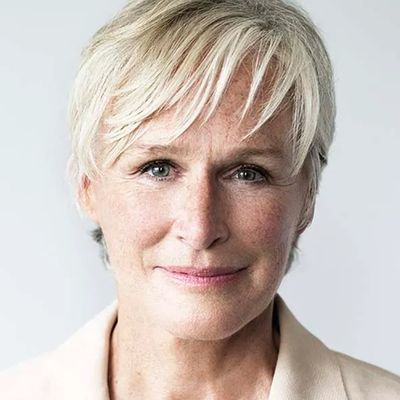
Glenn Close discusses returning to Sunset Boulevard for the 2017 Broadway revival. She shares how the production evolved since Broadway in 1994 and how she was able to dive even deeper into the role of Norma Desmond... Read More
From the show: Singular Sensation: The Podcast
Guests
Featured Shows

About
Glenn Close discusses returning to Sunset Boulevard for the 2017 Broadway revival. She shares how the production evolved since Broadway in 1994 and how she was able to dive even deeper into the role of Norma Desmond.
This episode features never-before-heard excerpts from the interviews Michael Riedel recorded while writing his 2020 best-selling book Singular Sensation: The Triumph of Broadway.
Transcript
This transcript was automatically generated and might contain errors.
[0:00] Michael Riedel: Here, and welcome to my podcast, Singular Sensation, the triumph of Broadway, based on my book that pulls the curtain up on all the great and juicy gossip from Broadway in the 1990s. We're back with part two of my conversation with Glenn Close. Glenn, of course, originated the role of Norma Desmond on Broadway in 1994, but then in 2017, the English National Opera Company revived the show with Glenn. It was on for just a week, but the critics absolutely adored it. So Andrew brought it to the Palace Theater right here in New York in 2017, and Glenn and the show triumphed once again. And what tempted you to do it again then after all these years?
[0:59] Glenn Close: I wanted to see... well, I've always wanted to make a film of it. And with that kind of in the back of my mind, it was also a good... I wanted to see, number one, if I could still do it, and number two, if the story had resonance still, you know, how an audience would react. And I also wanted to really have a challenging project to reconnect with my creative core, which I think I'd lost a little connection with. And so with those three things in mind, I went to London. And it was an amazing experience, because, you know, it was totally different from the original. I went into it, not wanting to do what I did originally. And it actually was, you know, I went back to the original movie and saw how rooted in the 50s she was.
And so that was in my mind. I mean, the only reason I wore whatever original costumes were viable was because, you know, the production didn't have money to make those kinds of costumes again. I was happy to do that show in just shapes, you know, black shapes. You don't really need costumes. The story is so powerful. But so I was able to achieve all those things. I achieved, you know, really using every aspect of my craft. And the audience reaction was phenomenal.
[2:45] Michael Riedel: Your interpretation of the role originally from what you did recently on Broadway.
[2:50] Glenn Close: Oh, absolutely. Could you give me some examples of where you changed things and why?
[2:55] Glenn Close: Well, well, it was funny. I think it was in the last three weeks of my performance, I changed my entrance because all of a sudden, you know, you can be doing something for weeks, and all of a sudden you get this kind of moment of epiphany. And I thought, you know, her entrance, she's going to see the body of her beloved pet before he's buried. And the undertaker, the pet undertaker, is late, you know, at least two or three hours late. So she is not in a, she's in a fragile state. So my last performances were coming in with no jewelry, with a different wig that was much more, not as tight and put together as the one I'd originally had. And she comes down with a great deal of fragility, and a real sense of mourning and loss.
And then he pulls her out of it by being so cheeky. And, you know, so that just felt really good. And that was very different from everything. And I just think, I just think for, I guess, life and 22 years of craft, it just made me go deeper. And I think she became, so she starts in the 50s, you know, she starts very together, and then she, she deconstructs. And always within her mind is the image of the young, beautiful Norma on the top of her game. And I think Lonnie's idea of that ghost walking through the play was wonderful. Yeah. And the mad scene was, I mean, I remember it being pretty intense the first time around, but it was double down on, as they say. Oh, I found out, I found so many things. It was in that scene that we really found the connection, going back to her absolute dependence and connection on Max. And it's heartbreaking.
[5:06] Michael Riedel: Yeah. And it explains so much.
[5:08] Glenn Close: Yeah. That he's the one who's literally, you know, I don't think, I don't know if seduces the right way, but he's bringing, you know, it's his power over her that brings her down the staircase.
[5:19] Michael Riedel: Yeah. Well, he's, you know, taking care of her again.
[5:24] Glenn Close: I know, it's just so awesome. And, and I think Fred Johanson did a beautiful job with Max. He was wonderful to play off of.
[5:30] Michael Riedel: Yeah, he's terrific. It's, it's really thrilling when you find those, those, those things that are just brilliant windows into, into, you know, a character.
[5:45] Michael Riedel: We'll be back with Glenn Close after this break. So the original opening in 1994, I do remember thinking, and I talked to Andrew and Don Black, who wrote the lyrics, and Chris Hampton too, who wrote the book about this over the years. Show's a very, very good show, has a beautiful score, but it's, it's an intimate show because it's really only about three people. It's about Norma Desmond, her butler, and Joe Gillis, the, you know, the young man that she's paying for to help write her crazy script and sleeping with. So it's an intimate show. But back in the early nineties, everybody still had the sense that shows have got to be huge with big special effects. You got to have cats, that floating, the tire that flies up to the heavy side, layered up, the chandelier in Family Opera, the turntable in Les Mis, the helicopter in Miss Saigon.
So we were still in that era. So they thought, well, we have to have this big special effect. And the big special effect was Norma Desmond's flying mansion, which makes no sense dramatically, but why would her house fly? It just doesn't make, makes no sense why her house would fly, right? And I remember sitting there at the opening, I'm thinking, I understand the chandelier, yeah, that's a key component of the Phantom of the Opera. I understand the helicopter in Miss Saigon, you're trying to evacuate the people from Vietnam. You know, the turntable in Les Mis is effective, fine. But I've never been in a mansion in Beverly Hills that's ever flown. So it just made no sense to me. And it just seemed that this is just, we have to give people the special effects that they want.
We have to give it to them. And then over the years, when Sunset Boulevard was done in various concert forms, I think Andrew and Don and Chris Hampton realized that the material is strong. It doesn't need these added on gizmos, you know, it does not need a $20 million production. So when they redid the show at the Palace Theater in 2017, there was no flying mansion. There was a staircase, you have to have the staircase for Norma Desmond to come down, you know, I'm ready for my close-up Mr. DeMille, famous scene where she comes down the staircase, you've got to have that. But they had kind of pared it down to just the strong story, the sad, pathetic story of Norma Desmond, and Andrew and Don's really first-rate musical theater songs.
So I felt seeing that production in 2017, it was far more emotionally effective than the one I saw originally, where I kept thinking, why is this mansion flying? The special effects were getting in the way of what is fundamentally, I think, a very good show. So in the production in 2017, what they did, and this was the right move, they got rid of the flying mansion, but they did have, and this was all Andrew's doing, they had a 70-piece orchestra, and it was great to hear that score performed by 70 people in the pit, which is unheard of. I mean, you know, with all the technology now, they've whittled it down to about three people in the pit and a computer, and that's pretty much the sound you get on Broadway these days.
But Andrew wanted, you know, I mean, Andrew's in the Richard Rogers mode of he wants live musicians in the orchestra, and he had the wherewithal and the money to hire 70 people to play that great score, and it sounded so sumptuous and just shimmered, the beauty of it all.
[9:08] Michael Riedel: By the way, with one looking as if we never said goodbye, those songs never failed to stop the show from the very early previews in LA?
[9:35] Glenn Close: No, that never happened before.
[9:38] Michael Riedel: I'm sorry, they had never?
[9:41] Glenn Close: Originally, and all through New York, I got great applause, but they never stopped the show.
[9:46] Michael Riedel: Really?
[9:47] Glenn Close: It's this recent production that literally stopped the show.
[9:53] Michael Riedel: That's interesting. It just, so no standing ovation?
[9:56] Glenn Close: Well, I sang much better than I did back then.
[9:59] Michael Riedel: Really?
[10:00] Glenn Close: I don't know why. My voice is 10 times better than it was originally.
[10:05] Michael Riedel: Really?
[10:06] Glenn Close: Yeah. You know, even in the second version, if your voice, if you have a cold or something, and you don't place it, you have to, you have to, you have to really technically be aware of where you're actually placing it on your vocal cords. And if you don't do it in that moment, it doesn't come out sounding very good.
[10:26] Michael Riedel: I guess you then just act your way through the moment.
[10:30] Glenn Close: Yeah, well, I did that a lot because when I lost my voice completely the second time around, I missed one show, which unfortunately was Mother's Day. But then I, I basically would talk or sing, you know, I would talk, sing through some of those high notes until I got my voice back.
[10:51] Michael Riedel: Did you talk?
[10:52] Glenn Close: The worst thing is missing a show.
[10:54] Michael Riedel: But I missed that one show because nothing was coming out of my vocal cords that worked.
[11:00] Michael Riedel: Did you miss any in the original shows?
[11:02] Glenn Close: Yes, I missed some because I got tracheitis at one point. And I think I had a high fever at one point. But the thing that always pissed me off is that, you know, you work your tail off and, and it's always the people who happen to be at the show when you're not on. But you just, you just don't want to disappoint people. And, and especially this last time when it was a limited run.
[11:30] Michael Riedel: Yeah.
[11:31] Glenn Close: And I knew that people had come from far and near, you know, and had tickets. And I just, that was the last thing I wanted to do. So if I was, when I was really in recovery, I would make an announcement saying, because it's all over the, you know, Facebook and everything, and saying, you know, I'm coming back from, from, you know, losing my voice. And, but there's no place on earth I'd rather be than here. So, you know, and they're incredibly generous. But when I, when I missed that one show, I'd heard that there were a lot of nasty things going on, you know, because of course, I mean, people had brought their mothers and tickets for months. And, and so I wrote a letter and put it on Facebook saying the glorious thing about live theater is that they're actual human beings on stage, you know, playing something in the moment.
And sometimes the body just doesn't, you know, you, you can't do it. And that's the only reason why I would ever miss anything is if I couldn't physically pull it off. So forgive me, but isn't theater fabulous?
[12:45] Michael Riedel: We'll be back with Glenn Close after this break.
[12:48] Michael Riedel: We're back with more of the juicy story behind the scenes of Sunset Boulevard. Any particular song that's a favorite of yours in that, in that score that...
[12:57] Glenn Close: The first one, the lullaby to the monkey.
[13:00] Michael Riedel: That's your, that's, that's your song.
[13:02] Glenn Close: I love that.
[13:03] Michael Riedel: Yeah. Of course, during the run of, of any show on Broadway, a hit or a flop, whatever, things do go wrong sometimes. And Glenn had a memory of one night where it got off the rails a little bit.
[13:14] Glenn Close: Well, there was a night where I came down and there was no monkey.
[13:19] Michael Riedel: Tell me about that.
[13:21] Glenn Close: Oh, my God.
[13:23] Michael Riedel: What did you do?
[13:25] Glenn Close: I just, you sing the song and then, and then poor, poor, it was George Hearn.
[13:31] Michael Riedel: Yes, of course.
[13:32] Glenn Close: Kind of surreptitiously slid off stage and came back with a monkey body. But yeah, and you know, the audience, I'm sure didn't have to have any clue what was going on.
[13:42] Michael Riedel: They didn't, probably didn't have thought that was the way it should be.
[13:45] Glenn Close: Yes. Everything's as if we never said goodbye.
[14:03] Michael Riedel: In the next two episodes, we'll hear from that bulldozer of a diva, Patti LuPone, and you do not want to miss what she has to say about Andrew Lloyd Webber and Glenn Close. Thank you for listening to Singular Sensation. I'm your host, Michael Riedel. To find out more about Singular Sensation, the book and the podcast, visit bpn.fm slash Singular Sensation. This episode was edited by Sarah Goodman and produced by Dori Berenstein, Kimberly Garris, and Alan Seals for the Broadway Podcast Network. Special thanks to Liz Armstrong and the entire BPN team.
© Broadway Podcast Network, All Rights Reserved