

The Pulitzer-winning playwright ("Jesus Hopped the A Train," "Between Riverside and Crazy") talks about writing (and not writing), his recent forays into acting and why his current retrospective and residency at Signature Theater at first made him think, "Uh, oh... Read More
From the show: Stagecraft with Gordon Cox
Featured Shows
About
The Pulitzer-winning playwright ("Jesus Hopped the A Train," "Between Riverside and Crazy") talks about writing (and not writing), his recent forays into acting and why his current retrospective and residency at Signature Theater at first made him think, "Uh, oh. I'm old. It's done."
Transcript
This transcript was automatically generated and might contain errors.
[0:06] Gordon Cox: You're listening to Stagecraft, Variety's Theatre Podcast.
[0:10] Gordon Cox: I'm your host, Variety's Theater Editor, Gordon Cox.
[0:13] Gordon Cox: In 2015, the playwright Stephen Adly Guirgis won the Pulitzer Prize for his play *Between Riverside and Crazy*, the latest in a body of work that's included *In Arabia, We'd All Be Kings*, and *The Motherfucker with the Hat*.
[0:26] Gordon Cox: His work is now the season-long focus of the Residency One program at Off Broadway Signature Theater, which just produced the well-received revival of his 2000 play, *Jesus Hopped to the A-Train*.
[0:36] Gordon Cox: And later this year will stage both his 2002 play, *Our Lady of 121st Street*, and a brand new play.
[0:43] Gordon Cox: Stephen has also been a co-artistic director of the Labyrinth Theatre Company and a writer for TV shows like *The Get Down*.
[0:49] Gordon Cox: He's in the studio to tell us about all that and more.
[0:52] Gordon Cox: Hi, Stephen. Thanks for being here.
[0:53] Stephen Adly Guirgis: Thank you, Cox.
[0:54] Gordon Cox: Gordon.
[0:57] Stephen Adly Guirgis: Mr. Cox.
[0:58] Gordon Cox: So the Signature Theater says to you, "We're gonna do a season of your work." How's that feel?
[1:06] Stephen Adly Guirgis: I felt like, uh oh, this is like the harbinger of doom, you know, like I'm old, it's done. And uh so I was reluctant, but yet honored. Yeah, you know, but reluctant. Um, but then I met with Paige Evans and and Paige.
[1:21] Stephen Adly Guirgis: She's the artistic director, Paige Evans. She gave me my first commission at MTC like years ago.
[1:26] Gordon Cox: Oh wow, yeah.
[1:27] Stephen Adly Guirgis: Um so I've so I really like her a lot.
[1:30] Gordon Cox: What play was that?
[1:30] Stephen Adly Guirgis: It was the play that turned out to be *Little Flower Beast Orange*. Um, but they at the time we had I was in a process of writing the play. Then my mom, it was a play that kind of was about my mom.
[1:41] Gordon Cox: Yep.
[1:42] Stephen Adly Guirgis: And then my mother died in the middle of it, so it's like I should have never even continued, but I did, and then we wanted to do it in stage one, but they wanted to do it in stage two, and and so Oscar at the public bought the commission and we did it at the public.
[1:57] Gordon Cox: Public, right.
[1:58] Stephen Adly Guirgis: Paige was the you know the instigator of it happening, and and she's a real cool lady.
[2:04] Gordon Cox: So and how did she convince you that this was something you wanted to do?
[2:08] Stephen Adly Guirgis: Um you know, I think it was more like I felt like it would be impolite to say no. Like, you know, who am I to say no? Like it just seems rude and like you think you're something to be able to say no. So I said yeah.
[2:24] Gordon Cox: And so what was it like for you to look to take look at these individual plays and sort of look at them as a body of work?
[2:31] Stephen Adly Guirgis: Yeah. Well, I mean, the play that we just closed was *Jesus Hopped to A Train* and we were in 2000, right?
[2:37] Gordon Cox: Yeah, and you were talking about reviewing it on, yeah.
[2:40] Stephen Adly Guirgis: Back in the day.
[2:41] Gordon Cox: Back in the day, we're old.
[2:42] Stephen Adly Guirgis: Um world.
[2:43] Gordon Cox: And uh just me.
[2:44] Stephen Adly Guirgis: Yeah.
[2:45] Gordon Cox: Yeah.
[2:46] Stephen Adly Guirgis: Um and it was I was uh I was very ambivalent because that play was sort of the play that launched us as a company, but also this was Labyrinth Theater Company. And but also it was like it was more than that. It's like I I look back at that play almost not like a play. I look at it almost like uh uh my memories are all familial. You know, the cast was you know, John Ortiz was like my best friend, uh Phil Hoffman was like my other best friend.
[3:18] Gordon Cox: Yeah, we should say for people who don't know, Philip Seymour Hoffman uh directed the original production in 2000.
[3:23] Stephen Adly Guirgis: He did, and Ron C. Fitz Jones, who uh who played Lucius, you know, lived with me uh for like up until this is us.
[3:32] Gordon Cox: Oh wow, so just recently, yeah.
[3:34] Stephen Adly Guirgis: Yeah, so I mean with it it was and then Salon Zarillo and Liz Kevin. So it was like a family thing, and it was a family struggle, and and uh David Zayas, and and I just it was just uh so then going back to look at it, I they really wanted to do it and uh so I was like all right.
[3:52] Gordon Cox: You know, I was gonna ask how those plays get chosen. Is it is it sh plays you want to see again, plays they want to see again once.
[3:58] Stephen Adly Guirgis: Well, you know, she basically said, you know, I would really like to do *Jesus Hopped to A Train*, *Our Lady of 121st Street*, and then a new play. And uh and I was like, Yeah, all right. I mean I mean, I think maybe like in *Arabia* and *We'd All Be Kings* or or *Last Days of Judas Iscariot*, like those also and she's like, Yeah, but I really wanted you know, so I was like, All right, that's what that's what we're gonna do.
[4:25] Stephen Adly Guirgis: And she's smart because you know, uh the fact is is like *Jesus* imperfect, very imperfect play, but why do you think it's imperfect?
[4:37] Gordon Cox: Uh everything is imperfect.
[4:38] Stephen Adly Guirgis: Certainly when I'm writing when you watch it, what do you think?
[4:42] Stephen Adly Guirgis: Well, when I was w when I was before I even watched it before when I was reading it, you know, I was looking at first of all the the um the female prosecutor Mary Jane. Her her It's about we should say for people who don't know, it's about um uh inmate and relationship between two inmates and relationship between two inmates and and it's uh about yeah.
[5:03] Stephen Adly Guirgis: And so the there's a she has these direct address monologues. And you know, just hearing them again, I was just like, No, okay. Like it's kind of I think it's like kind of cheating to go back and rewrite your stuff, but like I can't. I can't. And it's not that it's it's not bad, you know, and I know that like, you know, sixteen years ago it was like, you know, it was me and Phil and neither one of us was stupid. We weren't gonna just put up something that was dumb, but I was like, it can be better. Um so that was the section that I wanted to work on although I ended up not I was just gonna ask did you because I didn't notice anything yeah and then the other stuff it stayed as is right um and uh and it you know it works it works pretty well.
[5:46] Stephen Adly Guirgis: I mean I think that I think that when I was writing that play I didn't I was still learning how to write and I'm still learning how to write but you know there's things in there that are maybe mistakes but I didn't know that they were mistakes and and I think it's fine. I think it it you know it plays and it's and it's fine but still you know I I I watch and I just er anything that's like you know I I wince at at the stuff that I'm like oh I could have I could have I could have done better. But you know it plays.
[6:21] Gordon Cox: And what are your feelings about *Our Lady of 121st Street*?
[6:21] Stephen Adly Guirgis: Well um you know it's funny because I knew we were gonna do that and actually I just um I can tell you I don't know when this will air. Uh Jan this will be in January 9th. So it may be breaking news or it might have been recently but uh but um Felicia Rashad is going to direct it.
[6:43] Gordon Cox: Oh wow that's I just met her today and she's she's been directing a lot lately actually for listeners who don't know yeah and she's amazing and and uh so I'm excited about that.
[6:52] Stephen Adly Guirgis: And uh in terms of the play um you know I I had uh uh a couple of my friends in the house, read some scenes um I forgot what the context was, but we just started reading scenes from the play.
[7:06] Stephen Adly Guirgis: And um, you know, again, I'm sure once I go into it, it's gonna be fraught with you know error. But uh But do you feel that way about plays you're working on at the moment?
[7:20] Stephen Adly Guirgis: But I I I found myself oddly moved, you know. I found myself like and the to me, like the most embarrassing thing is when you go to a play or you go see a friend's show, and the playwright is in the back of his own play, like laughing or or crying. Or weeping.
[7:35] Gordon Cox: Or we although I will say that uh I saw um *Death of a Salesman* the last, you know, that Phil Hoffman had did that um Mike Nichols had directed.
[7:46] Stephen Adly Guirgis: Right.
[7:47] Gordon Cox: I think I saw it three or four times. But the one there was one time where I saw it, and I was sitting in on the aisle, like on the right side, and I noticed somebody, you know, like the sounds of crying, you know, and and but they were kind of a like uh it was pers you know, like persistent or whatever. It wasn't um annoying, but it was just like, oh, someone is feeling what I'm feeling. So I took a glance over, and it was Mike Nichols, you know, so like you know, more than halfway through the run, just sitting there weeping.
[8:19] Stephen Adly Guirgis: And uh I thought that that was of course uh excusable and and beautiful.
[8:25] Gordon Cox: Yeah.
[8:25] Stephen Adly Guirgis: Um, but uh yeah, I mean hopefully it'll hopefully the play will s will stand up, and that's really what's it about for people who don't know.
[8:36] Stephen Adly Guirgis: The play is about um *Our Lady of 121st Street* is a play that uh it's sort of a reunion play. Um a bunch of old Catholic school kids in Harlem um come back for the funeral of um this sort of beloved by many, hated by some, uh none named Sister Rose and then the sort of messed up thing is is that there's a there's a robbery in the a funeral home and the and the body is the body was taken so they've come to to grieve and the body's gone and there's sort of an investigation that goes on but really it's about them and really it's about uh um i it's about there's a quote from uh which Saint Saint Paul and then and I think it's referenced in the play where they said uh when you say when I became a man I put away my childish things and I think the play is sort of like uh a study of uh you know those who have and those who haven't and those who are still trying um which the thing is when you ask me what's it like to look back at these plays it's like when I wrote *Jesus Hopped to A Train* that was what I was struggling with.
[9:53] Stephen Adly Guirgis: You know these questions of faith and and becoming an adult and t assuming responsibility taking responsibility and you know I want to think I want to look back like oh that was 17 years ago I've graduated from that I'm like nope. I'm still kind of exactly where that character is and I'm sure it's gonna be the same for *Our Lady* you know um I guess you never you never graduate.
[10:14] Gordon Cox: Yeah. And were you already at work on a new play when she mentioned that to you?
[10:18] Stephen Adly Guirgis: No.
[10:20] Gordon Cox: And are you now?
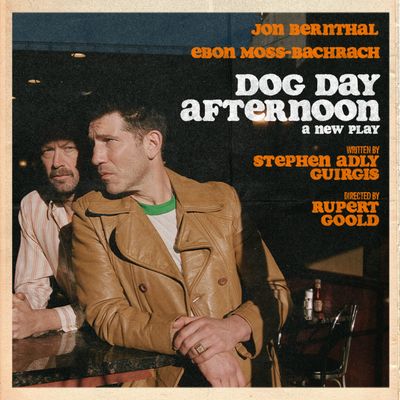
[10:20] Stephen Adly Guirgis: Um actually I'm really fortunate I I was uh asked to do an adaptation of um *Dog Day Afternoon* for Warner Brothers. You know how they they stage those things? And so I accepted that quite a while ago.
[10:36] Gordon Cox: So actually, when you were asking before we started, what are you doing for Christmas, you know, I was talking about am I going to Philly, Jersey, St. Petersburg. Well, wherever I'm going, I'll be, I gotta get started on this thing.
[10:48] Gordon Cox: Yeah.
[10:48] Stephen Adly Guirgis: Um before they fire me.
[10:50] Gordon Cox: And but will that is that a different play from the one that they're different from a new player.
[10:55] Stephen Adly Guirgis: Yeah, sure. Sure.
[10:55] Stephen Adly Guirgis: I have an idea for I do have an idea for a new play. And but my fear is um you know how when you're writing something, you know, if you're lucky and if you're in tune, you sort of catch the wave or the zeitgeist. You know, it's like for for regular folks who are just, you know, whatever, like, you know, all of a sudden there'll be three or four plays about surfing or Gandhi. And it's because in the collective conscious, there's this thing.
[11:26] Stephen Adly Guirgis: So I had this idea for the play a few years ago, but now I think I might have missed the wave because it's like happening now. It's like now it's like it dealt with Polly. It was like a few years ago. Whenever I go through periods where like I watch the news, I can't watch the news. I read the paper, I can't read the paper. And it was a period where I was like trying to watch the news and watch PBS, and everything that I was seeing and hearing was making me wanna I it's just arrived at the conclusion that like people uh bad people, they don't they don't need to be voted out of office. Like sometimes they just need to be hurt.
[12:00] Stephen Adly Guirgis: And uh and I had a working title of uh of um *Mr. Smith Goes to Washington* with a new. But you know, three months ago, someone did that, right? In a baseball field. So I'm like, you know, yeah, I better I better write quick.
[12:15] Gordon Cox: Um do you get ideas? That idea sounds like it came to you as a theme more than a character, or how do you is that how you usually work?
[12:23] Stephen Adly Guirgis: I I usually I usually end up usually writing about the things that are bothering me or the things that keep me up at night, like enough that it actually commands my attention even when I want it to go away. And then but I think it's a mistake, or I'm certainly not the writer who can like take a theme and then develop a play around an issue. It's just it's kind of dangerous to do unless you're really skilled to begin with, um, which I don't think I am.
[12:53] Stephen Adly Guirgis: But also I write from dialogue and it comes from character. So I might have this, for example, this play, which I have not yet written. I have this idea. Right. And so, but it will, you know, inevitably start out with two people talking, you know, maybe in a bar or something, and then you if you're lucky and the the voices are speaking, really, and you sort of listen to what they're saying and and um and then see well what might happen next, what might happen next. And then maybe, you know, uh a month into it, that scene that you wrote in a bar, you'd be like, well, it'd be much better maybe if it took place at a bar, you know, outside of or the bar that the pages hang out in Washington instead of Washington Heights, and you go from there.
[13:40] Gordon Cox: Right. We were talking before we turned the recorder on uh about the fact that sometimes you act, which I think is uh thing that maybe a lot of people might not know about you. Tell me about your relationship to acting and when you do it and why you do it.
[13:53] Stephen Adly Guirgis: Yeah, well, it's definitely my favorite thing to do. I mean, it's how I started. I grew up uh, you know, we didn't have a lot of money, but my mom would where was this exactly?
[14:03] Stephen Adly Guirgis: I grew up on Upper West Side.
[14:05] Gordon Cox: Upper West Side.
[14:05] Stephen Adly Guirgis: Yeah. And uh we were sort of living in a neighborhood that we couldn't afford. Um, but you know, my mom would take us to um the old Regency Theater to see the old movies, the old MGM movies, and you know, like once a year we'd go see a play somewhere.
[14:23] Stephen Adly Guirgis: Um, you know, uh she'd let us stay up late to watch like the Academy Awards or the Tony Awards, or when I was really little, like we were allowed a like half an hour of TV a day, but Saturday nights she would uh let us let me stay up with her and my dad and the black and white TV on the radiator of the kitchen and watch Mary Tyler Moore, Mash, Bob Newhart, uh the whole CBS Carol Burnett lineup. So I kind of grew up with it and wanting to do it. Uh but then she, you know, when I went to high school, I wanted to go to like one of those performance schools. She's like, no, you know, uh, so I went to regular school and and then uh but it's always one of the so I started as an actor. I studied with Bill. Was this right out of college? You went to SUNY, right?
[15:07] Gordon Cox: Yeah, I got I went to SUNY Albany.
[15:10] Stephen Adly Guirgis: Yeah. And uh I was an undergrad for seven and a half years because I was an idiot and and I didn't think I should major in theater. It wasn't until I declared theater that I got out pretty quick. And then uh after that I I started a theater up in the Bronx on Arthur Avenue called the Belmont Playhouse that existed for a long time, but I left after a year. I went to New Mexico, started theater in Santa Fe.
[15:33] Gordon Cox: Oh wow.
[15:34] Stephen Adly Guirgis: We did like eight plays in a year at this place called the Old Santa Fe Trail bookstore. It was a great experience. And then I literally like the three hundred and sixty-sixth day in Santa Fe, I was like, okay, I gotta get out of here. I went to New York. And pretty quickly um I went to go study with uh William Esper and Maggie Flanagan. And um, you know, my dear friend John Ortiz had just started Labyrinth, which was at the time uh exclusively Latino company. Um so he says, like, you know, we're gonna have auditions, you gotta audition, but you have to be really good because it's Latino and we don't really take, you know, only Sam Rockwell's in the company, blah, blah, blah.
[16:10] Gordon Cox: Right.
[16:11] Stephen Adly Guirgis: So I auditioned and I actually didn't get in. What what year would this eventually be?
[16:15] Gordon Cox: This was um 93.
[16:17] Stephen Adly Guirgis: I auditioned in 92, and then I got in the second year, 93.
[16:20] Gordon Cox: Okay, got it.
[16:21] Stephen Adly Guirgis: And I think that the vote was three to two against. Um John Ortiz and Gary Prez voted for me, and then John overrid the other people and was like, look, we gotta take this guy. I don't know, but somehow it's gonna pay off. And that's how the writing came into play.
[16:36] Gordon Cox: Right.
[16:37] Stephen Adly Guirgis: And uh and then for a long time it was uh the great thing about Labyrinth, besides uh whatever work we may have contributed was it was a place that was um very process oriented and and and and we infused with the belief from the beginning from philosophy but also from necessity that you can do anything. You know, um, you know, y you I may not be as talented as a of a lighting designer as I am of uh you know stage manager, but we could do everything. So they encouraged me to write, and then uh I did a little one act at uh this old space called One Dream that uh down on North Moor, and uh it was part of uh an evening, and I don't know, everybody seemed to like the play, and then they kind of just forced me to keep writing. And it was a big dilemma because I you wrote a number of plays with them and oh yeah.
[17:35] Gordon Cox: Most um all my plays until Riverside was started at Labyrinth.
[17:39] Stephen Adly Guirgis: Right, right. Um and uh so I didn't get to act as much, but you know, I became a writer.
[17:45] Gordon Cox: Right.
[17:46] Stephen Adly Guirgis: And uh and then I would act when I could, and then I haven't been able to do it for I did uh Yeah, what was the last thing you did?
[17:52] Gordon Cox: Uh well I've just started again.
[17:54] Stephen Adly Guirgis: But like the I did American Buffalo this summer um up in Vermont with Treat Williams.
[18:01] Gordon Cox: I did not know that.
[18:02] Stephen Adly Guirgis: Which was awesome. I mean it was crazy. It was like 12 rehearsals, one preview, and we're up. But it was awesome.
[18:09] Gordon Cox: Well those lines are easy. I'm sure that was good.
[18:11] Stephen Adly Guirgis: Yeah. I wor uh we worked real I I worked really hard and I relished working hard and and and and it was it was great. But before that I hadn't done a play in 13 years. I did uh Brett Leonard's play Guinea Pig Solo at the public.
[18:24] Gordon Cox: Oh yeah, it was 13 years.
[18:27] Stephen Adly Guirgis: Right. And then movies every once in a while, and but then I just did this movie, I mean, really lucky uh called Backseat, which is uh Adam McKay's new movie about Dick Cheney. Oh Christian Bale's playing Dick Cheney and Sam Rockwell is playing George Bush and Corell as Rumsfeld and Tyler Perry is um Colin Powell, and I played George Tenet, the head of the CIA. And so it was great because I I'm not fun. I don't have a big part, but I have like you know, six to eight scenes, and they're all with the main people.
[18:58] Gordon Cox: Yeah.
[18:59] Stephen Adly Guirgis: Um and so I I really I was nerve wracked because I wanted to do a good job, and I was afraid I wasn't doing a good job, but they said I did.
[19:07] Gordon Cox: Yeah.
[19:08] Stephen Adly Guirgis: You know, yeah, yeah. But it was uh such a pleasure. I mean, that was really exciting. And do you how do you feel about writing for TV? Because you've done that too. You just did The Get Down. And how what's that like? Do you enjoy that? Do you learn anything that you can bring back to playwrighting or?
[19:22] Stephen Adly Guirgis: Well, it's funny because I I I'm not like good friends with Warren Light, who's uh uh great playwright, but also TV producer. I'm looking here like this somebody.
[19:34] Gordon Cox: Yeah, like somebody knows.
[19:35] Stephen Adly Guirgis: Yeah, yeah. Because I had an opportunity to, I have an opportunity to do something new in TV. And I wanted to talk to him, and I was like, now that Phil is dead, it's like the number of people that I can talk about things. Like I like like I needed to talk to someone that that um isn't necessarily impressed with success or or impressed by like an offer that seems like a no brainer.
[20:03] Gordon Cox: Right.
[20:04] Stephen Adly Guirgis: And so I thought of Warren because he's done a lot of stuff and he knows TV a whole lot of people. Uh Warren Light wrote Sideman, we should say.
[20:20] Gordon Cox: Yeah, that's true.
[20:20] Stephen Adly Guirgis: Which is my favorite show. Um why did I mention Warren? Because you want to talk to him about an opportunity.
[20:26] Gordon Cox: Right.
[20:27] Stephen Adly Guirgis: About about about TV. And he said the thing that's really true. It's because I was like, I was like, the thing is is that the end of the day, when theater writing for plays is is they're both really hard. And they're both I can't do it without putting my heart and my soul into it, no matter what it is. Like I've written on TV shows that are not uh necessarily highbrow, but I'm still I still me, I have to put my whole self into it. And and I was saying to him, like, you know, and you end up paying for it. You end up, I mean, you know, it's it's uh it's a ransom. You're trading money and health insurance for you, can you say ass here?
[21:07] Gordon Cox: Right.
[21:07] Stephen Adly Guirgis: For your ass. You're giving your your ass and a lot of other body parts. And uh, and he said the thing that was really smart. He's like, I know what you mean, and you're right. He's like, but like, you're talking about this being your own show? I'm like, yeah. And he said it's different. He's like, it's still hard, and this is all this extra responsibility, but it's yours. And you'll find that, you know.
[21:29] Stephen Adly Guirgis: And the fact is, is The Get Down, which I did with Baz, we were Baz Lerman. We were who's amazing. Yeah. Um, and but we were co, you know, we co-creator, co-creator, everything. And this is this is sort of this was near and dear to your heart, this setting, right?
[21:44] Gordon Cox: Because it was near, yes.
[21:46] Stephen Adly Guirgis: But the fact of the matter was, is like co-sometimes more in theory than in practice.
[21:53] Gordon Cox: Sure.
[21:54] Stephen Adly Guirgis: Whoever is the more powerful person, whoever the agency makes more money, you know, it's like um, so I mean, it was great, but at the end of the day, you know, I yeah, I created it, I wrote the characters, I did the bulk of whatever, but at the end of the day, I'm working for Baz.
[22:12] Gordon Cox: What do you feel like the show got at? Because that's because that was you're very familiar with that time and that place.
[22:21] Stephen Adly Guirgis: It was set in uh in New York in the early 80s, right?
[22:26] Gordon Cox: Yeah, 70s.
[22:27] Stephen Adly Guirgis: Yeah, the Bronx of hip hop. And what do you feel like the show got that maybe you haven't seen on TV before about that time?
[22:34] Stephen Adly Guirgis: Well, I think that well, about that time is or about the world that you were doing. I mean, I think that we came, like we're talking about the zeitgeist before. This unfortunately, like the thing that I'm most proud of, and which now is quickly happening, is you know, what I'm most proud about that show was was that we did a show where the um the there's five lead characters, all teenagers and all people of color. Yep. And to do that is something, and it and it comes at uh a cost and a risk and this and that, and we did that, and we filled a world with people that reflected that world. So I'm real I'm very proud of that. And in fact, I feel uh now, even though all those kids are doing great, um, but I feel um I feel some guilt because I feel like oh, I have that book, Madame Sarah.
Um, do you? I feel like if we had did our job better, uh we would have had a second season. And I think that the opportunity to present those characters in that world is uh it's rare, it's still rare. Maybe it'll become less rare. And I wish we'd done I wish we'd done I wish we'd done better.
[23:54] Gordon Cox: You mentioned the uh five leads, the five kids, um, and that raises the question of how you feel like the theater community is faring in terms of like diversity and authenticity. You know, there was this was a few years ago now, but there was that casting thing with Motherf***er with the Hat that involved.
[24:11] Stephen Adly Guirgis: In Connecticut, yeah, white actors cast and Puerto Rican. Rolls written for Puerto Rico. In Hartford, where the mayor was Puerto Rican and the population was like like 40%, and they hired two white kids and they didn't even have auditions. This was 2011 or something, right?
[24:26] Gordon Cox: That was a while ago.
[24:28] Stephen Adly Guirgis: What do you think? Where do we stand now? Do you think you know?
[24:31] Gordon Cox: I mean, w once uh once that got unpacked, um and I got into it, you know, they just made a the director who was uh African American, yeah, he just made a really stupid mistake.
[24:43] Stephen Adly Guirgis: Yeah that was Taswell Thompson, is that who it was?
[24:45] Gordon Cox: Yeah, it was a good great director and a good guy. He just did something stupid. There was two of I think of his former students, and you know, it we all learn from our mistakes. Could it happen today? Yeah, I think it's it still happens all the time.
[25:02] Gordon Cox: Uh is the theater is the theater you see doing better on that front in your own.
[25:07] Stephen Adly Guirgis: I think so. I think so. I mean, I think that you know I think that I think this is a it's just it's a difficult and it's a challenging time, but also it's it's an interesting time and and and ultimately a pretty great time. Because I think that I think that uh people are starting to get the message um willfully or unwillfully that you know that um you know that at least it you know in in nationally, but in New York, you know, we want to see a theater that reflects the people that we see every day, and that and that those positions shouldn't be limited to like those who are on stage, you know, that you know that's the next step. And and you know, I'm not by any means at the forefront of of the movement, but you know, my sense and my feeling is is that you know, casting things are getting better, um programming seasons, I think it's getting better. You see more women, more people of color, and but you know, the next thing is to have uh artistic directors and associate artistic directors, and uh and and you know, and that'll happen.
[26:20] Gordon Cox: Is there anything that you haven't written about that you are hoping to write about in the future? And what is it?
[26:26] Stephen Adly Guirgis: Wow. Well, it usually I'm usually looking for opportunities not to write. Um like I said, like what it what I end up writing about is a ends up being about what's going on with me and stuff that's bothering me or things I can't reconcile. And uh unfortunately I don't think that's gonna stop. So probably I'll keep writing. Um, and then probably I'll end up like most writers, right? Where everybody loves you for a while, and then all of a sudden they're like, Guirgis sucks. You know, uh and you're gonna have to sort of ride that out. Um, and then maybe they like you again, but it's not gonna stop. I mean, the one thing that I've joked about is that uh is that some point in my career I feel like I need to write about you know, not necessarily about like, you know, the the striving underclass and you know that that at some point I would say like, well, I need to write a play about like French diplomats or something.
[27:36] Gordon Cox: Um I can't wait for that play.
[27:38] Stephen Adly Guirgis: And I think you know, maybe that'll come, but I don't know. I'll probably keep writing because I don't stop having bad feelings, yeah.
[27:49] Gordon Cox: You know, yeah.
[27:50] Stephen Adly Guirgis: That is weirdly a good place for us to stop, I think.
[27:53] Gordon Cox: Yeah, okay. Thank you, Stephen. It was great talking to you. I appreciate it.
[27:56] Stephen Adly Guirgis: I appreciate your support of the company and me over the years.
[28:06] Gordon Cox: That was the playwright Stephen Adly Guirgis, who is the current Residency 1 playwright at Off-Broadway's Signature Theater, where his play Our Lady of 121st Street begins performances in May. In the next episode of Stagecraft, I'll be talking to Keegan Michael Key, the Key and Peele star who's turned up on stage recently in Hamlet and in the current Broadway show Meteor Shower. Until then, see you at the theater.
© Broadway Podcast Network, All Rights Reserved