

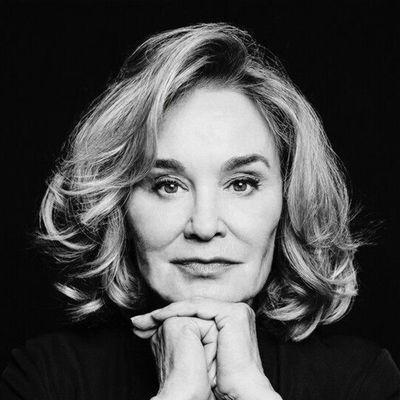
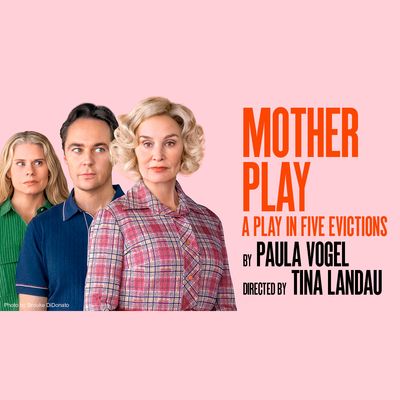
Oscar, Emmy and Tony winning actress Lange, now on Broadway in a Tony-nominated performance in "Mother Play," discusses premiering a new play on Broadway, explains why she could do without Wednesday matinees, and reveals why her recent work has her feeling "wild and liberated.".. Read More
From the show: Stagecraft with Gordon Cox
Guests
Featured Shows
About
Oscar, Emmy and Tony winning actress Lange, now on Broadway in a Tony-nominated performance in "Mother Play," discusses premiering a new play on Broadway, explains why she could do without Wednesday matinees, and reveals why her recent work has her feeling "wild and liberated."
Transcript
This transcript was automatically generated and might contain errors.
[0:06] Gordon Cox: Welcome to Stagecraft, Variety's Theatre Podcast.
[0:09] Gordon Cox: Your backstage pass to revealing conversations with stars, creators, industry leaders, and Tony nominees on Broadway, off Broadway, and beyond.
[0:18] Gordon Cox: I'm Gordon Cox.
[0:20] Gordon Cox: On this episode of Stagecraft, I find myself introducing an actress who needs no introduction, Jessica Lange.
[0:26] Gordon Cox: As the winner of two Academy Awards, three Emmy Awards, and one Tony Award, she's no stranger to awards season.
[0:33] Gordon Cox: So it's only fitting that I'm talking to her this Tony Awards season about her latest Broadway role in Paula Vogel's Mother Play.
[0:41] Gordon Cox: Lange has been Tony nominated for her work in the show, alongside both of her fellow cast members, Jim Parsons and Celia Keenan Bulger.
[0:49] Gordon Cox: And the play itself is nominated for Best Play.
[0:52] Gordon Cox: Now Lange is in the virtual studio with me to talk family plays, the five martini scene, her long stretch of silence on stage, and the advice she wished she'd gotten when she first started working in theater.
[1:05] Gordon Cox: Hi Jessica, thanks for joining me.
[1:07] Jessica Lange: Thank you.
[1:08] Jessica Lange: Thank you for having me.
[1:09] Gordon Cox: Congratulations on your Tony nomination.
[1:11] Gordon Cox: How did it feel when you got the news?
[1:18] Jessica Lange: And there was a series of texts, you know, congratulations, which was I mean, it's always it's always very exciting and rewarding.
[1:31] Jessica Lange: But the best news of all was that the three of us were all nominated.
[1:36] Gordon Cox: Yeah.
[1:36] Jessica Lange: So that really made it celebratory.
[1:40] Gordon Cox: Yeah, that must have really made particularly maybe your first show that night really well tell us a little bit about that experience of being on stage the first time, all three of you after the nominations.
[1:54] Jessica Lange: Yeah, I mean we were all feeling very happy, I think, and very you know there's a certain relief I guess that you know that you're going on stage with actors who have been recognized for their beautiful work and that's yeah I mean that made it a I don't want to say happy show because this isn't a happy show but it certainly was a great way to start that week.
[1:54] Gordon Cox: Yeah and unlike in movies and often in TV you know right now you're on stage still in the midst of doing the thing that you've been nominated for which is unlike for instance film does that create any sort of pressure for you all as actors do you feel?
[1:54] Jessica Lange: Oh well I can't speak for other actors but for me no I mean it just feels like you know the work has been recognized so far and you just keep doing what you're doing I mean you don't make any adjustments.
[1:54] Jessica Lange: Right yeah but I mean you like I said before I mean it's a wonderful recognition to be nominated and certainly you know but no I don't feel like it changes anything in what you're doing it shouldn't.
[1:54] Gordon Cox: Yeah you were last on Broadway in 2016 are you enjoying being back?
[3:31] Jessica Lange: Yes.
[3:31] Jessica Lange: But I'm also that much older.
[3:39] Jessica Lange: Um, I love being on stage and I I love doing this play.
[3:46] Jessica Lange: It's a real challenge, and it is from start to finish, the hour and 45 minutes, it's a huge roller coaster ride emotionally.
[3:56] Gordon Cox: Yeah.
[3:57] Jessica Lange: Um but it the velocity that we're going at during the play between scene changes, wardrobe changes, sometimes not even leaving the stage, and you go from one huge emotional moment directly into another scene.
[4:18] Gordon Cox: Yeah.
[4:19] Jessica Lange: Um yeah, that's been that's been incredibly challenging and fascinating to do.
[4:27] Gordon Cox: Do you like the eight show a week schedule as the routine of that's something you?
[4:27] Jessica Lange: Oh no, no?
[4:34] Jessica Lange: They should abolish Wednesday matinees.
[4:38] Jessica Lange: That's my feeling about that.
[4:40] Jessica Lange: No, a seven seven show week would be doable.
[4:45] Jessica Lange: I mean, I remember when I was doing Long Day's Journey into Night in London.
[4:52] Gordon Cox: Yeah.
[4:52] Jessica Lange: Because we had to have like an early curtain uh the evening curtain.
[5:00] Jessica Lange: I think it was a seven o'clock curtain.
[5:02] Jessica Lange: Um because of the underground, you know, people had to get home.
[5:07] Gordon Cox: So yeah.
[5:09] Jessica Lange: And so we would come down and we would have a half hour before half hour.
[5:16] Jessica Lange: Come on.
[5:16] Gordon Cox: No.
[5:17] Jessica Lange: Wow.
[5:17] Jessica Lange: That's yeah.
[5:18] Jessica Lange: So I mean, and you could do two You have you could do the Mother Play two times in the length of one uh, you know, play of Long Day's Journey into Night, right?
[5:28] Gordon Cox: Well, absolutely.
[5:30] Jessica Lange: Yeah.
[5:31] Gordon Cox: And uh can we talk a little bit about how you got involved in Mother Play?
[5:35] Jessica Lange: Was first of all, was theater something you were looking to get back to around now, and if so, why?
[5:40] Jessica Lange: Several years ago, I saw I saw a production at the Hayes Theater, and I was with a good friend, and I said to him, I would love to do something in this theater.
[5:52] Jessica Lange: I love this theater.
[5:53] Jessica Lange: It's like a jewel box.
[5:55] Jessica Lange: It's so intimate.
[5:57] Jessica Lange: I believe, if I'm not mistaken, it's the smallest theater.
[6:00] Gordon Cox: Yeah, smallest house on Broadway.
[6:04] Jessica Lange: And um he put me in touch with Carol Rothman.
[6:08] Gordon Cox: Yeah.
[6:09] Jessica Lange: At Second Stage, and I just said to her, you know, if anything ever comes up, let me know because I would love to work in your theater.
[6:17] Jessica Lange: And a couple years later, I was approached about Paula's play.
[6:23] Gordon Cox: Yeah.
[6:24] Jessica Lange: And I thought, okay, I've never done a brand new play.
[6:28] Jessica Lange: Yeah.
[6:28] Jessica Lange: I've never created a character that's never been seen before.
[6:33] Jessica Lange: I've never opened a new play on Broadway.
[6:39] Jessica Lange: So for all those reasons, I thought, okay, let me read this.
[6:42] Jessica Lange: Let me see what's and I fell in love with it right away.
[6:46] Jessica Lange: And we did the first reading, um, sitting in a room.
[6:51] Jessica Lange: Um, Steely was there, and I thought, well, there it is.
[6:55] Jessica Lange: I want to work with her.
[6:56] Jessica Lange: This is gonna, yeah.
[6:58] Jessica Lange: And then Jim came on board, and you know, it was the perfect, perfect triangle.
[7:05] Gordon Cox: Yeah.
[7:06] Gordon Cox: Was there, do you remember what it was about the role in particular that really spoke to you?
[7:13] Jessica Lange: Well, one thing was creating a character over 40 years in her life.
[7:21] Jessica Lange: Um, to go from I think in the first scene she's 37, and in the last scene, she's in her um late 70s.
[7:34] Gordon Cox: Yeah.
[7:35] Jessica Lange: So yeah, I and to do it not like we do it on film, which is with, you know, I mean, we're d prosthetics and wigs and hair and makeup and all, you know, everything that you can kind of like create this illusion that you're either younger or older.
[7:58] Jessica Lange: This really had to be, it was an exercise in finding how to do it through energy level, through um voice, through the physical life of the character, the bot, you know, the movement.
[8:16] Jessica Lange: Um that that became one of the most interesting things to really investigate for me.
[8:24] Gordon Cox: How to do that.
[8:25] Gordon Cox: Yeah.
[8:26] Gordon Cox: Was there is there a uh a physical key to the character that you think in terms of where she carries her body or where she uh leads what she leads from?
[8:37] Jessica Lange: I think she has a lot of tension.
[8:39] Jessica Lange: I think this is a woman we meet who's in some in a state of rage, really.
[8:48] Jessica Lange: You know, the husband has left her, he's abandoned her, he's not been a good husband, as we discover further down the line.
[8:57] Jessica Lange: Uh, she's now in a position where she has to, you know, make a living and support her two children.
[9:06] Jessica Lange: Um, and as she says, Do you have any idea how hard it is for a woman my age to find work?
[9:13] Gordon Cox: So yeah.
[9:13] Jessica Lange: And I think there's there's a tremendous amount of sorrow, sadness, and rage in her when we first meet her, and then all of that just keeps moving and shifting throughout the play.
[9:30] Jessica Lange: And in a little capsule, I think what Paula wrote in the five martini scene, you see that you you really see that range encapsulated in from Martini number one to martini number five.
[9:48] Gordon Cox: And this is the scene, this is the wordless scene that you do.
[9:51] Jessica Lange: Is that the no the martini?
[9:53] Jessica Lange: Yeah, I was gonna say there are only a couple martinis.
[9:55] Jessica Lange: There's the it's with the kids where you do the five martinis, is that right?
[9:58] Jessica Lange: Yeah, yeah, yeah.
[9:59] Jessica Lange: Right.
[10:00] Jessica Lange: Yeah.
[10:01] Jessica Lange: Um, no, the wordless scene, that also was is and still is one of my favorite moments on stage.
[10:08] Gordon Cox: Oh, yeah.
[10:09] Jessica Lange: Uh, yeah, because it's I think in this country, and I've I mean, I'm not making this up, but I've read this, you know, there's an epidemic of loneliness.
[10:19] Jessica Lange: So I think there's a lot of people that recognize that, who identify with that, who emotionally respond to that kind of loneliness.
[10:34] Jessica Lange: And in her case, she really brought it on herself, you know, with her the decisions she makes towards her children.
[10:44] Jessica Lange: Um, but regardless of that, she's in the throes of this terrible loneliness.
[10:52] Gordon Cox: Yeah.
[10:52] Jessica Lange: And how she feels an evening at home.
[10:55] Jessica Lange: And coupled with that is the fact that she drinks and she has some self-imposed hour where she can have cannot have her first drink until then.
[11:09] Jessica Lange: And how how do we feel that time?
[11:12] Jessica Lange: I mean, it's very rich that sequence. I love it. Did that I was gonna ask you if that was hard for you, but it seems like no. Um is there was it um what how was it written when you first saw it and did it evolve over time? Well, of course. I mean, we breathe life into it. I mean, on the page, it was written, you know, then which comes in um, you know, that uh there are certain activities like turning on the lights, turning on the radio, fill up the space, turning those off, getting, you know, putting your bathrobe on. So, yes, I mean, the blueprint is definitely there. But then you have to invest it with some kind of emotion.
[12:01] Gordon Cox: Does it change much for you night to night?
[12:07] Jessica Lange: I mean, the great thing about it is that you know, there's always discoveries being made. Even if it's just the smallest, maybe no one else would notice, but I feel it.
[12:19] Gordon Cox: Yeah.
[12:20] Jessica Lange: So yeah. Uh the playwright Paula Vogel uh kind of based the play and your character loosely on her own experiences with her um with her mother and I uh how much how much of the knowledge of the fact that this is a real person that you are portraying has factored into your performance not so much in my in my approach to it because Paula already had it on the page so then it was just you know it's not like doing a biography of someone right for instance with like when I did Francis Farmer or Edith Beale or Patsy Klein then you immerse your or Joan Crawford you immerse yourself as much as possible in whatever information you can get imagery you know audio recording whatever there is to it a lot of times it's you know biographies you read everything you can right but in this case uh it was different and I I really felt that what Paula had written was there for me to then like just adapt adopt and go through and create my own character.
[13:41] Gordon Cox: Yeah I'll have more with Jessica Lange right after the break welcome back to my conversation with the actress Jessica Lange.
[13:58] Jessica Lange: It feels like the way Paula has written the character and the play overall is you know the the children in the play and the mother in the play that you play have a you know difficult relationship often and uh and yet I feel like it seems that Paula is really making an effort to kind of portray everyone on stage, including the sort of stand-in for her mother with a certain amount of grace. And I feel like that is something that you I imagine is that something that you are conscious of doing as well in your performance?
[14:30] Jessica Lange: Well, I don't think you can do that. I mean, I think you just have to you know play the play play the truth of the moment. And if it comes up uh if it if it has like some element of grace, then but no, I don't think you can play those kind of things.
[14:50] Gordon Cox: Yeah.
[14:51] Jessica Lange: Um I mean, what you have to do is just stay inside I mean, this sounds like actorly stuff, you know, inside the moment, inside the emotion and be true to that and follow it through, you know, completely and uh whatever however it manifests, that's what it is.
[15:14] Gordon Cox: Yeah. Did the play chime with you at all in terms of your own family experiences and your own kind of memories of growing up?
[15:22] Jessica Lange: Well, a few things. I mean, we also moved every couple of years. Oh. Um I think I even clocked more moves than Paula did when we when we compared. I think I had moved thirteen times by the time I graduated from high school. So um there was that. Uh I know what that's like, you know, watching my mother pack up a house and establish a new house and then pack that up and move on and um but no, I mean no, my experiences with my family were nothing like what Martha or what Carl experienced.
[16:05] Gordon Cox: Yeah. You mentioned that it is a new play and that means that lines change often while you're in the middle of doing the play. Did that uh did that happen a lot for you?
[16:15] Jessica Lange: It happened during you know when we were in rehearsal and previews. Right. Yeah it was a movable feast. It was yes um not a lot maybe one or two scenes um dialogue yes you know got rid of the excess things we didn't need um brought in a few you know elements that helped illuminate something but it was great it's the first time I've worked with a living playwright so uh that was a totally new experience for me.
[16:50] Gordon Cox: Yeah was there a moment or an element of the character that it really helped you to have you know Paula right there that you could ask her about for insight on um yes but I mean she wasn't trying to impose her idea of this character either you know she offered up sometimes examples or or memories that she had but it wasn't I never felt that she was looking for me to recreate her mother.
[17:25] Jessica Lange: Just be true to what's on the page.
[17:29] Gordon Cox: Right.
[17:30] Jessica Lange: Yeah. In uh you mentioned the five martini scene, and there's the silent uh scene, and then there's a moment where you get to dance on stage and have a little fun, or at least it's fun for the audience. Is that enjoyable for you?
[17:42] Jessica Lange: For those five minutes or whatever it is. Yeah, I wish that could go on longer. Yeah, that's that's probably the most fun you have on stage in that planet. That's about it.
[17:52] Gordon Cox: Yeah. Is there a moment that is particularly challenging for you every night?
[18:01] Jessica Lange: A couple, and I won't mention them, but there are a couple moments of transition that have always felt uh I wish I knew a better way into this moment, or I wish I, you know, I wish this were more organic. Uh but yeah, but not many.
[18:23] Gordon Cox: Is that in your experience is that the thing that can evolve over time and you can maybe find your way in as a run goes on?
[18:32] Jessica Lange: Yes, I think so. Yes. I mean, certainly in the playing of it, um and finding something new every night or some variation on a theme or whatever, it can finally yeah, begin to not feel like it's just a kind of an intellectual decision.
[18:54] Gordon Cox: Now I have to get to hear. We talked a little bit before we started uh recording about the fact that uh mother play is kind of an American family drama in the way that so many uh great American plays are. Um including Long Day's Journey in Tonight, which is a play you have a lot of experience with. Right. Um, and I had asked you uh uh what you saw as were there any links between those two shows? And uh you didn't think much. Can you tell me a little more about that?
[19:20] Jessica Lange: Well I mean in both plays you're dealing with um obviously with alcoholism with addiction yeah I mean you know long day's journey is interesting in that they the concentration the focus is on the mother's addiction right however the three males are also alcoholics so it it's interesting you know that one addiction might be more um acceptable especially for a man the idea that the mother is a morphine addict and has been for 30 years or so is uh I mean that becomes the that becomes the focus of the play right they all they're like satellites they're all revolving around what state Mary is in so to that degree it's also on a lesser scale similar to this in that these children are always which is what happens I think when you live with a an alcoholic or a an addict is you're always watching you're always gauging right what mood is she in what how how many drinks has she had? How rageful? How mean is she going to get? You know, so those are like with that sequence of the five martinis, that's what you're dealing with.
[21:12] Gordon Cox: Right.
[21:13] Jessica Lange: It's like from step one to two to three to four to five. And what happens to that woman during that time. And in a similar way, with long days' journey, over a much longer period of time, you experience how these three characters are constantly aware of Mary and how much time is she spending upstairs in the spare room. Will she come down to lunch? What I mean, it's so yes, there's a similarity, but I think that that's probably true of any anybody who lives in a you know, uh a home with some kind of addiction, whether it's drug or alcohol or whatever. But there is that similarity, and it's also um I mean, uh uh of course, what we're doing here is we're covering 40 years in their lives and kind of sporadic memories. You know, we remembered we don't remember days, we remember moments. And that's how Paula's telling this in a very fragmented way, even though it moves chronologically.
[22:30] Jessica Lange: Um, but with Long Day's Journey, of course, you're tracking through the course of an entire day, a very long day.
[22:40] Gordon Cox: Um, and as you noted, uh, also, uh, Mother Play is told from a female point of view, and that influences the depiction of all the characters, right?
[22:50] Jessica Lange: Yeah, yeah. And I mean, the investigation, because we know from a lot of, you know, theater and how fraught often the father-son relationship is.
[23:05] Gordon Cox: I mean, you see it with Long Day's Journey, for instance. But what I think is kind of revelatory about this is how fraught in its very specific way the mother-daughter relationship is.
[23:22] Jessica Lange: Yeah. Speaking of Long Day's Journey, what has brought you back to the play? And you did it, uh, you mentioned the West End run, which was in around 2000, and then you did it on Broadway.
[23:33] Gordon Cox: Right. And then there is a film version that I know that you have filmed, but I don't know anything more about that. But you've well revisited it anyway.
[23:40] Jessica Lange: Yes, we filmed it, um, about a year ago, maybe a little bit more. My memory is shot. Um, you know, hopefully it's being completed and will be, yeah, hopefully it'll be out maybe sometime this fall.
[23:58] Gordon Cox: And what do you get from it each time when you return to the play and to the role?
[24:06] Jessica Lange: Yeah, I've always said this about Mary Tyrone. It is a bottomless well. You could do it. I mean, I could play it for the rest of my life and never come to the end of the discovery. Um, it is an incredibly powerful and, I mean, just thrilling character to play.
[24:33] Gordon Cox: Yeah, yeah. Why is theater something that you keep coming back to? What do you love about it?
[24:43] Jessica Lange: Overall, for all the obvious reasons, you know, that it's living and that it's breathing and every day, every night it's different and you have this kind of, uh, almost like alchemy, you know, this exchange of energy and it creates a life of its own.
[25:04] Gordon Cox: Yeah. The idea that the audience is seeing this and hearing it for the first time, possibly, and how they're, how you like hear from the stage where they are in the, you know, in the storytelling?
[25:22] Jessica Lange: I mean, are they finding more humor, less humor? Is it, uh, so it, and I love that there's the idea that, you know, you walk out on stage and there's just this powerful energy that just kind of picks you up and moves you for the next hour and forty-five minutes or four hours.
[25:46] Gordon Cox: Four and a half hours short, yeah.
[25:48] Jessica Lange: Yeah. Whatever it happens to be. Um, you have worked with so many of the greatest actors on film and TV and on stage. And I wonder if, uh, at the time when you were maybe newer to stage work, was there any memorable advice that you got from any of those folks about working on stage?
[25:58] Jessica Lange: I wish I had got more advice when I first started, I have to say. I was, I just kind of threw myself into a situation I should have been way better prepared for.
[26:20] Gordon Cox: Yeah.
[26:21] Jessica Lange: W, uh, what then knowing that now, what is the advice that you would then give to someone who maybe asks for it next?
[26:31] Jessica Lange: Um, make sure you know what you're doing. Because I was terribly, I guess, I mean inexperienced, naive. I didn't have the help that I needed. Um, and, uh, uh, I, yeah, the, you know, coming from film, um, there's, I just wasn't prepared. I wasn't prepared for the presentational aspect, the, um, um, yeah, yeah, and that is a thing that you then you understand that you're, there's voice work and a, and yeah, and a style of acting like a shift in your style of acting, right?
[26:47] Gordon Cox: Yeah, well, there's certainly, there's certainly the idea that, you know, of where you are in relationship to whoever is around you. Um, it can't be interior like it can on film. I mean, of course you have to have the interior life, but you have to find a way to at least make it visible to the audience.
[26:47] Jessica Lange: Have you found that your work on stage has influenced, uh, the work that you do in film and TV?
[26:47] Jessica Lange: No, they're so different. I mean, it really is. I do feel that though something has changed in the last couple of years. The last couple projects I've done, a film that's going to be released, um, on HBO that we did about a year or so ago, um, called The Great Lillian Hall.
[28:20] Gordon Cox: Yeah.
[28:21] Jessica Lange: That and, uh, our film version of Long Day's Journey.
[28:26] Gordon Cox: Yeah.
[28:26] Jessica Lange: And then this play, it feels to me like it's a different, I've moved into a different area where it, I have a freedom and a kind of, um, unself-consciousness that is, it feels much more wild and liberated than it ever has before.
[28:54] Gordon Cox: That sounds like a, like an enjoyable thing to explore.
[28:58] Jessica Lange: Yeah, it is. And that's across all genres you work in, it sounds like all media.
[29:03] Gordon Cox: Yeah. Um, I always thought, and, uh, uh, you can tell me if you agree with this or not, that there is something sort of theatrical in the, uh, concept of an anthology TV show like American Horror Story. Like you were a repertory group of actors and you all play different roles.
[29:19] Jessica Lange: That was the best part of it. You know, you're working with your same actors and they become dear friends and you spend time with them, you trust them.
[29:29] Gordon Cox: Yeah, and you, you move from one story, one character to another over the years.
[29:35] Jessica Lange: And it did, it felt like an old-time repertory company.
[29:39] Gordon Cox: Yeah, yeah. So you're in Mother Play through June at least. And what's next for you after that? You mentioned a couple of the movies.
[29:44] Jessica Lange: Um, yeah, those have been completed, so we'll see. They'll be coming out.
[29:51] Gordon Cox: Yeah.
[29:51] Jessica Lange: Um, Mother Play runs until June 16th.
[29:54] Gordon Cox: Right.
[29:55] Jessica Lange: And, um, then I'm going away.
[29:58] Gordon Cox: Yeah, good.
[30:00] Jessica Lange: Yeah.
[30:01] Gordon Cox: Yeah. Um, but you were also a photographer. You've released several books of photography. And is there a documentary about your work as a photographer coming up? Is that right?
[30:08] Jessica Lange: Well, we've been talking about doing something. I was approached about doing something. Nothing has been done at this point.
[30:15] Gordon Cox: I see.
[30:15] Jessica Lange: Yeah.
[30:16] Gordon Cox: Do you find that your work as a photographer at all feeds you as an actor? Or is it an entirely different?
[30:23] Jessica Lange: Oddly enough, the disciplines kind of inform each other in a way. And to use a, you know, kind of an old, hopefully not too hackneyed adage. The thing about being in the present, um, works both ways. Because as an actor, of course, if you're somewhere else or if you've planned something and you're just executing this idea that you have, um, that to me is the least interesting kind of acting.
[30:59] Gordon Cox: Right.
[31:00] Jessica Lange: Um, and also with photography, the idea of being present, because you never, you know, you, you are constantly aware of, and if you're not present, you're not aware. So of what, you know, when the light changes or when there's like a certain composition subject matter, and you're ready to, yeah, you're ready to snap the shutter.
[31:28] Gordon Cox: If people still snap shutters.
[31:30] Jessica Lange: Yeah, well, I was just gonna say, do you have a stance on film versus digital?
[31:33] Jessica Lange: Oh, absolutely, but you don't want me to get into that. I, there's nothing like film, like real film. It has a quality to it that digital will never have.
[31:46] Gordon Cox: Yeah. And of course you've got the Tony Awards coming up. Are ceremonies like that something you look forward to?
[31:53] Jessica Lange: Um, yeah. I mean, it, it's, it, I, you know, I know this sounds trite, but it is such an honor to be acknowledged by people in your industry in your work, in your line of work, you say. We recognize that's good work. You did good work.
[32:16] Gordon Cox: Yeah. And it's not about closing night party for Mother Play while you're at it, right? That's the same day, right?
[32:21] Jessica Lange: Yeah. You close and then you go to Tony's.
[32:23] Gordon Cox: Yeah.
[32:24] Jessica Lange: Yeah.
[32:25] Gordon Cox: Well, all four of you.
[32:28] Jessica Lange: Well, all three of you and Paula and everyone involved, uh, can celebrate then.
[32:34] Gordon Cox: Yeah. Well, thanks so much for joining me. It was great to speak with you. I appreciate it.
[32:38] Jessica Lange: Thanks so much.
[32:39] Gordon Cox: Thanks.
[32:47] Gordon Cox: That was Jessica Lange, now starring on Broadway in Mother Play. If you enjoyed this conversation here on Stagecraft, I'd really appreciate it if you took the time to rate and review us wherever you listen to podcasts, it really does help. Or tell a friend about Stagecraft. Find past episodes and subscribe at all the places you get your pods, including Apple Podcasts, Spotify, and on the Broadway Podcast Network, a great place to find more theater for your ears. Until next episode, find me on Instagram and Twitter at Gordon B. Cox. You can also check out my newsletter about international theater. It's called JakeQees, and it's at Gordon Cox.substack.com. Thanks for listening and see you at the theater.
© Broadway Podcast Network, All Rights Reserved