

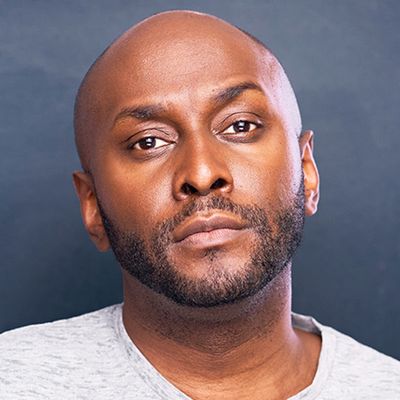
Gennean Scott sits down with actor, writer, director, composer-lyricist and playwright, Douglas Lyons. Currently on Broadway in Parade, Douglas shares what brought him to theatre, his journey so far with Chicken and Biscuits and Beau: The Musical, and how his work adds to the legacy of theatre for the Queer and Black communities... Read More
From the show: The Black Business of Broadway
Guests
Featured Shows
About
Gennean Scott sits down with actor, writer, director, composer-lyricist and playwright, Douglas Lyons. Currently on Broadway in Parade, Douglas shares what brought him to theatre, his journey so far with Chicken and Biscuits and Beau: The Musical, and how his work adds to the legacy of theatre for the Queer and Black communities.
Edited by Justin Payne
Transcript
This transcript was automatically generated and might contain errors.
[0:00] Douglas Lyons: Folks of color are not always included in that conversation. And so part of my life mission is to change that narrative and leave a legacy of work for us.
[0:13] Gennean Scott: Welcome to the Black Business of Broadway, a podcast brought to you by the Broadway League and Black to Broadway. Here we highlight the stories, how-tos, and successes of the Black professionals and legends of Broadway. I'm your host, Gennean Scott.
[0:37] Gennean Scott: Today I have the pleasure of speaking with a multi-hyphenate artist, actor, playwright, writer, composer, and teacher, Douglas Lyons. A few of Douglas's Broadway and touring acting credits include being in the original cast of Beautiful, the Carol King musical, Rent, Book of Mormon, and Dream Girls. Douglas earned a GLAD nomination for his Broadway playwright debut, Chicken and Biscuits, which is the second most produced play in America. Douglas served as a writer on both seasons of Apple TV's Emmy Award-winning series, Fraggle Rock. Douglas is a 2020 Jonathan Larson Grant finalist and founder of Next Wave Initiative, a scholarship branch of the director's company dedicated to cultivating the next generations of Black theater makers. Douglas is also currently in the Broadway revival of Parade. Thank you for coming.
[1:35] Douglas Lyons: Thank you for having me.
[1:36] Gennean Scott: You just made me smile.
[1:39] Douglas Lyons: Good.
[1:39] Gennean Scott: Well, look, listen, I'm reading all this. I'm like, okay, okay. You want to talk about Black joy. This is it. You are making our ancestors proud, I tell you. So, um, I want to go back. So you received your Bachelor of Fine Arts from University of Hartford. But what was your entryway into the arts? And what inspired you to build, you know, that career?
[2:09] Douglas Lyons: So I'm a PK, preacher's kid, and I grew up in New Haven, Connecticut. My mother said I was singing since I was about three years old. And I did, you know, like local dancing school. I started teaching dance, like tap at 15, not like Broadway hoofing tap, but just like what I had learned. And I was singing all the while. And I was also playing sports predominantly. And so I kind of only had time for that. But then the National Tours of Cats and Rent, the Rent tour I would actually join three years later, came through New Haven, Connecticut. And I remember being in the audience being like, What? They got makeup on and they're pretending to be kittens and they're singing and they're dancing. And I don't know what the story is, but I feel moved.
I feel connected. I feel like electricity in some way. And um, an English teacher, Kristen Granfeld, um, had just come from another district to Career High School. She was there my junior year, and she started a theater program. Now, mind you, they did Little Shop their first year, and I would come and watch rehearsals, but I did not. I was like too afraid to participate. She was like, if you want to be in the play, you could be in the play. And I was like, no, no, no, I don't want to do it. And I would like to leave because I was dance teaching at a middle school at the time. But then my senior year, I was playing basketball, and they were doing West Side Story. And she was like, You gotta audition.
At least audition. And so I auditioned and I got Tony. Um, so all the Jets were Black and all the Sharks were Latino because of the demographic of our program. And the day after we lost in the like quarterfinals, I was in musical theater West Side Story rehearsal. Um, and I did my first musical my senior year of high school, and I applied to four colleges, sort of very late in the game, because you know, kids are applying the summer into their senior year. I was like fall of my senior year, and in my band room, there was a poster that said the Hart School of Music Theater Dance, and I heard about Ithaca, NYU, and North Carolina School of the Arts. So I did some virtual auditions, one in person, and then we went to the local Hart audition in Hartford, and I remember leaving that audition being like, Dad, this is stupid.
I don't know why I wanted to. I felt like such a failure. I was like a fish out of water. Um, because I wasn't a theater kid surrounded by all these kids who, you know, had voice lessons all the time. And I had the church. Um, and so yeah, but I remember the day I was out, you know, with friends, and I came home, and the letter was on the downstairs table, and I opened it and it said, You've been accepted and a small scholarship, and I screamed. I woke up everybody.
[5:00] Douglas Lyons: I love it. Yeah, I remember that. So that's kind of how I got into theater, but it was really a combination of all the things I had grown up on and appreciated in one art form that I didn't know existed, this thing called musical theater. So, yeah.
[5:14] Gennean Scott: Well, you know what? There are a lot of kids out there that are not necessarily quote unquote theater kids, because um, well, you know what? Let me stop. What made you, why were you apprehensive about when you were going in and watching Little Shop of Horrors?
[5:32] Douglas Lyons: Um, and what made you apprehensive? Was it because you weren't a theater kid and you felt like, you know, you just had church or what? Well, none my, let me be specific, none of the kids I were watching on that stage were theater kids either, okay?
[5:47] Gennean Scott: Um, okay, okay.
[5:48] Douglas Lyons: Yeah, it wasn't a theater. She started a theater program at our high school, but she had come from another district. So nobody really did it. Um, when we did West Side Story, I was telling this story to my dressing roommate. We had one dancer at the dance at the gym because everybody just stood around and snapped. Like this wasn't a theater town that way necessarily or programs and business school. Um, but to your point, I think culturally, theater is not something that's passed down in the Black community necessarily as a viable career. Sports, yes, sports is something that seems like it is attainable. Um, but theater is also, it's a different coin, it's a different appreciation. I mean, if we really go back to the history of theater, Black folks were made fun of.
There was blackface, we weren't really, you know, accepted into the space. So why would it mean something to our culture? Um, but me loving music so much, and then having danced, I had two out of the three. And so when I got to college, I had my first theory and ear training and acting lessons, and I began to specify my skill because of the Hart School. Um, but sometimes it's just exposure, it's knowing that the thing is for you, which is why, as a writer, I'm so adamant on creating work that speaks specifically to my community and centers queer folks, Black women, and children, because they need to know that someone is out here writing for them. Um, which at the time, you know, and when you go to college and you're taught the greats, you know, in musical theater and the sound time, uh, folks of color are not always included in that conversation. And so part of my life mission is to change that narrative and leave a legacy of work for us.
[7:39] Gennean Scott: Right, right. It's interesting because you know, we are so artistic, you know. We the church itself is artistic, and or at least our church, you know, is artistic. You know, we have the music, we have the praise dancing, we have the fine arts ministry where we do Easter speeches and plays and Christmas plays and things like that. So to me, it seems like it would be so natural for us as a people to gravitate, you know, to theater. But I think it's exactly what you said, Douglas, is that we don't see many works that represent us and our experiences, the many layers of us and our experiences, which is why it was so exciting when you made your Broadway debut as a playwright. Can you talk a little bit about that process?
[8:42] Douglas Lyons: I think I told you my mother loved it. I was like, Yep, yep. This she's like, yes, and she loved it. I because it was it was real and it was us. Can you talk a little bit about that and how you slid into the DMs and yeah?
[8:56] Douglas Lyons: So I'm a go-getter, I'm a hustler. I think I learned, you know, so my sophomore year of the Hart School, I left for a year to tour with Rent. And I had auditioned for Rent six times by my sophomore year of college. Um, and I was finally cast. And so I've always been a person, because I, you know, didn't know anything. I was like, there's auditions, and I'm studying to do this thing, like I'm gonna go get it. I've just been a go-getter, it's just who I am. And so when I started writing, um, I have an agent, a fantastic agent, but I also wanted to make connections. And so when I, when Ethan and I, Ethan Pakchar, my writing partner for musicals, we had our concert. I actually went to the website of every major musical theater writer and got their like agent info and invited them to our concert.
Like that's the mindset I have business-wise. And so during the summer of 2019, Hunter Arnold, who's a major Broadway producer, had followed me on Instagram, and I, you know, looked up his profile, looked that he had done Hadestown and all these other shows, and I sent him a message. I said, Hey man, you know, this may be inappropriate, but do you read new musicals? Do you look at shows? Do you read things? I have a couple projects, Chicken and Biscuits and Bo were the two that I sent. And every five weeks or so I would send him a message, did you read it? Yeah, hey, just check in. Did you read? Hey, how you doing? How's your mind? Did you read it? You know, like I kept checking in. And um, he hadn't. And then during the pandemic, when the world was shut down and people had nothing but time, I got a message in like four paragraphs that was like, I finally read your work, I think there's something there.
Let's chat. And that began a collaboration that won't manifest in Chicken and Biscuits Going to Broadway, because there was a slot open at Circle in the Square, and the filming of Bo in 2021. And so yeah, I was very strange because during the pandemic, when theater was shut down, I got staffed on my first television show, Fraggle Rock, which was such a gift. And so that was like happening, but it seemed like it wasn't real because it was all virtual. And then as the world began to open back up and conversations on equity and, you know, Broadway and diversity were really into play. They're gonna read the play, we're having conversation. I was like, yeah, okay. Uh-huh. And this guy is purple. Like, true, okay.
Nice try. Um, and then it became more and more clear that it was a possibility, and then uh, IATSE union had to approve because there was a slight loadout thing. And mind you, I'm sitting in my room, like, uh, we were at the Queen's Theater for the world premiere, you know, the year before. I ain't going to Chicken and Biscuits, a show called Chicken and Biscuits Going to Broadway. Are you kidding me? Um, and the story, and there's a story in that too of like when I would bring it out to artistic directors and how people would tell me to change the title to be more sensitive, and you know, trying to not silence, but really monitor the work, which I'm just not like that's not gonna fly.
[12:10] Douglas Lyons: Like, we're not doing that. Um but yeah, we got the call in like May 21. It was announced, I think, in June. Then we were casting, um, and we were in rehearsals in August. And uh I I have this like poster up here. I I still can't believe it happened. Like, I'm so grateful it happened. But at the time, I was people would come to the show and hug me, and directors would show up and folks from my past, and I'd just be like, hi. It just felt like a wedding every day. Um what I'm most proud of with the play, uh, in 2023 alone, it is being done 10 times between professional colleges, HBCUs have done the play, community theater. Like, yes, go off. Tell the black church and queer story. Let's do it.
Um, that to me, you know, in the way that Lorraine Hansbury and August Wilson are and Alice Childress are regarded and respected and admired in the business. It's less about me and more about the work. I want the play to be something that is employing black women. I know a black woman who's done two productions, a guy her equity weeks from the play. That's what I'm excited about, really. And so if it had to go to Broadway to make more of an impact, I'm grateful for that. Well, I know it's being done. Uh I have a friend who actually just got cast uh in North Carolina, and then I just saw at the Omaha Community Playhouse where I'm from Omaha, Nebraska, they just announced their season and they are doing chicken and biscuits.
Omaha, Nebraska, yes. I'm after that. In Nebraska, they are doing chicken and biscuits. Yes. I I and this is what I mean is like that the work can change the space. The work can bring people out of their homes. When I flew to Atlanta to see the first regional production at Dominion Entertainment, I was in shock. Like there were aunties and their husbands walking in there to see the chicken and the biscuits. Yes. And when I was in, I forgot what production, in Boston, there was like this huge, like fat black father. Cockling. I'm like, the theater can do that for us too. Yes. If you let us, it actually can do that. And I feel like TV and film have such a huge following, but people look at theater as like, oh, that's not for me.
And that's just not the truth. It's not the truth. It's absolutely not. And I was so I saw that, I just saw it. They just announced it yesterday. I was like, oh my gosh, and I'm talking to him tomorrow. I have to let him know. Because, you know, oh, you know, Nebraska's pretty homogenous, but we have a we have a major and a strong black population in Omaha and in Lincoln. And just recently they started doing a lot of, you know, a lot of plays that include us and that are for us that are Fubu, you know. Um, and so to see that on there, I was like, Yes, I am. This, this, this is the conversation that needs to be had. And when you say black queer, and you talk and we look at you being nominated um by GLAD, and I think about the black queer experience in church, I am so I mean, I am so grateful for you because I know so many people who have not necessarily had the greatest experience and had to hide who they were because of the church.
And so, even though that's not the main story of chicken and biscuits, it is a story, and I'm so glad that you told it because I have so many friends who live that. And when you look at states like, you know, that are that that are red or purple, we're purple, we're a purple state. Um, we're split. And it is even more covered up than you know, in this tri-state area. And so I I am I am happy. I am it it makes me happy as an accomplice, you know, it makes me happy. Um can you talk about the importance of being recognized by GLAD?
[16:27] Douglas Lyons: Yeah, it was uh, you know, to be honest, uh when it came Tony season, Chicken and Biscuits was completely overlooked. Um and I again I don't have ego about it because it's not I'm I consider myself a vessel. Um, but I did think some of the actors uh, you know, deserve some recognition. So when the GLAD nomination came through, I went, oh, the intersectionality of what the play does is landing. Yes. And the pride of Chicken is that when people come and see this black story, because they think it's just about the sisters, you know, balking at each other, they have to also sit through a queer story. It's a two-for-one, and you can't have one without the other. And I love that. I love that the legacy of the play is not just black representation, it is also queer representation and interracial love and how that collides, you know, and you're not and you a lot of people fall in love with Logan, you know, and they see him through the story.
And a lot of white folks who come and see the player and like, oh, I don't know, why are they clapping? Why are they screaming? But through Logan, they begin to soften and understand, you know, what it is to be an outsider in a story. So nomination and the evening itself was huge. It was a really incredible night to be in that room of artistic greatness and to be black and to be queer and to be celebrating this play, which I just will for the rest of my life. I flew to see five productions before parade started, or actually around parade. So Boston, Atlanta, Portland, uh New Jersey, and Virginia. I saw five of those last year. Yeah. Um. So yeah, the gratitude just runneth over with the play.
Well, talk talking about um intersectionality and bringing queer stories to the forefront. Your musical Bo is being made into a film or has been made into a film. It is now an award-winning film already. Um, yeah, we shot it during so Bo was first written in Residence at the director's company while I was in Beautiful on Broadway. Um, and after seeing once and doing rent, I wanted to create something that felt like it had a sound and an energy for the new generation from the producorial side that it was small enough that it could be done all the time. And so um I went down to Rockwood Music Hall, and a friend of mine was putting on a very small set. It was him, his wife, and a pianist, and he was talking about his grandfather and how he would spend summers with this man instead of going to these like Hawaiian vacations with his family.
And he told this beautiful story and then did a little song in honor of his grandfather, and it really moved me. And I was like, hmm, there's something about the device of a you know actor musician telling their story and everyone participating, and that became the backdrop for what became Bo. Um this 27-year-old um musician who has sort of fled Nashville and come to New York, comes back home with his second album to tell the story of how he was young and queer and how he found himself and this grandfather he didn't know that he had, um, who gave him love, light, and music, and then how he continued on through it, and all the actors in the play who are also musicians, step out and play different parts of his life.
Um I think it is one of the best things we've ever worked on, and the film has been received very well. We were um shown here in New York with Dances with Films, their first New York festival, and it like sold out and won awards, and it's been we like the LGBTQ Toronto Festival were in there. So it's bouncing out, you know, around the world, and there's an album on Sony Masterworks, and we're just sort of in that Broadway line, waiting for the opportunity to pop up. But I really believe, I believe in the show, and again, being a part of work that has a bigger significance than just the awards or the moment, but that it becomes a legacy, and it's actually, you know, there were black queer men who came and saw Chicken who said thank you.
And I want young, queer folks who feel like they're in their small town and they have no place to go to find bow and be like, Oh, there is light on the other side, and I'm gonna sing through this album until I find that light, or it could help me find that light. Um so yeah, I'm I'm really excited about it, and I can't wait for the world to see it. I it was I think you posted the trailer, or there was like a link to the trailer, and I watched and I was like, oh my gosh, this is freaking fabulous. So um we're gonna speak true to power, we're gonna speak on it, we're gonna put it out there. It's gonna, it's gonna do everything that it was meant to do and more. So uh yeah, power of the tongue, right?
Yes. So, you know, you mentioned parade a couple of times, and it it's it's here open tomorrow. Can you talk about that experience? I mean, because we've talked about you writing, we've talked about I mean, like you you're everywhere. Let's just be clear. Can we talk about that experience uh with parade and that revival?
[22:03] Douglas Lyons: Yeah, I so after working on Fraggle both seasons, I've become honestly very apprehensive of getting into an eight-show week for a long amount of time. Um because life has taught me that freedom can actually create more creative juice and having more time just to bounce around, and I want to see the world with my guy and like live. I want to live. And sometimes you can't live when you're on that schedule. And so if I didn't have to be on it, I was like, I, you know, I said to my managers, I want to do things that are short stints but are powerful, you know, get in, get the bow, tell the story, and then I get my life back. So when um New York City Center had announced parade, I actually reached out to Michael Arden and was like, I played Jim Conley in college, I love that show, I love JRB.
I will do five tapes. I just I would love to audition. And I went through the process. And we had just like a catch-up meeting. And I had mentioned, I was like, even if it's not Jim, I think there's another character who has a song. Um, because I'm very specific in like the come up ends of my career that like at one point it was swing and then it was ensemble, and then it was ensemble with a my own solo. So anything I do, I kind of want to be in that realm. Um he's like, yeah, you know, there's this character, Riley. And so we had a meeting and and about life, and then at the end he was like, you know, the team would, you know, be open if you're interested in doing Riley. And I was like, yeah, three weeks City Center, let's do it.
And there was a wholesomeness in telling the story, and you can tell that the audience was into it, they loved it, they were rooting for it, they were moved by it. I was overwhelmed because I hadn't been on stage for two and a half years. And then there were rumblings of, you know, going abroadway and we backstage, like, girl, did you hear?
[23:54] Douglas Lyons: I don't know. I actually got over contract, but I'm not sure. Is there a theater? I have no idea. So that was going on for like two months. Um, and then like I think right before Christmas, we got the offer for Broadway. And I still contemplated, I actually contemplated, and I might have almost turned it down at one point because oh yeah, I'm trying to be very intentional. I get it. Like the pre-pandemic mentality was take everything you were given, do everything, be everywhere. And I'm like, eight shows a week, these ankles, these vocal cords. Am I gonna be able to write? Can I have balance? And so part of the conversation was I need to go do this concert date for five points. I need to be at this wedding for this.
I need a balance in my life, and I want to show up and do the work, but can y'all meet me halfway? And they did. Um, so I'm so glad that I'm doing it. It feels like the good work. Um, they took care of us in that rehearsal room. We had intimacy folks, we had wellness folks, we had a daily conversation about what this story means at this time, the pain that it inflicted then, the pain that it could inflict while performing it. And if we needed to stop, we could stop. We could pull the director aside, we could say no, we could have a conversation as to why, and it was all hands on deck. And so I've never been a part of any room like this.
[25:22] Gennean Scott: Yeah.
[25:23] Douglas Lyons: Um, because it's heavy, you know. Yes, it is. It's um, you know, anti-Semitic and racist and confederate flags and things. You got to be strong and centered to show up every day and tell the story, but then you know the why of it and it makes you do it. And so um, yeah, it's definitely a highlight of my career and a moment I never thought I was done, you know, Broadway acting for sure. I was like, okay, so grateful. And then chicken, oh my god, and I'm like, okay, for six months, we could do six months. Yeah, right, great. So I'm so happy, so happy to be part of it.
[26:05] Gennean Scott: Well, I am seeing it next week. So I am super excited about seeing it next week. You know, you mention the being centered and as a multi-hyphen, everything, okay, because it's a list, but it's good, it's a good list. Yeah, you know, and you talk about pre-pandemic, post-pandemic, pre-tan pandemic, it was like take everything, get all the coins. Post pandemic, it's like, wait a minute, I need to be intentional about what it is that I'm doing. Can you talk about the experience of being a multi-hyphenate in this industry as a black queer man?
[26:47] Douglas Lyons: Yeah, it is um, how do I say this truthfully? I come, as I told you when I was younger, I come with a heat and an energy, a passion and a desire. And I never, you know, when you're starting out as a writer, when I was writing backstage, you know, on the Mormon tour when I met Ethan and then Backstage at Beautiful, and I'm like, you know, at my computer every day. There definitely was sort of an attitude, especially from some of my peers, of like, oh, he's writing, okay, cool, you know. And then it turned into like, oh, you really writing. Like and I'm like, yeah, I'm really doing it. And I've learned a couple of things, which is, and my agent has been very instrumental in teaching me this. You gotta read the room and know who can handle your heat so that your passion cannot be used against you.
Yes. When people get into their feelings. It doesn't mean you are not worthy and incredible at where you stand and what you want. It just means where you are, people may not be able to handle it. And so you have to find that room. Where people are not challenged by your energy.
[28:04] Gennean Scott: You said a word, a whole word.
[28:06] Douglas Lyons: It's but I had to learn it. That's one thing I learned. Another thing I learned is having making sure I have time for myself. And that I'm not all I will sit at this computer. Yesterday I sat at this computer and worked on a new musical lab going up this summer for five hours. And old Douglas might have worked up right until I had to shower to go to half hour. But I said, nope, you taking a nap. You're gonna leave early enough so you can get yourself a salad or something and have time to sit before you do the play. So really carving out time for myself. Um and then being intentional with what I want for a specific year. So the reason I'm amazed that I'm in Parade right now is I was not trying to go back to Broadway acting merely because of the schedule.
And I had like something in my spirit a couple weeks ago was like you really need to up your TV film focus. Um I was blessed enough to take out shop a show with RuPaul last year with Sony TV Comedy. It didn't take, but like there's opportunities sometimes I feel in Hollywood that I do not get in Broadway just because of the logistics and the politics of time and space. There's only 42 theaters, right? You know, a lot of these seasons have people in residence. It takes. I took a new idea to my TV agents a couple weeks ago, and it's going to market. Like we're putting it out. It can happen just quicker.
[29:32] Gennean Scott: Right, right.
[29:33] Douglas Lyons: Um, so learning the difference between industries and knowing how to navigate my free time. Like I already have my Beyonce ticket scheduled. Yay! A week and a half after Parade closes. Right. Because I'm not playing on your hoes. I'm gonna be in Miami. I'm not taking a job. I'm going to have a vacation. I need a summer, you know.
[30:00] Gennean Scott: Right.
[30:00] Douglas Lyons: So it's really being specific and working, you know, your buns off so that you can have the free time, but also not working so much that you don't have a life. And I think pre-pandemic, I was honestly unaware of what was happening with my people in the real world because I was so eight shows a week. I wasn't listening to what was happening in legislation, I was not studying cases, I was not keeping up with the world. I was focused on my career. And I think the moment I actually stepped back and took all of that in and made me more well-rounded as a human being, and it makes me better as an artist because I actually know what's going on in the real world. And that matters more than anything that could ever happen over here.
[30:51] Gennean Scott: Right, right.
[30:51] Douglas Lyons: So the pandemic was really useful in that way for my mind to recalibrate how I walk through the world and what is truly a priority. Um yeah, so that you know, in 2020, which would be around the time of the pandemic, you uh you started this, you started a the next wave initiative with the director's company, and it's targeted to for black theater makers. Can you talk a little bit about that and how one can get involved?
[31:33] Douglas Lyons: For sure. Um, so I in the pandemic, there were a lot of conversations that were happening amongst um black folks and industry internally. And it felt like there was a lot of screaming and many organizations that were built, and they're all doing amazing work. But what I have learned as a person who got into theater at 17 and did not have that pathway, especially in the politics of theater and what awards mean, that I want to make sure that the younger black, you know, theater makers and choreographers and directors and artists are seen early in their career and are awarded as they're doing the work, so that when they graduate, they are the Lorraine Hansbury award-winning playwright when they have their interview or when they talk to that theater about their work.
That someone else has seen them if this industry never does. And so that's really why I started it's like there are internal Broadway affairs, but then what about the future? Right. And this felt like a way, you know, in a very small way, because it is hard to maintain. Um, you know, well, I'm also trying to do all the things I'm doing, but in a very small way, we can acknowledge people in these different disciplines and people that are going out and trying to use the theater and their communities to make change and say, hey, here's a small token of love to say keep going. Right. And you're already award winning, and we see you if no one else does. Um so that's really where I started it, and director's company and my assistant Hannah have been important and keeping it going and answering questions.
Um, but yeah, we're in our third cycle, and we've been able to, you know, award 10 scholarships. One of our alumni, EC O'Mayo, is currently in the Broadway production of The Lion King. Um, and she graduated last year, I think. So yeah, I'm like, that made me very proud. It's like, we saw you first, girl, you know.
[33:38] Gennean Scott: Right, right.
[33:39] Douglas Lyons: And she's doing the thing, as Angela Bassett did.
[33:41] Gennean Scott: I was gonna say, I was about to give you the shoulder.
[33:46] Douglas Lyons: She's doing the thing.
[33:47] Gennean Scott: Yeah. Oh, that is amazing. Well, you know, I have just one final question, and it's a question that we ask all our guests, and it's what one piece of advice would you like to share with the black future leaders of Broadway?
[34:06] Douglas Lyons: Woo! I got many angles I could take this with.
[34:11] Gennean Scott: I know, I know.
[34:13] Douglas Lyons: You can go, you can go all of them if you want to. It's all right. All of them. Um think less about yourself and think about those behind you. And put any issues you may have to the side if you're really for the advancement of everybody, because there's already enough forces working against us. So see all of your people, very much like the black church, see all of your people, black industry folks, see all of your people, even if you don't like them. Even if you don't like me, see me because we're all trying to do the same thing. And when you cut people out, you're actually not helping the next generation. So it's really just hurting you. See all people.
[35:06] Gennean Scott: So true.
[35:07] Douglas Lyons: Yeah, that's what I was doing.
[35:09] Gennean Scott: So true. I love that. I love that. Well, thank you.
[35:13] Douglas Lyons: Thank you again for joining me.
[35:16] Gennean Scott: Thank you for having me. I want to thank our guest and you, our listeners. You could have been doing anything else, but you chose to spend your time with me, and I am grateful. Be sure to subscribe at bpn.fm slash bbb. So you'll never miss an episode. While you're at it, tell a friend. I'm your host, Gennean Scott, and we at the Broadway League hope you enjoyed this episode of the Black Business of Broadway.
© Broadway Podcast Network, All Rights Reserved