

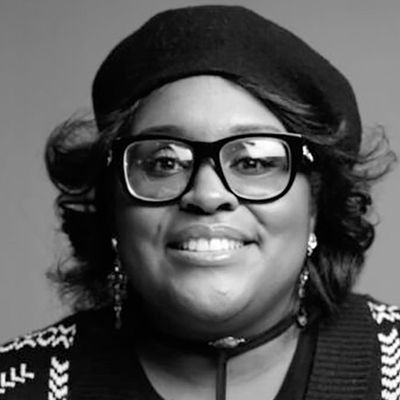
How can social media and influencer marketing contribute to making theatre more accessible to a wider audience? Ayanna Prescod, Director of Influencer Marketing at Relay, is leveraging her skills as a theatre professional, influencer marketer, producer, and social media specialist to address this question... Read More
From the show: The Black Business of Broadway
Guests
Featured Shows
About
How can social media and influencer marketing contribute to making theatre more accessible to a wider audience? Ayanna Prescod, Director of Influencer Marketing at Relay, is leveraging her skills as a theatre professional, influencer marketer, producer, and social media specialist to address this question. Hear about Ayanna's journey, from making her Broadway debut as a co-producer on Pass Over, realizing her dreams, founding OurBkSocial, and her vision for influencer marketing's role in attracting new audiences to the theatre.
Edited by Justin Payne.
Transcript
This transcript was automatically generated and might contain errors.
[0:00] Ayanna Prescod: Brooklyn has given me the tools that I need to work in this industry because this industry is tough. It is tough. You are gonna get 300 no's before you get a yes. Um, you're gonna get people who question why you are where you are. You are going to get people who don't think or don't feel like you deserve um any access that you've been given and worked hard for. And so Brooklyn has being born here has given me the tools, the armor to really have a tough shout.
[0:48] Janine Stott: Welcome to the Black Business of Broadway, a podcast brought to you by the Broadway League and Black to Broadway. Here we highlight the stories, how tos, and successes of the black professionals and legends of Broadway. I am your host, Janine Stott. In today's episode, I chat with Ayanna Prescod, who I have now dubbed Brooklyn's Broadway Baddie. Ayana is also a very close friend of mine, but moreover, she is an essential figure in the theater world, serving as a theater professional, influencer, founder of RBK Social, co-producer of Pass Over, as well as associate producer on productions like Is This a Room and Dana H. Ayana wears many hats. Currently, she's the director of influencer marketing at Relay, a startup agency working with theater, television, and film clients.
In this episode, we discuss Ayanna's childhood introduction to Broadway by her grandfather, how she's seen over 300 Broadway shows, and she shares how her Brooklyn roots have played a crucial role in her success on Broadway. Tune in as Ayanna takes us through her journey, offering insights and experiences that showcase why she is rightfully recognized by me as Brooklyn's Broadway baddie. Welcome, Ayanna.
[2:18] Ayanna Prescod: Yay! Thank you, Jenny. I'm so happy to be here. I'm doing my little dance in my little seat because I'm so happy.
[2:30] Janine Stott: Ayana is one of my when I first got here, she's one of the first people I met, and I was like, okay, you're my friend. Um, even if you don't want to be my friend, you're my friend. And um, and she is, and so I am so happy to finally have you on the podcast and to talk about all the amazing work that you have done and that you are doing and that you will do in the future, because you know I am a big believer in claiming it.
[2:58] Ayanna Prescod: Yes. I love you, lady.
[3:02] Janine Stott: Oh, back at you. For the longest time, I have said that I am there's a handful of people that I'm very happy that I've met in this industry, and you are absolutely one of them. And I'm so grateful to know you and the work that you do is stellar, just this podcast and the trajectory that it's going to. I'm just just so in awe of you. I'm so happy to be here with you.
[3:32] Janine Stott: Well, look, so you have seen over 200 Broadway shows, and I know that it's true.
[3:44] Ayanna Prescod: Because you live in the theater.
[3:46] Ayanna Prescod: I live in the theater, and that number has grown so much. I actually need to update it. I think it's probably over 300, honestly. And then if we enjoyed MJ alone should be 100. No, I'm kidding. Um, I have seen so many shows, but I have grown up in the theater literally. Um, I just remember my grandfather every Friday night was a theater night, and he was not someone that was rich at all. He found ways, discounts, everything, found ways to get um his grandchildren and his wife into the theater. And so I've seen shows I I can't even tell you. I know my first Broadway experience was Cats, but I have seen shows previous to that off Broadway community theater, um, and I've just stuck with it. I think Cats was the most interesting to me to the fact that I was like, I have to work in this space, but I've lived and breathed in this entertainment industry, specifically theater for so long.
[5:00] Ayanna Prescod: Girl, you have no idea. My grandfather is the one who got me hooked on musicals.
[5:07] Janine Stott: Shut up.
[5:08] Ayanna Prescod: We used to watch them on TV on PBS and on—
[5:08] Janine Stott: Yes, okay, PBS, I know, right? Uh, but we used to watch musicals all the time.
[5:18] Ayanna Prescod: That is so wild.
[5:20] Janine Stott: That is shout out to the grandfathers. They're doing something.
[5:24] Ayanna Prescod: Because also, thank God for PBS, because I do remember when I was also growing up that they showed full productions for free, and I think they still do that in a way. Um, but access was something that wasn't far off for us, even though we were not the richest people, we found to make sure that um theater was a part of our life. So shout out to the grandfathers.
[5:54] Janine Stott: Hey. Okay, so you wear a lot of hats, you're a theater journalist, a producer, and a social media guru, okay.
[6:05] Ayanna Prescod: Master, social media master.
[6:07] Janine Stott: All right, you put it.
[6:08] Ayanna Prescod: I would argue that.
[6:10] Janine Stott: Look, you took a picture of Idina Menzel and the Starbucks Cup, and all of a sudden it was like everywhere. How many times have you gone viral?
[6:19] Ayanna Prescod: Even though that is like not on my screen, you literally, Ayanna, come on. It's a lot for better and for worse, it's a lot. I think right now the biggest discussion um that's gone viral is ticket pricing, and um a good friend of mine, also a co-producer on How the Dance in Ohio was talking about his show and the accessibility, and I literally amplified his tweet, but also said that you know, theater can be accessible and is accessible, and we need to talk about the ways that it is accessible more, and that has turned into a whole yes, a whole everything story on its own.
[7:04] Janine Stott: So, although I know the answer to this, but I was told you told your teacher in fifth grade that you wanted to be a what?
[7:17] Ayanna Prescod: A CEO.
[7:19] Janine Stott: Come on now.
[7:21] Ayanna Prescod: And let me tell. She tried to shut me down too. Uh, she was like, Do you even know? I like, you know how like there are experiences during childhood that you remember forever. Some you totally forget, and people are like, Do you remember this? I'm like, I don't know. But the way she tried to diminish my dreams at that age. Um was very something that was traumatic, but I also think about it all the time because that's literally what I'm doing now. We're in a small private school. She went around the room and said, you know, what do you want to be when you grow up? And there were a lot of mixed reactions. Some people really wanted to be a singer, some people said celebrity, some people said basketball star.
And I little Ayanna's like CEO. And she's like, Do you even know what that means? I remember the attitude to me. And I was just like, okay, girl, chief executive officer. And I literally said that. This is fifth grade. I will never forget it. Like, I cannot make this up. I remember coming home crying to my mother, and she's like, girl, but you answered her, and just you know, just wait. Um, and so I would love to find her and like for this podcast.
[8:47] Janine Stott: Yes, because let me tell you, you are, and you were, and it's so it's so wild that you say that because I remember in fifth grade fifth or no, my think my daughter was in sixth grade. She told her counselor, she said she wanted to be a dancer or something on Broadway, something in the arts, or you and she was like, You can't do that, you live in Nebraska. And my daughter was like, Do you know who my mother is? What are making some of these teachers so bold? Like there are so many things that you can do and access in this world that like you should never diminish a child's dreams.
[9:33] Ayanna Prescod: Right. Well, and it was here's the funny part it was a guidance counselor who is put in place to help the kids figure out uh how to take the steps to get to whatever career it is they want, and you gotta tell her no. So of course you not called her up, but anyway, that's a whole nother story.
[9:48] Janine Stott: That's a whole nother topic. So how did you know though in fifth grade you wanted to be a CEO? Like, what attracted you to that?
[10:02] Ayanna Prescod: I think at that time I was kind of it I it was being talked about in okay. Let me start back from like my mom, um, and my family dynamic, because I think my mother wasn't the type of person that put you in the child's corner to like talk about children things. She said, you know, come be a part of our conversations. While I had no idea what they're talking about, I absorbed all of that knowledge. Um, and so CEO wasn't something that was a new concept to me. Like I knew people in my family who owned businesses who ran things, um, who were part of leadership teams in corporate America, and I they were all at my house. My mother used to host large dinners, and so like I was absorbing that. And so when I that was something that was always in the back of my head, I think at that time, while I said CEO, I might have thought like I want to be a leader of something, I want to be I probably didn't know the full scope of what CEO meant, but I knew that I wanted to be in charge of something, right?
And so whether that is part of a leadership team of you know, something in theater or whatever, I knew at that time that I wanted to be that was my trajectory, and so um now looking back, I'm just like shit, was I manifesting all of this time because it's literally now just happening. I've worked so many jobs, and my entryway into theater is not conventional, like I am not just school and then this. Like I studied fashion merchandising in college, and so it was like a whole instead of a straight line, it was like very wiggly. Um but now it's finally happening, and I'm just like, girl, you said CEO, you made it happen.
[12:08] Janine Stott: That's right. Like create you made it happen. So here's you know, one of the through lines that I am starting to find obviously there are some exceptions, there are always some exceptions, but one of the through lines that I'm starting to find doing this podcast is that many of our journeys into this is unconventional.
[12:32] Ayanna Prescod: We start off going and thinking and somewhere else, but then there's this calling that just like won't go away. And then we're here. Honestly, there is so much.
[13:08] Ayanna Prescod: Yeah. And I think a part of it, I think that we, we as black folks have to find a way to come together to really trumpet that message more to other black kids, but moreover to the parents and to the teachers and to the counselors in the schools.
[13:43] Janine Stott: Actually, you know what, Ayanna? It was fifth grade. Fifth grade is a turning point for I honestly think fifth grade is like the turning point into I'm still a child, but like I'm figuring life out. Um and figuring out my place in the world, and like we're still dependent on our appearance, but we're also like moving into this like evolution of I'm growing into a teenager, a young adult. What does that mean for me? What do I do next? And I think fifth graders should listen. Give power to the fifth graders because they're figuring life out, and it's probably earlier than that now, you know.
[14:32] Ayanna Prescod: Right. Yeah, yeah, that's true. That's so true. So can we talk about your journey though into producing for a moment? Because you made your Broadway debut as the co-producer of Pass Over. And Pass Over is the play that brought us out of the pandemic, honestly. So it was the one so you think play on words? Hello, but anyway. But can you talk about yes? Which was a struggle in itself. Like, try putting on a new play post pandemic.
[15:07] Janine Stott: Right. What inspired you though?
[15:11] Ayanna Prescod: So I always wanted, I always wanted to be not a producer, but I wanted to dabble into that world and see what it was like, and thank God that I did it earlier on because I'm just like that was something that I loved, but right now, if I look back on it, I would want to be like an associate producer. I would never want I I've learned so much from lead producers that I'm like, this is so much work. Um, and I respect them so much for doing it. But at the time, I wanted to learn more about the field, and so um a good friend of mine, Matt Ross, who is a producer and um who also cares about bringing people of color into this space and learning from him, which is very important because there are not many people who uh open doors for other people once they've made it.
Um, and that's another story. But he was just like, listen, I have this show coming to Broadway, and I know that you're interested in this space. Would you want to learn from me? Um, and I was just like, hell yes, like let's do this. Um, and he opened that door, was able to be in meetings that opened me up to the world of Broadway and the financial aspect and the dynamic of how much it is to put on, and that was a play, right? I I've only worked on plays, so I can't even imagine a musical that is like 30 million dollars to produce, but like I was just opened up to such a new world, and I was just so grateful for Matt Ross.
[17:01] Ayanna Prescod: Um, another person on Dana H and Is This a Room was Dory Bernstein, who is um part of Broadway Podcast Network, one of the founders, and she was instrumental in opening the door for younger people of color um to really learn about the space as well. And I was just I'm grateful for these people who are in this industry who really care about the new generation of theater producers and theater producers of color, and there's so many organizations now that weren't there before when I was very much interested, that have now opened the door wider. Um, and I am so grateful to them because there are people who want to really do this and pursue this as a long-term career, and it's not being talked about in schools.
It's like, how do you become a producer? You have to know someone who knows someone who knows someone, which is like let's get over that. Like it's so difficult. Um, building relationships is very important in this industry, but also there should be a high school class to a college class. Why are we just waiting?
[18:21] Janine Stott: I agree.
[18:23] Ayanna Prescod: Yes. No, you I mean, you know, uh, yes, I know, and completely agree and completely echo that. I mean, one of the things that you've mentioned is that your end goal is to ultimately produce theater, specifically created by black women. Why why why is that your mission? Can you elaborate on that just a little bit more?
[18:49] Ayanna Prescod: Although I think I know as a black woman, um, we are so undervalued, under loved, under respected in so many parts of the world as a whole, and this and in this entertainment industry very widely, and in theater very specifically. Um, and so I am just like, if I'm going to champion someone, it's not gonna be the people who already have access and who are doing great work, but if you already have the access, listen. So there are some extraordinary young black female playwrights who are creating such great work that deserves to be off off Broadway, on Broadway. And I'm just those are the people that I want to champion. And black women deserve that love and that care and that tenderness to move their shows and really have like the really have the um you know the confidence in them that their shows can be beyond the script.
And people are not investing in these women, these black women, as much as they should. And so um if I have if I come to that point where I am able to bring more black female stories to the forefront, that is the end goal um of what I want to do. And right now I think I'm building the best relationships I can to possibly even do that. And so I'm really I'm really grateful for the people that I know and have carried have carried me through this industry and who are teaching me how to sustain in this industry because it's hard. People have left. They have started and have left because this industry is tough. Um but I am grateful to be on the road to be able to do that in the end.
[21:16] Janine Stott: Yeah. I mean, and the thing is, I was thinking the other day, I had I like reshared a message or something. And I mean, and you know, I'm really I'm I'm big on sister girls and edifying you know uh friendships and all of that. And I had a guy um DM me and he was like, Why are you always posting about about women and and black women? What about black men? And I was like, well, I know the journey of a black woman because I am a black woman, and I'm I I don't know the journey of a black man, and I'm not trying to put men down or black men down, but as a black woman, I I get a knock because I'm black alone, and then I get knocked because I'm a woman, and one plus one is still equaling two, you know?
And I I think about what Beyonce said, ha ha, you know, she talked about, she talked about not, you know, still not being respected. I mean, this is the queen, queen b, and she's still not getting respected, and she still has to prove that that she's knowledgeable on the things that she's supposed to be knowledgeable on. I mean, it's it's it's ridiculous. It's also like if I'm amplifying black women, that does not take away that doesn't mean that I'm like diminishing black men or diminishing any other anybody. Um it's just my personal experience that I know. Um, I we both have lived a longest as black women and so we know we know what we have gone through to get to spaces that are easily accessible to many others um to just jump in and just so I feel like we if we are given the access and we are given the platform I don't see why we should be shutting other black women out who may need that we should be ushering them in just how we were ushered in and so um totally get your point Jenny it's just it's just a wild place so let's pivot for a minute and in pivoting we'll talk about the pivoting that you've had you uh you've shared your journey from theater journalism to theater digital marketing on social media as a social media specialist slash guru. What positive impacts have you seen in terms of building an audience and expressing your passion for Broadway?
[24:16] Ayanna Prescod: I think that's my favorite thing is building community. I think right now, even more so post pandemic, people are looking for community, and we weren't for so long able to do that in person.
[24:29] Ayanna Prescod: So I think the biggest way was to do that over social media, and I think that's what we need. We need to have in-person connection, but we also need to have those digital friendships that can push us further. Um, because some of the greatest people that I've met have been through social media, um, and the access that it has provided me. But building a community on social media is leveraging people of color more so than if we didn't have the platforms, if that makes sense. I just feel like we are now able to access knowledge and be in spaces that we could not if we didn't have that access, and so it was really important to me to kind of pivot my journey into social media because I was just like, this is something that really excites me.
I love building communities, I love talking about shows, I love making shows um marketing feel more accessible. I like want shows to talk about why you can get into the door and how that's possible, and so um at the time when I made that pivot, I moved into social media marketing with Situation, and they are a great company um that I worked for for a year and uh a little over a year and a half. Um, and I learned so much. I was building literal communities for Kimberly Akimbo, for MJ, for Top Dog Underdog. Yes. Um, and those have been some of the greatest days of my life was actually being behind the screen of some of those shows. Um, and I love it because I'm just like so many of the people who are like Ayanna's controversial or whatever.
You were actually talking to me behind Kimberly came out, but I dig um I'm just I'm I i that was really great time because I got to be so many different personalities I got to really tap into the Kimberly Kimball audience and build content that would be good for them and then Top Dog Underdog oh my god love the show so much that I was just like I am so excited to be able to build a community for that show as well and then MJ of course is like one of my favorite shows right well let's okay let's be clear every show that you touch there's there's Tonies around them hello the Tony award award winning play top dog underdog the Tony Award winning musical Kimberly Kimball and Miles Frost won a Tony in addition to the all the other accolades that MJ has received so let's not sell it short a hundred percent and you are still look and the work you're doing the work the shows you're working on now a hundred percent a hundred percent I've had great teams at situation um full social media digital content creation teams um but I was able to really bring out um some of the best in those shows and I've been so grateful to be able to work on with some of the greatest producers like Leah Volick is one single handedly one of the greatest female producers in this industry, like watch out for her.
[28:02] Janine Stott: Oh my god, yes.
[28:04] Ayanna Prescod: She is coming and she's doing some great work, and she is all about diversity and inclusion. And I am just like, girl, please. And she's the sweetest person. She is so freaking humble. So humble. Like, as if MJ is not one of the top selling shows on Broadway, headed to the UK, headed to Germany, headed to Australia. Like she is doing some great things. And I am just like, these are the people in the industry that like, oh my goodness. You think the industry is just full of it? I mean, it can be full of people who you know don't want you there, but like there are producers who are really changing the game, and she is one of them. And I'm just so happy to know her. Look, you had Matt, you have Dory, you have Leah, that have all three touched. And these are not, these aren't like little names. These are these are big-time folks in the industry who are also just so unassuming. Like you would meet them and you'd have no idea.
[29:14] Ayanna Prescod: You have no no idea. No idea. Because they are all of them are so I could drop so many more names that are so personal, personable. Who would even like, yeah, if you want to get into producing and you want like an internship or you want just some knowledge, who would open their doors to like help you? It's just I'm just so grateful to be in an industry whose leadership looks like that. Um, and you know, I'm just grateful that we're opening doors for it to be even more diverse with diverse in age, diverse in gender, diverse in race. And so I am just really excited for the next generation of theater creators and producers. Um but I am really happy with you know some of the producers who are really doing the work right now.
[30:11] Janine Stott: So okay, you're a native of Crown Heights and the founder of RBK Social. Could you share with us what inspired you to create this digital social platform and why it was so important for you to create a space to share your love of Brooklyn?
[30:31] Ayanna Prescod: Oh my god, I love this place. Born, raised, never leaving. I always say that where I'm from. Um but I am a fourth generation Brooklynite. My family has been here for years. Like my where I'm at right now has been my grandmother's house since the 1940s. Wow. So I'm just just you know, we are true and true Brooklynites. Um but what drove me to start our BK Social is um I just started an Instagram page solely for Brooklyn and solely for sharing the stories of the of this area. It was becoming more and more quickly gentrified, and I just felt like people were losing the heart of this area. Um, and so I created this platform that was just like here are the mom and pop stop shops shops that you need to be going to.
Um and it quickly like took up speed because there was not there was not an area I I think in the digital space that was solely talking about Brooklyn, like there were so many New York City spaces as a whole or Manhattan or things to do, but at the time that I started RBK social, there wasn't much about Brooklyn. It quickly like um the following took off very quickly, and then I got um an invite from the White House to cover President Obama's trip to Brooklyn, and I was like, Oh, this is something, this is something something's going on here, and so that's when I said, Okay, this can be something bigger. Um, and that will always be my baby, like that is my space.
[32:35] Janine Stott: Can you talk about how Brooklyn has influenced who you are now in this space?
[32:44] Ayanna Prescod: That's such a good question. Um, Brooklyn has given me the tools that I need to work in this industry because this industry is tough. It is tough. You are gonna get 300 no's before you get a yes. Um, you're gonna get people who question why you are where you are, you are going to get people who don't think or don't feel like you deserve um any access that you've been given um and worked hard for. And so Brooklyn has being born here has given me the tools, the armor to really have a tough shell. Like I am not in a corner crying when someone says, Ayanna, you should not be a Tony voter, you should not be a part of the market theater wing. I that doesn't faze me because I know how hard I've worked and I don't tweet about everything that I'm doing.
I don't have time for that. Like I do not have time for that. I tweet a lot, but I'm telling you, I don't tweet everything that I'm doing. I'm not every meeting that I'm going to, not I'm on my way to this meeting with this person. I'm not doing that. Um, and so Brooklyn has really given me the tools that I need to really sustain in this industry because it can be tough. Um, and it's probably gonna get harder as you know you continue to grow, but thank God for Brooklyn and really it's like do or die here, and it's really it's really just that.
[34:28] Janine Stott: Side note, Ayanna is the only reason I am on Twitter. She is like, you gotta have a Twitter. I'm like, huh? I don't even know how to tweet. I'll never forget that conversation.
[34:42] Ayanna Prescod: I was like, girl, let's let's figure this out. Um I'm probably like now, I don't know if we any of us should be on Twitter. I don't change so much. I don't tweet X or nothing, but anyway. So can we talk about your work though now as you continue to ascend higher and higher? You are the director of influencer marketing at Relay. And can you, for those who don't know what that role is and who relay is, can you talk a little bit about your work there, who they are, and what inspired you to take that leap to relay?
[35:27] Ayanna Prescod: Um, I'm gonna first start off with what inspired me to take this leap is influencer marketing has been something that I've been interested in because people on Twitter would call me just an influencer, I'm not just an influencer, I do so much. Um, but influencer marketing was looking very uh white, plain and clear, and I was just like, this cannot be happening. I needed to look a lot more diverse. These rooms need to be so much more diverse than they are. Um, and we have been talking to the same people over and over within the theater industry. Um, and I just felt like there was a lane that needed to be created um to really diversify those rooms. And so um I have a couple of friends in the industry who I pitched this idea to who really believed in me and who have invested in being a part of this um this new company that is really gonna change the game. Um, I cannot speak too much about what we're doing in 2024. It is really exciting. Um, and hopefully, maybe there will be a follow-up conversation.
[36:44] Ayanna Prescod: Um, we are doing some really exciting things. Um, we just had a big activation in Chicago for Hamilton, and that was exciting. Um, I just remember one of the influencers coming up to me and say, I don't know if you know how important this is for me because I've been in rooms where I'm like the only Black person in the room as an influencer who's been doing that work for years. And I said, and I said, to me, it's just it's beyond race and gender. It's if you're doing the work, if you are a great person, um, and you have the notoriety of an influencer, you should be in that room. And I think that we have been picking and choosing who we're bringing into rooms, and this is beyond it space. Um, and it's been excluding a lot of people.
And so I was just very proud of that activation. The return was great. Uh, Hamilton was very happy with it, and so I'm just I feel like I have created something that's really going to um change the industry as we know it. Um, because we need to be marketing differently, we need to be doing so many different things that we've the old way of marketing is not working, and I think it's gonna take the industry collabing as a whole. Like I think it's gonna take a number of marketing agencies to come together, really think things through. It's no longer like the me generation happening here, right? We need to collaborate and really change the game together so that people come, people find um that theater can be accessible.
We need to be marketing shows better so that we're not just amplifying the hundred dollar plus tickets. We need to be amplifying how people can really get a discounted ticket or a lottery rush ticket. There's just so many different ways. And I think influencer marketing, people listen to people. And so that's going to be a way that we can really make sure that people know about access or how to get a cheaper ticket or how they're able to go to a show. And so I'm really excited about relay and what we're doing. Um, it's interesting. You use the word collab, and I think about this next generation. I read, I don't even remember what it was, but I read somewhere that this is the most empathetic generation that's coming up.
This generation is all about collaboration, friendships, collectivity, and so to say that we need to collab and come together, it that is that is this generation right here. And the more we continue to do things siloed, the more we continue to focus on the me and not the we of things. Um we are we are going to continue, we are going to we're going to drive away those new audiences. And I think it's happening. I think there is beginning to be a shift that one agency or one partner or one producer or one person can't do it all. Like we need to be really thinking things through as a group. It's shifting not as quickly as we may like, but I do think there is a shift happening. Um, and I think the new generation of theater goers are going to need that as we move into really trying to bring people back to the theater.
Um, it's uh, you know, the conversation again is all about accessibility. What does that look like for someone who is not making a hundred thousand dollars a year? How or even seventy thousand dollars a year, a single household income who wants to go to Broadway, what does that look like for them? And how are they not paying a week's worth of groceries to go? Like, how can we make sure that they have the access to get there? And so I'm really excited about where theater is going and the possibility of doing new things. You know, the average income, um household income in America is like about $74,000. And that's household that could be multiple people in your household. That's that's just that's yeah.
So that's uh, that's that's a larger systemic problem. Um, you know, but if we want to get people into the theater, we have to look at those numbers and figure out a way that theater is accessible to all and not just the few.
[41:39] Janine Stott: I completely agree with you. We have to revamp, we have to work together. Um, you are constantly pushing boundaries, and that's why I love you, and you are exploring new avenues, you know, in your career, which is also why I love you. What motivates you to keep doing those things?
[42:00] Ayanna Prescod: Um, my grandfather truly just him taking me to theater um as a child since I was like nine. Um, I just constantly see him in my background. Um he is no longer here, but his presence is always felt every time I walk into the theater, and I'm just like he would be so proud that I'm in this industry. He would he would be so thrilled. And so what keeps me here is knowing that he would be proud, but also that my work is going to be game-changing because I do feel like we are thinking of new ways to make sure that theater as a whole can be accessible to all. And so that's what's keeping me here.
[42:54] Janine Stott: Oh girl, I was a grandpa's girl too, so I I get with you. Oh, and he would he would all yes, yes. I maybe our grandpas are up there and they made friends.
[43:07] Ayanna Prescod: It's a women theater heaven.
[43:11] Janine Stott: So what are your what are your hopes, your dreams, your goals for the future? Are you still, you know, is it still to bring it happen in Brooklyn to a Broadway stage?
[43:20] Ayanna Prescod: I mean, you know, there's so many things that I want to do. They're again amplifying um Black women and their work. How can we get them more produced? That's one thing. Diversifying rooms um in this theater industry, period, no matter what room that looks like, is something that's interesting to me. I do think I'm doing so much work across the board, but I do feel like there's so much work to be done. It's crazy. Um I don't know. I think my end goal again is to the end goal is to get Black women produced, but there's so many smaller aspects that I feel like I have the ability to work in. And so um who says we only have to wear one hat, right? We can we can do it. There is opportunity to do it all.
And so I'm just I'm just grateful to be here and be given this space, and even like to just be talking to you. Um, I think this podcast is so freaking important um and has given people the knowledge that it's not easy out here, but there are people who are working who take this stuff really seriously, um, and who are not given the access, but we have the tools that we need. We are working as a collective um to make this industry as a whole just a bit better. And so that literally is what's keeping me here, what's driving me to do better work.
[44:54] Janine Stott: Um, you know, Ayanna, you are you are one of my like my check-in buddies. I'm like, okay, how are you? Just text you just to see how you do, and you good because you're right. This industry is tough. We we have our community for each other, and that I love that about us, and I love that about this community. I mean random text messages in the middle of coming from nowhere. It's not like, oh, I was scrolling and I saw the it, it's like, oh, you know what? Let me just text her real quick, you know, and I love that about us and about you know, others who are around us who just do that. And you always I feel like you're like a fortune teller in a way because you always know when to text me because I'm like, girl, how much do I unpack with you today?
But then there's something that happens and you'll say, How are you doing today? Just checking in, and I'm like, gotta unpack. But you are single-handedly one of the greatest people in this industry, and you are doing such incredible work, and people need to know that because you know, DEI for the Broadway League is not something to be minute about. It is exceptional work, it's hard work, and you are doing it and have been doing it, and you are you are such an inspiration to so many, and people may not be texting you every day, like Jenny's the greatest person, but know that you are because it is felt by me, it's felt by a number of different people that I know. So you are important to this industry. Um, and I just love that we can have this connection because it's it's important and shit, it's needed.
[46:52] Ayanna Prescod: Well, thank you so much. I have one last question, and it's the question we ask all of our guests. What is one piece of advice you'd like to offer to the Black future leaders of Broadway?
[47:09] Ayanna Prescod: Be in relationship with people. And I take relationships very seriously with the people that um who know me personally, and this is beyond the Twitterverse or the metaverse. It's literally be in relationship with people. It's important in this industry, it will help you to succeed, it will open doors. Um, and really just be kind because you don't know who you're going to need or who is going to elevate you when you're down. Truly be kind because the moment you fix your lips to talk about someone, two years later, that could be your potential boss, that could be someone who gives you the keys to an audition or gives you something that knowledge to take you to the next level, but they will remember that you were mean to them. And so just be kind, be in relationship with people, be good to people, and do good work. No one can take away the work that you've done if it's good. No one can take that away from you. Just know that you do good work, people will see it.
[48:21] Janine Stott: Oh, I love it. Thank you, Ayanna. I want to thank our guests and you are listeners. You could have been doing anything else, but you chose to spend your time with me, and I am grateful. Be sure to subscribe at BPN.fm slash bb so you'll never miss an episode. While you're at it, tell a friend. I'm your host, Janine Scott, and we at the Broadway League hope you enjoyed this episode of the Black Business of Broadway.
© Broadway Podcast Network, All Rights Reserved