

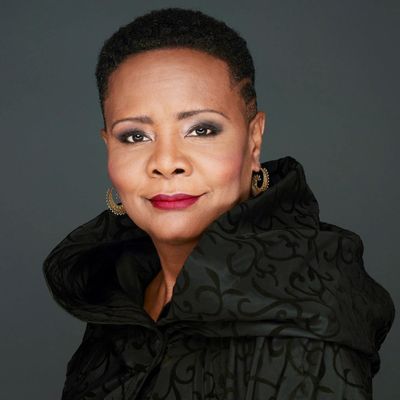
In this week's episode, Mark-Eugene and David bring in Paul Rigano to talk about the creation of the opening and closing music of the podcast, and later, Eddie Shapiro introduces a star-studded panel of leading ladies, including Faith Prince, Mary Beth Peil, and Tonya Pinkins, who dish out insights on the challenges and triumphs of working as leading ladies on Broadway... Read More
From the show: The Drama Book Show!
Guests

Featured Shows


About
In this week's episode, Mark-Eugene and David bring in Paul Rigano to talk about the creation of the opening and closing music of the podcast, and later, Eddie Shapiro introduces a star-studded panel of leading ladies, including Faith Prince, Mary Beth Peil, and Tonya Pinkins, who dish out insights on the challenges and triumphs of working as leading ladies on Broadway. The conversation is so captivating that neither Mark-Eugene nor David wanted to interrupt, resulting in an extended discussion that spans two special episodes.
Transcript
This transcript was automatically generated and might contain errors.
[0:19] David Rigano: Hello and welcome to The Drama Book Show.
[0:21] Mark-Eugene Garcia: I'm David Rigano.
[0:22] Mark-Eugene Garcia: I am Mark-Eugene Garcia.
[0:24] David Rigano: And this is episode sixty-six.
[0:26] Mark-Eugene Garcia: Wow.
[0:27] David Rigano: The How the Time Does Fly.
[0:28] Mark-Eugene Garcia: Exactly.
[0:29] David Rigano: I feel like it was just five.
[0:30] Mark-Eugene Garcia: Like a week ago, right?
[0:31] David Rigano: Yeah.
[0:31] Mark-Eugene Garcia: And last week we had our first guest moderator.
[0:34] David Rigano: Yes, Patrick Page.
[0:36] Mark-Eugene Garcia: Wonderful moderator and wonderful voice for podcasts.
[0:39] David Rigano: Wonderful voice for everything.
[0:41] Mark-Eugene Garcia: We've got another guest moderator on this next one.
[0:43] David Rigano: And it's our first two-part episode.
[0:45] Mark-Eugene Garcia: Yeah, it was an extra long, extra special episode.
[0:48] David Rigano: And in all of the best ways.
[0:50] Mark-Eugene Garcia: This is Eddie Shapiro's book, Here's to the Ladies.
[0:53] David Rigano: This is gonna be for the first two weeks of Women's History Month.
[0:56] Mark-Eugene Garcia: Happy March, Happy Women's History Month.
[0:58] David Rigano: Everyone, this is Eddie's third book of interviews.
[1:01] Mark-Eugene Garcia: Yeah, he had Nothing Like a Dame.
[1:03] David Rigano: Right, which was Leading Ladies, his first one, and then A Wonderful Guy was his second one, which was Leading Men.
[1:09] Mark-Eugene Garcia: And now we're back to the divas with Here's to the Ladies.
[1:13] David Rigano: And he brought some divas.
[1:14] Mark-Eugene Garcia: That he did.
[1:16] David Rigano: This is also the first episode that we have a guest on.
[1:19] Mark-Eugene Garcia: Truly, truly.
[1:21] David Rigano: And who is this guest today, David?
[1:22] Mark-Eugene Garcia: This guest today is the composer of our theme music.
[1:26] David Rigano: He is also my collaborator.
[1:29] Mark-Eugene Garcia: He's sometimes your collaborator.
[1:30] David Rigano: Yeah, yeah, we've all collaborated.
[1:32] Mark-Eugene Garcia: And he's my brother.
[1:33] David Rigano: So let's welcome Paul Rigano.
[1:35] Paul Rigano: Hey, happy to be here.
[1:37] David Rigano: To the podcast.
[1:38] Mark-Eugene Garcia: Welcome, Paul Rigano.
[1:39] Paul Rigano: Hi.
[1:40] David Rigano: So I was wondering, Paul, even though we had many a text about it as it was being put together.
[1:45] Paul Rigano: Can you talk me through the process of how you both composed and compiled?
[1:51] Paul Rigano: Yeah, you took the words right out of my mouth. I you might have seen me wince a little when you said the composer of our theme song. I really think it's more about compiling. In the initial draft, which is a little longer than what plays on the actual episodes, I think I got 17 different themes from Broadway shows in there. So I guess I was an arranger and a compiler. And then the last like four bars I composed that show busy sound. But basically, I said what is the most iconic thing when I think Broadway? And so I thought it's gotta be I had a dream. So we start there. But what else is a really famous sound? And that's Maria. So I thought I would take, I don't know if I'm getting too musical here, but I had a dream is one four, one five, and Maria is a tritone, which goes from the one to the sharp four to the five.
So I combined those two for that to how it opens, and then it all kind of just came from there. I thought, what else can we do and how many different, you know, what sounds have I don't want to give too much away because I think they're all hidden in there, and I want people to search for it.
[2:58] David Rigano: Do you remember how many themes ultimately landed in probably about 12?
[3:05] Paul Rigano: And that's in just the opening or between the opening and the closing.
[3:09] Mark-Eugene Garcia: And don't worry about getting too nerdy for our audience.
[3:12] Paul Rigano: I have no idea. I think I yeah, I would have to go back and listen again. You'll have to put something out on Instagram and see how many themes people can catch because they're overlapping and they're oh yeah.
[3:23] Paul Rigano: I'm still finding them.
[3:24] David Rigano: Yeah, a lot of them complement each other.
[3:26] Paul Rigano: And what I tried to do was get as much as possible, get an instrument that plays a famous sound so that it was recognizable. But boy, is it tough.
[3:36] Mark-Eugene Garcia: Do you know what it still reminds me of?
[3:41] Paul Rigano: It might be specifically having the um which is which is not when it appears, it's not the traditional instrument that you'd hear it. Um reminded me of the of Jason Robert Brown's overture to Prince of Broadway.
[4:00] Mark-Eugene Garcia: Oh wow, which he does a lot of that kind of you can compare my arranging skills to Jason Robert Brown's any day.
[4:08] Paul Rigano: What two shows have something that complements them, whether it's a theme or an instrument or a musical motif and layering them like that. He just had like three minutes to do it, and you do it in 12 seconds, something like that.
[4:20] Mark-Eugene Garcia: A little more than 12 seconds.
[4:22] Paul Rigano: But yeah. I mean, that overture is a masterpiece, not just in arranging, but the orchestration of it, because Jason is a master orchestrator, and Broadway pits are getting smaller and smaller. I'm getting up on my soapbox now. But Broadway's pits are shrinking. I don't think I'm saying anything controversial when I say that.
[4:36] Mark-Eugene Garcia: And he had, I think it was like eight or ten pieces in that pit, which is by modern standards pretty normal, but by how print standards, pretty tiny.
[4:49] Paul Rigano: And what he was able to accomplish with that, the fullness of that sound, that's something that he just excels at.
[4:55] Mark-Eugene Garcia: Well, I didn't realize that pit was that small.
[4:57] Paul Rigano: I could, I could do that. I might be underestimating that.
[5:00] Mark-Eugene Garcia: But he did It's actually 25.
[5:04] Paul Rigano: It actually sounded really hollow when you think about it. What he did, and because the pit was in the pit for that, or it was next door, or and I don't know exactly, but it wasn't visible for that show.
[5:13] Mark-Eugene Garcia: But the pit was visible for Mr. Saturday Night.
[5:16] Paul Rigano: Oh, another small with a deep sound.
[5:19] Mark-Eugene Garcia: Six people, something like that.
[5:20] Paul Rigano: Something like that, and he made it sound like a big band.
[5:23] Mark-Eugene Garcia: That's it.
[5:24] Paul Rigano: He knows how to do it.
[5:25] Mark-Eugene Garcia: He's just so good at that.
[5:27] Paul Rigano: He's going places, yeah.
[5:28] Mark-Eugene Garcia: Well, our intro sounds like a big band, too.
[5:31] Paul Rigano: Well, that's because it is.
[5:33] Paul Rigano: That was me in my studio picking up all the instruments and just going it down.
[5:38] David Rigano: It's Women's History Month.
[5:40] Mark-Eugene Garcia: Here at the bookstore, one of the best things that we get to do is recommend plays to people.
[5:44] David Rigano: The other best things that we get to do is sit at work reading plays.
[5:48] Mark-Eugene Garcia: That we're making podcasts.
[5:50] David Rigano: I love when it comes to our staff recommendation wall trying to pick on theme.
[5:56] Mark-Eugene Garcia: So I have picked a women's history staff wreck, which is a play that I saw twice at Women's Project when it was first out off Broadway, because I luckily I at the time I lived around the corner from the women's project, and a friend of mine worked in the box office.
[6:11] David Rigano: So every now and then she would just text me and say, Hey, we're short on Ushers, we're short on merch staff. Where's do you want to come see a show for free tonight?
[6:19] Mark-Eugene Garcia: And I'd be like, sure.
[6:22] David Rigano: So the play is Or by Liz Duffy Adams, who is such a fantastic playwright, and it's about Afro Ben, who is the first recorded English language female playwright.
[6:36] Mark-Eugene Garcia: Wow.
[6:37] David Rigano: Of the restoration period.
[6:39] Mark-Eugene Garcia: So this is post-Shakespeare, when King Charles is being restored to the throne.
[6:45] David Rigano: And there have been other plays, obviously, surrounding that.
[6:48] Mark-Eugene Garcia: And if you're familiar with anything related to King Charles, it's probably the Spaniel.
[6:53] David Rigano: Um and Afro Ben was, as I wrote on my staff recommendation card, Afro Ben was a poet, a playwright, a political spy, and a chaotic bisexual.
[7:05] Mark-Eugene Garcia: And this play is basically about not choosing one or the other when it comes to so many things, when it comes to traditional gender roles, when it comes to sexuality, when it comes to what path a person of a certain gender can take in life.
[7:26] David Rigano: And is it always and is it never or that I hear that makes the or mean more than it did before?
[7:32] Mark-Eugene Garcia: I think we're gonna get into the woods in on every episode in some way.
[7:35] David Rigano: I'm okay with that.
[7:36] Mark-Eugene Garcia: And the basic premise of the plot is her pawning her two lovers, Nell Gwynn, one of the first English stage actresses, and King Charles off on each other so that she can have some peace and quiet and finish her latest play.
[7:52] David Rigano: So that's my staff pick, and I hope that you come to the store and pick it up.
[7:57] Mark-Eugene Garcia: Mark, do you have a fun women's history month recommendation?
[8:00] David Rigano: I do.
[8:01] Mark-Eugene Garcia: Mine is Jimmy Chongas and Zolafs by Fernanda Copel.
[8:04] David Rigano: I'm always gonna bring the Latin to the table.
[8:06] Mark-Eugene Garcia: That's just me.
[8:07] David Rigano: And I love love this play.
[8:09] Mark-Eugene Garcia: It was actually my first staff pick.
[8:11] David Rigano: And it's a really cool plot.
[8:13] Mark-Eugene Garcia: It's about a woman who turns 40 and basically kind of runs out on her family.
[8:20] David Rigano: She has her own plot, and then you have her daughter and her daughter's best friend who, in some ways, are trying to get her to come back, and they come up with this parent trap type storyline where they pretend one of them is pregnant to like get her to come back.
[8:36] Mark-Eugene Garcia: Meanwhile, though, and I'm not giving away too much because this all happens really, really in the first few pages.
[8:41] David Rigano: Meanwhile, their two dads hate each other, like the dad of each of each of the girls, but you find out early on that they're having a torrid love affair.
[8:50] Mark-Eugene Garcia: The dads are.
[8:51] David Rigano: Yes, you're having all of this going on in this play, and it's just it's bonkers.
[8:57] Mark-Eugene Garcia: I absolutely loved it, and it is hilarious, also very touching.
[9:02] David Rigano: There's some great monologues in it for lots of different ages.
[9:05] Mark-Eugene Garcia: I cannot recommend it enough.
[9:07] David Rigano: I will be picking that one up.
[9:09] Mark-Eugene Garcia: Paul, you don't work here.
[9:11] Paul Rigano: Yeah.
[9:11] Mark-Eugene Garcia: Do I get a staff pick?
[9:13] Paul Rigano: Yeah.
[9:13] Mark-Eugene Garcia: What's if you had to put something in our staff pick wall?
[9:16] Paul Rigano: I've always really enjoyed Teresa Rebecca's writing.
[9:20] Paul Rigano: And so I think my close runner-up would be Sunday on the Rocks.
[9:25] Paul Rigano: But I got when it comes to Rebecca, it just doesn't get better than Spike Heels for me.
[9:29] Paul Rigano: I love that show.
[9:30] Paul Rigano: I think it's smart, it's fast, it's sharp.
[9:33] Paul Rigano: And the female characters in the show have, especially considering when it was written, more agency than a lot of the plays written by her contemporaries.
[9:41] Mark-Eugene Garcia: God, her dialogue is so sharp, it's just a word that keeps coming to mind.
[9:45] Paul Rigano: She's so good at that.
[9:46] Paul Rigano: Great to read, it's better to watch, and yeah, definitely check out Spike Heels.
[9:51] Mark-Eugene Garcia: And you know that she's gonna be a guest.
[9:53] David Rigano: Okay, future podcast guest.
[9:55] Mark-Eugene Garcia: Oh no, I'm excited to listen to that.
[9:57] Paul Rigano: I got to interview her for the publication of Dig and I Need That.
[10:03] Mark-Eugene Garcia: Oh yeah, were published as one book.
[10:06] Paul Rigano: I and we had we had a fun conversation.
[10:09] Mark-Eugene Garcia: She's a blast, yes, she was so much fun.
[10:11] David Rigano: Yeah, but to the women who we had here for this episode, Eddie Shapiro brought with him some of the subjects of his book.
[10:20] Mark-Eugene Garcia: Yeah, he brought us Mary Beth Peil,
[10:22] Paul Rigano: Tonya Pinkins,
[10:20] Mark-Eugene Garcia: Faith Prince,
[10:20] Paul Rigano: yes, and a special guest that we can't tell you yet.
[10:28] Mark-Eugene Garcia: Yeah, because she will probably be on next week.
[10:31] Paul Rigano: She was running a little late.
[10:32] Mark-Eugene Garcia: From what I hear about her, if we give this clue, enough people are going to figure out who it is because apparently she is just the kind of person who always throws herself at events and causes like this.
[10:47] Paul Rigano: She had a fundraiser the same night and did the fundraiser and then ran here.
[10:54] Mark-Eugene Garcia: Yeah, there was no complaining.
[10:55] Paul Rigano: She didn't whine and rose to the occasion.
[10:58] Mark-Eugene Garcia: So wow.
[11:02] David Rigano: So let's listen.
[11:06] Mark-Eugene Garcia: That was marvelously done.
[11:08] David Rigano: That was so let the musician sitting here with two wordsmiths, and this is I'm woefully unmet.
[11:15] Mark-Eugene Garcia: So let's listen.
[11:16] David Rigano: Let's listen to part one of Here's to the Ladies.
[11:32] Eddie Shapiro: Thank you so much for joining us.
[11:33] Faith Prince: Oh, please.
[11:34] Eddie Shapiro: Thank you for having me.
[11:35] Faith Prince: Um, so this is the third in a series.
[11:39] Eddie Shapiro: It is indeed.
[11:40] Eddie Shapiro: You talk a little bit in the introduction about why you needed to do a second book devoted to the women of Broadway.
[11:49] Faith Prince: Can you talk to us a little bit about that now?
[11:52] Eddie Shapiro: Yes.
[11:52] Eddie Shapiro: Well, there are so many reasons.
[11:54] Eddie Shapiro: The primary one is that it was COVID, and what the hell else was I gonna do? But separate from that?
[12:01] Eddie Shapiro: The first time around, Oxford, the wonderful publisher, was really clear that there was a very tight word count, and that I had to limit the size of the book.
[12:13] Eddie Shapiro: So I had to really limit who I could include, and I wasn't happy about that.
[12:18] Eddie Shapiro: And they even cut a couple of chapters from that first book for space.
[12:22] Eddie Shapiro: I knew that there were more that I wanted to get to, but then separate from that, there were also women who came.
[12:27] Eddie Shapiro: That first book is nine years ago, so there were women who came of age later.
[12:32] Eddie Shapiro: People like Jesse Mueller and Stephanie J. Block and Kelly O'Hara whose careers really took off after that first book was published.
[12:40] Eddie Shapiro: So I was really happy to have the opportunity to get some of the younger talent.
[12:45] Eddie Shapiro: And of the cut chapters, I know that some of them have made it into this book as well.
[12:50] Eddie Shapiro: I know the very first chapter.
[12:52] Eddie Shapiro: Well the very first chapter that was actually cut not because his face the very first chapter is Barbara Cook's and that chapter got cut.
[12:59] Eddie Shapiro: Barbara Cook was actually the impetus for the book.
[13:02] Eddie Shapiro: I would listen to her tell her stories during her cabaret act about the golden age of musical theater and working with the likes of Rogers and Hammerstein and Leonard Bernstein and Julie Stein and anybody named Stein she worked with but she had these rich rich stories and I thought oh I want to I want to capture these on paper and that's really what led me to doing this book or the first book and she was one of the first interviews and she gave a great conversation and then it took years to write that first book and when I was ready to publish she actually said please don't she had decided that she wanted to do her own autobiography and she didn't want to have competing narratives out there.
[13:41] Eddie Shapiro: So she asked me not to publish it and I was I was quite disappointed but then her book has of course had its run and for this one I contacted her son and he read the chapter and said oh I absolutely hear her in it and he gave me permission to do it.
[13:56] Eddie Shapiro: So it's finally seeing the light of day.
[13:59] Faith Prince: Is there anything.
[14:00] Eddie Shapiro: Yes.
[14:01] Faith Prince: Anything Barbara Cook, we love to have in print.
[14:04] Eddie Shapiro: Is there anything that feels different about this book or the way that you put it together, the way that you went about getting the ladies from the previous ladies' book or either of the other two?
[14:15] Eddie Shapiro: It's hard to be objective about that, but I can say that there's a functional difference.
[14:21] Eddie Shapiro: I insisted for those first two books on doing all of these interviews in person because I think that there's something in essential about the in-person interaction.
[14:30] Eddie Shapiro: I handed in the manuscript for a wonderful guy on June 1st of 2020, and was sitting at home like everybody and thought, well, Madeline. And one of the challenges of doing those first two books was scheduling and meeting with people again and again and again because those conversations would go on for many, many hours, and their schedule, my schedule, it was necessary to meet multiple times. So I thought, well, I'm at home, they're at home. If I'm willing to do this on Zoom, we might solve the scheduling problem. So this book was largely written with Zoom conversations. So that was a big, big difference. But I also think I got better at it. I think I just, as we all do, hopefully, we grow, we evolve, and I think I got better.
So and if you want to see if you agree or disagree with that better, you should buy the other book as well, which is here. Well, I don't want to take up too much more of a guests. So we don't have to talk too much about the contents of the book because you all have it and you're gonna have to take it. I'm gonna step aside and I'm gonna let you introduce the ladies. Our guests, I love that with you. It's such an honor, really. This whole book exists because the subjects in it were so generous with their time, with their candor, sometimes with our food. A few of them are here tonight. Again, what more of their generosity. Um, please let me bring to you the amazing Tonya Pinkins, the amazing Faith Prince, and the amazing Mary Beth Peil.
Hi ladies. We have Pinkins, Prince, and Peil. We've got three kids. So a girl group. The first thing that I want to ask all of you, you know, as I reflect on having sat with you all, um, and as I just mentioned, it's hours of conversation where you all were asked to trust me, that's a biggie, and you did, and I really appreciate it, but also to really reflect and go chronologically throughout your whole stage life. And that for I think different people have different reactions to that experience. I'm wondering what that was like for you guys.
[16:36] Tonya Pinkins: Shock.
[16:47] Faith Prince: Seriously, was it? Yes, because I don't know. You just you had a way of feeling like you were there, so that it didn't seem like I had to go back and try to remember what it was exactly that you wanted to talk about. You had a way of introducing the questions about any particular person or any particular show, any particular theater. But maybe it's just because I have an old brain, but it was very helpful. And shocking because you knew so much. You had done your homework, obviously.
[17:29] Tonya Pinkins: Tanya, what was it like for you or Faith?
[17:31] Faith Prince: Well, we did a long time ago.
[17:33] Tonya Pinkins: Yes, it was a long time ago. Remember, I hardly remember. And I guess I mean, even upstairs listening to us tell stories and you talking about Barbara Cook doing a cabaret and things like, oh, kind of I could do that now. Like I don't even think of myself as that when I've been doing this for 50 years.
[17:57] Mary Beth Peil: Yeah. I think you don't think of that until someone is suddenly asking you the question, you know, about yourself.
[18:08] Tonya Pinkins: Yeah. Um, you know, honestly, I equated doing the book for you very similar to the way I felt um the two albums, the live albums that I did. For some reason, the process felt as detailed and like hearing an album when you're engineering with the other person, listening to it, making sure every detail did I choose the right take for this, you know, over four nights, and proofing what you had written and going over it. Is this the tone? I mean it was tough? I didn't do any of that. It felt very similar to me. I was just wrenched after the whole experience. I was glad I did it, but it's just a lot of detail.
[19:02] Faith Prince: Yeah, and it's a lot, it's a lot to look back on and contemplate as a whole, right?
[19:08] Tonya Pinkins: Yeah, as I said, I'm a nerd and I grew up as a theater nerd, and I think about 10-year-old me or even 20-year-old me sitting and talking to you here, or for the context of the book, and I never would have believed it. I wonder during you all have worked with legends. I mean, really, just uh I'm wondering if you ever felt that you were astonished to be in the room with some of the people that you were in and how you put that aside to work with them.
[19:36] Faith Prince: That's the story of my life. I came into the world of theater relatively late. I was in my early mid-40s, so I didn't really know anybody. And my the first famous person I worked with was Yul Brynner. That was a lot to deal with. But you know, you do the work, and if you're lucky enough to mostly the great, great greats are extraordinary human beings. Then you are operating not only on a level of doing as best work you can, but your colleagues become collaborators and colleagues. It just happens, and I smelling when the truly great famous people, when you see that they are also great human beings, generous, generous people. I must say I've been lucky. I can't think of any of those great composers and directors that I haven't considered also great human beings. I'm sure there are some that I must have worked well.
[21:03] Mary Beth Peil: No, I had to dream myself into the business. I mean, really dreamed myself into the business. What from watching All My Children from age seven and then growing up and getting to be on All My Children in Chicago when my family moved into this house, our first house in my life, I was six, and the people who had lived there before left a box of musical theater albums there. And so I was listening to, I don't even know what this album was because it wasn't a show, but like "Send in the Clowns" was on there. There were all these Sondheim songs in there. And so I don't think I had "Miller's Son" and I had "Send in the Clowns," but "Miller's Son" and "Send in the Clowns" aren't in the same show. They are actually in "A Little Night Music."
Oh, okay. So maybe it was "A Little Night Music," I don't know. And uh so I was just singing these songs and just knowing I got to work with Hal Prince and Steve Sondheim one day. And uh when I was at college at Carnegie Mellon with a freshman Christmas break, my elementary school teacher got me into acting. He was like, you know what? There's a um there's an article in the Chicago Tribune. They're having a cattle call for a new Sondheim musical. You should not take your vacation to Puerto Rico and come to this cattle call. Crazy. But I came and I did that open call in Chicago and Joanna Merlin at the end of it passed for Hal and Steve forever. She said, I want you to come in New York. And so I came to New York and auditioned for Hal and Steve with my one song, which was "Don't Rain on My Parade."
Um, but I've been listening to Barbara Streisand sing in the basement. And then they said, we'd like you to do the show, and you know, it'll be a year from now. So I've finished my first year in school. Then I got to come do it. That show was the original production of "Merrily We Roll Along" for those who don't know.
[23:04] Tonya Pinkins: Um yeah. I think the greats, the legends I've worked with were both things. I think they were sometimes cranky and hard and difficult and could be sharp, but they also were great human beings and they were amazingly gifted. I mean, I was a late bloomer into the Broadway scene. I had been in New York 10 years before my first Broadway show. But I think my dad had been a very complicated and complex person, particularly, and he sort of gave me a great landscape to sort of deal with difficult but sharp people. It really prepared me for people like Jerome Robbins, Arthur Laurents, Jerry Gutierrez, uh Jean Fopine. I mean, they're incredible, and also for fun people like Tina Landau and John Doyle, who were less cranky and more fun, and but I was sort of ready for anything, and I was always looking to be two things the best I can possibly be, but also not be a scapegoat.
I wanted to make sure I was never one of those scapegoats where they would fire you or let I was always trying to buy and read the room, and but I did push back because I noticed Jerry Robbins didn't particularly like it when anybody kissed his ass. So I just was really straight shooter with him, and he and I got along really well, and uh I had a couple of things to say to him one day, and it went because I said sir at the end of it. But uh she's southern. You know, I do still I have respect. But I pushed back. And you know, I think it really bonded us for the rest of the run. And he was like, you know, Miss Prince. And um, so I don't know. It just created a landscape for me too. So they I found them both hard and fascinating.
[25:09] Mary Beth Peil: I'm just having a memory. Yeah. Did we meet on "Little Shop of Horrors"?
[25:13] Tonya Pinkins: Oh my god. Yeah.
[25:16] Mary Beth Peil: Oh my god. That's the first that I made.
[25:20] Tonya Pinkins: Oh my lord. I forgot about I had forgotten that.
[25:24] Mary Beth Peil: Yeah. I was actually supposed to do it before Ellen.
[25:27] Tonya Pinkins: Really?
[25:28] Mary Beth Peil: I got cast before Ellen. I couldn't take it because I was doing an industrial for IBM.
[25:37] Tonya Pinkins: But it was a good paycheck.
[25:39] Mary Beth Peil: But still, yeah. And I never did it. But Howard was a really good friend of mine, and he and I and Ellen and Anthony as we're going together. This is a funny story to me because the world changed on it, but Howard said to me there, he said, you know, I never cast you in the show, because I just bring any paying to cover the nice one was on vacation. He said, I never cast you because there was only one role you could play. And I couldn't cast you in that role. And so now finally there's the first black see?
[26:06] Tonya Pinkins: Yeah.
[26:08] Mary Beth Peil: Yeah, yeah, yeah.
[26:09] Tonya Pinkins: My God. You know, you jog something in my head when you're talking about you mentioned John Doyle and Tina Landau in a different breath than those other people. And you talked about the fun of working with them. And of course, it's a different generation of directors. And a different age, we're also a different atmosphere is expected and tolerated in the rehearsal room. And you've all bridged those generations. You all started working with those dictator directors and have evolved into who we have now. And I'm just wondering what that feels like on your end, the differences.
[26:46] Faith Prince: Well, I was thinking about this walking down the street the other day, and I was thinking about how everybody's so nice to everybody now. I mean, you can't tell if they're not good or whatever. And I didn't come up in that. And so when I was coming up, it wasn't just the directors who held you to a standard. Your fellow actors held you to a standard. Like I remember Charlayne Woodard was telling me when she first came into "Ain't Misbehavin'" that the cast told her, we're gonna get Tony Awards. Don't fuck this up. But that is how cast members treated you. Like you came because I came in and I was understudying Alice, and I remember Elaine Reed and um maybe it was Vanessa Bell Calloway. I came in as he understood.
I had my first rehearsal, they were like, oh, we heard you really good. Both of them took off that week. So I had to go on in my first week as an understudy. It was like that was wow. It was like you were giving your paces by the cast. There was a standard that was set, and you needed to step up to it, and so it was like, okay, right.
[27:56] Tonya Pinkins: So almost like a hazing, yeah.
[27:59] Faith Prince: Yeah. And now.
[28:02] Tonya Pinkins: And now be a tough.
[28:07] Faith Prince: Um my experience now is there's so much political correctness that there's a lack of moving with the whole speed of trust. I think that the bad actors have made it tough for everybody, and so much of what our work is about is about just trusting that everybody has good intentions. And so what I experience, I think it has to do with COVID is a lot of young actors prepare their performance at home, and then they come to rehearsal, and you're like, I wish I was part of it.
[28:52] Tonya Pinkins: Oh my god, well between that and this.
[29:00] Faith Prince: Oh yeah.
[29:01] Tonya Pinkins: Rehearsals, unless a director makes them put it away. And but I think people have just given up even trying to do that. They are so into uh it isn't even about the news. How many followers did I get today? Or what do I need to do on Insta? It's just so me focused, and you're right. It is like the performance at home in front of the mirror or in front of them selfie. The surgeon. Although in every cast there's some two who are old fashioned, hard working, want to know what happened here, what happened then, what just want to know everything they get, they're like sponges, and that's hope. That's the hope, and that's the future.
[29:45] Mary Beth Peil: Yeah.
[29:47] Tonya Pinkins: Yeah. I find myself having a hard time with a lot of things. And I'm being re-educated, which okay, it's always good. We had an HR meeting the other day for two hours on how to treat people. It was really eye-opening. And I thought I I've got to come to work and not say one word. And not that I treat anybody bad. I just things that I never thought of would be triggering, you know. I'm I'm just being educated. And so I'm open, but I also have a funny sense of humor. And I'm thinking, and I touch people all the time. And this woman basically said, just don't touch anybody. And I'm thinking, you know, uh, that's hard for me. It's really hard for me. And I found myself the other day in a moment, uh, I was in rehearsal and I was in the moment of the character, you know, and I was trying to get into the song, and the pianist was over there, and I went, hold on, hold on, no, don't play the no. I I think I've got to get in by myself, you know. Play the let's go back. And I go, this is the character, not me. I mean, I just I found myself explaining myself.
[30:58] Faith Prince: Yeah.
[30:58] Tonya Pinkins: Because I I have passion, you know. And I didn't want him to think I was like yelling at him. Do you know what I'm saying? It's tricky.
[31:06] Mary Beth Peil: Yeah.
[31:11] Tonya Pinkins: There's some things that we used to do in the theater that you just didn't do anymore. Like when I did play on one time, Sheldon asked the director, he had this idea. He wanted to cut a number that was gonna be painful for an artist. And so he said, to me only, what I want you to do is right before the number, I want the character to have a tent. And just go, I can't go on it, can't go on, can't see myself. So I did people were running to their phones. They thought Tanya had a tank. They did not know that. Now today you couldn't do that because I don't know. This is such a terrible story, but I have this up. In the last show I did, I'm walking home and then 1159, and I get a text message. And it was period pieces.
There's a lot of unworked period pieces. Yeah, I'm on the age that you see back and use it. And so, you know, we're off. Let's let's I'm like no hands. Right. I get a text. Tanya, um, there are people who are uncomfortable about it that you will not be wearing pandemic. And I'm like, then they should stay off from under my own. But we've gotten to this point where people think that they but they had to send that up a chain for it to come down a chain to tell me. I was like, you know what? We won't talk about it. I'm gonna get my doctor write another Mike Vagina needs to read. I had a note written for a doctor to deal with that.
[32:50] Wow.
[32:51] Tonya Pinkins: Okay. Well, I didn't think we were gonna go there. But um, sure. Um that actually um uh takes me to a uh, you know, one of the the themes uh because I was thinking tonight I've got all of you and I want to sort of have themes that are universal. And uh I don't I'm not blushing at all. I'm contemplating how I want to take it. I think about the segue. I'm like the segue is sisterhood. One of the things that I really enjoyed in talking to all of you was the degree to which you would reference each other and leaning on each other, learning from each other. And at the same time, I heard, you know, after the book, Melissa Erico called me and said that one of the things that she found fascinating in reading the book was things that she never knew about people who she knows intimately.
So the things that you do talk about in terms of craft and and the work, and then the things that you don't. But I was curious about the degree to which you rely on each other as peers or not, whether or not you see each other as a fraternity or a sorority.
[34:05] Faith Prince: Coming up, I did. I mean, Donna Mumphrey and I used to live like two blocks away from each other. So sometimes they need to run to an audition and she babes it for me. And certainly as we were coming up, we were in each other's eyes. Like a lot of times, you know, the directors weren't the best. And so it would be like, okay, can you come see what I'm doing and tell me what you think, you know, is what I'm trying to do. And so yeah, in the early years of gym, once you like, I think when Donna and I were on on the wrong way at the same time, we see each other's shelves. Sure. You know.
[34:35] Tonya Pinkins: But you did end up on the cover of Time Out magazine together.
[34:38] Faith Prince: That was about the one time.
[34:42] Tonya Pinkins: Yeah, it it is interesting because you're um maybe it's because I'm older, but I find the uh most of my colleague friends, sisters in the business are are younger. And I rely on them to keep me young to um make me not and I feel like I'm their age. Uh and that's uh it's it's much more of a personal answer to you question, I think, than a professional answer, but it does reflect on the way I think of myself as a performer. I'm not the old lady, even though it's great to be playing the old lady part, but there's something about life in the theater that keeps you young. We're always working with the next generation, and that's just it's just God, it's a gift. Sisters and brothers.
[35:39] Mary Beth Peil: Yeah.
[35:40] Faith Prince: Yeah, I I would say I I did one time I did a it was like a concert of four of us that we take around the United States, and it was called Four Girls Four. At that time, I mean it kind of rotated different people, but it was McKechney, McCardell, McGovern, right? McGovern and Prince, and we realized we were all Scottish for some reason, like background. We were all storytellers, you know, and we did parts of our act, and and there was something about being in that room, and I thought, oh my god, we really know kind of where the bodies are buried, and we know like it it's not an easy life, and it's it's a blessed life. I I wouldn't have changed an ounce of it, but it is more extraordinarily harder than one might think for many reasons, and there was something about being in that room with the four of them.
We just we knew what we'd been through, and there was like an incredible amount of trust and bond. A couple of my really dear friends are people from the theater. Some of them are from Summerstock. Some of them are from school. Some of them are from my very first um equity show. And they went on to do other things, you know. But there was this bond. And now that I've gone on to sort of master teach and teach and coach, I really wanted to become the person that I wished I had had when I was younger, you know. I really do try to give back that because there were lots of times I wanted to go to somebody and go, What do you think about this? And there was really not anybody like that in in the theater for me older that I really could go to. So I've really tried to make sure I put that back in. And I love being around young people too.
[37:39] Tonya Pinkins: But I like us while these two.
[37:44] Faith Prince: As I was listening to you talk about you were talking, Mary Bath about the younger generation. And in the book you talked to me about when you did nine um at sitting on the stairs. So nine, for those of you who don't know, is an all-female cast except for Antonio Banderas or Guido Cantini, and then all females, and that they would sit and just sort of have these informal therapy sessions with you and just sort of come to you as a sage. And it's there's something beautiful about that. You always sort of, as a fan or a stalker, whichever you want to call me, um you you always sort of like to envision that sort of backstage atmosphere where cast members are supportive of each other in that way.
But of course, you have all been in productions with strife, and sometimes the strife is involves you, sometimes not. Um, but you're going through a run where you have to show up every single night and and do it, even though there's loathing on stage. And um I I just want to touch on that and see what you might have to say about it I mostly you know I mean if I'm being specific I'm thinking about for you I'm thinking about the wild party I'm thinking about you know yeah with Mandy and thinking about something else well what do you got so much well let's see which story shall I go with first I'll go with my the show I won with Hummy for Deli's last year I did that at the Mark Taker forum and um they played uh it was a it was a production where if the reviews liked the show they didn't really mention me and if they loved me they didn't really care for the show so you know I wasn't hopeful and when they came to New York they were auditioned on my role and you know I'm like you know pouty powdy pouty and then finally after maybe a month of auditions they called me and said would I come in on a such and such a day and I was like forget that I already done this part to go in and my friend Charlene Woodard who has been that turning point and vice person for me in so many cases you have to go in there and you have to get that role and you cannot allow them to say well she wouldn't come in and audition so I went in and I auditioned and they cast me and then they fired me about six times before we ever got to the actual run.
[40:08] Tonya Pinkins: Wait they fired you how did you end up back in the room?
[40:11] Mary Beth Peil: Because they just kept firing me and bringing me back um Gregory Hines was the star. It was been developed for him. And his wife was the producer, and it was his show. And he had wanted Suzanne Douglas to play Anita. And people used to come to me and go, ooh. And I'm just like, what are y'all talking about? You know, I was asking my friends, like, please be in the room when we first spend on the scene. And the first time we did the uh Love It is a Low Down Blue Sing, it was my first awareness of dissociation. Gregory was explaining how now this is where you're gonna have anal sex and this is where she's gonna you know rebo job and this is where and I just was up there watching and laughing as he's blocking all this out.
And then I remember I went to the phone on the break, it was like, get me out of this. And my agent got pan thousand hand on the window. We need it to be hot. And I was like, I I think the only thing I ever said to Greg is, and it's so funny because now this happens on Broadway, and I'm thinking strange Luke, but I said to Greg at the time, I think when the people come for the matinee, they will not be thinking about this on being are they having anal sex? You know, but now that's okay on Broadway. But at the time, I think what happened was when I don't know that anybody ever was gonna do that, but that it didn't happen got lame on me. Those things didn't happen because I refused to do them, and so Gregory did not acknowledge me publicly at all. He was the best collaborator on stage ever. Improvisation, he was wonderful. When we got to the to the to the thing, I ceased to exist, and that's how we did that show.
[42:08] Tonya Pinkins: Interesting.
[42:09] Mary Beth Peil: But that doesn't answer the question how you did that show. That tells me what happened.
[42:17] Tonya Pinkins: Because then like page six was writing stories that we were having a real affair, not like having a real affair. But what I would say about Burgery is that when I um my my husband fought for divorce, and I needed like fifteen thousand dollars for a lawyer immediately, who's the only person I knew who might have that kind of money, and I asked him for it, and he lent me that money.
[42:41] Tonya Pinkins: That's fascinating.
[42:43] Mary Beth Peil: And one can only wonder what was going on for him.
[42:46] Tonya Pinkins: Yeah.
[42:47] Mary Beth Peil: Wow. Mary Beth, the show that comes to mind, and again, like Tanya, you may have your own better story of strife, but for you, you know, one of the great pleasures in this book, in the first book, I got to talk to Patty Lepone about women on the verge of a nervous breakdown. And then in this book, I got to share Renee Scott and talk to her about Women on the Verge of a Nervous Breakdown. So I heard each side of their stories, and then I got to talk to you.
[43:24] Tonya Pinkins: I look for the best in people, and even though they're exhibiting the worst, I tried to find a way to forgive them or to think they had a bad day or something. But this one got out of me, the way of telling my observation, it was my what I saw and what I heard. Patty Le Pong's behavior, not so much on stage, because on stage, she just saw, but backstage had rehearsals. I began to see a side of her that I just every day I thought I just don't I don't want to see this. She was very, very dismissive of Sherry Renee, and Sherry Renee was having her own problems with the director and with the show. It demanded a lot. There was a fire on stage, the burning bed, there were flying things from the top and from the sides, moving tracks.
The dancers they had to cut, oh probably 90% of the dancers because there were those tracks on stage where people it was a dangerous show in many, many ways. And I think somehow that allowed Patty to feel like she always likes to be the probably the person that makes the most noise or the biggest voice in the room. So if it's a room full of danger, then she was the most dangerous person in the room. And treated Sherry Renee very badly, both to her face, but most the thing that I found the hardest to watch was backstage, how she would try to tell the young ones, the dancers of the younger people in the cast. She would say, "Look, look what she's doing. Look, no crack. No crack." It was so unnecessary. It's just the opposite of what we were talking about of supporting and trusting. And then I ended up just feeling really bad for Patty because she was alone.
[45:31] Faith Prince: Oh, you felt bad for her.
[45:34] Tonya Pinkins: I felt bad for both of them, but Sherry had people who felt so badly for Sherry that they would come and try to support her. But Patty people felt badly for Patty, but no one.
[45:46] Mary Beth Peil: Oh, right.
[45:47] Tonya Pinkins: So I'm but again, I'm curious to know you're then so you're seeing all of that, you're observing all that, you're feeling all of that. You're going in and doing your show every night. That I would think gets oppressive.
[46:00] Faith Prince: No. I don't know. Something happens when you're doing your character or doing your song or doing your job or telling a story that that goes away. It goes away. I don't know. I can't describe it, but we just it becomes background noise while you're doing the show.
[46:20] Tonya Pinkins: Faith, when it comes to strike for you, I there are a couple I can pick from.
[46:23] Faith Prince: She doesn't he doesn't know where to start.
[46:25] Tonya Pinkins: Well, I mean I'm thinking Nick and Nora, I'm thinking Catered Affair. Actually, I always say I have maybe over 45 years in the business. I have four people on my left hand, maybe five. Patty's actually one of them. But I won't tell that story. Yeah, it was just gobsmacking. Catered Affair was hard because Harvey had I don't know, he added to the book. I mean it was Patty Chayefsky that wrote it, but he had altered the book for the musical art and helped with all of that. And he was playing a character on stage, and a new character, a new character that wasn't in the original movie. So I think he was trying to find his way. And I there was just a note to self after that experience, and I thought, maybe don't do a project where the person writing it is also on stage with you.
You know, it was just kind of a note to self because I think he was feeling the trauma of that while we were all going through it. The part that I was doing seemed to be reaching people and working, and he was not happy with it and really tried to you know give me notes, and I wasn't okay with that because I really only take notes from the director and the stage manager. I mean, I'm hardcore. Not that you can't talk about things, but you know, when somebody's really giving you specific notes on your performance and they're playing your brother, you know, it just seemed like conflict of interest. It made it very difficult. I remember thinking how much I enjoyed the depth and the breadth of the part, but it made it so difficult because Harvey was so angry with me.
I think when it got to the globe, his part was not really in the reviews, they didn't really care for his performance, and so then he put himself more into it and made himself like the narrator. And I went, "Oh Lord," you know, and really tried to take some of the moments out that I thought were special, and I just kept counting on John Doyle to keep everything sort of intact, which he did. But when we got to Broadway, it was just so difficult. And I thought this was the man I'd done some gallop, you know, in with Seattle Gaiman's chorus, and it was so fun. It's like, what happened to that guy? You know, and I thought, here I thought I was portraying as Aggie really well. Got nominated for Tony, and it was almost like just daggers at me, and then my son would come backstage, and you know, people would love being with him, and then Harvey said he couldn't go into anybody's dressing room but my own, and so then everybody in the cast came to see my son and my dress. It was just crazy. It does get crazy sometimes, and you hate when that happens. But all I can say is I used it. That's all I could think of to do.
[49:29] Faith Prince: Well, fortunately, that's a show that actually, you know, that that's a perfect fit to be able to use that. But you know, you asked how, right? And it was dark, and I just kind of used the oppression that I felt. And I noticed when his book came out, my manager at this time said, "Oh, he sent you a copy of his book." And I went, well, this should be interesting. And she said, "Oh, well, if he sent you a book, he must have really, you know, written some nice stuff." And I went, I doubt it. And of course, he didn't list one cast member in the chapter. I mean, that was a real. And I remember you saying to me, "How'd you feel about that?" And I go, "Well, how would you feel about that?"
[50:16] Mary Beth Peil: Right, right.
[50:18] Faith Prince: So, you know, I'm like Mary Beth. I start out, I always give people the benefit of the doubt, even if you hear things, you know. But I was raised in the South, and I really think it counts to be a good egg and be fun to be in the room with. And you, I'm not a pushover, and I'll fight passionately for something. But I was raised right.
[50:48] Tonya Pinkins: You bring up something that that also is a recurrent theme in that people talk about, which is the degree to which you can control or at least influence the backstage atmosphere and leading a company and how much you think you felt it is your responsibility, or for that matter, something that you've just taken on because you want to help bring the tone, whether or not it's a Nick and Nora or something more joyous, like Falsettoland.
[51:16] Faith Prince: Yeah. Um, well, that's not exactly joyous, but you get what I mean. How much of that you take on?
[51:21] Mary Beth Peil: Well, I always say, and I think I said this maybe in the chapter, my favorite shows have been ensemble shows, where it's really been a team effort. And because some of my most horrible experiences are when you know you shine, but the rest of the show doesn't come along with it. And that was no fun. I can tell you that right now. And I basically got into theater to be part of a tribe and really felt like I belonged to that tribe. So yeah, Falsettoland comes to mind, Disaster comes to mind. I mean, Guys and Dolls comes to mind basically because every character in that piece has a payoff, and people were so happy. And I'm always so happy. I said to Michael Frayn, because he said, "Oh, why is there always a row with this show?"
You know, Noises Off. And I said, "Well, do you really want to know, or do you want to just live in bliss?" And it's like he said, "No, I want to know." And I said, "Because you have like nine characters and five of them have payoffs. And I said, in a long run, the other four are buying." Right, right. Went, "Oh my god, you're right." So I said, "Yeah, I'm working for Belinda's payoff right now." You know, and I did, and I actually found it.
[52:35] Tonya Pinkins: So I never thought of that. Belinda really doesn't get no, yeah. But I gave her one.
[52:41] Mary Beth Peil: Yeah.
[52:43] Mary Beth Peil: I'm leading the company. Have you ever felt that that's been your something that you've wanted to take on or that you should?
[52:49] Tonya Pinkins: That's a tricky question for me because I never think of myself as leading a company, even when probably I should. But I do feel like people come to me when there's when waters are troubled. I very often find myself either as a mediator or just trying to help people feel better about themselves and about their work. Whether that's leadership in a company, I don't think of it that way, but I think I am trumped on often to set the tone.
[53:28] Faith Prince: Ben, how do you feel about that?
[53:30] Tonya Pinkins: I feel like that's what I'm good at.
[53:34] Faith Prince: Okay, so it's a role you welcome.
[53:37] Tonya Pinkins: I'm not sure I welcome it. But you rise to it.
[53:42] Faith Prince: I well, I recognize it when it comes to me. I recognize it, and I'm comfortable enough with it, I've done it enough times that it feels right.
[53:52] Tonya Pinkins: And Tanya, for you particularly, I mean, I think about Caroline, or Change and how much that asked of you, and yet you are Caroline, you are the show. So that's a tricky balance.
[54:06] Tonya Pinkins: That's a good story. They all are with you. Caroline is we worked on it at the public, was an ensemble show. And we did, you know, one act one year, one act the next year, brought it, you know, it was workshopped over a number of years, and it was always done as an ensemble show. And then I remember there's this one day where George called me into, you know, this is your show. I'm like, what do you mean? This is my show, it's your job. And okay. The director, George C. Wolfe, especially and he speaks rapid fire like that.
[54:44] Faith Prince: Yeah.
[54:44] Tonya Pinkins: So interestingly, when we get ready to go to Broadway, the office went out as an ensemble. And everybody was offered the identical salary, even though I was above the title image on the marquee. And you know, my I had a tough agent, and he's trying to get more because it is Caroline's show. And I thank God I was out of the country this morning. Because they, you know, here we gotta remember that it is the business of this ship business, and it is our job when we're doing these shows, we've got to sell the show. No matter what's going on backstage, no matter what we're feeling, we have to sell the show. You can start lying with it. We don't sell the show, we don't have a job, right? So we're gonna say the best things, and we know what to say no matter what's going on, we say the best things.
So while I was still ready, there was an article in the New York Times that Caroline was not gonna happen because of my outrageous demands $50,000 a week. You know, I just remember writing spent producers at a point to six of them and saying, "You want like the finest of the best producer in the world, and I am sure you have a week plan for how to do this show in Albany." And they ended up giving me what I wanted, which was not very much not nearly what all the other ladies on Broadway were getting, but it hurt me so much that they would put out this horrible, horrible lie. It just hurt me so much that when it got ready to go on the road, they just didn't want to do it anymore because it did take so much from me.
And I remember my manager, but they wanted you to go on the road, they won't be running. I was like, I think I asked for triple what I was getting. And they I make the most I ever made a regional theater. The most I've ever made in the theater, I made at a regional theater.
[56:34] Faith Prince: Oh my gosh.
[56:40] Tonya Pinkins: Yeah. Oh, the business of show.
[56:44] Faith Prince: Yeah. Well, we're gonna have to pause right there because there is a lot more of that conversation, but we are just out of time. So come back next week and hear the rest of Here's to the Ladies and find out who our secret fourth guest was.
[56:57] Tonya Pinkins: Right.
[56:58] Faith Prince: Totally secret. And until then.
[57:02] Mark-Eugene Garcia: Definitely follow us on Instagram at Drama Book Show Podcast.
[57:07] David Rigano: And follow our Eventbrite page so that you can always know when we have a live event coming and you can be in our audience when we're taping the podcast.
[57:15] Mark-Eugene Garcia: And until then, we will see you at the bookshop.
© Broadway Podcast Network, All Rights Reserved