

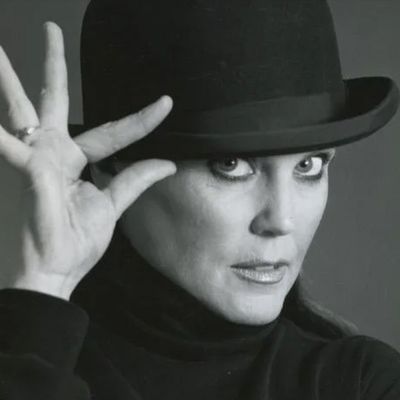
We are deeply saddened to hear of the passing of Ann Reinking, Broadway titan. Her memory lives in the souls of so many dancers. The Ensemblist dedicates this episode to her memory. Ann will be deeply missed by our community... Read More
From the show: The Ensemblist
Guests


Featured Shows
About
We are deeply saddened to hear of the passing of Ann Reinking, Broadway titan. Her memory lives in the souls of so many dancers. The Ensemblist dedicates this episode to her memory. Ann will be deeply missed by our community.
Fosse/Verdon’s penultimate episode “Nowadays” premiered on May 21, 2019. It was written by Joel Fields & Steven Levenson, and was directed by Tommy Kail. In this episode we saw the old Fosse standards of “All that Jazz” and “Nowadays” from the musical Chicago, reconstructed by Valarie Pettiford. Here again we see the company of Chicago, featuring Bianca Marroquin as Chita Rivera, and including Broadway stalwarts Tyler Hanes as Jerry Orbach, Sean Patrick Doyle as Michael O’Haughey, Bahiyah Hibah as Candy Brown and Peter Chursin as Christopher Chadman. We even get to see a Ballet Mistress played by Pamela Sousa, who was played by Nina Lafarga in the last episode.
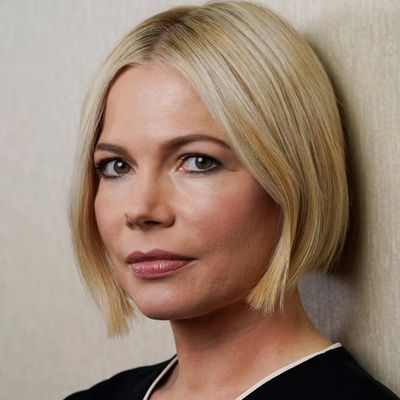
“Nowadays” was jam-packed with music -- the most we’ve seen in any given episode this entire series -- and it was all from, you guessed it, the musical Chicago, written by Kander & Ebb.. These four songs included the titular song “Nowadays” featuring our own Velma and Roxie, Bianca Marroquin and Michelle Williams; rehearsals of “All That Jazz” and “We Both Reached For the Gun” featuring Tyler Hanes and Sean Patrick Doyle as Billy Flynn and Mary Sunshine, respectively; and a non-diegetic rendition of “Razzle Dazzle” performed by Michelle Williams.
The total viewership for this episode rose by 53000 viewers to a total of 859,000. The main rise came from a growth of DVR numbers to a whopping 492000, with live numbers inflating a tiny bit to 367000.
It’s 1975, and Chicago is back in the rehearsal room following Bob’s triumphant return from a heart attack. But Bob feels fucked without his pills - he can’t eat, he can’t sleep and he definitely can’t direct. He’s pushing for Paddy, musicians, dancers - literally anyone he can to get him the dexedrine he can imagine.
Gwen is pushing herself to become the ingenue she no longer is, arriving at the rehearsal room hours early to stretch, jump rope and perform vocal trills. But even still Gwen is having trouble keeping up with Bob’s uptempo choreography, leading Bob to change the choreography for “We Both Reached For The Gun” for Gwen to sit instead of dance. Meanwhile, she’s working every angle she knows to get a new, more satisfying ending written for her. But when Kander and Ebb pen the perfect finale to showcase Gwen, Bob flexes his power and makes it a duet between Gwen and Chita.
When the reviews come out, they are positive to Gwen and Chita but less so for Bob. His failure reminds him of yet another low point in his personal life: when he was just a failed dancer and unknown choreographer who couldn’t get his famous wife pregnant due to his low sperm motility. Just as Gwen can’t get Bob to sign onto Chicago until she dangles him being replaced by Hal Prince, she can’t get pregnant until they’re scheduled to adopt a child.
But even Gwen’s triumphant return to the Broadway stage seems short-lived, when the pregnancy combined with blisters on her vocal chords make her time off of the show - literally without a voice. And even though Bob promises Gwen that there will be no publicity for her temporary replacement, word of mouth for the shortly available Liza Minnelli brings in lines of ticket buyers and a more positive review than the aging Verdon received.
Transcript
This transcript was automatically generated and might contain errors.
[0:00] Aaron Albano: You're listening to Fosse/Verdon from The Ensemblist, the only podcast that shows you Broadway from the inside out. I'm Aaron Albano.
[0:11] Mo Brady: And I'm Mo Brady.
[0:21] Aaron Albano: Welcome listeners to our mini-series recapping episodes of FX's Emmy Award-winning limited series Fosse/Verdon. In the show, we see an inside look into two characters as they grapple with the concept of power, the meaning of love, and the value of entertainment in art.
[0:37] Mo Brady: We're going back episode by episode to see how this love letter to vintage Broadway tells us greater truths about the industry.
[0:43] Aaron Albano: So let's dive in and talk about Episode 7, Nowadays. Aaron, give us the stats.
[0:48] Mo Brady: Fosse/Verdon's penultimate episode, Nowadays, premiered on May 21st, 2019. It was written by Joel Fields and Steven Levinson, and was directed by Tommy Kail. In this episode, we saw the old Fosse standards of All That Jazz and Nowadays from the musical Chicago, reconstructed by Valerie Pettiford.
[1:06] Aaron Albano: Here again, we see the company of Chicago, featuring Bianca Marroquin as Chita Rivera, and including Broadway stalwarts Tyler Haynes as Jerry Orbach, Sean Patrick Doyle as Michael Ohagi, Bahia Hiba as Candy Brown, and Peter Churson as Christopher Chadman. We even get to see a ballet mistress played by Pamela Souza, who was played by Nina LaFarga in the last episode.
[1:29] Mo Brady: Nowadays was jam-packed with music, the most we've seen in any given episode this entire series, and it was all from, you guessed it, the musical Chicago, written by Kander and Ebb.
[1:38] Aaron Albano: These four songs included the titular song, Nowadays, featuring our own Velma and Roxy, Bianca Marroquin and Michelle Williams; rehearsals of All That Jazz and We Both Reached for the Gun featuring Tyler Haynes and Sean Patrick Doyle as Billy Flynn and Mary Sunshine respectively; and a non-diegetic rendition of Razzle Dazzle performed by Michelle Williams.
[1:59] Mo Brady: The total viewership for this episode rose by 53,000 viewers to a total of 859,000. The main rise came from a growth of DVR numbers to a whopping 492,000, with live numbers inflating a tiny bit to 367,000.
[2:16] Aaron Albano: And what happens in this penultimate episode, Mo?
[2:19] Mo Brady: It's 1975, and Chicago is back in the rehearsal room following Bob's triumphant return from a heart attack. But Bob feels messed up without his pills. He can't eat, he can't sleep, and he definitely can't direct. He's pushing for Paddy, musicians, dancers, literally anyone he can to get him the dexedrine he believes he needs. Gwen is pushing herself to become the ingenue she no longer is, arriving at the rehearsal room hours early to stretch, jump rope, and perform vocal trills. But even still, Gwen is having trouble keeping up with Bob's up-tempo choreography, leading Bob to change the staging for We Both Reached for the Gun, allowing her to sit instead of dance. Meanwhile, she's working every angle she knows to get a new, more satisfying ending for the show written for her.
But when Kander and Ebb pen the perfect finale to showcase Gwen, Bob flexes his power and makes it a duet between Gwen and Chita. When the show opens and the reviews come out, they are positive for Gwen and Chita, but less so for Bob. His failure reminds him of yet another low point in his personal life, when he was just a failed dancer and unknown choreographer who couldn't get his famous wife pregnant due to his low sperm motility. Just as Gwen can't get Bob to sign onto Chicago until she dangles him being replaced by Hal Prince, she can't get pregnant until they're scheduled to adopt a child. But even Gwen's triumphant return to the Broadway stage in Chicago seems short-lived, when the pregnancy, combined with blisters on her vocal cords, makes her take time off from the show, literally, without a voice.
And even though Bob promises Gwen that there will be no publicity for her temporary replacement, word of mouth for the shortly available Liza Minnelli brings in lines of ticket buyers and a more positive review than the aging Vernon received.
[4:06] Aaron Albano: Oh, we're at the penultimate episode.
[4:20] Mo Brady: We love that word. Initial thoughts on this Nowadays?
[4:23] Aaron Albano: Well, the first thing that I thought, because it was one of the first things we see, is when Gwen is angry with Bob about his first infidelity.
[4:33] Mo Brady: Right, the flashbacks to I think it's like 1960.
[4:36] Aaron Albano: Yeah, it's heartbreaking. But secretly, it's also really hilarious.
[4:41] Mo Brady: It's crazy how it's funny.
[4:47] Aaron Albano: Yeah, it's like, he says it'll never happen again. And my reaction is like, no, you guys are gonna have a decades-long relationship that is literally defined by it happening again and again and again.
[4:55] Mo Brady: Yeah, and I'm just like, hey.
[4:57] Aaron Albano: And also was defined before this.
[5:01] Mo Brady: Yeah, it was her third wife. But the best part is like, the kicker to Gwen is like, a chorus girl in my show. Like, not only the infidelity is a mess, but also she's embarrassed at work.
[5:13] Aaron Albano: Yeah.
[5:14] Mo Brady: Which again, which we'll talk about more later. Her status at work is just as important to her as the health of her marriage. Because, you know, arguably, they're one in the same.
[5:24] Aaron Albano: It reminds me of the phrase, don't shit where you eat.
[5:27] Mo Brady: Yeah, always, always and forever.
[5:30] Aaron Albano: Bob literally can't stop eating.
[5:32] Mo Brady: Bob has explosive diarrhea on everywhere he wants to eat food. Like, yeah, it's a mess.
[5:40] Aaron Albano: It's a wild, sweaty mess. On a more serious note, one thing that I did think about for this episode, we get a lot of stuff that happened in the episode that involve people who are still alive.
[5:54] Mo Brady: Right. At the beginning, it really feels like it's Fosse and Verdon, and they're both passed. So we'll never really know what they think about.
[6:04] Aaron Albano: And like, Neil has since passed. Patty has passed. Joan Simon has passed. Everybody has passed. But...
[6:10] Mo Brady: In this episode, we see, yeah.
[6:12] Aaron Albano: Chita Rivera.
[6:13] Mo Brady: And Reinking.
[6:14] Aaron Albano: Yeah, they're both still alive. And I don't know if they were involved in the show. I don't think they're credited with being involved in the show. But especially in the scenes that happen in this episode. Like Chita's scene in All That Jazz. Chita's scene in the work session for Nowadays.
[6:31] Mo Brady: A, I wonder if this happened this way. Like, how factual this is. B, when Chita is sitting at home watching this, watching her life that arguably she might not even be involved in writing, what must she think?
[6:47] Aaron Albano: Same thing with Ann. All of these people. Like, the Nicole scenes are different because Nicole's involved in the show. But Ann and Chita are not.
[6:57] Mo Brady: Arguably, it's Nicole's version of Bob and Gwen's life.
[7:03] Aaron Albano: Yeah. And so...
[7:04] Mo Brady: And arguably, she is doing what her father did with All That Jazz. She's taking the real-life situation, and she's funneling it through a creative lens, right? Bob did that with the film All That Jazz. And now his daughter, Nicole, is doing it about the same situation and many of the same story points through this miniseries.
[7:27] Aaron Albano: Interesting.
[7:29] Mo Brady: What I found most striking about this episode is this is where our thesis one and thesis two meet. So again, our thesis one is who is the puppet master, Gwen or Bob?
[7:39] Aaron Albano: Okay, yeah.
[7:40] Mo Brady: And thesis two is can you love someone and despise someone for the exact same thing?
[7:46] Aaron Albano: This is where you're really seeing that they both love and despise each other for this puppet master game.
[7:54] Mo Brady: Yeah, 100%. It's very...
[7:57] Aaron Albano: I think why thesis one was so interesting was because through a 2020 lens, Fosse is obviously the bigger name of this relationship. And so to dive into a miniseries that talks about the power between these two inextricably related forces in our industry was like, oh, let's see how sort of Gwen gets her due compared to this person who is in power, right? And the interesting thing about rewatching the miniseries and really thinking about that power dynamic is how much back and forth we see and what are the levels of puppetry and how they really puppet each other.
[8:36] Mo Brady: Yeah, yeah, okay.
[8:38] Aaron Albano: This episode, we're seeing Gwen work in her same tactics that she does in episode five, right? That's the Southampton house episode.
[8:45] Mo Brady: Yeah, yeah.
[8:46] Aaron Albano: Where she's trying to get Bob to work on Chicago, like she's really trying every tactic she can to get the ending she wants to Chicago, right?
[8:56] Mo Brady: Oh, sure.
[8:56] Aaron Albano: She's not watching Nicole's ballet recital because she's telling Bob that he needs to be working on a new ending.
[9:04] Mo Brady: What's interesting that you bring up episode five is I feel like episode five is Gwen trying to work her magic, at least the way we see it, on behalf of Bob. Now, we're watching her now deal with the repercussions of that, have to change her tack because the puppetry that she has worked to get Bob where he is on this specific project is now to her own detriment. And now she's like, wait, I have to fix this because now I've taken care of Bob, but he's not taking care of me back. So I need to regain the control of my own destiny, drama, dramatic. But she does everything for him, and he does not return the favor ever. And now she's sitting here, regretting where she placed her puppet because her puppet is revolting against the puppet master.
[9:59] Mo Brady: Well, she does get repaid, right? It's the episode five conversation with Ann over croissants the next morning, where she says, if you take care of him, he'll give you what he gave me, charity, Lola, Roxy. But he hasn't delivered on the promise of Roxy yet.
[10:17] Aaron Albano: Well, he's giving her Roxy, but not in the form that she wants Roxy to be. And that's where her relinquishment of control is now biting her in the ass. I mean, she's still an actress, she still wants to do well. She still wants her career and her stardom to be seen.
[10:39] Mo Brady: Yeah, this is the whole feeling of it's been over a decade since the last time she starred in a Broadway show. And so she's got so much riding on this, yes, in terms of monetary wealth, but it's really her legacy that she's pinning Chicago on, right? And then that's why we're seeing her play all of her tactics. And it all comes to a head in this scene where they're workshopping Nowadays, which is the scene where these theses beat. They're running Nowadays at the piano, and Gwen is singing the song and she's finally gotten the new ending that she wants that she was lobbying so hard for, right? And she's so gracious, that she's performing how gracious he is to the room.
[11:25] Aaron Albano: I mean, and everyone's sort of affirming her.
[11:27] Mo Brady: Right.
[11:28] Aaron Albano: Or like, Chita is like, this is the song. All of the writers are like, this is the song. Everybody in the room has her back. And they just need to sign off on Bob, who we assume we all assumed.
[11:40] Mo Brady: Well, the easy way would be like, okay, you got what you want, Gwen, let's move on. But he doesn't allow that to happen. Bob asks to run the song again from the top and then gives half the song to Chita. Everyone else in the room, including Chita, including the writers of the song, are saying, this is Gwen's song. And Bob says, it's not her show. It's their show, meaning both Roxy and Chita.
[12:08] Aaron Albano: And even Chita's like, this is ridiculous. He's pulling rank, and he's pulling rank to spite her.
[12:14] Mo Brady: Yes. And through our contemporary lens, it's Roxy and Velma's show. It's both their shows.
[12:23] Aaron Albano: I look at Chicago and I'm like, yeah, in the revival, they both bow together. I think about Nowadays. I think about those two roles are equally as important.
[12:34] Mo Brady: Interestingly enough, because I just watched the movie last night.
[12:38] Aaron Albano: For another podcast?
[12:39] Mo Brady: For a different podcast, yes.
[12:40] Mo Brady: But here's the question I pose to you. Do you feel like Velma and Roxy have equal weight because the story tells us so? Or because the amount of material that Bob has given to Chita makes it so? Because arguably, the story, yes, Velma begins the show with "All That Jazz." But the story is Roxy's arrest, Roxy's rise to fame, Roxy's trial, Roxy's fall. And we see her entire journey. We come into Velma's journey, like mid-journey. But this is a creative figuring out that the show will be better by diffusing some of that narrative power. And what I'm saying is, if "Nowadays" had stayed Roxy's song, would the role of Velma feel equal? Arguably no, because it's Roxy's show, right? It's Roxy's show.
It's been written for her. She's the one who got the rights. She's the guy, right? And so he's changing the structure of the show, basically. Because Bob is theoretically presented to us as making this vindictive choice and shrouding it in a, it's the best for the show. Do you think it's vindictive?
[14:01] Aaron Albano: I don't necessarily think it's vindictive. I mean, I'm on Team Gwen during this scene. So yes, I absolutely think it's vindictive.
[14:09] Mo Brady: It's crazy to be your Team Gwen, because I'm so Team Bob in this, right?
[14:13] Aaron Albano: Really?
[14:13] Mo Brady: Yes. Okay, so Gwen takes this decision for a song, for the show to be better, right? That's the whole thing that sort of starts Gwen's monologue, is Bob says, I'm saying that splitting the song between Roxy and Velma will be better for the show. And her response is, oh really, better for the show? I'll tell you what would have been better for the show, opening four months ago with a director who wasn't hellbent on turning it into two hours of misery for an audience, right? She's not talking about the show. She's talking about the players in the show.
[14:43] Aaron Albano: Yes, correct.
[14:44] Mo Brady: Bob's response, I didn't ask to do this show. And Gwen's response is packed with references, not to the show, but to their decades of relationship. All of it comes to a head in this scene.
[14:58] Aaron Albano: I didn't ask to do this show.
[14:59] Mo Brady: Oh no, no, no, of course not. No, no, this is all one big favor you're doing for us, for all of us. It's a big favor. Daddy, can we take it from the top? Just like my saving your life was a favor. And not letting them replace you was a favor. And not losing a single cast member. And then there's the biggest favor of all, which is your entire fucking career. I could have said no when Hal wanted you for Damn Yankees. And I could have said no when you wanted to direct Redhead. I could have let you stay a failed, bald dancer. A wannabe Fred Astaire. But I picked you up on my back. And I carried you. Through charity. Through cabaret. I've been carrying you the whole goddamn time. And you have never forgiven me for it.
[16:04] Aaron Albano: But you know damn well if I get this song, it'll be my show and not yours. And you can't stand the thought of it, can you? You just can't stand the fact that I'm the star, not you.
[16:19] Mo Brady: She blows it up. Like she blows up the whole room. Could you imagine just being Chita and just being like, oh shit. That'd be such a fun scene to play just to try to like disappear into the carpet. Just being John Kander or Fred Ebb being like, fuck guys. And she says it. She says, your decision is about making the show the star, not me the star.
[16:45] Aaron Albano: Yeah.
[16:45] Mo Brady: This is I think one of the reasons why I'm team Bob in this. Gwen, you're not the star of the show. We're all just trying to make theater. If the show is good, then people will think you're good. And I guess where I come down on that is we see the results of it. We see the review. And he was badly reviewed. She was well reviewed. His choices led to a worse show from his standpoint. Because what he was trying to do, theoretically, if he made the best show possible, then that would reflect on him as a director. He clearly did not because it did not reflect on him as a director. That coupled with the context of their relationship, like him cutting stuff because Gwen was struggling in rehearsal, fighting her on this song when the entire show has been leading up to Roxy having this star turn at the end.
If this is arguably her journey, then her journey of learning that this is all fleeting, that's her change of character. Velma arguably knows this already. So why is she singing it? She's singing it because of whatever personal crap that Bob brought into the room didn't want Gwen to have that song.
[17:59] Aaron Albano: Why I'm on team Gwen is this does feel more selfish and vindictive than it does altruistic for the show. I feel like it's more vindictive and veiled by well, this is for the show. Both of them have valid points. And the discussion is worth having. And I think what makes it so striking, and their relationship so striking is that they come to loggerheads so forcefully. And then we move on and it's not wasn't a breaking point for them. It was just another challenge in their continually challenging relationship. The show opens, Gwen, who we've seen belittled and trampled on in that "Nowadays" scene has come out on top. She's the one that's got the good reviews. And it's Bob who is feeling powerless once the reviews come out.
[18:53] Aaron Albano: Yeah. And then it goes right back the other way, when Gwen has to take time off because she's got the blisters on her vocal cords, right? Then it's then it's Bob in the position of power again. And Bob is saying, I'm going to take care of you, you're going to recover, and you're going to come back and you're going to sing this role for a long, long time. At first, it looks like Bob is making this decision to protect Gwen. And she's like, okay, cool. You're right. He promises that whoever replaced her, there'll be no press, there'll be no nothing. Liza signed on to do it. She wrestles a little bit of the idea that it's Liza. But he's like, there's no press. So it's fine. It's cool. Go get your surgery.
And then when the show is reviewed, and the reviews come out, and they're positive for Liza, her question for him over the phone, she's not even supposed to be speaking, right? Because she's on vocal rest. But she's on the phone with Bob. And her question is, did you change the steps?
[19:47] Aaron Albano: Yeah.
[19:47] Mo Brady: Did you change the choreography? Did you make the show harder for her because you knew she could do it? Yeah. Versus what you gave me? It's all pride. It's all about pride. But then Bob is like, you're right, I put back some of the steps. And Gwen calls him out. And is like, you never thought I could carry the show. To which Bob responds, I thought you could do it 15 years ago when we started talking about it. Remember in the last scene, where he never wanted to do this? Now he's admitting that he did want to do this with her. It's all just the worst kind of gaslighting when your wife shouldn't even be talking to you. But no, he keeps the conversation going. And I think this is where I'm solidly in team Gwen.
Ann Reinking has been watching all of this. And when Bob hangs up and looks at Bob, exasperatedly sighs and leaves the room. She knows how shitty he's being. She knows that he's doing this to get to her. Even if he doesn't know it, I think he does know it. But even if he doesn't know it, she knows. And that's why I'm like, yeah, Bob's fucking Gwen, like any which way he can.
[21:02] Mo Brady: So let's talk about our third thesis. What is the toll of the art on the artist? I mean, Gwen's literally killing herself. Yes, we're watching her sort of try to catch up with her ingenue self, right? The full warmup regimen where she's doing the jump rope. And right, she's doing her best. I feel like her mortality is the central character of this episode. Again, we had all this entire discussion about like Gwen's altruistic motives for doing Chicago. But there is also this aspect of she wants to be able to do it. When Bob even considers cutting Jerry Orbach and Gwen's choreo from "We Both Reached for the Gun." Gwen says to Bob, I can do this. I want to do this. She's struggling in the corner.
But she is doing her best because she needs to prove it to herself that she can do this, which then leads to how heartbreaking it is. When he gets that chair, sticks it in the middle of the stage, and plops them both down in it. Tyler Hanes and Michelle Williams don't say a word, but their eyes are giving you all the beats.
[22:04] Aaron Albano: The thoughts that I had for that, A, it cut in my head to when Gwen cut the dancers in Sweet Charity, the Sweet Charity movie. I didn't even think about that. And it's, it's like heartbreaking. Because she cut them so nonchalantly, swiftly. But now here she is on the receiving end of that as the star of the show. And it's not even like the numbers being taken away from her. But that does something to you, psychologically, where I'm like, artists, especially dancers, we all have a shelf life. We all are doing a thing until we can't do the thing anymore. And it's one of those things where I'm just like, we watched seven episodes of where this is how Gwen defines herself. In episode two, she tells it to her best friend that she doesn't understand how someone could just give up dancing.
This is how Gwen identifies. And now she's being faced with the idea that she can't do it anymore. And not only is she like, being told that she can't do it anymore. It's by a person who is rooting for her to fail. It is arguably by her own orchestration. She has created this high stakes Broadway musical out of nothing to showcase to the world that she's not the dancer that she once was.
[23:21] Mo Brady: Rough.
[23:22] Aaron Albano: Right? Chicago wouldn't exist if it wasn't for her.
[23:25] Mo Brady: Yeah.
[23:25] Aaron Albano: And she has created an opportunity for her to publicly fail.
[23:30] Mo Brady: Sure, sure. She's risking it all for a last time in the sun. I mean, and arguably, she still has that at the end of the day. But like in this specific moment, it is a low point in her process with this show. Like she was just literally told in front of her entire company, you can't hack it, sit on this chair, and just mouth the words. Yes, does it serve the number better that she's like more of a puppet? Oh my god, literally, Bob has just manipulated the puppet to just sit down. And she's pissed. But like, she has created that opportunity. But it still doesn't not suck. Like, because I was thinking about this. I was like, is this what the title is signifying? The lyrics? Good. Isn't it grand?
Isn't it great? Isn't it blah, blah, blah, blah, but nothing stays? Is that what we're talking about with this title? Everything is fleeting. Your fame is fleeting. Your ability is fleeting. Your facility is fleeting. Your age is fleeting. And Gwen is learning that in her most shining moment.
[24:44] Mo Brady: To keep up to date with next week's recap, be sure to watch the finale of Fosse/Verdon, "Providence" on Hulu. The Ensemblist was produced today by me, Aaron Albano.
[24:53] Aaron Albano: And me, Mo Brady. There are two great ways you can be helping The Ensemblist right now. One is by leaving us a rating and review on Apple Podcasts. And the second is by becoming a Patreon member at patreon.com slash The Ensemblist.
[25:05] Mo Brady: Please follow The Ensemblist wherever you listen to podcasts on Spotify, Apple Podcasts, or at bpn.fm, the home of Broadway Podcast Network. You can also follow us on Instagram. Thanks for listening, everybody. Until next time.
© Broadway Podcast Network, All Rights Reserved