

On this week’s episode, Rob and Jamie are back at Orso for one final time this season... Read More
From the show: The Fabulous Invalid
Featured Shows
About
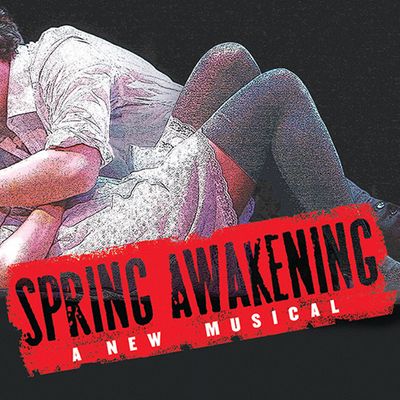
On this week’s episode, Rob and Jamie are back at Orso for one final time this season. They are joined by actor and producer Tom Hulce who was nominated for an Academy Award for his portrayal of Wolfgang Amadeus Mozart in the film “Amadeus,” and is the producer of the Broadway hits Spring Awakening, American Idiot, and this season’s 12-time Tony Award-nominated sensation Ain’t Too Proud: The Life and Times of the Temptations.
This week’s music: “It’s Not About Me” and “Unruly Heart” from The Prom. “Ain’t Too Proud To Beg,” “I’m Gonna Make You Love Me,” and “Papa Was A Rollin' Stone” all from Ain’t Too Proud: The Life And TImes of the Temptations., “Mamma Who Bore Me” and “The Bitch Of Living” from Spring Awakening, and “Poor Little Person” from Henry, Sweet Henry.
Find us on Twitter & Instagram: @fabulousinvalid
Facebook: www.facebook.com/fabulousinvalid
Rob’s reviews: www.stageleft.nyc
Email us at: info@fabulousinvalid.com
Jamie Du Mont
Twitter: @jamiedumont
Instagram: @troutinnyc
Rob Russo
Twitter/Instagram: @StageLeft_NYC
Jennifer Simard
Twitter: @SimardJennifer
Instagram: @thejennifersimard
Transcript
This transcript was automatically generated and might contain errors.
[0:00] Jamie DuMont: I'm Jamie DuMont.
[0:01] Rob Russo: I'm Rob Russo, and this is the Fabulous Invalid.
[0:17] Jamie DuMont: Hi Jamie.
[0:18] Rob Russo: Hi.
[0:18] Jamie DuMont: Wow.
[0:19] Rob Russo: Well, it's uh Monday night and we are back at Orso.
[0:22] Jamie DuMont: Yes, it's the Monday before the Tony Awards.
[0:24] Rob Russo: It's the Monday before the Tony Awards.
[0:25] Jamie DuMont: And the Monday after the Drama Desk Awards.
[0:28] Rob Russo: Which we both went to last night.
[0:30] Jamie DuMont: Yes, yes.
[0:31] Rob Russo: We said that at the same time.
[0:33] Jamie DuMont: Did we?
[0:33] Rob Russo: Oh.
[0:34] Jamie DuMont: How about that?
[0:36] Rob Russo: Yeah, and I have to admit I slept in a little this morning because uh I was up late last night.
[0:42] Jamie DuMont: I know you were.
[0:43] Rob Russo: Celebrating the results, and um, you know, I was riding a high.
[0:47] Jamie DuMont: It was hard to fall asleep.
[0:48] Rob Russo: It was hard to fall asleep.
[0:49] Jamie DuMont: I have to say, uh, I went home and I listened to the prom cast recording from start to finish.
[0:53] Rob Russo: Which is Is that because I mentioned that I had listened to it for the first time leading up to going to the drama desk?
[0:59] Jamie DuMont: Oh, that's right.
[1:00] Rob Russo: That's right.
[1:00] Jamie DuMont: You had taken a break.
[1:01] Rob Russo: I'd taken a break from listening to it three times a day, every day.
[1:04] Jamie DuMont: I had to do that last season from uh the band's visit.
[1:06] Rob Russo: Yeah.
[1:07] Jamie DuMont: I saw the show like five times in three months and was I'm listening to that cast recording non-stop.
[1:11] Rob Russo: I finally had to like take a break.
[1:13] Jamie DuMont: Well, it's no secret.
[1:14] Rob Russo: Well, it's now no secret to anyone, but we are seeing the prom again on Wednesday.
[1:18] Jamie DuMont: Oh, that's right, yes, yes.
[1:19] Rob Russo: One last check-in before the Tony Awards.
[1:21] Jamie DuMont: One last check-in.
[1:22] Rob Russo: I think Beth Level, when we told her last night at the Drama Desk, looked at us like we were bonkers.
[1:26] Jamie DuMont: What?
[1:26] Rob Russo: No, I thought she was excited.
[1:28] Jamie DuMont: Really?
[1:28] Rob Russo: I think she was afraid.
[1:30] Jamie DuMont: I think she's now, I think she's now planning her escape from us.
[1:34] Rob Russo: It is all about Emma and not about I guess I've already sort of with the cat out of the bag, but in thinking about the Drama Desk Awards last night, um the sort of greatest surprise of the entire evening, for me at least, for everyone, was at the prom won Best Musical.
[2:00] Jamie DuMont: Yes.
[2:01] Rob Russo: Which is so delightful and exciting.
[2:03] Jamie DuMont: Did you are you aware that you screamed like a girl when that happened?
[2:07] Rob Russo: Um I am.
[2:08] Jamie DuMont: Okay.
[2:09] Rob Russo: I am.
[2:09] Jamie DuMont: I own that.
[2:10] Rob Russo: Yeah, I know.
[2:10] Jamie DuMont: I know you do.
[2:11] Rob Russo: I just so terribly excited.
[2:13] Jamie DuMont: I, you know, we were sitting, it's a very, you know, starry crowd.
[2:15] Rob Russo: One of the cool things about the um uh this award show, the Drama Desk, uh, is that uh in the orchestra, it's a mix of all the nominees and the voters, and that's basically it, because it's town hall.
[2:27] Jamie DuMont: It's a very small venue compared to the fact that it's you know a hundred and something nominees.
[2:33] Rob Russo: When you're in the hall when there's a surprise like that, you weren't the only person screaming.
[2:38] Jamie DuMont: Oh no!
[2:39] Rob Russo: You might have been the only male screaming like a girl in row L.
[2:42] Jamie DuMont: Right.
[2:43] Rob Russo: Well, but we were in row J and you know it.
[2:45] Jamie DuMont: Oh, sorry.
[2:46] Rob Russo: So I immediately looked right across the auditorium to where do you like how I upgraded our seats?
[2:53] Jamie DuMont: What do you mean you upgraded our seats?
[2:55] Rob Russo: Oh, no, J K L.
[2:56] Jamie DuMont: Oh.
[2:57] Rob Russo: No, you didn't see it.
[2:58] Jamie DuMont: I don't even know the alphabet.
[3:00] Rob Russo: But I immediately looked across the auditorium to where the prom was sitting, because I knew where they were sitting.
[3:04] Jamie DuMont: I'd you know scoped everyone out throughout the evening.
[3:06] Rob Russo: And Beth Level and Brooks, they all just shot up.
[3:09] Jamie DuMont: Oh, they were jumping.
[3:11] Rob Russo: It was thunderous.
[3:12] Jamie DuMont: It was so wonderful and exciting.
[3:14] Rob Russo: Um for those who don't know, the Drama Desk rec uh recognizes both Broadway and off Broadway and off off Broadway shows.
[3:19] Jamie DuMont: So the category, the the nominations in each of the categories are different from what are at the Tony Awards, which makes it a little hard for them to be predictive of what'll happen at the Tony Awards.
[3:29] Rob Russo: Um this year it was Tootsie, uh The Prom Be More Chill, um, but also uh Rags Parkland sing Songs of the Future and The Hello Girls.
[3:39] Jamie DuMont: Those were two productions that played off Broadway uh and are no longer running.
[3:43] Rob Russo: So folks don't even have a chance to go see them if they were interested.
[3:47] Jamie DuMont: So without Hades Town, um, or Ain't Too Proud, which are the other, and Beetlejuice, which are the other three musicals that are nominated for the Tony Awards, um, it was an interesting category.
[3:57] Rob Russo: And I thought for sure that Tootsie was gonna win.
[4:00] Jamie DuMont: I think everybody thought.
[4:01] Rob Russo: I think everyone did, right?
[4:02] Jamie DuMont: Especially because it won Best Score and Best Book.
[4:05] Rob Russo: Um, which you know usually indicates leading up to that moment.
[4:11] Jamie DuMont: Um so hats off to the prom.
[4:13] Rob Russo: I've I've I love that show.
[4:15] Jamie DuMont: I've had such a love affair with it since we saw it back in what, November?
[4:20] Rob Russo: Of all the new musicals on Broadway, it's really the only one that doesn't have any sort of pre-existing brand around it.
[4:28] Jamie DuMont: It was inspired by a news story, and that's it.
[4:31] Rob Russo: It's had a real uphill climb throughout the whole season.
[4:34] Jamie DuMont: So to see it win best musical, uh, well, outstanding musical is actually the category, um, was really special.
[4:42] Rob Russo: So fierce are in the past, raining so fast.
[4:46] Jamie DuMont: I won't sing anything anymore.
[4:50] Rob Russo: I'm who I am, and I think that's where my never gets to the light I better be with the sunrise's a lot of great theater in New York.
[5:31] Jamie DuMont: Hats off to the Drama Desk Awards for recognizing uh all of this wonderful theater and um for putting on a great show.
[5:40] Rob Russo: You know, it really has become more of a um curated, you know, big deal of an event since you last attended in 1999, right?
[5:50] Jamie DuMont: Well, you know, the thing I remember about going in '99 was it there were lots of musical numbers.
[5:56] Rob Russo: It was very musical heavy.
[5:58] Jamie DuMont: It felt like it went on forever.
[5:59] Rob Russo: And what I really loved about, and that's just my memory, that doesn't mean that's actually what happened.
[6:05] Jamie DuMont: But what I loved about last night is it was truly about the awards, it was truly about the artists, it was truly about the theater.
[6:11] Rob Russo: There were three, maybe three performances.
[6:13] Jamie DuMont: And they were all great.
[6:14] Rob Russo: They were all great, but it wasn't, it did it never felt like nothing was belabored, yeah.
[6:19] Jamie DuMont: Correct.
[6:20] Rob Russo: Because it it really wasn't a it wasn't an advertisement or a marketing tool.
[6:25] Jamie DuMont: Correct.
[6:27] Rob Russo: It was it was actually a celebration of outstanding work.
[6:32] Jamie DuMont: 100%.
[6:33] Rob Russo: And speaking of outstanding work, we have a guest joining us tonight.
[6:36] Jamie DuMont: Yes, a wonderful guest.
[6:37] Rob Russo: I can't wait to talk.
[6:38] Jamie DuMont: The uh fantastic actor and producer, yes, Tom Hulce.
[6:43] Rob Russo: Wonderful.
[6:43] Jamie DuMont: Should we uh I think we should have a chat with Tom.
[6:46] Rob Russo: Let's do it.
[6:46] Jamie DuMont: And nobody out there ever gets to define the life I'm meant to lead with this unruly hall of mind.
[7:16] Rob Russo: Today we are delighted to be joined by actor and producer Tom Hulce, maybe best known for his work in such hit films as Animal House and the marvelous Dominic and Eugene, and his Academy Award-nominated turn as Wolfgang Amadeus Mozart in Amadeus. Tom is also a prolific Broadway producer, including the Tony Award-winning Spring Awakening, American Idiot, and this season's Tony nominated smash hit, Ain't Too Proud: The Life and Times of the Temptations. Welcome, Tom.
[7:42] Tom Hulce: Thank you.
[7:43] Rob Russo: Thanks for coming down.
[7:44] Jamie DuMont: Thanks for coming.
[7:45] Rob Russo: And congratulations on your 12 nominations.
[7:50] Jamie DuMont: This Sunday.
[7:50] Tom Hulce: Yeah.
[7:51] Rob Russo: We're just under a week away.
[7:53] Jamie DuMont: Yeah.
[7:54] Tom Hulce: I feel uh very lucky.
[8:00] Rob Russo: Not about not about anything particular to do with the future, but I feel like there have been so many moments in the progression of this show that have uh unexpectedly landed in our favor.
[8:17] Tom Hulce: And we're definitely blessed with an extraordinary once-in-a-lifetime group of people.
[8:24] Rob Russo: And so I'm feeling really, really, really good.
[8:28] Jamie DuMont: Good.
[8:28] Rob Russo: Well, we actually, some of those extraordinary people we've spoken to this year.
[8:33] Jamie DuMont: So we chatted with Tara Rubin earlier on the show, and she said that casting Ain't Too Proud was one of the career highlights for her.
[8:41] Rob Russo: Finding finding the fellas to portray the the Temptations was a real career highlight.
[8:47] Jamie DuMont: And Des Maganoff said exactly the same thing about his involvement.
[8:53] Rob Russo: So it begs the it begs the natural question: how did this all come?
[8:57] Jamie DuMont: How did you get involved?
[8:58] Tom Hulce: I think before Spring Awakening, which is when I first partnered up with Ira Pittleman to um to produce together, uh, either right as that was happening or before, he had made a partnership with Otis Williams and Shelly uh uh Berger, the the manager of the Temptations and the Supremes from the time that they had the level of success where they could even try to cross over to today when he continues to manage the Temptations as they continue to um to tour.
[9:42] Tom Hulce: Um they made a partnership to make a musical uh based on Otis's autobiography and uh immediately it became clear that the songs were not available, and um it was such an interesting situation.
[10:03] Tom Hulce: Um legally, Barry Gordy doesn't have any um hold on the material.
[10:11] Rob Russo: Really?
[10:12] Tom Hulce: Uh Sony Publishing holds the material.
[10:15] Rob Russo: Yeah.
[10:17] Tom Hulce: But nobody out of respect for the enormous thing that he created and did at a time when that was just like crazy that there would be that company in Detroit with that many amazing artists and and and and and so on.
[10:37] Tom Hulce: I'm gonna um I'm gonna detour for a second.
[10:40] Tom Hulce: Um when he came up to Berkeley to see the the show for the first time, um he talked at that time about how he had worked on the assembly line at Ford and how he took the assembly line as his model so that if it wasn't happening, it wasn't the car's fault, it was everybody else's fault, and it's how he could believe in the temptations for 24, however many uh uh releases they had before they had a hit.
[11:09] Tom Hulce: And so what a remarkable uh uh uh thing he did.
[11:12] Rob Russo: It would never happen now.
[11:14] Tom Hulce: No, not in a million years.
[11:16] Tom Hulce: Um but um uh uh gosh, why did I bring up why did I bring up Barry and the right?
[11:26] Tom Hulce: I didn't know the rights to the music.
[11:28] Rob Russo: Oh yeah, but because he wanted to do Motown, right, right, there was a hold on all of the catalogs of all of the Motown uh acts, but he said to Shelley Um and Otis that the temptations could be first after Motown.
[11:48] Tom Hulce: And um so you know, years go on, and we get a call from Sony's lawyer, Sony Publishing's lawyer, saying that um he'd like to let us know that the temptations catalog was becoming available, and Barry had had it put in the Motown contract to protect that we would have the first window, if you will, right, of um opportunity.
[12:15] Tom Hulce: And what year was this, roughly?
[12:18] Rob Russo: That they became available?
[12:20] Tom Hulce: Yeah, that Sony called you.
[12:22] Rob Russo: Um, I want to say it's about five, four, four or five years ago. But actually, when they called us, there was still time ticking when they were being withheld, but the date was, so we knew that that would come, and we knew that we could start to make a deal and pursue it.
[12:43] Tom Hulce: And then Des was our first meeting of anyone that would help create the actual thing, and the only writer that we sent to meet him was Dominique.
[13:02] Rob Russo: So that's, I'm fascinated by that because she's written a beautiful book.
[13:06] Tom Hulce: Yeah.
[13:06] Rob Russo: She's nominated for a Tony, deservedly so.
[13:09] Tom Hulce: But she's an unusual choice, and she was your first choice. So how did that come about?
[13:15] Tom Hulce: We knew who we knew with the sort of the writers that were successful enough that we would know their work or have seen their work. And there were a lot of younger, newer playwrights that we really didn't have, and so to educate ourselves, we read a lot. But for me, two things happened that were significant. One is that an agent said you should get Dominique Morissot, and that agent did not represent her, nor did his company. Who is so many people's advisor and so many people's sort of artistic guide poster, I don't know, guru. And so I said, okay, this is what we're doing. This is da-da-da-da. Who and um, uh, this is who we were thinking of at the time, and he said, um, you should talk to Dominique.
[14:25] Rob Russo: Wow. Well, good thing you did.
[14:27] Tom Hulce: Yeah, and not a moment too soon, you know, as it turns out. And she's a Detroit native, correct?
[14:33] Rob Russo: She's written a cycle of plays about Detroit.
[14:35] Tom Hulce: Yeah.
[14:36] Tom Hulce: And um, Iraq, talk about um, well, uh, uh, I was in a, in a um, whitey white, uh, commuter, uh, suburb of Detroit, and I left to go away to school before I had a driver's license. So I didn't really know downtown Detroit as much as I would have um liked to. But one of those Detroit plays opens with um, a Temptation song, maybe Ain't Too Proud to Beg, and that for Ira that was like a sign of it, a big hello. You have to listen to those signs when they come along.
[14:56] ♪ Musical number: "Ain't Too Proud to Beg" — performed by The Temptations ♪
[15:46] Tom Hulce: It does sound like there was a lot of um, a lot of divine intervention or whatever you want to call it, bringing everybody and everything together on this project. Even our first meeting with Des, um, he brought up the fact that he um grew up in Toronto, and so he was in Detroit all the time because it's just, whatever it is, an hour and a half away or two hours away. So he actually had a much stronger relationship to the place and the time and the music than I did living 45 minutes away.
[16:19] Rob Russo: Right.
[16:20] Tom Hulce: Um, I was lying on my bedroom floor listening to Lab OM and trying to imitate Anthony Newly.
[16:31] Rob Russo: Both very worth marriage.
[16:34] Tom Hulce: Great influences, great influences. Don't underestimate the power of the city.
[16:38] Rob Russo: Not to mention the outfit.
[16:39] Tom Hulce: Right. Well, Toronto ended up being one of the pre-Broadway stops for Ain't Too Proud. And you ended up doing this tour, which was another sort of interesting, unique way to bring it to Broadway.
[16:50] Rob Russo: Yeah.
[16:51] Tom Hulce: Um, did that afford you a certain luxury in the process, or was it sort of just the way that it happened, or was that by design? How did that come around about?
[16:58] Tom Hulce: It was luxurious in the sense that it was very expensive. It gave you time to fine-tune the show, though. Our fantasy, uh, uh, was that we would work on the show in Berkeley and get it to the point where the work that we would want to do, we felt that we could do on the way to Broadway. And so, um, imagine our surprise when there was no room at the inn.
[17:31] Rob Russo: Right.
[17:32] Tom Hulce: And an increasing problem on Broadway.
[17:34] Rob Russo: Right.
[17:35] Tom Hulce: Yeah. And at that time, I don't know if it's the same now, because it's how many, about two years later, maybe, but at that time, so many conversations had been had between theater owners with people who they had very strong relationships with about projects that hadn't even begun, but that when they were ready, they could count on having a theater. So it was worse than we anticipated in terms of what we could sort of see. But we knew that we had a pretty um, a significant to-do list. And so at the point that it became clear that we were going to have to wait, the idea that we would just sit, uh, became not so, uh, uh, compelling.
[18:23] Tom Hulce: And um, so Jeffrey Finn, who runs the theater, all of the theater part of the Kennedy Center, um, had been in, uh, taking, uh, uh, workspace in our office for a couple of years before he took that job. And so, you know, we would had conversations about the Temptation show and stuff, and completely hypothetical and, and, uh, about, you know, and geez, like, like are you having a subscription season down there? And so he was our first conversation, and it felt like a good place in terms of the work that we wanted to do. The Amundsen in LA kind of customized a situation that was exactly right for us. They had lost, um, they had a show. Maybe Crazy for You, right, was earlier in their subscription, so they owed their subscribers a show because it normally wouldn't have been the right time of year. And so we sorted ourselves out to go there, and it felt like, you know, uh, uh, Washington for Gravitas and, uh, LA for showbiz.
[19:48] Rob Russo: Right.
[19:49] Tom Hulce: Well, it's also two more examples of where the right place or right time falling into place because how would you have known that Crazy for You would get delayed or whatever happened to it?
[20:01] Rob Russo: Right.
[20:01] Tom Hulce: And every moment of the show just seems to be happening for the right reason.
[20:07] Rob Russo: Yeah.
[20:07] Tom Hulce: And sort of out of, not out of your control, but it's like there's something guiding the process.
[20:13] Rob Russo: Yeah.
[20:14] Tom Hulce: Before we left the Kennedy Center, um, uh, Bob, Michael at the Schubert's and Desi said let us know that um, they thought that they could help us.
[20:28] Rob Russo: Help you they did, yeah, they certainly did.
[20:31] Tom Hulce: That they might have what we need.
[20:32] Rob Russo: Right, exactly.
[20:34] Tom Hulce: You are in the perfect house for your show.
[20:36] Rob Russo: Yes.
[20:36] Tom Hulce: Oh my gosh, it's terrific. It's crazy. It was taken off the market, I think twice because there is going to be a big construction project next door.
[20:47] Rob Russo: Oh, next door, that's right, yes, a giant lot.
[20:50] Tom Hulce: And something just didn't coalesce right at the time where they were wanting us to make a commitment, and so when they said that it was going back on the market, it was like go.
[21:07] Rob Russo: Well, it's interesting. As you're talking through the journey that Ain't Too Proud took to Broadway and all these different decisions that came up along the way and stars that aligned, um, it makes me think about taking a step back, a bigger step back, what the role of a producer is in marshaling a project along from that very first idea 15 years ago to now a hit, you know, musical on Broadway with 12 Tony nominations. The term producer means a lot of different things to a lot of different people, and even within the entertainment industry, you know, a record producer does something very different from what a TV producer does. How do you describe your role as a theatrical producer?
[21:49] Tom Hulce: One way I describe it is that when I was, uh, in the acting portion of my career, I got to be the special child and whatever problem I had was everyone's problem and it was especially the producer's problem, and now I'm the adult and the parent and everyone's problem is my problem.
[22:23] Tom Hulce: So it's an ironic kind of um, it's cosmic justice around, um, especially because I thought that the producer when I was acting, I thought the producer was the person who was going to prevent me from doing what I wanted to do.
[22:38] Rob Russo: Oh interesting.
[22:38] Tom Hulce: And so the, the, the even more delicious cup circle that I'm standing there and know in all kinds of ways what the person across from me may or may not be thinking. But I think, okay, we just like, you know, bring it on, we'll get through the through. But I, I feel like it's, it's, it's to be so much of it is just problem solving. I think my favorite part of it is putting together the initial pieces of a project and then watching it's so exciting because it's just so hopeful. Like, like in the early parts, it doesn't matter if something, as long as, as long as you believe in its potential, right, then it's just all fun and hard work and, and you know, maybe complicated decisions, but it's, it's um, cost.
Yes, it's all, uh, uh, to be revealed. And so part of that job is to help it become what it wants to be and not what I want it to be or this person wants it to be, but to be able to say that three minutes there, that's, that's where it lives and, and build out from there. Um, and you know, hopefully there are three minutes that yeah.
[24:20] Jamie DuMont: So it sounds to me like, I mean, a huge part of being a great producer, which clearly you are a great producer, is having that perspective and that patience and that ability to really see the bigger picture and have the bigger picture in mind when you hit those snags, or when something's not working, or when you sit back and you say, "Oh, actually, you know, it's all wrong, but all the pieces are right. We just need to re-jigger the puzzle," you know? And that's sort of an innate skill, I would imagine. Certainly, it's something you can practice and you get better at over time. But how much of it do you think is instinct?
[24:56] Tom Hulce: Right. To have a partner, Ira and I rarely agree. We have very different specific tastes, but we both have a great common belief in things. And so left to our own devices, we may go about things in a different way, but we've been able to build out of a common passion for something.
[25:43] Jamie DuMont: Is that how you overcome the idea that you rarely agree on things, but as producing partners, you have to navigate those tricky waters, correct?
[25:52] Tom Hulce: Yeah. So is that part of how you get through that?
[25:59] Jamie DuMont: It's a crazy situation. Because, you know, it shouldn't work, right?
[26:04] Tom Hulce: Well, that's kind of what I'm asking. Because you just described a scenario for disaster.
[26:10] Jamie DuMont: Yeah. And yet you've produced some incredibly daring, successful, wonderful, original pieces of theater, which is hard to do.
[26:22] Tom Hulce: Yeah. I don't know how you do it. I think a lot of it has to do with our commonality as humans maybe and a feeling on both our parts that it's not personal, right? And I feel sure that he would say this as well, that a solution to anything needn't be the solution that we can think of. That the exciting thing is when a challenge has been identified and the solution is something that neither of us would have thought of on our own, right? Or that neither of us would have thought of, and Des has the, you know, the magic number, if you will. It's that synergy that really exists, so has to exist in the theater for anything to be successful, right?
[27:24] Jamie DuMont: Yeah, which also I think speaks to what you said a moment ago, which is one of your favorite parts of it is the beginning where you're putting everything together, and I assumed part of what you meant by that was putting the creative team together, right? Assembling all of those pieces.
[27:38] Tom Hulce: That's the exciting part. What is Des going to bring to the project? What is Dominique gonna bring to the project? What is, you know, and seeing that unfold. Yeah, that's the thrill. And we're very director-oriented in that we didn't bring our creative team to Des. We asked him to propose to us and pushed back maybe twice out of all the decisions, right? And it became a kind of thrilling early process, I have to say. There are so many days where it felt like it was clear that we were working with a collection of artists, and that the conception of the piece, it's in black and white. Yes, I love that. There's four columns and a metal fence and two horizontal LED panels and a moving floor, and Peter Negrini's awesome nest that lives contained in various pieces of all of that.
But that idea was from the very beginning, and that meant that there wouldn't be any clothes that looked like clothes that literally the Temptations wore. There wouldn't be that sense of outrageous color or, you know, nobody changes their hair. What a crazy idea for a piece that's got such sort of extroverted potential if you did something literal, but to choose and to frame it in the sense of a man who is looking back and asking, you know, was it worth it to lose his brothers in a genre that feels so known?
[30:09] Jamie DuMont: Right. It was so amazing to watch essentially a love story amongst these five people and the challenges they came along the way, and we would all find it so unexpectedly moving, not necessarily on the plot information, but suddenly just the five guys would walk towards the front of the stage in the rehearsal room, and the size of what was being tapped against all odds with this kind of story was just heaven.
[30:54] Tom Hulce: I love that you say it's a love story. That's an interesting frame for it.
[31:00] Jamie DuMont: Yeah. Because it is, it's also a family, it's a story of a family, right? And it's also a story about survival.
[31:08] Tom Hulce: Yeah. It's like these are deeply personal things that everyone can relate to. And it's fascinating to hear you talk about how you strip away what you know about the Temptations, their outrageous costumes, their dance moves, because, correct me if I'm wrong, but the brilliant work of Sergio Trijillo is all his work. There are very few steps that actually were the Temptations, right? So you're now talking about a different language altogether in which to continue to tell their story. So everything is new and fresh, and again, that helps you really focus on the story of love and family and commitment and honor that you're telling.
[31:53] Jamie DuMont: Yeah. And you know, how crazy they all keep coming back.
[31:58] Tom Hulce: Right. And ten minutes after they've kicked David Ruffin out in almost operatic terms. You know, we've had an intermission. Who knows how much time has passed? The first thing we see is that he's trying to get back in. He's stealing a mic, literally pulling a mic out of... I mean, that's, you know, it's funny and it's comical, but also there's a tragedy to it as well. Because you see this man who realizes what's happened. And then everybody else is watching this. We're laughing as an audience, but if you're really paying attention, you're watching tragedy in that moment.
[32:34] Jamie DuMont: Yeah. It's beautiful. And it's very deceptive how you've done it.
[32:37] Tom Hulce: Yeah. Well, how they've, how we, the collective with Ira and I think.
[32:46] Jamie DuMont: Correct.
[32:47] Tom Hulce: Being of support. The problem solvers. It is really special. And I have to say, you know, as someone like we all do, we see shows constantly, right? Six times a week sometimes. And as you alluded to earlier, you know, this is a genre or a form that people think they know. They have certain expectations walking in. And some people have a chip on their shoulder about it, right? Oh, you know, the jukebox musical, I'm using scare quotes right now. And I'll admit, you know, even I have a little bit of skepticism when I see, you know, Ain't Too Proud, the Temptations Musical, or the Cher Show, or any of these shows coming down the pike. But it's a testament to the craft and to the team that you assembled that it does feel so fresh and so moving. And it's a fantastic story, and it's so entertaining. And that I think, you know, oftentimes we can forget about how important it is to just be entertained.
[33:42] Jamie DuMont: Yeah. Absolutely. In the course of seeing a show, you know? And it can be both thought-provoking and moving and entertaining at the same time. It can do all those things.
[33:50] Tom Hulce: And the best moving floor use of any moving floor in any show ever.
[33:56] Jamie DuMont: It is extraordinary. Again, one of Des's first ideas is about the number of times people are exiting and entering. And so out of that organically came a very early conversation with Robert Brill. I want to say also that there's something that's so, one of the frustrations is exactly what you sort of defined, where there's an expectation, there's a lowered expectation, quite frankly. But as a result, people are so surprised at the degree to which both the joy factor and how moved they are by things that it, I feel like it lifts even more because of the prejudice against the genre, if you will. That and our company has such dedication, discipline, generosity, and feel so responsible for the quality of what they have been given the opportunity to put forward that there's a lift that comes that's all on them. That's the secret sauce maybe of the event, just spectacular from top to bottom.
[35:34] Tom Hulce: I'm gonna do all the things, do a counts man to do. I will sacrifice for a lead and do wrong for every minute with the love and affection, but it's coming in good direction and I'll make you love me, I'm gonna make it sorry.
[36:21] Jamie DuMont: The flip side to what you do is also, there's a lot of unglamorous things about being a producer.
[36:28] Tom Hulce: It's well yeah, it's numbers, it's it's as you said, it's problem solving, it's sort of being a father figure for lack of a better way to put it. But I'm curious because you started out your career as an actor, yeah, you were a very successful actor, now you're a successful producer. What do you know as a producer because of the fact that you are an actor that another producer doesn't know? I don't know what other producers would or wouldn't know, but I know that the great gift for me for doing this work is all of the rooms that I was in and was in the process of something being made. And in some way, my backing out of acting and into other work was because I was finding the process of something being made started to become more compelling than living inside the story even when the thing I got to do was so amazing in terms of the material and all like that.
So I feel like it's um it gives me entree into the room in a different way. And so um uh I can I can be more uh uh adjacent to the work than a lot of uh producers are given the opportunity. So there's there's a lot about being in the in the creative room as an actor that that is is is hugely useful and in the way that an actor I'll say for the most part wants to find what the writer intended and and bring that to life as fully as possible, not say, oh well, this is what I want this part to be. It makes it very easy to be in a rehearsal room or in a process as a producer and say, this is this is what it feels, this is where it feels like it wants to live. Um and and not have a prescriptive urge as much as uh I don't know.
I guess it's almost parental in a way to you know you bring these these like like if I had children, I imagine that you bring these things into the world, and then you just do everything you can to help them become who they are. Because you've been where they are, right? But you also have to, it's that balance of having to figure out a way to teach your children or your art to live on its own, but also guide it with the experience that you have had from doing it yourself. It also sounds like there's a bit of a process thing, is what I what I'm hearing.
[39:28] Tom Hulce: I love the process. Yeah, is that that's the thing that is, I think, the difference that you have that some producers may not experience or experience in a different way, which is that that process, that artistic thing. And then of course, you have to put on your numbers hat and be like, okay, we gotta wrap this up because we, you know, or whatever it is. We gotta figure this out because we have X amount of time, or same thing I would think with that decision of, okay, so we don't have our theater when we wanted it. So now what do we do? Do we go out on the road and risk that and or do we lose our actors? That had to have been a tough decision. Yeah, wearing both hats of being in the being it being it being an actor, sure, and also having to think about the show, the finances.
You know, do you use up your actors uh uh enthusiasm, right? If you take too long to, or is it all of that? I have to say um Ira was like so strong and clear that for for him he thought we needed to do the work that we wanted to do and then keep everything together in whatever way we could so that um we didn't uh uh uh lose whatever momentum we would have made.
[40:52] Tom Hulce: Everything you'd worked for. Yeah. Right. That's a very parental way to that's a that is a very fatherly way to look at it. Yeah.
[40:59] ♪ Musical number ♪
[41:19] Rob Russo: Thinking about your theater career.
[41:30] Tom Hulce: Yes, um, you I believe, correct me if I'm wrong, made your professional debut on Broadway.
[41:37] Tom Hulce: Yes. In Equis.
[41:38] Tom Hulce: Yes. In 1974, which was the hottest play, like ever. I mean, you know, some people credit it with reviving Broadway, yeah, in a way, paving the path for all the great plays that would follow in the 70s and 80s.
[41:51] Jamie DuMont: Yeah. Um, what was that experience like and how did that come to be?
[41:57] Tom Hulce: An actress named Polly Holliday, who was doing a play at the public theater, um written by Alice Childress, when I was an apprentice at a theater company in Florida called the Oslo Repertory, agreed to be in a workshop play that I was directing. I was probably 16 years old. And based on her sense that I had some kind of potential, she got the public theater to agree that whenever I came to New York, I went to North Carolina School of the Arts, and this is uh I was in school then. Whenever I came to New York, they would give me a job.
[42:37] Tom Hulce: Wow. Not an acting job, but they got a job, which was huge, right? And so um uh I got assigned to the costume shop, and my job was to take an envelope of cash and a list of things to do and go out and and buy them. And so for somebody who didn't know New York City at all, it was like such a great way. You have to go to South Street Seaport. Scavenger Hunt Fish Natin up to Harlem to get espadrilles, and it was two and a half months before I knew that you could go from the public theater. You didn't have to go to Grand Central and take the shuttle. And then the R actually went on a diagonal. Someone else that I had worked with someplace else called me up and said, on your lunch break, come here. I'm gonna give you my equity card, and you go in and you say you're me, and and sit right near the monitor and and chat with them and let don't let them so that when when they call out his name, they wouldn't call out for the room to hear, they'd just say it's your turn.
[43:41] Tom Hulce: Oh my gosh. And um the director was sitting at the open call. And if if he hadn't been, I don't know what would have happened, but um uh uh it was just a series of of auditions, and then when the show uh was going into previews, like it was probably a half page, but in my mind there was a full page, front page of the arts and leisure of Peter Firth, who was starring in it and had done it in London, and I was hired to be his understudy. And so it was just like it was so it was so um uh uh daunting, but because he had um he had done it at the national, this is so weird. I was just out of school, I just quit school like a couple of months earlier when I got the job, but I used to study people's careers.
I'd sit and what read those magazines or the whatever, and I knew about Spring Awakening because Peter, in the same season as Equas at the National, was in a production of Spring Awakening, and so that was my beginning of even thinking about that, and I had a whole fantasy about making an opera out of it before all that happened with the um with the musical.
[45:02] Tom Hulce: But um, they they rehearsed me for a week with the real company.
[45:09] Tom Hulce: Wow, and and let Peter stay home while the while all the other people got up to speed, while Tony Hopkins got up to speed, while Marion Saldies and Franny Sternhagen and got up to speed. So I'm standing on the stage of the Lyceum, like rehearsing with with Anthony Hopkins. It's a pretty daunting thing.
[45:32] Tom Hulce: Oh my god, I didn't know who I was, and from the back of the theater, I heard boring dear. And you know, I just like I froze, and in my brain. God bless the drug scientific. But um it my the voice in my head said, okay, this is the way he talks to Anthony Hopkins. If he's talking to me the way he's talking to Anthony Hopkins, he must think I can do this. Right. Like, who the hell? Like of the 97 things that might go through your brain, the fact that the thing that would allow me to cope with whatever was gonna be coming my way was um uh and they put me on in the previews before it opened.
[46:31] Tom Hulce: Wow, and all those people had read the New York Times and they were really unhappy not to see Peter Firth, the you know golden star. Talk about expectations.
[46:42] Jamie DuMont: Yeah.
[46:43] Tom Hulce: So all the all the actors sat on stage and came out at the beginning of the show. So after they make the announcement and everybody boos and some people leave, then I have to walk out. But they were very generous at the end.
[46:58] Jamie DuMont: Yes.
[46:59] Tom Hulce: Of course. You want them over. That's an extraordinary thing to be able at at that young age to be able to say, filter out all the self-doubt and all the crazy that goes through your head and say, no, no, no, he's talking to me like I belong in the room. That's huge.
[47:13] Jamie DuMont: Isn't it?
[47:14] Tom Hulce: Yes.
[47:15] Tom Hulce: Yeah, I was so, I was just so so so lucky. That and you found Spring Awakening then.
[47:23] Tom Hulce: Yes.
[47:24] Tom Hulce: That's no idea.
[47:50] Tom Hulce: I had an idea to either like do it in in sort of Louisiana bayou country where it's Swampy and people coming back from the dead and like that, or like a really conservative New England-y religious community. Oh yeah. Very uptight and so I'm sitting down with Michael Mayer, who I don't know. We're having our first conversation. I'm I I Michael Cunningham had given me the rights to make a film or to try and put a film together of um his novel A Home at the End of the World, um, pre-the hours. And just to get to know each other, Michael and I are talking about things we like and things we do and stuff, and um I said, you know, and um an opera based on the um Vadekin place being awake.
[48:41] Tom Hulce: He said, oh, that's so interesting, because you know, two weeks ago, Steven Seder called me and bee-d-d. And so I said, okay, tell me your idea. And if your ide, you know, um, if if I don't remember how I said it, but you know, if it's intriguing enough, I'm not gonna do mine until you do yours. And as soon as he said, in period, microphones coming out of things, I thought, okay, uh, you do yours first. Because I sort of knew what mine were gonna be like. It was just more about the the setting and the thing and and what what he had conceived, you didn't know what that was gonna be. And and um so they had just been like a couple of weeks into work on it, so for the years that they worked on it, Michael and I were also working on getting the film put together, and we did we we we made it at the it was after 9-11.
And at that point, it's the home at the end of the world. Yeah, and Spring Awakening had been put aside because it was dark in the way it was dark, and 9-11 and blah-blah blah. And Duncan did the score of the home. And Stephen and Duncan wrote a song or two for it, and so when it opened, um I I asked them if they might want to invite me to sort of reinvigorate, and luckily they said they said yes, and and and allowed me into the process, I think, because that we'd already been working together in a way that was um that that allowed the stuff that I knew and felt and all was was everything was of use because it was such a hard assignment. Living in your hands of living and sensing God is dead.
It's the fish of living. You want to speak trying to get out here. It's the fish of living. Just getting out of bed. It's the fish of living. Living, living and getting what you get. Just a fish of living. Knowing this is it. God is it. This can be. Oh God, what a fish.
[51:22] Tom Hulce: We have two final questions, and and one of them is as a producer, if there's a if there's somebody out there listening that wants to be a producer, what would you do you have anything, any bit of advice to them? Run, ride. Um there's there's no rules. Um it's a crazy thing to do. Um Manny Aisenberg, who was Ira's mentor, and they did maybe a dozen um uh uh plays together uh on Spring Awakening. He said uh when we were at the Atlantic, he said, look, if you want to try and do it uh off Broadway, you're crazy. And if you want to do it on Broadway, you're crazy. So as fast as you can, you figure out which kind of crazy you want to be, and I'll help you in every way I can. So I feel like it's it's you know, it's it it it in in any project, there's definitely ways in which it's it's crazy.
And it's a crazy thing to believe in, and it's a crazy financial world um around it. Uh but there's an awful lot of really really good stories and writing in one form or another that exists that doesn't require you to spend money and so find you know it's it's so economical at an early stage to develop something and so find you know find something that you have a great passion for and then find something that's available that you're for and and um it's but it's so frustrating it's it uh uh it's very hard to get people to have any confidence in you go someplace where where material is being made that you that you believe in and you know mop the floor and and just just climb in in whatever way that that you can and who knows what might happen.
[53:49] Tom Hulce: The final question we do ask everybody and that is was there a was there a uh was there a show or a book or a movie that inspired you to want to be in the theater a musical called Henry Sweet Henry I believe it's on the wall next door came through Detroit on its way to the wall on its way and Alice Playton oh god stopped that show once in each act. Do you know no I don't know? You're talking about where she comes out and begs the audience? Four feet tall. Probably had played um She was the mother in Carolina change. Oh, okay. Maybe was Dainty June, the one you didn't like. Right. Maybe in like the original gypsy. Possibly, yeah, I think you're right. But but like that was just like, oh my god.
In a cruel wall, kids going out, kids going out, get that point out. Don't let the torch up. I miss the point out. A nice battery ward for a poor little person. And the flowers just said to her folks. Do I love people? There's nothing worse than a poor day to make it. It was Hal Prince's production of cabaret. He did the stage version of Cabaret, right? Yes. And I think that was that was the thing that just thrilled me. That that wavy mirror that you looked at yourself in when you came in and sat down. And I don't know what it was in my genetic material, but you know, Melissa Hart played Sally Bowl, somebody named Robert Derrick. Like I like, I I so catalogued all of this, but but that was the first thing where in a in a um in a sort of um Uber sense.
Um no longer the right word, but um uh uh over overarching sense that the experience of a piece of theater was so um uh uh thrilling and entertaining and um uh surprising um and really affecting really really sort of changed the way you looked at things and felt about things.
[56:23] Jamie DuMont: Yeah, yeah. Well you've done that for us uh on more than one occasion. So I thank you for inviting me.
[56:31] Tom Hulce: Thank you. Thank you so much for coming. It's been lovely. It's a wonderful conversation.
[56:44] Rob Russo: Rob here with You May Be Wondering. Jamie and I started this episode with our download on the 64th Annual Drama Desk Awards, which were held yesterday, this past Sunday, per tradition, one week before the Tony Awards. If you follow New York Theater News, you've surely heard about the Drama Desk Awards before, but you may be wondering, what is the Drama Desk itself? Well, the Drama Desk is an organization of New York theater critics, writers, editors, and reporters that was founded in 1949 with a mission to educate the community on vital issues concerning the theater by sponsoring guest panel luncheons featuring theater professionals, with the aim of prompting informative and stimulating discussions.
In order to further this mission, the Drama Desk Awards were established in 1955 as the Vernon Rice Awards in honor of New York Post Theater critic Vernon Rice, who pioneered off-Broadway coverage in the New York Press. They were later renamed the Drama Desk Awards in 1963, and continue to the present as the signature annual event of the Drama Desk.
[57:39] Rob Russo: This year presented by Broadway News. What makes these awards special is that they are the only annual awards presentation that considers and recognizes productions on Broadway, Off Broadway, and off off Off Broadway, making for a combined roster of shows available for nomination that reflect the breadth and depth of the entire New York theater scene. As an example, this year's category for Outstanding Actor in a Play consisted entirely of performances from Off Broadway, despite the fact that on Broadway it was a banner year for new plays. And while just under 40 new shows opened on Broadway this season, the nominating committee of the Drama Desk considered over 260 shows from all around the city. There are also more categories at the Drama Desk than at other awards, including separate categories for music and lyrics, and additional categories like hair and wig design, projection design, and fight choreography, among others.
[58:27] Rob Russo: Another notable feature of the Drama Desk Awards that might seem like a small semantic matter, but it's actually quite meaningful, is that the categories themselves recognize outstanding artistry instead of quote the best. With a membership roster of only 130 or so members of the press, none with a vested interest in any outcome, the voting pool is also different from that of the Tony Awards, which has some 846 voters, including designers, directors, press agents, casting professionals, and managers. And so, after the Tony Award, the Drama Desk is probably the most prestigious award in New York Theater. And it's not hard to understand why that is, given its impartial status, smaller voting pool, and wider scope.
In addition to its marquee awards show, the Drama Desk does also continue to host an annual series of panels and forums created and moderated by Drama Desk members that offer audiences a chance to listen to producers, directors, actors, and other artists discuss their work. This season, I was a proud first-time voting member of the Drama Desk and was honored to join in celebrating the best of all New York Theater.
[59:34] Jamie DuMont: Jamie here, that's our show. Thanks for listening. You can hear us anytime on iTunes, Spotify, or wherever you download your podcast. The Fabulous Invalid is a production of OM Etcera and the Fabulous Invalid LLC. And thank you to Orso Restaurant, Sean, the incredible staff, and Joe Allen himself for being so great to host us here tonight. Our theme music is by Lucky Chops. Today's episode was edited and engineered by Aaron Kaufman. Find us online at the FabulousInvalid.com and on social media at Fabulous Invalid. And on iTunes, Spotify, and wherever you find your podcasts. Be sure to tune in next Wednesday.
© Broadway Podcast Network, All Rights Reserved