

Michael Korie is a librettist and lyricist whose writing for musical theater and opera includes the musicals Grey Gardens and Far From Heaven, and the operas Harvey Milk and The Grapes of Wrath. His works have been produced on Broadway, Off-Broadway, and internationally... Read More
From the show: The Producer's Perspective Podcast with Ken Davenport
Featured Shows
About
Michael Korie is a librettist and lyricist whose writing for musical theater and opera includes the musicals Grey Gardens and Far From Heaven, and the operas Harvey Milk and The Grapes of Wrath. His works have been produced on Broadway, Off-Broadway, and internationally. His lyrics have been nominated for the Tony Award and the Drama Desk Award, and won the Outer Critics Circle Award. In 2016, Korie was awarded the Marc Blitzstein Award from the American Academy of Arts and Letters.
Michael Korie, the lyricist of Grey Gardens, War Paint, and more, talked about the similarities between writing for the theatre and for the papers, as well as . . .
- Why he does so much research for his shows and why you should too.
- The biggest mistake beginning songwriters make . . . and it’s an easy one to fix.
- Why he never speaks his lyrics out loud when working with a composer on a song.
- Rhyme . . . and the purpose of it, and how to use it for the greatest impact.
- A secret method to making sure a song that you love stays in your show.
Keep up with me: @KenDavenportBway
Transcript
This transcript was automatically generated and might contain errors.
[0:00] Ken Davenport: Hey, if you haven't been watching yet, I'm doing a new series on my Facebook page called Every Day is Different, where I give you a glimpse into the life of a Broadway producer, all the things I do with live episodes every single day.
[0:13] Ken Davenport: So go check it out, go to Facebook.com backslash Ken Davenport and watch the vids. All of them are there, including the one from the very beginning. Check it out, you'll never know what I'm gonna do today. We'll see you there. And now on with the podcast.
[0:27] Ken Davenport: I wanna be a producer with a hit show on Broadway. I wanna be a producer.
[0:34] Ken Davenport: Hello everybody, my name is Ken Davenport. Welcome back to the Producer's Perspective podcast. I'm very excited about our guest today, a real craftsman of the theater, I consider him. Please welcome to the podcast, the Tony nominated lyricist, Mr. Michael Korie. Welcome, Michael.
[0:51] Michael Korie: Welcome. Welcome.
[0:53] Michael Korie: Indeed. Good to be here.
[0:55] Ken Davenport: So Michael has a whole bunch of credits, an extensive career in opera as well as musical theater, and I want to talk a little bit about that, including the fantastic opera and a piece of Harvey Milk. And here on Broadway, the lyricist of War Paint, Grey Gardens, Dr. Zhivago. Michael, why lyrics? Like, where did the idea of you writing lyrics come into play?
[1:19] Michael Korie: It never really occurred to me. I grew up liking Broadway, but I liked everything in those days. And you know, I was born in 1955, and I was there when the Beatles hit the scene and all of that. And the first show I ever saw was Hello Dolly, and that was all around 1964-65, wasn't it? So I was simultaneously immersed. And I liked it all. And when I liked something, I would listen to it every single day for a year and nothing else. And I probably learned a lot about lyrics from the Beatles and from show albums, though I didn't realize it. And I started out in classical music of all things with a harpsichord scholarship.
[2:02] Michael Korie: Oh, like you do, like most people.
[2:03] Ken Davenport: Yeah, like most people at Brandeis University, and I was sitting there in the music room with a recorder player on this side and a lute on this side, tootling in my ear with Renaissance music on a Baroque harpsichord with two keyboards. And I just said, this is going nowhere. I'm never gonna make a living at this. And so I left that school and I came to New York in about 1975 and started studying journalism at NYU. I found a posting on the wall of the jobs room. They wanted an assistant, a free assistant to open the mail to Village Voice. And so I ripped it down so I was the only applicant.
[2:43] Michael Korie: Seizing that opportunity. I was a go-getter from the beginning. No. And I met all kinds of interesting people at the Village Voice. You know, some of the great names in the new journalism at that time. And I started writing about gay rights and arts and became an editor and dropped out of school and became an editor. But twenty-one, I was editing a lot of newspapers. Chelsea newspaper, a west side newspaper, and an east side newspaper. They local news, local arts, local advertising, and you know, there were free papers that you put in the lobbies of buildings, and when the janitor wasn't throwing them out, people would read them. And I felt imbued with power at age twenty-one.
[3:31] Michael Korie: I could go anywhere I want. And those days, I think that was Ford to City Drop Dead when New York was going bankrupt. It wasn't like now. Nothing was being built. It was scaffolding all over the place. But it was really interesting because punk was being born and CBGBs and disco was happening at the same time, and Broadway was in a total funk. I mean, it was Andrew Lloyd Webber, and there was Andrew Lloyd Webber, and there was Andrew Lloyd Webber. And I had no notion of doing anything of the sort. But after putting out all these newspapers, I got, you know, worn down. It was, uh, I had a staff, but I was there till three in the morning every night, and my husband, it wasn't my husband then, I had met him on the day of independence, the day of the tall ships, and we're still together four years something years later. He didn't see much of me because I was always at the paper, and I got burnt out, and I decided I want to go back to music, not harpsichord, but I want to write my own.
[4:33] Michael Korie: And there really was no one to fill in the words. I thought people you just wrote music and people filled in the words. And I went to an ASCAP workshop for pop writing. The first song I wrote words to was called You Are My Instrument of Love. And they told me, you know what? You should be writing for theater. They didn't think too much of it, and I thought that was vaguely insulting. But then I found Lehman Engel, and I did start writing my own words, and I found out that having worked all those years in newspapers was really my training for writing lyrics. You know, you're in a room with people, what's the best headline for this? It's gotta be out in an hour to get to the printers. Whoever has the best, that's what it is. And I think I learned everything I learned about collaborating from newspapers.
[5:24] Michael Korie: And you know, journalism is the lead paragraph has to be who, why, what, where. Isn't that the same as songwriting? Short phrases. I really, that's where I got it from. So it was not an easy transition, but a logical one for me. Nodding my head here because I've noticed this with a bunch of writers in the theater. Lynn Ahrens, Joe DiPietro, Rick Ellis all started in advertising. Totally makes sense. It's the same thing. You have to have a slogan, you have to have a phrase or a hook that encapsulates the message quickly. And you were writing for an audience. I was writing for readers. Readers had to be captivated. And it had to, we didn't have that much space in these giveaway papers so we had to hit the important marks early.
[6:10] Michael Korie: Anyway, I told Ivan I'm gonna make a go of this and while I was a hotshot editor of three newspapers and you were working in the nonprofit dance where they were laying each other off every other week so they could collect unemployment then come back to work. That's how the dance boom happens. I said I supported you now you're gonna support me and then I gave up all power and money for the rest of my life basically but I did have a show produced within a couple of years and then that was it. And what I didn't do was write my own music because the first opportunity for a produced show that came along was with working with another composer. And I found I had the ability to write to music because I used to compose music first.
And obviously there's been a number of lyricists like that, Sondheim, of course. Ed Kleban, another one, obviously there are great assets. Wonderful composers, and I know Ed really always wanted to compose his music. Wasn't given the chance. Sondheim did, and what a joy for the world. But I never had the hankering to go back to it. No, never.
[7:22] Michael Korie: Because not really. What I do is I do compose a tune every time it somehow comes together. And I feel that if it sounds musical to me, if it has a musical feeling, then another composer will find the music in it. And I never speak the lyrics out loud unless I'm asked to, because I don't want to give them the rhythm. I don't want to cramp their style. But there's a little dirty secret of writing lyrics is that you're always writing to music. Because once you write the first A or the first verse, the second one has to conform to it. So aren't you really writing to a music that doesn't exist yet? And one does that so that an audience can hear it more than once. That's the difference with opera.
[8:07] Ken Davenport: Yeah, you could just write.
[8:11] Michael Korie: I was gonna ask you about that, the difference between the two.
[8:14] Michael Korie: Well, I like to blur the lines. You know, I never thought I would get into opera either. I was writing a crazy show, which was being directed by Richard Foreman at Playwrights Horizons, and it was called Where's Dick. And it was about a missing detective who was very much like Dick Tracy, who never shows up. And finally, a cast of characters decided that they were Dick Tracy and that there's a little dick in all of us. So that set New York slightly on its ear and made a little bit of buzz, more anyway, more than most readings do these days. And somebody declared that it was an opera, and Houston Grand Opera said, we will produce it. And I said, Oh good, now I'm an opera liberator. I didn't know that I thought very much differently about the way I approached it.
[9:04] Michael Korie: But I learned more about opera as I did write it. I learned that you do have to write differently for the voice. You have to really use those vowel sounds. You have to really give them the stuff they sing. And it's really about larger than life characters, heroes, villains. That seems to suit opera best, and I found that what I gravitate towards. Also, that was a time when I couldn't get arrested in the theater. I mean, I could get a reading at Playwright's Horizons, but really what they were producing in those days, at least commercially, was a lot of British imports.
[9:41] Ken Davenport: And you let's go back to that your first show. You said I got a play produced in a couple years. So what was that for the first time?
[9:48] Michael Korie: Oh well, that show was based on a play by Shaw, the only Western he ever wrote, and it was called The Showing Up of Blanco Poslet. It was shortened to Blanco for the Great Lakes Shakespeare Festival, which later became the Great Lakes Theater Festival in Cleveland, and Ohio Theater in Playhouse Square. And it was a big show, a Western with a horse, and an orchestra, and I wrote it on the spot. It was like six weeks to write it. It was a big crazy, interesting mess. I left Cleveland with such a feeling of relief. It reminds me of that moment that Moss Hart describes when he was talking about his first play, The Beloved Bandit, and how he was so relieved to get out of the theater. That's how I felt.
And then I went back to writing my original stuff. But other shows came along, and the first one that clicked was this crazy cartoon opera called Where's Dick. And I followed it with a crazy opera called Hopper's Wife, which was about the painter Edward Hopper's wife, who evolves into the gossip columnist Hedda Hopper. I was reflecting on the wars between high culture and low culture, the NEA culture wars with Jesse Helms and Robert Mapplethorpe. It was a crazy, funny, obscene opera. And my composer I was working with, Stuart Wallace, and I became known as the guys who write the dirty operas.
[11:18] Michael Korie: Unique niche. Yes, well, I mean, fine. But then along came Harvey Milk, which was a big opera, and it was probably the first big out opera. And I knew I wanted to make it epic. And we decided to go back to the old opera form of three acts, two intermissions. Which is interesting because as you know, as a producer, most stories these days on television and movies are written in three acts without intermissions.
[11:49] Michael Korie: And 90 minute musicals today, people love them because they can be told in three acts with no intermissions. That's how a story works. Somebody told me, somebody smart. I think maybe it was Ellen Fitzhugh, the lyricist. For act one, you get them up a tree. Act two, you throw stones at them. Act three, you get them down. It's a useful rule. And so I went back to this epic form, and it was fantastic. And it made a big splash at its opening in Houston, and it made a big splash in New York when New York City Opera messed it up. And then it made another big splash in San Francisco when we got it right, and they recorded it, and it was performed on the anniversary of Harvey Milk's assassination. And there was so moving.
I mean, I'd actually gone to San Francisco to interview people that he knew who hadn't died of AIDS yet. His survivors, his friends, and campaign workers, and I, the journalist in me, made tapes of all of that, and I wove it into the opera. They all exist, they're in the Lincoln Center Library now, if they've taken them off cassette tape and put them on. But yeah, we made opera and we mixed fact with fiction. The first act was the mythological everyday man coming out of the closet. Began with Harvey Milk's arrest as a boy in Central Park. He gets handcuffs clapped onto him. Grows up an opera fan, still with the handcuffs, and it's not till the Stonewall rebellion uprising that he's able to break the handcuffs.
That's the end of Act One, it goes to San Francisco. Act two is his rise to politics. Act three is the conflicts and the assassination. And he was pressured. He knew he was going to die. And the night before, he made a tape of his last will. And it was, if a bullet enters my brain, let that bullet open every closet door. And I was interviewing his lover, whose name was Scott Smith, and he gave me the tape. And so we wove that into the music, and we sampled it, as they say, and did played it in the orchestra. And it was amazing. And then that night when they did the candlelight march to the opera house, and then everyone in, we put in some of those people actually in the opera. Well, mixed it all up.
And I just loved that, because that was journalism. And when does opera make news? That's what I loved. I've never gotten over that sort of thrill of a lead or an exclusive, a story where you break news. That was so fulfilling, and then the mayor of San Francisco gave us a day. Michael Korie Day and Stuart Wallace Day. That's incredible. It was incredible. He said, you get to go shopping in all the stores, but it's five of nine and they close in five minutes.
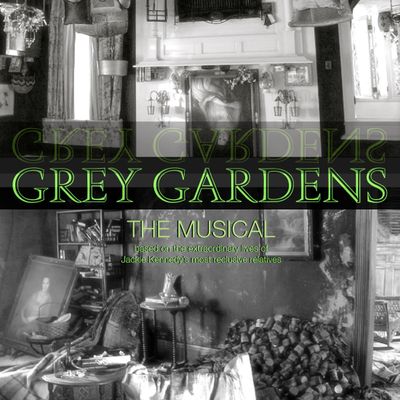
[14:47] Ken Davenport: I was just thinking about, I mean, that sounds so stunning and beautiful, and I love the documentarian in you and the journalist in you to do that. And as I was thinking about you doing that, I started thinking about your other work. Well, it's all there. Grey Gardens, War Paint, that's what I love. Yeah, you really seem to be attracted to real stories we do. I mean, really Grey Gardens came about in such an interesting way. I guess it hadn't come out yet on DVD. And Scott Frankel was walking down the street and the proverbial light bulb went off over his head. And he remembered having seen Grey Gardens at a revival house. And he came to me and I had seen it years before. And I said, that's so crazy that I have to think about it seriously.
And I rewatched the documentary, and honestly, when it came to the part where the mother, Edith, was sitting in a ratty old bed with the handyman Jerry and cooking him corn in a hot pot, and literally was sitting in the other bed feeling left out. I said, well, that's the whole story. And if I could write a song about this corn, then I could do this musical. But I didn't want to write the book. I've always felt I can write librettos for operas because it's all sung. But though I can write good dialogue, I don't feel I have the same parameters that a book writer does. I know how to shape a song and a musical scene, but I want a book writer to shape a play, a musical play. And we said, Doug Wright is the only one who can do this.
And he said, well, it's a great idea, but I don't want to violate the documentary by just sticking songs in it. And Scott and I were at a loss because, you know, there's a deadline for these rights negotiations. If you don't have something lined up, you lose the right to do it. And we had negotiated with Albert Maysles to do it. He was great, by the way. I loved Albert. And Albert also spoke to Little Edie on our behalf. And we were on our way to Florida to meet her when she died. But she had given her full cooperation and permission. She wrote this wonderful note. GG the musical. It must be historical. Must have singing and dancing. My beloved mother. And we have that note too. Anyway, to convince Doug, we have to do something special.
And the documentary aspect again came into it. What's the real fact? We looked into the life before Grey Gardens became a ruin. And then we sat down and we said, what if we did 1941, Act 1, then a long time elapses in intermission, and you come back and it's a ruin. You don't explain what happened, you just, it's the relationship between the two acts, and then we talked to family members. We went to the house. Sally Quinn and Benjamin Bradley, who owned it, just got sold, but they owned it for a long time. We went there in the winter with the set designer, Alan Moyer, and we went up to what was Little Edie's bedroom. And it was the small bedroom. Actually, we learned more when we went there that the reason most of the documentary was filmed in that small room was because the house was never winterized.
And they sealed off all the other rooms, and they lived in that tiny little room with plastic on the windows to stay warm. So I looked out at this view of scrubby crab grass and everything going down to the ocean. I just said, this is so lonely. And I thought of what happens in a summer town when winter comes. And then that all started to form for me. So everything really comes from a real place. I don't know why, but it's probably why I don't need a lot of drugs and alcohol. Because I can just go there.
[18:50] Michael Korie: So tell me, I love all this research that you do. So you do all this, you amass all this research and just soak it all up. That's what you learn in journalism. Get all the facts, ask a lot of questions, then figure out what's the lead, what's the best lead? And I always do that, and people get exacerbated with me. They say I'm pokey. Why can't you just give me a draft? Why can't you just give me something? And I just can't until I have my facts in order. And then I depart from them. But I need to know them first.
[19:21] Ken Davenport: So tell me about that. You amass all those facts, and then you are primarily a lyric-first writer, or how does it work for you?
[19:33] Michael Korie: When the composer wants a lyric first, I'll do a lyric first, but sometimes only part of that lyric will strike the composer as musical, and then they'll set a part of it and give me the rest of the music and I'll fill in. Or they'll give me music first. Some of the songs that you might not think are music first were, and vice versa.
[19:53] Ken Davenport: Give me an example of that.
[19:54] Michael Korie: Like that patter song, The Revolutionary Costume of the Day, which is very funny and wordy and fast, almost Gilbert and Sullivan. That was music first. And I almost cried, it was so hard. But a song like Will You was lyric first. And then I remember we were at the Sundance Theater Festival. Before the show was done, Philip Hemburg heard about it and wanted to develop it, and managed to get us in the very early days of writing, Michael Grief and Christine Ebersole, and Mary Louise Wilson and John McMartin, and we all went down to the White Oaks plantation, which was on the border of Florida and Georgia. Basically in a very luxurious swamp. And they got impatient because we hadn't written the whole show.
Mary Louise said, I could be home planting my garden. Why did you bring me here? So we had to write fast. And one day Doug burst into my cabin while I was taking a shower. He called into the shower. I figured out the ending. Little Edie tries to leave home and fails, just like the end of Act One, 40 years later, and you have to write a song about it. Oh, this afternoon. So I stared at this bush where this leaf was attached to the bush by a spider web and it was blowing. And I just thought of that song and that bedroom experience I had had, the winter and the summer town, and that song came. But Scott Frankel looked at it and he said, well, we're doing our reading tomorrow. And I think that the 11 o'clock song is a reprise of Around the World.
We don't need to do this. But I don't like to take, I knew it was good, and I think I might have slipped it to Christine. Uh-huh. I think I might have done that. And Christine decided that it should be read during the reading. And she cried. And that meant it was in. And then all these people who were in the audience, helpful people like Mary Testa, things like that. That was fantastic. You know what? You should do that as a poem. And Scott Frankel said, I'm gonna end my show with an 11 o'clock poem, forget it. And it got set to music. So that's a great example of like how the collaborative spirit between all of the writers and book writers saying that's a song, not a dialogue.
[22:29] Ken Davenport: Tell me about how just that collaboration.
[22:31] Michael Korie: It took a long time. You know, my first collaborations there was fighting, but eventually I remembered my newspaper training, and basically came the philosophy. Oh, I might like an idea. Why should my collaborators have to sit through it if they feel uncertain about it and watch it a thousand times? If they're not, there's always a better way. So I, sometimes it hurts, but I throw stuff out that I don't like. For this new reading, we're starting on Monday. One of the actors who's very smart had some comments about a song, and my first reaction was, damn it, I love that the way it is. But today, this afternoon before I came here, I rewrote it. Because I value the input of actors as well. And I find that they're smart.
They have to do it every night, they have to make it real. Some people, you know, really don't want to hear from actors, and I think that's stupid. It took me a long time, to be honest, to figure that out. They're very smart. They've been doing this. They get on stage every night, and they need to be listened to.
[23:36] Michael Korie: And I believe that every time you hear about someone being difficult from some director, I'll never work with that person again. It's usually because they had ideas that weren't listened to. And I totally believe in listening to it. And I believe I listen to everybody except the light. But you've worked with some pretty big actors.
[23:58] Ken Davenport: I've worked with big actors, great directors. How do you always have fun? What happens though when you can listen to them? But I don't know, let's talk about War Paint for a moment. Those are some pretty big names up there. What happens when you disagree, which I assume at times you're like, no, no, I really do like it the way it is.
[24:18] Michael Korie: There's a negotiation that goes on, and the best idea wins. If Patty or Christine felt something was totally wrong for their character, we'd say, okay, and have a conference about that in the second room. That's how we got to the ending of the show. Doug had written a very long scene, and Scott and I had written two other songs for that final scene where they meet. And there was a lot of back and forth and anger and recrimination. And they both felt very strongly that they would say nothing to each other for the longest time. And we went in there and they kind of mimed it out for us, and we realized that the silences were what was golden in that scene, and the not saying anything and the putting cake on their plate, they really got there way ahead of us.
And I'm eternally grateful because that was a brilliant stroke of theater. And you know, sometimes what you do is, okay, we'll try it your way, and then we'll try it my way and we'll see. And usually one or the other is convinced. I really never have had a problem with that.
[25:29] Ken Davenport: As you go about town and see lots of theater from emerging writers, writers on Broadway, what's the biggest mistake that you see writers make when it comes to lyrics?
[25:43] Michael Korie: Biggest flaw. I think by the way, I should say I love the revival of What's on This Island. That was fantastic.
[25:50] Ken Davenport: Oh, thank you. Congratulations.
[25:52] Michael Korie: I think what that show shows us is that every time you do a show, it's different. It's a new show. That was different from the original production. It became a new thing. And to a certain extent, though there are established rules and methods in musical theater writing, you kind of have to know them and then forget about them. And make it new and let it have its own rules. Who would have ever thought that a show like West Side Story would be able to be told the way it was through dance? Or that A Chorus Line would throw out the standard kind of book? They were new, but they were within the parameters of what excites people in a musical. They never gave up those agreements. So I think the biggest mistake young people make is to try and copy a model and say, well, this show had a song like that.
Why can't we do that? And I think the other big mistake is what all these movie companies do now that they've decided that their catalogs are filled with valuable properties of movies that did X number of millions on their first run. Why can't they be a musical? And they do countless workshops, and they're not musicals because they are just movies where you stick in songs. The ones that do work are reinvented. The Band's Visit. That was a movie, but the musical is a whole new thing. Though it's that story.
[27:33] Ken Davenport: Do you read reviews?
[27:35] Michael Korie: I used to read reviews, and then I would have to take Xanax. I was taking too much Xanax. I don't read reviews now so much. I know everybody says that. What I may do is look at the website Did He Like It and see there's two thumbs down, two thumbs up, one ambiguous face, I figure out who said what, or you hear things. You know, Lynn Nottage told me a funny story. You don't want to read reviews, but people want you to read them somehow. She said that her mother’s friend always sends her the clippings of bad reviews with the neatly written "I disagree." And she opens it up and she has to see it. So people want you to see these things. I don't know why, but I generally try to avoid them.
[28:23] Ken Davenport: You do know that I actually created Did He Like It? Did you know that?
[28:26] Michael Korie: Oh, I didn't know it. It's a very useful website.
[28:29] Ken Davenport: Thank you very much for that plug, everyone that was not intended. It has visuals. What I—that's my friend. See that we're making lyricists happy all over the world. What's your favorite lyric, Broadway lyric that you haven't written? You have a favorite of something that you think is just such a fantastic song?
[28:49] Michael Korie: Oh, wow. I like so many different shows and different kinds of shows. I mean, I loved Hamilton, I love Frank Loesser, I love Stephen Sondheim. Sometimes the simple ones are the ones I wish I had written. Like, look, look, look to the rainbow, follow the rainbow, fellow who follows a dream. I never would have thought of that. It's so simple, and that I get jealous of.
[29:15] Ken Davenport: I'm actually the same way. One of my favorite lyrics is "Maria." Like, who else would have the balls to just say Maria, Maria, Maria over and over and over again?
[29:25] Michael Korie: Right. I just love it. What advice would you give to someone who listens to this podcast and says lyrics? I want to write lyrics for the Broadway theater. I'm gonna, like you, make a go of it starting today. What's the best way to start a career writing in the theater these days?
[29:45] Michael Korie: Well, it depends where you're coming from. If you're a playwright who wants to write lyrics, I would say finish your plays. Learn what your voice is before you get mired in the bog of musicals. Establish your voice, and then people will want you to write the books and musicals. If you're just coming at it from the pop world, and you don't really know theater lyrics, there is a difference. You know, a show, a score like Hamilton has it all, but he knows all the tools. We just had this argument the other day. I belong to the publications committee at the Dramatists Guild, which is five floors down in this building. And we were—the editor proposed, you know what? Why don't we have an article about rhyme? The controversy about rhyme.
[30:36] Ken Davenport: Well, I was gonna ask about this question.
[30:41] Michael Korie: So I'm just glad. And they said, We think that the younger generation doesn't like to use rhyme as much. And I said, That's very interesting, because I find that some of the biggest rock stars, when they move towards live theater, use moral rhyme. Sting and Sara Bareilles, and there's a reason for that, and it's not just stylistic. I think that, you know, in opera you have supertitles. You can read the opera if you can't understand it. But in theater, it's actually work for the audience to sit and take all this in through music. Thank God that our great lyricists like you know, Sondheim and Sheldon Harnick trained an audience, Oscar Hammerstein, how to listen to a song and get content from it.
But it's hard work and you can't read it. And I what I think a rhyme is like is like the straight line to the punchline. It sets up an expectation in the audience's ear. And if you put the right word on the rhyme, you can score that point as the music is flying by, and the audience will retain it. Particularly in comedy songs, it's very hard to get a laugh in a comedy song if you don't set up the gag. You have—if there's a rhyme, they'll laugh. You know, even, you know, Tim Rice and Andrew Lloyd Webber, who didn't always rhyme when they did a comedy song, "Jesus Show Me, You're No Fool, Walk Across My Swimming Pool." Ha ha, because it rhymed. If they wrote "Jesus Show Me, You're No Jerk, Walk Across My Swimming Pool," that would sit there like a latka. But I hope we won that argument or whatever discussion you were involved in there.
[32:22] Michael Korie: Actually, we punted. Lynn Ahrens, who you know very well, was asked to participate in the ceremony. I'm telling tales out of school, but she said, you know what? I don't want to talk about rhyme. And I said, you know what? I don't want to talk about rhyme either. And they came up with a different idea. It's just listen, we could have done this podcast on just the last couple of minutes because that's such a very insightful way to think about rhyme.
[32:45] Ken Davenport: Yeah, I don't think of it as a stylistic device. I think it is a communication, and it's purely a tool for a lyricist to score the points. And that's what a lot of critics who talk about the cleverness of Cole Porter's rhymes and why can't they be clever like that? It has nothing to do with that. Perhaps in the day when those were the pop standards of the day, and they were creating Tin Pan Alley chart hits. These days it's about telling the story, and it's not about seeming clever like Cole Porter.
[33:19] Ken Davenport: Okay, my last question, which is my genie question. I want you to imagine that the genie from Aladdin comes to visit you and wants to thank you for your contributions to the American musical theater and the opera and telling these great real stories on stage. And by granting you one wish, what's the one thing that drives you so crazy about Broadway? That makes you angry, gets you upset, that you would beg this genie to change with that wish.
[33:49] Michael Korie: Well, I'll give you two. The thing that drives me crazy about opera since I go back and forth is that you don't get previews. And it opens on what would be your first preview. And you know what? You learn so much from the audience. And that drives me crazy. And what drives me crazy in theater, particularly Broadway, is that I used to be able to go for three bucks and sit in the last row. And I'm worried that young people can't see things. It's too expensive. And I would like the genie to fix that. I know that they keep a couple of seats, I'm sorry for rush. I would just like to see a more democratically priced theater.
[34:36] Ken Davenport: Very good wish and a wish held by many of us. Thank you so much for that. And thank you for joining us today.
[34:42] Michael Korie: And thanks to all of you for listening.
[34:45] Ken Davenport: We will see you next time. Thanks for listening to the podcast, everyone. Now go right to my Facebook page, Facebook.com backslash Ken Davenport. Click like and make sure you watch my "Every Day is Different" series, giving you a glimpse of what I do every single day. Check it out, Facebook.com backslash Ken Davenport. We will see you on the next podcast.
© Broadway Podcast Network, All Rights Reserved