

John Breglio, entertainment lawyer and Broadway producer, has concentrated on representing companies and individuals involved in all aspects of the entertainment industry, including the legitimate theatre, motion picture, publishing and music businesses, and intellectual property matters... Read More
From the show: The Producer's Perspective Podcast with Ken Davenport
Featured Shows
About
John Breglio, entertainment lawyer and Broadway producer, has concentrated on representing companies and individuals involved in all aspects of the entertainment industry, including the legitimate theatre, motion picture, publishing and music businesses, and intellectual property matters. He has been instrumental in assisting his clients to develop, finance and produce hundreds of plays, musicals and films for nearly 40 years.
The scope of his experience ranges from advising film, television and video companies on the development, financing and distribution of entertainment products to advising Broadway and Off-Broadway producers and theater owners on producing and presenting dramatic plays, musicals and revues. He has represented literally hundreds of individual performing and other artists in their professional careers such as Stephen Sondheim, Andrew Lloyd Webber, August Wilson, Michael Bennett, Marvin Hamlisch, Bernadette Peters, Peter Martins and the heirs of the late Bob Marley.
John Breglio is “Broadway’s Attorney,” having repped some of the most important and influential people in the biz, including Andrew Lloyd Webber, Stephen Sondheim, Michael Bennett, and Marvin Hamlisch, as well as Producers, Non-Profits, and so many others. He helped write contracts and deals (like the workshop agreement) that have had long lasting ripple effects throughout our industry (and without a doubt for the better – thanks to his unique ability to approach negotiations from both perspectives)
Listen in to hear:
- Why contracting is faster, but negotiating is slower, than 20 years ago.
- Could a Hollywood Author model ever work on Broadway?
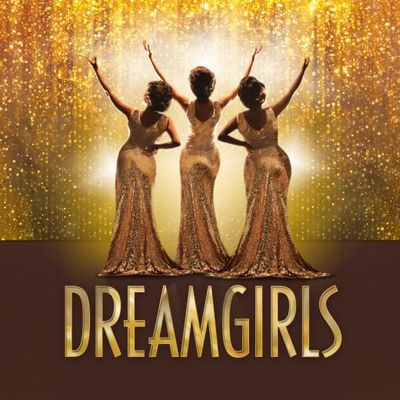
- Will Dreamgirls come back to Broadway? Hear the inside scoop about what’s next for this historic piece.
- What Michael Bennett would think of Broadway today.
- And more.
Keep up with me: @KenDavenportBway
Transcript
This transcript was automatically generated and might contain errors.
[0:09] Ken Davenport: Hey everybody, it's Ken Davenport here. Listen, the Tony Awards were Sunday, and odds are you didn't win one yet. But don't worry, there's still a chance for you to win one if you play my board game, Be a Broadway Star. Uh you didn't know I had a board game? Well, I did. It's kind of like life and charades, but all about Broadway. Check out beabroadwaystar.com. Learn all about it. It's a ton of fun. Again, beabroadwaystar.com. And now on to the podcast.
[0:37] Ken Davenport: Hello, everybody. Welcome back to the Producer's Perspective podcast. I am Ken Davenport. This is the twenty-fourth episode of the podcast, believe it or not, already 24 down. Uh and today I have quite a guest with me. First of all, I'm sitting in his apartment, which has a glorious view of the park. I I'd have you all over, but I think John wouldn't look so good on uh crowding his living room here. Um but this man is responsible for helping to literally write the legal framework for the modern Broadway era. He has been called one of the most influential and powerful, and I've also heard one of the nicest attorneys in the biz. Welcome, John Breglio.
[1:16] John Breglio: Hi, Ken. Nice to be here.
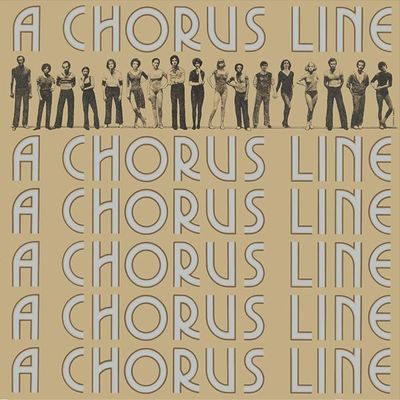
[1:18] Ken Davenport: Uh in addition to working with producers and theater owners both on and off Broadway, John has also repped hundreds of individual artists in the business, including a few bold-faced names like, oh, I don't know, Stephen Sondheim, Andrew Lloyd Webber, August Wilson, Michael Bennett, Marvin Hamlisch, and so on and so forth. I mean, just think about it. Can you imagine what a day in his office might be like? Uh, John, I have Andrew Lloyd Webber on one and Stephen Sondheim on two. One of my questions for him will be a little later. Which call would you take? Uh we'll get to that. Um, in addition to his legal work, John is also quite a producer in his own right, stepping over to the dark side uh for the first time as the producer of the very successful first revival of A Chorus Line in 2006.
Along the way he has been the chair of the TDF, the Theater Development Fund, and also advised all sorts of important nonprofits like New York Shakespeare Festival, the Actors Fund, Manhattan Theater Club, Roundabout, and so on and so forth. John, how did your mega career in theater law get started? Where did this all begin for you?
[2:21] John Breglio: Well, uh not to bore you with too much um biography, but I always loved the arts. I've studied piano for about ten years, thought I was gonna go to Juilliard, did not, went to Yale but got involved in theater. And that's what I thought I would always do. I would be doing theater in some form, musical theater or straight plays. But I had no choice because it was Vietnam and the Vietnam War intervened, uh most of my friends were either leaving the country or burning draft cards. It was a terrible period. By some stroke of luck I got what was called a one Y, which meant you would not get called up unless there was a national emergency. It was a new classification. So I found myself suddenly not drafted and able to pursue something else.
So not knowing what else to do, which is what a lot of people did in the late sixties, I went to law school. Went to law school and to my surprise I really loved it. And then the second year of my law school uh career I saw in the New York Times second section a huge piece on entertainment lawyers. And the lawyer they profiled was John Warden, who was the dean of uh lawyers, entertainment lawyers, uh particularly in theater and film, and he was one of the founding partners of my law firm, Paul Weiss, Rifkind, Wharton & Garrison. So I this was a revelation to me. I had no idea this existed, entertainment lawyers. And it was very different. You gotta keep in mind sixty-eight uh no, this was not seventy.
It's not like today where entertainment lawyers are known generally. There weren't very many of them. And uh so I pursued that. I went to Paul Weiss as a summer associate, and that was it. I decided, well, this is perfect. I can combine my what will be my avocational interests, presumably in the theater and the arts, with uh a career where I can make some money. So that's what I did. I went to Paul Weiss, extraordinary place where they had the dean of, you know, entertainment lawyers, John Warden, others, Bob Montgomery, who was one of the most well-known film lawyers, and I learned the theater business, the film business, the book publishing business, the music business. I mean, we represented ASCAP, we represented Frank Loesser, Cole Porter.
I mean, I got an education that was staggering for me, especially someone who loved the arts, and that's how I got my education. And so I stayed, as you probably know, I stayed there until 2006, uh seven, more or less, and that's when I decided to go into producing full time. I I no longer practice law, and I've been producing now for the past uh whatever, seven or eight years. Uh, but without that those thirty-six years of education, uh, I could never do what I'm doing today.
[5:13] John Breglio: And all those years that I practiced, I I that's what I did. I I mean, I represented producers. It's it's no secret. I'm sure your listeners and other people you've had on, have said that there are many, many people in this business who are producers who are total neophytes. They've never produced before. They've made a ton of money in other parts of the world in whatever they've done, and then they with a lot of extra money want to come in and produce on Broadway and and they often hire uh entertainment lawyers to help them do it. So I was really doing producing at least from the ground up, so much of the time. And then learning also working with people like Michael Bennett and Hal Prince and these great writers like Stephen Sondheim, Joe Papp, an entrepreneur and the uh I had a firsthand glimpse of what it was really like to be in the trenches and and they would come to me with their problems, which were business legal, but then I had an inside view of what it was like to be what they were. And so I was always um itching to do it myself, and that's when I finally did do it. That's a long-winded answer, I don't know.
[6:29] Ken Davenport: No, not at all. Background sort of in a nutshell. So do you remember your first when you started as a summer associate, what you or uh as an associate there, what your first project was?
[6:38] John Breglio: Oh yeah. Are you kidding? It's a it's it's a great one. I sat down at my desk and uh summer associate and I got uh a call from one of the partners and said, Come down, we're gonna work on a new show. And he said, Have you ever heard of Gone with the Wind? And I burst out laughing. I said, Yes. I said, What are you talking about? He said, It's gonna do a musical based on Gone with the Wind. So for me, I mean you gotta understand this is this young kid, twenty something odd years old, you know, besotted with the you know, the theater and everything else, having sat through law school for three years, and now suddenly my first time is gonna work on the Gone with the Wind musical. So I was absolutely beside myself.
We were representing we were going to represent Stevens Mitchell who was Margaret Mitchell's I think it was her cousin. Anyway, he was quite elderly. And um we since we represented basic rights, the first thing was do we want to have a show music a a stage musical based on this this incredible book. And um the next thing I knew I was on a plane with the partner flying down to Atlanta going down as plantation type uh country club in Atlanta and there was Stevens Mitchell all dressed in a white suit, you know, Panama hat. I mean it's it's really right out of the book. And we talked about doing the musical the pros and cons of what it would be like and what controls we could have whatever. You know, that kind of thing.
And I I was there representing with the partner of course I was just uh an assistant representing Gone with the Wind. And we were off and running and and I was the lawyer and I was given enormous responsibility. I was this green not knowing anything lawyer but Paul Weiss was that kind of place. They really threw you into the pit. And it was a great experience.
[8:28] John Breglio: And just flashing forward to towards the end of your career as a practicing attorney do you think deals it has become harder to make deals today, longer to make deals to get them done?
[8:41] Ken Davenport: I love this story about everyone including the writers in the room trying to figure all this out, which doesn't happen today.
[8:48] John Breglio: Today we have phone calls that don't get returned for probably three or four weeks sometimes. You know, it's a very good question because I have a span of you know forty years. Well, the one big change that has speeded things up, which is huge, is word processing. When I started practicing law, the only technological thing you had was a zero we called a Xerox machine, a photocopier. There was nothing. There were no computers. There were no pro secretaries working on typewriters with carbon copy. So if you had a fifty-page agreement or even a thirty or twenty or ten-page agreement, every change had to be made by hand and had to be either erased with what they called white out. I don't know if you listen to even know what white out is, and then all the pages had to be changed.
It took forever to do a contract. Today, obviously, you know, you take your laptop, you uh the lawyers in in at Paul Weiss now don't even need secretaries because they draft all their contracts themselves, and it's all done by computer. So it's uh they draft a contract, but I mean they don't type it themselves. So in terms of speed of just getting the work out, the paperwork out, there's no comparison to the old days. But the other side of the coin is just pure negotiating, the the the process of talking to people, negotiating the deal. I think that has slowed down and it's better now, but it hasn't been um great for for several years, is the complexity of royalty pools and amortization and the um ignorance on behalf of so many people, and I I don't use ignorance in a pejorative sense, just not knowing what these things are.
And general managers and producers who are smart about it be manipulating all the numbers and making the numbers for their benefit, and then showing these formulae and other things to agents and others who are mystified by it. They don't understand it. They need to use their lawyers and other people to figure it out. So that has made the negotiation on financial terms much more complicated and time consuming. Most of the negotiations tend to be over that because things such as credit and and per diem and the grant of rights, all those things that are critical to getting the rights and doing deals with orchestrators and directors, the basic terms haven't changed much in in 40 years. They really haven't.
[11:51] John Breglio: Today, you know, it could take weeks, weeks to for people to not only understand it, but to figure out what they're going to settle for. So the the the financial rigmarole and the financial permutations today are so much more complicated than before. And that has led, I think, to a lot of delay and in getting deals done.
[12:14] Ken Davenport: What I find so fascinating about your career and who you've represented is you talk about representing the producers on a major Broadway musical. Uh and then, of course, you've represented some of the greatest artists that the Broadway community has ever birthed. Uh you've repped both sides of it. Do you think that has helped you gain a greater understanding, obviously, of both sets of shoes and allow you to negotiate better? Because agents who represent artists only pitch one way.
[12:43] John Breglio: I I think it's been a great advantage to me because I am sympathetic to both sides. I I'm almost more sympathetic to the artist, I think, because my work wife is a writer. And also, I mean, you know, it's the it's the craft, it's the art from the writer's side. And and so many writers are so dependent on a lawyer uh or a or an agent for knowledge. You know, a producer, if he knows anything, should be a little more sophisticated about uh what it means to pay operating profits as opposed to gross. But you know, for for writers who spend most of their time worrying about uh what's on the page, it they don't even want to spend a lot of time worrying about that. So I think it's been for me a a a great benefit but a a joy to be able to be looking at that way because it helps in any negotiation.
[13:33] John Breglio: So you in a way you can predict what you're gonna get coming back. I mean, there's no point if you're representing the producer to go forward with a proposal, which you know before you even submit it, the other side, if they have any kind of decent representation, the writers are gonna come back and say, No, I can't do this or do it that so you at least should start with something that you think is doable. The biggest problem for me is when I'm I'm working on a deal where you have people on the other side, for example, West Coast people, who have no idea about the theater.
[14:06] John Breglio: Whether it's the studios, for example, first it was Disney and then it was Warner and then Paramount, and they started getting involved. And again, because I had that expertise and I had film background too, I'd done a lot of film work, I represented most of them. And you can't imagine how complicated that was they had no idea of the culture of theater deals where the writer owns the copyright. What, in Hollywood? Are you kidding? A writer owns nothing, right? So for them to think that they were going to do shows where the director owned the direction, choreographer owned the choreography, the book writer owned the book, and they just till this day, by the way, they still can't believe the way we operate in the theater.
So working with people who don't have any idea of really what they're doing on another side is the ultimate, well, it's a roadblock. And many deals are never made. So yes, for me to have understood both sides and particularly when I was representing studios, which is like a third side because as far as they knew, they were gonna come in and own everything, including Disney, and Disney was stunned when they started it. This is not gonna work for us.
[15:23] Ken Davenport: Do you think—I often theorize about whether someone coming in, and you're a great person to ask this, so you represent some authors, let's say, and they've written some stuff but they never had massive hits in any way, and you're representing them, and a producer calls you and says, "Look, I want to option this piece, but we're gonna do it a little differently. We're gonna do it like the Hollywood model. I'm gonna own it. I'm gonna write 'em a big fat check to start with so they can write it and be very comfortable, but I'm gonna own it from here on out." Would you entertain a deal like that?
[15:55] John Breglio: Well, I would always pass it on to my client because I think it's your obligation as a lawyer to always tell your client what the other side has offered because that would be, I think, unethical not to do it. It's just like the prosecutor, you know, proposing a plea deal and not telling your client who's indicted what they could plead. Would you recommend it? But what I would do, I would sit down with the other side before I even went to my client and say to him, "Look, I'll do this. I'll tell my client this, but I've represented—I don't know, I can't even count how many people I've represented in my career. It's not gonna happen. They won't accept it." Now, if he was making this proposal to some, I don't know, someone who's never written anything and had no credits and was just a first-timer, I suppose they might take it.
But in my career, it's never happened. Nobody has been willing to really take that kind of deal. They fight it because the peer pressure's enormous. Other writers who are older or more experienced, the Dramatists Guild comes down on them, even if it's not a Dramatist, their mentors say, "You can't give away this. This is the birthright of being a dramatist. You've got to own your material." And I would sit down with them and say, "Look, if the thing that is produced ultimately is no good, well, okay, you'll have gotten money up front and whatever and lost this. But if the show is really good, I said, you'll never make more money this way. You'll make so much more money down the road, and you will own that copyright for the rest of your life.
And your kids will benefit by it. Why are you giving away this birthright for?" And it's difficult to tell people this if they really need the money. But I've never seen anybody really give away that much up front. They may offer a hundred thousand dollars or so, a hundred and twenty-five thousand. There was a studio at once who offered someone a million dollars, I remember that, and it was a very established person. And that was accepted, but even in that deal, they held back certain rights. But it almost never happens; they won't do it. And ultimately, you know, the studio finds out that they're banging their head against more than one wall. They got the directors to deal with, they got the choreographers to deal with, they got the orchestra to deal with, the scenic designer, they all own their copyrights. And when they've realized that that's the world they live in, they deal with it.
[18:27] Ken Davenport: Now, you've obviously negotiated some pretty big deals over your career. Any standout, any standout as being unique or different or something that you remember as being a watershed moment?
[18:32] John Breglio: Well, I have to go back to Chorus Line when Michael Bennett for the first time did a workshop and decided to use actors to help create a piece. They became part of the authors of a piece, and how was the industry gonna deal with that? And over a period of two years, that evolved and it changed the course of musical theater. And nothing has come close to that from the pure sense of artistic creation as well as business deals that had to reflect what was going on creatively. So being more specific, you know, I think most people know Chorus Line started with a bunch of dancers getting into a room and Michael turning on a tape recorder and recording these interviews, just sitting around and just talking about their lives.
And based on those interviews, Michael, after the interviews, decided that it might be a musical, and out of that came his hiring Marvin Hamlisch for lyrics, Nicholas Dante, who was one of the dancers to write the book, and then eventually, Jimmy Kirkwood. And they slowly developed this show from nothing. And it's just like a seed in the ground, organically this thing just built and built and built over a year and a half based on two workshops. Remember, back in nineteen seventy-five, there was no such word as workshop in the theater. I mean, you know, a view of, you know, a bunch of elves sitting around tapping on tables. What the hell is a workshop? Michael created with Joe Papp, he said to Joe, "I need to experiment because I don't know what I have."
So they got in this room and they just kept working and working and working, and then he brought in Robin Wagner for sets and Tharon Musser for lighting and Deoni Aldrich for costumes, and they started thinking about what this should be. And Michael finally figured out, "Okay, we're in a rehearsal, we're in an audition room, bare stage, whatever, and they're gonna tell their lives and we're gonna create a musical out of that." So that took money and time. A hundred thousand dollars in nineteen seventy-five is like a million and a half dollars today that Joe Papp did not have. Joe believed in Michael, and out of that came this workshop process. And suddenly everybody, because of the hit of Chorus Line, was everyone knew that it took months and months and almost two years to develop.
So when Michael's next show came about, which was Ballroom, we needed to come up with contracts now that reflected all this because we had no contracts before except we had a piece of paper that Michael had all the dancers signed that said he owned everything for one dollar. In retrospect, Michael then, when Chorus Line was a big success, gave them a piece of his royalties and his subsidiaries. But now we had to codify that 'cause Actors Equity said to us, "We're not gonna let you do another show like Chorus Line using all these actors and dancers and paying them a hundred dollars a week unless we have a deal." So literally, they pulled all the actors from the Thursday before we were gonna start rehearsals, and Alan Grody, who's the lawyer down there, executive director for Equity, called me up and said, "We're not gonna let anybody die.
We've got to have this put in writing." So I told Michael, and he said, "We'll just figure it out." I went over to see Bernie Jacobs, who was the head of the Schuberts and the single most powerful man in the theater, and Bernie Jacobs, Alan Grody, and I literally for twenty-four hours around the clock, we never left the room, drafted the first workshop agreement. It gave the producer the right and the director to use actors for a reduced fee in a rehearsal room, use all their ideas, own all our ideas, but gave them a specific piece of the gross and a specific piece of the subsidiary rights. So the reason I say that was so revolutionary is that not only did that now become a template, which by the way is still used, the same document that we did in nineteen seventy-five and in no, no, that was seventy-seven in Bernie Jacobs' office, it's the same thing that's used today for workshops.
Everybody then used workshops. And it did more than just change the relationship between actors and everybody in the room and directors. It suddenly changed the way people raised financing. Because now when you did a workshop, people no longer were doing only what Michael did, which was to just see if he had a show. Michael never invited investors to these things. He would never let that happen. Now suddenly, producers will say, "Oh, well now I'll do a presentation in workshop and I'll invite all my investors. They don't just have to read the script and listen to a tape. Now they can actually see the show." That, of course, caused a lot of problems and still causes problems. So that to me, I think was a sea change like nothing else we've ever had, which today still affects artistically, creatively, marketing, everything.
[24:11] Ken Davenport: You should get a royalty for writing that agreement.
[24:11] John Breglio: If only! I never thought of that. A bunch of lawyers are just with Alan Grody and Bernie Jacobs though.
[24:23] Ken Davenport: Speaking of Michael, obviously the world lost Michael way too early. If he were alive today, what do you think he would think of the current state of Broadway? Because you were very close.
[24:34] John Breglio: I think of that all the time. What Michael would have done today. You know, he's been dead twenty-eight years. 'Cause he'd only be today if he were alive, he'd be seventy-three, seventy-four. I mean, that's not old. Yeah, I mean, how old is Hal Prince? George Abbott when he died was a hundred, I think. You know, Michael, God knows what would he have done. Now, but you asked a different question, what would he think of what was going on today? But I may be giving Michael too much credit here because I'm totally biased. But I don't think what going on today would be going on today in the same way. Because Michael, remember, everything Michael did pushed the business farther along. I mean, Chorus Line was earth-shattering, and so was Dreamgirls.
And so I know that he would never have done—I mean, he was gonna do The Children's Crusade before he died. I mean, this was the way Michael thought. He thought in terms of just what nobody had ever done. So I think that the theater would be different today because of some of the advancements Michael would have made and some of the ideas he would have. I don't want to overstate that, but I think that because there was a real fallow period there when, you know, between—well, not between, because of AIDS. Michael died of. And so in came the British invasion right before Michael died. And that's that whole period where there was no invention by American musicals. Invention meaning the kind of invention we had with Chorus Line, Dreamgirls, or other shows.
It became the British invention. Well, that wasn't really an invention; it was like operetta. I mean, they—in many ways, if you look at it, again, I'm not trying to say this in a negative sense, it was sort of a step back because it was almost opera, and you know, Phantom of the Opera, Les Mis, and Miss Saigon, they were sung-through pieces. The big change beside that was that they were monumental physical productions, you know. Where Michael Bennett created shows that were bare. They weren't cheap, but they looked very cheap. But here, these monumental shows came in, you know, how long did it take to redo the Winter Garden Theater for Cats and then chandeliers coming down and the majestic and Miss Saigon having helicopters?
It was a whole new focus on what appeared to be an appetite that the British created in the audience for big spectacles. That wasn't Michael's way of producing theater. So what he would have done in the middle of that, I don't know, and what he—I know what he thought of it. He thought, "This is not what I do." I know that. I mean, it wasn't so right before he died, of course, he dropped out of Chess, and Chess was gonna be, again, a bare stage with a circular turntable that tilted and the whole wall in the back were nothing but video monitors, and this is—we're talking about nineteen eighty-five. Nobody ever did anything like that before. So again, it would have been very bare, was unbelievably expensive.
What do you want to do? So that was the way Michael created his magic, and it was very different from the Brits. And then after that, we—you know, what can I say? I mean, you know, we've had a lot of musicals that sort of comment on musicals, you know, laugh about musicals, reflect on what musicals are. And, you know, we now have, I think, a lot of very talented people they've emerged after a generation that we lost who are in their own strides, you know, the Casey Nicholaw and Susan Stroman, they're all, you know, great directors who are gonna find their own ways.
[28:25] John Breglio: But I know Michael would not have changed if he was all out today. He would continue to want to do things that were not literal on stage physically. He believed in movement, choreography, lighting, and the basic material to run a show. He never believed that hard scenery added anything other than unnecessary distractions.
[28:53] Ken Davenport: And now you're producing as well. In two thousand six it was a Chorus Line, obviously the Michael Bennett piece. Tell me about what that was like for you now being on that side of the table for sure. Obviously, you've been doing lots of things with Michael over the years, but now this was you. Did you find yourself enjoying it at first?
[29:12] John Breglio: Yeah, I mean, you know, I did a Chorus Line again all over the Green Girls here, did I dad was involved as Australia Jones. I have been involved in several other shows and what I learned was remarkable because I went in thinking that I had a lot of knowledge and I'd watched other people. So many people and the thing I realized more than anything before I started was that I learned more from people who had not succeeded than the people who succeeded. It's very hard to actually duplicate success and watch someone say, "God, why are they so successful?" Because it's sort of a, it's actually so many intangibles. But when you see someone not succeed, you can usually identify what their issues are.
And so it was helpful to see that because you want to stay away from what those people did easily. And that was a big education for me, knowing how you made mistakes. But I had no idea until I started, I had no idea how much I still needed to learn. Because it is a big, big job.
[30:25] John Breglio: And it's not a big job if all you really think you have to do is write a check and sit back and have your general manager do it, which I suppose you could do, but then your general manager is basically producing it. But if you believe you have to be involved with the creative people, you have to be working with them, you have to be the one responsible for raising the money, you have to be the person who understands all the deals and then not only do all that and then get to auditions and get to rehearsals and get to previews and then afterwards the amount of work that's involved became a surprise to me of managing a hit. How you have to, it's a daily job if you do it right. And so it became for me an all-consuming job because I really wanted to do as much as I could and learn all the things I never had done before.
[31:18] John Breglio: So I had still a big education to go through, but I loved it. I mean, I just loved it because I do think I had such a foundation to start with that it wasn't as if I was starting from day one, which is, "What's a box office?"
[31:33] Ken Davenport: Well, it's an incredible testament to your character to be able with someone as much experience as you have to be able to go, "Oh, I've still got a lot to learn."
[31:42] John Breglio: Yeah, it's a tough business if you really understand how much you need to know. I mean, that's why one of the reasons I wrote this book, I think I told you about, which I just finished, because I realized how complicated it is to really produce. I can't tell you how many people, I'm sure you've had this, at cocktail parties or wherever, friends you meet for the first time, they say, "Well, what does a producer do?"
[32:08] Ken Davenport: Yeah, and everybody has a different view.
[32:09] John Breglio: Yeah. Someone has a view that all you do is raise money, right? Other people think, "Well, you know, you go to casting sessions. Is that what you do?" You know, they think you're Max Bialystock. And then other people don't have any idea what a producer does. They just sort of think it all happens. And you know, the writer writes it and the director directs it, and what do you do? And I know there's so many people out there who will be great producers. And I thought this book, which really goes in great depth between the day you have the idea, literally the idea. That's all you have. Yourself and the idea in the shower, to opening night. And I wanted to show the full panoply of things, artistic business, marketing, you know, financial, legal, the whole thing that you really need to understand. At least to the extent I can, you know, paint some kind of picture in this book.
[33:05] John Breglio: 'Cause it's not a simple task, as you well know.
[33:08] Ken Davenport: When's this book coming out?
[33:10] John Breglio: I can't be sure yet because I still have to start all the conversations with my editor and all that stuff that goes on. I would guess sometime in two thousand sixteen.
[33:22] Ken Davenport: Have a title yet?
[33:24] John Breglio: Working title is called Behind the Curtain. And I'll, if you want, I'll tell you a little reason why. Part of the reason is for the obvious thing is behind the curtain with what goes on backstage and you know how shows are put together. But, uh, and this is a cute little story. When I was a very young boy, um, and I was sort of fascinated with the theater, I'm talking seven or eight years old. I didn't know that much about theater. I was raised as a Catholic and the church for me was an incredible theatrical event. I didn't realize it then, but that's what really attracted me to the past. You had bells and whistles and you had smoke and you had lights and all this stuff, and I just loved the whole scene, right? I didn't realize that what I loved was the theatricality of it.
[34:19] John Breglio: So when at a very early age my mother would talk about hearing a little bell or something going on in the living room and just like these curtains which your listeners can't see, I would draw these curtains and stand behind the curtain and I would act like I was in church. And it wasn't that I wanted to be a priest. It was for me I was acting, and she had no idea what was going on, but I realized that that was my first sense of what drama could be like or theatricality. So when I decided on the title and I tell some of these stories in the beginning of my book, I decided Behind the Curtain made a lot of sense.
[34:59] Ken Davenport: So that means that the Pope is one of the greatest producers of live entertainment on the planet. Have you ever seen anything more incredible than Christmas Eve Mass?
[35:10] John Breglio: Before I get to my final question, I have one penultimate question, which is Dreamgirls Broadway revival.
[35:16] Ken Davenport: Yeah. What do we think? Gonna happen?
[35:18] John Breglio: Well, you know, I did revive it in two thousand nine. And I toured, I opened it at the Apollo Theater here and I toured it all over the country. Right now we're focusing on London. It's gonna be done in the West End twenty sixteen. Casey Nicholaw is gonna direct a totally new production. So that's the focus right now.
[35:36] John Breglio: So if that's, you know, with Casey Nicholaw, who seems to be batting a thousand, we'll see what he does with it. If that's a big success over there, that's the one we'll bring here. If it's not successful, we'll see. Um, but we're waiting now. We're not gonna do anything with Broadway until we see what we have on the West End. It's never been done on the West End. Never. Never. Never done. No one could figure out how to do it there. It was too expensive. So I don't know how, uh, working with Sonia Friedman. I don't know how it's gonna get financed, uh, how the budget's gonna be. Because, you know, it's an incredibly expensive show. I have a feeling a lot of my listeners are on Expedia right now looking at flights to get over there and see what I'm sure will be a monumental production.
[36:23] Ken Davenport: Okay, last, last question. I want you to imagine that the genie from Aladdin comes up to your apartment. Said, first of all, says great view. Second of all says, "John, you've had an incredible career and you have stood up for these incredible artists and helped create these incredible agreements like the workshop. You've done such great work on Broadway. I wanna grant you a wish. What is the one thing, John, that drives you so crazy about Broadway that keeps you up at night that you still get angry even after all the success, that you would want this genie with the snap of a finger to change and make disappear?"
[37:01] John Breglio: Anything, anything about it. I've had everything from sippy cups to expensive theater tickets. What's that one burning thing that drives you nuts?
[37:12] John Breglio: The education of the audience. I would love to go back to a time, and I'm not looking back saying, you know, the old days today where we had an audience that had been trained and learned about the great works of the theater and could appreciate what great theater is. I worry all the time about the dumbing down of our audiences, the lack of education in schools about what great art is, all art is, not only theater. They don't know what the great shows were, what the great, I mean, there's no follow through. And the everything from the despicable way people dress when they go to the theater, the idea that you can sit next to someone who has flip-flops, has, you know, flops on, um, a not even a t-shirt, you know, uh, what is those underwear shirts that have, you know, straps and Bermuda shorts and is drinking and eating next to you. The idea that that's permitted and that's what we're having in the theater now is an abomination.
[38:28] John Breglio: Theater is an event, it's a communal event. It's something that you can only do the live experience. It's not sitting home looking at a screen and having Cheetos. It's sitting in a theater where you have a communal event with people where you share something wonderful upstage, uh, on stage that's live, that's thrilling that you have to have and it's respect for the actors. Can you imagine what it's like? And I know actors have told me this when they look out in that audience and they see what is basically a baseball field, a baseball bleachers. It's degrading. And I'm, and that's just appearances, I understand. But it's more than appearances because so many people have no sense of theater.
[39:10] John Breglio: And it goes so deeply into it because I, when I saw Al Pacino, I'll never forget in the Merchant of Venice, and I sat in front of a bunch of young women who went to see it, and clearly they only were there because of Al Pacino. But that's so sad that we don't have an educated, knowledgeable audience. I mean, when we are TDF, uh, I did with Wendy Wasserstein this program where we every year we bring in a lot of kids and we have mentors, uh, actors and directors, and we take them to the theater. And these are kids that are, you know, really all come from the inner city. They've never been to the theater, and I really felt that we needed to expose these kids to something more than what they're being exposed to now.
[39:56] John Breglio: So it starts from the ground up. Our schools don't do, we haven't had a president really since Kennedy who really cares about the theater. We have a mayor who doesn't even know where the theaters are. It's not on anybody's list of what's important. And I may be talking totally right, but you said to me, "What's my wish?" My wish is that we could start now and maybe twenty years from now, we'll have people who have appreciation for how important the theater is and how much a part of their lives it could be, as opposed to just another event. It really should be something that's much more special in people's lives. And they should know more about the history of what we did in this country. I mean, musical theater, for example, as opposed to theater generally. That was our art form. We created it, you know. And how many people, how many young people understand all the different kinds of musical theater that you could be exposed to?
[40:52] John Breglio: I mean, one of the great things about Hamilton is that it exposes people to a different way of looking at musical theater. And more things like that would be great. But that to me is a great loss, and it's been during my lifetime. The difference between audiences and their way they react and the way they understood and appreciated theater has been lost. I mean, and now we, we've dumbed it down, and the kind of material we put on the stage hasn't helped to a large extent. So that's another story. That's my wish.
[41:32] Ken Davenport: It's a good one, it's a great one, and spoken by a true lover of the theater, obviously. John, thank you so much for having me here and being a guest on the podcast.
[41:41] John Breglio: Thanks all of you for listening. Don't forget to subscribe. We've got some very cool guests coming up. Thanks so much. We'll see you next time.
[41:46] Ken Davenport: Hey everybody, thanks for listening. Don't forget to check out my board game at BeABroadwayStar.com. Makes a fantastic Broadway gift for the theater lover in your life. Check it out. BeABroadwayStar.com. See you next week.
[42:03] Ken Davenport: Look out Broadway. Here I come.
© Broadway Podcast Network, All Rights Reserved