

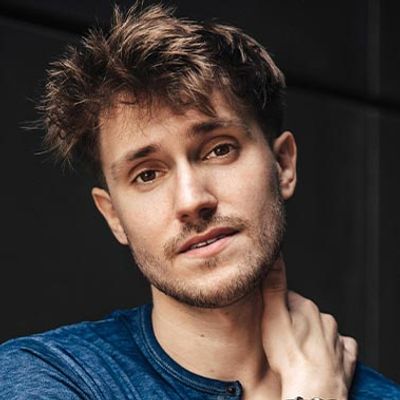
Oh we love that John Cardoza! We love that "Notebook." We just love love. You may have seen Joh in the Moulin Rouge tour or on Broadway in "Little Jagged Pill." Now, John is on Broadway singing his face off eight shows a week as Young Noah in "The Notebook." How did he land the part and what has it been like to take this story to the stage?.. Read More
From the show: The Roundtable with Robert Bannon
Guests
Featured Shows
About
Oh we love that John Cardoza! We love that "Notebook." We just love love. You may have seen Joh in the Moulin Rouge tour or on Broadway in "Little Jagged Pill." Now, John is on Broadway singing his face off eight shows a week as Young Noah in "The Notebook." How did he land the part and what has it been like to take this story to the stage? He tells all!
______________________________________________________________________________
Check out “The Roundtable with Robert Bannon” everyday right here on The Broadway Podcast Network!
www.RobertBannon.com
Follow on IG @RobertMBannon or @theroundtablewithrobertbannon
Transcript
This transcript was automatically generated and might contain errors.
[0:00] John Cardoza: I grew up listening to a lot of just like major vocals and also a very wide range. We played a lot of country in our house. We played a lot of folk in our house. So I was just exposed to a lot of music at a young age. And I spent a lot of time sort of like imitating. My parents always said, "Do you know how to sing? You don't need voice lessons. You're playing piano." And I was like, "Well, I can sing. That doesn't mean that I know how to sing." So I didn't start taking voice lessons until I got to college. But I just loved it. There's something about singing that to me is so special. I think it's one of the most beautiful forms of communication that we have. So when I got to school and I started really taking lessons, I was like, "I need to absorb absolutely everything that I can, and I want to know the ins and outs of how my voice works."
[1:00] Robert Bannon: You studied in Boston, right?
[1:01] John Cardoza: Yes. I was born and raised in Boston, went to school in Boston. I grew up south of Boston in Taunton, which is sort of like tucked away in the southeast corner. There's not a lot of arts access down there. I did choir in school and I did like the school shows and whatnot, but I really didn't understand that it was something that you could pursue in school at the collegiate level. It wasn't something that I understood that you could really make a career out of until I got a little bit older into high school. A friend of mine who was going to the conservatory for composition came to see a show that I was in at school and was like, "I really think you should think about this." He took me to the campus and walked me around, and there was just music coming from every window and every hallway.
It was the first time that I'd ever been around so many people who loved art the way that I did. I was like, "I just need to make this happen." It was the only program I got into, so that's where I went.
[2:01] Robert Bannon: Well, everything happens for a reason because I guess the rest is history. If you're looking at John, you may have seen him around the country in Moulin Rouge, you may have seen him in Jagged Little Pill, which was quite the experience. After all of the years singing, after all of the cast albums you were listening to with your mom, after all of the voice lessons and building a book and auditions, how do you describe what it was like the first time you got that yes to be on Broadway? How would you describe the moment, even now that you're an old pro and you're back on stage? What is it like when that phone call comes and you hear that you're going to be a part of it?
[2:42] John Cardoza: Oh my gosh. It's really indescribable. I remember the first call that I got was very strange. I was living in Sleepy Hollow at the time, and I was with a friend and his family. We were doing a tour of the Sleepy Hollow Cemetery because it's iconic, and it was October, so it made sense. I got the call while I was touring the cemetery, and that effectively put an end to my tour. I immediately went over and I just remember calling my mom. She was on the highway and she's like, "Let me pull over, let me pull over." We just sat on the phone and cried, and I called my dad after. I remember my friend's mother said to me, "This is something that you will remember for the rest of your life, and that every day you wake up and you get to say, 'I did that.'" She was not wrong.
It never gets any less special. I mean, like when I got the call to do Moulin Rouge, I couldn't even believe that I was in consideration for the role in the first place. It was something that I really thought was going to just pass right over me. And then with The Notebook, when I first heard the material a few years ago, which would have been in like 2019, 2020, somewhere around there, I called my manager, who I had just signed on with at the time, and I was like, "I really don't know what's happening with this, but I need to be a part of it somehow." I know that somebody else is attached to it right now, but I just want to keep ears to the ground. Whatever's happening with this, I want to know because it just was so special.
The fact that I do actually get to be a part of it now, in New York on Broadway, and in this capacity, and the fact that I got to watch its development for as long as I have just feels unbelievable. I don't think I've ever been so proud and cared so much about something. The fact that audiences have been so receptive to it and so generous is beyond. It's so far beyond.
[7:12] Robert Bannon: I was going to ask you about your journey and about the music in particular. If you—it's not a spoiler alert, but the story is a love story. I went with my friend Mike, who has never seen the movie, which is a brand new idea for him. What I said when I left, after I got myself out of my seat, which took me a moment because it's just so moving and beautiful, is that the way the show is cast is that the couple, the characters are three different stages. As a casting director and as a creative team, you have to find people with great chemistry three times. It's like finding lightning in a bottle three times. The chemistry that you all have is so special on stage. What was it like in the rehearsal room to build that? Was it natural? Did it grow over time? How did you guys grow into that? The love is palpable in the audience.
[7:12] John Cardoza: I think it was a little bit of both. It was very natural, but it was a process. For example, Jordan and I—Jordan is my Ally. When we met in Chicago, that was the first time that we met. We did a week of Zoom readings because the show had intended to happen in Chicago in January, but it ended up happening in September because the Omicron variant had kicked up in Chicago. We did end up doing a week on Zoom, but to develop chemistry and a relationship over Zoom in a week is really nothing. When we got to Chicago, that really was the first time that we met in the same room, having conversations. I think both of us—and I typically don't speak for anyone but myself, but I think I can speak for myself, for Joy, for Ryan, for Jordan when I say that we all care so much about this material.
I don't think we would be there if we hadn't looked at that script and score and said, "Wow, this is really, really special." We all came into that room as open as we could possibly be to receiving the energy from our partners and from each other, even if they're not part of our couple, because we're playing the same people, so there's a chemistry that has to develop in that sense as well. One of my favorite things to do is out-of-town tryouts because everybody is in this new place. Everybody is kind of living in the same building or buildings, and we're all surrounded by each other every day. You're kind of all you have in these new surroundings, so in that sense, it's almost like a force-developed chemistry, a force-developed relationship that I'm so grateful for.
We would get out of the show and spend hours after the show together, recapping, talking, playing board games, and that all carries into the room. We just enjoy being around each other so much; we laugh so much. We were also given incredible inspiration in the fact that we get to share a room with Marianne Plunkett and at the time John Beasley, now Dorian Harewood—just three incredible actors to sort of set the tone for us. We just kind of fell in line because what they do is remarkable.
[7:12] Robert Bannon: I'd be remiss to not say that Dorian Harewood is a legendary actor in television, film, and theater and is so brilliant. Marianne Plunkett is—I can't imagine. At intermission, I literally was just like, "What she's doing up there is remarkable." The amount of energy as an actor to play that role eight shows a week, all of you to tell the story eight shows a week. So, how do you take care of yourself, John? Every night you go on an emotional roller coaster.
[9:04] John Cardoza: It's a process like any other. I've been in this business long enough to understand that there are times—and now is one of those times—where this really needs to be my top priority: making sure that this is okay, this is okay, this is okay, and the body is healthy. Luckily, we're working with material that kind of does so much for you. The biggest challenge of The Notebook is that it is so well written that you kind of just need to let the material come to the front and do what it needs to do. You just need to allow it to happen. You can't be forcing anything; you can't try to make moments happen because they're already there, they're on the page. If you are really present and listening, it's going to happen, and you have to trust it.
Sometimes, if you try to challenge yourself even more, if you try to push the gas down a little bit more on these moments, then it starts to feel unnatural, it starts to feel unreal. It's a test of restraint, and of course, this is also a score that's really deceptively difficult to sing because Ingrid writes in a very specific style.
[10:30] John Cardoza: There's a lot of like just very floaty, soft, very controlled, it's a lot of breath work, and um, and so if anything is kind of off in here, that all kind of goes out the window. So it's I drink water like you wouldn't believe. Um you can ask Ryan, we share a dressing room. I pee like five times before every show. Because I also know that when I go out there, um, as you saw, once you're out there, you're out there. It's it's you know, me and Jordan are not coming on and off the stage. We are out there for at least 30 minutes at a time. So I'm chugging this water so that because I know that I'm not gonna have another chance. So I kind of have to be a camel in that sense. And then as soon as I leave the stage, you will catch me in the bathroom because I am just hydrated, hydrated, hydrated, and then just getting so much sleep.
That's that's everything. And making sure you're eating three meals a day, which can be a challenge during these tough schedules. And yeah, well, now it's it's up and it's out, and there's an audience and there's a reaction uh on Broadway, and and now you get to see people when you walk out the stage door, people sending you messages, or all of the things, but this story has moved them. People have a personal attachment to people with Alzheimer's or dementia or lost the loved ones, or all of that. So there won't be a drive. Everyone out there, if you've seen the movie or if you've never seen the movie, you need to come down there and catch this. It's very moving, and it's so touching. So the links below are to get tickets and and to follow John on Instagram so you could see him go on to be a big giant movie star and theater star.
John, what Engine Michelson, you talk about it, and then when you start singing, the first song that you sing and you sing, all of all of you sing throughout, and there's harmony parts layered on top of harmony parts and all these tricky, crunchy, beautiful parts that float in and out of the show. Do you for you, when you got the score and you listened to her music and you and you heard her explain what she tried to do? Um, what what was that process like to to see someone who spent by herself wrote this?
[12:32] John Cardoza: Yeah, what is that like? She is incredible. Like she's an artist in the purest sense in that like everything comes from it's just pours out of the heart. Like she is she steeps herself in her work. And so um, first of all, it's like what's incredible is that some of this stuff comes to us so quickly. So um like some of these songs, it's like we need we need something here, something needs to happen. And within the half hour, it's like here is something that is so gorgeous. And I, you know, like for example, Blue Shutters, uh, which is sort of like a little songlet that happens in act one where Noah is sort of dreaming up the house with Ali. And that was just added to the show maybe two weeks ago.
Um, and because our directors were like, we really need something to happen here. Um, we need to make this a little bit more of an event with how can we do that? And they thought maybe underscoring, and she was like, Well, just let me tinker with this. The next day, she sent me the a fully recorded demo of her singing the song. And I of course I'm like a gentle tear is falling from my eye because it's so beautifully written. And she's like, uh she's like, Yeah, I'm really happy with it. And she's like, it it took it it came out in like five minutes. And I was like, Oh my god, living off the things we grow in, growing as we live, like that is a lyric that just came out in my, you know, it's just this is so much a part of who she is.
She's a poet. And so when I heard that the music was the first piece of material that I got in 2019, and that was the thing that that really hooked me. I was like, Oh, there's something very special, very human about this. I think she has a really special syntax that is so specific to her and the way that she experiences the world, and because of how specific it is, it becomes oddly broad, you know. It's like anybody can find can find something in there in that there's yeah, there's something about her her choice of words that everybody can cling to a moment and be like, I know that moment, and I felt that moment. Um and I think it's absolutely brilliant.
[14:36] John Cardoza: I I mean, I think I had the same questions that anyone would have had to know that it was going to be split up into three roles. I'm like, okay, well, is it gonna be like younger and then middle and then older? And it's like a chronological thing, but the way that they weave in and out of each other is so brilliant. And it's kind of a perfect, it's a perfect metaphor that the past and present harmonize together to bring clarity to to what's happening, you know, present day. It's it's um yeah, it all just kind of like made sense once we once we read it out loud. And I just remember sitting on my, I mean, I was like, I'm watching this over Zoom the first time that I heard this. So to be as affected of a as I was just hearing people speak the lyrics as monologues and and communicate with each other.
I just I knew it was really, really special. And Ingrid has written this show not only what you've heard on stage, not only what you see, but she's also written music beyond what you see on stage. For example, she sent us a song in Chicago, she was like, I know it's not in the show, and I know we never see them at this age, but this is where I think that they're heading, and if that's in any way helpful to you, I want you to have this. It was a beautiful song about them raising their children, and I just it's it's she's and I think that's what makes the music that made it into the show so special is that she knew exactly where it was going, and she went that further that that extra mile and said, actually, I'm going to write their entire life. And I hope that one day she releases like the B side of the album where you get to hear the entire story because everything is just it's gorgeous.
[16:10] John Cardoza: That's what I was gonna say. We can't wait to get our hands on all of this. We want to hear it, we want to listen to it. I this music is gonna be played at weddings and parties, so cinematic and sweeping and beautiful. It just you said it best, it tells the story. Before I let you go, you worked with two directors. There's two directors on this piece, which is such a unique experience, I'm sure for an actor. How how did it how for acting students out there for people that are in theater right now? How do you work with two directors? What was that experience like?
[16:41] John Cardoza: I mean, they work so well together, so symbiotic, it's it's really symbiotic. I always kind of say it kind of feels like Michael is such a technician and leads so much with his head and understands stage picture so well, and um, and he knows exactly what he wants. And Shelly is somebody who works so much from her heart and really knows how to speak to actors, and um, because she was an actress herself, and she was directed by Michael back in the day, so it's um that yeah, they just they they work so well together, and and and they're really great about giving each other space to uh make sure that their voice is included in the decisions that are being made. That it's this perfect blend of head and heart that I think create a really gorgeous um piece because I mean the stage picture in itself is half the battle, and then you bring the performance to it, and that is the whole that's the two halves of the whole, and um, and I think something else that that Michael does really brilliantly is is bringing in people who really work at the top of their game.
I think he he has developed uh an incredible taste level, an incredible palette, and um and Shelly has just kind of like melded seamlessly into this process. And I can't wait to see the whiz, and I can't wait to see the other projects that I am certain that she has coming down the pike because I mean, working with her is so I she really just opens you up because she is uh you can tell that she's a mom and the way that she communicates with you, talks to you, you feel very taken care of, and um, yeah, they just compliment each other really well.
[18:22] John Cardoza: And you it and in terms of like being an actor and working with with both of them, it's just understanding that they both uh they watch the show every night, and they've worked with us enough at this point that they they really know us quite well, and um and so you you listen to what they have to say, you take it in and you apply because they want what's best for the show, they want what what's best for us, they want what's best for the company. So um there's a lot of trust involved, and and they're both very, very trustworthy artists.
[18:57] Robert Bannon: Well, that's a beautiful way to put the experience we felt in the audience is that you guys as artists are trusting each other, and that's what makes the performance so beautiful. And then this creative team and trusting you and this cast with this material is really a beautiful relationship. No matter if you're single, married, if you are engaged, divorce. If you are uh the most bitter and cruel person out there, you're already it was that the notebook you need to go grab your tickets. And I'm looking forward, John, to seeing you guys all through this award season, all through this Broadway season through opening night and all the excitement. My big last controversial question do you ever feel guilty for for letting people in the front row get wet? Do you do you feel?
[19:38] John Cardoza: I mean, what do you see from the stage? I mean, we're we're also up there getting misty. Uh I my understanding is that there is that they advertise it now. There's a there's a warning. So if you sit there, someone has warned you. Uh, but honestly, I really don't know how wet it gets. I I haven't uh we haven't I haven't chatted with the front row in that way, but um, but honestly, I would I would be down for this flash zone. I'm like, I want I want the the 5D experience. If you want actual notebook stage water, get get those front row scenes and come on down. Come on down and see the notebook. Congratulations. So so much love and light to you all. And enjoy the run.
[20:21] John Cardoza: Thank you so much.
[20:22] Robert Bannon: Thank you for having me.
© Broadway Podcast Network, All Rights Reserved