

Bruce Vilanch is an American comedy writer, songwriter and actor who has won two Emmy Awards for his work on the Annual Academy Awards. He is also known for his appearance as a celebrity participant and head writer on Hollywood Squares for four years... Read More
From the show: The Roundtable with Robert Bannon
Guests

Featured Shows
About
Bruce Vilanch is an American comedy writer, songwriter and actor who has won two Emmy Awards for his work on the Annual Academy Awards. He is also known for his appearance as a celebrity participant and head writer on Hollywood Squares for four years. Here are some facts about his life and career:
He wrote for various shows and artists, such as The Donny & Marie Show, The Star Wars Holiday Special, The Brady Bunch Variety Hour, Bette Midler, Robin Williams, Lily Tomlin, Billy Crystal, Roseanne Barr, Rosie O’Donnell, Paul Reiser, Elizabeth Taylor, Steven Tyler and Aerosmith.
He wrote the lyrics for the farewell song that Bette Midler sang to Johnny Carson on his final broadcast of The Tonight Show, which won him an Emmy Award. He was the head writer for the Oscars from 2000 to 2014, after being a co-writer for the previous ten years. He collaborated with hosts such as Whoopi Goldberg, David Letterman, and Billy Crystal.
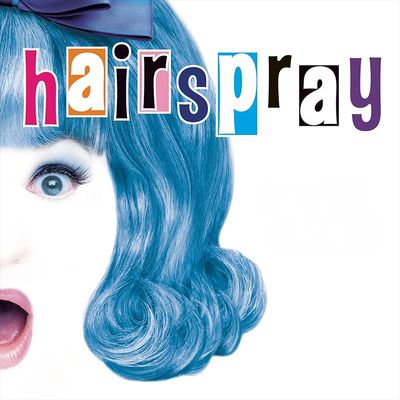
He played the role of Edna Turnblad in the Broadway musical Hairspray in 2005 and took that role to Broadway! It is an epic career where he worked with them all! With so much success comes some infamous moments as well! So many fun stories that he wrote a book all about them! That book is now out and he is telling us all about it!
_______________________________________________________________
Check out "The Roundtable with Robert Bannon" here on BPN on the daily, on YouTube, Broadway World, and on social media! Like, comment, share, & subscribe!
For more info on Robert- www.RobertBannon.com
Follow Him on IG- @RobertMBannon
TikTok-@RobertMBannon
Transcript
This transcript was automatically generated and might contain errors.
[0:10] Robert Bannon: It's the round table with me, Robert Bannon. Well, folks, everybody, you know, as a little gay boy that I am, some of my favorite divas, some of my favorite comedians, if it's Bet, if it's Whoopi, if it's Robin, if it's Billy, if it's Hollywood Squares, there was nothing better than a kid born in the 80s than to watch the reboot of Hollywood Squares with Bruce Vilanch, Whoopi Goldberg, and a bunch of superstars. I have loved our next guest. He is funny, he is hysterical, and he's written the jokes that have made us laugh for decades. And now he's telling you all of this inside scoop, all the secrets, all the stories. Bruce Vilanch's memoir is out, and he's here. He’s like to be called Travis Kelce's mother.
[0:54] Bruce Vilanch: There you are.
[0:55] Robert Bannon: Donna Kelsey. This is me. Donna Kelsey, you look just like Donna.
[0:57] Bruce Vilanch: Well, you know, red glasses, blonde hair, little chubby. So it's uh it's the same thing.
[1:02] Robert Bannon: How do you feel about Taylor and your son then?
[1:05] Bruce Vilanch: I oh well, it's lovely. I mean, he found a girl with money.
[1:10] Robert Bannon: What we all want, isn't it?
[1:12] Bruce Vilanch: You know, I hear you. I uh maybe not the girl part, but she'll write a song about him and he'll make more money.
[1:19] Robert Bannon: That's exactly right. Well, congratulations. You're about to embark on like a big time book tour.
[1:26] Bruce Vilanch: I have because I've written a book about a podcast that came out of a podcast with people like your age, who were asking me about things that I wrote before they were born because the internet had come in and all these things we saw we put into a grave. We realized it was not a shallow, it was a shallow grave. We should have just dug deeper because all of this stuff surfaced, and all of these guys were asking questions about the Star Wars Holiday Special and the Brady Bunch Variety Hour and things like that. And I thought, well, there's a book in this. How I wrote the worst things on TV and lived and a few other things, a couple of Broadway flops. But I called it It Seems Like a Bad Idea at the Time, because they all did at the beginning.
You know, all these ideas. I said, Oh, that's just terrible. What are you paying? Oh, well, I think I can find a way to make this work. I do, I really do. And you know, you try and you try and you fail, and you used to be able to just think it's going away, and now my ass is riddled with bites from things that have come back.
[2:37] Robert Bannon: No, that's amazing. I love it. And what is your stuff? You're a writer. I mean, you are a writer's writer, so yeah. Is writing a book different? Is it a challenge?
[2:45] Bruce Vilanch: Uh no, but well, because it was a challenge because I was digging up stories that I hadn't really told in years and years, and some I had some of them were in journals, and some of them I just like sprang to mind. But it was making them entertaining, you know, in not at a dinner table, but in literary form. That was the challenge, and it was great fun. And then, of course, after I sold the book, I got an editor who was pointing out discrepancies, things that couldn't have happened when I said they did, because this and that and the other thing, and so of course, I in my mind, oh, and things from 40 years ago, I had conflated, you know, a few things, but basically I like remember stuff, you know.
And I remember when I was a journalist in the 70s, and I was interviewing the last survivors of the Titanic, who were very old people who were children when they were on the Titanic, and they had a crystalline memory of that night. And I think they probably can't remember anything that happened five years later, but that night they remember it because it was a night to remember, and so all of these things were nights remember because nobody died. These were sort of failures, but nobody died.
[4:08] Robert Bannon: Well, when you look at firstly, the book, everybody, It Seems Like a Bad Idea at the Time. The worst TV shows in the history and other things that I wrote. You have talk about things, we think about the things that you've done, like the successful Oscar runs and the stuff with that, and all of the things that you've done and Whoopi and all that. But you really do go through some things that were not great ideas. You were a part of the infamous Rob Lowe Oscar, Snow White.
[4:33] Bruce Vilanch: That was the first Oscar show I wrote with a credit and everything, a gift basket, and it's the last chapter in the book because I had there were so many Oscar memories I could go into, but that one was it was notorious, mostly because well, Walt Disney sued over Rob Lowe dancing with Snow White. Alan Carr, a very flamboyant producer who I've just written a play about that I want to get on get going, came up with the idea. He borrowed from a show in San Francisco called Beach Blanket Babylon, and it was meant to celebrate the golden age of movies, and he had a lot of golden agers on the stage and a replica of the Coconut Grove. Unfortunately, they were not as golden as they were. They were a little tarnished golden age, and nobody wanted to see this.
They didn't want to see old versions of the people they had loved when they were younger, and so it was kind of cringy. And in the middle of it, to youth the whole thing up, he threw in Rob Lowe to dance with Snow White. And to Proud Mary, a famous movie song. And the Disney, the guy at Disney, for reasons that you'll have to read the book to find out, sued over this number, which first of all, Snow White is in the public domain. Snow White existed long before Walt Disney existed. So we only had to make sure we didn't copy the costume exactly. So every lawyer signed off on it. But this guy sued anyway. And of course, the academy was embarrassed because it was a trademark lawsuit, and they trademark the Oscar as their prime asset.
So they had to play along and eventually it was dismissed. And when the dust settled over all of this, the Rob Lowe sex tape emerged, which was Rob Lowe had gone to the, you should pardon Dukakis Convention in Atlanta, where the Democrats were nominating him, not Rob Dukakis, and had sex with a young girl and it was documented, and so there was much brujaha over that. So whenever it was mentioned, the TV announcers would say Rob Lowe, most recently seen dancing with Snow White on the Academy Awards, which was sued by the Walt Disney Company, but now been involved in a sex scandal, it happened at the Democratic National Convention, and so forth and so on. And so it came, it rose again, and it never went away after that. It was the permanent stain. It is a piece of iconic history, the last chapter. You gotta check it out.
[7:18] Robert Bannon: Yeah, why do these specific events? Why did you think of the Brady Bunch and the show that you did or Star Wars Christmas? Like, what do you think about them doesn't work? Why do they live in such infamy?
[7:29] Bruce Vilanch: They live because Star Wars has had a tremendous afterlife. You know, I mean it's the Star Wars canon, it's now the Scientology of the nerds. And it's never gone away. The Brady Bunch has never gone away. If you turn on, if you're not a cord cutter and you turn on your TV and look at the channel guide, the Brady Bunch is on some channel somewhere. And they've been like seven different iterations, almost as many iterations of Star Wars as the Brady Bunch. So those are all like in we're always in the public conscience, and probably why people watch them on the internet because they said, Well, what's this with the Brady Bunch? I've never seen this, or what's this with Star Wars? I've never seen this.
And that was how that happened, those two things in particular, and of course the Oscars are perennial, and so every year somebody refers back to Rob Lowe, and he owns it, much to his credit. He's written two memoirs and been on countless talk shows where he is and he two weeks after it was on, he was on SNL, where he apologized and called himself the poster child for bad behavior. So he's always been there, accepting it. So that's why these things resonated. I mean, some of the other things I write about it. I a movie called The Ice Pirates, which I rewrote and was in 40 years ago, is another one that Ted Turner loved and kept showing on all of his cable channels. And so people your age watched it as kids, and they continue to watch.
In fact, they show it to their kids now. So it's doesn't quite have the recognition factor of Star Wars with the Brady Bunch, but it's out there. So that was one reason I chose to focus on that one too.
[9:27] Robert Bannon: Well, I want people to get the book while we're talking, you get the book, you get the book wherever the book is sold on Amazon or wherever the book is sold. You're on course.
[9:38] Bruce Vilanch: And there and we were talking about Michigan and Detroit, and you'll be out here all the gays. I mean Royal Oak Ferndale.
[9:43] Robert Bannon: Royal Oak Ferndale sidetracks. The gays love it.
[9:46] Bruce Vilanch: The gays love the Royal Oak in Ferndale. That's I when I called my friend in Ferndale, because I'm doing I have I'm doing a thing in Toledo and in Chicago, and I said, Well, Detroit, you know, I have to fly into Detroit to get to Toledo, apparently. So I said, I'll be in Detroit. Where can we do this? And he said, Oh, up here in Ferndale. He said, Well, it's across the county line in Royal Oak. But I I was I wrote for the Free Press, by the way. I was a reporter for the Free Press in 1969.
[10:19] Robert Bannon: Oh my gosh, Bruce.
[10:22] Bruce Vilanch: Yes.
[10:23] Robert Bannon: Bruce, so we're gonna follow you. Everyone that you could they could follow you on Instagram so they could stay up to date. It's just your name.
[10:28] Bruce Vilanch: It's nice and easy, it's not Travis Kelsey's.
[10:31] Robert Bannon: Yeah, it's uh I mean I never post, but if you want to follow me, I mean I'm on Facebook, but you can if you want to know what's going on. There's wegotbruce.com.
[10:40] Bruce Vilanch: Wegotbruce.com. We'll put that up there too.
[10:42] Robert Bannon: Wegotbruce.com. And he knows more about what I'm doing than I do. He knows about this, which I barely knew about. Do you ever take a moment to look at wegotbruce.com is the place to go so you can check out all of the information and you can be up to date.
[10:56] Bruce Vilanch: Do you ever and look, I found this while we were talking as well. Look, there's Travis Kelsey's mom. And she's not wearing her red glasses. When it first happened, it was about the Super Bowl a year ago. I began getting calls, people saying, Dude, what are you doing in a box with Taylor? And I turned, I was waiting for the halftime, of course. And I tuned in there, there was a woman with blonde hair, red glasses, who looked like me. Same hairstyle that works, you know. And I thought, oh, that's you know, and I it just kept coming in. And it hasn't stopped because they're still together. You I'm writing the joke as long as I can.
[11:34] Robert Bannon: Well, I'm excited about that's funny. That is so funny and so clever. So do you ever take a moment? Do you ever sit back and think about the trajectory of your career and all the things you do? Are you always writing the next joke and always on to the next gig?
[11:46] Bruce Vilanch: Well, yes, but I'm you know, lying in bed at night thinking, what have you done with your life, you know, like everybody else? Because things that will force you not to go to sleep. Because it's one moment when you're actually alone with your thoughts in the darkness, and you actually think of stuff that you have pushed aside during the day. But yeah, I mean, Bob Hope said to me years ago when I said, God, you're everywhere, you're always on the road, you're always doing this.
[12:11] Bruce Vilanch: He said, a moving target is harder to hit. I mean, that's that's a funny, that's a good line. Yeah, and it's uh he that's absolutely right. But I I always wanted a lot of uh a variety. I uh working at the free press and the uh other newspapers made me understand that I didn't want to be part of the corporate structure. I didn't want to have to clock in every day. Uh I wanted to have the kind of thing where there it was varied. There were no two days would be alike unless I actually wished them to be alike. Uh and uh I've been very lucky, knock for Micah, whatever it is on this table here in Fort Lauderdale.
[12:48] Robert Bannon: Yeah.
[12:49] Bruce Vilanch: You know, uh uh I I was lucky enough to achieve my that that desire that I had. Do you look back? Is there a moment that you feel was the quintessential? Is it the Bet story? Is it the Emmy Awards for Johnny Carson? Like what was the moment when you're well when I met that, that was the the turning point because uh that started a relationship. There we are. I'm much heavier there. There we are. Uh uh and that's lasted 50 years, so uh 55 years now. I mean, uh so get me deliberate. So and she's fabulous, but it it opened a lot of other doors for me. So that that really was the and that was also where I kind of when when it happened and she exploded at the time, I realized that uh this was uh a key to what I wanted to do. I didn't really want to be on the newspaper. I was doing it because uh it was a steady salary. And once I let go of that fear of not having that and went to LA and started doing television, then it things fell together.
[13:55] And she always said to me, ah, you had your bad bags back the day I met you. Well, all those jokes that she tells on stage and in her characters and all the one-liners and all the things that she has said over the years is helped by you. And there are people who reached out to you besides award shows and besides you know, Whoopi and uh the Oscars and all the and Hollywood Squares and all the things we think of. You've had other people who will write you and say, I'm going on a talk show or I'm going on a concert tour and and they ask you to punch up some jokes.
[14:21] Yeah, that's true. A lot of actors uh uh only they act, they're not they don't have a stage persona, you know. You've never seen it's uh Johnny Depp at Carnegie Hall. No, they don't have that. And when the so they're they're accustomed to stepping into a role, they're not accustomed to uh to appearing to you know play themselves, and they need a little a little help every now and again. So I've done that for a lot of them. Mainly I there I met them through award shows because that's where they really freeze because they have to get out there and present something and read a script that's been given to them, and they don't have a voice to read that thing in, unless they're very, very uh adaptable, like well, Meryl Streep is the is the of course the hallmark of that because she could she will she can read the phone book. I mean, she will play anything because that's her gift.
[15:16] But a lot of them don't have that gift. A lot of them have to have a specific role and they get into the role, but there is no there's no Michelle Pfeiffer character when she walks out on stage and says, and the winner is, you know, just she hasn't got that. She's fabulous, but do you think that's not in her wheelhouse?
[15:34] No. In your books, I know I read about this story online, but you work with Miss Stry Sands.
[15:39] Yeah, that's a story.
[15:41] Bruce Vilanch: Well, because because I I get a lot of benefits with her on the road for her, and then she decided to go on the road to come back and this is 1988, and she needed material for her concert tour. And she made me an offer, and it was very low ball, not jokingly. She was selling furniture. She was clearing out her house. Uh because she wanted getting a new house and she admires new furniture. And so I she said, Well, what can I do? And I said, Well, sell a lamp. That's all I'm asking. You know, one lamp. Come on. And she laughed, and she called Robin Williams and said, uh, I need material. And he said, Well, call the lance. And she said, Oh, he's too expensive. So I guess her lamps are really something.
[16:22] But after that, I told this story in a movie they made about me, produced by Harvey Weinstein, who never laid a hand on me. You know, hashtag why not me. But in I told the story in the movie, and she was very upset. And it happened at a it there was a season of Barbara stories coming out in the media about uh various cheap cheap, a cheap aspect of her personality. And uh I was lumped in with that, and she she felt really betrayed. And so for a long time we were we had no relationship at all, and then eventually it worked its way. It's worked its way back again.
[17:00] That movie, by the way, it's got all these, you know, it's better every celebrity. Everyone, you've worked with everybody. Do you have a cell phone, Bruce?
[17:11] Yeah, of course.
[17:11] Robert Bannon: Why you want to call and no?
[17:13] Bruce Vilanch: I want I want all your contacts because you know everyone in Hollywood's phone number, truly.
[17:17] I know, I give them all made-up names. I had a had a pilot, not to remember who they are. I got a pilot for a show about a straight guy who buys a drag bar, a bar, and the only night that makes money is drag bingo, and so he has it every night. So now he's in business with all these drag queens. So I uh uh Shelley Goldstein, uh my partner and I had to come up with dozens of drag because there was a rotating series of drag queens, so I give them all, you know, drag names, like some Anita Procedure. That's you know, I mean, Rachel profiling, that's somebody else. So I figure if anybody steals my phone, they won't see the real names on it.
[17:56] No, so if you steal Bruce's phone and you call Rachel profiling, you've got Billy Crystal on the line. That's what's gonna so and when you when you come to Royal Oak, you know, they have a good drag night. I'm just letting you know their bingo's big at in Royal Log Dragons. I speak the truth, what can I tell you?
[18:12] Robert Bannon: So, what was it like for you to make a broad Broadway debut after I am and do hairspray?
[18:17] Bruce Vilanch: Edna Turnblad, Baltimore housewife in the real housewife of Baltimore. Taking a backstage moment. This is uh in the middle of the show, actually. This is uh um uh she's just been arrested for being in a riot, and uh that's her c her costume. Was was that always a dream? Was that always something you wanted to do?
[18:38] I always wanted a star on Broadway. When I was a kid, I looked up to Zero Mustell and Jackie Gleason, all the fat guys who could kind of dance. Nathan Lane now does all those roles, and he's sick of it, and he's now doing serious work, except in this show, Mid-Century Modern, which I wore. I don't know why it's his new show. Yes, uh on uh Hulu with Matt Bomer, Broadway people, yeah, and uh Linda Lavin, her last thing. She died during the make after like eight episodes, and they had to rewrite the end of the show. She was uh a great friend and wonderful. Uh but Nathan was uh, you know, Nathan had the career I dreamt for myself, you know, forum, guys and dolls, uh, producers, all those things. Adam's family, all those things I want, I would have done, wanted to do, never again. So, but that's okay. I write for him, so and we're great friends. So see, it all works out.
[19:31] Robert Bannon: You're the one it all works out.
[19:32] Bruce Vilanch: And I but I did do, I did do Hairspray, which oddly enough, uh, I had introduced him to uh Mark Shaman and Scott Whitman who wrote Hairspray before they wrote it. Uh we were doing a benefit. Nathan and Madeline Kahn were the co-hosts, and I was writing it, and Scott directed it. I brought him in to direct it. It was an AIDS benefit in Brooklyn, and um they all got chummy, and Nathan wound up recording the demos of Edna in Hairspray for them.
[20:02] Really?
[20:03] Bruce Vilanch: Yeah, but he didn't want to do it because he well, at that point he was in the producers, so he was not gonna leave the producers, and uh uh he didn't want to do another musical right away. So but and of course Harvey did the workshop of and it was Harvey's role from the moment he he did the workshop. Nobody was gonna do it but Harvey, and then I followed Harvey, sort of. I mean, I did the road company for a year and then stepped in.
[20:31] Robert Bannon: Yeah.
[20:31] Bruce Vilanch: So I realized my dream at 57, and uh it was great. I'd go back in a minute, you know, if there was the right thing.
[20:40] Robert Bannon: How many books do you think you have in you? How many stories do you think you have?
[20:44] Bruce Vilanch: Uh you know, uh, it's a very good question. I part of the reason I did this was because I had been toying with the memoir because people say, Oh, you have great stories, and I just didn't want to do a memoir like everybody else. So and then I did, and then I did. And I certainly didn't want to do a sex memoir. Shelley Winters wrote a great one, but everybody in the book that she has sex with is dead. So when she published it, and I said that to her, I said, You should have called the book, Fuck Shelley and I. But you know, uh, and she said, very funny. But you know, it's I didn't want to do that kind of book. D trip wrote a book and she didn't have any sex in it. And she gave the money back to the publishers because they said we can't publish this because everybody wants to know your sex life. I wouldn't tell that. Well, she would tell it at dinner to people, but she wasn't going to put it in the book. And that's how I am. I'll tell it at dinner to people.
[21:40] So I don't know. There probably are others. I just uh, you know, let's see how this one does. And we'll see what else is next.
[21:48] Yeah, exactly. There'll be more. It seemed like a bad idea at the time. The worst TV shows in history and other things that I wrote by Bruce Vilanch, otherwise known as Travis Kelsey's mother, is coming to a town near you. If there's a bookstore, Bruce is going to be there with a Sharpie in hand, ready to sign your book. You better get get a and we're gonna follow in Sam to Deed. So we can go to We Got Bruce.com to stay up to speed on all of that, or go to Instagram or wherever you're at, Bruce Valange. He says he doesn't poke, you don't post, but maybe.
[22:14] Robert Bannon: One never knows, do one.
[22:16] Bruce Vilanch: You you never know. And I'm gonna find out the date you're gonna be here, and I'm gonna come on out.
[22:21] Robert Bannon: Good dude, yes, please, because I don't want to give the wrong date.
[22:24] Bruce Vilanch: No, I'm gonna find out I I could be wrong.
[22:27] Robert Bannon: No, well, I'm gonna tell everybody look below us where we're watching right now because the date will be there. We'll do crack research, we'll find out all the information, date and right information. You know, it's such an honor because the work that you do, the joy that you've told, the stories you've told, the laughter that has come to our house. We live in dark, crazy times. We've had crazy times in all of our lives, and the things that you do that make us smile are the things that get us through our days, and you've given us that. So I hope you know when you're when it's night and you're thinking about what have you done in your life, you've made a lifetime of people laugh, and that's the greatest gift we could ever get.
[22:59] Bruce Vilanch: Excellent.
[23:01] Robert Bannon: That's excellent. Thank you so much, Mr. Vale.
[23:03] Bruce Vilanch: Thank you, Bruce, for being here. We're so excited.
[23:07] I love, but you look like you look like you're here with the hair and the glasses.
[23:11] Bruce Vilanch: You know, I can keep playing with the hair because bigger hair.
[23:16] Robert Bannon: Do people bother you at the airport all the time? You're the most recognizable person.
[23:20] Bruce Vilanch: You know, they don't bother me. I don't mind it. But what is funny is I'll be standing there taking a selfie, and somebody will walk by and go, who's that? Because I have that kind of fame. People who know me know me, and other people think, who is he? You know, it's not like Justin Bieber where they want, you know, patches of my skin.
[23:38] They say that's Travis Kelsey's. That's the kind of thing that you have to be able to fly private.
[23:44] Robert Bannon: That's right.
[23:45] Bruce Vilanch: I get it. They'll say, please leave Travis Kelsey's mother alone. Let her get on her flight.
[23:49] That's right.
[23:53] Bruce Vilanch: You should get the Brittany guy to come on screen.
[23:56] Robert Bannon: That's perfect.
[23:58] Bruce Vilanch: Much love. Congratulations, everybody get the book.
[24:00] Robert Bannon: Get the book.
© Broadway Podcast Network, All Rights Reserved