

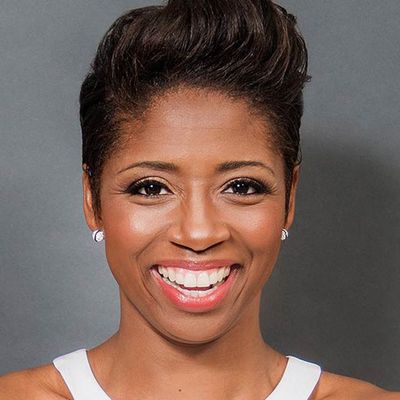
Montego Glover is an actor, singer and voiceover artist who made her Broadway debut in the original Broadway production of The Color Purple as Celie and Nettie... Read More
From the show: The Theatre Podcast with Alan Seales
Guests
Featured Shows


About
Montego Glover is an actor, singer and voiceover artist who made her Broadway debut in the original Broadway production of The Color Purple as Celie and Nettie. She went on to create the role of Felicia Farrell in the Broadway musical Memphis, for which she received a Tony Award Nomination, and won both the Outer Critics’ Circle Award and the Drama Desk Award. Montego also received acclaim for her performances in The Royale at Lincoln Center Theater, and All The Natalie Portmans produced by MCC Theater. She starred in the 2016 Broadway revival of Les Miserables as Fantine, and most recently, Montego completed a run as Angelica Schuyler in the Chicago Company of Hamilton. On television she can be seen in Bull, Black Box, The Following, Hostages, Smash, Golden Boy, The Good Wife, White Collar, NYC 22, Law & Order, and Memphis on Broadway for PBS. Montego has lent her voice to many video gaming projects which include: Battlefront, Renegade Squadron & The Old Republic all for the Star Wars franchise. And in the world of animation she can be heard voicing characters for Dora the Explorer, Go Diego Go. We will soon see Montego in a new show called Inventing Anna on Netflix.
After moving to New York City to pursue her career, Montego gave herself a month to learn her new home - to get acquainted with the city, the subway, and catch up with old friends. During this month, she told herself she wouldn’t worry about auditions. However, two weeks after her move, she received a phone call from a fellow FSU alumni who was in a show downtown, and they’d just lost their leading lady. She auditioned and landed the job on the spot. Montego began working steadily in theater, but soon added commercials, television, voice-over projects, and guest spots with symphony orchestras to her repertoire. In her own words, the current pandemic has “changed the game”, and Montego shares with us how she is continuing to take care of her heart and her spirit, allowing her to keep showing up for herself, her career, her family, and her chosen family.
In this episode, we talk about:
- How she is staying busy and sane during quarantine
- One of the things she loves most about Theater
- Her “toolbox”
- Playing a woman with “a darkness” inside in All the Natalie Portman’s
- How she recovers after a deeply emotional performance
- Stumbling upon her first acting class in school when she was young
- Her BFA program at Florida State University
- Her views on abundance
Connect with Montego:
- On the web
- IG: @montegoglover
- Twitter: @montegoglover
Connect with The Theatre Podcast:
- Support us on Patreon: Patreon.com/TheTheatrePodcast
- Twitter & Instagram: @theatre_podcast
- Facebook.com/OfficialTheatrePodcast
- TheTheatrePodcast.com
- Alan's personal Instagram: @alanseales
- Email me at feedback@thetheatrepodcast.com. I want to know what you think.
A very special thanks to our patrons who help make this podcast possible!
Cheryl Hodges-Selden, Paul Seales, David Seales
If you would like to see your name in this show notes or get a shout out on the pod itself, visit ttp.fm/patreon to become a member and show your support!
Transcript
This transcript was automatically generated and might contain errors.
[0:00] Alan Seales: Welcome to the Theatre Podcast. Intimate, personal conversations with theatre's biggest names. I'm your host, Alan Seales, and this episode is with Montego Glover, who, my gosh, I have never met her before this interview, but she just radiates kindness. We had this wonderful, wonderful recording session, and during quarantine, I've been using a platform that allows my guests and I to see each other while we're recording this nice multi-track audio. And it's nice to be able to just look into people's faces, their eyes, look at their faces and feel more of them than you would with just hearing somebody's voice. And I just loved watching her talk. She just, like I said, radiates this positive energy that makes you just want to lean in and listen.
Her story is really a fun one. One phone call changed the course of her entire life. It was an alum from her college that just said, hey, I know you just moved to the city, but come audition for this role. It was her first audition. She got the job, and the rest is history, as you'll hear in the episode. She's very outspoken about being open to everything. She's really introspective and prepares herself emotionally for her next step, whatever that may be, and makes sure she's ready to accept new opportunities as they come. She explains it way better than I just did, so please listen to the episode. It's a wonderful one. Find me on Instagram and Twitter at theater underscore podcast. Please show your support.
I want to keep the transcriptions of these episodes going, so every little bit helps. Show your support at ttp.fm slash patreon, P-A-T-R-E-O-N. Find me on Facebook, leave a rating, leave a review. And now, everybody, please enjoy this episode with Montego Glover. Today's Tony Award-nominated and two-time Drama Desk Award winner made her Broadway debut in the original production of The Color Purple before creating the role of Felicia Ferrell in the Broadway hit musical Memphis. She has starred in All the Natalie Portmans, a new musical comedy called It Should Have Been You, and the 2016 Broadway revival of Les Mis as Fantine. She is also an accomplished TV film and commercial actor in addition to lending her voice to various projects such as Dora the Explorer, some Audible originals, and video games, which is a little close to my heart.
Most recently, she completed a thrilling run as Angelica Schuyler in The Chicago Company of Hamilton, and we will soon be seeing her on an upcoming new Netflix show called Inventing Anna. Montego Glover, welcome to the theater podcast.
[2:45] Montego Glover: Thank you, thank you. It's so nice to be here. Hi, Alan.
[2:49] Alan Seales: And we are obviously recording in quarantine. Where are you joining us from today?
[2:54] Montego Glover: Brooklyn.
[2:55] Alan Seales: We're going to Brooklyn, me too. Woo! Yay! Holding it down, right?
[3:02] Montego Glover: We're holding it down.
[3:03] Alan Seales: Yeah, I never know these days who's left. Actor friends are just fleeing the city in droves. I have some people who even owned property and they have either rented it out or just straight up sold it and like, let's go back to Ohio because there's no Broadway for a while.
[3:17] Montego Glover: Right? It's sort of a dual reality, but is it? You know what I mean? It's our lives as actors and the highs and lows that come with it, obviously, even pre-pandemic, but this has changed the game for a lot of people in a number of ways. Dare I say all of us, actually, from day one.
[3:35] Alan Seales: Oh, absolutely. I mean, aside from just not having a stage or not being able to be with people, auditions are almost non-existent. And now, I mean, we're recording this in the middle of August and it's taken a good, what, six months of quarantine here, but now I have friends who are doing a lot more voiceover work and they have kits at home and they've built studios in their closets. I was on camera with James Eichelhart yesterday. He was literally in his closet with sound panels all around and everything, right? So that's what you got to do. But you've done VO work, obviously, as I just rattled off in your bio. Very impressive bio. But what are you doing to stay busy and not go completely insane like I am, working out of this single room for months and months and months?
[4:26] Montego Glover: Right. I totally get it. It's two things. It's how am I staying sane in life, just relieving my stress and getting some air and staying caught up on what's going on in the world so that you're informed but not so overloaded that you're truly overwhelmed every day in a way that works against you, can't handle. And then what's work doing? What's popping at work? And then what's checking on the family and friends and chosen family? So for me, it's sort of a three pronged, multifaceted area. For work, honestly, for me, the transition has been from things that would normally happen on stage or things that would normally happen in a live space and or venue has just moved online to a degree. So, you know, I presented a number of plays, both privately and reading for playwrights and other creatives with a cast.
I've done it publicly. I've done it to fundraise. I've done it to raise awareness. Like I've been able to use that skill and frankly, that joy, that gift around it to continue to work and present, but also exercise and see people and, you know, keep my hands on a bit of art. So that's been great. In the world, obviously, a voiceover, I was telling someone the other day, I said, you know, normally when I'm, you know, coming and going on the stage and other venues and concert work and all that other jazz, you know, my voiceover universe operates easily daily at about 125, 150%. Like there's never a dull second. There's always something that should and needs to be done that I'm being seen for, which is wonderful.
We went into quarantine and along with all of the live performance, all of the VO upped by 300%. So I have been in my home studio, a closet converted to a very sensible ISO booth, talking and talking and talking and talking and talking and talking. And it's great. It's work I love to do. It's work I've always done. And now with quarantine, what has happened is just, you know, taking it up. It's leveled up crazy, you know, in a beautiful way. I mean, I have no complaints, but it does require a bit of management. Speaking of which, staying sane, like really alone with yourself. There's a lot going on, you know, the top of this year from basically March 12th until this very moment. I think that the world is an entirely different place.
And so I've really needed to embrace quiet time, even more so. I always strive for balance in my life between personal and work and otherwise, but really, really strive for time to be quiet and be still to really hear my own thoughts. What is my heart saying? How am I really responding? Choosing proper outlets for that. I have a yoga practice, writing in my journal and doing things that bring me joy that will allow me to stay connected. For example, you know, while we were all in quarantine, I could go to my farmer's market every Saturday. And for me, even pre-pandemic, that was a wonderful, uh, treasured experience week to week to go and shop at the market and choose what I, you know, lovingly will eat and enjoy.
Um, and so being able to do that and have a sense of normalcy around that and other little pockets of things that allow me to have a sense of normalcy, aside from the fact that I need to be available for family and friends and chosen family to check in on me. Cause that gives other people in your life will love you a sense of stability and being able to reach out and check on other people and be there for them. What I found in quarantine is that, um, if I'm treating my own spirit, my heart, my body, as well as I can, I am much more present and able, even in these extraordinarily trying circumstances, I'm as able to show up for other people and show up for my career and show up for myself.
[8:19] Alan Seales: Yeah. You said chosen family a couple of times and that's the concept, not a concept. I mean, I'm obviously known about the concept, but I've something that I've heard so many people say recently, especially in the same context that you provided it in, in that it's something that we have to do to keep ourselves sane because like, I love my wife, I love my kids, but I just need to go outside, you know? I do need to go outside.
[8:52] Montego Glover: So, you know, they're like FaceTime has become so much more important and I'm just like texting friends and I say, you know, when can we play, when can we get online and just talk or play like stupid games or whatever it is? And no, I get it. I get it. And then, I mean, as someone who is on the stage, I'm sure you can relate, but for me as someone who watches people on stage, missing the arts, missing that outpouring of emotion eight times a week. Yeah. That's catharsis for so many people on stage, right? And it's catharsis for people watching it.
[9:20] Montego Glover: Yeah. Yeah. And so you are so fortunate to be able to have all of that in your little ISO booth because a lot of people don't have that. We now have it in their little ISO booth or opportunities to really do some good in the world and also, you know, keep your hands, you know, in art. For example, I presented a Noel Coward play twice actually for Stars in the House, which was just so wonderful to have that work, to be in the company of those other actors, most of whom are my friends, for us to be connected in that way and just spend that time reading a great work and enjoying it and most importantly having as live a communion as we could given our circumstances. You know, one of the things I love about the theater is that we're all in the room together, physically breathing.
I can hear every person in that 1500 seat house or whatever. I can hear you breathing. I can feel you moving, you know what I mean? Emotionally, spiritually, like kinetically. And so that's the part that you have to keep reaching for. You have to keep really paying attention to because I feel like in this circumstance, it's easy to get a little withdrawn. So reaching out and continuing to put your hands and your light on those seats is really important. It takes effort.
[10:40] Alan Seales: The vocabulary you use is very, it's interesting to me in that, you know, you say like you've used energy and put your light out there and you feel people and it's very cerebral. It's a very cerebral way of existing. And you were talking about, you know, you want to love yourself at the beginning and you write your journal and self-care and all this. Is this something that, I guess the energy that you feel between people and the energy that you feel between your family and your chosen family, is this something that has always come naturally for you that you're aware of or have you had to work on it over time? And like, is that what's made you so successful in your career is because you can connect to these people in a nonverbal way.
[11:24] Montego Glover: Yeah. Oh, that's good of you to say. That's really kind of you. Thank you. I would say, I think that the seed has always been there. I was raised with those values, the importance of community, the importance of communication and family and listening more than you talk. Because as a kid, particularly where I grew up, I mean, I'm born and raised in the South, you know, you didn't, if grown folks were talking, then if you were a kid, you were not talking. You were not encouraged to make a conversation. So it's a great skill actually, though. You learn how to be in a room and just observe and just hear what's going on rather than feeling the need to, you know, to enter the space otherwise. And I think that's been helpful as an actress, you know, when I'm scoring a scene or a play or a piece of music, and I'm looking for the life of this woman, this person that I'm going to play, I'm sitting in the quote unquote room with her and listening to her tell me where she is and what the world is, where she lives and how she exists.
That's part of the process. So yes, I think growing up and being raised around a particular set of values has helped me transition fairly well. There's a level of adaptability I think you need in the modern age that we have to really grasp. It's not always the best decision to dig in your heels. And sometimes the exact thing you need to do is stand firm, stand tall and hold the line. Do you know what I mean? There's a balance between those and knowing when to use and when not, I think that's important. And I always have. And what I found too is that as I continue to grow as an artist and grow up as a person, as a woman, as a citizen, those things keep changing in the best way, but they keep growing, hopefully in the right direction. You know what I mean? Again, the work is not making the same mistake three times in a row, 80 times in a row. Going to make a mistake, make a different mistake.
[13:34] Montego Glover: Oh, absolutely. And learn from it. You got to learn from it. This is unusual for this podcast listeners. I know that I normally start off with like, tell me about your child.
[14:15] Alan Seales: Welcome to The Theatre Podcast. I'm your host, Alan Seales, and today we have the incredible Montego Glover with us. Montego is an actor, singer, and voiceover artist known for her work in Broadway productions like The Color Purple and Memphis, as well as her recent role in Netflix's Inventing Anna.
[14:45] Montego Glover: Thank you for having me, Alan. I'm excited to be here and share my journey with you.
[15:15] Alan Seales: Let's start from the beginning. You made your Broadway debut in The Color Purple. Can you tell us about that experience and what it was like stepping into such a powerful story?
[15:25] Montego Glover: Absolutely! Making my Broadway debut in The Color Purple was a dream come true. The story is so rich and emotional, and being part of it, especially as Celie and Nettie, was incredibly impactful. It was a time of growth for me as an artist, and I learned so much from the cast and the creative team.
[15:35] Alan Seales: You then went on to create the role of Felicia Farrell in Memphis, which earned you a Tony nomination. What was that process like, creating a role from the ground up?
[15:45] Montego Glover: Creating Felicia was one of the most rewarding experiences of my career. It was a collaborative effort, and I felt a deep connection to the character. The music, the story, and the message of hope and resilience resonated with me, and I poured my heart into bringing her to life.
[15:55] Alan Seales: You’ve also performed in Les Misérables as Fantine. How did you prepare for such an emotionally charged role?
[16:05] Montego Glover: Preparing for Fantine was intense. I had to dive deep into her struggles and emotions. I spent a lot of time understanding her backstory and the choices she made. It was important for me to portray her with authenticity and vulnerability.
[16:15] Alan Seales: You’ve had a diverse career, including voice work for video games and animation. How do you approach those different mediums compared to live theater?
[16:25] Montego Glover: Each medium has its own unique challenges and rewards. With voice work, you rely solely on your voice to convey emotion and character, which is different from the physicality of live theater. It’s a different kind of storytelling, but I love the variety it brings to my career.
[16:35] Alan Seales: Speaking of variety, how have you been staying busy and sane during the pandemic?
[16:45] Montego Glover: The pandemic has definitely changed the game for all of us. I’ve been focusing on self-care and finding creative outlets. I’ve been taking classes, exploring new projects, and connecting with friends and family virtually. It’s been a time of reflection and growth for me.
[16:55] Alan Seales: That’s great to hear. What do you love most about theater?
[17:05] Montego Glover: I love the connection it fosters between the performers and the audience. There’s something magical about sharing a live experience and feeling the energy in the room. It’s a unique form of storytelling that can’t be replicated.
[17:15] Alan Seales: You mentioned your “toolbox” earlier. Can you elaborate on what that means for you as an artist?
[17:25] Montego Glover: My toolbox consists of the skills and techniques I’ve developed over the years. It includes my training, experiences, and the emotional tools I use to connect with characters. It’s essential for me to keep adding to that toolbox as I grow in my craft.
[17:35] Alan Seales: You’ve played characters with a lot of depth and darkness, like in All the Natalie Portmans. How do you recover after such emotionally charged performances?
[17:45] Montego Glover: Recovery is crucial for me. I take time to decompress after a performance, whether it’s through meditation, journaling, or just spending time with loved ones. It’s important to process those emotions and give myself space to breathe.
[17:55] Alan Seales: It sounds like you have a solid approach to self-care. Can you tell us about your journey to New York City and how you got started in the industry?
[18:05] Montego Glover: Moving to New York was a big leap for me. I gave myself a month to acclimate to the city, explore, and reconnect with friends. I promised myself I wouldn’t stress about auditions, but two weeks in, I got a call from a fellow FSU alum about an opening in a show. I auditioned and landed the role on the spot!
[18:15] Alan Seales: That’s an incredible story! It sounds like you were meant to be in New York.
[18:25] Montego Glover: I truly believe that. The city has a way of bringing opportunities when you least expect them. I started working steadily in theater and expanded into commercials, television, and voice-over projects.
[18:35] Alan Seales: You’ve accomplished so much. What are your views on abundance in the industry?
[18:45] Montego Glover: I believe in abundance and that there’s enough space for everyone to succeed. It’s important to support one another and celebrate each other’s achievements. The more we uplift each other, the more we all thrive.
[18:55] Alan Seales: That’s a beautiful perspective, Montego. Thank you for sharing your insights and experiences with us today.
[28:00] Montego Glover: And I have very vivid memories of this, sitting in front of the television in Chattanooga, Tennessee, watching public TV, and listening to the orchestra and watching those musicians play, and seeing ballets, and seeing artists present their art, or the pre-version of virtual tours through museums, or highlights for different artists from different eras, different schools. And I was transported. The storytelling, the different kinds of things, things that were aural, things that were visual, things that were movement-based, and incorporated both, I was enchanted by it. And that never... It's like it woke something up in me, and it never, ever, ever went back to sleep. So that was really the beginning.
I recognized that feeling, and I still have it. I recognize that feeling. So when I found a place in school that welcomed it and cultivated it, because we had art in our schools, all kinds, we had choir, we had bands, we had all those things, and theater concentration as well, it made sense. It made sense. I was probably 12 when I started studying acting formally. And I remember I was at school, I was walking down the hallway. At the time, I was running track and enjoying it, out there doing it. And I was passing by the auditorium, and there was a class going on in the auditorium. And I opened the door, and it was an acting class, like older students who were working and younger students who were there, who were observing.
And again, it was like the experience of the public broadcasting moment. And I remember standing there and looking and looking. It was like the instructor sensed that I was there, or someone was there. I'll never forget this. And she turned around, and she saw me, and I saw her, and she said, come in. And I did. And the door shut, and I have never looked back. So that's where, I would say.
[30:22] Alan Seales: That's funny. You used the vocabulary again, like she sensed you. It's very, very, very, I love how you describe these situations. It's very, like energy flow. That's my version of spirituality, is energy connections between people. And I think there's a very strong scientific reasoning for a lot of stuff, but might not take it as spirituality for now, right?
[30:50] Montego Glover: Yeah.
[30:52] Alan Seales: Then went to FSU, Florida State, with a BFA in musical theater, right?
[31:02] Montego Glover: Go Knolls.
[31:03] Alan Seales: That's right. And then, so how long from that before Broadway debut in Color Purple?
[31:14] Montego Glover: From Florida State to Broadway debut, you mean?
[31:16] Alan Seales: Yeah, yeah.
[31:17] Montego Glover: Let's see. Florida State, about five years.
[31:21] Alan Seales: That's not bad.
[31:22] Montego Glover: No, not bad at all. Not bad at all. I was always fairly driven and focused. I really loved my training in acting before college, and then the program itself was excellent for me. It was a full level up is exactly what you would want to do if you were moving through your matriculation, and really seizing your growth levels. It was a great choice for me. I'm very glad I chose Florida State in that way. But what I also knew is that I wanted, I was very serious about pursuing acting as a career. And I knew that I wanted to move to New York. I also, though, was very serious about it being permanent, and I wanted it to stick. I didn't want to move to New York and run out of money, or run out of energy, or run out of emotional bandwidth.
I wanted to be spiritually, emotionally, and financially ready to be here. The stakes were that high for me, because it's not like I made another decision. I wasn't one of those kids that was like, I'm going to major in music theater and minor in chemistry. That was not the plan, because the plan was, I love this very much. It's the only most thing. So I took the time to do it. And it was great. It gave me having those things in place, and every young person in that space is different. But those three pillars in place for me gave me a foundation and a sense of self and groundedness, and really authority, so that when I arrived in New York, I could make decisions that felt right, and I wasn't in a bind.
[33:15] Montego Glover: Yeah, a lot of people I know come up, and they have a few months of savings. They're number one in their school or number one wherever they are, and they come here, and they just get trounced on. So much. You've got to come here with humility. You have to come here. The stakes are high. Yeah, realizing that you're not going to be the best right away.
[33:31] Alan Seales: No. No, no. No matter what. It's a gift if you're still on your feet. It's a gift if you take the A train, and you want to go to Midtown, and you don't end up in Harlem this time. Put yourself together. Do you know what I mean? Take the time to really get your bearings, get yourself set. Coming from a different environment, Florida State's in Tallahassee, which is North Florida. It's very different layout. It's not a city. It's a town. Everything revolves around the universities there, which is great, but New York is an entirely different beast from anything in this country. So I think it's important to invest the time and energy, whatever speaks to you, whatever you need. Some people don't need a couple of months of savings. They just need a dance belt and a tube of ChapStick.
[34:31] Montego Glover: And off they go. Others are different. Did you come here with any sort of contract, or were you just like, all right, I'm going to take a break. I'm going to find a place. You said get your bearings, but I know I've talked to so many people who are just like, I didn't want to come here until I had something that was a sure thing. So they were commuting from other cities sometimes. Hours away, they would just come here for audition after audition, and they never moved here until they had a show.
[34:54] Montego Glover: Wow. Yeah. No, not for me. Not so for me. I moved when I was ready. I literally woke up and was like, yes, it is now. It is time. It is time. I moved here, however, and said to myself, I'm going to give myself a month. Take a month. Learn your new home. You're here. You made it. Take a month. Learn the city. Learn the system, other subway system. Learn how to get around, what you need to do. Connect with so many friends who are here already and are so psyched to have you come and now finally join our party here at NYC. Do those things. Don't worry about auditioning. You're OK. Again, this is what I mean by you're OK for money right now. So take the time to get yourself together, because when it's time to hit the pavement, you'll need to be on it.
So give yourself that gift. I had earned it. I worked very hard, you know, in school and after, saving my, you know, nickels and such. And I said, don't audition. Don't audition for a month. And about two weeks later, I got a phone call from a fellow alum. And he was like, hey, doing a show downtown. We lost a leading lady. I've recommended you. You're going to get a call. And I was like, OK. And I went down to audition. And I remember as I was going, I mean, this friend of mine, fellow alum, is like he was a senior when I was a freshman. And that is the like state of our relationship as friends. You will always be like a senior. You're frozen emotionally together. I will always be a freshman.
And I remember as I was going to this audition, I was like, oh, my gosh, please don't embarrass him. Please don't embarrass him. He totally recommended you for this. And I had just gotten to the city. So it wasn't like, you know, I had all this other experience of like, you know, walking into other casting offices and like bombing or doing a great job or whatever. This is like really one of the first ones, probably the first one, if I remember correctly. And I remember thinking, don't embarrass him. Don't embarrass him. Oh, my God, you'll just die of shame if you get in there. I was so horrified. I got there. I went in. I sang. I sang again. I was asked to read, read again. And then I was asked to wait outside.
And I'm just thinking someone will come out and say, thank you so much. We'll let you know. I go out, I wait, just hoping it's going to pass. Just give me a grade that's good. I don't want him to get the worst feedback. And they came out and said, we would like you to join the company. Wow. So about two weeks into my move, I had a job. And so I was going to play Mabel in the Pirates of Penzance on the South Street Seaport and the ship became like a pirate show on a ship docked in the water. That's so cool.
[37:43] Alan Seales: Yep. That's so cool. I don't know much about the FSU program. Is it more of a focus on acting or singing? Because I feel like the better musical theater actors are the ones who realize that you have to put the effort into acting. You can't just be a great singer, right? You can't just sit there and sing. You have to act the part too.
[38:05] Montego Glover: Who told you that? Who said such a thing? Apocalypse.
[38:13] Montego Glover: FSU is really grounded. One of the things I loved about it is that I feel like, and I say this all the time because it's 100% true, I feel like I got a conservatory education at a liberal arts university. So I got intense, focused, high-level training that was demanding and demanded the most of its students and of the community that we formed with each other. But also I got a college experience. So if I wanted to tailgate and go to ballgames and do things that college students do, it's great because ultimately the translation was, you will need to be an artist in the most high-level way, the best you can do, but you will need to function in the world. And if you don't have practice at that, it will be snaggy when you leave school.
Because you're like, what? The entire world doesn't revolve around our school of theater, dance, you know what I'm saying? They're hugely important. But what I have really benefited from, in my opinion, is that I got practice right away at those really important stages. When you leave for school, 18, 19, 20, 21, 22, right in there, those adult, knife-sharpening, tool-making years, getting the foundations together.
[39:36] Alan Seales: Hangover years.
[39:37] Montego Glover: Yeah. You got to really know how to manage all the things that are going to be in your life and are going to be part of your life, the landscape. So that was the experience with Florida State. And yes, it is intense with voice, both speaking and singing, intense with acting, all kinds of acting and genres and dance. Graduates of FSU are in their bodies. You will dance. You will do it. You may not come with the highest skill set. You will be exponentially sharper and ready to compete when you leave the program. You will do the work, but you'll be ready.
[40:14] Alan Seales: That's so cool. Because what I was trying to lead into was an obvious connection to the fact that you just sort of do everything and do everything really well. So you've got the Broadway credits, and you've got the TV credits. And something that I didn't even touch on in the bio was concert work. So you've been a guest artist with the New York Pops at Carnegie Hall and Jazz at Lincoln Center and the New York City Center and National Symphony in Washington, DC, the Philadelphia Orchestra, the Toronto Symphony Orchestra. There's like 10 more lines here in my notes here that I can read as orchestra, orchestra, orchestra of every major city all around. So that, and then you throw in the voiceover work and all of this. It's just, there's everything there. So where do you, I mean, how do you focus all of this? How do you know what you're doing next? Or where do you decide what to do next?
[42:46] Montego Glover: It was, I wanted to be a theater actress. It wasn't like I, I was like, got to school. It was like, I'm going to be a voiceover artist. If you had come to me in my ballet class when I was 18, 19 years old at Florida State University, just sweating and like mad in my ballet class, because I'm just like, four days of art, and said to me, so here's how it's gonna go down. I'm like, that's crazy, because none of that exists. Like, if you had said to me, you're gonna make your Broadway debut in The Color Purple, I'd have been like, that's crazy, because it's not a Broadway show. Number one. I would have like listed the things that are true. But you know, there you go. Things have happened. For me.
I think it's funny that you didn't mention any of the technical stuff. Because for me, I was like, you need different management, different representation for all of these genres. So that's, that's what I was saying. I was like, oh, so you're sitting there doing The Color Purple, and then a VO agent for video games walks up. Like, I noticed your overly dramatic presentation in this really serious play. Would you like to go do a funny voice for a video game? Like, you have to seek this out, right? Or like, how does that happen? But here's what I'll say. So I'll tell you my story. So you remember when I told you that my friend recommended me for the job and it was Pirates of the Caribbean. And we were like on the ship in South Street Seaport, and we were doing Pirates.
So in the audience, one of those nights was a representative from a commercial agency who works in commercials and, you know, reps talent in that way, but loves the theater and everything. And there he was, and there I was. And when the play was over, he said to me, hey, I work with commercials, and I think we should take a meeting. That was it. I took the meeting. It went extraordinarily well. And I've been a client ever since. And so saying yes to it, being available to it, like there in the first place, his being there, his approaching me, my saying yes, and then being open to what that meeting was and the possibilities there. All of it new, not in that I didn't know how to talk or I'd never seen a commercial before, but being on the other side of it was new.
And what I found is I opened up that tool chest and reached in and was like, how do you score a scene? How do you use these words to your advantage? How do you take direction? And I had a tool for every single thing. And it kept growing and growing and growing. Wow. Wow. Yeah. So that was just right place, right time. It's funny, the last interview I did was Adam Pascal told me that the only reason he got rent was because he happened to grow up next to Idina Menzel. So she called him and she was like, we can't cast this one role. We'll come in and read for this guy, Bernie Telsey, that no one's ever heard of. And then it leads, first audition, first show leads to his Tony nominated role. Just all of it.
All of it. Meanwhile, in one sentence, you just said Idina, Adam and Bernie. All of these things are sitting in space now in very, very luscious areas. It's good. So you never know. I mean, for people listening, you never know the people in college that you work with. You never know when they're going to call you up after you moved to the city and say, come audition for my show. We just lost our leading lady and it's going to lead to the rest of your career. Literally. So that's how it happened for commercials. And then you get there and I started to discover this entire world of commercial acting and the presentation and what the business of that is. There was never a moment where I thought, this doesn't line up with what I'm trying to do.
It all made sense. Do you have a favorite? Do you ever do too much theater and you're like, I got to go and tour with the Indianapolis Symphony Orchestra again? Or like, I'm tired of these stuffy tuxedos. I got to get back on stage again. You know, I cut my teeth in the theater. I love the theater. It'll always, always be like the heart and soul. I can't imagine going through whole seasons or two and five year periods where I don't do any plays at all. You know what I mean? That just doesn't seem right to me. Even when I've been working on two TV shows at the same time, I've always had room or made space for it. So I got to be honest with you, there is no favorite. My issue is when I don't get to do everything.
If I'm being honest. I get a little fussy when I don't, you know, too much time goes by and I haven't had a chance to get with the pops and sing something or, you know, it's time to talk about detergent or something. It's the ability to keep it interesting, keep it nimble. You know, like it's always tossing that ball in the air and it just comes at me in crazy awesome ways. It's very exciting. I'm never bored, ever. It's so funny. Yeah, it doesn't sound like you ever stop. It's funny. You're like, yeah, if you said Color Purple will be your Broadway debut, it'd be like, no, that's not even a Broadway show. But now you mentioned TV and whatnot. So Inventing Anna coming out on Netflix soon. If we were to tell little Montego, there's this thing that's called the internet and you're going to be on TV, but it's not TV.
It's going to be on everyone's little pockets. You'd be like, what? What is this? But tell us more about, I mean, gosh, I guess Netflix and Hulu and Amazon and everything are casting movies and TV just like anything else now. Yeah. You know? Yeah. It's the same except the delivery of the content, the delivery of the whole, the season, the world of these plays are different. Different from what a lot of us grew up with. You know what I mean? I say all the time, I talk about this with students and with just sort of gabbing with contemporaries of mine. I say, wow, you remember a time when we watched television by appointment? If you weren't in front of your television at 8 p.m. on Thursday, you missed it.
You missed it. And now that's not how we take in content. That's not how we absorb it. And so being willing as an artist to move with that is a large undertaking because there's also, in my opinion, so much more on television on all of these platforms. There's so much more content now. There's also a lot to choose from in terms of being a consumer and being available as an actor or actress. There's a lot out there, which I think is wonderful. I think abundance is the only way to go. And I've always felt that way. There is more than enough for all of us. There's more than enough for me and you and all. So the real question is, you know, what are you available to? Some stuff is a no, obviously.
Right. And who are you available for? Yeah, because that makes a difference. It does, doesn't it? Well, absolutely. I mean, you have to connect with casting directors. I mean, aside from the person you're reading with, which obviously sometimes your reader just gives you nothing, so you still have to pull from yourself. But screen tests and rehearsals, you got to pull things out that you didn't expect or that you're relying on yourself. But then you've got to make these connections and you have to leave your stamp, I want to say. It's not quite the right word, but like when you walk out of the room, you still have to leave a part of yourself there so they remember you. Yeah. Is that how you felt when you were doing the work or if you've ever been on the other side of the table, is that how you felt?
May I ask? Yeah. Oh, that's a great question. Yeah, I have done some casting and I've done a lot of performing, a lot more performing than I have casting. And I remember the people that are nice to me when they're not on. I put an air quote. They come in and they seem genuinely happy to be reading the lines and to be there and are just themselves. Because you can tell when someone's nervous. You can tell when they're not really enjoying themselves. And that's not something you want to put on your stage. Yes. You know? Yeah. So they got to be able to take direction. You got to be able to work with them. And so there isn't a bit of interpersonal relationship dynamics that play along with everything.
But yeah, I remember to answer your question. Yeah, I remember people who just seem like genuinely good people. Yeah. Yeah. Even playing evil characters, you still want to be able to work with somebody and have them be a nice person. Yes. Yes. Life is separate from art. There should be a way to know that you can fully access that truly evil, villainous character, but you will not create chaos in the theater every night, backstage, or at rehearsals, or whatever. There needs to be a level of assurance there, a trust of kind, of a certain kind. Right? Yeah. I would agree. Yeah. I absolutely agree. Okay. So there's three standard closing questions that I ask when wrapping up every podcast here. The first one, very simply, is what motivates you?
[52:31] Montego Glover: Purpose. All right. I like it. Full stop. All right. Second question, what advice would you give to your younger self and younger people listening now starting out down a similar path?
[52:44] Montego Glover: Keep working. You will get there. You will get there. You will get there. You're on your way. Just keep doing the work. Keep doing the work. And then last question, hardest one, if you could only see one show for the rest of your life, but you can see it as many times as you want, what would you see?
[53:08] Montego Glover: Oh, Sweeney Todd.
[53:19] Alan Seales: That was a quick answer and by far the most popular answer. It's just got everything.
[53:29] Alan Seales: All right. Well, where can we find you on social media?
[53:34] Montego Glover: You can find me on Twitter. My handle is my name, Montego Glover. Same for Facebook, same for Instagram. And of course, my website is MontegoGlover.com.
[53:43] Alan Seales: And then of course, look for her on Netflix. And then it's actually, we didn't even talk about this, but like CBS, the shows, the episodics, they are ongoing and record for months and months and then you're recording for Netflix and it's just, they release it all at once. So they have to record all at once. So that project is done. Is there a stuff in the can that we'll see you in soon too, as well, that it's already been recorded?
[54:06] Montego Glover: There's stuff that you will see me in, some of it done, some of it not. Yes. The answer is yes.
[54:16] Alan Seales: All right. Well, we will have you back on again for the future. All right. You can find more of me at thetheaterpodcast.com. Show your support at thetheaterpodcast.com slash Patreon. I'm on Instagram and Twitter at theater underscore podcast and Facebook slash official theater podcast. Please leave a rating, leave a review, tell your friend. This is edited by Matthew Hendershot. Thank you to Jukebox the Ghost for the intro and outro music and Montego, thank you most of all. I have really, really enjoyed this chat.
[54:46] Montego Glover: Oh, I'm so glad. It's my pleasure. Thank you for having me.
[54:49] Alan Seales: You're welcome.
© Broadway Podcast Network, All Rights Reserved