

Learn how the government was able to use the Espionage Act of 1917 to prosecute Reality. How the U.S. government was able to use Facebook messages, private diary entries and phone conversations against Reality Winner in her bail hearing, ultimately denying her bond... Read More
From the show: This is Reality - The Reality Winner Podcast
Guests
About
Learn how the government was able to use the Espionage Act of 1917 to prosecute Reality. How the U.S. government was able to use Facebook messages, private diary entries and phone conversations against Reality Winner in her bail hearing, ultimately denying her bond.
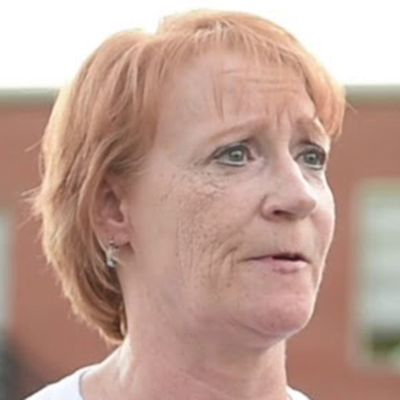
Featured in this episode are: Billie Winner-Davis and interview footage from Reality’s stepfather Gary Davis (Reality’s stepfather) and Reality’s defense lawyer Titus Nichols.
Reality Winner, was a 25 year old NSA contractor when she was arrested for leaking classified documents detailing Russian interference in the 2016 election. The critically acclaimed Broadway play IS THIS A ROOM, play reenacts the verbatim transcript of the FBI interrogation at Reality’s home on June 3, 2017.
IN THIS EPISODE WE TALK ABOUT:
- How the Obama administration began using the Espionage Act of 1917 to crackdown on whistleblowers like Reality.
- How Reality was denied bail even though she had no prior record.
- How Reality was denied her Miranda Rights when she was arrested.
- How the U.S. government was able to use Facebook messages, private diary entries and phone conversations against Reality Winner
TO LEARN MORE
- 100 YEARS LATER THE ESPIONAGE ACT
- Reality Winner's attorney makes statement on NSA leak VOSOT
- FULL INTERVIEW WITH TITUS NICHOLS
- YOUNG LEAKER ARRESTED
- Reality Winner's mom reacts to denied bail
Visit bpn.fm/ThisIsReality for more info, to sign Reality's petition for clemency, and to get tickets to any productions of Is This A Room.
Transcript
This transcript was automatically generated and might contain errors.
[0:00] Dori Berinstein: Welcome to episode four.
[0:01] Sally Horchow: What you don't know will hurt you.
[0:08] Dori Berinstein: I'm Dori Berinstein.
[0:09] Sally Horchow: And I'm Sally Horchow, and we are the producers of Is This a Room on Broadway.
[0:14] Dori Berinstein: On June 3rd, 2017, 11 FBI agents appeared at the home of Reality Winner, a 25-year-old Air Force linguist, to interrogate her about leaking a classified document proving Russian interference in the 2016 election.
[0:31] Sally Horchow: Is This a Room, the critically acclaimed Broadway play, reenacts the verbatim transcript of that interrogation.
[0:39] Dori Berinstein: When we started the journey of bringing Is This a Room to Broadway, we knew there was so much the public didn't know about Reality's story.
[0:46] Sally Horchow: So we created the podcast, This is Reality, to provide a deeper look inside the very important and very timely story of Reality Winner.
[1:01] Dori Berinstein: In our last episode, we learned about the Espionage Act of 1917, a law created by President Woodrow Wilson during World War I, designed to persecute anyone interfering in American military operations or foreign relations.
[1:17] Sally Horchow: In recent years, this law has been used to crack down on whistleblowers like Reality Winner.
[1:22] Dori Berinstein: This practice began in 1971 when the Nixon administration used the Espionage Act to go after the New York Times for publishing the Pentagon Papers, which detailed the United States' involvement in the Vietnam War.
[1:35] Sally Horchow: James Goodale, who was the attorney for the New York Times during this period, spoke to the Committee to Protect Journalists about how that precedent was set.
[1:43] James Goodale: No one ever thought the Espionage Act could be used against the press until Nixon decided it could.
[1:52] James Goodale: It was a big surprise.
[1:54] James Goodale: And people have forgotten that it was plucked out of the air.
[1:58] Dori Berinstein: The Espionage Act wasn't used again to persecute whistleblowers for another 40 years until the Obama administration.
[2:06] Sally Horchow: The Committee to Protect Journalists spoke to Scott Shane, National Security Reporter for the New York Times, in 2017.
[2:14] Scott Shane: To the surprise of many people, supporters and opponents of Obama, he famously set a record in prosecuting leakers under the Espionage Act.
[2:26] Scott Shane: Usually people say that prior to Obama there were three cases.
[2:30] Scott Shane: And under Obama, there were three times as many.
[2:36] James Goodale: Obama is at fault for using the Espionage Act to get people leaked to the press.
[2:42] James Goodale: And my concern is since Obama's done it, as soon as Trump can find leakers, he's gonna do it in great volumes.
[2:50] Dori Berinstein: This laid the groundwork for Reality receiving a sentence of five years and three months in prison.
[2:56] Dori Berinstein: The longest sentence ever given under the Espionage Act.
[3:00] Sally Horchow: In this episode, we will start by taking a closer look at how the Espionage Act makes it difficult not only for the accused, but also for their legal teams and their advocates.
[3:09] Billie Winner-Davis: Reality's mother Billie Winner-Davis takes us back to that day that she and her husband Gary got the call that Reality had been arrested.
[3:19] Billie Winner-Davis: She told us where she was and we tried to keep everything very light as far as are you gonna be okay.
[3:30] Billie Winner-Davis: Remember how tough she is.
[3:33] Billie Winner-Davis: You know, she made it through basic training, which it takes a very strong person to make it through basic.
[3:39] Billie Winner-Davis: And I told her, just remember basic training and you can get through this, and then they'll release you on bail.
[3:45] Billie Winner-Davis: And I asked her if we needed to, you know, drive up there, if we needed to be there, and she said yes.
[3:52] Billie Winner-Davis: And we basically got out the suitcases and started packing.
[3:57] Billie Winner-Davis: I asked her, Do you know what is happening?
[4:01] Billie Winner-Davis: What are you being charged with?
[4:02] Billie Winner-Davis: I mean, what are the charges?
[4:04] Billie Winner-Davis: Why were you arrested?
[4:06] Billie Winner-Davis: And basically she said she leaked a document, and I didn't understand over the phone, it sounded like she said documents.
[4:14] Billie Winner-Davis: Whether Reality said documents, plural or one document would later be used against her in court.
[4:21] Billie Winner-Davis: After that phone call, Billie and Gary drove 19 straight hours to Reality's home in Augusta, Georgia, where 11 FBI agents had ransacked the house, aggressively interrogated her, and placed her under arrest.
[4:34] Billie Winner-Davis: So we got there very, very early on that Monday morning, like at two or three in the morning.
[4:41] Billie Winner-Davis: We let ourselves in, we straightened up what we could.
[4:44] Billie Winner-Davis: The house was pretty much in disarray.
[4:47] Billie Winner-Davis: And the hearing was actually, I believe it was at like 1:30 that afternoon, that Monday afternoon.
[4:54] Billie Winner-Davis: And so we were thinking we were gonna go to the hearing.
[4:57] Billie Winner-Davis: We would figure out how to make bail and do what we needed to do, and she would be home that day.
[5:05] Billie Winner-Davis: But as the hearing unfolded, it became crystal clear.
[5:09] Billie Winner-Davis: Reality would not be going home.
[5:12] Billie Winner-Davis: So we went to the hearing, and when the issue of bail came up, the prosecutors said that they wanted to have a full bail hearing to discuss all of the facts of the case.
[5:27] Billie Winner-Davis: And so the judge then agreed to that and he set the bail hearing for that Thursday.
[5:33] Billie Winner-Davis: So then we knew that she was going to be in jail until at least that Thursday.
[5:39] Billie Winner-Davis: And in court that day, when they read the charges, they just said that there was a complaint against her.
[5:47] Billie Winner-Davis: That's how that's the wording that they used to describe this.
[5:50] Billie Winner-Davis: They said the complaint against her was for mishandling classified information.
[5:57] Billie Winner-Davis: There was no detail at all with regard to what they were actually saying she did.
[6:05] Billie Winner-Davis: And of course, we couldn't talk to her.
[6:07] Billie Winner-Davis: We got to see her for the first time in the orange uniform, and she was shackled.
[6:13] Billie Winner-Davis: And we couldn't get near her.
[6:21] Billie Winner-Davis: And then as they were leading her out, I yelled to her that we loved her and that it would be okay.
[6:30] Billie Winner-Davis: And she was appointed an attorney for that first hearing, and that was Titus Nichols.
[6:36] Billie Winner-Davis: And so after the hearing, he took us into a room to speak with us.
[6:42] Billie Winner-Davis: And we still did not know really what was happening.
[6:46] Billie Winner-Davis: And Titus explained to us that he was a JAG lawyer.
[6:51] Billie Winner-Davis: He was actually still in the reserves, and that's why he was selected to represent her at this first hearing.
[6:58] Billie Winner-Davis: Mr. Nichols had been appointed to the court to represent Reality because he was one of the few lawyers in Augusta with a security clearance due to his military experience.
[7:06] Billie Winner-Davis: Yet despite this, he still wasn't afforded all the information about Reality's charges.
[7:11] Billie Winner-Davis: It wasn't until later that day that the magnitude of her charges would be revealed.
[7:16] Billie Winner-Davis: The FBI agents actually came up to us at the courthouse after the hearing and told us to be prepared to expect that there might be media coverage of the case.
[7:30] Billie Winner-Davis: And I remember asking, you know, is this going to be local coverage or is this going to be national coverage?
[7:36] Billie Winner-Davis: And the FBI agent, uh, Garrick, he said, national ma'am, this is a national situation.
[7:45] Billie Winner-Davis: This is out of DC, is what he said.
[7:48] Billie Winner-Davis: And so just leaving that courthouse, we were just so still very confused.
[7:54] Billie Winner-Davis: Getting into our vehicle, all of a sudden, my phone just started ringing and blowing up.
[8:02] Billie Winner-Davis: And it was, you know, reporters asking for comments.
[8:05] Billie Winner-Davis: And I just, you know, would hang up because we really we had no idea what was happening, what was going on.
[8:12] Billie Winner-Davis: And at some point I make the decision that, you know, the next call, the next reporter that calls me, I'm going to find out what's gonna what's happening here.
[8:21] Billie Winner-Davis: So the next reporter that called was David Shortell from CNN.
[8:26] Billie Winner-Davis: And I said, okay, before you start asking me any questions, I need to ask you what's what's happening here, what's going on?
[8:34] David Shortell: And he said, you don't know.
[8:35] Billie Winner-Davis: And I said, No, I do not know it.
[8:37] David Shortell: And he said, you don't know that your daughter is accused of leaking information with regard to the Russian attacks on the election.
[8:46] Billie Winner-Davis: And I was like, well, that can't be.
[8:49] Billie Winner-Davis: She had nothing to do with Russia.
[8:51] Billie Winner-Davis: They've got the wrong person here because she wouldn't even have access to any information with regard to Russia because she doesn't work in that area.
[8:59] Billie Winner-Davis: I was like, whoo, you know, I there's no way, there's no way that my daughter did this.
[9:04] Billie Winner-Davis: He was actually nice enough also to say that right after the court hearing, the government actually did this big national press release where they told the nation about the arrest of my daughter, Reality Winner, and what she was being charged with and what she was being accused of.
[9:24] Billie Winner-Davis: And also he sent me a link to the Intercept's article with regard to the document that she was being accused of leaking.
[9:34] Billie Winner-Davis: Once Reality was charged with espionage, Billie and her husband Gary tried to get their hands on any and all information that could be helpful.
[9:43] Billie Winner-Davis: Gary and I were looking through the information that was out there.
[9:47] Billie Winner-Davis: We started getting very worried about what this all meant and what the government was going to do.
[9:54] Billie Winner-Davis: And then that night, I just remember, you know, we were still very exhausted from the drive, just looking at all of the information that was coming out about her.
[10:07] Billie Winner-Davis: You know, people were going through her Facebook account.
[10:10] Billie Winner-Davis: People were saying very mean things about her.
[10:23] Billie Winner-Davis: The day after the government released the information to the media, her attorney Titus Nichols sat down with Augusta reporter Barclay Bishop.
[10:31] Barclay Bishop: I spoke with her attorney this morning, Titus Nichols, who says the way this entire case went down to begin with is absurd.
[10:37] Titus Nichols: He says when she was arrested at her home on Battle Row in Augusta Saturday, she was interrogated by police without an attorney present.
[10:45] Titus Nichols: Right now, my client has a case being built against her, and I have yet to see any evidence of why she was arrested. So at this stage, the only thing we have is a press release from the Deputy Attorney General and an application for a search warrant. In all my time as a prosecutor, that's never been sufficient to either try a case or to even prepare for a case.
[11:08] Dori Berinstein: So you're saying the DOJ prematurely released this press release, even though they had the affidavit information?
[11:14] Titus Nichols: That's correct. The DOJ authorized a press release to be given, but they haven't authorized any of the evidence to be given to my client. So we're at a disadvantage where while we're going off of his speculation, we don't have a list of witnesses.
[11:43] Titus Nichols: Under the statute they've charged my client with 18 USC 793E, she's looking at a maximum of 10 years in confinement if she's found guilty. Here, we don't know what exactly was in the document. If the document that's currently being circulated, if that's the actual document, the government's gonna have to prove how that injured the United States and how it benefited Russia. At this stage, what we have is the government putting a lot of time, effort, and resources into prosecuting a low-level government employee versus looking at the bigger question. Did Russia attempt to interfere in our elections?
[12:26] Dori Berinstein: The media continued to make their case against Reality Winner based on the Department of Justice press release. Take a look at her Twitter account. It contains an almost constant stream of attacks on the president she works for or did until today. In February, she protested Trump's travel ban on Twitter by declaring that, quote, the most dangerous entry to this country was the orange fascist we led into the White House. She later tweeted that Kanye West, quote, you should make a shirt that says being white is terrorism. She retweeted Kurt Eichenwald, remember him? His tweet demanding a redo of the election and suggesting that Trump had KKK sympathies. Quote, why burn a flag Donald Trump thinks crosses burn much better? Now, this is obviously an intemperate political activist. How did she get a security clearance? We could ask this.
[13:43] Billie Winner-Davis: And so we were afraid to say anything. And so we made the decision to begin to do interviews. From Tuesday to Thursday, her bail hearing on Thursday. I couldn't even tell you how many interviews my husband and I did. It was just one after the other after the other, just trying to get out the other story, the other part of this. You know, my daughter served with distinction. She's a veteran. She was in one of the most highly sensitive aspects of intelligence. She was highly regarded by her commanders and the people who think she's, you know, the things I've seen on Facebook. They don't know who my daughter was. She's just dedicated to service. You have a veteran, you have a decorated veteran who has never hurt anyone her entire life, who has served, who has volunteered, you know, in every community that she's ever lived. A good person, somebody who just who would never do anything to hurt our country.
[15:11] Titus Nichols: Her attorney Titus Nichols did the same. Here's a clip of him speaking to NBC News. Our next hearing is going to be Thursday in regards to her detention hearing. So I spoke to her yesterday, right after right before and then right after her hearing. She's remaining in good spirits considering the political whirlwind that she's being caught in. Right now she's doing her best just to keep her spirits up. She's a good person. She taught yoga while she lived here in Augusta. She's a good person and she has no criminal history.
[15:50] Billie Winner-Davis: However, their media appearances didn't do much to help Reality. Given the espionage act charge, the judge denied Reality bail because she was considered a threat to American security. One example they used was the conversation that Billy had had with her daughter the day she was arrested.
[16:18] Billie Winner-Davis: The judge citing that as one of the reasons he denied her bail. The government also claims that during a recorded conversation in jail with her mother, Winner said, Mom, those documents.
[16:50] Billie Winner-Davis: There was no other document, but they used that call. And us never ever having been introduced into a situation like this, never having somebody close to me arrested and jailed. They used all of our conversations against her. On the day the court denied Reality bail, Billy spoke to Augusta News, Channel 3. There's a lot more to this case with regard to the actual laws involved and the actual classification systems involved, being able to prove up that she actually did what she's being alleged to have done. Winner's family wants her to get a fair trial, but explains that it's been a very delayed process, saying that her defense attorneys haven't seen all the evidence. Certain things need to be set up in order for them to even view the evidence, and that hasn't happened yet. I feel like it's all one-sided at this point.
[17:43] Billie Winner-Davis: They also believe she's being treated differently. I know that the defense also put forth evidence with regard to other people who have been charged, you know, with these same allegations. Winner's mother explains that the evidence in the court being used against her daughter is from personal documents like journals or private family conversations. Reading the judge's response and his decision, I do feel like he took that seriously. We all have to learn from that because you have to ask yourself if anything that you put out there in a text, a message, a conversation, or a doodle is going to come back and haunt you a year later. Would we all be safe?
[18:22] Billie Winner-Davis: Billy remembers that day. To me, when I look back at that day, that day was it was horrible. I mean, just to hear all of these different things that the government was saying about her, and it was hurtful, and so much of it was untrue. It was the manner in which they were twisting it and then putting it forth, it was all untrue. We were willing to put up our home. We were willing to do whatever we could to satisfy the court that she wouldn't flee, and the court went right along with them and denied bail. And that to me, it just crushed us. It crushed us thinking that she was going to be there in that jail, and we didn't know for how long because these things drag out. We all know that court cases drag out. It would be four years before Reality ever saw the outside world again.
[19:23] Dori Berinstein: In our next episode, we will talk about Reality's plea and learn how the cards were stacked against her from day one. You can support Reality by signing her petition for clemency at standwithreality.org. Please join us for the next episode of This Is Reality. And for more information and tickets to all productions of Is This a Room, visit BPN.fm/ThisIsReality, and make sure to check out all the podcasts on the Broadway Podcast Network.
[20:01] Dori Berinstein: We're tremendously grateful to our very special guest, Billie Winner-Davis. We're also very grateful to the Is This a Room cast, Emily Davis, Becca Blackwell, Will Cobbs, and Pete Simpson, and the entire Is This a Room Company. This podcast is created, written, and produced by Dori Berinstein, Sally Horchow, Rebecca Aparicio, and the Broadway Podcast Network. Sound engineers are Alan Seales and Kimberly Garris. Podcast Editor is Alan Seales. Executive producer is Liz Armstrong. This is Reality is part of the Gotham's Fiscal Sponsorship Program under the Sound and Light Project. Lead producers of Is This a Room on Broadway are Dori Berinstein, Sally Horchow, and Matt Ross. Please join us for our next episode of This Is Reality by following and finding out more information on BPN.fm/ThisIsReality. And finally, special thanks to Bea Westby, Katie Rosen, Ayna Prescott, and the rest of the team at the Broadway Podcast Network.
© Broadway Podcast Network, All Rights Reserved