

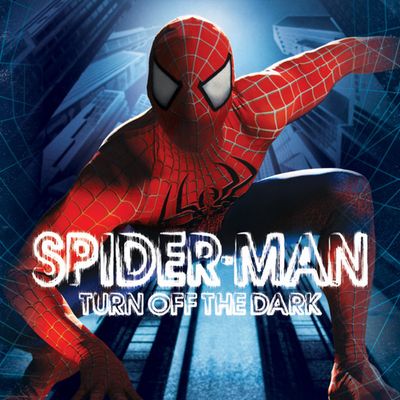
Broadway and the performing arts world has never seen a show quite like Spider-Man Turn Off The Dark. The question is what is what led to the closure of the most expensive and worst reviewed show in Broadway history?.. Read More
From the show: Wait in the Wings
Featured Shows
About
Broadway and the performing arts world has never seen a show quite like Spider-Man Turn Off The Dark. The question is what is what led to the closure of the most expensive and worst reviewed show in Broadway history?
Let me know what you think of the episode and comment your suggestions for what Broadway flop we should review next and your suggestion might make it onto a future episode!
Credits:
Lee Rosever :
Where Was I?
We Don't Know How It Ends
Not My Problem
Making It Look Easy
Thought Bubbles
Scott Holmes:
Epic Cinematic
Clear Progress
The Tall Pines
The Key
GH Elliott:
I'm Certainly Living a Ragtime Life
Elvis Herod:
Fighting Muzak
Eddy:
Spy
King Louies:
Missing Monuments
Bio Unit:
Mutron
Landpand
Circuit Breaker
Enormic
Blue Dot Sessions:
Kvelden
Kovd
Convoy Lines
Devil Music Ensemble:
The Western Army
Kevin MacLeod:
Slow Burn
Transcript
This transcript was automatically generated and might contain errors.
[0:00] Brendon Henderson: It's a legendary comic book tale. The teenage whiz kid Peter Parker is bitten by a radioactive spider and he turns into a beloved superhero, Spider-Man. But last fall, when the musical version of Spider-Man previewed on Broadway, it was plagued with problems. Performers were seriously injured. Reviews were dreadful. Broadway's Spider-Man Turn Off the Dark has been making unwelcome headlines for months. Opening day for this $65 million musical keeps getting postponed, and the technical problems and negative reviews are helping. Whose idea was it to make Spider-Man into a musical? With great power comes no profitability. This one phrase can sum up the wild roller coaster ride that went behind the most expensive and dangerous musical to ever hit Broadway.
With over 27 aerial sequences, over six cast injuries, a staggering budget of $79 million, and a revolving door of actors, producers, directors, and writers, this was the musical where the behind the scenes drama was more exciting than what was going on on stage. And which played a role in its success and its inevitable downfall. But in total, this is a story of hubris, a story of betrayal, and a story of blind optimism that led them off of the Brooklyn Bridge. This is the story of what went wrong with Spider-Man. Turn off the dark.
[1:48] Brendon Henderson: Superhero movies are everywhere you look. As soon as one comes out, another one is right around the corner. In 2019 alone, there are going to be 10 superhero movies released, ranging from Avengers Endgame, Shazam, Captain Marvel, Hellboy, Dark Phoenix, and Spider-Man Far From Home to name a few. It's easy to forget with the frequency that these films are coming out now, that superhero movies weren't always as sure a bet as they are today. Specifically, looking back to 1997 and the release of Bat Nipples and Robin, the biggest budget toy commercial to ever be released. The dark backstory that had been carefully crafted in Tim Burton's 1989 Batman reboot had been abandoned for campy characters, ice puns, and a bat credit card.
The film was so bad that it effectively killed the Batman franchise for nearly 10 years. People couldn't believe in the superhero film anymore, and were instead drawn to actions and thrillers, specifically with the releases of films such as Gladiator and Memento. It wasn't until 2002 that the superhero and film industry was flipped on its head.
[3:20] Brendon Henderson: But one superhero who hadn't been able to find his footing in the film world was the friendly neighborhood wall crawler Spider-Man. He had a few films starting back with an unauthorized short film in 1969 and a made-for-TV film on CBS in 1977, as well as the absolutely fantastic Japanese Spider-Man, which came with its very own Transformer Power Ranger suit. But it wasn't until Sony Productions Entertainment came into possession of the rights that Spider-Man would find himself in the same echelon of Donner Superman and Burton's Batman. In 2002, the first Spider-Man film starring Tobey Maguire and directed by Sam Raimi hit theaters and shattered box office records, becoming the first film to pass $100 million in a single weekend and establishing a new opening weekend record.
Spider-Man became a cultural hit and slowly started to become everyone's superhero, myself included in that count. He was everywhere, on t-shirts and action figures. And can anyone forget the feeling of amazement when they first laid eyes on the Spider-Man glove which shot out Silly String? I remember when I got one and I legit thought it was like the movie, and only found out otherwise after crashing onto the patio boards after trying to shoot a web and latch onto a beam from jumping off of a chair. But the point still stands that Spider-Man was a hit. And so of course, Marvel wanted to capitalize on it.
[4:41] Brendon Henderson: In August of 2002, only three months after the release of the film, Tony Adams, a prominent film and stage producer, best known for his work on the Pink Panther films, was approached to produce a stage musical based on the comics of America's new favorite superhero. Tony was ecstatic and ready to begin the process with his protege, David Garfinkel, a 49-year-old entertainment lawyer who always wanted to be a Broadway producer. He didn't have many credits or much experience, but he was excited to serve as a shadow, learning from a revered producer in Adams. Then came the assembling of what seemed to be a Broadway dream team. It all started with an interview with Andrew Lloyd Webber, who was quoted in the New York Post as saying, "I'd like to thank rock musicians for leaving me alone for 25 years.
I've had the theater all to myself." Somewhere in the world, Bono's spiteful senses started tingling, and upon being approached, he figured that this musical would be a great way for him and the Edge to give Webber a run for his money. With one condition. They had to bring on board Julie Taymor to direct. Taymor seemed like a safe bet, with her Broadway production of The Lion King earning $3.6 billion globally, and her artistic prowess and ingenuity being applauded by critics and audience members alike. Taymor agreed to jump on board and would play a big role in writing the script alongside Glenn Berger. Everything was coming together better than according to plan, and it seemed like nothing could stop the eventual smash hit that this show was destined to become.
[6:32] Brendon Henderson: After looking the contracts over, the only thing left to do was to sign them. But the Edge realized that they didn't have a pen. He briefly excused himself from the room, grabbed a pen, and when he came back to the room, Tony Adams, the producer, was on the floor unresponsive. After being taken to a hospital, he was declared DOA. The contracts had not been signed, the process had not even begun yet, and already the lead producer had died of a stroke. This left David Garfinkel, a man whose closest experience with Broadway had come from defending entertainment cases, and whom had never tackled a project of this size as the lead producer for the show. Garfinkel wasn't stupid though. He knew that he lacked the creative prowess to make the show what it needed to be, and in turn, seceded all artistic direction and decisions to Taymor.
After holding the first readings in 2007, the initial budget for the show was set at a record-setting $52 million. A number that would soon come to look like a dust spec on how much the show would actually cost. The script was physically insane, with stage directions and cues that would require intense design and tech elements that had not been seen in a Broadway theater. This was part of the reason that superhero shows weren't typically attempted in the theater world, with the most recent attempt coming in the Superman musical, It's a Bird, It's a Plane, It's Superman, which premiered 43 years prior in 1966. And it was easy to see why. It was easier to create the illusion of superhero on the screen, especially with the advancement of special effects technology.
In a theater environment, it's close, and the audience can smell anything that doesn't look or feel authentic. To make sure this didn't happen, Taymor applied her spare no expense budget, which led the show on a tailspin before casting and rehearsals had even begun.
[8:37] Brendon Henderson: In August of 2009, it soon became evident that the show was millions of dollars short, and there was no choice but to suspend the production until more funds could be raised. This put a hold on ticket sales, marketing, and casting for a show that was promising to open at Foxwoods Theater in just six months on February 18th, 2010. This is where Garfinkel's lack of experience and connections really began to show. With Taymor's spare no expense mentality, she crafted a script that had the actors fly and fight out over the audience. While this sounded fantastic in theory, it came with an expensive price tag that required a complete overhaul and renovation of the Foxwoods Theater. The theater was designed for straight plays and musicals, not for web swinging.
Using the same technology found in the XFL and NFL for their flying cameras, the harnesses that were connected to the actors would be programmed to a certain track that would in turn fly the actors to where they needed to be at a specific moment or fight scene. This opened the gates to permit hell, as Garfinkel described it. With the theater interior including decorative plaster and ironwork, special permits were required for the renovation, and the protected elements had to be moved and stored in a warehouse. This resulted in an extended construction time and extensive labor that Garfinkel hadn't factored into the budget. With being unable to pay the work crews, production was delayed. As a result of this delay, the company went further into debt as a big investor who had promised to pay for a good chunk of the renovations backed out the night before sitting down to sign the paperwork.
There was also another event that made it even more difficult to secure the funding needed. That event being the Great Recession, which was hitting Broadway's economy hard. There seemed to be one shining light at the end of the tunnel, however, and a savior that came in the form of a mouse.
[10:30] Brendon Henderson: Economy News, it may be the superhero deal of the decade, and the winner appears to be Disney. The company is spending $4 billion to buy Marvel, getting control of Spider-Man, Iron Man, and the X-Men, among other big ticket characters in the movies and branding that goes with them. On August 31st, 2009, Disney made headlines by announcing that they were acquiring Marvel Comics and its properties for a staggering $4.24 billion. The Walt Disney Company at the time was valued to be worth around $63.12 billion and possessed the financial backing to pull the show out of its slump and help ensure its Broadway debut. The teaming of Taymor and Disney had proved profitable before, and it could potentially add another hit show to its Broadway catalog. There was just one major problem. Upon the announcement, Disney didn't show any interest in the show and made no move to assume control or to help the production in its financial straits.
[12:02] Brendon Henderson: And that person was David Garfinkel. The length of the delay, the uncertainty of where the money would be coming from, and the negative press that was starting to surround the show resulted in investors and leaders to lose confidence in Garfinkel as a producer. They viewed him as a novice, who was only in his position because his partner had died. While Garfinkel was attempting to secure funds, Bono was reportedly furious and apparently approached Michael Cole with S2BN Entertainment to take over the production. In November of 2009, Garfinkel was officially ousted and replaced with Cole and Jeremiah J. Harris, the chairman of Live Nation and an investor who was still owed millions for providing staging and scenery.
The production did a great job of keeping this buried from the journalists by strategically announcing that they had finally cast their Spider-Man with Reeve Carney. Also in the cast would be Evan Rachel Wood as Mary Jane, and Broadway heavyweight Alan Cumming would be playing the Green Goblin. Cole came into the production full steam ahead and was able to raise a staggering $30 million, which helped to get the show fully capitalized. It still didn't change the fact that the show was hemorrhaging money, and in a few months, the money ran out again. This left Cole with no choice but to cancel the February 2010 opening and attempt to restructure the company.
[13:30] Brendon Henderson: Three months later, and after a slew of delays, Evan Rachel Wood and Alan Cumming both left the production due to scheduling conflicts. When, in reality, they both knew that they had to get off this sinking symbiote. The roles were replaced with 19-year-old Jen Damiano, who left her run in Next to Normal as Mary Jane Watson, and Patrick Page of Grinch Fame stepping in to yet another green-plated costume, this time in the role of the Green Goblin. It's understandable why Cumming and Wood left the production. By the time it started previews, the production's opening date had been delayed two times, with more looking to come down the road. Regardless of the setbacks, and despite the odds, by November 25th, 2010, the first preview occurred.
The show went off without a hitch. It remarkably finished under the advertised showtime, and the critics were amazed at the depth of the story and the catchiness of the music. It went on to win 70 Tony Awards and is currently listed in the National Registry as one of the greatest Broadway musicals of all time.
[14:39] Brendon Henderson: I'm sure that's what the producers were hoping would happen.
[14:42] But instead, the first preview was an absolute shit show.
[14:52] The show started 24 minutes after it was slated to begin.
[14:56] And then the audience didn't even get the full experience because sets were missing entire pieces.
[15:01] In a sequence in which Arachne, the main villain, flies over the audience, a wire malfunction occurred, leaving the actress helpless and embarrassed mid-air over the crowd for eight minutes.
[15:13] Halfway through Act 1, the stage manager called for a halt over the speakers, in which the audience got to watch as crew members frantically tried to catch Spider-Man by the foot to free him from his harness, which elicited the audience to break out in laughter and oo, like a tennis match any time they got close to catching him.
[15:32] Backstage, making her Broadway debut, Natalie Mendoza, who was playing Arachne, was standing offstage when a rope holding a piece of equipment came free and struck her in the head, leaving her with a severe concussion.
[15:45] For unknown reasons, the intermission lasted 40 minutes, and in the last 10 minutes of the show, a final stop occurred, which apparently served as the straw that broke the camel's back for multiple audience members who rose from their seats and exited the theater, with one lady becoming vocal and shouting, I don't know how everyone else feels, but I feel like a guinea pig today.
[16:08] I feel like it's a dress rehearsal.
[16:10] To which the crowd responded with a chorus of boos.
[16:15] By the end, the preview lasted an hour longer than it had been advertised, and to make matters worse, many reviewers in the city were sick of waiting for an official invitation to the show, and in a radical move, purchased their own tickets for the preview and were met with an utter train wreck.
[16:33] As to be expected, the reviews were not kind.
[16:37] Many called it an epic flop with a dull score and baffling script.
[16:42] The press would become even more negative when the first major injury for the show occurred at a preview on December 20th, 2010.
[16:51] It looked like it was supposed to be an acrobatic stunt or something, but the person that was playing Spider-Man fell down like through the stage floor.
[17:01] On December 20th, the curtain came up for another preview.
[17:04] The first scene sees Spider-Man jumping off of the Brooklyn Bridge to save Mary Jane Watson, who was dangling precariously with the green goblin taunting him the whole time.
[17:14] On this particular night, in front of a live audience, the stunt double for Spider-Man, Chris Tierney, did what he did every night, where he runs and dives off the platform where he was supposed to be caught by his tether and fly.
[17:26] The only difference this time, however, was once Chris jumped, he could tell that he wasn't attached to anything.
[17:33] Tierney plummeted 30 feet off the platform and into the pit, where he broke four ribs, fractured his elbow, scapula, and his skull.
[17:43] Remarkably, he survived and was able to return to the production, but not without Osha finding the producers $12,600 and a slew of negative press appearing after the incident.
[17:55] Soon the crew and leaders were forced to look at the show, and just like the preview, another series of halts in the production took place.
[18:03] First, from December of 2010 to January of 2011, due to a tremendous amount of creative commotion behind the scenes.
[18:11] Again, from January to February to provide more time for the creators to stage a new final number, make further rewrites to the dialogue, and consider adding and cutting scenes and perhaps adding new music.
[18:24] And again, from February to March to allow Tamor to fine-tune the production and state a new ending.
[18:32] During all of these pushbacks, previews were still occurring, and it became a case of too much prep time, which was proving to be a hindrance to the show.
[18:42] The final delay came from April 19th to May 11th, 2011.
[18:47] At this point, more than 245,000 people had seen the show over a staggering 140 previews, mainly due to people wanting to see the train wreck in person.
[18:58] With this halt, a total shutdown of the previews occurred.
[19:03] After multiple reworkings, it became agreed upon that the book for the musical was too sloppy and didn't do justice to the Spider-Man story.
[19:11] This is where our friend from American Psycho the Musical, Roberto Aguirre-Sacasa, was brought on board to essentially serve as the metaphorical Joss Whedon to fix this Zack Snyder Justice League.
[19:23] Having had a plethora of experience writing several stories for Spider-Man comics, he reworked the script by changing Arachne, who I'll be getting into the problems with her later, into a supporting character, as opposed to the main catalyst for the show, deleting the geek chorus, and keeping the Green Goblin alive past Act One.
[19:43] The producers were desperate to get Spider-Man to work.
[19:47] Not just for Broadway, however, as they were hoping that if the show became a success, they would be able to transfer the show to Las Vegas and potentially London.
[19:56] What came next was an expensive and bitter game of he said she said between the producers and the show's next victim, Julie Tamor.
[20:06] The producers, Bono and The Edge were becoming increasingly upset by the slew of negative reviews and an unwillingness to change on the part of Tamor.
[20:15] According to them, the suggestions they made were ignored, and it soon became evident that Tamor could not objectively reshape the show as ruthlessly as it needed to be.
[20:27] This kicked off what Tamor referred to in court documents as Plan X.
[20:32] Let me ask you about the situation with Julie Tamor.
[20:34] What would you have done differently to prevent things from turning so ugly?
[20:38] Holy smokes.
[20:42] In a certain kind of bizarre way, we showed up a lot, but we let Julie have her way.
[20:47] And everybody told us how she behaves the best and creates the best in crisis.
[20:53] And we're sitting there feeling the crisis.
[20:56] But you let Picasso paint.
[21:01] That uh the director is the captain of the ship, but the producer owns the ship.
[21:07] In secret, a plan was set in motion to rewrite the book, reorder the show, and to avoid the technical challenges that were apparent in the staging of the finale.
[21:16] Allegedly, the company operated behind closed doors, holding a series of discussions and meetings without Tamor's knowledge, agreeing to operate on a twin track in which Tamor was allowed to pursue her own efforts as they secretly worked to get Tamor off the show.
[21:33] Whether or not Plan X was real, after nine years of work on Spider-Man, Tamor left the production.
[21:39] And Philip William McKinley, who was known for his work with Ringling Bros and Barnum and Bailey Circus, was brought on board to direct.
[21:47] Through this delay of April to May, McKinley and Aguirre-Sacasa worked feverishly to implement changes.
[21:53] But Tamor wouldn't go quietly.
[21:56] In court proceedings, Tamor felt that there were over 30 pages of false, misleading allegations aimed at blaming her for the problems encountered in the development of the musical.
[22:06] The lawsuit was ultimately settled out of court in April 2013, in which Tamor insisted on $36,000 in royalty due to it still being essentially her script and a director's fee of $125,000.
[22:21] All of the court proceedings only added to the negative perception of the show.
[22:45] After the nearly nine-year process, six delays, five injuries, one death of a producer, revolving door of changing show leaders, one court proceeding, and 182 previews, Spider-Man Turn Off the Dark premiered on Broadway on June 14th, 2011.
[23:03] Over one year and four months after the first opening night date was announced.
[23:09] Many critics agreed that the reworked show was clearer and that Aguirre-Sacasa was able to inject a fanboy humor and even a self-conscious acknowledgement to the rocky gestation of the production.
[23:20] But that didn't mean that they liked it.
[23:22] The Hollywood Reporter called it a bloated monster, and the New York Times branded it a bore, but still gave favorable reviews to all the performers.
[23:33] If reviews stand for anything, this surely meant the death of the show, and that it wouldn't be able to even last four months.
[23:42] And yet, something incredible happened.
[23:45] Despite the negative reviews and bad publicity, Spider-Man Turn Off the Dark was still able to consistently sell out the 1,928-seat Foxwoods Theater.
[23:57] In the first year and a half of the show, they had brought in over 1.5 million dollars, and on the weekend ending January 1st, 2012, it set a new single-week Broadway gross, earning 2.9 million dollars.
[24:11] The show was thriving because it piqued the curiosity of the audience.
[24:15] Word of mouth had traveled far and wide that many people had to see what all the hubbub was about.
[24:21] Much like the overwhelming success of cult movies like The Room, people wanted to see if the show was as garbage and meme-worthy as it appeared.
[24:29] The show ran for more than 1,000 performances.
[24:32] In September of 2013, Reeve Carney handed off the lead to Justin Matthew Sargent.
[24:39] Two months later, the initial curiosity for the show had waned, and ticket sales began to drop.
[24:45] Add in the producers were no longer able to get injury insurance, and in November of 2013, it was announced that Spider-Man Turn Off the Dark would officially close on January 4th, 2014.
[24:58] On paper, looking at the sales in attendance, it seemed like Spider-Man was a hit.
[25:03] But in the end, after three years, the largest show in Broadway history had cost investors $60 million.
[25:11] It went down in history as the biggest money loser and worst-reviewed show on Broadway.
[25:30] What did you guys think when you read these?
[25:34] I mean, seriously, might have been a little hard for some other people around here to take that, but we don't disagree with the New York Times.
[25:41] So how do you narrow down exactly what went wrong with this show and why it failed?
[25:46] The first main point, and the biggest one, is that the show was simply too expensive to run.
[25:52] Historically, only a quarter of Broadway shows are ever able to recoup their production costs and to possibly turn a profit.
[26:13] That's a difference of nearly 22 million dollars.
[26:17] To put that into perspective, the entire budget of Hamilton was only 12.5 million.
[26:24] Some of what made up that 79 million came from $1 million to the show lawyers, $6 million towards paying the stagehands, and $8 million towards their construction loan.
[26:35] The extended preview span also cost the company a large amount of money, coming in at a staggering 182 previews.
[26:42] This was damaging to the show because it was costing $100,000 a week to rent the Foxwoods Theater.
[26:49] The delays that came from the renovation of said theater also cost the company an estimated $2 million for the harnesses, flying rigs, and refined logistics, on top of $4 million to rent the theater for the two years before performances began, whereas most productions rent the theater for a few months at the most before opening.
[27:11] Then there was the $200,000 in the Tamor settlement to factor in, and it was estimated that the show would have had to continue selling out for seven years to recoup the costs.
[27:22] At the beginning, the show appeared to be performing incredible, box office-wise, but that doesn't get very far when factoring in that the cost of running the show was $1 million a week.
[27:34] Looking at the simple checks and balances, there was no possible way that the show could financially afford to run once initial interest in the show wore off.
[27:42] When asked in an interview, Michael Cole said that if he had been with the show from the start, he would have made a budget that was 30% less than what it was.
[27:52] This could have come from toning down the technical requirements of the show.
[27:56] Spider-Man Turn Off the Dark was an ambitious endeavor because, in a sense, it had to attempt to be like the movies.
[28:03] But where the Raimi films had the added freedom of a studio budget of $139 million and the ability to use camera tricks and special effects to bring Spider-Man to life, Turn Off the Dark had to do it in a practical setting, with real human beings swinging around, as opposed to a fake mannequin that Kirsten Dunst could hold on to.
[28:22] Another thing is that a theater isn't designed to run like a circus or arena show.
[28:28] The production in the Foxwoods before Spider-Man was Young Frankenstein, to put into perspective the types of shows that the theater was used to.
[28:36] Look at Cirque du Soleil shows like Kà, Mystère, or The Beatles Love.
[28:41] They all include intense acrobatics and fly systems, much like what Spider-Man was going for.
[28:47] The difference is that in Las Vegas, their theaters were built with the purpose of acrobatics and fly systems in mind.
[28:53] The Foxwoods is a combination of the Apollo and Lyric theaters, which were built in 1920 and 1903, respectively.
[29:02] The only fly systems they had in mind when constructing those theaters were the possible witches still hiding among us.
[29:09] It makes me think that if the goal for producers was to end up in Las Vegas or London, why did they feel they needed to go to Broadway?
© Broadway Podcast Network, All Rights Reserved