

What Went Wrong with The Producers 2005? Mel Brook's 1967 first feature film "The Producers" became a cult classic that redefined comedy, showcased the amazing talent of Zero Mostel and launched the career of Gene Wilder... Read More
From the show: Wait in the Wings
Featured Shows

About
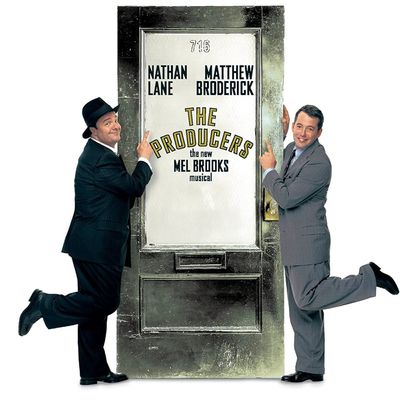
What Went Wrong with The Producers 2005? Mel Brook's 1967 first feature film "The Producers" became a cult classic that redefined comedy, showcased the amazing talent of Zero Mostel and launched the career of Gene Wilder. When the film was brought to Broadway as a musical, it broke records! And when we got the 2005 Producer's movie....well it flopped harder than Max Bialystock's "Funny Boy".
Special Thanks to Our Amazing Stage Door Patrons for their support:
Harry Thornton
Max Rohtbart
Anon
Clarissa Wee
Malpertuis
Nicofo
Todd Ramsey
Ann
Rose S.
Get your name on the list and help us continue to make our videos better by supporting on patreon. (Yes, even one dollar makes a huge difference): https://www.patreon.com/waitinthewings
Transcript
This transcript was automatically generated and might contain errors.
[0:00] Brendon Henderson: Ah yes, the theater! Where else could you get away with buying tickets to watch a group of people pretend to be cats and still be able to pass it off as a night of culturally enriching entertainment? The stage has been influencing pop culture long before David Hasselhoff's definitive performance in Jekyll and Hyde. Oh dear God! Plays and musicals like The Phantom of the Opera, Death of a Salesman, and especially Spongebob SquarePants the Musical have gone on to rock the very foundation of entertainment and move people for generations. Yet once a musical climbs to superstardom, there's one thing that is destined to follow.
[0:57] Brendon Henderson: And yet, if you look hard enough through the mishmash history of Broadway film adaptations, somewhere in the mix you'll find The Producers, a remake of the 1960s Mel Brook's classic and a film version of the 2001 Broadway smash. The Producers was a weird occurrence because even though it had the same director, lead actors, and music as the Tony Award-winning smash, when it made the transition to theaters, it flopped spectacularly at the box office. So the question is, what went wrong in the translation? And why do so many adaptations fail to live up to their stage counterparts?
[1:34] Brendon Henderson: I'm Brendon from Wait in the Wings.
[1:36] Kate: And I'm Kate from KateCast Reviews.
[1:39] Brendon Henderson: And this is the story of what went wrong with 2005's The Producers.
[2:18] Brendon Henderson: During its run from 2001 to 2006, The Producers became one of the biggest hits on Broadway. A hilarious and lighthearted romp of an adaptation that was somehow able to take the satire of an unlikely duo attempting to make the worst musical ever and produce it into a musical itself. The show earned Mel Brook's' satirical comedy even more critical praise, and the last half of the awards he needed to earn the coveted EGOT. The Producers even still holds the record for most Tony Awards for a musical at 12 wins, including Best Musical. To put that into perspective, Hamilton currently holds the record for most Tony nominations at 16, but only won eleven. Even that juggernaut couldn't knock the musical with tap dancing old ladies and showgirls and filing cabinets off its pedestal.
[3:08] Brendon Henderson: With success and recognition like that, it's not too much of a stretch that a movie adaptation would be put in the works. You can even hear Mel Brook's talking about making a movie version in the documentary when they were recording the cast album. Plus, Brooks is first and foremost a movie guy, so this was kind of inevitable. But then on Christmas weekend, 2005, the movie came out. And something wasn't quite right. The movie was a financial failure, grossing only 38 million worldwide, not even making back its 45 million dollar budget. The reviews weren't much better. They got mixed reception at best. And the 2005 film currently holds a score on Rotten Tomatoes.
[3:56] Brendon Henderson: So what happened? How did this story, the scenario, these characters, and even these songs, which had proven to be an incredibly successful formula in the past, fall so flat once the glitz and glam of Broadway was brought back to the big screen? Well, to answer the question of how we got here, my friend, we have to start from the beginning. Let's talk about Mel Brook's.
[4:23] Brendon Henderson: While it takes a large, dedicated team to make a movie, it goes without saying that there would be no Producers if there wasn't Mel Brook's. With films like Robin Hood: Men in Tights, Blazing Saddles, and Young Frankenstein, Mel Brook's has cemented his place in history as a master of comedy, but not really comedy in a traditional sense. At least not at the time. Mel Brook's is the master of creating high quality, low comedy. And that's a term Wings put in the script, and he's more educated than I am, so I had to look it up. Low comedy is defined by Encyclopedia Britannica as dramatic or literary entertainment with no underlying purpose except to provoke laughter by boasting, boisterous jokes, drunkenness, scolding, fighting, buffoonery, and other riotous activity.
[5:07] Brendon Henderson: Now, this type of comedy has been prominent for centuries and still exists today in every movie Will Ferrell's ever made, including The Producers, but we'll get to that. But the way Brooks presented it in his films had an air of sophistication to it. Brooks isn't afraid to go for the low hanging fruit, but he's also well read and makes sure to remind you of it. May I speak, kid? Yes, Prince Mishkin. What can we do for you? Admit it, you had to look that up when you first heard it. In Young Frankenstein, for example, there are many passages quoted from the original novel that are almost never in film versions. At the same time, you have Dr. Frankenstein and his creation singing and dancing to Irving Berlin and the monster falling in love with his creator's fiancée, and the feeling turns out to be mutual.
[5:52] Brendon Henderson: Blazing Saddles presents the prejudice that a black sheriff in the old west might have faced, and also has the first ever fart joke on film that goes on for a solid 30 seconds. Heck, History of the World Part 1 has an entire song and dance sequence about the Spanish Inquisition. And you wouldn't expect a musical number about that, would you? Well, nobody expects the Spanish Inquisition. And there are certainly times where the high and low brow intersect into something inventive. Yeah, let's call it that. Oedipus won't bomb if he winds up with mom. Keep it gay, keep it gay, keep it gay. This might not seem like much by today's standards of Adult Swim and South Park, but during the height of Brooks's career, this was considered edgy. And despite how you feel about these examples, modern comedy owes a lot to this Jewish comedian.
[6:46] Brendon Henderson: And one of the biggest examples of Brooks having to fight for a sophisticated yet lowbrow satire is yes, his first feature film, The Producers. Growing up, I had two movies that I watched over and over, much to the chagrin of my mom. Those two movies were The Aristocats and the classic Willy Wonka and the Chocolate Factory. Even going so far as to do the somersault entrance when Willy made his grand debut. And that came out dirtier than I intended. As the years progressed, so too did my movie viewing range, and soon Willy Wonka turned into Young Frankenstein, then Blazing Saddles, and finally The Producers. So needless to say, Gene Wilder has always been an instrumental part of my life and, in a sense, showed me how much fun being an actor could be.
[7:40] Brendon Henderson: In the early 1960s, however, nobody knew who he was, as he was just another young actor trying to get his foot in the door and start a career. Wilder's acting journey started on the stage, and in 1963, Wilder found himself cast in a leading role for Mother Courage and Her Children, which was starring Anne Bancroft. During the run of the production, Bancroft pulled Wilder aside and introduced him to her boyfriend at the time, a young, aspiring filmmaker named Mel Brook's. The two would reconnect a few months later when Brooks mentioned to Wilder that he was working on a screenplay named Springtime for Hitler. Brooks knew that Wilder would be absolutely perfect for the role of Leopold Bloom and made him promise that he would check with Brooks before making any long-term commitments.
[8:28] Brendon Henderson: Soon, the weeks started to pass by. Then months, and then years. All the while, Wilder's phone never rang. A few jobs popped up here and there with touring companies and various theaters, but in the back of Gene's mind, he kept hoping to hear something back from Mel. Eventually, three years would pass, and then one day, his phone rang. Gene soon found himself at a reading sitting across from an already cast Zero Mostel for Mel Brook's' first feature film, Springtime for Hitler. Upon Mostel's approval, Wilder was awarded with the role that would launch his career and introduce the world to the classic Wilder yell.
[9:19] Brendon Henderson: You get nothing. You lose. Good day, sir! Now the production history of The Producers could be a video of its own. But the most important takeaway is that the film almost wasn't even released, with the movie's producer, Joseph E. Levine, even directly telling Brooks as much. Since the movie was in poor taste and not very funny. It was thanks to a chance screening for Peter Sellers that led to him immediately calling Levine and demanding that the film be released. The catch is that the studio wouldn't release it under the title Springtime for Hitler. The only title in that vein that would have been accepted would have been Springtime for Mussolini. Yeah, because that's so much better.
[10:07] Brendon Henderson: But this completely went against one of the main reasons Brooks was making the film. It wasn't about creating a movie focusing on bad taste. Instead, it was a movie focused on bringing down Adolf Hitler. Brooks' goal wasn't to offend; it was to find vengeance through comedy. For that very reason, it was a controversial film when it was released, to say the least, and while there's no official records of this that I know of, I wouldn't be surprised if some people walked out during the Springtime for Hitler section, just like in the movie itself. Hashtag too soon and all. But thanks to its witty and stellar writing, its phenomenal cast, and a glowing review from Peter Sellers, yes, that happened, The Producers would go on to become a cult classic and the shining example of satire that would shape the next generation of comedians.
[10:55] Brendon Henderson: The movie even earned Mel Brook's his first and surprisingly only Academy Award for Best Original Screenplay, officially launching Mel Brook's' film career and several others, and the rest, as they say, is history. Until we reach the new millennium.
[11:27] Brendon Henderson: The film was given a musical update, and when it premiered in 2001, it became an absolute smash and dominated the Great White Way, with Zero Mostel's Max Bialystock's being replaced by Nathan Lane and Gene Wilder's Leo Bloom with Matthew Broderick.
[11:45] Brendon Henderson: But Wings, do you know the story of how Brooks decided to make it a musical? Uh well, as I understand it, it basically went like this. In 1999, producer David Geffen came up to Mel Brook's and said, "Hey Mel! Make the producers a musical, huh? Come on, we'll make all the money! Ya dick." I mean, I don't think that's exactly how it went, but more or less, yeah. Brooks wasn't originally crazy about the idea, wanting to leave the creation that started his career alone, but Geffen was persistent in his insistence. I believe Brooks is quoted more than once describing Geffen as a terrier pulling on his pant leg. So he gave in. And the idea really seemed more fitting with each cast and crew member he signed on and each song he wrote. Yes, Mel Brook's wrote all the music and lyrics for The Producers. And he doesn't even know how to write music. He did it all by humming into a tape recorder.
[12:47] Brendon Henderson: When Brooks initially conceived the idea of Springtime for Hitler back in the 1960s, he actually intended for it to be a straight play. But it was only after he thought about all the scene changes it would require that he decided he'd have to do it as a film. When the show finally did make it to Broadway with a book by Tom Meehan, the book writer for Annie and Hairspray, the show was a critical and commercial hit. The day after opening, it broke one-day ticket sale records with a total of 3.3 million dollars. As KC said before, the musical would go on to dominate the 2001 Tony Awards, with an astonishing 15 nominations and 12 wins, including Best Musical, Best Book, Best Director, and Best Actor for Nathan Lane in the role that would earn him the unofficial title of the King of Broadway.
It even went on to introduce the now industry standard premium ticket by having producers set aside seats at every performance and charging 480 dollars for them. In only eight months, the show had completely recouped its 10.5 million dollar investment. So now The Producers was a Broadway phenomenon; it was only a matter of time until it found its way back to the silver screen. And that it did in 2005.
[14:05] Brendon Henderson: Now there have been many films that have attempted to bring Broadway to Hollywood, and some of them have worked, and some of them have been utter CGI disasters. But somewhere in the middle lies The Producers. The Producers is unique among most Broadway adaptations, where it brings back a majority of the actors who originated these roles on Broadway. They probably got lucky with Nathan Lane and Matthew Broderick already having pretty solid film careers by that point, but it didn't stop there. Roger Bart returned as Carmen Ghia, and the late great Gary Beach returned as Roger Debris. And if you're really paying attention, a good chunk of the ensemble from the Broadway cast reprised multiple roles here. That never happens. The only major movie stars cast in main roles in this movie were Will Ferrell as Franz Liebkind and Ulla now being played by Uma Thurman. And this is where we run into the first problem with this movie.
[15:02] Brendon Henderson: People typically think that there aren't any differences between Broadway and Hollywood. If someone does a role on stage, then they should be able to bring that same performance to film, and vice versa. But while it might seem easy to rationalize that acting style is the same across the board, it couldn't be further from the truth. On the stage, one living full-scale human being is standing on a series of boards in front of a giant room filled with sometimes over a thousand seats. Due to this, the actor needs to make their movements and choices big, so that the people like me, who bargain shot for the nosebleeds, can still understand and identify with what the character is thinking and feeling. When you jump over to film, the camera is close, and this means that the audience can see every intricacy of the actor's face, whether they're in the front row or the back, because the person's face is literally 25 feet tall.
[15:56] Brendon Henderson: A great example of this contrast between the stage and film acting styles can be found in the 1957 movie The Prince and the Showgirl. On one side, you have Sir Lawrence Olivier, one of the greatest Shakespearean stage actors of all time. And across from him, Marilyn Monroe. Arguably one of the biggest film stars who had the world wrapped around her finger. When the two meet on screen, you can tell that they come from completely different worlds. Marilyn was a film star who wanted to be a great actor, while Olivier was a great actor who wanted to be a film star. What results is a perfect example of stage actor meeting film star. Marilyn Monroe was able to naturally capture the personal intimacy required for the camera.
You can tell that she can create an intimate environment while filming, where she is speaking to Olivier with her natural charisma. However, while Marilyn was speaking to Olivier, you could tell that Olivier was speaking to an audience. An audience that wasn't there. This leads to him overusing the language and exaggerating his choices out of habit for performing to a large audience.
[17:03] Brendon Henderson: When The Producers was brought to the screen, it found itself taking the Olivier approach of performing to a phantom audience, and the jokes, they just don't resonate as well. The over-exaggeration of the actions and the lines don't translate well to the film. While the laughter from the audience on Broadway was contagious and helped energize the actors on stage, the film removed that element, and in doing so, removed its soul. Yeah, there are definitely points where the performances can be over the top to the point of being hammy, but as far as I'm concerned, slap that ham on some musical style and flair, and I will eat it up. Let's be real. This is Mel Brook's's The Producers. Are we really looking for nuance here?
And this isn't even the most exaggerated one of Brooks' projects has been. Have you seen Dracula: Dead and Loving It? Because I have more times than I care to admit. And yeah, with the wrong group of actors, this material could fall tremendously flat without the audience to respond. But I think they pulled through by keeping a lot of the original players. Over half of the main cast have performed these parts and these lines literally hundreds of times. And there were nights where the audience just wasn't responding the way they wanted to. I feel like part of being a theater performer is knowing how to adapt and still entertain. And thanks to Brooks insisting on keeping Nathan Lane and Matthew Broderick, I think they managed to bring what made them so great together to the big screen.
[18:28] Brendon Henderson: Despite the fact they starred in The Lion King, Lane and Broderick didn't really know each other until The Producers came along, and they are now great friends who have collaborated multiple times since. Heck, the year this movie came out, they were doing a stage revival of The Odd Couple. Why? Because they are perfect opposites. Lane is loud and brash and steals every scene, while Broderick is mousy and sweet, but can certainly come in a moment when he needs to. Not to mention, this movie preserves performances from great stage actors who hardly ever get to be on film. If there's one thing we should all be grateful to this movie for, it's preserving Gary Beach and Roger Bart's fabulous dynamic.
And Beach's incredibly memorable performance during Springtime for Hitler. This movie was my first exposure to the song, and his hilarious energy and marvelous vocal performance blew me away. Even Will Ferrell fits really well into this exaggerated style of comedy. While it can get awkward at times, waiting for the script to kick back in after non-existent theater laughter, I'll still take trying to preserve the original performances over hiring name actors who can't and shouldn't be performing elaborate musical numbers.
[19:33] Kate: Now that's a thought that I agree with entirely. When I went back and I rewatched the 1967 version, I found myself waiting and kind of wishing that Gene Wilder would just jump up on a table and sing already. The music really adds something. It offers an additional point of view on all of the characters, and ultimately, it doesn't feel like it's been forced in. With a show as Broadway centric as The Producers, it just makes sense to make it a musical. Yeah, the movie really keeps the fun, eccentric element with the musical numbers. All the performers give it their all as much as they probably ever did on Broadway, and even using the fact that it's a movie now to its advantage. We can do it now has Max chasing Leo halfway across Manhattan, giving the song a lot of energy.
I want to be a producer is filled with even more glitz and glam from Leo's fantasies, and becomes possibly the biggest spectacle in the film. Will Ferrell knocks both of his songs out of the park, Keep It Gay still has its bubbly charm with all the original performers, and while it didn't make it into the movie, they did film one of Max's many big numbers, King of Broadway, which on its own is worth the price of the DVD.
[20:39] Kate: This may also be my favorite rendition of Springtime for Hitler. Performance-wise, it's probably the most polished the number's ever been. I already praised Gary Beach's part, but what's noteworthy is that the first half of the segment was performed by none other than John Barrowman. That's right. John, Captain Jack Harkness, Dark Archer Malcolm Merlin, Barrowman. That alone is worth this movie's existence.
[21:04] Brendon Henderson: You know, since you mention it, the performances for the movie, while they're fun, could have worked so much better if they had just been molded for film. And if the overall pacing of the editing and the direction had been better. Eh? What's wrong with the direction? It was directed by the director of the Broadway show, Susan Stroman. She even won a Tony for her direction and for doing the choreography. Who would be a better choice to tackle this than her?
[21:27] Kate: Well, this goes back to my argument that Broadway and film are completely different bees. If you go back to the original Producers, as well as any former Mel Brook's style comedy, you'll find that he thrives off a fast pace where the audience doesn't even have a moment to catch their breath from the first gag before they're laughing at the next. He operates on a laugh-a-second formula of filmmaking. This had to be changed for Broadway, in part because there was a live audience reacting to the gags in real time, so the actors knew where the laughs would be. This felt natural because the entire auditorium would be laughing together at the same joke. With film, since the distribution can be so wide, a gag that lands in one theater in California might not be so lucky in a theater in Illinois.
So because of this, you have to keep moving to the next joke in film. In my opinion, what happened when Stroman brought the show to the screen is that she still had where those laugh lines were in her mind, and in turn, she made the actors stop as they usually would have on stage. The problem is, this tactic doesn't work well on film because it brings the story and all forward progression to a halt. And once again, if the gag doesn't land, then it just creates an awkward experience for everyone in the theater and could spark the mindset of.
[22:46] Brendon Henderson: Well, this isn't funny.
[22:48] Kate: You do have a point, especially with how much the pacing is not like Brooks' other films, though, like with Lane and Broadwick, Brooks consciously chose Strowman to pick up the mantle and adapt the Broadway show to film.
[22:58] Brendon Henderson: Now you could argue that that's part of the problem, and that is a solid argument.
[23:03] Kate: After all, Brooks never made a Broadway musical before, so it makes sense why he had so much faith in someone from that world.
[23:09] Brendon Henderson: But when the story of Bialystock and Bloom came back to film, his bread and butter for almost 40 years, maybe he should have directed himself.
[23:17] Kate: Brooks was still a producer, though, and it's very clear that he wanted to adapt the show to film as closely as possible.
[23:24] Brendon Henderson: One quote to a creative member from Brooks even states, "I want to film the stage show. I want the audience to experience the stage show, I want them to stand up and clap."
[23:32] Kate: And how well they succeeded in that is what we're trying to figure out here.
[23:36] Brendon Henderson: But Brooks wanted to present the stage show to the big screen the best he could.
[23:40] Kate: And he probably felt like Strowman could create that magic again.
[23:43] Brendon Henderson: One thing that is often criticized about this movie is that the cinematography is bland, mostly just wide or still shots, no matter the scenario.
[23:51] Kate: And in a time where elaborate musicals like the gritty Chicago or the flashy Moulin Rouge were what were setting the standard for movie musicals, I could definitely see how this would look flat, but it's not without purpose.
[24:03] Brendon Henderson: The film takes direct inspiration from classic movie musicals of the 40s and 50s, which makes sense given the time period this is set in.
[24:10] Kate: And back then in musicals like Guys and Dolls, White Christmas, or Singing in the Rain, for the most part, the camera just kind of sat there and followed the actors around as they did their thing.
[24:10] Brendon Henderson: Singing in the Rain in particular was a big inspiration for how this movie was shot and how it looked.
[24:25] Kate: And if you give it more than a passing thought, you can definitely tell.
[24:29] Brendon Henderson: That face is similar to how "You Were Meant For Me" was lit and shot, and "I Wanna Be a Producer," easily the film's most elaborate and lavish musical number, was directly inspired by the Broadway melody, right down to that signature crane shot.
[24:43] Kate: Though that wasn't the only callback to the Broadway melody.
[24:56] Brendon Henderson: Subtle.
[24:58] Kate: It's also important to remember that The Producers is viewed as a cult classic hit, and any attempt to remake the film was borderline sacrilegious in its own right.
[25:08] Brendon Henderson: The musical was technically a stage adaptation, much like Beetlejuice, American Psycho, and King Kong.
[25:15] Kate: Ugh, I thought we were done with the actor section.
[25:18] Brendon Henderson: Uma Thurman didn't play King Kong anyway.
[25:20] Kate: True.
[25:21] Brendon Henderson: But I mean, watching that clip, doesn't a little bit of you wish that she had?
[25:26] Kate: Now, stop me if I'm overstepping. But it feels like there's a grudge here between you and Uma Thurman.
[25:33] Brendon Henderson: What have you got against the Ooms?
[25:35] Kate: I don't.
[25:36] Brendon Henderson: It's just.
[25:38] Kate: Okay, look. Most movie musicals, especially ones adapted from Broadway shows, tend to have that one performer who wasn't cast for their musical talent, but because they are a big name who executives feel can put butts in seats.
[25:52] Brendon Henderson: We all have that one that really bothers us, and as weird as it sounds, this is mine.
[25:56] Kate: I get the casting conceptually. You want a tall, blonde Swedish actress with a lot of leg, by all means get Uma Thurman.
[26:03] Brendon Henderson: But Ula is a very, very tricky character to pull off, especially in the musicals since she's gotten a more prominent role.
[26:10] Kate: This role needs a Megan Hilty or Jane Krakowski type to be equal parts playful, innocent, seductive, and can carry a tune.
[26:18] Brendon Henderson: I can't tell if Thurman checks the other boxes because she can't sing.
[26:22] Kate: Does Ula belt? Does she?
[26:24] Brendon Henderson: Credit where credit is due, she handles the dancing just fine, but man does her singing and acting not hold a candle to the rest of the theatrically trained group.
[26:33] Kate: Also, she really took over the promotional material, and that really bugged me.
[26:37] Brendon Henderson: She blocks the actual stars of the movie in every single one.
[26:46] Kate: Well, what do you know? You actually do have something negative to say about this movie.
[26:51] Brendon Henderson: Just that one thing. Granted, it's a big thing, but not enough to hinder my enjoyment of the movie.
[26:56] Kate: Well, not much. I've just been holding that in for the better part of a decade and needed to get it off my chest.
[27:03] Brendon Henderson: That's fair. There is no denying that enhancing Ula's presence and many of the other supporting characters' B plots is where this movie hit a home run, however.
[27:12] Kate: Exactly. When you look at it from a story and character perspective, the musical changes quite a bit from the '67 version.
[27:19] Brendon Henderson: Giving supporting characters more involvement is definitely a biggie.
[27:23] Kate: A lot of the relationships between the characters certainly get stronger and more involved.
[27:26] Brendon Henderson: Roger Debris goes from being a joke of a character to getting to perform the show's biggest and most important song while still being a joke, but like a lovable joke.
[27:35] Kate: That's what Mel Brook's does.
[27:36] Brendon Henderson: But most of the biggest changes can be connected to the addition of romantic subplot between Ula and Leo.
[27:42] Kate: Part of me wonders if this was added just because Brooks wanted to write a love song, since that phase is a song he is very fond of.
[27:49] Brendon Henderson: But either way, it gives Ula more ado in the story, besides again being a one-off joke and adds some tension between Max and Leo.
[27:56] Kate: Tension she creates from the second she enters the plot and comes to a head once we reach the third act.
[28:02] Brendon Henderson: And that tension is kind of what saves the ending of the film for me.
[28:06] Kate: It's worth noting that the '67 version falls victim to something I call the Marvel third act problem, where it just fizzles out.
[28:15] Brendon Henderson: In the original Producers, much like the 2005 version, France tries to kill them, but then they decide to fix a crackpot scheme with another crackpot scheme by blowing up the theater.
[28:28] Kate: The musical in the 2005 film effectively fixed this ending by adding in a resolution that actually makes sense.
[28:35] Brendon Henderson: Spoiler warning for anyone who hasn't seen the ending.
[28:38] Kate: Instead of taking the same route the '67 version took, the 2005 version adds an ingenious twist by having Bloom decide to take the money himself and run away with Ula to Rio, leaving Max to be stuck in jail reading a postcard from Bloom while he awaits his court date.
[28:57] Brendon Henderson: The 2005 film takes the smart route of separating the two characters.
[29:02] Kate: This allows for time to make their inevitable reunion, and Leo's change of heart actually means something.
[29:09] Brendon Henderson: As opposed to fat, fat fatty one second to let's blow up a theater in the next.
[29:16] Kate: The character motivations are actually all around more fleshed out in the film, and they allow for the audience to gain a better understanding as to who these people are.
[29:25] Brendon Henderson: And that's thanks in large part to the music.
[29:29] Kate: If I can get sentimental here, this is what I love most about the movie.
[29:33] Brendon Henderson: This movie in particular. Sure, it's funny, the music's great and the lyrics are clever, and the cast exposed me to many great Broadway performers, but to this day, I remember fully absorbing how wonderful the song "Till Him" was.
[29:45] Kate: This is what showed me how Mel Brook's could bring sincerity into comedy, something that is far too often forgotten.
[29:51] Brendon Henderson: Even if "Springtime for Hitler" is a great moment, and the reason the story was told in the first place, "Till Him," for me, is the culmination of everything we've been watching for the last two hours.
[30:02] Kate: Yes, it's cathartic to see the image of history's greatest monster being relentlessly mocked, but the core of the story is about two lonely, unlikely men finding new opportunity and courage through each other.
[30:14] Brendon Henderson: That's what makes the courtroom scene in the musicals so satisfying for me.
[30:18] Kate: Not only how much these two have grown as people, but how much they owe that to the other, which is why I was kind of disappointed by the '67 version when I finally watched it.
[30:27] Brendon Henderson: Giving the story new life through songs and bringing it back to the big screen let me see that through the laughs, there was something to care about.
[30:34] Kate: And the performances only emphasize that friendship.
[30:37] Brendon Henderson: And that moment at the very end where they succeed on Broadway the honest way, and Leo finally earns his producer's hat, is one of the most optimistic and satisfying endings I've ever seen for a musical.
[30:48] Kate: I don't think the criticisms that have been brought up for this movie are invalid, they just don't bother me.
[30:52] Brendon Henderson: Despite whatever shortcomings it may have as a film, I enjoy The Producers so much that some of my fondest memories to musical theater are connected to it.
[31:03] Kate: So, really, what went wrong with the 2005 film version of The Producers?
[31:09] Brendon Henderson: In my opinion, it flopped because it tried to bring Broadway direct from the stage to the screen without making the necessary adjustments to the performances, editing, and directing style necessary for the film world.
[31:22] Kate: It's also worth mentioning that it didn't help that it opened against one of the strongest looking box offices in recent history.
[31:29] Brendon Henderson: With the top spots being claimed by films like Walk the Line, Brokeback Mountain, The Chronicles of Narnia, Harry Potter and the Goblet of Fire, and King Kong.
[31:42] Kate: And in my opinion, it flopped because it was just at the wrong place at the wrong time.
[31:46] Brendon Henderson: This was a time where musicals either had to play up the theatricality as pure fantasy to contrast with the realistic tone like Chicago, or had to be overly stylized and elaborate like Moulin Rouge.
[31:56] Kate: And even if it's my favorite musical, and I think it's better than most people give it credit for, it's no shock that it couldn't sustain against interpretations like that.
[32:03] Brendon Henderson: Plus, that box office competition didn't help either.
[32:06] Kate: Yikes.
[32:07] Brendon Henderson: But in a post-La La Land world, we seem to be in a time where movie musicals can be unashamed to have fun being musicals again.
[32:14] Kate: So if you haven't seen this one for a while, give it another watch. You might be surprised.
[32:19] Brendon Henderson: The main thing to learn from this, however, is that Broadway is not film.
[32:24] Kate: And film is not Broadway.
[32:26] Brendon Henderson: But that's not a bad thing.
[32:28] Kate: It's wonderful that though the craft of live-action storytelling may seem the same, underneath the surface, they have their own unique style and their own identity that makes them truly special.
[32:41] Brendon Henderson: Don't get me wrong, the two can coexist.
[32:45] Kate: But the secret to making it work comes in compromise.
[32:49] Brendon Henderson: When a way is found to bring the best of film and the best of theater to whatever adaptation is taking place, the result is an instant classic.
[32:58] Kate: As far as the future of stage to film adaptations go, God help us.
[33:24] Brendon Henderson: Defunctland, Musicals with Cheese, Shafrillis Productions, The Kid Tested Mother Approved Podcast, Autumn, Brent Black, Noxie Zabat, Nate Gardner, Ethan, Tommy Kindle, Abigail Verzella, John Fogg, Mark S., Chase Eugene McCantz, Catherine Esperanza, Brianna Michelle Meyer, Melissa Marquette, Haley Longo, the Drara Kring, and Sebastian Canino.
[33:47] Kate: Also special thanks to Kate from KateCast Reviews for helping out this video. Be sure to subscribe to her channel by clicking her channel icon on the screen.
© Broadway Podcast Network, All Rights Reserved