

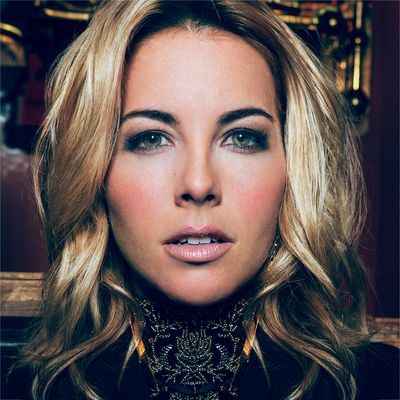
This week we welcome the brilliant Morgan James to the show. Morgan is a singer/songwriter with a set of pipes that can blow the roof off of any house she’s performing in... Read More
From the show: Was It Chance?
Guests
Featured Shows
About
This week we welcome the brilliant Morgan James to the show. Morgan is a singer/songwriter with a set of pipes that can blow the roof off of any house she’s performing in. She made her Broadway debut in The Addams Family, nabbed a few other Broadway credits including Godspell and Motown the Musical, and signed with Epic Records before deciding to take her creative destiny into her own creative hands. Morgan takes a completely unique approach to producing her own albums with the direct support of her fans.
She frequently collaborates with Postmodern Jukebox, has her own comedy podcast called Gettin’ Peggy Wit It where she roasts her Broadway friends, and has just released a new EP called “Jesus Christ Superstar: Highlights From the All-Female Studio Cast Recording,” which completes the She Is Risen series of EPs. And when we say all women, we mean down to the interns, production staff, and everyone else! Morgan shared that working with an all-female crew was a first for everyone and it was the reason many women signed onto the project.
Morgan has a truly unique approach to creating that always includes her fans. Be sure to follow her on all the socials: Instagram, Twitter, YouTube, and of course get all the details on her website.
- Make sure to follow this podcast everywhere you find podcasts, leave a rating and a review, and slip into our Instagram DMs at @wasitchance.
- ore about Heather via @heather_vickeryandco on Instagram and Threads, @Braveheather on TikTok, and listen to The Brave Files
- More about Alan via @theatre_podcast on Instagram and listen to The Theatre Podcast with Alan Seales
EPISODE TAKEAWAYS
- Everything has shaped me. Everything has led to where I am.
- I look back and thank all of the things that didn’t work out.
- You don’t always have to “know how.” Just start, you’ll figure it out.
- You never know who’s listening and watching you. Be prepared. And always do your best.
- Sometimes you can get “in” via a different opening. The door isn’t always open. Don’t let that stop you.
- Go out on the limb. Have faith. Put yourself out there.
- Sometimes passing dreams can become real things. Listen to your subconscious.
- Cut through the bullshit and create your own path.
- Use others as inspiration but don’t try to follow their path - you can’t have their path. It’s already taken.
- When your biggest fear comes true, you realize you can and will achieve anyway. Just don’t quit.
- Allow life to humble you.
- Get to know the process of your passions.
- Keep creating. Always creating. Don’t worry about it being “good.” Just show up!
- Perfection gets in the way. Don’t chase it.
- Be real. Show real. That’s what folks desire most from any creator.
- If you’re lucky, your dreams evolve. You’re never finished!
Transcript
This transcript was automatically generated and might contain errors.
[0:00] Heather Vickery: Sometimes you can get into a building like of opportunity. Same building, different door, different day. You know, it's like nothing is a hundred percent a no. Well, at least if you're stubborn like me, there's no no that's too no enough.
[0:23] Heather Vickery: Hey everyone, welcome to Was It Chance, the podcast about embracing opportunity and taking intentional risk for your creative life. I'm Heather Vickery.
[0:30] Alan Seales: And I'm Alan Seales, and Heather and I were two perfect strangers who met by chance and embraced opportunity. Listen in as we chat with other successful people about the risks they've taken to put themselves on a path to creative success.
[0:44] Heather Vickery: We are never gonna get through this intro without giggling with this. But it is like such a fun surprise every time to hear in what new ridiculous way you're gonna do the intro.
[0:56] Alan Seales: I'll just start doing them with different voices.
[0:58] Heather Vickery: Like List of other successful.
[1:04] Alan Seales: That's my favorite. Alan, Alan, who's our guest today?
[1:07] Alan Seales: Our guest today is none other than Morgan James, who I've known for a couple of years now, and is just one of the most talented and whip smart people that I have ever had the pleasure of working with. She's a singer-songwriter with a set of pipes that can blow the roof off of any house she's performing in. She made her Broadway debut in The Addams Family, nabbed a few other Broadway credits including Godspell and Motown the Musical, signed with Epic Records before deciding to take her own creative destiny into her own creative hands by taking a completely unique approach to producing all of her albums on her own with the direct support of her fans. She frequently collaborates with Postmodern Jukebox, has her own comedy podcast called Gettin’ Peggy Wit It It, where she roasts her Broadway friends, and has just released a full album called She Is Risen, which is a completely all-female version of Jesus Christ Superstar. And honestly, it's just one of the best albums I've heard in a long time.
[2:05] Alan Seales: There we go. I got it all out. We weren't you. We weren't boring. How are you this morning?
[2:11] Morgan James: Hi. I need can you send me that paragraph you just read? Because I need to take it everywhere with me.
[2:17] Alan Seales: We've got a singer amongst our midst again. And uh, and you know what that means.
[2:23] Heather Vickery: I know, I know.
[2:25] Alan Seales: I don't know if she knows what that means.
[2:26] Heather Vickery: She doesn't.
[2:27] Alan Seales: Well, I don't know. I don't know how much she, Morgan, have you listened to the show?
[2:30] Alan Seales: I'm gonna give you, I'm gonna drop this for you right now so that you can have it later, and I'm not, you're not totally on the spot. But everyone who sings that comes on the show, we have invited with a little pressure to uh compose and perform their own version of Shut the Fuck Up, Alan on the fly. Because at some point during this interview, you're gonna want to say, just shut the fuck up, Alan.
[2:55] Morgan James: I think I've said it before, and I'll say it again.
[3:00] Alan Seales: It started with James Harkness, who just out of nowhere said who started singing, shut the fuck up, Alan. And then it's become a thing.
[3:07] Morgan James: Okay, great. Gladly. I will gladly do that.
[3:09] Alan Seales: All right, that's fine. Excellent. Whenever at any point you feel the urge to say, shut the fuck up, Alan. Then that's how you can.
[3:15] Morgan James: You got it.
[3:18] Morgan James: Oh, Morgan, I'm so excited to meet you, uh, Alan. Thank you for having me.
[3:23] Alan Seales: Yeah, you're welcome. Alan just raves about how incredible you are. And um, that's a hell of a bio. It's been a circuitous path, but sometimes it's hard to remember what you've done or what you've achieved until someone lists it and then you go, Oh, I, you know, I'm proud of myself. It's hard to be proud of yourself when you're just inside of it, you know?
[3:41] Morgan James: Absolutely. Well, it's kind of the the I I call it the social media game, right? Um, in in that on the outside, people see the good stuff, but they don't realize how the struggle and the decisions and the sacrifices that you've made to get where you are that anybody has made to get where they are, or the bad part, right? Like you're only presenting uh in general, most people only present the good sides of themselves online or publicly. And so for you though, I want to actually start out with sort of your background in music because you you went to Juilliard, and one does not simply go to Juilliard. There's gotta be like an impetus to get there and practice and rehearsals. And like you were born in Boise, Idaho, right?
[4:25] Morgan James: I was, I was, you know, I I didn't really I had moved away from Idaho by the time I found music. Um, and we moved to California where I found choir and drama and you know, teachers that helped me kind of get to where I was going next. But everybody still, even though I was, you know, a big fish in a little pond, I everybody still thought it was pretty crazy that I wanted to go to Juilliard and pretty like uh unlikely. And so it was uh yeah, a very tough place to get into, a very tough place to survive. I think it still is. Um, and it was a classical program. You know, I was in having an interview with Seth Rodeschi the other day, and he was like, Well, why'd you go to Juilliard if you didn't want to do opera?
I was like, Seth, you know, you make a lot of decisions when you're 18 that you really think are you really think you know everything. And I don't know, I wanted to go there because Otter went there. I wanted to go there because it's the best, you know. You know, I wanted to go there because it would bring me into New York and and plot me right down in the middle of New York City, and so I did it.
[5:25] Heather Vickery: Well, so I just listened to Viola Davis's new memoir, which is fucking spectacular for anybody who likes memoirs. And she talks about her decision to go to Juilliard, which was there, she said, I want to go to a school where I will have a fucking job when it's over. And they were like, Well, there are two choices. And Juilliard was one of them. She's like, all right, well, then let's figure out let's figure that out. So did that. And I think for you, I think that that's very true for the drama division. And it's still true for the drama division. The drama division still cranks out superstars. Um, the other divisions are not that way. So much. They're not that way. You don't, the music department is like, here's your diploma, bye, have a good life.
Um, and the other divisions are like that. You know, you're really, really on your own, especially because I wanted to be on Broadway. They were like, they they were borderline, I don't care, slash disapproving of my desire to be on Broadway. Um so I didn't uh, you know, I had one great teacher that helped me get an agent and really, you know, nurtured me, you know, my my acting teacher, Edward Berkeley. Um, he helped me a lot, but outside of that, they're kind of like you're on your own. But yes, the drama division cranks out superstars.
[6:36] Morgan James: That's fascinating.
[6:37] Heather Vickery: Yeah. So this show is called Was It Chance. And it isn't because we think people just accidentally fall into whatever success they've achieved. It's because we know that manifestation is about declaring something and then changing the way you show up in the world to receive it. And so I'm wondering what your relationship with chance has been. Like what can you remember from from your past and maybe your time at Juilliard where embracing something unexpected or some crazy opportunity led to something else?
[7:13] Morgan James: So funny when you were destroying at the beginning of how you, you know, you two came together and what you just described. I was like, this is truly the podcast for me because I've been so shaped by um rejection and uh the thing that wasn't supposed to happen, being the thing that made the difference and all these kinds of things. I mean, my managers even say when I have crushing disappointments or rejection still, they say, This is your story, this is your path. It's always been a part of your path. I was, I was waitlisted at Juilliard. I didn't get in. I it took me 10 years to get a Broadway show. I was turned down by every single label in New York and LA before finally getting a deal. I was then dropped by the label.
I was, you know, all of the drama I went through trying to get Jesus Christ Superstar made, it's rejection and strife and and these um it has been a huge part of my path. And all the things I thought I was supposed to be doing and I thought were going to be the direction, ended up just leading me to where I was really supposed to be. And I think a lot of people might have given up. I'm very tenacious, you know, I'm very stubborn. So um I yeah, there were so many things. I mean, meeting Barry Gordy Jr. is probably the biggest example of like, wow, dropped right in the middle of of um luck and opportunity and chance and and not expecting anything from these opportunities is what I've learned as I've gotten older is just let smart people make decisions.
Like let smart, talented people find you. You don't need to tell somebody, um, I'm I'm really talented, you should use me. It's like they they've been around for you know 75 years. They'll they'll use you if they want to, you know?
[8:56] Heather Vickery: Yeah.
[8:57] Morgan James: Um, I don't know if that answers that question, but it's so um it's been a huge part of my journey to embrace like I mean the tears I've cried for jobs lost that then I look back and go, why I why did I think that that was my path when clearly I was supposed to be on a completely different one.
[9:16] Heather Vickery: The industry as a whole, right? So there's recording artistry, there is Broadway artistry. Um and it seems like you can't ultimately do or at the same time you can't do both. You can kind of flip a switch and go back and forth because they're both so uh a commit, they both are such a time commitment, right? So you you made let's see. So your first solo album came out in 2014 after you met Barry Gordy Jr., but your Broadway debut was in 2010. So you originally wanted to do Broadway, was that the plan? And then where did the switch come for um being a music art uh an indie recording artist?
[9:55] Morgan James: So I definitely wanted to be a Broadway star. I thought I when I went to Juilliard, I wanted to be the next Barbara Cook, you know. I wanted to be like following the footsteps of Audra and Barbara Cook and all these amazing people, Marin Maisy. And um when I got out of school, my Soprano Voice was not popular. There were not shows. And it was talk about like bad luck, you know. Everybody said, You better learn to belt or you'll never work. So I was really, really struggled to find a path. I was like, wow, I thought I would waltz out of Juilliard. I was so arrogant. I was like, oh, I've got a Juilliard degree, I've got this, you know, I'll be fine. And it wasn't that way. I really, really had to um pay my dues and humble myself and figure out a new voice.
So by the time I got The Addams Family, I I said, okay, well, now I'm in town. I have a tiny bit of income. I'm gonna try to do a solo show. I'm gonna start a band. And so I did my first full solo show at Le Poisson Rouge, and it was a weird disaster. And but everybody said it was weird, but keep doing that. Like, whatever that was, do that. So I kept doing solo shows and I kept honing in on arranging music. I started dipping my toe in writing music. I experimented with different instrumentation and bands. And my manager at the time, Ted, who's still my personal manager, we were like, okay, I think you need to make an album. Let's find you a record dealer, find a manager. We didn't even know how.
We didn't even know what we were doing. But everybody would say, you know, I think that that's what you need to be doing. So I continued doing Broadway shows. I did Wonderland after that. Then I did Godspell. I was doing workshops of new works all the time. I did Motown, and that's where I met Mr. Gordy, and that's where I met Doug Morris, the head of Sony. Now, when you're in a show like Motown with a cast of 35 of the best singers I've ever met, like true superstars, just that was an amazing show. Amazing cast. You don't, you don't go in and meet Mr. Gordy or Doug Morris and and try to prove something. You just keep your head down and do your job because everybody's amazing. And so I never for a second thought, oh, these people are gonna get me a record deal.
I sang eight bars in the show. I had the smallest role in the show, and that's goes to show. You never know who's listening, you never know who's watching you, you. You never know. You know, eight bars is all it takes, I guess, if somebody likes what you do. And Mr. Gordy came to one of my shows downtown totally in disguise, like came down to a little club and saw what I did, and he said, Uh, you need to be making records.
[12:33] Morgan James: You need to write your own music and find music that's really speaks to you. So I said, Okay. And then that was the end of the conversation. So like, I was like, How do I do that? How do I so I had already sung for every label and they all said, Oh, we don't know what you are, we don't know what to do with you. And they all said, You're fabulous. Like, your voice is amazing, but we don't know, we don't want to work on that. So I had already been rejected by had huge meetings with David Foster and with Verve and with all these labels. And they all said no, including Epic records. All said no. And then I ultimately got signed there, like going through a different door. Sometimes you can get into a building like of opportunity, same building, different door, different day.
You know, it's like nothing is a hundred percent a no. Well, at least if you're stubborn like me, there's no no that's too no enough. So yeah, so I was doing Broadway shows, I was doing shows at night. Um, I was I started recording demos. I started to realize that I wanted to be my own boss. I wanted to make music that I had con that I had my heart in. And even though I love Broadway shows, I was making a successful project for someone else. I was just part of a machine. And uh yeah. And uh yeah. That's a whole different ball game, though, running your own business and doing this on your own.
[13:57] Morgan James: Yes. Yes. Well, when I got so I ultimately got signed in this kind of fast and furious way. I was doing a uh ten years ago exactly, I was doing a Nina Simone show at Lincoln Center, and Doug Morris, head of Sony, came to the show and said, Oh, I want to record this and release it. And I was like, uh Excuse me. He had just signed me a week before. I had no music. I had nothing. He signed me on voice alone. And I said, Oh, well, I I don't think that's gonna be possible. They told me no. And he goes, Who told you no? And I was like, I don't know, the the people. So he got on the phone, and five seconds later, yeah. Five seconds later, the deal was approved. It was done. We were gonna record it a live album. It was bizarre. So while I was doing Motown on Broadway, I was recording my first studio album at night, like literally from 11 p.m. to five in the morning. And I I got to a point where I was like, this is not sustainable. So I have to pick one or the other.
[14:54] Morgan James: Oh, so I was yeah, I was gonna ask about what that point was where you were like, I'm gonna pause on the Broadway world and and pursue uh recording, being a recording artist because you thought about going back to Broadway, or is there there's just not enough time? It's just not where the chance opportunities are taking you right now because you're now that COVID is manageable, you know, we were talking before we started recording that you're you're just traveling all the time now. You're back on tour. You just like Broadway keeps you here in New York. So twofold. When did I decide to make that decision? It's I went out on a limb. Everybody thought I was crazy. I left a Broadway contract for basically to go out on a limb for an un a complete unknown.
I had no tours booked, I had nothing booked, I had no work lined up that would bring money in. I just said, I have to fully just go out on the the limb of trust that I'm supposed to be doing this. So that I left Motown and for kind of nothing to make a record, to finish my record. Um in terms of coming back to Broadway, people ask me that all the time. And I would love to come back to Broadway, but I I never have a six, eight year long span where I can clear my schedule. And Broadway doesn't care what you have. Yeah. Like Broadway doesn't care if you have other plans or if you're like, oh, but I have these concerts that I want to do. You have to completely wipe your schedule clean. And you have to be completely available to everything that Broadway is.
And also it's hard. It's really tiring. You know, you you kind of have to devote yourself fully to it. So if the right thing came along, if if a new show came along or a great role in a revival or something, I've I've often thought about it or entertained it. But then I I have to try to remember why I left in the first place. And why I left was I wanted to have creative freedom. And I wanted to have um be in control of what I did. So it would have to be something very unique and special for me to go back.
[16:59] Morgan James: What if they wanted to do a stage version of She Is Risen? Um maybe, maybe, you know, I I don't want to uh I don't want to be the one that has to to um spearhead that I'll say fair enough. Fair enough. It's been it's been a very difficult process um to to get Jesus Christ Superstar off the ground uh in terms of just the album. So I don't want to be the one that's I've learned that yeah, I don't want to be the one doing everything. But if yeah, if somebody came to me and said we have the money in the theater, like would I say no? Yeah, of course I think that would be really fun. But again, I I would have to wipe, you know, I've I'm booked through the end of the year, so I would have to wipe all of that clean.
What are the the I guess the process of going through um clearing rights and the business side of things, right? Because people again, people only see the end result. They're like, oh, she released an album. That's really cool. But uh first of all, the origin story of She Is Risen. I know they came from a dream, so I'm gonna let you tell that story.
[18:05] Morgan James: You just did hold it. Well, there's more to it. Just wait. Alrighty. I start early. Yeah, there's more there's okay. There's one other story. But um, she has risen, but then like Jesus Christ Superstar. We're calling so the new album is Jesus Christ Superstar Highlights. Highlights. Okay. Highlights email studio cast recording. Described by Alan's notes. Let's just go for the record. Alan's notes were wrong. Hey, hey, I well, on socials, it's she is risen. Yes. Okay. Yes, and the press release, which is what I went back and referred to when making the notes. So there, eat that. Um the album, you know, Tim Rice uh has some sort of stake in this. I'm sure there's other companies that own music rights, and then there's performance rights and then the lyrics, and it's ridiculous, especially when you get into the recording.
I mean, you know this firsthand, right? When you're getting to the world of of music, it's some of the most convoluted rights management that I've ever ever had to deal with in even my limited experience. And you're living it. So what was that process like from dream to inception?
[19:21] Morgan James: Oh my God. Um well the this the simple insert inception music. Boom, boom, boom, boom. The simple, beautiful part is the is before you start to try to make it happen, right? The simple, beautiful part is I had a dream that I did Jesus Christ Superstar with Shoshana Bean. Um, and I said that to a few friends, and then I texted Shoshana and everybody said, Wow, that's so cool, let's do it. So that's the simple part, right? Then you try to start putting it together and it gets very complicated. You know, we had to, we did a live concert first at the Highline Ballroom with an all-star cast and an all-female band, and it sold out in like two days. And we were like, Holy shit, maybe this is something people want to see, you know.
Um, the place was packed, and the concert was incredible. Uh Andrew Led Weber sent a bunch of his people and really useful groups sent a bunch of their people, and all so to get the concert rights is a completely different company, right? At the time, Rogers and Hammerstein was running the and MTI and really useful, we're all kind of sharing the rights to the concert version. That's a completely different set of rights. That alone was difficult to get, and we kept being delayed because they were like, Well, are you gonna change the keys and how are you gonna sing this and who's gonna sing that? And they were already questioning whether women could do it. Red flag red flag number one that they were gonna be difficult to work with was the concert.
[20:41] Morgan James: We're gonna take a quick break. Stay tuned for more of the episode. And now we're back. So we finally got that done. We did the concert, and afterwards everyone said, What are you gonna do next? And I was like, Well, I really want to record a concept album because I grew up on the 1970 concept album, the brown cover with the yellow writing, and I think it's the best version. And I want to pay homage to that in in a really, really deep way. It goes so deep that Meg Tweey, my co-producer and I um decided to click map the entire original concept recording. Okay, for those who don't know what that is. For those who don't know what that is, we tempo mapped. We mapped the tempos bar for bar. Wow. So that if you play the tracks simultaneously, they're identical in tempo and key.
Wow. And instrumentation and everything. And you have a click track in your ear when you're recording when you're singing. Uh sometimes when it would get really complicated because they didn't record the original concept recording to a click. It's a mad house. It's just everywhere. Huh. So I wanted to record a concept album. So I started assembling a team and I started to think about raising money. And I started that we started a pledge campaign. I brought on a couple other, you know, helpers, producers, publicists. We and the we got into I had always recorded, I did all of Joni Mitchell Blue, I did all of the Beatles White album. And to record anything like that, all you need is a compulsory license. Well, there's a little um technicality when it comes to uh musical theater and works of opera and musical theater is that you need a separate license called a dramatic license.
[22:26] Morgan James: Oh my. And that is a license to record a work in its entirety. Wow. And so that got really complicated. Then it got complicated. They said, uh, oh, Universal owns the title. And this other company owns the logo, and this other company owns the font. And this other literal title, Jesus Christ Superstar, is owned by somebody. Like the words. Of course it is. It's trademarked. And then and then somebody else owns the logo and somebody else owns the font. So we were like, oh, we we got into a can of worms that we had no idea we were getting into. So then we crowdfunded and then we made the record, and then uh pledge music went bankrupt and took everyone's money. Oh and then they decided to do Jesus Christ Superstar.
Well, first they decided to do Jesus Christ Superstar on NBC, so they didn't want us competing, even though we were like, We're not competing, we're a part of you. Then they it was one thing after the other. And then global pandemic. Um so that's why it's taken me so long to finish this project. And I had to finish, obviously, with my own money. Um that's why it's taken like slow and steady wins the race. Uh so yeah. Uh it was a long, long process. It was a very, very hard process legally. Um, they did not make it easy for us. They wanted the idea for themselves. They made it difficult at every single turn. Everything we would request would be multiple calls and emails. It was never a and nothing about this process was simple except the the dream and the casting. The casting was simple because I just thought who who are my favorite people and let's ask them.
[24:08] Morgan James: Yeah. I mean, it's cast. Oh my god. Holy shit. And everybody said yes. Like, what? The cast is so stupid. It's bringing it's it's bringing awareness, bringing uh yeah, just the the like you said, Shoshana Bean and like uh all the other people on it are so incredible that this is probably dreams for them too, to be able to uh to show that this stuff can be seen, especially because you don't you don't alter the keys, you're not altering anything. This is note for note identical, and they can sing yeah, and you know what's thrilling about it is that it's note for note identical, meaning all the keys are the same all the tempos, but it's so thrilling to hear when these women if you haven't heard the album, it's Jesus Christ Superstar, highlights from the all-female studio cast recording.
[25:02] Morgan James: Shoshana Bean is Judas, Orfey is pilot, Cynthia Arrivo is Mary Magdalene. Uh, Tony Winner Debbie Grabbitt is Kai FS. Uh, Brianna Marie Parham is Anis. Um, Anne Herada's in it. Amazing Bridget Everett is King Harrod. Um, the cast is full of superstars. When they, like every time I listen to it for pleasure, not my own songs, but I listened and I put it on and I'm like chills all over my body because these women are so incredible. I my question was gonna be like, how many times did you go fuck it? I'm just not gonna keep doing this. But what you just did is why, yeah, you might have had those moments that it would be weird to never have that thought, like, I'm just gonna be done. I had so many moments like that.
I have so many moments like that where I was like, Okay, the universe is telling me this is not to keep going, or I've lost too much money, or I've lost too much of my, like, I mean it crushed my spirit sometimes, just to find just finding so many roadblocks on this project. And I kept feeling like a failure, and I kept feeling like, well, somebody else could have brought this to fruition. It must be me. Like I must be the problem, or then I would think, um, it wasn't worth it. And then there would be these moments where I would think, this has to be heard. These women are too amazing. And you know what I learned is that women say yes to being with other women. They want to be with other women.
They never get these chances. And everybody, I guess I shouldn't be surprised that they all said yes because they all wanted to see wow, what would that be like? Like if we all got to be together, I mean, I had never, none of us had ever worked with a female production team. Never. Not one of us had ever worked with a female production team. Wow. I never worked with one female engineer, much less four female engineers in the studio. No kidding. What an incredible creation. You know, I think when people hear all female, they think only cast. They don't think of all of the other things. And for you to bring that community of women together to give them the space and the voice and the opportunity. Um, or not necessarily to give it, but to create it for everyone.
[27:17] Morgan James: Yeah. I have to imagine that has created a very long-term ripple effect on what will happen for everyone from here. I hope so. It's also an all-female orchestra and band. Holy shit. Um, all girls choir from a broader way. Uh, it's and of course I couldn't have done it without people saying yes and helping me make it possible. You know, it's like my co-producer Meg Twee. Um, my, you know, Don Camerling, one of our executive producers, Tori Beard, um, our one female adjacent man, Richard Emilius, you know, who kind of pulled it all together with us too. And um, it was so many people worked for less than they're worth and worked their asses off to make this possible. Like, and so that's very humbling when someone is saying, We want to help you bring your dream to fruition. That's always an incredible feeling.
[28:12] Alan Seales: Well, that's sort of been your whole MO as long as I've known you, though, because you know, you had you had uh Broadway and decided, as you were telling, to just I didn't know that you left uh before the show had closed. I thought that you left when the show closed. So you decided to leave without any platform to land on, but you jumped and landed and started down this path that you had no idea about, and then got and then almost didn't get signed, then got signed, then got dropped, which baffles me too, because what you were saying about like the no's, the no's, the no's, they uh they didn't know what to do with you. It's like you're not a person almost at this point. You're literally a commodity, you're a product for them.
And that doesn't make it fun anymore. I guess that's the side of the business people don't know about unless they get to this, you know, this level, right? And I forget what my question was, but I mean, that's why you go out and do your own thing. It's why I did it. You know, I don't do what you do, and um, people are probably really glad, but it's so that if no one else can find uh a spot for you, you just fucking make one.
[29:27] Morgan James: I look back and I was, you know, when you're young, you just kind of look at other people and you kind of I get I have young people all the time asking me, how do I do what you do? And I'm just like I wearily am like, you have to just take out a knife and carve through the brush, you know, like the brush and the reach that you know, you have to like make it because I was here, I was trying to follow an Audra's path. I could never have Audra's path, right? You can take the germ of an idea and can say, okay, maybe I will go in the direction of so-and-so that I admire, but ultimately, you are alone on the path, and you have to create your own path. If you're gonna do anything special in this life, you have to create your own path because doing what someone else did is too late, you know. Who wants to do that?
[30:06] Alan Seales: Uh when you got I guess dropped from Epic, and you're you're looking at a road with nothing on it, seemingly at this point. Like, why decide to continue to pursue this go down the same road, right? When you're like, Well, I don't know what to do now. Or were you were you with this case where you're sort of at a crossroads of like, well, do I go back to not Juilliard and get a not singing degree? Or at what point are you like, I'm fully committing to this? I don't give a shit what happens.
[30:36] Morgan James: I've been in the fully committing to this. I don't give a shit what happens. Like, there's never been a moment where I thought I would leave the business entirely. There have been moments when I needed to pivot and have pivoted, and there obviously were uh it was a decade in there when I was mostly tending bar and not mostly acting, but I still was fully committed to figuring it out. Um, when I got dropped, so I had released two records on Epic Records before I got dropped, and they had fully greenlit my next record, my third record with them. And um, Babyface was gonna produce it, and we had a big old budget. It was like fully called my lawyer and green and said, um, option to my next record.
And LA Reed was at a meeting, a staff meeting that was the head of my label at the time, and uh he would get these whims. This is how this is how much they don't care about people's livelihood in life, right? He goes into a meeting and he says, Um, all right, we're gonna clean house. Um, go down alphabetically and tell me, tell me 10 artists who haven't made money this month.
[31:47] Alan Seales: Jesus Christ.
[31:49] Morgan James: And I'm Jay, right? So guess who got dropped in the first round? That's how simply it happened. No thought to anything, no thought to development. They always used to tell me at Sony, you are a legacy artist, you're one of the artists that we're gonna carry forever, that we're going to help develop into one of the right. So my manager, David, said, Oh, can you meet on Friday or Monday or whatever this was? And I said, Yeah, sure. Are you in town? Because he lives in LA. He's like, Yeah, I'm gonna be in town. Meets me, flew to New York to tell me to my face because no one at the label even told me.
[32:24] Alan Seales: Oh no.
[32:25] Morgan James: To this day, to this day, no one even told me at the label. David flew to uh to New York and had lunch with me, and I'm talking business as usual. Oh, we're gonna do this and we're gonna do that, and I was so excited. And he was very quiet and he said, Hey, so I have some good news and some bad news. And I was like, okay. And he goes, The good news is you are gonna make whatever record you want to make, and it's gonna be amazing. And I said, Okay, because I was getting ready to make my next record. And I said, What's the bad news? And he said, It's not gonna be on Epic Records. And I was like, because that had been my biggest fear. Oh, I might get dropped, I might get dropped. So then it happened.
It happened, right? And I was so I started to cry at the table, and he was like, Why are you crying? And I said, Because I feel ashamed. And he said, But everybody you admire, everybody you admire has gone through this. Aretha Franklin, right? She squandered her time, like sitting at Columbia Records, like nobody did anything with her for years. They made five records and nobody cared about her until she went to Atlantic. Like Lady Gaga was dropped. Like all these people who went on to make great things, they dealt with this. And this is a badge of honor. And we're gonna do this together. And there's no no one's lost faith in you. No, no one at the management, no one at the agency, your fans, like fuck the label, basically. And so I was like, well, how do we do that? And he was like, I don't know, we'll figure it out. You know, we didn't know.
[33:50] Alan Seales: That's a good manager.
[33:51] Morgan James: And they're probably really sorry, maybe perhaps they don't give a shit. They don't give a shit. However, they they are they're all dinosaurs. The labels are dinosaurs, they're all dying. And having a direct line to fans and to human beings. Especially now is the key. Connectivity. It's uh it's not about like I didn't have a relationship with people the way I do now when I was at the label and I was like hiding behind a bit a company.
[34:18] Alan Seales: Yeah.
[34:19] Morgan James: No, I'd never go back. I mean, I learned a lot, but I advise when kids are like, oh, I need to get a record deal. I was like, no, you don't. Just make shit. Make shit and make relationships. I mean, that's what's so incredibly cool about social media in general now. I follow so many young artists on TikTok who are just making their music at home and putting it on TikTok, and then it becomes viral, and then it's incredible. I mean, Billy Eilish is a perfect example of that, but just they're everywhere. And there really is no such thing as you can't get exposure now.
[34:52] Alan Seales: Like if you...
[34:52] Morgan James: Well, the only problem that the only upper hand the labels still have and the companies still have is that you can't compete with the money.
[35:01] Alan Seales: That's true.
[35:01] Morgan James: You can you can't compete with the marketing dollars and the public to plus publicity, and you know, people like Billy Eilish obviously couldn't be what they are without $10 million dollar marketing plans. Same with Adele, all these people. So that's the the only the last bastion of that dinosaur of the record label model is the money.
[35:20] Alan Seales: Yeah.
[35:20] Morgan James: But the discoverability is there. Absolutely. Absolutely. And most people find me on YouTube. I mean, it's free. Most people find me on YouTube and then come to my shows and thank goodness there's a place they can find me.
[35:33] Alan Seales: Well, there's so many kids really that are like in their late teens, early twenties who have are making this massive reputation for themselves now on TikTok and on YouTube and on all these other platforms that allow you uh allow one to connect with the masses. And this is this is actually what I wanted to get into next was the the social media aspect of your success now because you are touring and you're producing records and you're not beholden to anybody except yourself and everybody is supporting the s the fans are supporting you in a way that I guess wouldn't have worked even even a decade ago.
[36:14] Morgan James: Even five even five, six years ago it wouldn't have worked. I mean, like my fans have funded and and promoted and supported and made made my last two records possible. You know, I mean 100%. And and some of the connectivity I've had with some of my um most loyal fans on Patreon and stuff has been a direct result of the pandemic and having a lot of free time to say to to do these zoom. I do these monthly Zooms with fans, and I would do um online shows every Saturday, and afterwards I would have a Zoom with the top supporters, and I'd be like, What do you guys want to know? Like, what do you want to know about me? I'm an open book. And them getting to know me has given they've it's made them even more invested in in helping me.
[37:01] Morgan James: So being yourself, ultimately, like the the lesson you learn is like, oh, actually being yourself and being accessible is what makes people want to be a part of your journey even more. Is that is that the showing the real side? And by real, I mean like not always the shiny, flashy best of. Like I I keep going back to this.
[37:29] Morgan James: Like the more you get invested in social media, I think the less healthy we are in a mental state because we're trying to get this unattainable goal. We're trying to reach a state that doesn't ultimately exist because we're only seeing one side of a mini-sided individual or organization or whatever the case is. We're seeing a perfectly curated space where someone creates a, you know, a storyline or a storybook of their life, and it's um very easy to create an image that way. And yeah, it's not real. I mean, I think that there's the key is that um I worry for people who don't have like any accountability at home, right? Who aren't like wiping a diaper, cleaning up dog shit or dealing with their own house.
Like, I think the key is like having a real aspect to you that is accountable to your home, right? And to your and keeping part of yourself that people don't see. There are lots and lots of moments that people don't see of me on social media, and that's so important, but also it's one of the things I actually love about TikTok is it seems more real. People seem to be less like they literally show up, they've rolled out of bed and they're like this thing, whatever you're gonna say, I'm mad about this or I'm feeling vibe about this or whatever. Whereas a lot of the other social media platforms are so curated, but it is damaging for my mental health, I think. Uh and on unrealisticness. I love that you said there are some things it's important to keep to yourself.
[38:58] Heather Vickery: Yeah. There are boundaries. All right, one more quick break. Hang on a second. All right, here's the rest of the episode. What then are you talking about with your top patrons then? Are they like what's your favorite color? And they all talk like that, obviously. Um you've got Morgan, I'm waiting for you to bust.
[39:18] Morgan James: Shut the fuck up.
[39:19] Heather Vickery: Shut the fuck up, yes.
[39:31] Morgan James: That's our news. Well, so that was pretty good. That's pretty good. Um so the I guess the conversations you're having though, are there things that surprise you or are you developing I know you are a genuine person, and that that actually still, even as much as I know you now, it still surprises me as to how I guess, yeah, how real you are when because there's there's expectations people have of a singer, of a female, of this or of that, or whatever the case is, and you seem to just defy all of that. And I don't know if that's conscious or if that's you just you just give zero fucks, right?
[40:04] Morgan James: Because that is true. Thank you. Thank you. I love that about you. I really the older I get, I give fewer and fewer fucks. Um I um I've you know, I've been humbled by this career, by this business, by life. Um, I've also grown up, you know. Um, but I my patrons, so Patreon is an amazing platform where, and if you're listening and you'd like to become a patron, um where basically all my videos, all my music, all my plans, all my shows, all my tickets all go on Patreon first. And so it's first dibs and then the different tiers of people you have different access, right? On the Zooms that we have, it's very interesting because after the initial, like, oh, I liked the show kind of uh surface level kind of conversations, months and months of a pandemic, they started asking deeper questions.
And they really wanted to know all right, how does this work? Like, how much does this shit cost? And how do you get licenses? And why did this happen in your life and why did that happen in your career? Things that I usually keep covered up. Like, yeah, you want to know how much an album costs? I will break, I have broken it down budget-wise to show them exactly how much things cost. Do you want to know how much a video costs to make? Do you know wanna know why this was scrapped or this succeeded? I'll tell you. And I think it's so boring, but they love it. They think it's fascinating. That's it's a part of the business they would never normally know about.
[41:29] Heather Vickery: Well, it's it's yeah, it because at home, right? Again, the finished product is all we see. And this is literally tens of thousands of dollars to do any of the things you just talked about. Any of them, you know. And when they figured that out, when they started really hearing that, they said, Oh, what I listen to, it's kind of like you get a beautiful meal, right? You eat your meal, you pay your 25 bucks or whatever it is. And you don't even when you know what goes into a meal like that, and you go and you know, if you were to be privy to the from farm from truly from farm to table, you would have such a greater appreciation for the meal that has been curated for you. And so I think that letting them inside the process, I invited fans to come to the studio for my Christmas album.
I said if you want to come, here's what it costs, right? To come be in the studio, and you can watch me make the album. I will feed everybody, and you can be a fly on the wall. And a bunch of them took me up on it, and they loved it. That is cool. It's it was really we're gonna do it next time too. Everybody wants to be in the room with it.
[42:34] Morgan James: All right, so I need to become a patron so I can but the early access thing is really brilliant. Um because people do want to feel special and exclusive and exclusive. And as a creator, it doesn't even take that much extra effort on your part to allow it. I mean, here on a on a you know, a different scale. I I'm the guest on a podcast this afternoon. But last night I got the text message that my daughters and I got 10 minutes access to pre-sale for Harry Styles tickets. And I I immediately went to the woman who's interviewing me, and I was like, look, I will be there, but I will be 10 minutes late because I have a 10 minute window, and these tickets fill out in four seconds. And so there you go. Um, but but I feel special, and I'm not even special. I just like you know, clicked a button last week and and saved my spot and got lucky. So I love that you're that you're doing that. Tell folks how to find your Patreon because I think they're gonna run to it.
[43:36] Morgan James: Patreon is amazing. It's um it's really an artist-friendly platform. It's probably my favorite one. It's called Patreon.com/slash Morgan James. And uh just look for me on you can search my name, Morgan James in Patreon. Um, you can sign up for a buck, a buck a month, and some and you can go pay as much as you want. Um, something I did in the pay in the pandemic was I gave every single week, I started looking through my computer hard drives, and I found every demo of every song I've ever written. And every week I gave them a different one, even if it was horrible. And I said, Here, do you wanna see Baby Morgan trying to write a song? Here, do you wanna see? And I'll just send them stuff, and they they get a window into what it's like to try, and some are terrible and some are good.
And I'll send them old photos and old videos, and and I'll say, This is you're getting a glimpse of what it what it's like to try to be an artist. So this is intensely stressful, intense, intensely hard. And a lot of work. While all at the same time, a lot of people are unable to create when stressed, when under this pressure. So how how are how do you find that balance of you know the zen, the relaxation, the creativity, right? How do you get into the zone of creativity when there's stress and and pressure just weighing on on you all the time in this business? Or do you actually thrive on that? Like some people actually can't write without it, but I I don't know. For me, it's like if I have that pressure, I just wanna sell you know, just lock myself up and wait for it all to go away, and then I'll come back and write.
[45:14] Morgan James: Well, two different things there because writing, I I really only get inspired to write. I'm I'm like one of those, I don't know, plants that only blooms like every, you know, couple seasons. Like I don't write all the time. I'm like, okay, I gotta write an album, I'll write 25 songs, and then I won't write again for two years. Um in terms of being creative, I feel like the pressure and the and the stress really helps my creativity. Like I am every single day creative. Throughout the pandemic, I mean, I created uh just because I felt like I had to keep creating, I create I did like 150 videos. We did like 85 live shows. I just felt like I will go underwater if I don't keep creating. Not everybody felt that way.
Obviously, a lot of people were incredibly um uh not motivated or sad or uh you know, going through life things that prevented their creativity entirely, and I get that too. For me, the I I have to constantly come up with ideas and and every day I do something creative and I'm lucky in that way. I I think it's important to stay creative.
[46:21] Heather Vickery: What what you didn't say, but what I kind of heard is it can't be about outcome. It's not about perfection, it's just about creation.
[46:28] Morgan James: Yeah, you know, it's interesting you say that because I am I have this aversion to perfection. So I have a a real bias against tuning and melodyne and perfect vocals and perfect this. I I'm not one of those actresses that or people that wants to get a bunch of Botox and look a certain way. Like I really like reality in a weird way. Um all my albums are the albums I love were never tuned. You know, the the things I love were imperfect and weird, right? So I want there to be, do I want it to sound great? Of course. But I want there to, I want to strike this balance of um, yeah. Do I use nice creams on my face? Do I care about the way I look? Of course. But do I want to be a facsimile of some strange filter?
I don't. I don't want to be that. I don't want to sound like if you try to tune Barbara Streisand's voice, actually, you it's not hostile to be tuned, right? It's it's imperfect perfection that we've lost the ear for. And now generations of people are listening to albums that have been tuned and perfect, quote unquote, and they they don't know what it sounds a real voice sounds like. When you listen to a raw Michael Jackson vocal or Stevie Wonder vocal, it's like strangely imperfect, right? It's human.
[47:51] Heather Vickery: Yeah.
[47:51] Morgan James: So yeah, it's um when I go to record videos or record anything, I do a couple takes, and I don't want to kill the moment. I don't want to do 25,000 takes and kill the spontaneity of being creative.
[48:03] Heather Vickery: Well, that that's something that I I actually was gonna bring up. Um, because you're uh most of the videos with postmodern jukebox are straight on, no, you know, no editing, one take. And yes, it it's just and you can see it actually in the comments. There are so many comments of the YouTube video that are like, holy shit, it's one take. This is amazing, right? So you're not going through doing multiple takes, you're not tuning it, you're not doing all the stuff. And and that I think that speaks to to how much you care about the craft, right? And you went back, um, or originally you were saying that you came out of Juilliard with this wonderful soprano voice, and it's weird because I don't think of you as a soprano. I think of you as the bluesy belter.
[48:48] Morgan James: Yeah, and so that's where you've fallen into. Uh, but was that always there to just say, like, all right, this is it? I need to be raw, I need to be authentic, or what did something happen where you're just like, no, this is just too much work. I don't want to, it doesn't feel right.
[49:03] Morgan James: Well, I started to realize that sometimes fan the things that fans or people or whoever would find me, they would latch on to these things that were so they like when I'm just sitting on a couch with no makeup and I'm doing a live vocal. People need things that are real. Yes. And these things that are perfectly curated in a million takes and edited within an inch of their life, like they don't necessarily move the needle anymore than sitting on your couch singing. They it it's people respond to things. You can never quite predict what people are gonna respond to. At the beginning of postmodern Jukebox, you know, I did 10 videos with them and I did like six tours. And all the videos on my channel and all the videos I did with PMJ are all live vocals, live instruments. Um, usually a camera, you know, one or two cameras. And that's the beauty of it is that, you know, he pulled together a lot of great talent.
[49:59] Morgan James: And then when I did my videos for my own channel, it's me and a band or me and just a guitar or whatever it is. And it really goes back to the basics. And at the beginning of PMJ, Scott Bradley was very good at predicting what might go viral. You never quite know, you know, you never quite know what people are gonna respond to. But by and large, people respond to things that are so off the cuff. So when I started to see that, okay, trying to control someone else's reaction, it's not gonna happen. I might as well be myself, right? I might as well what I do naturally is my gift. So editing it is not what people like about me. You know, people don't want to come see me and hear me so that I sound like somebody else or look like somebody else.
They want to come see me for me. And when I realize that, I don't know when it's, I guess, getting older, but people love coming to sound check or meet and greet when I look like this, when I look like a plumber, you know? It's like you look like a really hot plumber. I'm just gonna throw that out there. But you know, they do. It's like they actually like this version the best. And what a gift, right? I love getting dressed up, but my fans don't care. And I'm just like, how lucky am I? I love that.
[51:17] Alan Seales: Okay, so we're gonna wrap up here, but before we do, I just want you to quickly talk about Gettin’ Peggy Wit It It because again, I mean, in all your free time, right?
[51:25] Morgan James: Well, I know I've actually been neglecting Peggy a lot because I've been back to touring and being busy again. And so I miss Peggy. Peggy is my alter ego, and I created her at Motown the Musical, and my friend Ellen Marie Marsh loved this character and helped me, started helping me edit. And we would do this like man on the street kind of vibe where we would ambush Broadway stars and roast them.
[51:50] Alan Seales: I love it.
[51:51] Morgan James: And it's been a blast, you know. So she's the good thing about Peggy is that she's timeless and ageless, and she can just appear and roast people anytime. So maybe when we're back in the city, I think Peggy needs to make another appearance. But yeah, Gettin’ Peggy Wit It It is her podcast where she roasts Broadway stars. Now, during the pandemic, she took a long pause because when everyone was out of work, it didn't feel like an appropriate time to roast people. Like they were being roasted by, you know, the world.
[52:20] Alan Seales: It's so interesting too, because like I said, you're very authentic, you're very real. You care so genuinely about everyone and like the things that matter, right? Like you are an advocate for racial equality and gender equity, and so many things that most people in your position wouldn't make the time for. And then on the other side, Peggy is just like, well, let's make fun of all of this.
[52:44] Morgan James: And well, at the end of the day, it is good to laugh at ourselves and like we take ourselves very seriously as artists. And I think it's really what I found so fun about that is there are so many incredible actors and singers that are fully willing to laugh at themselves and like we need to laugh. Like we, you know, it's just the world is dark and our business is ridiculous, and so we need to laugh at it.
[53:04] Alan Seales: Yeah, I mean, you know, Alex Brightman always introduces himself as a two-time Tony loser, Alex Brightman, like how nice to meet you. Because again, you have to laugh at the rejections and the misfortunes because that's what makes you a stronger person. If you can't laugh at it, it's gonna beat the shit out of you.
[53:23] Morgan James: Yeah, you'll absolutely implode if you were to take all the rejection and all the ridiculousness personally of this business.
[53:30] Alan Seales: Absolutely. So Morgan, you have a ton of amazing things going on right now. Do you know what the next opportunity you plan to embrace is going to be? Can you give us a little hint?
[53:41] Morgan James: Well, you know, I'm touring hither and there. I'm doing everything from, you know, new cabaret shows to my band show to symphony performances and all sorts of things. So you can find me in lots of different towns. You can go to MorganJamesOnline.com to see my tour schedule. I have to write a new album. I'm behind. I need to go into the studio in the fall, we're gonna make a new R&B record. Sweet. I don't know. I'm gonna just, I'm gonna, things come to me and then I get an inspiration and I run with it. I don't know. I've yeah, I'm so lucky because you know, your dreams evolve, right? I've been so lucky to achieve a lot of the things I set out to do, you know. And so then you kind of get to the edge of that, the end of that, and you say, oh, I wanted to be on Broadway, right?
I wanted to get a record deal, I wanted to perform in certain big places. I wanted to go to Juilliard, right? You set these goals when you're a kid, and then you achieve them, and then you go, what do I want to do now? And I'm so lucky, like I have the best life. I get to travel the world with my husband, my dogs, I get to sing all kinds of music. I get to meet the most amazing people. I get to, and sometimes I get to produce things and they say yes. You know, people say yes to me, and that's, I have the best life.
[55:02] Alan Seales: That's beautiful. That's a beautiful way to close the show. Thank you so much for spending some time with us today. You're such a breath of fresh air in this very polished world, and it feels so lovely to get a little of whatever that juice that you're sharing.
[55:25] Morgan James: Oh my god, thank you so much for having me. And you'll probably put this somewhere, but you can stream Jesus Christ Superstar Highlights where music is found, and we're also doing a limited run of physical CDs that you can get on my website.
[55:38] Alan Seales: Awesome. Are you doing vinyl?
[55:41] Morgan James: You know, we might, depending on how we do. Vinyl is very, very expensive. I love vinyl. But it really would, we might. We might do vinyl. A lot of people have asked us about vinyl. We're in talks of doing a couple more concert versions of Jesus Christ Superstar. And if that happens, I think we should definitely print some vinyl.
[55:58] Alan Seales: Yeah. If that happens, I want to be there.
[56:01] Morgan James: Absolutely. When the concert versions are happening, it's not an if, it's a win. You have gotta get these people together to do this.
[56:07] Alan Seales: Yeah, absolutely. Thank you, thank you, Morgan. You were so wonderful.
[56:10] Morgan James: Thank you so much.
[56:13] Alan Seales: Shut the fuck up, Alan.
[56:27] Morgan James: If you start doing shit in funny voices, we're gonna have to consider divorce, so please don't do that.
[56:34] Alan Seales: Well, okay, I'll rumple that. You're such a ding. If I could just sing like Morgan, I would belt out, shut the fuck up, Alan. My god, that voice. It does not look like that voice comes out of Morgan could come out of Morgan James, but good god, she can sing. Like there are so many videos of her on YouTube that are just belting her ass off. You, everybody who's listening now, go just put Morgan James into the YouTube search, or it's in the Google search, it's gonna come up. Just incredible. And go see her wherever you can because just one of the best performers that I have ever seen. I just especially live because what you see is what you get.
[57:15] Alan Seales: Yeah, we're gonna go. When the live performances from the all-female cast of Jesus Christ Superstar comes out, we are going. I don't care where we have to go to do it, you and I are going.
[57:28] Morgan James: Okay. I'm gonna go do a live recording from there.
[57:31] Alan Seales: Sheboygan.
[57:32] Morgan James: Should I been to Sheboygan, and it is not a place that I really want to go again. You know, when I was just out of college, this is totally unrelated to anything we're just gonna talk about. But I'm gonna put this in the podcast. Is that I did some online quiz of like where's the best city for you to live in? And it's all these things that are like nightlife, theater life, water, there's a couple other things that are important, and Sheboygan, Wisconsin was top of my list. I do not think that's accurate.
[58:01] Alan Seales: I'm just gonna, as an adult, I tend to agree with you. But when I was in my mid to late twenties, I was like, maybe one day I'll move to Sheboygan. And then I never did. Thank God that is not the decision you made.
[58:14] Morgan James: That's the chance I did not embrace and for good reason.
[58:18] Alan Seales: Yes. Sometimes you gotta trust that gut and go, how about no? I think the reason I fell in love with her, Morgan, sorry, Bernadette, I'm more in love with you, but also I got a little crush on Morgan. Can we leave that in or not? No, it's just the absolute truth. Like this, well, you just said it. What you see is what you get. Very unapologetic. I'm a zero fucks given kind of girl, you know that. And the raw creativity that is unfiltered and I wanna say unpolished, except she's just naturally polished. So, you know, I guess you don't have to tune too much when you sound like that. It's just beautiful. And it's really refreshing.
[59:01] Alan Seales: Well, that's what I, what we didn't get into really much, a lot. You said she says naturally polished, but she's got talent. There's raw talent that people like to start with. But I've seen, like I know of her voice teacher, and there's actually videos online of her with her voice teacher, and it's literal constant lessons, years and years and years of practice. Like she get, you get the foundation. It doesn't happen by accident. You go to Juilliard. She came out of Juilliard as a soprano, and then now is making her career as a Belty Blues singer. And that transition doesn't happen by chance.
[59:42] Morgan James: No way.
[59:42] Alan Seales: Well, you embrace the chance that comes along with you. You embrace the hard fucking work.
[59:47] Morgan James: Yeah, it doesn't, it doesn't come by random.
[59:50] Alan Seales: It, yeah. But I sort of love that no-nonsense drive, that entrepreneurial spirit really, which is I don't want to play by everybody else's rules. If they're not gonna put a seat for me at the table, then I'm gonna build my own table. I'm gonna build my own room around the table. I'm gonna build all the chairs, and it's gonna be tourable. I'm gonna take it around the world.
[1:00:17] Morgan James: And she does. And she has always just looked out for her own career. I like knowing her, like we've, we go out to dinner, we've seen shows, we've worked together professionally, and like she's got these different modes she will click into. At the end, they all feed back into Morgan James, who is what you see is what you get, what we've been talking about because she is just, here's what I want, and I'm going to be matter of fact about it. And this is where I want to go, and here's where you fit in. And late friendship included, right? It's, you always know where what she's thinking because she always just says within her mind, and it's really, it's actually really refreshing.
[1:01:01] Heather Vickery: I love that. I love it. Yeah, folks, we love sharing this show with you. We love meeting these incredible people and hopefully inspiring you on different ways to embrace chance to manifest your dreams, your creative success, and all of that. But in order to keep doing it, we need your help. How do we need their help, Alan?
[1:01:26] Alan Seales: By following us on the iggs, the Instagrigs.
[1:01:30] Heather Vickery: The Eggs.
[1:01:31] Alan Seales: The Eggs.
[1:01:33] Heather Vickery: Uh, was it chance on Instagram? And shoot us an email, wasitchancepodcast@gmail.com. We want to hear your chance stories because we'll put them together, we'll put them out there. Let us know how you embraced opportunity and took your intentional risk.
[1:01:48] Alan Seales: Absolutely. And if you're so inclined, be sure to follow, rate, and review on whatever your favorite streaming app is because it helps other folks find us. So thank you for being here. You've been listening to Was It Chance, the podcast about embracing opportunity and taking intentional risk for your creative life. Until next time, I'm Heather Vickery.
[1:02:09] Alan Seales: And I'm Alan Seales.
[1:02:11] Heather Vickery: Bye y'all.
[1:02:12] Alan Seales: Bye.
© Broadway Podcast Network, All Rights Reserved