

David Henry Hwang, three-time Pulitzer Prize finalist and Tony-winning playwright, and director Leigh Silverman join former policy director for Hillary Clinton’s 2016 campaign, and U.S... Read More
From the show: Why We Theater
Guests
About
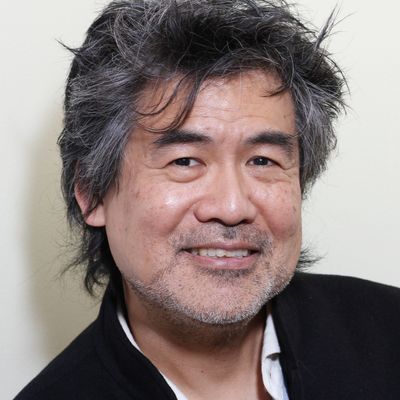
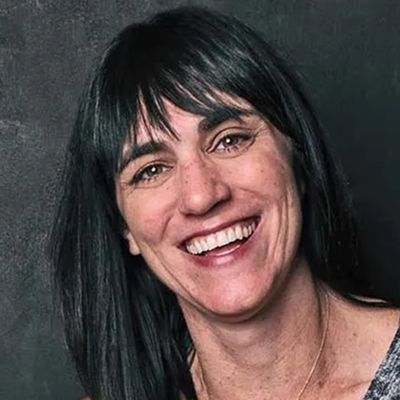
David Henry Hwang, three-time Pulitzer Prize finalist and Tony-winning playwright, and director Leigh Silverman join former policy director for Hillary Clinton’s 2016 campaign, and U.S. policymaker and now NSA Jake Sullivan and journalist, media consultant, author, and “Asian Pop” columnist for the San Francisco Chronicle Jeff Yang to discuss the musical-within-a-play SOFT POWER. The show illuminates the merits and pitfalls of democracy, the American electoral system, the American campaign system, U.S.-China relations, cultural appropriation, racism and hate crimes in America, soft power itself, and more.
This episode of WHY WE THEATER focuses on democracy, voting rights, and appreciating Asian-American perspectives and culture. Is democracy the best system of government? How do we improve our electoral system now? What must we keep in mind for the November 2020 Presidential Election and beyond? What is soft power and how do we wield it responsibly? Do Americans have a say in how we interact with foreign nations? How? Listen to find out.
Referred to in this episode
- What Donald Trump and Dick Cheney Got Wrong About America by Jake Sullivan
- The Citizens United Supreme Court Case
- What Is Ranked Choice Voting? From FairVote.org
- What is the Single Transferable Vote?
- Why Was the Electoral College Created? by Dave Roos
- Jeff Yang’s podcast “They Call Us Bruce” (co-hosted by Phil Yu)
- What is the “model minority” myth?
- Building the Transcontinental Railroad: How 20,000 Some Chinese Immigrants Made it Happen by Lesley Kennedy
- The history of Asian American for Equality and the Asian American Movement of the 1960s
Create the change
- Research and support Automatic Voter Registration
- Check your voter registration status and deadlines for registration by zip code
- Research your what’s on your ballot and who your candidates are
- Contact your representative to support voter rights – SUPER easy with 5calls.org
- Watch “We’re Doing Elections Wrong” from Patriot Act With Hasan Minhaj
- Read Jeff Yang’s Op-Ed “Mr. President, you don’t speak for Asian Americans”
- Check out this interactive timeline to understand the history of the U.S. and China’s relations
- Read Cathy Park Hong’s poetry and writings on her experience as an Asian American: Minor Feelings: An Asian American Reckoning
- Read Peter N. Kiang’s “Understanding Our Perceptions of Asian Americans”
- Stop hate against Asian Americans and Pacific Islanders
- Watch panels from the Rise: Asian Pacific America digital conference
Why We Theater is a product of part of the Broadway Podcast Network, edited by Derek Gunther, and produced by Alan Seales.
Follow us @whywetheater on Instagram & Twitter.
Our theme music is by Benjamin Velez. Hear more at BenjaminVelez.com.
Our logo is by Christina Minopoli. See more at MinopoliDesign.com.
Special thanks to Dori Berinstein, Leigh Silverman, Patrick Taylor, Tony Montenieri, Elena Mayer, Wesley Birdsall, and Suzanne Chipkin.
Connect with Ruthie!
Instagram: @ruthiefierceberg
Twitter: @RuthiesATrain
Transcript
This transcript was automatically generated and might contain errors.
[0:01] Ruthie Fierberg: I'm Ruthie Fierberg, and this is Why We Theater.
[0:06] Ruthie Fierberg: The Intersection of Theater and Social Justice.
[0:09] Ruthie Fierberg: This podcast digs into today's most thought-provoking and urgent onstage works with the artists who made them and real-world experts who advise us on how we can create impactful change in our offstage lives.
[0:22] Ruthie Fierberg: After all, that is Why We Theater.
[0:27] Ruthie Fierberg: Today we welcome back director Leigh Silverman alongside librettist David Henry Hwang with experts Jeff Yang and Jake Sullivan to discuss the musical within a play, Soft Power.
[0:40] Ruthie Fierberg: For those of you who haven't seen the show, a slightly more in-depth primer, because it's complicated.
[0:47] Ruthie Fierberg: The play begins just prior to the 2016 presidential election, when a Chinese executive commissions the character David Henry Hwang to write a Broadway-style musical in hopes of upping China's global cultural cachet.
[1:01] Ruthie Fierberg: When David is stabbed, he enters a fever dream that is the musical inside the play.
[1:08] Ruthie Fierberg: The musical is a Chinese-written American-style musical that mythologizes from a future Chinese perspective, the historical moment when Hillary Clinton loses the 2016 election, America falls into chaos, and hypothetically, China steps in to lead the world.
[1:28] Ruthie Fierberg: The title Soft Power refers to the term describing economic or cultural influence in international relations as opposed to the hard power characterized by coercive diplomacy or military action.
[1:42] Ruthie Fierberg: You can purchase Soft Power's original cast recording from Ghost Light Records or listen to it via YouTube or Spotify.
[1:54] Ruthie Fierberg: I am so beyond thrilled to be talking about Soft Power today.
[1:58] Ruthie Fierberg: 11 drama desk nominations, a Pulitzer Prize finalist.
[2:03] Ruthie Fierberg: It is all thrilling.
[2:04] Ruthie Fierberg: And we are going to start by talking out with two of the four major creative team members.
[2:11] Ruthie Fierberg: Leigh Silverman is back.
[2:13] Ruthie Fierberg: We're thrilled to have her back.
[2:15] Ruthie Fierberg: Tony Nomin Director and two-time Obi Award winner.
[2:19] Ruthie Fierberg: Hi, Leigh.
[2:20] Leigh Silverman: Hi, Ruthie.
[2:21] Leigh Silverman: I'm so happy to be back.
[2:22] Ruthie Fierberg: Yay!
[2:24] Ruthie Fierberg: And new to the podcast, we have Mr. David Henry Hwang, a three-time Pulitzer Prize finalist, now with Soft Power included, a Tony Award winner and two-time additional Tony nominee and a three-time Obi Award winner.
[2:39] Ruthie Fierberg: Welcome, David.
[2:41] David Henry Hwang: Hey, thanks for having me.
[2:43] Ruthie Fierberg: Absolutely.
[2:44] Ruthie Fierberg: All right. So I want to just dive right in.
[2:48] Ruthie Fierberg: What we know today as the show Soft Power was a commission by Central Theater Group in LA.
[2:57] Ruthie Fierberg: Was there any sort of prompt other than, hey David, we want you to write something for our 50th anniversary season?
[3:06] David Henry Hwang: No, that was it. And, you know, I think they had no idea that they were going to get something as big as we ended up making.
[3:15] David Henry Hwang: I mean, it really is a wild undertaking.
[3:17] Ruthie Fierberg: What was the kernel of the idea that led to what we know as Soft Power?
[3:24] David Henry Hwang: Well, the initial impetus was really seeing the most recent revival of The King and I, the Bart Sher version at Lincoln Center, which is, you know, pretty much a perfect production of a pretty much perfectly written show that I've always loved.
[3:39] David Henry Hwang: And this time, however, when I saw it, despite the wonderfulness of the production, I was much more conscious of the ways in which there's stuff that's kind of questionable in the show, like, you know, the premise.
[3:52] David Henry Hwang: And so little things like that.
[3:55] David Henry Hwang: Yeah, you know, a white woman goes to Siam and teaches the king how to bring his nation into the civilized world.
[4:07] David Henry Hwang: And I began to think about how musicals have that power of what Janine Tesori calls the delivery system, the ability to tell a story, which is, you know, not true and has an ideological agenda to it, really, consciously or unconsciously.
[4:28] David Henry Hwang: But because of the craft and the beauty and the artistry, it goes straight to our hearts anyway.
[4:35] David Henry Hwang: And I began to wonder if we could create a show which was equally untrue, but done with the sincerity and artistry and heart that might begin to approach something like an RH musical.
[4:49] Ruthie Fierberg: Wow. And so you said you knew that from the beginning you wanted it to be this play that became a musical.
[4:58] Ruthie Fierberg: Why, I mean, which is essentially a brand new form.
[5:02] David Henry Hwang: I really can't. I know that you've likened it to The Wizard of Oz in some moments, but even in The Wizard of Oz, in our black and white moment, she sings "Over the Rainbow." So this is truly to me a new form.
[5:16] David Henry Hwang: Why were you convinced that it needed to be told this way, that it needed to become a musical rather than just be the musical?
[5:26] David Henry Hwang: Because I felt like what we want to see is the prose and then the poetry.
[5:32] David Henry Hwang: So the prose is what actually happens in 2016, and then when we jump into the future, and it becomes the conceit is like a future Chinese musical, musical in China, which is telling those events from China's point of view.
[5:48] David Henry Hwang: And so we see what actually happened, and then we see how it's been mythologized and turned into a musical.
[5:55] David Henry Hwang: The delivery system of the mythology being the key point that mythology works better when it's musicalized.
[6:04] David Henry Hwang: Musicals, at any rate, are an incredibly powerful way of conveying a mythology, ideological position, but in the most beautiful construct that you just want to believe in.
[6:22] Ruthie Fierberg: So Leigh, at what point, both chronologically and within the building of the story, did you enter the process?
[6:33] Leigh Silverman: I like to enter the process at the time that David says, I have a really crazy idea. Do you want to have a drink? That's my favorite entry point for a play that David Henry Hwang is writing.
[6:47] Leigh Silverman: So then, you know, we go out for a drink, and, you know, we like chit chat and do our thing, and then he says, Okay, so here's the idea.
[6:56] Leigh Silverman: And generally I say, that's an amazing idea. How are we gonna do that?
[7:01] Leigh Silverman: And then he says, Well, that's your job. And then I say, Okay, well, then when do you think you're gonna be able to get me something so I can look at it?
[7:10] Leigh Silverman: And then it's from that point on it. We're just like in it.
[7:16] Ruthie Fierberg: But you're there from the inception.
[7:18] Leigh Silverman: It's really one of the great joys and privileges of our collaboration that I get to hear about the idea before it's on paper, and then just be nothing but a nuisance until he actually starts to write.
[7:31] Ruthie Fierberg: Well, and of course, you having had previous collaborations with Yellow Face and was it Chinglish that you worked on?
[7:39] Leigh Silverman: And Golden Child, and we've had a bunch.
[7:43] David Henry Hwang: Yeah. Tung Fu.
[7:46] Ruthie Fierberg: The way I kind of see it from my perspective as an audience member, the show comes in five parts to my mind.
[7:56] Ruthie Fierberg: That there's part one, where I'm gonna try and say his name right. Shui Shing.
[8:02] David Henry Hwang: That's pretty good.
[8:06] Ruthie Fierberg: Okay, so he played by Conrad Ricamora, enters and is commissioning the character, David Henry Hwang, to write a musical in 2016 before the election.
[8:18] Ruthie Fierberg: And then David Henry Hwang gets stabbed, and part two happens in his fever dream, which is actually act one of the musical.
[8:30] Ruthie Fierberg: Then intermission, then I see part three as the panel, which I love, the panel of experts who are gathering at the 50th anniversary celebration of said musical.
[8:45] Ruthie Fierberg: Then part four is act two of that musical, and part five is the real David, the real part of it, still the character, David Henry Hwang, wakes up.
[8:58] Ruthie Fierberg: So I why was it important that it's not just Act One panel act two of the musical, but that you have the quote reality setting of 2016 and the coming back to 2016 bookending the project structurally?
[9:20] David Henry Hwang: First of all, I'm really impressed by your breakdown of the musical. It's a really hard musical to summarize. We did not make it easy.
[9:27] David Henry Hwang: But it likely says most things that are worthwhile are hard.
[9:33] Ruthie Fierberg: Oh, well, and I think that it was important to set it in contemporary David's head.
[9:46] David Henry Hwang: Because one of the things that's I think important about this show is that it's trying to present an Asian American perspective as opposed to an Asian perspective.
[9:58] David Henry Hwang: So there's a vision of this show where it's really just a Chinese musical about America in 2016, and our Asian American cast are essentially playing Chinese nationals the way that they do in Miss Saigon or, you know, any of a number of musicals.
[10:19] David Henry Hwang: I think there's something transparent about making the Chinese story, the quote unquote Chinese story, something that comes out of the fever dream of an Asian American character.
[10:32] David Henry Hwang: And it allows us to go back to that Asian American character at the end of the show and have a stage full of Asian faces singing about America, singing about democracy, and affirming our place and our commitment to this country.
[10:51] Ruthie Fierberg: And why was it important both for you personally and both as a dramatist to convey your own real-life stabbing?
[11:03] Ruthie Fierberg: Because for people who don't know, you are the victim, the I will say the survivor of a hate crime perpetrated against you.
[11:14] Ruthie Fierberg: And why was it important to you personally and as part of the story?
[11:19] David Henry Hwang: So that was not part of the original conception because it was conceived, you know, before I actually got stabbed.
[11:27] David Henry Hwang: And so this is a show that has been greatly affected by real-life events, both personal, my stabbing and political, the 2016 election, both of which became incorporated into the show.
[11:43] David Henry Hwang: So when I was writing an early draft, I was by that time I had been stabbed, and I was going from the play part to the musical, and I just started writing about my stabbing.
[11:57] David Henry Hwang: And it was an impulse, and I felt it was never going to make it into the show.
[12:02] David Henry Hwang: And then increasingly, as we've worked on this, it's become, you know, even you listen to me now talking about my stabbing, I'm very flip about it.
[12:12] David Henry Hwang: But Lee, you know, Lee and Janine Tesori and Oscar Yusuf and the whole creative team were very much about, you know, David, you have to take your stabbing seriously in the show for the sake of the show.
[12:26] David Henry Hwang: And so somehow I was able to process that and understand my stabbing by writing about it, because I could tell myself, I'm not being self-indulgent here. I'm just doing it for the good of the show.
[12:39] Ruthie Fierberg: Leigh, what was it like from your perspective? And what was the signal that was telling you that the show needed that plot point?
[12:50] Leigh Silverman: Well, it's interesting because you know, when David first was working on it, the whole thing was really much more of a satire. And then it kind of feels like shit got real, you know.
[13:05] Leigh Silverman: We did a reading of one of the early drafts the day of the election of 2016.
[13:13] Leigh Silverman: And, you know, I think David sent me a text very late that night or early the next morning that said, you know, this is terrible for the country, but might be really good for our show.
[13:23] Ruthie Fierberg: Right, because I didn't even realize that you guys, I mean, of course, because musicals develop over such a long period of time, but that you had written this before, you know, this musical that imagines Hillary losing, and you leave him unnamed in the show, but that she loses, someone else takes over, and that leads to a crisis and a change in the structure of world power.
[13:50] Ruthie Fierberg: And I am so fascinated that you thought to write that before it happened.
[13:56] David Henry Hwang: Okay, to be fair, I wasn't that prescient. I wrote a version earlier where Shishing came to the United States and advised President Hillary Clinton. And that was a version that we read on election day.
[14:11] David Henry Hwang: And then um, as Lee said, I made this text yesterday the next day, and I was like, okay, well, we have to revise something. And I think that the you know, really from that moment, as the world took a turn almost instantly, um, it became clear that the show could and needed to live in a more serious place and a more honest place. And I think from that point on, it was a steady climb towards um a central truthfulness, um, emotional truthfulness, and weirdly it started to feel the things that felt like strange in science fiction actually were true. Um, the ways that the show was uh we thought satirical, then it started to feel like we weren't pushing things far enough. It it became this unbelievable exercise in a thing that David had written to sort of be a satire and a skewer of both the king and I and our country, uh became weirdly documentary, and we found ourselves um just um constantly sort of marveling at the more that David wrote from an honest place, a personal place about his journey, but also about the country, the more that it um resonated.
David, the musical itself is like you said, written from the Chinese perspective. You even give fake author names in that panel of the second act, but of course it's you along with your collaborators. Was that getting inside that perspective, a hearkening back to your own family and your upbringing, or was it more new research? I mean, you know, Janine, sorry, my uh composer and collar says Janine used to say, Oh, we're playing characters because we have to uh I'm playing the role as a writer. Of course, I'm also in the show as a character, but as a writer, I'm playing the role of a Chinese book writer lyricist, and she's playing the role of a Chinese composer. So I think there may be some subconscious links to my own, you know, family history and stuff, but mostly because we're trying to envision these artists of the future.
It was more uh and we're essentially using a Western uh musical language, the same way that say K-pop uses a Western pop language. Um I I think it was more uh the exercise was more trying to project ourselves into the future and write from another ideological point of view and cultural point of view.
[17:08] Leigh Silverman: So, Lee, how do you as a director wrangle like your actual creative team, the personas of your creative team, all five of these parts as I kind of broke down and making sure that everything comes off to an audience as clear? Yeah, it's a very it was a very complex puzzle. I mean, I will say that I really just had to keep my North Star throughout the process as what was the story and what did we want people to understand? What was delightful confusion and what was painful confusion? Sometimes confusion makes you lean forward in your seat and intrigues you and hooks you. And other times it throws you out. And so I was really always interested in the kind of happy confusion, the kind of sense of disorientation that was purposeful, authored, that felt intentional.
And I I did think for a while that I had to be thinking like some kind of Chinese theater director of the future. And it turns out I don't know anything about a Chinese director's brain in the future. I barely know anything about my own brain. So it actually is like became a kind of uh a very noisy exercise to try and do that because um I could only direct the show from my point of view and through the center of the collaboration with Janine and David. And I also began to understand that really the show, everything about the show was coming from David's brain, David the character. Um it was a fever dream of his creation. So I actually didn't need to pretend to be somebody else, and that in fact um that whole concept is a fabrication inside the show itself. It was a trick, it was a mind trick.
[19:15] David Henry Hwang: Well, there are so many layers to the structure, but there are also so many layers to the topics you're hitting. I mean, you have the merits and pitfalls of democracy itself. You have US-China relations, you have representation, you have cultural appropriation, you have gun rights, you have misogyny and sexism in the workplace, you have the idea of soft power itself. So I'm wondering amidst all of that, I guess, what is the essence that both of you needed to be running throughout? And it's a love story.
[19:48] Leigh Silverman: And it is a love story. True. The reasons that I would be silly not to tell her my idea right away is because they're usually pretty impossible to achieve, and Lee is able to achieve them. You asked earlier why was it necessary to filter this through through DHH's sensibility? And I think that increasingly, increasingly we kept going with the idea that okay, this is a very, this is a personal story, as Lee was saying a moment ago. And that was what we continue to focus on as and kind of kept us on track.
[20:31] Ruthie Fierberg: To delve into the myriad issues that you have raised in this incredible show, I want to welcome our experts for the day. We have Jeff Yang, who is a journalist and business consultant who is a columnist for CNN, the former editor in chief of A Magazine, which he founded, he is a podcaster, the co host of They Call Us Bruce, um, an author, and we are just so happy to have him, Jeff. Welcome.
[20:57] Jeff Yang: Thank you, Ruthie.
[21:00] Ruthie Fierberg: And then we also have Mr. Jake Sullivan, an American policymaker and current senior fellow at the Carnegie Endowment for International Peace. He was the national Security advisor for vice president Biden, the director of policy planning at the U.S Department of State, as well as the deputy chief of staff for Secretary Clinton. And no little relevance to this show, but her head of policy on her 2016 campaign and her deputy head of policy, deputy director of policy on her 2008 campaign. So someone intimately acquainted with the issues that are that are mythologized here.
[21:50] Jake Sullivan: So the musical illuminates obviously numerous pitfalls in the American democracy. And though, you know, the musical is from the Chinese perspective, as you've spoken about, David, I couldn't help but hear some of the arguments and be slightly swayed and think like, oh, you you choose leaders based on a meritocracy and people who are qualified get elected. Like that sounds appealing. And it's easy to forget some of the dangers of the way that China is run. But I am wondering just on principle, what the thoughts are in the room of like, is democracy the best form of government? And if so, why?
[22:39] Jake Sullivan: I absolutely uh do believe that of the various political systems, democracy is better than the others simply because it's the least worst, right? I mean, there is no there is no other form of government that is most likely to uh be self-sustaining over the long run. And uh while I think we have to have clear eyes around what democracy looks like, how it's expressed, uh, and whether or not in fact what we think of of as democracy truly is, especially when we use terms like meritocracy. Uh I I think that it's clear, at least from the perspective of uh our nation, when it is practiced well, it is it is uh perhaps the best uh of a range of different not great options for selecting leaders. At the same time, I mean, I think that the biggest challenge we face right now is that larger question of whether or not what we are actually practicing is democracy. Right. Whether or not, in fact, our democracy is able to uh preserve itself, especially under the kind of duress that it has faced over the the past three years and change.
[23:52] Jeff Yang: It's interesting. Francis Ju said in another interview who played the character of David David Henry Huang that he believes in democracy still, yes, but he's not sure that we're in one yet. Cake, I'm wondering your perspective on this question.
[24:11] Jake Sullivan: Well, I guess I would say a couple things. The first is that there is no doubt that there are elements in the American system that are far from perfect when it comes to democracy or democratic accountability. We have a system of elections that makes it harder for people to vote than it should. We have an electoral college that does not actually reflect the popular will. We have a campaign finance system that treats corporations as people and allows for big money to play a role in politics that is ultimately corrosive in a lot of different ways. And we also tend to lift up celebrity as a way of thinking about what counts as political leadership in this country. And then on this point about meritocracy, what I've been really struck by just in the last few months is the denigration of experts across the board in the United States, I think has been deeply harmful.
And yet now we're faced with a pandemic in which our epidemiologists, our public health experts, our doctors, our nurses, our frontline workers are being asked basically to carry this nation on their back to get us through it. And what I hope coming out the other side of this is that two deep flaws in American democracy are redressed in some way. One, that the experts, we don't heed them and just do whatever they say. We don't do that for generals. We don't, we shouldn't do that for generals. We shouldn't do it for any expert. Leaders should take advice and lead, but but we should listen carefully to their advice. And then secondly, uh the people who we today call essential workers, but not have not, we have not treated as essential workers for decades.
We haven't paid them a basic living wage, we haven't given them basic benefits that we come out of this and recognize that while everybody else was sitting at home, um, they were keeping the economy running, they were keeping us fed, they were keeping us safe. Uh so I hope we do something about that as well. But I will say, and I'm sorry to go on for so long, having spent a fair amount of time with um senior officials of the Chinese government sitting across the table from Hillary Clinton and Joe Biden and saying, hey, you got a kind of messy system over there. It it got it did get my back up a little to say, you know what, your system has some serious problems too. Um, and not just problems and outcome, but problems from the perspective of value that what we think of as people being able to have their own voice and express their own individual dignity.
These are not concepts that the Chinese Communist Party in its form, in its governance system today, uh recognizes or respects. And so I basically come back to where Jeff started, which is that democracy is the worst form of government except for except for every other form of government. Uh and therefore is the form of government that I would, you know, prefer to live under and to keep working at making better.
[27:17] Jeff Yang: Yeah. I mean, it's interesting that in the song, David Fushing Park, the lyric that is most emphasized there is the word free. And so there is this kind of recasting in the light of like how China looks at themselves. But when you look at it at the at Chinese government from our perspective, it is far from free. Um, you know, compared to the freedoms that we know, which I just think is brilliant. Um, in terms of the ways to improve our system, in the number election night, you present this simplified uh explanation of voting and the electoral college, but that ends with kind of the satirical question: is this the best system in the world? And the whole audience kind of laughs. Why was the electoral college a good idea when it was founded? And has it outgrown its usefulness? And like what's the best alternative?
[28:19] David Henry Hwang: I feel like this is a conversation that, the more cynical we get around our own democracy, the more critical it is that we start looking at the tools and mechanisms by which we practice it. And it seems pretty clear that the Electoral College, and I mean, Jake, you mentioned also the campaign finance systems. You mentioned the larger question of voting access, right? Which I think, especially now in the time of COVID, in-person voting versus mail voting, you know, the same-day registration versus having to show ID and have pre-registration months in advance, there's so many different ways in which our system of democracy tries to prevent democracy. The contest of values that we see between, say, America and China, I in some ways feel like it's less about democracy versus a single party rule, less about capitalism versus communism, and in many ways very much about whether we privilege the individual and prioritize individual rights versus having a sense of society as a collective and kind of target the common wheel even as it crushes individual rights.
Those to me seem to be the biggest differences between how America and China at its extremes represent themselves. And I feel like the play does a really good job of that, right? That in some ways, what's most sort of fanciful about the depiction of America from Chinese eyes is how ridiculously kind of self-centered, you know, and individualistically focused Americans are, to the point where even when we're doing things incredibly dangerous to one another, like shooting guns, you know, randomly in public, it's an American thing, and that's how we define freedom. And a lot of the strongest and funniest and sharpest lines in the play really target this idea that Chinese people just look at the way that we allow individuality to take over everything as being absurd.
I think that, you know, it's an important thing for us to think about now, especially when so much of our survival depends on collective good, collective benefit, and communitarian ideals, something which is still a part of our country, even as we have not practiced it so well over the past, I don't know, decade or two. But in terms of specifically voting, and because I really do want to get to like the tangible of it, it's like what does, you know, fairvote.org has been proposing a ranked system of voting. Is that the best way? Is it a one-for-one best way? Like if we were to prescribe our wish list for what we think the way voting should be cast, what would that look like? What about for you, Jake?
[31:33] Jake Sullivan: I mean, for me, I think this whole issue of ranked voting or single transferable vote is quite interesting. My hometown of Minneapolis has adopted this. Other places have. It's not the top of the list for me in terms of the blinking red lights in our democracy, which would start just picking up on what Jeff was saying and what I was alluding to earlier. Every person who is eligible to cast a ballot in the United States should be able to cast that ballot easily, without intimidation, without undue burden, in a fashion in which they don't have to choose between their public health and exercising their rights, or they don't have to jump through 11 hoops, and even more if they're a minority or an old person or a disabled person.
Let's start there. And frankly, you know, not to get too political, but I actually think that we have a political party in this country with an agenda to reduce the number of people who vote in the United States. And I think our only agenda should be to increase the number of people who vote in the United States. That's one of the key ways in which we measure the health of our democracy. And then, secondly, an issue we haven't talked about yet, finding a way in every state for the drawing of districts and lines to be done in a completely nonpartisan way. Yes. That there's not gerrymandering. What's extraordinary about the state of Wisconsin, for example, is that in its state legislature, Democrats would have to win nearly 60% or more of the vote in order to win 50% of the seats, the way the lines have been drawn.
And as technology gets better and you can slice things thinner and you can clump people more effectively, gerrymandering is only going to become a more dangerous aspect. So for me, it's like the conversation around single transferable vote is not quite a luxury. It's an important conversation. But there's some real basic steps.
[33:38] Jake Sullivan: Yeah, I mean, there's some real basics, I think that we need to attend to. So is that like, is the idea that everyone who has a birth certificate here in the US, you know, like you have your social security number. So are you automatically mailed your voter registration when the government knows you turned 18? Like is that, I would absolutely start there. Every person should be automatically registered to vote at the age of 18. Every US citizen, every person eligible to vote should immediately be registered to vote at age 18. And frankly, that's not at this point a totally novel concept. There have been a number of these proposals put forward. And the real question we have to ask ourselves is why would somebody oppose that?
What is the argument for saying, no, no, you know what? You shouldn't be registered at 18? Really, anyone trying to make a case against that is essentially just that is a stand-in for we would like fewer people to vote. And so that I would certainly start there. I think that is a straightforward proposition. And frankly, the current debate that we're seeing over what to do about voting in the COVID context, with the president basically casting doubt on mail-in ballots when he himself mails in a ballot to vote, just goes to show you the level at which we're gonna be operating this fall. And what happened in Wisconsin in the primary back in April, where the Supreme Court basically said, no, we're not gonna make any dispensation for people.
You wanna vote, you're gonna have to show up and brave the possibility of getting a highly communicable disease. These are, you know, again, I'm, I actually don't think of myself as a deeply partisan person. I'm trying not to be, but there's just something really bizarre about a system in which we debate these issues as opposed to the substantive questions of the economy and criminal justice and climate and so forth. We're debating, you know, whether people should be able to easily exercise their right to vote. And that should be beyond debate in a healthy democracy.
[35:50] David Henry Hwang: Yeah. And is accomplishing something like automatic voter registration at age 18 something that we just write to our local, state, federal representatives and say this is something that should happen? How do we as a public accomplish that?
[36:07] Jake Sullivan: That could happen by act of Congress. So it doesn't require constitutional amendment. It requires a majority in the House and 60 votes in the Senate and the signature of a president. And so, you know, along with a number of these other issues, so for example, if you want to end gerrymandering, elect representatives in your state level who commit to a bipartisan or a nonpartisan election commission that will draw the lines outside of politics. If you want to get money out of politics, that's a little bit harder at this point because the Supreme Court has ruled in Citizens United. And so at this point, it's going to take a constitutional amendment, which is something we should all begin working for today and not say it's out of the realm of the possible.
We have passed 27 amendments, many of them making our democracy better because they expanded the franchise, gave more people the right to vote. So we should work for that. But some of these other steps are much more within reach just through the power of organizing and putting pressure on your elected representatives.
[37:10] Jeff Yang: Yeah. And I also, campaign finance is something I learned about at the age of 16 because I was taking American government in high school and it was the year of an election. And I specifically made sure I was taking government in the year of an election, and we were each assigned, like, you know, an issue that we would then compare what the candidates felt on it. And, you know, most people were given things like abortion and stem cell research and gay marriage. And I was given campaign finance reform and felt punished. But now I feel very lucky because I understood from a young age that, you know, even though when I was five, I was told that anybody can run for and become president, I then learned at 16 that that's not true because it costs so much money to run a campaign that has a chance of being successful that it really ends up relegating to the wealthy or the people who are backed by the wealthy.
And like you said, people who can be backed by corporations, which is why in this past cycle, with having candidates like Elizabeth Warren, for example, who said she wasn't going to take corporate dollars, was such a challenge in her pledge. And while I would love to talk about campaign finance reform, I do kind of want to talk about this idea that also came up with Elizabeth's candidacy, as well as some of the other women, and even with Andrew Yang as a person of color, where there was this thing called the electability argument that drove me insane. Because to me, the person who is electable is the person who gets votes. And there was that poll, like it's just it's a post facto thing that we were trying to prescribe.
And I was so frustrated because there was a poll that said, if you could vote tomorrow for anyone, like if you could wave a magic wand, who would you vote for? And the answer was one person. And then it was, but who are you going to vote for? It was another person because I quote think they can win. And I'm wondering what tools we have as voters to make it so that we feel like we can vote for the person we want rather than this mythological who can win, Jeff, yeah.
[39:36] Jeff Yang: So I want to invoke here as somebody who is kind of a recovering journalist, that there are definitely forces in this conversation in our democracy or quasi-democracy that haven't really been invoked in our discussion yet. And one of them, and perhaps the most powerful one in that regard is the media, right? They are the ones who by and large conduct the polls, they are the ones who amplify the messages. They're also the ones who set the boundaries around what is and is not considered to be electable and what is and is not considered to be important, right? So that whole notion of the horse race, like the constantly seeking ways to take down the frontrunner and to amplify edge case individuals in order to just ensure that the story, the narrative continues to be good.
Right. And I think that we look at this from the standpoint of a couple things. One is the power of narrative, the power of telling a good story, has never been greater in a time when any story can go viral, can be amplified and, you know, a billion fold from the grassroots level to the globe. And I think that that notion of who is electable, what's possible, is very much defined by that. That notion of who can tell the best story. On the one hand, you've got a corporate media that's simply seeking dollars. They care less about votes than they do about ratings. And then you've got a body of media that you can only really describe as sort of a propagandist state media that exists very specifically to operate to elect, you know, certain members of a certain party and re-elect, you know, people from that party.
[41:20] David Henry Hwang: Well, I think it's also this idea of this self-fulfilling prophecy that the media is not just a reporting agency, but that the media can, you know, gain give momentum to someone. If you say someone is gaining momentum, then that person will gain more momentum. So yes, and but I want to throw in something, you know, just based on a reflection of soft power, you know, through the sort of rearview mirror now. Because one of the things which I really, as much as I loved it at in the moment when I first watched it, I actually truly think that it is a work for our time now even more, simply because one of the things I think David, I mean, you know, he's right here, so I'm saying this in front of his, David has always played with and I think really effectively moved the needle on is this idea that perception often drives reality, and that perception is also very flawed, right?
That we imagine people as certain things, we project things on people, and we turn them into different things, right? And one of the things which struck me about the Hillary Clinton that we saw in Soft Power, even though there were many things that were just truly absurd around it, you know, they're in fact at a poor deforced level, right?
[42:35] Jake Sullivan: Uh her uh her the dance routine in the in the McDonald's was I thought, you know, something you'll never see again in American theater unless you watch Soft Power again. Uh and and yet, you know, one of the things which I commented to him after seeing it was the degree to which a story like this, as much as it is fanciful, fantastical, humanized Hillary in a way that even the softest of soft articles in the media wasn't able to, you know, got to the heart of kind of human desires and urges and concerns and anxieties in a way that actual reporting failed to really struck me. And I I think that that continues to be the role uh that we face now as storytellers of various types. Where do we find the human inside these stories and where do we find the stories inside these humans?
I I will say one, you know, one one thing about perception driving reality, and I frequently think that that's the case in politics. But what was very bizarre about the democratic primary process in in 2020 was that the perception on say Twitter or among elite media talking to each other was basically Joe Biden's dead in the water. And, you know, he's going nowhere. Yeah. And he's gonna lose. And the perception out there among just the kind of voting Democratic primary public was obviously quite a bit different. And so it was a big shock when he emerged out of South Carolina and then Super Tuesday. And you know, you his campaign in all of 2019 was saying, don't pay attention to Twitter or to the voices of political journalists, pay attention to the voters.
And in a funny way, um, it was the voters who kind of taught a lesson to a lot of the political prognosticators about how that was all gonna play out. The other thing that that I just wanted to quickly flag is having worked for Hillary Clinton in the 2016 campaign, um I was acutely aware of became acutely aware as a guy of the way that these insidious gender stereotypes end up playing out in ways you might not expect. So one of the biggest ones was she would constantly get dogged by the question, why are you running for president? Why, Hillary? Why? Why? Why? You can't answer why. As though the answer isn't obvious that she's like a badass, highly qualified woman. So of course she's running for president.
No one was asking that question of Barack Obama or Donald Trump. Like, of course, they're running for president, they're they're dudes, they're like, you know, it's no surprise, but Hillary, there must be some ulterior motive. And when it came to Hillary, people always liked her when she was doing the job, whatever the job was, and then they always were suspicious of her when she was seeking the job. If she sought a job, it was like, she's up to something. I don't trust her. I don't like what she's doing. The minute she was Secretary of State or Senator or First Lady was like, hey, she's pretty good. Like, she does a good job. The minute she's running for a job, um, it it she gets cast in this almost villainous cartoonish way that I think is deeply gendered.
Um and I worry that we've, you know, managed to break a lot of barriers in politics with women getting elected to positions across our country in record numbers in in 2018, for example. But the presidency remains elusive, I think, because we have so clearly defined who counts in that conversation, and we immediately cast any woman seeking that role as not to be trusted. Um and I think that's a very scary thought going forward about what it's gonna take to actually break that final glass ceiling.
[46:21] Jeff Yang: Yeah, well, Jeff, you alluded to this, and um I think David and Lee, what you did in the number I'm with her was so brilliant because you were able to make the dual commentary of this is the thing that we're demanding of this woman that she perform for us. And you know, as as her campaign manager in the show yells out, swing, strike a pose, hip hop, tap, sexy, and it's like you're demanding this performance from her, and you're demanding her to appeal to all audiences and all voters in a way that no one else is required to, while at the same time making the commentary of this big big show. And while Jeff, you emphasize that like, yes, story is very powerful, and I believe in story, and I think um a candidate with a story will always be more powerful.
I think what we've been voting for in recent decades is production value over story. And I'm wondering, like, you know, Lee and David, when you were creating that number, it seemed to be fully cognizant in your mind that it had to be as big and flashy as splashy as possible to make that point.
[47:37] David Henry Hwang: I mean, I think what's uh the double-edged sword of that number is that on the one hand, it's supposed to be again a Chinese critique. So then the election system is a big, big show. But as we're working on it, it also kind of seems real. I mean, there's a degree in which all you know, all these perceptions are grounded in some degree of truth. And so the the ways in which Hillary, any candidate, to some extent, but Hillary, one would could argue more so because of some of the glass ceilings, some of the gendered issues, uh gender issues was made to perform. Um I think we were we pushed in more on that as we were going along, yeah, Lee.
[48:20] Leigh Silverman: Absolutely. I mean, I think it to me it was actually a mirror of the audience, right? Because what they were experiencing was a group of people watching a desperate person wanting to talk about politics being forced to twerk. And if she didn't twerk, then they were disappointed in her. But then when she did twerk, she was criticized for looking desperate. And I think that although it it took a kind of silly look at a thing, I do think it it's the conundrum that that Hillary faced and um and many women faced, but Hillary as our kind of every woman of this show, and and as the most qualified candidate, maybe ever running for the office. It was uh to me that we would have such a mixed feeling while we were working on that number because we felt like it was so funny and so right and so accurate and so truthful, and simultaneously so it made us sick to work on it because it encapsulated that feeling. And our hope with the audience was that people would find themselves cheering along and simultaneously like met with their own reflection of what they demanded of this woman.
[49:36] Jake Sullivan: Well, I think that that's so prescient because the audience, as the fourth part of this, you know, the fourth person in this equation, is it reminded me when Jake was saying that there was like the political Twitter elite and the actual voters, and how that Twitter elite can kind of get in their own echo chamber and think they know what's happening, and then you broaden the camera lens and you go, oh, actually wait. And I think I mean that's one of the driving um catalog, you know, it's a catalyst of this podcast to unite all of these voices together, but it's also certainly something I wondered how you grappled with, knowing that often, particularly in New York, the theater is kind of a liberally minded place, and how you grapple with not with being able to get your message and get this story to people outside of the people who were just nodding along with you and saying yes, yes, yes.
[50:36] David Henry Hwang: One of the things we tried to do between LA, where the show initially premiered, and New York was by pushing in on things that we felt were uh again trying to be sort of more truthful and make the like the American characters uh less caricature-ish uh and feel more real. We were trying to create a show which, yeah, I mean, it's gonna have its ideological point of view, and I think the show should do that, but also didn't feel like we were talking down to people. David makes this incredible point in a song called Good Guy with a gun. There's a line about like drop our bombs to help them. And I think that there's this question of and you know, the king and I trope of the white person coming in to save backwards natives, and where is the balance between helping nations that are in true trouble versus overstepping our boundaries as a world leader.
I think this is an incredibly difficult um uh line to draw. I do not believe in absolutes in this area. So, for example, um, I do think it was a mistake that the United States didn't intervene to stop the Rwandan genocide. I think for a relatively modest uh investment of US uh effort, we could have saved the lives of hundreds of thousands of people. On the other hand, I think having a broad base view that the US military should go into every conflict situation because it's gonna make the situation better as opposed to worse is a recipe for epic disaster.
[52:25] Jake Sullivan: So what this really requires is judgment and leadership and good information about what's real and what's not real. And one of the things I think is atrophied a bit in the American diplomatic muscle in the last 25 years or so is we aren't as good at recognizing or perceiving what's actually happening on the ground in places. And I think that that should give us more humility and more pause before we act. But I resist the idea that says humanitarian intervention is just per se bad, because I think there are circumstances in which it is appropriate for the United States to use its tools and capabilities, including its military tools, to stop genocide and mass atrocities. And it's about figuring out in the individual case whether there is a clear extent to which we are going to do more harm than uh more good than harm.
And that calculus cannot be based on whim, and it can't be based on just kind of, well, we'll give it a shot and see what happens. Um that's my read. And I worry that the the Chinese government's critique of American policy too frequently um, you know, while it can obviously point to mistakes the US government has made, I don't think it's necessarily coming from a sincere place of looking out for the welfare of other countries. It's looking out to protect a basic proposition that says governments ought to be able to do pretty much whatever they want to do to their citizens, and no one else should have anything to say about it. And I think we all should have something to say about the welfare of our fellow citizens everywhere.
Um, when we use military tools to say those things should be a very limited, very, very limited construct. But but the basic argument that the Chinese Communist Party is making, I think is a deeply self-serving, sometimes cynical argument, um, rather than one that is rooted in some larger view about, you know, uh the greatest good for the greatest number.
[54:37] Jeff Yang: I think that often, though, we feel as citizens we can vote on issues of domestic policy, whether that's social policy like gay marriage, abortion, whatever, or things that have to do with the US economy, but we feel less empowered to be able to exercise our voices when it comes to foreign policy, short of protesting a war that's already happening. So, in what ways can we raise our voices to say, you're my elected representative, and this is how I think we should deal with Iran. This is how I think we should deal with the European Union, this is how I think we should deal with China.
[55:14] Jake Sullivan: Well, the first, I think in COVID-19 has shown this, that what happens in other parts of the world matters to the welfare and well-being of people here. So the first thing to recognize is actually the line between domestic and foreign policy is getting more and more blurry, whether it's climate change or immigration or pandemics or the potential spread of nuclear weapons, or frankly, just about any economic issue under the sun. What is being decided and done in other parts of the world has massive impacts on the lives and livelihoods of Americans here. So people should care. Secondly, I think you've got to, got to demand transparency from the government. The government thinks it can get away with a lot less transparency in foreign policy by just saying, oh, it's national security.
So, for example, the Trump administration is not currently sharing how many troops it has deployed in the Middle East or Afghanistan. There is no earthly reason the American people should not know where its soldiers and uh airmen and sailors and marines are being deployed in harm's way in conflict circumstances. So demanding more transparency. And then third, recognizing actually that this is supposed to be not just about the president doing foreign policy, but Congress too, and demanding that Congress step up. Do you know that we are still fighting all of our uh wars in the Middle East on an authorization to use military force that was passed in 2001, nearly 20 years ago.
[56:46] Jake Sullivan: It hasn't been refreshed, it hasn't been updated, it hasn't been reviewed for what makes sense and what doesn't.
[56:51] Jake Sullivan: Where should we be fighting against whom for how long? With what means. These are debates that should be happening regularly. And the American people should not just say, well, I guess that's the president's deal. It should say, no. Members of Congress should be holding the president accountable by deciding to change or update the authorization to use military force.
[57:14] Jake Sullivan: And the same can be said for a number of other critical foreign policy issues. I mean, I think the lesson we learn is know who your representatives are and write even the three-sentence letter to them.
[57:29] Jake Sullivan: I think people have an idea that it has to be some sort of like, you know, doctoral thesis. And it's like, no, I am a resident, I am a citizen. Here is my address, here is what I think. Send. Or call or email. I mean, these days, or tweet at them.
[57:45] Jake Sullivan: You know, these days, you know, members are extremely responsive to constituents when they gather in large numbers to send a simple clear message through a variety of mediums that do not take you very long. You could be right now, as I'm speaking and going on too long, you could be writing something and hitting send on it.
[58:05] Jake Sullivan: Um it will register, not the one, but yours combined with a lot of others, will register. And I mean, you asked the question in this stellar piece that I think everyone should read in The Atlantic called What Donald Trump and Dick Cheney got wrong about America.
[58:25] Jake Sullivan: Um you open the piece with can America still lead the world? Should it? If so, how and I guess looking at soft power, where China steps in to lead the world, question to the room. Should America be leading the world, if so, how?
[58:46] Jake Sullivan: How would you like to see them? Whether you're a citizen or a political leader or a journalist. I mean, you look at what's going on in Hong Kong right now, and it you know certainly points to some of the deficiencies of Chinese government.
[59:00] Jake Sullivan: Um, I think it's pretty likely that China will continue to gain in um economic power and uh at the moment seems to be gaining something from the pandemic. Um that doesn't mean that I personally believe that uh American democratic values or democratic values are still very necessary and important as a counterweight.
[59:25] Jake Sullivan: Uh and these are going to be two nations that are going to be uh competing in one way or another for a lot of this century. Um, and I don't know that that balance, uh, if we can find a balance, that doesn't necessarily seem to me like a bad thing.
[59:44] Jake Sullivan: The only thing I would add here is that it'll be interesting to see how things play out for that intersectional community uh known as Asian Americans, uh as this balance is uh is shall we say arbitrated over time. It feels like there's a greater responsibility for us, in part because there's a greater burden on us to help unwind some of the tangle there and uh to bring nuance to an unnuanced conversation.
[1:00:15] Jake Sullivan: Uh and I will say again, I uh it does make me feel good that something as extraordinary and unlikely as as a soft power uh could come into a world like this, a conversation like this at this particular time.
[1:00:30] Jake Sullivan: Uh I haven't actually said this before, uh, but I'm gonna say it now for the podcast and to David. I don't think that you have ever written a sequel to anything that you've ever written.
[1:00:41] Jake Sullivan: But there is no work that feels more urgently in need of a continuation in some ways, or at least a spiritual one than soft power in this day and age. And I I hope that uh when you find time, because you have many other things on your plate, uh that it's something you think about.
[1:00:56] Jake Sullivan: Hey, we're still talking about the future of soft power. And so you will um like we are hopeful you will see another iteration of it.
[1:01:06] David Henry Hwang: Well, you know, that and soft power too, softer power, I don't know. Because of the way soft power works, there's this amazing anecdote of um the UN uh uh UN ambassador Samantha Power gathered a bunch of leaders and took them to Fun Home.
[1:01:27] David Henry Hwang: And at the end, a leader from a country where homosexuality is illegal turned to her and said, I'm going to think about this when I go back. And to me, I'm like, well, is the next step for David Henry Hwang to write the realistic play about US and China getting along so that we can see it for real?
[1:01:48] David Henry Hwang: Maybe not a sequel to Soft Power, but how we continue to develop and rewrite soft power for the next iteration, I think may very well go in that direction.
[1:02:00] Leigh Silverman: Well, I am so excited about the living and breathing nature of this. So I think that you're on to something with the sequel.
[1:02:24] Leigh Silverman: Because it's not the Chinese perspective and it's not just the American perspective, it is the hybrid of those things. And I'm wondering how you see specifically the Asian American impact on both American culture and Asian culture and where it lands in between the two.
[1:02:47] David Henry Hwang: I think that one of the challenging things about being Asian American, even as the worlds in which we have dual roots converge is that more often than not, the very fact that we have a foot in each means that we have a foot outside of both, right?
[1:03:05] David Henry Hwang: So when we bring stories, our own stories to Asia, very often it's very difficult to have Asians there, you know, to have Chinese people really understand where we're coming from. They see us as Americans, despite what we appear to be.
[1:03:21] David Henry Hwang: And here in America, of course, we've suffered from generations of invisibility and erasure and uh exclusion in very many categories, but one of perhaps the most prominent being storytelling and media and entertainment.
[1:03:38] David Henry Hwang: And so the fact that a David Henry Hwang is possible is already kind of unique and amazing, right? He is one of the few, I think, Asian American playwrights who have who has become hugely successful in the mainstream, telling Asian American stories.
[1:03:56] Jeff Yang: Absolutely. I think that uh when when we look at at uh where Asian Americans sit in this time, I I did note that we have a greater burden. I also noted that that burden is uh is both a challenge and an opportunity.
[1:04:12] Jeff Yang: And it's people like David who I think uh are incredibly well positioned to step into that breach. Uh my feeling about you know the role of of uh stories like soft power and the role of the role of stories that David tells in general is that there is a sense in which soft power is an act of soft power, right?
[1:04:39] Jeff Yang: Yes. That there's a there's a level in which by telling a story like soft power, by by putting it out into the world, David is saying something not just about China and America, uh, but also about what it means to be Chinese American, right?
[1:04:55] Jeff Yang: That because you know, uh the act of putting himself into the play, the act of actually telling the story from a first person, third person perspective, forces people to engage with the fact that you have an Asian American man at the center of this, and an Asian American man who's having this, you know, this weird romantic uh interaction, especially with this incredibly powerful person.
[1:05:18] Jeff Yang: If King and I did that for kind of the exoticization of the East, right? Uh he was actively trying to do the same thing, as you noted, flipping in reverse, uh, with in some ways the objectification of the West, right?
[1:05:34] Jeff Yang: And uh, yeah, so I I think that it's it's remarkable to me. And I I really hope that uh that it's a narrative that David can continue to extend.
[1:05:43] Jeff Yang: There are individual backgrounds that contribute to identities, and the hyphen of Asian American is important to understand what makes Asian American culture, tenets of that, and what you wish more people understood about specifically the Chinese American perspective.
[1:06:07] David Henry Hwang: Sure. Well, I mean, America, I think is uh unique in that it's founded around some ideals, um, but it's also uh founded uh uh on a basis of white supremacy.
[1:06:22] David Henry Hwang: And I think those two things, the sort of wonderful ideals and the dark side of white supremacy have been at odds through a lot of this nation's history, and we certainly see that coming to the forefront now.
[1:06:39] David Henry Hwang: Where um Asian Americans are concerned, um it becomes really easy to think of Asians as perpetual foreigners, and so the you know, the microaggression is always um uh how you know where are you from, and it doesn't mean Los Angeles, um, or you speak really good English, and you know, those things are just microaggressions, but then they break out into uh bigger, more substantial conflicts um at moments of tension, usually related to our uh to the US's relationship with Asian countries.
[1:07:22] David Henry Hwang: So, for instance, um, you know, during World War II, of course, there was the incarceration of Japanese Americans because again, Asians aren't considered really American, and um most recently, because of COVID and the president calling it a Chinese virus, and just the association with China, again, all of a sudden, um we those of us who have Asian faces become associated not with our Americanness, but with our root cultures, and therefore um have been harassed and and spit at and all sorts of things.
[1:08:04] David Henry Hwang: Um, and it's a been a dangerous time to be Asian American.
[1:08:09] Jeff Yang: Well, it was interesting too, as like I'm Jewish, and there was this idea of David saying, like, I'm Asian and you know, I'm Chinese and I'm American, but two halves do not equal a whole.
[1:08:21] Jeff Yang: And where do I really fall here? And hearkening back to the piece that I mentioned that Jake wrote in The Atlantic, there there was the talk about how America is a country founded not by tribe or territory, but by ideals.
[1:08:36] Jeff Yang: And yet you have spoken about a pressure growing up to assimilate. David has spoken about a pressure to assimilate. I have felt a pressure to assimilate, and I am many generations down the line.
[1:08:49] Jeff Yang: And I'm wondering if that's like a false pursuit, because there's nothing to assimilate to, really, if the thing that makes you American is an ideal.
[1:08:59] David Henry Hwang: I think uh I think there's some deep truth to that in that assimilation has always been problematic, right? Because it assumes that that there is a common standard, that there is a template to which we should adhere as Americans.
[1:09:13] David Henry Hwang: And you know, frankly, that sounds a lot like a political slogan uh that uh that has gotten us into hot water as a country. Uh so it isn't about making us American again, you know, it isn't about uh going back to some sort of archival ideal America and and fitting ourselves to that.
[1:09:33] David Henry Hwang: Uh if there is some truth though to the idea that we as Americans want to come closer together, need to come closer together in some fashion, especially in a time when we're all socially distanced, right?
[1:09:46] David Henry Hwang: It is it is that we don't need to assimilate but accommodate. It's that we aren't looking to measure up to a standard, but rather to more closely uh open ourselves to one another and to become accepting and to adjust and adapt uh so that all of us can not snap into place like Jigsaw puzzle pieces, but rather flow into place, right?
[1:10:12] David Henry Hwang: You know, become something that's more blended and therefore more strong. That's maybe the biggest, the very biggest thing we have to actually challenge ourselves with, regardless who gets elected in November of this year.
[1:10:23] Jeff Yang: There's this constant question that you're asked when you go to Hebrew school, like, are you a Jewish American or are you an American Jew? And it's like you're asked to pick one side or the other.
[1:10:36] Jeff Yang: And um, this idea of a root culture. And I actually found that it perhaps it's uh parallel to the Asian American experience because um Asian means so many different things, right?
[1:10:51] David Henry Hwang: Like there is obviously Chinese and there's Japanese and there's Korean, but then there's also we don't talk, we don't often enough talk about, you know, Indian as being Asian American, even though clearly it is, and how similarly like Jews are ethnically and nationality-wise from all over and just sort of lumped into one group as well.
[1:11:16] David Henry Hwang: You know, the song lyric in the show is, uh, I'm not two halves, I'm whole. So the idea is to try to create, um, to not be bifurcated.
[1:11:31] Leigh Silverman: Yes.
[1:11:31] David Henry Hwang: Not say, oh, these are two parts of me that are in opposition. And where it comes, I think there isn't an analogy with the Jewish American experience. Um, but it's, um, it's you know, in our case, we also have that, you know, East is East, West and West, and never the train should meet. And actually, we are living embodiments of the fact that, um, East and West do meet.
[1:11:58] David Henry Hwang: Of course, many different aspects of the Asian American experience. And people in Asia don't consider themselves Asian.
[1:12:34] David Henry Hwang: So my experience as a Chinese American is more similar to a Vietnamese American's than it would be a Chinese national in China. So there are these things that unite us as Asians, and then there's things that are different too. The sort of model minority myth is applied to all Asian Americans, despite the fact that there's a lot of economic diversity in this community.
[1:13:03] David Henry Hwang: And if you look at, um, South Asians to some extent, but also, uh, Southeast Asians, um, Cambodians, Hmong tend to have very high poverty rates, which do not get associated with Asian Americans as a whole.
[1:13:25] David Henry Hwang: As we are living in this moment and trying to gain appreciation without appropriation for other cultures, and this idea too, I loved the line that, you know, or the idea that being Chinese is, uh, saving face and being American is saving heart. I have heart and I have face, and I love that union. And I'm wondering, like, when that union comes together, what are some specifically Asian American contributions to the fabric of American culture that you would like to see more people pay attention to?
[1:14:11] David Henry Hwang: Asian Americans, particularly in this case, Chinese Americans have a long history in this country. Um, and we recently celebrated the 150th, uh, anniversary of the Golden Spike. Um, the, um, connecting of the Eastern and Western branches of the transcontinental railroad, and the Western branch of which was built largely by Chinese labor.
[1:14:39] David Henry Hwang: Um, so this kind of internet of the 19th century was made possible largely by Chinese in America. Um, the other thing that doesn't get talked about so much is the history of Asian Americans where it comes to social justice and, uh, fighting for workers' rights because there's again, because the model minority stereotype, this idea that, oh, Asians are quiet and passive and don't fight back and don't stand up for themselves.
[1:15:16] David Henry Hwang: Um, even on the Transcontinental railroad, um, the Chinese railroad workers went on strike in 1867, and it was arguably the first major labor, uh, movement in the United States or labor movement action, the largest strike in North America at that time.
[1:15:41] David Henry Hwang: And similarly, things like, uh, birthright citizenship, the idea that if you're born in America, you are automatically a citizen, that was the result of a legal case that was brought by a Chinese American. And you go all the way up to things, you know, like, um, the activist Yuri Kochiyama, who in the 60s was, um, worked very closely with Malcolm X, was an ally, and was there when Malcolm X was shot.
[1:16:17] Jeff Yang: Wow.
[1:16:17] David Henry Hwang: Um, similarly, the whole, the label Asian American itself comes out of the San Francisco State student strikes in 1968, where, um, the what were then called third world students, uh, banded together to fight for ethnic studies, um, and Asian Americans were a huge part of that, and but it was largely led by the black power movement.
[1:16:48] David Henry Hwang: So there's a history of Asian Americans not being, uh, fitting the model minority.
[1:16:55] Jeff Yang: Right, of activism trying to accommodate white supremacy, but fighting with other people of color to try to dismantle white supremacy, and that often gets lost in the model minority narrative.
[1:17:07] Leigh Silverman: Yeah.
[1:17:08] David Henry Hwang: And how, as a Chinese American, you personally, what is your perspective on relationship to China?
[1:17:22] Jeff Yang: So it's, you know, it's kind of complicated as a Chinese American to think about our relationship to China, because on the one hand, of course, my, uh, father, uh, immigrated from there. I can't say I have relatives there anymore, but I certainly understand, uh, that mentality and a lot of things about Chinese culture. And then there's a lot of things I don't understand, having been, you know, born and raised in LA.
[1:17:51] Jeff Yang: Um, I'm mostly concerned with how it is that the US-China relationship is going to evolve in the 21st century because these are still likely to be the two major superpowers, uh, that are going to be kind of competing for power and influence. Although we in the US have lost a lot of power and influence since the 2016 election.
[1:18:18] Jake Sullivan: Absolutely.
[1:18:19] Jeff Yang: China has stepped into that vacuum. Um, but fundamentally, my investment is in America and in democracy, as I think Soft Power indicates. Um, I don't want to live under a Chinese autocratic system. And I hope this I'm not too halved, I'm whole understanding of face and heart, which is in soft power, suggests a way that I, as a Chinese American, can be useful as, uh, America and China try to figure out their relationship and hopefully work together over the rest of the century.
[1:19:06] Jake Sullivan: Absolutely.
[1:19:07] Jake Sullivan: And I think, you know, the entity that is soft power has always been a strength of America. I think, you know, we talk now even just about the global box office when we talk about movies and how successful they are. It's not just about how they're gonna play here, it's how they're playing around the world. And I think our greatest export for a long time has been our art, our pop culture, our media is everywhere.
[1:19:40] Jake Sullivan: So what do we need to be conscious of in our art, pop culture, and media, knowing that it is an agent of said soft power?
[1:19:51] David Henry Hwang: One of the things that I'm I've started to investigate as I've been working on soft power, and then I'm continuing to think about as we work towards the next iteration of the show is the degree to which American soft power, that is American influence throughout the world that comes from our art and our culture and our ideas and our, um, our academic advances. Um, all that soft power is also a function of what we do as a country.
[1:20:20] David Henry Hwang: Um, it's not all about, um, you know, spin and branding. It really has to do much more with how is the country acting. And one of the reasons I think that China, despite the having the explicit goal and devoting a lot of resources to trying to gain soft power, one of the reasons that China hasn't been successful at achieving that goal is because it is an authoritarian government and it's become more authoritarian over the past decade.
[1:21:04] David Henry Hwang: And I think that that really mitigates the ability of the country to make other countries go, oh yeah, we want to be on your side. And similarly, our country particularly since 2016, um, with the with Trump's withdrawal from all these international organizations and his, uh, white nationalism and his racism and his, uh, need to scapegoat other countries, um, that has damaged our soft power because other countries look at us now and think that, you know, what's so great about democracy? Uh, democracy, uh, created this autocratic leader and, uh, America doesn't even want to lead anymore. And why should we imitate America? Soft power is a function of how a country actually acts, it's not only an artistic, uh, question.
[1:22:07] Jake Sullivan: It's so hard because soft power, much like hard power, right, is something that's, uh, that requires amplification that requires resources in some cases. Those resources aren't always money. Small people armed with devastatingly powerful devices are just as dangerous as gigantic superpowers. Uh, you know, we have people checking us every time we get on planes, not that we get on planes these days, you know, very much because of, uh, tiny non-state actors who have managed to kind of reframe the rules of how we move and travel and interact with one another in much the same ways that social media has disrupted the way that we actually tell stories, right?
[1:22:52] Jake Sullivan: Uh, or communicate with one another. Uh, I think that the best way we can actually leverage our own soft power is by not just speaking but listening, by being very careful about, uh, how thoughtful we are to hear and re-amplify others and not just try to carve out a space for ourselves. And I've been on the wrong side of this before, you know. On social media, I've made the mistake of not being thoughtful about what I say by not listening first before speaking. And I know how dangerous that can be. I still learn that every single day.
[1:23:29] Jake Sullivan: So to me, the way we build soft power most effectively is by being softer, not trying to be more powerful.
[1:23:36] Ruthie Fierberg: Perfect and brilliant. Thank you so much for your time and for your brilliant insights. I really appreciate it.
[1:23:45] Jake Sullivan: Thank you, Ruth.
[1:23:47] Jeff Yang: Thank you.
[1:23:47] Jake Sullivan: Thank you so much. I'm really excited about this discussion that you put together.
[1:23:56] Ruthie Fierberg: Why We Theater is a product of the Broadway Podcast Network. It's edited and mixed by Derek Gunther. If you like the show, subscribe at bpn.fm slash W WWT or Apple Podcasts, or wherever you get your podcasts.
[1:24:12] Ruthie Fierberg: And don't forget to leave a review and tell your friends. Our theme music is by Benjamin Velez. Why We Theater is recorded in part on the traditional lands of the Wapinger and Lenape peoples. I acknowledge this land was unjustly taken from them and pay my respect to elders both past and present.
[1:24:31] Ruthie Fierberg: Special thanks to Dory Berenstein, Alan Seales, Leigh Silverman, Patrick Taylor, Tony Montaneri, Wesley Birdsall, Elena Mayer, and Suzanne Chipkin. For more resources for change, info about our guests, and more, visit us at YWeTheater.com.
© Broadway Podcast Network, All Rights Reserved