

Powerhouse theatre-writing duo Matt Gould and Griffin Matthews join us to talk about their moving and personal musical, Witness Uganda (previously known as Invisible Thread when it premiered Off-Broadway at Second Stage Theatre)... Read More
From the show: Why We Theater
Guests
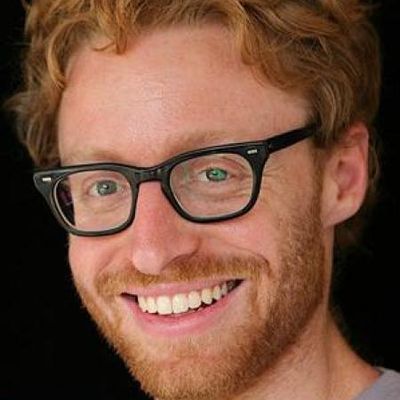
About
Powerhouse theatre-writing duo Matt Gould and Griffin Matthews join us to talk about their moving and personal musical, Witness Uganda (previously known as Invisible Thread when it premiered Off-Broadway at Second Stage Theatre). Inspired by couple’s separate real-life experiences traveling to Africa—specifically Griffin’s trip to Uganda—the story follows the character Griffin as he meets and tries to help five Ugandan teens, first by teaching them himself and then by sponsoring their education when he returns to New York. But is this the kind of help they want or need?
The musical asks many questions about altruism, public health, voluntourism, and the ethics of foreign aid. What does it look like to offer aid, particularly from the United States to a developing nation? Experts Afam Onyema of the GEANCO Foundation—which is simultaneously based in the U.S. and Nigeria (where it serves local Afridans)—and Ana Jimenez-Bautista, the director of Field Practice at Columbia University Mailman School of Public Health, join us for this fascinating conversation about what it really means to help and how we can offer assistance in the most useful ways.
Create the change
- Ask how to serve, rather than offering what you think is needed.
- Challenge your ideas of what education looks like.
- Get a passport and travel!
- Support local businesses while traveling.
- 6 Ways to Travel More Responsibly
- Learn more about the ethics of international volunteering.
- When choosing a volunteer program, you *want* to see these words: collaboration, cultural sensitivity, cultural integration, reflection.
- Pick up a copy of The Volunteer Traveler’s Handbook at your local independent bookstore.
- Donate to the GEANCO Foundation, or get in touch to offer other ways to serve.
- Read about volunteering and voluntourism.
- Find responsible travel guides here.
- Avoid poverty tourism.
- Read this article about ending colonialism in global health.
Referred to in this episode
- Witness Uganda, keep track of the musical and its developments
- The Wallis Annenberg Center for the Performing Arts in Los Angeles, CA
- Columbia University Mailman School of Public Health Department of Field Practice
- What is cultural competence?
- The Ibo tribe in Nigeria
Transcript
This transcript was automatically generated and might contain errors.
[0:00] Ruthie Fierberg: I'm Ruthie Fierberg, and this is Why We Theatre.
[0:05] Ruthie Fierberg: The podcast that digs into the onstage works we love to make the offstage change we need.
[0:12] Ruthie Fierberg: After all, that is why we theater.
[0:17] Ruthie Fierberg: Today we welcome Powerhouse Duo Matt Gould and Griffin Matthews.
[0:22] Ruthie Fierberg: I fell in love with this husband and husband duo and their work when I first saw their brilliant musical, which was then called Invisible Thread at Second Stage.
[0:33] Ruthie Fierberg: The show has since returned to its original name, WITNESS UGANDA.
[0:38] Ruthie Fierberg: It's inspired by Griffin's real life experiences traveling to Africa.
[0:42] Ruthie Fierberg: The story follows the character of Griffin as he meets and tries to help five UGANDA teens, first by teaching them himself, and then by sponsoring their education when he returns to New York.
[0:54] Ruthie Fierberg: But is this the kind of help they want or need?
[0:57] Ruthie Fierberg: The musical asks many questions, including what does it look like to offer aid, particularly from the United States to a developing nation.
[1:06] Ruthie Fierberg: Experts Afam Onyema of the GEANCO Foundation and Ana Jimenez-Bautista, the director of field practice at Columbia University Mailman School of Public Health, join us, Matt and Griffin for this fascinating conversation.
[1:29] Matt Gould and Griffin Matthews: Hi.
[1:33] Matt Gould and Griffin Matthews: Hi.
[1:35] Griffin Matthews: It is so nice to see your faces.
[1:38] Matt Gould: Likewise.
[1:40] Griffin Matthews: I wish we could be in the same physical space, but this is uh this is a good second, a good a good second option.
[1:47] Matt Gould: Well, this is the new real this is the new real life.
[1:49] Griffin Matthews: This is it.
[1:50] Ruthie Fierberg: You guys know that I have been such a fan of this musical since I saw it, and it moved me breathless at Second Stage Off-Broadway when it was under another name.
[2:03] Ruthie Fierberg: It was Invisible Thread at that point in its journey, and it has returned to its original name of WITNESS UGANDA.
[2:11] Ruthie Fierberg: So I'm so excited to talk to you guys about it today.
[2:14] Ruthie Fierberg: And I want to start with you, Griffin.
[2:17] Ruthie Fierberg: You began the UGANDA Project in 2005 after returning home from your trip to UGANDA.
[2:24] Ruthie Fierberg: So at what point did you and Matt start writing the musical?
[2:29] Ruthie Fierberg: And of course, Matt went in on this, but when did you start writing the musical?
[2:33] Ruthie Fierberg: And more importantly, why?
[2:36] Griffin Matthews: Yeah, it's a good question. I mean, honestly, I think that the question of even turning the story of me going to UGANDA when I was 23 years old and running into a group of uh teenagers who ultimately changed the course of my life. Why should that be a musical? And I think Matt had spent a lot of time in the Peace Corps. He'd spent two years living in West Africa. I had spent, you know, at that time, maybe three years working in UGANDA. So we obviously had an Africa connection, but we were really interested in the idea of talking about Africa in a way that felt real, true, honest. A lot of people were talking about Africa like Save the Children, and we were like, yeah, that wasn't exactly my experience.
They felt really complicated, and we made a lot of mistakes, and they made a lot of mistakes. It just felt like a human conversation and not like we are up here and they are down there. Um we got into this conversation about trying to figure out how to explain our experience in on in the continent um to Americans. And so uh Matt suggested that we write a documentary musical, and I said that is a horrible idea. And so he started secretly recording me, and that's how we got the show.
[3:54] Matt Gould: Is that right?
[3:55] Griffin Matthews: More or less.
[3:56] Matt Gould: Yeah, he turned on record on his garage band while I was ranting and raving about the complexities of helping people, and that rant is the opening number of WITNESS UGANDA.
[4:08] Ruthie Fierberg: So, Matt, tell me about what was it about Griffin going on about his experience and about him trying to communicate this that you said I should be recording this, this is going to come in handy at some point.
[4:23] Matt Gould: Uh I think that I knew for myself after having lived in in West Africa and Mauritania for a couple years that um I knew I was really interested in trying to tell some sort of story about what I think is the idea that Americans going abroad thinking they're gonna fix things is a ridiculous notion. Uh but also that there was an opportunity for some kind of um just community and and and relationships to be built between people and cultures, something about that felt important. Uh and I didn't feel like I was able to tell that story through my own experience because I think as a I I can say this now, I didn't know this at the time, but I think just as a as a white guy, um, having grown up in in a culture where uh everything was supposed to be for me.
Uh, I think going out into the world and learning that in fact everything in the world was not for me was uh um just a uh frankly a painful experience to have to realize that like I I am not the center of the universe, and uh I didn't yet know how to to put that into words and and music, but hearing somebody else tell their story felt more accessible. It felt like I could I I could explore those ideas through Griffin's experience in a way that I couldn't through my own, even though his experience was very different and very unique, and obviously fascinating told through the the lens of a an African-American.
[6:07] Griffin Matthews: Yeah, but I'm black, I'm gay, I'm funny. And that was also like maybe we should tell it through that lens. Like, let's just be let's do that. It's like a voice we don't have, like musical theater, we just didn't have that voice.
[6:19] Matt Gould: I don't know if we have the voice.
[6:21] Griffin Matthews: Do we have the voice?
[6:22] Matt Gould: I mean, I guess now the show exists, so maybe there's a voice in there, but it was like I don't think we have this voice.
[6:30] Griffin Matthews: I was going to say, like I think we have some black gay, funny voices out there in art. Maybe some of them have made it to off-Broadway.
[6:43] Griffin Matthews: Um, I'd say maybe Kinky Boots gets the closest to it, but I don't even I wouldn't even consider Lola like I don't consider Lowly a comedic character.
[6:53] Matt Gould: Um so yeah, I think that that's um, and and I know that Kinky Boots was on Broadway around the time that you know, you guys were at Second Stage, so that's why it comes to mind.
[7:03] Griffin Matthews: But yeah, I I don't think we have this voice.
[7:06] Matt Gould: That's very true.
[7:07] Griffin Matthews: Well, we just we talked a lot about the voice of Griffin. It it went through many iterations.
[7:13] Matt Gould: Um, there was an iteration on the show when Griffin wasn't gay. Remember that?
[7:16] Griffin Matthews: I do. What were we thinking?
[7:17] Matt Gould: Um, so that happened.
[7:20] Griffin Matthews: Um yeah, because you know what happens is your writing and your life the the your life, wherever you're at in your life is what's pretty much gonna land on the page. It wasn't that I wasn't open about my sexuality in life, it was that I still hadn't confronted my church, I hadn't confronted my family, I had not confronted UGANDA, right? Uganda's one of the most dangerous places in the world to be gay. So to put that down onto a piece of paper and then do that show every night felt like, well, wait, we can't really do that. And then one day we were like, we better just go ahead and start doing it so that so that there is truth on the stage. I think like anytime you get a chance to gather people in in a room you you have to say something that you've never said or feels profound to your life, so that it might actually be profound or in yeah, and impact somebody else's life. You know what I mean? Like it's just such a responsibility as writers to to try to get something out.
[8:25] Ruthie Fierberg: I love that.
[8:26] Ruthie Fierberg: So I mean, the character of Griffin in the show is at a point in his life where he feels really lost, and that is much of what compels him to go to UGANDA.
[8:39] Ruthie Fierberg: Was is that true to life for you, Griffin, the writer?
[8:44] Griffin Matthews: Like what compels you to go to Africa and specifically UGANDA?
[8:48] Griffin Matthews: Yeah, the of course, every every I feel like the secret that was kept for me growing up was black people in this country, specifically the ones that came from Africa, we don't have a sense of our history. It it is not it's not present, it's not present in school, it's not present in our parents because they don't know, right? It's just gone. Right. You know, like when Matt and I started dating, I went to his parents' house, and his mother has like pictures on the walls from people. I'm like, those are black and white. They're in Victorian club. What's happening? Where did those pictures come from? Black folks, we don't have that. We have there's a page in in a Bible, a Bible page that's framed in my house with written names, dates, dates of death.
Yeah, it's just a complete missing link. Like it's just a chunk that disappears. Gone. So I think when I went to UGANDA at 23, first of all, my friends were doing some aid work there. Um, and so they invited me. So that was this that was how I got invited. And I didn't, I was an actor at the time, very poor, and I did not have enough money to buy the plane ticket, and they had raised more money than they needed, and so they bought my plane ticket. That is the true story of how I got to UGANDA. And um, and of course, when I stepped foot in Africa, in UGANDA, I I gagged. I'd never seen so many black people. Everybody's black, everyone likes themselves. I was like, wait, you like yourselves? You like your skin? Okay, let's talk about that. And then they all thought that I was white, and that was the the second gag. They called me Muzungu, which means my.
[10:29] Ruthie Fierberg: We are gonna get to that.
[10:30] Griffin Matthews: Yeah, it was tough.
[10:31] Ruthie Fierberg: Do you still consider it a documentary musical?
[10:35] Griffin Matthews: Is it more of a traditional like fictionalized musical? What was the process of putting it together?
[10:41] Griffin Matthews: I don't know if I I like to say a documentary musical because I feel like even documentaries are slanted, right? They're document there's an editor. They chose to show you what they wanted to show you. So it's a documentary. We did the same thing. We chose to show you what we wanted to show you, and and we make no bones about it. It is completely from my perspective. The things that we see on the stage did happen. Some form in some form. You know, the people are real, our students are real, and we knew that one day they might actually see the show. And so we had to change names and locations, and a musical is a two-hour event.
[11:23] Ruthie Fierberg: So, what is it most important for you to capture and most important for you to communicate with this show?
[11:36] Griffin Matthews: Yeah. I think we just watched In the Heights, and we've been talking about In the Heights for the last three days. Um, when I saw In the Heights on Broadway, I had never seen um a culture so celebrated in a way that felt accessible to me. And I when we started writing WITNESS UGANDA, I wanted it to be the blackest and the gayest and the most Christian and the most complex and the most horror and the most joy that it could be, because that is my life. I wanted to try to get life on the stage. And so um, so I think that if we can experience life, if we meet characters that look like us, that sound like us, um, then we feel like we have a place. And and for a very long, long, long time when I graduated from Carnegie Mellon and I looked at the American theater, I did not see myself.
I was auditioning for things um that I thought was interesting. My classmates were playing leads on Broadway, and I was trying to get into shows where I was, you know, not even a human, right? I was an animal or yeah, I'm fighting. All the black boys are back there fighting. We're fighting for the lion. And I was like, why are my classmates there are humans on stage? What's happening? Right, you know. So, anyways, I say that not as shade, but just as the reality of graduating from Carnegie Mellon and going, I can speak Shakespeare, I can do everything that they can do, but I am fighting for one role. If I can't hit that note as Simba, I'm in trouble.
[13:16] Griffin Matthews: And so I wanted to make WITNESS UGANDA to represent the many varied voices of the black experience, the African experience, the black American experience, just people with brown skin. I wanted to make that experience on stage.
[13:36] Matt Gould: Well, I was just gonna add just that it felt important to the many friends and family members that we have back there in Africa and both UGANDA and in other parts of the continent, that this not just be an exploration of the tragedy and the misery of blackness, that human beings all over the world in this country as well have a whole range of experiences in life. It was actually really hard in making the show to explain to even people we were working on the show with that this is not a sad story about poor sad African kids and this is not an exploration of a gay black man's miserable sad life. But yeah, those things exist and sadness and pain exists, but so does joy and celebration and the opportunity for a beautiful better life and a connection between all of these people that in itself breeds love and joy.
[13:36] Matt Gould: Correct, that's I mean that's what I take away. Of course, you know, being set in UGANDA, being inspired more by the events that happened to Griffin while he was there. Matt, I'm curious because like you said at the beginning, you did spend time in the Islamic Republic of Mauritania. What from your experience gets embedded in the DNA of WITNESS UGANDA?
[13:36] Griffin Matthews: All the screaming, all the pounding and the screaming, that's him. All the light, all the pretty, all the rainbows, that's me.
[13:36] Matt Gould: Yeah, some of that's true in a grand sense. I guess for me it's just it always goes back to, and Steven Schwartz says this, but as writers, you just keep telling the same story over and over again. It's always packaged in a slightly different way with new characters, but at the core, you can always sort of scrape away the top and you find the same story that as writers we're trying to get to something. And I guess for me it's just about the complexities of life, the complexity of helping, the complexity of friendship, the complexity of living in a country and wanting to live somewhere else. Mauritania and UGANDA are both really complicated places, and very different, and very, very, very different.
[16:36] Griffin Matthews: Literally, they look when I see his pictures from Mauritania, he is in sand dunes, his head is wrapped in scarves, everyone is pretty much Muslim, right? And then when you look at UGANDA, it's green rolling hills and a lot of Christianity going. I mean, we just had completely different experiences. It's like humanity, it's just a far more kind of fragile, nuanced experience than these grand notions of like, well, Africans are this way and Americans are this way.
[16:53] Ruthie Fierberg: I think it's so funny that you guys have talked so much about wanting to convey the complexity because one of the very first things that the character of Griffin says is, I thought if I just went and shared what I saw with people and they shared it and they shared it, we would all understand the simplicity of helping, right? And the whole thing is like it is so not simple.
[17:30] Griffin Matthews: Um, before we bring in our experts, I did want to ask about this idea, Griffin, you know, that they called you Muzungu, and Muzungu means white person, not skin color, but mindset. How did that make you feel? And what about you was a white mindset to these kids?
[17:56] Griffin Matthews: Okay, Oprah. All right. I see what you're doing. All right. Is this where we're going today? At one point. That's where we're going today. We're doing this. Okay. We're doing this. Um, first of all, they thought I was a white person because they are so dark. They did actually think they were curious, you know. Like, when I would walk through the village, the little kids would scream. They would run out of their houses or run to their houses, but they would scream. Um, so that was the first time I realized like black people really have different shades. I mean, they really look dark. That's wild. And I'm pretty brown.
[18:35] Matt Gould: No one's ever...
[18:36] Griffin Matthews: I was gonna say, that's the thing. It's like I'm not saying that there isn't a spectrum. Our very first episode of the podcast was about colorism. So, like, I'm in full acknowledgment of that. But looking at you and thinking of the spectrum, at least in America, I'd say you're, you know, middle to darker.
[18:56] Griffin Matthews: I'm black where I'm like, I'm black as well. No one ever thinks that I'm not. So when I got to UGANDA and they literally made me show them a picture of my grandmother who has a little afro and she was really dark skinned, they were like, that's your grandma. Like they couldn't put that together. And then I also think it wasn't just about my skin, it was the way that I was dressed, and then it was the way that I was talking. I had a head full of dreadlocks, and then I wanted to help everybody. And then they were like, okay, so you're white. So welcome. Here's my list of needs. And people used to hand me so many secret letters with like, you know, lists of needs. And they knew I only say that because now looking back at it, they knew exactly who I was and what I could or could not do for them.
And I was naively trying to run around a village saving everybody. And it just got me into so much trouble, you know. And I think that America, when we wrote WITNESS UGANDA, the secret of WITNESS UGANDA is it's not about UGANDA, it's about America. America is running around the world trying to save everybody and making all kinds of mistakes. We have our own things that we should save here. I think 2020 showed us.
[20:12] Griffin Matthews: If I hear one more person say New York is the greatest city in the world or America is the greatest country in the world, I'm gonna lose my mind. If we didn't learn something in 2020, it's that there were a lot of great, great cities and countries all over the world. I wish Americans felt that way. Because that would show that we've learned some lessons, you know, throughout the years, the couple hundred years we've been around. I was in Rome last year shooting something, and I saw the Coliseum. I was like, what? America is not the greatest. Have you seen it?
[20:47] Matt Gould: Was that your first time in Rome?
[20:50] Griffin Matthews: That was my first time.
[20:52] Matt Gould: Oh my god, it's unbelievable.
[20:54] Griffin Matthews: It's unbelievable. No, you're absolutely right. You're absolutely right. And I think, you know, honestly, in looking at and thinking about, you know, time is interesting because I saw Invisible Thread, I was so taken by it. There were so many pieces of that story that it was like, I want to unpack every single one of these. And since having this idea for the podcast, I have always thought like this show, the two of you, has to be the focus of an episode. And now watching, because you graciously shared the Wallace theater production from LA more recently, and it has changed so much, but is still very much the same at the same time.
[21:39] Ruthie Fierberg: Yes, we could have made this episode about being black and being gay, being black and being gay in the church, what it means to be Christian in Africa. There are so many themes that you guys so deftly portray and investigate. But the theme that I want to investigate today is this complexity of what it means to help other people, specifically what it means to come from America and help people in other countries. And the power dynamic between coming from a first world country and going to a less developed nation. And so to help us do that, I have incredible experts. Like we have today, Miss Ana Jimenez Bautista, who is the director of field practice at Columbia University's Mailman School of Public Health.
She is a trained social worker from the Dominican Republic and a dual citizen. For over 25 years, she's coordinated community education and outreach, specifically developing partnerships between Mailman and communities in need, and she has led or participated in multiple trips to the Dominican Republic to assist on the ground. So I am so excited to have her here today. Ana, welcome.
[22:56] Ana Jimenez-Bautista: Thank you. Hello, everybody.
[22:59] Ruthie Fierberg: And then we have Afam Onyema, who is the CEO of GEANCO Foundation, which is a position he has held since 2007. GEANCO was established in 2005 by Afam's father, Dr. Godwin Onyema, who is a native Nigerian. When Godwin immigrated to the United States after graduating from medical school, he vowed to return to his homeland in Nigeria to improve health care. Now Afam leads this charge. And last year, Afam was named one of the top 10 influential African American immigrants in the world by World Remit. So we are excited to talk to you, Afam.
[23:40] Afam Onyema: Honored to be with you, Ruthie, and honored to be part of this conversation. Thank you.
[23:43] Ruthie Fierberg: Absolutely. Ana, from where you sit, explain some of the complications of that dynamic coming from the US or first world westernized, say, country and going to a lesser developed place and saying, I'm here to help.
[24:04] Ana Jimenez-Bautista: I was actually loving hearing Matt and Griffin, because it's clear that the complexity equals also richness, and that there's a lot to be learned in these difficult, sometimes difficult dynamics. Part of the issue is that we are embedded in the idea. And when I say we, I mean mostly people from the United States are embedded in the idea of this superhero that is going to save the day. And with all good intentions, especially the people that are drawn to helping professions, we are, or what are called helping professions, we are all the time trying to help others, rescue others, and sort of depart from the mentality of lack as opposed to the mentality of resources. And so approaching countries like UGANDA, like the Dominican Republic, in my experience, brings the idea, especially to unexperienced students, for example, sometimes have the idea that they are going to solve the problems of the country or solve the problems of the world.
And that people need to be rescued. And in reality, what we have learned, if anything, is that we need to look at our common humanity and that we are learning from each other, and that people are doing just fine without us, and sometimes even better without us. And that if we put our needs together and find commonalities, common learning, common resource sharing, we can do much better. Not only for the issues, the particular issues that we're dealing with in our case, ending health disparity and creating or supporting health for all. But in everything else.
[26:28] Afam Onyema: And I also want to say that this is not, we're not saying don't help people, right? We're just talking about the ways in which we approach it, the ways in which we can responsibly and collaboratively do this.
[26:42] Afam Onyema: And so, I mean, off um, Gene Co. is so unique because your father is Nigerian, he began the foundation to help his home community. Yet you were born and raised in the US, you have family back in Nigeria. Geneco is operated dually out of Los Angeles and Nigeria. So, how do you navigate the dynamic of quote unquote outsiders helping communities in need and making sure that Gene Co is helping responsibly?
[27:13] Afam Onyema: Sure, yes. It's there is complexity there as well, certainly uh on a personal level, but as uh for the foundation as well. On a personal level, as you mentioned, I was born and raised here in the US, and my parents and my parents' generation were very conscious and very concerned about raising their kids, quote unquote American. And so many of them did not speak, like we're of the Igbo tribe. They did not speak Igbo in the house to us. They did not want us to learn it, they didn't want us to have Igbo accents, and so growing up I didn't know my native language, and many of my contemporaries and friends did not either, uh, because they were very concerned about the challenges that we'd already face as the children of African immigrants and now coming to a majority white school or community with an accent.
[28:07] Afam Onyema: And so uh and and I you can understand that to some degree, but certainly now that we do so much work, I do so much work in Nigeria, and as soon as I land there and people are speaking to me in Ibo, and I don't, I can't, I can understand it, but I can't speak it back. They're shocked. So there's that sense of outsider being an outsider in that way, but also there's because I have so many family members in Nigeria, and because we do so much work in areas where my family lives or extended family and friends live, there is a sense of, oh, you're coming home. Like you could have stayed in America, you could have stayed and enjoyed your life. That's the number one the number the two questions I get. First of all, why don't you speak Ibo? Second of all, why are you here? Like what why what are you doing here? Like you're you're you're quite comfortable in in LA in the US, doing well. Why do you keep coming back? Why do you keep coming back to serve?
[29:03] Afam Onyema: And so there's a great appreciation for it, there's a great respect for it, and there's credibility. I tell people, you know, we raise money here in the US, and I can walk into any executive, any donor's office and say, listen, we are we have over 13 years of audited financials, we have videos, websites, any piece of credibility you need that a any US-based charity has, we have it, and we have it in spades, and we have it probably better than many, because I'm like, that's really important to us. But then I can go to Nigeria and say, we're from here. We're not coming in and telling you what we think you need. We're sitting down and saying, Uncle, what is this village need? You know, the governor, what do you need?
You know, you went to school to high school with my cousin. Like it's it's there's a sense of, oh, you're we're doing this together. You're doing it as Nigerians as opposed to, and even just saying, We'll have brainstorming sessions, and I'll say, What about this? And then uh my team, which is Nigerian, will say, Well, we can't do that. That just wouldn't fit the culture. I'm like, all right. No argument, there's no I have to have it this way. No, it's okay. You tell me what fits, what works, what will last. That's the most important thing.
[30:13] Afam Onyema: What will last, what will be embraced, uh, what will empower people on the ground. Matt and Griffin, you guys, uh UGANDA Project, while it inspired this musical, it's also ongoing. And so I'm wondering for you guys in that piece of your work, like how has your responsiveness changed over time? I'm thinking of like Joy's line in the show where she says to the character of Griffin, stop teaching, start listening. So tell me how the evolution of your work has happened over the years.
[30:47] Matt Gould and Griffin Matthews: Well, first and foremost, we want UGANDA Project to end. Stop. Please, God, stop. It is our nonprofit, and the goal was always to reach an end, right? We we decided to not scale out and up and bigger and bigger. We took on, I think like 15, you know, and just kept it as a family and said, let's just get these 15. And if we can get these 15 into whatever their best life is, they will go out and they will marry and they will have children and they can afford those children and they can send them to those schools and da da da da. So that it just felt like it might just branch out from there instead of a lot of nonprofits get on the ground and they just want to take everybody because they can afford to at the beginning. And then people become numbers and statistics, and it's actually not shade to the not nonprofits that do it, because some of them actually can do it and do it well. We could not.
[31:44] Matt Gould and Griffin Matthews: We could not do that and do that well. We have two more left two brothers one is in medical school the other is leaving us in July. So I'm just I sent the last payment yesterday for for Derek. Wow but but oh my god it's been such a journey and now some of our kids um Esther lives in Boston Mary lives in Seattle Aaron lives in Australia Patrick started his own organization in UGANDA it's one of the biggest it makes way more money than we ever ever ever could make as a nonprofit um Kenny's a doctor um and then some of them didn't make it through the program and that is true too Ibrahim is loosely based off of of Patrick and uh you know I I had to respect it in the moment I kept saying you gotta go to that high school and you go because that's what my parents said to me I was just trying to be dad right and he was like yeah I don't want to do it there's another path for me.
[32:37] Matt Gould and Griffin Matthews: So that was also part of the goal is like to not just be teacher student but it was to be family. Well that's what often I think also was just saying that you have a shorthand because culturally you're working with folks who know what who just understand the culture that you're working in. And I think that that's been the one of the big lessons for us is is stop teaching start listening we had to actually be form a relationship with the folks we were working with. We had we had to actually spend time actually getting to know them actually understanding who they were and what their needs were and what their aspirations and goals were language spoken things unspoken.
[33:24] Matt Gould and Griffin Matthews: All of that, so that we could then go, oh, maybe you don't maybe maybe actually high school is not the best option for you, which might sound crazy to an American audience, but for certain folks, it was like that that path was never gonna be what got Patrick where he where he needed to get. Do you know if I could do something different? I I might have, after this, so many years, I might have actually wanted to pursue a path for several of our students so that they could learn a trade. You go like UGANDA doesn't necessarily need, I mean, yes, there are accountants and and teachers, but most UGANDA graduate from the university and they have to become entrepreneurs to start something. And I was like, So some of our kids who graduated from university, like they they're farmers now.
And I'm like, God, the amount of money we spent sending them to university. We could have just bought them a damn farm. We could have just we could have got them some chickens and some goats and let them do the thing, you know, like, but that was something that we hadn't for us as Americans, it was just school. You go to high school, you go to college, you go to like we just didn't know.
[34:34] Matt Gould and Griffin Matthews: That's exactly right. And it and it, I mean, in the show, too, like the character of Jacob, um, and and every you know, I don't want to put too many spoilers in here, but he is needless to say, resistant to sitting down in a classroom and learning what the character of Griffin has to tell him. And I it just brings up the question for me of education that I I pose to the room. Like, is offering education always a good thing? Is it is it imposing Western values onto other, you know, people of other cultures, and or is there a way to make education um a priority without it being westernized? Like, is there a different version of education?
[35:21] Ana Jimenez-Bautista: Well, I can speak to that. We we have a scholarship for girls who have been directly affected by Boko Haram terrorism. Either they were kidnapped and escaped, or they were driven from their homes and became internally displaced, or they were orphaned, or uh and kind of the most most tragic case, abandoned. Their girls are just abandoned on the side of the road because their brothers are more important. The the sons you keep, the daughters you discard. So we go to we go to camps, we go to the word of mouth, and we bring these girls in and educate them. And I think what's very important to us and to me in particular is we we we found great partner schools and majority run by Nigerians, founded by Nigerians, and we put the girls in and we take care of all the expenses, but we don't do anything with the education itself, the pedagogy.
[36:12] Ana Jimenez-Bautista: We say, okay, like you teach what you're gonna teach, and we're not gonna come in and say, oh, well, we'd love for you to teach coding. I I can't tell you how many donors I have like, oh, I want to come and teach these kids coding. I want to come and learn, you know, all these all these subjects. I'm like, you know, these kids don't haven't opened a laptop in a life in their life. So they go from like how to turn on a uh a laptop to coding is a bit of a bit of a stretch. And he asked them like, what about just money to make sure they can like eat every day and they can learn the basics? Oh, well, that's not sexy. That's not that's not what I want to do.
[36:43] Ana Jimenez-Bautista: So um, but yeah, for us it's very important that the education belongs to the Nigerians, and we just help how we can. We empower them. So during the COVID shutdown, what we were hearing uh from the schools and from the the families was that all these girls and all this the students are back home in their villages, and there is a real question how many would come back to school when school reopened, because you have the girls back at home. There's already this bias against girls going to school, and then you become used to the girls at home, working the farm, taking care of the other kids, cooking and cleaning. Oh, why don't you just stay home, Chica? Like you're you're fine, like you know, as in, why don't you just stay home? Like you're we'll marry you off.
[37:26] Ana Jimenez-Bautista: And so they wanted to get these kids educated and learning and engaged, and they didn't have the means to do so. So we were able to provide tablets that were loaded with thousands of West African books and science texts and everything, everything was in the West. It was they were they were produced in Ghana. They were produced in UGANDA, they were produced in Nigeria. So instead of Little House on the Prairie, it was a Zim and the Calabash or something like that. It was it was it was very much of that culture. And biology was taught with someone with a black face on the page, and the dialect was changed and all that.
[37:31] Ana Jimenez-Bautista: So we were able to donate hundreds of those of those tablets, and they were all internet enabled. And the school was like, that's great. We can actually like run Google Classroom off of this. We can run internet classrooms. And so they were able to keep learning going for them. The one of the greatest joys, certainly for for me, was to see these these girls in particular still learning and you know, reading books by the hundreds while people here are complaining about um about you know having to learn.
[38:32] Ana Jimenez-Bautista: Uh, and so it so yeah, it's very important again, meet people where they're at, not this is what I think is best. So either you take it or we'll just go to someone else, they'll take it. Because someone will, any Western idea of education or any gift, someone's gonna take it. Like someone's gonna there's that person who wanted to do the coding, someone's coding poorly in some part of Africa, and it's gonna last for a couple of weeks or months, and then it's gonna go away because it's just not sustainable. Um, so you have to have the courage to say, like, this is not good for these people, and this is about serving them, not serving what your ego or your your agenda. That's a very important distinction.
[39:10] Afam Onyema: Right. And I think that that speaks to, I mean, the reason I asked Anna to be here is because I was working on a different project and learning about the Mailman School of Public Health, which by the way, had no idea really what the field of public health was all about until doing that project and really understanding like that's that's the field that looks at disparities. That's the field that looks at how things affect a population, a community, a society. Um, you know, in comp like complementary to physicians who look at individual patients.
[39:48] Ana Jimenez-Bautista: And as we educate the public health leaders of tomorrow, one of the things that Mailman prioritizes, I know, is this strengths model.
[39:58] Ana Jimenez-Bautista: So, Ana, can you define the strengths model for us?
[40:04] Ana Jimenez-Bautista: Yes. And I just want to say that the strengths model that we practice fits with the school's mission of education and community service backed by scientific research. Um, that we really try to educate the next generation of public health leaders, um, to help improve the health of people everywhere. And so the strengths model really refers to an approach to global practice that departs from the understanding that we are going to places that already have ample expertise in what they're doing.
[40:52] Ana Jimenez-Bautista: And that we will be mostly learning from colleagues in other parts of the world who generously avail themselves and their communities and their projects to us. And you know, this model requires really an understanding beyond what author Chimamanda Adichie calls a single story. An understanding that when we go to a country or location that has less resources than we have, that doesn't necessarily mean that because of that reason they are less knowledgeable or weak or anything like that, and that we have to be heroes or saviors.
[41:40] Ana Jimenez-Bautista: So the strengths model is building on their expertise, building on their strength, but filling in the gaps, whether that's supplies or funds or just bodies and people to do the work they're already doing. Is that right?
[41:58] Ana Jimenez-Bautista: Exactly. And it recognizes that extremely competent local people are dealing day in and day out with all the issues that we are going to look into and have robust projects going on.
[42:17] Ana Jimenez-Bautista: Afam, what you were saying was moving me, and it is so wonderful the work that you're doing and the work that Griffin was describing to where, yes, you have your vision of education at the same time, others have their vision of education, and then you have to meet in the middle, you have to respond to the needs that are perceived by the communities that you want to help and support. Listening to you, it makes me want to go get my public health degree.
[42:55] Ana Jimenez-Bautista: Um, but I'm not in a public health master's program as of now, and I'm sure there are many people out there who don't have the kind of infrastructure that Mailman provides or a place like Mailman can provide. So, how can individuals who want to volunteer on their own, who aren't professionals, who maybe want to take a week or two to give back, how do we determine if a volunteer organization or a program is operating on this strengths model and if they are culturally responsive?
[43:32] Ana Jimenez-Bautista: Are there clues on websites? Are there terms that we should be looking for?
[43:38] Afam Onyema: So, Ruthie, there are some cues that you should be looking at. You have to be careful with not supporting the exploitation of vulnerable populations, and so if you see a lot of emphasis on, let's say orphans, but there's not clarity of a backed program on a website, come help orphans and be with them, and not much structure. Um, you probably should be aware of programs like that, especially during these times that also the presence of people moving from one place to the other can also bring infections, etc., to the population that you're trying to help.
[44:29] Afam Onyema: Of course. And um, so it's important to look at that and sort of try to catch is there any kind of exploitation of vulnerable populations, featuring them as a tool to gain some funding or some kind of privilege, and then the other thing too is to look at how organized that pre, during, and after component of learning and reflection and collaboration is so very good point. Clue words, collaboration, reflection.
[45:15] Ana Jimenez-Bautista: I love that. Students are working on research that is being done in UGANDA about how to improve adolescents' access to ethic consents, and whether, for example, adolescents are in a capacity to consent, when should adolescents consent on research, when should it be their parents, etc. The data is collected by locals. The students understand, learn about and understand the context before they proceed to support in analyzing the data, qualitative and quantitative, and provide reports on particular areas of this larger discussion.
[46:10] Ana Jimenez-Bautista: Part of the global understanding is that global is local. When I went to UGANDA particularly, I had participated in so many of these programs that after I was there, I was called Muzungu too, Griffin. But at the same time, I was given a UGANDA name because they felt that I was so much UGANDA in the way that I conducted myself.
[46:36] Ana Jimenez-Bautista: It was such a good idea. What's your name? What is it?
[46:39] Ana Jimenez-Bautista: My name is Nachimuli, which means glass.
[46:42] Ana Jimenez-Bautista: Yes, and you are. Cultural events, in engaging tourism, obviously, too, et cetera. And learn to develop that relationship that both Afam and also Matt and Griffin were describing, where you become colleagues, where you become collaborators. When they learn that we are all together in this struggle.
[48:03] Afam Onyema: And so you all pivoted away from that. Can you tell us a little bit more about that story?
[48:09] Afam Onyema: Sure, sure. And I think it's also a generational difference. My father wanted to build a hospital and name it after his father. But it was very much about the building for him.
[48:30] Afam Onyema: Or is it about saving lives? Is it about making an impact? And there was some real tension there, to be honest, because he very much wanted this building. And of course, it's almost impossible to build a to have something like that $20 million hospital in a place like Nigeria, raising the money here in the US when we didn't have any personal. It wasn't like we were giving family money.
[49:02] Afam Onyema: My dad's an obstetrician gynecologist, so safe delivery, uh, women and children, very important to our family. And I said, listen, Dad, all the things this hospital would do, we are doing in the community. We have great partners, there are hospitals that we're supporting, we can build them up. And that became our mission. And eventually, and things are great now, and we made the transition, and we're actually we have a system of smaller clinics. So instead of a $20 million hospital, we build $60,000 maternity clinics. We repurpose shipping containers. So we take them, repurpose them, retrofit them.
[49:37] Afam Onyema: Yeah, yeah, it's fantastic. Yeah, instead of like, instead of like, you know, in San Francisco, they take shipping containers and make, you know, bespoke ice cream shops.
[49:49] Afam Onyema: Exactly, a little bit of a difference. Yeah, exactly. But it's our model is we don't own the clinics actually. The local nurses and midwives actually own the clinics and run them. We train them, we make sure they understand the technology that's in them. The clinics are all solar powered. So while the power is constantly going out, and I'm sure Griffin and Matt too, your experiences in Africa, like the power would have gone out 10 times during this conversation if we were in Nigeria. And so it was very important us to have solar power, and um, and so that's that was a critical thing.
[50:20] Afam Onyema: And now babies can be delivered at all hours. Uh, child vaccinations and women who did not feel safe going to the just inhuman facilities that they had access to, the only facility access to were just you you you wonder where the where's the dignity in having a woman deliver in this hovel? And it made me sick to my stomach. And to be able to build these clinics and have and this is the joy in their face in the sense of I'm worthy of this. And so we have five of those clinics, uh, two running right now, three will be built by the end of the year. And again, I tell my dad like what we can do in these clinics, what we can do with our partnerships with existing hospitals. We are doing what a hospital would do.
[51:05] Afam Onyema: And so, and again, it's all about empowering the local community and saying, How can we make your facility better? Telling the local nurses, we trust you to run this facility, we trust you to oversee it. We're here to help you and support you, we're helping to train you. If you have any questions, we're right next to you. But you make the decisions on patients to see how much to charge, whether you accept a new program or not. So you just see that and talking to the local staff and the people on the ground, they just feel so empowered. They feel like ah, you guys aren't coming and imposing.
[51:37] Griffin Matthews: Yeah. I mean, it's the it's my one my favorite line in the show when um when Griffin says, so no, UGANDA Project never resurrected a building in the village. We never did that because that's not what we're trying to do. We're trying to resurrect people.
[51:57] Griffin Matthews: That idea of resurrecting people. I mean, God, I get choked up thinking about it. Like I mean, honestly, Matt Gould, tell me about writing those words and being able to articulate it that way.
[52:11] Matt Gould: I think that the I I mean, honestly, this is gonna be really a kill joy, but I think those words were kind of spoken off the cuff in a it was a rant, in a rant that he was having. And I think I mean, I think that came out of Apparently I'm ranting a lot.
[52:26] Matt Gould: I mean, God on high, try living with this one. Um yeah, but Matt, as we know, it all comes out, it all comes out through you in the show. Now through the character of Ryan. You're trying to throw us off the scent, but we know.
[52:39] Griffin Matthews: I was raised Jewish, so I constantly am riddled with guilt and self-doubt about everything. So I think even coming home from Mauritania and having a new perspective on uh what our responsibility or not was in the world, I was still, you know, I think I think we were just trying to figure out like, you know, people, you know, I I came home from Mauritania.
[53:02] Griffin Matthews: We're like, so did you build a hospital? You know, like it's always a hospital too. Did you build a school? And I was like, no. I like taught English and like probably not really well. And most of my time was spent sitting around with people and building relationships with people. Some of which I still have with those folks. And so I think that was something, you know, even with UGANDA Project, is then I came and started helping Griffin with his nonprofit, you know, people were always like, so, you know, can I get my name on a brick? You know, can I get will my name be on the side of the well in the village? And we were like, ain't gonna be no well. You know, they don't need your water, they have it.
It's our act two opener is called Bricks, and it is the passage is about everybody always wants us to build a building, and further into the passage, it talks about the same is true for America. We have all of these buildings, they're already sitting in every city, but people cannot afford to get into the buildings. And so that idea when we people would ask us about what are you guys building, what schools are you building? We're like, they have hospitals, they have schools, they have those buildings, those buildings exist, but people can't afford to get into them. And it seems like a worldwide problem. Of course, you know, often is making beautiful points about yeah, everybody needs new clinics and the updated technology.
I love the idea of solar, certainly for Africa, it just makes a lot of sense. But reforming healthcare all over the world, it's not just this country, right? But in UGANDA, the idea of payment, you know, we have a lot of issues with students getting sick and needing to pay for their trip. We have the same thing in America. Hello, have you seen all the GoFundMe? It's insane. The GoFundMe's are insane. It's not sustainable, not for humans. It's not sustainable for the human race, right? And so, anyways, I say that to say simply that the idea of reframing our mindset from resurrecting buildings to resurrecting people just felt like it was the right thing to do.
[55:26] Griffin Matthews: I am also Jewish, and I feel like Judaism provides us a little bit of like two sides of this coin where like you're raised believing in tikkun alam, which is healing the world. So, like that responsibility on your shoulders of like you have like, like, please fix it all, make sure you're helping, make sure you're doing. But the way in which you do that can be small and can be about people because there is that Jewish parable of, and I may have even said this on the podcast before of the man walking down the beach, throwing starfish back in the ocean one by one, and this woman walks by and says, What are you doing? There's no way you'll ever, you'll never get all of them back in the ocean. It doesn't matter.
And he throws one back in and he says, It mattered to that one. Because we've talked a lot about like organizations being responsible, institutions who teach people who are going to do this work full-time being responsible. Anna even talked about earlier key words to look for in going on a trip to help. But what are other ways people who want to assist can ethically offer their time or their resources? We get this question a lot. How can we help? And I love that question. I prefer, and this is the question that I try to live out every day is how can I serve? And because it's about because then if I say, How can I serve? and the person says, I want you to scrub this floor, and I thought it was going to be some big grandiose thing, though we need this floor scrubbed.
Well, I don't scrub floors, but then you're not here to serve. You're here to scratch an itch, you're here to get an Instagram photo, you're here to do something that you can talk about. And so we're just really fortunate that over the years we've had people who truly have served. We've had, you know, we do multiple medical missions. People will fly in on their own, they'll pay their way, they'll come and they'll do surgeries, they'll train. We have people who are devoted to our scholarship girls, they mentor from afar and just they'll make sure a girl feels empowered. How can I help you? And how can I get you keep you motivated? People who even something is as small as doing a Facebook fundraiser or I have access, we do a lot with entertainment community.
I have access to tickets to this premiere you can raffle off, or I can do a meet and greet. There are all sorts of things that people can do, creative ways people can help that integrate into their lives. And again, it's being if one asks, How can I help? How can I serve? Be ready to accept whatever comes back. Because I can't tell you how many times people will say, I want to help. I just yesterday someone emailed me and said, Well, I want to collect just basically crap that people don't use here in the US. Like used pill bottles and travel toothpaste, whether it's unopened or opened, like just all sorts of stuff, and we'll just send it to Africa. And I tried, I was very polite and said that's thank you so much for your willingness to do this.
Do you realize that collecting it here in LA, sending it to our depot in Chicago and shipping it internationally to Nigeria will cost thousands of dollars? Perhaps you can just do it, raise that money, and then we can use it directly to buy goods that are made by Nigerians in Nigeria. And she's like, ah, I don't want to do that. So in the end, it's you have to really think about anyone who wants to approach this work. What are you trying to get out of it? Work. You have to be willing to work under a rock. That the work that's done in UGANDA is not going to be trumpeted on CNN. It's not going to be Oprah's not going to tweet about it, but there are real lives being saved for our work the same way.
[59:02] Matt Gould: No, I was just gonna add, like becoming a parent, Griffin. I have two foster kids who are our kids. And I just I've realized in the last three years as a parent that like being a parent, and this is this might be like really kind of like bummer to the people who are like trying to figure out how do I make a big change in the world? I think being a parent is one of the most radical ways to affect change in the world because you're literally having like day-in, day-out input effect relationship with a person who is going to ultimately go into the world and be a person. And I think I've found I've started to go like, oh, that relates to this the idea of international aid work too, that if you're not doing the work with your child, with your neighbor, with your husband, with your wife, with your employee or employer, then like you're probably not ready to do the work beyond that.
Because as often just said, as Anna has alluded to, it's really just about this person next to me, right here. That it the stuff that you're never gonna see, that you're never gonna hear about, but that maybe sort of reverberates on and on in ways that you just never even knew it was gonna reverberate. And even you, the giver, you might never actually know what the impact of your work was. And that's the work, just being in the struggle with another person. That's it.
[1:00:42] Ana Jimenez-Bautista: I mean, gosh, that wow, that your comments about parenting really have just taken my breath away. It's such a beautiful, beautiful way to look at it, and that is the hardest work of the hard work. I mean, what the only thing I was going to say, which is like a little bit of a non sequitur at this point, but I do have Joy's monologue echoing in my head of like I have a voice and I put on the show and I do what people, you know expect of me to get the photo to do this. And but the end of that monologue is you will never see them again. There is no trust between those two parties, the party that is performing and the party that is coming to see the show. But in all of what we've talked about is a collaboration, a meeting of the minds.
And like Afam has said, an empowering, and like Ana has said, you know, a collaboration and a connecting and an egalitarian approach. And that's where the trust is built. And I think that is a big part of the change. I want to say one other thing, because the question was how can people support? And I instantly thought of the idea of traveling, and then you brought up that monologue. The monologue is about you'll never see them again. One of the things that I had to learn as I've gone back and forth to UGANDA is that I was treating UGANDA differently than I was treating Italy, right? I was going on vacation to Italy and UGANDA, I was going to help. And I started realizing when we would bring people, we started bringing large groups, we brought our cast, 19 people to UGANDA to visit.
And we were like, the first thing you do when you get to UGANDA is nothing. Just like sit down, let's eat, let's look around, let's take walks. The way that you do when you go to Italy, you sit down, you eat, you sleep, you will because when we if we start seeing this place as equally as valuable and equally as beautiful, that we have things to learn, that there is going to be things we've never seen before, and take that experience in, then you have a different idea of how you want to handle the culture, right? Mark Twain said this quote travel is fatal to prejudice, bigotry, and narrow mindedness. And many of our people need it sorely on these accounts. And I feel like when you travel, if you know, I mean, how many Americans have passports?
I think it's like a really small number of Americans that have passports. So you can't possibly know what the rest of the world is doing or how to function in the world unless you're seeing it, unless you're traveling, unless you're getting that experience. So I think it's a small way that people can understand themselves and understand the world is to get your passport and travel. And that's a really good point that like there are problems in Italy, but we don't go to there to solve them, we go there to enjoy. And actually, those funds of tourism can hopefully be used. And if you're, you know, if you're eating at a local cafe, that supports a local business person.
[1:03:51] Ruthie Fierberg: Well, I mean, this discussion has been incredible. Matt and Griffin, is there any news with what's happening next with WITNESS UGANDA, or do we have to wait with baited breath?
[1:04:01] Matt Gould: Uh, we're very excited to announce that there is a studio cast recording of WITNESS UGANDA fully orchestrated, fully tricked out. It's so amazing and knee deep for years trying to get the songs recorded. Forever. So we have an insane cast. Amazing. Cynthia Arrivo and Griffin Matthews and Leticy and I just wanted to thank you, Griffin and Matt, because you are really using art as a tool. And you are really creating such an awareness with your play. And because of the work that you're doing in general. And thank you to Matt Gould, Griffin Matthews, Afam Onyema, and Ana Jimenez-Bautista for being here today. And we will put so much more information about WITNESS UGANDA, the cast recording, opportunities for volunteering ethically and or just traveling all in the show notes. So we'll see you next time.
[1:05:08] Ruthie Fierberg: Why We Theater is a product of the Broadway Podcast Network. It's edited and mixed by Derek Gunther. If you like the show, subscribe at bpn.fm slash WWT or Apple Podcasts or wherever you get your podcasts. And don't forget to leave a review and tell your friends. Our theme music is by Benjamin Velez. Why We Theater is recorded in part on the traditional lands of the Wapinger and Lenape peoples. I acknowledge this land was unjustly taken from them and pay my respect to elders both past and present. Special thanks to Dory Berenstein, Alan Seales, Lee Silverman, Patrick Taylor, Tony Montaneri, Wesley Birdsall, Elena Mayer, and Suzanne Chipkin. For more resources for change, info about our guests, and more, visit us at YWeTheater.com.
© Broadway Podcast Network, All Rights Reserved