

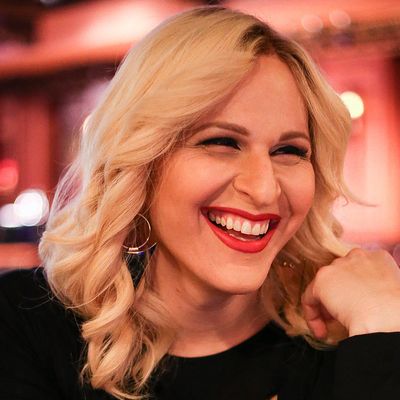
Shakina and dive deep into identity politics. This is a conversation you won't want to miss because we do not mince words AND Shakina is offering a birthday Zoom Butto Class on December 8th. Produced by Dori Berinstein and Alan Seales, edited by Derek Gunther, music by Cat Dail... Read More
From the show: You Can't Say That!
Guests
About
Shakina and dive deep into identity politics. This is a conversation you won't want to miss because we do not mince words AND Shakina is offering a birthday Zoom Butto Class on December 8th
Produced by Dori Berinstein and Alan Seales, edited by Derek Gunther, music by Cat Dail.
A proud member of the Broadway Podcast Network.
Transcript
This transcript was automatically generated and might contain errors.
[0:00] Tonya Pinkins: Hi, uh, my name is Tonya Pinkins, and you're listening to You Can't SAY THAT, the podcast where you can on the Broadway Podcast Network.
[0:11] Tonya Pinkins: We gotta speak to life.
[0:14] Tonya Pinkins: We gotta say one truth to you.
[0:18] Tonya Pinkins: Can't tell us real.
[0:28] Tonya Pinkins: My guest today is a good girlfriend of mine.
[0:33] Tonya Pinkins: Um, I think the first time we kind of met was uh up at Barrington Stage after a cabaret I did there, and she and I and some other friends, we stayed in the theater and just acted a fool.
[0:49] Tonya Pinkins: I actually have some video of that.
[0:52] Tonya Pinkins: Um, she is a first in many arenas on a new NBC TV show called Connecting.
[1:00] Tonya Pinkins: She was on the final episode of Transparent as a writer, actress, singer.
[1:05] Tonya Pinkins: Um, so many stories I'm not gonna tell you. Join me in welcoming my guest and friend Shakina Nayfack.
[1:12] Shakina Nayfack: Hey Tonya, thanks for that intro.
[1:16] Shakina Nayfack: So, darling, we are living in an interesting time.
[1:20] Shakina Nayfack: Isn't it exciting?
[1:22] Shakina Nayfack: It is definitely wild.
[1:25] Shakina Nayfack: I'm really quite excited.
[1:28] Shakina Nayfack: I'm thrilled to watch what's gonna unfold.
[1:30] Shakina Nayfack: I'm like, people are like, are you celebrating? I'm like, talk to me very exactly. Right now it's sort of like sometimes I want to like pop popcorn and just watch wide-eyed in horror, and other times I'm like, let's get to the streets.
[1:42] Shakina Nayfack: And then sometimes I just want to cry on my couch. But either way, it's an event no matter what.
[1:48] Shakina Nayfack: And I feel like all of the things you just described are big sensations, and they are the big sensations that we as human beings are privileged to get to have.
[1:59] Shakina Nayfack: And to deny ourselves any of them is to deny our humanity.
[2:03] Tonya Pinkins: You know, I agree with that. I think you and I are both people who feel things in a big way and who follow those feelings with passion and abandon.
[2:10] Tonya Pinkins: So yeah, I think there's no other way to get through it than to sort of allow for all of it to wash over you and then try to make sense of what you can.
[2:18] Shakina Nayfack: But you know, I grew up almost jealous of 1968, like stories that my mom would tell about her college years.
[2:27] Shakina Nayfack: And I've always been enchanted by political revolution and the struggle of liberation. And so the opportunity to get dirty in it, you know, I welcome that.
[2:41] Tonya Pinkins: Woo!
[2:42] Shakina Nayfack: Woo, she wanna get dirty in it.
[2:43] Tonya Pinkins: I said she wanna get dirty in it.
[2:45] Tonya Pinkins: Well, okay, let's get dirty then.
[2:47] Shakina Nayfack: So it was quite moving for me. I usually don't even participate in listening to any of the political stuff, but I listened to the two speeches that Biden and um Kamala gave, and I felt moved to hear them mention uh systemic racism.
[3:06] Shakina Nayfack: I think that might have been the first time that has ever happened at that level in America, and there was something else that was mentioned, you know, that was the first time that they ever mentioned transgenders.
[3:16] Tonya Pinkins: What was it like for you?
[3:17] Shakina Nayfack: I gotta say, I cheered, I cheered more for the mention of systemic racism, which Biden said twice. And then when he said, you know, transgender people, I felt warm in my heart and grateful.
[3:28] Shakina Nayfack: Um, but I didn't I didn't cheer. I don't know why that is. Um, I think because in this moment I'm, you know, really trying to be an accomplice uh to the struggle for folks of color and black folks specifically in this country.
[3:45] Shakina Nayfack: And of course, the intersection for me is are the struggles that black trans folk face, especially black trans women. But um, but yeah, I mean the fact that he said systemic racism twice in his speech, I was like, hit it home, nail it in, like let us know.
[4:00] Tonya Pinkins: Um, and then, you know, I'm used to like when political figures mention us, it was great to be mentioned at that level, but I'm gonna wait to see what the follow-up is.
[4:11] Shakina Nayfack: Right, right. I was listening to Angela Merkel's uh speech where we're on the anniversary of Kristallnacht, where she was apologizing for the shame that Germans have for that, you know, genocide of the Jewish people.
[4:27] Shakina Nayfack: And I thought, wow, I can't wait to hear someone from America talk about the shame of the genocide of the indigenous people, the enslavement of the Africans, the enslavement of the African Americans, the impoverishment of the immigrants and the undocumented.
[4:44] Tonya Pinkins: So I'm looking forward to that.
[4:45] Shakina Nayfack: You know, me too. I think as a queer person, like I think queer people know the experience of being in the closet, and so they know the kind of um acting out behavior that shame brings before you reconcile with yourself.
[4:59] Shakina Nayfack: And really that's what America's doing right now. I mean, especially the political right. They're just acting out because they can't accept, you know, who they are and where we come from.
[5:11] Tonya Pinkins: Well, let's talk about that acting out. Because I often think a lot about the violence against transgender women, and you know, I've dated, of course, I've dated cis men, and you know, uh one of them in particular, he was really obsessed with, you know, trans women who had breasts but had penises.
[5:31] Tonya Pinkins: That really excited him. And when I say, well, would you want to no, no, no, no, no, no, no. But to look at the pictures, you know, there was something going on there.
[5:41] Shakina Nayfack: And so I often wonder if the violence that, you know, particularly brown transgender women have been experiencing, the murder, let's not say murder and vicious murders, chopping people to pieces, uh, ripping people apart.
[5:56] Shakina Nayfack: Um, you know, the degradation of their humanity is this uh rejection of something inside.
[6:04] Shakina Nayfack: Well, you know, I say in my solo show Manifest Pussy that um that straight men love a chick with a dick because it's the form they admire with the equipment they understand, you know.
[6:15] Tonya Pinkins: Yes, yes, yes.
[6:19] Shakina Nayfack: I'm familiar with that fetishization. Like when I was at a certain point in my transition that I had breasts and a penis, I got I had more sex than I had in my entire life in that in that in those years of transitional time because I was like, oh, I'm a commodity now.
[6:35] Shakina Nayfack: Well, let me cash in on that. Um, and you know, sometimes it was scary and sometimes it was hot, but it was always intriguing because I think there's this weird sort of disconnect between, you know, desire and then uh an internalized homophobia, where these men have to sort of ride this razor's edge that has to do with toxic masculinity and patriarchy and all those things on a really lived and embodied level.
[7:02] Shakina Nayfack: And so I really do think that the violence that trans people face has to do with that confusion between something that is that you desire and that you've you've you've been trained to believe is morally wrong.
[7:16] Shakina Nayfack: And so there's like a rejection of of one's own potential quote unquote homosexuality because you want to suck on a dick.
[7:24] Shakina Nayfack: But sometimes sucking on a dick is like very straight, you know, it just depends on like what that dick is attached to.
[7:31] Shakina Nayfack: Um so yeah.
[7:34] Tonya Pinkins: Yeah, I got some friends who say they can they're flexible enough they can suck on their own dicks.
[7:38] Shakina Nayfack: You know, that's a champion right there.
[7:44] Shakina Nayfack: I mean, you know, you got this thing, of course you want to suck on it. It's like no different than a thumb or a finger. Like, why wouldn't you want to suck on that thing?
[7:51] Shakina Nayfack: It feels good. Like, makes sense to me. I'm sure some women could bend over and eat their pussy, they wouldn't. I watched my dog do it. I'm like, I get it, girl. I get it.
[8:03] Tonya Pinkins: Oh my God.
[8:05] Shakina Nayfack: But you know what else I think is important to acknowledge around the attacks on um black and brown trans women is that those attacks are coming primarily from black men.
[8:19] Shakina Nayfack: And so it makes me think about when you when you've been like shat on and stepped on and looked down on your whole life, and you're looking for some personal power, you look down for who you can step on and shit on.
[8:33] Shakina Nayfack: And you know, black trans women are like a minority within a minority within a minority. And so it makes sense that like for people with no other like I walk around here in Harlem as a gender non-conforming trans woman, but I'm aware that my whiteness keeps me safe, you know.
[8:50] Shakina Nayfack: Um, um in in a certain way that it's like put potentially easier to enact violence without consequence on a black trans woman than it would be on me.
[9:02] Tonya Pinkins: And so I think that's that's you know, it's it's partially the internalized homophobia that these men feel, and it's partially like a need to enact power over someone because of the ways in which they've been, you know, robbed of their own power.
[9:20] Shakina Nayfack: Um right, looking for somebody that they can kick, you know, so the shit can roll downhill somewhere, and that's you know, that's the lowest of the lowest of the low because it's lower than black, it's lower than woman.
[9:31] Tonya Pinkins: Exactly.
[9:32] Shakina Nayfack: It's trans black as well.
[9:33] Tonya Pinkins: Exactly.
[9:34] Shakina Nayfack: And I think that like people are really, I mean, I'm glad we could talk about it on this podcast because I think people are really afraid to talk about that, especially this year where so many um non-black folks have taken up the banner of Black Lives Matter, uh, but are afraid to acknowledge the realities behind the murder of black trans women.
[9:55] Shakina Nayfack: Um, because it's it feels like a thing that if you're not black, you can't talk about it because it's an internal community issue. And so that's tricky.
[10:05] Shakina Nayfack: And I always feel like that's a cop-out.
[10:07] Tonya Pinkins: Sure.
[10:07] Shakina Nayfack: I feel like that's a cop-out, you know.
[10:09] Shakina Nayfack: Like I I the beauty for me of getting to have this podcast and it being you can't say that is like I feel like sometimes putting my foot in my mouth and stepping in the shit is the way of making connection.
[10:21] Shakina Nayfack: You know, when I was in Korea, I would try to say my Korean friends' names and they would just laugh at my horrible pronunciations.
[10:28] Shakina Nayfack: But my ability to be vulnerable and let them laugh at me was our connection.
[10:34] Shakina Nayfack: We were building a relationship that I was willing to just keep messing up and rather than going, okay, I'm just I'm gonna call you by your Americanized name because that's easier for me.
[10:43] Shakina Nayfack: I was risking something and for me building bridge that way.
[10:47] Tonya Pinkins: Yeah.
[10:47] Shakina Nayfack: Well, I felt that way when I have been out at these Black Lives Matter protests and I've chanted Black Trans Lives Matter.
[10:54] Shakina Nayfack: Um, and it's interesting because there are these marches that are specifically, you know, about Black trans life, or there are these, you know, queer liberation marches dedicated to Black life.
[11:07] Shakina Nayfack: So centering black trans women is like an obvious choice. But then there were some of the like mainstream Black Lives Matter marches where I got dogged.
[11:16] Shakina Nayfack: I mean, I got devilish looks from folks for for daring to chant Black Trans Lives Matter.
[11:22] Shakina Nayfack: And even, you know, on the show Connecting, where we in this in this last week's episode, I was wearing a black trans lives matter t-shirt with the black trans lives matter sign, you know, saying the names of Tony McDade and Nina Pop on the show, which was so amazing.
[11:34] Tonya Pinkins: But I had to have a call with, you know, some of the people on the show about why that mattered and why that was important and how that actually didn't take away from the Black Lives Matter movement, but made the Black Lives Matter movement more comprehensive.
[11:51] Tonya Pinkins: So tell me how that conversation.
[11:54] Shakina Nayfack: I mean, these you're shooting in quarantine, right? So the whole show, it was like we we never really met anybody.
[11:56] Shakina Nayfack: We were all on Zoom together, uh, the whole the entire, you know, creative team, producing team, design team, camera team, all on a Zoom with the cast.
[12:07] Shakina Nayfack: And we were all like in our own apartments, which became our own sets, setting up our own lighting and camera equipment.
[12:13] Shakina Nayfack: And um, but we but we did have like a really great camaraderie because we were in that digital space together so often and for so long that it felt like we were hanging out with each other.
[12:24] Shakina Nayfack: So it became pretty easy to check in with one another. We knew that we had three episodes back to back, which was a considerable portion of our eight-episode season dedicated to addressing um the summer racial reckoning about the protests.
[12:44] Shakina Nayfack: And so it starts at the end of episode three. The characters all see the George Floyd video and we watch them react to it.
[12:51] Shakina Nayfack: And then you watch it, it's played on the show where you just see you all see you all watching.
[12:57] Tonya Pinkins: Yeah.
[12:58] Shakina Nayfack: Um and then the next three episodes uh, you know, follow the um point of view of the of the three uh black actors, black characters on the show, about how this affected them as time goes on.
[13:11] Shakina Nayfack: So we see like the initial emotional burden that the character of Michelle played by Jill Knox has to carry when everyone asks her to do all of their emotional labor around this issue.
[13:22] Shakina Nayfack: Um, and then we um see the pressure that her um brother, uh played by Preacher Lawson feels and where he like develops this ulcer because he can't handle all of the stress of these like of these continual abuses.
[13:38] Shakina Nayfack: Um, and that's laid against his um decision about whether he should or should not attend the protest.
[13:43] Shakina Nayfack: And then um in episode six, uh, we sort of spin it a little bit, but um Annie played by um O. T. Morero, she is the whole episode is about her talking to her conservative um Latinx family in Florida about defunding the police.
[14:01] Shakina Nayfack: So and we do it all with comedy and with heart, but but it's a big You're bitching this good.
[14:07] Tonya Pinkins: Like I'm about I wanna listen now.
[14:09] Shakina Nayfack: I want to go watch it.
[14:10] Shakina Nayfack: It's on Hulu and and Peacock and NBC.com.
[14:13] Shakina Nayfack: Um, but yeah, but because we were dealing with these big topics, we formed this, we had a group chat with the cast where we would check in with one another about how you're doing.
[14:24] Shakina Nayfack: Like when when Jill was shooting her episode, we were all like, girl, you got this. You're carrying the emotional labor of the show, just like you're just like the character is, and we're here for you.
[14:32] Shakina Nayfack: What do you need? And so when it came time for the protest episode, and I was making a big big deal about needing to say black trans lives matter on the air, needing to wear that shirt on the air.
[14:44] Tonya Pinkins: And um why was it a big deal? Why wasn't that just like okay, who was giving you a pushback?
[14:50] Shakina Nayfack: Well, it it um there were a couple different things. There was pushback from the network um in the in in terms of the wardrobe, because they they sent everyone these protest shirts.
[15:00] Shakina Nayfack: So we had shirts sent to us that said resist and um enough. That said nothing. That just said nothing. I said, Oh, well, uh Ellis is only gonna wear a shirt that says black trans lives matter. And then the costume designer who was, you know, brokering was like, well, we have to give the network options. So I was like, okay, here's a shirt that says black trans lives matter in black and white, and here's a shirt that says black trans lives matter in the color of the trans flag. So you're you're options. Yes, there's your options. And then um, and then you know, the um the uh the writers and I mean I you know, I honestly don't know um exactly where the other conversations were happening, but I do know that I got a call uh from someone working on the show, um, who I'm not gonna name, but it was a great no need.
Yeah, it was a great call. And they were like, I just don't understand why why you need to say black trans lives matter. Isn't saying black lives matter enough? And and doesn't it do dilute from the movement? And I said, you know, I explained to them how this year has been the deadliest year for trans women on record, and uh how these murders continue to happen and and people and and and oftentimes are within the black community are not acknowledged. And um, and this person really kind of had their eyes opened to to what that struggle has been. And they said something that was so beautiful. They said, like, oh, it's sort of like when we tell people all lives can't matter until black lives matter, you're saying that like all black black lives can't matter until it's lives matter to black trans lives matter.
And then I tried really hard. I I wrote to the I I immediately wrote to the writers and was like, can we put this conversation in the show? This was such a beautiful conversation, it's real life. And it didn't make it in the show. Um I got to wear the t shirt. And so, you know, I figured like, I'm gonna ask for the world, I'm gonna push hard and ask for the world and at least get something. And and it's there a lot. Like when you watch the episode, there's no question, you know. And even um the uh the character uh Ben played by Preacher Lawson in that episode talks about Tony McDade in his list of names. So it was amazing to, you know, to see on the show um this black cis straight man, including the names of black trans people when he's talking about the victims of police brutality and murder. Very powerful. Very powerful.
[17:35] Shakina Nayfack: Okay, so let's stay in the shit. Let's stay in the dirty. So I was doing an online uh show, and one of the designers kept referring to me as they, and I kept thinking, who are they talking to? Who are they talking to? And I was like, well, wait, wait a minute. And then there was this moment of like, she's stealing my she identity. She's stealing my she identity. And then over time, I started thinking, you know, why can't we just call everybody they? I've always thought But I want to acknowledge that I had this thing of like that but that you're calling me a day. You're calling me a day. And I found myself kind of reflexively just using the they all the time now. Yeah, I I think that for me that's always been the fallback.
You know, if you don't know someone's gender or how they identify, they is a really handy way to refer to them and not assign anything. But I never thought about people being assigned they, the way that people assume she or he. And I felt the same way because I've worked so hard for my she as a gender non-conforming trans woman. Like I don't always look like a blonde bombshell like I am on TV, you know, and you know this, and and maybe some of your listeners know that like mostly I walk around like, you know, with shaved head and kind of in like everyday clothing, so I'm not like out here trying to play hyper femme all the time. So I ask people, like, you know, the she pronoun really really affirms my female identity, even when I'm not like giving you all the the clues and cues.
Um, but I saw also on Twitter someone recently was like upset that they've been they'd and um and she was like, I'm I'm uh I'm she, not they. And I think, well, they in a way um belongs to all of us in a sort of post-gender uh, you know, conversational way to prevent making those assumptions or like loading every subject with gender that doesn't need to be loaded with gender. But um, but I also hear what you're saying, and what I've seen a lot of like radical feminists including the turfy ones um that that um it's really important that we don't rob women of their womanhood you know um and so it's a delicate subject because when when women's rights are rolling back down the hill you know there's a lot of fear anger and protection around that identity and the progress that has been made you know by women for women so um so I get it but I I but I also think that they is is great and that everyone should use it and just work it into the vocabulary and normalize it as a single person pronoun and yeah I I I'm it's kind of happening but I had to acknowledge that at first it was like who's she talking to right who are talking to right who I mean who they talking to right who they talking exactly who they talking to um so you just brought up led me where I was gonna go TERF.
[20:29] Shakina Nayfack: The first time I ever saw the word heard the word was on your Instagram I mean no on your Twitter. You gotta tell us what it is because I didn't know it was I still don't know what the acronym is and I'm gonna have to tell you it upset me. So tell me about turf sure TERFs TERF is a term um that the acronym is trans exclusionary radical feminists. So there are people that consider themselves radical feminists um and that their feminism is contingent upon trans people not being who they say they are that's sort of like the crucial rallying point around this group of feminists. And and I actually struggle to call them feminists, which is why I don't like the word TERF, because I feel like if you're excluding trans people, you're not a feminist and you don't get to claim that title.
So did they name themselves? That was a name that was that was uh created um, gosh, I don't remember now how long ago now, but I think it could have been as as long ago as the late 90s or the early 2000s. Um I remember reading about the the concept when I first moved to New York in um 2010, and there had been already, you know, scholarly articles written about because I geek out about feminism sometimes, like like to go to the academic route, but there had already been uh like scholarly articles written about the ways in which trans-exclusionary radical feminists were arguing for violence against trans people and were co-conspirating with the Christian right to prevent uh trans people from getting uh equal access to healthcare and bathrooms and things like that. Oh my god.
[22:05] Shakina Nayfack: So it's this it's this really um sort of crazy um uh like departure from what we what we think the objectives of feminism are, which is to put women at the center and to subvert the the patriarchy and um and instead it creates a uh a hierarchy that um that values certain women and disparages other women. Now you didn't hear first of all, that word feminism for me does the exact same thing because feminism is only about white women, because black women didn't need feminism. They was already working and taking care of the family and doing everything. So feminism didn't give anything to black women. So, you know, even within that word, there's all these levels of of hierarchy. And it sort of reminded me, as you were saying, of like the Christian evangelicals who don't want to help the poor, because God must have wanted them to be poor.
Or this uh this way in which people can take anything and redefine it to serve themselves. That's so true. I think it's about like are you claiming feminism to enhance your personal power, or are you claiming feminism to end the discrimination against all women? And yeah, it's the same thing with Christ. Are you claiming Christ to for your own righteousness, or are you claiming Christ for the righteousness of all people? So I'm so glad you explained that to me because when I saw it on your website, or whatever, on the wit on the thing, uh-huh, I just got upset. And I was just like, why are trans women attacking women? Like women already have it bad enough. Like, why what is this divide and conquer?
Is this just toxic masculinity coming over into the women's space? I had no idea there was this history. I had no knowledge, and even when I tried to do some little Googles of it, what you just shared with me did not come up. And so I was like, I got to jump in the shit because I need to know because I don't understand this at all.
[24:06] Shakina Nayfack: Yeah, and I remember that you reached out to me and to MJ Rodriguez, and we were both so beat down at the moment that we were like, we can't. It's not time. Okay, you know, because you and you know how this is sometimes you you just you're it's you're too exhausted to explain it one more time. And when J.K. Rowling came out so vehemently against trans people, it was such a gut punch because um up to that point, turf feminism, um trans-exclusionary feminism had just sort of been like a fringe element. You know, it never had a mainstream platform, it was always like really like angry dykes or like ignorant uh like stay-at-home moms, you know, and and that was mostly in the UK and Australia and like whatever.
But the exact emotions that you were explaining, like what is this? What why are trans people trying to divide women? That is the sort of um gateway uh rhetoric point that turf feminists use to recruit people to their trans antagonism. And so it's really if that's why it's so dangerous, is because um, as we just as I mentioned about black trans women, right? A minority within a minority. So trans women are, you know, we're worse than women, we're trans women, you know? Um and like uh so when we are, when we are like attacked by within from with from within the community, it's like so much more painful. I can deal with bros calling me names, you know, cis dudes being homophobic and transphobic, like please, every day.
But when a woman, when a when a person who who I think is my sister in arms turns around and excludes me from the membership in in a in a group that I I have no choice in being a member of. I mean, it's just who I am. You know, it's it's um doubly painful. So when JK Rowling does it, you know, and she's you know, beloved internationally, she has the biggest platform of almost any author in the world. She has so much money and so much prestige, and so many fans and followers in pop culture. She was really trying to wage a culture war. I mean, her her the essay that she published over the summer was called Turf Wars. And she really um she really is out here trying to uh to wipe trans people out of existence. I mean, to either legislate us away or to um to, you know, engineer um systems by which we will no longer be allowed in public life, like separate but equal type of things.
[26:52] Shakina Nayfack: You really believe that because I tried to read some of those essays and I was like, I thought she was, I thought what I read was that she was just concerned that in England any person could just go get a certificate that said they were any gender they wanted it to be, and that it would put you know women in danger in bathrooms because now men could just get a certificate and come in and commit violence against them, or that's what did they say about like black people getting the right to vote? You know what I'm saying? Okay, I get I hear you. Come call me out, please call me out because I would understand. That's why it's so um uh vicious is because it's couched in a type of false compassion.
We're caring about these mentally ill men who want to wear dresses and we want them to get help instead of transitioning, and we don't want and and we think that like trans people are stealing young lesbians away and we'll no longer have young lesbians. We're only gonna have like baby trans boys, you know. So it's it's framed as this compassionate cry for help when really it's bigotry and intolerance and and and trying to um exclude trans people from like more and more places of public life to where we won't be able to leave our houses without threats of violence against us.
[28:09] Shakina Nayfack: I'm sorry, and I I'm it I really appreciate you going here with me because I feel like I'm not alone in how I feel and just not understanding it. And so I appreciate you, you know. I'm sorry if I push some buttons, but I feel like it's an important conversation because I I I you know, all I saw was some Twitter, and I just like, what is going on? Right, right, right. And then when I reached out to other some women in the community about it, they were like, I can't have that conversation because they will shame the trans women will shame me out of existence. I can't even talk about it. I was like, well, I gotta go into it because if if if women are now like I can't even talk about it, and now we've got this rift where then we're we're creating a bigger problem that's gonna go on and on and on.
Like if you can't talk about racism, then we can't solve racism. And right, you know, if we can't talk about genocide, we can't solve genocide. So I'm like, I feel like I'm always willing to go be the lightning rod because that is the only way we can have change, is when we can hear the other person.
[29:14] Shakina Nayfack: Right. I totally agree. I totally agree. And I think it's an important conversation to have so that people aren't, you know, fanning the fires of disinformation and fear mongering. Um, because the truth is that there are just different types of women, you know, but we can still all be women, like the umbrella is broad.
[29:36] Tonya Pinkins: Agree. This is Tonya Pinkins. That was part one of my conversation with my good friend Shakina Nayfack. Do come back for part two. It's even more delicious.
© Broadway Podcast Network, All Rights Reserved