

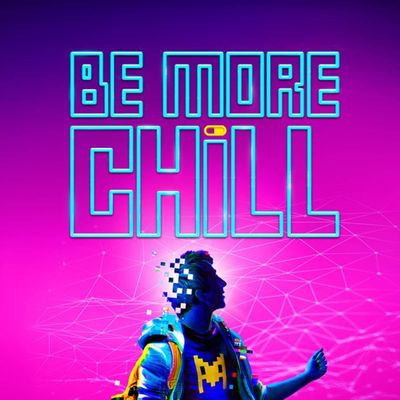
In 2017, the original cast album of BE MORE CHILL was one of the most streamed cast recordings of the year, and it had yet to premiere on Broadway. In fact, it hadn't been performed since its world premiere in New Jersey two years earlier!.. Read More
From the show: A Musical Theatre Podcast
Guests
Featured Shows
About
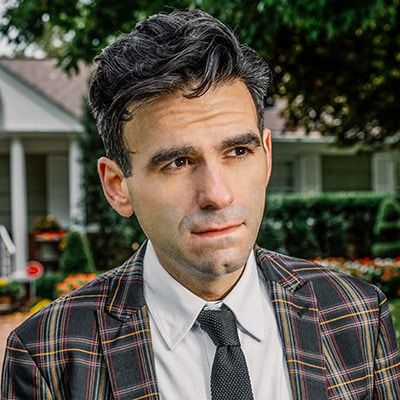
In 2017, the original cast album of BE MORE CHILL was one of the most streamed cast recordings of the year, and it had yet to premiere on Broadway. In fact, it hadn't been performed since its world premiere in New Jersey two years earlier! The epic story of how this modern Faustian musical became a fan favorite is one for the ages, and this week, we have its composer to tell us the tale. Tony-nominated for writing the music and lyrics of BE MORE CHILL, Joe Iconis joins us to review his hit musical that teaches how to make peace with the "voices in our head."
Don't miss Joe's new musical THE UNTITLED UNAUTHORIZED HUNTER S. THOMPSON MUSICAL playing this summer at LaJolla Playhouse. For tickets, visit https://lajollaplayhouse.org/show/hunter-s-thompson-musical/ You can also follow Joe on Instagram and TikTok to learn about his latest shows and performances.
Remember the best way to help "A Musical Theatre Podcast" is to leave a nice review and rating wherever you might be listening. For more content, follow us on Instagram, Twitter, and TikTok. You can also subscribe to PATREON! for bonus episodes made exclusively for you!
Be sure to submit your designs for our TeePublic Store! We'll be picking a new design this summer, and all profits we receive from orders will be donated to Broadway Cares/Equity Fights AIDS.
More than anything, thank you for being part of this wonderful podcasting community!
Transcript
This transcript was automatically generated and might contain errors.
[0:01] Joe Iconis: I always, you know, sort of growing up, I always heard the, like, the classic, you know, in a musical, people sing when their emotions are too big to simply be expressed in words. And I've always felt like, sure, sometimes, but maybe sometimes people sing to try to help understand what they're feeling. It's not about that it's so big. It's like, I don't know what the hell I'm experiencing right now. I don't know what this is.
[0:31] Jeffrey Scott Parsons: Welcome, everybody to A Musical Theatre Podcast where we discuss the cultural and emotional impact of some of our favorite musicals in theater history. My name is Jeffrey Scott Parsons. You can call me Jeff. Today we are discussing the musical BE MORE CHILL and we're doing it with one of the people who wrote it. He was Tony nominated for Best Original Score for writing music and lyrics for the show that ended up with quite a loyal fan following and I hope they're all listening to this today because his latest musical, the untitled, unauthorized Hunter S. Thompson musical opens at the La Jolla Playhouse in beautiful Southern California. Everyone, please welcome Joe Iconis.
[1:23] Joe Iconis: Hello everyone, so happy to be here.
[1:27] Jeffrey Scott Parsons: Joe, welcome to the podcast. I'm so grateful you're here. I mean, you're not here here. We are chatting virtually. Are you already in La Jolla?
[1:36] Joe Iconis: Very much so. Yeah, we we're in the middle of our second week of rehearsal right now. Yeah. And so our previews begin August 29. We're sort of towards the beginning of the process right now, but we're in it. We're deep in it.
[1:52] Jeffrey Scott Parsons: That's exciting.
[1:53] Joe Iconis: Yeah.
[1:54] Jeffrey Scott Parsons: You're East Coast though. So how are you enjoying my beautiful Southern California?
[2:00] Joe Iconis: I'm enjoying it. I'm very East Coast. I'm like the most New York centric human who has ever lived. And so I like it. I'm coming to terms with California and I'm enjoying it. I like the sun. I think that's really nice.
[2:19] Jeffrey Scott Parsons: That's enjoyable.
[2:20] Joe Iconis: Yeah, I've heard that there's water nearby, but I have yet to see the water.
[2:25] Jeffrey Scott Parsons: You're literally on one of the most beautiful parts of the West Coast and you're not stuck, but you are definitely inside in the theater all day.
[2:34] Joe Iconis: Yeah, I'm literally speaking to you right now from the blackest room that there could possibly ever be. Everything in the room is black, including my clothes. And so it's, yeah, you know, I think once we open, I'll be able to like explore a little bit and like, you know, see some of the sites. Because, yeah, everyone, everyone I tell I'm in La Jolla is like, oh, it's the most beautiful place on earth. And I'm like, oh, I've seen the inside of theater in a strip mall. That's all I've seen.
[3:02] Jeffrey Scott Parsons: Fantastic.
[3:03] Joe Iconis: Yeah.
[3:04] Jeffrey Scott Parsons: Now, correct me if I'm wrong, but it seems like a lot of your work is often about outsiders, misfits, counterculture, even. It's certainly true of Be More Chill. And it feels, even though I haven't seen it, it feels true of Hunter S. Thompson, who's the real life subject of your new show.
[3:24] Joe Iconis: Yeah, pretty much so.
[3:26] Jeffrey Scott Parsons: So is that, I mean, for lack of a better question, why? Is that a reflection of how you feel about yourself? Is it just who you like to write about? What do you think?
[3:36] Joe Iconis: Yeah, it's, you know, it's something that I don't think I ever set out to have a career or a body of work that focuses solely on story as misfits and outsiders. I think I just kind of naturally gravitate toward those type of characters and toward those type of people. And, you know, when I sort of first started out, I was just really drawn to stories of people who don't typically get musicals written about them. You know, I feel like so many musicals and musical theater are shows that are about people who have done incredible things or, you know, they're shows about people who win wars and they're people who are Greek gods and goddesses. And it's these sort of huge, larger than life characters.
And a lot of times what these characters experience is some kind of triumph. And I guess I've always been like, oh, well, why can't we have musicals about people who are not special? You know, like people who are just sort of normal, who are experiencing everyday life, which I think is just as dramatic as, you know, the French Revolution or a ghost on the loose in the Paris Opera House. You know, I think real life is just as fraught and traumatic as all of those things. And so I think that I just sort of naturally started writing stuff about these types of characters and situations. And it's just, you know, it's grown into a whole body of work. And I think that there are plenty of people who are writing about extraordinary individuals who triumph. And I feel like I'm writing about the rest of the people in the world.
[5:16] Jeffrey Scott Parsons: I love that, though. And because it's also an art form that attracts all of us misfits, you know, like we've somehow found a place together, no matter who you are, whether you're doing tech or wardrobe or you're on stage, we're all just a bunch of misfits who like playing in the sand together. So in some way, it's almost meta of the art form itself.
[5:38] Joe Iconis: Oh, it is, you know, and so many of my musicals, whether they're literally about this or, you know, sort of lightly about this, they're about people who feel like they don't belong, trying to find a place where they do. Sometimes a literal place and sometimes, but more often than not, the place where they belong is with another group of people who also feel like they don't belong. And that's theater, you know, that is why I started doing theater. And that's why I continue to do theater. And it's like, because you're making these families, you're making these places where it's people who have similar ideas about things you don't quite fit in, and the real world can make their own world.
[6:16] Jeffrey Scott Parsons: And a lifelong lover of musical theater. When did you discover it?
[6:20] Joe Iconis: Lifelong. Yeah, I discovered musical theater when I was six years old for my sixth birthday. My father took me to see the original production of Little Shop of Horrors, the Orpheum Theater. They were in their last couple months. And I just fell in love with the art form of musical theater. You know, I love Little Shop, but it was really just this idea of like being in a room and people telling a story and there being music. And I just was like, immediately like, oh, this is the best thing I've ever seen in my whole life. And you know, I didn't come from like a theater-y family. I'm from Long Island. And so what I had was proximity to the city, but no one in my family was really like an artsy person or someone who, you know, certainly no one was in the theater or in entertainment. But they were really supportive of me being this little kid who loved musicals. And so yeah, so I've been obsessed with musical theater since I was a wee lad, for sure.
[7:20] Jeffrey Scott Parsons: That's adorable and also kind of blows my mind because I get such Little Shop vibes from Be More Chill. I don't know if that was on purpose, but there's obviously like the Theremin 50s sci-fi sound to it, right? The B-movie science fiction. There's a little bit of 80s and 90s. But then also, from a plot standpoint, instead of an Audrey 2, it's a computer. It's technology that you're selling your soul to.
[7:47] Joe Iconis: Well, yeah. Well, I mean, you know, in the same way that Little Shop is kind of like the Faustian story, you know, so is Be More Chill. Yeah, what's so funny is that Be More Chill is so obviously, you know, Little Shop inspired, but myself and Joe Trace, the book writer, who's also a big Little Shop fan, we never ever consciously did it. Like we never talked about it.
[8:13] Jeffrey Scott Parsons: Oh, that's so cool, though. I love that.
[8:15] Joe Iconis: Yeah, like truly, it wasn't until the first reading of it that we were like, oh, we just wrote our own version of Little Shop. Like truly, we didn't know. And it's even so silly. And it's one of those things where it's like, we're both like proud of it. Like we've never, you know, once we sort of realized that, we were like, oh, yeah, like this is, you know, we will happily be like we were greatly inspired by Little Shop of Horrors. And it influenced us, but we just never did it consciously. Couldn't help it.
[8:39] Jeffrey Scott Parsons: It also is, it's just so profound. Like we are what we love. And we are the influences of the art that we take in. And it's not, and it's nothing less beautiful than that.
[8:51] Joe Iconis: Oh, yeah, yeah. I mean, I love when I see a show, and I'm like, oh, these people were really inspired by, you know, this other piece of art. And I think there's a big difference. There's a difference between people being inspired by, you know, art or styles of music or whatever. And people just, you know, straight up ripping them off, which I also see quite a bit, you know, where it's like, oh, wow, cool. Great, great job, like, quote, unquote, referencing that, you know, like Backstreet Boys song. You're like, literally just, you know, ripping it off. I've seen that so many times in musicals. So that's, that's always the hope that I'm, you know, that I'm like, I'm really, you know, I'm taking in the influences and then, and then, you know, transforming that as opposed to just regurgitating. That's what I try to do.
[9:33] Jeffrey Scott Parsons: So before we jump more into Be More Chill, talk to me a little bit about Hunter S. Thompson, because I'm really fascinated what this show is. I mean, the title alone, right?
[9:45] Joe Iconis: I know it's a real batshit title, but I just have always, I've really felt like that's just what the show needs to be called. So it's the Untitled Unauthorized Hunter S. Thompson Musical is about Hunter S. Thompson, who was a counterculture hero, and a real sort of renegade outlaw journalist who rose to prominence in the, in the late 60s and early 70s. And he wrote Fear and Loathing in Las Vegas, among many other things. And sort of created this style of journalism called gonzo journalism, which is where the writer puts themselves at the center of the story. And it's this very sort of subjective take on news. And that's what he's sort of most famous for.
[10:29] Jeffrey Scott Parsons: I mean, and we're kind of suffering through some of the consequences of that, right? Because all of a sudden, instead of being objective, we're taking in people's opinions.
[10:40] Joe Iconis: Yeah, I mean, and what's so wild, what's so wild is that when, you know, when Hunter S. Thompson, when he sort of, you know, cracked this, this open, and, you know, gonzo journalism became the sort of thing that people were, you know, talking, talking about, and defining, it had really sort of, you know, positive connotations. And if anything, it felt like a product of liberal thinkers, it felt like a product of people, people on the left being like, you know, the government is lying to us. And a way that we can actually get the truth out there and get people motivated is by sort of filtering the truth through our opinion, and our take, and then that becomes more truthful than just laying out the facts.
And it's so wild to like, you know, read all of this stuff, and to see how that idea of the truth is, the truth is actually opinion, how that mutates. And then, you know, now, we're like, living in this world where people are, you know, disputing facts. And it's so feels like, yeah, and it's so feels like, you know, the fake news idea is completely in the world of the, you know, of the right and the conservatives. And it's just such a, it's such a shift. And I think that's something that the show really, really sort of tackles that it's like, oh, this guy, you know, he wrote all this stuff, and he, and he broke new ground. And, you know, and the effects of that haven't all been positive. And it's actually really kind of sticky, the situation that we're in now, you know, that is partly because of him. And so the show very much is aware of that and tries to, you know, talk about it.
[12:13] Jeffrey Scott Parsons: That's cool. Sometimes when we look back at the 60s, there is an idealism that we project onto free thinkers and free love, without maybe taking into account that those people grew up and became Wall Street. And, you know, so I love this. I love that there's nuance there. That's cool.
[12:33] Joe Iconis: Yeah, there's definite nuance there. And, you know, I'm, I feel like a lot of times with bio musicals, we're sort of used to seeing bio musicals of people who the musical itself decides were really great people. And they never really did anything bad. And in a bio musical, typically, if the subject of that musical does something bad, you know, it happens in act two, and they have to have a crisis of faith, and then they're redeemed, and then everything is great at the end. And we're like, oh, we're celebrating this person who made the world a better place. And this show is like, so not that, you know, so the opposite. And I was really obsessed with this idea of like, I don't want this to be a celebration of this man.
And I don't want this to be a condemnation of this man, I want to just present this character who's really complex, and who really, you know, is contradicted himself, like human beings actually do. And I want to just explore what that means. And so it's, I'm really, I'm really interested and completely terrified to see how people react to this, this musical, you know, because we're like, we never say this was a good man, or this was a bad man. And it's just kind of like, here is this guy. And he's, he's a really, you know, complex, complicated character. And like, what do you think about him? And so we'll see how that goes over with the musical theater crowd.
[13:56] Jeffrey Scott Parsons: So now let's go back in time a little bit. How like, how did Be More Chill come about? Did you read the novel because it is based on a novel?
[14:26] Joe Iconis: I read this book, and it reminded me of you, you should read it, and just see if it sparks anything for you. He wasn't like, oh, this definitely needs to be a musical, or this needs to be a movie or whatever. He was like, just read it and see what you know, see if you have taken inspiration from this. And so I read it, and I immediately felt, oh, this, this absolutely should be a musical.
[14:48] Joe Iconis: Immediately, I was like, I know exactly how to do this. I know how to make this a musical. And I immediately got so excited about this idea of doing this kind of mashup of like teen science fiction and horror tropes from both the like 50s monster movie stuff and the 80s, like, you know, John Carpenter, Halloween stuff. It all just kind of like, oh, wow, I didn't even think about that. But of course, John Carpenter.
[15:19] Jeffrey Scott Parsons: Yeah, yeah.
[15:20] Joe Iconis: Absolutely. He's in the score. It's when, yeah, I mean, John Carpenter is like, John Carpenter is the most in the score, like from the literal sounds of the synths to a lot of the underscoring in Be More Chill, of which there is a tremendous amount. It's all, you know, very, very explicitly and lovingly referencing John Carpenter film scores. And when we first were starting out, I used to describe it as John Hughes meets John Carpenter.
[15:48] Jeffrey Scott Parsons: I love that. Okay, I had this conversation, like years ago, back when we did an episode on Heathers. And I think I've had it a couple times since, but I've never had it with someone who actually wrote the musical. So I wanted to give it to you. In like the first 75 years of our musical theater art form, the closest we got to exploring high school life was Grease.
[16:12] Joe Iconis: Yeah.
[16:12] Jeffrey Scott Parsons: And even, I mean, that is Ram-a-lam-a-lam-a-ka-ding-a-ding-a-ding-a-dong, right? Like that's as close as we got. And then somehow we hit 2000, and then most musicals include a high school experience. It's this really dramatic pivot. And I have my own ideas as to why that is. But what do you think? Why do you think a new generation of writers were really interested in the teenage high school experience?
[16:39] Joe Iconis: Oh, you know, I think that it's probably a few things. You know, I feel like once this kind of idea of what we know as like new musical theater started to become a thing, which I feel like really was galvanized around Rent, right? Like it's like Rent all of a sudden felt like, Rent felt like the first show, yeah, in a really long time that was youth driven. And so even though Rent isn't a high school show, the appeal was there for high school kids, right? And so then Rent kind of fed into like the Jason Robert Brown stuff. And I feel like Jason Robert Brown is a huge sort of turning point in musical theater, where, you know, he was really sort of bridging the gap between like sort of classic musical theater writing, and the slightly more modern pop sound.
And I feel like that intersected with YouTube and with streaming. Well, not streaming yet, but like, but with YouTube, and I think then YouTube, all of a sudden gave people access to musical theater, and especially young people access to musical theater that they hadn't had before. And so that, that to me feels like, oh, it's a very natural kind of thing, then that all of a sudden, you know, we start to see more and more things about young people, because young people themselves are starting to not only write shows, but they're able to get their material out in the world in a way that you used to, you know, not really be able to get your material out in the world, unless you were literally living in New York City, and like playing the clubs and meeting producers.
And so I think with the sort of, you know, democratization of media and material, you know, it's all of those things combined. And the result was more musicals about young people. And then, and then as soon as you had some of them start to become, you know, hits like Spring Awakening and all, you know, those sorts of shows, then it's just like, the old people want in because they want to, number one, feel cool. And number two, they want to make money. And so then it's just like, yeah, of course, we're gonna write musicals about young people, because it makes us uncool, old musical theater writers feel so special, and so hip. And we can make a lot of money from it. And so that's why it's like, then, you know, all of these big corporate musicals that pretend not to be corporate, but are like that they're making from the movies, they all involve young people, because all the people that make those musicals, they want to make a lot of money. And it's, it's been really interesting to kind of see the, the turn there.
[19:13] Jeffrey Scott Parsons: I'm okay, I'm, my mind's kind of blown, because I didn't even think about this, the importance of just youth and art in general, right? Like, yeah, I want energy, if you want momentum, about a specific art form, like it's going to come from the youth, it's not going to come from the old people falling asleep during the matinee, you know, no offense. I am currently performing for full houses of people who have fallen asleep during the first act. And I'm very grateful for them. Yeah, but but still, like, that's really beautiful. I had always kind of seen it as, you know, there was a there an older generation, where until you had a house and kids and a career, your perspective on ideas didn't matter whatsoever.
And then we have like a new generation of writers, who maybe on some level without even knowing it, realize, oh, I'm still that kid. Yes, I have, whatever I have the wife and the picket fence and whatever, but inside me is still that high school kid with all of the same insecurities and all the same stuff. And so maybe it's a coming together of the old and young, like maybe we are still ourselves from high school all the way to adulthood, you know?
[20:37] Joe Iconis: Yeah, yeah, no, for sure. I mean, and I think that that's all part of it. I mean, for me, you know, the first musical that I ever wrote that I wrote in 2005, the first draft was The Black Suits. And that's a musical about a high school garage band. And I've, you know, and I've written, I've written many musicals about I've written many musicals, period. And some of those musicals are about, you know, about adults. And some of those musicals are about, you know, I have a musical about a woman in her late 60s, early 70s. And I have and I have musicals about about teenagers. And I've always liked writing musicals about teenagers, because they, you know, a teenager is, they're just miniature adults, you know, I don't think of teens.
[21:17] Jeffrey Scott Parsons: Exactly. That's such a great way of saying it.
[21:22] Joe Iconis: Yeah, I don't think of teens as like a different species of people, which is how I see them written quite often in musicals.
[21:28] Jeffrey Scott Parsons: Amen. Absolutely.
[21:29] Joe Iconis: And I and they, I think the thing that's amazing about most teenagers is that they, they typically, you know, it's like they have all the they have all the feelings and all the all the the hang ups and the whatever's of adults, they just don't always have the vocabulary to express those things. And so for for me, writing, you know, writing musical musical theater material for young people, it's, it's like, how do I use the form of musical theater to try to help this character find the language, find the words to express what they're feeling, you know, and I just love that about young people. And what I also love about young people is that they don't they have not yet built up the walls that we naturally build up as adults.
Because every day that you're alive on this earth, you learn something. And with that thing that you learn, you have like both wisdom and you also have, you have a trepidation, you have a wall, you have a thing that that now it's in your head, oh, if I do this, then that will happen. And it's just that it's just by, you know, virtue of living. And so like, the younger you are, the less you have that for, you know, for worse, but for better. And so I just, I really, I really enjoy writing, writing young people, characters, for that reason.
[22:44] Jeffrey Scott Parsons: That's, I'm so glad I asked you this question, because that's kind of the best answer ever. And I never need to ask again.
[22:49] Joe Iconis: Oh, good. Thanks. Yay.
[22:51] Jeffrey Scott Parsons: Thank you. Okay, so you knew exactly how to write this musical.
[22:56] Joe Iconis: Yeah.
[22:57] Jeffrey Scott Parsons: Please pronounce the name of your book writer.
[23:00] Joe Iconis: Trace. Joe Trace.
[23:01] Jeffrey Scott Parsons: Trace. Okay, because it's spelled T-R-A-C-E and I had no idea. So, amazing book writer, though, he Emmy nominated, did that Netflix series, Unfortunate Events, like, really terrific writer. You guys work together. It seems like you had a great working relationship. When does the...
[23:25] Joe Iconis: Oh, no, that's too bad.
[23:26] Jeffrey Scott Parsons: Yeah.
[23:26] Joe Iconis: Okay, well, that's terrible.
[23:26] Jeffrey Scott Parsons: I hate him. We're in it. Yeah.
[23:29] Joe Iconis: Is he in the room right now?
[23:30] Jeffrey Scott Parsons: He's not in the room right now. But he has literally, he literally just texted me. Yeah, he's such a nerd. I love Joe Trace very much. Joe Trace also wrote, he wrote the Lightning Thief musical with one of my best friends, Robert Kicke. Yeah, and so one of our stage managers here was wearing a Lightning Thief T-shirt, and so I sent him a picture. And he just texted me. Hunter S. Thompson was definitely a child of Dionysus. Dionysus. Dionysus? I don't know.
[23:57] Joe Iconis: Yes. I'm sure you could go either way. That's great. I love that.
[24:02] Jeffrey Scott Parsons: Yeah. Now, the show premieres, where did you guys premiere? It was like at a smaller regional house, right?
[24:08] Joe Iconis: Yeah, so it was in Two River Theater in Red Bank, New Jersey.
[24:12] Jeffrey Scott Parsons: And according to the internet, it went okay.
[24:19] Joe Iconis: Yeah, so I would, here's how I would characterize it. The show itself went great. The process was great. And the actual production was fantastic. And we were all really proud of it. And there was tons of buzz around it. And at that time, when we premiered in June of 2015, I had been in the business probably like 10-ish years. And I had had a lot of shows that had opened and had a lot of pre-opening buzz. And it was like, oh, is this show going to do the thing and go to New York and go to Broadway? And then every single one of those shows, they opened, and they got shitty reviews, and it just killed the show. Killed the show 100%. Killed the buzz, show dead. And so being more chill, it was like, oh, this is the one. This is the one that's going to do the thing and go to New York, go to Broadway. And so we opened, and the New York Times came out to Red Bank, New Jersey to review it, because they wanted to.
[25:19] Jeffrey Scott Parsons: Oh, my gosh.
[25:19] Joe Iconis: And they gave it a terrible review, and it killed the show. And so the thing that was like, it's just okay, was that. Because everyone...
[25:29] Jeffrey Scott Parsons: Was the New York Times. Thank you so much.
[25:31] Joe Iconis: Yeah. And it was like, everyone felt so positive about it. And it was really sort of moving audiences. And then that just killed it. And that is the sad state of our business. And there is nothing that makes me more furious than when people do the reviews don't matter, because they just simply do. I am here to tell you they do. I wish they didn't. And I would love to help create a theater industry and world where there's less reliance on that particular review. But until I have a Hamilton-size hit, I can do absolutely nothing about that. And so I'm at the mercy of this world that we live in. And so the show closed, and the magic thing that happened was that the fella who was the head of the board at Two River, the great late Bob Rechnitz, he loved the show.
He thought that it was so great. And he said that this score is fantastic and deserves to be preserved. And so he flat out paid for the original cast recording to be made. And that's an extraordinary thing, because it costs so much money to make an album of a show because of all of the union stuff, which is all great, but it's prohibitively expensive. Unless you are someone with access to great sums of money, you just could never make an album from a show like ours. But Bob just paid for it. And so Ghostlight put it out, and we recorded it right after we closed in top of July, 2015, and got released. And it, for two years, just kind of sat there in the way that most musical theater cast albums do or did at the time.
And then after a couple years, people just sort of discovered it and got really excited about it and listened to it a lot. And to use a gross word, it kind of went viral. And that's how I was able to get a producer interested in it, to do it in New York, off Broadway. And that's kind of the, in a nutshell, origin story of the show.
[27:30] Jeffrey Scott Parsons: That's incredible. So that's why it took from 2015 to 2019, when you opened on Broadway, was because it had to find its audience, and then get a new production, and then transfer from there.
[27:40] Joe Iconis: Yeah. It was so wild, because at the time, when it was very clear to me that there was massive interest in this show online, I was like, okay, because I'm a real hustler. I'm not a writer who writes this stuff and just sends it out into the world. And it's like, oh, I hope something happens. I pound the pavement to try to get people to do my shows. I'm a New Yorker.
[28:02] Jeffrey Scott Parsons: New Yorker. We've discussed this.
[28:04] Joe Iconis: Yeah, exactly. I'm pounding literal New York pavement to get my shit on the page. And so, I was going to producers, I was going to original theaters and being like, this album is being streamed more than any other cast album has ever been streamed. And this show played for four weeks in New Jersey, and these kids are listening to it. They don't even realize that it's not playing somewhere. And nobody cared. When I tell you producers were not interested, theaters are not interested.
[28:34] Jeffrey Scott Parsons: They're like, what's streaming?
[28:35] Joe Iconis: Literally, yes. People were so awful to me. And so like, oh, that's cute. Somebody tweeted about your show, whatever that means. Like, so awful. There was no context. I mean, and it's like, this was only a few years ago. But at the time, there was no context for, you know, streaming numbers are real. And so it was really hard to get anyone interested in it, which is why it was like, it's so felt like, you know, it felt like a miracle that Jerry Gorian, who is the lead producer in New York, that he was like, I'll take a chance on this and run it off Broadway for 10 weeks, because we just had no idea if anyone would come. And no, people were not, you know, banging down the door. And it's so and that sort of like disconnect is one of the funniest things to me about Be More Chill.
You know, even now kids sort of talk about that show in the same breath as like, Durham and Hanson and Hamilton and all of these other shows. And it's like, we were so not that, you know, like, it's like, that just wasn't, you know, we, we were never at that level, you know, ever.
[29:37] Joe Iconis: It's, you know, for young people, it's like they just receive media in a different way. And I think it's cool, but it's just such a wild thing. Yeah. I remember I was directing a show at the time, and it was one of the first times I felt, oh, I'm old now. And it was because I saw a younger generation freaking out about a show in the same way that I had freaked out a couple decades earlier about, I don't know, Lacusa's Wild Party or something like that, right? Like, they were all at their phones, chatting about the show. And it was so exciting and cute to see. And I know a lot of them that went to New York to go see it from the West Coast. I love that. So then you guys open in 2019. Yeah. You get your Tony nomination, you run for a couple months.
You had an incredible cast, including future Academy Award nominee, Stephanie Hsu, from Everything, Everywhere, All at Once. What did you gain from that whole experience going to the Broadway? Was it everything you dreamed of? Was it nothing? It was very hard. It was a very hard experience. My favorite time with Be More Chill was when we were off-Broadway, and it felt like there was real momentum around us. It was off-Broadway looking toward Broadway. That was my favorite time. That was the time where it felt like there was real hope. You know, it was a crazy thing, because when we opened, or when we were going into the Signature, which is the theater that we did the run off-Broadway, I had said to myself, you cannot put any pressure on this run of this show.
Meaning, do not look at this run like a tryout for Broadway. Look at this run like you're getting to do this musical that you really care about, that you thought was dead, in New York City for 10 weeks. At that point, I hadn't had a show in New York in, I think, eight years or something. Blood Song of Love was my last one. I worked a ton in regional, but I hadn't had a show where I could be in my own bed and go to the show. So I was like, just appreciate this. Don't put anything on it. And so I tried to do that. But as soon as we put tickets on sale, the ticket sales for off-Broadway were like nuts, right? Because it was the first time anyone was getting to see Be More Chill since falling in love with it.
And immediately when that started, people started being like, oh my God, this could go to Broadway. People started putting that on. And so then as soon as people start putting that on it, because of the way theater works, then it became, you know, if this gets a good Times review, this is going to go to Broadway because you have the sales. All you need is that Times review. And so then off-Broadway, you know, previews and all of that, for me, it just kept being like, please, please theater gods, have us have a good enough Times review to make a Broadway move happen because we have the ticket sales. We have the enthusiasm, all of that. And of course we opened off-Broadway and we got another brand new Times review that was even worse than the first one.
It was awful. And it was so extreme where the opening night of Be More Chill off-Broadway, people came up to me in the same way that they have come up to me at funerals for my family members. They came up to me seriously and said, I'm so, I'm so sorry. I'm so sorry, but... I'm sorry for your loss.
[33:10] Joe Iconis: Honestly. Yeah. That's how, that's how on the surface it was, you know what I mean? And so when that happened, I was really devastated. And I really just felt like, you know, this is just so, it's just so soul crushing. And Jennifer Ashley Tepper, who's the co-producer with Jerry Graham...
[33:25] Joe Iconis: Twitter legend and one of my best, best friends. She was the only person who said, no, we're not doing this. We're not doing this thing that everyone always does. We got this. And I didn't believe it. I thought it was just her, you know, being resolute. And a couple of weeks later, I was told that, you know, they had a meeting with the Schubert's and that we were going to go to Broadway. And it was, it's still something that I think about almost every day because I was so sure that this show would not get to Broadway after our first New York Times review at True River. And I was even more sure after our second New York Times review off-Broadway. And just the fact that we got there, even though we didn't hit any of the things a show like our show is supposed to hit and had always hit in order to get to Broadway.
The fact that we got there anyway, really made me feel like, you know what, anything is possible. And it's so weird to say that about like my own show, but it's like, it's, it's, I know, you know, it's like, I know what happened. I know how like mom and pop we were. I know we had no, you know, money. And like, we still like, we still did it. You know, we, we, we had a respectable run on Broadway. We ran a few months. And I, the best part, the best part of Broadway was getting to interact with people who loved the show of which there was many. And, and of course, so many young people who were so moved by the show, and also people who were not young, who were moved by the show and getting to like actually engage with human beings who loved this, this new piece of musical theater was like the coolest thing.
That was the best part about it. And the, you know, the part that I, that I still bristle at is, there was a real sense of like, certain people in the theater, sort of like, looking down on the show and sort of turning up their noses at the show and making, making it feel like the show was like beneath them, because it was about young people, and because young people loved it so much. And that, that still is something that makes me insane. I remember at the time...
[35:31] Jeffrey Scott Parsons: The gatekeeping of that.
[35:32] Joe Iconis: Oh, the gatekeeping. It's just, it's really embarrassing for, for the theater, I think. But something that made me, made me nuts was that, you know, people would talk about, people made such a big deal about the audience would be more chill, being loud and singing along, all these things that never really happened, right? They never really happened. The audience would be more chill, actually, was fucking incredible, because they loved the show so much that they didn't want to disturb it. And they wanted to watch it. They wanted to watch it. And yes, they would react to things, but they always reacted appropriately. And I have been to many musicals where the audience did not. But I remember, you know, when we were, when we were in our run, and I just kept hearing that, like, oh, these kids singing along, I went to see the Temptations musical, which was in previews, because I went to see all the shows that season. In the Temptations musical, every fucking person around me singing along at full volume to these Temptations songs. And I realized, oh, it's okay for the gatekeepers.
[36:31] Jeffrey Scott Parsons: If it's your song.
[36:33] Joe Iconis: If it's your song, if it's your old ass song, that you know, from the radio, you have no problem, you don't feel the need to comment on people singing along. You only want to comment when it's people singing along to brand new show tunes that aren't based on previously existing IP.
[36:49] Jeffrey Scott Parsons: That you don't know.
[36:50] Joe Iconis: Oh, it makes me, it makes me insane. Still, all of my shows in 2019, which all got terrible reviews by the New York Times, my audience was reviewed more than my shows. And even for even for Love and Hate Nation, which is a show I care about deeply, which got a bad New York Times review, the critic felt it necessary to talk about people singing the songs in the bathroom, as if it was a negative, like during the show. And I still, it's still something that is so hurtful and mind-blowing to me that in today's day and age, when more than half of the songs we hear on Broadway are songs that came from the radio or whatever the radio is now, pre-existing, to knock people singing along to musical theater songs that they have heard for the first time, for the first time in a theater is so, it's just, it's, it's repugnant to me.
[37:46] Jeffrey Scott Parsons: It's beyond silly.
[37:47] Joe Iconis: It's so embarrassing.
[37:48] Jeffrey Scott Parsons: So frustrating.
[37:49] Joe Iconis: Yeah, it will age badly, I assure you.
[37:51] Jeffrey Scott Parsons: Oh gosh. I'm so sorry. But also, thank you for, thank you for that, because we need to hear it. I didn't realize that that had happened.
[37:59] Joe Iconis: Yeah, it's crazy.
[38:00] Jeffrey Scott Parsons: So dumb.
[38:00] Joe Iconis: Yeah.
[38:05] Jeffrey Scott Parsons: With the time that we have left, I want to go through the show a little bit, so that if people don't know it, they can be introduced to it. And also I have some questions about, you know, some of, some of your stuff, because it's really interesting.
[38:16] Joe Iconis: Yeah.
[38:16] Jeffrey Scott Parsons: So the show, Be More Chill, follows the character, Jeremy, not exactly a popular kid, like we said, misfit. He has, there's a girl that he pines for, who is a drama nerd. Her name's Christine. He has a nerdy best friend named Michael. The cast recording is wonderful, and everybody sounds great. But I also wanted to ask you, these don't sound like typical theater voices.
[38:41] Joe Iconis: Yeah.
[38:42] Jeffrey Scott Parsons: And that had to be on purpose, right?
[38:44] Joe Iconis: 100%. I gravitate towards people who sound like, like people, and not robots.
[38:50] Jeffrey Scott Parsons: Yeah. And you feel it. You feel the authenticity from the performers.
[38:55] Joe Iconis: So the opening number is called More Than Survive. Can you talk to me about this number? Because it kind of feels like a two for one, we get a little bit of an I Want song and an opening number if we're using, you know, musical theater terminology.
[39:08] Joe Iconis: Yeah, for sure. You know, More Than Survive was the first song that I wrote for Be More Chill.
[39:14] Joe Iconis: Oh, wow.
[39:14] Joe Iconis: Yeah. Which isn't...
[39:16] Joe Iconis: That never happens.
[39:17] Joe Iconis: I know. It's like, it's kind of a rare thing. But I just, and I think it was, it was because I had such a clear idea of what I thought this musical should be and how it should move and how it should feel and what its sense of humor is. And yeah, I just wanted to write this big, sprawling opening that did exactly what you said, that sort of was both, you know, classic opening number that established the environment and also was an I Want song and, and also introduced you to all of the characters. And so we sort of get it out of the way. You know, I thought a lot about their Donnie Darko, which is a movie I love a lot. There's the, you know, the scene when they're sort of flying through the halls of the high school.
And I thought a lot about that, even though that's, that's kind of a wordless scene, just this idea of sort of like spinning all around the, you know, the school in his day, and just tracking him in sort of hyperspeed throughout, throughout the day and getting a sense of both Jeremy's hangups and his sense of humor and the show's sense of humor. I just wanted to establish that. And I, I love the idea of beginning this musical with a kid with a bad internet connection looking at porn. That felt like a really...
[40:26] Jeffrey Scott Parsons: Trying to download.
[40:27] Joe Iconis: Yeah. Right before school.
[40:29] Joe Iconis: Yeah. You know, it just felt very, very relatable to me. And I imagine that others would relate to it as well.
[40:36] Jeffrey Scott Parsons: Absolutely. I, I, these lyrics are really great. I wanted to read these. I don't want to be a baller. Just want some skills to count on. If my nuts were any smaller, they would be totally gone. If I continue with this raid, the only thing I'll ever date is my MacBook Pro hard drive. I don't want to be a Clooney. I just want to survive. We get to know so much about him from that little section. Once again, going to this is not somebody who wants to change the world.
[41:04] Joe Iconis: Right. He doesn't want to do anything big.
[41:06] Joe Iconis: No.
[41:07] Jeffrey Scott Parsons: That's so, that's so relatable. Speaking of relatable, what's great is that his, his best friend, Michael, who's just this great cheerleader. He's the first one to remind him like, don't worry. Yes. We're kind of low on the food chain, but evolution has always been survival of the fittest. But now that's all changed because of technology. We don't have to be super strong to survive. So like there's never been a better time in history to be a loser. And when I read that line, I mean, I immediately think of conversations that I've had with people I love about how, how technology has in many ways accelerated the amount of stress and anxiety that we experience. And so then you can sometimes feel like the only two options are either reject technology altogether or use technology to help you deal with the stress, aka medicine, antidepressants, things that have been created to help us now deal with the technological society we've created.
And like, that's what this show is, right? Is that now Jeremy in this state wanting to be with Christine, feels like he needs to level up in a way and hears about this new technology in the form of a pill. The pill is called the SQUIP, S-Q-U-I-P, which I always forget what it stands for. What is it? Super Quantum Unit Intel Processor.
[42:40] Joe Iconis: Well done. It's like you wrote it. This pill comes to his attention because of Rich, who's the short, cocky kid who bullies Jeremy all the time. And they get into this conversation where Rich confesses that the only reason he walks around with so much confidence is because he took this pill. Basically, it's a computer and a pill. It goes to your brain and then tells you everything to say and do in order for you to get where you want. So Jeremy learns that he can go get one from the guy who works at Payless Shoes, which I love. He and Michael head to the mall, and they blow a lot of money on the SQUIP. Now, where's Jeremy's family through all of this?
[43:22] Joe Iconis: Jeremy's family is, he comes from a home where his mom is not there. He's living with his dad, who is severely depressed, and he does not wear pants.
[43:37] Jeffrey Scott Parsons: That's a sign of his depression.
[43:39] Joe Iconis: Yes, he's just a pantsless father. And so he's kind of adrift. It's like his home life is not terrible. It's just not really happening. He doesn't have a lot of help.
[43:55] Jeffrey Scott Parsons: Not an anchor.
[43:56] Joe Iconis: No. Yeah. I think that that's also where he finds some need for some help. He goes to get the SQUIP, which looks like a silver Tic-Tac, if you want to picture it that way. And in maybe the most realistic detail of this entire plot, in order to activate it, you have to drink Mountain Dew, green Mountain Dew. Of course, it's Mountain Dew. So when it's activated, Jeremy gets this new companion, the SQUIP, who, if we're talking about it theatrically,
[44:56] Jeffrey Scott Parsons: So many straight boys in the theatre decide to join the school play in order to be around her. Unfortunately, who also joins the school play is the most popular kid, Jake, who also shows an interest in Christine. And so now, in order to compete with this guy, the squip really steps up his power, if you will, and says, look, you're going to need an upgrade. You need to date a popular girl to make Christine jealous or level up your popularity. You need to get rid of nerdy Michael, your friend. And the good news is that both of those things are super easy because I can do it for you. I'll turn off your optic nerves so you don't even see Michael. You won't feel bad about ignoring him. And I'll let you know exactly what to say to get with this popular girl, Brooke.
What do you say? And the end of the first act is the deal with the devil. Is Jeremy saying, all right, let's do it. I want to encourage everybody to go listen to the cast recording if they haven't, because you guys did it in a way where you can follow the story and also enjoy all of the great songs that are mixed up in there. At the top of the second act, though, we get a Halloween party. Which, funny enough, another musical about teenagers also has a Halloween party in it. Go figure, right? Which musical is that?
[46:17] Joe Iconis: Isn't it Mean Girls?
[46:19] Jeffrey Scott Parsons: Yeah, yeah, yeah. Oh, are you being facetious? Okay.
[46:22] Joe Iconis: Yeah. Well, I mean, because the Halloween party, that's such a teen movie trope.
[46:26] Jeffrey Scott Parsons: It's such a teen thing. Absolutely. This Halloween party is epic, though, because it ends with Rich, who, of course, took the squip in the first place, going a little crazy. Not to mention, Brooke's best friend, Frenemy, tries to hook up with Jeremy, who used to be dating Jake, and so then Jake's trying to kill him. There's all of this drama happening at the Halloween party. Jeremy leaves early. He escapes out of there, only to find out the next day that Rich burned down the house. Literally burned down the house. Now, this is some of my favorite stuff that you put in here. With your permission, can I play just a little section for our listeners?
[47:11] Joe Iconis: Please do.
[47:12] ♪ Musical number ♪
[48:04] Jeffrey Scott Parsons: I love this section so much because it's musicalizing something that is so specific to this new generation of the performative nature of tragedy in order to gain, what, attention or a sense of belonging. It's fantastic. This whole school that's worried, I say in quotes, about this fire that has ended with Rich in the hospital and Jake with two casts on his legs. What we find out is that Rich was looking, he was going crazy trying to figure out a way to turn off the squib. And would you mind telling us exactly how one does turn off the squib?
[48:24] Joe Iconis: Yes, you need to ingest Mountain Dew Red, which at the time of the musical has been discontinued. So it's really rare.
[48:36] Jeffrey Scott Parsons: Thank goodness, because there's nothing good that could have come from that food coloring. I'm old enough to remember Pepsi Clear. That was a very specific New Year's Eve party and didn't care for it. But apparently in the same sort of instance, Mountain Dew Red is this special form of the beverage that actually turns off the squib. So Michael, being the amazing friend that he is, is able to track down this Mountain Dew Red, but not before he sings Michael in the Bathroom at the party. Now, this is probably the most popular song of the whole show?
[49:20] Joe Iconis: For sure. It's certainly the song that is, it's everyone's gateway drug into Be More Chill.
[49:26] Jeffrey Scott Parsons: Yeah. It's a terrific song about he's in the bathroom at the party trying to figure out what is his life. When you wrote it, were you like, oh, this is the earworm? Do you ever have a sense of that?
[49:39] Joe Iconis: No, I have a sense of like, oh, this song is exactly what I intended it to be. And I feel good about that. A lot of times when the song is like, Michael in the Bathroom is a very clean song in that it's beginning, middle end. The structure is very pronounced. The rhymes are pretty clean. The lines are pretty uniform. And so I had a satisfaction of, oh, yeah, this is like a nice little brick shithouse of a song. And it's what I wanted it to be. It's really that. It's the thing of like, when I finished it, it was like, this is exactly what I intended to write. This is exactly the moment I intended to write for this character. I had no idea that it would sort of turn into what it turned into. And really that becomes because of the collaboration of the song and the performer.
And George Salazar doing it was like that. He brought a level of operatic drama to the song that I think it was in there under the surface. And he really brought it out without sacrificing the humor of the song. And it's just one of those like magic things where, you know, I didn't write the song with George in mind. But as soon as he sang it for the first time, it was like, oh, yeah, I wrote it with him without even realizing that I did.
[51:03] Jeffrey Scott Parsons: How cool. It's a great number. I refer to it all the time. So the show ends with Michael saving the day, bringing Jeremy the Mountain Dew Red to not only get rid of his squib, but the squibs that have been planted into everybody in this high school production of Midsummer Night's Dream, which ironically has been put into a post-apocalyptic zombie setting. And so it's able to turn off all of the squibs. What are we left with? Oh, this last song. What is the name of the last song?
[51:41] Joe Iconis: Voices in My Head.
[51:42] Jeffrey Scott Parsons: It's so smart because we all have voices in our heads, whether it's our parents, whether it's our friends, whether it's the NBA player that we worship, whatever it is. We have these influences, but it's like, are they the people that we love or is it going to be the technology that we take in? And the song itself, it's a little bit bluegrass meets Weezer. I don't know. I can't quite figure out. But you have a lot of cool reference points that feel very different from the rest of the score.
[52:16] Joe Iconis: Yeah.
[52:17] Jeffrey Scott Parsons: So can you talk to me about this final, this finale?
[52:20] Joe Iconis: Yeah, for sure. I think that, I mean, for starters, the idea behind the song was exactly what you said, that it's not about turning off the voices in our head, because even at the end of the show, after the squib has been sort of triumphed over, he's still there. He still makes a little appearance because it's not about vanquishing these voices. It's about figuring out which ones to listen to. And so we wanted to end the show with that sentiment. And, you know, the show does in a really sort of light, humorous way, but it definitely does deal with really heavy things like anxiety and depression and suicide and all this stuff. And I always, I hate pieces of art, especially musicals that deal in any kind of mental illness.
And the end is always like these characters who like, finally see the light. And they're finally able to like, overcome their mental illness as if like, if you're just loved enough, then you can stop being mentally ill. And it's just so, it's so funny. And so, you know, it's pandering and like, kind of cynical to me, you know, and so it's like, listen, you're gonna, you're gonna have these issues and, and maybe you'll figure out a way through them, or maybe you won't. But even with them, you can still have a fulfilling, happy, great life. And that's why the end of the show is, you know, like, as you said, that, you know, Voices in My Head kind of sounds different from everything else. And for the majority of the song, it has this kind of like chilled out, acoustic-y guitar rock, which is different from the rest of the score, which is so aggressive and so synth driven.
And, you know, the score intentionally feels very electronic and very just maximalist, just like, you know, stuff everywhere. And, and that last song, I'd like to think that Jeremy, at the end of this whole ordeal, is just a little bit calmer, just a little bit, just the tiniest bit more at ease, more comfortable. And so that was where, you know, that's where the idea for the musical change came in. But the, you know, the very, very, end of the show, you know, we started to get back into this rock, rocked out place. And that's really like, you know, Stephen Brackett, our amazing director, always said, you know, that the show ends with a big dance party, but it's a dance party with your own neuroses. You know, it's just kind of like, it's, it's like making peace with the crazy.
[54:49] Jeffrey Scott Parsons: Yeah.
[54:50] Joe Iconis: And it's just like, you know, I love, I love that idea so much that it's like, you know, yeah, you're going through all of this stuff, and everyone has problems. And whether, you know, you sort of have named conditions or unnamed conditions, whatever you're dealing with, you can still have a dance party, and you can still celebrate life, even if you're not, quote, unquote, cured, you know?
[55:12] Jeffrey Scott Parsons: That's great. Yeah. That's inspiring. That's inspiring. It inspires me.
[55:18] Joe Iconis: Me too.
[55:19] Jeffrey Scott Parsons: And then it's fun on top of it, because you got the c-c-c-c-come on, go! It's fun. It's a musical. It's a musical comedy. Which now that I know, like, what a New Yorker you are, that, that's the voice in your head. That's the pounding the pavement voice. Go, go, come on, come on, get to it, do it. What are you, what are you waiting for?
[55:37] Joe Iconis: Yeah, that's incredible.
[55:38] Jeffrey Scott Parsons: Joe, thank you so much for doing this with me. What a freaking pleasure to hear from the source.
[55:42] Joe Iconis: Yeah, thanks for having me.
[55:43] Jeffrey Scott Parsons: And congrats. Congrats on creating something that really spoke, I think, to a generation, and that is ultimately very grateful to be represented in our musical theater art form.
[55:57] Joe Iconis: I'm very grateful to be a part of something that connects with so many people.
[56:03] Jeffrey Scott Parsons: As always, if you have recommendations for shows you'd like us to cover on A Musical Theater Podcast, you can always email me at amusicalpodcast@gmail.com. Don't forget, the best way you can support the show is by giving us a nice review and rating, wherever you might be listening. But if you want to go the extra mile and receive bonus content made exclusively for you, you can subscribe to Patreon! For only $1 a month. We always have a lot of fun on Patreon! So come and join us. We're also on social media. We're on Instagram, Twitter, TikTok. Check out our content that we're always very proud to present and give to you. What else? Oh, our Tee Public Store, which has great designs and the profits we receive from all of those orders we give to Broadway Cares, Equity Fights AIDS.
I'm looking for a new design this summer, so I'll call on all you talented Photoshop folk who might be listening. Give us a great design, and it'll be going toward a great cause. All in all, I always want to thank you for being a member and part of this beautiful podcasting community. So grateful for you all. Hey, Mr. Joe Iconis, talk to us about how we get tickets. What's new for you? Anything you want to plug?
[57:21] Joe Iconis: Yeah, definitely come check out the untitled, unauthorized Hunter S. Thompson musical at La Jolla Playhouse, starring many Be More Chill alums like George Salazar and Jason Speciate Williams and Lauren Marcus.
[57:30] Jeffrey Scott Parsons: That's amazing.
[57:31] Joe Iconis: Yeah, end of August through October, go to the La Jolla Playhouse website. Tickets are already selling pretty fast. And I'm doing an Iconis and Family gig in September in Los Angeles, California, September 25th at the Bourbon Room. Monday, September 25th.
[57:47] Jeffrey Scott Parsons: Yes, of course.
[57:48] Joe Iconis: Yeah, so come check that out. Broadway at the Bourbon Room, people. Broadway at the Bourbon Room. A bunch of folks from Hunter will be there, and some folks from New York City are flying in, so it's going to be a big blowout Iconis and Family show. And our album, yeah, that came out last year, called Album, is going to be released on vinyl on August 18th. And so, yeah, it's like a really gorgeous box set. It's five LPs, 10 sides, three and a half hours plus of music. So, you know, obviously stream the album, which is out now. But if you want, pick up a copy of that vinyl, go to the Ghostlight website or any of my social media, and it will direct you to where you can pre-order. And then you can get this huge ass vinyl set, and you could use it to put cheese on, like a cheese plate. You could use it to defend yourself against attackers.
[58:43] Jeffrey Scott Parsons: Absolutely.
[58:44] Joe Iconis: So many uses, even if you're not a vinyl player.
[58:47] Jeffrey Scott Parsons: That's so cool. Congratulations on everything. Everybody out there, thank you for listening. And take a breath, you know. Remember, be more chill.
[58:54] Joe Iconis: Well said.
© Broadway Podcast Network, All Rights Reserved