

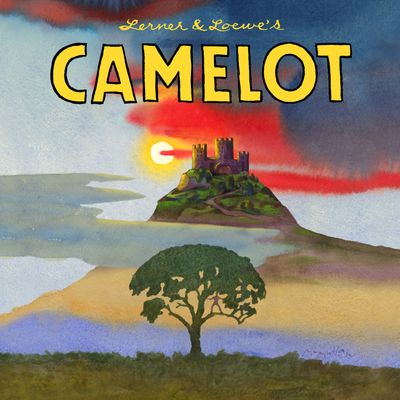
"CAMELOT is not boring!" shouts this week's guest Jenny Lockwood on a daily basis. And you know, this episode proves her correct... Read More
From the show: A Musical Theatre Podcast
Featured Shows
About
"CAMELOT is not boring!" shouts this week's guest Jenny Lockwood on a daily basis. And you know, this episode proves her correct. Whether exploring the multiple hospital visits in its creation, the relevancy of its themes, or the way it's synonymous with one of history's great American tragedies, this musical is much more than "one brief shining moment." Let's all thank Jenny for convincing Jeff to cover it and enjoy what's left of our lusty month of May!
Follow Jenny's love of vegetables and flower crowns on Instagram @lil.greenwitch and don't forget to follow us on Twitter and Instagram as well. You can support the podcast and gain access to exclusive content for only $1 a month at PATREON! We're also making great content on TikTok and our TeePublic Store.
References for this Episode:
- Alan Jay Lerner's The Street Where I Live
- Our MY FAIR LADY Episode
- Our MERRILY WE ROLL ALONG Episode
Transcript
This transcript was automatically generated and might contain errors.
[0:00] Jeffrey Scott Parsons: Would you mind terribly if I read to everybody part of our text message conversation in preparation for this episode?
[0:06] Jenny Lockwood: Go ahead.
[0:14] Jeffrey Scott Parsons: Yeah, no, it's great. Quick summary. You were like, when are you going to do a Camelot episode? And I was like, wow, would you want to be my guest? And you're like, be your guest. But I never have an opinion on anything. Jokes, I would love to. To which I wrote, I need you for this one. I don't have the strength to convince somebody about Camelot. And then you wrote, that might be the only strength I have left. I'm not a melodramatic person. But like the idea that after all of this pandemic, you're like, look, I am tired. I have two children. But I absolutely have strength to convince everybody that Camelot is not the boring show that you think it is. Don't ask me about my day. Don't ask me what I had for dinner last night. Don't ask me my plans for the future. Ask me about Camelot or nothing.
[1:00] Jeffrey Scott Parsons: Welcome everybody to A Musical Theatre Podcast where we discuss the cultural and emotional impact of some of our favorite musicals in theatre history. My name is Jeffrey Scott Parsons. You can call me Jeff. Today we are talking about Camelot with someone who has always been a kindred spirit to me. Ladies and gentlemen, it is Miss Jenny Lockwood.
[1:35] Jenny Lockwood: Thank you for calling me a kindred spirit. That makes me feel very nice inside.
[1:41] Jeffrey Scott Parsons: Now, right at the top, I'm getting this out of the way. If I were looking through the list of episodes for A Musical Theatre Podcast now available on all streaming platforms and saw an episode dedicated to Camelot, I probably wouldn't click it, if I'm being totally honest. So, you know, misogyny and toxic masculinity aside.
[1:57] Jenny Lockwood: Yes.
[1:58] Jeffrey Scott Parsons: What's your favorite time period in musical theatre?
[2:04] Jenny Lockwood: I guess I would probably say classic musical theatre.
[2:09] Jenny Lockwood: Yeah. I mean, I love the Rodgers and Hammerstein, Lerner and Lowe era.
[2:15] Jeffrey Scott Parsons: Sure. The R and H, L and L can't make a musical under three hours.
[2:20] Jenny Lockwood: Yes. That being said, I do have some complaints. I have thoughts.
[2:24] Jeffrey Scott Parsons: Look, I completely agree. I love this time period. I love that theatre was so healthy. Musical theatre, when Camelot came out, was like when you hear that your friend gave birth to like a nine, nine and a half pound baby. You could look down the street on Broadway and find at least four or five classic musicals running simultaneously.
[2:47] Jenny Lockwood: Yes.
[2:48] Jeffrey Scott Parsons: It was also just a part of the culture. People were just starting to get televisions in their homes, ticket prices for theatre, what were they then compared to now?
[2:58] Jenny Lockwood: Right. So, theatre was a thing. It was a thing. Not to mention the record, like the cast album for Camelot was the highest selling record of that year.
[3:13] Jenny Lockwood: Yeah. You know, and as much as everybody loves Hamilton and as much as it's like a huge thing, I still don't think Hamilton was the highest selling record of the year that it came out. You know, like that's on a whole other level.
[3:20] Jeffrey Scott Parsons: Right. People don't see musical theatre that way. But in 1960, they did.
[3:26] Jenny Lockwood: Yeah.
[3:27] Jeffrey Scott Parsons: So, let's talk about Camelot and begin by talking about the Lerner and Lowe. If any of you listeners haven't listened to our My Fair Lady episode, we kind of went into the beginnings of Alan J. Lerner, lyricist, Frederick Lowe, that relationship as a composing team. They had had big successes with Brigadoon and of course their hugest hit, My Fair Lady, which was the musical of the 1950s.
[4:00] Jenny Lockwood: So, their follow-up was going to be Camelot, based on the Arthurian legend.
[4:10] Jeffrey Scott Parsons: Is that how you would say it?
[4:12] Jenny Lockwood: Yeah.
[4:13] Jeffrey Scott Parsons: Arthurian. Arthurian legends of King Arthur. Now, King Arthur, real person. Or was he?
[4:24] Jenny Lockwood: Or was he? Yes.
[4:25] Jeffrey Scott Parsons: So, a lot of the tales of King Arthur, there could be an entire episode dedicated to Arthurian myth, but there may have been a real King Arthur back in the fourth century who was likely a Celtic warrior who then rose to power. Though, a lot of what we know and think and say about King Arthur likely is not derived from any factual source.
[4:47] Jenny Lockwood: I think it's pretty well documented that this musical is based on the Once and Future King, and yet the Once and Future King was based on another book called Le Something Arthur.
[5:10] Jenny Lockwood: Le Morte d'Arthur.
[5:11] Jeffrey Scott Parsons: Thank you. And who wrote that one?
[5:13] Jenny Lockwood: Sir Thomas Mallory.
[5:14] Jeffrey Scott Parsons: Yes, of course, because we'll get to Tom at the end. But he based that on stories that had been kind of going around the zeitgeist forever. He was in prison, likely at the Tower of London, and had access to a huge library. And he was like, this is about King Arthur. This is about King Arthur. This is about King Arthur. I'm just gonna, like, put them all together.
[5:37] Jenny Lockwood: It was during the War of the Roses in England, which is two families battling for the crown for many, many years. It was chaos and not a lot of stability.
[5:48] Jeffrey Scott Parsons: When T.H. White wrote the Once and Future King, it was just after World War II, and Europe is completely desolate, and England has been destroyed by bombs. So having a hypothetical perfect kingdom, perfect ruler, I think it's the same reason people like West Wing, President Bartlett, even if your ruler is going to make mistakes, you know that their heart is in the right place. The intention was to serve everyone the best that he could or she could.
[6:25] Jenny Lockwood: Yes, yes.
[6:26] Jeffrey Scott Parsons: I often have felt in my life that Camelot was reduced to an aesthetic.
[6:32] Jenny Lockwood: That's fair. You know what I mean?
[6:34] Jeffrey Scott Parsons: Yeah. Like a style of chivalry and pretty dresses and knights in shining armor. The end.
[6:40] Jenny Lockwood: Yeah.
[6:41] Jeffrey Scott Parsons: But really, and I think that this is a huge takeaway that I want to focus on in this episode, is that the emotional takeaway of this story is asking ourselves, why do we war?
[6:54] Jenny Lockwood: Yes.
[6:55] Jeffrey Scott Parsons: And if I could come up with a thesis statement for Camelot, I would say it's something like, wouldn't the world be amazing if we weren't human?
[7:09] Jenny Lockwood: Right? That's fair.
[7:10] Jeffrey Scott Parsons: Yeah. But also not possible. But also, what a beautiful dream.
[7:18] Jenny Lockwood: Yeah.
[7:19] Jeffrey Scott Parsons: All of those complex paradoxes working together. It's really beautiful storytelling.
[7:26] Jenny Lockwood: It is. And I think for me, my draw to this musical, I'm a big fan of Lerner and Lowe musicals in particular.
[7:34] Jenny Lockwood: And I once heard it said that Rodgers and Hammerstein musicals, they're fully integrated script music dance shows. Lerner and Lowe are a little bit more like a play with music.
[7:49] Jeffrey Scott Parsons: Alan J. Lerner loves his words.
[7:51] Jenny Lockwood: Yes, he does. And specifically with Camelot, especially the character of King Arthur feels so Shakespearean to me.
[8:05] Jeffrey Scott Parsons: Absolutely. And I love it.
[8:07] Jenny Lockwood: That's wonderful. Well, the other reason that we're doing this besides the fact that you wanted to is because it's the lusty month of May.
[8:19] Jeffrey Scott Parsons: Yes. So The Once and Future King is four books at this point in the late 50s. The first book of The Once and Future King following the childhood of Arthur and how he pulled the sword in the stone, hint hint, had already been bought by Disney.
[8:35] Jenny Lockwood: So it was off the market in terms of musicalizing. Disney, of course, then turned it into one of my favorites, Sword in the Stone.
[8:42] Jeffrey Scott Parsons: I mean, I love that one. We watched it this last week.
[8:46] Jenny Lockwood: Did you? We got two boys. I feel like Sword in the Stone, Robin Hood, those have to be like staples.
[8:51] Jeffrey Scott Parsons: Those are the two we watched this last week.
[8:54] Jenny Lockwood: I may have had a hand in it, but they liked them.
[8:58] Jeffrey Scott Parsons: You're like, everyone sit down. I need to introduce you to Carol Shelley, who is voicing the hen in Robin Hood. She's so good.
[9:03] Jenny Lockwood: Lady Cluck.
[9:04] Jeffrey Scott Parsons: Lady Cluck. Classic.
[9:06] Jenny Lockwood: So Lerner and Lowe coming off their high from My Fair Lady are like, hmm, what are we going to do next? Alan J. Lerner stumbles upon The Once and Future King. And he's like, this is cool. This would be a cool musical. Maybe. And then forgets about it.
[9:25] Jenny Lockwood: His friend, mentor, collaborator Moss Hart calls him up a few weeks later. Moss, by the way, those who don't know Moss Hart, we're talking Kaufman and Hart, who are two of the greatest playwrights in like early American theater history.
[9:39] Jeffrey Scott Parsons: We talked about them in Merrily We Roll Along because they wrote the play that became that musical.
[9:46] Jenny Lockwood: Thank you for letting me interrupt you. I never put that together. I love Merrily We Roll Along.
[9:51] Jeffrey Scott Parsons: Moss Hart knows.
[9:52] Jenny Lockwood: Moss Hart. Married to Kitty Carlisle?
[9:54] Jeffrey Scott Parsons: Yes. Oh my gosh. Them some New Yorkers right there.
[9:57] Jenny Lockwood: Yeah.
[9:58] Jeffrey Scott Parsons: So Moss calls Alan and he says, hey, have you read The Once and Future King?
[10:09] Jenny Lockwood: And he was like, yeah.
[10:10] Jeffrey Scott Parsons: They're like, let's go talk to Frederick Lowe, who in The Street Where I Live. You have the Alan Jay Lerner book?
[10:16] Jenny Lockwood: Oh my gosh. I ordered it. It's really interesting. I've only read the Camelot chapter because I only had a week, but I really want to read the My Fair Lady and Gigi.
[10:29] Jeffrey Scott Parsons: He's a fascinating fella, that Alan Jay Lerner.
[10:32] Jenny Lockwood: He is.
[10:33] Jeffrey Scott Parsons: Yeah. So he calls Frederick Fritz. So I'll just refer to him as Fritz.
[10:38] Jenny Lockwood: I love it. Fritzy.
[10:39] Jeffrey Scott Parsons: So Moss and Alan, they're like, let's call up Fritz. And they're like, hey, The Once and Future King. It's about King Arthur. And he legit says, that cuckold. Why would anyone want to write a musical about him?
[11:00] Jenny Lockwood: He used the cuck word?
[11:01] Jeffrey Scott Parsons: Yeah, cuckold. Yep.
[11:03] Jenny Lockwood: Oh my gosh.
[11:04] Jeffrey Scott Parsons: For any of our listeners who are not aware, cuckold is a man whose wife has been cheating on him. So remember that Frederick Lowe is Austrian. And what Lerner says about that is in Austria, a cuckold is the butt of the joke, the comedic relief. And a story about a man cheating on a woman, that's a drama. And he says in America, in England, it's the opposite. A man who is unfaithful to his wife, that's a comedy. A woman who's unfaithful to her husband, that's a drama.
[11:34] Jenny Lockwood: I haven't thought about it enough to know if that's actually true.
[11:38] Jeffrey Scott Parsons: I mean, I don't disagree, especially in the 1960s. You know, everybody wants to have a maid, where a guy needs to go out and sow his oats like promises promises the apartment.
[12:01] Jenny Lockwood: But as soon as a woman strays, it's like...
[12:03] Jeffrey Scott Parsons: Everyone's freaked out.
[12:04] Jenny Lockwood: Yeah. So Frederick Lowe did not want to do this story. He had to be coaxed into it. And the process, I don't know how much you read about the process leading up to their out-of-town tryout. The health problems alone are enough to show you what a stressful experience this all was.
[12:23] Jeffrey Scott Parsons: And before we talk about all that drama, let's just go ahead and say that two of the names that Alan Jay Lerner really holds in esteem to making even this musical possible are Julie Andrews and Richard Burton. That through all of the drama, they were like, team players, let's get her done, no ego whatsoever, which is kind of impressive.
[12:43] Jenny Lockwood: At this point, Julie Andrews had already been Eliza Doolittle. She's a star.
[12:48] Jeffrey Scott Parsons: Richard Burton, was he married to Elizabeth Taylor at this point?
[13:00] Jenny Lockwood: He was not at this point, but he had been the youngest Hamlet.
[13:04] Jenny Lockwood: He was already a renowned Shakespearean actor. He'd done some film work. He was legit.
[13:11] Jeffrey Scott Parsons: Fredrik Lowe said, Fritz, excuse me. Fritzie said, basically, if this doesn't go well, we're through, Alan. We're not working together anymore.
[13:22] Jenny Lockwood: Also, Fredrik Lowe had had a recent heart attack. So he was recovering from a heart attack. He, on doctor's orders, went to Palm Springs and was like, hey, I like it here. I don't really want to go back to New York. So yeah, if this doesn't go well, this is my last one. I mean, good for him, in many ways.
[13:42] Jeffrey Scott Parsons: His limits.
[13:43] Jenny Lockwood: Yeah, set those boundaries and go to Palm Springs. Creating musicals is not an easy thing. Especially in their situation where, like me, if I sat down and decided to write a musical, I could take 10 years and no one would care because I'm Jenny Lockwood sitting in my bedroom, typing on my laptop. But if you're Lerner and Lowe, you have investors, you have a deadline. You have the shadow of the biggest musical of the entire decade looming over you.
[14:13] Jeffrey Scott Parsons: Right. So expectations are high. There's a lot of money involved and a lot of stress.
[14:21] Jenny Lockwood: This leads Moss Hart, the director. Did he have a heart attack as well?
[14:26] Jeffrey Scott Parsons: So he was the second health issue that occurred during the show.
[14:33] Jenny Lockwood: What was the first? So Lerner, he's working on writing the script for Camelot. And the way that Lerner and Lowe work is he just kind of, I think, intuitively knows when something should be sung. So he writes the hook, sends it to Fritzie, and then he takes that lyric for the chorus and he writes the entire song around it, sends it back to Lerner, who then fills in all of the verse. Look, that's their process.
[15:03] Jeffrey Scott Parsons: Yeah, that's their process.
[15:04] Jenny Lockwood: And that's also how they get all of these songs called, I've Grown Accustomed to Her Face.
[15:09] Jeffrey Scott Parsons: That was the first one that popped in my head too.
[15:12] Jenny Lockwood: You're like, huh, that's just begging to be musical. So they're traveling a lot while they work, which seems insane. Lerner enjoyed that because he wanted time away from his wife. I believe it was the second time they were married. He eventually, in his lifespan, I believe, was married six times.
[15:33] Jeffrey Scott Parsons: Six times.
[15:34] Jenny Lockwood: Yeah, six times. So this woman, he married twice. And they have a two-year-old son. And he refuses to mention her name in the book. He calls her The Unnamed.
[15:45] Jeffrey Scott Parsons: Oh my gosh, full Voldemort status.
[15:48] Jenny Lockwood: He will talk about any of his other wives, just not her. So he wants an excuse away from her. He's not getting any work done because they are arguing 24 hours a day. So he's very behind. He's very, very, very, very, very behind in his writing process. And his wife comes downstairs and goes, I think that the young chap, whatever his name is, and I should go to Europe for a week. And he goes, you know what? Not a bad idea. We should not be in the same house. And I really need to get some work done. So okay. So long, farewell. She goes to Europe and he's like, cool. All right, time to get some writing done. He's working. Three days after she leaves, she calls him. And she says, by the way, we are never coming back. And you're never seeing your son again, hangs up the phone. And that's why she's The Unnamed.
[16:41] Jeffrey Scott Parsons: That's why she's The Unnamed.
[16:43] Jenny Lockwood: He understandably falls apart. All of this stress is going on. He goes to, this is the 60s. He goes to a psychiatrist and he says, I don't have time to talk about this and get better. I just want medicine. And the doctor goes, you got it sweetheart. Because I know it. You've got a deadline. Us doctors get it. So he has him slowly build himself up to this crazy tolerance of antidepressants. They're supposed to start rehearsals in New York in a couple weeks. And he has written practically nothing.
[17:22] Jeffrey Scott Parsons: Oh my gosh, that's terrifying.
[17:24] Jenny Lockwood: So he's working like crazy, working like crazy. He has the first act finished when they start rehearsals. And if you have ever seen Camelot.
[17:34] Jeffrey Scott Parsons: That makes a lot of sense.
[17:36] Jenny Lockwood: When you hear the story of the process, you're like, oh wow. Yeah, I get it. I totally get it. Anyways, they're doing their out of town tryout in Toronto. In Canada. And I think this is where you're going with the opening night performance was like four and a half hours long. People left at one in the morning. And they still got okay reviews.
[18:00] Jeffrey Scott Parsons: This is what blows my mind.
[18:03] Jenny Lockwood: He says it's because they were Canadians.
[18:06] Jeffrey Scott Parsons: Oh, they are a cheerful bunch.
[18:11] Jenny Lockwood: That is sweet. He says if they had been in New York, and that had happened, they would have been torn apart. But he thinks the Canadians were just excited to have them there. And isn't that sweet?
[18:22] Jeffrey Scott Parsons: That is really sweet. I love Canadians. Thank you, Canada.
[18:26] Jenny Lockwood: So because of you, we have Camelot. So he was on the antidepressants. He was like, cool. I'm feeling good. Like a lot of people do the first time they're on antidepressants. I don't need to be on these anymore. And the doctor was like, that's fine. But this is your chart for how to lessen your intake to get off of the antidepressants. And you have to eat food, like regular meals and drink enough water and not overexert yourself because your body is going through a lot doing this. But it's tech. So he doesn't eat. He doesn't sleep. He just like stops taking them and he's doing whatever and his body loses it. And he has an ulcer and he goes to the hospital. I believe this is after opening. He's supposed to be doing rewrites because obviously four and a half hours. So he goes to the hospital and he can't do any rewrites. That's number one. As he's leaving the hospital, Moss Hart is being brought into the hospital. He had a heart attack.
[19:31] Jeffrey Scott Parsons: This is his second heart attack.
[19:33] Jenny Lockwood: And now this is when the friction between Fritz. Ooh, that's a tongue twister. The friction between Fritz and Alan Jay Lerner really starts to escalate because Alan Jay Lerner wants to take over as director.
[19:47] Jeffrey Scott Parsons: Well, Moss told him to.
[19:49] Jenny Lockwood: Moss said, you need to direct this. Don't bring in another director. They do not know what we know. I mean, Moss and Alan were real collaborators. And I understand if you've collaborated on a story with someone, I mean, some random person can come in, but all they're going to want to do is change it. They're not going to want to move in the same direction that you guys have been moving. The first thing Alan does is he goes and he talks to Fritz and Fritz is like.
[20:20] Jeffrey Scott Parsons: You're not a director. We need to bring in a real director.
[20:23] Jenny Lockwood: Which is true. He's not a director.
[20:25] Jeffrey Scott Parsons: He's not wrong.
[20:26] Jenny Lockwood: He's not wrong. And yeah, this is again when the riff starts between them. Their communication is not good. It kind of seems like Fritz doesn't even want to talk to Alan because I'm sure he's like, hey, I've been doing my work. I've been writing the songs. We started rehearsals with one act. I also get the feeling that Alan Jay Lerner had always wanted to be a director. He was a writer who wanted to be a director. And I'm sure from Fritz's point of view, having seen him show after show, trying to maybe do as much as he could from the directing standpoint while not being the director to then all of a sudden take advantage of this situation where Mosshart is in the hospital. He's like, all right, like enough, enough. It 100% looks like a power grab for sure.
[21:13] Jeffrey Scott Parsons: And it could have been. But at the same time, he had Moss's blessing. I think that means something.
[21:20] Jenny Lockwood: Absolutely. So in Boston, they made more cuts. There's a great line. Julie Andrews says they needed a song for Guinevere in the second act for a couple reasons. One, they were like, hey, maybe there should be a female voice in this show. But two, they needed to wrap up some plot stuff. And that was her emotional plot. That was the fastest way to do it was in the song. And it was Before I Gaze at You Again. And Lerner couldn't write lyrics for it. This is right before previews, right before New York previews.
[21:56] Jeffrey Scott Parsons: Yes.
[21:56] Jenny Lockwood: And Lerner goes to Julie Andrews and he's like, I am just having a lot of trouble with this song. Are you OK? And she goes, of course, darling, just try to get it to me before opening night.
[22:10] Jeffrey Scott Parsons: In only the way that Julie Andrews could.
[22:13] Jenny Lockwood: Yes. So the first time she ever sang the song was opening night in New York. And I believe she had gotten it the day before. So this show was literally thrown together and the captain of the ship was not at sea.
[22:29] Jeffrey Scott Parsons: And still managed to be a really big hit.
[22:33] Jenny Lockwood: Yes. It gets OK reviews. The New York reviewers are, you know, lukewarm about it. But a huge thing happens and that huge thing's name is Ed Sullivan. He contacts Lerner and Lowe to do this whole My Fair Lady sequence on his variety show, which was the biggest thing every household in America would tune into, the Ed Sullivan show. Sunday night, 8 p.m., everyone's in front of the television. Ed Sullivan.
[23:02] Jeffrey Scott Parsons: And Lerner and Lowe decide that instead of doing My Fair Lady, they're actually going to do Camelot. And that is when Robert Goulet sings If Ever I Would Leave You, which was, you know, the big ballad, the big hit song. It rocks everybody's world that Sunday night. Camelot starts getting really great word of mouth. And the show ends up running for over two years.
[23:28] Jenny Lockwood: Yeah. It's a big hit. The next day, the next day after Ed Sullivan, that the box office was open, the line was around the block and they had been not really selling tickets right before that.
[23:43] Jeffrey Scott Parsons: Crazy.
[23:44] Jenny Lockwood: Oh, oh, oh, oh. This is important to note as well. Right before that, Moss gets out of the hospital, comes over to Camelot, watches the show and goes, okay, here's a few changes we need to make. They made changes three months into the run. Big changes. It's a show that continues to get tinkered with.
[24:07] Jeffrey Scott Parsons: It does. And in my mind, as I'm watching it in preparation for this, and I'm reading about it, in my mind, I'm like, well, my production will be, which I don't think that means it deserves to be written off. I did a production of Rent that was staged very Brechtian. And I sat on stage for nearly all of the show and watched it every night for three weeks. And the more I watched it, the more I was like, this show literally does not work, but people still love it. That doesn't mean you shouldn't love it.
[24:41] Jenny Lockwood: Does Camelot really, really work? No, but we shouldn't give up on it. We should still love it. The takeaway from this episode, Camelot is Rent.
[24:52] Jeffrey Scott Parsons: Now, when on Broadway, the same season that Camelot opened, there were some other big hits. First and foremost, Bye Bye Birdie.
[25:01] Jenny Lockwood: Oh.
[25:02] Jeffrey Scott Parsons: Great show.
[25:02] Jenny Lockwood: I still love Birdie.
[25:03] Jeffrey Scott Parsons: And it is the thing that takes home all the trophies in terms of the Tony Awards that year.
[25:08] Jenny Lockwood: That makes sense.
[25:10] Jeffrey Scott Parsons: Also nominated for Best Musical that year were Do Re Mi, which is a Julie Stein musical, really fun star vehicle for Phil Silvers. It's got a lot of great tunes. Highly recommend. And then Irma LaDuce.
[25:25] Jenny Lockwood: What is that?
[25:28] Jeffrey Scott Parsons: I'll tell you what wasn't nominated for Best Musical. Camelot.
[25:32] Jenny Lockwood: Yeah.
[25:33] Jeffrey Scott Parsons: That is kind of insane because, you know, once again, love Birdie, love Do Re Mi, couldn't care less about Irma LaDuce. But Camelot, that is an iconic score.
[25:43] Jenny Lockwood: Yeah.
[25:44] Jeffrey Scott Parsons: It was the young Frankenstein of its day. Yeah, the expectations were high. Let's talk about the movie real quick.
[25:51] Jenny Lockwood: Did you grow up with it?
[25:53] Jeffrey Scott Parsons: I did not grow up with it. But when I was in college, when I was a freshman in college, my roommate had it on DVD and we watched it and I went, where has this been all my life?
[26:07] Jenny Lockwood: Oh, how cute. I love that. I love anything medieval, renaissance, English history. And then it was also a musical. And I love the 70s renaissance aesthetic. And it was Shakespearean enough for me. It like ticked so many boxes. When I first saw the film version of Camelot, I thought this movie is way too long for me to watch people who can't sing. Yes, that was my first thought. Yeah, my second thought was, this is gorgeous. And my third thought was, I don't ever want to watch this again. I understand. Now, that being said, I have since grown to enjoy this musical as a whole, but I still haven't returned to the movie. I don't know why I just don't know. I don't know why I am a freak of nature.
And I have watched the movie 10,000 times. Oh my gosh. So my friends, I'm on an improv team, and they thought it would be fun to throw a little surprise birthday party for me last year, right before the pandemic. And they're like, come on in. And my friend has a warehouse, and he had the screen set up, and they were going to project a movie. And they're like, we're going to watch your favorite movie, Camelot. And I'm like, are you sure? Like, you want to watch it? And I got everyone's feedback after, and I still think I'm the only person who liked it. That being said, classic piece of cinema, everyone. Go out and rent it on iTunes today. Yeah. On IMDB, if you click on trivia for the Camelot movie, it tells you all the people they considered for the roles.
Which, what does considered mean? Does it mean like, someone put their name on a list? Was there ever like, a real chance of this person doing it, but Liza Minnelli was considered to play Guinevere? And I want to see that so bad. That is another one that was really funny. That is incredible. But yeah. Oh, oh, big change. The big change from the stage show to the movie is, in the stage show, Guinevere and Lancelot are in love, but they are chased. The most they do in the stage show is hug. Really? They don't even kiss? And make eye contact. They do not kiss. And when they first opened the out of town tryout, that was different. The audience just found it so abhorrent. And she said it was because she, Julie Andrews, appeared so innocent and pure and virginal, and people just could not get over Lancelot being with her.
Even though she's just saying about the lusty month of May? She's saying about the lusty month of May. I mean, Guinevere's, Guinevere is sassy, and she's complex. I dig her. I love that role. If you don't want Guinevere to cheat on Arthur, that's what the story is. That's just the story. Yep. Speaking of the story, let's go through the show. The story. Okay. The show opens, like we said, after Arthur has already grown up. If you wanted to know about what happened to Arthur when he grew up, watch Sword in the Stone. Yes. It's not entirely accurate, but boy, I would love to see Madame Mim on stage. That being said, we meet King Arthur, who is incredibly nervous about meeting his queen, right? There has been this treaty between their two different lands, and that's really the reason for this marriage.
Yes. If they get married, the warring stops. No more war. King Arthur, he's an interesting guy, because he knows about blood and violence, but he's also kind of nervous about meeting a girl. You know what I mean? Yeah. He's an interesting fella. At his side, and enjoy him now, because he's going to leave in about 20 minutes, is Merlin the Magician. For those who don't know, he's a very central figure in the Arthurian legends. He lives life backwards. He Benjamin Buttons. Yeah. He knows everything that's already happened, because he's already lived it, but now he's going forward, getting younger as we're getting older. Yes. It also seems like his memory's not great. Well, he sometimes doesn't remember what parts of the future he's told Arthur about and what he hasn't. Yes.
In this case, he's already seen Guinevere, so he knows what's going to happen, and Arthur's like, please tell me. Tell me, is she pretty? Merlin just kind of wants him to grow up. He's also teasing him a bit, too. Like, you're a king. What does it matter if she's pretty? Yeah. Get over it. Yeah, totally. Arthur sings this very Lerner and Lowe patter song, I Wonder What the King is Doing Tonight. Lerner says you can tell the temperature of the audience based on if they laugh at a line in this song, which is, I wonder what the king is wishing tonight. He's wishing he were in Scotland fishing tonight. If the audience laughs at that, you know you got a good audience. That's why it'll never be produced again.
[39:40] Jeffrey Scott Parsons: Well, in my production. In my production, the audience will fall over themselves laughing at the fishing line. That's fantastic. Now, there's this tradition in Camelot, which is like the kingdom of King Arthur, that when the bride comes, or this, you know, this woman, Guinevere, comes, that the entire village is going to meet her at the top of the hill. And what we realize is that the carriage actually stops at the bottom of the hill. So right from the get-go, when old Guinevere shows up, she's changing traditions left and right. She's very unorthodox. And so everyone's like, well, I guess we need to go down there to meet her. So they all go down. Meanwhile, Guinevere is like snuck out of her carriage to run away because she doesn't want to get married either.
And the person that she bumps into is none other than her future husband, King Arthur himself. However, he doesn't reveal that to her. He identifies himself as Wart. Which was his childhood nickname. Yes. If you grew up with a family who nicknamed you Wart, it's time to find a new chosen family. Maybe we understand why he's a little nervous around girls. His self-esteem was not built up. You're exactly right. Guinevere sings this song called The Simple Joys of Maidenhood, in which she's contemplating, like, where did my youth go? I'm young, and now I'm about to be a married old maid before I've even had a chance to live. I love the lyrics in this song. She's lamenting that, will two knights never tilt for me and let their blood be spilt for me?
Like, she wants the drama. She wants the drama. And she wants everyone to be in love with her. And she wants to get kidnapped and be on a pirate ship. And that is who she is. And she's being contracted into a loveless marriage with a boring king who's much older than her. And she's like, cool. So I'm just going to be locked in a castle for the rest of my life. Like I have been the first... How old is she? We don't know. She's been dreaming to get out of the castle of her father, who's, you know, also a king. Only to then be thrust into another castle with another king. So she's never going to get the life she wants. Ever. You have a really great point with these first two songs, which require the audience to listen very, very intently.
Yes. We haven't had a big number that isn't just all about the words, words, words. Yeah, there's not a lot of show in this show. There's a lot to tell. Yes. Great way of saying it. Great way of saying it. She threatens to leave. Yes. Or she asks Arthur to help her escape. And he's like, yeah, I mean, yeah, if you want to escape, okay. Well, doesn't she say like, come with me. You can be my knight. And we'll go everywhere and you can protect me. Yes. And he's like, awesome. That would be so fun. But I can't really do that. But while you're here, look around. Look how great this place is. And this place is called Camelot. Camelot. Which is a great song. This is like, probably one of the first real... Songy songs.
Yeah, melodic, beautiful, low stuff that we... Poetic lyrics, instead of like, listen to every syllable I'm saying, or else it won't make sense lyrics. Yeah, yeah, exactly. And he really is able to paint a picture for her that is sweet enough that by the time the villagers come back and see the king there, and she finds out he is the king, she's smitten. And they fall in love. It's a lovely little tiny play. It is. You're so right. You know, so often in musical theater, you have a half a page scene to then launch into a song. And for as long as these Lerner and Lowe shows are, they really do give the actor more to work with. If you love scene work, you'll love Camelot. What a recommendation.
But it really does. It builds to this totally believable and very satisfying conclusion for them to be together and not feel trapped. And begin their life. Yes. Now Merlin has to go away, because if Merlin's still around, the rest of the play doesn't happen, because he already knows what happened. So in order to get him out of there, he has to be lured away by a water nymph by the name of Nimue. Yes. And for anyone who's familiar with King Arthur stuff, or even Spamalot, she's the Lady of the Lake for all intents and purposes. This is part of Merlin's lore, is that Merlin has been lured away by a water spirit and trapped in a cave. And he is still there to this day.
[39:10] Jenny Lockwood: It's far better to be alive than dead. If that is so, then why do we have battles where people can get killed? Right? So this leads him down this train of thought where it's like, why are we killing each other? Nobody wants that. Nobody wants that. No one's getting what they want in this scenario. It's a lose-lose scenario. So now it's okay, if I have all of these warriors, what if we give them a new job? What if becoming a knight, you know, as it were in this medieval time period, became a symbol of something else, a symbol of chivalry, of honor, of virtue, of going out and helping the land in which they live, rather than seeking to destroy the one they're against. And thus gives birth to the Knights of the Round Table, which is, you know, one of the most iconic iconographies that come out of the whole King Arthur story.
[40:12] Jaime Tardy: And the table is round, because then no one has to argue over a hierarchy. They're all equals.
[40:18] Jeffrey Sachs: And the table is from Guinevere's dad.
[40:21] Jaime Tardy: Yep.
[40:21] Jeffrey Sachs: She's like, I know, my dad has this huge table. He never uses it.
[40:29] Jaime Tardy: It's worth noting.
[40:31] Jeffrey Sachs: Yes. And this is something that is never pointed out in the play, but I think it's a great subtext if you're ever doing this. It is five years later, and there is no baby. They are a king and a queen. It is five years later, and there is no baby.
[40:48] Jeffrey Sachs: And they didn't have birth control.
[40:49] Jaime Tardy: And King Arthur, we find out later, has an illegitimate child. So that's a really big piece of the puzzle when you look at what is going on between Guinevere and Lancelot.
[41:02] Jeffrey Sachs: Wow. Good point, Jenny Lockwood.
[41:05] Jaime Tardy: Thank you. I've thought a lot about this.
[41:07] Jeffrey Sachs: Speaking of Lancelot, we meet Lancelot de Locke.
[41:14] Jaime Tardy: Locke.
[41:15] Jeffrey Sachs: He's French. He comes to Camelot, because more than anything in the world, he wants to be one of the knights of the round table.
[41:24] Jaime Tardy: Yeah.
[41:24] Jeffrey Sachs: Obviously, this whole thing has spread near and far.
[41:28] Jaime Tardy: But even so, Arthur is surprised that someone from France came all the way to Camelot. He's very surprised that his ideas have had that big of an effect on someone so far away. And Lancelot sings an amazing song called C'est Moi, where he's literally just listing how great he is.
[41:43] Jeffrey Sachs: C'est Moi, which is French for I'm insufferable. But I also think Lancelot is not Gaston.
[41:57] Jaime Tardy: No, no, no, no.
[41:59] Jeffrey Sachs: And I think we often, once again, diminish him to some sort of toxic masculinity. And what he tends to prove to everybody is that he seems full of himself, but he's honestly just telling the truth.
[42:11] Jaime Tardy: He really is.
[42:14] Jeffrey Sachs: Because he is everything that he claims to be.
[42:16] Jaime Tardy: Yeah, he's talking about, I am the strongest knight, I am the purest knight, I am the most godly knight.
[42:23] Jeffrey Sachs: And he never says, I'm the most good-looking knight.
[42:26] Jaime Tardy: He never says, I'm the most handsome, or all the girls love me. He's talking about, and you find out what are his values. And they align with Arthur's.
[42:36] Jeffrey Sachs: He's very religious.
[42:38] Jaime Tardy: Yeah.
[42:38] Jeffrey Sachs: And he accidentally beats the crap out of King Arthur.
[42:42] Jaime Tardy: Yes.
[42:44] Jeffrey Sachs: And he feels horrible, naturally. Arthur invites him to come with him.
[42:49] Jaime Tardy: To become a mane.
[42:50] Jeffrey Sachs: Yeah.
[42:51] Jaime Tardy: And he says, what is a mane? And he says, well, it's the first day of spring, so the knights and the ladies of the court are off gathering flowers.
[43:03] Jaime Tardy: And he says, knights? Gathering flowers?
[43:06] Jeffrey Sachs: Why would they do such a silly thing?
[43:09] Jaime Tardy: And Arthur goes, well, someone has to do it.
[43:11] Jeffrey Sachs: It's really sweet. It's cute. It's like, the citizens have so much to do in their lives. Somebody's got to pick the flowers.
[43:19] Jaime Tardy: Yeah.
[43:20] Jeffrey Sachs: Make the knights do it.
[43:21] Jaime Tardy: Also, Arthur is, he's cheeky. He is funny. He is lighthearted. That's one of the things that him and Guinevere connect on.
[43:29] Jeffrey Sachs: They have a very similar sense of humor.
[43:32] Jaime Tardy: They have a similar sense of humor.
[43:32] Jeffrey Sachs: Jinx.
[43:33] Jaime Tardy: Thus gives way to Guinevere singing The Lusty Month of May.
[43:38] Jaime Tardy: How many times has that been my Facebook status on May 1st? Too many times.
[43:43] Jeffrey Sachs: The thing about this song is, actually, the thing about this show in general, makes me think that monogamy is a very recent development in society.
[43:59] Jaime Tardy: Well, there's a lot of things going on. There is the tradition of courtly love, which is not something that exists in our modern world.
[44:09] Jeffrey Sachs: Do tell.
[44:10] Jaime Tardy: So let's just, let's, we're not even going to talk about Camelot. Let's talk about any British monarch. If there was a queen, which there usually was, the gentleman of the court would write songs to her, write poetry about her, lay their cape over the mud. If you were not kind of acting like you're in love with the queen, you're not going to get any special favors. You're not going to get time with the king. You're not going to rise up in society and be rich and have everything you want. People would have essentially romantic relationships without any kind of physical relationship.
[44:49] Jaime Tardy: So like, it's almost like you're dating, you're wooing somebody.
[44:56] Jaime Tardy: Courtly love was not a threat to someone's marriage.
[45:01] Jeffrey Sachs: Gotcha. Interesting. After Guinevere sings The Lusty Month of May, she meets King Pelennor. And Pelennor was a family friend of Wart's family.
[45:12] Jaime Tardy: Yes. Pelennor, his lore is that he has been wandering in the wilderness for decades, searching for his kingdom. He lost it and he can't find it. And he's been in the wilderness for decades, searching for his kingdom. He is King Pelennor, but he can't find his kingdom.
[45:35] Jeffrey Sachs: Get the man a compass.
[45:37] Jaime Tardy: Guinevere and Arthur are very kind to Pelennor, who is in all likelihood delusional. He's like a Don Quixote.
[45:44] Jeffrey Sachs: Good reference. Absolutely. And in addition to meeting Pelennor, she meets Lancelot and is immediately disgusted by him.
[45:57] Jaime Tardy: He has all the same values as Arthur, but none of the humor.
[46:01] Jeffrey Sachs: Right. So then he just seems pompous.
[46:04] Jaime Tardy: Yes.
[46:05] Jeffrey Sachs: And of course, she is just a little spitfire. So he's talking about all of his values. And she's like, oh, really? Is humility one of those values? Good sir?
[46:15] Jaime Tardy: Again, part of the reason she immediately dislikes him is he is talking to her as if she knows nothing of what is going on in Camelot, of what chivalry is. And she was like, I am co-creator of all of this.
[46:31] Jeffrey Sachs: I am CFO.
[46:33] Jaime Tardy: So I mean, I would be upset too, if some guy, Walston was like, hey, have you heard about this thing? I was like, that's my thing. You heard about it because of me.
[46:44] Jeffrey Sachs: Yeah. Were you at the brainstorming session?
[46:46] Jaime Tardy: Yeah.
[46:46] Jeffrey Sachs: This, discussed with Lancelot, leads Guinevere to hatch a plan of sorts. Part of the May-ing, the May Festival, is this jousting tournament. And so she convinces three different knights to—
[47:02] Jaime Tardy: The three strongest knights.
[47:04] Jeffrey Sachs: They're all going to challenge him. They're all going to joust him. He, of course, is not going to refuse it. And they're going to tucker him out, like at least one of them is going to take him down.
[47:13] Jaime Tardy: Yeah. It's very unusual for three men to challenge one man to a joust. It would be three different jousting partners. So six men, and instead we have four. And Lance is going to do three jousts. We also see it cause a rift between Arthur and Guinevere, because Arthur says, this is not okay. This looks really bad. And you know that. You're smarter than that.
[47:36] Jeffrey Sachs: Not only does this look bad, but I really like Lancelot. Why are you being so mean to him?
[47:41] Jaime Tardy: Yeah. And he says, will you please withdraw your favor from these knights? And she says, only if you command me as king.
[47:51] Jeffrey Sachs: And?
[47:52] Jaime Tardy: And he says, and will you forgive me? And she says—
[47:57] Jeffrey Sachs: Never.
[47:57] Jaime Tardy: Never. And I love that so much.
[48:02] Jeffrey Sachs: It's so great. It's so great. So now he's like between a rock and a hard place. Are you kidding me?
[48:06] Jaime Tardy: And then he launches into a beautiful song.
[48:08] Jeffrey Sachs: How to Handle a Woman, which you think is going to be really problematic.
[48:13] Jaime Tardy: You think is going to be a Henry Higgins, women, women, women, women.
[48:19] Jeffrey Sachs: But alas, it's not. Because how do you handle a woman? You love her.
[48:26] Jaime Tardy: It's a beautiful melody.
[48:29] Jeffrey Sachs: And the words are so lovely. And Alan Jay Lerner says he came up with those lyrics years before the musical. Not the lyrics, but the hook. Years before the musical, he was having drinks with a friend who was married to a very difficult woman. And he's like, so I've been divorced a million times. How do you live with that woman? And he's like, you know what? It's pretty easy. When she comes into the room and she's like, we're late for dinner. What are you doing? We needed to be out the door 15 minutes ago. What is taking so long? He says, I just turned to her and I say, I really love what you did with your hair. You look, you're glowing. You look so beautiful. And he's like, and she completely forgets what she's mad about.
And that kind of sounds like a shallow reduction of women. But I do like undercutting tension and conflict with kindness. It's never a bad thing to tell your wife that they look nice or they have the most beautiful voice or they sound so sweet or what they said was so smart. And so through that conversation, he's like, someday I'm going to write a song. And the hook is going to be how to handle a woman is to love her, simply love her.
[49:45] Jaime Tardy: That's beautiful. Thank you for sharing that. So now we go to the big joust. And as you say, we do not see a lot in the show, but we get told a lot. And one of the things that we get told is that in the jousting, Lancelot wins every single time during the third challenge. He puts the joust like straight through the dude. Yeah, he skewers him. And like shish kebab time. And yeah, and he is dead. And he's full on dead. They drag his body out. They've made up a ritual, which I don't know if it's true or not, but there's a ritual that the king comes over and like lays his cloak across the dead body to honor it. And before Arthur can do that, Lancelot comes over. And this all happens in silence, which is... I love silence in the theater.
[50:40] Jaime Tardy: Yeah. So Lancelot motions to everyone...
[50:44] Jeffrey Sachs: When planned, might I add.
[50:44] Jaime Tardy: Yes, when planned. Lancelot motions to everyone like, you know, give me space. And he goes to the body, and he holds the dead man in his arms. And he prays for him to live.
[50:59] Jeffrey Sachs: And he does.
[51:04] Jaime Tardy: And he does. Full on miracle in front of everybody. And the miracle is only possible because Lancelot is as pure as he says he is, and is as godly as he says he is. And that's the moment that Guinevere goes, oh, he's not full of himself. He just really is everything that he says.
[51:20] Jeffrey Sachs: Yeah. And there is a long, silent eye contact moment between Lancelot and Guinevere. Sustained eye contact.
[51:28] Jaime Tardy: Sustained. This is their Meissner exercise, where they're just staring into each other's eyes. And then you see King Arthur look over and see them staring at each other. And then the spotlight is on Arthur's face, and the rest of the lights dim. And you see Arthur watching them, and you see like his brain catching on fire.
[51:46] Jeffrey Sachs: Yeah, he knows.
[51:55] Jaime Tardy: So much happens in that silence. Why do we bother talking so much?
[51:58] Jeffrey Sachs: Yeah. I say, as a person who never stops laughing. To be clear, Merlin knew that this was going to happen, and forgot to tell Arthur.
[52:10] Jaime Tardy: As he's being sucked away. As he's being sucked away by Nimue. To the sea cave. He goes, did I just...
[52:14] Jenny Lockwood: Tell him I can't remember if I told him! I think I forgot about Guinevere and Lancelot! Don't leave them alone! Bad timing, Merlin. What use are you? So that's the end of Act 1. Yeah, this is at the end of the first act. So after the moment of silence, there's the knighting of Lancelot, and this is when Lancelot and Guinevere are again staring at each other. Everyone leaves the coronation hall, or whatever it is, the throne room, I guess. And Arthur is there by himself, and he gives this speech proposition. If I could choose any woman in the world, a woman who had all the qualities of this and that, they would all be Jenny. If I could choose a man for my brother, for my best friend, to fight beside me and to do all these great things with, I would choose Lance.
They have betrayed me, even if they have not betrayed me with acts, they have betrayed me in their hearts, and that is sin enough. And I deserve a king's vengeance. And at this moment of the speech, he's decided, you know, I'm just gonna, like, kill him, or whatever I can do as king to get my revenge. Because this isn't right. They've wronged me. I have been wronged. This is not okay. And that moment hits him where he just came to the conclusion to kill the people he loves most. And then he goes back to his proposition. How can it be civilized to kill the things I love most? He decides Camelot, the idea of Camelot, the idea of justice and rightness, is more important than his personal offense and his feelings, own feelings, which I think is the most important part of his character. Wow, because he had all the power to abuse at that very moment.
[54:08] Yes. And if you think of it on a grand scale, that's such an important quality in a ruler to not just be ruled by your whims. Let's look at, like, the state of current political tribalism in America. If someone feels wronged by a comment or a statement or an idea or an event, there is no might for right. It is just immediate vengeance. I'm not saying I'm generalizing. But there is a culture of, especially on social media, what you just said elicited an emotional response from me. I'm going to attack. I'm going to obliterate you. Instead of working towards a higher purpose, a higher goal.
[54:59] Jenny Lockwood: Something that you actually do believe.
[55:01] Yes, like actually communicating. What Arthur has been saying all this time is, if we all prefer to be alive, then why do we keep looking for opportunities to kill each other?
[55:13] Yes.
[55:14] Jenny Lockwood: And the same goes for, if we can all agree that we're trying to be happy, why do we keep looking for ways to make each other miserable?
[55:20] Yes, exactly. And I think this moment is what makes Arthur a hero.
[55:27] That's beautiful.
[55:28] Jenny Lockwood: And I love this speech so much. Listen to it. Do it for auditions. It's really good. I don't know if we've ever covered a show where I like a lot of the scenes just as much, or if not more, than some of the songs.
[55:44] This show, for as structurally and stylistically haphazard as it is, the scenes are so good.
[55:55] Yeah, I completely agree. Act Two begins, Guinevere and Lancelot are now tormented by their feelings for one another, which brings the big song, On the Street Where You Live. I mean, if ever I could leave you. And this was of course sung by Robert Goulet. It's such a good song.
[56:14] Yes.
[56:15] Jenny Lockwood: And it is just textbook, perfect musical theater songwriting.
[56:21] Yes.
[56:22] Jenny Lockwood: Poetic lyric, great melody. It's a classic for a reason. And the purpose of the song is that Guinevere's like, Lance, you gotta go, right? I'm a married woman. Stop looking at me. This can never happen. And he's like, I could never leave you. I wouldn't leave you in spring or summer or winter or fall, which means I can't leave you at all. And everyone goes crazy.
[56:48] It's much prettier than that. But yes.
[56:50] What are you talking about? It rhymed.
[56:53] It did rhyme. That was very impressive.
[56:55] Jenny Lockwood: Enter Mordred, who is Arthur's illegitimate son. He, I guess, had a tryst at some point with this woman named...
[57:03] Morgaz.
[57:04] Okay, yeah. But guess what? I believe this is briefly touched upon in the musical. Maybe they don't say it because they didn't want to. Morgaz is Arthur's half-sister.
[57:14] And that's history.
[57:17] Yes. So this is part of the lore. Arthur's also an illegitimate child. He is a bastard of King Uther. This king has three daughters from his legitimate marriage. And Morgaz, coached by Morgan le Fay, who is like an evil fairy witch lady, goes to the castle on a rainy night wearing a hooded cloak and says, I have nowhere to stay. And Arthur says, you can stay here. And she's like, oh, in your bed? And they make a child and he doesn't know. So Morgaz goes away. Her child is Mordred. I believe he's partially raised by Morgan le Fay, the evil dark fairy who just wants to bring... She's kind of like the Madden Mim, just wants to bring everything Merlin has a hand in down. So yes, Mordred arrives. He's like the Shakespearean textbook of a bastard, just wants to bring everything down. He wears black tights.
[58:16] Yes, totally. He didn't keep it a secret. He told Guinevere that this guy exists, right? And when Mordred shows up, he's like, you know what? I'm going to give you a job. It's very American of him. He thinks that he's kind of taking care of the problem. What he doesn't realize is that Mordred is there to enact revenge on this father figure who abandoned him. Something else that Merlin forgot to warn him about. Now, Mordred sings this song called The Seven Deadly Virtues. And this is when the second act kind of becomes this almost silly farce.
[59:00] Yeah, because we go from this to then what do the simple folk do in which you finally get to see Guinevere and Arthur back at what they do best, which is, you know, be clever and fun. Talking about how the peasants probably have it easier than the royals, you know, that sort of thing. A fun song. And then in possibly the weirdest part, Mordred goes to visit Morgan Le Fay. She is his Merlin. She's also obsessed with candy because her, see now, oh my gosh, this is so weird. So like her entire palace is made of food. Like chairs are made of vegetables. Rugs are made of beef jerky. I don't know. But the one thing that she doesn't have are sweets. So he, Mordred, in order to get her help, brings her like these caramels and then also promises her like buckets of molasses. This is an actual plot point in act two of Camelot. This is another thing I will point out is not really in the show anymore.
[59:57] Oh, is it? Okay.
[1:00:03] Jenny Lockwood: Yeah. In the script I was reading, it was still there. And I was like, wow, 1970s, it was still there. Yeah. I'm not sure when the big switchover began. I mean, at this point, I think that it might even follow some of the sound of music rules in terms of community theater, where it's like, we're gonna put Lonely Goat Herd where it is in the movie and we'll cut, you're not gonna stop it and add something good. So yeah, that happens. What all those buckets of molasses ultimately do is get Morgan Le Fay to create an invisible wall around Arthur while he's hunting the next day.
[1:00:41] That is what exactly what happens. Arthur gets stuck in this invisible wall and Mordred bursts in on Lancelot and Guinevere singing and is like, ha ha, I've caught you too. Justice must be done. Guinevere is going to get burned at the stake and Lancelot, you must be banished. In the movie version and in the Richard Harris touring version, which I believe was the official revival version, they all use, which I think is a much stronger storytelling device, which is instead of a magic wall, Mordred says, if your ideals and values are so perfect, then why don't you hunt in the forest for a night? If you trust Lancelot and Guinevere so much, if you think your kingdom is so strong, then stay in the forest for a night and prove that you trust these people.
And Arthur has to agree to it or else he has to admit that Mordred is right, that people are innately bad. So he does and it's Arthur's choice and he's choosing to trust Lancelot and Guinevere, which I think is even more heartbreaking because he's already had his big speech at the end of act one. He knows exactly what's going to go down. So Arthur goes back, finds Camelot in total chaos. Lancelot escaped. He had to fight his fellow knights to escape because Mordred has divided the round table. Also, it's worth noting before this moment, Lancelot and Guinevere, and I think even Pelennor, have all been telling Arthur, you have to get rid of Mordred. He's dividing everyone. Everyone's getting bad vibes from him, but dear old dad is feeling pretty guilty about everything. He says, I can't do it. He's my son and I can't just send him away. Which, I mean, Arthur also has daddy issues. He wasn't raised by his dad.
[1:02:43] Yeah. So Lancelot escapes. He's fighting his once fellow knights who are now his enemy to escape and he abandons Guinevere, which is the opposite of chivalry. So we have gone, just in terms of talking about Lancelot, we have gone from so much purity that he was able to bring someone back to life.
[1:03:02] Yes. To now committing adultery and fighting against and killing his brother.
[1:03:10] Yeah. That's a big.
[1:03:17] Jenny Lockwood: Fratricide.
[1:03:29] Yeah. Name a musical with the lyric fratricide.
[1:03:36] Oh, I know it. It's in my brain because that's where the word came from. Right? Listeners, call in if you know this reference.
[1:03:43] Oh my gosh. I can't think of it now. Nevermind. We'll do our own separate research and communicate.
[1:03:50] Yes, and get back to it. Okay. All right. Anyway, so that's a huge turn for Lancelot.
[1:03:59] Oh, oh, oh. If Ever I Would Leave You has a.
[1:04:07] It's Joseph and the Amazing Technicolor Dreamcoat.
[1:04:12] That makes sense. They have tried fratricide.
[1:04:18] Yes. Anyways, when Lancelot sings If Ever I Would Leave You, there's like a little short pre song, which is a poem song he writes for Guinevere. Years may come, years may go. This I know will e'er be so. The reason to live is only to love a goddess on earth and a god above. So his entire philosophy has flipped since falling in love with Guinevere.
[1:04:37] Wow. The reason to live is only to love a goddess on earth and a god above. Guinevere is now on par with God in Lancelot's mind, and she is the only reason to live. So anything in service of his love for Guinevere is right, because Lancelot is extreme in his ideology. He's gone from one extreme to the other. I think the continuity is very strong for his character. It's not out of character for him to be so extreme, regardless of what direction it goes.
[1:05:00] Yeah. Wow. Yeah, that's totally right. That's totally true. I've thought about this too much. Now the story so clearly builds up to this huge fire.
[1:05:18] Jenny Lockwood: This huge rescue and they don't do any of it on stage. They just have an ensemble stand there and sing it to you chorally. They Greek chorus it. They Greek chorus it for sure. And if this show were mounted on Broadway today, if Lerner and Lowe wrote the show today, I feel like this show would have the jousting and this war would have so many like Trojan horse aspects to it like Julie Taymor, puppetry, all movement-based storytelling, which I still feel like you can do. Yeah. We're not ancient Greeks anymore and it's just not the most compelling choice. Right. That being said, it's beautiful music, this whole Gwenevere sequence.
[1:06:04] Jeffrey Scott Parsons: Yeah, the music is great. Okay, now we're back to Arthur's plight. His beloved Camelot is what he has been creating all of his life. And now it's choose Camelot or choose the woman you love and the man you adore. And what does he choose? He chooses Camelot. He allows Gwenevere to stand trial for adultery. His entire life's mission is to be a civil king and to have a civil kingdom. And if he doesn't honor the court systems, he's back to being a barbarian. So he honors the court systems. Gwenevere stands trial. She's found guilty and she's sentenced to burn at the stake. And Lance? He's gone, which again, you think about how he started and where he is now. And granted he's gathering knights to prepare for a battle. But Arthur doesn't know for sure what's happening. Gwenevere is tied to the pyre.
[1:07:12] Jenny Lockwood: Yeah, so Gwenevere is about to be burned, executed. Right. And Arthur says, Merlin, make me a hawk that I might fly away from this place. He's still... He's still that boy. He's still that little boy who just wants to escape the weight of being a ruler. And he wants a magical deus ex machina miracle to come out of the sky and take it all away. And it doesn't come. No. Well, I mean, it kind of does in the form of Lancelot. He comes and he stops Gwenevere from being burned. But it's an all out war now because he has... Lancelot has assembled knights.
[1:07:47] Jeffrey Scott Parsons: From France.
[1:07:48] Jenny Lockwood: Yeah, and from France and some of the knights who left Camelot with him. And now it's the knights left in Camelot, mostly allies of Mordred. So not even the knights that you would want to have defending your kingdom at war. And Gwenevere exiles herself to be a nun.
[1:08:06] Jeffrey Scott Parsons: Yeah. Arthur is now in the forest, in the wilderness at a war camp. And he sets up a secret meeting with Lancelot and Gwenevere to essentially forgive them both.
[1:08:21] Jenny Lockwood: Yes. Lancelot apologizes. He leaves and it's just Arthur and Gwenevere. And she breaks down and really just begs for his forgiveness. I think she does feel bad for the affair with Lancelot. But I think more than anything, she's sorry for the greater sin, which is destroying the idea that they created together. This was utopia. This was their utopia. This was the most important thing that they were ever going to do. And she gone.
[1:09:03] Jeffrey Scott Parsons: Yeah. And now we're left right before the huge battle. You know, the huge battle where tons of people are going to die. It's inevitable at this point. But there is one thing that happens. And that is the entrance of Tom of Warwick. He's this like young, young kid probably reminds him a lot of himself as Wart. And he more than anything, he wants to be a Knight of the Round Table. He doesn't know, he has not heard that there is no more Round Table, because there isn't. And Arthur asks, what do you know of a Round Table? And he talks about knights and chivalry and quests and might for right and all the ideals we heard from Arthur early on in the play. And Arthur is amazed that his ideas will live on in the youth and in the dreamers. And he sings a reprise of Camelot.
[1:10:02] Jenny Lockwood: That's really nice.
[1:10:03] Jeffrey Scott Parsons: It is. It's essentially spread the word. Yeah. Tell everyone you can about Camelot, because if the place can't live on, the idea can live on. And he says, run, boy, run, run. The song ends with Don't let it be forgot that once there was a spot for one brief shining moment that was known as Camelot. And I think the one brief shining moment is the lovely bit of poetry in there that people have latched on to.
[1:10:29] Jenny Lockwood: Absolutely. Now when this musical debuted in end of 1960 into 1961, it became synonymous with the Kennedy. Well, there's a great story about that. There was an interview with Jackie after JFK was shot, where she says he likes to play records in the evening before bed and an often favored record was Camelot. And he loved King Arthur. He loved the fantasy and the quests and, you know, all of that. But he loved that last reprise. Don't let it be forgot that once there was a spot for one brief shiny moment that was known as Camelot and her quoting that she says that quote twice in the interview and how important that was to her husband. And that phrase becomes synonymous with the Kennedy administration.
[1:11:28] Jeffrey Scott Parsons: And Lerner says, he didn't go see the show a whole lot. But the first performance after that interview or after JFK was shot, he says the show stopped, and the entire audience collectively wailed. He's like, it wasn't people like sniffled and sniffling. He says the entire audience collectively wailed. And it stopped the show and all the cast on stage as well. It stopped the show for a solid at least five minutes, where everyone was just collectively mourning together in this theater.
[1:12:07] Jenny Lockwood: Wow. And if that does not illustrate the power of theater, I don't know what does, especially how many times can you sit in a room full of strangers and feel your deepest, darkest feelings openly like that? That's pretty incredible, profound.
[1:12:29] Jeffrey Scott Parsons: And what's so amazing is like not everybody was in love with JFK's politics. And it was not an incredible like it was not without controversy, his administration Bay of Pigs, like there were plenty of things going on that a lot of people were upset about when he but when he was assassinated, the entire country mourned and grieved together. The only thing similar in our lifetime would be like 9-11. And to have a piece of musical theater, be synonymous with a national moment like that.
[1:13:06] Jenny Lockwood: But it was not in vain, because for one brief shining moment, we had Camelot.
[1:13:11] Jeffrey Scott Parsons: Yeah.
[1:13:14] Jenny Lockwood: I'm really surprised I did not cry 1000 times.
[1:13:20] Jeffrey Scott Parsons: That's really beautiful.
[1:13:22] Jenny Lockwood: I truly believe there's a really effective way to tell this story with these characters. Obviously, I do think there's some bits and pieces that need to be adjusted. I think there needs to be a lot more visual storytelling. But their concept for this show was so big. The cast for Brigadoon is enormous. That was their concept for this show was this enormous cast. They had a huge chorus. They had ballet dancers. In many ways, this show is the marriage of Brigadoon and My Fair Lady.
[1:13:56] Jeffrey Scott Parsons: Yeah, but I think that was a misstep. I don't think it needs all that. I think you need 10 to 12 actors playing multiple parts. This is an allegorical tale. It does not need the big musical theater treatment.
[1:14:13] Jenny Lockwood: Look, I think that in terms of the density of themes and truths found within the storytelling, this is right up there with Peter Pan. This is right up there with all of the classic stories that only get better the older you get. I think this show has a lot in common with Merrily We Roll Along, which you brought it up at the beginning because of Moss Heart. I think it's a good story. I think the characters are good. There have been missteps that have watered all that down, but I still think it's there somewhere. I guess I'm in some ways drawn to shows that make me search for it.
[1:14:51] Jeffrey Scott Parsons: Yeah, I get that. I totally get that.
[1:14:54] Jenny Lockwood: Well, look, I've enjoyed this much more than I thought I would.
[1:14:57] Jeffrey Scott Parsons: I'm so glad.
[1:15:01] Jenny Lockwood: And I do feel this way about Camelot, that it is a show that gets better as you get older. And if you are appreciating it solely on its merits of aesthetic beauty, that is a shame.
[1:15:15] Jeffrey Scott Parsons: Yes.
[1:15:15] Jenny Lockwood: Because the true power is found in the story and characters themselves.
[1:15:20] Jeffrey Scott Parsons: Absolutely.
[1:15:21] Jenny Lockwood: Thank you so much for doing this with me, Jenny.
[1:15:23] Jeffrey Scott Parsons: Thank you for allowing me to talk about Camelot and being a captive audience.
[1:15:30] Jenny Lockwood: And I really hope you like it when you come see my production.
[1:15:32] Jeffrey Scott Parsons: I know I will. I will wail.
[1:15:36] Jenny Lockwood: Oh, speaking of wailing, I'm just going to throw in an embarrassing story.
[1:15:42] Jeffrey Scott Parsons: Yeah.
[1:15:42] Jenny Lockwood: I graduated college in 2011, and during that spring break, my roommate and I went to Pittsburgh to stay with her parents, where our rep coach from our school was music directing Camelot. And we went to see it, and it had so many good changes. It was in this small theater. It was so pared down, and the actors were so great. And in my defense, a lot was going on in my life at that moment.
[1:16:13] Jeffrey Scott Parsons: I love where this is going already.
[1:16:14] Jenny Lockwood: I am not. We were in the front row, and there was just an embarrassing amount of crying. I'm pretty sure King Arthur was laughing. He's like, do you see this girl in the front row? It was close to wailing.
[1:16:30] Jeffrey Scott Parsons: That's awesome. Bravo.
[1:16:33] Jeffrey Scott Parsons: As always, if you have recommendations for shows you'd like us to cover on a musical theater podcast, please email me at amusicalpodcast at gmail.com. Don't forget to follow us on social media, Twitter and Instagram, at amusicalpodcast for more great content. And if you want to be my favorite person on Earth, give us a nice review. And stop by our TeePublic store, where you can buy lots of great products using designs based on episodes past and present.
[1:17:03] Jenny Lockwood: Hey, Jenny, how can we follow you and everything you're up to?
[1:17:07] Jenny Lockwood: There's no great way to follow me and everything I'm up to. But if you like escapism, during the pandemic, I started an Instagram called LilGreenWitch, where I pretend that my life revolves around making flower crowns and eating vegetables, which it does not. So if you like the lusty month of May, and you want to pretend that you live in a garden and wear flowers in your hair, you might like the content on there.
[1:17:30] Jeffrey Scott Parsons: Oh, my gosh. How do I not know about this? I'm so excited.
[1:17:33] Jenny Lockwood: LilGreenWitch.
[1:17:37] Jeffrey Scott Parsons: Fantastic.
[1:17:38] Jeffrey Scott Parsons: All right, everybody out there, thank you for listening. And remember, um, what would be a good tagline for this one?
[1:17:46] Jenny Lockwood: Don't let it be forgot that once there was a spot for one brief shiny moment that was known as the musical theater podcast.
[1:17:57] Jeffrey Scott Parsons: But you can say it in your fancy voice.
[1:17:59] Jenny Lockwood: Are you kidding me? That's the best thing ever.
[1:18:02] Jeffrey Scott Parsons: Done.
© Broadway Podcast Network, All Rights Reserved