

Wasn't it Oscar Hammerstein II who remarked, "Nothing says musical theatre quite like a quiet board game and the Cold War?" Maybe not, but this week composer Michael Gordon Shapiro joins us to discuss the musical that tried it anyway... Read More
From the show: A Musical Theatre Podcast
Featured Shows
About
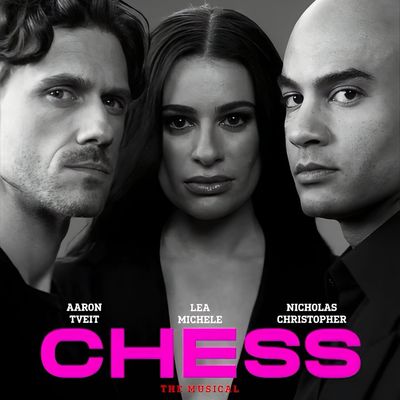
Wasn't it Oscar Hammerstein II who remarked, "Nothing says musical theatre quite like a quiet board game and the Cold War?" Maybe not, but this week composer Michael Gordon Shapiro joins us to discuss the musical that tried it anyway. Get your ABBA on and join us for a look at the incredibly electric CHESS, a show from the 1980s that shouldn't work, might not work, and yet has a bigger cultural footprint than many shows that do.
Take a look at Michael's career by visiting http://mikemusic.com as well as his family friendly musical "Gideon and the Blundersnorp" on Instagram at @gideonandtheblundersnorp.
Take one moment to follow "A Musical Theatre Podcast" wherever you may be listening and share us with your friends!
Join us on Instagram, TikTok and X for more great content. For bonus episodes, subscribe to PATREON! for only $1 a month. And don't forget about our TeePublic Store, our proceeds from which we donate to Broadway Cares/Equity Fights AIDS.
Above all, thank you for being part of this wonderful podcasting community.
Transcript
This transcript was automatically generated and might contain errors.
[0:00] Michael Gordon Shapiro: You've got this show that was a total flop on Broadway, lasted maybe two months at most. Nobody liked it in terms of the critics, and yet it is the last musical that ever had a song be a hit on the radio. What a crazy cultural imprint to have as a quote-unquote flop. I also think part of that might be the fact that we don't really have the same relationship to radio anymore, but yes, I think the fact that not only did it have this breakaway hit, but it was one of the earliest introductions of rap into the crossover mainstream. Fair enough. And from the guys who did ABBA, go figure.
[0:40] Jeffrey Scott Parsons: Who would have guessed?
[0:41] Michael Gordon Shapiro: Who would have guessed rap would find its way to musical theater thanks to Swedish dudes? If you think of the things that made rap initially popular in a crossover kind of way, we think of the Aerosmith Run-D.M.C. collaboration, and that was two years after One Night in Bangkok appeared on ATV.
[0:57] Jeffrey Scott Parsons: Yeah.
[0:57] Michael Gordon Shapiro: Oh my gosh, that's crazy. Yeah, so it's a really weird phenomenon. I feel like it was last year, my little sister was like, do you know that that song One Night in Bangkok's from a musical? I was like, yeah, yeah, I do. Welcome to the club. Welcome to CHESS.
[1:20] Jeffrey Scott Parsons: Welcome, everybody, to A Musical Theatre Podcast where we discuss the cultural and emotional impact of some of our favorite shows in musical theater history. My name is Jeffrey Scott Parsons. You can call me Jeff. Today, we are talking about the musical CHESS with my friend and a very talented composer of both film and the musical theater, Mr. Michael Gordon Shapiro.
[1:46] Michael Gordon Shapiro: Hey, Michael.
[1:47] Jeffrey Scott Parsons: Great to be here. Thanks for having me.
[1:48] Michael Gordon Shapiro: Of course, my pleasure. You requested this show.
[1:52] Michael Gordon Shapiro: I did.
[1:53] Jeffrey Scott Parsons: Tell me why.
[1:54] Michael Gordon Shapiro: Well, first, I'm a fan of the show. I've listened to probably most of the episodes so far, and I thought, what show has he not talked about yet that I really want to talk about, and can I somehow finagle my way as a guest?
[2:10] Jeffrey Scott Parsons: And you were successful.
[2:11] Michael Gordon Shapiro: Yes, this episode is testament to the success of my persistence. Now, when did you first hear CHESS? Because it's like mid to late 80s, so what was going on in your life at that point?
[2:23] Michael Gordon Shapiro: I think I was probably watching MTV, and I saw the video for One Night in Bangkok, and I had no idea what CHESS was. I thought it was a pretentious name for an album with a really pretentious video, but it was kind of intriguing because it didn't sound like a pop tune. There were pop influences. The bass line and the use of synths was very on-brand for pop music circa 1984 or 1985 or wherever that came out, but I thought, what is this weird song? And I did a little investigation, and thanks to a friend who brought the cast album to summer camp, where we were all trapped for two months.
[3:03] Jeffrey Scott Parsons: What is this summer camp, and why wasn't I invited? You were listening to CHESS?
[3:08] Michael Gordon Shapiro: Well, it's probably more accurate to say my friend was aggressively handing the CD to everyone who would listen and singing excerpts from it, but it worked, and I said, okay, now I get it, and I kind of got a sense of what the show was about.
[3:21] Jeffrey Scott Parsons: Your friend sounds like me with Steelpear. I don't say this very often. I don't think I've ever said this. For our purposes today, I think we're going to mainly be talking about the London version of CHESS prior to coming to New York. It seems to me like the more interesting product. What seems to be the consensus is the creators of the show recognized problems in the London version, and in order to fix them, they changed a lot of things for the Broadway version. They moved songs around, and I think they assigned them to different characters, but they didn't really fix any problem. They just made it different, and subsequent versions after that seem to have all primarily fallen back on the original.
[4:17] Michael Gordon Shapiro: So if you're looking at a new production of CHESS, of which there are apparently some scattered examples, you're mostly seeing the London original, so that seems to be canon. Now, apart from CHESS the Musical, are you a fan of CHESS the Game?
[4:22] Michael Gordon Shapiro: I was reigning CHESS champion of my fourth grade class. Stop. And I think I peaked at that age because I haven't really picked up the board since then, so I'm fond of it, but I don't play it regularly. I think I've played it a couple of times. I know the rules. I know the names of all the little pieces, and that's about it. Do you know the game well enough to tell us what characteristics make a world-class CHESS player?
[4:51] Michael Gordon Shapiro: I do, because there have been studies on what makes CHESS players good, and it's not intelligence, though that helps, but it's playing a lot of CHESS, and it's really a case where you need to overload your brain with pattern recognition and to be able to isolate chunks of the board in memory so that when you recognize those chunks in a new context, you can apply the appropriate problem-solving strategies. So experience, you have to put in the hours.
[5:20] Jeffrey Scott Parsons: Yes, exactly. It's very much almost like an athletic event because you just need to spend time doing it over and over again. Crazy. I went to this website called The CHESS World and found the following statement, which I think is really fascinating. It says, what makes CHESS so unique from the rest of the board games is the fact that there can be an almost infinite number of positions. So after each player makes just one move, there are 400 different positions possible. After two moves, about 72,000 positions possible. After three moves, 9 million. After four moves, 288 billion positions can arise on the chessboard. So the chance of recognizing even a handful of those 288 billion, I think, is a testament to what you're saying, which is you have to put in the hours. You have to recognize strategy and patterns and react appropriately.
[6:27] Michael Gordon Shapiro: Now that we've talked about CHESS the game, let's talk about the Cold War. I can't even believe I'm saying that. It makes me laugh out loud. The musical CHESS is about CHESS, the game, and the Cold War. Now, the Cold War, for those who may not know, was... people can't even decide on the years. The Cold War is so almost undefinable, it feels incredibly inspired that it was a metaphor for CHESS because there are 288 billion ways to look at this thing. A very, very standard look at it would be that after World War II, the US of A and the USSR, the Soviet Union, had worked together briefly to defeat Nazi Germany. And so now, left in the victory of World War II, you had these two powers who were essentially trying to assert dominion, like world dominion, or at least a very powerful presence in the world, without needing to go about the way that Nazi Germany did.
So instead, they spend the next 40 years playing mind tricks, espionage, racing to the moon, all of these different moves on the chessboard, so to speak, to try and prove that they are the better power. And this really goes up until the end of the 80s, maybe early 90s.
[7:54] Michael Gordon Shapiro: Early 90s, yeah. That's when the Soviet Union crumbled.
[7:57] Jeffrey Scott Parsons: That's when it only ended because the Soviet Union crumbled.
[8:01] Michael Gordon Shapiro: Exactly. So it is a really ingenious way of exploring... I would never want to watch a musical about the Cold War because nothing really happened. It's all based on suspicion. It's all based on conjecture and hypothesis. So how on earth do you stage something that even has any sort of energy?
[8:20] Michael Gordon Shapiro: I think the Cold War touched many specific lives, so it makes a very good backdrop for a story. I agree in that I don't think the Cold War itself is a story, except in kind of a very long historical sense. But you could easily look at individual people who were in some way swept away by the Cold War, someone who lived in Soviet bloc countries, or someone involved in espionage, or someone who ran into censorship, and I think this is a pretty transparent segue. I think that's pretty much the idea behind chess. It uses the setting of the Cold War to create tensions where a particular story can take place.
[9:02] Jeffrey Scott Parsons: 100%. So in this story, you have a world chess championship, and the two main competitors are Russian and American. So right from the get-go, you're like, oh, I get it. It's a chess game, but also it's a metaphor for what's going on over this period of time. The American is a chess player named Freddy. How would you describe Freddy?
[9:29] Michael Gordon Shapiro: Well, he's a pretty clear fictionalization and exaggeration of Bobby Fischer, who was famous.
[9:36] Jeffrey Scott Parsons: He was like a rock star chess player.
[9:39] Michael Gordon Shapiro: Yeah, but with a kind of John McEnroe attitude, you know, very arrogant. I don't know if the real Bobby Fischer was as arrogant as Freddy Trumper, but Freddy in the show is definitely full of himself, and he is also very contemptuous, perhaps for a mix of right and wrong reasons, of the Soviet Union and very prejudiced against all Russians as a result.
[10:02] Jeffrey Scott Parsons: Now, one of the things that I didn't realize about the very competitive world of chess is that you're allowed a second, and a second is basically a companion. The joke is that they're allowed to fetch you sandwiches and milk, but the reality is that they can talk through strategy with you in the midst of these really long sessions, these really long tournaments. And Freddy's number two is a woman by the name of Florence, who in the London version is a Hungarian-born, British-raised woman, who is both his second and his lover. You might say that Freddy, he seems to thrive off of attention, and he needs someone to feed his ego, and Florence really plays that role at the beginning of the show. So he may not need to be in a romantic relationship with her in order to have that kind of dependency.
[10:57] Michael Gordon Shapiro: Just as long as he's getting his attention.
[10:59] Jeffrey Scott Parsons: Right. I mean, he does eventually say, come back to me, but he never specifies the particular relationship that they had beyond the chess relationship. In the script, there is some action where she pushes him down on the bed, but what's really established from the get-go is that you can't really trust what anybody is doing as being genuine, or is it really just strategy, you know, a position, a move on the board to win? Because at the beginning of this whole story, Florence is incredibly dedicated to chess. Chess is her life, and she wants Freddy to win. Freddy's incredibly difficult to deal with, and yet she's willing to put up with it because chess is her life.
[11:46] Michael Gordon Shapiro: On the Russian side, you've got Anatoly, and Anatoly is married. He is the brightest chess star of Russia, and yet doesn't seem to have the ego or theatrics of Freddy. Go figure, the dramatic American. This really is a British musical. And Anatoly seems to be, he has a certain amount of guilt in working with the authoritarian Soviets, who he acknowledges are controlling people, and he doesn't have any illusions about the nature of his backers, but I think someone in his position, that was an unintentional lyric shout-out, someone in his position has to work, you know, if you're in the Soviet Union in the 80s or 70s, you kind of need the government's backing. They're really behind everything.
[12:39] Jeffrey Scott Parsons: In a prominent position to play. You're working with the Soviets or you're not going to work at all. So he seems very conflicted between his love for chess, which seems sincere, and his remorse at collaborating with the strong arm tactics of the Soviet Union.
[12:57] Michael Gordon Shapiro: Look, I understand that there are a lot of problems with our country in the United States. Believe me. And maybe this is just a romantic view, but sometimes when I watch the Olympics and I see those athletes from communist countries, I'm like, oh my gosh, please let them win just so that the government doesn't punish them for not winning. Do you ever feel that way?
[13:18] Jeffrey Scott Parsons: Yeah, it's kind of a sad sympathy to have to harbor. It's likewise for China.
[13:25] Michael Gordon Shapiro: Exactly. I'm like, oh my gosh, please stick the landing.
[13:29] Jeffrey Scott Parsons: Yeah, exactly. I can sympathize with the sympathy. So these are our main characters, and we'll talk a little more about the plot later. This whole idea was the brainchild of Tim Rice. Tim Rice being, at this point, a very famous British lyricist. He had worked with Andrew Lloyd Webber in Evita and Jesus Christ Superstar.
[13:56] Michael Gordon Shapiro: What else am I forgetting?
[13:57] Jeffrey Scott Parsons: Did you mention Joseph?
[13:58] Michael Gordon Shapiro: Joseph and the Amazing Technicolor Dreamcoat. Absolutely. So they've become British royalty together. At least from reading Andrew Lloyd Webber's autobiography, while they worked really well together, they are not perfectly matched in terms of compadres. So at this point in the early 80s, Tim Rice decides to work on another project instead of following Andrew Lloyd to his next thing. The project that Tim Rice dreams up is this idea of creating a musical about chess, using the Cold War as the backdrop, so on and so forth. And it is going to be written with the two songwriters from the group ABBA, Benny Andersson and Björn Ulvaeus. Totally guessing on the pronunciation there. Talk to me as a composer, Mr. Michael Gordon Shapiro, about what makes ABBA special in terms of their musical construction, because they really did take the world by storm, set up a really interesting sound that continues to be called upon and replicated today. What's going on there?
[15:09] Michael Gordon Shapiro: When I was a kid, I kind of resented ABBA because I was always listening to "Dancing Queen" and I rolled my eyes as I hear that song again. And I'm not really the target demo spiritually or otherwise, but I kind of thought they were giant cheese balls. But over time, I've actually come to give them a grudging respect as unapologetically pop songwriters. And I think the two things that really are core to their appeal is a talent for melody, a real talent for catchy melody. They're great at that. And also a unabashed, sunny disposition. They do not mind being cheesy and hyper sentimental. And when they're being tragic, it's a kind of over-the-top tragic tone, you know, it's like a grand melodrama.
[15:56] Jeffrey Scott Parsons: It's a beautiful tragic.
[15:58] Michael Gordon Shapiro: Exactly. So when I recently saw a regional production of Mamma Mia!, and I found myself enjoying it almost despite myself because the music is just endearing in a way. I don't know if this existed really in the pop world before, certainly in jazz and so forth, but they were never afraid to go melancholy with their cheerful melodies. There's like this really catchy melody that has kind of a bittersweet pleadingness to it, you know?
[16:26] Jeffrey Scott Parsons: I'm trying to think of a good example.
[16:28] Michael Gordon Shapiro: Like "Take a Chance on Me" seems to be an optimistic kind of persuasion attempt, but it's actually sad and desperate. And I think that was the intention behind it. You know, you listen to it and you're saying, when everyone you want to be with is no longer available, I'll still be here.
[16:46] Jeffrey Scott Parsons: Yeah, yeah, right. That is kind of sad now that you mention it. I never thought of that. The one that's coming to mind right now for me is, I can't remember the name of it, but it goes, one of us is dying. And it feels like when you hear that melody coming from somebody, it sounds like it's coming from the depths of their soul. And I feel the same way about Sia. She's able to construct these pop melodies that sound like they're coming from someplace much deeper than a dance floor, you know? There's a yearning to it that is very theatrical and is all over the place in Chess.
[17:28] Michael Gordon Shapiro: I think we could see that influence in some of the ballads that are scattered throughout the show. Like, what's the one? "Somebody Else's Story" and "I Know Him So Well."
[17:38] Jeffrey Scott Parsons: "I Know Him So Well," absolutely. "I Know Him So Well" is at the end of Whitney Houston's first album.
[17:45] Michael Gordon Shapiro: Really?
[17:46] Jeffrey Scott Parsons: Yes. It was on my birthday. I was like, ooh, I need a Whitney day. So I just went to Spotify and just kind of pulled up all of her old albums and listened to them top to bottom. And "I Know Him So Well" came up. Here, I'm going to look up and see who she sang it with.
[18:02] Michael Gordon Shapiro: Because it is a duet, that's right.
[18:03] Jeffrey Scott Parsons: Right. Sissy, that's creepy. Okay. She sang "I Know Him So Well" with Sissy Houston, who I believe is her mom.
[18:10] Michael Gordon Shapiro: Wow. Okay. Keep that in mind, folks, when we come into that part of the plot. So Chess is also kind of a smorgasbord, to use a Swedish term. Is it a Swedish term? I hope so. Of musical styles. When you listen to the original concept album, which Tim Rice followed right along in the pattern that he and Andrew Webber had done with many of their famous musicals, which was release the score as a concept album first before it was produced on stage to really get people excited about the music. And it worked. It 100% worked. But when you listen to that album, you have classical music. You have these huge orchestral pieces with also almost Mozart Requiem type choral pieces. And then some of these more ABBA-like pop songs. We have "One Night in Bangkok" that includes rap. It all works together to make for a really electrifying album. Truly. I don't know how it all works together, but there is such an energy.
[19:18] Michael Gordon Shapiro: I completely agree. I think the score is really extraordinary. And the best example I can think of another score that blends a then-contemporary sound, a contemporary sound of the time period, with an almost cinematic orchestral element is perhaps Jesus Christ Superstar.
[19:40] Jeffrey Scott Parsons: Well, there you go. But it's a really interesting mix. I mean, musical theater tends to have a variety show element to it. It's the vaudeville legacy.
[19:53] Michael Gordon Shapiro: The pastiche of it all.
[19:54] Jeffrey Scott Parsons: Yeah. But here, it's not like, now a gospel song, and now a comedy number, now a reggae time. There's a core musical language, which is early to mid-80s pop. And then there's this accompanying language, which is neoclassical in some spots and feels operatic in other spots. So rather than there being a little bit of this and that, there's just kind of two or three musical styles that are consistently present throughout the whole show.
[20:22] Michael Gordon Shapiro: That's great. The album and the score are a big hit in London and spawn a couple of hits. "I Know Him So Well" gets on the charts as well. And it reaches the ears of Michael Bennett. Now, Michael Bennett is a legend, one of my favorite director-choreographers of all time. He definitely changed the American musical theater landscape with A Chorus Line.
[20:42] Jeffrey Scott Parsons: But he also did Dreamgirls. He choreographed Follies. He really understood how to bring the visual language of musical theater to the next level and to compete with what was going on in film. He was a genius. He was also a little difficult, a little egotistical, so on and so forth. Toward the end of the 80s, he was privately dealing with AIDS and was having a few health issues. But he decided to take on Chess, because from what I gather, he was really moved by the electricity and energy of the score. His approach to the material was he was going to stage this show in London with hundreds of television screens everywhere. The energy of the music was best matched by dance and technology. There was going to be virtually no set, but video screens everywhere that sometimes were showing action happening off stage, while the chorus or the choral numbers or even the dance numbers were reflecting the energy and the hoopla surrounding the events.
He casts the show. They go to a country in Europe and spend so much money on television sets. They're all ready to go into rehearsals, and then he has to drop out because of health. It's the very last thing that Michael Bennett touches before he passes away due to illnesses related to AIDS.
[22:29] Michael Gordon Shapiro: It's interesting how he presaged a lot of what we see subsequently when you can project images more economically in a theater. The idea of having imagery on stage is fairly common today, but it sounds like what he was trying to do was ahead of its time and also extremely ambitious, extremely expensive.
[22:48] Jeffrey Scott Parsons: Remember how heavy television used to be? They had to do some crazy waiting on that stage to make sure the whole thing didn't collapse underneath them. With Michael Bennett dropping out at the last minute, they had to find someone to replace him. Who they end up getting is Trevor Nunn, who is probably the antithesis to Michael Bennett in terms of stagecraft. He is very much a theater's director looking to present the story, which is beautiful. He's done it, legendarily speaking, in Les Mis. He was the director of Les Mis. He somehow made Cats work. He is ambitious, and yet his approach is always story first. He comes in seeing what Michael Bennett has brought to the project. It's a miracle that the show even got up, truly, because he did an amazing job in taking what was given to him but also going in the direction that he wanted.
That being said, it ceases right then and there to be a dance show. There's no choreography. If anything, there's musical staging. Thus begin the revisions upon revisions. The show opens to mixed reviews. Not all bad, but it is a hit. It runs for a couple of years and to this day is still considered one of the favorite musicals of the UK.
[24:25] Michael Gordon Shapiro: Now, of course, when something's a hit in the UK, the idea is, well, maybe we can take it to Broadway and it becomes the next jewel in the crown. Unfortunately, the year that Chess came over to America was also the season that Phantom of the Opera came over. We tend to be a little bit prejudiced in American musical theater, and I think that on top of all of the problems of Chess, we already had our British musical for that year and it was Phantom of the Opera, so there's no need for another one. Trevor Nunn made huge, huge changes to the show from London, many of which included cutting songs, adding a few songs, and adding almost a third more dialogue to the show. At the very first preview of Chess on Broadway, the show ran four hours.
[25:20] Michael Gordon Shapiro: That's way too long. Way too long. And even when they got technical things under control, because they had also added much more scenery, they had these really interesting pillars that were constantly moving and creating new spaces. The show was still coming in over three hours long, which for the show is just, it's way too long. What's interesting, if you look at the description of the changes that were made, and then subsequently jettisoned, it's clear that they knew something was wrong, but they also clearly didn't know what was wrong, because they changed all the wrong things. They were really rearranging the deck chairs on the Titanic. And I say this as someone who loves the Titanic, right?
I love the show. But they moved songs around, they changed the logistical details of the show, what I was talking about a little earlier, but none of it seems better. It just seems different. If you could describe what types of things you like to compose as musical theater, what would it be? I tend to, as a stylistic tendency, lean towards wit and that kind of humor, kind of clever humor. But as a driving principle, whether I'm writing something witty or serious, I look for big stakes in a logical universe. There's something that can be won or lost that's really important, and it has to feel grounded in reality. So I don't like shows where there doesn't seem like there's anything we should care about, or shows where you're not sure what everyone's upset about because you don't understand how the world works. I feel like those are the two problems you need to steer away from.
[27:07] Jeffrey Scott Parsons: That's cool. I also want to agree with you in terms of wit. Your sense of humor is so unique, so funny. You have such a unique voice, and I hope that people get to experience it.
[27:20] Michael Gordon Shapiro: You're very kind to say so, and that's very appreciated. I will even try to turn a plug into something connected to our topic today by pointing out that one of Chess's problems is that there is not a lick of humor in the entire four hours or whichever version you're watching.
[27:34] Jeffrey Scott Parsons: Oh my gosh, you're so right.
[27:36] Michael Gordon Shapiro: I didn't realize this until I was listening to the 2008 London concert version, which is one of the two that you can easily get on Spotify right now. I was listening to it, and there's one moment where there's kind of a really weak quasi-joke. It's not even a joke, it's just someone makes sort of a kind of cutesy remark, I think, and there's this bark of laughter from the audience. The audience is like, we need a joke so bad. I was thinking, that's weird, but hearing that moment made me realize there is no humor in this entire show. There's a kind of cynicism that you hear, and there's sarcasm, but this is something the show desperately needs, and it does not deliver. Cold War ain't funny.
[28:25] Jeffrey Scott Parsons: Yeah, you will not find a laughter moment in this show.
[28:29] Michael Gordon Shapiro: That's so funny. It gets panned by critics. Frank Rich, I was considering reading his review, but it's also almost too mean to even bring up. After that, it gets ignored mainly by the Tony Awards. It gets two nominations, one for Best Actress, one for Best Actor, but it doesn't get any nominations for Score, Scenic Design, nothing else. So with no attention from the Tonys, with the horrible notices, and the fact that it was so stinking expensive because they were accruing overtime for being over three hours, the show closes only after a couple of months. Now, there are a few things in the Broadway version that I think are worth mentioning. Number one, first and foremost, Judy Kuhn, and I will say it again, Judy Kuhn, legendary.
She was the one who played Florence, and in fact, when they brought the show to America, they decided to make the character of Florence an American. She had starred in Les Mis as Cosette, so she knew Trevor Nunn. She plays Florence, and her vocals on the Broadway cast recording, which they did make, are epic. Please go listen to her sing Nobody's Side. Also, they added a new song for her called Someone Else's Story, which is now very much tied to the chess score. It's kind of crazy to think that it hadn't always been in there, but they added that for the New York production. Do you know who David Carroll is, Michael?
[30:03] Michael Gordon Shapiro: I don't.
[30:04] Jeffrey Scott Parsons: Okay, so he was nominated for Best Actor. He has this gorgeous voice. When he sings Anthem on the Broadway cast recording, it's incredible. He then gets cast in Grand Hotel, the Marieston Grand Hotel, as the Baron or whatever that character is who sings Love Can't Happen. In previews, he dies.
[30:19] Michael Gordon Shapiro: Dies literally?
[30:20] Jeffrey Scott Parsons: Literally. Not on stage or anything. I can't even remember. I think it was like a heart attack or something, but he passes away. It is such a tragedy because I think he really would have become one of the most memorable leading men of the 80s and 90s. It's really sad.
[30:39] Michael Gordon Shapiro: How old was he when he passed?
[30:41] Jeffrey Scott Parsons: Very young. Let me look that up. Let's see. Oh, you're kidding me. Oh my gosh. Now I'm looking this up. He had AIDS as well and died of a pulmonary embolism.
[30:55] Michael Gordon Shapiro: Oh my gosh. What a horrible time.
[30:57] Jeffrey Scott Parsons: It says he was born in 1950, died in 92, so he died at 42. Crazy tragic. Let's talk through the show, shall we?
[31:11] Michael Gordon Shapiro: Let's. It gets a little complex, but stay with us because we're going to make our way through it. We already introduced these characters, but the whole story begins with the Arbiter. The Arbiter meaning the Grand Wizard of Chess? He's the referee. I think there's a role in chess. I don't know if it's part of this universe, but if you touch a piece, you then have to move it. Let's pretend that that role is in effect during the story. The Arbiter would be the guy who says, hey, you touched your queen. You've got to do a queen move now. Okay, that makes sense. He begins the entire show by telling us the story of chess, which is really an interesting song. I don't know how much of it is actually true.
Anciently, there were these two princes who were constantly fighting. I guess fighting for dominion. Eventually, one of the princes dies, is killed in battle. Their mother, the queen, is beside herself because of course one of her sons has died. She holds the other son responsible as well as she should. He then goes to all of these wise men and is like, how do I get the love of my mother back? What should I do? They said, well, maybe you should explain to her how this whole battle occurred by creating a board of black and white squares and showing how it was his fault. In doing so, with all of the pieces and the board, that was the birth of the game of chess. It's like if you have a traffic accident and you're trying to convince your mom that you weren't being reckless.
You take two model cars and you say, I was driving here and this guy just careens out of the left lane. You play it out so that you've got a visual demonstration of why you think you're innocent. That's the analog of what this legend is suggesting. From the get-go, we learned that the origins of this game are self-serving, to be perfectly honest. They are strategic. It's not born out of play so much as born out of personal objective. Blaming somebody else or ascribing blame to somebody else for political reasons. Even in this case, it's a prince wanting to stay in good graces with presumably his queen mother. Out of this opening, we are then brought into Murano, Italy, where the World Chess Championship is going to be taking place. It's like your typical establish the setting. It sounds like something that might be playing at Fantasyland and Disneyland.
[33:45] Michael Gordon Shapiro: Or perhaps something by Rodgers and Hammerstein.
[33:47] Jeffrey Scott Parsons: Thank you. Exactly. It's very traditional is what I'm getting at. I want to point out that these two opening numbers are kind of representative of everything good and bad in this musical.
[34:04] Michael Gordon Shapiro: Oh my gosh, go. I can't wait to hear this.
[34:06] Jeffrey Scott Parsons: We've got great music, both the Prelude, the History of Chess, and Murano. This is just some glorious writing. This falls into the kind of neoclassical cinematic aspect of the styles that are running through the show. Murano is a kind of a lovely waltz-like paean to the countryside, and the Prelude is neo-romantic. It introduces themes and melodies that we're going to hear again and again. It sets up some leitmotifs that are going to recur. Those are great qualities for the first two numbers. Now, the problems are, A, who cares? B, I can't understand what they're saying because Tim Rice doesn't know how to write lyrics all the time. With respect to the who cares part, you could quote me on that.
I have a lot to say on that subject, but the lyrics are so dense and so many words that are rich with syllables are being compressed into these very rapid-fire lines that they are literally incomprehensible, I think, in most listenings. Can you listen to that Prelude and actually understand what it is saying?
[35:27] Michael Gordon Shapiro: No.
[35:28] Jeffrey Scott Parsons: No, absolutely not. I don't think anyone in the theater could do that. I think if you listen to the album and look at the lyrics and replay it, you could say, oh, okay, I get it. It's a prince and he's making a war simulation. That's cool, but it's just really hard to understand. Then on top of that problem, indigenous to the original cast album recording or the concept album that predated the actual show, in those days, they were very fond of reverb and also slapback echo where every time you hear somebody sing, you immediately hear a discreet echo of what they just sang. That gives it a kind of punchiness and a richness at the cost of intelligibility. You've got lyrics that you can't really discern made worse by heavy reverb on a subject that we don't actually care about, or at least that we don't know why we should care yet.
I think we're going to be haunted by these problems throughout the entire show. We're also going to be uplifted by what these songs bring to us, which is just great music. That's chess in a nutshell. I don't care, and it's such great music, and I can't understand what they're saying.
[36:34] Michael Gordon Shapiro: Isn't that the thing about pop music, too? If you needed to understand everything that was being said in a song, Ariana Grande would not be a superstar.
[36:40] Jeffrey Scott Parsons: Right. That is a big difference between pop music and theater music.
[36:44] Michael Gordon Shapiro: Right. It isn't until this point that now we meet our main characters. We've been through that entire Murano sequence. We've heard the history of chess, and now we meet Freddie, Florence, and Anatoly. Is that how you keep saying it?
[37:04] Jeffrey Scott Parsons: I want to say how you say it. I think I say Anatoly, but I'm just imitating one actor's interpretation.
[37:09] Michael Gordon Shapiro: Let's all imitate him, then. Let's go ahead and skip to press conference, because that's one of your favorite songs.
[37:13] Jeffrey Scott Parsons: It is. Basically, this is where you start seeing how Michael Bennett was really focused on the media, because there are a lot of journalists covering this chess championship. Everyone's interested in the backstory of what's going on in these relationships. It's Florence with Freddie, so on and so forth. It's introducing us to Freddie, both explicitly, because there's a lot of Q&A with the press, and that's a sneaky way to tell us what's been happening. It's also revealing something about Florence, because after Freddie stomps off in anger at one of their questions, she steps up and defends him and gives the press the what-for. I think that's a really exciting moment.
[37:59] Michael Gordon Shapiro: Much more for Florence's defiant defense of Freddie than it is for Freddie's tantrum. Now, originally on the album and I believe on stage, Freddie was played by Murray Head, who had played Judas in Jesus Christ Superstar, and Florence was played by Elaine Page, who is like 4'11", just like the tiniest little munchkin of a woman, with one of the biggest voices in all of British musical theatre. And at this point, she and Tim Rice were... I can't tell from that sound if that's good or bad. Well, they were together. Who knows if it was good or bad, but they were together, and the role was written for her. Interesting. Hence why Freddie, being an American, his second is a Hungarian-born British woman.
There's also significance to the fact that she is from Budapest, because Budapest and Hungary was under the heel of the Soviets during the 60s, I think, or maybe all the way through close to the end of the Cold War, but they were oppressed. Because you're asking, why are you with this guy? He seems like a jerk. You seem nice. And in fact, Anatoly asked that very question. And one reason is that she is sympathetic to his anti-Soviet stance for more personal biographical reasons. Not only was her childhood destroyed, but her father was either killed or imprisoned. We don't know at this point yet. Everybody has baggage and motivations and a grind to axe. Whoa, an axe grind. That was a great... Please keep that.
That was an amazing expression. That's very Jeff. I'm always flipping things around. Now, as you mentioned earlier, Anatoly is not exactly happy with feeling manipulated and controlled by his government. And Molotov, who is his second and is kind of in charge, tells him, look, if you want to get in your opponent's head, Freddie, the American, then you need to get his woman. And if you get the woman, you win the game. And Anatoly is disgusted by this. And so he sings this song called, Where I want to be, I do. I want to be a. Which I feel like is in every audition book of all time for any like Barry tenor. Credit where credit is due. I think this song is awesome. It is amazing. And I'm quick to bash Tim Rice, but this is a real win on his part, as well as the phenomenally dark, soaring music.
Agreed. Agreed. It's interesting here is that chess does not have a traditional I want song for any of the seemingly three major characters. And instead, in about the part of the show where you traditionally have an I want song, you have an angry lament with no particular goal or desire expressed merely a identification of the things that you don't like. And in this case, it's Anatoly ruining his being manipulated by the Soviets. And yet it is so impassioned that it works. It roots us. It connects us to Anatoly in the same way that the traditional I want song would to a main character. That's so cool. Thank you for sharing that. You're absolutely right. He doesn't say anything that he wants, but the fact that he's so passionate about what he doesn't, we're like, works for me.
Yeah, everything about the song is really great. And the orchestration complements the meaning of the lyrics where he I forgot the exact line, but he's kind of singing about how the Soviets slowly insinuated their way into his life. And the strings are doing this little chromatic accompaniment that sounds kind of snaky. The music is almost playing out what he is describing in the lyrics. So that's something to listen for. Oh, cool. I'm so glad you're here to point out these things. Thank you so much. Okay, let's go to the first chess game where Freddy and Anatoly are playing. And I believe this is kind of one of those things that was essentially to happen offstage because once again, chess isn't that interesting to look at.
But in any case, what happens is that tensions are mounting. It's a really intense chess game. And then Freddy gets really angry because he's a hothead and tips over the board and walks out. So now it's like Freddy strikes again. We got to figure out what to do next. And what the seconds kind of put into place is a meeting for everyone. Yeah. For Anatoly, for Freddy, for Florence, for Molokov, they can all get together and talk this out so that the championship can continue. And it's going to happen on a mountainside. So Florence tells Freddy about it. They get into this huge fight because he doesn't want to go. He thinks that Florence is, you know, being a Soviet sympathizer. And she's like, no, chess is what is important.
The game is what is important. Let's do this. And he says, no, no, no. And this gives way to Florence lamenting that whole situation. Another lament. But wow, what an exciting lament called Nobody's Side, which is nobody's on nobody's side. That's the lyric. I love that song. It's probably my favorite in the whole show. I don't know why it's thrilling. I wish it had been attached to a decision rather than had been just a general lament. Like it was fueling a big decision to be made. Yeah. Like I wish she had made the decision to leave Freddy during that song or as a result of that song, because that would have made it part of the story rather than just this expression of frustration. Yeah, exactly.
Because it's so powerful and it just needs a story point to latch onto. If there is a case to be made for it fueling something, it then gives way to her being open to having a relationship with Anatoly, because that's ultimately what happens next. She shows up to have this meeting on the mountain. Freddy's a no show shocker. And so she and Anatoly start talking and there's a connection there. And they sing this song called Mountain Duet, which is probably Chess's version of the bench scene from Carousel. And it's beautiful. And just listening to it and envisioning it on a gorgeous mountainside makes me all happy inside. I think this is another really successful song in the show. In musical theater, you have to accelerate the pace of relationships because you don't have time to sit and watch two people gradually falling in love.
No time. Music has to somehow suggest that passage of time. And this song manages to pull it off pretty effectively. The last lyric of that song is I can't think of anything I would rather do than be stuck on a mountain talking to you or something like that. Yeah. And I believe also ends with a kiss, which is when Freddy actually shows up and sees them kissing. Now he's absolutely convinced that Florence is a Soviet sympathizer. And it sends Freddy into this spiral. He loses the next chess game, right? I believe so, if memory serves. That whole disaster leads Florence to finally not just leave him, but full on quit their partnership in chess. And that sends Freddy into singing quite possibly the highest song to ever exist in musicals, Pity the Child.
I think Pity the Child. Remember, I talked about the thematic problems in the show. For sure. I think Pity the Child falls into the who cares problem category. I mean, at this point, we're so put off by Freddy's behavior and attitude that to then give him this really vocal feat kind of falls on deaf ears a little bit. Maybe it could have had a role later in the show, but placed as it is, it seems like an awkward early climax. In the Broadway version, Pity the Child, it was moved to the second act. Because in this version, Freddy just kind of disappears at the end of the show and nobody knows why. Right. So now Anatoly is the new world champion. And the first thing that he does is says, I'm going to Disneyland.
And by Disneyland, I mean leaving the Soviet Union forever and seeks asylum at the British embassy. That means Florence and him are now a thing. And as they go to the airport, once again, here come the media, because the media is obsessed with chess. If we've learned anything about the world, they come to basically question him. Why on earth would you leave the Soviet Union? And he ends the entire first act by singing this song called Anthem. And I think this event and its musical consequences are why chess does not work. Now, correct me if I'm wrong, but I don't think we see the moment on stage where Anatoly decides to defect. If memory serves, we hear the press tell us like, Breaking News cast, Anatoly has decided to defect, something like that.
You're absolutely right. That is the most important decision of the show. And we never see it and we never hear a song about it. So we are outside of Anatoly's head from that point forward. We don't really know what motivated him. We needed to hear that in song. And when he does kind of sing about it in Anthem, it's after the fact, right? It's already happened. And the lyrics of Anthem are really inscrutable. They're really vague. It's not clear if he's saying, just because I've left Russia doesn't mean I don't love it. Or if he's saying, the only nation I owe allegiance to is my own value system, which I am metaphorically calling a nation and describing as if it has boundaries. So the music is soaring and actually quite evocative.
The lyrics are very unsatisfying. And it's just like, don't cry for me, Argentina. Like, what exactly are you saying? I'm so mesmerized by this music. I'm not paying attention to the fact that you're not saying anything specific. Thank you. I'm so glad you said that. I've never understood why don't cry for me, Argentina was is the sensation it is. It's so beautiful musically. It's gorgeous and doesn't mean anything. It's like a Rorschach blot. You know, we impose our own meaning onto it. And also, here's the third aspect of this problem. There's nothing in that song that refers to Florence or their romantic relationship. It's a very, almost introspective song about nothing. And it doesn't refer to the things that we care about.
We are invested in his relationship with Florence, because we saw that happen during the and we heard it in a song during the mountain scene. So we're kind of a board. We're like, Okay, let's, we want these two. Let's go there. So then we hear the press tell us that this happened. And then he does it when he does saying it's not about that. So it's an emotional void and the show never recovers from it. Wow, this is really interesting. And I hope that everybody listening is taking this as actually a constructive conversation, because that's the way it feels to me. It's not about just talking trash about a show and what it did wrong. But in fact, we're exploring the art form. But in a way highlighting what could have been, which is I think what we all yearn for with this.
Yes. Yeah. Because there are things that are so evocative about it. And it's like, Okay, but it didn't work. So what can we learn about musical theater because of it? One song could have saved the show, and it would have been throwing away anthem or maybe rewriting the lyrics and moving it earlier. So it happened when Anatoly made that decision. I think that would have actually been the one change that would have made the show really resonate from start to finish. Wow. Yeah. Yeah. Okay, act two takes place in Bangkok, Thailand. And it's a year later, we're back to the chess championship. So Freddy is already in Bangkok. He of course, does not have a Florence, but he does have the Bangkok nightlife. And so act two opens with one night in Bangkok, which as we've talked at nauseam is a kind of an outlier in musical theater and pop music in general. It is a entertaining song and it's
[50:39] Michael Gordon Shapiro: I think one of the things that makes CHESS so fascinating is the way it blends different musical styles. You have the pop influence from ABBA, of course, but then you also have these more traditional musical theatre elements, and even some classical influences. It creates this really unique sound that you don't hear in a lot of other musicals.
[52:09] Michael Gordon Shapiro: And then there's the story itself, which is so layered and complex. It’s not just about the game of chess; it’s about the political tensions of the Cold War, personal relationships, and the sacrifices people make for love and ambition. It’s a lot to unpack, and I think that’s part of what keeps audiences coming back to it.
[52:36] Michael Gordon Shapiro: The characters are also incredibly well-drawn. You have the American and the Russian players, but then there are the women in their lives who are just as important to the story. Florence and Svetlana are not just side characters; they have their own arcs and struggles that are just as compelling.
[52:56] Michael Gordon Shapiro: I think that’s one of the reasons why CHESS has endured over the years. It’s not just a musical about a game; it’s a musical about people and their relationships, set against a backdrop of historical significance.
[53:20] Michael Gordon Shapiro: And let’s not forget the score! The music is so catchy and memorable. Songs like "One Night in Bangkok" and "I Know Him So Well" have become iconic in their own right. They transcend the musical and have found a life outside of it.
[53:42] Michael Gordon Shapiro: It’s interesting to see how different productions interpret the material. Some lean heavily into the pop elements, while others might focus more on the dramatic aspects. Each interpretation brings something new to the table, which keeps the show fresh.
[54:04] Michael Gordon Shapiro: I also think the themes of CHESS resonate with audiences today. The idea of competition, the struggle for power, and the personal sacrifices we make for our careers are all very relevant in our current world.
[54:24] Michael Gordon Shapiro: Plus, the music itself is just so much fun to listen to. It’s one of those scores that you can put on and just enjoy, regardless of whether you know the story or not.
[54:44] Michael Gordon Shapiro: And the choreography in some productions can be really stunning. The way the chess pieces are represented on stage, the movement of the actors—it all adds to the visual storytelling.
[55:12] Michael Gordon Shapiro: I think that’s part of what makes musical theatre so special. It’s this combination of music, lyrics, story, and movement that creates a unique experience for the audience.
[55:38] Michael Gordon Shapiro: And CHESS does that in a way that’s both entertaining and thought-provoking. It challenges the audience to think about the implications of the story while still being an enjoyable experience.
[55:58] Michael Gordon Shapiro: I also appreciate how the show doesn’t shy away from the darker aspects of its themes. It doesn’t wrap everything up in a neat little bow, which makes it feel more authentic.
[56:18] Michael Gordon Shapiro: The complexity of the characters and their motivations adds depth to the narrative. You can see why they make the choices they do, even if you don’t always agree with them.
[56:32] Michael Gordon Shapiro: And that’s what makes for great storytelling—when the characters feel real and relatable, even in a fantastical setting like a musical about chess.
[57:00] Michael Gordon Shapiro: I think audiences appreciate that complexity. It gives them something to think about long after the curtain falls.
[57:26] Michael Gordon Shapiro: And the music is just so infectious. It’s hard not to get caught up in it, even if you’re not familiar with the show.
[57:52] Michael Gordon Shapiro: I think that’s part of its charm. It draws you in with the catchy tunes and then hits you with the emotional depth of the story.
[58:18] Michael Gordon Shapiro: It’s a musical that really has something for everyone, whether you’re a fan of pop music, musical theatre, or just great storytelling.
[58:39] Michael Gordon Shapiro: And I think that’s why it continues to resonate with new generations of audiences. There’s always something new to discover in the music and the story.
[59:07] Michael Gordon Shapiro: Plus, it’s just a lot of fun to listen to and watch. The energy of the music and the performances can really elevate the experience.
[59:35] Michael Gordon Shapiro: I think that’s what keeps people coming back to CHESS. It’s a show that invites you to engage with it on multiple levels.
[1:00:03] Michael Gordon Shapiro: And that’s a hallmark of great musical theatre. It’s not just about entertainment; it’s about connection and reflection.
[1:00:13] Michael Gordon Shapiro: I think that’s why we keep talking about it, even decades after it first premiered. It has a lasting impact that goes beyond the stage.
[1:00:21] Michael Gordon Shapiro: And I’m excited to see how future productions will continue to interpret and explore its themes.
[1:00:45] Michael Gordon Shapiro: It’s a testament to the power of musical theatre and the stories we tell through it.
[1:01:13] Michael Gordon Shapiro: I think that’s what makes it such a vital art form. It evolves and adapts while still holding onto its core messages.
[1:01:31] Michael Gordon Shapiro: And that’s something worth celebrating, especially with a show as unique as CHESS.
[1:01:57] Michael Gordon Shapiro: I’m grateful to have had the chance to discuss it today and share my thoughts on its significance.
[1:02:17] Michael Gordon Shapiro: I hope that listeners feel inspired to explore the show further and discover all that it has to offer.
[1:02:45] Michael Gordon Shapiro: Thank you for having me on to talk about this incredible musical. It’s been a pleasure!
[1:03:01] Michael Gordon Shapiro: I look forward to seeing how it continues to evolve in the future.
© Broadway Podcast Network, All Rights Reserved