

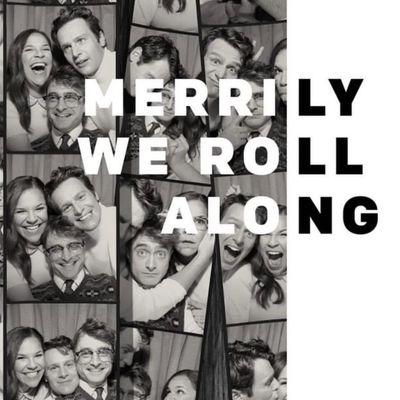
"How did you get to be here?" That single question has always been the success and struggle of Stephen Sondheim's 1981 musical MERRILY WE ROLL ALONG. This week, actress and activist Jennifer Shelton joins us to discuss the musical's fascinating past, and what its unconventional style reveals about our past, present, and future... Read More
From the show: A Musical Theatre Podcast
Featured Shows
About
"How did you get to be here?" That single question has always been the success and struggle of Stephen Sondheim's 1981 musical MERRILY WE ROLL ALONG. This week, actress and activist Jennifer Shelton joins us to discuss the musical's fascinating past, and what its unconventional style reveals about our past, present, and future.
Take a deeper dive into Jen's career by visiting her website at http://jennifer-shelton.com
Take one moment to follow "A Musical Theatre Podcast" wherever you may be listening and share us with your friends!
Join us on Instagram, TikTok and X for more great content. For bonus episodes, subscribe to PATREON! for only $1 a month. And don't forget about our TeePublic Store, our proceeds from which we donate to Broadway Cares/Equity Fights AIDS.
Above all, thank you for being part of this wonderful podcasting community.
Transcript
This transcript was automatically generated and might contain errors.
[0:00] Jennifer Shelton: I think this is interesting because a lot of the reason it wasn't well received, I think, is because it makes us slightly uncomfortable to be confused, to not know where we are and how we got there, right? So most people don't like to sit with that discomfort. And that's a lot of the problem with the racism in our country, is that people don't want to talk about it or accept that it exists or the extent to which it exists, because it makes them uncomfortable. But that change and that growth are uncomfortable. It's like the change in the growth that Mary and all the other characters went through. If you're always comfortable, that means nothing is changing. And that's what we as a country are grappling with.
And that's what all the characters in this play are grappling with. And I think it's really interesting. Isn't it interesting that it's called Merrily We Roll Along? I mean, that is almost the most Sondheim part of the entire show, is that change is so uncomfortable, the show is uncomfortable. And yet, every, you know, 20 minutes or so, it's like, merrily we roll along. But that's it. That's life, right? I mean, you don't exactly. What else are you going to do? Sludge through it grumpily? Like, that's not fun either. And that's why we forget that we have a problem so often, is because we get in those, you know, happy, I'm not going to think about it merrily moments. And then we go, oh, wait a minute, but there is a real issue that needs to be dealt with.
[1:37] Jeffrey Scott Parsons: Welcome, everybody to A Musical Theatre Podcast where we discuss the cultural and emotional impact of some of our favorite musicals in theatre history. My name is Jeffrey Scott Parsons, you can call me Jeff. Today we're talking about Merrily We Roll Along with Miss Jennifer Shelton.
[1:54] Jennifer Shelton: Well, hello there. Hi, Jeffrey Scott Parsons.
[1:57] Jeffrey Scott Parsons: Now, everybody knows out there that one of my favorite things about this show is figuring out what guest is going to talk about what show with me. And we got to have like a pretty extensive back and forth about what show you thought would be a good fit for you. So we came upon...
[2:16] Jennifer Shelton: No, not at all. But like, it was a very conscientious choice. And I want everybody out there to know that we picked this musical for a very specific reason. But it also made me wonder as an actress, which you are an amazing actor, singer, everything. I mean, you even dance like I don't know if you would consider yourself a dancer, but like, you carry yourself on stage like a dancer.
[2:36] Jennifer Shelton: Well, thank you. Anyway, I was wondering if in your career, you are that specific about projects you take on?
[2:48] Jennifer Shelton: Do you know, I would like to be. Yeah, more and more I am I turn a lot more down. But I think it comes from having a career where as a black woman, I just sort of had to do what people allowed me to do, and what people accepted. And so I think I've gotten to a place in my career where I'm much more specific. And, you know, as a black woman, unfairly or not, you represent your community. And so I'm really conscious of how what I'm doing represents my community, and how it represents me, and whether it furthers my community or me. I think in general, we have a sense of scarcity as performers that it's like, if I don't take this job, I'm never gonna have a job again, like that already. But then I also remember we had Sharon Catherine Brown on the show. And one of the things that she said that was very profound to me was as a black woman, and as a black performer, in general, you're always made to feel like they're taking a chance by hiring you.
[3:44] Jennifer Shelton: Oh, absolutely. Like, like, you're the interesting choice. Yeah, no, you have to prove yourself. Yeah. And so to add that layer on top of everything else. It's like, that's exhausting. Yeah, I think that's why I never felt like I truly deserved any role I've ever played. Oh, yeah. I've always, yeah, I've always felt like I had to work really hard to prove myself and I'm never quite sure that I did. Wow. So I think that's that probably feeds into that idea.
[4:11] Jeffrey Scott Parsons: Yeah. I would wholeheartedly agree. And are there roles like is there a role in Merrily that you would love to play or?
[4:17] Jennifer Shelton: Oh, I would love to play Mary. Yeah, I've always, I think that's why this show and her role spoke to me is I've always been that odd girl out. You know, that that's just quirky, unexpected friend. Because whenever you have the quirky character, it's the character actor role that we really don't get to know much about. And in this case, we do get to sort of learn more about her. And I like that because that's something I relate to more. I play a lot of, you know, before ingenues and now leading ladies and I always feel like their story is a little bit false for me because I'm more on the quirky character side. If that makes any sense.
[4:59] Jeffrey Scott Parsons: When did you see Merrily We Roll Along? I assume you've seen it.
[5:04] Jennifer Shelton: I've only seen I think three productions of it. I think they've all been the revival version. So I can't speak to the original version.
[5:11] Jeffrey Scott Parsons: Good. Actually, that works for me because in preparing for this, I read the revival script.
[5:18] Jennifer Shelton: Oh, okay. Same page. So yeah. Are you a Sondheim fan in general?
[5:24] Jennifer Shelton: I'm a Sondheim worshipper.
[5:25] Jeffrey Scott Parsons: Oh, really? I am. Are you like not?
[5:31] Jennifer Shelton: No, I love him. I was like that nerd in high school who was like, I listen to Passion. I don't go to prom.
[5:39] Jeffrey Scott Parsons: That's awesome. Is this what you call love? Well, I'll have to share with you my sad prom story sometime. No, I think he's a genius, right? I mean, he's one of my favorite composers. Everything he does is just so clever and smart and unexpected and evocative and elucidating. It's just, I feel like he's an actor's composer, if that makes sense. I mean, I've spent years hearing or even singing one of his songs and then one day I go, oh, that's what it's about. Oh, wow. I love that. No, there are several of his shows where I find the older I get, either they mean more or they change and it's still as profound. Yeah, Little Night Music is a really good example of that, where I just, it went way over my head the first 53 times I saw it. And by the way, Little Night Music was his romantic comedy, like that was his rom-com.
[6:31] Jennifer Shelton: Yeah, which is like, that's pretty ridiculous.
[6:37] Jeffrey Scott Parsons: Totally. I just, I like to work for basically everything, but you know, when I see a show, I want to have to work. I don't want to just sit there and have it wash over me. I want to really have to pay attention and figure it out. And I feel like you can't really appreciate Sondheim without doing that.
[6:52] Jeffrey Scott Parsons: When I was thinking about this, I feel like the first great musical theatre auteur was Oscar Hammerstein II, because Oscar Hammerstein was very specifically choosing the stories that he did for a reason, for the public and also, you know, to have hits. And then I would, I would honestly say that the second is Sondheim, which is interesting because he was in many ways, Oscar Hammerstein's student, his protege. But you, you see how he as a composer was doing these really, really interesting works. And it seems like he was doing it for him as an artist, because that's what he wanted to do. That's what he wanted to explore. Many times these shows were not hits, in the case of Merrily We Roll Along, total flop.
And yet here we are talking about it in terms of having lasting power, right? We're talking about this show that came from a season on Broadway that included Nine and Dreamgirls and Joseph and the Amazing Technicolor Dreamcoat. And here I am, of all of those, we're talking about Merrily We Roll Along first. So like, there's something interesting there. And, and I think Merrily We Roll Along also reflects a lot of what that requires of a person to be in an industry, because it's still an industry. And so in many ways, I think Merrily We Roll Along has a lot of Sondheim in it.
[8:17] Jennifer Shelton: Yeah, I mean, I don't think he was ever interested in being commercial, right? I mean, his work was about, you know, social commentary, political commentary, self introspection. I don't want to say that he didn't care how it was received, but that wasn't his primary concern as it was for so many of the others.
[8:34] Jeffrey Scott Parsons: For sure. As a composer, lyricist, his first big hit was A Funny Thing Happened on the Way to the Forum, which most critics kind of poo-pooed the score saying that it was unmemorable. And that show is also the most maybe entertaining, traditionally entertaining for an audience. So it's interesting. I wonder if at some point he was like, well, I looked out for the audience, and they hated my work. So now I'm just going to write work that I'm really passionate about.
[9:02] Jennifer Shelton: I hope so.
[9:03] Jeffrey Scott Parsons: Yeah, I mean, it worked. Whatever he did, it worked.
[9:06] Jennifer Shelton: Yeah, if you do what's true to you, you'll be successful.
[9:09] Jeffrey Scott Parsons: For sure. Merrily We Roll Along opened in November of 1981. It did not have a pre-Broadway tryout, and instead had a very, very lengthy preview in which a lot of changes were made because it was kind of a hot mess when it first started previews. Now, Sondheim and Hal Prince, who was the director and who we've talked about before on the podcast, they had had these amazing collaborations, most recently with Sweeney Todd. That was a huge hit, both critically and commercially. So when it came time to look for a new piece, from what I understand, Hal Prince's wife planted a little seed about possibly doing a show about teenagers. And what that led to was finding this old play by Kaufman and Hart, Kaufman and Hart, a playwriting team.
They did The Man Who Came to Dinner, You Can't Take It With You, all of these famous old plays that are super fun. But they had written a play in 1934 called Merrily We Roll Along. And the big gimmick about this show, which was essentially about an artist selling out, was that the story was told from ending to beginning. So it started out with the guy being a huge jerk and then ended up showing how he had started with the best of intentions. Now, at this point, by the time my listeners hear the show, we'll have already covered Anything Goes. And if you all remember, Anything Goes also came out in 1934 and was one of the biggest hits of the entire decade. Merrily We Roll Along, the play, was not a huge hit.
Obviously, we were coming right out of the Great Depression. People were interested in something like Anything Goes with the zany characters and all of the energy and the escapism, right? Merrily We Roll Along was not where it was at. And so even though it was, you know, well-reviewed, it didn't last very long. It kind of follows the same pattern in 1981. They decide to musicalize this show and right from the get-go start making bad decisions. Are you aware? Do you know about some of these decisions?
[11:19] Jennifer Shelton: Why don't you educate me?
[11:19] Jeffrey Scott Parsons: Well, first of all, they decided to cast it with all teenagers.
[11:25] Jennifer Shelton: Oh, see, that I did not know.
[11:31] Jeffrey Scott Parsons: And when you look back at who these teenagers were, it's incredible. Lonnie Price, Tanya Pinkins, like all of these amazing people who turned out to have really long careers. So it's not like they were hiring untalented individuals. These were incredibly talented teenagers.
[11:43] Jennifer Shelton: Didn't they have the older version and the younger version of the characters as separate actors?
[11:48] Jeffrey Scott Parsons: No. At some point they did.
[11:53] Jennifer Shelton: So when they started out, they did not, right?
[11:58] Jeffrey Scott Parsons: Yeah. So when they first did it on Broadway, they had the teenagers play the older and the younger. And so right there, you run the risk of it feeling like a college production, right? That you have all of these teenagers pretending to be jaded older people that are completely out of their natural wisdom. Then Harold Prince decided to set it in a gymnasium. So like the entire set was bleachers, like at a high school auditorium at graduation. And it started at the graduation. Instead of following reverse chronology, it started at the graduation and then would flash back and then work its way back to the graduation. So all of those time jumps proved to be incredibly confusing. And then to make matters worse, they had everybody wearing sweatshirts and pants.
[12:54] Jennifer Shelton: That's always a winner.
[12:54] Jeffrey Scott Parsons: And that proved to be so confusing because, you know, it's not a traditional show where you get to know a character and then see where they go. You're seeing a character where they end up and then needing to move backwards. And so audiences weren't sure who was who.
[13:09] Jennifer Shelton: Exactly. So then they ended up like Mickey Mouseketeer style, just putting the name of the character on the sweatshirt. So like you had Frank, who was the first, who was like the lead, and then like Mary, his friend, to try and help the audience figure out what was going on.
[13:30] Jeffrey Scott Parsons: So without the benefit of a tryout, this is what's happening on Broadway in previews. They have six weeks of previews during which a lot of stuff gets changed, including swapping out the lead for Jim Walton, who was in the ensemble, who has since become a big star. He starred in Crazy for You, among other things. Anyway, the revised version opens, but at this point, word of mouth has been so bad, including Sondheim freaks like you and me, who had walked out during the show on previews because they just couldn't follow what on earth was happening, that the show just can't really recover from that kind of bad press and closes after only a few performances. Kind of a crazy story. But what is amazing is that those really talented kids get into the studio before the show, or I think after the show closes, and make a cast album.
And that cast album is filled with glorious Stephen Sondheim music. I've heard that. It's actually pretty wonderful. That people heard long after the show had closed. And when you listen to that cast album, you're like,
[14:36] Jennifer Shelton: Well, this show has to be fantastic. And that has encouraged them to keep revising it and revising it until now we have a show that you can say you either like or don't, but it's performable and understandable and interesting. Yeah, at the very least. That being said, okay, here's a quote from Sondheim about when the show opened. He said in the Daily News, I was very happy with the New York production by the time it opened. The show was in extremely poor shape in the early previews. It was too cluttered. And that's when a lot of the bad word of mouth started. But we did a lot of work on it and the audiences who saw it during the two weeks of its official run loved it. I don't want to comment on the reasons for the bad reviews, but I don't think they had much to do with the intrinsic quality of the show. So even looking back on it, he just has this amazing attitude of like, yeah, who cares? So it was a flop. Take it or leave it. You can't do that. Right?
[15:40] Jeff Parsons: No, exactly. I'd like to see you try.
[15:44] Jennifer Shelton: And I mean, that is kind of the thing is that when you write not a day goes by, right? And then someone criticizes that you're like, Yeah, yeah, right. Like you can write a better song.
[15:49] Jeff Parsons: Yeah, exactly. Let me see your alternative. And then we can talk.
[15:54] Jennifer Shelton: Oh, I guess this would be a good time to say that the show the script was written by George Firth, who had done Company. So it was like it was a reunion of sorts for Hal Prince, Stephen Sondheim and George Firth, who had, you know, basically changed musical theater forever by writing Company. So the expectations were high, which I think is maybe another reason why the show bombed in the way that it did. Now, in general, I think in musical theater, shows that mess with the time continuum, like with chronology, often don't succeed. This show doesn't didn't succeed. The last five years hasn't ever really been a commercial hit. And yet both are shows that theater people love. Do you have any ideas as to why that might be like, why would a general audience not enjoy this type of approach to storytelling, but then us theater folk are like, it's the best thing ever?
[16:39] Jennifer Shelton: I mean, I'm always maybe I'm not the person to ask how normal people think because I'm always divergent. I mean, you're like, I can't stand the Sound of Music and The Wizard of Oz. So I, you know, I'm not even really American. That's like, get out of here. But primarily, people like to be comfortable. Americans like to be comfortable, right? And when you when you start at the end, and you don't, you can't quite figure where you are, you're sitting in this really uncomfortable place that most people don't want to be. And you have to work through it. And I think a lot of people just aren't willing to do it. They're there for an evening of entertainment. And that's pretty much the extent of it.
I'm different in that when I like to see a play, I don't like to know the story. I don't want to know anything about it. I want to be confused. And I want to kind of struggle my way out of it. And that's maybe that's my philosophy background. But I can't make that saying a lot more about myself than I even realize.
[17:48] Jeff Parsons: Yeah, I mean, but I don't like to make things easy for myself. So the structure really worked for me. I mean, just that that first lyric of how did we get to be here was like a challenge for me. I didn't I didn't mind things like hearing Beth sing, not a day goes by and having not the slightest clue why. So I guess I kind of like that murder mystery kind of feel like to slowly work my way back to the beginning or the root cause. And because that's because that's kind of life, right? I mean, when you meet people, it's generally not at their beginning, right?
[18:22] Jennifer Shelton: You're totally right. You have to start that process of discovering who they are. And that's largely by finding out where they've been. And that's why it's so exciting. I mean, that's what makes dating so much fun. And then you get married and know everything about them. And then you're like, can there be just a little bit of mystery?
[18:38] Jeff Parsons: Yeah, but no, but that that aha moment when you put the pieces together is fun to me. And I think that a lot of times as Americans, we're lazy and we don't want to work for that.
[18:49] Jennifer Shelton: So that's so fascinating. This show has suddenly feels more relevant than I even thought it would be, which is like we're constantly judging each other right now, choosing sides. Either you vote this way or you vote that way or you wear a mask or you don't wear a mask. And we're meeting people at the end of their story, so to speak, in the same way that we are here. We're meeting these characters in a very specific place, in a very heated, extreme place without any context clues of why they're there to begin with. And it's really frustrating even reading it, even sitting down and trying to read it and going through with the cast album. I was really aggravated for most of the first act, but simply because I've been raised in a society where storytelling goes beginning, middle, end.
[19:38] Jeff Parsons: Yeah. Beginning, middle, end. There's an expectation.
[19:43] Jennifer Shelton: Yes, from elementary school. That is how my brain works and takes in information. And when you completely flip it without like unapologetically, really.
[19:50] Jeff Parsons: Yeah, yeah. It's like a mind f-bomb.
[19:57] Jennifer Shelton: It is. This play defies expectation. And, you know, I told you that I love anything that challenges what we know, what we think we know and our preconceptions, our misconceptions about people we think we have figured out. And that's a lot of the reason why stories like Wicked and Maleficent speak to me. You know, anything that shows us not just where we are, but how we got there and anything that reveals the multidimensional and sympathetic nature of seemingly simplistic or overlooked characters. That's fascinating to me. And I think I think that's what this show is for me. But in a greater sense, like you're saying, it's kind of what this country is for me right now.
[20:36] Jennifer Shelton: I think so much is being revealed to me about the people in my life and who they are, who they really are and what they stand for. And it challenges my understanding of who I really know, like really know. What do we really know about the people that we think we know, about the people that we think we know best, let alone everybody else around us? When pushed to that edge and their defenses are down, who are they going to be? And was that what we expected? And then what do we do with that? And does I mean, does that make any sense at all?
[21:20] Jeff Parsons: I mean, you know, your good friend or your family member says something and it takes you aback. You think, wait, what is that what you've always believed? How did I not know that? And did I know that and just choose not to see it? And what does that mean for our relationship? And can we even still have one? And can I even respect you at this point? And what does that say about myself if I do?
[21:44] Jennifer Shelton: So I don't know. I mean, this is this is kind of like our we can never go back to before moment to be a total musical nerd about it. This whole pandemic, economic and social crisis has been absolutely revelatory to me. And I hear that a lot from people.
[22:01] Jeff Parsons: You are one of the reasons why I still go on Facebook, because in the past, I don't know, I don't know how long it's been time since Armageddon happened. Seriously. But you have really kind of stepped up and been a voice of understanding because many people preach from a pulpit and use social media to tout ideals and morals. But you really write some interesting stuff that forces us to be uncomfortable and to seek understanding more than comfort. What led you to do that? Because you haven't always done that on social media.
[22:39] Jennifer Shelton: Yeah, at least that I had seen. Honestly, I'm not a social media person. I struggle with that as a performer. You know, we're supposed to be all into that now. But I just I'm kind of a private person. And I don't really like to share my life on that level. But for whatever reason, people come to me when they have questions or discomforts around the area of race. And so I found that I was answering all of these questions, but then I was doing it repeatedly. You know, different people would ask me the same question, or I'd comment on somebody's post, you know, I'd rebut an argument, and then I'd have to do that on everybody's. You know what I mean? I kept repeating myself. And I thought, well, I guess these are these are important questions that are being asked.
And I'm glad that people want to know. And then sometimes people just have these horrible misconceptions that I feel like should be cleared up. And so I thought it would be socially irresponsible for me to not speak up and say something that everybody can hear.
[23:36] Jennifer Shelton: So yeah, I just decided that I would, you know, do what I could to help people understand what we're going through. And I think that, you know, a lot of people really honestly are confused about I mean, some people ask questions just to be contentious. But a lot of people are on that fence where they really just don't know what to believe. And I hope that I mean, it's on two levels. Some people just don't don't know where to stand and what to believe. And I hope that I can give them a reason to believe in something more positive than they may be inclined to. But then on the other hand, there were people who just felt like they didn't know how to respond when they were asked these questions. They didn't have an intelligent or an informed way to respond.
And so I hope that when I post something, they go, Oh, wait a minute. Yeah, okay. I agree with that. And that's what I'm going to use to respond to people in my life who challenged me on that issue. Like hopefully they'll take my idea and then you know, make it better with their ideas. But I think that's initially why I started just because I didn't want there to be so many unanswered questions out there.
[24:41] Jeff Parsons: I love that. That's so beautiful. Because so much of arguing, at least from this, like really shallow places, who has the better answer, who has like the better.
[24:51] Jennifer Shelton: But if you, if you seek understanding, then it's actually about communication. It's not about winning an argument.
[24:57] Jeff Parsons: Right, right. And you know, it's to open up a dialogue, hopefully. And you know, there are a lot of people who all they want to do is challenge you. And they don't want to learn and grow. But then there are, you know, those few people who are like, Oh, wait a minute, I didn't see it that way. And so, you know, when you can reach those few people, it's powerful. And it makes exposing, you know, my personal life worth it. It's not something I would usually be comfortable with, but it makes it more worth it if it helps people relate to people who are not like them, or understand their situation a little bit better.
[25:36] Jeff Parsons: Wow. Good for you. I mean, we keep talking about comfort versus discomfort. And it was something that you had to push through yourself in order to help people find something else, which is selfless. And I applaud you for that.
[25:46] Jennifer Shelton: Well, I don't know that I call myself as but I certainly try and I appreciate it.
[25:52] Jeff Parsons: Well, let's talk through the show, shall we? We're going to push through the discomfort and try to because I when I thought about talking through the score in the show, I'm like, maybe we should just reverse it and talk from beginning to end. And I'm like, No, that's literally going against everything the show stands for. So we're gonna try and go through it. As is written. It starts out at a Hollywood party. Our lead characters are successful artists who, for better or worse, are dealing with that level of fame and success. The main guy is named Franklin Shepard, also known as Frank. He has a wife named Gussie, who is a Broadway singer, actress, they're at a party celebrating the release of his new film as a producer.
And so there's the song entitled, is it that Frank? I think so. Yeah. It was originally called like Rich and Happy. But it's that very, it's that very famous song time. And so you're hearing, you know, all of the kind of stereotypical jaded stuff that you would imagine you'd hear at a Hollywood party. And everyone is talking about him saying how successful he is. And yet nobody's really giving him a compliment as a person. And then at some point through this, you know, of course, it's on time. So it's a complex song scene. You realize that the star of this movie, the new ingenue girl, is having an affair with Frank, that they have like, started sleeping together. And so he is spending most of his party trying to keep her away from the wife.
Until finally, that doesn't work anymore. Gussie basically attacks the girl, throws iodine in her eyes. It's lovely. I mean, this is how the show starts. It's so extreme. You're seeing people at their. It's like starting Hamilton by just with the duel, right? It's like, how on earth do you create some sort of empathy for Aaron Burr at that point? Right now, everybody's completely unlikable.
[28:04] Jennifer Shelton: Yeah. And you also have Mary, who is, we just keep hearing is like a lifelong friend of Frank. And she is drunk as a skunk. And she also is kind of being the truth teller, right? The bitter truth teller.
[28:19] Jeff Parsons: Thank you. Yes, yes, yes. Bitter would be the word for it. Just kind of yelling out things. We also find out there was kind of like a third member of this friendship of Frank and Mary. And then there was a guy named Charlie. And he's a successful playwright, but you are not allowed to say his name in Frank's presence. Like he's dead. So that's the first scene. It's a lot, right? It's a lot to take in. It's a lot of information. There's no like standard song. It's, you know, all of these bits of information. And you can't follow any of the traditional rules of exposition.
[29:05] Jennifer Shelton: Yeah, it's the moment where you either close your mind to it, or you accept the challenge. Yeah. And you trust that it will all be revealed. Exactly.
[29:13] Jennifer Shelton: You're exactly right. The next scene goes now back in time, and we go back to our Merrily We Roll Along song, and they count us back a couple of years. And this next part of the story happens at a TV station. And now we see Frank, we see Mary, and now we see Charlie, who is the one that's not supposed to have been, you know, talked about. And they're at this TV studio, we find out Frank and Charlie were writing partners, like musical theater writing partners. They've been very successful, they've had great shows. And then Frank decided to start doing Hollywood, to start producing films, and just basically told Charlie, we'll get back to writing, we'll get back to writing, just let me do this film first, it'll make us lots of money, and then we'll be able to write whatever we want.
Well, that keeps happening. And as Charlie and Frank go on air to do this, you know, this interview, the interviewer lets it slip that Frank has signed like a three picture deal. So now he's not going to be available to write any musicals for quite some time, and Charlie loses it. He flips and he has this amazing number called Franklin Shepard Inc, in which he describes what it's like to work with someone like Frank, and he's doing this all on the air. So I'm sure the TV producers were just having a field day with the kind of drama that was going on. Mary's looking on with horror, and is trying, I think throughout this whole scene, to maintain the peace. She's kind of the mediator. Mary's a bit more sober at this point.
Yeah, you're right, you're right. We get back to sobriety in degrees in this show. There is a great lyric in that song that Mary has, being old friends, and then it goes into like it was, and I want to actually read that lyric. Trouble is Charlie, that's what everyone does, blames the way it is, on the way it was, on the way it never ever was. He's kind of introducing this idea of nostalgia, that maybe things weren't as great as they used to be, but the miracle about how things used to be is that they're not the way things are.
[31:05] Jeff Parsons: Yeah, absolutely, absolutely. That's what we're struggling with now.
[31:08] Jennifer Shelton: Exactly. Make America great again. At what point was it great? And for who?
[31:13] Jeff Parsons: Yeah, exactly. It's such a disaster that Frank basically says, you're dead to me, Charlie. You've embarrassed me on air. We're done. We're through. So that is the moment that we get to see why they're no longer friends. At this point, we still haven't heard a single thing good about Frank. So we're in scene two, and our leading actor has yet to have one redeeming quality. It's difficult. It's interesting. It's interesting. For sure.
[31:38] Jennifer Shelton: Yeah, I mean, well, you keep asking yourself, why do we care? Why do I care? But I don't give up hope. We may care. We just might care. We might. We still got a whole evening to go. Because I have to say already, I care a little bit more about Mary. I'm starting to see a little bit more of who she is to them. So baby steps. Speaking of baby steps, the next thing we go to is 1968. Oh, I guess I should have said this takes place in the 70s. Sorry, everybody. Now we're in 1968 in the late 60s, and Frank is coming back to his apartment after being on a cruise. And Charlie and Mary are coming to see him. Like a long cruise, right? Like an eight month cruise? Something like that?
[32:29] Jeff Parsons: Yeah, I mean, it was a good chunk of time. And they're coming to see him to welcome him back. Charlie has his son, Frank Jr. But we don't see Frank's wife. Instead, who we do see is Gussie, who we now realize wasn't his first wife. It was in fact, his second wife. And she comes in. Once again, this big Broadway star, we find out that she flew and got on the cruise with him. So they ended the cruise together. And Charlie and Mary are like, this isn't good. You already broke up your marriage because of her. Don't break up her marriage. Because she is still married.
[33:17] Jennifer Shelton: Right, right. Her husband comes into that scene, right?
[33:20] Jeff Parsons: Exactly. Yeah. And he doesn't seem to have any idea that she's planning to leave him.
[33:25] Jennifer Shelton: You don't think he knows? I think he knows. I mean, I think he knows. But I don't think she's...
[33:30] Jeff Parsons: He hasn't accepted it.
[33:31] Jennifer Shelton: Well, he hasn't accepted the fact that she might leave him.
[33:34] Jeff Parsons: Exactly. I think, you know, there's, especially when you have like these eccentric types, I think, as your partners, you're like, all right, well, they'll go sleep with somebody. That's what they do. And then they'll come back to me.
[33:41] Jennifer Shelton: Yes, exactly. But as it turns out, she's like, no, I'm going to leave him. And because we've already seen that, in fact, she did, we know that this is serious. When Franklin is left alone to kind of consider all of this, he starts to sing this song called Growing Up. This wasn't one of my favorite songs, I've got to admit.
[34:01] Jeff Parsons: Yeah. It was one of the more forgettable ones, I think. Like the most important thing about this song, if I'm not mistaken, is that it has the motif of Good Thing Going, which is like one of the most famous songs.
[34:13] Jennifer Shelton: Yeah. And so it's the first time that we hear this motif that we later learn has been a huge part of his career so far. It's more interesting from an intellectual place than from a musical place. So that's how that one ends, is that we find out that Gussie is leaving her husband for Frank.
[34:30] Jeff Parsons: I'm going to stop you for a second, because I think this scene is really important, because it's that moment when he decides to go from who he was to who he will be. Like this is that deciding moment, that choice that he makes. And I also think this scene is significant because it's the first time you really see their friendship, like what their friendship is. So then that choice to divert from that connection is really interesting. I think this scene is an important one.
[35:05] Jennifer Shelton: You're right. This is the turning point. And it's interesting that it happens with him at a piano trying to figure things out. And he still makes the wrong decision.
[35:12] Jeff Parsons: Yeah, well, we often do. But I think sometimes we think that wrong decisions are impulsive and don't have any thought behind them. But here he is, like working things out on the piano and doesn't listen to the people who love him. Maybe he listens. He doesn't choose to take their advice and for better or worse makes a decision that leads him down a different path.
[35:36] Jennifer Shelton: Yeah, it defines the direction the rest of his life is going to go in. This actually brings me to my big hot take about Merrily We Roll Along. Are you ready?
[35:44] Jeff Parsons: Okay.
[35:45] Jennifer Shelton: Okay. My hot take on Merrily We Roll Along, because it's about making choices and the paths that they lead, as well as the struggle of what it is to be a successful artist. I think Into the Woods plus Sunday in the Park with George equals Merrily We Roll Along, which means that the 1980s portion of Sondheim's career was Merrily We Roll Along. It started with Merrily, then went to Sunday in the Park with George and finally Into the Woods, which in fact, the equation is the other way around.
[36:17] Jeff Parsons: This is interesting. I don't think it's not obvious to me.
[36:20] Jennifer Shelton: No, I totally get it. But just even...
[36:22] Jeff Parsons: I do see a lot of parallels between Frank and George. I do.
[36:25] Jennifer Shelton: Yeah.
[36:26] Jeff Parsons: I will give you that. And even I would say Frank and the baker or the baker's wife.
[36:30] Jennifer Shelton: Um, yeah. Do you really know what you want?
[36:33] Jeff Parsons: Yeah. And when you get it, is it what you wanted?
[36:36] Jennifer Shelton: Yeah. If you know what you want...
[36:38] Jeff Parsons: You may know what you want, but to get what you need.
[36:41] Jennifer Shelton: Yeah. Yeah. So yeah, I can see that. And I think that the city is a little woodsy, right? That growing up, people go into the woods to make decisions, to grow up, essentially. And New York City takes over.
[36:55] Jeff Parsons: Yeah, exactly.
[36:56] Jennifer Shelton: Yeah. Yeah. Yeah. I see that. You're just deeper than I ever thought you were.
[37:02] Jeff Parsons: It's just so meta. I'm obsessed.
[37:05] Jennifer Shelton: You're deep. I love it.
[37:08] Jeff Parsons: Okay. So the end of the act is yet another step backward, and we see the dissolve of his first marriage, which is to a woman named Beth, who I believe is the best character in the show.
[37:20] Jennifer Shelton: She's certainly a really interesting character.
[37:22] Jeff Parsons: I think she's such an interesting, well-written character. You don't even get to meet her until the end of act one. Anyway, it's just the point at which she's introduced in the show and what she gets to do.
[37:34] Jennifer Shelton: Oh, I'm upset. If I was a woman, I would love...
[37:37] Jeff Parsons: Yeah. Yeah, exactly. And you know what? It relies on it being a fantastic actress.
[37:41] Jennifer Shelton: Yeah.
[37:42] Jeff Parsons: Because she does start at this moment where you're like, what are you even singing about? I have no idea what you're talking about. To make that work, to sing Not A Day Goes By and have people be engaged when they have no idea why you're singing it, that's huge.
[37:58] Jennifer Shelton: To be interested in your pain when no one knows what it is.
[38:01] Jeff Parsons: Right. I don't know how you got that. What is your problem even? I don't know. Why are we here?
[38:06] Jennifer Shelton: Right.
[38:07] Jeff Parsons: To see the beauty and the poignancy in that song, even though you don't know, really relies on a fantastic actress. And I've been lucky enough to see them.
[38:14] Jennifer Shelton: That's great. It made me think of the movie Kramer vs. Kramer.
[38:18] Jeff Parsons: Yeah. Yeah.
[38:19] Jennifer Shelton: Do you remember that movie? And Meryl Streep comes in and is this unsympathetic woman who's leaving her child and still manages to make something out of the performance. But that is where you're meeting, you're meeting this character at her worst, which includes taking her child away from his father.
[38:38] Jeff Parsons: That's a really good comparison.
[38:40] Jennifer Shelton: Thank you.
[38:42] Jeff Parsons: The scene is at their divorce hearing. Now, it always makes me laugh when either in shows or in films, like there's so much fame that comes with being a writer, because I don't, I've never witnessed that so much.
[38:56] Jennifer Shelton: I haven't either. It's like, I don't know, maybe this is an underground world where writers are super important. But I haven't seen it.
[39:02] Jeff Parsons: So like they're at a courthouse where these divorce proceedings are happening, and there's this like paparazzi crew who's like so interested in, you know, whether Frank's divorce is going to go through and what dirt there is. I'm like, literally, no one cares.
[39:15] Jennifer Shelton: It is a little odd. But you know, in the day, that probably was how it was for Rodgers and Hammerstein. Like they were the celebrity of the day. It's just that in the 60s and 70s, you know, I don't know.
[39:29] Jeff Parsons: I mean, everybody was obsessed with Sondheim's personal life when he wrote Company. So maybe, maybe he experienced a little bit of that. I don't know.
[39:37] Jennifer Shelton: I can't imagine they experienced a lot of paparazzi situations. But yeah.
[39:41] Jeff Parsons: Right?
[39:42] Jennifer Shelton: That is a little artificial. But for whatever reason, they needed another high stakes moment. So at these divorce proceedings, you realize that Gussie has been brought in to testify. So she's being forced to testify, which, oh, maybe that's the reason why the paparazzi is there. Because Gussie's there.
[40:01] Jeff Parsons: Because now they know that there's this star. And so maybe the star was sleeping with the composer, you know, whatever. You get the idea that Beth wants a confession. She wants to know for sure whether or not they hooked up.
[40:16] Jennifer Shelton: So finally, Beth and Frank get alone. And she sings Not a Day Goes By, which is a stunning Sondheim song that we've mentioned before.
[40:24] Jeff Parsons: Because he asked, doesn't he ask, do you love me? Or do you still love me? Do you still love me?
[40:29] Jennifer Shelton: And that was like, how could you do this to me? Because she's taking every penny that he's worth, you know, every penny that he's made from his success as a composer. She's taking his son. She's taking everything. And so he's saying, do you have any feelings for me whatsoever? And she responds by saying, not only that, but I'll be haunted by it for the rest of my life.
[40:51] Jeff Parsons: Right.
[40:52] Jennifer Shelton: Until the day I die.
[40:53] Jeff Parsons: It's a beautiful song.
[40:54] Jennifer Shelton: Gorgeous song. And in being able to express that, they come this close to peace.
[40:59] Jeff Parsons: Oh, yeah, I can see that. Yeah.
[41:01] Jennifer Shelton: And right in that moment, that's when the paparazzi storms in and ruins everything. And she's like, I can't take this anymore. He confesses to having a relationship with Gussie. And that's the end. That's the end of the first act.
[41:17] Jeff Parsons: It's a weird place to end.
[41:19] Jennifer Shelton: And then you go to intermission. Oh, my gosh. I feel like I just lost, like, most of the listeners are like, this show's terrible.
[41:27] Jeff Parsons: No, because at that point, I'm like, why did she just sing that? What happened? Why? What? Why?
[41:34] Jennifer Shelton: I see for me, I'm it makes me really curious. I want to know, first of all, who she is. I'm like, it's the end of the act and we're just meeting this character. Who is this person? And what is she talking about? So it leaves me kind of on the edge of my seat, curious to learn more in the second act.
[41:54] Jeff Parsons: That's great.
[41:55] Jennifer Shelton: I would say that for me, it would probably be a little bit more of I spent this much on a theater ticket. I want to know how this thing where it goes from here. But I would say that the first act is not an enjoyable experience for me. And the second act, I really enjoy, which is kind of the opposite, I think, for most people.
[42:15] Jeff Parsons: I think a lot of people find a lot of problems in the second act, just in terms of construction, that all of the exciting things happen in the first act. And then the second act, you just kind of see how it all gets resolved. And this is, of course, exactly the opposite.
[42:31] Jennifer Shelton: I agree with you. I think the second act is the better act. But I think the problem people have with the first act is that it makes them uncomfortable and people don't like to sit with discomfort.
[42:43] Jeff Parsons: Totally on the same page.
[42:45] Jennifer Shelton: And I do think, I will tell you, I will say, I can see that every scene is too long. And so I think it's easy to lose people because of that overindulgence.
[43:01] Jeff Parsons: Well, you have only four scenes in the entire first act. You're right. Yeah. They need to break them up and maybe add another scene or just have it be shorter, really.
[43:11] Jennifer Shelton: But every scene is a little overly indulgent. And so it's just asking a lot.
[43:16] Jeff Parsons: Yeah, you're right. It's like, did we have to throw iodine in the eyes?
[43:50] Jennifer Shelton: Can she just like push her or something? Everything gets to a good place and then it goes too far and you're like, do we need that? I don't think we needed that. Oh my gosh. This is right on the money. Right on the money. So if you go see MERRILY WE ROLL ALONG, you know what? Take a purse. Even if you're a dude, take a purse. It's fine. No one cares. You're at the theater. Take a purse. Put a little chocolate chip cookie in there. You know? During intermission, go outside, take in a little chocolate, a little bit of chocolate chip cookie heaven. You'll be fine because you rewarded yourself for sitting through the discomfort and now Act Two is going to make you feel very happy you did. Yes, you're growing as a person.
Thank you. So Act Two starts now we're in the early 60s in 1964 and we are at the opening night of the Broadway show called Musical Husbands that Frank and Charlie have written starring Gussie. And the whole show or the whole scene starts with like a recreation of what's going on in the show. It's Gussie singing this like 11 o'clock number that gives way to a little bit more of Good Thing Going. So now we're starting to get more of that song. And then we go to the alley where we see Charlie, Mary and Frank once again. They are not in the theater watching the show because Charlie's wife has gone into labor. And so he needs to get in the cab and go to the hospital. Instead of going to the cast party, they're going to go to the hospital to see him.
But they're just going to stay and listen to the applause outside of the door. And they have a tape recorder for those listening. Tape recorders were a device so that they could record the applause and play it for Charlie later at the hospital. Also backstage with them is Beth, the ex-wife. Now she's in a very happy marriage with Frank and could not be more supportive of his career. And you begin to realize this is when I really very quickly turn a corner with this character. The kind of deception that she's had to go through. Right. Yeah. She's the victim. By being the most supportive wife an artist could hope for. And then he goes and cheats on her. She's such a wonderful friend. Like you see that connection that all four of them have and that she's completely supportive and embracing of that relationship.
She reveals herself as a really beautiful person. And she has her parents at the theater who think that Frank is that he doesn't have a real job. Like, you know, like the last person they wanted their daughter to marry was a musical composer. Right. But they have a hit on their hands. It's a hit. The applause is huge. They're so excited. They sing a song called It's a Hit. Beth has this really great lyric that I wanted to share about what it's like being married to Frank, especially when her parents disapprove. Will their faces be stony when they see on their Sony someone handing the phony the Tony Award? I love that. I love that. Isn't that a great lyric? It's pretty. Oh, my gosh. Everybody is enjoying the success of how long they've struggled to have a show.
And they honestly couldn't be more grateful for a Broadway star like Gussie to be performing in it because it brought the attention that they had been needing. There's still that innocent optimism. Yeah, for sure. So everybody goes to the hospital except for Frank, because he decided that he's going to just, you know, say congratulations to everybody on behalf of all those who went to the hospital and then take off. And while he's there, Gussie comes out saying, You've written this amazing score for me. Now let me show you all of the wonderful things that come from being a success. And it's a great button to the end of the scene because she walks off, you know, she walks off the stage and he's standing there in this theater and he presses his tape recorder and hears that applause that he's recorded.
And just this image of him slowly being seduced by success and fame and applause. And what does that mean? And what does that take you away from? He's no longer going to the hospital. Yeah, that's the moment where he redefines his priorities, that they all go to support Charlie's wife at the hospital. And then Gussie is able to sort of seduce him because of that choice. It's a defining moment. What do you think of Gussie? Uh, you know, like, do you think she's a stereotypical character? Or do you think she's interesting? I mean, I think she's meant to be that caricature. Yeah, I don't I don't know how much we're supposed to see her as a real sympathetic character. And she certainly isn't written that way.
There's not a lot of opportunity to flesh out anything really honest about her. So I tried, it was interesting because I tried to find that relatable, sympathetic quality to her character. And I just don't think it's there. She's been completely swallowed up by the fame monster, as Gaga would say. Yeah, yeah. Her husband, Gussie's husband is the producer of this show. And so the next scene that we go back in time to look at is 1962, where Frank, Charlie and Mary, and then Beth, you know, Frank's first wife, are at a party at Gussie and her husband Joe's elegant apartment and everybody who's anybody is there. And there's this great song called the blob in which this crowd of names and who's who are referred to as this conglomerate entity known as the blob that you need them in order to be a success.
And yet, as soon as they're a part of you, they suck out all of the integrity of who you are and what you're all about. Have you felt any of this in your career? No, I don't. I'm conscious of not allowing that to happen to me. Yeah, but I will say it does limit where you can go when you're not willing to make that concession. Yeah, yeah, a lot of there are exceptions. Sure. But I have denied myself many opportunities because I did not want to sell myself out. You didn't want to play that game? Yeah. So I think that's that's definitely a challenge that a lot of actors have to reconcile with. That's tricky. It's a tricky thing to maneuver. It is tricky. When you don't allow it to happen, you have to rely more on talent.
Well, there you go. At this party, Frank and Charlie believe that they have this show that they've written that Gussie's husband is going to produce, and they've been working so hard on it. They're so proud of it. It has it has exactly the message that they want to bring to the world, the theater community. And when they finally get their alone time with the producer, he says, basically, Gussie's a huge star. She's been in so many Broadway shows. All of them have flopped. What we need is a hit. And you guys are talented. And so you're going to write her a hit. And they're like, oh, well, we've already written a show. It's really, really terrific. And he's like, yeah, that's great. But what we need is a hit.
We need you to write a show that is hummable. With it's at that moment where he decides to sell himself out because they believe in this piece of their writing. But he's like, well, all right, I guess if that's more. Well, there's the there's this promise once again, where it's like, make the money. Yeah. And then I'll be able to do what I really want. And then I'll be able to do whatever I want. Yeah. And that's it. I think he always intended to go back to that place. Like, I'll just I'll make the money. We'll be comfortable and then we'll be able to do what we want to do. And also, isn't that so much of what we go through, too, because it always seems like money's the problem always. Yeah.
I just have enough money. Then everything will be great because I'll be able to do whatever. Yeah. If you're looking at the Sondheim way of things, I mean, he's got to be wealthy, right? Oh, yeah. Royalties and all that. Yeah. Even for shows that weren't successful on Broadway. Yeah. And granted, later on, then they've got film rights to Sweeney Todd and into the woods. And you can, I guess, argue whether or not he sold out by allowing some of those changes to be made to those. Yes. Do you feel that way? I do. Yeah. I think the original piece was so brilliant. Which one? Into the woods. Yeah. And I just I really didn't like what he did to the movie. But, you know, I mean, he's at a place in his career where he doesn't need to prove himself anymore.
Exactly. You know, he's like, let me retire in style. I've done the hard work. Now I'm going to relax. If you want to see what we intended first, go watch the movie with Angela Lansbury and George Hearn. It's fantastic. Great. At the end of this party, Gussie gets Frank and Charlie to finally sing their song. So up until this point, all throughout the show, we've heard pieces of Good Thing Going. And it's also maybe the most pop song that Stephen Sondheim has ever written for a show. I mean, it is. Yeah, it's pretty pop. And they sing it for the crowd. The Blob loves it. The Blob loves it so much that they ask them to sing it again. And Charlie's like, no, let's not sing it again. You need to leave the audience wanting more.
And Frank's like, no, they want it. They love it. Let's do it again. So they start the song again. And as they start singing, the Blob starts, like, taking over the song. Yeah. It's this really weird moment. It's a really weird moment. It's like Charlie's being violated or something. It's like you're seeing someone being raped. It's just a really bizarre moment. They have this, like, beautiful song that was so pristinely presented the first time. And then the second time, people are laughing, people are talking over them. It's like morphed into this gross, like, funhouse image. Yeah. Now we turn back the time even two more years. Now it's 1960. And isn't this so crazy? Because I'm like, what happens next?
And it's like, no, we already know what happens next. It's like, what happened before that? Yeah. What happened before that was a nightclub act that Charlie, Frank and Beth all performed in. Poor Mary. We should give Mary a little shout out at this point because she's a writer and she wrote this really popular book, like she wrote a novel. It becomes like a huge bestseller. And then it seems like as she gets dragged down by the drama of her two friends fighting constantly, she loses all of her artistic energy. All of her energy goes into being the peacekeeper and the glue that holds their relationship together. And so there's nothing left for her. But at this nightclub, the three are performing a review that they wrote and it's political in nature.
So it's 1960. Kennedy was just elected. So the song that they do is called Bobby and Jackie and Jack. Yeah. Yeah. It's clever. Silly. It is. It's super clever. It's like both celebrating the dynasty of the Kennedys because at least it meant that Nixon didn't win the presidency. Right. And it's the first time we see that Beth was a performer. Yes. So she was their leading lady and very graciously, once again, stepped aside so that Gussie, this more famous woman, could come in to the picture and then ultimately took over everything. Right after this number, Beth and Frank are going to get married. So her parents came to see this show. They don't like it, of course, because it's like political satire, silly satire.
But they're going to get married and we find out it's because Beth is pregnant. And there's this great moment in the script where Beth turns to Frank and says, Frank, I need to tell you something. I'm not actually pregnant. And he's like, what? She's like, I know. And I don't know what to do. The only reason we were getting married was because of the baby. And Frank goes, no, I want to marry you because of you. And she's like, oh, thank goodness I'm actually pregnant. So they are in love and want to get married. This is where it starts to get sad because you're like, oh, my gosh, these people were so good together. How did it end so badly? That's the last time we see Beth, because then we go even earlier to 1959.
This is that great Sondheim song, Opening Doors. And we have Frank as the composer. We have Charlie's lyricist. We have Mary as the writer. And they are all working in their own fields to make a mark, to truly make marks as creative people in their own way. And they're clawing and working like crazy to make it happen. And they really don't have anything to show for it. You know, and that's the truth about maybe that's maybe it's just kind of prophetic and amazing that you do have so much energy when you're younger because it takes that much energy to get through all of that failure. Yeah, right. Also, during this scene, we see the Backers audition that Charlie and Frank play for Gussie's husband.
We find out that they actually auditioned for him long ago at this point with the show that they really believe in. And now he's like this powerful man. And when we saw him before, he was like just this pathetic shell of who he was. He was like begging Gussie for money or something. You're exactly right. And you see him as this totally broken man. And you're like, who's this loser that she just, you know, she's with this Broadway star is just kind of walking away. And now is when we see, oh, this is who he was. And not only that, but his secretary introduces them. And who is his secretary? Gussie. And she has a different nose. Talks differently. She talks differently. And you realize that all of this pretense, this facade all comes from the insecurity that was there way before any of the fame was.
Yeah. Which I guess, I mean, I guess there is that slight opportunity to see more of that transition and how she gets from point A to point B. I just haven't seen it. I've never seen a production that has succeeded in doing that. I buy that. Now, of course, that scene ends with
[58:25] Jennifer Shelton: The producer passing on the show because we of course know that they don't work together until he hires them to write a hit instead of something with meaning. The final scene is in October of 1957 and this is the moment where the three make their pact to be friends forever. Frank and Charlie are on the roof of an old apartment and they are up there because Sputnik, the satellite, is going to be orbiting the earth and so they're up there waiting to see Sputnik and Frank has been in the army so he's about to be released from the army and he's going to move in with Charlie. Charlie's been writing plays and it's really inspired Frank as a composer himself. He's like I've spent all of this time in the army meanwhile you've been writing plays and doing this incredible stuff and Charlie's like dude you should write too we should write together we should be musical theater partners and so that pact is made.
Right then Mary comes up to the roof with binoculars and in curlers and in pajamas also wanting to see Sputnik and she has with her her roommate who is actually the woman that Charlie ends up marrying and we realize that Charlie ended up marrying Mary's roommate. Poor overlooked Mary. And Mary comes up and her roommate is you know so embarrassed because they're both in curlers and so she runs away. Mary on the other hand's like that's fine I'm going to stand up stay up here with the dudes. Now let me know what you think about this Mary was kind of in love with Frank from the get-go. See it's an interesting subtext because when every time you see her her supporting these relationships of his all throughout you realize that's got to be so painful and there's even oh no because there's even another moment on Beth and Frank's wedding night when he says do you think I'm doing the right thing do you think I should marry her and she has to let go of her and totally put her concern you know for him so she says yeah yeah you need to do what you need to do I support you and that's god that's horrible that's got to be the most painful thing in the world but she never she never betrayed her friendship through all of his relationships and and then you got the sense that when he had divorced Beth and he was about to get into a relationship with Gussie and they were trying to urge him not to that she was hopeful that that might be something like here I am yeah yeah so then when we get so sad it really is and I see I totally related to that I completely why that's like the story of my life I've always been that that girl that was you know one of the guys and the friend but nobody ever thought of me romantically so I was always in love with somebody that was in love with you know the beautiful whatever and didn't think of me as anything but a friend so I totally connected with that and were you able because what Mary wasn't ever able to do was to make some boundaries she was very self-sacrificing and to a certain degree that's like admirable but at the end of the day she went from you know someone with a she calls herself having an addictive personality and so she would never drink to then slowly but surely becoming she completely lost herself a mean bitter drunk yeah so were you able to at some point to like draw the line and be like no I need to yeah I was better than Marriott moving on and not letting it consume me so it is but it's sad to see I mean she is such a warm-hearted wonderful person and supportive and how many people would be like yes you should marry her if that's what's going to make you happy you know what I mean right over and over she does this over and over throughout the play yeah then we get to this scene and you see who she was and it's just so heartbreaking and you see that first moment when she sees him and there's that little spark and then she hears that he's a composer and she thinks that's just the most the coolest thing ever you know yeah she's totally taken by him I mean I think I think this last scene is one of the best scenes I've seen in any musical it's just designed so brilliantly you're left with such a sense of hopefulness and youthful enthusiasm you almost want to burst I mean yeah maybe that's just me I don't know but I mean how do you walk away from the play with such a sense of exuberant optimism when you know how it ends that's fascinating to me I mean that has to be brilliance in design because even though you know it all comes to a bad end you really truly believe that they will succeed you totally buy into that final moment 100% and see that's something you just wouldn't get if the show were in reverse or chronological order so for all its clumsiness I think that's what you gain and that's worth it to me that last scene is brilliant if you saw this musical the other way around you would leave going oh we'll see that's what happens yes when you when you get famous yeah and instead you leave going oh I so badly want to connect to that yeah that part of me that I know is still in there because we all have it we all have that child whether it's the one who loves splashing in puddles or the one who lights up when he sees Mickey Mouse you know like whatever it is there's something pure that that I think we leave the theater wanting to reconnect exactly it's there to remind you to find that again and if it's the other I just got chills if it's the other way around you just leave going yep that's life you know so I don't know it's clumsy I admit it's clumsy but I think it's I think it's worth it for what it gives you in the end and the the song that they end with our time is beautiful just a gorgeous freaking song that whole scene is just perfectly constructed I mean the music everything about it it's the one scene that's not too long it's just it's perfect it's beautiful I think because of this order it allowed Sondheim I think to write in a way that is less cynical than he's ever been able to do in his life yeah it's very anti-Sondheim you know part of me I wonder if given the current climate young people today are able to look at the world with that same innocent confidence in the future you know it kind of makes me sad that they may not it's just a weird time in our history how is your child doing with all of this do you know I would have said she was doing really well other than being super bored being trapped with two old people all the time but the other day we were talking about something oh I think it was there's like a science camp and you love science and you want to be a botanist and you want to take this camp and she's like no there's not really any point I'm like what are you talking about she's like it really doesn't matter nothing matters there's probably not even going to be a world I'm like of course there's going to be a world she's like it doesn't maybe maybe we'll all be dead or maybe there'll be a war maybe everybody'll hate each other just the only thing that matters is YouTube really I'm like oh my god that's hard because she's like straight A student she's like that nerd that like when they when they announced that school wasn't going to be coming back into session last year she was like I'm so upset I want to come to school and I have to get straight A's and you know she's like a total nerd she will admit that she's a science nerd so to see her go from that I mean she had her little dream big club every other Thursday they would meet and they would talk about colleges she's only in sixth grade but they would talk about colleges and what you have to do to get into Harvard and they would come up with their little strategy okay I have to take this class and that class and I have to get this grade in that class if I want to get into Harvard and then to get my master's I mean it was amazing what six year old sixth graders were talking about and to go from that to nothing really matters but YouTube I don't know what's the point of anything it's just so sad it's so devastating and the sad thing is like I can't make a strong argument you know for I'm like you know what we just have to take every day by itself you know take it for what it is and you know hope for the best but it's just such a weird place in our history that we can't we can't give that to our children I mean in any sort of an honest way of course you can be like everything's gonna be great but if we're being honest I don't even know I don't know what tomorrow looks like you know and and I don't think we're in a place where we can say you can be whatever you want to be like it's nice to think that but there are real obstacles and it's just a bizarre bizarre place and it's it's really sad how it's weighing on kids I was talking to another parent yesterday and she was like my child I can't get him to leave the house he doesn't want to go back to school he is so paranoid about catching this virus he's just so upset and he's so constantly stressed I'm like oh my god so I had thought these kids were just you know doing their little computer thing and breezing through it but it's affecting them in in really intense deep ways that I that I hadn't realized so wow that's crazy I my heart goes out to her uh if there's anything we can do to lighten her spirits please let me know I wonder if one of the profound natures of this show is that the consequence of saying I can do whatever I want and be whatever I want ignores the cost of that yeah it doesn't address the cost yeah well that's always what we leave out right you have whatever you want you can do whatever you want but we never talk about the cost and if there's anything positive to come out of this I wonder if kids I don't want them to lose you know that once again that purity that childlike perspective of the world but I wonder if there's something helpful in saying there's a cost to things and the consequences are all around us yeah we're giving them this world that we created we can't we have no one else to blame but ourselves yeah and we're like you guys can you do better you know what it's true though because up until now everything has been anecdotal right we tell them about all these horrible things that happen but now they're seeing the real consequences of these things what happens when you don't address this I mean you don't address that and people don't talk about that now they can see it and it's real to them and so they can make the choice to to go a different path and to correct these things um it's an impetus I think I hope you know because I you know I'm teacher all about the underground railroad and Harriet Tubman and you know Ella Baker and whatever but it's all just story who's Ella Baker I don't know that one how dare you and that's the thing like Americans don't like I don't know we don't know our history it's so sad what this country has done to us deprived us of our history right I mean we know we barely knew about John Lewis right right but nobody ever talks about Ella Baker who was another revolutionary civil rights activist right alongside Martin Luther King and and I named my daughter after her and my daughter's Ella she's named after Ella Baker and Ella Fitzgerald and my dad but you know we tell them all about these things but it's all just a story to them and now they're getting to see oh my god this is what they fought for and this is what happens when people don't listen and this is what happens when you have um an uninformed government and like they're seeing the real consequences of actions and so I think that's important if it doesn't break them it will make them stronger you know I mean yeah I mean because you know when you don't see it it doesn't mean as much to you my goal as an artist is to be there to help with the trauma because the cost of that type of perspective is trauma but you know what though that's what art is that's it's beautiful which is why it's so sad when it's always you know the first to their funding's always yeah a lot of how we spent the beginning of this whole quarantine situation was just um watching musicals and listening to musicals and discussing musicals and what is that about and what is it what is he trying to say and what does it really mean and getting into you know more political aspects of these things and social commentary and and that was a really interesting way for us to bond and and something that we wouldn't have had time to do otherwise so I think it's it's interesting that one of the least valued things in our culture is what we all are relying on during this time you know and I wonder if we'll ever come to a place where we appreciate that well I I know that I want to be on the forefront of having those conversations and I know that you do as well and so I'm so grateful that you were spent some time with me today to talk about this well thank you for forcing me to do it because contrary to what I initially thought it actually was enjoyable I enjoyed spending some quality time with you in my closet yeah look the closet's the best place to do the podcast that's what I'm telling you don't live your life in a closet unless you're recording a podcast it's a little bit of peace you know as always if you have suggestions or recommendations for shows that we cover on a musical theater podcast you can always email me at a musical podcast at gmail.com please follow us on twitter and instagram at a musical podcast for more great content and check out our t-public store where we have designs paying homage to shows past and present jennifer how can we follow you and all you're up to um I'm anti-social but but I suppose if you really wanted to you could go to my website jennifer-shelton.com which is actually really beautiful it's a well-designed website I did it myself did you really of course not I'm so tired david zack did it for me he's amazing he's wonderful and he put up with me and I highly recommend him yes david zack david zack also has every score to every musical ever written he's a theater nerd god bless him thank you everybody for listening don't be the blob bye
© Broadway Podcast Network, All Rights Reserved