

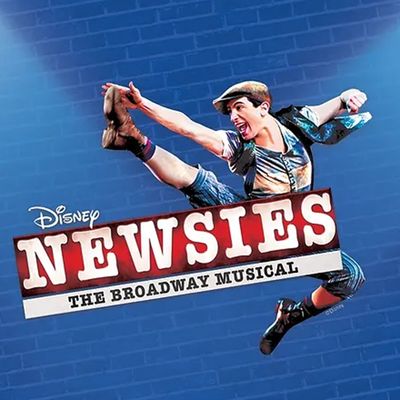
Send out the call! We're not on strike, but we are covering the biggest hit to start out as a bigger flop (not a bad word). NEWSIES meant a lot to those of us who grew up in the 90s and, thanks to the stage adaptation that fouette'd all over Broadway in 2012, it will continue to mean a lot to future generations... Read More
From the show: A Musical Theatre Podcast
Featured Shows
About
Send out the call! We're not on strike, but we are covering the biggest hit to start out as a bigger flop (not a bad word).
NEWSIES meant a lot to those of us who grew up in the 90s and, thanks to the stage adaptation that fouette'd all over Broadway in 2012, it will continue to mean a lot to future generations. The story of unity and speaking truth to power is timeless, and that's one of the reasons this week's guest has played Jack Kelly so many times. Dillon Klena (Nick in JAGGED LITTLE PILL) joins us to dive deep into the show and characters just in time to sell "papes" for the fourth time!
Also adding to the conversation is producer and lyricist Jordan Beck whose admiration of lyricist Jack Feldman is guaranteed to bring respect you didn't know you had for this show. Look out for his segments scattered throughout the episode!
Follow Dillon on Instagram @dillon_scott_klena and buy tickets to see him in NEWSIES July 12-28 at Musical Theatre West in Long Beach, CA by visiting www.musical.org.
Learn more about Jordan by following him on Instagram @jordanbeck910 as well as his theatre company CCAE Theatricals @ccaetheatricals where he currently serves as Managing Producer. He is also one of the forces behind the award-winning new musical WITNESSES @witnessesmusical.
Have you left us a nice rating and review? What are you waiting for?? Maybe you're waiting to first subscribe to PATREON! for only $1, so you can get bonus episodes every month and much more. Don't forget we're on Instagram, TikTok, and X. We also have our TeePublic Store where the profits we receive are donated to Broadway Cares/Equity Fights AIDS.
More than anything, thank you for being part of this wonderful podcasting community!
Transcript
This transcript was automatically generated and might contain errors.
[0:00] Dillon Klena: And I feel like that has been the most important thing about playing Jack and being in this character is I imagine and think about the character as like my center. And whenever I do it, I always find myself again, whether it be after a year and a half long pandemic of doing no theater, or after a two year tour, I'm rediscovering who I am, is always found me in these times of need.
[0:30] Jeffrey Scott Parsons: Welcome everybody to a musical theater podcast where we discuss the cultural and emotional impact of some of our favorite musicals in theater history. My name is Jeffrey Scott Parsons, you can call me Jeff. Today we are discussing the musical Newsies, which was a listener request from a couple of you, including Gabby, who wrote in and said, quote, I was wondering if you could talk about Newsies. It's my favorite musical, and I think the history of it is super interesting, unquote, I agree, Gabby. And it's very important to me personally, so I'm excited to talk about it here to discuss it with me today is someone who's played Jack Kelly more than just about anyone I can think of.
[1:25] Jeffrey Scott Parsons: He recently starred in the national tour of Jagged Little Pill, playing the role originated on Broadway by someone he knows pretty well, his older brother. It's like Southern California's version of Hunter and Sutton Foster. Everyone, please welcome the super talented Dillon Klena!
[1:43] Dillon Klena: Yay!
[1:45] Jeffrey Scott Parsons: Dylan, welcome!
[1:47] Dillon Klena: Thank you for having me. I'm so excited to be here and talking about one of the best shows ever, Newsies.
[1:53] Jeffrey Scott Parsons: And congratulations on tour. I mean, that's got to feel like a shift when that thing closes.
[2:01] Dillon Klena: Oh, of course. No, I feel like the last I was on tour for a year and 10 months. So going from place to place for almost two years, going all across the country and to Canada, it was just a crazy experience. And I've never been a part of anything like that. I've never been in a show that long before.
[2:20] Dillon Klena: I never had to deal with an eight show week like that before and having to, you know, personally deal with all the things being thrown at you in that environment, especially going from place to place, the climate changes everywhere. And yeah, it was it was a very awesome experience. I miss it. I loved performing the show every time. I never got bored of it, never got tired of it, even till the end. And even when we had cast changes and all that, you know, it was all it was all fun. And I loved it. I loved it.
[2:54] Jeffrey Scott Parsons: That's beautiful. Congratulations.
[2:54] Dillon Klena: Yeah, it was it was so it was such a surreal experience, especially with the show, too. You got it. You got to tell me, though, because Alanis Morissette, I mean, clearly Newsies means a lot to me, which means I'm a 90s boy. And so therefore, Alanis Morissette means a lot to me as well. Famous Canadian. So how does the show play in Canada versus the US? And is it more of a rock concert or are the Canadians polite and wouldn't do that?
[3:22] Dillon Klena: I mean, we went to different places in Canada and I think the show everywhere we went, it was received and it was received similarly but in different ways.
[3:32] Jeffrey Scott Parsons: Oh, that's cool.
[3:33] Dillon Klena: So it was really cool because our show deals with so many dark topics and so many intense topics that people aren't really used to seeing on a musical stage. It really brought out, you know, societal differences and just different and the different cultures of Canada and the United States. And so being in Canada, it was, you know, those are the most mostly the most diehard Alanis fans that we had on tour, just because that's like where she came from. Toronto, especially like that's like where, you know, everyone loves her music and just loves who she is.
[4:08] Dillon Klena: I mean, that's like kind of a common theme throughout our entire experience on tour was everyone just loved Alanis and people were coming because they loved the music and they loved they would party at this rock concert and when they would party, they would also get hit with all these dark topics and deep themes. And so that was also the thing was we didn't really promote the show what it was about entirely, because we didn't want people to be shied away from it. I believe that's the whole point of the show is to, you know, make people kind of sit there and listen.
[4:39] Dillon Klena: And they may not know what's about to hit them. But once they do, and once they realize what they just witnessed, it kind of leaves them, you know, getting ready to change and, you know, grow for the future of mankind, you know, like our show is such a social show that anybody who comes to it is going to learn something about themselves about people they've seen about people they've met throughout their lives. It's a very social show for people. So yeah, going to Canada, it was it was definitely a, you know, fun for them because of Alanis. But also, you know, Canada doesn't deal with a lot of a lot of the topics that we deal with in their highest form.
[5:21] Dillon Klena: So it was written in the United States based upon United States issues that also kind of globally are a thing, but very resonant in the United States. And so when you're taking these shows to places that they get it, but they don't as well, but they're maybe not living it.
[6:08] Dillon Klena: exposed to what we are in certain aspects. Yeah. So just like that kind of stuff. And, but you know, I believe that the show was served a purpose and was for a group of people that, you know, needed to hear it. And every show, there was always somebody at the stage door being like, I saw myself in this, I saw myself in that. Thank you for allowing us to be a part of this journey with you all. Like it was it was all about that. And especially in like, places like Florida and Texas, where we spent a lot of our time, most of our time, we went to the places where people needed to hear these stories, because they're in societies that don't really allow them to speak freely about their experiences.
[6:50] Dillon Klena: So seeing the individual's experiences relayed on a stage in a story that was for them, and for the people who aren't normally heard, it really made a difference. And I've always been an advocate for like social change through the arts. And, and that is like one of the best forms to get people to realize things is the arts and just showing it's okay to open your mind and to explore other options for how things can turn out.
[7:21] Dillon Klena: And not to make an obvious jump here, but there definitely is a connection with the show that we're talking about today, which is like, there's change coming once and for all, you know, like, not just social change, but political, sometimes socioeconomic, all of these things can be inspired from art, and I think are inspired from art.
[7:45] Jeffrey Scott Parsons: Yeah, you know, even if it's a show that's based on a movie that everyone thought was a total flop, like that, that's what might make this musical classic, every single generation is going to hear the story of Newsies and be like, Oh, that's like us. You know, yeah, Newsies, especially that that show, the themes in Newsies can be seen throughout. Yeah, like you said, throughout all generations, and kind of, you know, everybody can kind of relate to it in some way.
[8:12] Jeffrey Scott Parsons: So talk to me about your first connection to the show. When did you first hear it? Like, are you like me growing up loving Newsies?
[8:22] Dillon Klena: I don't think I was ever really, you're a lot exposed to not that younger, a lot younger than me. No, no, we're always young at heart. We're performers. Exactly. naivete is what we live on. Okay. Because when was the movie out? The movie came out in 1992? Right?
[8:45] Jeffrey Scott Parsons: Yes, yes. So I really, as a child, I was born in 98. So I really, I really wasn't exposed.
[9:00] Dillon Klena: Stop. Stop. Stop it. Stop. We're all young.
[9:00] Jeffrey Scott Parsons: Yeah.
[9:24] Dillon Klena: That's right, baby. And you've done it how many times?
[10:24] Dillon Klena: Three. I've done it three times.
[10:52] Jeffrey Scott Parsons: And do you know what? You told me something before we started recording and you can say it because by the time this comes out, you'll have started rehearsals.
[10:59] Dillon Klena: Okay, great. So I'm going to be doing it a fourth time.
[11:03] Jeffrey Scott Parsons: What, what?
[11:04] Dillon Klena: Fourth time. This is wild.
[11:06] Jeffrey Scott Parsons: That's crazy.
[11:07] Dillon Klena: It's the fourth time doing a role that I feel very connected to. And it always comes at a point in my life where I think I need it. And right now being off tour, and you know, going through the aftermath of just trying to figure out who I am and where my place is as a 25 year old male in musical theater and just trying to figure it out. I know, I know, I know, that's funny. I know it's funny.
[11:31] Jeffrey Scott Parsons: It's funny because it's true.
[11:34] Dillon Klena: Yeah, you just never know. Growing up, I did so much theater and I did so many shows and everything. And there was always a show after another show or if I didn't have a show going on, I was doing shows at my school. I always had that through line of doing something next, no matter what form it was. And then when I graduated from college in 2020, which is probably the worst time to graduate from college in musical theater, I didn't have it. I didn't have what I'd done my whole life. And so having to deal with that and go through the possibility of maybe never doing theater again and having to learn who I am without something I've been doing my whole life really changed my perspective on theater.
[12:16] Dillon Klena: And so the last time I did Newsies was I was cast as Jack in 2020. And then the shutdown happened, and then we didn't do the show. But then two years later, we ended up getting the cast together to kind of make it happen. And so it was kind of like my first show back from the pandemic. And I was like, 23, going into this, this role again, after being so confident in my abilities before and kind of having to find my confidence again through Jack.
[12:47] Jeffrey Scott Parsons: What a great energy to tap into right before, you know, making a big change like that.
[12:53] Dillon Klena: I know, a huge life change.
[12:54] Jeffrey Scott Parsons: Tap into that Jack Kelly energy, like that's the confidence we all need.
[12:58] Dillon Klena: Yeah, 100%.
[13:00] Jeffrey Scott Parsons: How cool.
[13:03] Dillon Klena: All right, so I'm going to take you through my discovery with Newsies. I don't remember how I found out about Newsies. All I know is that I knew it was coming out, I knew it was a musical, and I knew that it had boys dancing. And I don't know if people listening remember, but it wasn't that long ago where boys really got made fun of for dancing. Like, I don't think that happens very much anymore, you guys. Like the most popular TikTok videos are people dancing. So the idea that you were seeing boys on film dance was something that did not happen very often, especially for me.
[13:46] Dillon Klena: I told her I'm headed to a competition, it's in Idaho. If I get first place, you're taking me to Newsies. Now, this was not her idea, mind you. She wasn't like, you know what, I want you to go and do your best, and if you get first, I'll take you. No, I came up with that proposition, and I think I came up with it because the Idaho competitions were usually pretty easy to win. I think I knew I had a really fun, though. Like, come on, yeah, like clogs, that's such a specific thing. That's so cool. That's so cool, though, that you get to say that. Thank you. So fun. So I took first, and grandma and grandpa took me to go see Newsies at the local Walker cinema. Now, this story continues because my older sister Ann was an employee at said Walker cinema theater, and she and I were definitely at that point in our sibling relationship where sometimes we were best friends, and sometimes I was probably way too annoying for her, and she had the right to be discouraged by that because I could really lay it on thick.
Anyway, I remember one day she came home from work at Walker cinema and brought me the poster. She brought me the huge, big, freaking poster that they put in the window. So did someone in this podcast have that big old poster of Christian Bale during "Seize the Day" on his wall for his entire childhood? Yes, he did, and it's me right here. I'm holding that. How did that even happen? How did she get a hold of that? That's why you live in small towns, you guys, is because there's not a lot of competition for who's gonna take home the Newsies poster. And so I'm obsessed with Newsies. We've got the cassette in the car. I can, you know what, let's just go into a little bit of the history. When Newsies came out, it cost 15 million dollars.
It was directed by one Mr. Kenny Ortega. To this day, come on, still pumping them out. Got any Descendants fans out there? That's Mr. Ortega. But not to mention High School Musical, Hocus Pocus. Yeah, he's a legend. And he also choreographed for Michael Jackson, too. Like, he's done everything. He's done everything. Yeah. Anyway, it cost 15 million dollars. It only made like two million dollars. It was, and I think to this day, it is the lowest grossing live-action Disney film of all time.
[17:08] That's why I never knew that. And part of that was because it got pretty negative reviews. The opening weekend wasn't great, and so Disney just like pulled it from the theater. So it actually wasn't in theaters very long because they got, I guess, kind of scared and pulled it, so it really didn't make very much money. But then it goes on. I mean, I saw it. I know that everyone else who saw it probably loved it. We all bought the cassette tape, and everybody bought the home video, and it just kind of became, I think, a cult classic, if you will, especially because you've got this Alan Menken music, who had been a huge Disney commodity at this point, having written The Little Mermaid, Beauty and the Beast, and Aladdin.
And Newsies as a film wasn't supposed to be a musical from the get-go. It was just supposed to be a drama, and it was, I believe, that's why I believe it was Kenny Ortega who took it into that musical direction. And you know, they had the amazing composer Alan Menken. Now, Howard Ashman, who had written all of the musicals with him for Disney, was ill, unfortunately, because of AIDS. He passes, and so Alan Menken works with lyricist Jack Feldman. Jack Feldman, for if you want to know some of the other things he worked on, a Goofy Movie. Come on, come on, classic. I watched Goofy Movie two nights ago unironically, and had nothing to do with this. Then he also did Oliver and Company. Do you remember Oliver and Company?
[18:46] Of course. Of course. So that's kind of my childhood memory of Newsies, is that it becomes like a classic in my eyes. And I didn't realize that it had been a flop. I didn't realize that the night before the Oscars, it won the Razzie award for worst song. What song? Do you know what song?
[19:09] "High Times, Hard Times."
[19:15] Sometimes the living is sweet, and sometimes there's no—wait, what is—where is that? I always land on my feet. If it's that bad, then why can Jeffrey Scott Parsons, the host of Musical Theatre Podcast, sing every single word? Tell me now, come on, answer me that.
[19:25] Okay, so "High Times, Hard Times" is the song that Meta sings at the big strike party or whatever at her theater.
[19:38] Of course. Okay, that made sense. I knew I knew it had something to do with Meta.
[19:43] Yeah, yeah, sure. Anyway, love Newsies, love Newsies. Then Newsies debuts on Broadway in 2012. I'm trying to remember when I started working at Disney in Newsboys. Oh yeah, 'cause I did that. That wasn't Newsies, that was Newsboys, but it was "Seize the Day." But we sang "Seize the Day." And so everybody called us the Newsies, and I always referred to it like the Newsies, like Newsies-esque show because we were singing, we were like selling newspapers and singing "Seize the Day," but Mickey Mouse was in it. Mickey Mouse wasn't in Newsies. Anyway, I did that for six years, so I sang "Seize the Day" too many times. And like you said about, I gotta be honest, like you said about Jagged Little Pill, never getting sick of it, I never got sick of it.
[20:51] Yeah, see, you can't. It's just sort of those songs. We're talking six times a day sometimes in like 90-degree weather on asphalt for children who are sometimes like puking because they've had too much candy and slushies, you know? But literally never got sick of it. Guaranteed every single performance, someone's out there like pumping their fists, getting fired up.
[21:03] That's right, "Seize the Day." Did you guys, you guys had like a moment where you brought the kids with you, right? Didn't you guys do stuff with the kids, like dance with the kids too?
[21:10] Did we? Wasn't there like a section of that?
[21:14] There was definitely, there was tape, and like you were not allowed to cross into the tape, and sometimes people would, and we'd be like, "Oh, thank you so much, not audience."
[21:19] Maybe I just saw that. Maybe I just came on the day where I saw like a couple kids just like sprint towards you.
[21:22] Very possible. Very, very possible. When we were in the midst of doing Newsboys is when I saw Newsies because the national tour came through, and we did like a ticket exchange where the Newsies cast came and came to the park, and we got to go see the show. And this is what I'll say about seeing the show. I remember seeing "Seize the Day" on the Tony Awards and being blown away and also being furious that they were being made to dance that eight times a week. Like, I felt like I should go on strike on behalf of them because nobody should have to do the choreography that those boys were doing in that show eight times a week. Then I went and saw the national tour, and they're killing it.
The choreography's killing it. And then we'd go into a book scene, and I'll be darned if I wasn't like, make them dance some more. I had completely changed my tune here. I had been so indignant about these boys having to dance, and I just wanted more, more, more. I was insatiable. Every time we went to a book scene, I was like, what can we do? Another production number? Because it was just so contagious, the energy that was pouring off the stage. It's incredible. It's like this dopamine hit that you just crave the entire time you're sitting there.
[23:01] Was it the first show that had, just like, at least for me, it was the first show that I saw that really had people, like boys tumbling, you know? Like actually flipping and doing a cast of boys.
[23:06] Yeah, there are definitely some girls in there too, but—
[23:10] Oh, of course. All of those boys singing so high.
[23:13] Dillon, can we talk about how high? It's too high. I cannot. I cannot.
[23:19] Yeah, it's the highest score I think I've ever heard.
[23:24] Like, yeah, no, there's no way to sing it. You can only yell.
[23:29] Oh yeah, no, that's one of the things that we talk about during the first week of rehearsals when I do Newsies, is usually talking about vocal health and making sure that we're all taking care of our voices because it is really high, and we're just yelling the whole time. Yeah, they make it sound good somehow, but like I said, an electric show, and being there, seeing it was just so fantastic. And I want to shout out all those sweet boys and their great work. Now, when they start creating the stage musical, I think they knew that they had to make some changes. And the story that I've heard is that Harvey Fierstein was visiting Alan Menken in his office, and he saw a DVD of Newsies on his desk, and he's like, "Oh, why do you have Newsies sitting out?"
And Alan Menken said something, "Oh, they're thinking of making it like a stage adaptation." And Harvey Fierstein, he basically said, "Well, I have some good ideas, and if you need a book writer, I'm your guy." Harvey Fierstein, of course, a playwright, also a huge star from Hairspray and wrote, yeah, hello, and wrote the book for Kinky Boots. So he made some really interesting changes to the story. The more that I looked into them, the more I was like, "Oh, this is actually a pretty cool idea." It's inventive what they did to tell the story.
[26:04] Now, how much do you know about the original Newsboys strike from 1899?
[26:10] I know a fair amount. I can talk about them.
[26:14] I would love to talk about it.
[26:16] Yeah, I think the one big one is the one that I'm always drawn to is that Jack was like basically a real person.
[26:20] Yeah.
[26:21] And his name was Kid Blink. Well, the whole thing about him is he had an eye patch because he only had one eye. Crazy. One eye. We think, in quotation marks, we think he had one eye, but who knows? But he got his nickname Kid Blink because he wore an eye patch, and he had one eye. But I think he was the main leader. And then also there's the character Davey that's in the musical was also a real person, and he was kind of like the right-hand man type thing. But also the main difference I think that's kind of huge is that the Newsies musical and movie were really focused on all the newsboys being boys, but the big thing about the Newsboy strike of 1899, all kids were kind of involved. They were all different types of Newsboys, Newsies. There were no, like, it wasn't just boys. Like, there were girls a part of it. Like, it was kind of just like a social kid movement more than a Newsboy movement. And the ramifications of it spread across the country, like you said, to all—
[27:03] Oh yeah, yeah. And also, I believe that it didn't start in Manhattan. And that's the thing that the movie and the show kind of say, that like it starts with the Newsboys in Manhattan, but I believe it started with the Newsies in Queens.
[27:10] Oh, cool.
[27:11] They're the first ones that kind of started the movement, and then it trickled down to like Manhattan, and that's how Kid Blink got involved because I believe Manhattan is where all the newspapers—
[27:18] Sure.
[27:19] I believe that's where they like the head officers or whatever.
[27:22] Yeah, yeah. I believe that's where they were. So, I mean, that's where—and also Manhattan was kind of like Entertainment Central. Yeah, but I do believe it started in Queens, which is crazy how like word can travel through kids too. That's wild. Like, even during that time. And the strike of 1899 wasn't the first time that the kids had banded together to demand better conditions, but it was, I think, the most famous because it really threatened the business and kind of livelihood of these huge corporations that were trying to take advantage of the children. I found a quote here about like the news children. This is a quote from 1875: "There are 10,000 children living on the streets of New York. The newsboys constitute an important division of this army of homeless children. You see them everywhere. They rend the air and deafen you with their shrill cries. They surround you on the sidewalk and almost force you to buy their papers. They are ragged and dirty."
[27:34] Dillon Klena: Some have no coats, no shoes, and no hat. In no place in that quote is there like, we need to do something about this, which is fascinating, but they're talked about as a nuisance, which I just find so reprehensible, which also then shows to me why they felt like they had to do it themselves. Of course. You know, I mean, that's literally nobody's looking out for them. I know. And you think about that, too. Even in the musical and stuff, you think about, well, if we're not going to sell papes, then who's going to sell papes? Nobody in the rich and famous are going to sell papes. Nobody wants to do this work. Yeah, no one wants to do this job. We're the only ones who actively do it because we need to provide for our lifestyle, which is not a lot.
And they weren't getting paid at all, really, to begin with, either. No, it's a lesson in greed and gratitude, for sure. Of course. I checked. I don't know if this is totally accurate, but on Wikipedia, where I found some of this stuff, it said that adjusted for inflation, it would still be like only making about $4 a day. So they're really making pennies. Now, this is how it would go. The newspapers would have all of these papers for the newsies to sell, and whatever they bought, they had to sell. So if you buy 100 and you only sell 80, you have to eat, essentially, the 20 that you didn't sell. That was always the rule. And then the Spanish-American War happens in the late 1800s. And because everybody's interested in war, the number of papers that are sold goes up, which means that the newspapers up the price of the papers as well.
This is a little bit different than the musical, by the way. The war ends, and instead of bringing the price back down to the normal level where it was pre-war, they keep it high. So now they have all of these kids trying to sell papers at a higher price in an economy where the need for those papers is no longer as high. And that is what inspired them to strike. It's like price gouging. I mean, we're talking about this right now. I saw an article recently where Target had, and to be clear, my brother works for Target, so I am criticizing them. But I love you, my brother. Target reported having higher profits than ever, which is crazy during a time of inflation when supposedly everybody's struggling to buy things.
You then think, okay, so if inflation is starting to come down, then so do the prices. But they haven't come down, so there's this whole conversation about whether there's price gouging to ensure that these profits remain as high as ever. We're dealing with the same things in 2024 that they were in 1899. The show is filled with really great things like this, so I'd love to go through it with you. Now, before we do, we have a fun little segment that we're going to be plugging into this episode. Do you know Jordan Beck in Southern California?
[31:02] Jeffrey Scott Parsons: I do know Jordan Beck. I love Jordan Beck. Jordan Beck, great guy, has his own theater company in Escondido, California. They're doing really beautiful work, winning lots of awards in the San Diego Critics Circle. And he is a huge Jack Feldman fan, lyricist. Now, I feel like when we talk about Newsies, we talk about the dancing, like the social change. We talk about Alan Menken. But Jack Feldman doesn't really come up very much. I was talking to Jordan a long time ago, and he mentioned how much he admires and loves Jack Feldman. I was like, okay, well then we need to record a couple pieces of you giving some love to Mr. Feldman. So as we talk through this show, I will be sounding the Newsies cry whenever there's a little insert from our good friend Jordan.
[31:49] Dillon Klena: I love it.
[31:51] Jeffrey Scott Parsons: In the meantime, let's listen to when Jordan met Jack Feldman at the opening, the Broadway opening of Newsies. Crazy little story.
[32:00] Jordan Beck: I had no plans to go to opening night. I had plans to try to see it while I was out there. But yeah, on the day of, they released like 100 lottery tickets for opening night. And I'm one of those people that back in the day, I would watch all those Broadway.com backstage videos. So I had seen, I mean, I knew what Jack Feldman looked like, and I don't think a lot of people do. So I'm in the lobby before the show, and he's just by himself. Everybody is clamoring around Harvey Fierstein, and everybody's clamoring around Alan Menken, but nobody's clamoring around Jack Feldman. He's just standing at the bar by himself. And so I just go up and introduce myself and just the sweetest guy. And I think he was happy to know that somebody recognized him.
And so we just started chatting, and I enjoyed act one. And then during intermission, still no one recognized him. So I went over and started chatting with him again. And he gave me his email address, and he kind of became a mentor to me. I would send him lyrics, and he'd send me back feedback, and just a really nice guy. So that's my Jack Feldman newsie story.
[33:29] Dillon Klena: All right, Dylan, are you ready to go through the show?
[33:31] Let's do it. Let's have a good time.
[33:33] Jeffrey Scott Parsons: The show begins with Santa Fe, which I always found really interesting. It's this little scene between Jack Kelly and his best friend named Crutchie, who are both newsies. Talk to me about these two guys.
[34:45] Jeffrey Scott Parsons: I mean, quintessentially American, this story, truly.
[34:48] Dillon Klena: Okay, yeah. So Jack, he's basically raised himself. He's kind of like this older brother, this father figure for all the newsboys that are around him, including Crutchie. And he kind of takes Crutchie under his wing, kind of like his younger brother. And this beginning of the show with Santa Fe, I mean, I would say it's like a lullaby in a way. It's a love letter to what we're going to see throughout the show, and their dreams and aspirations. And this is the time where you see what they have, where they're living, what their situation is, and their love and hope and dreams for the future. And you kind of see this between the bond of two boys that are kind of going through the same situation, and making the best of what they have. And that's like a common theme throughout the entire show, I believe, is making the best of what you got. And that may not be a lot, but you can do a lot with what you have.
[34:48] Dillon Klena: Boom. Yeah, for sure. I mean, you're beginning with these two characters speaking of their hopes and dreams, you know? They are where they are, but it's not where they want to be forever. And Jack, as a character, has this very nurturing personality. He likes to take care of people. And it's no secret that he's befriended this kid who has a bad leg. He is not necessarily interested in being friends with the most popular guys. He has taken his friend Crutchie under his wing, and they're compadres. Jack's dreams involve going to Santa Fe, just like in Rent, which would sound kind of interesting, that Rent and Newsies came out at the same time, and everyone's obsessed with Santa Fe.
[35:30] Dillon Klena: Yeah, that's so funny. I never thought about that. That's hilarious. But you know who else Jack Kelly reminds me of? He reminds me of Jack Dawson from Titanic. He has a little bit of Leo DiCaprio energy in this story. And then Harvey Fierstein makes him an artist on top of that, and he's making sketches of his lady friend. And so I'm like, oh my gosh, now they're even more like, this is all as the sun is rising, it's another day, and now all of the other newsboys that they live with, it's kind of like a...
[36:04] Jeffrey Scott Parsons: What is this specific place?
[36:07] Dillon Klena: It's a boarding house.
[36:07] Jeffrey Scott Parsons: Well, yeah, there was a boarding house. There were a lot of these around the city, even in 1899. It was kind of treated like an orphanage type situation. You would go, and you would shower there, and that's where you would get ready for the day. So yeah, it's kind of like a boarding house. But you weren't ever required to stay there, if that makes sense. They were just coming and going as they please.
[36:32] Dillon Klena: Yeah. It would be sponsored by the churches involved in where they are, because there's a segment in Carrying the Banner, where they go and get food from the nuns and all that. And so I feel like it's all kind of loosely connected to that, because I don't know, I feel like it's brought by the church more than anything.
[36:52] Jeffrey Scott Parsons: No, that makes sense. As a place for the boys to go to. I guess what I'm trying to figure out is, what's the difference between this place that they're staying at and the refuge, which becomes the epitome of hell, I guess, for these kids?
[37:07] Dillon Klena: Yeah, no, of course. I think the difference is because the refuge is more of like a jail, more of like a detention facility where kids would go if they did anything wrong, they would get thrown and locked up in the refuge.
[37:20] Jeffrey Scott Parsons: There's punishment involved with that place, whereas this place is just for boarding.
[37:27] Dillon Klena: Yes. And I've thought about Crutchie and Jack's relationship a lot. And there is such a significance in the refuge in accordance to Crutchie. It's kind of like loosely throughout the show, it's always kind of brought up in tandem with each other, and Crutchie goes to the refuge. So in discovery of the part and everything, I like to think that they met at the refuge, and that's why they're so close is because they get the experience of it all. And the reason why Crutchie looks up to Jack so much is because in some cases, I believe that Jack saved his life. And Crutchie has all of his eggs in Jack's basket as being his one, all the time, his follower, his right-hand man for everything, you know, like his go-to buddy.
I mean, in the movie, it's kind of not like that. It's kind of more like they're all just a part of the newsboys, and everyone kind of stands out in their own way. Crutchie definitely stands out, but I think the musical does a really great way in showing that relationship between them as more of like family and less of like friends that are newsboys.
[38:41] Jeffrey Scott Parsons: That's great. I love that. So now all the newsies are out carrying the banner. The next people that we really meet are Joseph Pulitzer. Pulitzer was a real-life person.
[38:55] Dillon Klena: Oh, yeah.
[38:55] Jeffrey Scott Parsons: Newspaper empire. And this is the scene where we hear what's going on with them. In the musical, they kind of simplify things by just saying the sales are falling, and they need to figure out a way to make more money. And the way that they choose to do so is by raising the price of the papers that the newsies buy to sell. But Pulitzer really is seen as the bad guy here.
[39:20] Dillon Klena: Yeah, but the thing is, in real life, he really wasn't that bad of a guy. Like he really did a lot for, this is something that I've learned in doing it so many times, that he was a part of all these charities, I guess. And he was an advocate for change, but he also put his work first above everything else. And so when you're in that position of power and in that position to make change as drastic as he did, you're going to be seen as a horrible man in the eyes of the people that you're dealing with. But I guess he really wasn't that awful as they portray him in the musical, but every show needs an antagonist.
[39:59] Jeffrey Scott Parsons: Of course. Yeah, I mean, I don't think he was like a twirling his mustache type villain, but we are also at the point in America where we really needed a government to step in and break up monopolies so that competition could do its thing. Because these guys, these people who own, whether it was Hearst or Pulitzer or whoever, they needed their power in check. They had too much power. Even if you're a swell guy, too much power is just not a good thing in a democracy. So when the newsies find out about the cost of the newspapers being raised, Jack is the one who tries to unionize a protest. And it's this amazing song called The World Will Know.
[40:50] Dillon Klena: Oh, you know what that means? Jordan's going to talk to us a little bit about the lyrics in The World Will Know. Jack Feldman is the king of anthem writing. And this show has no shortage of anthems. But The World Will Know, I'm always taken by how there's no shortage of powerful couplets, just like two lines of lyrics that have a rhyme. And The World Will Know has, I count, like eight powerful couplets.
[41:21] Dillon Klena: He had to have written at least 20 or so and just, you know, chose his eight favorite ones, starting at "And the World Will Know" and "The Journal Two," right? Mr. Hertz and Pulitzer have we got news for you. And you can think of different musicals that a lazy lyricist would find the two or three that he likes and just repeat them. And in this show, there's no repetition of rhymes. There's a lot of repetition of words in some songs that he uses to great effect. But in this show, in this song, every single one has a punch. It's sort of a, you know, a set and then a spike. See the world don't know but they're gonna pay set a hawk in headlines will be making them today. We've got when the circulation bell starts ringing will we hear it?
No. What if the Delancey's come out swinging? Will we hear it? No. When you got 100 voices singing, who can hear a lousy whistle blow? So good. And the world will know that it that this ain't no game that we got a ton of rotten fruit and perfect aim. I just love that. It's so descriptive and visual. They don't have to be throwing fruit for you to see it. So they gave their word. Well, it ain't worth beans. Now they're going to see what stop the presses really means. I mean, there's I think we're like we've gotten through four of them. And the world will know we've been keeping score. Either they gives us our rights or we give them a war. I mean, that's amazing. It gives you chills. We've been down too long and we paid our dues.
And the things we do today will be tomorrow's news. I mean, every word feels like something that they would say, you know, and that's that's what that's what makes a great lyricist. Jack Feldman, to me, is a hero and definitely an inspiration.
[43:25] Dillon Klena: All right, so now let's talk about Catherine, who is Catherine, who's one of the I mean, she's probably the greatest change to the musical, because in the movie, you had one girl, her name was Sarah. She happened to be a sister and a love interest. And that was about it. Right. Davy's sister, right? Davy's sister. Yes. And what they did was there was a reporter who was played by Bill Pullman, who was, you know, helping the helping all the newsies be heard. And then there was this love interest in Davy's sister. And what Harvey Fierstein did really kind of ingeniously was combine those two characters together into Catherine. So Catherine is now not only a possible love interest. She's also the reporter, which means that she herself has her own dreams and ambitions. And I think it's a really great character.
[44:19] Dillon Klena: Oh, yeah. No, I mean, the thing that's so interesting is that she really did exist, but she died when she was really young. That's right. Like a real Pulitzer. OK, because we're kind of giving away the secret that she's also. Oh, no, that's fine. I mean, that's fine. But we're going to have to, though. Eventually we'll talk about this, you guys. Catherine is Pulitzer's daughter. And Pulitzer had a daughter named Catherine, right? That's what you're saying. Yeah. Yeah. And she passed away at a really young age. I think she died of some disease during the time. But yeah. And so it's very interesting because they could take any liberty they wanted with creating this character because she existed. But they're kind of developing her life as if she was alive and what she would have done when she was this age. And like, I love that. I love that change. Now, what do you think having played Jack so many times? What do you see in Catherine? What brings him to her?
[45:14] Dillon Klena: Well, number one, I think that Jack's whole perspective on women is so, so different because he didn't really grow up with a mother, really a mother figure. But Meta Larkin, who we'll talk about later, is kind of like his, I would say his motherly figure that he goes to for everything and kind of like leads him through all of his issues and gives him a safe place to kind of stay when he needs that. So, I think he finds a lot of that in Catherine as well as more of like a, not just like a newsy friend, but as someone who he can relate to on a different level, the same way he does with Meta. Yeah, I think they have a lot in common in terms of their fire and leadership.
[46:03] Dillon Klena: For sure, for sure. And even background too, because like Catherine kind of feels lost in who she is with her father and the identity of that and, you know, being attached to that. And I mean, Jack longs for more in his life too of not being just the newsboy and wanting to venture out. I mean, that's like a common through line in all the characters is like, establishing and realizing where you come from, but knowing that doesn't mean that's how you have to be and how you have to perceive through life. And so, I feel like that's the through line between them two a lot and also just young love, you know?
[46:33] Dillon Klena: Absolutely, it happens. You know, Jack has never experienced a love or a likeness to a woman before in that way. And so, I feel like this is the first time where he's been intrigued by this girl who really doesn't want anything to do with him at first. And like he's never been shied away like that before. So, that intrigues him in quite a way. It's like, okay, well, why is she doing that? Why doesn't she like me? Why is my charm, my Jack charm not working? Like, why? And that kind of makes him open up and at the same time become more sensitive and we see more sensitive sides of him in the scenes with her, you know? Like, we see him be this leader in front of all the newsboys and then the people he's most closest to, that's where you see him really what his heart is.
And I love to call Jack, I always think about Jack as a rebel with a heart. No matter what, he's always going to be the leader. He's always going to be the person who stands out from the crowd just naturally, that's who he is. But he doesn't want to, he's not that when you take off all those layers. He's a sensitive kid who's also going through all these feelings of wants, needs, and love and wants love and wants to be accepted. Jack and Catherine meet at the theater, at Meta's theater. Meta is this like, you know, kind of like a vaudeville star.
[47:51] Dillon Klena: Actually, correction, they don't meet there.
[48:01] Dillon Klena: Oh, they meet during "Carrying the Banner," right? They meet during "Carrying the Banner." There's this little scene where he tries his charm, he tries his natural charm, and she's like, uh-uh, I don't like that. And of course,
[48:14] Dillon Klena: Because that sets up everything else, but that's the first time where he's been like, what do you mean? That's the first initial attraction.
[48:23] Jordan Beck: Yeah, so that sparks his keen interest.
[48:26] Dillon Klena: That's right. So then the next time they meet up is at the theater, and she's there working because she's supposed to be reviewing the show. He's there because he's friends with Meta, like you said. He is always painting her backdrops. Meta's a cool lady because she owns the theater.
[48:42] Jordan Beck: Harvey puts it in the script very specifically that she is a property owner. She owns this theater. And so he's there, he paints backdrops for her, which apparently are very popular, according to Meta. So when he sneaks up into the box to see the show, he sees, oh, Catherine's there, and they have this little exchange. He sketches her, and I think that's when she realizes, oh, you're an artist, right, is because he gives her this portrait of herself.
[49:13] Dillon Klena: No, that whole scene, that's like one of my favorite songs in the show, too.
[49:16] Jordan Beck: Really?
[49:16] Dillon Klena: I'd Never Planned on No One. Yeah, I love that whole scene. It's just, I feel like so well-written and just so well-organized. And you really see the heart of these two characters in that moment, right from the jump, right from the jump. When they first start talking, you see their wants and their needs, and she's there to review this show in hopes of becoming—
[49:40] Jordan Beck: An actual reporter.
[49:42] Dillon Klena: Yeah, for sure. And so that's the first time where we actually learn a lot about Catherine, about what she wants and who she is. So yeah, it's a powerful scene. I love it.
[49:52] Jordan Beck: The next time we get to hear a lot about Catherine is, and boy, do we hear a lot about Catherine in her song, is when she realizes that she might be of assistance to these boys, you know, in their desire to strike, in their desire to fight back against the fee hikes.
[50:14] Dillon Klena: Let's hear it. Let's hear from Jordan about Watch What Happens, because there's a lot of lyrics in this song.
[50:21] Jordan Beck: It's a masterclass in patter. A patter song is basically when there's a lot of lyrics, you know, it's very wordy, but all the lyrics come very quickly in succession after one another.
[50:36] Dillon Klena: And they're very easily sung. You know, you can have a wordy song, but where if words, you know, kind of stack up against each other and they're hard to say fast, then that's an unsuccessful patter song. But a successful patter song would be where the words just flow so well that it's easy for the performer to, you know, and it feels natural. But this song, I don't know how it came about, but I'm sure that it came about from a writing session where Harvey said, you know, now she needs a song. She's got to have an emotional journey that's within, that's not, that has nothing to do with the emotional journey, that having to do with Jack.
[51:15] Jordan Beck: And they literally like take her through such a huge emotional journey in three minutes with
[51:20] ⚠ About 4 minutes of audio could not be automatically transcribed.
[55:07] Jeffrey Scott Parsons: Welcome back to A Musical Theatre Podcast! Today, we’re diving into the world of *Newsies* with our special guest, Dillon Klena.
[55:37] Dillon Klena: Thanks for having me, Jeff! I’m really excited to talk about this show.
[56:07] Jeffrey Scott Parsons: *Newsies* has such a fascinating history, starting as a film that didn’t do well at the box office but then became this massive hit on stage. What do you think contributed to its resurgence?
[56:37] Dillon Klena: I think it’s the story of unity and standing up for what’s right. It resonates with so many people, especially in today’s world.
[57:07] ♪ Musical number: "Courage Cannot Erase Our Fear" — performed by Dillon Klena ♪
[57:37] ♪ Musical number: "Wrongs Will Be Righted If We're United" — performed by Dillon Klena ♪
[57:43] ♪ Musical number: "Proud And Defiant Will Slay The Giant" — performed by Dillon Klena ♪
[57:49] ♪ Musical number: "Nothing Can Break Us, No One Can Make Us" — performed by Dillon Klena ♪
[58:07] Jeffrey Scott Parsons: That’s such a powerful message. And you’ve played Jack Kelly multiple times. What do you love most about that character?
[58:37] Dillon Klena: Jack is such a complex character. He’s a dreamer but also a leader, and he has to navigate his own fears while trying to inspire others.
[59:07] ♪ Musical number: "Celebratory Everyone's So Excited" — performed by Dillon Klena ♪
[59:37] ♪ Musical number: "Celebratory Everyone's So Excited" — performed by Dillon Klena ♪
[1:00:07] ♪ Musical number: "Celebratory Everyone's So Excited" — performed by Dillon Klena ♪
[1:00:37] ♪ Musical number: "Celebratory Everyone's So Excited" — performed by Dillon Klena ♪
[1:01:07] ♪ Musical number: "Celebratory Everyone's So Excited" — performed by Dillon Klena ♪
[1:01:37] ♪ Musical number: "Celebratory Everyone's So Excited" — performed by Dillon Klena ♪
[1:02:07] ♪ Musical number: "Celebratory Everyone's So Excited" — performed by Dillon Klena ♪
[1:02:37] ♪ Musical number: "Celebratory Everyone's So Excited" — performed by Dillon Klena ♪
[1:03:07] ♪ Musical number: "Celebratory Everyone's So Excited" — performed by Dillon Klena ♪
[1:03:37] Jeffrey Scott Parsons: It sounds like such an exhilarating experience.
[1:04:07] Dillon Klena: It really is! The energy from the audience is incredible, especially during those big numbers.
[1:04:37] Jeffrey Scott Parsons: And the music by Alan Menken and Jack Feldman is just iconic.
[1:05:07] Dillon Klena: Absolutely! Their collaboration brought so much life to the show.
[1:05:37] Jeffrey Scott Parsons: I know we have Jordan Beck joining us later to share his insights on the lyrics.
[1:06:07] Dillon Klena: Yes, I’m excited to hear what he has to say!
[1:06:37] Jeffrey Scott Parsons: It’s always great to get different perspectives on the show.
[1:06:50] Dillon Klena: For sure! Each character has their own journey, and it’s fascinating to explore those layers.
[1:06:56] Jeffrey Scott Parsons: And the relationships between the characters really drive the story forward.
[1:07:07] Dillon Klena: Exactly! The bond between the newsies is so strong, and it’s what makes their fight so compelling.
[1:07:37] Jeffrey Scott Parsons: I can’t wait to dive deeper into those themes.
[1:08:07] Dillon Klena: Let’s do it!
[1:08:37] Jeffrey Scott Parsons: And we’ll be right back after this break.
[1:08:51] Dillon Klena: Sounds good!
[1:08:56] Jeffrey Scott Parsons: Stay tuned!
[1:08:55] Dillon Klena: I'll supply you enough cash to get you one train ticket to Santa Fe and beyond.
[1:08:58] Jordan Beck: Oh, clear to all charges.
[1:09:00] Dillon Klena: Clear to all charges. Yes, that's what it is. Because that's a pivotal scene in the show where the guy who Jack's running from, what is his name?
[1:09:05] Jordan Beck: Snyder. Is that right?
[1:09:09] Dillon Klena: Snyder. Yes. Jack is constantly running away from him throughout the show. And we're at this pivotal moment where Pulitzer knows about the story with Jack and brings Snyder in as a ploy to get Jack to do what he wants to do, which he kind of does. He kind of does accept it. He kind of goes along with it. And I mean, he also has Catherine there. That's when Jack finds out that Catherine and the audience finds out that it's Pulitzer's daughter. So it's like, it's just reveal, boom, boom, boom. Jack really feels no other option than to accept and go along with it.
[1:09:43] Dillon Klena: To accept. He does call off, he does disband the union in the scene where all the newsboys are together. And then he has this lovely song called "Something to Believe In," which is a love song. But behind the love song is a scene where Catherine's like, I have this idea to change things.
[1:10:01] Jordan Beck: It's no longer just appealing to him as an organizer and justice seeker. It's now appealing to him as an artist because she knows something that a lot of the other boys don't, that he can draw. And she has seen these drawings of his that show the conditions of the refuge, where Crutchie is at. And so she gets this idea of, okay, our next step is to print a story showing all of these injustices. We're going to use your drawings. I'm going to write it. We're going to get the word out. And then they really can't, nobody can say no to that. And so now it's not only his justice, it's his art. And I think that's all of a sudden, an amalgamation of everything he is.
[1:10:51] Dillon Klena: Yeah. And I feel like that's kind of a spark for him to, the spark that ignites his flame to start out, to really make his mission to say, you know what, forget Pulitzer, forget what I just did. And let's move forward. And I'm not going to give up on you guys.
[1:11:07] Dillon Klena: So then let's see, Brooklyn's here. Spock Conlon finally comes with the Brooklyn Newsies. So now I mean, everybody's unified. They all work together to print their own paper, which is called the Newsies Banner. They use Pulitzer's own press, which is hilarious. It's hidden in the basement. I love that scene. Oh, we didn't even talk about Davey and Les, bless their hearts.
[1:11:32] Jordan Beck: Bless Davey and Les.
[1:11:34] Dillon Klena: They're so cute. But they're like, they play an important part in all of this.
[1:11:38] Jordan Beck: They do. And I mean, that's, it's the dualities in class. I believe that's like, that's where they serve their purpose is because they come from a family. They have a loving father and mother. The dad just happens to be out of work. And so they have had to start working in order to help the family get by.
[1:11:57] Dillon Klena: Yeah. And so that's like, it's distinguishing that people from all walks of life need to provide for themselves and provide for their families. And especially it just shows like a different version of the types of kids that were, you know, being exposed to that lifestyle. And yeah, I mean, even Les, like Les is like 10 years old. And there are kids that are younger than that who are newsies back in 1899. Like, that shows the youngest kid that is struggling. And you know, you have to keep that in mind. It's just, it's wild. Yeah, Davey and Les are really great. And I love Davey's arc too, like, because as he starts out so meek and mild, and so is proper in society, because that's what he was raised to be.
But then as he joins this group of boys who don't really have the privilege that he has, he starts to become and really gain sympathy and gain empathy for them and kind of grows into one of them at by the end. And I love it because in Act Two, you see him kind of take that leadership charge and you see him kind of like, take action, which we don't see in Act One with him until he sees the day. And I mean, honestly, in history too, I guess, Kid Blink, he had a similar situation with Jack, where he like, took a bribe or something like that. And it was kind of like, there were rumors that he was working with Pulitzer and was taking meetings with him. And so very similar.
[1:13:40] Dillon Klena: Yeah. And his right hand man at the time did step in and kind of took over while that whole situation was going on. And that's kind of similar to the show and how Davey kind of becomes an unforeseen leader to the Newsies.
[1:13:46] Dillon Klena: Then we have ♪ Musical number ♪
[1:13:46] Dillon Klena: which is a great number. It's kind of leads us all into this, the big finale, which is that the Newsies banner works. It creates outrage among everyone who sees it. And not just anyone, but it reaches Governor Theodore Roosevelt, who arrives in full support of the Newsies. And it's Roosevelt who gives Pulitzer, you know, kind of an ultimatum, right? And says, look, you need to do what these boys have asked you to.
[1:14:14] Jordan Beck: There's a line in the show about that, where Pulitzer's sitting there and then Theodore's, I don't know what it is, but he talks about how Pulitzer tried to get him out of office or something like that. So there's already this turmoil. I guess Pulitzer had written an opinion like piece, an essay for his own paper, asking people not to vote for Roosevelt. And people did anyway. So yeah, there's a little animosity between those two anyway.
[1:14:43] Dillon Klena: In doing the show, you're like, okay, thanks, Theodore. But like, why did that have to happen in order for things to change? And like, that's just kind of like how things are. And it sucks that it's like that. Until someone with enough power comes into play, things don't really move forward or change. And that's kind of just a through line throughout history and what we're even facing today in our country. Even doing Jagged Little Pill, no one really understood those themes until they're forced and put in front of them by an organization or a higher power.
[1:15:21] Jordan Beck: And so, I mean, that's kind of like the sad part about it is like, no matter what they did, it wasn't enough until someone like that rose and was on their side.
[1:15:32] Dillon Klena: But that's also why education is so important. Because you think about, you can paint this whole picture as a big lesson for society. They did not know that this was happening. Like that quote I read, some of these newsboys were seen as a nuisance. But once you see a rendering, a sketch of the living conditions in the refuge, once you hear the stories and are educated about what's actually going on, that completely switches not only the power dynamic, but the perspective on what is right and what is wrong. What is actually the nuisance? These children in the streets or the greater social problem of how they're trying to live. And I think that that is kind of the delicate line that we tow when we're trying to bring that type of education or that type of awareness to people of power. How do we do it effectively? How do we do it in a way that educates more than annoys? I think that's a huge one right now.
[1:16:38] Jordan Beck: Oh, that is. That is a huge one.
[1:16:41] Dillon Klena: But I think art plays a big part of it. I think it's no small coincidence that what really turns the corner for this whole movement is Jack's art. Of course. You know what I mean? When we use art effectively, I really think that it can change the tide. And it's happened time and time again. And that's why, I mean, come on, look at Newsies. I think that's why it's so important. And that's why it's still around and touches so many people in different generations. It's because of that through line that it educates people on not only the history of our country and what we've been through, but it also peers into today a lot. And that also just goes with the cycle that we were talking about earlier, just like the cycle of life and how the cycle is. It needs to change. I believe it needs to change so that we don't need that where people's voices can be heard without that type of power involved. But yeah, it's definitely a through line throughout life and history.
[1:17:42] Jordan Beck: Yeah. The last thing I want to ask you about is when all of this kind of resolves, Jack decides not to go to Santa Fe.
[1:17:49] Dillon Klena: Oh, it's the sweetest little moment because he's like, I don't need to go. I have everything that I have here and I don't need to go.
[1:17:59] Jordan Beck: What do you think that's about though? Because the entire show from the beginning, we said the show began with him dreaming about Santa Fe.
[1:18:04] Dillon Klena: What is it about growing up that made him realize that it wasn't another place?
[1:18:13] Dillon Klena: I think he realized, I honestly think that he, because he wants to go to Santa Fe because he's like, I can do more things in Santa Fe. I can explore art in Santa Fe. I can do all these things that I can't do here. But I think what he realizes is that no matter where he goes, he's going to struggle. No matter where he goes, he's going to deal with issues and deal with problems. He has such a backbone there, not just with himself, but with all the people around him that support him and want him to succeed. Even Pulitzer gives him a job too. He gives him a job about doing political cartoons for the paper. He has that aspect thrown into it. He has Catherine there, and he has his family, his brotherhood.
There's this saying where like, Santa Fe is like anything you want it to be. It's kind of like how Solace-a-Loo in Seussical is like Solace-a-Loo in Seussical. Everyone has their Santa Fe, has their dreams, has their aspirations, has their place that they want to go to. But if they're taking the most out of what they have, they're not going to have that longing for something more. They're going to make the most of what they got. And so, I feel like at the end of the show, he makes the most of what he has and decides not to go to Santa Fe, even though he has the opportunity to.
[1:19:37] Dillon Klena: His dreams are no longer a place. His dreams are his dreams, right?
[1:19:42] Jordan Beck: His dreams are his dreams, and his dreams are turning into reality. I mean, he's got a job. He's got all the things that he wanted in his life are coming into fruition in this moment.
[1:19:52] Dillon Klena: It's a great little show. Great little show. I'm excited you get to do it again.
[1:19:57] Dillon Klena: I'm really excited. And this is a great refresher course. I do have to say, I really enjoyed it because I'm like so passionate about this show and passionate about Jack in general. And yeah, this was just so fun and I enjoyed it. I enjoyed it. I love talking about theater and I love talking about shows. It's so fun.
[1:20:20] Jordan Beck: Me too.
[1:20:24] Dillon Klena: As always, if you have recommendations for shows you'd like us to cover on a musical theater podcast, you can always email me at amusicalpodcast at gmail.com. You can always follow us as well on social media. We're on Instagram. We're on TikTok. We're on X, where we got great bonus content. Also, don't forget about Patreon! We're for only $1 a month. That's $12 a year. It ain't much. You get so much more than that. You get a bonus episode every month, plus a great little essay that I write for every episode that comes out.
[1:20:52] Dillon Klena: Anyway, would love to have you there. I always enjoy my time on Patreon! Also, don't forget about our TeePublic store. The profits we receive from all of those designs, which go on a number of products, including tank tops. I'm just going to leave that right there. Those profits go to Broadway Cares Equity Fights AIDS. More than anything, thank you, thank you, for being a part of this wonderful podcasting community.
[1:21:17] Jeffrey Scott Parsons: Hey, Dillon, how do we follow you and everything you're up to?
[1:21:21] Dillon Klena: You can follow me on Instagram at Dillon, D-I-L-L-O-N, underscore, Scott, S-C-O-T-T, underscore, Klena, K-L-E-N-A, for all of my updates in life and everything I got going on. Stay tuned for Newsies happening at Musical Theatre West in Long Beach, California, starting from July 12th to July 28th. Hope to see you there!
[1:21:41] Jeffrey Scott Parsons: Amazing! By the way, great middle name.
[1:21:46] Dillon Klena: Thank you. I love it. I love Scott. It's a good one.
[1:21:49] Dillon Klena: I think it was named, my grandpa's name is Saul, so they were going to, my mom was going to name me after my grandpa, but he was like, oh, don't give him Saul, give him Scott. And so that's how I got my middle name.
[1:22:00] Jeffrey Scott Parsons: Oh, that's so cute. We love our three names in musical theater.
[1:22:03] Dillon Klena: Hell yeah.
[1:22:08] Jeffrey Scott Parsons: Dillon, thank you again. What an honor. And everybody out there, you know how I'm going to end this. Seize the day. Come on. Just do it already.
[1:22:18] Dillon Klena: Oh, yeah. And also...
© Broadway Podcast Network, All Rights Reserved