

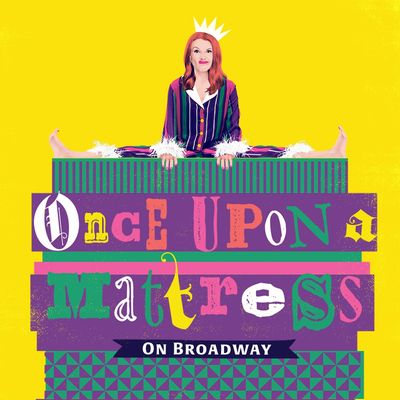
There's nothing "shy" about this episode! ;) Actress Rena Strober joins us to shed a little love on the summer camp musical to end all summer camp musicals: ONCE UPON A MATTRESS. Carol Burnett, the Rodgers Dynasty, golden age comedy, and champagne bought with your unemployment insurance...this episode has it all... Read More
From the show: A Musical Theatre Podcast
Featured Shows
About
There's nothing "shy" about this episode! ;) Actress Rena Strober joins us to shed a little love on the summer camp musical to end all summer camp musicals: ONCE UPON A MATTRESS. Carol Burnett, the Rodgers Dynasty, golden age comedy, and champagne bought with your unemployment insurance...this episode has it all.
Be sure to follow Rena on Twitter @renastrober and support her new album IMAGINE THAT! with the writers of Sesame Street. http://www.renastrober.bandcamp.com
Take one moment to follow "A Musical Theatre Podcast" wherever you may be listening and share us with your friends!
Join us on Instagram, TikTok and X for more great content. For bonus episodes, subscribe to PATREON! for only $1 a month. And don't forget about our TeePublic Store, our proceeds from which we donate to Broadway Cares/Equity Fights AIDS.
Above all, thank you for being part of this wonderful podcasting community.
Transcript
This transcript was automatically generated and might contain errors.
[0:00] Jeffrey Scott Parsons: There are few things that we can currently agree on in our society. There's a lot of divisiveness, and yet I think that there are fundamentally two areas in which everyone can agree. Number one, chocolate chip cookies. I don't think anybody has a problem with, like, a good warm chocolate chip cookie. And number two, Carol Burnett. Am I right? Oh, amen. A to the men. Everybody loves Carol Burnett. And if you don't, it's, I don't understand. If you don't, then I think you, you just may not have discovered her yet. I like that philosophy. See, I was going more on the, if you don't, I might have to kill you. But you are, are like the kinder person. And you're like, maybe you just haven't discovered her. See? It's a difference.
[0:50] Jeffrey Scott Parsons: When did you first find Carol?
[0:52] Rena Strober: When I was nine or 10. And I got the soundtrack to Once Upon a Mattress.
[0:56] Jeffrey Scott Parsons: You're kidding, really?
[0:59] Rena Strober: Yeah, that was my introduction to her.
[1:01] Jeffrey Scott Parsons: Oh my gosh, how fun.
[1:03] Rena Strober: And then when I was at Stage Door Manor Performing Arts Center.
[1:07] Jeffrey Scott Parsons: Come on now. I'm just gonna name drop my camp.
[1:11] Rena Strober: They did a production of it. Maybe that might have even been my introduction. Maybe I was 11, because they did that production with Max Smerling, who's really Max Guilford, who's Jack Guilford's grandson.
[1:21] Jeffrey Scott Parsons: Are you kidding me?
[1:24] Rena Strober: Swear to God. And that summer when Max played the king, Jack Guilford came up to see the show.
[1:29] Jeffrey Scott Parsons: From the original cast?
[1:31] Rena Strober: Oh yes, from the original cast and from where he plays the old man in the movie of, something funny happened on the way to the forum.
[1:39] Jeffrey Scott Parsons: Oh my God.
[1:40] Rena Strober: Yeah, yeah, yeah. Yes. So Jack Guilford was there and I fell in love with the show, but also it instilled this memory in me of meeting Jack Guilford when he was there to watch Max in what was the greatest production of it ever. And that's just a fact.
[1:58] Jeffrey Scott Parsons: It's just a fact. And everyone was 12 and 13. And yeah, so that was my introduction to her. And then of course I went down the rabbit hole of her show and all of her brilliance.
[2:09] Rena Strober: I mean, Annie was the first for me.
[2:11] Jeffrey Scott Parsons: Oh wait, you're right. You're so right.
[2:17] Rena Strober: For all I knew, drunk people were the most hilarious people on the face of the planet because of Carol Burnett and Annie.
[2:22] Jeffrey Scott Parsons: Yes, wait, then I have to change my answer because I was watching Annie at four and five.
[2:26] Rena Strober: Oh really?
[2:30] Jeffrey Scott Parsons: Yeah.
[2:34] Rena Strober: I mean, there's nothing better than it's time for a tumble with a bundle. I mean, how else did we work pearls?
[2:40] Jeffrey Scott Parsons: How did we do it before Carol Burnett told us how to swing the pearls?
[2:45] Rena Strober: Thank you. Oh my gosh.
[2:47] Rena Strober: With her shimmy in that silk blouse. I'm obsessed. I love her. And then like you, then I discovered her variety show, which was always, I would get home from elementary school and there would be a rerun of the Carol Burnett show and Saved by the Bell. Those were my two.
[3:10] Jeffrey Scott Parsons: That was your introduction to comedy.
[3:15] Jeffrey Scott Parsons: Welcome everybody to a musical theater podcast where we discuss the cultural and emotional impact of some of our favorite musicals in theater history. My name is Jeffrey Scott Parsons. You can call me Jeff. Today, we are talking about Once Upon a Mattress, which was a listener request from Bridget. Hey Bridget.
[3:44] Rena Strober: Hey Bridget.
[3:46] Jeffrey Scott Parsons: Today to help me talk about this wonderful musical is Miss Rena Strober.
[3:50] Rena Strober: Here I am world. Here I am boys. Hello.
[3:57] Jeffrey Scott Parsons: Which go figure, Gypsy also the same season as Once Upon a Mattress.
[4:02] Rena Strober: Look at that. So you're already there.
[4:06] Jeffrey Scott Parsons: Didn't even intend that. For those who may not know Rena, shame on you.
[4:12] Rena Strober: Right. Shame, shame.
[4:14] Jeffrey Scott Parsons: Rena was a coset on Broadway in Les Mis.
[4:19] Rena Strober: And yeah. Okay. Take me through this Rena, because I feel like you have the soul of Carol Burnett and the resume of an ingenue. What is going on?
[4:26] Rena Strober: Well, I got cast in Les Mis right out of college, very young. And I was a, I was a soprano. And once someone sees you as a coset in New York, you're stuck in that.
[4:37] Jeffrey Scott Parsons: That's you.
[4:38] Rena Strober: Yeah. And I kept going, but I'm funny, but I like comedy, but I want to take my clothes off and be silly. And they're like, no, here you can be Seidel in Fiddler on the Roof and here, come in for Phantom of the Opera.
[4:52] Rena Strober: And I was like, it's so boring.
[4:56] Jeffrey Scott Parsons: You did that tour of Fiddler. How long were you on that tour? It was a while, right?
[5:00] Rena Strober: I was only on it for a year, which was the shortest. Yeah. I did exactly a year with Topol. That was the one with Topol.
[5:07] Jeffrey Scott Parsons: Yes, but it was Topol. And then he tore his rotator cuff. And so after 10 months, he didled too much, too much didling. And then Harvey Fierstein came in, which was amazing.
[5:20] Jeffrey Scott Parsons: That's fantastic.
[5:21] Rena Strober: But we got the trifecta because Harvey had to go to New York to open La Cage for two weeks. So Theodore Bickel came in to fill in for those 16 shows.
[5:31] Jeffrey Scott Parsons: You're kidding me. The Tevye trifecta.
[5:34] Rena Strober: That's why I left. I was like, you know what? It's not going to get better. I got them all.
[5:37] Jeffrey Scott Parsons: That's so cool. Fiddler is officially, unofficially my favorite show of all time.
[5:43] Rena Strober: Oh, I love that.
[5:45] Jeffrey Scott Parsons: You're not shy about your Jewish roots. Can you tell everybody about your one woman show? Because I think it's just hilarious.
[5:51] Rena Strober: Oh, my spaghetti and matzo ball show.
[5:55] Rena Strober: I did it off Broadway many years ago, and then I did an album of it. And it's basically the story. I'm a nice Jew. Well, I'm a Jewish girl from New York. And many years ago, I got wrapped up in going up to a very Italian restaurant in New York called Rayo's. And I would sing for people like Bill Clinton and Billy Joel and actually Regis Philbin, RIP.
[6:18] Rena Strober: Yeah, he would come to our table. And I sort of like became one of the familia, if you know what I mean.
[6:25] Rena Strober: So long story short, I always got up and sang every week. I sang Don't Rain on My Parade because I only sing songs by Jewish women with big noses. So anyway, two mobsters got into a fight about my song, and one of them killed the other one. And so I got into a bit of a pickle, because I'm Jewish, and it's it all has to come back to the pickle.
[6:43] Rena Strober: And so anyway, I ended up years later writing a show about how going and getting involved in the Italian world brought me back to my Jewish roots. And yes, I am unapologetically Jewish in that, but more Mel Brooks Jewish, more like, I'm not gonna complain. I'm just gonna make it funny kind of thing. So yeah. And terrifying. There was actual death. Yeah, the guy died. I was under a table. But as Mel Brooks says, you have to laugh. You have to laugh. What else are you gonna do?
[7:21] Jeffrey Scott Parsons: That's so true.
[7:23] Rena Strober: Yeah, so I mean, after some years of therapy, I'm okay now. I'm fine.
[7:30] Jeffrey Scott Parsons: And you have a hilarious show and quite a story to tell because of it.
[7:35] Rena Strober: Yeah. Well, I'm so grateful that you were willing to come on and talk about this show, which has a really interesting history. You said that you first performed it in kind of a camp situation.
[7:41] Rena Strober: I wasn't in it, but I first saw Sage Door Manor campers perform it. And what's crazy is that Once Upon a Mattress was created or crafted at a camp, but like an adult theater camp. Where does this exist? And why am I not there right now?
[8:03] Jeffrey Scott Parsons: Right? So in the 50s, this was like a big thing. And actually, it's where a lot of composers like Sheldon Harnick and Jerry Bach from Fiddler on the Roof fame, where they kind of learned their craft. There would be these adult summer camps in upstate New York.
[8:19] Rena Strober: Of course, of course.
[8:21] Jeffrey Scott Parsons: And composers would go and help the campers, who I can only assume are all over the age of 21, create these reviews and sometimes new shows. And Once Upon a Mattress was one of those shows. It was like a 90 no, no, it didn't have a second act. And it got passed around that it was actually really good. And so then it transferred to Off-Broadway with the creation of a second act and a new director and a huge new star. And like the rest is history.
[8:48] Rena Strober: Did you just say a 90 no?
[9:01] Jeffrey Scott Parsons: Yes, that is a term that we use here on the podcast.
[9:08] Rena Strober: Oh my God, a 90 no intermission, you mean?
[9:10] Jeffrey Scott Parsons: Yes, exactly. I believe all shows should be a 90 no. This is what I'm screaming, get me out of the theater so I can go have dessert. This is the second time I've brought up dessert already in this episode.
[9:18] Rena Strober: I've done every three hour musical where everyone dies. And I'm like, let's just, let's just stop it at 90 minutes.
[9:22] Jeffrey Scott Parsons: You're so right.
[9:29] Rena Strober: Which I don't know how this works, because it's so completely opposite from everything I know about you. Like you and Les Miz, like, were you able to not turn upstage and make silly faces at people?
[9:34] Rena Strober: Okay, well, first, I want you to know that I was I was called the only cosette that got laughs.
[9:45] Rena Strober: Because when Marius would like come over the gate, I would face him and then I would do this like awkward, saved by the bell turn of like, oh my God, there's a boy there. And the audience would always laugh. And I'm like, well, cuz she's awkward. And yes, oh, it wasn't as much in Les Miz. But in Fiddler, I was the queen of messing with people.
[10:04] Rena Strober: When Seidel at the very end says goodbye to Bilka and Sprintza. Those poor girls who've done nothing the entire show. So they're facing downstage so the audience can see their faces and I my back is to them. And you see me sort of hug them and I would often have condoms in my hand.
[10:19] Rena Strober: And I would hand them to the girls and I would say, use protection in America. And then they were stuck downstage like going I hate you, Rina.
[10:34] Jeffrey Scott Parsons: Oh my god, you're evil. That's hilarious, though.
[10:39] Rena Strober: And then when Harvey joined, when I said goodbye to him, I would go Papa, you just can't stop the beat. And then we had a good time.
[10:59] Jeffrey Scott Parsons: That's fantastic. How fun. But you kind of have to with those types of shows because they are so epic. And you're doing twice a day.
[11:06] Rena Strober: Yes, yes, you have to stay sane.
[11:12] Jeffrey Scott Parsons: Yeah. Fiddler on the Roof was the show that I discovered vegan food.
[11:18] Rena Strober: Oh, I'm sorry.
[11:20] Jeffrey Scott Parsons: No, I mean, it was actually a good thing. I had I did like the matinee and then we just happened to have vegan food catered to the theater because there was a very short turnaround. And so I ate it and then I had all of this energy for the second show and I was like, wait, is this what food is supposed to do?
[11:29] Rena Strober: Are you a vegan now?
[11:36] Jeffrey Scott Parsons: No, absolutely not. No, farm boy. I can't give up dairy. That's like sacrilege.
[11:42] Rena Strober: Me neither.
[11:43] Jeffrey Scott Parsons: Anyway, Once Upon a Mattress.
[11:45] Rena Strober: Yeah. So it's really great. Music by Mary Rogers, who many might not know, the daughter of Richard Rogers.
[11:50] Jeffrey Scott Parsons: Rogers and Hammerstein, right? Huge, huge composers. He has a daughter named Mary, who's also an amazing composer.
[11:57] Rena Strober: And it's indisputable when you listen to this show, which is just filled with so many fun and original melodies. I mean, she wrote Ella, the Girl of the Cinders.
[12:09] Jeffrey Scott Parsons: Do you know that she also wrote she wrote music for Free to Be Me, You and Me?
[12:15] Rena Strober: Oh my God, I just got chills down my arms. I have that album on my record player right now like that.
[12:22] Jeffrey Scott Parsons: What did she write?
[12:27] Rena Strober: No way. Yes, I played for my daughter.
[12:31] Jeffrey Scott Parsons: What did she write in Free to Be?
[12:33] Rena Strober: I don't know. It didn't say exactly what she wrote. It just said she wrote material for it. That's all I could find.
[12:36] Rena Strober: I'll have to go to my my record player when I'm done and look because I need that.
[12:43] Rena Strober: Once Upon a Mattress is one of the only, I guess her only big hit musical. She wrote others, including Hotspot, which was this flop musical for Judy Holiday. And then she also did an off-Broadway review called The Mad Show.
[12:58] Jeffrey Scott Parsons: Yes, which we did at Stage Door Manor too.
[13:01] Rena Strober: Oh my gosh. See, you guys, the lyrics for Once Upon a Mattress were written by Marshall Bearer. I'm going to guess that's how you say his last name.
[13:09] Rena Strober: So he wrote Ella the Girl of the Cinders.
[13:12] Jeffrey Scott Parsons: Sorry.
[13:15] Rena Strober: Oh, I know every lyric to the show.
[13:18] Jeffrey Scott Parsons: Every lyric. I'm so glad.
[13:21] Rena Strober: And these lyrics are so freaking clever. And I can't wait to share some of my favorites as we talk through the show. They were together for a brief time. So Mary's like Mary's like 29 when Once Upon a Mattress comes out. And I think that they were, they like had this connection. They start after, you know, because Once Upon a Mattress was a hit. Then they start writing this review called The Mad Show, which is based on like The Mad.
[13:42] Jeffrey Scott Parsons: The Mad Magazine.
[13:43] Rena Strober: Right. And then he like ups and quits. But one of the most famous songs that came from The Mad Show is that song that Faith Prince always does, The Boy From.
[13:55] Jeffrey Scott Parsons: The Boy From.
[13:58] Rena Strober: Exactly.
[14:01] Rena Strober: That but that's a really hilarious song that has lyrics by Stephen Sondheim.
[14:08] Rena Strober: Music by Mary Rogers, lyrics by Stephen Sondheim, which is apparently about Marshall.
[14:16] Jeffrey Scott Parsons: Oh, that's I mean, that's just a rumor, but I'm spreading it here on a musical theater podcast.
[14:22] Rena Strober: It makes sense.
[14:23] Rena Strober: Yeah. Anyway, so we love Mary Rogers. Now, if you think that that is all you've heard of her, you are wrong. Because talk about a jack of all trades. She then after kind of quitting writing musicals, starts writing children's literature and writes Freaky Friday.
[14:43] Rena Strober: No way. Absolutely.
[14:46] Rena Strober: It writes it as a book which Disney then buys and turns into a movie and then turns it into another movie and then it gets turned into a musical, and so it's like this beautiful circle where Mary Rogers gave birth to this story that then became a musical much, much later on in the 2000s. Oh my god! So cool. Now when the show opens, it gets nominated for Best Musical and for Best Actress. It only gets nominated for two, which is both surprising, but then also when you look at the season, this Tony Awards season, which is 1960, is just jam-packed. Here are the Best Musical nominees for this year: The Sound of Music, which means what? She was competing against her father for Best Musical. So cool.
Fiorello, which is Bach and Harnick all about LaGuardia, and Sound of Music and Fiorello tie for Best Musical. It's the only time that there's ever been a tie. Gypsy, Once Upon a Mattress, and Take Me Along, which Take Me Along is a musical version of Eugene O'Neill's A Wilderness. Whoa! Which I don't know at all and I really want because I think that that would be adorable. I would love to see that. Anyway, what a lineup. So I can't believe that Sound of Music and Fiorello tied, which means that Gypsy didn't win because Gypsy's like in my top three best musicals of all time. Wait, I'm sorry, go back. The Sound of Music was that year too? Sound of Music, Fiorello, Gypsy, Once Upon a Mattress, Take Me Along.
Listen, my first professional show out of college was Gypsy at Cabrillo Musical Theater here in California, actually. Hey, hey! And I have to say I have never experienced a show with a book that's so perfectly tied into the music. There's no other show in the universe. So that year, those voters must have just been like obsessed with Nazis because there's no other reason that The Sound of Music needs to win lots of Tonys over Gypsy. Now, it would be crazy enough to say, oh, this is really interesting, you know, where Richard Rogers and then his daughter was also a Tony-nominated composer, except that Mary Rogers' son is Adam Gettle. Oh god. Who wrote Light in the Piazza. Oh god, his music is so pretentious.
Oh, is he listening? Am I gonna upset people? I hope not. You can have your opinion absolutely and can express it freely. You're not a fan of the Gettle. I mean, it's contemporary. It is like that modern contemporary sound for sure. Yes, but he also treats women like crap and he's been known to say some really horrible things, so I'm just not a Gettle fan.
[18:06] Jeff Parsons: Really?
[18:07] Rena Strober: Yeah. That makes me upset because I don't think Mary Rogers would stand for that.
[18:12] Jeff Parsons: I know, I know. I need to sit down and have a conversation with Adam because I know that I would be able to get to him.
[18:18] Rena Strober: Wait, are you besties with Adam Gettle?
[18:20] Jeff Parsons: No, absolutely not. Okay, there's no way he would come on my show. Well, he's too busy harassing women, I'm sure.
[18:25] Rena Strober: Oh my gosh, that's terrible. I hope no, I don't want to start. I hope he's seen the light. I hope he's seen the light in the piazza and maybe given us a chord that ends in something predictable. Well, his grandpa was the king of ending a song in a chord that's predictable, so he's like, I have to do exactly the opposite. And also, I went in for the original production of Light in the Piazza. I was actually understudying Kelly O'Hara at the time at Playwrights Horizons.
[18:52] Jeff Parsons: No way.
[18:53] Rena Strober: So they sent us four songs that he had just written. There was no demo, no recording, nothing, four giant books of sheet music, and I'm like, whoa. So I went and spent a fortune on a voice coach to play them, who that was difficult, and learn them and work on them because there was no one had sung them yet. And then I walk in, I walk into the room and sing maybe eight bars or 16 bars, and they were like, thanks, that's all. And I was like, I'm sorry, what? I just spent $300 learning this music and you're not gonna let me sing one of them? So that's part of my really frustrating, yeah, but I still don't like the show. It's not because of that, because I love Kelly, but the fact that the music just, I don't know, I can't connect to you.
I can't hum it, as my mother would say. You don't leave the theater humming the music, right? So then after that, I had like a rule in my head. I would be happy to learn music after for a callback. Like, let me go in because you're gonna know right away if you like me or not. So if you like me, great, I will learn all this music for the callback. But so many times in New York for the first audition, they're asking you to go learn all this music that you're not going to end up singing. So, but now I work in voiceover and not on Broadway, so yeah, that worked out for me. I stood up for myself and I now I've changed careers.
[20:03] Jeff Parsons: Exactly, exactly. Oh, I'm so sorry.
[20:05] Rena Strober: It's all good. Let's go back to Once Upon a Mattress. Yeah, so when the show moves from its summer camp roots to off-Broadway, they get who's kind of known as, I'd say, the father of musical comedy, George Abbott, as the director. It's one of the reasons I actually love to talk about Once Upon a Mattress is because you get to talk about the Rogers dynasty, you get to talk about Carol Burnett, and you get to talk about George Abbott. Now, if there's a musical comedy before 1960, more than likely it was directed by George Abbott. Yep. Let me just run through a list here of some of his greatest hits as a director: On the Town, Where's Charlie, Call Me Madam, Wonderful Town, The Pajama Game, Damn Yankees, Once Upon a Mattress, Fiorello, A Funny Thing Happened on the Way to the Forum. Is that it?
[21:06] Rena Strober: Just guess at what age George Abbott passed away.
[21:09] Jeff Parsons: I think I remember him passing away 90-something.
[21:12] Rena Strober: 107 years old.
[21:14] Jeff Parsons: Whoa, theater keeps you young, right?
[21:16] Rena Strober: He was still like attending. This was in the mid-90s when they did the Damn Yankees revival, and he was still a consultant, and so he was like still taking notes, still making revisions and stuff, and he was 107 years old. Oh my gosh, like what a workhorse. Yeah, he is not nominated for a Tony Award for Once Upon a Mattress, but don't cry for him, Argentina, because he wins, he still wins a Tony Award for directing Fiorello that year. What amazing, amazing. So a titan of Broadway, and in many ways, a lot of the comedy that he hones in Once Upon a Mattress, I feel like really gets perfected a couple years later when he does A Funny Thing Happened on the Way to the Forum. In Mattress, you've got like the jester and the king, oh, and the narrator guy.
[22:07] Jeff Parsons: Oh, right, right, right.
[22:08] Rena Strober: In some of their scenes, you just expect them to start singing like everybody wants to have a maid. It really does kind of set the groundwork for a lot of the comedy stuff that he keeps on doing throughout his career. It also, there's so much like old school vaudevillian comedy put into Once Upon a Mattress, and it's one of the reasons why I still love to watch it. If you go on YouTube, you can see some of those original TV productions with Carol Burnett, the physical comedy and just all of the bits. I'm such a fan. It never gets old to me.
[22:40] Jeff Parsons: I agree. What's your sense of comedy like?
[22:43] Rena Strober: Oh, my sense of comedy comes from the truth. I love when something's real, it's based on the truth. It comes from somebody in an awkward situation being uncomfortable but trying to figure out a way to get out of it.
[22:56] Jeff Parsons: Totally.
[22:57] Rena Strober: I love, I used to spend time actually with Sid Caesar before he died, and he's the king of comedy as far as your show shows. He hired Mel Brooks, gave him his first chance, Neil Simon, Carl Reiner, and he used to say, write what you know, write what you know. And I find that with comedy, it's about taking what you know and figuring it out that way. And I always think the truth is funnier, which is why any show I do, I do a lot of storytelling and a lot of one-woman shows. They're always based on truth because that's where the real good stuff comes. I'm a big Mel Brooks fan, History of the World, I loved your show shows, anything with Madeline Kahn. I actually watch her on Sesame Street because she was the commissioner of fun and games, and she had to cut the ribbon, and she's everything she does is based from truth, and you can see it absolutely. I'm not big on the slapstick, like big, I shouldn't say Big Bang Theory, but like that kind of one-line punchline, you know, and yeah, yeah, yeah, I don't like that.
[24:05] Jeff Parsons: You don't like to see the setup?
[24:06] Rena Strober: No, no, I like situational comedy. I love The Moth storytelling because of that, but that's really cool, which is Once Upon a Mattress is somebody in a position, you know, or that they have to get out of it, you know, a very uncomfortable position, and so you're just watching the comedy ensue. And if you look at The Carol Burnett Show, all of those skits were sort of very similar, you know, like the famous curtain rod. She made do with what she had, you know, which is what made it so funny. She wasn't really trying to be funny, she was just trying to solve the problem, and that's what I think is brilliant.
[24:47] Jeff Parsons: The brilliance of Once Upon a Mattress, I think going right along with what you're saying is that it's putting almost a more truthful spin on a tale that we already know.
[24:54] Rena Strober: Absolutely, right from the get-go, they're saying we all know the story of the princess and the pea. Now let's talk about what really happened, what these characters were really like, and we get so specific with their personalities that it just becomes this beautiful birthplace for comedy. Now at this time, Carol Burnett had moved to New York, much to the disdain of her grandma. Those who know Miss Burnett know that there was a very close relationship between her and her nana, her nanny. She basically raised her because her mom went off to be an actor. So Carol Burnett was originally supposed to go to UCLA. She drops out of UCLA and decides to move to New York and try her hand at musical theater.
So she does, she's auditioning, nothing's really happening. I know that you have a history with Babes in Arms. Oh, Carol Burnett goes in and auditions for Babes in Arms, which is, you know, Richard Rogers, and they were going to be doing a revival that would start in Florida and then make a Broadway transfer. She goes in for Johnny One Note. So she goes in for that, they love her, and she gets a phone call after her callback saying, we're actually going to go with someone with a bigger name, and she's just crushed because she's like, how do I get my break if I don't already have the name? Nothing has changed, nothing has changed. But literally minutes after that, she receives a phone call saying there's this new off-Broadway show called Once Upon a Mattress, and we'd love to see you for this role. So she goes into that.
[26:39] Jeff Parsons: I just got goosebumps.
[26:40] Rena Strober: So we would never have had her had they put her in Babes in Arms.
[26:44] Jeff Parsons: Exactly. And guess what? Babes in Arms didn't end up making it to New York, but Once Upon a Mattress did. I went to my local library. I always like to plug my local libraries and got her autobiography so that I could look through a couple things. She was working like crazy during this time. She was doing, you know, Once Upon a Mattress eight times or however many times a week. I don't know if it was eight times a week at that point, but she was also filming The Gary Moore Show, which was a variety show on television. She was doing both jobs at the exact same time. There was a point where she accidentally fell asleep on the mattress during the show, and she heard the stage manager from offstage because it just like stage whisper, "Carol, wake up!"
[27:31] Rena Strober: Oh my god, because she was so exhausted. There was this other great story I read where, I don't know if you've heard of this place, but there's a fancy schmancy ice cream parlor that a lot of people would go to after seeing a Broadway show, Serendipity, but I don't know what it was in the 70s. I think it was maybe just back in the day, it was called Rumpel Mayers.
[27:48] Jeff Parsons: Oh yeah, Rumpel Myers.
[27:49] Rena Strober: Yeah, and she at one point had peered into, you know, look for celebrities and had seen Marlena Dietrich in this like gorgeous gray pantsuit eating whipped cream at the counter. And so as soon as she was on Broadway, you know, starring in her own show and still not a name, but certainly like an up-and-comer, she and a bunch of the kids from the show decided to go to Rumpel Myers. So they walk in, and she's wearing these, you know, nice black slacks, and the hostess comes over with this really tight bun and just rips her apart. Who do you think you are walking into this posh establishment wearing pants? And all she can do is, you know, think of Marlena Dietrich exactly with her gray pantsuit.
And she's like, oh, it must be because I'm once again not famous enough. Everybody in the shop is turning around and staring, and I just want to read from the book what ended up happening after that. She says, "You could have heard a pin drop at this point. The image of Dietrich in pants was looming full screen in my mind's eye, and so I opened my mouth to speak. Please forgive me," I said sweetly, but projecting so that every customer could hear, "but I have a wooden leg and I'm too embarrassed to wear a skirt." Dead silence. God, I felt the entire restaurant get ready to line the hostess up in front of a firing squad. She felt it too. She led us back to a table, and I dragged my wooden leg all the way across the room without bending my knee.
[29:32] Rena Strober: and ate my hot fudge sundae while sitting stiff-legged the whole time. Isn't that amazing?
[29:37] Jeffrey Scott Parsons: That's brilliant. I just love to picture her as this like 20-year-old who's like, all right, we're going to use my improv skills for the best and get some sweet justice, if you will, from this whole situation. Can I tell my quick Carol Burnett in a restaurant story?
[29:54] Rena Strober: Oh my gosh, please, please.
[29:55] Jeffrey Scott Parsons: So it was after I first moved to LA, which is about, I was here for a second and then I left and then I came back about 10 years ago and I was teaching musical theater to little kids and I was really depressed one day and broke but I found this restaurant on the west side near where I was teaching, an Italian restaurant that had happy hour. So I go up and I sit at the bar and I ordered like a happy hour pizza and a glass of wine and there was only one table of people in the back and I hear this loud laugh and I'm like, I know that laugh and I look and then I look to the bartender and I said, is that who I think it is? Yeah, that's Carol Burnett and Tim Conway and she's there with all of her friends and I was like, oh my God, what do I do?
So I decided to send over a bottle of champagne to the table and so I was like, oh my gosh, what's the cheapest bottle of champagne you have? And he said, well, we have Prosecco and I was like, great. So it's like $30. So he sends over the bottle and I see them open it and toast and I'm like, oh my God, that's so great. And then I go to pay and my credit card is declined because I have no money and I was like, oh my God, and so I had my unemployment insurance card. So I was like, can I use this? I mean, she's a national treasure. So I bought Carol Burnett a really cheap bottle of champagne with my unemployment insurance card and then on my way out, I decide to, oh, by this point, I was actually already talking with Sid Caesar at his house and he lived over there.
I'm only telling you that because I'm about to mention it. So I walked by the table and I said, I'm so sorry to bother you, Miss Burnett, but I had to, it's not often you get to toast the people who've changed your life and she's like, oh my God, thank you so much. And so, and Tim Conway and Bob Newhart were there and ridiculous people and I said, you know, I'm spending time with Sid and they're, oh, give him our love. And I said, and Miss Burnett, it was your performance in Once Upon a Mattress that led me to my Broadway career and she goes, what? You're not old enough to remember me in Once Upon a Mattress because I look very young to your listeners. And I said, actually, I just froze my eggs because I always say the wrong thing, but I did. I did. I had just frozen my eggs and Tim Conway looks up at me and he goes, hey, I got a freezer. Oh, oh my God. So I was like, anyway, thank you very much. And then I left.
[32:17] Rena Strober: Oh my gosh. What a great story.
[32:19] Jeffrey Scott Parsons: It's like, see the truth. Like you couldn't write that story. Like my credit card just declined and Tim Conway hitting on me because I'd frozen my eggs. And yeah.
[32:31] Rena Strober: Which I love that you said like the least sexy thing possible and yet he's like, here's my window.
[32:40] Jeffrey Scott Parsons: I got a freezer.
[32:44] Rena Strober: Oh, that's so great. Well, this show comes at a time when star vehicles were a big thing on Broadway. Composers were writing shows for stars. And then eventually that kind of died out because they realized that if the star isn't in the show, then people don't really want to see the show. It's much easier to have a Les Mis where you just have all of the cogs in motion.
[33:05] Jeffrey Scott Parsons: Right. You know, it doesn't matter who's in it unless you're Rena Strober and then you get Lafza's Cosette. But this show is I think one of those star vehicles where it's almost difficult to do if you don't have the right person to bring that star quality that Carol Burnett so effortlessly had in the role.
[33:26] Rena Strober: I yeah, I agree to some sense. I mean you but if it's directed well and if it's cast well, there can be some young soubrette, which is one of my favorite words, which is a soprano who's funny.
[33:41] Jeffrey Scott Parsons: Sure.
[33:42] Rena Strober: And because I mean, are you referring to like the revival with Sarah Jessica Parker? That's how I first got to know the show to be honest.
[33:49] Jeffrey Scott Parsons: Oh, maybe because there are the sexual undertones like Once Upon a Mattress was not a show that was produced a lot where I was from. So I didn't know it until the revival came out. And by that point I was studying the Tony Award ceremonies within an inch of its life. So that's how I got to know the show and now looking back on it. I love Sarah Jessica Parker and I don't understand how she's like this princess. That's not very appealing. I'm like the most gorgeous woman ever what?
[34:20] Rena Strober: Although people disagree people. I I was once in a dressing room where some of the straight boys said that she has like a witch face or a horse face or something like that.
[34:31] Jeffrey Scott Parsons: I do not understand. I think Sarah Jessica Parker is gorgeous.
[34:35] Rena Strober: I agree with you. I agree with you. It's funny all the boyfriends I've had and there have been a few none of them find her attractive and I have a theory.
[34:45] Jeffrey Scott Parsons: I mean, I am obsessed with Sex and the City and it was on TV at a time where I was living in the city. So I would watch it live but she's her personality is stronger than her looks and I find that many straight men are probably and people in general are probably intimidated by that maybe but she interesting. She's funny and she's I think she's very sexy. I mean I'd kill for her legs and her shoe collection. Hello, but Winifred isn't about really being a pretty princess, which is why I love that role and Carol Burnett's not a sexy princess either. Like I think Sarah played her very quirky because I'm assuming she was a smoker. I think about this all the time because I listen to Sarah Jessica Parker's version sometimes on Pandora and she's very raspy.
She doesn't have the clean tones that Carol Burnett had and just that bell right and and she smoked in Sex and the City constantly and I always wondered if she was a real smoker because she sounds like a smoker on the Once Upon a Mattress album. I don't know if you agree.
[36:01] Rena Strober: Interesting. I had never thought about it, but I totally see what you're saying.
[36:05] Jeffrey Scott Parsons: Yeah, so her voice isn't clear, but I don't know. I feel like the show can be done if it's again cast well and directed really well, and it's funny. I'm from New York. I'm from the Catskills. So at camp at Stage Door Manor, we did that show all the time because you always had quirky Jews, quirky non-Jews, but people from New York and New Jersey who got that humor that laugh at me humor.
[36:24] Rena Strober: Yeah, I totally get that. It's interesting that you keep saying cast well and directed well because once again, two of the biggest things about the show was that it was directed by George Abbott and was starring Carol Burnett.
[36:36] Jeffrey Scott Parsons: Yep.
[36:37] Rena Strober: And despite it being this star vehicle, there are so many great characters in the show.
[36:44] Jeffrey Scott Parsons: Oh, yes. I mean, I'd even love to see it cast these days with a man in the lead role, you know, or switching up the sexes of the characters. There's lots of great idea.
[36:54] Rena Strober: Yeah, there's lots of interesting ways to keep this show alive because that music I think is so standard. I give shy to so many of my voice students just to get them to open their mouth and to build confidence. You know, Happily Ever After is like just the song you sing in the car. Like every song in that show is you leave the theater humming as my mom would say.
[37:18] Jeffrey Scott Parsons: That's so true. All right, let's actually talk through the show a little bit. It all begins in like 15th century Europe, right? And we're in this fictional medieval kingdom and the Queen is Queen Agravain. And this is such a delicious role and it's been played by so many amazing actresses who rarely get their due because the role of Winifred is so incredible. You know, like in any other show Queen Agravain would be the star like the unequivocal star of the show.
[37:50] Rena Strober: So she is this as you can tell by her name really controlling very domineering her King known as King Sextimus the Silent. He suffers from a curse that has left him completely mute. There was a witch who kind of did this whole Beauty and the Beast type thing and said that the curse will be broken when the mouse devours the hawk. That's the time when this curse will be broken. There's a minstrel and he's kind of the narrator of the piece and he's introducing this kingdom to us. And he also tells us the story that we know as the Princess and the Pea. And after he gets done, he lets us know that it's actually quite different than we actually know and stick around because he was there when this all went down. Like right from the get-go a beautiful song with just the most clever lyrics.
[39:48] Jeffrey Scott Parsons: Oh, he sighed alas and he pined alas, but alas the prince couldn't find alas. So cute. What a great lyric.
[39:56] Rena Strober: He then tells us that the reason that the prince couldn't find alas was because this Queen, you know, who is so domineering was making it impossible for any princess to be good enough for her son who's known as Prince Dauntless the Drab. And there's this great opening number called an opening for a princess, which is very 60s, very jazzy. Another one of the fun elements of this show, which I guess when they announced the title, Once Upon a Mattress, many people thought it was a very dirty title.
[40:33] Jeffrey Scott Parsons: Love that.
[40:36] Rena Strober: Yeah, to be using the word mattress and there are there is some sexual humor in the show. But at the same time, it's so effervescent and like and sweet. It's unique in that way where it kind of plays both sides of the coin, but there's this thing that we learn about in the opening number throughout the land. No one may wed till Dauntless shares his wedding bed. So until Prince Dauntless is able to get some nobody else is getting some and that makes everybody very on edge in this kingdom because nobody's getting any younger as they say.
[41:13] Jeffrey Scott Parsons: The crisis escalates to like a peak when the head knight, who his name is Sir Harry, discovers that his girlfriend Lady Larkin, who is a lady-in-waiting, is actually in waiting. She's preggers. She got knocked up. So they need to get married, but they can't get married until Prince Dauntless finds a princess. So Sir Harry's like, all right, I'm gonna take on this challenge to go and find a princess. Find someone that the Queen hasn't already said isn't good enough. And so before he leaves, he and Lady Larkin sing this lovely duet called In A Little While, which every single song so hummable. She has this amazing lyric Lady Larkin does. She says, my time is at a premium for soon. The world will see me a maternal bride to be. I'm telling you the lyrics are like just pun after pun after pun. I love it. Marshall stepping up to the plate and hitting some home runs here. Great.
[41:23] Rena Strober: So then we skip to Sir Harry coming back and everyone's announcing here. He comes with this new princess. They're waiting for them to enter through the gates and then in such a great star entrance, Princess Winifred aka Carol Burnett comes climbing over the kingdom wall because she swam the moat. In her overzealousness to meet this prince and get this thing going. And so she's like soaked and looks terrible and the Queen is just beside herself because this quote-unquote princess swam the moat which leads Princess Winifred to describe who she is. She's Winifred the Woebegone. Her kingdom is in the swamp. She's a very unusual princess and she believes herself to be shy, which like you said is such a great song that is in complete contrast to what she is saying.
The notes that she is belting couldn't be less shy and really shows especially when you go back and listen to Carol Burnett sing this stuff. What a voice she was just she would just open that mouth and all of the sound would come out in a thrilling thrilling way.
[43:26] Rena Strober: Yeah, and we love it.
[43:26] Jeffrey Scott Parsons: Yep. No one sitting there thinking if only she had been able to lift that soft palate a little more.
[43:32] Rena Strober: Yeah, not that she needed it though because my gosh, my yeah brilliant. Now everybody in the kingdom is immediately smitten with Princess Winifred and they want her to marry Prince Dauntless. However, the Queen is more determined than ever to make sure that this is not the girl. So she and her gay evil assistant the wizard like the wizard gay evil. Yes, like could not be more squarely in that stereotype of gay evil because like it's not her husband. It's this other guy, but there's no like sexual chemistry between them at all. So they're trying to design a test to make sure that Winifred fails.
[43:43] Jeffrey Scott Parsons: Well, it's I think it's along the lines of Madeline Kahn where no one expect me Madeline was more of like a soprano but nobody expected this to come out and I don't think Carol Burnett is singing like a Megan Hilty or somebody like, you know, really with flonating perfection, but she's opening her mouth and just singing and she's singing the lyrics not the notes, which is what I'm passionate and obsessed with with what we don't find now in Broadway. Don't get me started on that. Everybody's singing the notes so perfectly, but nobody singing the lyrics and Carol Burnett is singing the lyrics and she's singing what it's about and she doesn't care what she sounds like. So at the end of the day, she sounds great.
[44:18] Jeffrey Scott Parsons: And what she comes up with is this sensitivity test, which is that she's going to put a single pea under 20 down mattresses. And if she's a real princess, then she will be sensitive enough to feel that pea and not be able to sleep. And she expresses all of this in this song called "Sensitivity," which if anybody can count this song, you are my hero.
[44:43] Rena Strober: Yeah, I was just like, wait, that's yeah, yeah, that's a hard one. It's all over the place. And is Mary Rogers giving her son permission to write "Light in the Piazza"?
[44:55] Jeffrey Scott Parsons: God. Now, we can probably skip now to Lady Larkin, who's kind of just done with this whole situation and decides that she's going to escape. It's not going to work. Princess Winifred isn't going to become the princess. She's just going to keep getting bigger and bigger in her pregnancy. So she's going to run away. And the king, who is silent, the minstrel, who is our narrator, and the jester, who's like the court jester, all three of them decide to convince Larkin not to run away and instead paint this beautiful picture of Normandy and that they can help her escape to Normandy. So just don't run away yet. Another great song, "Normandy."
[45:41] Rena Strober: That's why my friend Devin, who I know from Stage Door Manor, he lives on Normandy. And I always whenever I go down that road, I sing "Normandy." But I always thought it was because I was singing "Hollywood." But now I know it's because I'm singing this. I always go "Normandy."
[45:56] Jeffrey Scott Parsons: Once upon a mattress. Look at that. How cute. I had no idea. So later that night, the queen throws this big ball to make sure that Winifred can dance as much as she can and be exhausted so that there's no way she can stay awake on all of these mattresses. They teach her this new dance called the Spanish Panic, which doesn't sound Latinx at all. But it's this really fun kind of vaudevillian scene where the wizard is like trying to teach her the dance. It's so great. Nobody does physical comedy like Carol Burnett. I would love to post some of this on our Instagram.
[46:37] Rena Strober: So they all start dancing the Spanish Panic. It leads to this big ball. Everybody collapses because they're all dancing so hard. And Winifred still has all of the energy in the world. She's like, what's next? And the queen's like, shoot, she's not getting tired. That leads to Dauntless and her trying to figure out what this test is going to be. What is her test going to be so that she can become his bride? Because they're really connecting and they're enjoying each other's company. And so they start going through all of these little tests, including barbells. And that gives way to one of your favorite songs, the Song of Love.
[47:08] Jeffrey Scott Parsons: I'm in love with a girl named Fred who sings just like a bird. What a fun ending to Act One.
[47:13] Rena Strober: Singing. She's singing like the bird. Exactly. She's wrestling. She keeps like drinking all of this libations. She doesn't even sing in this song. And yet she's the star of the song.
[47:26] Jeffrey Scott Parsons: Yep. And we wonder why she fell asleep on the mattress. Right. Exactly. While filming the Gary Moore Show. Yeah, it's crazy. So that's the end of Act One. And now Act Two. It's so funny because there's so much that happens in Act One. And then Act Two is literally wrap it up. Right. She goes to the room. She starts reading a bedtime story, which is kind of funny since she herself is in a fairy tale. And at the end of the fairy tale, it says like, essentially, Cinderella had a fairy godmother and they all lived happily ever after. And Winifred says something like, she had outside help. This sucks. The deck is stacked against me. I want my happily ever after.
[48:12] Rena Strober: Which is like an 11 o'clock song, but it's not. It's at the top of Act Two. It's like 9:30. Now, King Sextimus decides to have a man-to-man talk with his son about the birds and the bees because he really believes that Winifred is the one the king does. And there's this fantastic number, once again, very comedy-based where the king is trying to have the birds and bees talk with his son without being able to talk. And you could probably just like jump to the end and do some very, very crude, crude thing. But it's all taking place in this land. So he's still talking about the birds and the bees and he needs to like mime it and somehow connect all the dots. It's adorable.
[49:03] Jeffrey Scott Parsons: And is this moment that we see the king and his son connect in a way that maybe we hadn't before. The jester sees all of this and it makes him think about his father. And so then he sings this song called "Very Soft Shoes" and has a big dance. I don't, for the life of me, I don't understand why.
[49:15] Rena Strober: Oh, well, it might be because of a costume change. That's sometimes why there's a song.
[49:21] Jeffrey Scott Parsons: Right. But then again, right after this is Sir Harry and Lady Larkin wrapping up their, you know, bee storyline with "Yesterday I Loved You," another fantastic song. But it's interesting that we have "Happily Ever After" and then like these three numbers in a row that completely take us away from Winifred.
[49:38] Rena Strober: Well, those actors were probably sleeping with somebody at the time and they asked for a number and it's just how, why crappy songs are in great shows.
[49:46] Jeffrey Scott Parsons: It's just how it happens. It kind of reeks to me of, we need Act Two to be longer. And we have these great characters, we might as well give them a song.
[49:56] Rena Strober: It should have been a 90—no!
[50:00] Jeffrey Scott Parsons: Look, you're not wrong. You're not wrong, Rena.
[50:03] Rena Strober: Thank you. Next up is the big scene, which is when Winifred is trying to fall asleep. There's like a nightingale who keeps, you know, the queen has put in there to sing her to sleep, but the nightingale is just like getting on her nerves. And so she yells at it. She just can't seem to get comfortable. Another great opportunity for this amazing physical comedy of Carol Burnett getting in a comfortable position to fall asleep, but she can't. And so she starts counting sheep.
[50:31] Jeffrey Scott Parsons: And then we cut to the next morning where the queen and the prince are kind of in the main court area. And he's like, okay, okay, mother, when is the test? And she's like, the test has already happened and she failed. I put a pea under the mattress and she's been asleep. So there's no way that she's a real princess. And at that moment, in comes Winifred still counting sheep. She's like on 3,672 because she hasn't been able to sleep a wink the entire night. And she says, what did you put under that mattress? Jousting equipment. And everybody erupts into cheers because she has passed the test.
[51:14] Rena Strober: After it's clear that she is going to be the bride, the queen starts screaming and making a scene and the king actually stands up for himself. And that is the moment that the mouse devours the hawk, which breaks the curse. And so now the king can talk and tells the queen to shut up. And she in fact, then becomes mute and she can't speak. And it's this great reversal to make matters even better. They go to those mattresses to go get the pea out from under it. And they find all of this jousting equipment because the jester and the king and the minstrel had overheard the plan. And so they wanted to make sure that Winifred couldn't sleep. They are wed and they live happily ever after. They climb up on the mattresses to celebrate and Winifred has trouble sleeping until they finally actually take the pea out from under the mattress and then she falls asleep immediately.
[52:18] Jeffrey Scott Parsons: So it turns out that even if they hadn't put the jousting equipment, she in fact is a true princess. They live happily ever after. Isn't that so sweet? They all lived happily, happily, happily ever after. It's perfect. It's a great show. It's so fun.
[52:37] Rena Strober: Yep. I honestly wouldn't mind seeing a revival of this turned into a 90—no, if possible.
[52:43] Jeffrey Scott Parsons: Yes, I agree. 90—no. I think there's still a lot of fun to be had with it.
[52:50] Rena Strober: I agree. So that's "Once Upon a Mattress." A great little moment in the golden age of musical comedy, giving birth to a huge career. So grateful for her and her talent. Grateful for the Rogers clan for creating some gorgeous tunes and George Abbott for really crafting some classic comedy that to this day makes me giggle.
[53:10] Jeffrey Scott Parsons: Rena, thank you so much for doing this with me. You've been an absolute delight. This helped my quarantine so much. Just revisiting this.
[53:21] Rena Strober: See, I'm a simple girl and I feel like this show is the simplicity is what makes it so complex. The rhyme schemes, the patter songs.
[53:28] Jeffrey Scott Parsons: Yeah. And I feel like that's what we need right now. Speaking of simple, I'm about to release an album of Sesame Street music.
[53:40] Rena Strober: Are you really?
[53:41] Jeffrey Scott Parsons: Yeah. August 28th, I released this album called "Imagine That" with me and Jason Alexander and French Stewart.
[53:45] Rena Strober: Jason, speaking of a big Broadway star.
[53:47] Jeffrey Scott Parsons: Oh, my God. I set out to put out simple music that has complex ideas of kindness and inclusion. And Mary Rogers really captured that with her composing with this show, you know, that absolutely that you can be simple and you can like shy and happily ever after are simple ideas. And they're such songs that make us joyful. And so, yeah, that album will be out with a whole choir of young blind kids who I work with.
[54:17] Rena Strober: I'm kidding.
[54:18] Jeffrey Scott Parsons: Yeah. I have a whole choir of them and all my friends from the blind music school that I teach at and proceeds of the album are going to Guide Dogs of America and Gavin's Groupies, which is another organization that raises money for research for something called LCA, which causes blindness in babies. So, yeah, it's Sesame Street. But I feel like if Sesame Street was going to do a musical, they could do "Once Upon a Mattress" because it works.
[54:45] Rena Strober: You're absolutely right. I want to cast it right now.
[54:48] Jeffrey Scott Parsons: Yes. I mean, I wonder if it's been done.
[54:51] Rena Strober: If not, it happened here.
[54:53] Jeffrey Scott Parsons: It happened here. Exactly. Oh, that'd be so good. Now, tell me, how did you get connected with the school for the blind?
[55:02] Rena Strober: Many years ago in L.A., I was asked to be a guest there because the kids knew my work. I'm also on, you know, kids TV shows and I do a lot of voiceovers. So they knew my work. And so I was invited to be a guest to sing with them. And I went and I actually one of the students wanted to do the Vessel with the Pestle scene from the court jester. Speaking of a court jester, and he had his hands all on Braille while I had the script in front of me. And then I sang "Time to Say Goodbye" with a little eight-year-old boy named Gavin. And I just I had never heard people sing from a place so deep in their soul as these kids were. They were not relying on looking at you. They were not relying on anything but how they felt the music.
And from that moment on, I was like, this is where I want to be. This is where I want to teach. These kids are going to be a part of my life from now on. And I've kept to that. I have every show I've done has them in it. I always invite them to sing with me. This album was inspired because I wanted the world to be reminded of those with different who are differently abled, not disabled, but just differently abled.
[56:13] Jeffrey Scott Parsons: I love that.
[56:14] Rena Strober: And how music is universal, no matter what your senses allow you to do. And it's actually the music of Joe Raposo and Jeff Moss, the original composers for Sesame Street.
[56:26] Jeffrey Scott Parsons: So yeah, yeah, it's really magical. And Jason Alexander is unbelievable in it. And ML Wooley, another Broadway guy from "Little Shop" and big voiceover actor. He's on it. And just an incredible group of people.
[56:42] Jeffrey Scott Parsons: How exciting.
[56:43] Rena Strober: Yeah. How can we find this? How can we follow them? How can we support you in this?
[56:48] Jeffrey Scott Parsons: Oh, well, presales start tomorrow, actually, or the I don't know when you're airing this, but the album now is on Bandcamp. So if you just go to renastrober.bandcamp.com, that's the website I'm pushing only because they give almost all the money to the artist and because I'm raising money, but it's going to be on iTunes and Spotify and Pandora and renastrober.com. And, you know, it'll be everywhere where you can get music. But I try to direct people to Bandcamp because they're wonderful supporters of the artists.
[57:19] Rena Strober: That's amazing. So renastrober.bandcamp.com.
[57:22] Jeffrey Scott Parsons: Yep. Dot com.
[57:24] Rena Strober: How cool. Rena, congratulations. That's so cool. That inspires me.
[57:26] Jeffrey Scott Parsons: Oh, thanks. Because, you know, we just the world is feels like it's falling apart. So we just have to do a little bit to lift it up and remind people to be kind because, oh, there's so much evil on social media and amongst people. So if we can just like go back to the simplicity of the Sesame Street message, I think it could help a little bit.
[57:50] Rena Strober: That's so wonderful.
[57:51] Jeffrey Scott Parsons: Thanks. Thank you. This has been so great. Thanks for letting me play.
[57:55] Rena Strober: Of course, of course. As always, if any of you out there have recommendations for shows that we cover on "A Musical Theatre Podcast" like our friend Bridget, feel free to email us at amusicalpodcast@gmail.com. You can also follow us on Instagram and Twitter at amusicalpodcast where we post great content related to our shows.
[58:14] Jeffrey Scott Parsons: And Rena, can how can we follow you? Are you on social media much?
[58:20] Rena Strober: Yeah, I'm on the Twitter at renastrober. Facebook is facebook.com/renastroberfanpage, I think is where I'm putting all the stuff on my album. Yeah. renastrober.com.
[58:32] Jeffrey Scott Parsons: That's amazing. Everybody out there. Let's live happily ever after. We have no reason not to.
[58:38] Rena Strober: And don't be shy.
[58:40] Jeffrey Scott Parsons: Yes, don't be shy.
[58:41] Rena Strober: Yeah, that made me happy. Thank you. Best tagline ever.
© Broadway Podcast Network, All Rights Reserved