

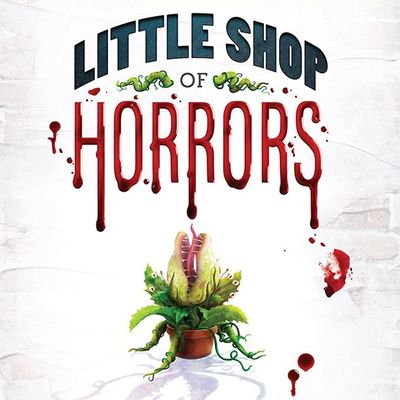
Here's a little something to help you through the end of your week! Jeff brings you a mini episode spotlighting the latest offering on PATREON! in which author Adam Abraham drops by to talk about the release of his new book exploring the Cultural History of the musical Little Shop of Horrors... Read More
From the show: A Musical Theatre Podcast
Featured Shows
About
Here's a little something to help you through the end of your week! Jeff brings you a mini episode spotlighting the latest offering on PATREON! in which author Adam Abraham drops by to talk about the release of his new book exploring the Cultural History of the musical Little Shop of Horrors. "Attack of the Monster Musical" is a must read, and this conversation is a must listen.
Listen to the full episode and all other exclusive offerings on PATREON! for only $1 a month by subscribing to patreon.com/amusicalpodcast
Follow Adam on Instagram at @abraham.author to see the amazing photos and art work that didn't make it into the book. Order "Attack of the Monster Musical" at https://www.bloomsbury.com/us/attack-of-the-monster-musical-9781350179325/
Transcript
This transcript was automatically generated and might contain errors.
[0:00] Jeffrey Scott Parsons: Hey everybody, it's Jeffrey Scott Parsons, you can call me Jeff. I hope you're enjoying your week thus far. I'm coming at you with a midweek mini-episode because over the weekend we released a really cool episode on Patreon! With Adam Abraham. Adam is the author of a fantastic book entitled Attack of the Monster Musical that's all about Little Shop of Horrors, or horrors as Adam says, which is honestly a better idea because then you're not accidentally bringing prostitutes into where they might not want to be. Now the entire conversation, which is about 42 minutes to be exact, is only available for subscribers of Patreon! But the good news is it's only $1 a month and not only do you end up supporting a Musical Theatre Podcast, but you get amazing monthly content like the convo with Adam. Enjoy this little sneak peek.
[1:04] Jeffrey Scott Parsons: In terms of what we've already covered on the podcast and what I feel like is regularly available either, you know, through the Ashman documentary on Disney Plus or Waking Sleeping Beauty, like there's a lot of great material out there about the general creation of Little Shop of Horrors. However, I have an entire list of very specific things that I want to talk to you about. And I got to be honest, I had to stop at page 37 because the list was getting too long. So everybody listening, I have a list of questions and it only goes to page 37. So you're definitely going to want to get this book. First up, you talk to so many people. 65 is the official count unless I forgot someone. Incredible. And obviously, you know, biggies like Alan Menken himself and the Howard Ashman estate.
There were two names however, that really popped out to me because I'm a nerd. Number one, Leilani Jones. I'm obsessed with her. She won a Tony Award for Grind, a musical that we covered at the very beginning of the podcast. I think it's still the episode that has the fewest listens of all of the episodes I've ever put out, but I'm still so glad we did it. And from Hawaii. Right? Hello. Anyway, she's incredible. And she's also kind of disappeared. And so I'm wondering if you can give me any info on how she's doing, because I'd love to send some love to Leilani Jones.
[2:29] Adam Abraham: She's doing well. She lives in California. She was, she's pretty much best friends with one of my best sources. They became friends in the original production in 1982. Oh, yeah, by the way, Leilani Jones, one of the original street urchins. Right. In case people are aware. Yes. So Leilani, I mean, with a small show like this and this kind of success, friendships are going to be natural. But one friendship that I noticed is the one between Leilani and Donna Rose Fletcher, who is a stage manager for many years on the show. So the two of them were an excellent source because they're tight because they're both based in California. They travel together. They go to New York together. And they occasionally there have been Little Shop reunions, private reunions, not a public performance like happened in 2015, but they just get together in New York with their circle of friends.
So they've stayed pretty tight. And I wound up connecting with both of them and both were very helpful. But Leilani gave me a copy of her actual script, like the script she held in her hands in the rehearsal process at the WPA theater where Little Shop was created. And there are scribbled notes on the margins, which is basically how we're talking to her. Right. You know, she's not going to stop and rewrite it in her own words. She's just going to write down. So I have her handwritten comments in the margins and on the first couple of pages of pieces of direction that he was giving her. So she was a great source in the paper trail, but also her own stories. So, yes, I'm a big fan of Leilani. And just a voice that literally would not quit.
[4:02] Jeffrey Scott Parsons: It's crazy that you brought up the position or the occupation that popped out to me. Stage managers, you write in the book, quote, "If you want to know about a musical, talk to the stage managers." And oh, hallelujah. It was just absolutely. And I make the argument, I think, in the first few pages, why? Like actors have their perspective. Writers have their perspective, even the director. But the stage manager sees the thing in its totality in 360 degrees and also 52 weeks in the year. Every single performance. The writer shows up, it launches and goes off to the next project. The stage manager stays. The stage manager lives in and owns the show to some extent. Puts in people. There are many people who are not directed by the director, even though the director gets directing credit.
A stage manager will put that person into the show in the theatrical parlance. And which is not to say to take anything away from the director, but the stage managers really run the show. And I think they know it best. So I wound up speaking to the original production stage manager, Paul Mills Holmes, and one of his predecessors, Donna Rose Fletcher, whom I mentioned. And they both were amazing interviews because they just really had this comprehensive view of the show. An actor always knows his or her parts, with some exceptions, depending on how interested or aware they are. So yeah, I was very grateful to talk to them. And I learned a lot from seeing the show through their eyes. And they keep records.
The woman I mentioned, Donna Rose Fletcher, kept the production reports from the show. So every single performance, matinee or evening, there's a little piece of paper that says everything that happened. So-and-so was late. We missed his light and cue. And further, to my benefit, they wrote down which celebrities happened to be in the house that night. So if Steven Spielberg was there, or whoever it was, they would scribble that at the bottom because it's just interesting. But now, years later, we can look at those production reports, and we can see what happened, and who missed the show, who was out, and what was going on. So it's a great snapshot of a show in process. Because I feel, and I make this argument, a lot of musical theater history is kind of closed on opening night.
It's like, oh, there it is. It opened, hurrah. Maybe there's a film version that gets mentioned, and then it's kind of done. But that's just the beginning. And for many audiences, if you didn't happen to go in the first year, you're also not seeing those original casts. There's cast replacements and understudies, and more people move into the parts, and the show can develop in different ways. So I wanted to try to capture more than just an opening night, but something of the five-year extent of this show as it played in New York from 1982 to 87.
[6:30] Adam Abraham: That's so smart and inspired. I mean, on the title page, I call this a cultural history, but it is also a social history. It's the history of the people who were involved in this, stage managers, cast, musicians, and so forth. And I tried to find every living person I could. But also, I made an effort to interview some understudies and replacements, who often don't get involved in this kind of book. One of them was Brad Morans, who was the first person to cover... Actually, he happened to cover three roles, which is probably too many. But ultimately, he was a replacement for Seymour after Lee Wilcox left. And he was there pretty much from the start, and he sat next to Howard Ashman watching the show once it opened, as Ashman was still looking for improvements, and just kind of asked him to whisper into Brad's ear and say certain things, and want to try different things.
So Brad had this amazing seat, just seeing Ashman's mind at work. And even once the show was open, there's always something that can be tweaked or improved. So just having access to that person, who was right there, is just incredible. So things like that were really a treat for me, to learn more than just the opening night cast and the opening night story, because the story keeps going.
[7:37] Jeffrey Scott Parsons: Okay, come on, that is two musical theater nerds living their best lives. To listen to the rest of the episode, be sure to subscribe to Patreon! at patreon.com backslash a musical podcast. Be sure to follow Adam on Instagram at abraham.author, where he's posting a lot of photos and artwork that didn't make it into the book and order Attack of the Monster Musical; you will not be disappointed. I thought I knew everything about the creation of this musical. But the really smart investigating that Adam did has really expanded that world for me in a very, very satisfying way. All in all, you guys, thank you for being a part of this wonderful podcasting community. I'm very grateful for you and look for another new episode of A Musical Theatre Podcast on Sunday. What? Three in a row? Yep, you're welcome. Talk soon.
© Broadway Podcast Network, All Rights Reserved