

There would be no OKLAHOMA! without SHOW BOAT. Hard stop. So why does the former get the glory of marking the beginning of modern musical theatre? Today, historian and author Thomas S... Read More
From the show: A Musical Theatre Podcast
Featured Shows
About
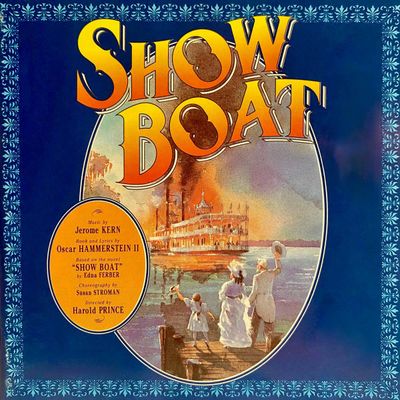
There would be no OKLAHOMA! without SHOW BOAT. Hard stop. So why does the former get the glory of marking the beginning of modern musical theatre? Today, historian and author Thomas S. Hischak joins us to discuss the singular splash of the 1927 epic musical SHOW BOAT, and how its creators set out to make a truly American musical. Whether or not you know all the lyrics to "Ol' Man River" by heart, you'll want to after listening to this episode.
To learn more about Tom, including his award-winning books and plays, visit https://www.thomashischak.com/
Remember for this month only, you get a free year of PATREON! if you write us a nice review and send a photo of it to amusicalpodcast@gmail.com! Don't forget to follow us on Instagram, Twitter, and TikTok. We also have our TeePublic Store with lots of fun designs, the profits of which we donate to Broadway Cares/Equity Fights AIDS.
Most of all, thank you so much for being part of this podcasting community!
Transcript
This transcript was automatically generated and might contain errors.
[0:00] Jeffrey Scott Parsons: It's a show that I'm glad it has not disappeared. It is still there, and that makes me feel so good when I know and I hear and I see productions that are still done and it still works.
[0:26] Welcome everybody to A Musical Theatre Podcast where we discuss the cultural and emotional impact of some of our favorite musicals in theatre history. My name is Jeffrey Scott Parsons. You can call me Jeff. Today, we are going back to 1927 to discuss the legendary musical SHOW BOAT, which was a listener request from no one. Nobody requested this show, but if you want to know about musical theatre, we have to cover it, and it's finally time. I'm so excited. Now, here to discuss this very important show in our artform's history is the author of over 30, 3-0 non-fiction books about theatre, film, popular music, including the Oxford Companion to the American Musical, and maybe most important to today's conversation, the Jerome Kern Encyclopedia. Everyone, please welcome Thomas S. Hischak. Hi, Tom.
[1:19] Thomas S. Hischak: Hi.
[1:20] Jeffrey Scott Parsons: So grateful you're here.
[1:22] Thomas S. Hischak: Yeah, glad to talk about SHOW BOAT anytime.
[1:26] Jeffrey Scott Parsons: First question, gotta get this out of the way. When did you become obsessed with musical theatre? Because nobody writes as many encyclopedias as you have about the people and titles of this thing without a little bit of obsession, right?
[1:38] Thomas S. Hischak: Yeah, I come from the generation, because I didn't live in New York City, my experience of musicals is buying or getting from the library those cast albums that came out in the 60s. I would check them out of the library, or if I could, buy them. So my approach is, I didn't see these shows, but I heard them. So the scores have always been very important to me, because that's what survived. When I eventually got to start seeing shows in New York, which wouldn't be until the 70s, it changes somewhat, but I always go back to the cast album.
[2:20] Jeffrey Scott Parsons: That's beautiful. I completely connect with that, because I've told this story on the podcast before, but just sitting on the kitchen counter, following along in the CD booklet with the cast album playing, and seeing the production photos and using my imagination to bring this whole story to life, because I'm in a farm town in northern Utah, about as far away from Broadway as you can get. But that was the spark. That was the spark of really wanting to live inside these stories.
[2:53] Thomas S. Hischak: That is so common that people around the country who love musicals never had that opportunity to see professional shows. I mean, I saw tours before I ever saw anything on Broadway. But it doesn't matter. The affection you can have for Broadway musicals is not a matter of, oh, well, I grew up going to the theater with Aunt Martha, and we saw How to Succeed in Business when I was seven years old. Yeah, a lot of people have that experience, but a lot of people don't. And I don't think it makes much difference, because I can't feel like I was disadvantaged by living, in my case, it would have been upstate New York, and then it was Ohio, and then moving all over around the country. I feel connected to it.
[3:46] Jeffrey Scott Parsons: That's so beautiful. Well, we are kindred spirits in that way. Now, we'll be talking about a lot of interesting artists today. Let's begin with someone who deserves probably a lot more attention than he's ever received on this show, composer Jerome Kern. And in your book about him, you credit him with creating, quote, the sound of the American musical. Now, can you help us understand why?
[4:13] Thomas S. Hischak: Yeah. He was not interested in copying European forms. He thought there is an American sound of music, and we don't need to sound like Gilbert and Sullivan, or Viennese opera, all of which were very popular when he was growing up. And that's what Broadway was. It was British musicals, or it was translations of German, French, Viennese, usually. But he was interested in an American sound, and he really comes into his own in the teens. So, he's really going way back, and in the teens with a series of musicals called The Princess Musicals.
[4:59] Jeffrey Scott Parsons: Yes. And listeners, I'm going to interrupt you real fast. Listeners, you may remember we briefly discussed The Princess Musicals in our Drowsy Chaperone episode, which is also probably the only time that we've talked about Jerome Kern, because he really did kind of cut his teeth in terms of creating character-driven music, right?
[5:16] Thomas S. Hischak: And if you're familiar with Drowsy Chaperone, which is a spoof, but it's pretty accurate in the kinds of songs, the ridiculous plots that The Princess Musicals had. But they were small musicals. They weren't Ziegfeld productions. They were modern. They weren't set in a gypsy camp in Bavaria, as most of the musicals did that. Musical about today, contemporary, urban, smart, educated people with a pretty silly plot and intelligent lyrics and music that was like today. And boy, they were popular.
[5:58] Thomas S. Hischak: They were so popular. And the only one we do today anymore, once in a while somebody will do Very Good Eddie.
[6:06] Jeffrey Scott Parsons: Which is funny. That thing's got jokes. I think it's really clever.
[6:11] Thomas S. Hischak: Yeah, and it actually had an audience again in the 70s when they brought it back. But even if they've totally disappeared and nobody ever listens to them again, The Princess Musicals are important, because sitting in the audience was a young Cole Porter, young Richard Rogers, young Lorenz Hart, Gershwins. And they loved these musicals. And they said, this is what we want to write. They were nobody. They were teenagers. And they said, this is what we want to write. We don't want to write operettas. We don't want to do German sounding stuff. We want an American sound, not only when they sang, but when they spoke or when they sang the lyrics. And so if nothing else, The Princess Musical is the inspiration for a whole generation and probably the greatest generation of musical theatre artists that we've ever had.
[7:11] Thomas S. Hischak: So the composer is Jerome Kern. A little bit of ragtime, a little bit of jazz. And that was the smart sound that people loved and would launch Kern's career.
[7:26] Thomas S. Hischak: And must say, definitely the African American influence into American culture.
[7:33] Jeffrey Scott Parsons: Yeah, even though he didn't come from New Orleans or anything like that, he knew what was being played. He was a New Yorker, and he knew the different sounds of American music. And he loved it. The influence of blues and jazz and ragtime. There's no question, it's there in all of his music.
[7:54] Thomas S. Hischak: And Jerome Kern grows up in a Jewish family, right? New York, one of those musical prodigies from the get go. I read a funny story where it seemed like music was kind of the only thing that he was good at. His dad maybe wanted him to take over the family business and he was just kind of terrible at it.
[8:16] Thomas S. Hischak: His family was very cultural and cultured, I guess. And they did listen to everything from symphonies to the latest stuff. But they didn't want him to go into that as a career. But I think you could say that for almost all of the great composers. Even Hammerstein, who comes from a musical theater family, even his family didn't want him to go into it. They wanted him to be a lawyer. But Kern was pretty smart. He was a savvy businessman. Besides being very talented, he kind of had a sense of what worked and what didn't. And he also had a painting collection, for example. It was worth millions of dollars. He understood art, liked art. So he's a person of the world, to say the least. But his favorite thing is to write not an opera, not a symphony, but to write for the musical stage. He did movies, but he was never as happy out there doing movies as he was doing plays.
[9:15] Jeffrey Scott Parsons: Yeah, a lot of the songs I think that we know from Jerome Kern, outside of Showboat, are probably all film songs, like The Way You Look Tonight and all of those.
[9:24] Thomas S. Hischak: It's true. Because those films are still shown, they're alive. A lot of his shows are not done, unless they've been recorded, and a lot of them haven't been recorded. And nobody does Roberta anymore.
[9:36] Jeffrey Scott Parsons: No.
[10:07] Thomas S. Hischak: But Kern never enjoyed that. And it is so ironic and sad that they got him to come back to New York to write the score for Annie Get Your Gun.
[10:17] Jeffrey Scott Parsons: Right.
[10:48] Thomas S. Hischak: But he never got to experience that.
[10:53] Jeffrey Scott Parsons: Dang.
[11:18] Thomas S. Hischak: And every time I ask somebody, what song from Annie Get Your Gun do you think Kern wrote, most people guess it. So I'm going to put you on the spot.
[11:28] Jeffrey Scott Parsons: Oh my gosh.
[11:29] Thomas S. Hischak: It's a song in Annie Get Your Gun that doesn't sound like the rest of the songs.
[11:35] Jeffrey Scott Parsons: I'm going to say I got lost in his arms? I don't know.
[11:38] Thomas S. Hischak: Yes, that's it.
[11:39] Jeffrey Scott Parsons: Yeah?
[11:40] Thomas S. Hischak: I got lost in his arms.
[11:41] Jeffrey Scott Parsons: Oh my gosh, that song is so gorgeous. And you're right, it doesn't really sound like a Berlin song, does it?
[11:45] Thomas S. Hischak: Yeah, there's something about it that's very Kern-like. But the contract was that this is a score by Irwin Berlin, and so that's the way that legally it went. But a lot of people in the business, some people know, and other people just feel, because he did start working on the show. He had started in California, he had started kicking around a few ideas. But anyway, we're getting off the subject.
[12:10] Jeffrey Scott Parsons: No, that's fascinating. Okay, so Jerome Kern, obviously smart, not only musically, but also I think maybe in terms of finding opportunities, because we obviously discussed the Princess musicals, him finding a way to be a new voice in theater without needing to follow the traditions of these big operettas and reviews. He then finds the novel Show Boat written by Edna Ferber.
[12:38] Thomas S. Hischak: Right.
[12:39] Jeffrey Scott Parsons: And in a similar way, sees this as an opportunity to musicalize something quite important and truly American. Now, this novel was a huge hit when it first came out, right?
[12:52] Thomas S. Hischak: It was.
[12:53] Thomas S. Hischak: Incredibly popular.
[12:55] Thomas S. Hischak: And Edna Ferber, amazing playwright, author, the story goes is that on opening night of a play that she had written with Moises Kaufman, there were all these bats in a chandelier in the theater, and they all went everywhere during opening. And so then the whole audience had to leave. And it was this disaster of an opening night. And the producer jokingly mentioned, okay, the next show that we're doing, we're getting on a showboat and just going down the river and performing for all of these towns. And it kind of planted the seed in her to be like, showboats, huh? Like a traveling show down the river. And so she started investigating this phenomenon that was quite popular. We would think of it today as like a cruise line, right? With on-ship entertainment.
[13:50] Thomas S. Hischak: But instead of people coming onto the ship for a long journey, the ship would go to different places all the way down, in this case, like the Mississippi River, stopping at small towns that probably don't get a lot of entertainment coming to them. And so then when the boat comes in, there's an opportunity to like put on a show for this group of people.
[14:15] Thomas S. Hischak: Right. This phenomenon starts, oh, I think after the Civil War, it picks up because the rivers are now safe and free. And the train system would build up, and we eventually have touring companies that would go to theaters. But before that built up, the showboat really was the way to bring entertainment to the people. And it remained that way all the way. They were still operating, but I think by the time the Depression came, they were pretty much all gone. Some of them were museums by then.
[14:52] Thomas S. Hischak: High class. It was melodramas. They were not musicals because they weren't that big. The stage was small. The theater itself was a structure like a barge, and it was usually pushed or pulled by another boat. The image that we have from the movies is the big paddle wheel and everything. They were floating barges, floating theaters that were tugged into it, tied up, depending on how big the town was, how long you could stay. Maybe you can only stay two performances, and that pretty much exhausted the clientele. Edna Ferber is a New Yorker, but she writes about everything. She writes about Texas. She writes about New Orleans, and she does her research. Show Boat, it's a little bit like Gone with the Wind.
It feels very melodramatic. It's got great romance in it. It's got some real heavy-duty stuff. It's long, but it's not as long as people think. She had no idea. She wrote it as a novel. She didn't think for a minute it would ever work on stage. This is a stage woman with a lot of experience. She's very savvy about theater, but she's got two really good careers. She's a Pulitzer Prize-winning novelist, and then she's a playwright who usually worked with people, Kaufman being the most common, most frequent. But Hammerstein read it, and Kern read it, and it's hard to say who's got the idea first. They went to her. Actually, before they went to her, they wrote "Old Man River." They thought they should play something for her.
They went to her and said, we want to make not only a play, but a musical out of Show Boat. She says, it can't be done. So then they played "Old Man River," and then she says, you can make a musical out of this. It won't be the musicals I'm used to or anybody else. Or anyone else for that matter. Right. But you can do this, but it won't be musical comedy. They worked on it. Hammerstein did an amazing job because it is a long sprawled-out story. He had to eliminate characters. He had to combine certain scenes. As strong as it is, it has problems in the second act. Every time it's done, people fiddle with the second act. Even Hammerstein did. When they made a movie, he fiddled around with the second act.
When they revived it in the '40s, he fiddled around and changed a few things. He was never totally happy with it. All the way up to the 1994 revival. Harold Prince, the director, is fiddling around with the second act. I think Prince, being as brilliant as the originals, he used dance and Susan Stroman, particularly, to help unify the second act. And it was the best second act I ever saw of that show.
[18:05] Jeffrey Scott Parsons: We've touched on so many interesting things. A few that I want to spend a little bit more time on. Number one, we think of Oklahoma as being the beginning of modern musical theater. And for many, many good reasons. Show Boat happens, what, 20 years before? I mean, so much...
[18:22] Thomas S. Hischak: 1743, yeah. There's a difference.
[18:26] Jeffrey Scott Parsons: And there is a very specific difference. And I think a lot of it comes down to the dance, to the way that we psychologically allow these characters to express themselves in the art form. And it's funny when you talk about the 1994 revival with Susan Stroman, which, by the way, I would watch Kim's Charleston, the number that was shown on the Tony Awards that year. And I had it on a VHS, and I would watch that number over and over and over again. And I truly believe, as a choreographer, that's how I learned how to build numbers is from watching Kim's Charleston from Show Boat that Susan Stroman did anyway. But it's almost like they turned Show Boat into a Rodgers and Hammerstein musical post-Oklahoma by incorporating this dance and allowing the inner worlds to be expressed in an even richer way than it was in 1927.
[19:21] Thomas S. Hischak: The 1927 musical was not about dance. It had some big production numbers. It's hard for us to imagine, but the original production had 100 people on stage, not all at once. Because they have a huge black chorus, they had a white chorus, they had a dancing chorus, white, black. But of all the spectacle that there was, dance was not major. Remember, I can't even tell you who did the choreography. But there's a big difference between the two shows. After Show Boat, and everybody said, brilliant, amazing, wonderful. Life went on as if it never had happened. There weren't other Show Boats. But everybody was like, we love it. Now let's go back to operetta. Let's go back to musical comedy. Let's go back to reviews. Let's go back to the Follies. It was almost as if, as brilliant as it was, it was in its own time capsule. That didn't happen with Oklahoma. When Oklahoma opened, it changed everything. Everything changed. Wow, wow, wow, wow.
[20:23] Jeffrey Scott Parsons: And you can look at those and say, that's pre-Oklahoma, that's post-Oklahoma. You can't say that with Show Boat. It doesn't mean to take anything away from it, because it's the pioneer that comes first. But it didn't change people's idea of what they wanted to do in the theater. And Oklahoma did that. And Rodgers, excuse me, Hammerstein does both. One man wrote the script and score for the two most influential musicals of American theater. It's mind-boggling.
[20:53] Thomas S. Hischak: I'm wearing my Oscar Hammerstein as Superman shirt.
[20:59] Jeffrey Scott Parsons: Absolutely. He's such a hero to me for many reasons. And many of those reasons are on display here in Show Boat. I want to touch on three before we go through the show itself. I want to touch on three reasons why I think my opinion matters. These are three reasons that Show Boat is legendary, period. It has nothing to do with my opinion. Number one, you already mentioned integrated show, right? Black actors and white actors in a time when segregation was still fully in force. Now, I don't want to applaud too much because the fact that that is a high bar is disgusting. You know what I mean? But knowing what our history is and owning it, the fact that they were able to push it to this place is really admirable. Did they receive any pushback from what you know for trying to do this?
[22:02] Thomas S. Hischak: They kept everything so separate so that they didn't hit the controversy. Black actors did not sing with white actors. Dancing the same way. The characters who were black had their own little story, but they did interact with the white actors. It wasn't like they weren't allowed to be on stage. Believe it or not, you wouldn't have black and white actors dancing together on stage until Finian's Rainbow, which was 1947. The first musical where the chorus was white and black together all the time. That's a long way in the future. I think people were sympathetic to it. We'll take the most important scene, which isn't a novel, the scene when they find out Julie is black and the sheriff wants to arrest her because she's married to a white man, and Steve literally drinks a drop or two of her blood so he can say, as the script puts it, I have Negro blood in me, therefore this marriage is not an interracial marriage.
That is an unbelievably powerful scene. It is in the novel somewhat, but Hammerstein's version is better. The way he sets it during a rehearsal. There's not many scenes from the 1920s dramas that are as powerful as that is, and that's in a musical, where supposedly it's not very serious.
[23:29] Jeffrey Scott Parsons: Interesting. Okay, that's really great. You touched on number two, which is miscegenation, this idea that it was illegal for interracial relationships, and the show tackles that head-on. Then number three is the character of Magnolia. I would say that of all of the characters in the show, Magnolia is probably my least favorite, and yet I have to be realistic in recognizing that this was probably the first time in a musical where a character changed as dramatically as Magnolia. She has probably the first true character arc in a musical.
[24:12] Thomas S. Hischak: I think you're right. Musical comedy didn't want characters to make a big change. You wanted to set forth, she's this, she's like this, and then they stay that way for three acts or two acts, and they get a happy ending. But Magnolia, who starts off as your typical ingenue, and she's a little naive, and she ages, and she grows, and she changes, and you don't get to see that in musicals, even after Show Boat. It was rare for a character to do that. But that comes because the book, she makes huge changes in the book. Hammerstein had something to work off of.
[24:53] Jeffrey Scott Parsons: Agreed, agreed. Well, let's go through the show. We'll take our listeners through it, so they understand, because I don't know if Show Boat's really going to be done much these days. It's a long show. It's a sound that maybe we don't listen to, we don't actively seek out to listen to much anymore. It's no longer than Les Mis.
[25:19] Thomas S. Hischak: You mentioned about starting with the show. The show starts like every musical with a chorus number, but nothing like the chorus number for Show Boat.
[25:28] Jeffrey Scott Parsons: Nothing like this.
[25:29] Thomas S. Hischak: You meet the white people. They're there. They're singing about how wonderful Show Boat is. The music is very fanciful, and the theme song is "Cotton Blossom." You're kind of few notes for the show. But it didn't take long for people to realize when they studied Show Boat that "Cotton Blossom" is "Old Man River" played upside down. Dun, dun, dun, dun. Instead of dun, dun, dun, dun, dun.
[26:00] Jeffrey Scott Parsons: Wow! Blowing our minds.
[26:03] Thomas S. Hischak: Put it upside down. Kern is psychologically, musically tying together Joe on the river with the frivolous white upper class who are going to see a happy show. It's quite remarkable. Would people notice that?
[26:20] Jeffrey Scott Parsons: No, he knew it. Kern often did stuff in his music. He says, they're not going to get this, but I do.
[26:28] Thomas S. Hischak: That gives me chills because the show begins 1887. We're talking post-reconstruction era, Jim Crow, segregation, and we're in the South. You have these two different lives. You've got the frivolous life of going to see some musical entertainment, and then the harsh realities of picking cotton. Then to know that it's also reflected in the musical writing, flipping it on its head, that's pretty brilliant.
[27:04] Jeffrey Scott Parsons: The other theme here right at the top that I think goes along with what you're saying is that the showboat itself seems to be an island. I know that's not a hot take, but it seems to be a protected island, I don't know, in the way the theater is for all of us weirdos. It's a safe place. It's a haven for artists in this time period that's very precarious, and there's a lot of change going on.
[27:37] Thomas S. Hischak: I think also, he starts with the novel, so that tells you, but if you think about it, if you want to do a musical and you want to have these two worlds, the worlds of African Americans in a repressive society, how else are you going to bring them together? You'd have to have two different plots, but no, Queenie and Joe not only work on the boat, they run the boat, and so then you'll have the crossing of white and black characters that is not too artificial. So, the boat is a way of getting the two worlds to crisscross.
[28:18] Jeffrey Scott Parsons: Exactly.
[28:19] Thomas S. Hischak: It'll be plot-wise the same way.
[28:21] Jeffrey Scott Parsons: And so, on this boat, you have a young girl named Magnolia, who's the daughter of the captain, Captain Andy, who, I mean, couldn't be more lovable, right? Lovable Captain Andy.
[28:33] Thomas S. Hischak: A musical comedy character.
[28:36] Jeffrey Scott Parsons: It's a musical play, but he's a musical comedy character thrown right into this drama.
[28:42] Thomas S. Hischak: Into this world. And his wife is named Parthi. She's prickly. They have this daughter, Magnolia, who's raised in this kind of fantasy land where everybody gets along and works together. You've got Queenie, who runs the kitchen, a black cook. Her husband Joe, who is, is he the engineer? Is that right? No, that's the bad guy. What's his name? Steve?
[29:10] Thomas S. Hischak: Yeah, he was the ex-engineer, but he's like the everyman. He does a little bit of everything.
[29:16] Jeffrey Scott Parsons: Awesome. Yeah, okay. And they are living and working with some of the actors, which include Julie, who's the lead actress, gorgeous woman, who we find out is mulatto or half black. And she's been passing as a white woman.
[29:32] Thomas S. Hischak: Oh, easily, yeah. She is married to, oh, by the way, Launette McKee.
[29:39] Jeffrey Scott Parsons: Oh, and that revival. Just the most stunning voice. Anyway.
[29:44] Thomas S. Hischak: She's married to Steve, who is the leading man. And so here lies, you know, this interracial marriage that they're keeping a secret. They're keeping secrets. The engineer, who's named Pete, who also works on the ship, tries to flirt with Julie. Steve gets mad, knocks him down. He retaliates by going and telling the police on them and saying that there is this illegal marriage on the ship. So one of the big climaxes of this first act is the fact that the police come and interrupt a rehearsal on the showboat in the sacred little place where everyone works and gets along and says, you all are breaking the law. Like you described so beautifully, Steve, knowing that this was about to happen, drinks some of Julie's blood so that they can't be put to jail.
But because importantly, he does this in front of witnesses. He pricks her finger, drinks a couple of things, but he knows. And so when the police come, he could say, you can ask anyone in this room, they will tell you I have Negro blood in me. The point is that, you know, he does it in front of four people, five people. Steve's smart. I mean, she jokes and says he's not a very good actor. But even that marriage falls apart and she's abandoned by him later on. But anyway, I'm sorry to interrupt you. But yeah, no, no, no, absolutely. He does this in front of witnesses so they could say, even in a court if they had to, that man has Negro blood in him. I know, I saw. So it saves them from going to jail, but it doesn't save them from losing their jobs.
And so they can no longer be on the boat. So now they have this show with no leading players. Magnolia, this young girl, sees it as her chance to become the lead actress. And of course, mom and dad are not enthused that she wants to go into the entertainment industry. Just I'm sure as Jerome Kern and Oscar Hammerstein's parents felt. But one of the reasons why I think she's able to is because she also has met this gambler. He's a super suave guy by the name of Gaylord Ravenal. They have a little, I mean, it is such a beautiful Oscar Hammerstein moment when they sing "Make Believe" because you see people will say we're in love and "If I Loved You" and all of those great Hammerstein traditions being born right here in this moment.
He knew how to condense things so you could get through time faster. For example, he's got, I've got to have the hero and the heroine meet, fall in love and get it over with quickly because the whole story is going to be about their relationship. And I can't spend a lot of time. Oh, they meet, they do this, you know, and so he does it in one song. They have a little bit of dialogue. He says, we haven't met, but we could pretend we've met and flirt back and forth. The audience has to say they are in love and there's nothing going to stop it. You know, it is inevitable. Here we are. Yes. And she's smitten with them and it's going to be the curse of her life, but it's also going to be, you know, her greatest joy.
Wow. And so now, because they are not only in love, but are beautiful young white people, here are your new leading players. It's a plot device. It's not original. You know, the girl who goes on for the, you know, the star who breaks her leg. But they made it quite clear in the script that Magnolia loves the theater. But what happens between the beginning of the show and that scene is a very important number, which some people say they don't think it connects. And it is, "I Can't Help Loving That Man." Incredibly important. These are two songs that we've kind of bypassed, but I want to come back to. So thank you. So talk to us about "Can't Help Loving."
[34:11] Thomas S. Hischak: Plot-wise, because Julie's been singing the song to Noli at Magnolia. They always liked it. She always liked this song, and she asked her to sing it again. So she does. And Queenie gets this question, says, how come you know that song? Yeah, that's the song for my people. Only colored folks know that song. And of course, that's foreshadowing in a, maybe not the most subtle way, but it's beautifully put there. Why does this woman know the song that was very popular among the Black population? And we've now set the idea down that there's something with Julie that we don't know. There's a mystery about her knowing this song. It's just beautifully put together. I love the way that little scene works. And it's also one of the most popular songs in the whole show.
[35:05] Thomas S. Hischak: It is. So that's undeniable. Yeah, there's something about it. It's catchy. So I would say that this musical, every time something next happens, the next scene or the next musical, it's tied in. It's not there like, okay, it's time for a dance number, which was very traditional in the 20s. It's time for a love song. It's time for a comic number. It's time for this. And in this musical, they're there, but boy, they come in in a totally different way than people were used to. I would also add that the other two numbers I wanted to definitely hit on in the first act are "Old Man River" and "Misery's Coming Around," one sung by Joe and one sung by his wife Queenie. So here are two other songs based in blues in the Black music tradition that are used for passage of time, that are used almost as like a Greek chorus commenting on what's going on.
In a really beautiful way. So it feels like it's moving the story along, just keeps moving along in a fresh way. I don't know if this was done much. I don't know. "Misery's Coming Around," which was foreshadowing that there's something in the air, and there's going to be trouble. And this is all happening right before the revelation about Julie. They actually had to cut it from the original. The show was too long. They kept the music. And in the 1936 film, they play the music beautifully in the background, but they don't sing it. I don't think they sang that song on Broadway until the 1994. I could be wrong. Another version did it. And it is a haunting, beautiful piece of music.
[36:58] Thomas S. Hischak: It is. And "Old Man River," those are the two African-American songs. Those are the two bluesy. Bluesy, yeah. And "Misery Coming Around" is definitely a soulful number. It reminds me of some of the stuff later on from "Porgy and Bess." But "Old Man River," it's a toughie because it just doesn't fall into any category that musicals were used to. It's a folk song. It's a protest song. It's a bluesy number. It's just so unique that I can't say, oh, it's in the tradition of doing this. If it's in the tradition of anything, it's black music. That's a tradition. And the lyric, how do you write a lyric for a person who is not educated, has a very limited vocabulary, but sees life very clearly? Men who pick cotton are soon forgotten, but the river doesn't forget.
And probably the most famous line, I'm tired of living and I'm scared of dying. What an interesting observation of somebody living the life of a Jim Crow South that you're just tired of it, but at the same time, you've got to keep living. You're too scared of dying. I think that lyric is just amazing, bluesy kind of lyric. And you'd find it in folk songs, you'd find it in blues songs. But there's Oscar Hammerstein, a Jewish guy who grew up in New York, and here he is capturing this very rural philosophy, I guess you might say. It's quite an amazing number. People have analyzed it. You know that there are only about four rhymes in the entire song.
[39:02] Thomas S. Hischak: Wow, I didn't even think about that. No, no rhymes because a rhyme, something, something, boy, something, something, toy. It's abrupt, it stops. But if you do, must know something, don't know nothing, which is not a rhyme. They blend together, they just move like the river as opposed to boom. "Tired of living, scared of dying" is just every word is moving along without big punctuation. Then compare it to a comedy song like "Life Upon the Wicked Stage." It's got its jokes, it's got it lined up perfectly. Yeah, I mean, you know, Hammerstein was unbelievable that two different worlds here and two different ways of writing a song. But "Old Man River" fascinates me and a lot of people because it just doesn't, you know, what's another "Old Man River"-like song?
People have copied it, but there's something about the simplicity of it. It's just so powerful. My gosh, not to mention with a deep bass voice like that. We just don't hear that type of singing either. In operetta, the bass voice was always the villain. So here you have this bass voice singing this beautiful song about, you know, the impossibility of life. That was pretty new. But bass voices, even in opera, are generally, you're not very likable. You're villainous characters, you're antagonists. The male lead is going to be a baritone or a tenor, you know, and the female is going to be a soprano. The funny woman is going to be an alto. I mean, they kind of fell into that pattern. And then here's this man coming out in a deep, beautiful voice singing this song.
I'm loving this. Thank you so much for being here. Truly, I'm having such a great time. Okay, so the end of the first act is basically a wedding scene for Magnolia and Ravenal. They sing "You Are Love," which is actually quite operetta, if you want to get down to it. So giving the audience maybe what they're used to. The duets are all from the operetta mode. So it's not that Kern couldn't write operettas, just that he didn't want to just write operettas. But I think Hammerstein said, you know, for true love song, you don't use jazz. Today, we could do that. But he said, no, we have to go to the romantic operetta for the lovers, because that's what people want to hear, two beautiful voices singing that way.
So "You Are Love" and "Why Do I Love You," which is as operettic and make believe you would expect in an operetta that the lovers would have at least three songs together. And so in that respect, "Show Boat" is an operetta when it comes to that part of it. All right, so let's go to the second act. And we'll start the second act by talking about somebody who's not in the show, but whose name was definitely attached to "Show Boat," Florenz Ziegfeld. A show this big, as it was when in 1927, didn't happen by itself. You couldn't get 100 people on stage without a pretty, I think, hefty producer behind it. And up until this point, Mr. Ziegfeld was known solely for follies, you know, for these big extravaganzas, and not really anything serious in any way. So how on earth did Hammerstein and Kern convince Florenz Ziegfeld to be the producer of "Show Boat"?
[42:40] Thomas S. Hischak: After he set up the follies, and they were very popular and everything, he wanted to get a little bit more of a cachet of being a Broadway producer. Well, he was a Broadway producer, but... So he did several shows that were book musicals. "Rio Rita" was a huge hit. And I'm blanking out now, I'm pretty sure "Rio Rita" is before "Show Boat." Yeah, it was, because he was not totally sure that "Show Boat" was going to fly. So he ended up like kind of greenlighting "Rio Rita" first, before "Show Boat" could find the theater.
[43:19] Thomas S. Hischak: Yeah. He used "Rio Rita" to open up his new theater, the Ziegfeld Theater, 1927, the same year. Yeah. So he did have some book musicals. I think he was attracted to this unusual piece of "Show Boat," because he wanted to be known for doing something serious like this. At the same time, he wanted Al Jolson to play Joe, you know, in blackface. And because he thought that's what the audience wanted. And frankly, audiences weren't going to get excited about a black performer unless it was a white performer in blackface. So he wasn't very progressive in that respect.
[44:01] Thomas S. Hischak: Well, Minstrelsy was still incredibly popular at this time. Oh yeah, he was so used to it. I think he kind of sensed that, I don't think this could make money, but I'd like to be the person who produced it. You know what I mean? I think that that meant more to him, because it was a risky venture, to say the least.
[44:37] Thomas S. Hischak: He may have wanted some of that, but Kern and Hammerstein were adamant about Al Jolson not playing it, and I'm sure they stopped him anytime he wanted to move into, you know, that kind of folly spectacular. But typical of Ziegfeld, no. And he deserves some credit for it, man, to put his name on the show and have people coming expecting something and getting something else and still being very happy with what they got. Yes. And the show was a hit. It didn't make money. I think he was probably as surprised as he was pleased. But I think most of the Broadway producers at the time, I don't know. I don't know if they tried, but I don't think they would touch this. You know, even the producers who were doing book musicals that may have a little substance to them like Rosemary.
I don't know if they would have gotten it off the ground. I don't know if he was the savior or he just kind of came in and wanted to, you know, get some of the glory. I'm not sure. And I'm sure he kept his hand on Show Boat for quite a long time. Actually, by 36, I think he was gone. I shouldn't say that. Yeah, he didn't live very much after this. But that's why Show Boat is tricky because it's a deep pockets kind of musical. It's expensive.
[45:59] Jeffrey Scott Parsons: Absolutely. I saw a production of Show Boat, and it is done more than you might think. It just shows up. I saw a production of Show Boat done in a summer theater with no more than 20 in the entire cast.
[46:12] Thomas S. Hischak: Oh, wow.
[46:13] Jeffrey Scott Parsons: And Old Man River was sung by an African-American and just three dachshunds in harmony singing with him. And it was thrilling that the bones of this musical are so strong and well done that you probably can do things like that. But I remember thinking that was as thrilling as any production I'd seen of Old Man River. And it was done with four people.
[46:41] Thomas S. Hischak: All right. So at the top of the second act, six years have passed. It's now 1893. And Ravenal and Magnolia have left the safety, once again, the safety of this beautiful little island that is the Show Boat and have moved to Chicago. They are struggling because of Ravenal's gambling, but they kind of live as though they have the good life, even though they don't really have the money to have the good life. Kind of, as you said, in Act Two, a lot of time passes, because basically the next thing that we see is that they have a daughter 10 years later. And Ravenal and Magnolia have broken up, right?
[47:29] Jeffrey Scott Parsons: Right. He abandons her.
[47:30] Thomas S. Hischak: This is one thing that's so good in the novel that I couldn't, their life goes up and down. They live in an expensive hotel, because he's winning all the time. And then they have to move to a boarding house. And they're there for a while. And also they are moving back to the hotel. And so Magnolia and the little girl, they're living in luxury, and then they're living in poverty, back and forth. And he has such a bad run, and he has such a bad life. And he has to and he has such a bad run, that eventually he realizes they'd be better off without him. So he leaves. Before he does, he visits a little girl at the school, convent school, boarding school, I think it is. Very touching scene. He abandons them, because he knows he's no good. And so Magnolia is left destitute. And what does she have to go on? She turns back to the stage. Like the prostitute that we all are. We go back to singing for our supper.
[48:31] There are a couple things that happen. Frank and Ellie, who are two of the kind of the character actors from the showboat, they meet up with her. They all find out that there's an audition at the Trocadero, which is this fancy schmancy nightclub. Magnolia decides to go and audition there. Little does she know, Julie, who's, of course, one of our favorites, works there. And she, unfortunately, has fallen into alcoholism after being abandoned by Steve, which just breaks your heart when you see the kind of stuff that they went through in the first act, and then it reaches this tragic end.
[49:14] Jeffrey Scott Parsons: No, it must have just gotten worse. You know, everywhere they went and eventually destroyed their marriage.
[49:19] Thomas S. Hischak: She sings this song called Bill, which is just a gorgeous song. It always makes me, it always plays with my brain, because I think that Steve's name is Bill. But it's not. She's singing this song, but we know who it's actually about.
[49:34] Jeffrey Scott Parsons: Right.
[49:35] Thomas S. Hischak: Jerome Kern wrote this, but not with Oscar Hammerstein, right?
[49:38] Jeffrey Scott Parsons: No, they'd written it several years earlier with G. Woodhouse.
[49:43] Thomas S. Hischak: Beautiful song.
[49:45] Jeffrey Scott Parsons: You know, it's such a beautiful song, but it was in three Broadway shows and kicked out each time.
[49:51] Thomas S. Hischak: That's so crazy.
[49:53] Jeffrey Scott Parsons: Because they weren't very serious shows, you know.
[49:55] Thomas S. Hischak: Sure.
[49:55] Jeffrey Scott Parsons: They were musical comedies, and it just didn't fit.
[49:59] Thomas S. Hischak: It's gonna kill a comedy, that's for sure.
[50:03] Jeffrey Scott Parsons: Yeah, this is not a show that keeps coming in the second act, but Show Boat is perfect, and Hammerstein was very adamant. He made a few changes in the lyric, very few, that people always said he wrote that song. And he said, I did not write that song. P.G. Woodhouse wrote that song. I changed a couple words here and there. And it's such a memorable song in the second act of Show Boat. But he was always very clear about not taking credit, you know, for that song.
[50:30] Thomas S. Hischak: Yeah, it's not written for the show, but it's so perfect for that moment.
[50:35] Jeffrey Scott Parsons: It is.
[50:36] Thomas S. Hischak: In her character, that it feels integrated into the show. It doesn't feel like it's tacked on, you know.
[50:43] Jeffrey Scott Parsons: It's so great.
[50:44] Thomas S. Hischak: Now, at the Trocadero, Julie is in her dressing room, and she overhears Magnolia's audition, because she hears Can't Help Loving That Man. Once again, an important reason for this song, right? And she realizes who it is. And I think in a desperate attempt to find purpose and sacrifice for something better, she leaves her job so that Magnolia can fill it.
[51:13] Jeffrey Scott Parsons: Right.
[51:13] Thomas S. Hischak: And that's all we see of Julie. It's really tragic.
[51:16] Jeffrey Scott Parsons: Yeah, I don't think it's a bad idea. When they made the 1951 movie, they brought her in for the final scene. It's very touching.
[51:27] Thomas S. Hischak: I'm not quite sure the logic of it and why she would be there, but it's a very beautiful ending, because she kind of helps get Ravenal and Magnolia together, I guess.
[51:37] Jeffrey Scott Parsons: Oh, I gotcha.
[51:38] Thomas S. Hischak: That's not the happy ending. That was the original thing.
[51:41] Jeffrey Scott Parsons: Right.
[51:42] Thomas S. Hischak: Julie is, for a person who's not in the show very much, she's very powerful.
[51:47] Jeffrey Scott Parsons: Very memorable.
[51:49] Thomas S. Hischak: And she is. She's an alcoholic, and she's missed performances, and so they're ready to fire her anyway. And she says, I'm leaving, and tell them to hire that new girl. She sounds good. But it's a turning point for Magnolia's success.
[52:05] Jeffrey Scott Parsons: So Magnolia gets the job. Andy, Captain Andy, and Parthy come to Chicago to visit their daughter. And Kim, the granddaughter, has gone to a convent, right?
[52:15] Thomas S. Hischak: Yeah, she's not around, but she's a little girl.
[52:18] Jeffrey Scott Parsons: She's a little girl. We weren't scared until she's grown up at the last section.
[52:22] Thomas S. Hischak: The last part, right. They come to see Magnolia. Magnolia's big performance at the Trocadero is kind of disastrous.
[52:31] Jeffrey Scott Parsons: Right.
[52:32] Thomas S. Hischak: She starts getting booed. And Andy, Captain Andy, saves the day by rallying the crowd. Just such a good dad to get everybody to start singing along with Magnolia.
[52:43] Jeffrey Scott Parsons: And then it leads to her becoming this huge musical star.
[52:47] Thomas S. Hischak: Now, that's the other song that's not written for the show. After the Ball, right?
[52:52] Jeffrey Scott Parsons: This is more of a piece of a song that was popular at the time. It was unbelievably popular in the 1890s when it came out. It is the first theater song to sell over a million copies of sheet music.
[53:05] Thomas S. Hischak: Oh, my gosh.
[53:06] Jeffrey Scott Parsons: It's very popular. They wanted a famous song from the past.
[53:12] Thomas S. Hischak: Now, granted, in the storyline, this is about 1920, maybe?
[53:18] Jeffrey Scott Parsons: Because the show ends in 1927.
[53:20] Thomas S. Hischak: 27, right. Though it's either the late teens or whatever. And they wanted a song that was famous. They could have written something. They wanted a song that was very famous that even the audience would remember and be very nostalgic about. And this would be the song that would kind of help her get over the depression. So most people know it from this particular musical. But it is a very popular song and had been in musicals before. But I kind of admire Kern and Hammerstein to be humble enough to say, for this big moment, we needed a big hit song. And we can't just write one and hope it becomes a hit. We're going to pick this. And it works beautifully in the piece.
[54:04] Jeffrey Scott Parsons: You're right. There's a lot of humility there. That's cool.
[54:07] Thomas S. Hischak: So now it's 1927.
[54:10] Jeffrey Scott Parsons: 20 years have passed.
[54:12] Thomas S. Hischak: Joe is still on the Cotton Blossom singing Old Man River. And there are so many different versions of the show. But the one that I'm looking at, which is kind of the 90s version, Cabin Andy has this chance meeting with Ravenal. And so he arranges the reunion with Magnolia. Andy knows that she's retiring. And she's coming back to the showboat with Kim, who, by the way, now Kim has become a Broadway star. It's just in their blood.
[54:46] Jeffrey Scott Parsons: They can't help it.
[54:48] Thomas S. Hischak: She does this updated version of Why Do I Love You, which is a song that was kind of introduced at the beginning of the second act, Charleston style.
[54:58] Jeffrey Scott Parsons: So great.
[54:59] Thomas S. Hischak: And they all meet up at the end here on the showboat. What do you think about Magnolia taking him back?
[55:08] Jeffrey Scott Parsons: She didn't in the original. But when they made the movie, the Hollywood studios were not going to let him not have the two lovers get together at the end, you know.
[55:18] Thomas S. Hischak: Interesting.
[55:18] Jeffrey Scott Parsons: He was a truly awful, terrible person.
[55:21] Thomas S. Hischak: They'd kill him off.
[55:22] Jeffrey Scott Parsons: But he wasn't. He was a gambler who just ran out of luck. And so in that 1936 movie, so much of it is just absolutely wonderful. It's short. They've edited a lot. But they really did. Universal, I think, insisted on that ending being clearly that they would get together.
[55:41] Thomas S. Hischak: I like the original better.
[55:43] Jeffrey Scott Parsons: And then the 1994 one, where they meet again. They have much in common. But it's not like they're going to fall into each other's arms and everything's going to be happy. The ending of the play, so beautifully written, is this old woman who has no other character and the rest of the thing. She looks at the two of them. And she says to someone, I remember the day they got married. It was on this very wharf or pier. Oh, that was a love marriage. I could tell.
[56:15] Thomas S. Hischak: So the irony is, here is this person who saw them in their youth and before everything went bad. And that's how the musical ends, with her saying that. And it's just such a perfectly realistic ending, I think. And in many ways, holds up this symbol of what the showboat represents, right?
[56:38] Jeffrey Scott Parsons: Right.
[56:39] Thomas S. Hischak: Because on the showboat, they were the dream couple.
[56:42] Jeffrey Scott Parsons: Yeah.
[56:43] Thomas S. Hischak: They were a true love match, I think is the word she uses. And they're not anymore. And they weren't Chicago. And I just find it ties together the river and the riverboat, showboat all over again, with that simple little ending as the music is playing.
[57:03] Jeffrey Scott Parsons: I think it's Old Man River.
[57:04] Thomas S. Hischak: And this old woman just saying, oh, yeah, that was a love match. The irony of life.
[57:11] Jeffrey Scott Parsons: Yeah.
[57:12] Thomas S. Hischak: Just perfect.
[57:14] Jeffrey Scott Parsons: That's beautiful.
[57:16] Thomas S. Hischak: Oh, my gosh. We made it through. Thank you so much for doing this with me. What a true privilege to hear everything that you got in that brain of yours.
[57:27] Thomas S. Hischak: Yeah, that's it. I just emptied it.
[57:29] Jeffrey Scott Parsons: No, no, we haven't even scratched the surface. As always, if you have recommendations for shows you'd like us to cover on a musical theater podcast, you can always email me at amusicalpodcast@gmail.com. Remember for this month only, if you want a free year subscription to our bonus episodes on Patreon, all you have to do is write a nice review and take a picture of it, send it to me via amusicalpodcast@gmail.com. We've already had people do this. It's a great way to really energize the show here at the beginning of the year, and we're grateful for your support. We're also on social media. We got Instagram, Twitter, TikTok. We have our TeePublic store where you can go and buy great designs like the Oscar Hammerstein shirt I am currently wearing and the profits from those designs we donate to Broadway Cares Equity Fights AIDS.
[58:23] Thomas S. Hischak: Hey, Jeffrey, thank you again for being on the show. How do we follow you or keep up with anything that you've got going on?
[58:31] Thomas S. Hischak: My website has it all. It's very simple, thomashischak.com. You can read about the books, plays, and some other podcasts that you can hear me on.
[58:43] Jeffrey Scott Parsons: Fantastic. Just thomashischak.com. That's all you need. And we will link that in the show notes, of course. Thank you again for being with us to discuss this super important musical. I hope I think I'm really pleased. I think everybody is really going to catch the vision of what this thing is and means and was. Listeners, thank you so much for tuning in. And remember, Old Man River just keeps moving along.
© Broadway Podcast Network, All Rights Reserved